TH E G R EAT SEAL OFTHE STATE OFN E W JE R SE Y
State of New Jersey
Department of Human Services
In Collaboration with
Rutgers Center for State Health Policy
Project funded by the U.S. Department of Health & Human Services,
Health Resources and Services Administration,State Planning Grant # 6 P09 OA 00040-02-01
Design and Enrollment in Premium Support
Programs for Low Income Populations:
State Interviews and New Jersey
Data Simulations
Lead Agency
New Jersey Department of Human Services (NJDHS)
In Collaboration with
Rutgers Center for State Health Policy (CSHP)
Report Prepared by
Dina Belloff, M.A., Research Analyst, CSHP
Kimberley Fox, M.P.A., former Senior Policy Analyst, CSHP
Project Leadership
Ann Clemency Kohler, Director, Division of Medical Assistance & Health Services, NJDHS
Dennis Doderer, Deputy Assistant Director, Division of Medical Assistance & Health Services, NJDHS
Joel C. Cantor, Director and Professor, CSHP
Alan C. Monheit, Professor, UMDNJ and CSHP
Margaret M. Koller, Associate Director for Planning, CSHP
Project Steering Committee
Virginia Kelly, Manager, Offi ce of Research, Division of Medical Assistance & Health Services, NJDHS
Freida Phillips, Special Assistant to the Deputy Commissioner for Family & Community Services, NJDHS
Michelle Walsky, Chief of Operations, Division of Medical Assistance & Health Services, NJDHS
Joseph Tricarico, Jr., Assistant Commissioner, Managed Care & Health Care Finance, NJ Department of
Health & Senior Services (NJDHSS)
State of New Jersey
Design and Enrollment in Premium Support
Programs for Low Income Populations:
State Interviews and New Jersey
Data Simulations
Rutgers Center for State Health Policy, July 2006 ii
Design and Enrollment in Premium Support Programs for Low Income Populations: State Interviews and New Jersey Data Simulations
iii
Preface
This report is based on research conducted by Rutgers Center for State Health Policy in 2003 and 2004, with funding from the State of New Jersey, Department of Human Services, through a Health Resources & Services Administration (USDHHS) State Planning Grant. These
findings were used internally to inform Premium Support Program policies. Due to the continuing interest in increasing enrollment in private coverage for NJ FamilyCare eligible families, this research is being disseminated more widely in July 2006. At the time of this study, there were 785 enrollees in New Jersey's Premium Support Program. As of June 2006, the NJ Premium Support Program has 778 enrollees.
Rutgers Center for State Health Policy, July 2006 iv
Design and Enrollment in Premium Support Programs for Low Income Populations: State Interviews and New Jersey Data Simulations
v
Acknowledgements
This research was funded by the NJ Department of Human Services with a State Planning Grant from the Health Resources and Services Administration, US Department of Health & Human Services. The authors would like to thank M. Susan Marquis for conducting the very complex data simulations presented in this report. We would also like to thank Dennis Doderer of the NJ Division of Medical Assistance and Health Services who contributed his time, direction, and considerable expertise by providing us with extensive information about the NJ Premium Support Program, its history and challenges, and for reviewing drafts of this report. We also thank the members of the State Planning Grant Steering Committee who provided guidance on the direction of the project and preparation of this report. Finally, we extend our special thanks to the premium assistance program officials in other states who volunteered their valuable time to participate in this study.
Rutgers Center for State Health Policy, July 2006 vi
Design and Enrollment in Premium Support Programs for Low Income Populations: State Interviews and New Jersey Data Simulations
vii
Table of Contents
Executive Summary ……… ix Introduction ………. 1 Study Purpose ………... 1 Data Sources ………. 3 Methods ……… 7 Study Results ……… 8‘Best Practices’ in Other State Programs ……….. 8
Vast Majority of NJ FamilyCare Enrollees Do Not Qualify for PSP ……… 10
Other State Efforts to Encourage Employer Offer Rates through Subsidies …… 11
Many Eligible for PSP are Not Enrolled ……… 13
Modifying Employer Plan Qualifying Requirements Has Little Effect on Number of NJ FamilyCare Enrollees Potentially Eligible ……… 15
Voucher Model May Offer Alternative Approach for Increasing Low-Income Insurance Coverage ……… 15
Summary of Key Findings and Implications for the NJ Premium Support Program ……... 16
Rutgers Center for State Health Policy, July 2006 viii
Design and Enrollment in Premium Support Programs for Low Income Populations: State Interviews and New Jersey Data Simulations
ix
Design and Enrollment in Premium Support Programs
for Low Income Populations: State Interviews and
New Jersey Data Simulations
Dina Belloff, M.A.; Kimberley Fox, M.P.A.
Executive Summary
Low enrollment rates in state-sponsored premium assistance programs that provide subsidies to purchase employer-based health insurance premiums for low-income workers have been attributed in part to administrative complexities and restrictive program design rules. Using linked household and employer state survey data, we estimated potential program eligibility under existing rules in New Jersey’s Premium Support Program (PSP) and simulated the effect of modifying program rules based on ‘best practices’ in other states. Modifying employer contribution requirements and/or the method of measuring cost effectiveness while holding the benchmark constant had an insignificant effect on the number of persons eligible. That said, estimates indicate that about 18 percent of NJ FamilyCare enrollees are eligible for the Premium Support Program, but only about 1 percent have enrolled. This gap in
enrollment may be due to administrative complexities involved in providing information about premiums, benefits, and the employer contribution to the PSP office, to the mobility of low-income workers, or to other unmeasured factors.
Rutgers Center for State Health Policy, July 2006 x
Design and Enrollment in Premium Support Programs for Low Income Populations: State Interviews and New Jersey Data Simulations
1
Design and Enrollment in Premium Support Programs
for Low Income Populations: State Interviews and
New Jersey Data Simulations
Dina Belloff, M.A.; Kimberley Fox, M.P.A.
Introduction
Both state and federal policymakers have encouraged the use of public funds to subsidize the purchase of private health insurance. One strategy that has received
increasing attention is premium assistance, in which states subsidize employer-sponsored coverage through their SCHIP and/or Medicaid programs by ‘buying in” to private
coverage available to eligible enrollees where it is cost-effective to do so.1 States have
pursued premium assistance in order to promote family coverage and to extend coverage to more people by leveraging private dollars while potentially achieving some cost
savings to the state.
Despite the increasing attention to this policy approach, initial enrollment in many of these programs, particularly those initiated as part of SCHIP waivers, has been lower than originally estimated. The reasons for lower than expected enrollment that has been reported by program administrators have included that employers do not offer family health insurance coverage to the target population, and, for those that do, restrictive program requirements make the employer plans ineligible. Relatively little empirical research has been conducted to confirm estimates of current SCHIP enrollees that are potentially eligible for these premium support programs, or that measures how the number of people eligible may change under alternative program designs.
Study Purpose
With funding from the Health Resources Services Administration (HRSA) under a State Planning Grant to expand health insurance coverage, the state of New Jersey commissioned an analysis of state survey data to estimate the number of NJ FamilyCare enrollees potentially eligible for its Premium Support Program (PSP) and to simulate the
Rutgers Center for State Health Policy, July 2006 2
effect of program modifications identified as ‘best practices’ in other states on increasing eligibility.
The New Jersey Premium Support Program (PSP) provides subsidies for
qualifying employment-based health insurance to persons enrolled in the NJ FamilyCare program. NJ PSP was implemented in July 2001 as part of the state’s broader SCHIP waiver to expand coverage to parents up to 200 percent of the federal poverty level and childless adults up to 100 percent of the federal poverty level. Initially targeted to enroll 5,000 (4%) NJ FamilyCare participants, the PSP was estimated to save the state $24 million over 3 years.
As has been the case in other states, the PSP initially experienced lower than expected enrollment, only enrolling 150 individuals (0.1% of total NJ FamilyCare
enrollment) in the first six months for a total savings of $139,000. The primary barriers to enrollment identified by the state were similar to those identified in other states. These included:
1) Difficulty in acquiring accurate employment and employment-related health insurance information because PSP was initiated after NJ Family Care’s inception,
2) Many employers of NJ FamilyCare enrollees do not offer health insurance or NJ FamilyCare enrollees are not eligible for the employer coverage available, and 3) Employer-sponsored health insurance coverage available through employers does
not meet one of the three minimum PSP criteria including a 50% minimum
employer contribution2, the standard commercial HMO plan benchmark, or the
cost-effectiveness test.3
After conducting outreach efforts targeted to families in the higher income groups more likely to have access to employer-sponsored insurance, conducting file matches with the New Jersey Department of Labor to gather employment information, and
mandating provision of employment-related information by current enrollees4, the PSP
enrollment rose significantly to 785 individuals in 250 families, but still represented under 1 percent of total enrollment as of April 2004.
Design and Enrollment in Premium Support Programs for Low Income Populations: State Interviews and New Jersey Data Simulations
3
Data Sources
To estimate the number of persons potentially eligible for PSP under existing program rules and to simulate the effect of modifying program rules to increase
enrollment, we utilized data from two statewide surveys of NJ households and employers: the 2001 New Jersey Family Health Survey (NJFHS) and the 1997 Employer Health
Insurance Survey (EHIS). The New Jersey Family Health Survey (NJFHS) was conducted in the summer of 2001 through the spring of 2002 by the Rutgers Center for State Health Policy (CSHP) and funded by The Robert Wood Johnson Foundation (RWJF). The survey includes a statewide probability sample of 2,265 families residing in the state of New
Jersey covering 6,466 individuals.5
The survey used a random-digit-dialed telephone survey with telephone coverage history adjustment that was conducted in English and Spanish. NJFHS oversampled low-income families (<200% FPL) and families with elderly members. The response rate was 59.3%. Topics covered in the survey included
information on current health care coverage as well as eligibility for employment-sponsored coverage and earnings information allowing us to identify persons in the sample that were NJ FamilyCare enrollees with potential access to employer-sponsored health insurance. The weighted total NJ FamilyCare enrollees in the sample was 282,512, based on 263 respondents in the NJFHS survey.
While the NJFHS provides extensive person-level health insurance and
employment information to determine who is employed and enrolled in NJ FamilyCare, we needed to supplement this information with details about the health insurance benefits and premiums offered by employers to workers in families with persons eligible for the program. We imputed details about the health insurance benefits and premiums offered by New Jersey employers using the 1997 Robert Wood Johnson Foundation (RWJF) Employer Health Insurance Survey (EHIS). The EHIS is a national telephone survey and includes a sample of 901 New Jersey employers. The overall response rate was 60%.
We assigned workers to employers based on industry, size of the business,
whether the employer offers insurance as a benefit to workers, and the wage and age mix of the workforce at the business and the worker’s wage and age. Employers and workers were assigned to one of 18 industry/size groups. The industry groups were
Rutgers Center for State Health Policy, July 2006 4
all other industries. All industries except agriculture/forestry/fishing and government were categorized by the number of workers in the business: fewer than 10, 10-25, 26-50, and 51 or more. These 18 industry/size groups were further divided into groups
depending on whether the employer offers insurance as a benefit.
Each of the resulting 36 groups was then classified into one of four more groups based on the wages and ages of the workers in the business; low-wage businesses or those with 50 percent or more workers earning less than $11 per hour (in 2001 dollars) vs. higher-wage businesses, those with less than half of workers earning less than $11 per hour; young-worker businesses, those with fewer than half of workers over age 40, vs. older-worker businesses, those with half or more workers over age 40. A low-wage, younger worker in the NJFHS (e.g. a 30 year old individual earning less than $11 per hour) was probabilistically assigned to an industry/size/offer status/type of business on the basis of the reported industry, size of his/her employer and the proportion of low-wage, younger workers in this industry/size/offer group that are employed by low-wage young-worker businesses. For example, if 20 percent of all young, low-wage workers in the professional service industry who work for a business that offers insurance and has fewer than 10 workers are in a business with predominantly young, low wage workers, then the worker is assigned to a small, professional service, low-wage young-worker business that offers insurance with a probability of 0.2. Within the assigned type of businesses, random selections of employer are made.
In order to carryout the synthetic match of employers and workers, we needed information on the wage of workers, which was not measured in the NJFHS. To impute wages to workers, we used data from the 2000 Current Population Survey to estimate the relationship between wages and characteristics that are related to wages including: the age, education, and the race/ethnicity of the worker; the business size and industry; and the number of workers in the family and the total family income. For each worker, we predicted expected wages based on this relationship; we added a random component drawn from the empirical distribution of residuals from the fitted equation to preserve the appropriate distribution of wages.
To identify perceived ‘best practices’ for maximizing program participation with which to inform our policy simulation models, we conducted qualitative interviews in December 2002 and January 2003 with state officials in New Jersey and officials in seven states that had been identified in the existing literature as states with mature, successful, or innovative premium support programs either in their Medicaid and/or SCHIP
Design and Enrollment in Premium Support Programs for Low Income Populations: State Interviews and New Jersey Data Simulations
5
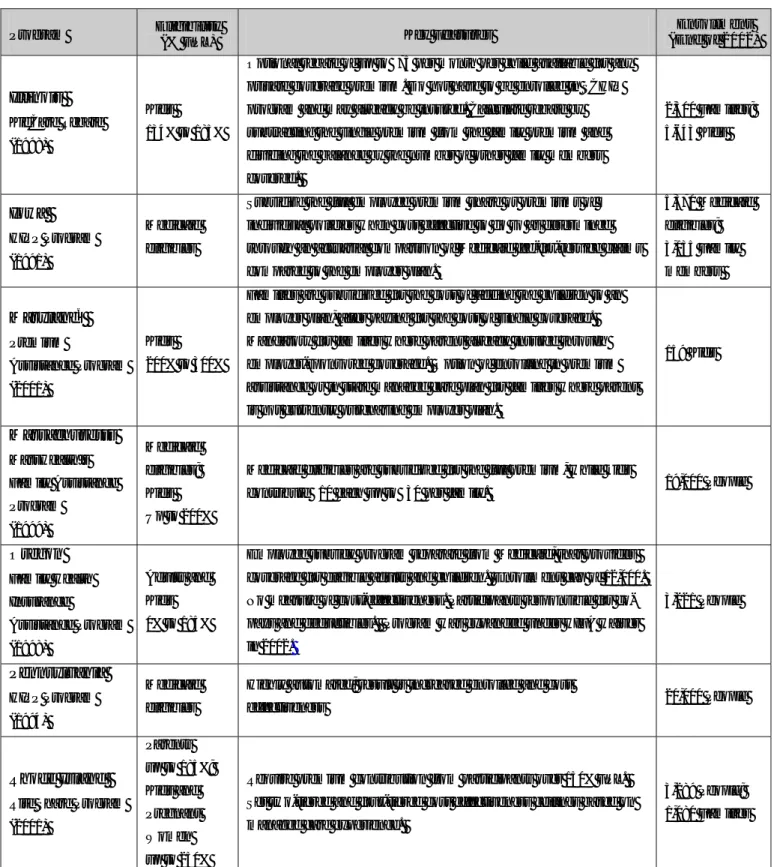
programs. As shown in Table 1, some of these programs only included Medicaid enrollees (PA, IA), others were available only to children in the SCHIP program (MD, IL), while others had premium assistance programs for both their Medicaid and SCHIP enrollees (RI, MA). For these programs, we asked program directors about the requirements of their program and which program design features and administrative simplification methods they estimated had the greatest impact on maximizing program enrollment. In particular, we sought to identify the minimum requirements these states used for
employer plans and their methods for measuring cost effectiveness to determine whether loosening these requirements in NJ would result in an increase in the number of eligible families.
Rutgers Center for State Health Policy, July 2006 6
Table 1: Selected State Employee Premium Assistance Programs
Program Eligibility (% FPL) Key Features Enrollment (End of 2002) Illinois KidCare Rebate (1998) Kids 134% to 185%
Optional rebate of up to $75 per month per child available for any private coverage premium. Do not have to be enrolled in SCHIP program and may already be insured. Calculate rebate by subtracting the single premium from the family premium and dividing the balance by the number of other family members covered. 2,500 Families; 5,643 Kids Iowa HIPP Program (1991) Medicaid eligibles
Subsidize the full employee premium share or premiums of individual policies when cost effective to do so as determined through an actuarial comparison of Medicaid fee-for-service claims compared to the employer plan.
5,370 Medicaid eligibles; 3,135 Family members Maryland6 Premium Assistance Program (2001) Kids 200% to 300%
Families are subsidized for the cost of adding the children to an employer plan, after paying for the cost of single coverage. Mandatory for families where parent already insured through employer-sponsored coverage. Option of enrolling in premium assistance or in state managed care plan for families where parent is not currently purchasing employer plan.
159 Kids Massachusetts MassHealth’s Family Assistance Program (1999) Medicaid eligibles; Kids Up to 200%
Medicaid eligibles are subsidized for the full premium, while kids
contribute $10 each up to $30 per family. 19,000 People
Oregon Family Health Insurance Assistance Program (1998) Adults and Kids 0% to 185%
Employee subsidy program separate from Medicaid, that provides coverage for eligible adults and children. Enrollment cap of 12,000. No measure of cost-effectiveness. Participants responsible for co-pays and deductibles. Program was expanded under HIFA waiver in 2002. 3,221 People Pennsylvania HIPP Program (1994) Medicaid eligibles
Highly automated; result is increased enrolled and cost
effectiveness 20,000 People
Rhode Island
Rite Share Program (2001) Parents up to 185%; Kids and Pregnant Women up to 250%
Require premium contribution from participants over 150% FPL. Set two-tiered and four-tiered cost effectiveness ceilings based on managed care experience.
3,289 People; 1,080 Families
Design and Enrollment in Premium Support Programs for Low Income Populations: State Interviews and New Jersey Data Simulations
7
Methods
To estimate the number of persons potentially eligible for PSP under existing program rules, we identified NJ FamilyCare participants who are in families with a worker employed in a business offering health insurance who is eligible to enroll in the
insurance from responses given in the NJFHS.6 With the synthetic link of employers and
workers, we then identified those eligible for family coverage and those whose employer contributes at least 50 percent of the premium for family coverage and whose plan meets
the cost effectiveness criteria for PSP participation.7
Cost effectiveness of PSP participation was determined by estimating the cost of enrolling the person in the NJ Family Care managed care plan given the age and gender of the participant using the NJ Family Care premium rate charts plus the expected cost of fee-for-service services. For families with cost-sharing requirements in the NJ Family Care program, we deducted the expected NJ Family Care cost-share based on age, as required under NJ’s cost effectiveness evaluation model.
To enroll the NJ FamilyCare participants in PSP, the state pays the employee contribution for family coverage for families with SCHIP participants, and the expected out-of-pocket payment by the participant for cost-sharing requirements of the employer- sponsored plan when it is cost-effective to do so. Enrollment in PSP is considered to be cost effective for NJ FamilyCare enrollees in a family if it costs at least 10 percent less to enroll them in the employer plan than to enroll them in NJ Family Care. For our
estimates, the family premium contribution is obtained from the synthetic link of
employers with workers. To estimate the expected cost-share, we used a measure of the expected share of medical expenditures that the employer plan would cover that was estimated for each employer plan based on the deductible, coinsurance and co-payment rate, and the upper limits for hospital care, physician care, mental health care, and
prescription drugs reported in the 1997 RWJF Employer Health Insurance Survey.8 We
estimate expected total medical care spending based on age and gender using the cost to
enroll the person in NJ Family Care managed care plan.9 The PSP cost-sharing fill is then
estimated as one minus the expected employer plan reimbursement share multiplied by the expected total medical care spending. We reduced this estimate by 15 percent to account for unsubmitted cost-share claims.
Rutgers Center for State Health Policy, July 2006 8
To estimate the number of NJ FamilyCare enrollees potentially eligible for PSP under different program rules, we identified several ‘best practices’ from our interviews with other state officials for increasing enrollment including using a lower minimum employer contribution requirement and a more liberal cost-effectiveness test. We evaluated the effects of varying these criteria in the PSP program on eligibility rates. In several scenarios, we alter the minimum required employer contribution for family premiums from 50% to 30 %, and then to 10%. In other scenarios, we alter the cost-effectiveness criteria by assuming that the family pays the amount of the employee contribution for self-only coverage under the employer plan, and the state pays the difference between this and the employee contribution for family coverage.
Study Results
‘Best Practices’ in Other State Programs
Qualitative interviews conducted in December 2002 and January 2003 with state officials revealed that, even in the most successful premium support programs, enrollees constitute a small percentage (2-4%) of the total Medicaid and/or SCHIP population. The notable exception was Illinois’ rebate program, which provided vouchers for families to purchase employer-sponsored coverage for nearly 19 percent of the children enrolled in the states SCHIP program. As in New Jersey, low enrollment rates in most states were attributed to lack of access to employer-sponsored health insurance coverage.
Nonetheless, states did identify some program design features that they believed had helped to boost enrollment. These broadly fell into the following categories:
1) Policies designed to acquire more accurate and timely information on available
employer-sponsored coverage in order to determine who might be eligible,
2) Policies to mandate program participation as a condition of participation in the
SCHIP or Medicaid program and/or to reduce barriers to PSP enrollment such as making it a qualifying event for employer plans, and
3) Policies to modify the program design by either limiting employer plan qualifying
Design and Enrollment in Premium Support Programs for Low Income Populations: State Interviews and New Jersey Data Simulations
9
To get more timely and accurate information on employer-sponsored coverage, Illinois asked that enrollees collect information from their employers on the plans offered rather than the State collecting this information from the employer. They found that employers were much more responsive to requests initiated by their employees than those initiated by the State. Other states, including Maryland and Massachusetts, created databases with employer health insurance plan information so that if the applicant had an employer that the PSP already knew about they could easily enroll that applicant in the program. In Pennsylvania, the welfare office asks those enrolled in the state health insurance program about available health insurance coverage when the family’s employment situation changes.
Most states, including New Jersey, had moved to mandate participation in PSP if the SCHIP enrollee had access to qualifying employer-sponsored insurance. Even when mandated, many states reported delays in enrollment because the individual or family could not enroll in the employer plan until the next open enrollment period. To address this issue, many states had either revised their health insurance statutes to make enrollment in the premium assistance program a qualifying event for enrollment in employer-sponsored plans, or had worked with the major insurers in the state to
voluntarily make acceptance into the state’s PSP program a qualifying event.10
SCHIP premium assistance programs require that the employment-based health plan meet three criteria. The plan must include a minimum benchmark of services. The employer must contribute a significant proportion of the premium. And the plan must be cost-effective when compared to the state’s public coverage. New Jersey currently requires a certain benchmark of basic services, a 50% contribution by the employer toward coverage, and conducts a fairly stringent cost-effectiveness test. Interviews with officials in other states show that states with high enrollment tend to have more flexible
requirements in qualifying employer plans.11
• Flexibility in Benchmark Requirement – The benchmark requirements varied
considerably across states, with some states only requiring hospitalization and primary care while others require comparable actuarial value to the state plan as in New Jersey. Most states cover wrap-around services and cost sharing, however optional programs like those in Oregon and Illinois do not. Massachusetts also does not pay for wrap-around services for its SCHIP population and, while they
Rutgers Center for State Health Policy, July 2006 10
will reimburse cost sharing above a certain threshold, few people have submitted claims.
• No employer contribution requirement – When paying the employee share of
the employment-based insurance premium is cost-effective, five of the seven states did not require a minimum contribution by the employer. In Maryland, the program had started with a 50% contribution, but they lowered it to 30% after a year, which they suggested did help to qualify more plans for the program.
• Measuring Cost Effectiveness – As in New Jersey, several states measure cost
effectiveness by comparing the total cost of the employer-sponsored family plan to the state’s managed care premium and when the employee’s portion of the employer-sponsored premium is less, the employee is enrolled in that plan. In contrast, Illinois calculates rebates and Maryland determines cost effectiveness by subtracting the cost of single coverage from the family premium and then
allocating the balance of the family premium across the remaining eligible family members. Illinois uses this amount up to a maximum of $75 per child to establish the rebate amount. Maryland compares the cost per child to the cost of enrolling that child in the state plan. This method increases the number of children for whom employer-sponsored plan enrollment is cost effective, while also potentially including non-eligible family members in employer-sponsored
coverage. Given that this cost-effectiveness test assumes that the parent will pay for their single coverage, participation in plans that use this cost-effectiveness test is usually optional, although Maryland’s PSP is mandatory if one parent was already enrolled in employer-sponsored coverage.
Vast Majority of NJ FamilyCare Enrollees Do Not Qualify for PSP
Despite the increased interest in maximizing coverage through public subsidies of private employer-based coverage, we found that only a small proportion of children and adults enrolled in the NJ FamilyCare program (18%) have access to qualifying private health insurance coverage (see Chart 1) . As indicated in Chart 1, the vast majority (82%) are ineligible for PSP either because no one in the family was employed (32 percent), the employer does not offer family coverage (27 percent) or the employer offers coverage but the employee is ineligible (10 percent). Only 13 percent were ineligible because the employer’s plan did not meet the PSP minimum plan requirements.
Design and Enrollment in Premium Support Programs for Low Income Populations: State Interviews and New Jersey Data Simulations
11 Sources: Rutgers Center for State Health Policy, NJ Family Health Survey (2001-2) linked with RWJF Employer Health Insurance Survey 1997.
Other State Efforts to Encourage Employer Offer Rates through Subsidies To address lack of employer-sponsored coverage and improve offer rates, two states – New York and Massachusetts – had specifically attempted to encourage small businesses that employ low-wage workers to purchase health insurance. While only one of the two programs was specifically tied to the state’s Premium Assistance Program, both have claimed moderate success in improving offer rates in low-wage small
businesses. Thus, if implemented in a state with a PSP program, these subsidy programs could help to increase offer rates and thereby the number of SCHIP enrollees that would be eligible for premium support.
The Massachusetts program subsidizes employers and is tied to the state’s Premium Assistance Program. All employers with less than 50 employees and those that are self-employed are eligible to receive subsidies for employees that are eligible or enrolled in the state’s Premium Assistance program. Approximately 65 percent of the employers receiving subsidies from the Massachusetts Insurance Partnership (IP) program are offering coverage for the first time. The program has been particularly successful in attracting businesses with fewer than five employees or businesses with a Chart 1: Percent of NJ FamilyCare Enrollees by PSP Eligibility and Reasons for Ineligibility
No one employed in family
Employer does not offer coverage
Employer offers, employee not eligible
Employee eligible – Plan does not meet PSP requirements
Eligible for Premium Support Program
18%
32%
13%
10%
Rutgers Center for State Health Policy, July 2006 12
large number of low-wage workers. In contrast, the Healthy NY program does not provide direct subsidies to employers but instead provides reinsurance to subsidize a lower-cost commercial insurance product targeted to low-wage small employers, sole proprietors, and individuals. All HMOs in the state are required to offer this product that meets a minimum benefit package similar to the small group package. The state also reduces the
risk to the HMO by covering most costs between $30,000 and $100,000.12 The cost of the
program is shared among the insurer, the employer, the employee and the state. Program officials indicated that the cost to the state is relatively low, although they were unable to provide an estimate of the total funds expended on the program.
Our analysis indicates that certain NJ FamilyCare employed persons are at greater risk of not having employer-based coverage (see Table 2). Specifically, persons employed by firms with fewer than 25 employees, especially those with fewer than ten employees, are more likely than larger firms to not offer group coverage. In addition, seasonal and part-time workers are less likely to have access to group coverage. If New Jersey wanted to increase the number of NJ FamilyCare enrollees that could be eligible for the PSP program by providing subsidies to at-risk employers, they may want to target very small employers (<10 employees), and/or those with high numbers of part-time or seasonal workers.
All Workers (N=178)
Workers Not Offered NJ Family Coverage (N=155) Seasonal worker Yes 24.2% 27.9% No 75.8% 72.1% Firm size Less than 10 39.7% 62.1% 10-24 18.5% 23.0% 25-99 18.4% 9.1% 100 + 23.4% 5.8% Full-time worker Yes 81.3% 67.7% No 18.7% 32.3%
Sources: Rutgers Center for State Health Policy, NJ Family Health Survey (2001-2) linked with RWJF Employer Health Insurance Survey 1997.
Table 2: Characteristics of Workers/Employers in NJ FamilyCare Households Not Offered Employer-Sponsored Family Health Insurance
Design and Enrollment in Premium Support Programs for Low Income Populations: State Interviews and New Jersey Data Simulations
13
Many Eligible for PSP are Not Enrolled
While overall PSP eligibility among NJ FamilyCare enrollees is low, our estimates do suggest that as many as 18 percent of NJ FamilyCare enrollees may be eligible for PSP under current program requirements, which is a far greater number than the 1 percent that are currently enrolled.
As shown in Chart 2 and Chart 3, a far greater percentage of PSP eligible NJ FamilyCare enrollees are in families with incomes between 200 and 350% of FPL who currently pay premiums (35%), than in families with lower incomes that do not pay premiums (11%). These data support NJ’s current strategy of targeting higher income families for the PSP program.
Sources: Rutgers Center for State Health Policy, NJ Family Health Survey (2001-2) linked with RWJF Employer Health Insurance Survey 1997.
Chart 2: Percent of Premium Paying NJ FamilyCare Enrollees by Eligibility and Reasons for PSP Ineligibility
No one employed in family
Employer does not offer coverage
Employer offers, employee not eligible
Employee eligible – Plan does not meet PSP requirements
Eligible for Premium Support Program
35%
35%
10% 11%
Rutgers Center for State Health Policy, July 2006 14
Sources: Rutgers Center for State Health Policy, NJ Family Health Survey (2001-2) linked with RWJF Employer Health Insurance Survey 1997.
Nonetheless, low enrollment rates relative to the estimated eligible suggest that additional policies to minimize barriers to enrollment may be worthwhile. The state may also want to take a more aggressive approach for gathering accurate information on employment and on availability of employer-based insurance coverage as has been pursued in some other states. NJ’s 2005 requirement that all future SCHIP/ Medicaid applicants provide employment and employer-sponsored health insurance coverage information at initial application and renewal may assist in enrolling more eligible persons. Since gathering this information has been problematic and costly the state may also wish to consider developing a voucher program that appears to be much simpler to administer and has experienced much higher take-up rates in the one state in which it has been implemented (discussed further below).
Chart 3: Percent of Non-Premium Paying NJ FamilyCare Enrollees by Eligibility and Reasons for PSP Ineligibility
No one employed in family
Employer does not offer coverage
Employer offers, employee not eligible
Employee eligible – Plan does not meet PSP requirements
Eligible for Premium Support Program
23%
14%
42% 10%
Design and Enrollment in Premium Support Programs for Low Income Populations: State Interviews and New Jersey Data Simulations
15
Modifying Employer Plan Qualifying Requirements Has Little Effect on Number of NJ FamilyCare Enrollees Potentially Eligible
As indicated in Chart 1, despite the considerable focus on employer qualifying requirements as a barrier to PSP enrollment, we found that only 13 percent of NJ FamilyCare enrollees are found ineligible for PSP for this reason.
Thus, not surprisingly, we also found that modifying employer plan qualifying requirements had a negligible effect on the number of persons in NJ FamilyCare that would be eligible for PSP. Reducing the employer contribution from the current requirement of 50% to 30%, had no effect on the percentage of persons enrolled in NJ FamilyCare that would be eligible for the PSP and reducing the contribution to 10% only slightly increased the number eligible to 18.7 percent from 17.9 percent.
Changing the method for determining cost-effectiveness to subtract out the cost of single coverage from the cost of family coverage and then compare that cost to the cost of enrolling the eligible family members in NJ FamilyCare, only increased the percent eligible for PSP to 19.3 percent compared to 17.9 percent under the current method of determining cost effectiveness based on the total cost of the family plan. If the state elected to change both the cost-effectiveness method and lower the employer contribution requirement to 10 percent, the percent of NJ FamilyCare enrollees eligible PSP would only increase to 20.1 percent.
Voucher Model May Offer Alternative Approach for Increasing Low-Income Insurance Coverage
An alternative to the traditional premium support program is a voucher program that provides all SCHIP families a voucher equal to the cost of enrolling the eligible individuals into a NJ FamilyCare plan to be used either to enroll in the NJ FamilyCare plan or toward employment-based health insurance. Illinois’ rebate program provides up to $75 toward employment-based coverage per program-eligible child. They calculate the exact amount by taking the employment-based family premium, subtracting off the cost of the employee’s coverage and dividing the rest of the cost of family coverage across the rest of the family members covered by the plan. That amount, per eligible child, up to $75 is offered to the family as a Rebate to cover that child through the employer’s plan.
Unlike premium support programs, vouchers require little information on the employer or the employer’s health plan. Illinois will offer the rebate for any employer
Rutgers Center for State Health Policy, July 2006 16
plan that covers physician and hospital visits, regardless of the amount and there are no other requirements of the employer plan. The target population for voucher programs is uninsured children and/or parents that are currently eligible or enrolled in NJ FamilyCare that have access to employer-sponsored coverage. This differs from the target population for premium support programs, which are only targeted to parents or children currently enrolled in the NJ FamilyCare program that have access to employer-sponsored coverage.
Summary of Key Findings and Implications for the
NJ Premium Support Program
While premium assistance programs may help those interested in joining their employment based plan to do so affordably, they are unlikely to significantly reduce the number of people enrolled in the state’s public health insurance plans. While most NJ FamilyCare enrollees are employed, few of them have access to reliable, stable,
employer-sponsored health insurance coverage. As health insurance premiums continue to increase, the availability of employer-sponsored health insurance coverage among this population is only likely to decrease.
Since only a small percentage of enrollees are ineligible due to the employer’s plan not meeting the minimum qualifying requirements, making modifications to these rules will only marginally increase the potential number of persons eligible. Even if the contribution requirement were reduced to 10%, and the cost-effectiveness test was
changed to only consider the cost of the family plan after subtracting off the cost of single coverage, only an additional 2.2% of persons in NJ FamilyCare would be eligible for the Premium Support Program.
Nonetheless, our estimates do indicate that there may still be a substantial number of NJ FamilyCare enrollees that are eligible for PSP but not yet enrolled. Presuming that the state has made all efforts to gather the necessary information on employment and what is offered, it may be reasonable to conclude that the program as currently designed is simply too difficult to administer and enroll in and may justify moving to a simpler model. This conclusion is further supported, at least anecdotally, by the fact that even the most noteworthy, longstanding state premium assistance programs in other states have only achieved participation rates of 2-4 percent.
Design and Enrollment in Premium Support Programs for Low Income Populations: State Interviews and New Jersey Data Simulations
17
Endnotes
1
Under Medicaid, premium assistance is referred to as: Health Insurance Premium Payment (HIPP) as defined in Section 1906 of the Social Security Act, as added by Pub. L. 101-508, title IV, Sec. 4402(a)(2), November 1990, and amended by Pub.L. 105-33, title IV, Sec. 4741(b), Aug 5, 1997. 2
This requirement has since been changed to 30%. 3
These requirements are based on November 1999 proposed federal provisions required of states submitting an 1115 demonstration waiver request that includes premium assistance. In response to comments, the final rules issued in January 2001 dropped the 50% employer contribution rule and allowed states to identify a reasonable minimum employer contribution level representative of the state’s ESI market.
4
Effective May 2002. 5
Schulman, Ronca, & Bucuvalas, Inc. (SRBI) conducted the survey fieldwork for the project under the direction of Al Ronca, Executive Vice President of SRBI.
6
We define family to be a head of household and spouse and their children age 18 or younger, or up to age 23 if a student.
7
Due to limited service plan details in the employer survey, we were unable to use the benchmark standard employed by the state which requires coverage of specific services. Instead we used an actuarial equivalence standard to identify those plans that exceeded this average amount based on plan premium rates.
8
These expected reimbursement shares were estimated by simulating what each health insurance plan would pay for the expenditures for a sample of people and estimating the ratio of the total reimbursement to the total medical spending of the population. For more details see Gabel, J.F., S.H. Long, and M.S. Marquis, “Employer Sponsored Insurance: How Much Financial Protection Does It Provide?” Medical Care Research and Review, 59, 4, 2002, 440-454.
9
While this includes administrative costs, it also includes savings from managed care. Our
assumption is that these roughly offset each other so that the managed care program cost is a good estimate of expected medical spending by age and gender for a low income population not
enrolled in managed care. 10
New Jersey has since made enrollment in the state’s Premium Support Program a qualifying event for immediate enrollment in an employer’s health insurance plan.
11
New Jersey has since changed the employer contribution requirement to 30%. 12
Healthy NY now pays 90% of claims between $5,000 and $75,000. They reduced the reinsurance risk corridor because of lower than expected claims activity in the original range.
TH E G RE AT SEAL OFTHE STATE OFN EW JE R SE Y
State of New Jersey
Department of Human Services
In Collaboration with
Rutgers Center for State Health Policy
Project funded by the U.S. Department of Health & Human Services,