A framework for the construction of knowledge within eLearning
A thesis submitted in fulfilment of the requirements for the degree of Doctor of Philosophy
Mandi Axmann
Masters of Information Science (specialisation Instructional Design)
School of Business IT and Logistics College of Business
RMIT University
Declaration
I certify that except where due acknowledgement has been made, the work is that of the author alone; the work has not been submitted previously, in whole or in part, to qualify for any other academic award; the content of the thesis/project is the result of work which has been carried out since the official commencement date of the approved research program; any editorial work, paid or unpaid, carried out by a third party is acknowledged; and, ethics procedures and guidelines have been followed.
Mandi Axmann 30 May 2017
Acknowledgements
I would like to acknowledge and thank my supervisors for their support, guidance and expertise: Associate Professor Joan Richardson, Dr. France Cheong and Associate Professor Elspeth McKay from the School of Business Information Technology and Logistics at the Royal Melbourne Institute of Technology (RMIT) University, Melbourne, Australia.
I would like to thank the School of Graduate Research, specifically Dr. James Baglin from the School of Mathematical and Geospatial Sciences at RMIT and Dr. Yuhua Su for their help and assistance with the analysis of the quantitative data.
I would also like to acknowledge Deputy Head (Research and Innovation) Professor Shams Rahman and Dr. Konrad Peszynski from the School of Business Information Technology and Logistics for helping to keep the study on track. This research study was further supported with excellent logistical help from the research office staff at RMIT, with special mention to Priyanka Erasmus and Prue Lamont.
Last but not least, I would like to acknowledge all the research respondents that generously provided their time and insights to make the study possible.
Dedication
For my husband, Rolf and daughter Amelia for their undying love and support, without which this thesis would not have come to fruition. I also thank all my family and friends for their continuous encouragement. For instructional designers everywhere, the unsung heroes toiling behind the scenes to create environments where learning takes place.
Publications
The following papers were written as part of the research for this thesis:
Axmann, M. & McKay, E. (2011). An exploration of instructional principles for the human-dimensions of Human-Computer Interaction within a web-mediated higher education setting. Global Learn, Asia-Pacific 28 March – 1 April 2011, Melbourne, Australia.
Axmann, M. & McKay, E. (2008). Inviting the human back: a human-computer interaction model for distance learners at Open Universities Australia to support a successful learning experience. IADIS Multiconference: Humans, Society and Human Beings, 22-24 July 2008, Amsterdam, Netherlands.
TABLE OF CONTENTS
LIST OF FIGURES ... XIV LIST OF TABLES ... XVIII
GLOSSARY OF TERMS ... XX
ABSTRACT ... XXVII
CHAPTER 1 INTRODUCTION ... 1
1.1 Background to the study ... 1
1.1.1 eLearning and social networking ... 1
1.1.2 Definition of eLearning for the purpose of this study ... 2
1.1.3 eLearning and instructional design within the context of this study ... 3
1.1.4 Constructivist instructional design ... 4
1.1.5 Knowledge construction and online learning design ... 5
1.2 Justification for the study ... 5
1.3 Research aim and objectives ... 7
1.4 Methodology ... 9
1.5 Main contribution of the study ... 10
1.6 Organisation of the thesis... 11
CHAPTER 2 ELEARNING AND CONSTRUCTIVIST INSTRUCTIONAL DESIGN ... 1
2.1 Introduction ... 1
2.3 Social information processing ... 7
2.4 Human affect ... 8
2.5 Instructional design within the context of eLearning... 13
2.6 eLearning and socio-cognitive expectations ... 18
2.7 Issues facing Australian higher education ... 20
2.8 Learning theories ... 25
2.8.1 Behaviourism: contribution to instructional eLearning programs ... 25
2.8.2 Social learning theories: contribution to design of social interaction ... 27
2.8.3 Cognitive learning theories: contribution to higher-order thinking skills ... 28
2.8.4 Constructivism: contribution to active construction of knowledge ... 30
2.9 Instructional design movements ... 34
2.10 Traditional instructional design models ... 36
2.10.1The ADDIE model ... 36
2.10.2Dick and Carey Systems Approach model (2006) ... 38
2.11 Design-based research (DBR) movement ... 40
2.11.1Rapid ISD model ... 40
2.11.2Successive Approximation Model (SAM) ... 41
2.12 Human-centred design ... 43
2.12.1Scenario-based learning design ... 43
2.14 Constructivist instructional design models ... 49
2.14.1Substitution Augmentation Modification Redefinition (SAMR) model ... 49
2.14.2eLearning ecologies ... 50
2.15 Objective-rational vs constructivist-interpretivist instructional design ... 53
2.16 Selection of the learning design elements for this study ... 55
2.16.1Learning design element 1: Social learning presence ... 59
2.16.2Learning design element 2: Social learning interaction ... 60
2.16.3Learning design element 3: Knowledge-sharing space ... 63
2.16.4Learning design element 4: Meta-cognitive load ... 65
2.16.5Learning design element 5: Knowledge co-construction ... 66
2.17 Summary ... 69
CHAPTER 3 METHODOLOGY ... 72
3.1 Introduction ... 72
3.2 Pragmatism as research paradigm ... 73
3.3 Exploratory sequential research design ... 74
3.4 Selection of the target population ... 77
3.4.1 Purposeful sampling ... 78
3.5 eDelphi expert panel ... 79
3.5.1 The eDelphi technique... 80
3.5.2 eDelphi method applied to this study ... 81
3.6 Semi-structured interviews ... 84
3.6.2 The interview process ... 86
3.7 Electronic survey ... 87
3.7.1 Constructing the eSurvey ... 88
3.7.2 Designing the instrument ... 88
3.8 Limitations of the methodology ... 89
3.8.1 Representation ... 89
3.8.2 Judgement ... 89
3.8.3 Reliability and validity ... 89
3.9 Summary ... 91
CHAPTER 4 IDENTIFY LEARNING DESIGN ELEMENTS FOR SOCIAL NETWORKING AND CO-CONSTRUCTION OF KNOWLEDGE ... 92
4.1 Introduction ... 92
4.2 Demographics of the eDelphi expert panel ... 93
4.3. Results and findings ... 95
4.3.1 Findings related to social learning presence ... 95
4.3.2 Findings related to social learning interaction ... 99
4.3.3 Findings related to knowledge-sharing space ... 103
4.3.4 Findings related to meta-cognitive load ... 106
4.3.5 Findings related to knowledge construction ... 108
5.1.1 Demographics semi-structured interviews ... 115
5.1.2 Coding of data sets ... 116
5.2 Perceived elements of human-dimensions within eLearning ... 118
5.2.1 Learning activities and interactivities ... 120
5.3 Social communication ... 122
5.3.1 Collaboration ... 125
5.3.2 Diversity and social networking... 129
5.3.3 Fears ... 130
5.3.4 Student-lecturer relationship ... 133
5.4 Guidelines for online social interaction ... 135
5.4.1 Authentic, meaningful and relevant ... 136
5.4.2 Conscious modelling of behaviour ... 138
5.4.3 Rules for online engagement ... 139
5.4.4 User-centred design within the online environment ... 141
5.4.5 Spontaneous design ... 143
5.5 Design challenges for online social interaction ... 145
5.5.1 Organisational impact on design for social interaction... 146
5.5.2 Technology and learning outcomes ... 147
5.5.3 Lack of feedback and evaluation ... 148
5.6 Implications of findings for social learning presence ... 149
5.6.1 Build trust ... 149
5.6.2 Create experiences ... 149
5.7.1 Establish collaborative networks ... 150
5.7.2 Share individual perspectives ... 151
5.8 Implications of findings for knowledge-sharing space ... 152
5.8.1 Establish virtual teamwork ... 152
5.8.2 Respect diversity ... 152
5.9. Implications of findings for meta-cognitive load ... 154
5.9.1 Structure sequence and progression... 154
5.9.2 Present authentic, meaningful and relevant instruction ... 154
5.10 Implications of findings for knowledge co-construction ... 155
5.10.1Allow spontaneous design ... 155
5.10.2Enable application and transfer of existing knowledge ... 156
5.11 Summary ... 158
CHAPTER 6 VALIDATE AND REFINE LEARNING DESIGN ELEMENTS ... 161
6.1 Introduction ... 161
6.2 The electronic survey ... 162
6.2.1 Testing for validity and reliability of the survey instrument ... 162
6.2.2 Distribution of the survey ... 163
6.3 Demographics of the electronic survey ... 164
6.4 Social learning presence in academic online practice ... 166
6.5 Social learning interaction in online academic practice ... 173
6.5.1 Comparing variables for advice to promote student engagement ... 175
.6 Knowledge-sharing space in academic online practice ... 176
6.6.1 Comparing variables for activities to find solutions to real-life problems ... 178
6.7 Meta-cognitive load in online academic practice ... 179
6.7.1 Comparing variables for encouraging students to work collaboratively ... 180
6.8 Knowledge construction and transference in academic online practice ... 181
6.8.1 Comparing variables for preferable actions in the online classroom ... 183
6.9 Importance of organisational support within online academic practice ... 184
6.10 Respondents’ sentiments about online learning ... 186
6.11 Summary ... 192
CHAPTER 7 FRAMEWORK FOR CO-CONSTRUCTION OF KNOWLEDGE WITHIN ELEARNING . 196 7.1 Introduction ... 196
7.2 Learning design element 1: Social learning presence ... 197
7.2.1 Promote meaningful social interaction in the online environment ... 197
7.2.2 Reflect socially and affectively on learning progress ... 197
7.3 Learning design element 2: Social learning interaction ... 199
7.3.1 Solve problems and internalise learning ... 199
7.3.2 Share individual perspectives on learning problems ... 200
7.4 Learning design element 3: Knowledge-sharing space ... 202
7.4.1 Build relationships and develop a sense of belonging ... 202
7.5 Learning design element 4: Meta-cognitive load ... 205
7.5.1 Self-monitoring and self-reward ... 205
7.5.2 Anticipate consequences of actions ... 206
7.6 Learning design element 5: Knowledge co-construction ... 207
7.6.1 Create new knowledge ... 207
7.7 Framework for co-construction of knowledge within eLearning ... 209
7.8 Summary ... 211
CHAPTER 8 CONCLUSIONS AND FUTURE WORK ... 213
8.1 Introduction ... 213
8.2 Summary of research study ... 214
8.2.1 Social networking and online collaboration ... 214
8.3 Summary of research findings ... 215
8.3.1 Knowledge creation ... 215
8.3.2 Social network environments ... 215
8.3.3 Perceived elements relating to social networking ... 217
8.3.4 Instructional guidelines ... 217
8.3.5 Design challenges ... 218
8.3.6 Build trust and create experiences ... 219
8.3.7 Establish collaborative networks and share individual experiences ... 219
8.3.8 Establish virtual teamwork and respect diversity ... 220
8.4 Contributions of the study ... 222
8.5 Summary of limitations of the study ... 224
8.6 Future work ... 224
REFERENCES ... 227
APPENDICES ... 243
Appendix A: Plain language statement eDelphi expert panel ... 243
Appendix B: Email invitation eDelphi focus-group ... 245
Appendix C: eDelphi expert panel discussion document... 247
Appendix D: Email invitation semi-structured interviews ... 250
Appendix E: Plain language statement ... 252
Appendix F: Consent form semi-structured interviews ... 254
Appendix G: Interview protocol semi-structured questions ... 255
Appendix H: Online survey instrument ... 256
Appendix I: Survey questions related to the learning design elements ... 261
LIST OF FIGURES
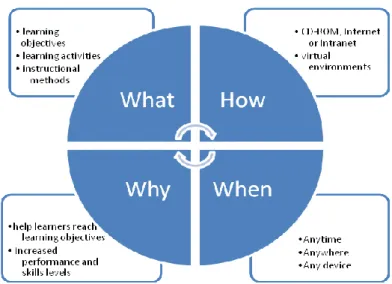
Figure 2.1: Adapted from overview of eLearning (Clark & Mayer, 2008, p. 10) ... 15
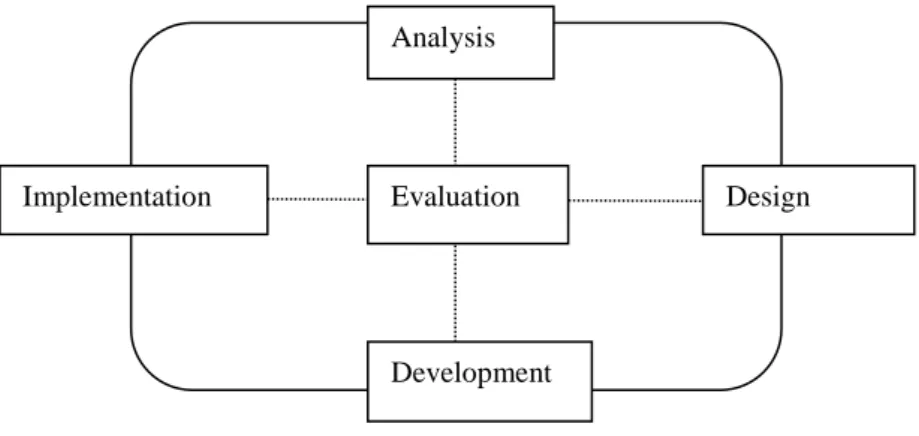
Figure 2.2: The ADDIE model (Arshavskiy, 2013)... 37
Figure 2.3: Dick and Carey Systems Approach model (Dick & Carey, 2006) ... 38
Figure 2.4: Seven affordances for eLearning ecologies (Cope & Kalantzis, 2013) ... 53
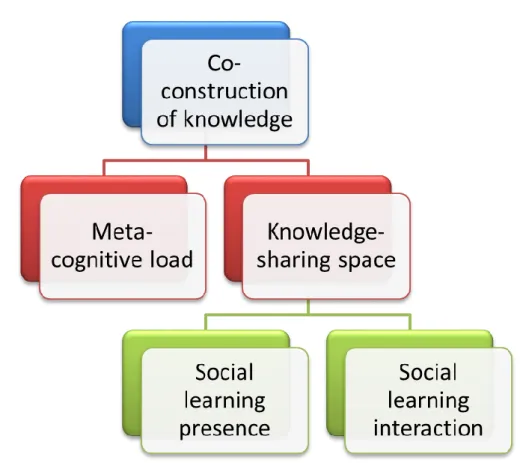
Figure 2.5: Preliminary framework for the study ... 68
Figure 3.1: Exploratory sequential design (Cresswell and Plano-Clark, 2011) ... 75
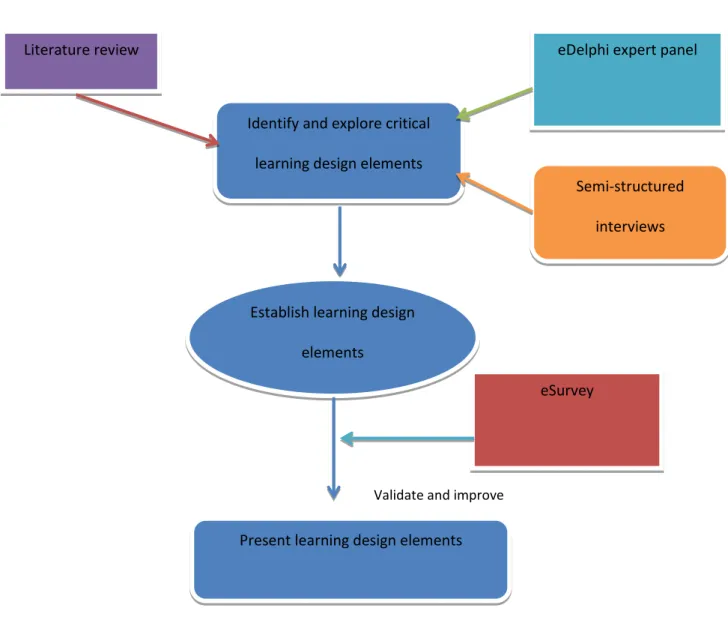
Figure 3.2: Exploratory sequential design applied to this study ... 76
Figure 4.1: eDelphi focus-group discussion ... 93
Figure 4.2: Panel members’ ratings for social learning presence, review criteria 1.1 ... 95
Figure 4.3: Panel members’ ratings for social learning presence, review criteria 1.2 ... 96
Figure 4.4: Panel members’ ratings for social learning presence, review criteria 1.3 ... 97
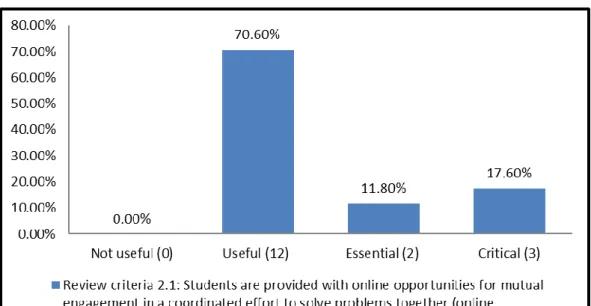
Figure 4.5: Panel members’ ratings for social learning interaction, review criteria 2.1 ... 99
Figure 4.6: Panel members’ ratings for socio-cognitive interaction, review criteria 2.2 ... 102
Figure 4.7: Panel members’ ratings for knowledge-sharing space, review criteria 3.1 ... 103
Figure 4.8: Panel members’ ratings for knowledge-sharing space, review criteria 3.2 ... 104
Figure 4.9: Panel members’ ratings for knowledge-sharing space, review criteria 3.3 ... 105
Figure 4.10: Panel members’ ratings for meta-cognitive load, review criteria 4.1 ... 106
Figure 4.11: Panel members’ ratings for meta-cognitive load, review criteria 4.2 ... 107
Figure 4.12: Panel members’ ratings for knowledge construction and transference, review criteria 5.1 ... 109
Figure 4.13: Panel members’ ratings for knowledge construction and transference, review
criteria 5.2 ... 110
Figure 4.14: Panel members’ ratings for knowledge construction and transference, review criteria 5.3 ... 111
Figure 5.1: Perceived elements of human-dimensions within eLearning ... 119
Figure 5.2: Relationship between perceived elements of human-dimensions ... 135
Figure 5.3: Instructional guidelines for learning design elements ... 136
Figure 5.4: Design challenges for online social interaction ... 145
Figure 5.5: Implications for social learning presence ... 150
Figure 5.6: Implications for social learning interaction ... 151
Figure 5.7: Implications for knowledge-sharing space ... 153
Figure 5.8: Implications for meta-cognitive load ... 155
Figure 5.9: Implications for knowledge construction ... 156
Figure 5.10: Preliminary findings for the eLearning framework ... 157
Figure 6.1: Employment position summary ... 164
Figure 6.2: Demographics ... 165
Figure 6.3: Importance of online facilitation tasks ... 166
Figure 6.4: Mean and standard deviation of online facilitation tasks ... 167
Figure 6.5: Learning tasks employed on a regular basis ... 170
Figure 6.6: Mean and standard deviation of online tasks regularly employed ... 171
Figure 6.7: Advice to promote student engagement in an online classroom ... 174
Figure 6.8: Mean and standard deviation of advice to promote student engagement ... 174
Figure 6.9: Activities to encourage students to find solutions ... 177
Figure 6.11: Facilitation tasks to encourage students to work collaboratively ... 179
Figure 6.12: Mean and standard deviation for facilitation tasks to encourage students to work collaboratively ... 180
Figure 6.13: Preferable actions in the online classroom ... 181
Figure 6.14: Mean and standard deviation for preferable actions in the online classroom . 182 Figure 6.15: Importance of organisational support ... 184
Figure 6.16: Mean and standard deviation for organisational support ... 185
Figure 6.17: Respondents’ sentiments about online learning ... 186
Figure 6.18: Rate your enjoyment level for teaching online ... 187
Figure 6.19: Recommend online learning to a student or colleague ... 188
Figure 6.20: Ranked most enjoyable for online teaching ... 189
Figure 6.21: Rated least enjoyable for online teaching ... 191
Figure 7.1: Summary of social learner presence ... 199
Figure 7.2: Summary of social learning interaction ... 202
Figure 7.3: Summary of knowledge-sharing space ... 205
Figure 7.4: Summary of meta-cognitive load ... 207
Figure 7.5: Summary of knowledge construction ... 209
LIST OF TABLES
Table 2.1: Timeline of learning theories ... 32
Table 2.2: Example of SAMR model (Lubega et al., 2014) ... 49
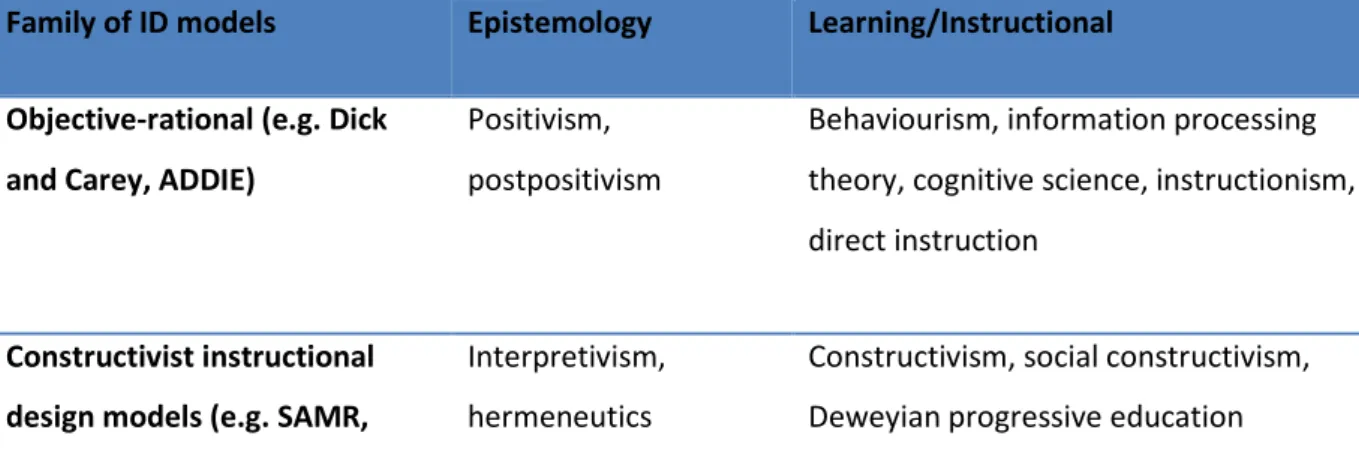
Table 2.3: The choices made by developers of objective-rational and C-ID models ... 53
Table 2.4: Summary of comparison between objective-rational and constructivist-interpretivist instructional design (C-ID) models (Willis, 2009b, pp. 22-23) ... 54
Table 2.5: Definition of social learning presence... 60
Table 2.6: Definition of social learning interaction... 62
Table 2.7: Definition of knowledge-sharing space ... 64
Table 2.8: Definition of meta-cognitive load ... 66
Table 2.9: Definition of knowledge co-construction ... 67
Table 3.1: eDelphi process ... 83
Table 4.1: Demographic details of the respondents ... 94
Table 5.1: Demographics of interviewees ... 115
Table 5.2: Preliminary categories for semi-structured interviews ... 116
Table 5.3: Summary table of categories and source codes ... 117
Table 6.1: Distribution of the survey ... 162
Table 6.1: Items regarding importance of online facilitation tasks, levels of education ... 267
Table 6.2: Items regarding learning tasks employed, levels of education ... 267
Table 6.3: Items regarding effective advice of online facilitation to promote student engagement in an online classroom, levels of education ... 269
Table 6.5: Items regarding preferable actions in the online classroom, levels of education 270 Table 6.6: Items regarding preferable actions in online classroom, years of experience ... 270 Table 6.7: Items regarding importance of organisational support, levels of education ... 270 Table 6.8: Items regarding importance of organisational support, years of experience ... 271
GLOSSARY OF TERMS
Term Description
Asynchronous
communication method
Asynchronous communication does not require all parties involved in the communication to be present at the same time. Some examples are email messages, discussion boards, blogging, and text messaging over mobile phones. In distance (specifically online) education, asynchronous communication is the major (sometimes the only) method of communication (Jones, 2007). Refer also to synchronous communication.
Authentic assessment An assessment presenting tasks that reflect the kind of mastery demonstrated by experts. Authentic assessment of a student's ability to solve problems, for example, would assess how effectively a student solves a real problem (Herrington, Reeves, & Oliver, 2010).
Behaviourism A theory suggesting that learning occurs when an environmental stimulus triggers response or behaviour. Based on classical conditioning theory, behaviourism applies to educational practices that reward performance behaviours to encourage repetition of those behaviours. Rote memorisation and drill-and-practice instruction are supported by behaviourist theory (Skinner, 1968).
Benchmark A statement that provides a description of student knowledge expected at specific grades, ages, or developmental levels. Benchmarks often are used in conjunction with standards (Arshavskiy, 2013).
Blended learning A formal education program in which a student learns at least in part through delivery of content and instruction via digital and online media with some element of student control over time, place, path, or pace (Badcock, Pattison, & Harris, 2010).
Blog A web page that serves as a publicly accessible personal journal for an individual. Typically updated daily, blogs often reflect the personality of the author (Allen, 2003).
Cognitive science A science investigating how people learn rather than what they learn. Prior knowledge and out-of-classroom experience help form the foundation on which teachers build effective instruction. Also referred to as the study of the mind (Gagne & Merrill, 1990).
Constructivism A theory suggesting that students learn by constructing their own knowledge, especially through hands-on exploration. It emphasises that the context in which an idea is presented, as well as student attitude and behaviour, affects learning. Students learn by incorporating new information into what they already know (J. Biggs, 2003). Course Management System (CMS) (also known as a Learning Management System — LMS)
Software that automates the administration of a class website. It often includes modules for online class discussions, grade books, homework turn-in and pickup, class calendars, and tools to make it easy to upload documents and link to electronic course reserves (Clark & Mayer, 2008).
Critical thinking Logical thinking that draws conclusions from facts and evidence (J. Bradley, 2010).
Discussion boards Forums on the internet or an intranet where users can post messages for others to read (Chen, Pedersen, & Murphy, 2011).
Distance education Using technology to support the learning process in different locations (Chew, Jones, & Turner, 2008).
Educational design The process of identifying the skills, knowledge, information and attitude gaps of a targeted audience and creating, selecting or suggesting learning experiences that close this gap, based on instructional theory and best practices from the field (Bean, 2014).
eLearning (electronic learning)
A term covering a wide set of applications and processes, such as web-based learning, computer-web-based learning, virtual classrooms, and digital collaboration. It includes the delivery of content via internet, intranet/extranet (LAN/WAN), audio- and videotape, satellite broadcast, interactive TV, CD-ROM, and more. For the purpose of this study, the following definition is accepted: eLearning is an approach to teaching and learning, representing all or part of the educational model applied, that is based on the use of electronic media and devices as tools for improving access to training, communication and interaction that facilitates the adoption of new ways of understanding and developing learning (Sangrà, Vlachopoulos, & Cabrera, 2012).
Emerging technology A new technology that is currently being developed, or will be developed within the next five to ten years (Williams, Karousou, & Mackness, 2011).
Face-to-face delivery Any form of instructional interaction that occurs ‘in person’ and in real time between educators and students (C. White, Ramirez, Smith, & Plonowski, 2010).
Facilitator A role for teachers that allows students to take a more active role in learning. Teachers assist students in making connections between classroom instruction and the students' own knowledge and experiences by encouraging students to create new solutions, by challenging their assumptions, and by asking probing questions (Barton, Corbitt, & Nguyen, 2009).
Formative assessment The purpose of the formative assessment is to monitor and guide the students through a process while it is still in progress rather than assessing the students when the project is complete. The formative assessment is basically a form of informal observation where the teacher can make decisions regarding specific problems with the instruction and determine how well students are responding to the instruction (compare to summative assessment) (J. Biggs, 2003).
Human-computer interaction (HCI)
A discipline concerned with the design, evaluation and implementation of interactive computing systems for human use and with the study of major phenomena surrounding them (Proctor & Kim-Phuong, 2008).
Hands-on/minds-on activities
Activities that engage students' physical as well as mental skills to solve problems. Students devise a solution strategy, predict outcomes, activate or perform the strategy, reflect on the results, and compare the end results with their predictions (Oreilly, Lefoe, Philip, & Parrish, 2010).
Higher-order thinking skills
Understanding complex concepts and applying sometimes conflicting information to solve a problem, which may have more than one correct answer (Bloom, Engelhart, Furst, Hill, & Krathwohl, 1956).
Informal knowledge Knowledge about a topic that students learn through experience outside of the classroom (Gârlaşu, Dumitrache, & Stanescu, 2005).
Instructional design The genre that deals with instruction and the presentation of information to facilitate and maximise the learning process (Merrill, Barclay, & Van Schaak, 2008, p. 173).
Instructional technology A field concerned with improving the efficiency and effectiveness of instruction, involving designing instruction (including all the phases of activity from needs assessment to evaluation) and applying learning theory to instructional design (Clark & Mayer, 2008).
Learner-centred classroom
A classroom in which students are encouraged to choose their own learning goals and projects. This approach is based on the belief that students have a natural inclination to learn, learn better when they work on real or authentic tasks, benefit from interacting with diverse groups of people, and learn best when teachers understand and value
in a lesson, a unit of learning or a course (Reigeluth, 2009).
Learning Management System (LMS)
Software that automates the administration of a class website. It often includes modules for online class discussions, grade books, homework turn-in and pickup, class calendars, and tools to make it easy to upload documents and link to electronic course reserves (Majeski, Stover, & Ronch, 2015).
Learning platforms Internal or external sites often organised around tightly focused topics. These sites contain technologies (ranging from chat rooms to groupware) that enable users to submit and retrieve information (Rennie & Morrison, 2013).
Learning portal Any website that offers learners or organisations consolidated access to learning and training resources from multiple sources. Operators of learning portals are also called content aggregators, distributors, or hosts (Francisco, 2013).
Meta-cognition The process of considering and regulating one's own learning. Activities include assessing or reviewing one's current and previous knowledge, identifying gaps in that knowledge, planning gap-filling strategies, determining the relevance of new information, and potentially revising beliefs on the subject (Schwonke, 2015).
Mobile learning (m-learning)
Learning across multiple contexts, through social and content interactions, using personal electronic or mobile devices (Henderson, Selwyn, & Aston, 2015).
Multimedia A term that encompasses interactive text, images, sound, and colour. Multimedia can be anything from a simple PowerPoint slideshow to a complex interactive simulation (C. Moore & Signor, 2014).
Online The state in which a computer is connected to another computer or server via a network. A computer communicating with another computer (Harris, 2010).
Online community A meeting place on the internet for people who share common interests and needs. Online communities can be open to all or be limited to membership only and may or may not be moderated (Mavroudi, Hadzilacos, Kalles, & Gregoriades, 2015).
Online learning Learning delivered by web-based or internet-based technologies. Also referred to as web-based training and internet-based training (Harris, 2010). .
Problem-based or inquiry learning
A process in which students investigate a problem, devise and work through a plan to solve the problem, and propose a solution to the problem (Reigeluth, 2009).
Real-time communication Communication in which information is received at (or nearly at) the instant it is sent. Real-time communication is a characteristic of
synchronous learning (Kehrwald, 2008).
Social constructivism Social constructivism recognises that knowledge is constructed through social interaction and is a shared rather than an individual experience (Vygotsky, 1978).
Social media The collective of online communications channels dedicated to community-based input, interaction, content sharing and collaboration. Websites and applications dedicated to forums, micro-blogging, social networking, social bookmarking, social curation, and wikis are among the different types of social media (Cope & Kalantzis, 2013).
Social network A set of nodes (e.g. persons, organisations) linked by a set of social relationships (e.g. friendship, transfer of funds, overlapping membership) of a specified type (Noharia & Eccles, 1992, p. 4).
Summative assessment Summative assessment is usually administered at the end of a unit of instruction and is used as a formal assessment of the task given to students. It includes graded tests, worksheets and projects. Summative assessments are given less frequently than formative assessments; they are, however, an important means for the teacher to judge the overall effectiveness of a learning activity (Boyle & Ravenscroft, 2012).
Synchronous
communication method
Direct communication where the communicators are time synchronised. This means that all parties involved in the communication are present at the same time. This includes, but is not limited to, a telephone conversation (not texting), a company board meeting, a chat room event and instant messaging (Jones, 2007).
Synchronous learning A real-time, instructor-led online learning event in which all respondents are logged on at the same time and communicate directly with each other. In most platforms, students and teachers can use a whiteboard to see work in progress and share knowledge. Interaction may also occur via audio- or video-conferencing, internet telephony, or two-way live broadcasts (Ellis, Jarkey, Mahony, Peat, & Sheely, 2007).
User-interface design (UI) Everything designed into an information device with which a human being may interact (Nielsen, 1993).
User-friendliness Easy to learn, ease of use, easy to understand, or easy to deal with (Norman & Draper, 1986).
User-experience The overall experience of a person using a product such as a website or computer application, especially in terms of how easy or pleasing it is to use (Norman, 2004).
Video-conferencing Conducting a conference between two or more respondents at different sites by using the internet to transmit audio. For example, a point-to-point (two-person) video-conference works much like a video telephone. Video-conferencing involves using video and audio signals to link respondents at different and remote locations (O'Donnel, Mulwa, Sharp, & Wade, 2013).
Virtual classroom An artificial computer-generated environment that is experienced through sensory stimuli and in which special equipment allows the user to interact with the simulation (Oreilly et al., 2010).
Web 2.0 The second stage of development of the internet, characterised especially by the change from static web pages to dynamic or user-generated content and the growth of social media (Waycott & Gray, 2011).
A FRAMEWORK FOR CO-CONSTRUCTION OF KNOWLEDGE
WITHIN ELEARNING
ABSTRACT
Instructional designers, course developers and academics require ways to create eLearning courses rapidly and support learners to be engaged with authentic learning tasks. Social media tools within eLearning courses are in the discovery phase and rely heavily on social constructivist design that includes meta-cognition, collaborative learning, active knowledge-making and recursive feedback. Emergent models and frameworks that allow for optimisation of social networking and the co-construction of knowledge are required for sound eLearning design.
This research study investigates the effectiveness of learning design elements and identifies components informed by a constructivist instructional design (C-ID) approach. The study explores how learning design elements that facilitates the co-construction of knowledge can be implemented within a framework applicable to the Australian eLearning higher education context. Pragmatism as a research paradigm views knowledge as constructed and based on the reality of the world one experiences and lives in, and aligns with a social constructivist approach. Following on from a pragmatic viewpoint, this study selected exploratory sequential design within a mixed methods approach as it enables both narrative data collection and numerical analysis.
A group of subject-matter experts from Australian higher education institutions were purposefully invited to participate in an eDelphi expert panel. A total of 53 (n = 53) instructional designers and academics that adhered to the selection criteria were contacted by means of email. Seventeen (17) respondents agreed to the study, resulting in a response rate of 32%. Qualitative data sets of semi-structured interviews with respondents were analysed to determine emergent themes and topics.
An electronic questionnaire was administered to a larger sample. The survey was sent out to 434 prospective respondents, of which 143 started the survey and n = 113 respondents completed all Likert scale questions in the survey. The Wilcoxon rank-sum test and Kruskal–
Wallis process were applied to investigate if the perception of respondents was different depending on variables identified for the research.
Complex, multi-layered eLearning modalities are a new field within instructional design, and there are minimal empirical studies for instructional designers and course developers to find shared meaning of critical learning design elements. The results from the study indicated that learning design elements associated with constructivist concepts such as social learning presence, learning interaction, meta-cognitive load, knowledge-sharing space and knowledge construction are conducive to social networking and the co-construction of knowledge. The categories emerging from coding of the data sets were learning activities and interactivities, social communication, collaboration, diversity, fears and the student-lecturer relationship. These categories need to be considered when designing for social learning interaction as they are aimed at addressing human interaction with technology. Relationships surrounding activities therefore need to be taken into account when designing the learning activities, and not merely the learning content and outcomes.
The instructional guidelines considered most important when designing for online social interaction were authentic, meaningful and relevant instruction; conscious modelling of behaviour; rules for engagement; user-centred design; and spontaneous design. Establishing a strong social learning presence fosters the building of trust and opportunities to create social learning experiences critical for social networking.
The eLearning framework presented by this study underpins a shared meaning, categories and recommended learning activities that can be utilised by instructional designers, academics and course developers when creating multi-layered complex online learning spaces.
CHAPTER 1 INTRODUCTION
At its best, eLearning is as good as the best classroom learning. At its worst, it is as bad as the worst classroom learning. The difference is design. (Horton, 2006, p. 3)
1.1
Background to the study
1.1.1 eLearning and social networking
Modern instructional systems are aimed at creating supportive electronic learning spaces that include social networking and co-creation of new knowledge, as opposed to traditional paper-based materials (Palmer & Holt, 2014). Social networking has the potential to play an enormous positive role in enhancing the student experience, for example, by providing learner support, peer-to-peer interaction and educational ‘play-spaces’ (Rennie & Morrison, 2013).
Students have come to expect the same interpersonal interactions and social cues they experience on-campus when participating in an online learning activity (Slagter Van Tyron & Bishop, 2009; Wise, Padmanabham, & Duffy, 2009). The ways that students construct knowledge in a collaborative setting are informed by the social constructivist approach to learning (Almala, 2006) and this contributes to the learning being internalised as opposed to rote learning and memorisation. A social network can be described as a set of nodes (e.g. persons, organisations) linked by a set of social relationships (e.g. friendship, group membership, shared interest) of a specified type (Noharia & Eccles, 1992, p. 4). The application of social networking technologies in the online environment draws the focus of this research on the intersection between education, learning and teaching within
1.1.2 Definition of eLearning for the purpose of this study
Electronic learning (henceforth referred to as eLearning) can be argued to be a natural extension of disciplines such as instructional design and distance education. In recent years mobile technologies (e.g. tablets, mobile phones, smartphones, iPads) have become increasingly popular devices and are now also used to access the online learning modality (Strong, Irby, Wynn, & McClure, 2012). eLearning is not restricted to distance education, and takes on various modes, such as blended learning, hybrid learning or mixed-mode education. This means that face-to-face (classroom) interaction can be blended with asynchronous (not real-time) and synchronous (real-time) methods of computer-mediated communication (Wise et al., 2009). Sangrà et al. (2012) postulated an extended definition of eLearning as an approach to teaching and learning that applies educational models based on the use of electronic media and devices to access online educational environments, namely:
‘eLearning … is based on the use of electronic media and devices as tools for improving access to training, communication and interaction that facilitates the
adoption of new ways of understanding and developing learning’ (Sangrà et al., 2012).
Despite the exponential growth of eLearning course offerings and this promise of anywhere, anyhow and anytime learning, students continue to report feelings of social disconnectedness (Limniou & Smith, 2010). In order for students to achieve a sense of connection, they need to establish social learning presence, referring to their ability to project themselves socially and affectively into a learning community.
1.1.3 eLearning and instructional design within the context of this study
The literature supports differing uses of the term ‘eLearning’. For the purpose of this study, learning design elements that occur within the boundaries of institutional learning management systems (LMSs) and assessments facilitated by academics of particular university infrastructure within the Australian context are considered. eLearning presents all kinds of challenges within Australian higher education. Educators and students often have to deal with information overload, and they need to keep pace with understanding the ever-changing technologies in education, which often places end-users on a steep learning curve (Chen et al., 2011).
Academics and course developers need to integrate the use of emerging technologies with learning design. All stakeholders in the learning process need to act as end-users and know how to use the emerging technologies effectively (Tucker & Gentry, 2009). eLearning attrition and retention rates are often lower than those of face-to-face instruction, and student engagement seems to play a role with student drop-out statistics (Henderson et al., 2015). This study investigates the ways in which social networking and the co-construction of knowledge can be facilitated within the eLearning environment to further promote student engagement as a recognised aspect of student retention.
Horton (2006) cautions that ‘design’ is not the same as development. Design is a decision that governs what we plan to do, and involves judgement, compromise, trade-off and creativity (Palmer & Holt, 2012). For the purpose of this research study, ‘instructional design’ is seen as the genre that deals with the instruction and presentation of information
The terms ‘instructional design’, ‘educational design’, ‘instructional technology’, and more recently ‘learning design’ overlap and are sometimes used interchangeably. The use of a
variety of terms to denote the design activities often creates confusion as to what is meant when referring to the role of the instructional designer (Limniou & Smith, 2010). Instructional design methodology can be used by a variety of eLearning practitioners (academics, instructional designers, multimedia designers, course developers, etc.) and is not restricted to the instructional designer.
1.1.4 Constructivist instructional design
Constructivist educators view learning as an active process in which learners create new ideas and connections through the reconstruction of experiences (Von Glaserfeld, 1993). Therefore, when engaging in activities online, learners ought to be active and then be given the opportunity to reflect on what they have learnt. Constructivist instructional design is aimed at constructing eLearning environments in such a way that optimal learning, including generic skills development, may take place (Dick & Carey, 2006; Ellis et al., 2007; Merrill et al., 2008). Collaboration with other learners is therefore essential to create knowledge in the first instance. Individual reflection should be followed up with social networking to check the student’s learning progress (Kirschner, Sweller, & Clark, 2006).
1.1.5 Knowledge construction and online learning design
The design of online learning activities and social interactions often incorporates technologically supported delivery that enables online discussions using tools such as wikis and blogs (Waycott & Gray, 2011). Delivery modes using emerging technologies are not always incorporated in a mindful way from the outset of the eLearning course or module design (Henderson et al., 2015; Majeski et al., 2015). Learners ought to construct their own knowledge rather than accepting what is delivered and disseminated by the instructor (Jonassen, 2005). Knowledge construction is facilitated by good interactive online instruction since students complete activities that ensure they have to take the initiative to learn and to interact with other students and the instructor (O'Donnel et al., 2013).
It is not a given that the eLearning practitioner would discern which critical learning design elements promote both online social interaction and joint knowledge construction (Henderson et al., 2015). Although many facets of constructivist design are established, it is not always obvious how learning design elements could be designed within eLearning to support both a constructivist design approach and the use of technology to enable online interaction, hence the investigation of this study.
1.2
Justification for the study
Human-centred design approaches such as scenario-based, participatory, and global and intercultural design paved the way for constructivist instructional design approaches (Könings, Brand-Gruwel, & Merriënboer, 2010). Constructivist design relies on interpretive
Instructional designers and academic course developers require a framework to assist them to design eLearning courses that fully utilise new applications for social networking, especially as many of the social media tools are still in the discovery phase (Rennie & Morrison, 2013). Emergent models for eLearning show the importance of meta-cognition, collaborative learning, active knowledge-making and recursive feedback as essential components of course design (Cope & Kalantzis, 2013). However, Bradley (2010) observes that when designing a constructivist learning environment, ‘there are no established
standards and measurable outcomes, to provide a framework for the instructional designer’
(p. 22).
Therefore, despite it being recognised that learning design elements such as meta-cognition, collaborative and social learning are critical components, it is not always clear how these elements may be designed when more than one form of interaction (such as a combination of wikis, blogs and discussion forums) is utilised to support learning (Waycott, Sheard, Thompson, & Clerehan, 2013). Standardised lectures and discussions that are heavily pre-designed may not always provide opportunities for students to explore real-life problems, which are imperative for sense-making and knowledge construction (Waycott & Gray, 2011). Learners needs to be engaged in realistic tasks that provide opportunities for collaborative activities for authentic learning to occur, such as conducting a real-world survey or researching local history (Herrington et al., 2010).
An understanding of critical learning design elements for the effective use of emerging technologies to promote social networking for the co-construction of knowledge and associated learning performance assessment is key as a tool for eLearning practitioners
(Harris, 2010). This research study contributes by presenting an instructional framework that assists with developing learner interaction within a complex eLearning environment.
1.3
Research aim and objectives
The general aim of the research study is to investigate learning design elements for an eLearning framework that promote the use of emerging technologies for social networking and co-construction of knowledge. The instructional design under consideration is informed by a constructivist instructional design approach. The research aims to examine the effective use of online learning elements that can contribute towards a framework to optimise learning within the Australian eLearning higher education context.
The main objectives of the research study are as follows:
• Investigate the critical learning design elements for online collaborative learning that are informed by a constructivist instructional design approach.
• Validate the effectiveness of learning design elements for the co-construction of knowledge against the perceptions of eLearning practitioners in the field of Australian higher education.
The central research questions that steer the research study are as follows:
• What are the critical learning design elements for the co-construction of knowledge within eLearning that are informed by a constructivist instructional design approach?
performance effectiveness, in order to create a framework for optimised eLearning within the Australian eLearning higher education context?
1.4
Methodology
This study selected exploratory sequential design within a mixed methods approach, as it enables both narrative data collection and numerical analysis to explore the components related to the proposed eLearning framework (Cresswell & Plano-Clark, 2011, p. 69). The data collection techniques (namely the eDelphi expert panel and semi-structured interviews) of the qualitative strand emerge and are dependent on the next quantitative strand (namely the electronic survey), which leads up to an interpretation of the data (Krathwohl, 2004). Pragmatism as a research paradigm was applied as best match for the research problem in order to make the study manageable. Pragmatism views knowledge as constructed and based on the reality of the world one experiences and lives in, and this concept aligns with social constructivism (Teddlie & Tashakkori, 2009). A group of subject-matter experts from Australian higher education institutions were purposefully invited to participate in an eDelphi expert panel. The panel members provided ratings and contributed to the identification of learning design elements that are critical when designing a constructivist eLearning environment that supports social networking and co-authorship.
The researcher developed an electronic survey for a larger number of the sample population in which the identified categories of learning elements were considered in terms of effectiveness, thus being treated as variables (Cresswell & Plano-Clark, 2011, p. 71). The electronic survey contained questions concerning the following aspects:
• Effective activities for online facilitation;
• Importance of facilitation tasks in motivating and encouraging students to work collaboratively;
• Preferable activities for students in the classroom; and
• The importance of organisational support.
For each relevant learning design element item, a Wilcoxon rank-sum test and Kruskal–
Wallis test (Hollander & Wolfe, 1999) were performed to investigate if the perception of respondents was different depending on whether they were:
• Educated to different levels (Kruskal–Wallis test);
• Instructional designers for a different number of years (Kruskal–Wallis test); and
• Operating as instructional designers in Victoria (Wilcoxon rank-sum test).
The application of the Wilcoxon rank-sum test and Kruskal–Wallis process served to further highlight any differences in the backgrounds and profiles of respondents that may have influenced their perceptions of requisite learning design elements and their relative effectiveness for purpose.
1.5
Main contribution of the study
The main contribution of the study is an eLearning framework that instructional designers, course developers, academics and other eLearning practitioners can utilise when designing for social networking and co-construction of knowledge. The main findings of the study offer a shared meaning, criteria and recommended eLearning activities for each of the learning design elements within the framework that can be utilised by instructional designers, academics and course developers when creating complex eLearning environments.
1.6
Organisation of the thesis
The presentation of the research study is organised into chapters as outlined below.
Chapter 2: eLearning and constructivist instructional design provides an overview of the pertinent literature for the study, namely eLearning, instructional design within the field of eLearning, and prominent instructional design models are highlighted. Issues such as human-centred design and the creation of constructivist learning environments are discussed. This chapter also presents social constructivism as a theoretical framework for the study and highlights that the existing theory related to the five selected learning design elements, namely (i) social learning presence; (ii) social learning interaction; (iii) meta-cognitive load; (iv) knowledge-sharing space; and (v) knowledge construction.
Chapter 3: Methodology details the research methodology for the study. Pragmatism as a research paradigm and exploratory sequential research design are applied to this study. Justification for the selected methodology is provided, and the research design, aim and techniques are set out. The data analysis techniques and data collection, namely an eDelphi expert panel, semi-structured interviews and electronic survey, are presented.
Chapter 4: Identify learning design elements for social networking and co-construction of knowledge presents the qualitative analysis of the eDelphi expert panel. This chapter also discusses the findings derived from the panel of experts and a comparison with the literature.
Chapter 6: Validate and refine learning design elements reports the electronic survey analysis and findings that were distributed to course developers and academics facilitating within an online environment.
Chapter 7: Framework for social networking and co-construction of knowledge within eLearning deliberates the framework as suggested by the findings from the research project. The research enabled the development of an online and blended learning framework for social networking collaborative co-authorship to generate new knowledge. The research posits the use of the specified learning design elements to enable a positive learning experience with a focus on the use of social interaction supported by emerging technologies.
Chapter 8: Conclusions and future work summarises the findings, academic contributions of the study and future work.
CHAPTER 2 ELEARNING AND CONSTRUCTIVIST
INSTRUCTIONAL DESIGN
A mind that is stretched by a new experience can never go back to its original dimensions. Oliver Wendell Holmes Jr.
2.1
Introduction
The background to the study (Chapter 1) noted that students continue to report feelings of social disconnectedness and that this may adversely affect attrition and retention rates in eLearning. The literature review (Chapter 2) investigates emerging trends within the field of eLearning and instructional design to determine how practitioners are currently dealing with these issues. In attempting to understand how student engagement can be promoted in online learning by creating interaction that includes collaboration, reflection and generic skills development, it is important to firstly gain insight into the changing face of eLearning. The inclusions of collaborative and social media online tools are rapidly changing the presentation of online learning programs. The first section of this chapter discusses how these fundamental changes are impacting on how students are interacting with technology on a personal and global scale.
The second section of this chapter reviews how the emergent trends in instructional strategies support social networking and co-construction of knowledge within online learning design. The contribution of learning theories to instructional eLearning programs, the design of social interaction, higher-order thinking skills and the active construction of knowledge are considered.
This study is situated within Australian higher education and therefore attention was paid to the body of literature that pertains to the current developments and issues facing that sector. The learning theories, as discussed in this chapter, evolved from behaviourism as the first systematic study of behaviour to cognitive learning theories and modern-day social constructivism. Social constructivism declares that knowledge is acquired through collaboration with meaning negotiated from multiple perspectives and is in alignment with the purpose of social networking and co-construction of knowledge.
Instructional design models such as ADDIE, the Dick and Carey Systems Approach, the Rapid ISD model, and the Successive Approximation Model (SAM) focus on the design, development and evaluation phases of eLearning projects. However, these models describe the instructional design process used to create a learning product, and do not provide guidelines on how the social learning interaction within the space could be structured.
The emergent models, such as eLearning ecologies, derive that the learner is an active contributor towards the learning process instead of a passive receiver of information. However, instructional designers and course developers do not always have a shared meaning or consensus on the implementation of these processes in higher education academic practice. Emergent models of eLearning and social constructivism refer to the educational processes, such as active knowledge-making and meta-cognition, and serve as the point of departure for the eLearning framework that is the aim of this study.
2.2
The changing face of eLearning
The introduction of the World Wide Web, also known as Web 1.0, during the late 1980s popularised the delivery of eLearning and irrefutably changed the face of distance education and the traditional classroom (J. L. Moore, Dickson-Deane, & Galyen, 2011). White (2013) remarks that prior to the term eLearning, terms such as computer-assisted learning and/or training and computer-based learning and/or training were used.
Web 2.0 and social media
The introduction of collaborative environments and social media, known as Web 2.0, added yet another level of sophistication to learning design elements available in online and blended learning environments (Oreilly et al., 2010). Courses delivered in online environments were often supported by social constructivist thinking and a focus on collaboration (Pitman, 2013).
Open-access and online collaboration
Web 2.0 technologies enable students to publish and share content in forums hosted within or outside their university’s infrastructure. Open access to information and online collaboration across geographical areas enables co-authoring of information. Academic integrity including issues of authorship, ownership, attribution and acknowledgement can be disputed (Waycott, Bennett, Kennedy, Dalgarno, & Gray, 2010). It is no longer a simple choice between deciding what is desirable and what is reprehensible (Sellen, Rogers, Harper, & Rodden, 2009). eLearning practitioners need to be astutely aware of how one set of design choices may highlight certain values and exchanges at the expense of others when interacting with the technology (Oreilly et al., 2010).
Humans interacting with technology
We learn from each other by sharing our experiences, bouncing ideas off each other and working through problems, which is also the premise of social constructivism (Bean, 2014). The following fundamental changes are impacting on how students are interacting with technology on a personal and global scale.
• End of interface stability: Computers are no longer defined by a single interface, but rather by many different interfaces, or none at all. They are embedded in everyday objects such as home appliances, cars, books and toys. Developments in user-interface challenge the notion of locus of control of human-machine interaction as it can no longer be simply depicted by a keyboard and monitor (Sellen, Rogers, Harper, & Rodden, 2009). In the past, learning design elements made available as a dictate of instructional design were confined within a CD-ROM or stand-alone PC interfaces, whereas nowadays students may use any number of appliances to access their learning materials. This calls for a more fluid approach to design than the step-by-step product development models of the last century.
• Advancement of techno-dependence: Dependency on technological infrastructure increases and underpins most aspects of our lives, including work, travel and leisure. Computer technologies are more autonomous and sophisticated, and also reliant on each other in complex networks. Networked learning and the exponential growth of knowledge are changing the way we deal with information and also our views about knowledge (Downes, 2012).
• Growth of hyper-connectivity: Communication technologies are becoming more
influential, and ‘digital presence’ consumes more time. Increased connectivity has given rise to the creation and mobilisation of global communities, digital footprints and creative outputs.
• Mobile learning: Digital devices connected in a mobile environment embrace the notion of easy-to-access and mobile technologies that support learning (Cochrane, 2008). Published findings from a study that surveyed first-year students at an Australian university (Oliver & Gourke, 2007) found that a high proportion of students reported that they had access to the internet outside university and frequently used online resources for study purposes (93% and 87% respectively). Students are increasingly becoming producers and not just users of information, as facilitated by the ease of access to digital technologies.
• Increase of creative engagement: Flexible and easy-to-use computer tools allow for new levels of creativity. Increased user engagement results in more self-autonomy for users in terms of publishing, production and programming of user interfaces that enable interaction and the generation of multimedia objects.
Future policies may also need to accommodate a range of attitudes about learning and technology in different student cohorts and disciplinary contexts (Gray, Krause, Kennedy, & Chang, 2009). It is now easy to self-publish blogs and wikis, and social media has taken this to the next level by including peer-evaluation and critique (Cochrane,
The increased dependency on technology within the learning environment is no longer a luxury but a necessity, such as described by the field of social information processing.
2.3
Social information processing
Technology is being shaped by humans and society (Fagerberg et al., 2011). Social informatics (SI) as a research field place dual emphasis on humans and technology and attention needs to be paid to the overwhelming demands of social network systems that may lead to physical and psychological strain (Lee, Son, & Kim, 2016).
Atkinson and Shiffrin’s information processing model (1968)
The cognitive mechanism for comprehending one’s social environment is social information
processing. Atkinson and Shiffrin’s information processing model (1968) describes the relationship between human cognitive processing of knowledge and associated technologies. The difference between regular information processing and social information processing occurs at the initial, sensory register stage and arises out of the concept of the self and the recognition of others (Slagter Van Tyron & Bishop, 2009). Social cognition provides context and shapes behaviour for all respondents in an interaction and in turn affects the processing motives of the individual (Bandura, 2001).
Systems perspective for information processing (1989)
David Meister (1989) made an important contribution when he argued at the Human Factors Society conference that the appropriate unit of analysis when considering human factors was not the individual, but the system (Dainoff, 2009). A systems perspective included workstation, task, social and organisational factors within an integrated framework and consideration of the interplay between the infrastructure and human factors.
Context is an important part of understanding the technology and its impact on human behaviour and business. The systems approach was criticised as being too ‘social’, and trying to replace technical determinism with social determinism (Dainoff, 2009).
During the 1980s a more balanced approach emerged, viewing the technical and social components as of equal importance.
Technology Acceptance Model (1980)
An important development during the 1980s was the Technology Acceptance Model (Davis, 1989), arguing that the key to increasing the use of technology was the acceptance of technology (Holden & Karsh, 2010). New constructs in relation to collaborative technologies include compatibility, perceived resource, self-efficacy, sharing and peer influence needs to be included in the instructional design of learning spaces.
Human behaviour and the interaction between people and computer technologies are central to the production of effective online educational systems. The adoption of collaborative technologies is influenced by peers, and the perceived ease of use and instructional design or delivery of educational resources (Cheung & Vogel, 2013) also known as the human affect.
2.4
Human affect
Design of learning activities and assessments to be delivered within an online learning environment is crucial when creating a space where learners can acquire meaningful deep learning experiences as a result of ongoing social interactions and collaborative networks (Kehrwald, 2008).
Field of human-computer interaction (HCI) and instructional design
The field of human-computer interaction (HCI) encompass the complex and diverse patterns of human interest and aspirations at the intersection with computers and technical devices (Sellen et al., 2009). A deep understanding of our interactions with technology cannot be separated from social, environmental and economic contexts (Rogers, Sharp, & Preece, 2011).
It can be stated that HCI has moved beyond usability factors, now considering the user as a human being within a specific context, with socio-economic, cultural, language and relationship requirements. The goals of HCI research are: (i) improving interaction between humans and computers; and (ii) improving communication and cooperation between humans. Instructional design has an important contribution to make, as it is engaged with influencing human performance and facilitating optimal capabilities using technology efficiently (Merrill et al., 2008).
User behaviour and technology
From the 1960s onwards and concurrent with the advancement of computers, the educational landscape changed to accommodate the way that people interact with technology. During its infancy in the 1980s the field of HCI emerged mainly from computer-scientific and engineering endeavours (Sellen et al., 2009). Technological developments throughout the 1980s resulted in a major shift from expensive mainframes to less expensive computers. Technology-focused studies profile consumers to understand user behaviour based on certain attributes of the technology. A deterministic perspective of technology has influenced humans. Technology has been viewed as a driver for organisational change (Martin, Nightingale, & Yegros-Yegros, 2012).
Usability issues
The Association for Computing Machinery (ACM) hosted the inaugural Human Factors in Computer Systems conference (1992) in Gaithersburg, Maryland, USA (Hewett et al., 2008). This was a significant event in the establishment of a professional community with the aim of investigating human-computer interaction. The predominant theme during this decade was that computer technology and people interact (usability issues) (Dix et al., 1993).
HCI incorporated techniques from cognitive psychology, ergonomics, human-factors and
engineering to analyse and optimise the user’s interaction with a desktop computer (Sellen
et al., 2009; Winters & Toyama, 2009). The user was observed under controlled conditions, inferring what kinds of perceptual, cognitive and motor processes were involved, and theories were developed accordingly (Proctor & Kim-Phuong, 2008; Sellen et al., 2009).
With the onset of the 1990s, the objectives of HCI changed along with the growth of communication networks that linked computers. Researchers also started examining how users interacted with each other (Rogers et al., 2011). Researchers from various backgrounds in more socially orientated sciences, such as sociology and anthropology, began investigating HCI (Ashman et al., 2012).
Ethnographic approaches
The turn of the millennium and the start of the 2000s brought further developments for the
field of HCI, as an understanding of the importance of ‘ease of use’ and ‘user sati