A multi-agent system framework for decision support in Stock Trading
Yuan LuoSchool of Computing, Staffordshire University, Stafford, ST18 0DG, UK. [email protected] Darryl N. Davis
Neural, Emergent and Agent Technologies Group, Department of Computer Science, University of Hull, HU6 7RX, UK. [email protected] Kecheng Liu
School of Computing, Staffordshire University, Stafford, ST18 0DG, UK. [email protected]
Abstract: A distributed problem solving system can be characterised as a
group of individual agents running and co-operating with other agents to solve a problem. As dynamic domains such as stock trading are continuing to grow in complexity, it becomes more difficult to control the behaviour of agents in the domains where unexpected events can occur. This paper presents an information and knowledge exchange framework to support distributed problem solving in the stock trading domain. It addresses two important issues: (1) How individual agents should be interconnected so that their capacities are efficiently used and their goals are accomplished effectively and efficiently; (2) How the information and knowledge transfer should take place among agents to allow them to respond successfully to user requests and unexpected situations in the outside world. The focus of this paper is dynamic knowledge exchange among MASST agents. A co-ordinator agent together with a decision enabling warehouse acting as a dynamic blackboard plus direct intercommunication among the agents enable facts, commands, and rules to be transferred between MASST agents. Knowledge can be exchanged among the agents by using a combination of facts, rules and commands transfers. This framework has been partially implemented and has been proven to be a viable implementation for multi-agent approaches for decision support in stock trading.
Keywords: Distributed Problem Solving, Multi-Agent System, Knowledge
Exchange, Stock Trading.
1. Introduction
All applications covered by Distributed Problem Solving (DPS) assume that it is possible to carry out a complex task by calling upon an assembly of specialists possessing complementary skills. When the problem is so wide and complex that one person cannot possess all skills to solve the problem, it is necessary to call upon several specialists, who must work together in pursuing a common objective. These specialists co-operate with one another to solve a common problem such as a medical diagnosis [25], the design of an industrial product [14], the acquisition of knowledge, fault finding in nets [15], the recognition of shapes [9], or the understanding of natural language [20].
A DPS system can be characterised as a group of individual agents running and co-operating with other agents to solve a problem. As dynamic domains, such as stock trading, continue to grow in complexity, it becomes more difficult to control the behaviour of agents where unexpected events occur. In recent years, there has been a considerable growth of interest in the design of intelligent agent architectures for dynamic and unpredictable domains. Most of today's intelligent agent architectures are limited to performing pre-programmed or human assisted tasks. In a multi-agent system the agents should be able to interact with each other and with
their environment in an adaptable manner. Each agent typically has a local view of the environment, generally has specific goals and alone is unable to solve the system devoted global task. The global characteristics of such a system thus emerges from the co-operation of its component parts. This co-operation, in turn, impinges on the interactions between agents and subtly modifies the properties of the system [13]. In order to be more useful in complex real world domains, agents need to be more flexible. They need to learn how to respond promptly to unexpected events while simultaneously carrying out their pre-programmed tasks in response to subtly modified triggers.
It is highly possible that an agent with a responsibility in a dynamic environment faces unexpected events. In order to be responsive, the agents should have enough knowledge to deal with unexpected events. If an agent is not able to deal with a particular event on its own, it can take one or more of the following actions: 1) Learn how to solve the problem by experimenting with different solution strategies. 2) Let some other knowledgeable agent solve the problem and then use the results. 3) Learn how to solve the particular problem by acquiring the necessary knowledge from other agents capable of solving the problem. 4) Ignore the unexpected event [5]. For a real time application domain such as the stock trading, action 1 may not be suitable because it may take a long time to obtain the solution. Action 2 is a natural way for co-operating agents to solve the problem. However, it is not suitable for scenarios where large volumes of data are involved in either the event or result. For action 3, there may be no huge volume of network transferred data but the agents themselves must be quite sophisticated. They need to temporarily (maybe permanently) keep the knowledge acquired from other agents and then to learn how to use this knowledge to solve the particular problem.
For the domain of stock trading, we proposed a multi-agent framework for stock trading (MASST) [16]. MASST is a closely collaborating agent system in which every agent has its own specialised capabilities and knowledge, and no one agent has the whole knowledge about the world. All the task specific MASST agents are situated on the same machine. Hence we do not need to worry about huge volume data transfers over a network. Based on the discussion above, the
MASST agents will take actions 2 and 4 listed above to deal with a particular event. The objective of this paper is to investigate and recommend a framework to support distributed problem solving for action 2.
In this paper, we address two important issues:
1) How individual agents should be interconnected so that their capacities are efficiently used and their goals are accomplished effectively and efficiently.
2) How information and knowledge transfer should take place among agents to allow them to respond successfully to user’s request and unexpected situations.
The remainder of this paper, section 2 gives some background about the application of agents in the stock trading domain. Section 3 briefly describes the MASST framework. Section 4 discusses in detail the information and knowledge exchange framework used in the MASST agents. Section 5 describes our implementation and experimentation, while section 6 provides conclusions for this paper.
2. Background
Intelligent agents are software entities that act on behalf of their human users in order to carry out arduous information gathering and processing tasks. This includes locating and accessing information from various on-line information sources, resolving inconsistencies in the retrieved information, filtering away irrelevant or unwanted information, integrating information from heterogeneous information sources and adapting over time to their human user’s information needs. Intelligent agents work by allowing people to delegate tasks that they could have done, to the agent software. Agents can automate repetitive tasks, remember things you forget, intelligently summarize complex data, learn from you, and make recommendations to you.
Agent technology is especially suitable to address issues concerned with portfolio management domain. Sycara et al. [23] analysed the task of the portfolio management domain. They pointed that this is the task of providing an integrated financial picture for the management of an investment portfolio over time, using the information resources already available over the Internet. This task environment has many interesting features, including: (1) the enormous amount of continually changing, and generally unorganised information available, (2) the variety of kinds of information that can and should be brought to bear on the task (market data, financial report data, technical models, analysts’ reports, breaking news, etc.), (3) the many sources of uncertainty and dynamic change in the environment. The overall task in the portfolio management domain is to provide the best possible rate of return for a specified level of risk, or conversely, to achieve a specified rate of return with the lowest possible risks. A multi-agent system approach is natural for portfolio monitoring because the multiple control threads in such a computational model are a natural match for the distributed
and ever-changing nature of the underlying sources of data and news that affect higher-level decision-making process. A multi-agent system can more easily manage the detection and response to important time-critical information that could appear suddenly at any of a large number of different information sources. A multi-agent system provides a natural mapping of the multiple types of expertise to be brought to bear during any portfolio management decision-making.
Rus and Subramanian [19] presented a customisable architecture for software agents that capture and access information in large, heterogeneous, distributed electronic repositories. The key idea is to exploit the underlying structure at various levels of granularity to build high-level indices with task-specific interpretations. Information agents construct such indices and are configured as a network of reusable modules called structure detectors and segmenters. They illustrate their architecture with the design and implementation of smart information filters in two contexts: retrieving stock market data from Internet newsgroups and retrieving technical reports from Internet FTP sites.
Benos and Tzafestas [2] presented a methodology of studying the complex phenomena emerging in stock markets. Their methodology is based on the use of distributed multi-agent models with minimal knowledge representation and reasoning capabilities. Such agents have proven to be a powerful modelling tool for complex biological systems. Unlike neural models, they reported that their models allow a comparative and incremental evaluation of validity and relevance to the observed phenomena. The possibility of their application to the modelling and study of stock market phenomena was demonstrated on a simple example of a central agency that regulates the behaviour of the investors.
Delgado et al. [8] investigated a hybrid learning system that combines different fuzzy modelling techniques. In order to implement the different methods, they proposed an architecture that permitted the collaboration of many intelligent agents. This approach, involving agents that embody the different problem solving methods, is a potentially useful strategy for enhancing the power of fuzzy modelling systems. Working with stock markets requires constant monitoring of the continuously changing stock information, and the ability to take decision instantaneously based on certain rules as the changes occur. Garcia et al. [12] recently reported on a framework for implementing a deliberative multi-agent system for this domain. This system can be used as a proactive tool for expressing and putting to work high-level stock trading strategies. In the framework, agents are able to monitor and extract the stock market information via the World Wide Web and, using the domain knowledge provided in the form of defeasible rules, can reason in order to achieve the established goals. The overall system is integrated using Jinni (Java INference engine and Networked Interactor), which provides a platform for building
intelligent autonomous agents [24], and Defeasible Logic Programming (DeLP), which provides the agents with the capability of reasoning using defeasible rules in a dynamic and changing domain.
Even though there are several agent-based approaches reported in literature that address the issues in the financial trading domain, most of the current agent-based approaches focus on how to retrieve the information from the distributed resource (the Internet). The use of intelligent agents to support decisions has not been thoroughly explored and merits serious consideration. In current practice portfolio management is carried out by investment houses who employ teams of specialists for finding, filtering and evaluating relevant information. Based on their evaluation and on predictions of the economic future, the specialists make suggestions about buying or selling various financial instruments. The current practice, as well as software engineering considerations, motivates our research in multiple agent systems for the stock management. A multiple agent system approach is natural for portfolio management because of the multiplicity of information sources and the different expertise that must be brought to bear to produce a good recommendation for a stock buy or sell decision.
3. MASST Framework
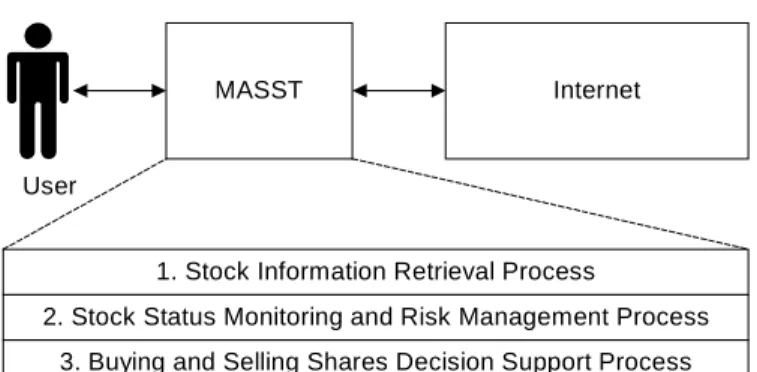
MASST is a middle layer agent system situated between the demand side of information (i.e. investors in stock market) and the supply side of information (i.e. the Internet). Fig. 1 shows the MASST scope and its context.
Fig. 1. MASST Scoped Organisational Context
The major functions of MASST include:
vStock Information Retrieval – this function is not a unique function of our system. Nowadays many online brokers and commercial stock analysis software can provide this function. Thus our research does not focus on this field. As this is a basic requirement of investors and users, MASST will provide four categories of information retrieval. (a) Obtaining trading history and current quotations, such as the information of Opening Price, Highest Price, Lowest Price, Current Price, Trading Volume for the selected stock
on given trading date. (b) Browsing stock technical analysis charts, such as price movement chart (for example Candlestick Chart), trading volume chart, and various technical indicators chart. (c) Obtaining listed company’s fundamental data and financial health information retrieval, such as total amount of stock trading volume, after-tax profits, earnings per share, annual earnings increases, number of common shares, new products or services, new management, and the market news. (d) Retrieving market statistics information, such as the list of top ten shares of maximum trading volume in the given trading day(s), the list of top ten shares of maximum price upward (or downward), the list of top ten of the lowest Price-Earning Ratios.
vStock Status Monitoring and Risk Management – MASST will automatically monitor the market status of the shares that the user holds and are of interest. The share’s market status includes the listed company’s fundamental financial status and status of the share’s technical indicators. Based on the share’s market status, MASST will automatically and promptly report any abnormal status to users. Such status indicators include: (a) abnormal price fluctuation; (b) abnormal trading volume; (c) technical indicator’s status abnormal, (d) price chart pattern abnormal, and (e) some break news relating to the given shares. Furthermore, MASST will provide profits and risks management including calculation of profits/risk ratio based on shares’ market status and user’s investment, and reminders of stop-loss level for holding shares according to the user’s profile.
vBuying and Selling Shares Decision Support – From the investors’ perspective, the most important and concerned issues for investment in stock market are the buying and selling of share issue. Which share is the best one to buy? What time is the right time to buy the share? What time is the right time to sell your holding shares? It is difficult (maybe impossible) to find a simple and accurate answer for these kinds of questions. Every investor has his/her own buying and selling share strategies and rules. MASST will provide buying and selling decision support based on behaviour rules defined by the investors themselves. Through a combination of human and machine knowledge, using agent and AI technologies, MASST aims to reduce investors’ work overload in the process of stock analysis and investment decision-making.
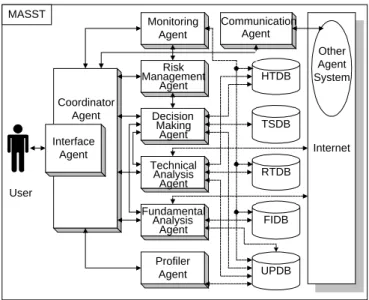
We are implementing the MASST framework as shown in Fig. 2. MASST provides a unified environment in which several agents are integrated. These intelligent agents inter-operate to collect, filter, and fuse information from distributed, network-based information sources and to make buying and selling decision suggestions for investors in their daily stock trading.
MASST Internet
User
1. Stock Information Retrieval Process
2. Stock Status Monitoring and Risk Management Process 3. Buying and Selling Shares Decision Support Process
One of the key components in this framework is the User Profile Database (UPDB), which is dynamic, changing and shared amongst agents within the system. Each user has his or her own personalised interface agent, an individual user profile and Trading Strategy Database (TSDB) which is the user’s private trading strategies, while other agents in the system are shared by all users. MASST aims to provide secure and confidential multiple user capabilities. The UPDB includes information such as the username, password, the stock list that the user possesses, the stock list that is of interest to the user, monitoring instructions, planned tasks, preferences and privacy settings. These agents are assigned to an individual user and must be able to learn a user’s interests and behaviour autonomously and adapt to the changing needs of the user over time. The profile is centrally available to all the user’s agents.
Fig. 2. MASST Framework
The History Trading Database (HTBD), Real-time Trading Database (RTDB), and Fundamental Information Database (FIDB) combine to form a volatile local warehouse which is the internal data resource and is continuously updated with relevant external information by the Technical Analysis Agent and the Fundamental Analysis Agent. The functions and relationships among the agents in MASST are as follows:
vInterface agent interacts with the user, receiving user tasks and specifications and delivering results. The interface agent passes user’s tasks to and gets returns from the co-ordinator agent.
vCo-ordinator agent is responsible for task decomposition and planning. The co-ordinator agent maintains a set of beliefs about the capabilities of all agents in MASST. It can decompose a given task into a number of subtasks and
dispatch the subtasks to relevant agents to perform, in order to achieve its goals.
vProfiler agent provides the mechanism by which a user’s profile and TSDB are generated and maintained. The profiler agent interacts with the co-ordinator agent to receive information from the user and the environment to determine the interests of the user.
vMonitoring agent monitors the status of the given stocks on behalf of users according to the user’s profile. This agent reports on the technical indicators’ status of the given stocks and notifies the user of any abnormal change in trading volume and price.
vCommunication agent allows the framework to interact or communicate with other agents or programmes developed by other developers. This is a reserved interface to other systems.
vRisk management agent, on the basis of the user profile, interacts with the monitoring agent and decision-making agent to analyse the risk levels of user’s share holdings, report the profit status and suggest a stop-loss level for the holding shares.
vTechnical analysis agent retrieves and processes the raw stock trading data from the Internet, store the raw data to relevant database (HTDB, RTDB), calculates various technical indicators, identifies various price and trading volume patterns, and gives the output to decision agent.
vFundamental analysis agent gathers the macroeconomics data, fundamental financial status of the listed companies, opinions of the market commentators or experts, and some relative news, and puts this information into FIDB. The fundamental analysis agent integrates the information and makes recommendations to the decision agent.
vDecision-making agent combines the outcomes of the technical analysis agent and the fundamental analysis agent, according to the investment strategies selected through the user’s TSDB. The decision agent will have two main functions: (1) to give a list of stocks advised for the next trading day to buy; (2) to give suggestions for users holding shares to hold or sell.
4. Information and Knowledge Exchange in the
MASST
4.1 Overview of Inter-communication architecture in the MASST
Artificial Intelligence approaches to decision-making applications are becoming more attractive to the commercial domain. An intelligent agent operating in a dynamic environment will find its reasoning and other actions constrained by limitation of time, information, and other critical resources. These agents have to interact with dynamically changing and partially unknown environments. Nonetheless, these agents must be able to respond to
Interface Agent Monitoring Agent Profiler Agent UPDB TSDB RTDB HTDB FIDB Internet Internet MASST User Coordinator Agent Risk Management Agent Decision Making Agent Technical Analysis Analysis Agent Fundamental Agent Communication Agent Other Agent System
unanticipated changes and events occurring in their operational environment. In such situations, agents must know what actions need to be taken. If the agents are not able to deal with the unexpected situation, they should seek help from other agents in the system to resolve the problem as discussed in Section 1.
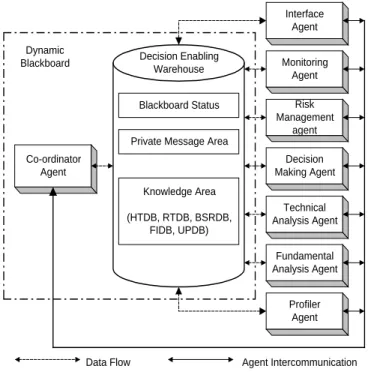
Fig. 3. Inter-communication Architecture among MASST
Agents
Figure 3 shows the inter-communication architecture among MASST agents. As we stated in Section 3, the Co-ordinator agent must have access to knowledge that models the functions and task capabilities of the other agents. The co-ordinator agent holds all information relevant to the system’s current task and exchanges it with all the other agents. The co-ordinator agent is also responsible for ensuring that the data used within the framework is reliable and available as integrated information held in the Decision Enabling Warehouse (DEW). From the perspectives offered by blackboard system design [7][4][21], the DEW together with the co-ordinator agent acts as a dynamic blackboard. This blackboard is a data structure that can be shared by all the agents simultaneously, The co-ordinator agent is similar to the “Control” in traditional blackboard systems and organises the blackboard. The DEW has three different sections. (1) Blackboard Status which holds the process status of the current task. (2) Blackboard Private Message Area used by co-ordinator agent to send task related messages to other MASST agents and used by other MASST agents to control their conversation sessions. When a task or a conversation is complete, the relevant messages in this area are deleted. (3)
Blackboard Knowledge Area that holds rules, facts and raw data to be used by the MASST agents. This knowledge area is composed of HTDB, RTDB, TSDB, FIDB, and UPDB.
There are four communication categories in the MASST framework: (1) Internal Agent – Internal Database; (2) Internal Agent – Internal Agent; (3) Internal Agent – External Data; and (4) Internal Agent – External Agent. The communication protocol depends upon the type of agents involved and the information and knowledge being exchanged. The purpose of the Internal Agent-External Agent category is to make the MASST an open system, whereby it can extend its functions. The technical issues involved are communication ontology, agent communication language, security and so on. The purpose of Internal Agent–External Data communication is to collect and filter the necessary information from distributed data resources (for example, the Internet). Much research has been done in this area [17][22][10][6][3] and is not repeated here. The focus of the current work is on how to use the information for decision-making rather than how to collect it. Hence only the first two communication categories are discussed in this paper.
Agent to database communication is ODBC based using SQL requests and commands. This protocol is relatively straightforward. An agent connects to an active database via ODBC, and phrases information requests using SQL. In the MASST framework, internal agents use this to obtain and place information on the decision-enabling warehouse. Internal agents communicate with each other using the MASST Agent Communication Language (MASST-ACL), which is a combination of FIPA ACL [11] and XML [27]. Details about MASST-ACL are beyond the scope of this paper. According to the description in Section 3, the major functions of MASST include: (1) stock information retrieval, (2) stock status monitoring and risk management, and (3) buying and selling shares decision support. In the following subsections, the agent interactions will be discussed in detail for these processes.
4.2 Agent Interactions in Stock Information Retrieval Process
MASST can provide seven kinds of stock information retrieval functions based on the Search Actions (SA) the user delegated. These include: SA1 – Query all share’s quotation of current day; SA2 – Query a given share’s quotation of current day; SA3 – Query a given share’s real-time trading chart; SA4 – Query a given share’s history price chart over a period; SA5 – Query a given share’s price and technical indicator chart over a period; SA6 – Query a given share’s fundamental analysis data; and SA7 – Query the market statistic information over a period.
Figure 4 shows how the agents interact and communicate in response to a request of type SA1. The user delegating a task to the interface agent initiates such a request. This request is
Risk Management agent Monitoring Agent Decision Making Agent Technical Analysis Agent Fundamental Analysis Agent Profiler Agent Co-ordinator Agent Decision Enabling Warehouse Blackboard Status
Private Message Area
Knowledge Area (HTDB, RTDB, BSRDB, FIDB, UPDB) Interface Agent Dynamic Blackboard
then passed to the co-ordinator agent as a MASST-ACL message by packaging the function ID (such as SA1) and the relevant parameters (such as Market-Code and Current-Date). The co-ordinator agent will distribute the task to the relevant task specific agent based on the function ID. In this example, it is the technical analysis agent that receives the task. The technical analysis agent interacts with the decision enabling warehouse using ODBC-SQL to obtain the necessary database records. The technical analysis agent then sends a MASST-ACL message containing these database records to the co-ordinator agent. The co-ordinator agent then passes the message to the interface agent. In the meantime, the co-ordinator agent will update the Blackboard Status and delete the relative messages associated with this conversation session in the Private Message Area of the blackboard, as this conversation (or task) is complete. Finally, the interface agent presents the results in a readily understandable form to the user.
Fig. 4. Agent interaction through ODBC-SQL and
MASST-ACL communications in response a SA1 request. For the other stock information retrieval functions (i.e. SA2 to SA7), similar agent interaction scenarios exist. The task specific agents and the information formats presented to the user by interface agent differ according to the task type.
4.3 Agent Interactions in Stock Status Monitoring and Risk Management Process
For the stock status monitoring and risk management process, the scenario of agent interactions is much more sophisticated than the one shown in Figure 4. MASST will automatically monitor the market status of the given shares. Based on the share’s market status and the Monitoring Actions (MA) given by users, MASST will also automatically report any abnormal stock status to users. The Monitoring Actions include: MA1 – Monitoring abnormal price fluctuation; MA2 – Monitoring abnormal trading volume; MA3 – Monitoring abnormal technical indicator’s status; MA4 – Monitoring abnormal price chart pattern, and MA5 – Monitoring the Break News relating to the given shares. Furthermore, MASST will provide profits and risks management, which includes calculation of profits/risk ratio based on shares’ market status and user’s investment, and
reminders of the stop-loss level for user’s holding shares according to the user’s profile.
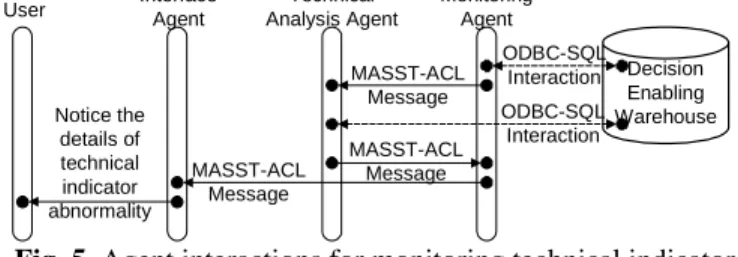
Fig. 5. Agent interactions for monitoring technical indicator
abnormality
As was discussed in the beginning of the section 4.1, the decision-enabling warehouse together with co-ordinator agent acts as a dynamic blackboard in the system. Every MASST agent can watch the information change (or an event) on the blackboard and an agent will react to the event or just ignore the event according to the agent’s responsibility. Figure 5 shows the MASST agent interactions for the monitoring of the abnormal technical indicator. The monitoring agent requests the user profile database in the decision-enabling warehouse to provide the share codes needed for monitoring and user’s monitoring instruction (i.e. MA4). According to the type of monitoring instruction, the monitoring agent will request help from the technical analysis agent to retrieve the current value of the given shares’ technical indicator by sending a MASST-ACL message with function ID (e.g. MA4) and parameters (e.g. share codes, technical indicators). Based on the function ID, the technical analysis agent interacts with the HTDB through ODBC-SQL and calculates the value of the technical indicators on behalf of monitoring agent, then sends the results to the monitoring agent. The monitoring agent then compares the value obtained from the technical analysis agent with the predefined appraisal thresholds of abnormal technical indicators as obtained from the user profile database. If an abnormal event is recognised, the monitoring agent will immediately send a MASST-ACL message to the interface agent to notify the user of the abnormal indicators.
4.4 Agent Interactions in Buying and Selling Share Decision Support Process
There is considerable variation in agent interactions within MASST for the Buying and Selling Share Decision Support Process. The nature of the interaction largely depends on the buying and selling rules as defined by the users themselves. MASST provides a user with an interface to set up the TSDB which holds the user’s buying and selling rules (strategies). Users can change these at will through the interface agent.
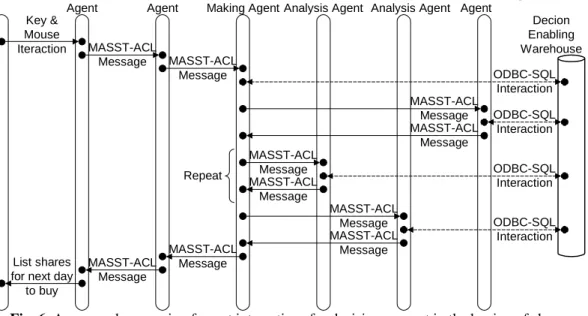
Figure 6 shows an example scenario of MASST agent interactions for this process. Suppose the user delegates a task
User InterfaceAgent Analysis AgentTechnical MonitoringAgent
MASST-ACL Message MASST-ACL Message Decision Enabling Warehouse ODBC-SQL Interaction Notice the details of technical indicator abnormality ODBC-SQL Interaction MASST-ACL Message
User InterfaceAgent Co-ordinatorAgent Analysis AgentTechnical Key & Mouse
Interaction MASST-ACL Message MASST-ACL Message Decision Enabling Warehouse ODBC-SQL Interaction MASST-ACL containing Database Records List records in order of share's code MASST-ACL Message
to the MASST, through the interface agent, such as: “Tell me what is the best share(s) to buy for next trading day?” The interface agent passes the task to the co-ordinator agent with a function ID (for example, Buy-Decision-1) and parameters (for example, Market-Code and Current-Date). The co-ordinator agent assigns the task to the decision-making agent on the basis of the function ID. The decision-making agent requests the TSBD for the buying rules using ODBC-SQL. The records in the TSDB contain not only the buying and selling strategies but also the commands to be executed by the MASST agents. The DEW together with the co-ordinator agent (acting as a dynamic blackboard), plus direct communication between MASST agents, make the dynamic exchange of facts, knowledge, and commands flexible and transparent in our framework. Suppose the buying rules in TSDB lead the decision-making agent to make the following steps:
vStep 1: The decision-making agent (DMA) asks the risk management agent (RMA) to carry out risk evaluation for all shares. The RMA evaluates the trade-off between risk and return based on portfolio theory [18] or just on the SAR algorithm [26]. The DMA throws out the relatively high-risk shares in order to keep the profit/high-risk ratio under control.
vStep 2: The DMA asks the TAA to assess the correlation between an individual share and the market trend. TAA takes into account the relative stock trend as compared with the weighted stock price index. The DMA rejects those shares whose price moves against the weighted stock price index in a given trading period - shares of this kind will probably have been dominated by institutional investors.
vStep 3: The DMA asks the TAA to assess the share price
trend and assumes the trend will continue. The TAA evaluates the share price trend through the slope of the moving average line and the relationship between short-term moving average and long-short-term moving average. The DMA further throws out those shares whose price trend is in on a downtrend.
vStep 4: The DMA asks the TAA to assess the share’s trading volume trend. The TAA assesses the share’s trading volume trend by measuring the OBV indicator [1]. The DMA further throws out those shares whose trading volume trend is in a downtrend while the price trend is in an up-trend.
vStep 5: The DMA ask the fundamental analysis agent (FAA) to evaluate the value of the share. FAA evaluates the value of the share by taking into consideration the following factors: (1) Net Profit Margi which indicates how much profit the company is able to make for each dollar of sales. (2) P/E Ratio (i.e., Price/Earning Ratio) - the lower the P/E ratio, the better value the share. (3) Book Value Per Share - if the share’s current price is far below its book value, it may be an indication that the share is under-priced. The FAA can obtain fundamental analysis data from the company’s financial reports or statements that have already been collected in the decision-enabling warehouse. After evaluating the condition of the company, the FAA can determine if the company’s share is overvalued, undervalued, or correctly valued. Accordingly the DMA further rejects the overvalued shares to get the final list of shares for next trading to buy.
The DMA sends the final list of shares to the co-ordinator agent which passes the message to the interface agent through a MASST-ACL message. The result is delivered to the user.
Fig. 6. An example scenario of agent interactions for decision support in the buying of shares.
User Interface Agent Technical Analysis Agent Risk Management Agent ODBC-SQL Interaction Decision Making Agent Key & Mouse Iteraction MASST-ACL Message Co-ordinator Agent MASST-ACL Message MASST-ACL Message MASST-ACL Message MASST-ACL Message ODBC-SQL Interaction MASST-ACL Message ODBC-SQL Interaction MASST-ACL Message List shares for next day to buy Repeat Fundamental Analysis Agent MASST-ACL Message MASST-ACL Message ODBC-SQL Interaction Decion Enabling Warehouse MASST-ACL Message
5. Implementation and Experimentation
This research work is still ongoing. At the time of writing, the framework has been partially implemented using the following experimental platform as shown in figure 7.
Fig. 7. One experimental platform for the MASST
Users delegate their tasks through a web browser. The Servlets, running on the WWW server, accept users’ requests and pass them to the MASST. According to the tasks, MASST task specific agents will complete the tasks on behalf of users. Our agent resources (for example, the raw trading data) are held as a Microsoft Access database. MASST agents interact with the database through JDBC-ODBC connections. Servlets produce HTML pages in response to the client’s requests. These experimental MASST agents are constructed by using Zeus Agent Builder Toolkit (Nwana et al. (1999)).
In our implementation, the Blackboard Status is a database table called TaskList with records: TaskID, Parameters, Status, and DMDate. The TaskID and the Parameters are based on our ontology definitio. The Status is the representation of current status of the task, and the DMDate is the decision-making date. The co-ordinator agent dispatches the task to the task specific agents based on the TaskID. The task specific agents can change the record Status of table TaskList (it takes values: “waiting”, “processing”, “dispatched”, “monitoring”, “finish”, or “delivered”). Every agent can watch these changes in the Blackboard Status Area by starting a Java thread to monitor the status. The Blackboard Private Message Area is a Java Vector object in our implementation; each agent has a Vector object that holds the interaction message for a given task. When the task is completed, the messages will be removed from the Vector object. The Blackboard Knowledge Area holds raw data, user profile settings, trading strategies - all are stored as database tables. MASST agents can access these tables through JDBC-ODBC connections.
For the purpose of validating our framework prototype, we use real trading data collected from the China Stock Market
(Shengzhen Stock Exchange) to test the functions of our system. The data used in our prototype is the trading data from the date 14/06/2000 to 14/02/2001. A number of experiments have been made. Here one experiment in decision support for buying/selling shares is shown due to space limitations.
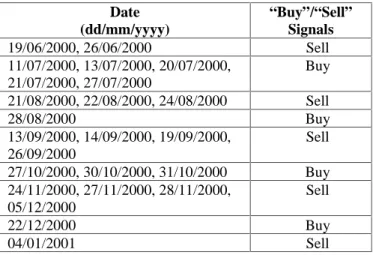
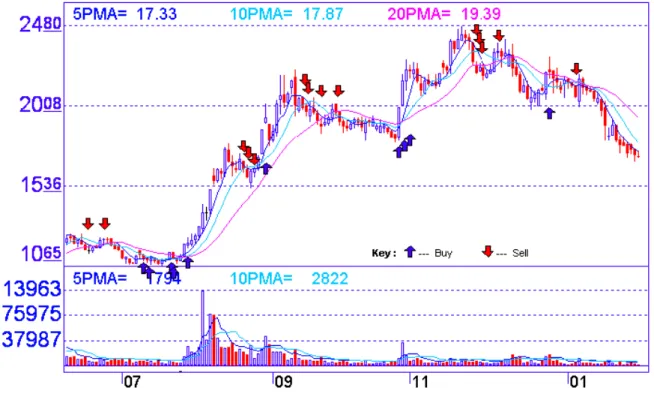
For the task of decision support in the buying/selling of a given share, the user must provide two parameters: stock code and the date of the decision. Before submitting the task to the MASST agents, the user should go to the page “User Profile Settings” to define the strategies for the buying/selling of a given share. The MASST agents can then automate a suggestion for the user to buy or sell the given share on the given date. In this experiment, the share’s code is 0020. The date of decision-making runs from 14/06/2000 to 14/02/2001. The recommendations given by MASST for every day (i.e. “Buy” or “Sell” signals) are shown in Table 1. In order to show the effectiveness of this experiment more clearly, these “Buy” and “Sell” signals are superimposed on the price chart for share 0020 in figure 8. It can be clearly seen that the MASST can give the “Buy” signals around the lowest point or relatively lower points and the “Sell” signals around the highest point or relatively high points.
It is necessary to point out that the MASST framework cannot guarantee that the users can make easy money from the Stock Market. It only aims to help the investors in their buying or selling decisions in their daily investment activities and reduce the workload of the investors in analysing the investment-related information. Whether or not an investor makes a profit from the Stock Market depends largely upon the investors’ trading strategies.
Table 1. The results of decision support for buying/selling
the share 0020 Date (dd/mm/yyyy) “Buy”/“Sell” Signals 19/06/2000, 26/06/2000 Sell 11/07/2000, 13/07/2000, 20/07/2000, 21/07/2000, 27/07/2000 Buy 21/08/2000, 22/08/2000, 24/08/2000 Sell 28/08/2000 Buy 13/09/2000, 14/09/2000, 19/09/2000, 26/09/2000 Sell 27/10/2000, 30/10/2000, 31/10/2000 Buy 24/11/2000, 27/11/2000, 28/11/2000, 05/12/2000 Sell 22/12/2000 Buy 04/01/2001 Sell MASST task specific agents Microsoft Access
Client Browser WWW Server
HTTP
(Servlets)
Using Zeus agent tools to construct our MASST agents
JDBC-ODBC Connection Dynamic HTML Pages
Fig. 8 An experiment of decision support for buying/selling shares
6. Discussion and Conclusion
In this paper, we proposed a communication architecture for the dynamic exchange of information and knowledge in the stock trading domain. The co-ordinator agent plays a vital role in maintaining the appropriate communication protocol. It decomposes system-level tasks to subtasks and distributes the subtasks to related task specific agents. The task specific agents are relatively simple. We recognise that a limitation of the MASST framework is the availability of the co-ordinator agent. The co-ordinator agent is the control locus of this framework. If it fails on its task, the whole system cannot work properly. Some generalised control heuristics will allow the system to recover, but still remain unable to perform the precipitating task. An alternative is to change the design to that of distributed control. This can be done by permitting the task specific agents beliefs about the address and abilities of other agents, and giving the task specific agents the ability to decompose certain types of system-level tasks to subtasks. This approach can improve the reliability of system but at the expense of increased complexity of design for each task specific agent. Future computational experiments will determine whether this is necessary.
The focus of this paper is dynamic knowledge exchange among MASST agents. We have introduced a framework in which MASST agents can exchange knowledge in a dynamic environment. The co-ordinator agent together with the
decision enabling warehouse acting as a dynamic blackboard plus direct intercommunication among the agents enable the transfer of facts, commands, and rules among MASST agents. Knowledge can be exchanged among the agents by using a combination of facts, rules and commands transfers. We believe that dynamic knowledge exchange is an important feature for any application in which unanticipated conditions or events occur. Using the proposed dynamic knowledge exchange capability, co-operative problem solving sessions can be initiated where each agent can share its problem relevant knowledge with other agents to solve the problem. An obvious advantage of this capability is the elimination of redundant knowledge and hence the improved utilisation of the system memory capacity.
We have partially implemented our proposed framework. It has proven that our multi-agent framework (the MASST), as a generic solution, is a viable implementation for multi-agent approaches for decision support in the stock trading.
References
[1] Achelis, S. B., (1995) Technical Analysis From A to Z, McGraw-Hill, 1995.
[2] Benos, A. and Tzafestas, E. (1997), “Alternative distributed models for the comparative study of the stock market phenomena”, Information Sciences, vol. 99, no. 3-4, pp. 137-157.
[3] Caglayan, A., Snorrason, M., Mazzu, J., Jacoby, J., Jones, R. and Kumar, K. (1997) “Open sesame – a learning agent engine”. Applied Artificial Intelligence, vol. 11(5) pp. 393–412, 1997.
[4] Carver, N. and Lesser, V. (1994). “The Evolution of Blackboard Control Architectures”, Expert Systems with Applications, Special Issue on The Blackboard Paradigm and Its Applications, vol. 7, no. 1, 1-30.
[5] Cengeloglu, Y., Khajenoori, S. and Linton, D. (1994). “A Framework for Dynamic Knowledge Exchange among Intelligent Agents”, American Association for Artificial Intelligence (AAAI) Symposium; Control of the Physical World by Intelligent Agents, New Orleans,LA, USA, November 1994.
[6] Chen, L. and Sycara, K. (1998) “Webmate : A personal agent for browsing and searching”. In Proceedings of the Second International Conference on Autonomous Agents (Agents 98), Minneapolis/St Paul, MN, May 1998. [7] Corkill, D. D. (1991). “Blackboard Systems”, AI Expert
6(9): 40-47, September 1991.
[8] Delgado, M., GomezSkarmeta, A.F., MarinBlazquez, J.G., and Barbera, H.M. (1999), “A Multi-Agent Architecture for Fuzzy Modelling”, International Journal of Intelligent Systems, Vol. 14, No. 3, pp. 305-329.
[9] Demazeau, Y., Boissier, O. and Koning, J. L. (1994) “Using Interaction Protocols to Control Vision Systems”. In IEEE International Conference on Systems, Man and Cybernetics, San Antonio.
[10] Etzioni, O. (1996) “Moving up the information food chain: Deploying softbots on the world-wide web”. In Proceedings of the Thirteenth National Conference on Artificial Intelligence (AAAI-96), Portland, OR, 1996. [11] FIPA 97 Specification, Part 2, Agent Communication
Language, Foundation For Intelligent Physical Agents Fipa 97 Specification, Publication date: 10th October, Geneva, Switzerland, 1997.
[12] Garcia, A., Gollapally, D., Tarau, P. and Simari, G. (2000), “Deliberative Stock Market Agents using Jinni and Defeasible Logic Programming”, Proc. Of the 14th European Conference on Artificial Intelligence, Workshop on Engineering Societies in the Agents’ World (ESAW’00), August, Berlin.
[13] Gleizes, M. P., Glize, P. and Leger, A., (2000) “Abros: An Adaptive Brokerage Tool Based on Multi-Agent Framework”, IEEE Computer Communications, January. [14] Iffenecker, C. and Ferber, J. (1992) “Using Multi-Agent
Architecture for Designing Electromechanical Product”. In Proceedings of Avignon ’92 Conference on Expert Systems and their Applications, Avignon, EC2.
[15] Jennings, N., Corera, J. M. and Laresgoiti, I. (1995) “Developing Industrial Multi-Agent Systems”. In First
International Conference on Multi-Agent Systems, San Francisco, V. Lesser (Ed.), MIT Press.
[16] Liu, K., Luo, Y. and Davis, D. N. (2000). “A Multi-Agent System for Stock Trading”, Proceedings of
Conference on Intelligent Information Processing, 16th
world Computer Congress 2000, August 21-25, 2000, Beijing, China.
[17] Maes, P. (1994) “Agents that reduce work and Information overload”, Communications of the ACM, 37, No. 7
[18] Markowitz, H., “Portfolio selection”, Journal of Finance, March 1952.
[19] Rus, D. and Subramanian, D. (1997), “Customizing Information Capture and Access”, ACM Transactions on Information Systems, vol.15, no.1, pp.67-101.
[20] Sabah, G. (1990) “CARAMEL: A Computational Model of Natural Language Understanding using Parallel Implementation”. In Proceedings of the Ninth European Conference on Artificial Intelligence (ECAI 90), Stockholm.
[21] Sadeh, N. M., Hildum, D. W., Laliberty, T. J., McA'Nulty, J., Kjenstad, D. and Tseng, A. (1998). “A Blackboard Architecture for Integrating Process Planning and Production Scheduling”, Concurrent Engineering: Research and Applications, Vol. 6, No. 2, June 1998. [22] Sycara, K., Decker, K., Pannu, A., Williamson, M. and
Zeng, D. (1996) “Distributed Intelligent Agents”. IEEE Expert, vol. 11(6), 1996.
[23] Sycara, K., Decker, K. and Zeng, D. (1998), “Intelligent Agents in Portfolio Management”, in Jennings, N.R. and Wooldridge, M. (Eds.), Agent Technology: Foundations, Applications, and Markets, Springer, pp.267-282.
[24] T arau, P. (1999), “Inference and Computation Mobility with Jinni”, in Apt, K.R., Marek, V.W. and Truszczynski, M. (Eds.), The Logic Programming Paradigm: a 25 Year Perspective, pp. 33-48, Springer.
[25] Tu, S. W., Eriksson, H., Gennari, J., Shahar, Y., and Musen, M. A. (1995) “Ontology-based configuration of problem-solving methods and generation of knowledge-acquisition tools: Application of PROTÉGÉ-II to protocol-based decision support”, Artificial Intelligence in Medicine 7(3), 257-289.
[26] Wilder, J. W. (1978). New Concepts in Technical Trading Systems. Greensboro, NC: Trend Research. [27] XML v. 1.0, (1998), eXtensible Markup Language
(XML) 1.0, XML v. 1.0 Model and Syntax, W3C Recommendation, February 10, 1998,