Purchasing skills – Developing the purchasing professional of the future
Edda Feisel 1 , Evi Hartmann 2, Holger Schober 3
Supply Management Institute, SMI/ ebs European Business School, Rheingau Palais, Söhnleinstraße 8, 65201 Wiesbaden, Germany
Keywords: Skills, Knowledge Management, Purchasing
Edda Feisel is Research Assistant at the Supply Management Institute SMI ™ and a Doctoral
Student at the SVI-Endowed Chair for Purchasing, Logistics and Supply Chain Management at ebs European Business School, International University, Schloß Reichartshausen,
Oestrich-Winkel (Germany).
Evi Hartmann is Research Director at the Supply Management Institute SMI ™ and an
Assistant Professor at the SVI-Endowed Chair for Purchasing, Logistics and Supply Chain Management at ebs European Business School, International University, Schloß
Reichartshausen, Oestrich-Winkel (Germany).
Holger Schober is Director of Executive Education at the Supply Management Institute
SMI™ and Lecturer at the SVI-Endowed Chair for Purchasing, Logistics and Supply Chain Management at ebs European Business School, International University, Schloß
Reichartshausen, Oestrich-Winkel (Germany).
1
T: +49 (0) 611 360 18 837, F: +49 (0) 611 360 18 802, E: [email protected]
2 T: +49 (0) 611 360 18 882, F: +49 (0) 611 360 18 802, E: [email protected]
Purchasing skills – Developing the purchasing professional of the future
Abstract
The significant changes in Purchasing and Supply management over the last decade did not leave the Purchasing function unaffected. Triggered by rapid changes in the dynamic business environment, new tasks and the use of web-enabled systems, the role of purchasing professionals has evolved from a rather clerical towards a more tactical and strategic function (Giunipero & Pearcy, 2000; Giunipero, Handfield & Eltantawy, 2006). Consequently, purchasing decision-making has become more knowledge and competence driven (Bouwmans, 2003). Purchasing professionals are assigned with more responsibilities and require a different skill set and knowledge for achieving excellence in purchasing and supply management (Carr & Smeltzer, 2000; Giunipero & Pearcy, 2000).
In recent years purchasing knowledge has received growing attention, both by scientists and practitioners. However, most of the academic research in this field has been mainly descriptive; identifying the ideal skill set purchasing professionals should possess. Yet, the question on how to measure and develop the procurement skill set remains a major concern in practice and research. This seems especially important as knowledge, skills and competencies are important sources of strategic change (Axelsson, B., Bouwmans, P., Rozemeijer, F. & Wynstra, F. 2006) and properly trained procurement people are still lacking in many organizations (Whitehead, 2006). Improvements should be made possible by developing the skills and capabilities of the individual as well as improving the organizational systems for learning and knowledge management.
The aim of this paper is to provide a thorough overview of important purchasing skills. The resource-based view provides a theoretical foundation of how purchasing skills contribute to a firm’s performance and to the competitive advantage of a firm. A review of existing literature of purchasing skills shows how purchasing skills were empirically linked to purchasing performance. Subsequently, an assessment of the current skill level of purchasing professionals has been established. The paper indicates that purchasing professionals face a skills gap in their profession and that skills development is indispensable for purchasing organizations.
Introduction and problem definition
The skills of employees have been in the focus of human resource theories for a long time as it is widely assumed that skills can positively influence not only human’s but also firm’s performance (Nollen & Gaertner, 1991; Wright, McMahan & McWilliams, 1994; Wright & Snell, 1995). In purchasing however, a discipline that has been under tremendous change over the last decades, employees were traditionally placed without much regard to the (specific) skills they possessed (Carr & Smeltzer, 2000). Purchasing skills had a low priority for the execution of the profession and were not of interest, neither for practitioners, nor for academicians. This view on purchasing skills has changed significantly. Especially over the past years, a growing academic interest can be witnessed, that concentrates on identifying the most important skills with regard to the function and on determining how purchasing skills support purchasing trends and firm’s performance (Carr & Smeltzer, 2000; Giunipero & Pearcy, 2000; Giunipero & Handfield 2004; Eltantawy, 2005; Giunipero, Denslow & Eltantawy, 2005; Giunipero, Handfield & Eltantawy, 2006). Some authors go beyond the mere identification of skills and diagnose purchasing professionals with a severe “skills gap” that is threatening the procurement function in itself (Whitehead, 2006; Duggan & Fogg, 2006). In order to be able to understand the importance of purchasing skills to the profession and their relation to several dimensions a clear understanding of purchasing skills is necessary, both for management practice as well as for academia. Therefore, the paper focuses on three questions. First, what are the skills purchasing professionals need in this profession? Second, what is the relative and combined impact of these skills on dimensions such as performance or supplier and internal customer relationships? Third, what are the skills that current purchasing professionals possess?
The remainder of the paper is structured as follows: A review of literature on purchasing skills is presented, followed by a theoretical and practical foundation why purchasing skills contribute to firm’s performance. Finally, the status quo of purchasing professionals is assessed. Implications are drawn about the current skill levels of purchasing professionals.
This paper contributes to the existing supply management literature as it gives a thorough overview of the literature of purchasing skills and attempts to determine the status quo of purchasing professionals. While previous literature has concentrated on the identification of purchasing skills and their contribution to firm’s performance, there is a need to reveal to which degree these skills are hold and implemented by purchasing professionals. Finally, managerial implications and further research needs are identified.
Purchasing skills in practice
Especially over the last years there has been a growing interest to identify the ideal skill sets of purchasing professionals. The attention towards purchasing skills followed the evolution of the purchasing function, as it is widely assumed that the rapid changes in the purchasing business environment directly affected the ideal skill set for purchasers (Carr & Smeltzer, 2000; Eltantawy, 2005; Giunipero, Handfield & Eltantawy, 2006).
The evolution of purchasing is well depicted by several models and typologies that reflect the development of the purchasing function, which is widely acknowledged in academia. Most models concur that purchasing was, compared to a function like marketing, initially seen as a rather clerical function (Ammer, 1974; Carr & Smeltzer, 2000). Purchasing professionals did not have the authority to decide on organizational buying decisions and had to fight for their legitimacy within their organizations (Barath & Hugstad, 1977; Dion &
Banting, 1987). The formal scope of activities of purchasing agents was extremely limited, and purchasing professionals were involved rather late into the purchasing process (Barath & Hugstad, 1977). The restricted influence and power led to a low visibility of purchasing professionals. Purchasing was neither perceived as a function with high status, nor was seen as a priority of top management (Cruz & Murphy, 1996).
Given the evolutionary development, purchasing develops through different stages towards a strategic, integrative level (Reck & Long, 1988; Freeman & Cavinato, 1990; Cammish & Keough, 1991; Monczka et al., 2002). Burt, Dobler and Starling (2003) for example identified four stages of the purchasing function, ranging from clerical, over mechanical and proactive to world class. The world class purchasing function is represented by developing and implementing commodity strategies and supply management as a core competence. The evolving role of purchasing is also depicted by Gadde and Hakansson (1994) who forecast an increase of buy versus make decisions and systematic approaches to structure suppliers including supply base reduction and deeper cooperation with individual suppliers.
The literature agrees that the changing purchasing business environment, represented through an intensified international competition, an increase in outsourcing and offshoring and technological advances (Giunipero, Denslow & Eltantawy, 2005; Giunipero, Handfield & Eltantawy, 2006) directly affected the purchasing function and its responsibilities (Giunipero & Pearcy, 2000; Jahns, 2005; Giunipero, Handfield & Eltantawy, 2006).
Purchasing professionals needed to enhance their work focus and turned to electronic commerce, strategic cost management, tactical purchasing and global supplier development (Carter et al. 2000; Giunipero, Handfield & Eltantawy, 2006).
The implementation of new concepts and the strategic focus of the purchasing function requires at the same time new skills, which are needed to manage relationships with global suppliers and internal customers to attain corporate goals (Carr & Smeltzer, 2000; Giunipero, Denslow & Eltantawy, 2005; Giunipero, Handfield & Eltantawy, 2006). As purchasing professionals were mainly followers, taking a passive role in the purchasing process, they now need to broaden their skills and acquire new ones it apply strategic management practices and to achieve passive role in the purchasing process, they now need to broaden their skills and acquire new ones to apply strategic supply management practices and to achieve competitive advantage (Carr & Smeltzer, 2000; Giunipero, Handfield & Eltantawy, 2006). Purchasing professionals must become proactive, creative and decisive to react quickly to the changing business environment. Adopting a comprehensive skill set has become crucial to the purchasing profession (Guinipero & Pearcy, 2000). Managers need to understand what skills are necessary to enhance performance of the supply management function. Without a thorough understanding of purchasing skills, performance improvement cannot be managed efficiently and, effectiveness in organizations cannot be achieved (Eltantawy, 2005).
This development and focus on purchasing skills follows the IMP tradition with its focus on buyer-seller relationships. The IMP Group (e.g. Ford, 1990) recommended that research in this area should move from a dyadic business relationships approach to business networks, regarded as sets of connected firm (Miles & Snow, 2000). From an industrial network perspective, interacting with others is the most fundamental activity of a company. Interaction regards how organizations manage the flow of goods and information between them and influences the development in a network structure (Huemer, 2004).
To interact in this business context, the purchasing professional needs to possess certain skills as he interacts not only with the supplier but also with the internal customer. The following discussion thus provides an overview of the most important purchasing skills identified by literature. As skills directly impact behaviour it is important to understand which skills the purchasing professionals need to develop to interact better in the purchasing environment.
Until 2000, only a few articles in academic journals addressed purchasing skills. Kolchin and Giunipero (1993) used a sample of 131 supply management executives to identify the skills that are essential for supply management professionals. They identified a list of 18 skills and divided these skills into four categories: (1) technical, (2) management, (3) interpersonal / group, and (4) individual. The two most important skills were identified as ability to make decisions and interpersonal communication. As purchasing professionals are to a high degree interacting with external suppliers, internal suppliers and internal customers, they should be effective communicators, both within their organization and with their suppliers.
Killen and Kamauff (1995) distinguished between operational buyer and strategic purchasing manager. They argued that a good buyer needs to have profound knowledge in four general areas, namely (1) product knowledge, (2) principles of purchasing and management, (3) personal attributes and (4) interpersonal skills. Strategic purchasing managers need to possess the skills of an operational buyer plus the following four additional knowledge areas, (1) technical knowledge, (2) analytical ability, and (3) interpersonal skills, and (4) managerial skills.
Most studies in the popular press relied upon recruiter’s assessments and tended to provide a list of skills gathered through interviews and surveys. One of these studies, conducted by Down & Liedtka (1994), revealed the seven most critical skills recruiters are looking for in supply management professionals. These skills were identified as (1) Communication skills, (2) Interpersonal skills, (3) Self-motivation, (4) Professional presence, (5) Leadership, (6) Analytical skills, and (7) Academic achievement.
In general, it was assumed that purchasing professionals are especially successful if they possess technical skills (Cavinato, 1987; McKeefrey, 1998). Cavinato (1987) identified seven technical skills top managers wanted to see improved in their organization’s supply departments. The skills were: (1) knowledge of material, (2) production systems and technologies, (3) materials management and inventory systems, and JIT, (4) quality systems and options, (5) contract manufacturing relationships, (6) computers, and (7) costing.
Murphy (1995) illustrated the continuous search for the “ideal” skill set purchasing professionals should possess. A poll of purchasers identified four general skills identified as most important to their job function. The skills identified were: (1) negotiation, (2) management, (3) computer literacy, and (4) mathematics.
Many of the skills mentioned above, focus on hard rather than soft skills. As purchasing professionals started to use PCs in their day-to-day operations, computer literacy became an essential requirement to fulfil their tasks efficiently.
With the evolution of the purchasing function, a broader academic interest aroused to determine important purchasing skills. Giunipero and Pearcy (2000) identified a list of 29 skills to be the most important to the purchasing function and developed (via exploratory factor analysis) seven skill clusters to illustrate the comprehensive skill sets required by “world-class purchasing professionals” (Giunipero & Pearcy, 2000). A world-class purchaser “visualises and approaches his job from a strategic perspective […] and continually embraces and leverages his skills and knowledge of critical supply chain activities to provide value in meeting corporate and customer objectives” (Giunipero, 1999; p.8). Such a person can be
characterised by seven key skill areas, namely (1) strategic skills, (2) process management skills, (3) team skills, (4) decision-making skills, (5) behavioural skills, (6) negotiation skills, and (7) quantitative skills (Giunipero & Pearcy, 2000). Giunipero and Pearcy (2000) underline the importance of strategic skills for the purchasing profession. The focus on strategic skills demonstrates the radical shift of the function from being clerical, focusing only on processing orders, to strategic and contributing to the firms overall performance. Strategic skills are necessary to structure for example, supplier relationships and to develop strategies that contribute to the overall success of a firm. Implementing strategic thinking can help developing mutual beneficial relationships that will significantly impact the influence of purchasing on the organization.
Giunipero and Pearcy’s (2000) work was the first one of a literature stream which emphasized the move towards a strategic skill set of purchasing professionals. In a later work, Giunipero, Denslow & Eltantawy (2005) underlined the increased uncertainty purchasing professionals need to cope with as supply chains are getting more flexible and dynamic. Consequently, only the adoption of flexible and entrepreneurial skill sets enable purchasing professionals to adapt quickly to the changing business environment. Flexibility skills are defined as the degree to which purchasers act entrepreneurially in seven areas, namely (1) managing risk, (2) decision making, (3) planning, (4) interpersonal communication, (5) influence and persuasion, (6) internally motivation, and (7) creativity (Giunipero et al. 2005). A purchaser who is able to plan projects with multiple stakeholders, to influence and persuade not only suppliers but also internal customers, and who possesses a strong will to succeed will contribute to organizational success. This person is not waiting for action to happen, but is proactive, creative and decisive (Giunipero, Denslow & Eltantawy, 2005). In addition to planning and risk-taking skills, Giunipero, Denslow & Eltantawy (2005) add internal motivation as being especially important. Implementing cost reductions and develop supplier relations require a self-driven approach by the purchasing department.
The purchasing function is not only driven by flexible supply chains but also by several trends that drive the purchasing function towards a strategic direction. These trends include the implementation of strategic relationship management with suppliers, strategic cost reduction, integrated systems and collaboration, a greater focus on total cost in supplier selection, and strategic versus tactical purchasing orientation (Giunipero, Handfield & Eltantawy, 2006). All these trends will be facilitated by the implementation of strategic skills (Giunipero & Handfield 2004; Giunipero, Handfield & Eltantawy, 2006). Strategic skills are characterized by five skill areas, namely (1) team-building skills, (2) strategic planning skills, (3) communication skills, (4) technical skills, and (5) broader financial skills (Giunipero et al. 2006). The skills included are leadership, decision-making, influencing, compromising, project scoping, goal-setting, execution, presentation, public speaking, listening, writing, web-enabled research, sourcing analysis, cost accounting, and making the business case. Giunipero, Handfield & Eltantawy (2006) underline team-building skills as especially important. Purchasing professionals are required to rely on team-work with multiple stakeholders. Purchasing professionals must take a leadership role in teams and take initiative to solve problems. Team-building skills are needed to integrate internal and external functions.
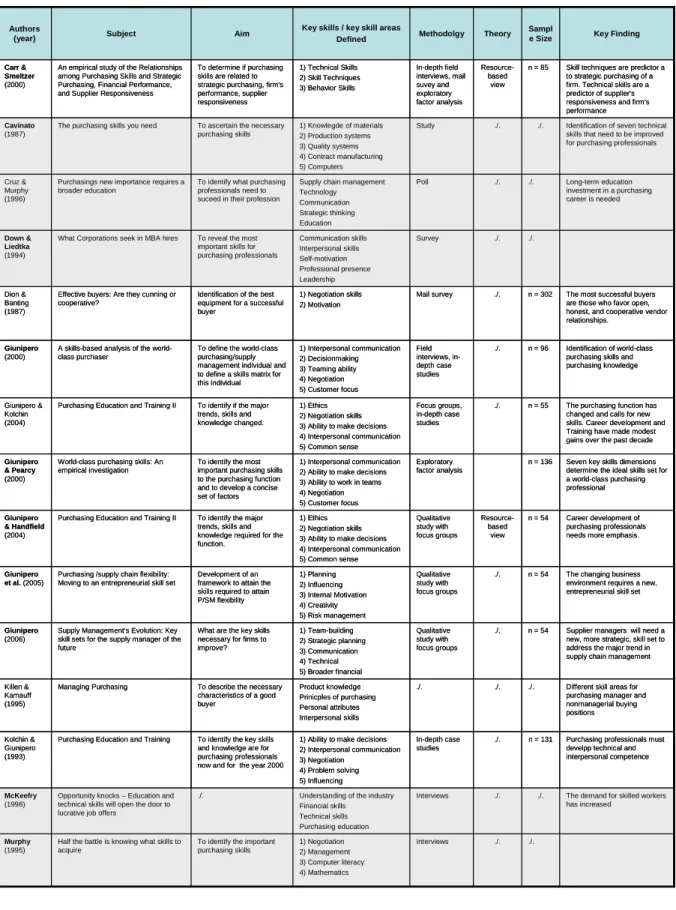
Table 1 provides an overview of the literature on purchasing skills addressed by previous research.
./. ./. ./. ./. ./. ./. Resource-based view ./. ./. ./. ./. ./. ./. Resource-based view Theory Career development of purchasing professionals needs more emphasis. n = 54 Qualitative study with focus groups 1) Ethics 2) Negotiation skills 3) Ability to make decisions 4) Interpersonal communication 5) Common sense To identify the major
trends, skills and knowledge required for the function.
Purchasing Education and Training II
Giunipero & Handfield
(2004)
The purchasing function has changed and calls for new skills. Career development and Training have made modest gains over the past decade n = 55 Focus groups, in-depth case studies 1) Ethics 2) Negotiation skills 3) Ability to make decisions 4) Interpersonal communication 5) Common sense To identify if the major
trends, skills and knowledge changed. Purchasing Education and Training II
Giunipero & Kolchin (2004)
Purchasing professionals must develpp technical and interpersonal competence n = 131
In-depth case studies 1) Ability to make decisions
2) Interpersonal communication 3) Negotiation
4) Problem solving 5) Influencing To identify the key skills
and knowledge are for purchasing professionals now and for the year 2000 Purchasing Education and Training
Kolchin & Giunipero (1993)
Different skill areas for purchasing manager and nonmanagerial buying positions ./. ./. Product knowledge Prinicples of purchasing Personal attributes Interpersonal skills To describe the necessary
characteristics of a good buyer Managing Purchasing Killen & Kamauff (1995)
Identification of seven technical skills that need to be improved for purchasing professionals ./. Study 1) Knowlegde of materials 2) Production systems 3) Quality systems 4) Contract manufacturing 5) Computers To ascertain the necessary
purchasing skills The purchasing skills you need
Cavinato
(1987)
The demand for skilled workers has increased
./. Interviews
Understanding of the industry Financial skills Technical skills Purchasing education ./.
Opportunity knocks – Education and technical skills will open the door to lucrative job offers
McKeefry (1998) Long-term education investment in a purchasing career is needed ./. Poll Supply chain management Technology Communication Strategic thinking Education To identify what purchasing professionals need to suceed in their profession Purchasings new importance requires a
broader education Cruz & Murphy (1996) ./. Survey Communication skills Interpersonal skills Self-motivation Professional presence Leadership To reveal the most
important skills for purchasing professionals What Corporations seek in MBA hires
Down & Liedtka
(1994)
Identification of world-class purchasing skills and purchasing knowledge n = 96 Field interviews, in-depth case studies 1) Interpersonal communication 2) Decisionmaking 3) Teaming ability 4) Negotiation 5) Customer focus To define the world-class
purchasing/supply management individual and to define a skills matrix for this individual A skills-based analysis of the
world-class purchaser
Giunipero
(2000)
Seven key skills dimensions determine the ideal skills set for a world-class purchasing professional n = 136 Exploratory factor analysis 1) Interpersonal communication
2) Ability to make decisions 3) Ability to work in teams 4) Negotiation 5) Customer focus To identify the most
important purchasing skills to the purchasing function and to develop a concise set of factors World-class purchasing skills: An
empirical investigation
Giunipero & Pearcy
(2000)
The most successful buyers are those who favor open, honest, and cooperative vendor relationships.
n = 302 Mail survey
1) Negotiation skills 2) Motivation Identification of the best
equipment for a successful buyer
Effective buyers: Are they cunning or cooperative? Dion & Banting (1987) ./. Interviews 1) Negotiation 2) Management 3) Computer literacy 4) Mathematics To identify the important
purchasing skills Half the battle is knowing what skills to
acquire
Murphy
(1995)
Supplier managers will need a new, more strategic, skill set to address the major trend in supply chain management n = 54 Qualitative study with focus groups 1) Team-building 2) Strategic planning 3) Communication 4) Technical 5) Broader financial What are the key skills
necessary for firms to improve? Supply Management‘s Evolution: Key skill sets for the supply manager of the future
Giunipero
(2006)
The changing business environment requires a new, entrepreneurial skill set n = 54 Qualitative study with focus groups 1) Planning 2) Influencing 3) Internal Motivation 4) Creativity 5) Risk management Development of an
framework to attain the skills required to attain P/SM flexibility Purchasing /supply chain flexibility:
Moving to an entrepreneurial skill set
Giunipero et al. (2005)
Skill techniques are predictor a to strategic purchasing of a firm. Technical skills are a predictor of supplier‘s responsiveness and firm‘s performance n = 85 In-depth field interviews, mail suvey and exploratory factor analysis 1) Technical Skills 2) Skill Techniques 3) Behavior Skills To determine if purchasing
skills are related to strategic purchasing, firm‘s performance, supplier responsiveness An empirical study of the Relationships
among Purchasing Skills and Strategic Purchasing, Financial Performance, and Supplier Responsiveness
Carr & Smeltzer (2000) Key Finding Sampl e Size Methodolgy
Key skills / key skill areas Defined Aim Subject Authors (year) ./. ./. ./. ./. ./. ./. Resource-based view ./. ./. ./. ./. ./. ./. Resource-based view Theory Career development of purchasing professionals needs more emphasis. n = 54 Qualitative study with focus groups 1) Ethics 2) Negotiation skills 3) Ability to make decisions 4) Interpersonal communication 5) Common sense To identify the major
trends, skills and knowledge required for the function.
Purchasing Education and Training II
Giunipero & Handfield
(2004)
The purchasing function has changed and calls for new skills. Career development and Training have made modest gains over the past decade n = 55 Focus groups, in-depth case studies 1) Ethics 2) Negotiation skills 3) Ability to make decisions 4) Interpersonal communication 5) Common sense To identify if the major
trends, skills and knowledge changed. Purchasing Education and Training II
Giunipero & Kolchin (2004)
Purchasing professionals must develpp technical and interpersonal competence n = 131
In-depth case studies 1) Ability to make decisions
2) Interpersonal communication 3) Negotiation
4) Problem solving 5) Influencing To identify the key skills
and knowledge are for purchasing professionals now and for the year 2000 Purchasing Education and Training
Kolchin & Giunipero (1993)
Different skill areas for purchasing manager and nonmanagerial buying positions ./. ./. Product knowledge Prinicples of purchasing Personal attributes Interpersonal skills To describe the necessary
characteristics of a good buyer Managing Purchasing Killen & Kamauff (1995)
Identification of seven technical skills that need to be improved for purchasing professionals ./. Study 1) Knowlegde of materials 2) Production systems 3) Quality systems 4) Contract manufacturing 5) Computers To ascertain the necessary
purchasing skills The purchasing skills you need
Cavinato
(1987)
The demand for skilled workers has increased
./. Interviews
Understanding of the industry Financial skills Technical skills Purchasing education ./.
Opportunity knocks – Education and technical skills will open the door to lucrative job offers
McKeefry (1998) Long-term education investment in a purchasing career is needed ./. Poll Supply chain management Technology Communication Strategic thinking Education To identify what purchasing professionals need to suceed in their profession Purchasings new importance requires a
broader education Cruz & Murphy (1996) ./. Survey Communication skills Interpersonal skills Self-motivation Professional presence Leadership To reveal the most
important skills for purchasing professionals What Corporations seek in MBA hires
Down & Liedtka
(1994)
Identification of world-class purchasing skills and purchasing knowledge n = 96 Field interviews, in-depth case studies 1) Interpersonal communication 2) Decisionmaking 3) Teaming ability 4) Negotiation 5) Customer focus To define the world-class
purchasing/supply management individual and to define a skills matrix for this individual A skills-based analysis of the
world-class purchaser
Giunipero
(2000)
Seven key skills dimensions determine the ideal skills set for a world-class purchasing professional n = 136 Exploratory factor analysis 1) Interpersonal communication
2) Ability to make decisions 3) Ability to work in teams 4) Negotiation 5) Customer focus To identify the most
important purchasing skills to the purchasing function and to develop a concise set of factors World-class purchasing skills: An
empirical investigation
Giunipero & Pearcy
(2000)
The most successful buyers are those who favor open, honest, and cooperative vendor relationships.
n = 302 Mail survey
1) Negotiation skills 2) Motivation Identification of the best
equipment for a successful buyer
Effective buyers: Are they cunning or cooperative? Dion & Banting (1987) ./. Interviews 1) Negotiation 2) Management 3) Computer literacy 4) Mathematics To identify the important
purchasing skills Half the battle is knowing what skills to
acquire
Murphy
(1995)
Supplier managers will need a new, more strategic, skill set to address the major trend in supply chain management n = 54 Qualitative study with focus groups 1) Team-building 2) Strategic planning 3) Communication 4) Technical 5) Broader financial What are the key skills
necessary for firms to improve? Supply Management‘s Evolution: Key skill sets for the supply manager of the future
Giunipero
(2006)
The changing business environment requires a new, entrepreneurial skill set n = 54 Qualitative study with focus groups 1) Planning 2) Influencing 3) Internal Motivation 4) Creativity 5) Risk management Development of an
framework to attain the skills required to attain P/SM flexibility Purchasing /supply chain flexibility:
Moving to an entrepreneurial skill set
Giunipero et al. (2005)
Skill techniques are predictor a to strategic purchasing of a firm. Technical skills are a predictor of supplier‘s responsiveness and firm‘s performance n = 85 In-depth field interviews, mail suvey and exploratory factor analysis 1) Technical Skills 2) Skill Techniques 3) Behavior Skills To determine if purchasing
skills are related to strategic purchasing, firm‘s performance, supplier responsiveness An empirical study of the Relationships
among Purchasing Skills and Strategic Purchasing, Financial Performance, and Supplier Responsiveness
Carr & Smeltzer (2000) Key Finding Sampl e Size Methodolgy
Key skills / key skill areas Defined Aim
Subject Authors
(year)
Table 1: Overview of current literature on purchasing skills
Scientifically-oriented Practically-oriented
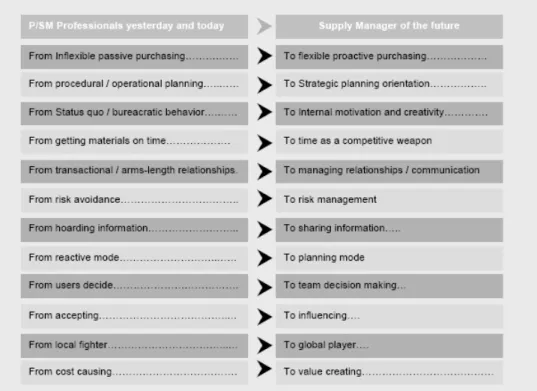
Regarding the first question, “what skills a purchasing professional should possess”, the literature review depicts a comprehensive skill set, consisting of a range of complex skill areas such as team-building skills, strategic skills, and communication skills among others. The literature review reveals that the purchasing function evolved significantly over the last
years, shifting from a low clerical to a strategic function (see figure 1). Purchasing professionals are relationship managers and act as “boundary spanner” working closely together with internal relations to manage external relationships with suppliers.
Interestingly, some skills remained important to the profession throughout the years. These profound skills that determine a good purchasing professional consist of interpersonal communication, ability to make decisions, negotiation skills and influencing and persuasion skills (Dion & Bunting, 1987; Down & Liedtka, 1994; Cruz & Murphy, 1996; Giunipero 2000; Giunipero & Handfield, 2004; Giunipero, Denslow & Eltantawy, 2005, Giunipero, Handfield & Eltantawy, 2006). Dealing with internal and external customers certainly requires negotiation and communication skills. In addition, purchasing professionals must be able to influence and persuade their counterparts. Strategic, team-working and analytical skills aroused more recently, portraying a complex picture of the purchasing professional. It is vital not only to adopt, but also to implement these new skills.
The purchasing skill sets that are necessary for purchasing professionals are in line with the IMP research that underlines that cooperation is a natural element of buyer-supplier relationships (Hakansson & Shehota, 1995). As Hakansson & Ford (2002) note, relationship management is always necessary to mobilize others in the interaction process. The interaction of relationships drives the development of business networks and it is necessary to mobilize others in the process (Hakansson & Ford, 2002). For doing so, the abovementioned proactive skills are especially important to possess for the purchasing manager in the future.
Figure 1 Strategic change in the Purchasing/Supply Management function and skill set, adapted from Giunipero et al. 2005, Jahns 2005
Practitioners and academicians agree about the main characteristics of the purchasing professional of the future. Nevertheless a key question remains: “How and to what extend do purchasing skills relate to determinants such as purchasing performance and supplier and internal customer relations?” The second research question will be explored in more detail in the next section.
Purchasing skills and contribution to the competitive advantage of a firm
This part shows two perspectives of the strategic contribution of purchasing skills. From a theoretical side, the resource-based view provides a theoretical framework for this paper and explains the impact of purchasing skills based on theoretical assumptions. From a practical side, several studies will be presented that empirically investigated the relationship between purchasing skills and various determinants.
Theoretical impact of purchasing skills – The resource-based view
From an economic perspective, purchasing skills can contribute to a variety of ways to the competitiveness of a firm. The supply management literature uses both, resource-based and knowledge-based theories to provide a theoretical framework for understanding the process of knowledge and skill generation and transfer. The knowledge-based view concentrates on the strategic and managerial aspects of knowledge and can be useful to understand the process of supply management skills formulation (Eltantawy, 2005). In explaining how purchasing skills can contribute to a firm’s performance however, the resource-based view received greater attention than the knowledge-based view (Eltantawy, 2005).
The resource-based view of the firm focuses on the role internal resources play in developing and maintaining a firm’s competitive advantage (Barney, 1991; Wright, McMahan & McWilliams, 1994). A company will achieve a competitive advantage when it has key resources (these can be physical resources, human resources or organisational resources) that its competitors do not have (Barney, 1991). Developing and maintaining this competitive advantage depends on whether the firm is able to identify, develop, deploy, and protect the internal resources (Barney, 1991). A firm can thus maintain its competitive advantage in a variety of ways, for example through buying new equipment, employing new technologies, retraining its employees or hiring new employees with different skills and knowledge (Barney 1991, Carr & Smeltzer 2000).
The resource-based view shifts the emphasis from the characteristics of employees to their skills and their relative contribution to value creation in their firm (Lepak & Snell 1999; Eltantawy, 2005). The value of purchasing skills is thus dependent upon their potential to contribute to the competitive advantage of the firm. They are considered valuable as they support the firm in formulating and implementing strategies which improve its efficiency or effectiveness (Giunipero & Pearcy, 2000; Giunipero & Handfield, 2004).
In the context of the resource-based view, a firm might lose its competitive advantage if important purchasing skills are scarce or are getting lost as they are not easily duplicated or substituted. Purchasing skills are valuable as they help providing supply strategies for future needs and developing supply management strategies to support company strategies (Carr & Pearson, 2002). As purchasing professionals interact with other functions within a complex social network, purchasing skills are difficult to replicate (Eltantawy, 2005). In addition, purchasing skills are difficult to substitute as they are typically applied in interdependent arrangements (such as team-decisions) and tend to require more tacit than explicit knowledge, which is more difficult to substitute (Eltantawy, 2005).
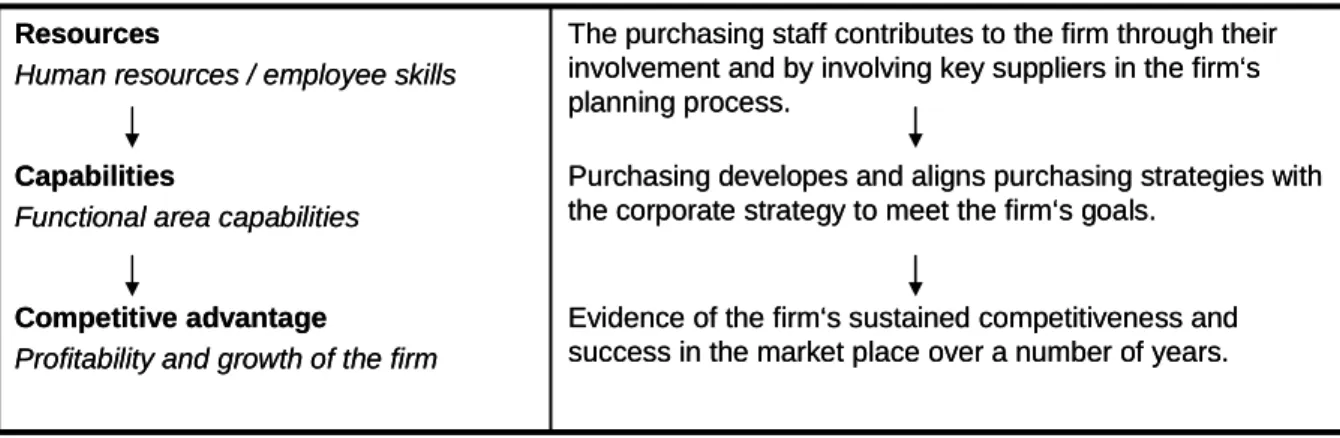
Figure 2 illustrates how purchasing skills fit within the resource-based view. The more purchasing skills an employee possesses the more valuable he is as a resource to the firm (Carr & Pearson, 2002). Purchasing professionals contribute with their skills to the purchasing activities, which contribute to the firm’s total performance. Strategic purchasing can help
gaining a competitive advantage in a number of ways, for example through cost reductions, valuable information regarding supply trends, access to product and process technology as well as through close relationships with suppliers and improved quality and delivery of materials (van Weele, 2000; Monzcka, Trent & Handfield, 2002; Carr & Pearson 2002; Hogan & Armstrong, 2001).
Evidence of the firm‘s sustained competitiveness and success in the market place over a number of years.
Competitive advantage
Profitability and growth of the firm
Purchasing developes and aligns purchasing strategies with the corporate strategy to meet the firm‘s goals.
Capabilities
Functional area capabilities
The purchasing staff contributes to the firm through their involvement and by involving key suppliers in the firm‘s planning process.
Resources
Human resources / employee skills
Evidence of the firm‘s sustained competitiveness and success in the market place over a number of years.
Competitive advantage
Profitability and growth of the firm
Purchasing developes and aligns purchasing strategies with the corporate strategy to meet the firm‘s goals.
Capabilities
Functional area capabilities
The purchasing staff contributes to the firm through their involvement and by involving key suppliers in the firm‘s planning process.
Resources
Human resources / employee skills
Figure 2: Linking the purchasing function to the resource-based view theory, adapted from Carr & Smeltzer 2002 (adaptation from Hart, 1995).
Industrial scholars often employ the A-R-A model when studying various network dimensions (Hakansson & Shehota, 1995). The model suggests that resources, activities, and actors need to be considered simultaneously at the level of the business network (Huemer, 2004). From an industrial network perspective, purchasing skills are something existing between actors (as the actors perceive the existence of skills when they interact with each other) and a resource in itself that in various ways impact the activities performed.
The resource-based view shall serve as a theoretical basis why companies identify, invest and develop purchasing skills. The following discussion provides an overview of the studies that extended previous work and analyzed the empirical relation between purchasing skills and performance.
Linking Purchasing skills to Performance
Up to now, most of the studies focused on the mere identification of important purchasing skills and argued based on the resource-based view of the firm these skills act as a source of competitive advantage to a firm (see literature review in table 1). Several exceptions however were identified that extended previous work and concentrated on empirically verifying the relation of purchasing skills to (purchasing) performance.
Following the IMP tradition of research in the field purchasing behaviour, Hakansson & Wootz (2001) analysed in an experimental study how the purchaser’s education, experience and the decision-environment explains purchasing behaviour. The study used experiments to analyse purchasing behaviour in two different risk-situations. The participants of the study were clustered according to dependent and independent variables that described the characteristics of the individual decision-makers and the different dimensions of risk-handling. The two most important variables to reduce perceived risk resulted to be education and experience of the actual products and indicated that purchasers with higher education achieved a wider decision process.
Higher education was found to be of central importance to influence purchasing behaviour. Education was measured by the formal or technical education and also considered special purchasing courses. A highly educated worker is sensitive to differences in the degree of risk in the purchasing situation and has the ability to assess the risk-situation under a thorough consideration of different aspects.
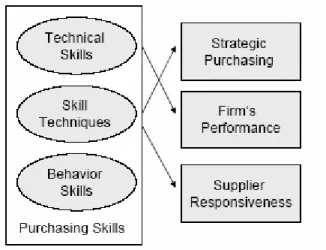
Carr and Smeltzer (2000) examined if and how purchasing skills are linked to purchasing performance. A list of 35 purchasing skills, identified by field interviews, was divided into three skill areas, namely 1) technical skills, 2) skill techniques, and 3) behaviour skills (Carr & Smeltzer, 2000). These skills were then tested against three outcome variables strategic purchasing (defined as the process of planning, implementing, controlling, and evaluating strategic and operational purchasing decisions), firm’s performance (defined as the firm’s financial performance), and supplier responsiveness (defined as supplier quality, delivery, flexibility and cost reductions). The results revealed that two of the skill areas related positively to all three constructs tested. Skill techniques (consisting of analytical skills, communication skills, presentation skills, negotiation skills, problem-solving skills, project management, organizational skills and time management skills) correlated positively to supplier’s responsiveness and strategic purchasing, whereas technical skills (consisting of computer skills, forecasting skills, drafting skills, math skills and understanding manufacturing processes and tool capability) correlated positively to the firm’s performance. According to Carr and Smeltzer (2000), firms should ensure that purchasing professionals possess or develop skill techniques if they want to increase strategic purchasing and supplier responsiveness. With respect to firm’s performance, the study indicated technical skills as most important. Figure 3 illustrates the relationships between purchasing skills and strategic purchasing, firm’s performance and supplier responsiveness.
Figure 1: Model of significant relationships between purchasing skills in terms of technical skills, skill techniques, and behaviour skills, derived from Carr & Smeltzer, 2000.
Eltantawy (2005) added the perceived status of the supply management function and tested the relationship between the perceived status, strategic supply management skills and supplier integration on supply management performance. She argued that not only purchasing skills, but also status of the function leads to a greater integration of external and internal relationships. The status is assumed to be influenced by skills as well. The results revealed that purchasing skills have a significant indirect effect on purchasing performance. Purchasing skills influence both, the status of the function and supplier integration. These two variables directly impact purchasing performance. The findings are consistent with the work of Carr &
Smeltzer (2000), indicating human assets to be the most valuable resource in the supply management function.
This result is confirmed by a recent survey conducted by the SMI Supply Management Institute in cooperation with McKinsey. The SMI/McKinsey study surveyed more than 200 Chief Purchasing Officers (CPOs) from major companies and measured the impact of a wide range of purchasing and supply management practices on purchasing and the firm’s performance. The 43 key dimensions of purchasing practices were structured in four thematic dimensions: (1) purchasing capabilities (including skills and career path) and culture of purchasing professionals, (2) corporate structure and systems, (3) management techniques and business processes, and (4) the extent of alignment between purchasing and corporate strategy. The results clearly indicate that people “matter most” and are the most important driver to achieve a higher performance. Companies which employ people with outstanding skills and strong performance aspirations achieve a higher financial performance (comprising of annual savings from purchasing and supply management, annual reduction in costs of goods sold, and the average margin of earning before interest, taxes, depreciation, and amortization (EBITDA) and benefit not only from lower costs, but also higher-quality products, greater innovation, and higher value from Mergers & Acquisition (Stolle et al. 2006). In addition to outstanding purchasing skills, the study identified the mindset and internal motivation of purchasing professionals as major contributing variables to performance.
Finally, the result that purchasing skills have a major impact on performance outcomes is confirmed by Cousins et al. (2006) who empirically show the evolutionary development of the purchasing function. Assuming the evolutionary development of purchasing, it is shown that the purchasing function (classified by strategic planning, status, and internal integration) can take different configurations within an organization. The strategic function (which is characterized by having the highest levels of all characteristics) impacts the performance outcomes of an organization most. Interestingly, as in the SMI and McKinsey study, purchasing skills are again identified as powerful drivers in driving performance. Cousins et al. (2006) reveal that in undeveloped stage of the function with high skill levels but low integration, the performance outcomes are still very high.
The results of the recent studies clearly underline the importance that a purchasing function is urged to possess strategic purchasing skills. Purchasing skills and function, respectively have not only been related to purchasing performance, but also to the firms performance as a whole and have been proven to affect both (Carr & Smeltzer, 2000; Eltantawy, 2005; Stolle et al. 2006, Cousins et al., 2006).
Interestingly, none of the empirical studies links purchasing skills with internal customer involvement and satisfaction. The work of the purchasing professional includes, to a high degree, cross-functional work with internal departments. The empirical studies however, focus only on the relation between purchasing skills and supplier relations and purchasing performance. As the internal supplier, purchasing provides both materials and information to its internal customers. The relationships among the internal departments should be cooperative to achieve improvements in internal service quality (Wisner & Stanley, 1999). Though team-building skills are mentioned as important skill by many authors, none of the studies tested empirically the relationship of purchasing skills to internal service quality and involvement. Leveraging internal functions however, will require a greater integration of internal departments and greater cross-functional communication (Giunipero, Handfield & Eltantawy, 2006). It is assumed that a broader range of influencing and team-building skills
will positively influence integration across internal functions (Giunipero, Handfield & Eltantawy, 2006).
It has been shown that not only from a theoretical, but also practical view, purchasing skills positively impact firm’s performance. The resource-based view provides the theoretical framework of the value of purchasing skills, the empirical studies proved the relations to be true. However, there is evidently a prerequisite for purchasing skills to positively affect the competitive advantage of a firm. Only purchasing organizations which possess and apply the comprehensive skill levels can achieve performance increases. This leads to the third research question: “What skills do current purchasing professionals possess?” The following section shall determine if current purchasing professionals own and apply strategic purchasing skills.
Status quo of the purchasing professional’s skill profile
To date, apart from the popular press, relatively little has been written about the actual skill levels of purchasing professionals.
Handfield and Nichols (2004) observe that purchasing professionals do neither possess the required skills, nor are ready to handle the significant challenges in the business environment. As having the right people in an organization is of utmost importance to achieve competitive advantage, the essential skills to be successful have to be developed. This however is seen as one of the greatest challenges organizations are currently facing (Handfield & Nichols, 2004). For Handfield and Nichols (2004) only formal staffing and professional development will enable organizations to retain and develop personnel with outstanding skills, education and experience which are needed to manage global supplier relations.
Giunipero et al. (2005, 2006) confirm these findings and underline the (strategic) skills shortage of purchasing professionals. If purchasing professionals are not able to reach the required skills levels, the purchasing function will not contribute towards a competitive advantage of the firm (Giunipero, Denslow & Eltantawy, 2005; Giunipero, Handfield & Eltantawy, 2006).
More recently, Ogden et al. (2007) have analysed in a cross-country comparison of strategic purchasing how professionalism, status and strategic purchasing vary in different countries. In addition, the differences between actual and desired levels for each factor were calculated. Interestingly, the US, UK and Germany had a significant gap between actual and desired skills levels, indicating a skills gap for the function.
Looking into purchasing practice underlines the current skills shortage of purchasing personnel. This skills gap shall be explored in more detail through the examination of three incidents in the purchasing environment, namely 1) the replacement of CPOs, 2) the rising salaries and 3) the low involvement of purchasing professionals.
First, in purchasing, over the last years many companies placed a new Chief Purchasing Officer (CPO) with no or only little experience in the purchasing field in their organizations (Smeltzer, 1998; Moore et al., 2000). This is therefore unusual as typically in the stereotypic internal labour market, senior positions tend to be filled internally more often then externally. Usually, only 15% to 20% of all top management positions are usually appointed from external recruits (Chan, 1996).
The CPOs hired in Purchasing were contracted for their managerial experience and to successfully implement organizational change (Moore et al., 2000). The placement with people from outside the function might indicate the current inability of purchasing professionals to manage the shift of the purchasing function to strategic activities. Many firms do not limit the external recruitment of personnel to the CPO level, but also remove
lower-level purchasing jobs and replace them with higher-lower-level professionals who develop long-term strategic relationships (Whitehead, 2006). The replacement of purchasing positions with people with no experience in this field indicates not only that current purchasing professionals do not possess the necessary skills, but also that purchasing expertise is not seen as the most important characteristic for the execution of the purchasing function.
Second, purchasing salaries have been rising significantly over the last few years. Purchasing compensation (consisting of salary and bonuses) grew in general about 12 percent annually, compared to a mere 3 or 4 percent pay raise in most other functions (Avery 2005; Avery, 2006). Firms are facing difficulties to find qualified people with advanced procurement skills to fill the new purchasing positions with (Avery, 2005; Kay, 2005; Ellinor, 2007). Demand exceeds supply, and the “war for talent” is underlined by the rising salaries (Whitehead, 2006). Purchasing’s higher compensation is a strong indicator of the growing number of purchasing organizations that want to attract and retain their talented purchasing professionals.
Third, purchasing professionals are involved quite lately into the sourcing process and find it difficult to influence the decision on spend (John, 2004). Whereas strategic purchasing requires meaningful purchasing involvement, research indicates that the level of purchasing involvement is still quite low (Johnson et al. 1998; Goebel, 2003). Meaningful involvement is defined as the timely and useful collaboration of purchasing’s knowledge and expertise in all aspects of the acquisition process, including the decision-making process (Stuart, 1991). Purchasing professionals are involved in many lateral negotiations within the organization as well as with external suppliers. However, in half of the sourcing projects purchasing professionals are not getting involved by there internal partners until after budgets and specifications are already decided (John, 2004; Morgan, 2004). This late involvement indicates purchasing professionals are not exploiting all benefits they could, reacting too late and reactive instead of proactive and decisive. In general, it could be shown that people with expert knowledge and expertise positively influence relations within organization (Patchen, 1974; Speckman, 1979). As many purchases are very complex, demonstrating professional knowledge and knowing how to influence people is especially relevant to the purchasing / internal client interface (Lonsdale & Watson, 2003).
Identifying the ideal skills set the average purchasing professional should possess, and determining how these skills affect performance, resulted to be much easier than identifying the current skill levels. The third research question “which purchasing skills do purchasing professionals possess” is not easy to answer.
The placement of CPOs and purchasing positions with staff from external positions, as well as the rising salaries demonstrate, how rapid purchasing is developing. In general, it seems that the current purchasing staff and their knowledge are not sufficient to tackle the global challenges purchasing is facing. Purchasing professionals suffer a “skills gap”. However, it is difficult to draw a differentiated picture of the different skill levels of different purchasing functions in various industries.
Summary and managerial implications
This paper has shown the significance and growing importance of purchasing skills over the last years. The development and implementation of purchasing skills contributes in a variety of ways to a firm’s performance and affects the firm’s competitive advantage as a
whole. From the industrial network perspective purchasing skills are important to foster relationship management and to improve buyer-seller relationships.
However, purchasing professionals apparently did not catch up with the changes and lack the necessary skills. This gap is probably a direct result of the rapid transformations of purchasing throughout the last years. It is underlined by a “war for talent” for advanced purchasing professionals, symbolized through rising salaries.
So far, literature concentrated on the identification of important purchasing skills and their contribution to organizational success. The main challenge however, lies in the determination of the current skill levels of purchasing professionals. As the success in achieving purchasing performance lies in the skills and capabilities found in the people, a skills gap will enable other functions to take on activities that belong to the procurement department and will lead to a low purchasing performance (Whitehead, 2006).
Further research is needed how companies can best tackle the identification of purchasing skills and address the skills shortage. As the supply of qualified purchasing professionals from the external market does not meet the demand, skills development and training of the employee’s base will be getting indispensable for companies to facilitate the movement to a more strategic approach in purchasing. To identify talent in purchasing and to develop a systematic approach for skills development is a major task which the authors of the paper will tackle in further research.
References
Ammer, D.S. (1974), “Top-Management’s View of the Purchasing function”, Journal of
Purchasing and Materials Management, Vol. 25, No. 3, pp. 16-21.
Avery, S. (2005), “Buyers are red hot”, Purchasing, Vol. 134, No. 18, pp. 35-38.
Avery, S. (2006), “Purchasing Paychecks get fatter”, Purchasing, Vol. 135, No. 18, p. 36. Axelsson, B., Bouwmans, P., Rozemeijer, F. & Wynstra, F. (2006), “Developing and Managing knowledge and competencies”, pp. 135- 169, in: Axelsson, B., Rozemeijer, F. & Wynstra, F. (Edt.), Developing Sourcing Capabilities – Creating strategic change in
purchasing and supply management, 1st Edition, John Wiley, West Sussex.
Barath, R. & Hugstad, P. S. (1977), “Professionalism and the Behaviour of Procurement Managers”, Industrial Marketing Management, Vol. 6, pp. 297-306.
Barney, J. (1991), “Firm resources and sustained competitive advantage”, Journal of
Management, Vol. 17, pp. 99-120.
Bouwmans, P. (2003), Purchasing Knowledge: Key to purchasing performance –
Managing and organizing for knowledge management in purchasing at large companies,
Master Thesis, Eindhoven: Technical University.
Burt, D. N., Dobler, D. W. & Starling, S. L. (2003), World class supply management: The
key to supply chain management, New York: McGraw-Hill Irwin.
Camish, R. & Keough, M. (1991), “A strategic role for purchasing”, The McKinsey
Quarterly, Vol. 3, pp.22-39.
Carr, A. S. & Smeltzer, L. R. (2000), “An empirical study of the Relationship among Purchasing Skills and Strategic Purchasing, Financial Performance, and Supplier Responsiveness”, Journal of Supply Chain Management, Vol. 36 No. 3, pp. 40-54. Carr, A. S. & Pearson, J. N. (2002), “The impact of purchasing and supplier involvement on strategic purchasing and its impact on firm’s performance”, International Journal of
Operations and Productions Management, Vol. 22, No. 9/10, pp. 1032-1055.
Carter, P. L, Carter, J., R., Monczka, R. M., Slaight, T. H. & Swan, A. J. (2000), “The future of Purchasing and Supply: A Ten-Year Forecast”, Journal of Supply Chain Management, Vol. 36, No. 1, pp. 4-26.
Cavinato, J. (1987), “The purchasing skills you need”, Distribution, Vol. 86, No. 12, pp. 42-43.
Chan, W. (1996), “External recruitment versus internal promotion”, Journal of Labor
Cousins, P.D., Lawson, B. & Squire, B. (2006), “An empirical taxonomy of purchasing functions”, Industrial Journal of Operations & Production Management, Vol. 26, No. 7, pp. 775-794.
Cruz, C. & Murphy, E. E. (1996), “Purchasing’s new importance requires broader education”,
Purchasing, Vol. 121 No. 99, pp. 46-49.
Dion, P.A. & Banting, P.M. (1987), “Effective Buyers: Are they cunning or cooperative?”,
Journal of Purchasing and Materials Management, Vol. 23, No. 4, pp. 26-31.
Down, K.O. & Liedtka, J. (1994), “What corporations seek in MBA hires”, Selections, Vol. 30, No. 2, pp. 10-18.
Duggan, B. & Fogg, M. (2006), “How to make friends and influence people”, Supply
Management, Vol. 11, No. 25, pp. 36-37.
Ellinor, R. (2007), “What’s on the cards?”, Supply Management, Vol. 12, No. 1, pp. 12-23. Eltantawy, R. A. (2005), The impact of strategic skills on supply management
performance: A resource-based view, Dissertation Thesis, Florida State University.
Ford, D. (1990), Understanding Business Markets: Interactions, Relationships,
Networks. Academic Press, London.
Freeman, V.T. & Cavinato, J.L. (1990), “Fitting purchasing to strategic firm: Frameworks, processes, and values”, Journal of Purchasing and Materials Management, Vol. 23, No. 4, pp. 26-31.
Giuinipero, L. C. (1999), A skills-based analysis of the world class purchaser, Research Report, Tempe, AZ: Center for Advanced Studies.
Giuinipero, L. C. & Pearcy, D. H. (2000), “World-class purchasing skills: An empirical investigation”, Journal of Supply Chain Management, Vol. 36 No. 4, pp. 4-15.
Giuinipero, L. C. & Handfield, R. B. (2004), Purchasing Education and Training II, CAPS Research Report: Tempe, Arizona.
Giuinipero, L. C., Denslow, D. & Eltantawy, R. (2005), “Purchasing/supply chain management flexibility: Moving to an entrepreneurial skill set”, Industrial Marketing
Management, Vol. 34, pp. 602-613.
Giuinipero, L. C., Handfield, R. B. & Eltantawy, R. (2006), “Supply management’s evolution: key skill sets for the supply manager of the future”, Industrial Journal of Operations &
Production Management, Vol. 26, No. 7, pp. 822-844.
Goebel, D., Marshall, G.W. & Locander, W.B., (2003) “Enhancing purchasing’s strategic reputation: Evidence and recommendations for future research”, Journal of Supply Chain
Hakansson, H. & Johanson, J. (1992), “A model of industrial networks”, in Axelsson, B. & Easton, G. (Eds.), Industrial Networks: A new view of reality, 1st ed. Routledge, London, pp. 28-36.
Hakansson, H. & Shehota, I. (1995), Developing Relationships in Business Networks, International Thomson Business Press, London.
Hakansson, H. & Wootz, B. (2001), “Risk reduction and the Industrial Purchaser”, European
Journal of Marketing, Vol. 9 (1), pp. 35-51.
Handfield, R.B. & Nichols, E.L. (2004), “Key issues in global supply base management”
Industrial Marketing Management, No. 33, pp. 29-35.
Hart, S. (1995), “A natural-based view of the firm”, Academy of Management Review, Vol. 20, No. 4, pp. 986-1014.
Hogan, J.E. & Armstrong, G. (2001), “Toward a resource-based theory of Business Exchange Relationships: The role of relational asset value”, Journal of Business-to-Business
Marketing, Vol. 8, No. 4, pp. 3-28.
Huemer, L. (2004), “Activating trust: The redefinition of roles and relationships in an
international construction project”, International Marketing Review, Vol.21, No.2, pp.187-201.
Jahns, C. (2005), Neue Perspektiven eines Managementansatzes für Einkauf und Supply, St. Gallen: Sternenfels.
John, G. (2004), „Purchasers’ soft skill gaps revealed“, Supply Management, Vol. 9, No. 14, pp. 30-31.
Johnson, P.F., Leenders, M.R. & Fearon, H.E. (1998), „Evolving roles and responsibilities of purchasing organizations “, International Journal of Purchasing and Materials
Management, Vol. 34, No. 1, pp. 2-11.
Kay, E. (2005), “New skills for a new era”, Purchasing, Vol. 134, No. 8, pp. 39-45. Killen, K & Kamauff, J. (1995), Managing Purchasing, Irwin Publishing, Homestead, IL. Kolchin, M. G. & Giunipero, L. (1993), Purchasing Education & Training: Requirements
and Resources, Research Report, Center for Advanced Purchasing Studies, Tempe, AZ.
Lepak, D. P. & Scott, A.S. (1999), “The human resource architecture: Toward a theory of human capital allocation and development”, Academy of Management Review”, Vol. 24, No. 1, pp. 31-50.
Lonsdale, C. & Watson, G. (2005), “The internal client relationship, demand management and value for money: A conceptual model”, Journal of Purchasing & Supply Management”, Vol. 11, pp. 159-171.
McKeefry, H. (1995), “Opportunity knocks – Education and Technical Skills will open the door to lucrative jobs offers”, CMP Net, August 3, 1998.
Miles, R.E. & Snow, C.C. (1992), “Causes in network organizations”, California
Management Review, Vol. 35, pp. 53-72.
Monczka, R., Trent, R. & Handfield, R. (2002), Purchasing and Supply Chain
Management, 1st edition, Cincinnati, OH: Southwestern College Publishing.
Moore, N. Y., Baldwin, L. H., Camm, F. & Cook, C. R. (2000), Implementing Best
Purchasing and Supply Management Practices – Lessons from innovative commercial firms, RAND Documented Briefing, Santa Monica.
Morgan, James (2004), “A profession turns the corner”, Purchasing, Vol. 133, No. 15, pp. 45-48.
Murphy, E. (1995), “Half the battle is knowing which skills to acquire”, Purchasing, Vol. 119, No. 9, pp. 49-54.
Nollen, S. D. & Gaertner, K. (1991), “Effects of skill and attitudes on employee performance and earnings”, Industrial Relations, Vol. 30, No. 3, pp. 435-455.
Ogden, J.A., Rossetti, C.L. & Hendrick, T.E. (2007), “An exploratory cross-country
comparison of strategic purchasing”, Journal of Purchasing & Supply Management, Vol. 13, pp. 2-16.
Patchen, M. (1974), “The locus and basis of influence in organisational decisions”,
Organisational Performance and Human Behaviour, Vol. 11, pp.195-221.
Smeltzer, L. R. (1998), “Executive and Purchasing Leadership in Purchasing Change Initiatives”, International Journal of Purchasing and Materials Management, Vol. 34, No. 4, pp. 12-20.
Speckman, R. (1979), “Influence and information”, Academy of Management Journal, Vol. 22, No. 1, pp. 104-117.
Stolle, M., Widiarta, H., Moser, R., Jahns, C., Hartmann, E. & Reinecke, N. (2006),
“Pathways to Purchasing Performance - An empirical study of the impact of an evolution of Purchasing & supply management (PSM) practices on PSM and company performance”, Competitive Paper, presented at the IPSERA German node conference, Wiesbaden, 14th September 2006.
Stuart, I. (1991), “Purchasing in an R&D environment: effective teamwork in business”,
International Journal of Purchasing and Materials Management, Vol. 27, No. 1, pp.
29-34.
Whitehead, M. (2006),”The skills gap“, European Leaders in Procurement, 3rd Edition, October 2006, pp. 29-31.
Wisner, J.D. & Stanley, L.L. (1999) “Internal Relationships and activities associated with high levels of Purchasing Service Quality”, Journal of Supply Chain Management, Vol. 35, No. 3, pp. 25-32.
Wright, P. M., McMahan G. & McWilliams, A. (1994), “Human resources and sustained competitive advantage: A resource-based perspective”, International Journal of Human
Resource Management, Vol. 5, pp. 301-326.
Wright, P. M., Snell, S.A. (1995), “Toward an integrative view of strategic human resource management”, Human Resource Management Review, Vol. 1, No. 3, pp. 203-225. Van Weele, A.J. (2000), Purchasing and Supply Chain Management: Analysis, Planning