ONLINE CONSUMER BEHAVIOR
WEB EXPERIENCE ELEMENTS IN ONLINE CLOTHING MARKET
MASTER THESIS IN MARKETING
ONLINE CONSUMER BEHAVIOR
Web Experience Elements in Online Clothing Market
Student: Anelina Yasenova Baeva
Supervisor: Professor Doctor Arnaldo Fernandes Matos Coelho
i
Abstract
Online shopping in EU has been shown to be a good potential market. Clothing represents a high percent of the individuals shopping. Buying clothes online gives customers the opportunity to find a great variety of products, customers can review a wide selection of products and find special offers with the best deals online. However, the tangible and intangible problems of clothing online shopping still exist and the online store retailers lack the customer knowledge in some extent. Therefore, the intention of the thesis is to explore customer behavior when purchasing clothing online through investigating the factors that can affect online consumer`s attitudes, intention and actual consumers` behavior.
The study investigates the main web - experience factors that customer takes into consideration when purchasing clothes online. Yet, the most important online elements are categorized in two main groups: customer - oriented factors and technology - oriented factors. The autor used quantitave research in term of survey to analyze the consumer`s attitutes towards the web experience elements, moreover the autor figured out the relationship between the web factors and the customer`s attitudes, intentions and actual buying behavior. The results will lead to the understanding of the most important web experience elements that influence the purchase decision of the consumers.
The final findings show that web elements web content and trust are considered to be the most influencial for the consumer`s online behavior towards online shopping of clothing. The study would help retailers to understand better the customer attitudes and the web factors that influence the purchase intentions. The study can contribute with valuable information e-commerce, especially focused on the sales of clothing online retail. The research suggests and foresees the need of the realization of new investigatigation in this field.
ii
Resumo
As compras online na UE têm mostrado ser um bom mercado potencial. O vestuário tem uma elevada percentagem das compras individuais. Comprar vestuário online oferece aos clientes a oportunidade de escolher uma ampla seleção de produtos e encontrar ofertas especiais. No entanto, os problemas tangíveis e intangíveis de compras de vestuário online ainda existem e os retalhistas de lojas online não têm o conhecimento do cliente em certa medida. Portanto, a intenção é explorar o comportamento do cliente, quando compra vestuário online através da investigação dos fatores que podem afetar as atitudes do consumidor online, a sua intenção e o seu comportamento real.
O presente estudo investiga os principais factores da web que o cliente leva em consideração ao comprar vestuário online. No entanto, os elementos mais importantes online são classificados em dois grupos principais: fatores orientados para o cliente e fatores orientados para a tecnologia. O autor utilizou a pesquisa quantitativa, recorrendo a um questionário para analisar as atitudes do consumidor perante quando ele efectua compras na web. Além disso o autor comprova a relação entre os fatores da web e as atitudes dos clientes, as suas intenções e comportamentos de compra atual. Os resultados vão levar à compreensão de quais são os elementos da web mais importantes que influenciam a decisão de compra dos consumidores.
Os resultados finais mostram que os elementos - web content e confiança, são considerados os mais importantes para o comportamento online do consumidor na compra de vestuário online. O estudo deverá ajudar os retalhistas a entender melhor as atitudes dos clientes e os fatores que influenciam as suas intenções de compra na web. Este mesmo estudo pode igualmente contribuir com informação valiosa para o e-commerce, especialmente focado na venda de vestuário a retalho online. Esta pesquisa sugere e abre portas para a necessidade de realização de novas investigaões neste domínio.
Palavras-chave: e-commerce, fatores de experiência na web, comportamento de consumidor online, compras online.
iii
Acknowledgements
Several people have guided and inspired me during my work on this thesis.
Firstly, I would like to express my deepest thanks to my professor and supervisor Doctor Arnaldo Coelho for guiding and supporting me throughout the research. He provided me with valuable suggestions and feedbacks during the whole process.
Therefore, I would like to gratefully acknowledge the kind cooperation and support of the MBA`s secretary attendance of Isabel Roque.
This thesis, however, would never have been accomplished without the respondents – my dearest friends.
I also would like to thank all my wonderful colleagues from MBA/Master Marketing at Faculty of Economics, University of Coimbra, for your encouragement during this process. Last, but certainly not least, my warmest thanks are directed to my family and my sister. Your love and support have made these years of study a very enjoyable and unforgettable experience.
iv
Table of Contents
Abstract……… i Resumo……… ii Acknowledgments……….. iii Table of Contents……… iv Tables………... viii Figures………. ix Graphs……….. ix Legend………. xChapter One: INTRODUCTION……… 1
1.1 Research Focus ….………... 1
1.2 Problem Discussion………... 4
1.3 Research Objective……… 6
1.4 Chapter Outline………. 7
1.5 Definitions………. 8
Chapter Two: THEORICAL FRAMEWORK………... 10
2.1 The Internet Era and Online Shopping Benefits……… 10
2.1.1 E-business………. 10
2.1.2 E-commerce……….. 10
2.1.3 Internet and Online Shopping ……….. 12
2.2 Web Experience Factors ………... 13
2.2.1 Technology - Oriented Factors ………... 14
2.2.1.1 Usability………. 14
2.2.1.2 Interactivity ………... 16
2.2.3.4 Web design ……… 18
2.2.2 Consumer - Oriented Factors ……….. 20
2.2.2.1 Shopping Experience ……… 20
v
2.2.2.3 Product Perception……… 23
2.3 Decision making process in online environment ………. 25
2.4 Online consumer behavior ……….. 26
2.4.1 Theory of Reasoned Action ………. 27
2.4.2 Theory of Planned Behavior ……… 28
2.4.3 Technology Acceptance Model ………... 29
2.4.4 Applying a theorical model ………. 31
Chapter Three: CONCEPTUAL FRAMEWORK……… 33
3.1 Theorical paradigm ……….. 33
3.2 Reserch model and hypotheses ………... 34
3.3 Attitude towards online shopping ………. 36
3.4 Online shopping intention ……… 37
3.5. Research hypotheses ……… 39
3.6 Variables processing ………. 41
3.6.1 Web experience technology - oriented factor Usability ……….. 42
3.6.2 Web experience technology - oriented factor Interactivity ………. 42
3.6.3 Web experience technology - oriented factor Web Design………. 43
3.6.4 Web experience customer - oriented factor Trust ………... 43
3.6.5 Web experience customer - oriented factor Product Perception ………. 44
3.6.6 Web experience customer - oriented factor Shopping Experience ………….. 44
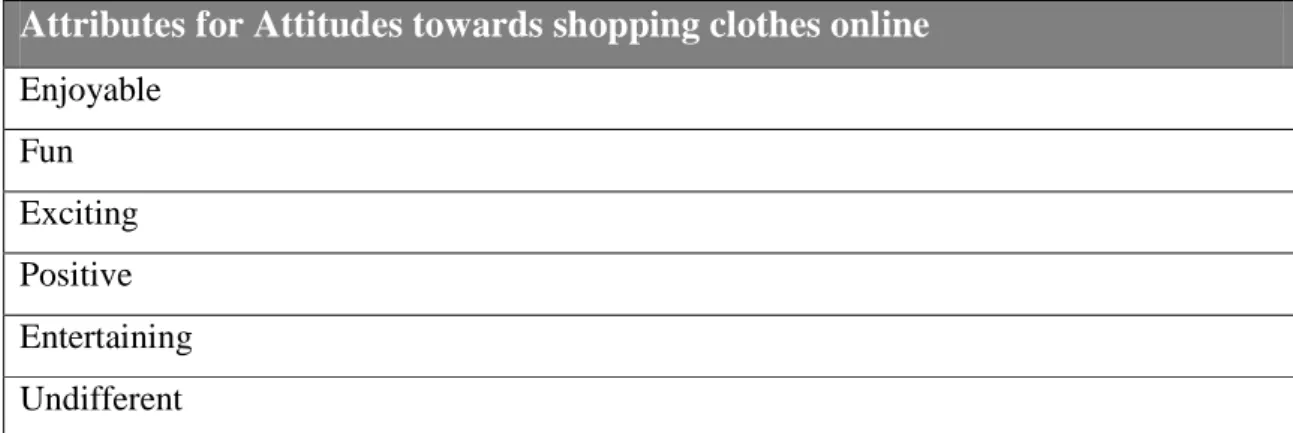
3.6.7 Attitudes towards shopping clothes online ……….. 45
3.6.8 Intention to purchase ………..………. 46
3.6.9 Control variables ………. 46
3.7 Characteristics of online clothing market ………. 46
vi
Chapter Four: RESEARCH METHOD ………. 51
4.1 Research Approach ………... 51 4.2 Research Design ………... 52 4.3 Research Strategy ………. 53 4.4 Sample Selection ……….. 54 4.5 Sample Size ……….. 56 4.6 Data Collection ………. 56
4.6.1 Primary Data Collection ……….. 57
4.6.2 Secondary Data Collection ……….. 59
Chapter Five: ANALYSIS AND DISCUSSION ……… 61
5.1 Data analysis ……… 61
5.1.1 Method of variable processing ……… 61
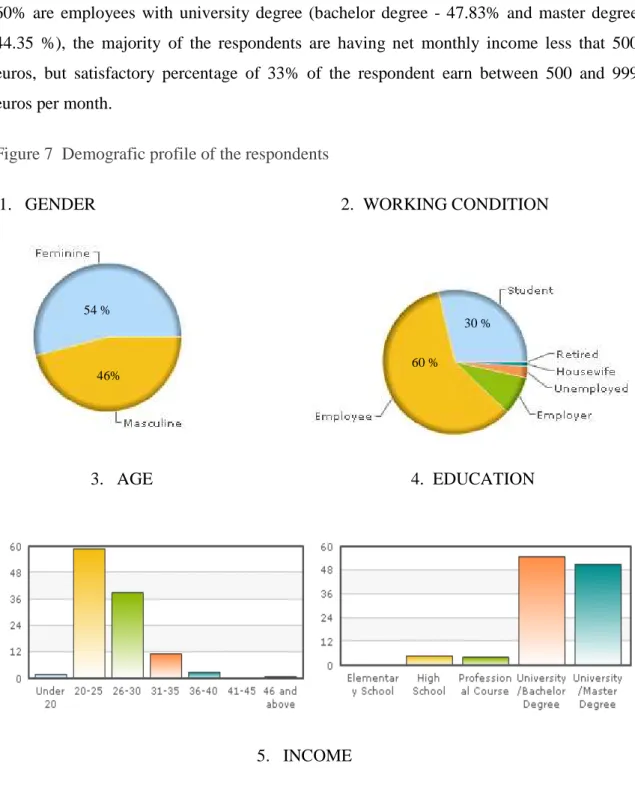
5.2 Demografic profile of respondents……… 64
5.3 Empirical findings ………... 67
5.3.1 Independent groups variables ……… 70
5.4 Models for attitudes towards online shopping ……… 73
5.4.1 Attitudes towards online shopping influencing intentions to purchase online. 73 5.4.2 Technology - oriented factors influencing attitudes ………. 75
5.4.3 Consumer - oriented factors influencing attitudes ……… 78
5.4.4 Attitude towards online shopping of experienced and inexperienced shoppers……….. 81
5.5 Models for intentions towards online shopping ………... 82
5.5.1 Technology-oriented factors influencing intentions to purchase ……… 82
5.5.2 Consumer-oriented factors influencing intentions to purchase ……….. 86
5.5.3 Intentions to spend more time at the online store, intentions to buy products online and intentions to recommend the online store influencing intentions to purchase ……… …… 88
vii
5.5.5 Intention to purchase of experienced and inexperienced shoppers …………. 92
5.6 Discussion of the results ………... 94
Chapter Six: CONCLUSIONS ……… 98
6.1 Final conclusions ……….. 98
6.2 Limitations of the thesis ………... 99
6.3 Recommendations for future studies ………... 100
Bibliography ………... 102
Appendix ……… 110
Appendix A: Figures and Tables ……… 110
viii
Tables
Table 1 Factors influencing online shopping purchase of clothes ……… 36
Table 2 Attributes related to Usability ………. 42
Table 3 Attributes related to Interactivity ……… 43
Table 4 Attributes related to Web design ………. 43
Table 5 Attributes related to Trust ……… 44
Table 6 Attributes related to Product perceptions ……… 44
Table 7 Attributes for Attitudes towards shopping clothes online ………... 45
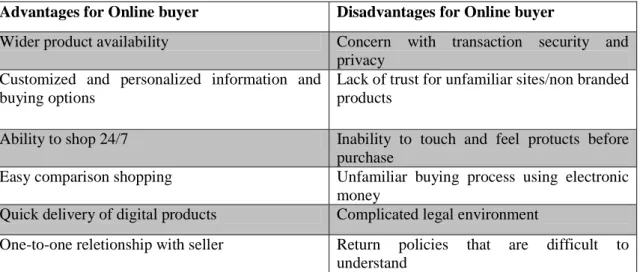
Table 8 Advantages and Disadvantages of Online Shopping ………... 50
Table 9 KMO Values ……….... 62
Table 10 Cronbach`s alpha Values ………... 63
Table 11 Frequency of using internet ………... 66
Table 12 Results from Factor Analysis and Reliability Analysis ………. 67
Table 13 Web Design Dimentionality ……….. 68
Table 14 Mean variable values……….. 69
Table 15 T-test For Independent Groups ………... 70
Table 16 Group differences between variables ………. 72
Table 17 Linear Regression Attitudes/Intention to purchase ……… 73
Table 18 Pearson Correlation Attitudes/ Intention to purchase ……… 74
Table 19 Linear Regression Technology-Oriented Factors /Attitudes ………. 75
Table 20 Pierson Correlation Web Technology-Oriented Factors/Attitudes ……… 77
Table 21 Linear Regression Consumer-Oriented Factors /Attitudes ……… 79
Table 22 Pierson Correlation Attitudes/Customer-Oriented Factors………. 80
Table 23 Linear Regression Technology-Oriented Factors/Intentions to purchase……….. 83
Table 24 Pierson Correlation Technology-Oriented Factors/Intentions to purchase 84 Table 25 Linear Regression Consumer-Oriented Factors/ Intentions to purchase… 86 Table 26 Pierson Correlation Consumer-Oriented Factors /Intentions to purchase ….. 87
ix
Table 27 Linear Regression for Intentions to purchase and its determinants……… 89
Table 28 Linear Regression Actual Consumer Behavior / Intentions to purchase.... 90
Table 29 Results for the hypotheses of the investigation……….. 94
Figures
Figure 1 The Interactivity ………. 16Figure 2 Consumer Making Process ………. 26
Figure 3 The Theory of Reasoned Action (TRA) ………. 27
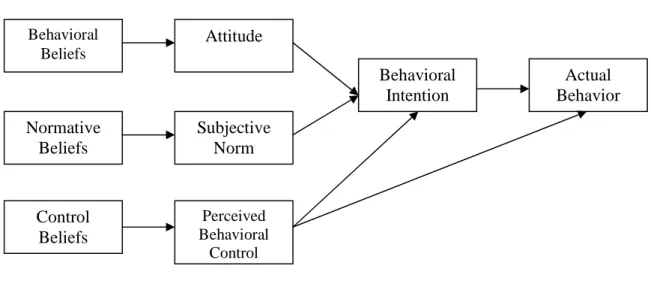
Figure 4 The Theory of Planned Behavior (TPB) ……… 28
Figure 5 Technology Acceptance Model (TAM) ………. 31
Figure 6 Research Model ……….. 35
Figure 7 Demografic of Respondents ………... 65
Graphics
Graph 1 Online Retail Values in UE ……….. 110Graph 2 Experienced and Inexperienced Shoppers and their attitudes towards online shopping……… 81
x
Legend
A Attitude
BIU Behavioral intention to use B2B Business to business B2C Business to consumer C2C
e-CRM
Consumer to consumer
Electronic Customer Relationship Management
P2P Peer to peer
M-commerce Mobile commerce DMP Decision-making process
IMRWorld Interactive Media in Retail World Accosiation IS Informational system
IT Informational technology PBC Perceived behavioral control PEOU Perceived ease of usage PU Perceived usefulness
TAM Technology Acceptance Model TRA Theory of Reasoned Action TPB Theory of Planned Behavior
WE Web experience
1
CHAPTER ONE: INTRODUCTION
The introduction chapter provides clear summary about the evolution of Internet and the future of e-commerce. Here are explained the purpose and the specific objectives of the research. The research background, research problem, research outline, definitions of relevant academic words of the research will be presented as well.
1.1 Research Focus
Today Internet is considered as an essencial parameter of economic and social life as well as one of the main constructs of the future commercial landscape.
Internet mediated commerce, commonly described as E-commerce is increasingly regarded as a mainstream commercial activity (Drew, 2003) and as a valuable marketing. The term e-commere has been used to describe the process of “electronically mediated information exchanges between an organization and its external stakeholders” (Chaffey, 2007).
From governments to multinational companies to one-person start-ups, e-commerce is increasingly viewed as a key business modality of the future. Ease of transaction, widening markets, and decreased overheads are factors that make e-commerce solutions more and more attractive, as evident with the growth of online sales.
From business perspective, Internet was visualized as unique linkage between consumers and supplier using proprietary technology. For the consumer, Internet can be a valuable communication medium to facilitate controlled search for up-to-date information and assistance with comparison shopping and decision making. (Hoffman, Novak & Chatterjee, 1996, p. 2)
2
Young people become more interested in online shopping and they spend more time and money on online shopping. They select and use the media to best fulfill their individual needs (Arnett, 1995). With the increasing use of the internet as shopping medium, young consumers, particularly college students aged 20-29, are becoming the internet`s “hottest” market and a prime source of current and future growth in online sales.
A recent study of Forrester Research (2004)1 shows that the turnover of online retail sales in Europe in 2010 was 172 billion euros, which is equal to 19.6 per cent growth compared to last year. Only in Western Europe B2C sales are projected to grow to 114.5 billion euros by 2014, thus the European online retail market will increase at a growth rate of 11% over the five-year forecast period. The study also predicts that online sales U.S. will keep growing at a 10 percent compound annual growth rate through 2014, and online retail sales in the U.S. will be nearly $250 billion, compared with $155 billion in 2009.
Between 2006 and 2008 the proportion of EU consumers buying at least one item over the internet increased from 27% to 33%. These average figures mask the huge popularity of online shopping in countries like UK, France and Germany where more than 50% of internet users have made online purchases in the last year. In the Nordic countries (Denmark, Sweden, Norway, Finland and Iceland) the proportion of internet users who bought products and services online was 91% in 2008. Countries like Italy and Spain are also fast growing markets. Against this pattern of fast growing national markets, the extent of online purchasing cross border remains small, at only 7% in 2008 compared to 6% in 2006.2
1
Forrester`s Western European Online Retail Forecast 2009-2014 (March 5, 2010) predicts a compound annual growth rate of 11% over the five-year forecast period. http://www.forrester.com/FirstLook/Vertical/Issue/0,6454,83,00.html
2
3
As online competition increases, it becomes vital for e-store to attract and fully satisfy consumers to ensure their success. With more choice than ever before, power has moved from suppliers to consumers (Pitt, Berthon,Watson & Zikhan 2002, p.7-14), giving consumers the ability to easily switch the retailers if they are not satisfied with their online experience. Research has found that almost half of consumers who abandoned transactions did so because of poor website performance (Boston Consulting Group, cited by Madu & Madu, 2002). This not only results in loss of sales, but negative experiences can also efect consumers` ongoing brand perceptions (Dieringer Research Group, cited by Constantines 2004).
Web sites founded on solid fundamentals and extensive customer research can make the difference between success and failure. A clear, easy-to-use and customer-centered web site can help garner better reviews and ratings, reduce the number of mistakes made by customers, trim the time it takes to find needed information, and increase overall customer satisfaction. Furthermore, customers who really like a web site's content and quality of service are more likely to tell their family, friends, and coworkers, thereby increasing the number of potential customers. A great example of this result is Google, which has become the dominant search site with little or no advertising. It simply works better than most other search sites.3
The clothes and sports goods are occupying an important part of customers’ online life. Buying clothes online takes a very high percentage in the online shopping ratings.
According to report of commission of the European Communities, travel and holiday accommodation ranks the first with 42% of individuals shopping online, followed by clothes and sport goods with 41% (Commission of the European Communities, 2009). Compared with other goods, online shopping of clothes and sport goods adds great
4
convenience to the life of the people. On one side, purchasing clothing online gives customers an opportunity to review and compare a wide variety of goods selecting between various online vendors and thus find the best deals online. On the other side, customers can buy items from branded online vendors which doesn`t have brick and mortal stores and in this sense save time and diferenciate themselves. Hence, buying apparel items online is always a beneficial deal than visiting retail stores in terms of more various options and time efficiency (EzineArticles, 2010)4.
In conclusion, the customers` demand to be different in their clothing style is increasing day by day, thus online shopping offers an effective and convenient channel to reach the customers and satisfy their needs. In the last years, the development of online retailer is improving and promises a bright future. Fashion online retailers should catch the commercial opportunity and develop consistently their products and service to gain more market.
1.2 Problem discussion
At present time, the popularity and the advantages of the mass medium Internet, have created huge online competition. In front of this, the firms have to find a competitive advantage in order to stay visible, to continue attracting customers and to survive among all these websites. The customer experience from visiting a website has been recognized as one of the most important factors for online success. According to Novak et al. (2000, p.22-42), “creating a compelling online experience for cyber customers is critical for creating competitive advantage on the Internet”. The same authors argue that relatively little is known about the factors that contribute to a superb online experience, noticing that “online
4
Ezine@rticles. (2010). Tips for buying products online from < http://ezinearticles.com/?Tips-For-Buying-Electronics-Online&id=3098975>
5
executive marketers need to develop a comprehensive understanding of consumer behavior in commercial online environments”.
In other words, the online retailers should understand the the effects of different marketing factors on the online consumers` behavior. It is also essencial to recognise the nature, power and function of web factors know how to use them efficiently in order to positively influence the consumer`s intentions for purchasing online.
Butler and Peppard (1998), cited by Limayem et al. (2000, p.421-432), for example explain the failure of IBM`s sponsored web shopping mall by the wrong interpretation of the true online consumer behavior specifics. There are many factors influencing the consumer behavior in cyber space, as well as in the physical world, affecting purchase decision. If marketers know how consumers make these decisions, they can adjust their marketing strategies to fit this new way of selling in order to convert their potential consumers to real ones and retain them.
Thus, online vendors need to deliver unique, differentiated experience to their customers. The success factor is not only understanding the needs of their online customers, but also being familiar with the main influencial WE factors, depending on the focus of their business and trying to professionalize them in a way to stay highly competitive in the cyber space and increase their sales. Similarly, web site designers, who are faced with the difficult question of how to design pages to make them more popular and attractive but also effective in increasing sales, can beneficit from such an understanding.
However, there is a lack of research concerning the purchasing of clothes online and some desagreements concerning the online buyer`s behavior still exist.
6
The research problem of this thesis is to identify which are the specific factors that affect customers’ behavior to buy clothing online and also to answer to what extent the relationship between the customers’ attitudes and online buying intention impacts on their actual behavior. Therefore, the autor’s intention is to explore the main WE factors that affect online shoppers when buying clothes and how customers` attitude influence their intention for online shopping apparel items, through developing an investigation model. It is impossible to cover all the potential elements, but it is intented to figure out the most important and relevant ones which highly affect the consumer` online shopping towards apparel items.
1.3. Research Objective
Based on the above research problem the research objective is formulated as follows:
Get insight into the main web - experience factors that customer takes into consideration when purchasing clothes online
In order to understand the main web experience factors influencing the online consumers behavior is constructed a research model, besed on Theory of Planned Behavior (TPB) developed by Ajzen (1991), which was applied in the context of online shopping of clothes. To cover the thesis research objective, the following research specific objectives have been developped:
♦ Categorize the main WE factors that affect online customer`s behavior;
♦ Evaluate the relationship between attitudes and intentions in order to understand consumer actual behavior towards online shopping of clothes;
7
♦ Understand to what extent WE factors influence consumers` attitudes towards online shopping and purchase intent;
♦ Understand to what extent WE factors and attitudes are related;
♦ Understand to what extent WE factors and intentions to purchase are related;
♦ How does customers` attitude towards online shopping of clothes influence their intention to start/continue to buy clothes online?
♦ Evaluate the customer`s attitudes towards online shopping of clothes;
♦ Understand the consumers` intentions to purchase online clothing and their behavior by analysing them from two perspectives - of experienced and of inexperienced shopper.
1.4. Chapter Outline
This thesis is divided into 6 parts.
Chapter One: Introduction
This is the introductory chapter which presents the background of the research, the research problem, research objectives, research outline, definitions of relevant academic words and limitation of the research.
Chapter Two: Literature Review
Critically examines relevant literature, highlights the theories which are applicable and closely connected to the subject.
8
Chapter Three: Conceptual Framework
Provides conceptual framework associated with theorical overview by explaining the key factors, variables and relationships among theories and models, essential for the discussion and critical thinking in order to provide contributions in this area.
Chapter Four: Research Methodology
In the Research Methodology chapter will be found the foundation of the research. In this chapter the autor explains and justifies the research approach, strategy and technique choices, along with the data collection and data analysis method.
Chapter Five: Analysis and Discussion
Chapter five presents the data analysis and interpretation of outcomes. It represents deep statistical analysis and discussion which is the basis for the results and conclusion of the study.
Chapter Six: Conclusion
Finally in chapter six, the most important issues are highlighted in order to reach the research purpose and the specific objectives. A deepened reasoning is presented. Based on the findings, the analysis, discussions and conclusions, further research recommendations are also presented.
1.6. Definitions
Electronic Shopping/Internet Shopping/Online Shopping – “The buying of goods and
services over the Internet, using either a computer or an Internet television” (Laudon and Traver, 2008, p.56)
E-commerce consists of the buying and selling products or services over electronic
9
E-business – “The digital enabling of transactions and processes within a firm, involving
information systems under the control of the firm (Laudon and Traver, 2008, p.11)
Business-to-Business (B2B) e-commerce – “Online business selling to other business”
(Laudon and Traver, 2008, p.15)
Business-to-Consumer (B2C) e-comerce – “Online business selling to individual
consumers” (Laudon and Traver, 2008, p.15)
Consumer behavior – “Consumer Behavior is the study of when, why, how and where
people do or do not buy products. It blends elements from psycology, sociology, social anthropology and economics. It attempts to understand the buyer decision making process, both individually and in groups” (Sandhusen, 2000, p.218)
Attitude – “Attitude towards a behavior is referred as an individual`s positive or negative
evaluation of a relevant behavior and is composed of an individual salient beliefs regarding the perceived consequences of performing behavior” (Ajzen, 1991, p.207)
Intention – “Intentions represent motivational components of behavior, that is the degree if
conscious effort that a person will exert in order to perform a behavior” (Ajzen, 1991, p.201)
Experienced shoppers - Based on the survey, we refer “shoppers” to people who do have
conducted an online purchase.
Inexperienced shoppers - Based on the survey, we refer to people who have never
10
CHAPTER TWO: THEORICAL FRAMEWORK
In this chapter, the author reviewed and utilized a large amount of previous researches which are concerned within the research fields of e-commerce, online shopping, online buying behavior. Additionally, the author attempts to mainly concentrate on identifying the factors which affect the consumers’ buying behavior for clothing in internet shopping.
2.1 The Internet Era and Online Shopping Benefits
2.1.1 E-business
The term e-business is defined as the use of Internet in order to connect customers, suppliers, employees and other stakeholders with the organization via a website in order to exchange information about its products and policies (Rodgers et al., 2002, p.186). An e-business website can have many good consequences for a company. For example, it gives the possibility to provide a superior customer service that increases customers’ satisfaction and their loyalty (Melewar et al., 2003, p. 363). It also improves the relationship between a company and its suppliers that permits to increase the speed of an order and to enhance business performances (Rodgers et al., 2002, p. 186).
2.1.2 E-commerce
In E-commerce theory five broad models are known:
♦ B 2 C – business to consumer
♦ B 2 B – business to business
♦ C 2 C – consumer to consumer
♦ P 2 P – peer to peer
11
In the present study the author focuses on e-retail which is synonymous with business-to-consumer (B2C) transaction, defined by Harris and Dennis (2002, cited by Dennis, Fenech and Merrilees, 2004) as the “sales of services and goods via the Internet or other electronic
channels, for personal or household consumption”. The most popular B2C activities are
online shopping, online banking and eletronic learning. B2C represents fewer turnovers compared to B2B but somehow is in very fast growth. However, for the reasearch purposes online shopping is the main analysed e-retail activity.
E-commerce refers to online selling and purchasing activities including money transaction like online payment and tracking delivery (Rodgers et al., 2002, p.186). Thus, e-commerce uses the Internet in order to connect customers with a firm in order to distribute products and services online. A company can choose to sell directly a part or the totality of its products or services online to its final customers. The Internet can be used as a unique or as a complementary distribution channel. It permits to decrease distribution costs like salesperson salary (Melewar et al., 2003, p. 364).
E-commerce is the second most commonly used retail channel. According to report of commission of European Communities in the EU27 in 2008, 51% of retailers use
e-comerce to sell their products.
It is possible that an e-commerce website both provides information and sells products/services to customers. In short, the term business includes the term of e-commerce. Thus, an e-commerce site is also an e-business site but an e-business site is not necessarily an e-commerce site. The distinction between e-business and e-commerce and their characteristics show pretty well that the Internet could be used either as a distribution channel or a communication medium according to the brand’s online strategy. Some clothing brands have chosen to be present online through an e-business website in order to only provide important information to online customers and suppliers. Others made the
12
choice to sell online. The principal is to be in adequacy to the identity of the clothing brand. In the continuation of the thesis, the autor has chosen to only concentrate on the brands that sell online part or their entire collection.
2.1.3 Internet and online shopping
The growth of using internet offers consumers a wide and effective platform to gain information, it is worthy to mention that more and more customers are changing their shopping way from traditional store to online shop. Thus, the study of e-commerce for consumers is becoming a valuable topic to discuss among the researchers.
Over the past decade the Internet has changed the way that we live, from communication and information sharing to browsing and purchasing products. The Internet has made a new generation of consumers who like to shop online.
Internet has been a key factor for changing culture in this century. It has the capacity to improve the quality of live for people over the planet, giving them access to essential services, information and resources. The online market is also a greener alternative of traditional retailing, allowing retailer to sell into foreign markets that were formerly difficult to reach.
Around 1,596 million of people in the world use the Internet (Internet World Stats, March 2009)5. It represents in average 23.8% of the worldwide population and this number of Internet users should increase again during the next years. 74.4% of the North American, 60.4% of the Australian, 48.9% of the European are connected to the Internet. Moreover, children, teenagers as well as seniors learn how to use the Internet. Through these figures it is easy to understand the huge power that represents the Internet media in the entire world.
13
More and more people use the Internet, more and more powerful and attractive is this communication and distribution channel for companies.
Internet is the most influental factor affecting retail industry today. In report of IMRWorld6 it was estimated that total B2C e-commerce sales in 2010 have grown to €591bn, an increase of close to 25%. IMRWorld estimates that growth will continue in the coming years, passing the trillion-euro mark in 2013 and between 2009 and 2013 sales in billion euro will double7.
Graph 1 (appendix A) displays the growth rates in EU of the leading sectors in online retail from 2002 to 2007. The top three product categories in 2007 were media products facturating 13.2 billion euros, followed by clothing and footwear 7.3 billion euros and consumer electronics – 6.8 billion euros.
2.2 Web Experience Factors influencing Online Consumer Behavior
“Online shopping experience” or “virtual experience” is defined as crucial e-commerce marketing issue by many academics and practitioners because it results from the consumer`s exposure to a combination of virtual marketing tools “under the marketer’s direct control, likely to influence the buying behavior of the online consumer” (Constantinides, 2002, p. 60).
The Web experience can be defined as the consumer’s total impression about the online company as the result of their exposure to a combination of notions, emotions and impulses
6
Interactive Media in Retail World Accosiation:“A primary source in e-Business Intelligence”
7
14
caused by the design and other marketing elements of the online presentation (Constantines, 2004).
The Web experience embraces elements like searching, browsing, finding, selecting, comparing and evaluating information as well as interacting and transacting with the online firm. The virtual customer’s total impression and actions are influenced by design, events, emotions, atmosphere and other elements experienced during interaction with a given web site, elements meant to induce customer goodwill and affect the final outcome of the online interaction.
The medium for delivering the WE is the corporate web site. Sites delivering high quality WE are designed and structured in ways not only adressing the consumers needs, expectations and emotions but also evoking credibility, providing the right products and services, helping the customer through the steps of the buying process while offering fulfillment services, cutomer assistance and after sales services (O`Kneefe and Mc Eachern, 1998, p.71-78)
2.2.1 Technology- Oriented Factors
2.2.1.1 Usability
Usability is defined as “the extent to which a product can be used by specific users to achieve specified goals with effectiveness, efficiency and satisfaction in a specified context of use” (International Organization for Standartization (ISO) 9241 norm, cited by Guerrero, Egea & González, 2007, p.102-113)
Websites need to give consumers a sense of control and freedom (Neilsen et al. 2001), allowing them to move freely around the site without getting lost (Dennis, Fenech & Merrilees, 2004). If consumers experience usability problems on a website it can prevent
15
them from finding and so purchasing products, resulting in loss of sale and disappointment (Guerrero, Egea & González 2007). Therefore, usabilitity element should be a fundamental consideration (Dennis, Fenech & Merrilees, 2004), particularly when consumers increasingly come to take it for granted (Tan & Wei, 2006, p.261-271).
Constantinides (2004) summarised the key usability components as convenience, site navigation, information architecture, ordering and paying process, search process, site speed and accessibility.
Website structure can influence usability, ensuring that customers can move around quickly with as few clicks as possible (Kim & Eom, 2002). This can include the use of meaningful product categories with appropriate headings and subheadings, allowing consumers to identify pages of value (Madu & Madu, 2002). Categories, however, need to be carefully considered, as too many choices can lead to confusion (Shubin & Meehan, 1997, cited by Madu & Madu, 2002).
Using regression analyses, Loshe and Spiller (1999) found that product list navigation features that reduced purchase time accounted for 61% of variance in monthly sales for an e-retail store. Navigation aids and site presentation needs to be consistent across all pages to increase usability (Tam & Wai, 2006). Madu and Madu (2002) also recommend placing an overview of the whole website on the front page.
The way online vendors follow up orders and deliver products has an immediate impact on the willingness of customers to order and more importantly, to return to the Web site for shopping in the future. Alternative payment methods, fast delivery, flexible delivery options and order tracking are frequently mentioned web technology factors.
After reviewing the literature usability elements, the author decided to categorise the most important ones for online clothes shopping sites and examine four of the above described
16
elements as follows: site navigation, accessibility, payment process and delivery procedures.
2.2.1.2 Interactivity
To be successful e-stores need to facilitate interaction with the consumer which is on a particular importance when building brands online (Merylees and Fry, 2002) and can significally affect consumer satisfaction (Ballantine, 2005). As in the case of usability, good knowledge of customer profiles and needs are of vital importance for the designers of these online services. Constantinides (2004) summarised the key interactivity elements as customer service, interaction with company personnel, customization and network effects. The Interactivity components are devided in two groups:
1) Interactivity with the online vendor 2) Interactivity with other web users
Figure 1 The Interactivity
Interactivity: dialogue, not monologue
Company Consumer
Two way feedbacks
Building up a two-way relationship through communication and problem solving assistance is important in online reality and can be equivalent of personal service in traditional organization (Merrilees & Fry, 2002).
Research has found that access to key reference groups and desirable communities online can encourage consumers to shop online (Parsons, 2002). Allred, Smith and Swinyard (2006) suggest that elements such as user forums and message boards not only satisfy
17
consumers` need for social interaction but build up a community bond, which can give consumers more information and confidence to progress to the checkout.
So, the Internet encourages and permits the communication between the brand and the customers but also between online consumers. Nowadays, online vendors use also web 2.0 applications like blogs, RSS, social networking, YouTube, User`s Forums, Bulletin Boards, Chatrooms in order to give the possibility to their customers to establish contact with other Internet users and give them opportunities to reinforce their identification to the brands, to decrease their feelings of uncertainty and so to lead them to purchase online (Constantinides, 2004, p. 118)
However, other research (Song & Zahedi, 2005) found that while external personal sources, such as comments, ratings, testemonials had a highly significant influence on social interaction aspect of e-retail, this only had a slight impact on purchase intention.
Another element of online interactivity is the ability to personalise or customise the site and control communications received (Dennis, Fenech & Merrilees, 2004). Consumers can benefit from product recommendations, editoral content, consumer feedback on specific products and recommendations based on product knowledge or customer profiles which actively anticipate consumers` desires (Schafer, Konstan & Riedl, 2001). Specifically for clothing e-stores, retailers can offer suggestions on matching items and ideas to complete the outfit, which may encourage trial (Allen, 2000) and increase purchase intention (Then & DeLong, 1999,p.65-68).
18
e – CRM
The term e-CRM derives from the CRM but in the field of e-commerce. Customer Relationship Management software permits web sites to collect and then to use those demographic and previous interaction data in order to obtain the best profiles of its customers. After that, it permits to provide them the best experience and develop a more positive and trusting relationship (Smith et al., 2005, p.21) by offering better customer service and customized offerings (Melewar et al., 2003, p.363). And because for the online clothes business, service levels and relationship are the most important elements, to get this type of information, understand it and use it in order to get a clear image of their customers, increase interaction with them, to provide them a perfect online experience (Melewar et al., 2003, p.365) is the best strategy.
2.2.1.3 Web design
According to (Dennis, Fenech & Merrilees, 2004) the visual presentation of the e-store is vital to shape perceptions. Web design is consisted of various parts, but most impotrant are presentation quality, style, atmosphere (Constantinides, 2004) including colour combinations, type and size of fonts, animation, sounds effects and clarity and readability of the text (Madu & Madu, 2002).
The retailer has the ability through this elements to create an aesthetically stimulating environment, which increases hedonic value (Childers, Carr, Peck & Carson, 2001) and enhances consumer `s experience encouragating them to stay longer in the website (Dennis, Fenech & Merrilees, 2004)
As mentioned above, one of the key hurdles that clothing e-retail has to overcome is the consumer`s to handle items before purchase. Due to the perceived risk, product presentation
19
must be carefully considered to give consumers a sense of fit (Park, Lennon & Stoel, 2005) and increase tangibility of products (Kim & Eom, 2002).
High quality images with realistic products colours are particularly important for sensual products such as clothing (Dennis, Fenech & Merrilees, 2004). Ha, Know and Lennon (2007) suggest that clothing e-stores should provide more visual product information and a wider range of product presentations, for example larger views, close ups, back and side views to increase the purchase intent.
In a laboratory experiment with e-retail consumers, Lee and Benbasat (2003) found that higher clarity images and motion resulted in higher level of attention, while image size had an impact on memory. A recent experiment (Park, Stoel & Lennon, 2008) supported their findings, concluding that movement, such as product rotation, created a positive mood and increase purchase intent. However, they found that product size did not have a significant effect, suggesting that small but clear images could convey enough information.
Then and DeLong (1999) emphasized the importance of using a human model online to show the natural drape of clothes and also presented in the closest representation to its end use. Other research of Mintel 20068 has highlighed the benefits of including video clips of clothes being modelled, which can help consumers evaluate products and reduce risk. Retailers are increasingly adopting state of the art technologies on their web sites to attract consumers and compensate for the lack of physical presence. Elements such as 3D presentation and virtual reality can provide increased perceived product knowledge, positive product attitudes and increased purchase intention (Suh & Chang, 2006, p.100). Other technologies such as virtual dressing rooms and online fit predictors are increasingly being adopted to aid consumer decision – making (Abend, 2001).
20
In a recent study Fiore and Kelly (2007) found that sound had not been adopted as readily as other web design. So, they highlight the wide scope it has, not only to enhance the visual display of products, but also to provide audio descriptions and allow consumers to submit verbal feedback as well as provide general background atmospheric sound. Coyle and Thorson (2001) found that the use of audio and animation on websites increased levels of vividness, which resulted in increased telepresence and stronger, more enduring attitudes towards the e-stores.
However, despite the increasing support of Web design elements, their use need to be carefully considered. Overuse can frustrate consumers who are looking to access product information quickly (Dennis, Fenech & Merrilees, 2004) and increase page loading times – a key reason why e-stores are abandoned prior to purchase (Weinberg, 2000). Elements such as animation also need to be used with care to ensure that consumers remain in control and are not for example, forced to watch extended introductions before reaching the homepage (Madu & Madu, 2002)
Overall Demangeot and Broderick (2007) found that a combination of interactivity and web design results in hedonic value mediated by involvment and utilitarian value, both impacting on attitude towards the web site and purchase intent.
2.2.2 Consumer - Oriented Factors
2.2.2.1 Shopping Experience
Miyazaki and Fernandez (2001) states that “ higher Internet experience and the use of other remote purchasing methods are related to lower levels of perceived risk towards online shopping, which in turns results in higher online purchase rates.
21
Consumers online activities are very easy to be affected by their online experience. If previous online experience had left positive or negative impression in customers` memory in some extent, this impression highly influence consumers` actual buying behavior, thus customers` emotional feeling could lead a conversion from product navigation to purchasing (Wolfinbarger & Gilly, 2001, p.44). Wolfinbarger and Gilly`s research (2001) indicated that impulsive buying seldom happen on the goal-oriented consumers, but they enjoy the freedom and control, while the experiential online shoppers enjoy the surprise and excitement of the shopping experience. Positive affect make task-oriented online shopping consumers have less time to browse and search related information online before their actual buying behavior, however, negative affect make task- oriented online shopping consumers focus on pure entertainment more than really purpose of actual shopping online. According to the brief description of these studies, it is not difficult to see that the shopping experience could affect the consumers`s emotion which decides if the consumers can convert the emotion into purchasing behavior. Most of the online experience refers to the service aspect of online shopping; furthermore, a bad shopping experience could be harmful for the image of the online store and affect the ongoing buying behavior in the same website.
Ahmad`s (2002) research presents certain aspects of online shopping experience from consumers` perspective, specifically, concentrates on the consumers` reactions to service failures and initiative to enhance the online service recovery. Through the responses of the shopper who had bad experience when they shopped online, the researcher presented that the factors are involved in such as late deliver, defective product, and partial order; meanwhile, the shoppers also have bad experience that the online shop`s customer service representative made no efforts to fix problems. In addition, the survey also presents that the respondents who had problems with online shopping, they choose to contact the online shops by using telephone, and emails to communicate, however, the results indicates that customers prefer to use the telephone to communicate.
22
2.2.2.2 Trust
Due to the impersonal and anonymous nature of online transactions, e-retailers have the vital role to build consumer trust to be successful in their e-business (Chen & Barnes, 2007, p. 21-36). To build trust several things have to be safe for an Internet user. Indeed, according to Karakaya (2001, p.44), the principal online anxieties is about privacy and security of operation.
Vijayasarathy and Jones (2000) identified five risk dimentions. In addition to traditional economic, social and performance risk, a further two were identified as new to e-retail: personal risk such as theft and abuse of credit card information, and privacy risk, including compromising personal information.
To reduce risk and build up trust e-retailers need to ensure their site is secure, trustworthy and respects consumers` privacy (Chen and Barnes, 2007).
Salomon (2004) agrees it telling that “security is one important concern” (p.338). So, the online payment must be secure. Grewal et al. (2003) emphase the need for a well written and prominently displayed security ecryption assurance. Other elements that can increase trust are comprehensive and locatable company information, fair pricing, balanced product information, professional site design and access to help (Kim & Eom, 2002; Nielsen et al., 2001; Smith and Rupp, 2003).
Other research (Kim & Kim, 2004) concludes that consumers nowadays feel more secure as technology and security systems improve and for online clothes shopping specifically may see security issues as less of risk that product unsuitability due to the lack of physical examination (Cho, 2004).
Lastly, in the case of any dissatisfaction with the product, online customers, as in traditional shops, can return the product (Karakaya, 2001, p.45) without any extra fees. Indeed, secured payment, choices between many transaction possibilities, clear conditions of
23
payment and delivery, possibility to contact vendors for advices and information and after sales services are many factors that can dispel online customers’ fears, and develop and strengthen their trust towards the brand. This trust, once implemented, permits online customers to make their e-shopping without any risks in mind.
2.2.2.3 Product Perception
Several researchers have been focused on the impact of marketing mix elements on the behavior of web users searching through Internet or buying products and services online. Researchers agree that the marketing mix’s 4Ps – are essential contributors to the Web experience. Nielsen et al (2001) found factors such as fair prices, product quality, product range and product availability which greatly impacted on a consumer`s perception of an e-store.
Customers online shopping behavior is impacted by the product features which are variety of goods, product quality/performance/product uncertainty, product availability, social presence requirement, product presence requirement, dependability of product, possibility of customized product and brand” (Liang & Huang 1998, p.33; Lowengart & Tractinskky, 2001, p. 20; Muthitacharoen, 1999, p.533).
Firstly, the product can be characterized by using the distinction between search-goods versus experience-quality goods (Nelson, 1974, p.732-735). This distinction concerned with how product quality can be determined. Quality can be determined in advance before the consumers buy or use (e.g., thickness of cloth), which is search goods. The quality of some other products cannot be determined prior to purchase and use (e.g. the way the material feels or drapes). Thus, the researcher defined that search goods are products whose physical characteristics are known prior to purchase (e.g., book), while experience goods have some uncertainty with respect to their quality of higher likelihood of physical malfunctioning (e.g., a computer). For this research, clothing belongs to the experience
24
goods, since customer cannot tell the product quality, function and performance until purchasing and using. (Lowengart & Tractinsky, 2001, p.142).
Hu, Smith and Brynjolfsson (2003) poited out that increased product variety made products available through e-markets can be a larger source of consumer surplus gains, logically increasing their purchase intention.
For this research, online clothing shopping is also highly concerned with product perception, the focus is on the product perception in term of 4 aspects: product quality, product variety, product availability and product price. We would like to examine the four aspects through our survey in order to see how these aspects affect the consumers` buying behavior when they make decision for purchasing clothes online.
The rest of the elements of Marketing Mix is briefly explained but those are not included in our research.
Song and Zahedi (2005) found that perceived presence of promotions and service also had a significant impact on beliefs and purchase intentions, with incentive programs having a highly significant impact on online purchase behavior (Kim & Kim, 2004).
Corporate image and consumer familiarity are vital elements to increase consumers` confidence and purchase intention (Chen & Barnes, 2007). Grewal, Munger, Lyer and Levy (2003) found that a favourable reputation and well-known brand name reduced consumers` perceived online risk and reduced the need for other assurances, such as security encryption and money back guarantees. The amount of the information available online has also been found to affect purchase intention (Song & Zahedi, 2005) and also affect consumer satisfaction (Lynch & Ariely, 2000). Consumers can benefit when retailers supply a large range of products and regularly update their website to give consumers access to up-to-date information and enable them to identify new trends (Parsons, 2002).
25
2.3 Decision Making Process in online environment
Engel, Kollat e Blackwell (1892) who developped the model of decision-making process considers four steps of the process:
- problem recognition - search
- alternatives evaluation and choice - post-evaluation phase
But according to Salomon (2004, p.292) the decision-making process is composed of five steps. After the problem recognition step, in which a desire of a need is identified, a customer has to search for information. The customer surveys his environment for appropriate data to make a reasonable decision among several choices in order to fulfill his desire or need. This step is more or less long and costly depending of the nature of the product, the perceived risk of the purchase and the free time of the customer.
Constantinides (2004) pointed out the fact that this purchase can be made online adds a fifth step to his decision-making process, “building trust and confidence” between him and the online brands (p.112). After this step, the customer has to evaluate each alternative making a comparison between several products according to some attributes like price, brand, quality, size etc. This evaluation leads to purchase decision that is the choice of the best product according to the customer criterion. Then a post purchase evaluation starts. If the product fulfills the consumer’s expectation, he will be satisfied of his purchase. But if it is below his primary expectation, the consumer will have a negative opinion about the product. During his next purchase acts, he will use this experience in order to not make this same error again (Salomon, 2004, p.292). See figure (2.1 in appendix A).
26
Figure 2 Consumer Decision Making Process
2.4 Online consumer behavior
Purchasing is considered as humans` socio-psycological behavior. Understanding the psycological background of human behavior is essencial for marketers better achieve their strategic marketing goals. There are many theorical models developed for human behavior that have been used in Marketing, E-commerce and IT studies. The most widely used theories are Theory of Reasoned Action (TRA), Theory of Planned Behaviour (TPB), Technology Aceptance Model (TAM) and Triandis Model. Empirical study developped by Limayem, 2003 shows that TRA, TPB and TAM are the most popular theories used to study online consumer behavior.
Problem Recognition
Search information Trust Building Evaluation of alternatives Choice
27
2.4.1 Theory of Reasoned Action (TRA)
According to the Theory Reasoned Action developped by Fishbein et al. (1975), the determinant of a person`s behavior is its intention to either perform or not perform the specific behavior. In this model two independent factors are framed, which are interacting together and determine intention.
1) Attitude towards the behavior: a factor that considers the degree to which
a person has about positively or negatively evaluating a specific behavior. Attitude is therefore determined by behavioral beliefs and evaluation of behavioral outcomes. Thus, a person who strongly beleives that positive outcomes will result from performing a particular behavior will have positive attitudes towards the behavior. The opposite statement about the negative behavior and attitude is also valid.
2) Subjective norm is determined by the person`s normative beliefs – if
certain influencial individuals approve or disapprove of a particular behavior and the persons motivation to comply with the approvals/disapprovals of the important individuals.
Figure 3 The Theory of Reasoned Action (TRA)
Beliefs and Evaluation Normative Beliefs Attitude Subjective Norm Behavioral Intention Actual Behavior
28
Since the TRA works successfully to perform only behaviors under volitional control, the question about the behaviors which are not under volitional control had arosed. However, there was a need to introduce a concept that takes into consideraion the ability of the subject to perform the behavior. This concept was introduced as perceived behavioral control to the TRA making this theory known as Theory of Planned Behavior (TPB).
2.4.2 Theory of Planned Behavior Model (TPB)
The Theory of Planned Behavior (TPB) developed by Ajzen (1991) is an extension of TRA and it is adressed to show the inability of TRA in conditions when individuals do not have total volitional control over their behavior. Symbolically, the TPB model is presented in figure 4 where it is illustrated that each of the determinants of intention like in TRA but with one additional determinant to attitude to behavior and the subjective norm which is the perceived control (PBC), in turn, determined by underlying belief structures.
Figure 4 The Theory of Planned Behavior (TPB) (Ajzen, 1991)
Behavioral Beliefs Normative Beliefs Attitude Subjective Norm Behavioral Intention Actual Behavior Control Beliefs Perceived Behavioral Control
29
The PBC is an individual`s perceived ease or difficulty of performing the particular behavior. It is assumed that PBC is informed by beliefs about the individual`s possession of the opportunities and resources needed to engage in the behavior (Azjen, 1991, p.185). It accentuates both internal control (e.g. a person`s skills and abilities of self efficacy) and external constraints (e.g. opportunities and facilities) need to perform behavior. According to TPB, attitude towards the target behavior and subjective norms about engaging in the behavior are thought to influence intention, and perceived behavioral control over engaging in the behavior is a factor influencing intention and both are being function of actual berhavior (Azjen, 1991, p.180).
Furthermore, TPB also includes a direct link between perceived behavioral control and behavioral achievement. Given two individuals with the same level of intention to engage in a behavior, the one with more confidence in his or her abilities is more likely to succeed than the one who has doubts (Azjen, 1991).
2.4.3 Technology Acceptance Model (TAM)
One of the most significant purposes of TAM is to provide a foundation for outlining the impact of specific external factors on the internal beliefs, intentions and attitudes. The model proposed by Davis (Davis, 1989) was derived from the TRA. While TRA was created to explain general human behavior, TAM is specific to IS usage.
The aim of the TAM is “[…] to provide an explanation of the determinants of computer acceptance that is general, capable of explaining user behavior across a broad range of end user computing technologies and user populations, while at the same time being both par-simonious and theoretically justified” (Davis et al, 1989, p. 985). In 1989, Davis developed scales for two specific variables that were hypothesized to be basic determinants of user acceptance of
30
computers. These two variables were referred to as „perceived usefulness‟ and „perceived ease of use‟. According to Davis (1989):
♦ Perceived Usefullness (PU) “[...] the people tend to use or not use an application to the extent they believe it will help them perform their job better” (Davis, 1989, p. 320).
♦ Perceived Ease of Use (PEOU) is “ the degree to which people beleive that using a particular system would be free of efforts”
PU and PEOU reflect the beleifs about the task value and user-friendliness of new information systems respectively.
This Technology Acceptance Model has been cited in various research since it was introduced by Davis in 1989. With the emerging of the e-commerce marketing, Internet and World Wide Web (www), some researches have tried to apply the technology acceptance model in the e-commerce field (Li and Qiu, 2008; Dellaert, Monsuwé and Ruyter, 2004, Cho and Iris Cheung, 2003).
As shown in Figure 5, the model refers that actual usage is determined by user`s behavioral intention to use (BIU) which in turn is influenced by their attitude (A) and the belief of perceived usefullness (PU). User`s attitudes, which reflects favourable or unfavorable feelings towards using the IS system, is determined jointly by perceived usefullness (PU) and perceived ease of use (PEOU). PU, alternatively, is influenced by extenal variables and PEOU. The logical understanging of the Technology Acceptance Model is that the easier exploitation of certain technology the more useful it is perceived to be.
31
Figure 5 Technology Acceptance Model (TAM) (Davis, 1989)
2.4.4 Applying a theorical model
The three models represent different determinants to explain the consumer behavior in technology adoption or in e-commerce reality, nevertheless, they share lots of similarities. TRA, TPB and TAM assume an attitude – intention – behavior relationship, that is, cognitive, normative or affective beliefs form attitude, which successively has influence on behavioral intention and actual usage of behavior. TAM in its turn, explain most of the technology driven – systems in previous studies, however, this model is unsufficient to explain the prediction of online shopping that entails a greater degree of uncertainty as compared to physical product transactions. Actually, trust and risk are integrated in the structures of TPB as control belief, acting on behavioral control and risk of security issues and privacy violation influencing attitude through perceived consequences (Pavlou, 2002). Although, TAM and TRA both assume volitional control over behavior and that no constraints would prevent an indivudual from commitment of behavior out, the PBC construct in TPB (absent in TAM) has been tested and used in IS research.
Perceived Usefulness (PU) Perceived Ease of Use (PEOU) Attitude toward using (A) External Variables Behavioral Intention to use (BIU) Actual System Use
32
The author chose to base her research model on TPB because is a model that following models are an extension of the original TPB, and it is applying better to the research about the web experience factors which are influencing consumer behavior. Moreover, TPB is well known and acknowledged model in Marketing. In conclusion, in their reasearch Kallol K. Baghichi et al. (2002), refer that the explanatory power of TPB is somewhat better than TAM for most marketing studies.
33
CHAPTER THREE: CONCEPTUAL FRAMEWORK
In the following chapter is elaborated the conceptual framework associated with literature review to explain the consumer online attitudes towards online shopping and their intentions to purchase, to spend more time in the online store and to recommend it. Hereafter is presented the Research Model and the Hypotheses of the study paper. The processing of the variables and the constructing of the scales are defined, together with the measures used to test the variables in the research. Lastly, the caracterististis of the clothing online market are clarifyed.
3.1 Theorical Paradigm
With the blooming of online shopping, more relevant researches are increasing and intent to investigate how to gain more new potential consumers and maintain the existing ones. For such, web elements to create an attractve web design of online store are very important consideration involved in many researches. Six web experience elements are detected as most influencial in the process of forming online behavior. Considered technology - oriented factors usability, interactivity and web design elements are those that need high technological development for improving shopping functions and service. Trust, shopping experience and product perception are those elements related to the consumer reactions and perceptions about attitudes and intentions. Yet, all of the web experience factors may change consumer`s attitude and behavior towards online shopping. Understanding how online consumers are affected by the exposure of the web site elements help marketers to predict consumers buying behavior.