Title High pressure processing as a hurdle technology for development of consumer-accepted, low-salt processed meat products with enhanced safety and shelf-life
Author(s) O'Neill, Ciara Publication date 2018
Original citation O'Neill, C. 2018. High pressure processing as a hurdle technology for development of consumer-accepted, low-salt processed meat products with enhanced safety and shelf-life. PhD Thesis, University College Cork.
Type of publication Doctoral thesis
Rights © 2018, Ciara O'Neill.
http://creativecommons.org/licenses/by-nc-nd/3.0/
Embargo information Not applicable Item downloaded
from http://hdl.handle.net/10468/6759 Downloaded on 2018-09-21T13:41:58Z
Ollscoil na hEireann
National University of Ireland
Colaiste na hOllscoile Corcaigh
University College Cork
Scoil na nEolaíochtaí Bia agus Cothaithe School of Food and Nutritional Sciences
HIGH PRESSURE PROCESSING AS A HURDLE
TECHNOLOGY FOR DEVELOPMENT OF
CONSUMER-ACCEPTED, LOW-SALT PROCESSED MEAT PRODUCTS
WITH ENHANCED SAFETY AND SHELF-LIFE
Thesis presented by
Ciara O’ Neill, BSc.
For the degree of
Doctor of Philosophy in Food Science and Technology Under the supervision of
Professor Joseph P. Kerry Dr. Malco Cruz-Romero
Head of School Professor Paul Mc Sweeney
1
Table of Contents
Table of contents……….…1 Declaration………...9 Acknowledgements……….…..10 Abstract……….…....11Publications and Presentations……….……...13
Abbreviations………..…..17
Schematic overview of thesis chapters……….…...20
CHAPTER 1- Literature Review 1.1 Introduction ……….22
1.2 Overview of the global meat industry ……….…23
1.3 The Irish Meat Industry………24
1.4 Current trends on meat consumption and added value meat products ………25
1.5 Morphology and chemical composition of meat………..……27
1.6 Health and safety concerns for processed meat products……….28
1.6.1 Health Concerns for processed meat products…….………..30
1.6.2 Microbiology of meat; pathogens and spoilage micro-organisms……….….31
1.7 Meat Processing ………...……32
1.7.1 Frankfurters………33
1.7.2 Cooked ham ………...33
1.8 Functions of Sodium Chloride in meat processing………34
1.8.1 Physical Processing effects and texture development in processed meats….……34
1.8.2 Preservation effects ………35
1.8.3 Sensory properties ……….36
1.9 Approaches to salt reduction in processed meat products……….…37
1.9.1 Product Reformulation………....37
1.9.2 Salt substitutes or replacers……….…38
1.9.3 Flavour enhancers………..….39
1.9.4 Physical form of salt………40
1.9.5 High Pressure Processing ……….……...40
1.10 Preservation of processed meat products………47
2
1.10.1.1 Heat treatments………..….…....49
1.10.1.2 Cooling and Freezing ………..…...…49
1.10.1.3 High pressure processing ……….…..50
1.10.1.4 Irradiation………...50 1.10.2 Chemical treatments……….51 1.10.2.1 Salt………..51 1.10.2.2 Organic acids……….….51 1.10.2.3 Nitrites ………...52 1.11 Hurdle Technology ………52
1.12 High pressure processing of meat products ……….……...56
1.12.1 The effects of high pressure on meat texture ……….……...57
1.12.2 The effects of high pressure on meat colour ……….59
1.12.3 The effects of high pressure on lipid oxidation ……….60
1.12.4 Effects of HPP on the sensory quality of meat products……….……..62
1.12.5 Effects of HPP on microorganisms – spoilage and pathogens……….….…63
1.13 Commercial applications of HPP………..……..70
1.14 Marination of meat products……….…..72
1.14.1 Types of marinades………...72
1.14.2 Marination techniques………..72
1.14.3 Effects of marination on physicochemical characteristics of fresh meat……..…73
1.14.3.1 Flavour enhancement……….….73
1.14.3.2 Texture………....73
1.14.3.3 Yield………...74
1.14.3.4 Colour ………....74
1.14.4 Preservation ……….…75
1.15 Cooking methods of meat products……….76
1.15.1 Effects of cooking methods on physicochemical quality of meat products…...77
1.16 Consumer attitudes towards HPP meat products ………..78
3
CHAPTER 2 - The application of response surface methodology for the development of sensory accepted low-salt cooked ham using high pressure processing and a mix of organic acids.
Abstract………82
Industrial Relevance………...82
2.1 Introduction ………83
2.2 Materials and methods………86
2.2.1 Materials………...86
2.2.2 Methods……….………...86
2.2.2.1 Experimental Design………...86
2.2.2.2 Characterisation of salt replacer and antimicrobial ………89
2.2.2.3 Brine preparation and injection……….………..89
2.2.2.4 High pressure processing……….…...90
2.2.2.5 Compositional analysis and pH………..….…91
2.2.2.6 Expressible moisture………...…91
2.2.2.7 Salt content and ionic strength……….…...92
2.2.2.8 Cook loss ……….….…...93
2.2.2.9 Sliceability……….…..….…..93
2.2.2.10 Colour……….……….….….…...93
2.2.2.11 Texture Profile Analysis………..……...….94
2.2.2.12 Sensory evaluation………..,…94
2.2.2.13 Statistical analysis ……….…,.…95
2.3 Results and Discussion……….…..96
2.3.1 Composition of salt replacer and antimicrobial……….…...96
2.3.2 Compositional analysis ……….…...…97
2.3.3 Salt content and pH………...100
2.3.4 Cook loss and Sliceability………...101
2.3.5 Expressible moisture………...102
2.3.6 Colour………...……..103
2.3.7 Texture profile analysis………..105
2.3.8 Sensory analysis………..107
2.3.9 Modelling and Optimisation………...109
4
2.4 Conclusion………119
CHAPTER 3 – The application of response surface methodology for development of sensory-acceptable, low-salt, shelf-stable frankfurters using high pressure processing and a mix of organic acids. Abstract………...121
Industrial Relevance………...121
3.1 Introduction………..…..122
3.2 Materials and methods……….………...125
3.2.1 Materials……….………..125
3.2.2 Methods………....…126
3.2.2.1 Experimental Design……….……….126
3.2.2.2 Characterisation of salt replacer and antimicrobial ………127
3.2.2.3 Frankfurters manufacture………128
3.2.2.4 High pressure processing………131
3.2.2.5 Compositional analysis and pH……….….131
3.2.2.6 Salt content and ionic strength………132
3.2.2.7 Emulsion stability………...133
3.2.2.8 Cook loss ………133
3.2.2.9 Colour……….…134
3.2.2.10 Texture Profile Analysis ……….….134
3.2.2.11 Sensory evaluation………135
3.2.2.12 Microbiological analysis………..…135
3.2.2.13 Statistical analysis………136
3.3 Results and Discussion………137
3.3.1 Composition of salt replacer and antimicrobial………137
3.3.2 Compositional analysis………138
3.3.3 Salt content and pH………..…142
3.3.4 Cook loss ……….…143
3.3.5 Emulsion stability……….…144
3.3.6 Colour………...145
5
3.3.8 Sensory analysis………149
3.3.9 Modelling and Optimisation……….151
3.3.10 Validation experiments………...159
3.3.11 Microbiological analysis……….………161
3.4 Conclusion………... …163
CHAPTER 4 – Shelf life extension of vacuum-packed salt reduced frankfurters and cooked ham through the combined application of high pressure processing and organic acids. Abstract………165
4.1 Introduction………....166
4.2 Materials and Methods……….…..169
4.2.1 Materials……….…..169
4.2.2 Methods………170
4.2.2.1 Frankfurters manufacture………170
4.2.2.2 Cooked Ham manufacture………..171
4.2.2.3 High Pressure Processing………..…….171
4.2.2.4 Salt content……….…174 4.2.2.5 Microbiological analysis………174 4.2.2.6 pH………...…175 4.2.2.7 Texture analysis……….……….176 4.2.2.8 Colour……….………176 4.2.2.9 Sensory evaluation……….……176 4.2.2.10 Lipid oxidation……….……177 4.2.2.11 Statistical analysis………177
4.3 Results and Discussion……….…..…178
4.3.1 Compositional analysis and Salt content………..…178
4.3.2 Colour ……….….178
4.3.3 Texture……….…….179
4.3.4 pH……….…181
4.3.5 Lipid oxidation………..…184
6
4.3.7 Microbiological analysis………189
4.4 Conclusion………194
CHAPTER 5 – Comparative study on the acceptability and consumer appeal of commercial products and research optimised low-salt frankfurters and cooked ham manufactured using high pressure processing and organic acids. Abstract………196
5.1 Introduction………197
5.2 Materials and methods………200
5.2.1 Materials……….……..200
5.2.2 Methods………201
5.2.2.1 Frankfurters manufacture……….….….201
5.2.2.2 Cooked ham manufacture……….……..201
5.2.2.3 Salt content……….201
5.2.2.4 High Pressure Processing……….….….202
5.2.2.5 Commercial frankfurters and ham……….…202
5.2.2.6 Sensory analysis……….204
5.2.2.7 Statistical analysis………..204
5.3 Results and Discussion……….…..205
5.3.1 Consumer demographics………..205
5.3.2 Consumer results for frankfurters……….…...207
5.3.3 Consumer results for cooked ham………..….….213
5.4 Conclusion………..224
CHAPTER 6 - Improving flavour absorption and shelf life of marinated pork chops through the application of high pressure processing as a hurdle. Abstract………226
6.1 Introduction………...227
6.2 Materials and methods………....231
6.2.1 Materials……….…..231
7
6.2.2.1 Marination of pork chops………...231
6.2.2.2 High Pressure Processing………...232
6.2.2.3 Cooking………..…232 6.2.2.4 Marinade absorption………...…232 6.2.2.5 Cook loss……….…...233 6.2.2.6 Compositional analysis………...…233 6.2.2.7 Microbiological analysis………..…..234 6.2.2.8 pH………...…………....…235
6.2.2.9 Warner-Bratzler Shear Force……….….….…...235
6.2.2.10 Colour………..……….….….…..……236
6.2.2.11 Sensory evaluation………236
6.2.2.12 Lipid oxidation……….……….…237
6.2.2.13 Statistical analysis……….…237
6.3 Results and Discussion……….…..…238
6.3.1 Marinade absorption………...…..238 6.3.2 Cook loss………..…238 6.3.3 Compositional analysis……….239 6.3.4 Colour……….….….241 6.3.5 Texture………..……243 6.3.6 pH……….……245 6.3.7 Lipid oxidation……….….…249 6.3.8 Sensory analysis……….….….252 6.3.9 Microbiological analysis………..…….256 6.4 Conclusion……….…….259
CHAPTER 7 – Comparative effect of different cooking methods on the physicochemical and sensory characteristics of high pressure processed marinated pork chops. Abstract………..…….……….…261
Industrial Relevance……….……....262
7.1 Introduction……….…..….263
8
7.2.1 Materials………...266
7.2.2 Methods………266
7.2.2.1 Marination of pork chops……….….….266
7.2.2.2 High Pressure Processing………267
7.2.2.3 Marinade absorption………..….…267
7.2.2.4 Cooking………..…267
7.2.2.5 Cook loss………268
7.2.2.6 Compositional analysis……….….268
7.2.2.7 pH………..…….269
7.2.2.8 Warner-Bratzler Shear Force……….….269
7.2.2.9 Colour……….……269
7.2.2.10 Fatty acid analysis……….……270
7.2.2.10.1 Lipid extraction, Transesterification and Gas chromatography…...…..270
7.2.2.11 Sensory evaluation………....271
7.2.2.12 Statistical analysis……….…...271
7.3 Results and Discussion………272
7.3.1 Marinade absorption and cook loss………..272
7.3.2 Compositional analysis and pH………273
7.3.3 Colour………...276
7.3.4 Texture………..277
7.3.5 Sensory analysis………..….280
7.3.6 Fatty acid composition……….…283
7.4 Conclusion………..…287 CHAPTER 8 8.1 General Discussion……….289 8.2 General Conclusion………...298 8.3 Future Work………300 BIBLIOGRAPHY………..……301
9
Declaration
I hereby declare that this thesis is my own work and contains no material that has been accepted for the award of any degree in University College Cork or elsewhere.
Certified by: __________________ Ciara O’ Neill
10
Acknowledgements
This research was funded by the Irish Food Research Measure (FIRM) as part of the project titled; High Pressure Processing as a Hurdle Technology for Development of Consumer Accepted Low-Salt Processed Meat Products with Enhanced Safety and Shelf-life (Ref: 11/F/031). Thank you for funding this project for the past 4 years and giving me the opportunity to work on this interesting topic.
I would like to extend my sincere gratitude to my supervisor Professor Joseph Kerry for
providing me with this amazing opportunity and for all his support throughout. A very special thanks to my supervisor Dr. Malco Cruz-Romero; Thank you for your
constant help and guidance over the last 4 years, I really appreciate it.
Thank you to Dr. Deirdre Gilroy for her faith in my ability and for leading me on this journey day one. To Eddie Beatty and Jim Mc Namara, thank you both for all your
assistance with my work and for always being so friendly and patient. I would also like to thank Dr. Michael O’ Grady for all his help and for being there to
answer my many questions, but mostly for our chats and laughs that always cheered me up. To my friends Aislinn, David, Paula and Shannon, thank you for the advice, support and friendship. From office days to Dingle trips and Christmas parties, we have made so many great memories together and I am so very thankful to have experienced this journey with all of you. Thanks to my grandparents Lena and Peter, my sister Fiona, my brother Donnacha and all my friends for all their support also.
Finally, the biggest thanks of all is to my parents Denis and Lynda for always believing in my ability and for their never-ending support and encouragement. Without you I would never have come so far and achieved so much, and for that I am truly grateful.
11
Abstract
Processed meat manufacturers continuously seek new ways to reduce salt in meat products, without compromising consumer acceptability, but with enhanced safety and shelf-life. Response surface methodology (RSM) was used to develop optimised low-salt processed meat products (frankfurters and cooked ham). A box-Behnken experimental design was used to assess independent factor effects; salt replacer (ArtisaltTM) (0-100%), high pressure processing (HPP) (0.1-600 MPa) and a mix of organic acids (InbacTM) (0.2-0.4%) on measured responses for overall sensory acceptability (OSA). Optimum parameters to maximise salt reduction and produce cooked ham with similar OSA associated with these product types were ArtisaltTM (53%), HPP (535 MPa) and InbacTM (0.3%), while optimum
parameters for frankfurters were ArtisaltTM (48%), HPP (580 MPa) and InbacTM (0.3%). Total salt contents for optimised low-salt cooked ham and frankfurters were 1.4% and 1.3%, respectively. Hurdles applied extended the shelf-life of low-salt frankfurters or cooked ham by 51% or 97%, respectively, compared to control samples. Consumers (n=100) assessed optimised low-salt and control frankfurters and cooked hams in comparison to ‘gold standard’ commercially-available products on the Irish market and results showed that optimised low-salt processed meat products were as acceptable, or better, than ‘gold standard’ equivalents, thereby confirming the potential for use of the salt replacer ArtisaltTM and hurdles HPP and InbacTM to produce consumer-acceptable low-salt processed meat products with enhanced safety and shelf-life.
A combination of HPP (300 MPa, 400 MPa or 500 MPa) and a mix of organic acids InbacTM (0.3%) were then used as hurdles to extend the shelf-life of marinated pork chops. Results showed that HPP ≥400 MPa increased (P<0.05) piri-piri marinade absorption which enhanced the flavour acceptability of the marinated pork chops; however, at 500 MPa, initial toughness was increased. The piri-piri marinade masked the whitening effect caused
12
by HPP and also increased (P<0.05) the tenderness of the marinated pork chops over storage time. Combined effects of HPP at 300, 400 or 500 MPa and Inbac™ (0.3%) extended (P<0.05) product shelf-life by 16, 22 and 29 days, respectively. Finally, the effects of griddle and steam cooking on the physicochemical and sensory characteristics of HPP piri-piri pork chops were investigated. Results indicated that the acceleration of marinade by HPP modified product fatty acid profile by increasing Oleic acid, as this was the main fatty acid present in the piri-piri marinade. Overall, steam cooking resulted in better quality marinated pork chops with improved physicochemical and sensory characteristics compared to griddled marinated pork chops.
Keywords
Processed meat, high pressure processing, frankfurters, cooked ham, low salt, salt replacers, piri-piri, pork chops, marination, organic acids, hurdle technology, shelf life, sensory, microbiology, physicochemical.
13
Publications List
1. Ciara O’ Neill, Malco Cruz-Romero, Geraldine Duffy, Joe Kerry. 2018. The application of response surface methodology for the development of sensory accepted low-salt cooked ham using high pressure processing and a mix of organic acids. Accepted for publication in the Journal of Innovative Food Science and Emerging Technologies. 45: 401-411.
2. Ciara O’ Neill, Malco Cruz-Romero, Geraldine Duffy, Joe Kerry. 2018. The application of response surface methodology for development of sensory-acceptable, low-salt, shelf-stable frankfurters using high pressure processing and a mix of organic acids. Submitted to the Journal of Meat Science.
3. Ciara O’ Neill, Malco Cruz-Romero, Geraldine Duffy, Joe Kerry. 2018. Shelf life extension of vacuum-packed salt reduced frankfurters and cooked ham through the combined application of high pressure processing and organic acids. Accepted for publication in the Journal of Food Packaging and Shelf life. 17: 120-128
4. Ciara O’ Neill, Malco Cruz-Romero, Geraldine Duffy, Joe Kerry. 2018. Comparative study on the acceptability and consumer appeal of commercial products and research optimised low-salt frankfurters and cooked ham manufactured using high pressure processing and organic acids. Submitted to the Journal of LWT Food Science and Technology.
5. Ciara O’ Neill, Malco Cruz-Romero, Geraldine Duffy, Joe Kerry. 2018. Improving flavour absorption and shelf life of marinated pork chops through the application of high pressure processing as a hurdle. Submitted to the Journal of Food Packaging and Shelf life.
14
6. Ciara O’ Neill, Malco Cruz-Romero, Geraldine Duffy, Joe Kerry. 2018. Comparative effect of different cooking methods on the physicochemical and sensory characteristics of high pressure processed marinated pork chops. Submitted to the Journal of Innovative Food Science and Emerging Technologies.
15
Conference presentations
1. Ciara O’ Neill, Malco Cruz-Romero, Geraldine Duffy, Joe Kerry (2015). The Application of Response Surface Methodology in the Development of Low-Salt Content Frankfurters Using High Pressure Processing and Organic Acids as Hurdles. 29th EFFoST International
Conference, Athens, Greece.
2. Ciara O’ Neill, Malco Cruz-Romero, Geraldine Duffy, Joe Kerry (2015). Response Surface Methodology Applied To Salt Reduction On Frankfurters Using High Pressure Treatment. 29th EFFoST International Conference, Athens, Greece.
3. Ciara O’ Neill, Malco Cruz-Romero, Geraldine Duffy, Joe Kerry (2016). Application of Response Surface Methodology for the Development of Low-Salt Hams Using High Pressure Processing and Organic Acids as Hurdles. 18th IuFoST World Congress of Food
Science and Technology, Dublin, Ireland.
4. Ciara O’ Neill, Malco Cruz-Romero, Geraldine Duffy, Joe Kerry (2017). The Use of Hurdle Technology for the Development of Consumer Accepted Low-Salt Ham with Enhanced Shelf Life. 63rd ICoMST International Congress of Meat Science and
16
5. Ciara O’ Neill, Malco Cruz-Romero, Geraldine Duffy, Joe Kerry (2017). The Application Of Hurdle Technology (High Pressure Processing And Organic Acids) For The Development Of Salt Reduced Processed Meat Products With Enhanced Safety. Industry Workshop, UCC.
17
Abbreviations
a* - Redness
ALA - α-linolenic acid Aw – Water activity
b* - Yellowness
CVD – Cardiovascular disease DHA - Docosahexaenoic acid E.Coli – Escherichia Coli EM – Expressible moisture EPA - Eicosapentaenoic acid
F-LS/1T - Optimised low-salt frankfurters containing 1.04%NaCl+ 0.96% Artisalt™, optimum levels of 1 treatment (a mix of organic acids (0.3 % InbacTM) without HPP).
F-LS/2T - Optimised low-salt frankfurters containing 1.04%NaCl+ 0.96% Artisalt™, optimum levels of 2 treatments (a mix of organic acids (0.3% Inbac™) and HPP at 580 MPa for 5 mins).
FAME - Fatty acid methyl esters
FSAI – Food safety authority of Ireland GC – Gas chromatography
18
H-LS/1T - Optimised low-salt ham containing 1.06% Artisalt™ + 0.94% NaCl, optimum levels of 1 treatment (a mix of organic acids (0.3 % InbacTM) without HPP).
H-LS/2T - Optimised low-salt ham containing 1.06% ArtisaltTM + 0.94% NaCl, optimum
levels of 2 treatments (a mix of organic acids (0.3% Inbac™) and HPP at 535 MPa for 5 mins).
HP – High pressure
HPP – High pressure processing IHF – Irish heart foundation IS – Ionic strength
KCl – Potassium Chloride L* - lightness
L. monocytogenes - Listeria monocytogenes LAB – Lactic acid bacteria
LSCH – Low salt cooked ham MDA – Malondialdehyde MPC – Marinated pork chops MRD - Maximum recovery diluent MUFA – Monounsaturated fatty acids NaCl – Sodium Chloride
OSA – Overall sensory acceptability PCA – Principle component analysis
19
PUFA – Polyunsaturated fatty acids ROLS- Research optimised low-salt RSM – Response surface methodology RTE – Ready to eat
S.aureus – Staphylococcus aureus SC-Steam cooked
SFA – Saturated fatty acids
TBARS - Thiobarbituric acid reactive substances TVC – Total viable count
WBSF – Warner bratzler shear force WHC – Water holding capacity WHO – World health organisation
20
Schematic overview of thesis chapters
CHAPTER 2
The application of response surface methodology for the
development of sensory accepted low-salt cooked ham
using high pressure processing and a mix of organic acids
CHAPTER 3
The application of response surface methodology for development of sensory-acceptable, low-salt, shelf-stable frankfurters using high pressure processing and a mix of organic acidsCHAPTER 4
Shelf life extension of vacuum-packed salt reduced frankfurters and cooked ham
through the combined application of high pressure processing and organic acids
CHAPTER 5
Comparative study on the acceptability and consumer appeal of
commercial products and research optimised low-salt frankfurters and cooked ham manufactured using high
pressure processing and organic acids.
CHAPTER 7
Comparative effect of different cooking methods on the physicochemical and sensory characteristics of high pressure processed marinated pork chops.CHAPTER 6
Improving flavour absorption and shelf life of marinated porkchops through the application of high pressure processing as
a hurdle.
CONCLUSIONS AND FUTURE WORK
Processed Meat
Fresh Meat
CH
A
PTER 1
LI
TE
RATURE
RE
VIE
W
21
22
1.1 Introduction
The knowledge to preserve meat by making fermented sausages dates back to ancient times (Pederson, 1979). Such products were described in old Greek, Roman and even Babylonic scripts. In Northern and Central Europe “meat animals” were slaughtered before winter; however, not all this meat could be eaten at once, so the remaining part was processed to preserve the meat for later consumption (Vandendriessche et al. 2008).
It is said that the success of the Roman army in conquering nearly all the territories of the “Old World” was partly due to the knowledge of preserving meat (dry-cured ham and fermented sausages), which made the long distance supply of food to the troops feasible. In the 18th century, meat consumption increased significantly owing to agricultural innovations (Fiddes, 2004).
To this day, meat is still an integral part of the human diet in most cultures, often seen with a deep symbolic meaning and relative social function (Leroy and Praet, 2015). Due to richer and more diverse diets, the high-value protein that meat offers improves nutrition for the majority of the global population. Meat is also an important source of a wide range of essential micronutrients, including; zinc, iron and vitamins such as vitamin B-complex, α-tocopherol, retinol and vitamin K (Belitz et al. 2009). However, excessive consumption of meat-based products can lead to high intakes of saturated fat and salt (WHO, 2003a), which in turn can lead to an increase of chronic diseases, such as; obesity, diabetes, hypertension, stroke, cardiovascular disease, and some types of cancer. Consequently, the World health organisation (WHO) are currently driving measures to reduce salt and saturated fat content in foods by raising consumer awareness of such issues and setting guidelines for the food processing industry to follow.
23
1.2 Overview of the global meat industry
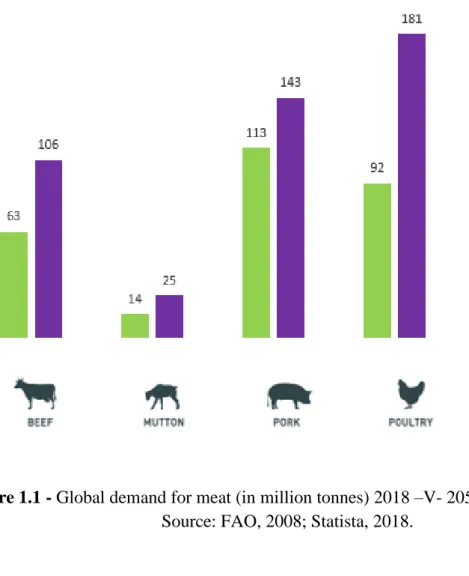
The world’s livestock sector is growing at an unprecedented rate and the driving force behind this enormous surge is a combination of population growth, rising incomes and urbanization. Worldwide, meat production has tripled over the last four decades and has increased by 20% in the last 10 years due to a growing demand for high-value animal protein (WHO, 2003b; Worldwatch Institute, 2018). Annual meat production is projected to increase from 326 million tonnes in 2018 to 376 million tonnes by 2030 (WHO, 2003b; Statista, 2018).
Pork is currently the most widely consumed meat in the world, followed by poultry, beef, and mutton; however, poultry production is the fastest growing muscle-food producing sector, (Worldwatch Institute, 2018; Statista, 2018) and is predicted to rise to 181 million tonnes by 2050 (Figure 1.1).
The growing demand for livestock products is likely to have an undesirable impact on the environment as there will be more larger-scale industrial production, often located close to urban centres, which brings with it a range of environmental and public health risks (WHO, 2003b; Griffin, 2018). Animal waste also significantly contributes to global greenhouse gas emissions and is one of the main reasons why emissions are continuing to rise at the rate that they are as animal waste releases methane and nitrous oxide, greenhouse gases that are 25 and 300 times more potent than carbon dioxide, respectively (Worldwatch Institute, 2018; Griffin, 2018).
24
Figure 1.1 - Global demand for meat (in million tonnes) 2018 –V- 2050 Source: FAO, 2008; Statista, 2018.
1.3 The Irish Meat Industry
Despite the difficult market environment for some meats in 2015, most notably pigmeat, the value of meat and livestock exports grew by 2% to over €3.7 billion. This equates to over 32% of total Irish food and drink exports (Bord Bia, 2016a).
Ireland is the highest consumer of poultry meat in the EU. The Irish poultry industry is divided into two separate sections – poultry meat and egg production. Each year in Ireland, approximately 70 million chickens and four million turkeys are produced, while two million hens lay eggs (Enterprise Ireland, 2015).
25
Irish beef production is predominately a grass-based system, with around 588,000 tonnes produced in 2016. Beef self-sufficiency is estimated at over 650%. In 2016, Ireland exported an estimated 535,000 tonnes of beef worth approximately €2.38 billion (Bord Bia, 2018).
Sheep meat production in 2016 was over 61,000 tonnes and self-sufficiency is estimated at over 360%. During 2016, Ireland exported an estimated 50,000 tonnes of sheep meat which was valued at approximately €240 million (Bord Bia, 2018).
In regards to pork, Ireland exported an estimated 235,000 tonnes in 2016 and was worth an estimated €615 million, with the UK being the primary market for Irish pork, taking 56% of our total pig meat exports. Continental EU markets accounted for 16% of our pork exports, while the remaining 28% went to international markets (Bord Bia, 2018). In terms of self-sufficiency, Ireland is over 180% self-sufficient in pork production (Bord Bia, 2016a). In Ireland, bacon sales comprise 38% of total retail pork sales and are dominated by the sales of bacon joints and rashers. Pork retail sales make up around 23% and are comprised mainly of pork chops and joints, followed by pork casserole and mince. Sausages make up 19%, while sliced meats make up 20% of retail pork sales. (Bord Bia,
2016a).
1.4 Current trends on meat consumption and added value meat products
The global importance of the nutritional value of food has increased significantly in recent years. There is an ever increasing demand in the meat industry for minimally processed foods, which are lower in salt, preservatives, fat and calories, whilst maintaining good-quality products with respect to physicochemical, nutritional and sensory characteristics (Weiss et al, 2010).
26
The consumer demand for convenience is a driving force within the meat industry (Bord Bia, 2011). The work and leisure lifestyle patterns of the Western consuming culture, with high disposable incomes, have created a demand for pre-prepared foods (Purdy and Armstrong, 2007). Both retailers and foodservice businesses are responding to this demand with increasingly innovative solutions (Figure 1.2). Cook-in pouches offer a new solution to meal preparation and have emerged in the retail space over recent times (Bord Bia, 2011). Demands for convenience, snack foods, processed and ready-to-eat (RTE) meat products is expected to grow into the future (Brennen et al., 2013; Alberta agriculture and forestry, 2017).
Consumers are becoming increasingly motivated to protect the environment by enhancing sustainability in the meat industry. One way of achieving this is reducing food waste by extending shelf-life (Bord Bia, 2016b). This means more processing innovations and the necessity to link novel processing technologies more closely with packaging innovations. Global trends in new and unique flavours and tastes are influencing cuts and varieties in foodservice and retail. Demand for new flavours is also impacting upon consumer expectations pertaining to pre-marinated and ready-to cook products. The growing popularity of Asian food in Western markets has driven consumer demands for more sophisticated and authentic Asian ingredients (Bord Bia, 2016b).
Clean label is now a consumer-driven movement, demanding a return to ‘real food’ and transparency through authenticity. Food products containing natural, familiar, simple ingredients that are easy to recognise, understand, and pronounce and contain no artificial ingredients or synthetic chemicals are now in greater demand (GoCleanLabel, 2018) and policed by the involvement of retailers.
27
Figure 1.2 - Examples of ready to eat snack foods and flavoured meat in a cook in pouch. (Bridgford foods, Dukes meats, Tyson fresh meats)
1.5 Morphology and chemical composition of meat
The unit of muscular tissue is a fibre, consisting of myofibrils between which resides a solution, the sarcoplasm, and a fine network of tubules (sarcoplasmic reticulum). The fibre is bound by a very thin membrane called the sarcolemma, which is attached by connective tissue on the outside (Lawrie and Ledward, 2006). Proteins in muscles can be divided into those which are either soluble in water or diluted salt solutions (sarcoplasmic proteins (11.5%); myoglobin and enzymes), those which are soluble in concentrated salt solutions
28
(myofibrillar proteins (5.5%); actin and myosin) or those which are completely insoluble (connective tissues (collagen and elastin) and membrane proteins (2%)).
Most of the sacroplamic proteins are enzymes involved in the glycolytic pathway. Myofibillar proteins, myosin and actin are responsible for the overall structure of the muscle (Greaser et al., 1981; Lawrie and Ledward, 2006).
Fat in meat can be either adipose tissue (triglyceride) or intramuscular fat (phospholipids and unsaponifiable constituents e.g cholesterol) (Lea, 1962). Despite meat containing only a small amount of carbohydrates, they are important in developing flavour during cooking through caramelization and Maillard-type reactions between reducing sugars and amino groups. Furthermore, carbohydrates are responsible for the brown colour of cooked meat (Belitz et al. 2009). Besides the excellent source of protein, meat contains all of the nine essential amino acids. Obtaining complete proteins in your diet is important for cell regrowth, hormone production, immune function and muscle gain (Sfgate, 2018). Meat is also a good source of all the B-complex vitamins (thiamin, riboflavin, niacin, biotin, vitamins B6 and B12, pantothenic acid and folacin), vitamins A, E and K (Belitz et al. 2009) and minerals including iron, zinc copper and manganese. Meat therefore plays an important role in the prevention of zinc deficiency, and particularly of iron deficiency which is widespread (Bender, 1992).
1.6 Health and safety concerns for processed meat products
The food industry is currently under pressure from the Food Standards Agency of Ireland (FSAI) to deliver reductions in the salt intake of the Irish population through the introduction of lower salt levels in processed foods (Gilbert and Heisler, 2004). A national guideline for the Irish meat industry was agreed by the FSAI (2017), with the target to decrease salt content. The following salt levels for processed meats were set; 0.68% salt
29
for uncured cooked meat products, 1.38% salt for sausages, 1.5% salt for frankfurters, 1.63% salt for ham and other cured meats, 2.88% salt for bacon and 0.75% salt for burgers (FSAI, 2017).
Salt is primarily consumed within processed foods, with the remaining salt intake from natural sources, discretionary salt and tap water (Kenten, 2013). Over 80% of salt intake in the UK, Ireland and the USA comes from processed food, meaning many consumers do not realise they are consuming such high quantities (Gray, 2013).
Government research indicates that meat and meat products as a food category are the second largest contributor to dietary salt after cereal products (Figure 1.3).
Figure 1.3 Major contributors of dietary sodium in our diet. Source: Shrivastav, 2015.
30
1.6.1 Health Concerns of processed meat products
High salt consumption has been associated with hypertension (also known as high blood pressure) and which is the dominant cause of death and disability in adults worldwide (He and McGregor, 2008). The risk of developing cardiovascular disease (CVD) increases with increasing blood pressure (Cappuccio, 2013). CVD is the most common cause of death in Ireland, which accounts for 10,000 deaths per year (IHF, 2016).
Salt intake of less than 5g/day for adults has been recommended by the WHO to reduce blood pressure and risk of cardiovascular disease, stroke and coronary heart attack; however, in most European countries this recommended dietary intake is greatly exceeded, with an estimated salt consumption as high as 9-12g/day. It was reported that an estimated 2.5 million deaths could be prevented each year if global salt consumption was reduced to WHO recommended levels (WHO, 2016). The cost of CVD to the EU economy is estimated at €210 billion per annum (Luengo-Fernandez et al., 2017), while in the US, the estimated total cost of CVD in 2015 was $565 billion and this amount is expected to increase by almost 100% by 2030 (Farmakis et al., 2016). The association between excessive sodium intake and the development of hypertension and CVD (MacGregor and Sever, 1992; De Wardener, and MacGregor, 2002) has prompted public health and regulatory authorities to recommend reducing dietary intake of salt (NaCl). Another health concern regarding processed meat products is obesity. Obesity is a global problem leading to chronic diseases such as diabetes and cardiovascular disease (Apovian, 2009). The Western dietary pattern includes high amounts of red and processed meat which are rich sources of saturated fatty acids and cholesterol and is therefore considered an ‘obesity inducing dietary pattern’. (Esmaillzadeh and Azadbakht, 2008). There is also increasing evidence that salt intake is related to diabetes, associated with renal stones and osteoporosis
31
and may play a role in the development of stomach cancer (He and MacGregor, 2009; Wang et al., 2009).
Due to these health concerns, there is an ever increasing demand in the meat industry for products which are lower in various salts, preservatives, fat and calories (Weiss et al., 2010).
1.6.2Microbiology of meat; pathogens and spoilage microorganisms
Many foodborne diseases are associated with consumption of meat and poultry (Mor-mor And Yuste, 2009). The pathogens of greatest concern in fresh and frozen meat and meat products are Salmonella spp., Escherichia coli O157:H7 and other enterohemorrhagic E. coli (EHEC), L. monocytogenes,Staphylococcus aureus, and the potential for Clostridium botulinum in cured hams and sausages. Emerging pathogens, include; Campylobacter jejuni, Arcobacter butzleri, Mycobacterium avium subsp. paratuberculosis, Aeromonas hydrophila and prions (Mor-mor And Yuste, 2009).
Many of these pathogens may cause severe gastroenteritis, and although they are typically short-lived, chronic complications and even fatalities can occur (Kroll, 2001). Examples of the complications, include; arthritis, Chrons disease, meningitis and septicaemia.
Fatal outbreaks of foodborne disease caused by E. coli O157:H7 and L. monocytogenes have increased consumer awareness and aroused interest by public health authorities and the food industry in improving sanitary conditions and controlling pathogens in meat and poultry production and processing (Mor-Mur and Yuste, 2009). The predominant bacteria associated with spoilage of beef and pork under refrigerated conditions are; Brochothrix thermosphacta, Carnobacterium spp., Enterobacteriaceae, Lactobacillus spp.,
32
Many of these meat spoilage micro-organisms can also cause illnesses such as gastroenteritis (Mor-Mur and Yuste, 2009).
1.7 Meat Processing
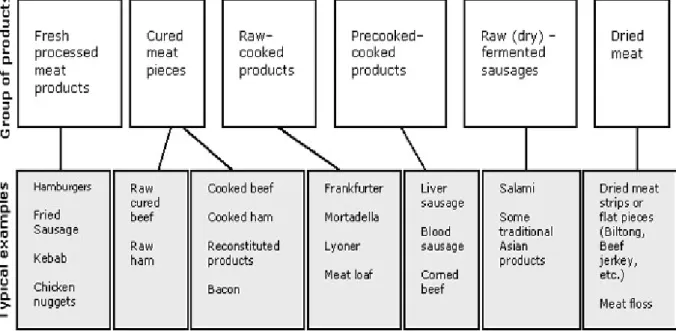
Meat processing technologies can combine a variety of methods such as cutting, mincing, chopping, salting, injecting, tumbling, stuffing/filling into casings/moulds, heat treatments and ripening, drying or smoking. Based on the processing technologies used and taking into account the treatment of raw materials and the individual processing steps, it is possible to categorize processed meat products in six broad groups (Figure 1.4).
Figure 1.4 Meat products grouped according to the processing technology applied Source: Heinz and Hautzinger, 2007.
Frankfurters (raw-cooked products) and cooked ham (cured meat pieces) are commercially important processed meat products which are very popular in Europe and were therefore chosen for investigation in the current thesis.
33
1.7.1 Frankfurters
Comminuted cooked meat products (gel/emulsion systems) are a commercially important group of processed meat products, of which frankfurters are among one of the more popular varieties (Delgado-Pando et al., 2010). Frankfurters are a type of highly seasoned sausage which can contain up to 30% fat with an industrial average of about 20% (Keeton, 1994) and a salt content of 2% or higher.
Emulsification ensures the physicochemical stability of the product, thereby, determining the characteristic structure of the batter. It also creates the typical sensory properties (appearance, texture, flavour) associated with such products. Low-value meat offcuts such as trimmings, parts with higher content of connective tissues or fat can be used (Sebranek, 2003). Through the addition of salt and other preservatives during the emulsification process, and following thermal treatment, the shelf-life of the final product is increased (Allais, 2010).
1.7.2 Cooked ham
Cooked ham is a reformed cured meat product made from pork leg meat. Brine curing is the most popular way to produce hams. It is a wet cure whereby fresh meat is injected with a curing solution before cooking. Brining ingredients, include; salt, sugar, sodium nitrite, sodium nitrate, sodium erythorbate, sodium ascorbate, sodium phosphate, potassium chloride, water and flavourings. Smoke flavouring (liquid smoke) may also be injected via the brine solution (USDA, 2016).
34
1.8 Functions of Sodium Chloride in meat processing
Sodium chloride (NaCl), commonly known as salt, plays a significant technological role in processed meat due to its preservation and antimicrobial properties provided by its ability to reduce water activity. Moreover, salt activates salt-soluble myofibrillar proteins to increase hydration and water-binding capacity; it increases the binding properties of these proteins to improve texture and it is essential for flavour (Terrell, 1983; Mariutti and Bragagnolo, 2017). Thus, salt reduction in processed meat products is challenging as quality of the final product can be compromised.
1.8.1 Physical Processing effects and texture development in processed meats
One of salt’s main functions in processed meats is in the solubilisation of the functional myofibrillar proteins in meat (Desmond, 2006). A wide range of meat products depend on this property of muscle proteins to generate their characteristic texture (Matthews and Strong, 2005). Protein solubility in water depends on the distribution of polar and nonpolar groups in the amino acid lateral chain (Cheftel et al., 1989) and the ionic species present in solutions (Curtis and Lue, 2006).
The myofibrillar (contractile) proteins of muscle, actin and myosin, are insoluble at low-salt concentrations, but become soluble in concentrated low-salt solutions (Schmidt et al. 1987). This activates the proteins to increase hydration and water-binding capacity, ultimately increasing the binding properties of proteins to improve texture.
Increasing the water holding capacity of the meat reduces cook loss, thereby increasing tenderness and juiciness of the meat product (Desmond, 2006; Tobin et al., 2012). The resulting tenderising effect gives the characteristic texture of meat products such as cooked hams. Increased solubilisation results in extracted proteins which, on cooking, form stable cross links and bind pieces of meat together (Desmond, 2006).
35
In finely chopped or emulsified products such as frankfurters, bologna, etc., the salt-solubilised myofibrillar proteins, derived from the lean meat component, forms a sticky exudate on the surface of the highly comminuted meat pieces, which subsequently binds the meat pieces together through the formation of a gel-based continuous phase which forms a protein film around fat globules. This matrix of heat-coagulated protein entraps free water, thereby, retaining the fat during cooking which results in a product with acceptable quality characteristics (Desmond, 2006; The Salt institute, 2013).
Cooking yield also affects the cost of manufacture of processed meats (O’ Flynn et al., 2014). The control of cook loss is also important because changes in the cooking yields may result in compositional changes in finished products, which may in turn affect palatability characteristics. As moisture is lost from meat, both during and after thermal processing, product yield and other quality attributes such as tenderness, texture, and flavour are negatively affected (Pietrasik, 1999).
1.8.2 Preservation effects
The use of salt for preservation originated long before the use of refrigeration (Matthews and Strong, 2005). The antimicrobial effects of salt is based on its ability to reduce water activity (aw), which is defined as the amount of free water available for the growth of microorganisms (Ingulgia et al., 2017). The effect of salt on microorganisms depends on the amount of salt present in the aqueous phase of the food (Ingulgia et al., 2017), therefore salt reduction increases water activity, which in turn increases water availability for microbial growth. The preservation effect of salt also suppresses the growth of pathogens, such as Clostridium botulinum and Listeria monocytogenes in vacuum packed and chilled products (Matthews and Strong, 2005).
36
1.8.3 Sensory properties
In addition to functional and microbial stability, salt can significantly affect sensory properties and subsequent flavour perception of meat (Liem et al., 2011). Sensory properties of food products are the most important attributes as they are most apparent to consumers (Singham et al., 2015).
Salt has a flavour enhancing effect in meat products, with perceived saltiness primarily due to Na+, with the Cl− anion modifying the perception (Ruusunen and Puolanne, 2005; Miller and Barthoshuk, 1991). The perception of salt involves the activation of physiologic processes such as stimulation of salivation and secretion of gastric acid (Mattes, 1997). A particular problem with low-salt meat products is that not only is perceived saltiness reduced, but so too is flavour intensity (Ruusunen and Poulanne 2004). While the loss of saltiness may be generally problematic for some products, additional challenges exist for those containing bitter-eliciting compounds, where lower sodium leads to a reduced capacity for bitterness suppression and may lead to an excessively bitter product (Gaudette and Pietrasik, 2017). In addition, saltiness enhances the perceived in-mouth aroma of products, and for meat, this equates to an enhancement of “meaty” flavour an important factor in the overall acceptability of meat products (Ruusunen and Puolanne, 2005). The effects of salt on the physical properties of meat products also results in an influence on sensory textural attributes (Matthews and Strong, 2005).
Considering the significant technological role of salt in meat processing, a global approach is necessary to reduce salt content in processed meat products (Albarracin et al., 2011).
37
1.9 Approaches to salt reduction in processed meat products
Although the Irish food industry has had great achievements in lowering salt content in a wide variety of foods, further reductions are still required to meet the targets for healthy salt consumption levels. For frankfurters, the salt target set by the FSAI in 2017 is 1.5% salt and for cooked ham the salt target is 1.6% salt.
The main strategies used for salt reduction in processed meat products, include; product reformulation, compensation through use of substitutes, use of saltiness enhancers and use of salt replacers (Kilcast and Angus, 2007). Salt reduction in processed meat products has been thoroughly investigated by many authors using product reformulation and various salt replacers/substitutes and enhancers (Table 1.1). A number of commercial sodium replacers and flavour enhancers have entered the market to fully, or partially, replace NaCl in processed meats. However, it is difficult to assess their impact on sensory properties or to determine the best approach toward sodium reduction in specific meat products without direct comparison within a model system. In addition, due to their potential impact on sensory properties, the employment of replacers or enhancers may be appropriate and successful for some meat system applications, but not for others (Desmond, 2006; Fouladkhah et al., 2015). The main strategies for salt reduction in processed meat products are described as follows;
1.9.1 Product Reformulation
In product reformulation, a small gradual reduction of salt from the recipe might be unnoticed by assessors (Bertino et al., 1982; Puolanne, 2010). Larger reductions might be achieved with a gradual salt reduction over a period of years, thereby, allowing consumers to get used to lower salt levels in food. For example, to reduce the salt content in cooked sausages from 2.3 - 2.4% to 1.5 - 1.7% took approximately 20 years to achieve in Finland
38
(Ruusunen and Puolanne, 2005). However, international governments and regulatory agencies are now looking for significant salt reduction in foods in the short-term and cannot afford to wait for decades to achieve this overall goal. Therefore, the use of salt replacers and salt enhancers in food products may play an essential role in achieving this.
1.9.2 Salt substitutes or replacers
Among the chloride salts, potassium chloride (KCl) is the most commonly used salt alternative (Dötsch et al., 2009). However, at blends over 50:50 NaCl/KCl in solution, a significant increase in bitterness and loss of saltiness is observed (Desmond, 2006). The basis for using salt replacers is to reduce sodium cations by replacement with potassium, magnesium, calcium or to reduce the chloride anions with ingredients such as glutamates, phosphates, etc. as a means of providing salty tastes or flavours (Wheelock and Hobbiss, 1999). KCl contributes to some saltiness by itself, but sometimes imparts off-flavours such as bitterness and metallic flavour (Doyle and Glass, 2010). The bitterness perception of KCl can be suppressed by using it in combination with further salt replacers or flavour enhancers. Prime Favourites, a US company, has launched NeutralFres®, which the company claims naturally neutralises the characteristic taste or bitter alkaline off-flavour of KCl (Primefavourites, 2005).
The use of KCl in salt mixtures also gives an additional benefit, owing to the fact that potassium is a counter-ion to sodium and reduces the harmful effect of sodium on blood pressure (Ruusunen and Poulanne, 2005). Solubilisation of muscle proteins, which is critical in the manufacture of processed meats, can also be achieved using salt replacers such as KCl. According to the “Hofmeister Series” which ranks the relative influence of ions on the physical behaviour of a wide variety of aqueous processes (Zhang and Cremer,
39
2006), KCl has been found to be effective at solubilising meat protein (Puolanne and Halonen, 2010).
Research has also demonstrated that phosphates can be very useful in lowering the NaCl content in meat products (Ruusunen et al., 2002; Ruusunen and Poulanne. 2005). Phosphates are generally used in meat products to enhance water-holding capacity and improve cook yield. They increase water-holding capacity in fresh and cured meat products by increasing the ionic strength, which frees negatively charged sites on meat proteins, such that these proteins can bind more water.
Other salt replacers include Sodium or Potassium lactate which can maintain certain saltiness, while reducing the sodium content in products (Price et al., 1997) and water binders such as starches or gums which are used to maintain the water binding function lost due to salt reduction (Desmond, 2006).
1.9.3 Flavour enhancers
There are a number of flavour enhancing and masking agents commercially available and the number of products coming to the market is increasing. These include; yeast extracts, lactates, monosodium glutamate (MSG) and nucleotides amongst others. Taste enhancers work by activating receptors in the mouth and throat, which helps compensate for salt reduction (Brandsma, 2006). A commonly used salt enhancer is MSG, which contains high levels of glutamic acid and imparts a ‘umami’-type taste to enhance the palatability and acceptability of savoury foods; however, it has been associated with the so-called ‘Chinese Restaurant Syndrome’ that may cause headaches, swelling and weakness (Durack et al., 2008). Yeast autolysates are also commonly used in low salt products, in particular, they mask the metallic flavour of KCl (Desmond, 2006).
40
1.9.4 Physical form of salt
The perception of salt in the solid form is affected by crystal size and shape. Research has been carried out using various forms (flaked versus granular) as a method of reducing salt content in meat products (Desmond, 2006). Leatherhead Food International have investigated optimising and altering the physical form of salt, thereby making it more taste bioavailable, with the consequence being able to add less of it to products. This involves increasing the efficiency of the salt, changing the structure and modifying the perception of the salt (Angus et al., 2005). Lutz (2005) has shown that flake salt can produce red meat batters with superior fat and water binding properties compared to regular vacuum evaporated salts.
1.9.5 High Pressure Processing
High pressure processing (HPP) may be of interest to improve protein functionality, where it is desired to reduce the sodium content of meat products (Cheftel and Culioli, 1997). Sensory analysis on reduced salt HPP frankfurter batters have shown that panellists preferred these products to controls. Results also indicated that the texture of these products was improved after HPP at 150 MPa (Crehan et al., 2000). These authors concluded that HPP is a viable technology that partially compensates for the reduction of salt levels in frankfurters.
Some studies have also shownthat HPP enhances the saltiness perception in meat products (Ken et al., 2006; Clariana et al., 2011) due to differential binding forces of NaCl within the product network and its release in the mouth (Tamm et al., 2016), which in turn would permit salt reduction, as the saltiness perception would be increased.
41
Table 1.1 – Previous salt reduction studies in processed meat productsusing various approaches.
Reference Salt reduction strategy Processed meat product Details Findings/Based on
Sofos (1983) Product reformulation Frankfurters Salt content ranging from 1 - 2.5%
Reduction >20% resulted in softer and less firm
texture Sofos (1985) Use of Salt replacer
(Potassium Sorbate)
Frankfurters Salt replacer compensated for the 20% NaCl reduction
Based on textural attributes Dimitrakopoulou et al. (2005) Product reformulation Reformulated pork
shoulder
Salt reduced from 2% to 1% Based on acceptability of sensory attributes. Aaslyng et al. (2014) Product reformulation Cooked ham Salt reduced from 2.3% to
1.8%
Without altering the sensory properties, sliceability, production yield, shelf life and safety. Fellendorf et al. (2016) Product reformulation White pudding The critical acceptable limits
were achieved at 0.6% sodium and 5% fat
Based on acceptable scores for sensory
attributes Fellendorf et al. (2016) Product reformulation Black pudding The critical acceptable limits
were achieved at 0.4% sodium and 5% fat
Based on acceptable scores for sensory
42
Table 1.1 contd.
Reference Salt reduction strategy Processed meat product Details Findings/Based on
Tobin et al. (2013) Product reformulation Sausages The sausages containing 1.4% and 1.0% salt were the
most acceptable
Based on the highest scores for sensory
attributes Tobin et al. (2012) Product reformulation Frankfurters Salt levels below 1.5% had a
negative effect on consumer acceptability
Based on acceptable scores for sensory
attributes Tobin et al. (2012) Product reformulation Beef patties Salt reduction of 50%
achieved
Based on highest scores for overall sensory
acceptability Pietrasik et al. (2014) The use of two
commercial salt replacers: Oceans flavour sea saltTM
OF45 or 0F60
Cooked ham 100% replacement of NaCl was achieved
Texture and cook loss were not affected; however, salt replaced
ham was liked less in terms of flavour and
43
Table 1.1 contd.
Reference Salt reduction strategy Processed meat product Details Findings/Based on
Tamm et al. (2016) Partial replacement of NaCl with KCl and HPP
100MPa
Cooked ham 45% salt reduction was achieved
Acceptable in terms of texture, consistency and
appearance but lower saltiness taste. Aliño et al. (2009) Partial replacement of
NaCl with KCl
Dry cured loin Up to 50% replacement was achieved
Similar physicochemical characteristics to control Lorenzo et al. (2015) Partial replacement of
NaCl with KCl
Cooked ham NaCl was 50% replaced with KCl.
Resulted in an increased bitterness taste. Pietrasik et al. (2017) Partial replacement of
NaCl with modified KCl
Wieners Substitution of 50% NaCl with modified KCl
Negative effects on textural and sensory
characteristics Frye et al. (1986) Replacement of NaCl with
KCl or MgCl2
Ham 50% or 100% ionic strength replacement with KCl or
MgCl2
Control – best OSA NaCl/KCl – best bind and acceptable sensory scores NaCl/MgCl2 – lowest bind
and lowest sensory scores Stanley et al. (2017) The use of modified KCl
based salts to replace NaCl
Sausage patties NaCl reduced from 1.7% to 1.07% using modified KCl
Limited impact on physicochemical traits; however, scored lower in
44
Table 1.1 contd.
Reference Salt reduction strategy Processed meat product Details Findings/Based on
Skogsberg et al. (2017) Partial replacement of NaCl with KCl
Frankfurters Up to 40% of salt can be replaced
Without major quality or sensory changes Gou et al. (1996) Substitution of NaCl with
glycine and potassium lactate
Fermented sausages 40% NaCl reduction achieved
Above this level a slight off taste or an unacceptable sweet taste
was detected. Guardia et al. (2008) Substitution of NaCl by
mixtures of KCl and potassium lactate
Fermented sausages 50% NaCl substitution was achieved
It was possible to achieve 50% reduction of NaCl to obtain sensory acceptable
product Gimeno et al. (2001) Partial replacement of
NaCl with calcium ascorbate
Fermented sausages Replacement of 15%, 24%, 37% and 45% of NaCl
Replacement ≥ 24% resulted in higher lightness, redness and yellowness and lower hardness and gumminess. Fulladosa et al. (2009) Partial replacement of
NaCl with potassium lactate and HPP
Dry-cured ham 50% replacement of NaCl with K-lactate
Did not have a negative effect on colour, flavour or
45
Table 1.1 contd.
Reference Salt reduction strategy Processed meat product Details Findings/Based on
Gelabert et al. (2003) The substitution of NaCl with KCl, potassium
lactate or glycine
Fermented Sausages The critical level of salt substitution with KCL was
40%
Flavour and texture defects occurred when NaCl was replaced >40% Morton Salt. (2004) Partial replacement of
NaCl with KCl
Ham, bacon, turkey 40% replacement of NaCl was achieved
Similar flavour scores to the control products and
maintained protein hydration Zanardi et al. (2010) Partial replacement of
NaCl by KCl, MagCl2 and
CaCl2
Italian salami 40% replacement of NaCl Limited detrimental effects on sensory
attributes O’ Flynn et al. (2014) Application of HPP to
reduce NaCl
Sausages HPP at 150 MPa has potential for reducing salt levels in sausages to 1.5%
Based on textural and sensory attributes Verma et al. (2010) Partial replacement of
NaCl with a salt substitute blend (KCl, citric and tartaric acid, and sucrose)
and apple pulp
Chicken nuggets 40% replacement of NaCl was achieved
Similar scores for saltiness and juiciness as control, although flavour, texture,
46
Table 1.1 contd.
Reference Salt reduction strategy Processed meat product Details Findings/Based on
Paulsen et al. (2014) The use of salt substitutes (KCl, Na-lactate, K-lactate/Na-diacetate and
milk minerals)
Sausages NaCl was reduced from 0.9% to 0.5% and replaced
with substitutes
Control was preferred in terms of sensory attributes
(saltiness, texture and after-taste) Santos et al. (2014) The use of salt replacers
(KCl) and flavour enhancer (MSG) in combination with lysine,
taurine, disodium inosinate and disodium
guanylate
Sausages NaCl was 50% or 75% replaced with KCl.
Flavour enhancers masked the undesirable sensory attributes associated with
the replacement of 50% and 75% NaCl with KCl resulting in good sensory
47
1.10 Preservation of processed meat products
Meat provides favourable growth conditions for various microorganisms, but is also susceptible to spoilage due to chemical and enzymatic activities. The breakdown of fats, proteins and the limited content of carbohydrates present in meat due to microbiological, chemical and enzymatic activities results in the development of off-odours, off-flavour and slime formation, which makes the meat objectionable for human consumption. Therefore, it is necessary to control meat spoilage in order to increase its shelf-life and maintain its nutritional value, colour, texture and flavour (Dave and Ghally, 2011).
Traditionally, methods of meat preservation may be grouped into three broad categories based on temperature control, moisture control and, more directly, by inhibitory processes (bactericidal and bacteriostatic, such as ionising radiation, packaging, etc.) (Zhou et al. 2010). Methods of meat preservation can also be categorised based on physical and chemical treatments (Mor-Mur and Yuste, 2009) (Table 1.2).
48
Table 1.2 – Physical and Chemical preservation techniques. Adapted from: (Mor-Mur and Yuste, 2009).
Physical preservation techniques Chemical preservation techniques
Chilling Modified atmosphere packaging and Active packaging (e.g. edible coating films containing ascorbic acid or plant essential oils ) Freezing
Heating Spray washing with water, steam, or solutions (e.g., organic acids, such as lactic acid,
trisodium phosphate)
Drying Agents in solution, such as fatty acid esters, para-hydroxybenzoic acid esters, lysozyme, phenolic compounds, isothiocyanates, ascorbic
acid Packaging (e.g vacuum packaging)
High pressure processing Salts
Ultraviolet radiation Nitrites
Ohmic heating Sulphites
Ionizing radiation Spices, condiments, and plant essential oils
Pulsed electric fields Chitosan
Ultrasound Bacteriocins
49
1.10.1 Physical treatments 1.10.1.1 Heat treatments
Meat and meat products are considered cooked when the centre (coldest point) of the product is maintained at a temperature of 65-70°C for 10 minutes since the proteins will then be coagulated and the meat tenderised by partial hydrolysis of the collagen. (Bender, 1992). The vegetative form of bacteria, but not spores, will have been destroyed (thermoresistant spores can survive heating above 100°C) (Bender, 1992). Heat treatment at a minimum of 62.8 °C internal temperature is also sufficient for destruction of enteric pathogens such as Salmonella spp. and pathogenic E. coli (Van Schothorst, 1998; Mor-mor and Yuste, 2009).
1.10.1.2 Cooling and Freezing
The aim of cooling techniques is to slow or limit the spoilage rate of food, as temperature below the optimal range can inhibit microbial growth. Low temperature storage employ three approaches: (a) chilling (b) freezing and (c) superchilling. All these levels help to inhibit or completely prevent bacterial growth (Zhou et al., 2010) and the physicochemical and biochemical reactions that govern the deterioration of foods (George, 1993).
However, the growth of psychrophilic bacteria, yeasts and moulds is not prevented by all levels of refrigeration (Neumeyer et al., 1997) and both enzymatic and non-enzymatic changes will continue at a much slower rate (Berkel et al., 2004).
The loss of quality of frozen foods depends primarily on storage temperature, length of storage time, and thawing procedure. Microbial growth is completely prevented below -18°C, and both enzymatic and non-enzymatic changes continue at much slower rates during frozen storage (Rahman, 2004). Most pathogens (Salmonella, Staphylococcus species and