MOBILE TECHNOLOGIES AND ENTREPRENEURIAL
DEVELOPMENT –IDENTIFYING THE MISSING LINK
Atika Ahmad Kemal
Lord Ashcroft International Business School, Anglia Ruskin University, UK
ABSTRACT
The phenomenal diffusion and explosive growth of mobile technologies in developing economies has sparked off an information revolution that has reframed the subject of development for policy makers, practitioners and academics. The use of mobile phones by rural micro-entrepreneurs addresses one of the fundamental challenges in creating relative wealth for poverty alleviation in rural communities. This paper uses meta-analysis, as a methodology, to review the ICT literature on mobile technologies and frames it under Porter’s Value Chain and System framework. It analyses how mobile technologies integrates informal actors in the value chain to undertake business activities. However, the framework is confined to an economic lens, and being deterministic, fails to highlight the social processes that underpin economic activities. Alternatively, the paper proposes a socio-technical framework that illuminates how mobile phone usage amplifies ‘social networks’ for micro-entrepreneurs within the value chain. By intertwining the social and geographical connections, technology enables new communications patterns to evolve for business success. As contribution to the ICT literature, the paper presents new insights on technology’s role in transforming market channels through the creation of social wealth for inclusive development. Also, it signifies how mobile technologies may offer financial services- via mobile banking- to boost entrepreneurial development in rural communities.
KEYWORDS: Mobile technologies, micro-entrepreneurs, economic development, social networks, entrepreneurial development, developing countries
1. INTRODUCTION
Mobile technologies are usually classified as Information Communication Technologies (ICTs) that are mobile, support real time two-way communications that have leapfrogged traditional fixed line telephone infrastructures (Rashid and Elder, 2009). Since these technologies work using the radio spectrum, they do not rely on physical infrastructures, for example, roads and phone wires. Base-stations are powered using their own generators where electrical grids are absent. Thus, the diffusion of mobile technologies, as major forms of communication in rural communities, especially in developing nations is exponentially high (ITU, 2017).
According to Sachs (2005), ‘mobile phones are the single most transformative technology for development’ (cited in Etzo and Collender, 2010, p. 661) in reshaping structures and processes for socio-economic development (Bada and Madon, 2006; Heeks, 2008). However, mobile phones, other than smart phones, serve as communication tools for the poor (Aker and Mbiti, 2010; Komunte, Rwashana and Nabukenya, 2012). Since they serve as a platform for multiple applications, many services have now gone mobile, namely, banking, entertainment, health and education (Komunte, Rwashana and Nabukenya, 2012).
Whilst developing countries are still lagging behind in overall ICT usage and applications, mobile technologies are more accessible and cost effective tools for low income populations to bridge the digital divide (Katsina and Abdulkareem, 2012; ITU, 2017). In rural communities, mobile phones are the dominant mode of communication, acting as a mediating tool, to connect them to the information society (Komunte, Rwashana and Nabukenya, 2012). Moreover, studies demonstrate that mobile technologies address the fundamental challenges that many rural micro-entrepreneurs face; in terms of limited access to fixed telecommunication and physical infrastructures, affordability in owning a personal landline phone and lack of digital capabilities for using computers and internet for business requirements (Wolcott, Kamal and Qureshi, 2008; Makoza and Chigona, 2012).
Other studies divulge that mobile phones have greater impact on economic growth in developing countries, as opposed to developed countries, which are well covered by landline telephony (Rabayah and Qalalwi, 2011). While the infiltration of mobile networks in rural communities is high, they bypass the expensive infrastructure barriers attributed to fixed landline telecommunications. Beyond connectivity and accessibility, mobile phones offer the ease of mobility, security and convenience to micro-entrepreneurs,
without their having to rely on physical infrastructures, such as roads (Donner, 2006; Jenson, 2007). With the increase in affordability of handsets, with the exception of smartphones, mobile phones have penetrated the lower income strata of rural populations and are tools for pro-poor growth (Rashid and Elder, 2009; Heeks, 2009; Aker and Mbiti, 2010).
Whilst many studies have focussed on the adoption and diffusion of mobile phones, there is little research that theorises the economic effects of mobile technology use by micro-entrepreneurs in developing countries. Hence, the aim of the paper is to address this gap and analyse how mobile phones support the livelihood activities of rural micro-entrepreneurs through a systematic review of the literature. In what follows, section 2 reviews the literature on the economic significance of mobile technologies by rural micro-entrepreneurs. Section 3 outlines the methodology- a systemic literature review. In section 4, the literature is framed and analysed under Porter’s Value Chain and System Model. Section 5 proposes a socio-technical framework that illuminates how social networks may be integrated into the framework. In the end, section 6 concludes how the creation of social assets leads to inclusive development, including innovative platforms, such as mobile banking, for the sustainable livelihoods of rural micro-entrepreneurs.
2. MOBILE PHONE USAGE BY RURAL MICRO-ENTREPRENEURS
As classified in the literature, micro-enterprises employ between 0-5 employees, and are categorised as ‘livelihood micro-enterprises’ that constitute the rural, informal economic sector in developing economies (Liedholm and Mead, 1999; Leidholm, 2002; Duncombe and Heeks, 2005). While supporting the social and business needs of micro-entrepreneurs, mobile technologies are strategic tools for wealth creation and poverty reduction (Donner and Escobari, 2010; Aker and Mbiti, 2010).
Since mobile phones require basic literacy levels, as compared to other ICT devices, they are popular tools within the less educated class of rural micro-entrepreneurs (Akpan-Obong, 2007). Certain features make them particularly attractive, for example, short messaging servicing, has innovated use for mobile banking applications (Rashid and Elder, 2009; Donner, 2009). Donner (2009) highlights how mobile services offer integrated platforms for information sharing, coordination, marketing and financial transactions for rural micro-entrepreneurs. However, lack of literacy, SMS not in the native language and complex user interfaces, are some challenges faced by micro-entrepreneurs. Other barriers are high costs of service and call charges, poor connectivity and quality of service which limits mobile usage in rural areas for micro-entrpreneurs (Aker and Mbiti, 2010).
While some scholars argue that the role of mobile technologies is ‘global’, others criticise the ‘one size fits all’ model in disputing that usage models differ between developed and developing countries (Castells, 2007). In developed nations, mobile phones offer a ‘supplement’ role, in contrast to developing nations, where they are the first link to the communications network. Under such circumstances, mobile technologies are valued more for their connectivity and convenience, rather than for their mobility and ease of use. Studies show that the common-use asset model, as seen in the case of the Grameen Village Phone in Bangladesh, is now becoming obsolete due to constant evolving information needs under fluctuating economic, social, cultural and institutional factors affecting the businesses of micro-entrepreneurs. The Grameen Phone operators (GPO) also known as ‘village ladies’ hire out time-based use of their mobile phones for a small fee to rural women micro-entrepreneurs. However, they are gradually disappearing as the personal owbership of mobile phones is rapidly penetrating in communities (Boettiger, Toyama and Abed, 2012). James (2016) nonetheless, looks at the challenges of rapid scaling-up of village phone projects in poor micro-communities in Bangladesh.
Nonetheless, the flexibility of mobile phones, over other ICT’s, has made mobile communications a popular tool for social and business communication among micro-entrepreneurs (Donner, 2006, 2007; Donner and Escobari, 2010; Ilahiane and Sherry, 2012). This is because mobile phones are attached to a person rather than a location. Since many micro-entrepreneurs have no fixed place of business, mobile phones offer them the flexibility of working from remote sites (Donner, 2006, 2007; Ilahiane and Sherry, 2012). Scholars argue that the the separation of business from personal functions need to be replaced with more integrated approaches to mobile phone use (Donner 2009; Ilahiane and Sherry, 2012). Other studies suggest that mobile phones have a limited role in supporting the economic activities of micro-entrepreneurs and they significantly do not increase incomes (Chew, Ilavarasan and Levy, 2010; Sife, Kiondo and
Lyimo-Macha, 2010). However, the discourse that mobile technologies play a significant role in economic development for micro-entrepreneurs is an area that is still under researched.
3. METHODOLOGY
This study adopts meta-analysis, as a methodology, for analysing the literature on mobile technology usage by micro-entrepreneurs in developing countries. The studies included in this review were located through a comprehensive search of publicly available literature, mostly through manual electronic searches of the following databases: EBSCO, Primo, Google Scholar, SAGE Journal Online, ACM Digital Library, and Elsevier Science. Although search strategies varied depending on the tool used, the search terms included the keywords ‘mobile technology usage and micro-entrepreneurs’, ‘mobile phones and micro-entrepreneurial development’ and ‘mobile phones and economic development’ in developing countries. The literature search produced studies that were initially screened as part of the systemic review process. Initially, around 250 studies were yielded from the search, inclusive of those articles which informed the literature review section in this paper. After applying the inclusion criteria (mobile phone usage for micro-enterprises/micro-entrepreneurs in developing countries) 30 studies were selected for the purposes of developing codes/categories for thematic analysis of the literature. Specific themes from studies were coded, collated and categorised drawing on Porter’s framework. This included themes from the 1) value chain; operations, marketing, sales, procurement and after sales service, and 2) value system; external linkages with suppliers, traders and customers. This framework constitutes the theoretical lens to analyse the economic activities of micro-entrepreneurs using their mobile phones, and thereby, present new themes that reflect on deficiencies of the framework. While Porter’s value chain and system model (Porter and Millar, 1985; Porter, 1998) has been used by some scholars in the past, as an analytical framework (Jagun, Heeks and Whalley, 2008; De Silva, Ratnadiwakara and Soysa, 2009; Donner and Escobari, 2010; Rabayah and Qalalwi, 2011), this paper expands the review and conceptualises new emerging themes in this framework. The themes coded drew on the concepts in the value chain and system which are presented in the next section.
Notably, the terms micro and small enterprises (MSE) and small and medium enterprises (SME) were acronyms that combined two distinct sizes of enterprises into a single reference. They were used interchangeably in the literature. However, with no commonly accepted definitions of the thresholds between micro-small and medium, there were often implicit conceptual overlaps between the acronyms in studies. Hence, some researchers conveniently conflated results from studies between micro and small enterprises (Donner, 2004; Donner and Escobari, 2010; Rabayah and Qalalwi, 2011; Donner 2009a; Komunte, Rwashana and Nabukenya, 2012) and for small and medium enterprises (Frempong, 2009; Martin and Abbott, 2011). Also, universal standards were absent to distinguish between ‘formal’ and ‘informal’ enterprises (Ilahiane and Sherry, 2012; Chew, Ilahiane and Levy, 2011; Donner, 2004, 2007).
4. PORTER’S FRAMEWORK
Porter’s value chain (1985) comprises of i) primary activities, or internal core processes of an enterprise (inbound logistics, operations, outbound logistics, marketing, sales and after sales service) and ii) supporting functions (procurement, technology development, human resource and firm infrastructure). The value system highlights the enterprise’s relations with customers, suppliers and agents/retailers (Figure 1).
4.1 The Value Chain
Few studies evidenced that mobile phone usage by micro-entrepreneurs elevated the ‘operational efficiency’ for the production of goods and services. This is because studies primarily focussed on the individual economic activities of micro-entrepreneurs who were not engaged in the manufacturing sector (Donner and Escobari, 2010). Analysis through Porter’s value chain revealed that mobile phones supported the ‘core operations’ and increased efficiencies for cloth weavers in Nigeria. By reducing the travel time for journeys - to and from suppliers and customers – mobile phones considerably reduced the transaction time for micro-entrepreneurs (Jagun, Heeks and Whalley, 2008). Another study showed that owing to issues of trust, mobile phones were unable to completely replace physical travel for ‘inbound/outbound logistics’. Many a times complexities arising from the interactions between customers and suppliers made the physical presence of retailors mandatory (Molony, 2006).
Other studies illustrated that mobile phones reduced inbound/outbound logistic costs- pertaining to supplier/customer search and travel costs. Due to reduced transaction costs, overall production costs were significantly lowered to boost efficiency, productivity and growth of businesses (Bayes, Braun & Akhter, 1999; De Silva, Ratnadiwakara and Soysa, 2009; Mittal et al., 2010; Sife, Kiondo and Lyimo-Macha, 2010; Aker and Mbiti, 2010). Another study showed that mobile phone usage, sometimes, locked suppliers into forward contracts, which prevented them from taking advantage of higher spot prices (Molony, 2008). While using mobile phones for communications assisted retailers/sellers to integrate the deciding and selling stages together, this reduced market price variations. Previously, disjoint systems within the value chain failed to address market fluctuations (De Silva, Ratnadiwakara and Soysa, 2009). Hence, mobile technologies disseminated useful information which improved ‘marketing and sales’ activities for micro-entrepreneurs and further enhanced their human and financial capabilities (Mittal et al., 2010). Further, Komunte (2105) found that women entrepreneurs in Uganda gained in mainstream operations, especially, marketing and sales, information inflow, customer service delivery, increased business processes and profits, which facilitated increased productivity and enterprise transformation. Hence, mobile phones waere perceived as an economic tool that liberated women entrepreneurs from poverty.
Analysis of primary activities within the value chain insinuated that mobile phones played a critical role to streamline the marketing, sales (downstream) and procurement (upstream) activities for micro-entrepreneurs- enabling them to achieve business goals (Donner, 2004, 2009; Jagun, Heeks and Whalley, 2008; Aker, 2008; Donner and Escobari, 2010; Essegbey and Frempong, 2011). Specifically, Jenson’s (2007) research on the fishing industry in Kerala revealed that mobile phones supported the marketing and sales activities of fishermen within the value chain. Fishermen were able to sell their catch at the most competitive price in order to achieve uniform prices across all markets. This strategy eliminated waste through perfect adherence to the ‘Law of One Price’ which increased the welfare of both producers and consumers. Jenson (2007) argued that the ‘spill over’ gains for small fisherman improved market functioning, therefore, the digital divide was more uniformly shared across the society.
Under Porter’s framework, Aker’s (2008) study of grain traders in Niger analyses the role of mobile phones in supporting the procurement, sales and marketing activities in the value chain. The study reflected how mobiles phones assisted grain traders to access market information, and thereby, decrease the variance in prices for improved market efficiency. This reduced the intra-annual coefficient for variation which lowered intra-annual price risk for customers to increase their welfare. The net effect of these changes maximised daily profits for traders. Hence, in markets where traders practiced local monopoly in pricing, consumer’s increased access to information, through mobile phones, enhanced their overall welfare (Aker and Mbiti, 2010; Carmody, 2012). By contrast, mobile phones adversely created unequal markets and affected seller’s behaviour to sell less quantities, especially in markets where mobile usage was low (Aker, 2008). Boateng et al. (2104) revealed how mobile phones used in micro-trading activities by women traders in Nigeria enhanced communication and trading processes that improved revenue acquisition and enhanced their decision making and control. Similarly, micro-entrepreneurs from Myanmar who were early adopters of mobile phone reaped efficiency benefits whilst imposing threats for those who lagged behind in the market (Ling et al., 2017).
Studies from Palestine (Rabayah and Qalalwi, 2011) and Ghana (Essegbey and Frempong, 2011) analysed through Porter’s lens confirmed that mobile phones underpinned the primary activities of micro-entrepreneurs. Within the value chain, mobile phones were used to access critical information that decreased
operational costs whilst maximising revenues for micro-entrepreneurs (De Silva, Zainudeen and Ratnadiwakara, 2008; Frempong, 2009; De Silva, Ratnadiwakara and Soysa, 2009; Rashid and Elder, 2009; Aker and Mbiti, 2010; Sife, Kiondo and Lyimo-Macha, 2010). Also research from the Carribean countries showed how mobile technology motivated and stimulated economic growth through greater market integration and penetration, increased productivity, reduced price fluctuations and increased price dispersion. (Maghionyeodiwe and Annansingh-Jamieson, 2017). Other studies depicted how mobile phone usage by micro-entrepreneurs augmented efficiencies within operations, productivity of goods increased, which boosted sales and profits for micro-entrepreneurs (Rashid and Elder, 2009; Aker and Mbiti, 2010; Rabayah and Qalalwi, 2011). It is also argued that mobile technologies helped micro-entrepreneurs streamline and manage their supply chains more effectively, as information necessary for decision making, were fast tracked within business cycles (Jagun, Heeks and Whalley, 2008; Aker and Mbiti, 2010). Some micro-entrepreneurs used their phones to provide after sales service to customers in order to cement trust and loyalty within the value chain (Molony, 2006; Essegbey and Frempong, 2011). Furthermore, mobile technologies serve in procuring raw materials for inbound operations to underpin the ‘support’ activities in the value chain (Jagun, Heeks and Whalley, 2008; Aker, 2008).
4.2 Value System
Porter’s value system analysed how micro-entrepreneurs used mobile technologies to foster and build their external relationships with key agents. The literature presented that mobile phones increased the flow of information in the upstream and downstream channels that promoted coordination amongst various suppliers and customers in the value system (Donner, 2004, 2006; Molony, 2006; Aker, 2008; Jagun, Heeks and Whalley, 2008; Frempong, 2009; Aker and Mbiti, 2010; Sife, Kiondo and Lyimo-Macha, 2010; Essegbey and Frempong, 2011; Rabayah and Qalalwi, 2011; Smith, Spence and Rashid, 2011). Mobile phones fortified existing business ties and established new linkages with business partners in the value system (Donner, 2006; Donner and Escobari, 2010). Molony (2008), however, argued that mobile communications strengthened existing business ties, and in fact argued that technologies only created new linkages.
Within the value system, it was analysed that mobile technologies enabled micro-entrepreneurs to expand or amplify markets through the creation of value networks with new customers (Donner, 2006, 2009, Jenson, 2007; Molony, 2008; Jagun, Heeks and Whalley, 2008; Aker, 2008; Essegbey and Frempong, 2011; Smith, Spence and Rashid, 2011). Jenson (2007) portrayed that mobile technologies helped Kerala fishermen in deciding where to sell their catch and capture new markets. Similarly, Aker (2008) observed that grain traders in markets with cell phone coverage had greater access to information and hence, expanded in more extensive markets. Hence, mobile phones created new business opportunities and markets for micro-entrepreneurs. However, the use of mobile technologies by larger, formal enterprises may pose risks and dangers for micro-entrepreneurs by exposing them to greater competitive pressures (Kleine, 2009). Duncombe’s (2016) study suggested how mobile phones may be used as an information source to provide agricultural data effective planning and policymaking in the development of the agricultural sector.
Fu and Akter’s (2016) study from India also depicted how mobile phones enhanced intervention in agricultural extension service delivery in showing that the amount, quality and speed of service delivery had significantly improved significantly. There are also benefits in terms of greater knowledge and awareness of new agricultural practices, and farmers’ aspiration to try new technology in the future.
Further, Porter’s value system highlighted that mobile phones assisted middlemen, wholesalers and traders to perform their roles more effectively. This is because technology replaced and mediated existing relationships with more open and transparent market structures (Aker, 2008; Jagun, Heeks and Whalley, 2008; Donner, 2009; Aker and Mbiti, 2010; Donner and Escobari, 2010). In doing so, technology reconfigured traditional market chains within the value system (Jagun, Heeks and Whalley, 2008; Aker, 2008; Aker and Mbiti, 2010). Jagun, Heeks and Whalley (2008), in their study of cloth weavers in Nigeria, highlighted the significance of the ‘aso oke’ supply chain. This is characterised by intermediaries who played an imperative role in the supply chain. By providing information to buyers and sellers, intermediaries reduced financial risks for weavers. Within the ‘aso oke’ supply chain, both micro-entrepreneurs and buyers were dependent upon intermediaries. Hence, in the value system, intermediaries created new buyers and sellers and established new relationships to expand business markets. Here it is argued that mobile phones did not reduce the information asymmetry between weavers and the coordinator-weaver. Molony (2006)
further highlighted how mobile phones were perceived as a facilitating technology for extending trust-based relationships beyond business networks.
5. INTEGRATING SOCIAL LINKAGES IN THE FRAMEWORK
Porter’s framework is a process theory which helps analyse how mobile phones supported the economic activities of micro-entrepreneurs in developing countries. Researchers have criticised Porter’s value chain and system (1985, 1998) for being a purely ‘deterministic’ economic model that measures enterprise growth (Jagun, Heeks and Whalley, 2008). Limited to an economic lens, it failed to address the role of social networks in the value chain that may affect enterprise success and growth. As the framework is confined to the economic processes and activities that support micro-entrepreneurs, it is argued that social chains may complement the economic processes in the value chain and system. Alternatively, based on the literature, the paper proposes how the inherent shortcomings in the model may be overcome by integrating social processes in the chain for increasing economic assets.
Thus, the paper identifies how mobile phones increased the ‘social assets’ of micro-entrepreneurs by intertwining the social and geographical connections that enabled business communication patterns to evolve (Donner, 2004, 2006; Aker and Mbiti, 2010; Sife, Kiondo and Lyimo-Macha, 2010; Smith, Spence and Rashid, 2011). However, it is argued that mobile technologies failed to substitute face-to-face communications within social networks for micro-entrepreneurs, but were used for consolidating trust amongst parties (Molony, 2006; Donner, 2006, 2007; Frempong, 2009). Donner’s (2006) research from Rwanda evidenced that majority of calls made by micro-entrepreneurs were social, but were beneficial to foster trust for business contracts, despite the ‘blurring’ between the social and business domains (Donner, 2009). In addition, studies articulate that mobile technologies ‘amplified’ social networks (Donner, 2009; Donner and Escobari, 2010) by strengthening existing social ties (Donner, 2004, 2006, 2007; Rashid and Elder, 2009). Other researchers argued that mobile communications created new social networks amongst micro-entrepreneurs (Molony, 2008). Ilahiane and Sherry (2012) argue that mobile phones transformed social communication networks that were integrated within the ‘bricolage’ for the pursuit of economic interests. Hence, mobile phone usage was perceived as an integral article of faith, as technology nurtured economic and symbolic values for micro-entrepreneurs. As the benefits from social networks ‘spilled' into other networks from using mobile telephony, social networks were closely knitted into economic and business networks (De Silva, Ratnadiwakara and Zainudeen, 2011). Moreover, there is evidence that mobile technologies promoted stronger kinship bonding and social capital through improved family relationships that enhanced socio-economic opportunities for micro-entrepreneurs (De Silva, Ratnadiwakara and Zainudeen, 2011; Ilahiane and Sherry, 2012).
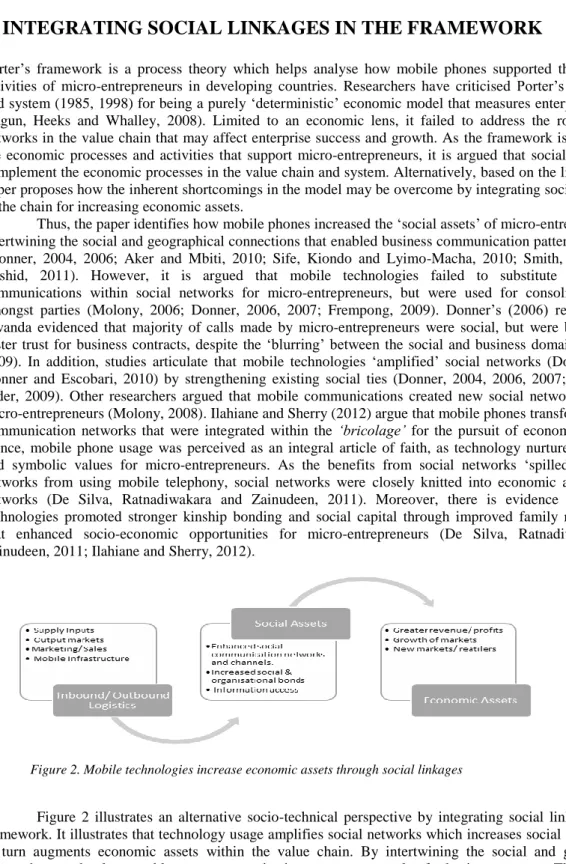
Figure 2. Mobile technologies increase economic assets through social linkages
Figure 2 illustrates an alternative socio-technical perspective by integrating social linkages in the framework. It illustrates that technology usage amplifies social networks which increases social assets which in turn augments economic assets within the value chain. By intertwining the social and geographical connections, technology enables new communications patterns to evolve for business success. This argument extends Porter’s deterministic framework and offers valuable insights for micro-entrepreneurs. While Porter’s value chain neglected the ‘social’ role of technology for business development, this paper presents
new perspectives on examining technology’s contribution. It sheds light on how the usage of mobile technologies by informal actors creates social wealth for expanding into new markets. Additionally, the injection of mobile money into the current value chain and system may transform socio-economic processes for micro-entrepreneurial development. By offering financial resources, such as credit, payments and saving facilities – via mobile banking- this new process may evoke micro-entrepreneurial activities in the value chain and contribute towards financial inclusion.
6. CONCLUSION AND CONTRIBUTIONS
Although mobile technologies play a vital role in economic development, there is little evidence presented that they transform economic markets (Donner and Escobari, 2010). Further, the economic approaches of ‘mobile technologies for development’ overlooks the social dimensions that contribute towards business success. Hence, policymakers, practitioners and researchers need to create inclusive strategies to integrate social networks within more deterministic practices that currently exist for business development.
Further, it is essential to recognise that a new ‘global digital divide’ is emerging as the bottom-of-the pyramid, with bottom-of-their limited digital capabilities, cannot afford and use sophisticated mobile technologies (Carmody, 2012). Therefore, a holistic approach is required with greater support from regulatory environments and practitioners to ensure that informal actors at BoP are integrated within inclusive development approaches (Komunte, Rwashana and Nabukenya, 2012; Katsina and Abdulkareem, 2012). In order to underpin the ‘mobiles for development’ discourse, researchers need to question the feasibility of mobile developmental projects over other low tech approaches. Mobile technologies may not always be the ‘silver bullet’ for millions of households without having supporting policies and practices in place at the community level (Aker and Mbiti, 2010).
The paper concludes that mobile technologies play a vital role in increasing incomes for micro-entrepreneurs within the value chain. However, as theoretical contribution, the paper looks beyond purely deterministic economic processes within Porters Value Chain and System. First, it extends the framework through integrating social processes that create social assets which are vital for increasing monetary assets. Thus, the creation of social capital underpinned economic activities for micro-entrepreneurs that led to business success. As this missing link in the chain is identified, an alternative socio-technical framework is proposed. Second, the injection of mobile money into the current value chain and system may transform economic processes for micro-entrepreneurial development and financial inclusion. This conceptualisation contributes towards the growing body of literature on mobile banking that is gaining popularity in rural communities in developing countries. Whilst current research provides scarce evidence that mobile technologies help people start new businesses (Donner and Escobari, 2010), this paper conceptualises how mobile technologies may offer alternative channels to deliver financial resources to micro-entrepreneurs. This may enable micro-entrepreneurs to start their businesses with the availability of credit and conduct financial transactions through mobile banking. As mobile banking, based on branchless banking models, is becoming popular in developing countries, this may lead to financial innovation in rural communities.
Moreover, the paper bridges the gap between theory and practice and offers rich insights for practitioners to implement policies that combine social and economic perspectives for innovation strategies. More specifically, how economic activities are dependent upon social networks to transform business and market structures. The paper has implications in framing policies for the business community, regulatory and financial institutions, mobile operators and development practitioners for steering micro-entrepreneurial activities in rural communities.
7. REFERENCES
Aker, J. and Mbiti, I., 2010. Mobile Phones and Economic Development in Africa. Journal of Economic Perspectives, 24 (3), pp.207-232.
Aker, J., 2008. Does Digital Divide or Provide? The Impact of Cell Phones on Grain Markets in Niger. Center for Global Development Working Paper, (154).
Akpan-Obong, P., 2007. Information and Communication Technologies in Development: Contextuality and Promise. IFIP 9.4 9th International Conference on Social Implications of Computers in Developing Countries. Sao Paulo, Brazil, May 2007.
Amaghionyeodiwe, L. and Annansingh-Jamieson, F., 2017. An Investigation into the Impact of Mobile Technologies on Economic Growth and Employment in the Caribbean. Athens Journal of Business and Economics, 3 (3), pp. 263-278. Bada, A.O. and Madon, S., 2006. Enhancing Human Resource Development through Information and Communications Technology. Information Technology for Development, 12 (3) pp.179-183.
Bayes, A., Von Braun, J. and Akhter, R., 1999. Village Pay Phones and Poverty Reduction: Insights from a Grameen Bank Initiative in Bangladesh. Bonn, Germany: ZEF.
Boateng, R., Hinson, R., Galadima, R. and Olumide, L., 2014. Preliminary insights into the influence of mobile phones in micro-trading activities of market women in Nigeria. Information Development, 30(1), pp. 32–50.
Boettiger, S., Toyama, K. and Abed, R., ed., 2012. Natural Obsolescence of Village Phone. Proceedings of the Fifth International Conference on Information and Communication Technologies and Development. Atlanta, Georgia USA, March 12-15 2012, ACM.
Carmody, P., 2012. The Informationalisation of Poverty in Africa? Mobile Phones and Economic Structure. Information Technologies & International Development, 8 (3), pp. 1-17.
Chew, H. E., Levy, M.R. and Ilavarasan, P.V., 2011. The Limited Impact of ICTs on Microenterprise Growth: A Study of Businesses Owned by Women in Urban India. Information Technologies & International Development, 7 (4), pp.1-16. Chew, H.E., Ilavarasan, P.V. and Levy, M.R., 2010. The Economic Impact of Information and Communication
Technologies (ICTs) on Microenterprises in the Context of Development. The Electronic Journal of Information Systems in Developing Countries, 44 (4), pp.1-19.
De Silva, H., Ratnadiwakara, D. and Soysa, S., 2009. Mobile Phones to Significantly Reduce Information-related Transaction Costs for Small-Holder Farmers. Sri Lanka: Communications Policy Research South.
De Silva, H., Ratnadiwakara, D. and Zainudeen, A., 2011. Social Influence in Mobile Phone Adoption: Evidence from the Bottom of Pyramid in Emerging Asia. Information Technologies & International Development, 7 (3), pp.1-18. De Silva, H., Zainudeen, A. and Ratnadiwakara, D., 2008. Perceived Economic Benefits of Telecom Access at the Bottom of the Pyramid in Emerging Asia.
Donner, J. and Escobari, M.X., 2010. A Review of Evidence on Mobile Use by Micro and Small Enterprises in Developing Countries. Journal of International Development, 22 (5), pp.641-658.
Donner, J., 2009a. Mobile-based Livelihood Services in Africa: Pilots and Early Deployments. Communication Technologies in Latin America and Africa: A Multidisciplinary Perspective, pp.37-58.
Donner, J., 2009b. Blurring Livelihoods and Lives: The Social Uses of Mobile Phones and Socio-economic Development. Innovations: Technology, Governance, Globalization, 4 (1), pp.91-101.
Donner, J., 2008. Research Approaches to Mobile Use in the Developing World: A Review of the Literature. The Information Society, 24 (3), pp.140-159.
Donner, J., 2007. Customer Acquisition among Small and Informal Businesses in Urban India: Comparing Face-to-face and Mediated Channels. EJISDC, 32 (3), pp.1-16.
Donner, J., 2006. The Use of Mobile Phones by Micro-entrepreneurs in Kigali, Rwanda: Changes to Social and Business Networks. Information Technologies and International Development, 3 (2), pp.3-19.
Donner, J., 2004. Micro-entrepreneurs and Mobiles: An Exploration of the Uses of Mobile Phones by Small Business Owners in Rwanda. Information Technologies and International Development, 2 (1), pp.1-21.
Duncombe, R. and Heeks, R., 2005. Information & Communication Technologies (ICTs), Poverty Reduction and Micro, Small & Medium-scale Enterprises (MSMEs): A Framework for Understanding ICT Applications for MSMEs in Developing Countries. Vienna: United Nations Industrial Development Organization.
Duncombe, R., 2016. Mobile Phones for Agricultural and Rural Development: A Literature Review and Suggestions for Future Research. The European Journey of Development Research, 28, (2), pp. 213-235.
Duncombe, R., 2006. Using the Livelihoods Framework to Analyze ICT Applications for Poverty Reduction through Microenterprise. Information Technologies & International Development, 3 (3), pp.81-100.
Essegbey, G.O. and Frempong, G.K., 2011. Creating Space for Innovation - The Case of Mobile Telephony in MSEs in Ghana. Technovation, 31 (12), pp.679-688.
Esselaar, S., Stork, C., Ndiwalana, A. and Deen-Swarray, M., 2007. ICT Usage and Its Impact on Profitability of SMEs in 13 African Countries. Information Technologies & International Development, 4 (1), pp.87-100.
Etzo, S. and Collender, G., 2010. The Mobile Phone ‘Revolution’ in Africa: Rhetoric or Reality? African Affairs, 109 (437), pp.659-668.
Frempong, G., 2009. Mobile Telephone Opportunities: The Case of Micro-and Small Enterprises in Ghana. Info, 11(2), pp.79-94.
Fu, X. and Akter, S., 2016. The Impact of Mobile Phone Technology on Agricultural Extension Services Delivery: Evidence from India. The Journal of Development Studies, 52 (11), pp. 1561- 1576.
Heeks, R., 2009. Emerging Markets IT and the World's "Bottom Billion. Communications of the ACM, 52 (4) pp.22-24. Heeks, R.,2008. ICT4D 2.0: The Next Phase of Applying ICT for International Development. Computer, 41 (6) pp.26-33. Ilahiane, H. and Sherry, J.W., 2012. The Problematics of the "Bottom of the Pyramid" Approach to International
Development: The Case of Micro-Entrepreneurs' Use of Mobile Phones in Morocco. Information Technologies & International Development, 8 (1), pp.13-26.
Jagun, A., Heeks, R. and Whalley, J., 2008. The Impact of Mobile Telephony on Developing Country Micro-enterprise: A Nigerian Case Study. Information Technologies & International Development, 4 (4), pp. 47-65.
James J., 2016. Micro, Macro and Scaling-Up Effects. In: The Impact of Mobile Phones on Poverty and Inequality in Developing Countries. SpringerBriefs in Economics. Springer, Cham
Jensen, R., 2007. The Digital Provide: Information (technology), Market Performance, and Welfare in the South Indian Fisheries Sector. The Quarterly Journal of Economics, 122 (3), pp.879-924.
Katsina, M.N.I. and Abdulkareem, A., ed., 2012. Use of Mobile Phones among Informal Microenterprises in Katsina, Nigeria. Proceedings of the International Conference on Computing, Communication Systems and Informatics Management (ICCCSIM), Dubai, UAE, July 2012.
Komunte, M., 2015. Usage of Mobile Technology in Women Entrepreneurs: A Case Study of Uganda. The African Journal of Information Systems, 7 (3), pp.52-74.
Komunte, M. and Rwashana, AS., 2012. Comparative Analysis of Mobile Phone Usage among Women Entrepreneurs in Uganda and Kenya. African Journal of Computing & ICT, 5 (5), pp.74-86.
Liedholm, C. and Mead, D. C., 1999. Small Enterprise and Economic Development. The Dynamics of Micro and Small Enterprises. London and New York: Routledge.
Liedholm, C., 2002. Small Firm Dynamics: Evidence from Africa and Latin America. Small Business Economics, 18 (1), pp.225-240.
Ling, R., Parekh, P., Zainudeen, A., & Galpaya, H., 2017. Rationalization of mobile telephony by small-scale entrepreneurs in Myanmar. Information, Communication & Society, 1-17.
Makoza, F. and Chigona, W., 2012. The Livelihood Outcomes of ICT Use in Microenterprises: The Case of South Africa. The Electronic Journal of Information Systems in Developing Countries, 53 (1), pp.1-16.
Mittal, S., Gandhi, S. and Tripathi, G., 2010. Socio-economic Impact of Mobile Phones on Indian Agriculture. New Delhi: Working Paper 246, Indian Council for Research on International Economic Relations.
Molony, T., 2008. The Role of Mobile Phones in Tanzania’s Informal Construction Sector: The Case of Dares Salaam. Urban Forum, 19 (2), pp.175-186.
Molony, T., 2006. 'I Don't Trust the Phone; It Always Lies': Trust and Information and Communication Technologies in Tanzanian Micro-and Small Enterprises. Information Technologies and International Development, 3 (4), pp.67-83. Porter, M.E. and Millar, V.E., 1985. How Information Gives You Competitive Advantage. Harvard Business Review, 63 (4), pp.149-160.
Porter, M.E., 1995. Competitive Advantage: Creating and Sustaining Superior Performance. New York: The Free Press. Rabayah, K. and Qalalwi, K., 2011. The Impact of Mobile Telephony on Developing Countries Enterprises: A
Palestinian Case Study. The Electronic Journal of Information Systems in Developing Countries, 46 (4), pp.1-20. Rangaswamy, N. and Nair, S., 2010. The Mobile Phone Store Ecology in a Mumbai Slum Community: Hybrid Networks for Enterprise. Information Technologies & International Development, 6 (3), pp.51-65.
Rashid, A.T. and Elder, L., 2009. Mobile Phones and Development: An Analysis of IDRC Supported Projects. The Electronic Journal of Information Systems in Developing Countries, 36 (2), pp.1-16.
Sachs, J., 2005. The End of Poverty: How We Can Make IT Happen In Our Lifetime. London: Penguin Books. Smith, M.L., Spence, R. and Rashid, A.T., 2011. Mobile Phones and Expanding Human Capabilities. Information Technologies & International Development, 7 (3), pp.77-88.
Spence, N., 2010. Gender, ICTs, Human Development, and Prosperity. Information Technologies & International Development, 6 (Special Edition), pp.69-73.
Wolcott, P., Kamal, M. and Qureshi, S., 2008. Meeting the Challenges of ICT Adoption by Micro-enterprises. Journal of Enterprise Information Management, 21 (6), pp.616-632.