University of Hohenheim
Faculty of Agricultural Sciences
Institute of Agricultural Sciences in the Tropics (Hans-Ruthenberg Institute) Chair of Social and Institutional Change in Agricultural Development
Prof. Dr. Regina Birner
Governance Challenges of Developing Biomass-Based Value Webs:
The Case of Maize in Ethiopia
Dissertation
Submitted in fulfillment of the requirements for the degree of
“Doktor der Agrarwissenschaften”
(Dr. sc.agrar./Ph.D. in Agricultural Sciences)
To the
Faculty of Agricultural Sciences
Presented by
Tilahun Woldie Mengistu
Born in Lalibela, Ethiopia
i
This thesis was accepted as a doctoral dissertation in fulfilment of the requirements for the degree “Doctor of Agricultural Sciences’’ (Dr. sc. agr.) by the Faculty of Agricultural Sciences at the University of Hohenheim.
Date of oral examination: 17 July 2018
Examination Committee
Supervisor and Reviewer: Prof. Dr. Regina Birner
External Examiner: PD. D. Khalid Siddig
Additional Examiner: Prof. Dr. Manfred Zeller
ii
Acknowledgements
The long PhD journey would not have been possible without the support of many people around and far. It is high time for me to extend my appreciation and thanks. First of all, I would like to extend my sincere appreciation and gratitude to my supervisor, Prof. Dr. Regina Birner for her continuous encouragement, excellent academic support from the very beginning up to the end of the PhD life.
My special thank goes to Dr. Saurabh Gupta, who closely mentored, encouraged and supported me on a regular basis throughout the entire course of the research work. I thank you for your extraordinary academic and social support during my stay in Hohenheim. I am also grateful to Dr. Bamlak Alamirew for the encouragement and for the feedback and support during my data collection in Ethiopia.
I am also very much grateful to several institutions that supported me in many respects which I should mention; Yom institute of economic development for hosting me during my stay in Addis Ababa, BOA of Oromia and Amhara regions, Assela and Bahirdar seed quality testing centers, MOA and Shewa Bakery, ESE, ASE, OSE, Anno, Yimam Tesema Seed enterprise, Merkeb Union, FAFA food Complex for their time and for sharing information with me.
A very special gratitude goes to the German Academic Exchange Programme (DAAD) for funding the research work and my stay in Germany. I would also like to thank the BiomassWeb project for the financial support which immensely helped me to conduct the household survey in Ethiopia.
I owe to thank my fellow colleagues Adu, Lilli, Rajiv, Kemanda, Jonathan, Teferi, Juliet, Athena, Saima, Thanama, Sandhya, Mary and Tania for your feedback and insights during our institute seminars and during our informal talks. I appreciate and thank you Thomas for translating my executive summery to the German version. And I am glad to extend my thank you to all members of 490C; Denise, Verena, Linn and Linda for your support during my stay in Germany. I would also like to thank my best friends, Eshetu Asefa, Zewedu Ayalew and Zemenu Tesfa for your support during my data collection and data management phases.
Last but not the least, I would like to thank my family: my lovely daughter Mirafeal and my wife Mirtnesh, and to my sisters and my brothers for your encouragement throughout the course of the PhD endeavor.
iii
Table of Contents
ACKNOWLEDGEMENTS ... II EXECUTIVE SUMMARY ... V ZUSAMMENFASSUNG ... VII LIST OF ABBREVIATIONS ... X LIST OF TABLES ... XII LIST OF FIGURES ... XIICHAPTER ONE: INTRODUCTION ... 1
1.1PROBLEM BACKGROUND ... 1
1.2RATIONALE OF THE STUDY ... 3
1.3RESEARCH OBJECTIVES ... 5
1.4RESEARCH QUESTIONS ... 6
1.5CONCEPTUAL FRAMEWORK: MAIZE VALUE WEBS ... 7
1.6DESCRIPTION OF THE STUDY AREA ... 9
1.7METHODOLOGY ... 9
1.8THESIS LAYOUT ... 11
1.9REFERENCES ... 12
CHAPTER TWO: INSTITUTIONAL ARRANGEMENTS AND GOVERNANCE CHALLENGES IN REGULATING SEED QUALITY IN ETHIOPIA... 16
2.1INTRODUCTION ... 17
2.2SEED REGULATORY SYSTEM:SELECTED COUNTRY EXPERIENCES AND CHALLENGES ... 20
2.2.1 Lessons learned from selected countries: seed certification ... 20
2.2.2 Governance challenges in seed regulatory system: from the lens of “good governance” ... 21
2.2.3 Ethiopian context: A snapshot on timeline of key milestones in the seed system ... 22
2.3METHODS AND DATA ... 25
2.4RESULTS ... 26
2.4.1 Diversity of actors and challenges in hybrid maize seed production ... 26
2.4.2 Challenges in cluster-based hybrid maize seed production ... 30
2.4.3 Seed quality control ... 32
2.5DISCUSSION ... 42
2.5.1 Seed production: quality incentives and limiting factors ... 42
2.5.2 Seed quality assurance mechanisms ... 43
2.6CONCLUSION AND POLICY IMPLICATIONS ... 46
2.7REFERENCES ... 47
CHAPTER THREE: SEED DISTRIBUTION REFORM AND FARMERS’ CHOICE: IMPLICATIONS FOR AGRICULTURAL DEVELOPMENT IN ETHIOPIA... 50
3.1INTRODUCTION ... 51
3.2SEED DISTRIBUTION AND MARKETING IN ETHIOPIA: ISSUES AND CHALLENGES ... 53
iv
3.4METHODOLOGY ... 57
3.4.1 Qualitative techniques ... 58
3.4.2 CE design and survey preparation ... 58
3.4.3 Econometric approach ... 63
3.5RESULTS ... 66
3.5.1 Results of the qualitative assessment ... 66
3.5.2 Results of the CE ... 75
3.6DISCUSSION ... 81
3.7CONCLUSIONS AND POLICY IMPLICATIONS ... 84
3.8REFERENCES ... 85
CHAPTER FOUR: ANALYSIS OF MAIZE BIOMASS USE AND ITS IMPLICATION ON FOOD SECURITY AND ETHIOPIAN BIOECONOMY . 92 4.1INTRODUCTION ... 93
4.2CONCEPTUAL FRAMEWORK AND REVIEW OF LITERATURE ... 95
4.3METHODS AND DATA ... 98
4.3.1 Intensity of biomass use ... 99
4.3.2 Household food security ... 99
4.3.3 Econometric approach ... 101
4.4RESULTS ... 105
4.4.1 Maize biomass production ... 105
4.4.2 Type and intensity of biomass uses ... 106
4.4.3 Household food security profiles ... 108
4.4.4 Biomass and food security nexus ... 109
4.4.5 Empirical model results: Intensity of biomass use and food security nexus ... 113
4.4.6 Challenges in biomass utilization ... 117
4.5DISCUSSION ... 119
4.6CONCLUSIONS AND POLICY IMPLICATIONS ... 121
4.7REFERENCES ... 122
CHAPTER FIVE: GENERAL DISCUSSION AND CONCLUSIONS ... 125
5.1SUMMARY OF MAIN RESULTS AND CONCLUDING REMARKS ... 125
5.2.DISCUSSION ON KEY FINDINGS ... 127
5.3.LIMITATIONS AND RECOMMENDATIONS FOR FUTURE RESEARCH... 131
5.4IMPLICATIONS OF INSTITUTIONAL AND GOVERNANCE CHALLENGES FOR THE BIOECONOMY ... 132
5.5REFERENCES ... 137
APPENDICES ... 138
APPENDIX A:PROCESS NET-MAP GUIDE ... 138
APPENDIX B:KEY INFORMANT INTERVIEWS GUIDE ... 138
APPENDIX C:FOCUS GROUP DISCUSSION GUIDE ... 139
APPENDIX D:HOUSEHOLD SURVEY QUESTIONNAIRE ... 140
v
Executive Summary
In recent years, the need to move from an economy based on fossil resources to an economy based on biological resources has gained increasing attention. The bioeconomy has the potential to ensure sustainable growth by enhancing the usage of untapped biomass resources. This potential is particularly pronounced in sub-Saharan Africa and has attracted the attention of both governments and the international donor community. To use the potential of the bioeconomy in a sustainable way without jeopardizing food security, it is essential to increase the productivity and the efficiency of the production and utilization of biomass. Using the maize production in Ethiopia as a case study, this thesis aims to identify strategies that will contribute to a higher productivity and better utilization of biomass in the emerging bioeconomy. Maize has been selected for this case study because it is on one the one hand a major food crop in Africa while it has, on the other hand, the potential to provide biomass for multiple uses in the bioeconomy. Ethiopia is well suited for the case study because it is confronted with major challenges of food security, while it has at the same time a large underutilized potential to increase the production of biomass for the bioeconomy. The thesis focuses on two themes: One is an analysis of the seed system, because maize seed supply has been identified as a major bottleneck to increasing productivity in the production of biomass. Ethiopia's seed sector has been plagued with problems of seed quality regulation, certification, dominance of informal seed sourcing, and inefficient distribution system, among other governance challenges. There have been major reform efforts in recent years, but there is not sufficient empirical evidence on how these reforms have fared. The second theme to the thesis is the utilization of the biomass from maize. This topic has been selected because there is a dearth of empirical evidence on the usage of the different components of maize (e.g. cob, stalk, leaves etc.) for several purposes, and its implications for household food security.
Against this background, the broad objective of this thesis is threefold: (1) to analyze the institutional arrangements for maize seed quality regulation, and uncover the governance challenges therein; (2) to identify the governance challenges in the hybrid maize seed distribution system and analyze farmers’ preferences of the select attributes for hybrid seed distribution; and (3) to assess usages of the different components of maize biomass, and examine its implications for food security.
The thesis is based on a mixed methods approach. Data were collected using both qualitative and quantitative techniques. The study of seed quality regulation relies primarily on qualitative data collected through Process Net-Maps, focus group discussions, key informant interviews and direct observation in three maize growing districts. For the second and third objectives, data were collected using household survey and a choice experiment covering 325 farmers, Process Net-Maps, focus group discussions and key informant interviews. We employ the latent class and endogenous switching regression models to analyze the choice experiment data on farmers’ preference for the distribution attributes and effect of farmers’ diverse biomass use decision on food security, respectively.
The thesis contains five chapters: an introductory chapter (Chapter 1), three empirical chapters (Chapters 2-4), which correspond to the three research objectives indicated above, and a concluding chapter (Chapter 5).
vi
The study presented in Chapter 2 established that the quality control system for maize seed is characterized by numerous governance challenges including corruption, lack of accountability, lack of capacity and incentives to fully implement reforms. The study suggests ways to resolve the governance challenges by means of enhancing internal as well as external quality control mechanisms, redefining certification standards, and by making certification services transparent, participatory and cost-effective. The second study on the maize seed system, which is presented in Chapter 3, identifies potential entry points for corruption and other governance challenges in the reformed seed distribution system. This study also covers the demand side of the reform by analyzing farmers’ preferences for the attributes of different seed distribution mechanisms, such as seed quality, sales outlet, credit as a mode of payment, seed quantity, seed price and group formation. On the basis of the findings, different ways are presented that are suitable to overcome the governance challenges in hybrid maize seed distribution in Ethiopia.
As indicated above, the study presented in Chapter 4 deals with biomass utilization. The study finds multiple areas of use of biomass, but the majority of those are underdeveloped and underutilized. The endogenous switching regression model results further show households who diversify the use of biomass achieved better food security. The results suggest that for stimulating biomass production and utilization, it is crucial to enhance accesses to extension services, promote multi-purpose maize varieties and improve access to markets and value adding technologies.
The findings of the thesis contribute to the wider debates on governance and institutional challenges of ensuring food security through development of the bioeconomy, taking maize as an important bioeconomy crop. By investigating the roles of different stakeholders in the seed system, the study finds that the systems suffer from a number of governance and institutional challenges such as corruption, implementation gaps that arise due to capacity limitation and lack of political will to support private sector participation. The study suggests ways to overcome the governance challenges, which include enhancing internal as well as external quality control mechanisms, redefining certification standards, making certification services transparent, participatory and cost-effective, and a strong political will to fully implement reforms by promoting private sector participation. Additionally, the positive and homogeneous preferences for attributes like seed quality, types of sales outlets and access to credit that are shared by the majority of the surveyed farmers’ show the extent to which reform outcomes deviated from the needs of farmers. The study identified farmers’ preferences regarding the question of how they would like to access hybrid seeds and recommends ways to overcome the governance challenges in seed distribution in Ethiopia.
In addition to examining problems regarding production, the study confirmed that maize biomass utilization is crucial for food security and development of bioeconomy. The findings show that maize biomass is underutilized in the country because of lack of enabling conditions such as access to extension and information, marketing channels, availability of multi-purposes maize varieties and value-adding technologies. The findings led to the recommendation that policy innovation to provide better access to these conditions is essential to achieve growth in the maize sector and food security.
vii
Zusammenfassung
In den letzten Jahren hat die Notwendigkeit eines Wandels von einer Ökonomie, die auf fossilen Ressourcen basiert, zu einer Ökonomie die auf biologischen Ressourcen basiert, zunehmend Beachtung gefunden. Die Bioökonomie hat das Potenzial ein nachhaltiges Wachstum durch eine Ausweitung der Nutzung von unerschlossenen Biomasseressourcen sicherzustellen. Dieses Potenzial is insbesondere in Sub-Sahara-Afrika sehr ausgeprägt und hat die Aufmerksamkeit von Regierungen und der internationalen Gebergemeinschaft gleichermaßen geweckt. Um die Potenziale der Bioökonomie nachhaltig zu nutzen ohne Nahrungssicherung zu torpedieren, ist es essenziel die Produktivität und Effizienz der Produktion und Nutzung von Biomasse zu erhöhen. Am Beispiel der Maisproduktion in Äthiopien versucht diese Thesis Strategien zu identifizieren, die zu einer höheren Produktivität und Nutzung von Biomasse in der entstehenden Bioökonomie beitragen. Diese Fallstudie bezieht sich auf Mais, einerseits, weil Mais ein wichtiges Grundnahrungsmittel in Afrika ist, andererseits, weil es das Potenzial hat, Biomasse für verschiedene Nutzungsarten in der Bioökonomie zu Verfügung zu stellen. Äthiopien eignet sich gut für eine Fallstudie, weil es gleichzeitig mit großen Herausforderungen mit Blick auf Ernährungssicherung konfrontiert ist und zudem große, unternutze Potenziale besitzt, die Produktion von Biomasse für die Bioökonomie zu erhöhen.
Die Thesis fokussiert sich auf zwei Themen: Eines ist die Analyse des Saatgutsystems, da die Bereitstellung von Maissaatgut als ein wesentlicher Engpass zur Steigerung der Produktivität von Biomasse identifiziert wurde. Äthiopiens Saatgut-Bereich ist gekennzeichnet durch Probleme mit Blick auf die Regulierung der Qualität von Saatgut, die Zertifizierung, die Dominanz von informeller Saatgutbeschaffung und die Ineffizienz des Verteilungssystems, neben anderen Governance Herausforderungen. Es gab große Reformbemühungen in den letzten Jahren, allerdings gibt es bislang nicht genügend empirische Beweise, inwiefern diese Reformen fortgeschritten sind. Das zweite Thema dieser Thesis ist die Nutzung von Biomasse aus Mais. Dieses Thema wurde gewählt, weil es eine Forschungslücke mit Blick auf die Nutzung von verschiedenen Maiskomponenten (z.B., Kolben, Stielen, Blättern etc.) gibt, sowie mit Blick auf die Frage, wie eine mögliche Nutzung auf die Ernährung von Haushalten auswirkt.
Vor diesem Hintergrund hat die Thesis drei Hauptziele: (1) die Analyse von institutionellen Arrangements zur Regulierung der Qualität von Maissaatgut, sowie die dazugehörigen Governance Herausforderungen; (2) das Identifizieren von Governance Herausforderungen im Hybrid-Mais-Saatgutsystems und die Analyse der Vorlieben von Landwirten hinsichtlich der Attribute für Hybrid-Saatgut-Verteilung; und (3) die Einschätzung der Nutzung von verschiedenen Komponenten von Maisbiomasse, sowie deren Implikationen auf Ernährungssicherung.
Diese Thesis basiert auf einem gemischten Methoden Ansatz. Daten wurden mit qualitativen und quantitativen Techniken gesammelt. Die Studie zu der Regulierung von Saatgutqualität wurde hauptsächlich mit qualitativen Datenerhebungsmethoden durchgeführt. Dazu zählen Prozess Net-Maps, Fokusgruppendiskussionen, Interviews mit Schlüsselinformanten sowie Direktbeobachtungen in drei Mais-anbauenden Distrikten. Für das zweite und dritte Ziel, wurden Daten mithilfe von Haushaltsbefragungen und einem „Choice Experiment” mit 325 Landwirten
viii
gesammelt. Darüber hinaus wurden Prozess Net-Maps, Fokusgruppendiskussionen und Interviews mit Schlüsselinformanten verwendet. Es wurde ein latent class and endogenous switching regression Modell verwendet, um die Choice Experiment Daten zu den Präferenzen von den Landwirten zu den Verteilungsattributen sowie die Effekte
von verschiedenen Biomassenutzungsentscheidungen von Landwirten auf
Ernährungssicherung zu erforschen.
Die Thesis enthält 5 Kapitel: ein einleitendes Kapitel (Kapitel 1), drei empirische Kapitel (Kapitel 2-4), welche sich auf die drei oben genannten Forschungszielen beziehen, und einem abschließendes Kapitel (Kapitel 5).
Die Studie, welche in Kapitel 2 gezeigt wird, etabliert, dass die
Qualitätskontrollsysteme für Mais-Saatgut durch verschiedene Governance
Herausforderungen gekennzeichnet sind. Darunter fallen Korruption, mangelnde Rechenschaftspflichten, mangelnde Kapazitäten sowie fehlende Anreize Reformen vollständig zu implementieren. Die Studie empfiehlt verschiedene Wege, um diese Governance Herausforderungen zu lösen, etwa durch die Verbesserung von internen
sowie externen Qualitätskontrollmechanismen, Neudefinierungen von
Zertifizierungstandards und durch eine Erhöhung der Transparenz, Anteilhabe und Kosteneffizienz von Zertifizierungstandards. Die zweite Studie zu dem Mais-Saatgut-System, die in Kapitel 3 präsentiert wird, identifiziert potenzielle Einfallspunkte für Korruption und andere Governance Herausforderungen in dem reformierten Saatgut-Verteilungssystem. Die Studie betrachtet auch die Nachfrageseite der Reform, durch die Analyse von den Vorlieben von Landwirten für Attribute hinsichtlich von Saatgut-Verteilungsmechanismen wie Saatgutqualität, Anzahl von Ausgabestellen, Kredit als Zahlungsmethode, Saatgutquantität, Saatgutpreis und Gruppenformation. Basierend auf diesen Ergebnissen, werden verschiedene Wege gezeigt, die geeignet sind, die Governance Herausforderungen des Hybrid-Maissaatgut-Verteilungssystem in Äthiopien zu vermeiden.
Wie oben angemerkt, beschäftigt sich die Studie in Kapitel 4 mit der Nutzung von Biomasse. Die Studie identifiziert verschiedene Bereiche zur Nutzung von Biomasse, von denen die meisten unterentwickelt und unternutzt sind. Die Ergebnisse des The endogenous switching regression model zeigen, dass Haushalte, die ihre Nutzung von Biomasse diversifizieren, bessere Werte mit Blick auf Ernährungssicherung haben. Die Ergebnisse weisen darauf hin, dass, um Biomasse Produktion und Nutzung zu stimulieren, ein verbesserter Zugang zu landwirtschaftlicher Beratung, eine Förderung von Mehrzweck-Maisvarietäten und ein verbesserter Zugang zu Märkten und wertschöpfungssteigernden Technologien entscheidend ist.
Die Ergebnisse der Thesis tragen zu einer größeren Debatte zu den Governance und institutionellen Herausforderungen über die Sicherstellung von Ernährungssicherung durch die Entwicklung der Bioökonomie bei. Diese wird am Beispiel Mais, als eine wichtige Bioökonomie Pflanze, dargestellt. Indem die Rollen von verschiedenen Akteuren des Saatgutsystems erforscht werden, zeigt diese Studie, dass das System durch eine Reihe von Governance und institutionellen Herausforderungen geplagt wird. Darunter fallen Korruption, Implementierungslücken aufgrund von begrenzten Kapazitäten und ein mangelnder politische Willen den Privatsektor einzubeziehen. Die Studie zeigt Wege, um die Governance Herausforderungen zu lösen. Darunter fallen interne sowie externe Qualitätskontrollmechanismen, Neudefinierungen von
ix
Zertifizierungstandards und eine Erhöhung deren Transparenz, Anteilhabe und Kosteneffizienz und ein starker politischer Willen diese Reformen durch die Förderung von Privatsektor-Akteuren zu implementieren. Darüber hinaus zeigen die positiven und homogenen Präferenzen für Attribute wie Saatgutsqualität, Arten von Verkaufsstellen und Zugang zu Krediten, welche die Mehrheit der befragten Haushalte teilen, inwiefern die Reformergebnisse von den Bedürfnissen von Landwirten abweichen. Die Studie identifiziert die Präferenzen von Landwirten mit Blick auf die Frage, wie sie gerne Zugang zu Hybrid-Saatgut hätten und schlägt Wege vor, um die Governance Herausforderungen im Saatgutsystem von Äthiopien zu lösen.
Zusätzlich zur Analyse hinsichtlich der Produktion, bestätigt diese Studie, dass die Nutzung von Mais Biomasse entscheidend für Ernährungssicherung und die Entwicklung der Bioökonomie ist. Die Ergebnisse zeigen, dass Mais-Biomasse, aufgrund von fehlenden Rahmenbedingungen wie dem Zugang zu landwirtschaftlicher Beratung und Information, zu Marketingkanälen, zu Mehrzweck-Maisvarietäten und zu wertschöpfungssteigernde Technologien, untergenutzt wird. Die Ergebnisse führen zu der Empfehlung das Politik-Innovationen essenziell sind, um den Zugang zu diesen Bedingungen zu verbessern und um Wachstum im Maissektor zu erreichen und somit die Ernährungssituation zu verbessern.
x
List of Abbreviations
AIC Akaike Information Criteria
AKIS Agricultural Knowledge and Information System
ASE Amhara Seed Enterprise
ATA Agricultural Transformation Agency BIC Bayesian Information Criteria BOA Bureau of Agriculture
CBD Cooperative Based Seed Distribution CSA Central Statistical Agency
CE Choice Experiment
DA Development Agent
DI Diversification Index
DOA/DAO District Office of Agriculture DSM Direct Seed Marketing
EBA Enabling the Business of Agriculture
ESR Endogenous Switching Regression
ESE Ethiopian Seed Enterprise
ETB Ethiopian Birr
FCS Food Consumption Score
FDRE Federal Democratic Republic of Ethiopia FGD Focus Group Discussion
GDP Gross Domestic Product
GIS Geographic Information System
GPS Global Positioning System
HH Household
ISSD Integrated Seed Sector Development
KIIs Key Informant Interviews
xi
HHI Hirschman Herfindahl Index
KII Key Informant Interview
MOA Ministry of Agriculture MWTP Marginal Willingness To Pay
NIAR National Institute of Agricultural Research OSE Oromia Seed Enterprise
PAs Peasant Association
PC Primary Cooperative
PNM Process Net-map
PSQCQA Plant Seed Quality Control and Quarantine Authority R&D Research and Development
SEs Seed Enterprises
SMMC Seed Multiplying and Marketing Primary Cooperatives
SSA Sub-Saharan Africa
TLU Tropical Livestock Unit
xii
List of Tables
Table 2. 1 Internal seed quality control experience by seed enterprise type ... 32
Table 2. 2 Minimum requirements for hybrid maize seed certification ... 34
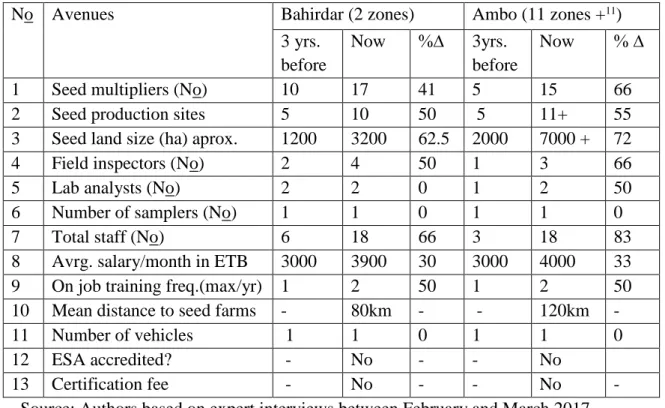
Table 2. 3 Seed production attributes and resource profile of seed quality testing centers ... 39
Table 3. 1 Distribution Attributes and Levels Used to Explain Choice Alternatives .. 59
Table 3. 2 Sample Choice Card ... 61
Table 3. 3 Attributes Mean Value and Rank... 67
Table 3. 4 Features of Seed Distribution Systems ... 69
Table 3. 5 Mean Comparison of Selected Attributes across Distribution Modalities . 71 Table 3. 6 Descriptive Statistics for Variables Used in the Regression ... 75
Table 3. 7 Latent Class Model Estimation Results ... 77
Table 3. 8 MWTP for the Distribution Attributes ... 80
Table 4. 1 Standard food groups and weights attached ... 100
Table 4. 2 Average production of maize biomass across food security groups ... 110
Table 4. 3 Mean biomass uses across food security groups ... 112
Table 4. 4 Parameter estimates of maize use diversification and food consumption equations ... 114
Table 4. 5 Average food consumption score in the factual and the counterfactual ... 116
Table 4. 6‘Demand sinks’ and associated challenges ... 118
List of Figures
Figure 1. 1 A conceptual framework on household level maize biomass value-webs and food security ... 7Figure 2. 1 Timeline of key milestones ... 23
Figure 2. 2 Diversity of actors in seed multiplication in Ethiopia ... 27
Figure 2. 3 Process of clustered based hybrid maize seed production... 29
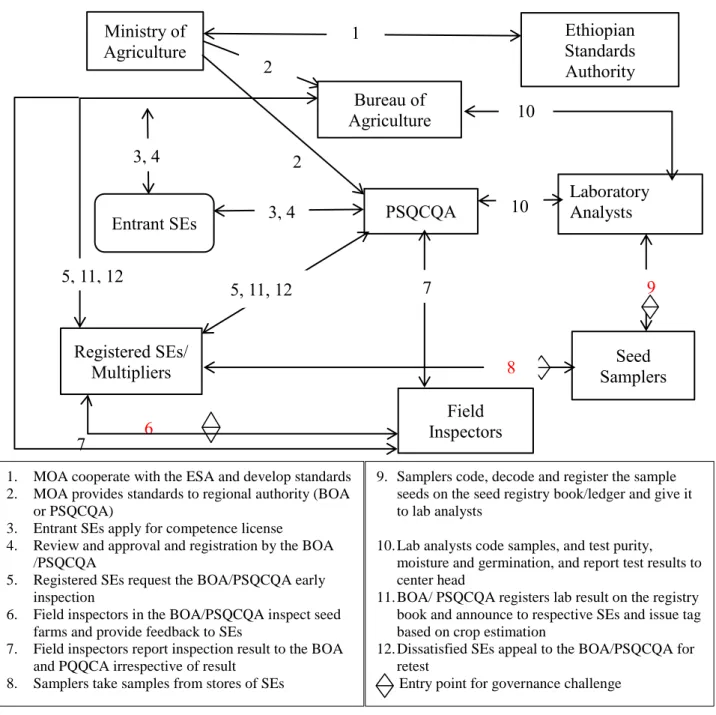
Figure 2. 4 Process of hybrid maize seed certification ... 37
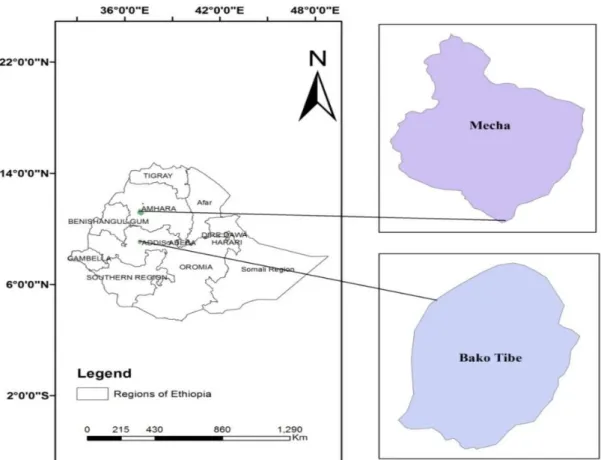
Figure 3. 1 Map of study sites ... 57
Figure 3. 2 Process of hybrid maize seed distribution ... 73
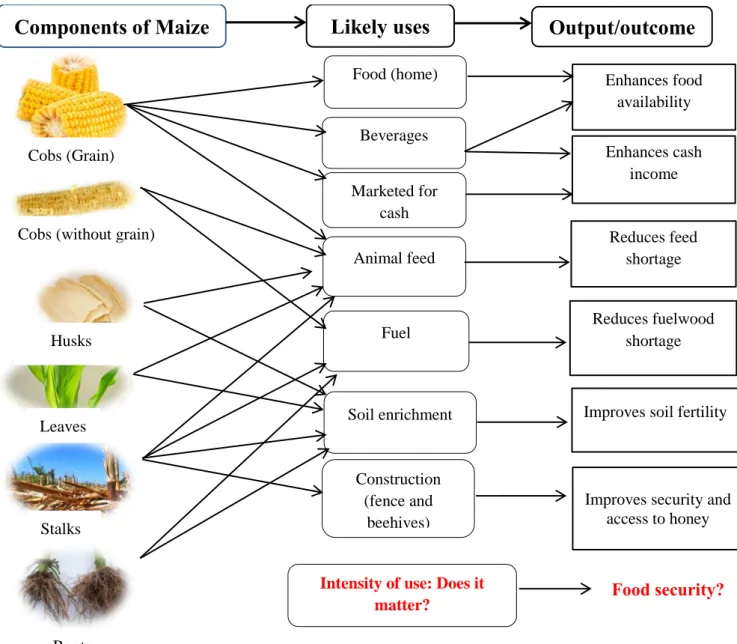
Figure 4. 1 Conceptual framework: maize biomass components, likely uses and outcomes ... 97
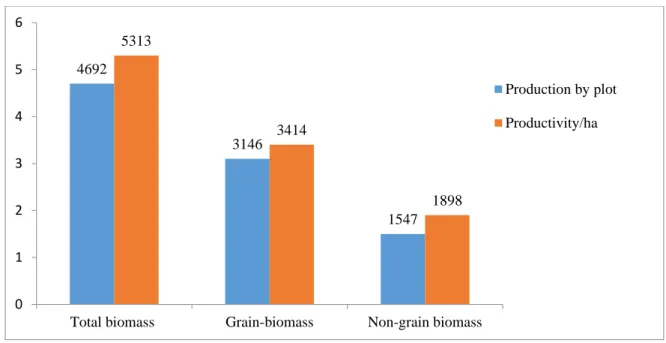
Figure 4. 2 Amount of maize biomass in kg by plot and per hectare ... 106
Figure 4. 3 Mean share of grain maize biomass uses of the 2014/15 main production season ... 107
Figure 4. 4 Mean share of non-grain maize biomass uses (2014/15) ... 108
Figure 4. 5 Farm households’ food security situation... 109
Figure 4. 6 Share of biomass uses by food security level of households... 111
1
Chapter One: Introduction
1.1 Problem background
Achieving sustainable economic growth and at the same time ensuring food security of the growing population has become a global challenge. While fossil fuels have triggered economic growth for a long time in the past, these challenges have led countries to look for other alternative and reliable sources of growth. The bioeconomy or the bio-based economy has been argued to have the potential to sustain green growth, ensure sustainable and efficient use of resources to meet demands of the growing population and to ensure social and ecological sustainability (Börner, Kuhn, & Braun, 2017; Von Braun, 2014). While the definition of the bioeconomy has remained subject to debate, the German Bioeconomy Council (2015) defined it as an economy that comprises the knowledge based production and use of biological resources to provide products, processes and services in all economic sectors.
The bioeconomy is relevant for Africa, but the potential for food security issues is particularly relevant. There are two key challenges to developing the bioeconomy in the African context; increase in productivity of biomass and ensuring that biomass is used in a way that is compatible with food security (Mohr et al.,2015; Müller et al., 2015). However, there are essential knowledge gaps in this regard. This thesis is part of the larger collaborative research project “BiomassWeb’’ which aims at improving food security in Africa through increased system productivity of biomass-based value webs. The project focuses on value-webs based on cassava, maize and banana plantain/enset in the productive Sudanian Savanna belt (Ghana, Nigeria) and east African Highlands (Ethiopia) (Biomassweb, 2013). To address the knowledge gap in this context, the thesis focuses on the seed system which has been identified as a major bottleneck for productivity increase and the food security implication of biomass uses as not much is known about this issue in the context of Africa. Therefore, the objectives of this thesis are to identify the bottlenecks in the seed system and the uses of biomass given its food security implications.
2
Yet, there are contested issues in the literature regarding the food security role of bioeconomy. On the one hand, trade-offs in the use of biological resources for the production of food, feed, and energy (biofuel or fuelwood) and for bio-based products in textiles and pharmaceutical industries exacerbate resources competition on land and aggravate development challenges (Kampman et al., 2008; Virchow et al., 2014). Environment and human right advocates argue that trade-offs in competing ends jeopardize food and nutrition security, if not governed appropriately (Heinimö & Junginger, 2009; Müller et al., 2015). Additionally, it is argued that inappropriate design of the bioeconomy may adversely affect food security while economic efficiency and sustainability may be increased (Von Braun, 2009). On the other hand, bioeconomy has been promoted to enhance efficient use of biomass through innovation in production, processing and marketing of biological resources. This is particularly the case in regions like SSA where there is high biomass potential and high yield gaps, but production, processing and utilization are inefficient. Sub-Saharan African has a high biomass potential, vast arable land and high cereal yield gaps. Despite the preponderance of high biomass potential, poverty and food insecurity are pervasive, that makes the region an island of undernourishment in the sea of enormous biomass potentials and vast agricultural land (Bruinsma, 2009; Fuglie, Wang, & Ball, 2012). Thus, development of bioeconomy is considered to be opening opportunity to make use of the untapped yield gaps and encourage efficient use of biomass and thereby enhance food security and growth of the region.
In response to the concerns of the environmental and human right advocates, it is argued that regulations and standards should ensure that biomass operators give priority to food (Mohr et al., 2015; Virchow et al., 2014). Thus would help farmers to generate additional income and employment and thereby enhance livelihoods by transforming agriculture sector from food supplying to biomass supplying (Abass, 2014; Mohr et al., 2015; Virchow et al., 2014). It also enhances efficiencies and synergies across biomass usages and sectors (Hoff, 2011). However, adequate institutional arrangements and appropriate governance structure are crucial to reap the optimum benefit of the bioeconomy without which food security of small-scale producers would be threatened (FAO, 2014; Müller et al., 2015; Priefer et al., 2017; Virchow et al., 2014). Adequate empirical evidence on institutional and policy environment required for the
3
development of bioeconomy, and the challenges in relation to the emerging agro-biomass sectors is lacking. In Ethiopia, maize is considered as an important food security and bioeconomy crop because of its potentially diverse usages, from food to feed to fuel. This thesis uses maze as a model crop for analyzing the development of bioeconomy.
1.2 Rationale of the study
In this context of the bioeconomy, the objective of this thesis is to identify important governance challenges for several reasons. The focus is placed on two aspects of seed system on the part of production and the use of biomass in this whole context of the bioeconomy. The main reasons for this is that seed system has been identified as a major bottleneck to productivity increase and smallholder farming systems not much known about the uses of other aspects of the biomass and its link to food security. This study is thus a novel attempt to fill this knowledge gap and contribute to the current debates on bioeconomy and agricultural transformation by exploring the existing governance structure and the institutional terrain in the maize sector.
Maize is produced by more than nine million farm households in Ethiopia (Abate et al., 2015; CSA, 2014). The growth of the sector has stagnated with current yield which is about half of the estimated potential of six tons per hectare (Abate et al., 2015; Rashid et al., 2010). Several production and post production factors have curtailed the growth of the sector, such as the lack of access to good quality seeds, fertilizers, marketing outlets and extension services (Alemu, Rashid, & Tripp, 2010; Spielman, Kelemwork, & Alemu, 2011). Ensuring access to these factors, particularly high-quality seeds, for smallholder farmers has remained a challenge for long. The seed system has been controlled by the public sector, and there has been a lack of competition, information asymmetry, and high transaction costs in the maize seed systems (Alemu, 2011; Alemu et al., 2010; Benson, Spielman, & Kasa, 2014; Erenstein et al., 2011; Husmann, 2015; Spielman et al., 2011). The lack of access to improved seeds is worse in cereal dominated agrarian economies, such as Ethiopia (Diao, 2010; Taffesse et al., 2011). In Ethiopia, like many SSA countries, the seed sector is also plagued with problems of quality regulation, certification, distribution and marketing, among other governance
4
challenges (Benson et al., 2014; USAID, 2013). Efficient seed system that allows farmers access to good quality maize seeds, it is argued, can enhance the potential of the maize sector (USAID, 2013).
In many SSA countries, public seed certification is more pronounced towards enforcement and control, which results into several challenges (ISSD, 2017; USAID, 2013). Setting up of unattainable quality standards, non-participatory process of certification, lack of transparency in the control system which encourages rent-seeking behaviors, are some of the main challenges in seed quality regulation (Louwaars, 2005). In the context of Ethiopia, the Ministry of Agriculture (MOA) had been in charge of developing seed laws, quality assurance procedures and also certifying all commercial seeds, until recently (Atilaw, 2010). The challenge to provide certification service to the increasing number of seed producers, both public and private, led to decentralization in seed quality regulation to respective regions since 2013. To what extent have these reforms enhanced seed quality control? And what are the major bottlenecks in the reformed system and how to overcome those? These are the main questions addressed in the following chapter of the thesis.
Apart from seed quality control, the distribution of high yielding variety of hybrid seeds is another major challenge in the seed sector in Ethiopia. Government control for a long time has resulted into inefficient seed production, distribution and marketing system, leading to the overall low productivity in the maize sector (Alemu et al., 2010). This drove a policy change from the state-sponsored cooperative-based distribution (CBD) approach to the direct seed marketing (DSM) program in 2011 in selected pilot districts. Yet, the liberalization of the seed system has not led to substantial decreases in transaction costs (Husmann, 2015). It is generally observed that even after the introduction of DSM, access to seeds in the desired quantity, quality and at competitive prices from multiple sales outlets is not happening. Moreover, the mode of payment in the new system is cash only. This limits the access to hybrid seeds for cash-constrained smallholders (Benson et al., 2014; Husmann, 2015). However, empirical studies on the post-reform governance challenges in seed distribution and marketing systems are lacking. In addition, we do not know which attributes of the hybrid seed distribution system are liked the most by the maize farmers. In other words, what are the preferences
5
of Ethiopian maize farmers in terms of accessing hybrid seeds? Chapter 3 of the thesis addresses these questions.
Good quality seeds and efficient distribution system can increase overall productivity but does not necessarily translate into food security of farm households. Utilization of entire biomass is equally important for the development of bioeconomy. The usages of maize biomass for several purposes, and the food security implications of these usages are crucial factors but there is a dearth of empirical evidence on these. It is also true that the growth of the maize sector depends on production as well as post-production factors. Post-production factors would have the potential to reinforce or limit production and productivity. Despite that, past studies have paid less attention to decision behaviors of farm households’ in terms of utilization of the entire biomass of particular crops. In this regard, Minot, (2013) and Rashid et al. (2010) have identified some of the post-production constraints and opportunities in the maize sector that affect maize farmers’ decisions on the use of their maize crop. The lack of markets and downstream processing, and inconsistent export policy are among the major bottlenecks identified by the aforesaid studies. While Rashid et al. (2010) recommended creation of “demand sinks” in the poultry and livestock sectors for stimulating growth in the maize sector, others (e.g. Jaleta et al., 2015) have looked at the tradeoffs in maize crop residue utilization and have identified major usages, such as feed, fuel and soil enhancement. However, a consistent and an in-depth empirical study that documents the utilization of the different components of maize, the food security role of the diverse usages and its implications for the development of bioeconomy is lacking. Chapter 4 tries to address these issues.
1.3 Research objectives
The study has three general objectives addressed in three separate chapters. These objectives are as following:
• to analyze the institutional arrangements for maize seed quality regulation, and
6
• to identify the governance challenges in the hybrid maize seed distribution
system and analyze farmers’ preferences of the select attributes for hybrid seed distribution;
• to assess usages of the different components of maize biomass, and to examine
its implications for farm household food security.
1.4 Research questions
Specific research questions in order to address the aforesaid three research objectives were formulated. The following three research questions address the first objective which looks at the institutional arrangements and governance challenges in hybrid maize seed quality control:
• What is the institutional arrangement for hybrid maize seed production and
certification?
• To what extent has the decentralization of seed quality regulation improved
efficiency of the system?
• What are the main governance challenges in the hybrid seed quality regulation?
And how to overcome those?
In relation to the second objective, concerning the governance challenges in seed distribution system and farmers’ preferences for the attributes of seed distribution, the following are the main guiding questions:
• What are the main governance challenges in the reformed hybrid maize seed
distribution system? And how to overcome those?
• Which attributes of the hybrid maize seed distribution are valued the most by
the farmers?
• What are the implications of farmers’ choice of the distribution attributes for
reforming the system further?
The third research objective deals with farm households’ post-production decision on the usages of maize biomass. The following research questions address this objective:
• For what purposes do farmers use their maize biomass?
• How important are these decisions for farm households’ food security? And
7
1.5 Conceptual framework: maize value webs
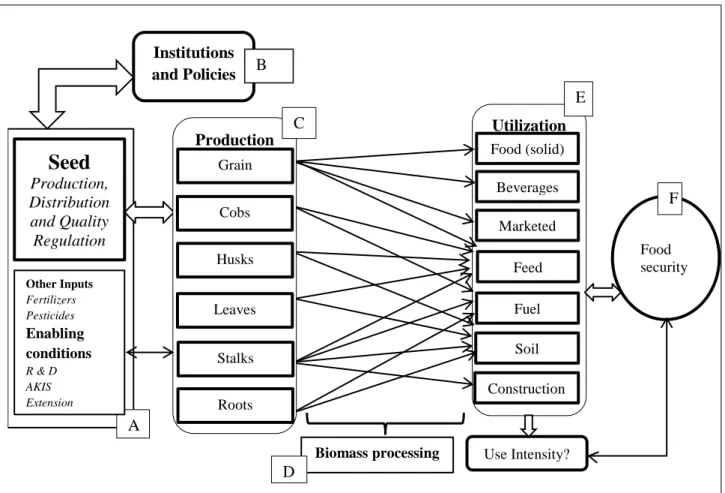
The thesis follows a biomass-based value-web approach, based on a multidimensional framework that utilizes the ‘web perspective’ to understand the interrelations and linkages between several value chains and how they are governed (Virchow et al., 2014). The value-web approach challenges the classical Poter’s value chain which looks at how inputs are changed to outputs. Because of the growing complexity, a systems approach that guides the integration of social, economic and environmental issues in production, processing and consumption of biomass is crucial (Mangoyana, Smith, & Simpson, 2013). Contrasted to the liner value chain approach, the web approach analyzes the complex systems (resembles a web) to identify inefficiencies in the sector, explore synergies and to improve access to markets for small-scale farmers. A diagrammatic representation of value-web framework is presented below:
Figure 1. 1 A conceptual framework on household level maize biomass value-webs and food security
Source: Authors based on (Biomassweb, 2013; Virchow et al., 2014)
Biomass processing Use Intensity?
Food security Contexts Utilization A E F
Seed
Production, Distribution and Quality Regulation Production Grain Husks Leaves Stalks Roots Cobs Food (solid) Beverages Marketed Feed Fuel Soil Construction C D Institutions and Policies B Other Inputs Fertilizers Pesticides Enabling conditions R & D AKIS Extension8
The conceptual framework in Figure 1.1 depicts production (C), processing (D) and consumption of biomass for numerous purposes (E). After biomass harvest, post-harvest handling activities and primary processing may or may not be performed before consumption. After biomass processing, it could be utilized at the household level by family members or pass onto consumers through wholesalers, retailers or by producers directly. This reflects the complex process on the flow of biomass and interaction among actors and activities. It is however argued that political and economic contexts are important to understand the challenges and opportunities in local and national biomass productions and consumption decisions (Müller et al., 2015). Thus, contextual factors such as inputs and enabling conditions (denoted by A) and the institutional arrangement and policy environment governing these contextual factors (denoted by B) are crucial to enhance biomass production. Of inputs, an efficient and well-functioning seed system that supplies good quality hybrid maize seeds is vital for production and effective utilization of biomass and to support the development of the bioeconomy. Biomass production further reinforces back and stimulates influences contextual factors in general and seed system in particular (denoted by A) and policies and institutions (denoted by B).
Biomass production increases availability of food but does not guarantee food security. It is evident that food security has got four pillars: availability, accessibility, utilization and stability of food (FAO, 2008). This expands our inquiry on the utilization of the different components of maize for several competing uses (denoted by E) and its implication for food security (F) through productivity or income effects. For instance, stalks can be used for feed, fuel, for farm and house fencing and part could also be left on the farm to enhance soil fertility. The same applies to other components as shown in Figure 1.1. In addition to use of components of maize for single purpose, intensity of use (use diversification) could influence food security outcome which the study seeks to explore. Thus, this study focuses on the pre-production factors, particularly on the hybrid maize seed quality regulation and seed distribution (Chapters 2 and 3, respectively), and the role of farm households’ post-production decisions on the use of different components of maize for several purposes (C to E) and its implications on household food security (E to F) (Chapter 4).
9 1.6 Description of the study area
The study was conducted in the maize belt of Ethiopia. Oromia and the Amhara regions are the two largest maize growing regions. Of these two regions west Gojam and west Shewa zones are the leading producers of maize in the Amhara and Oromia regions, respectively (CSA, 2014; Warner et al., 2015). From the two zones, three districts were selected purposively. The two districts, Mecha and Wonberma are found in west Gojam. Mecha and Wonberma districts are within the administrative zone of West Gojam which administers 14 districts. Mecha and Wonberma are located 540 and 450 km north west of Addis Ababa, respectively (see the study map in Chapter 3 of the thesis). The total projected population of Mecha and Wonberma districts, respectively, is 334,789 and 116,229 (CSA, 2013). Bako Tibe is one of the twenty districts in West Shewa zone. It is located 250 km west of Addis Ababa, with a total population of 151,201, of which about 79 % live in rural areas (CSA, 2013). The first two districts, Bako and Mecha, are the leading maize growing districts in Oromia and Amhara regions, respectively (Warner et al., 2015). The third district, Wonberma, is model in terms of community based or cluster-based seed multiplication. These districts broadened the scope of our analysis as they better represent maize dominated production system and livelihoods and allowed the study to examine governance and institutional issues in the maize seed as well as grain production systems.
1.7 Methodology
The overall approach was a mixed method that combined qualitative methods with household survey. From the household survey, we got data for the second and third papers. This section only presents the overarching methods of the qualitative methods and the household survey, while the detailed explanation on the methods for each case study is presented in the subsequent chapters.
Qualitative approach
The qualitative approaches used for data collection includes Process Net-Maps (PNM), focus group discussions, key informant interviews and direct observation. PNM is a qualitative tool used to visualize consecutive steps of implementation process, and analyzes governance challenges (Birner et al., 2011). A total of nine PNMs were
10
conducted based on focus group discussions and interviews with experts at federal to local levels in order to understand processes and uncover the governance challenges in hybrid maize seeds production, certification and distribution and marketing systems. Besides, eight focus group discussions (FGDs) with smallholder maize and seed producers in Mecha, Bako and Wonberma districts were conducted to understand process of hybrid maize seed production, certification and distribution and marketing systems. Additionally, key informant interviews with experts working for government, seed enterprises, researcher centers, poultry farms, feed and food processing firms were made to collect pertinent information about seed system and the use of components of maize and the challenges therein. Data collection was held in two rounds; the first round was held between July 2015 and January 2016 while the second round was conducted between February and March 2017.
Household survey
Quantitative data for the second and third case study were collected via household survey. The survey covered 325 randomly selected maize growers in two selected maize growing districts, Bako and Mecha. The purpose of the survey was to collect data on farmers’ preferences for attributes of hybrid maize seed distribution system, production and uses of the different components of maize biomass and food security profile of households.
In the household survey, a choice experiment (CE) was conducted with same number of farmers to examine their preferences for attributes of the hybrid maize seeds distribution system. CE is a flexible tool for eliciting individual preferences by asking respondents to state their choice across different hypothetical alternatives, ceteris
paribus, unlike revealed preferences which rely on actual conditions (Adamowicz,
Louviere, & Swait, 1998; Mangham et al., 2009). Implementation of the CE however followed a series of procedures that required qualitative analysis, especially in identifying the choice attributes (Carlsson & Martinsson, 2003; Kløjgaard et al., 2012; Mangham et al., 2009). The household survey thus benefited a lot from the qualitative approach.
As a result, eleven attributes were identified using the FGDs with maize farmers. To have an optimum number of attributes for the CE, we ranked and selected only six
11
attributes namely seed purity, quantity, group formation, sales outlet number, credit and price which scored at least half of the maximum score. The status quo levels were identified and defined in the FGDs, and the hypothetical levels were constructed with reference to the status quo levels and farmers’ expectations on the direction of change in the levels the attribute. Having known the attributes and their levels, ten choice sets containing three alternatives including the status quo were generated by following the D-optimal design approach with the help of JMP software. The choice experiment data were then analyzed using the discreet choice model called Latent Class Model. Yet data on maize biomass production and utilization were analyzed using composite techniques. The intensity of biomass use and the food security profile of households were measured using Hirschman Herfindahl index and food consumption score, respectively. The casual relationship between intensity of biomass use and food security was modeled using an endogenous switching regression technique.
1.8 Thesis layout
The thesis is divided into five chapters. Chapter one provides an introduction of the overall thesis. The second chapter deals with the institutional arrangements and the governance challenges in hybrid maize seed quality control. The third chapter deals with pertinent issues of hybrid maize seed distribution. More importantly, it presents findings on the governance and institutional challenges in hybrid maize seed distribution and identify which attributes of the seed distribution system matter the most to maize farmers. Chapter four presents results on farm households’ post-production decision on the diverse usages of maize biomass and its relationship with household food security. The last chapter summarizes the main findings of the thesis and lessons drawn from this empirical work. The thesis identifies areas of bottleneck in enhancing maize sector productivity and for the development of bioeconomy in Ethiopia.
12 1.9 References
Abass, A. (2014). Is Africa “ ready ” for an integrated bioeconomy approach?, 32–33. Abate, T., Shiferaw, B., Menkir, A., Wegary, D., Kebede, Y., Tesfaye, K., … Keno,
T. (2015). Factors that transformed maize productivity in Ethiopia. Food Security, 7(5), 965–981. http://doi.org/10.1007/s12571-015-0488-z
Adamowicz, W., Louviere, J., & Swait, J. (1998). Introduction to Attribute-Based Stated Choice Methods. Retrieved from
http://citeseerx.ist.psu.edu/viewdoc/download?doi=10.1.1.119.6910&rep=re p1&type=pdf
Alemu, D. (2011). The political economy of Ethiopian cereal seed systems: State control, market liberalisation and decentralisation. IDS Bulletin, 42(4), 69–77. http://doi.org/10.1111/j.1759-5436.2011.00237.x
Alemu, D., Rashid, S., & Tripp, R. (2010). Seed system potential in Ethiopia: Constraints and Opportunities for enhancing the seed sector. Retrieved from https://www.ifpri.org/publication/seed-system-potential-ethiopia
Atilaw, A. (2010). A Baseline Survey on the Ethiopian Seed Sector. African Trade Association.
Benson, T., Spielman, D. J., & Kasa, L. (2014). Direct seed marketing program in Ethiopia in 2013: An operational evaluation to guide seed-sector reform, (May), 68. Retrieved from
http://ebrary.ifpri.org/utils/getfile/collection/p15738coll2/id/128175/filename/12 8386.pdf
Biomassweb. (2013). Improving food security in Africa through increased system productivity of biomass-based value webs (BiomassWeb, (February).
Birner, R., Cohen, M., & Ilukor, J. (2011). Rebuilding Agricultural Livelihoods in Post-Conflict Situations: What are the Governance Challenges? The Case of Northern Uganda. Retrieved from
http://www.researchgate.net/publication/234045135_Rebuilding_Agricultural_Li
velihoods_in_Post-Conflict_Situations_What_are_the_Governance_Challenges_The_Case_of_Nort hern_Uganda/file/32bfe50e814a268630.pdf
Börner, J., Kuhn, A., & Braun, J. von. (2017). Bio-economy in developing countries. Policy Brief No. 25, (June), 1–8.
Bruinsma, J. (2009). THE RESOURCE OUTLOOK TO 2050: BY HOW MUCH DO LAND, WATER AND CROP YIELDS NEED TO INCREASE BY 2050?. Paper presented at the FAO Expert Meeting, 24-26 June 2009, Rome on “How to Feed the World in 2050.” Water, (June), 24–26.
http://doi.org/10.1016/j.ecolecon.2009.11.001
Carlsson, F., & Martinsson, P. (2003). Design techniques for stated preference methods in health economics. Health Economics, 12(4), 281–294.
13 http://doi.org/10.1002/hec.729
CSA. (2013). Population Projection of Ethiopia for All Regions At Wereda Level from 2014 – 2017: Addis Ababa, Central Statstical Agency.
CSA. (2014). Agricultural Sample Survey. Report on Area and Production of Major Crops: Volume I-Report on Area and Production of Major Crops(Private Peasant Holdings, Meher Season). Statistical Bulletin 532. Addis Ababa, Central
Statistical Agency., I, 13–14.
Diao, X. (2010). Economic importance of agriculture for sustainable development and poverty reduction: The case study of Ethiopia. Global Forum on Agriculture .29-30 November 2010 Policies for Agricultural Development, Poverty Reduction And Food Security. OECD Headquarter. Retrieved from
https://www.oecd.org/tad/agricultural-policies/46378942.pdf
Erenstein, O., Kassie, G. T., & Mwangi, W. (2011). Challenges and opportunities for maize seed sector development, 1–15. Retrieved from
http://libcatalog.cimmyt.org/download/cis/95940.pdf
FAO. (2008). An Introduction to the Basic Concepts of Food Security I. Social Indicators Research, 95(1), 215–230. http://doi.org/10.1007/s11524-010-9491-z FAO. (2014). Building a common vision for sustainable food and agriculture.
PRINCIPLES AND APPROACHES. FOOD AND AGRICULTURE ORGANIZATION OF THE UNITED NATIONS. Rome (Vol. 4). http://doi.org/10.1177/109821408300400423
Fuglie, K. O., Wang, S. L., & Ball, V. E. (2012). Productivity Growth in Agriculture An International Perspective Economic Research Service, US Department of Agriculture.
German Bioeconomy Council. (2015). Bioeconomy Policy (Part II): Synopsis of National Strategies around the World, (Part II), 136.
Heinimö, J., & Junginger, M. (2009). Production and trading of biomass for energy - An overview of the global status. Biomass and Bioenergy, 33(9), 1310–1320. http://doi.org/10.1016/j.biombioe.2009.05.017
Hoff, H. (2011). Understanding the Nexus. Background Paper for the Bonn2011 Conference: The Water, Energy and Food Security Nexus. Stockholm Environment Institute, Stockholm., (November), 1–52.
Husmann, C. (2015). Transaction Costs on the Ethiopian Formal Seed Market and Innovations for Encouraging Private Sector Investments. Quarterly Journal of International Agriculture, 54(1), 59–76.
Jaleta, M., Kassie, M., & Erenstein, O. (2015). Determinants of maize stover utilization as feed, fuel and soil amendment in mixed crop-livestock systems, Ethiopia. Agricultural Systems, 134, 17–23.
14
Kampman, B., Brouwer, F., & Schepers, B. (2008). Agricultural land availability and demand in 2020 A global analysis of drivers and demand for feedstock, and agricultural land availability., (June), 64.
Kløjgaard, M. E., Bech, M., & Søgaard, R. (2012). Designing a stated choice experiment: The value of a qualitative process. Journal of Choice Modelling, 5(2), 1–18. http://doi.org/10.1016/S1755-5345(13)70050-2
Louwaars, N. (2005). Biases and bottlenecks. Time to reform the South’s inherited seed laws? Seedling, (July), 4–9.
Mangham, L. J., Hanson, K., & McPake, B. (2009). How to do (or not to
do)...Designing a discrete choice experiment for application in a low-income country. Health Policy and Planning, 24(2), 151–158.
http://doi.org/10.1093/heapol/czn047
Mangoyana, R. B., Smith, T. F., & Simpson, R. (2013). A systems approach to evaluating sustainability of biofuel systems. Renewable and Sustainable Energy Reviews, 25, 371–380. http://doi.org/10.1016/j.rser.2013.05.003
Minot, N. (2013). Grain export bans in theory and in practice. Draft Policy Note. International Food Policy Research Institute Washington, DC. Research for Ethiopia’s Agricultural Policy (REAP)., (November). Retrieved from http://ebrary.ifpri.org/cdm/ref/collection/p15738coll2/id/127951
Mohr, A., Beuchelt, T., Schneider, R., & Virchow, D. (2015). Food security criteria for voluntary biomass sustainability standards and certifications. Biomass and Bioenergy, 89, 133–145. http://doi.org/10.1016/j.biombioe.2016.02.019 Müller, A., Weigelt, J., Götz, A., Schmidt, O., Alva, Lobos, I., Matuschke, I., …
Beringer, T. (2015). The Role of Biomass in the Sustainable Development Goals : A Reality Check and Governance Implications, (April), 6–11. http://doi.org/10.2312/iass.2015.010
Priefer, C., Jörissen, J., & Frör, O. (2017). Pathways to Shape the Bioeconomy. Resources, 6(1), 10. http://doi.org/10.3390/resources6010010
Rashid, S., Getnet, K., & Lemma, S. (2010). Maize Value Chain Potential in Ethiopia. Constraints and opportunities for enhancing the system.International Food Policy Research Institute. July 2010. Retrieved from
http://www.ifpri.org/publication/maize-value-chain-potential-ethiopia Spielman, D. J., Kelemwork, D., & Alemu, D. (2011). Seed , Fertilizer , and
Agricultural Extension in Ethiopia.
Taffesse, A. S., Dorosh, P., & Asrat, S. (2011). Crop Production in Ethiopia : Regional Patterns and Trends. Ethiopian Strategy Support Program( ESSP II). Working paper No. 0016. IFPRI, 53–82. Retrieved from
http://essp.ifpri.info/files/2011/02/ESSP2_WP16_Crop-Production-in-Ethiopia-Regional-Patterns-and-Trends.pdf
15
Development ( AGP-AMDe ) Comparative analysis of Ethiopia ’ s 2013 Seed Proclamation and draft Seed Regulations October 2013, (October), 1–39. Virchow, D., Beuchelt, T., Denich, M., Loos, T. K., Hoppe, M., & Kuhn, A. (2014).
The value web approach – so that the South can also benefit from the bioeconomy. Rural 21, 48(3), 16–18.
Von Braun, J. (2009). Food-Security Risks Must Be Comprehensively Addressed. Annual Report 2008-2009, 15. http://doi.org/10.2499/0896299236AR0809E Von Braun, J. (2014). Bioeconomy and sustainable development – dimensions. Rural
21, 6–9.
Warner, J., Stehulank, T., & Kassa, L. (2015). Woreda -Level Crop Production Rankings in Ethiopia : A Pooled Data Approach. International Food Policy Research Institute ( IFPRI ) Addis Ababa. Retrieved from
http://www.ifpri.org/publication/woreda-level-crop-production-rankings-ethiopia-pooled-data-approach
16
Chapter Two: Institutional arrangements and governance challenges
in regulating seed quality in Ethiopia
Abstract
Ensuring access to good quality hybrid seeds remains a major challenge to cereal production in Sub-Saharan Africa (SSA). In Ethiopia, like many SSA countries, the seed sector is plagued with the problems of quality regulation, certification and dominance of informal seed sourcing, among other governance challenges. Since 2013, seed quality regulatory role has been decentralized in Ethiopia in order to enhance access to good quality seeds, particularly of major cereal crops such as maize. However, there is dearth of empirical evidence on how this measure has improved efficiency of the regulatory system and in turn, helped in better quality seed production. This study examines the institutional arrangement and regulatory framework for hybrid seed production and certification. It maps the processes of seed multiplication and certification for both public and private enterprises, identifies the various actors involved in these processes, and uncovers the governance challenges therein. Data were collected through Process Net-Maps, key informant interviews and focus group discussions in three purposively selected districts. While there is some evidence to believe that the decentralized seed regulatory system has led to improvements in seed certification services, there are several governance challenges that continue to affect the seed system negatively. The hybrid seed production is largely dominated by public seed enterprises, which lacks the incentive to maintain robust internal seed quality control. The certification agency is deprived of both human and physical resources. Moreover, the study found that seed inspectors, laboratory analysts and samplers often compromise on seed quality standards. The seed testing process is influenced by vested interests and seed enterprises are often able to circumvent the system. Farmers’ participation and interest is neglected and there is an overall lack of accountability in the seed certification and quality control processes. By investigating the roles of different actors in the seed system, the study suggests ways to improve the system through enhancing internal as well as external quality control mechanisms, redefining certification standards, and by making the certification services transparent, participatory and cost-effective.
Keywords: hybrid maize seeds; seed quality; seed certification; agricultural transformation; Ethiopia
17 2.1 Introduction
Ensuring access to good quality hybrid seeds is crucial for bridging the yield gap in cereal production in Sub-Saharan Africa (SSA), and in turn enhancing food security as well as in development of bioeconomy. A bioeconomy comprises the knowledge-based production and use of biological resources to provide products, procedures and services varied economic sectors (Börner, Kuhn, & Braun, 2017). In Ethiopia, the growth in the maize sector, one of the most important bioeconomy crops is stagnated with current yields falling below three tons per hectare, when the potential is estimated to be about six tons per hectare (Abate et al., 2015; Rashid et al., 2010). Hybrid maize seeds, it is argued, can bridge this gap and enhance the potential of the maize sector (Alemu et al., 2010; Rashid et al., 2010). However, maintaining good quality standards from seed sourcing to multiplication and certification stages remains a challenge (Alemu et al., 2010). In the last two decades, many SSA countries have promulgated seed laws and have developed regulatory mechanisms for seed quality control and certification.Yet, vast majority of farmers are dependent on informal seed sourcing, which is often poor quality and low yielding (Erenstein et al., 2011). The reforms in seed quality regulation thus far are not so encouraging and have not translated into substantial productivity gains (ISSD, 2017). How to ensure quality control in hybrid seed system remains a major governance challenge as far as agricultural transformation in SSA is concerned.
Seed quality regulation supports the supply of certified seeds to farmers. A well-functioning seed system encourages quality assurances by seed producers themselves internally and by external certification agency (ISSD, 2017). Internal quality assurance practice consists a set of activities undertaken by seed producers to meet certain internally crafted standards. Whereas the external quality assurance mechanism possesses packages of services provided by an external certification agency against stipulated standards and procedures. Seed certification activities by external include field inspections, laboratory analysis and labeling and packaging (EBA, 2016). The final seed users, farmers, rely on this service as they cannot visually inspect seed quality, and their productivity is largely dependent on the quality of certified seeds received. In many SSA countries, certification is run by the public and characterized as less responsive to the demands of service recipients, and the service is more oriented
18
towards enforcement and control (ISSD, 2017; USAID, 2013). Another challenge in such certification modality arise from setting up of unattainable seed quality standards, the extent in which the system allows participation of other actors such as seed producers, community organizations and seed users (farmers), and lack of transparency in the control system which encourages rent-seeking, especially where inspections are predominantly undertaken by under-paid public servants (Louwaars, 2005). In the context of Ethiopia, there is a dearth of empirical evidence on the governance challenges in the seed quality control mechanisms, which is the main subject matter of this study.
The debates on seed quality regulation are largely dominated by two conflicting views points. The rights group argue that seed laws and regulations criminalize farmers and rather protect breeders and seed enterprises (GRAIN, 2015). Transaction cost economists, on the other hand argue that seed laws protect farmers from buying sub-standard seeds as they do not have perfect information about the inherent quality of the seed unlike seed sellers (Josling, Roberts, & Orden, 2008). Furthermore, seed laws have the potential to set rules of the market for seed suppliers and create a ‘level playing field’ (Louwaars, 2005). A related contestation in the literature within the external quality control via certification has been as to whether certification ought to be voluntary- “truth-in-labeling” or compulsory. The former has been the case in most advanced countries like the USA where seed companies label the truth for own reputation unlike seed companies in the developing world. Beyond these mainly ideologically driven arguments ‘for’ or ‘against’ seed regulation, in countries such as Ethiopia, there are insufficient empirical studies on the issues of seed quality control. This study aims to fill this gap and suggest ways to enhance quality in hybrid maize seed multiplication and certification.
The Ministry of Agriculture has been responsible for developing seed laws and quality assurance procedures and also effecting them in all commercial seeds (Atilaw, 2010). Since 2013, because of the increasing number of seed producers and size of seed land,
the responsibility of seed quality control has been decentralized1to respective regions.
19
In a bid to have an efficient regulatory system which not only offers quality certification services to seed producers but also protects farmers from accessing sub-standards seeds, regional governments have undertaken reforms which constitute establishing of seed quality control and quarantine authorities under the regional law. To what extent have these reforms enhanced seed quality control? And what are the major bottlenecks in the reformed system and how to overcome those? These are the main questions addressed in this study.
The study attempts to examine the institutional arrangements in seed quality control and analyzes the governance challenges therein. The study mainly relies on qualitative data collected using Process Net-Maps, key informant interviews and focus group discussions in three purposively selected major maize growing districts in the Amhara and Oromia regions. While there is some evidence to believe that the reformed seed control system has led to improvements in seed certification services, there are several governance challenges that continue to affect the seed system negatively. The hybrid seed production is largely dominated by public seed enterprises, which lack the incentive to maintain robust internal seed quality control. The certification agency is deprived of resources both human and physical to provide full ranges of seed certification services. Moreover, the study found that seed inspectors, laboratory analysts and samplers often compromise on seed quality standards in exchange of own benefits. The seed testing process is influenced by vested interests and seed enterprises are often able to circumvent the system. Farmers’ participation and interest is neglected and there is an overall lack of accountability in seed certification and quality control processes. By investigating the roles of different actors in the seed system, the study suggests ways to improve the system through enhancing internal as well as external quality control mechanisms, redefining certification standards, and by making the certification services transparent, participatory and cost-effective.
The rest of the paper is structured as follows. Section 2.2 outlines the seed quality control systems in selected developing countries, followed by the seed quality regulatory system in the contexts of Ethiopia. The later section presents a timeline of the key milestones in the Ethiopian formal seed system in general and the seed quality control in particular. Section 2.3 discusses the methodology and data collection. Main