PERFORMANCE OF PROJECT MANAGERS IN
MASS HOUSE BUILDING PROJECTS IN
GHANA
DIVINE KWAKU AHADZIE, BSc (Hons), MSc.
A thesis submitted in partial fulfilment of the requirements of the University of Wolverhampton for the degree of Doctor of
Philosophy July 2007
This work or any part thereof has not previously been submitted in any form to the University or to any other body whether for the purpose of assessment, publication or for any other purpose. Save
for any express acknowledgements, reference and/or bibliographies cited in the work, I confirm that the intellectual content of the work is the result of my own efforts and no other
person.
The right of Divine Kwaku Ahadzie to be identified as the author of this work is asserted in accordance with ss.77 and 78 of Copyright,
Designs and Patent Act 1988. At this date copyright is owned by the author
including the construction management discipline, the identification and development of appropriate performance measures is seen as the only viable means for validating and engendering managerial excellence. There is also a growing awareness that appropriate predictive modelling practices can help engender the identification and development of these measures. Against the background that project-based sectors of the construction industry in developing countries need to adopt a proactive approach towards recognising and embedding performance measures in HRM practices, this thesis addresses the development of a model for predicting the performance of project managers (PMs) in mass house building projects (MHBPs) in Ghana.
A literature review of the significance of performance measures in the HRM genre is first presented including an evaluation of the methodologies for measuring the performance of PMs. This is followed by a review of research and development in the management of human resources in the construction industry in developing countries including Ghana.
Informed by the literature, an appropriate theoretical framework is adopted which draws on the organisational psychology theory of job performance, the conventional wisdom in project success criteria and an emerging framework of project lifecycle. Subsequently, a competency-based multidimensional conceptual model is developed. The conceptual model reflects both the elements of performance behaviours and outcomes in predicting the performance of PMs at the conceptual, design, tender, procurement, construction and operational phases of the project lifecycle.
Adopting positivism as an appropriate research paradigm, structured questionnaire survey is used to elicit the relevant data from property developers in Ghana for the construction phase of the project lifecycle. Subsequently the data is analysed using one-sample t-test, factor analysis and multiple regression analysis (stepwise).
From a broad range of competency-based measures used as independent variables, it is found that, the best predictors of the PMs’ performance at the “construction phase” of MHBPs are: job knowledge in site layout techniques for repetitive construction works; dedication in helping works contractors to achieve works programme; job knowledge of appropriate technology transfer for repetitive construction works; effective time management practices on the house-units; ability to provide effective solution to conflicts while maintaining good relationships; ease with which the PM is approachable by works contractors; and volunteering to help works contractors solve personal problems. These independent variables explained 74.4% of the variance in the model (at p < 0.0005). Validation of the model confirmed its goodness of fit and hence predictive accuracy. The findings suggest that at the construction phase of MHBPs, PMs who exhibit these behavioural competencies are likely to achieve higher levels of performance. Accordingly, PMs who aspire to achieve better managerial performance outcome on
It is contended that the developed model could be used by property developers for the selection and recruitment of potential PMs and also for developing appropriate training requirements towards best practice improvement in the implementation of MHBPs. While the study focuses on Ghana, there is the potential for the model to be adopted for use by other developing countries towards the advancement of improved HRM activities in project management practice.
My greatest acknowledgement goes to Professor David Proverbs, my director of studies for the immense assistance provided in terms of guidance, suggestions and encouragements throughout the research process. The memory he has implanted will forever remain. I wish to also acknowledge my second supervisor, Prof. Paul Olomolaiye for the various ways he has also contributed despite his busy schedule as Dean of school.
My appreciation also goes to Mr William Ahadzie and Dr. Adjei-Kumi, both of the Department of Building Technology, Kwame Nkrumah University of Science and Technology (KNUST) for their assistance in helping to collect the relevant data in Ghana. Subsequently, I must acknowledge two graduates of the Dept. of Building Technology (KNUST), namely; Miss Barabara Appiah and Miss Naa Adjeley, for the part they played in delivering and retrieving the completed questionnaires. May I also acknowledge Nii Okine-Tieku, an executive member of the Ghana Real Estate Developers Association (GREDA), for assisting in providing the registration list of the GREDA. Likewise, my appreciation goes to all the GREDA members who participated in the survey.
It is also important to recognise my research colleagues, especially Nii, Obuks, David, Tony, Nuhu, Elias, Raymond, Adams, Boye and Felix for the times we have shared together. I wish everyone the best for the future.
I sincerely thank my loving wife, Efuah and my children Senam, Edinam and Adzo for their understanding, love and support during this long, tedious and on many occasions strenuous journey. I wish to also express my gratitude to my good friend, Daniel Anoff and family for the generosity extended to my family during our stay in the UK
for providing the scholarship funding.
.
Dedication
This Thesis is dedicated to all my family members, especially the memory of my late brother Kofi Ahadzie.
TABLE OF CONTENTS
A MODEL FOR PREDICTING THE PERFORMANCE OF PROJECT MANAGERS IN MASS HOUSE BUILDING PROJECTS IN GHANA..I
ABSTRACT...III ACKNOWLEDGEMENTS...V DEDICATION...VI TABLE OF CONTENTS...VII LIST OF TABLES...XVI LIST OF APPENDICES...XVII
CHAPTER 1: GENERAL INTRODUCTION...1
1.0 INTRODUCTION ... 1
1.1 BACKGROUND TO THE RESEARCH ... 1
1.2 STATEMENT OF THE PROBLEM ... 5
1.3 RESEARCH QUESTIONS ... 5
1.4 AIM AND OBJECTIVES OF THE STUDY ... 6
1.5 RESEARCH METHODOLOGY EMPLOYED ... 8
1.6 DEFINITION OF PERFORMANCE ... 10
1.7 MAIN CONTRIBUTION TO KNOWLEDGE ... 10
1.8 DISSEMINATION OF THE FINDINGS ... 11
1.9 ORGANISATION OF THE THESIS ... 14
CHAPTER 2: A CRITICAL REVIEW OF PERFORMANCE MEASUREMENT IN THE HUMAN RESOURCE MANAGEMENT
GENRE...19
2.0 INTRODUCTION ... 19
2.1 PERFORMANCE MEASURES IN THE HUMAN RESOURCE MANAGEMENT CONTEXT ... 20
2.1.1 Towards Defining Performance Measures ... 20
2.1.2 The Significance of Performance Measures in HRM Practices ... 24
2.1.3 Development of Predictive Models and the Implication for PMs Performance Measures in Developing Countries ... 27
2.1.4 An Overview of Project Management Practices in Developing Countries ... 29
2.1.5 Towards identifying Performance Measures for PMs in Mass House Building Projects in Developing Countries ... 31
2.2 TOWARDS DEVELOPING A DEFINITION OF THE PROJECT MANAGER ... 33
2.3 MEASURING THE PERFORMANCE OF PROJECT MANAGERS ... 38
2.3.1 Traditional-Based Approaches ... 38
2.3.2 Personality-Based Approaches ... 40
2.3.3 Competency-Based Approaches ... 42
2.3.3.1 A definition for competency ... 42
2.3.3.2 Relevance of competency-based approaches ... 44
2.4 THE STRATEGIC IMPORTANCE OF COMPETENCY-BASED APPROACHES ... 46
2.5 EMERGING STUDIES ON PMs BEHAVIOURAL COMPETENCIES ... 49 2.6 IDENTIFYING AN APPROPRIATE COMPETENCY-BASED FRAMEWORK ... 54 2.7 SUMMARY ... 59
CHAPTER THREE: A CRITICAL REVIEW OF RESEARCH AND DEVELOPMENT IN THE MANAGEMENT OF HUMAN RESOURCES IN DEVELOPING COUNTRIES...62
3.0 INTRODUCTION ... 62
3.1 TOWARDS IMPROVING HUMAN RESOURCE MANAGEMENT PRACTICES IN DEVELOPING COUNTRIES...63
3.1.1 A Review of Performance Measurement Literature for Human Resource Development in Developing Countries ... 63 3.2 THE SIGNIFICANCE OF MASS HOUSE BUILDING PROJECTS TOWARDS IMPROVING HUMAN RESOURCE MANAGEMENT PRACTICES ... 67 3.3 DEFINING MASS HOUSE BUILDING PROJECTS ... 70 3.4 THE CHARACTERISTICS OF MASS HOUSE BUILDING PROJECTS IN DEVELOPING COUNTRIES ... 73 3.5 INTRODUCING THE STUDY AREA: THE CONTRUCTION INDUSTRY IN GHANA ... 77
3.5.1 The Geographical Location and Economic Profile of Ghana ... 78 3.5.2 The Institutional Profile and Significance of the
3.5.2.1 The institutional profile ... 83 3.5.2.2 The significance of the Ghanaian construction
industry ... 84 3.5.3 The Housing Sector ... 86 3.5.4 Evolution of Management Practices in Mass House
Building Projects in Ghana ... 88 3.5.5 Project Management Practices in Mass House Building Projects in Ghana ... 91 3.5.6 The Contribution of Project Managers to the delivery Mass House Building Projects ... 92 3.5.7 Towards Assessing the Performance of Project Managers in Mass House Building Projects in Ghana ... 97 3.6 THE WAY FORWARD FOR PMs’ PERFOMANCE MEASURES IN GHANA AND THE RELEVANCE FOR OTHER DEVELOPING COUNTRIES ... 99 3.7 SUMMARY ... 100
CHAPTER FOUR: DEVELOPMENT OF CONCEPTUAL MODEL .104
4.0 INTRODUCTION ... 104 4.1 BASIC ASSUMPTIONS ABOUT PERFORMANCE ... 104 4.2 THE THEORETICAL FRAMEWORK ... 108
4.2.1 Organisational Psychology Theory of Job Performance ... 110 4.2.2 Conventional Wisdom in Project Success Criteria ... 117 4.2.3 Developing a Project Success framework for Mass
4.3 DEVELOPING A ROBUST COMPETENCY- BASED
CONCEPTUAL MODEL ... 128
4.3.1 A Competency-Based Conceptual Model for the Project lifecycle ... 129
4.3.2 An Abridged Competency-Based Conceptual Model for the Construction Phase ... 134
4.4 SUMMARY ... 136
CHAPTER FIVE: RESEARCH METHODOLOGY...139
5.0 INTRODUCTION ... 139
5.1 EPISTEMOLOGY, METHODOLOGY AND METHODS ... 139
5.2 CHOOSING AN APPROPRIATE RESEARCH METHODOLOGY ... 141
5.1.1 Methodological Paradigms ... 142
5.1.2 The Research Paradigm Adopted ... 147
5.2 THE RESEARCH METHOD ... 149
5.2.1 Presenting the Survey Instrument ... 151
5.2.2 The Survey Instrument Design ... 156
5.2.2.1 Demographic ... 156
5.2.2.2 Criteria for Performance Outcome (dependent variables) ... 157
5.2.2.3 Contextual performance behaviours (independent variables) ... 158
5.2.2.4 Task performance behaviours (independent variables) ... 163
5.2.3 Ethical Considerations ... 166
5.3 DATA COLLECTION ... 170
5.3.1 Introducing the Survey Participants ... 170
5.3.2 The Sampling Frame ... 171
5.3.3 Towards Establishing an Appropriate Sample Size ... 172
5.3.4 Commentary on the Fieldwork in Ghana ... 175
5.3.5 Data Entry and Editing ... 178
5.3.6 Questionniare for evaluating aspects of output of results ... 179
5. 4 SUMMARY ... 180
CHAPTER SIX: PRELIMINARY ANALYSIS OF DATA ELICITED FROM MEMBERS OF THE GHANA REAL ESTATE DEVELOPERS ASSOCIATION...183
6.0 INTRODUCTION ... 183
6.1 ANALYSIS OF THE DEMOGRAPHIC DATA ... 183
6.2 STANDARDIZED OPINION OF RESPONDENTS ON THE PERFORMANCE LEVEL OF PMs in MHBPs in GHANA ... 187
6.3 ANALYSIS OF DEPENDENT VARIABLES ... 188
6.3.1 One Sample T-test for Ranking Dependent Variables .. 189
6.3.2 Factor Analysis of Dependent Variables ... 198
6.4 DISCUSSION OF RESULTS ... 211
6.4.1 Component 1: Environmental-safety criteria ... 211
6.4.2 Component 2, Customer satisfaction ... 213
6.4.3 Component 3: Quality ... 216
6.4.4 Component 4: Cost-time criteria ... 218
CHAPTER SEVEN...222
CHAPTER SEVEN: DEVELOPMENT OF A COMPETENCY-BASED PREDICTIVE MODEL...223
7.0 INTRODUCTION ... 223
7.1 DEVELOPMENT OF PERFORMANCE OUTCOME INDEX 224 7.2 THE DEPENDENT VARIABLE ... 227
7.3 MULTIPLE REGRESSION ANALYSIS ... 228
... 229
7.2. 2 Stepwise Selection ... 230
7.2.2 Test of goodness of fit ... 239
7.2.3 Residual Analysis ... 242
7.3 DISCUSSION OF THE RESULTS ... 246
7.3.1 Convergence of Findings with the Theoretical Framework Adopted ... 247
7.3.2 The Significance of the Competency Profiles towards Engendering the Performance of PMs in MHBPs ... 255
7.3.2.1 Task performance beahviours ... 257
7.3.3.2 The Contextual performance behaviours ... 260
7.4 RECOMMENDED APPLICATION OF THE COMPETENCY-BASED PROFILES ... 266
7.4.1 Team Deployment and Job-Matching ... 266
7.4.2 Recruitment and Selection ... 267
7.4.3 Career Development and Succession ... 268
7.4.4 Curriculum Development ... 271
CHAPTER EIGHT: VALIDATION OF THE COMPETENCY- BASED
PREDICTIVE MODEL...274
8.0 INTRODUCTION ... 274
8.1 THE CONCEPT OF VALIDATION ... 274
8.2 EXTERNAL VALIDATION ... 277
8.2.1 Background to the External Validation Analysis ... 277
8.2.2 Test Results for External Validation ... 280
8.2.2.1 Predictive accuracy across samples ... 280
8.2.2.2 Feedback from experts on the potential relevance of the findings viz. recommended application ... 283
8.3 INTERNAL VALIDATION ... 294
8.3.1. Convergence 1: Literature search, Questionnaire development and Analysis ... 295
8.3.1.1 Literature search and questionnaire development ... 295
8.3.1.2 Literature and Questionnaire analysis ... 295
8.3.2 Convergence 2: Questionnaire analysis and academic validity ... 300
8.3.3 Academic validity and literature search ... 301
8.4 SUMMARY ... 303
CHAPTER NINE: CONCLUSIONS AND RECOMMENDATIONS 306 9.0 INTRODUCTION ... 306
9.1 DEFINITION OF THE PROJECT MANAGER ... 307
9.2 RESEARCH QUESTIONS ... 308
9.4 CONCLUSIONS ... 318
9.5 CONTRIBUTION TO KNOWLEDGE ... 319
9.6 LIMITATIONS OF THE FINDINGS ... 322
9.8 RECOMMENDATIONS FOR FURTHER RESEARCH ... 324
9.9 RECOMMENDATIONS FOR INDUSTRY ... 326
9.9 SUMMARY ... 328
REFERENCES...331
BIBLIOGRAPHY...388
APPENDICES...399
LIST OF APPENDICES
APPENDIX 1: GENERAL ATTRIBUTES FOR EVALUATING THE PMS’ PERFORMANCE...400
APPENDIX 2: POTENTIAL DIMENSIONS OF MANAGEMENT SKILLS PROFILE-INDUSTRIAL/PSYCHO PERSPECTIVE...403
APPENDIX 3: POTENTIAL DIMENSION OF PROJECT MANAGERS’ SKILLS PROFILE IN CONSTRUCTION...404
APPENDIX 4: RESEARCH INSTRUMENT FOR DATA COLLECTION ...410
APPENDIX 5: PRIOR NOTIFICATION TO POTENTIAL RESPONDENTS...421
APPENDIX 6: HISTOGRAM FOR HEALTH AND SAFETY OF INDIVIDUAL HOUSE-UNITS...422
APPENDIX 7: HISTOGRAM OF RISK CONTAINMENT...422
APPENDIX 8: HISTOGRAM OF OVERALL HEALTH AND SAFETY MEASURES...423
APPENDIX 9: HISTOGRAM OF OVERALL CUSTOMER/CLIENT SATISFACTION...424
APPENDIX 10: HISTOGRAM OF OVERALL PROJECT QUALITY.424
APPENDIX 11: HISTOGRAM OF QUALITY OF INDIVIDUAL HOUSE-UNITS...425
APPENDIX 12: HISTOGRAM OF RATE OF DELIVERY OF INDIVIDUAL HOUSE-UNITS...425
APPENDIX 13: HISTOGRAM OF RISK CONTAINMENT...426
APPENDIX 14: GUIDE TO CORRELATION MATRIX/CORRELATION MATRIX...427
APPENDIX 15: CORRELATION MATRIX OF REGRESSION ANALYSIS...430
APPENDIX 16: QUESTIONNIARE FOR VALIDATION OF THE POTENTIAL RECOMMENDED APPLICATION OF A MODEL FOR PREDICTING THE PERFORMANCE OF PROJECT MANAGERS IN MHBPS IN GHANA...431
Chapter 1: GENERAL INTRODUCTION
1.0 INTRODUCTION
This chapter, which is an overview of the thesis presents the research context in terms of the background of the study and statement of the research problem to be addressed. The justification and scope of the research and the main research questions posed are also illuminated. Subsequently, the aim and objectives are presented followed by a summary of the research methodology adopted. Thereafter, a statement of the contribution to knowledge and the significance of the research findings are described. The chapter concludes with an explanation of the organisation of the thesis including sub-themes under each chapter.
1.1 BACKGROUND TO THE RESEARCH
Improving human resource management (HRM) through the application of performance measures has been recognised as one of the most critical elements for organisational competitiveness and improvements (Austin and Vallinova, 1992; Picketts, 1998; Roberts, 1998; Garavan et al, 2002). Presently, within the HRM genre, the identification and development of appropriate performance measures is widely held as the only viable option for providing evaluative criteria, against which managerial
performance can be validated (see for example Conway, 2000; Abraham et al, 2001; Scullen et al, 2003; Ford, 2004). Accordingly, in project-based industries such as construction, performance measures are gradually being affirmed as a viable option for engendering superior performance levels of project managers (PMs) (Dainty et al, 2003; 2004). To this effect, the contemporary view is that appropriate modelling practices represent a potentially practicable option for developing the relevant metrics towards engendering the appropriate professional development of PMs (Dainty et al, 2004; Cheng et al, 2005; Dainty et al, 2005).
While construction represents one of the largest industries in developing countries, it has remained under-researched and underdeveloped in relation to the identification and development of performance measures for effective HRM practices (see for instance Imbert, 1990; Wachiru, 2000: Rwelamila, 2007). Historically, the industry has adopted a passive (or at best ad-hoc) approach towards dealing with the benchmarking of PMs’ performance, resulting in the lack of a systematic framework towards the development of appropriate best practices (see for instance Rwelamila, 2007). Against the backdrop that the development of appropriate performance measures represents a potentially significant option for engendering managerial excellence, there is therefore the need for project-based sectors within the construction domain in developing countries to adopt a proactive approach towards performance measurement of the key
managerial personnel engaged in the industry. To this end, the identification and development of appropriate PMs’ performance measures could be an important step towards the advancement of improved HRM practices in the construction industry in many developing countries, especially given the increasingly important role that PMs are playing in project management practices in recent times.
Mass house building projects (MHBPs) constitute the single largest construction sector in terms of employment of human resources and value-added in most economies (Wells, 1999; Zawdie and Langford, 2000). Subsequenty, in many developing countries these projects have, by and large, emerged as the largest and most established project based sector in project management practice (see ibid).
Recently in Ghana, several of these large MHBPs have been constructed and/or are under construction (see Amoa-Mensah, 1999; 2002; President of Ghana, 2005). Furthermore, the contribution of PMs towards achieving effective managerial performance on these projects has also recently been underscored (Amoa-Mensah, 1999; 2002; Ahadzie et al, 2004). However, as a reflection of the industry in many developing countries, the dearth of rigorous research activities towards the identification and development of appropriate performance measures is also evident (Ahadzie et al, 2004). Identification and development of
appropriate performance measures could therefore enable PMs operating in Ghana to have a clear understanding of the significant skills they should acquire towards improving their own professional development. Furthermore, property developers could be provided with the benefit of a structured framework upon which they can select and recruit PMs who have the appropriate performance profiles and skills. To this effect, this research could serve as a foundation towards effective managerial practices in MHBPs.
Thus, this research is founded on the contention that, if the significance of performance measures is to be relevant in the construction industry in developing countries, then the underlying criteria that would help PMs to reflect positively on best practice improvement in MHBPs needs to be identified. This research therefore views the emphasis on MHBPs as a potentially significant foundation for contributing towards the research agenda for project-based sectors of the construction industry in developing countries. Accordingly, while the study focuses on MHBPs, it is hoped that the findings would be beneficial to other emerging sectors of the Ghanaian construction industry particularly in respect to the future development of appropriate performance benchmarks. While the study is unique to Ghana, there is also the potential that many project-based sectors of the construction industry in developing countries will find the findings useful towards the advancement of improved HRM practices.
1.2 STATEMENT OF THE PROBLEM
“The fundamental concept on which project management is based is that a single individual - the PM is accountable for the success of the project” (Goodwin, 1993).
Against the background information presented, the main research problem was identified thus; while performance measures are being renewed in the HRM genre including the construction management discipline as a viable option against which effective managerial performance can be validated, no rigorous attempt has been made to develop appropriate measures to assist PMs towards effective project management practices in developing countries such as Ghana. As such, aspiring and experienced PMs are unaware of the performance criteria that can help engender best practices in their managerial activities. Granted that project management practices differ across geographical regions (Crawford, 2005), this lack of recognising and embedding performance measures as a core HRM activity has the potential of threatening the development and promotion of effective project management practices in many construction sectors such as those relating to the implementation of MHBPs.
From the foregoing, three main research questions were proposed:
• What should be the appropriate performance framework for isolating the PMs’ performance domain in MHBPs in developing countries such as Ghana?
• Given that the skills required by PMs are likely to develop and change as a project progresses throughout the project lifecycle, how should these be factored into the performance framework in MHBPs?
• In recognition of the unique (e.g. weak economic, technological and structural systems) and relatively difficult project environment (e.g. lack of economic and purposive rationality) prevailing in developing countries such as Ghana, what performance profiles are appropriate for engendering the professional development of PMs throughout the whole lifecycle of MHBPs?
1.4 AIM AND OBJECTIVES OF THE STUDY
The questions posed above (in section 1.3) engendered the key research aim, which was to identify through the development of a relevant predictive model, appropriate performance measures for PMs in MHBPs in the Ghanaian construction industry.
Consequently, the research sought to undertake these specific objectives:
• To undertake a critical review of recent developments in HRM practices, in particular, PMs towards developing a deeper understanding of their key performance measures.
• To undertake a critical review of literature on project management in developing countries towards identifying the contribution of PMs in achieving project success.
• To identify an appropriate theoretical framework for developing a conceptual model suitable for achieving the key research aim.
• To develop a conceptual model for predicting the performance of PMs in MHBPs adopting the theoretical framework identified.
• To develop a robust research design to elicit the relevant data from experienced practitioners and professionals in the construction of MHBPs in Ghana
• To employ appropriate statistical analysis to help develop the substantive model for predicting the potential performance
of PMs in MHBPs and hence identify the appropriate performance profiles.
• To test, refine and validate the model towards establishing its predictive accuracy and potential relevance for practical application.
• To disseminate broadly the research findings for the benefit of industry and academia.
1.5 RESEARCH METHODOLOGY EMPLOYED
In addressing the key research questions identified above, it was important to adopt an appropriate epistemological, ontological and axiological approach, which would enable appropriate data collection, analysis and interpretation of the findings for the benefit of practitioners and researchers. Subsequently, as in all researches, the study commenced with an extensive literature review to help provide a thorough understanding of the recent developments in the methodologies used for measuring the performance of PMs in the HRM research genre including the construction management discipline. The literature review provided profound opportunity to identify an appropriate theoretical framework for the study.
Drawing on (in particular) an organisational psychology theory of managerial job performance, a rigorous conceptual model was developed to help determine the precise direction of the research. Consequently, positivism as a research paradigm was adopted to reflect the epistemological, ontological and axiological approach involved. To this effect, a quantitative approach was used in eliciting the relevant data from property developers in Ghana. Subsequently, postal structured questionnaire survey was used in eliciting the main data (including piloting) and also in validating aspects of the findings relating to the potential relevance of the recommended application of the model. The research paradigm adopted also enabled statistical tools such as factor analysis and multiple regression analysis to be used in the interpretation of the data and discussion of the findings.
It must be noted that an underlying conception of this thesis was to help provide PMs specializing in the management of MHBPs in Ghana the opportunity to have a clear understanding of the competencies that their superiors (in particular their immediate employers) expect of them towards engendering excellent managerial practices. Subsequently, managing directors (MDs) of housebuilding companies in Ghana were approached in eliciting the relevant data. A detailed discussion of the research methodology including the rationale for eliciting the data from MDs is presented in chapter five.
1.6 DEFINITION OF PERFORMANCE
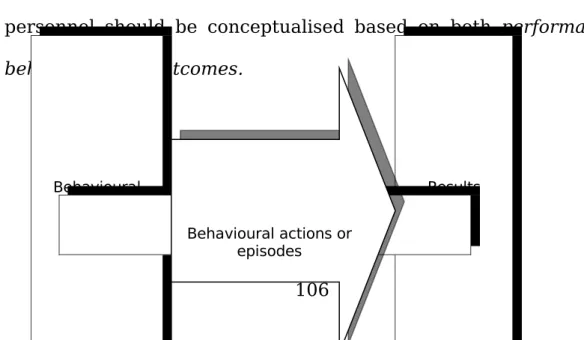
While there are many variables that affect the outcome of projects, the performance measures identified in the study reflected the factors within the control of PMs (i.e.those relating to improvement in their personal skills). Therefore, for the purposes of this thesis, the term “performance” is defined as the behavioural action (i.e. behavioural competencies) that are relevant to achieving the goals of project-based organisations (see for instance McCloy et al, 1994; Motowidlo et al, 1997: Brophy and kiely, 2002). The implication of this definition is that; performance, behaviour and results are not the same. While behaviour is the observable things that people do while at work, performance is seen as behaviour with an evaluative component (ibid). Alternatively, results are viewed as conditions of things that are changed by performance and consequently contribute to or detract from organizational accomplishments (Motowidlo et al, 1997: Abraham et al, 2001). Furtther details of the explanation of these terms are provided in chapter four, section 4.3.
1.7 MAIN CONTRIBUTION TO KNOWLEDGE
It is well recognised that the performance domain of PMs is often influenced by the characteristics of different project types, industry classifications and project application areas (Ogunlana et al, 2002; Dainty et al, 2003: Crawford, 2006). It is also recognised that, the matching of skills to specific project based sectors is
important for developing the capabilities and prospects of PMs within these sectors (see for example Egbu, 1999; Ogunlana, 2002: Lyon, 2003). A prime contribution to knowledge of this study is that, it has identified a set of competency profiles that can be mapped and customised onto improving the current and projected future roles of PMs in MHBPs, especially in the context of developing countries
Equally, the findings provide an empirically-based evidence for Ghanaian property developers seeking to recruit, retain and promote PMs so that they (i.e. the property developers) can make informed and objective decision towards engaging those with the appropriate skills and competencies. Refer to section 9.5 for a more detailed presentation on the contribution to knowledge.
1.8 DISSEMINATION OF THE FINDINGS
The literature review culminated in the write-up of a total of seven papers which were presented in a number of major international conferences. These papers have now been published in the appropriate conference proceedings (see Table 1.1). Papers 1 to 5 represent the results of a rigorous critique of some of the recent publications on performance measurement and how they fit into the context of this research. Paper 6 published in the proceedings of Building and Education Research (Bear 2006) conference focussed on the development of the underlying conceptual model
for this study. Similarly, paper 7 published in the proceedings of the Association of Construction Management reseachers (ARCOM 2006) annual conference focussed on the development of the research instrument which formed the basis for eliciting the relevant data for the study.
In addition, three journal papers were submitted for consideration in construction management journals. These papers address specific aspects of the empirical findings from the research. Paper 8 draws on the key findings of the research including the developed model and discusses the main contribution to knowledge of the research. Paper9 proposes a more robust system for understanding the behavioural competencies of PMs in general. Paper 10 draws on the dependent variables and uses factor analysis to explore the potential success criteria of MHBPs. It is worth mentioning that papers 8 and 10 have since been accepted for publication (Appendix, 21 and 22/see also references). Paper 11 emphasises the key findings from the perspective of the Government of Ghana (GoG) (sponsors of the research) towards helping to shape future policy direction in regard to curriculum development for PM education and training in Ghana.
Whilst it is contended that the dissemination of various aspect of the research has made some significant contribution towards propagating the knowledge emerging from the research, it is also
worth noting that the benefits have indeed been mutual. It is therefore important to acknowledge that, the reviewers comments to all the papers currently published and reviewed provided opportunities for the methodologies, meanings and interpretation of the research to be challenged which has eventually helped to enrich the focus and content.
Table 1.1: Publications arising out of the research Paper
No. Title of paper Conference/Journal Place/Location Date/Remarks 1 Meeting Housing Delivery Targets in Developing Countries: The Contribution of Project Managers in Ghana. Globalization and Construction in Developing Countries Asian Institute of Technology, Bangkok, Thailand 11-13th November, 2004 2 Construction Performance Measurement Systems: Emerging Research Needs 5th International Postgraduate Research Conference University of Salford, (UK) 17-19 th April, 2005 3 Project Managers’ Performance Measures: A Fresh Perspective Association of Construction Management Researchers (ARCOM) University College of London, SOAS, (UK) 7-9th September, 2005 4 Towards Project Managers Performance Measures: Some Methodological Challenges Built Environment and complexity (Becon) University of Liverpool (UK) 11-14 th September, 2005 5 A conceptual predictive model for evaluating the performance of project managers in Mass House Building Projects. Building Education and Research Conference (BEAR) Polytechnic University of Hong Kong 14.-17thApril, 2006 6 Redefining performance measurement systems: a multidimensional concept International Conference in Built Environment in the 21st Century (ICiBE, 2006) Universiti Teknologi Mara, Malaysia 13-15th June 2006
Paper
No. Title of paper Conference/Journal Place/Location Date/Remarks 7 Development of Research Instrument for Project Managers Performance Measure in Mass House Building Projects Association of Construction Management Researchers (ARCOM) University of Central England, Birmingham 4-7th September 2006 8 A Model for Predicting the Performance of Project Managers in Mass House Building Projects at the Construction Phase Journal of Construction Engineering and Management, American Society of Civil Engineers Tentatively accepted 9 Towards Redefining Performance Measures for Construction Project Managers: Should Contextual Performance Behaviours be Distinguished from Task Performance Behaviours? International Journal of Project Management UK In press 10 Critical Success Criteria for Mass House Building Projects in Developing Countries International Journal of Project Management UK In press 11 Towards Improving the Competency of Project Managers in Ghana: An Empirical Study Ghana Journal of Science and Technology Ghana Under review
1.9 ORGANISATION OF THE THESIS
The thesis comprises of nine chapters and these have been organised as follows:
Chapter one deals with the background to the research including justification, the problem statement, research questions, aims and objectives, research methodology and the associated contribution to knowledge emanating from the research.
Chapter two addresses generic issues relating to HRM with particular reference to PMs’ performance measures in project-based sectors of the construction industry. Subsequently, an appropriate definition of the term PM and performance measures is provided. Other relevant issues discussed here are methodologies for measuring the performance of the PM and what constitutes a robust methodology in regard to measuring and improving managerial competencies
In chapter three, a critical review of human resources development (HRD) programmes in developing countries including the development of project management knowledge in MHBPs is presented. Thereafter a critical review of the Ghanaian construction industry, in particular, the housing sector is also presented. The chapter then traces how management practices have evolved in MHBPs and the contribution that PMs have made towards engendering effective managerial performance. Against this background, the justification for the research in the Ghanaian context is re-emphasised.
Chapter four presents the development of the underlying conceptual model for the study. Issues discussed here include the various theoretical frameworks, namely: the organisational psychology theory of job performance: a project success framework; the development of a project success framework for MHBPs; framework for project lifecycle. Thereafter, a commentary on how these frameworks were combined to develop an appropriate conceptual model is provided.
Chapter five addresses the research methodology adopted. The research paradigm is described including the design of the research instrument and method for collecting the relevant data.
Chapter six addresses the preliminary analysis of the data collected. This includes descriptives analysis of demographic data and the use of appropriate statistical methods namely, one sample t-test and factor analysis on the dependent variables. Factor analysis was used to help reduce the dependent variables to a manageable size for the subsequent development of the model.
Chapter seven is devoted exclusively to the development of the substantive model including discussions of the findings and the potential recommended application. The application of multiple regression analysis, analysis of variance (ANOVA), multicollinearity test and residual analysis are reported here. An
in-depth discussion of the theoretical convergence and significance of the findings is also presented in this chapter.
Chapter eight describes the validation process and the methodology adopted in the validation procedure, namely external and internal validation. The validation processes are discussed in terms of the literary, conceptual and substantive domains of the research. Results of both the external and internal validation process lend reasonable support to the reliability and robustness of the predictive fit of the model and the literature search respectively.
Finally, in chapter nine, the fundamental objectives of the research are reviewed and highlighted. Conclusions drawn from the work are presented and recommendations are made.
1.9 SUMMARY
The background of the study including the problem statement, aim and objectives, scope and research methodology have been presented. The significance of the findings, in particular, aspects relating to the potential contribution to knowledge have been illuminated. The next chapter, (i.e. chapter two) introduces a critical review of performance measurement in the HRM genre, especially those relating to PMs’ performance measures.
Chapter 2: A CRITICAL REVIEW OF
PERFORMANCE MEASUREMENT IN THE HUMAN
RESOURCE MANAGEMENT GENRE
2.0 INTRODUCTION
Chapter one broadly introduced the research aim and objectives and presented an overview of the organization of the thesis. This chapter provides a critical review of the development of performance measures as reflected in the human resource management (HRM) research and especially in the context of the construction industry. A working definition of the term project manager (PM) is then argued in the context of this research. Thereafter, the methodologies for measuring the performance of PMs are discussed including a thorough critique of their potential application in construction. This is then followed by an in-depth discussion of the emerging importance of competency-based methodologies in focusing the attention of PMs on continuing performance improvement. The chapter concludes with an evaluation of contemporary-based competency frameworks towards identifying the most appropriate option for satisfying the objectives of this research.
2.1 PERFORMANCE MEASURES IN THE HUMAN RESOURCE MANAGEMENT CONTEXT
This section begins by introducing issues relating to the definitions and significance of performance measures in HRM practices and is divided into two sub-sections. Sub-section 2.1.1 provides a chronology of some of the key definitions of performance measures and then draws on these as a foundation towards establishing an appropriate working definition for this research. Thereafter, sub-section 2.1.2 reflects on the significance of performance measures in the management of human resources. This is followed by a discussion on the relevance of predictive models towards identifying the relevant performance measures (section 2.1.3) and then a justification towards the need for identfifying performance measures for MHBPs in developing countries (2.1.4).
2.1.1 Towards Defining Performance Measures
Various definitions of performance measures exist in the HRM field stemming from the different interpretations often given to the meaning of the term “performance” (see Yassamis et al, 2002). For instance, a long standing definition provided by Warren (1934) posited that performance measures could be defined as a standard for making qualitative comparisons or as the basis for making judgement (Austin and Vallinova, 1992). English and English (1958) also postulated four definitions thus: a basis for judgement;
a behavioural goal by which progress is judged; a measure of validity; a measure of predictability. Reber (1985) also defined performance measures as a standard against which judgement, evaluation or classification can be made. Scott (1917), Bechtoldt (1947), Weitz (1961) and Zammuto (1984) are among some of the long standing researchers who have also provided alternative definitions (see Austin and Vallinova, 1992).
Presently, contemporary researchers of HRM practices are still saddled with trying to identify what should be a concise definition (ibid). However, following, a comprehensive review of some of the key definitions from 1917 to “modern” times, Austin and Vallinova (1992) contended that performance measures can succinctly be defined as a measure (directly or indirectly) based on the elements of performance behaviours and outcomes. Austin and Vallinova (1992) further contended that the elements involved in performance measures should make it possible to make predictions about the performance of individuals for the benefit of organisational growth. Pierce (1994) and Liu and Walker (1998) are in agreement with this concept and contend that performance measures should consist of deliverable outputs supported by behavioural abilities.
In the construction industry, an appropriate definition of performance measures (i.e. in the HRM context) also remains contestable (Brown and Adams, 2000; Dainty et al, 2003; Ahadzie
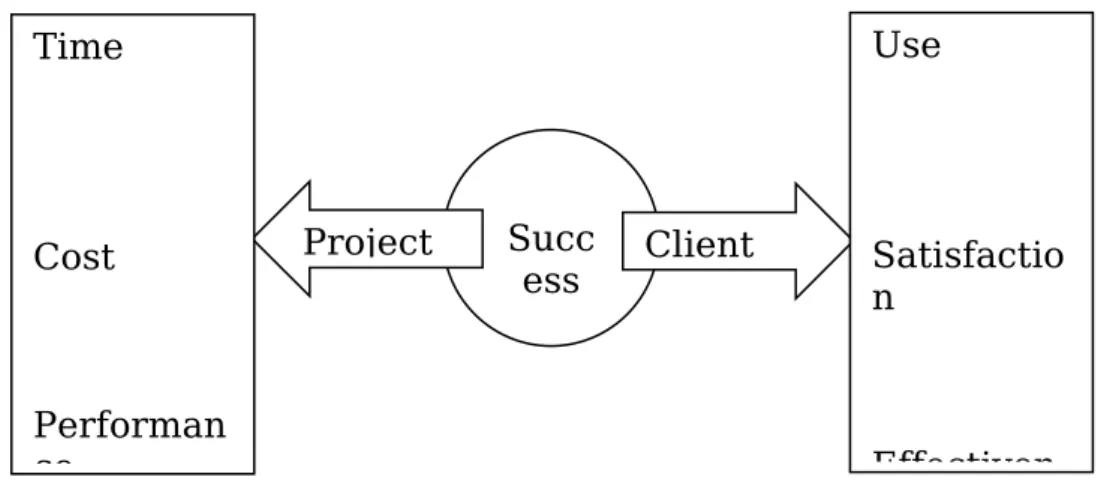
et al, 2005a). While traditionally, performance measures have been conceptualised based on the output-based measures of time, cost and quality (see for instance Russell et al, 1997; Brown and Adams, 2000), recently researchers have argued that a more appropriate conceptualisation should reflect behavioural competencies (see for example Dullaimi and Langord, 1999; Dainty et al, 2003; 2004). The proponents of this emerging concept (i.e. those supporting behavioural competencies) contend that performance measures founded on key behavioural attributes are more rigorous in the sense that, they offer a better opportunity for PMs to engage in continuous performance improvement. Furthermore, they (see in particular Dainty et al, 2003) argue that a definition based on behavioural measures is concurrent with the contemporary ideology in the HRM field, which is to engender employees’ professional development for best practice improvement (see also Dainty et al, 2004).
Accordingly, the established view amongst construction management researchers presently is that, PMs’ performance measures can implicitly be defined in one of two ways: that is, either to conceptualise based on output- based measures or alternatively, to conceptualise based on behavioural measures. Certainly, the two established concepts as identified above are valid for defining performance measures depending on which reference point one is arguing from (see Brown and Adams, 2000; Dainty et al, 2003), however to define each concept independently
as it currently appears in construction management practice does not reflect the mutual perspective overtly recommended by, for instance, Austin and Vallinova (1992). Thus, PMs’ performance measures conceptualised solely on one definition or another fails to capture the performance domain from a broader perspective and hence are not holistic (Liu and Walker, 1998; Cheng et al, 2003).
Again, while researchers concur that there is the need for performance measures of PMs to engender continuous performance improvement, no attempt has been made to explicitly link the definition to the various distinct phases that exist within project lifecycles (Ahadzie et al, 2005a). This is against the background of recent evidences to the effect that, different factors (e.g. those relating to management support and personality factors) significantly affects project success and might therefore be influencing the PMs skills and capabilities at the various phases of the project lifecycle (see Lim and Mohammed, 1999; Morris et al, 2000; Belout and Gavreau, 2004). This evidence has convinced some construction management researchers to recently argue for a much broader definition that reflects the performance of PMs throughout the whole life cycle of a project (Ahadzie et al, 2006a)
Subsequently, drawing from the generic definition provided by Austin and Vallinova (1992), it is contended that performance measures in construction human resource management (CHRM),
should appropriately and explicitly be redefined as measures based on performance behaviours and outcomes. Furthermore, the behavioural measures should be linked to the various phases of the project lifecycle. These would then be potentially useful for predicting and providing continuous feedback to PMs at various organizational levels and/or phases of the project lifecycle (Ahadzie et al, 2006a). By introducing the concepts of organisational levels and/or project phases and by reflecting the key tenets of contemporary HRM research, it is contended that this definition is useful in conceptualising the performance of PMs from a more holistic and/or multi-dimensional perspective (Ahadzie et al, 2005a; 2006a).
2.1.2 The Significance of Performance Measures in HRM Practices
As shown through the chronology of the various definitions provided above, the practical significance of performance measures in the HRM genre has been recognised since management research started in the early part of the 20th century.
Indeed, research and development of the relationship between managerial work and performance measures has been the subject of systematic HRM research since Henri Fayol published his work on industrial and general administration in 1916 (Borman and Brush, 1993). Since then, several published works have attempted to address the issue of the constructs of the managerial
acknowledged that the trend is set to continue (Conway, 2000; Garavan et al, 2000).
Performance measures represent a key process for managers who want to enhance or maintain organizational effectiveness as it is their actions that, by and large, affect the use of organizational resources (Latham et al, 1979; Abraham et al, 2001). Furthermore, performance measures are often the only potential means for evaluating the theories of work behaviour; the effective administration of human resources and the provision of feedback to management personnel (Austin and Villanova, 1992; Hayes et al, 2000: Woerkom et al, 2002; Gibb, 2003). Thus, performance measures are essential for providing organizations the basis for planning management succession and development at the workplace (Tett et al, 2002: Ford, 2004). To this effect, performance measures represent the most important human resource scheme insofar as they represent critical decisions integral to a variety of human resource actions and outcomes (see Cawley et al, 1998: Gibb, 2003; Scullen et al, 2003).
In recent times, there has been renewed interest in research into the development of performance measures as the only viable option for validating effective managerial performance (see e.g. Conway, 2000; Tett et al, 2000; Abraham, 2001; Scullen et al, 2003). This research agenda is being driven by the changing structure of organizations due to increasingly sophisticated
technological, economic and demographic trends (Gibb, 2003; Lepine, 2003). Advances in globalisation and communication technologies have provided impetus for increased technological transfer which has also made products more stakeholder/customer focussed. Thus, organisations are being forced to innovate to remain competitive by largely structuring work activities around teams rather than individuals (ibid). To enhance and maintain the competitive edge, successful organizations are therefore relying on their managers and other key human resource personnel acquiring a range of skills through the development of appropriate performance measures (Brophy and Kiely, 2002).
Similarly, in most project-based industries such as construction, it is becoming increasingly important for organizations to proactively manage the performance of key management personnel towards the desired growth and direction of competitive advantage (see Dainty et al, 2004; 2005). Equally, there is an increasing acknowledgement that performance measures can be used to underpin the management profiles and development functions of PMs (see Cheng et al, 2005). This acknowledgement of the centrality of performance measures towards the professional development of PMs reflects a concurrent focus within the HRM field on the integration of employee improvement mechanisms into organizational strategy (Dainty et al, 2003). In effect, it is now also well-recognised within construction management practice that performance measures are an established recourse to help refocus
PMs on what it takes to achieve managerial excellence in a modern competitive work environment.
2.1.3 Development of Predictive Models and the Implication for PMs Performance Measures in Developing Countries
Performance measures are also of significance potential value in HRM for prediction purposes (Austin and Vallinova, 1992: Gellatly and Irving, 2001). This is because managers in particular are constantly in search for information that can help them make prompt decisions concerning the present and future management of projects (ibid). Subsequently, in trying to identify the performance profile of managers, researchers now tend to focus attention on developing the predictive power associated with the measures involved (Gellatly and Irving, 2001). Indeed, Dainty et al (2005), for example, re-inforces the notion that, the development of predictive models is of potential significant value in the identification of robust performance measures. Mirable (1997) also noted that performance modelling is by far the most reasonable approach towards developing job profiles and in assessing an employee’s level of competency. Thus, insofar as predictive models can serve as a foundation for the selection and development of the related measures targeted to the future development of managers, their predictive power cannot be taken for granted (see for instance Tett et al, 2000: Gelatly and Irving, 2001). This largely
explains why researchers in the HRM domain have become increasingly committed towards identifying the relevant performance measures by focussing on appropriate predictive modelling across industries, sectors and various organizational levels (Tett et al, 2000: Conway, 2000; Dainty et al, 2005).
While the foregoing suggests that performance measures (including their associated predictive characteristics) are beneficial in supporting organizations in their HRM activities, their potential significance are yet to be reflected in the construction industry of many developing countries (see for instance Wachiru, 2000). Despite representing one of the largest sphere of influence, the construction industry in developing countries has historically adopted a passive approach towards satisfying the professional needs of the key management personnel employed in that domain (Ibid). Interestingly, this inertia is manifested against the backdrop that the problems affecting the managerial skills of project teams are often largely related to their competencies (see e.g. Imbert, 1990; Teeraegtgul and Charoenngham, 2004: Rwelamila, 2007). Granted that effective HRM is of strategic importance to all organisations, especially in respect to creating and sustaining competitive egde (see Huemann, et al, 2007), there is the need for the construction industry of developing countries to recognise the rewards to be gained in developing an understanding of the human resource
(HR) dynamics in project oriented companies and sectors within the industry.
2.1.4 An Overview of Project Management Practices in Developing Countries
The implementation of construction projects in developing countries presents some of the most challenging arenas within which to apply effective project management techniques (El-Saaba, 2001). In reality, these projects tend to be characterised by crisis, uncertainty and suspense which warrants a test of ability on the performance of PMs in coordinating and controlling a diverse selction of functional specialist (ibid). Therefore, apart from their technical knowledge and expertise, PMs are encouraged to demonstrate a whole range of behavioural skills that can help engender effective multiorganizational teamwork and communication towards achieving successful project outcome (Faniran et al, 2000; El-Saaba, 2001). The identification, assessment and maintenance of behavioural competencies could therefore be fundamental towards the optimization of the performance of contemporary PMs in developing countries (Trejo et al, 2002).
Indeed, project management as a profession and area of research continues to expand and develop in many developing countries (see for instance Kartam et al, 2000). There is also a growing
awareness that effective project management practices provide a potentially rigorous concept towards improving project performance (see for example Struckenbruck and Zomorrodian, 1997; Kuruoglu and Ergen, 2000; Abassi and Al-Mharmah, 2000). However, while project management competence (i.e. measusing success in terms of, for example, the iron triangle) is fundamental to effective project performance, it should also be recognised that it is PMs who deliver projects and not processes and systems (Cooke-Davies, 2002). Thus, the effective performance of the PM is a critical factor towards understanding and improving the related managerial practices required (Goodwin, 1993). However, granted that project management practices differ across areas, industries and sectors (Crawford, 2006), any attempt towards understanding the PMs’ performance domain has to be undertaken in tandem with the intricate and complex social, political and cultuaral interactions prevailing (Abassi & Al-Mharmah, 2000; Faniran et al, 2000; Kartam et al, 2000). Thus, while project management competence should be supported, PMs’ performance measures would be significant to help identify, adapt and implement best practices towards responding effectively to the unique challenges prevailing in construction environment in developing countries. Furthermmore, PMs’ performance measures are capable of providing both a predictve and consultative system which has the potential for engendering the professional development of PMs. Thus, to this end, PMs’ performance measures in the construction industry of developing countries could provide basis for many
HRM functions, such as developing management expertise, maintaining management succession and retaining skills of key managerial performers (see for instance Rwelamila, 2007; Plessis, 2007)
2.1.5 Towards identifying Performance Measures for PMs in Mass House Building Projects in Developing Countries
Mass house building projects (MHBPs) represent the largest and most established project-based sectors in many developing countries by virtue of the contribution they make to construction GDP. It is therefore not surprising that the management of these projects often attracts the largest concentration of human resource personnel in the construction industry (see for instance Wells, 1999; Zawdie and Langford, 2000; Wells, 2007). Indeed, the diverse work activities involved also attract huge socio-economic interest across all boundaries of the social divide (see Keivani and Werna, 2001). To this end, effective project management has become one of the most demanding roles that PMs have to face towards achieving project success in these projects. However, the relatively weak technological, socio-economic and organizational set ups in many developing countries poses unique and fundamental challenges for aspiring and experienced PMs (see Ofori, 1989; Keivani and Werna, 2001; Abbasi et al, 2000; Faniran et al, 2000).
Paradoxically, PMs engaged in the management of these projects also lack the benefit of any systematic criteria which can help them achieve excellence in the relatively unique and difficult environment that they operate. Identification of appropriate performance measures could therefore initiate an important step in the development of improved HRM approaches in the sector towards helping to address effective project management practices on future housing supply. While the possibility exists for the potential rewards to be realised, there is the need for the conceptual and methodological taxonomies to be earnestly developed in pursuit of appropriate evaluative criteria (Ahadzie et al, 2005b). This research is therefore founded on the contention that if the significance of performance measures is to be relevant in the construction industry in developing countries, then the underlying criteria that would help PMs reflect positively on their personal development in MHBPs needs to be identified. Thus, this research views the emphasis on MHBPs as a potentially significant foundation for initiating and contributing towards HRM performance improvement research agenda for the construction industry in developing countries (Ahadzie et al, 2004).
Following from the foregoing, it was therefore considered imperative to have a deeper understanding of existing performance measurement frameworks in the HRM genre so that an appropriate theoretical perspective can be adopted for
achieving the objectives of this research. A review of such frameworks is therefore further provided. However as a priori, the need to establish a definition of the PM in the context of this research is first addressed in the following section.
2.2 TOWARDS DEVELOPING A DEFINITION OF THE PROJECT MANAGER
While the centrality of the critical role of PMs is widely recognised in the construction industry, it is interesting to note that the interpretation of the title itself is often far from agreement (see for instance Brinberg, 1999). In some instances the term has been used to describe persons/entities that monitor, oversee and/or provide broad supervision on projects (Lock, 1987). Some researchers have also attempted to provide an alternative understanding by distinguishing the roles of the PM from that of say a project coordinator. However, the same researchers have acknowledged that the distinction can be very thin depending on the roles assigned and prevailing (see for instance Odusami et al, 2003). More recently, Jha (2006a; 2006b) also attempted to provide some further insight and reported that generally the term PM, project coordinator, construction manager, project administrator and project controller are often used interchangeably.
While this debate may continue for some time, one critical issue that cannot be overlooked is the suggestion that the title should be used for one who exercises total authority and also accepts full responsibility for the management of projects (Lock, 1987). Equally, Walker (2002) contends that it is important to focus on what the PM does rather than what should be the precise definition or title, as this holds the key to achieving project objectives. Walker (Ibid) further argues that if there should be any definition at all, such a definition should uphold the principles of project management, which is to consider the interests of the client as a priority. However, given that stakeholder interest is gradually replacing the traditional client focus, PMs are faced with not only the traditional single client but also “multiple clients” whose diverse interests also have to be satisfied (see Newcombe, 2003).
The appropriate professional background of the PM also remains a debatable subject. According to the CIOB (2002), the PM could come from any professional background but would also need to have the requisite skills and competence to manage all aspects of projects from conception to completion. Ogunlana et al (2002) have also noted that while the PM could come from any background, generally the consensus is the need to possess some degree of technical skills relating to the project at hand. Alternatively, Odusami et al (2003) contends that any construction
related professional could be a PM provided a good overall knowledge and experience of the industry is demonstrated.
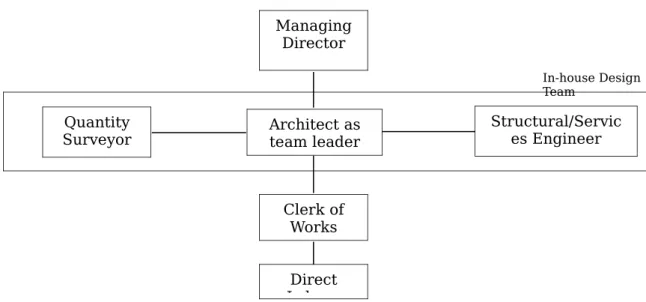
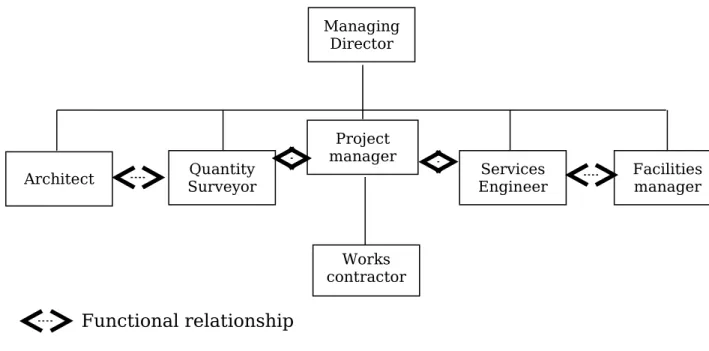
Presently, what is apparent is that whatever their professional background and the roles assigned, PMs could be part of an in- house team, a consultant or contracting organization (see Figure 2.1). Furthermore, whatever the background, the PM will be expected to work with people from varied professions. Thus, the human factor including the associated managerial competencies is crucial and decisive if the PM is to deal effectively with the numerous competing interests involved (EL-Saaba, 2001; Cooke-Davies, 2002).
Generally, MHBPs differ from many of the one-off projects often encountered in the construction industry in many ways (see chapter three, section 3.3 for details). For instance, unlike the traditional one-off projects, MHBPs are ofen speculative in nature. “Speculative” is used in the sense that the acquisition of land, design of house-units and construction are made without reference to any specific customer and/or client in mind (see for instance Roy and Cochrane, 1999). Subsequently, unlike many one-off projects, the responsibility for the management of the design and construction of these projects often lie with a single organisation – the property developer or homebuilder (see for instance Masterman, 1992).
Indeed in Ghana, the practice in the house building industry is for the PM to be appointed at an early stage to provide key management decisions throughout the project lifecycle (i.e. to provide some advice on the decision to build, help acquire the land including associated feasibility studies, identify appropriate procurement routes, supervise and manage physical construction till completion and provide the necessary advice on facilities management) (Ahadzie et al, 2004). As such, in the context of this research, the PM is defined as the individual that has the authority and responsibility for the management of MHBPs from inception to completion and who works in the interest of the key stakeholder (herein identified as the property developer). An appropriate organisational structure reflecting the PMs’ role in MHBPs in Ghana is presented later in chapter three (see Figure 3.7).
Key: Client Project manager: Client in-house, consultant or Design Team: Architects Engineers Technology Contractor Subcontract Subcontract Consultants: Quantity surveyors Planning supervisors Development surveyors Town planning Legal Financial/leasing Design Audit Health, safety and environmental protection Facilities management Highways/traffic planning Construction manager
Project direction & supervision Functional liaison & interrelated working