Brundell, Patrick Robert (2013) Deception and
communication media. PhD thesis, University of
Nottingham.
Access from the University of Nottingham repository: http://eprints.nottingham.ac.uk/27962/1/604892.pdf
Copyright and reuse:
The Nottingham ePrints service makes this work by researchers of the University of Nottingham available open access under the following conditions.
· Copyright and all moral rights to the version of the paper presented here belong to
the individual author(s) and/or other copyright owners.
· To the extent reasonable and practicable the material made available in Nottingham
ePrints has been checked for eligibility before being made available.
· Copies of full items can be used for personal research or study, educational, or
not-for-profit purposes without prior permission or charge provided that the authors, title and full bibliographic details are credited, a hyperlink and/or URL is given for the original metadata page and the content is not changed in any way.
· Quotations or similar reproductions must be sufficiently acknowledged.
Please see our full end user licence at:
http://eprints.nottingham.ac.uk/end_user_agreement.pdf A note on versions:
The version presented here may differ from the published version or from the version of record. If you wish to cite this item you are advised to consult the publisher’s version. Please see the repository url above for details on accessing the published version and note that access may require a subscription.
Deception and Communication Media
Patrick Robert Brundell, BSc (Hons), Dip Psych
Thesis submitted to the University of Nottingham
for the degree of Doctor of Philosophy
Abstract
Much research investigating deception and its detection has focused upon face-to-face communication, but over recent years the variety and extent of new communication media has changed the contexts in which deception might take place. Although work has attempted to characterise communication media, a much smaller body of research exists which has investigated the frequency with which people lie with different media and the detection of deceit under different communication media conditions. Through questionnaires and experimental studies, this work investigated the perceptions that both deceivers (senders) and those attempting to identify lies (receivers) have about communication media and how this relates to their observed behaviour. Results from questionnaire studies suggested that both the characteristics of deception and media influence people's perceived discomfort and believability when lying and the media choices they might make if they are planning to deceive. Some important factors ap-peared to be the seriousness of the deception, who senders are lying to, and the general frequency with which they use particular means to communicate. Communication me-dia were judged to be similar and dissimilar to each other on a range of characteristics which may impact their appropriateness for deception and lie detection. There was evidence that media used at low frequency in daily life may be more likely to be chosen for deception. In laboratory studies, senders were found to lie more frequently using audio-only media compared to audio-video. There was evidence from experimental studies that detection of deceit was more successful when communication was audio-only compared to audio-video. There was little consistent evidence that judgement bi-ases varied between media conditions, but a truth bias was identified in experimental studies. No evidence was identified that interactivity between senders and receivers significantly influenced response biases or lie detection accuracy. A small corpus of messages recorded under audio-video and audio-only conditions were selected for their detectability or believability from two senders, and presented in modified for-mats to receivers. Stimuli had video removed or introduced, and were presented as audio-only, audio-video, text-only and video-only. The results suggested that detect-ability of audio-video and audio-only stimuli was dependent upon the condition stimuli were recorded under rather than presented. When messages were only seen and not heard or read, accuracy of lie detection was compromised. There was evidence that judging transcriptions could allow successful detection, but the accuracy of lie detec-tion was typically lower than demonstrated in richer media condidetec-tions. These findings
may imply that a combination of information channels and/or paraverbal information is important for accurate classification of honesty and lies. Limitations of the studies and directions for further research were discussed.
Acknowledgements
I would like to thank my supervisors Claire O'Malley and David Clarke for their guid-ance, encouragement and unflinching patience in the completion of this thesis.
I give special thanks to my life partner Pearl and daughter Amelia for giving me the ex-tra help and motivation to complete this work, especially in the latter stages. You might even see me now!
Acknowledgments wouldn't be complete without saying however appreciative I am of my friends and work colleagues: Adrian Hazzard, Pat Healey, DughaU McCormick, Giulia Gelmini, Pete Lonsdale, Paul Tennent and Nick Payne. Special thanks to Gary Jones and Shirley Grimshaw for their friendship and statistics advice! Much love to my parents and siblings, and many thanks to Julia and Laura for proof reading.
Contents
Abstract ... ii
Acknowledgements ... iv
1. Introduction ... 11
2. Review of the literature ... 16
2.1.1 Motivations for lying and the characteristics of lies ... 17
2.1.2 Frequency of lies ... 18
2.2 Theories of Deception ... 18
2.2.1 The behaviour of deceivers - cues to deception ... 24
2.2.2 Perceived cues to deception ... 25
2.2.3 Perceptions and biases of receivers ... 28
2.2.4 Detection of deception ... 32
2.3 Communication Media and Their Characteristics ... 35
2.4 Media Choice ... 37
2.5 Media Choice and Detection ... 42
3. Current Approach and Methodology - The Processes of Deceptive and Truthful Communication ... 46
3.1 The Perceptions and Beliefs of Senders about Deception and Communication Media 48 3.2 The Behaviour of Senders When Faced With the Opportunity to Deceive ... 51
3.3 Receiver Perceptions of Deception and Media ... 51
3.4 Receiver Behaviour - Discrimination of Honesty and Deception ... 53
3.4.1 Media differences in detecting deception ... 54
3.5 Thesis Structure ... t ••••••••••••••••••••••••••••••••••••••••• '.111 • • 11 • • • • • • • • • • • • • • • • • • • • • • • • • • • , ' • • • • • 11 • • • • • • , • • • • • • • • 1 • • • • • • • • • • • 56 4. Sender Perceptions of Discomfort and Detectability: Questionnaire Study 1.. ... 57
4.1 Introduction ... 111 • • • 1111 • • 11 • • • • • 111 • • • • • • 1' • • • • • • • • • • • 11 . . . , • • • • • • • • • 57
4.2 Method ... I I • • • • • • • • • • • • • • I • • • • • • • • • • • • • • • • • • • • • • • I I I . . . , • • • • • • • • • • • • • , • • • • • • • • , 62
4.2.1 Participants ... 62
4.2.2 Materials ... 63
4.2.3 Procedure ... 65
4.3 Results of Media Questionnaire Study 1 ... 66
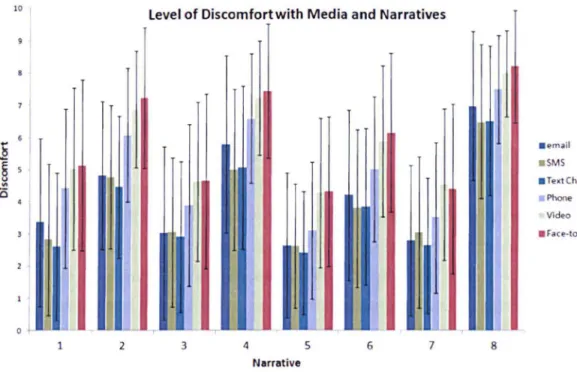
4.3.1 Media differences in perceptions of discomfort telling lies ... 66
4.3.2 Media differences in perceptions of believability when telling lies ... 69
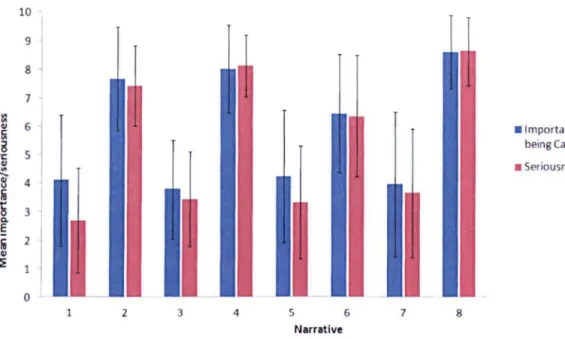
4.3.3 Differences between narratives in their seriousness and the importance not to be discovered lying ... 72
4.3.4 Interaction of narrative and media perceptions ... 74
4.4 Discussion ... 80
4.5 Conclusions ... 82
5.
Investigating Media Characteristics and the Likelihood of Choosing a Media Type to Deceive: Questionnaire Study 2 ... 845.1 Introduction ... 84
5.2 Method ... , ... , ... 11 • • • • • • • • • • • • • • • • • • • • • • • • • • • • • • • • • • • • • • • • • 89 5.2.1 Participants ... 89
5.2.2 Materials and procedure ... 89
Part 1: ... 11 • • • • • • • • • • • • • • • • • • • • • " • • • • • • • • • • • • • • • • • • • , • • • • • • • • • • • • • • • • • • • • • • • • • • • • • • , • • • 89 Part 2: ... 89
Part 3: ... 91
5.3 Results from Questionnaire Study 2 ... 91
5.3.1 General frequency of media use ... 92
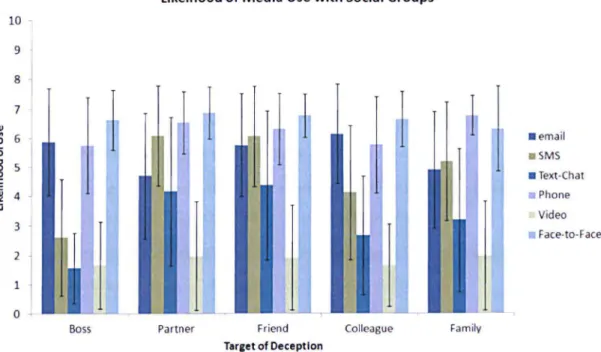
5.3.2 Likelihood of media use with different targets ... 93
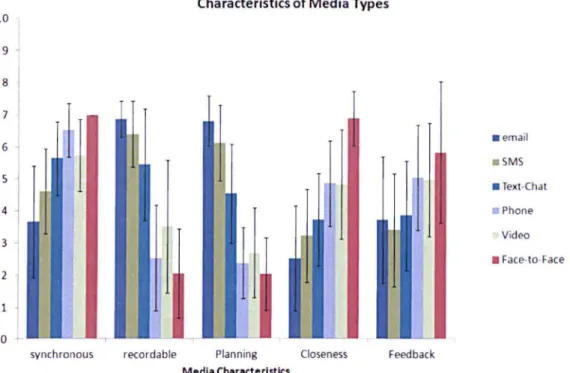
5.3.3 The Characteristics of communication media ... 95
5.3.4 How comfortable would people feel telling the lies and which media would they prefer to use? ... 104
5.3.5 Comments by participants ... 119
5.4 Discussion .111, • • • • • • • • , . , 1 , • • • • • • • • • • • • • • • • • • • • 1 • • • • • • • • • • • • • • • • • • • • • • • • • • 1 • • • ,1 • • • • • • 1 • • • • 11 • • • • • 1 • • • 11, • • • • • • • • • • • • • • • • • • • • • • • • • • • • • • • • • 121 5.5 Conclusions ... 125
6. Deception and Detection in a Laboratory Context: Effects of Media Condition on
the Propensity to Deceive and the Likelihood of Detection. Experimental Study 1 ... 127
6.1 Introduction ... 127
6.2 Method ... 136
6.2.1 Participants ... 136
6.2.2 Materials ... 136
6.2.3 Design and procedure ... 137
6.2.4 Technical set-up ... 139
6.3 Results ... 141
6.3.1 Sender behaviour: The frequency and likelihood of deception: ... 141
6.3.2 Analyses of individual questions ... 142
6.3.3 Sender confidence in believability of answers ... 144
6.3.4 Proportion of lies that senders expected would be detected ... 145
6.3.5 Confidence of senders that their truths would be believed ... 146
6.3.6 Comparison of senders' confidence of believability in lies and honest answers 148 6.3.7 Receiver Perceptions ... 148
6.3.8 Receiver Behaviour ... 149
6.4 Using Signal Detection Theory for the Analysis of Results ... 156
6.4.1 Calculation of Signal Detection Theory measures ... 158
6.5 Receiver Response Bias ... 159
6.6 Discrimination Accuracy of Receivers' Judgements ... 160
6.7 Interaction with the Ratio of Lies/Truths Told by Senders ... 162
6.7.1 Perception of receivers after judgements have been made ... 164
6.8 Frequency of Lie/Truth Judgements and Classification Accuracy ... 165
6.8.1 Frequencies of answers classified as truthful and deceptive by question number 165 6.8.2 Receiver discrimination accuracy ... 166
6.9 Discussion ... 166
6.10 Cbnclusions ... 171
7. The Effects of Fixed Deception Frequency on Receiver Perception and Behaviour: Biases and Detection Accuracy in a Second Experimental Study ... 173
7.1 Introduction ... 173
7.2 Method ... 178
7.2.1 Participants ... 178
7.2.2 Materials ... 178
7.2.3 Design and procedure ... 180
7.2.4 Technical set-up ... 181
7.3 Results ... 181
7.3.1 Sender perceptions ... 181
7.4 Response Bias of Receivers to Senders' Lies ... 189
7.5 Receiver behaviour ... 191
7.5.1 Hit rate for lies ... 191
7.5.2 Hit rate for truths ... 191
7.5.3 Discrimination accuracy ... 192
7.6 Perception of Receivers After Judgements Have Been Made ... 196
7.6.1 Comparison of receivers' confidence measures with Experimental Study 1 197 7.7 Discussion ... 199
7.8 Conclusions ... 202
7.8.1 Next steps ... 203
8. Investigating the effects of interaction: Experimental Study 3 ... 206
8.1 Introduction ... 206
8.2 Method and procedure ... 209
8.3 Results ... 211
8.3.1 Comparing the subset of interactive data with the data set from Experimental Study 1 ... 212
8.3.3 Comparing detection accuracy in non-interactive media conditions ... 214
8.3.4 Comparing interactive and non-interactive conditions ... 215
8.4 Discussion ... 215
8.5 Conclusions ... 217
9. Detection of Deception with Recordings of Single Senders: Experimental Studies 4 and 5 ... 218
9.1 Introduction ... 218
9.2 Method ... 221
9.2.1 Participants ... 221
9.2.2 Materials ... 221
9.3 Results from Experimental Studies 4 and 5 ... 227
9.3.1 Receiver perceptions (response bias) ... 227
9.3.2 Receiver behaviour (detection accuracy) ... 229
9.4 Discussion ... 236
9.5 Conclusions ... 239
10. The Effects of Adding and Removing Visual Information From Stimuli on Response Biases and Detection of Deception: Experimental Study 6 ... 240
10.1 Introduction ... 240
10.2 Method ... 243
10.2.1 Participants ... 243
10.2.2 Materials and procedure ... 243
10.3 Results ... 246
10.3.1 Results from Experimental Study 4 and 5 subset ofstimuli ... 246
10.3.2 Receiver perceptions: response bias ... 246
10.3.3 Receiver behaviour: accuracy of deception detection ... 247
10.4 Results from Experimental Study 6 ... 249
10.4.1 Receiver perceptions: response biases ... 249
10.4.2 Receiver behaviour: accuracy of deception detection ... 254
10.5 Discussion ... 258 ix
10.6 Conclusions ... 259
11. Judging Sender Veracity from Visual and Textual Cues: Experimental Study 7 261 11.1 Method ... 265
11.1.1 Participants ... 265
11.1.2 Materials and procedure ... 265
11.2 Results ... 266
11.2.1 Receiver perceptions: response bias ... 26 7 11.2.2 The behaviour of receivers: accuracy of deception detection ... 2 71 11.2.3 Detection accuracy for sender LS stimuli.. ... 271
11.2.4 Deception detection of sender AM stimuli ... 2 73 11.3 Discussion ... 276
11.4 Conclusions ... 279
12. General discussion ... 281
12.1 Introduction ... 281
12.2 Research Aims ... 281
12.3 Research Methodology and Main Findings ... 282
12.3.1 Sender perceptions - media characteristics, preferences and choice for deception ... 282
12.3.2 Receiver perceptions and response biases ... 294
12.3.3 Receiver behaviour - classification success and lie detection ... 296
12.3.4 Conclusions ... 313
12.3.5 Limitations of the research ... 316
12.3.6 Further research ... 319
12.3.7 Concluding remarks ... 320
13. References ... 11 • • • • • • • • • • • • '11 • • • 11 • • • • • • • • • • • • • • • • • • • • • • • • • • 11" • • • • • • • • • • • • • • • • • • • • • • • • • • • • • • • • • • • • • • • • • • • • • • • • • • • • • • • • • • • • • • • • • • • • • 323 14. Appendix - Questions asked in Experimental Studies 1 and 2 ... 337
1. Introduction
Before reporting the motivation for, design and findings from the questionnaire and experimental work conducted, we first briefly introduce the key areas which have driven research in deception and in particular, deception and communication media. We then review the previous research themes which have emerged in the literature in more detail. These include the frequency of deception, perceptions and media choices which are made by people who may be deceiving. We also review work investigating the perceptions and behaviour of those attempting to detect deception and the accu-racy of detection. We review work which has focused upon communication media and the interaction with deception research. Chapter 3 introduces the approach and meth-odology which will be employed for the research studies reported here and raises some general questions which we attempt to provide evidence to help answer. We summarise some key findings from previous literature which drive the research ques-tions and the analyses we conduct. Introductory secques-tions conclude by outlining the structure of this thesis.
Research investigating the frequency of deception has found it to be fairly common-place. Diary studies have revealed that up to a third of interactions may be deceptive (e.g. DePaulo, Kashy, Kirkendol, Wyer & Epstein, 1996a; Hancock, Thorn-Santelli &
Richie, 2004). Deception is significant, not only because it may be so prevalent, but also because of the negative consequences that may result Some authors have argued, however, that it is an important "social lubricant" (Vrij, 2008). Deception conceivably pre-dates language, but for the purposes of this work, only deception using written or spoken language will be considered. Hereafter, people attempting to engage in decep-tion will generally be termed senders but may also be referred to as deceivers or liars. The targets of senders' deception, will general1y be termed receivers, but may also be termed observers or detectors, depending on the context
Many definitions of deception have been considered, but in this work it will be re-garded as "a deliberate communicative act in which the intention is for one per-son (the sender) to bring about a false belief or conclusion in another perper-son (the receiver) who does not know that they are being deceived."
Although many of our interactions are face-to-face, over recent decades, a greater vari-ety of communication media have become available, they have become more common in our daily interactions and they have become increasingly embedded in both civil
so-ciety and the state. This trend appears set to continue. Many of us communicate daily with friends, family and work colleagues via email, telephones, text-chat services, vid-eoconferencing and mobile phone texts (SMS). Vidvid-eoconferencing services are becom-ing important means to facilitate collaborative work and negotiate and build interper-sonallinks across continents. Recently, video and audio conferencing has brought both young offenders and adults into courtrooms as defendants and witnesses, and allowed prisoners to argue their case for parole without leaving prison.
Communications linking social, political and sometimes terrorist organisations rou-tinely cross the globe through a myriad of channels. Given the potential consequences of not identifying deception and disbelieving those telling the truth, it is important to investigate whether there is evidence that the means by which people communicate influences the likelihood and characteristics of deception and its accurate detection. The influence of communication media on deception might be upon the:
• Perceptions of senders about their deceptive behaviour and of communica-tion media
• Behaviour of senders when faced with the opportunity to lie or tell the truth • Perceptions by receivers about deceptive behaviour, detection and
communication media, and the tendency to judge others as honest or deceptive • Behaviour of receivers, the ability of receivers to discriminating truth from
deception
Various theories of deception have emerged from research over the last few decades. These theories can be categorised into those that focus upon the sender, what they do and why they do it, and those that focus upon the receiver and how they may success-fully discriminate deception from honesty. In terms of the sender, research has investi-gated the frequency of deception, the varying motivations for deception, the targets of deception and the behaviours that deceivers exhibit (both verbal and non-verbal). Di-ary studies have suggested that people tell lies quite frequently, but that the majority of lies are of little consequence to the deceiver (DePaulo, et al., 1996a). It has been sug-gested that lies are qualitatively different if classified as self-serving or other-oriented lies (Vrij, 2000) or high and low stakes lies (Mann, Vrij & Bull, 2002). These
conceptu-alisations have driven the research that has been looking for systematic differences in behaviour between deceptive and truthful senders.
A number of reviews (Vrij, 2000, 2008; DePaulo, et aI, 2003; Sporer & Schwandt, 2007) have analysed the myriad of studies of cues to deception. Vrij (2000) stated that "re-search has shown that deception itself is not related to a unique pattern of specific be-haviours" (p. 241), but suggested that liars may experience greater negative emotion, stress and a higher cognitive load than truth tellers. In later work, Vrij (2008) also writes that "no theoretical perspective predicts that diagnostic nonverbal cues to de-ception, akin to Pinocchio's growing nose, exist" (p. 37).
In a comprehensive review of the literature regarding the cues to deception, DePaulo et al. (2003) found a number of non-verbal behaviours that were significantly different between liars and truth tellers. There were some non-verbal behaviours identified that reliably indicated dishonesty, such as pitch and vocal tension, however there were few visual cues.
These cues to deception are of most importance for receivers and their attempts at de-tection. In terms of receivers, the focus has been upon how people perceive deceptive behaviour, how good people are at distinguishing truths from Jies and what needs to be done in order to detect deception more successfully. Research has consistently indi-cated that people believe there to be signals that reveal deception. This work has shown that lay people are not alone in making this assumption, members of the secu-rity services and judiciary tend to assume that there are a number of behaviours that will change when people are engaged in deception, and that these tend to be non-verbal behaviours (e.g. Taylor & Hick, 2007). There is little evidence to support this supposition. However, there is evidence that under some circumstances detection of deception can be better than chance performance would suggest (for reviews see e.g. Bond & DePaulo, 2006; Vrij, 2008). For example, Vrij, Edward, Roberts & Bull (2000) reported a study where 85% of liars were correctly classified using nonverbal behav-iour alone. However, relatively few studies have compared lie detection accuracy under different communication media conditions.
In parallel, a number of theories of communication media and media choice have emerged over the last few decades which have implications for deception and detec-tion. One strand of research has investigated senders and their choice of communica-tion media with which to deceive. The theories are based on the idea that media vary in their characteristics and affordances, including, for instance, their capacity to transmit classes of behavioural cues. Media which are interactive and which have multiple in-formation carrying channels are said to be richer than those that are asynchronous, lacking feedback and with few informational channels (Daft & Lengel, 1986). Media richness theory (Daft & Lengel, 1986) predicts that deceivers would choose media that are richer and more interactive because deception is a complex task and deceivers are assisted by the opportunity to use cues to persuade and observe receivers' reactions. Some research has been reported which support the concept of media richness as a driver behind media choice for deception (e.g. Carlson & George, 2004). On the other hand, social distance theories as described by Hancock et al. (2004) suggest that send-ers would try to minimise the transmission of cues that might lead to their detection and would choose leaner media (e.g. text-chat or email) with which to deceive. Hancock et al. (2004) suggest that such uni-dimensional characterisations of media are inap-propriate and it is the interplay of a range of features that predict which media senders are likely to choose for deception. Diary studies have led to the suggestion that senders are most likely to deceive with the telephone, followed by face-to-face and text-chat and least with email (Hancocketal..2004).Inthemajorityofmediachoicestudies.it has been hard to distinguish when people choose media with which to attempt pre-planned deception, and when they choose to deceive while already using a communica-tion media.
Theories that people hold about the behaviour and motivations of liars influence the beliefs people have about detection. The beliefs people have about lie detection also interact with the assumptions and attitudes they have about communication media. These perceptions might also be expected to influence actual lie detection and interact with actual media characteristics. The telephone, for example, carries the majority of verbal cues that may reveal deception (DePaulo et al., 2003), but it may be possible that people also believe they will be less detectable when using a telephone and conse-quently not control their behaviour as carefully.
This work investigates the influence that communication media has on deception and detection through two main methodological strands. Firstly, questionnaire studies were reported which aimed to assess people's general use of communication media, perceptions of media characteristics and the likelihood they would use media for vari-ous examples of deception. These studies were intended to provide evidence with ternal, real-life validity and complement experimental studies. Laboratory-based ex-perimental studies examined the behaviour and perceptions of senders and of receiv-ers in paired interactions, telling the truth, deceiving and attempting to detect decep-tion with various communicadecep-tion media. These media types are: audio-video and au-dio-only conferencing. and face-to-face. These studies were conducted in order to pro-duce internally valid comparisons of some communication media and used restricted categories of media and deception. Further experimental studies attempt to unpack the features of the messages which might lead to biased judgements of honesty or decep-tion and the impact they had on people's ability to accurately classify senders' veracity. Some practical outcomes and suggestions for further work are discussed.
2. Review of the literature
Our social lives are built upon communication; one might argue that our social lives are communication. We communicate with and about other people and our environment; we communicate our feelings, opinions and desires.
Though many definitions of deception have been conceived, current research tends to use those similar to that proposed by Buller and Burgoon (Buller & Burgoon, 1996) "a message knowingly transmitted by a sender to foster a false belief or conclusion by the receiver" (p. 98). This definition is worth scrutinising as it has a number of important characteristics. Firstly, it suggests an acceptance of the information transmission model of communication. According to this conceptualization, communication consists of messages which are constructed and transmitted by senders through some 」 ッ ュ ュ オ ョ ゥ セ cation channel(s) to receivers. Secondly, in terms of Buller and Burgoon's (1996) 、 ・ ヲ ゥ セ
nition of deceptive communication, it is important that the message is deliberately and knowingly constructed by senders in order to create a false belief in receivers, which therefore excludes accidental misunderstandings by receivers, unintentionally ュ ゥ ウ セ leading messages and messages which are factually false, but the sender believes to be truthful. This conceptualisation of deliberate does not imply a deliberate intention to harm, but is intended to exclude unintentionally, and with no awareness, misleading other people.
However, an appropriate definition of deception also needs to exclude jokes and irony where the intention may be to foster a false belief in the receiver, but only for a socially defined period of time. The Buller and Burgoon definition also does not encompass de-ception by omission. Ekman (1988) defines dede-ception such "in a lie one person makes the choice to mislead another person. No prior notification is given about this intent" (p.163). This definition does not include an appreciation that deception is a communi-cative act and therefore for this thesis I will use a working definition of deception as "a
deliberate communicative act in which the intention is for one person (the sender) to bring about a false belief or conclusion in another person (the receiver) who does not know that they are being deceived."
It does not make any moral statement about the nature of the communication. Decep-tion might be argued to pre-date language, but for the purposes of this work, only de-ception using written or spoken language will be considered. Hereafter, people at-tempting to engage in deception will be termed senders and the targets of their decep-tion receivers.
The conceptualisation of communication as a process of exchanging information through channels of some kind reveals its origins in information theory. This supposi-tion may be contentious but it is a useful analytic tool in which to think about the role of communication medium. The typical setting of communication is face-to-face, but the range of communication media available has enormously expanded in variety and extent over the last few decades. Given the ubiquity of both deception and the variety of communication media in our everyday lives, it is important to ask whether there is evidence for an interaction between communication media and deception. This interac-tion is encapsulated in the research approach discussed in later secinterac-tions.
2.1.1 Motivations/or lying and the characteristics o/lies
The motivation to lie may be in order to protect oneself, to protect others or merely to amuse the sender, the so-called duper's delight (Ekman, 1988). According to the self-presentational theory of deception (DePaulo et al., 2003) the majority of lies are not planned long in advance. They arise from spontaneous conversation as a response to immediate demands of the interaction. They are of little consequence to the deceiver and they are told in order to avoid embarrassment, to flatter and to manage the im-preSSions receivers have of senders. Lies come in many shapes and forms, ranging in content, type and importance from perhaps inconsequential "white lies" told to protect other people's feelings or out of politeness such as "I like your new shirt" when in fact you do not, to serious, consequential lies to avoid being caught for crimes. They may be outright lies, exaggerations, subtle or merely avoidance of telling the truth. Some re-searchers have functionally separated lies on the basis of: high and low-stakes lies, self-serving and other-oriented lies (Vrij, Akehurst, Soukara & Bull, 2004) and the targets of lies (DePaulo et al., 1996a).
2.1.2 Frequency of lies
Lies are common. In diary studies, DePaulo et al. (1996a) found that a general commu-nity sample of people reportedly told on average a lie a day and they told a lie in 20 percent of their interactions. A college student sample reported telling two lies a day and lied in one out of three interactions. Hancock et al. (2004) found that a university student population reported lying approximately 1.6 times a day on average and a third of their interactions involved some deception. According to some research, de-ception also pervades negotiations (Haselhuhn, Schweitzer & Kray, 2008; Schweitzer, Brodt & Croson, 2002). Although deception appears common, some studies have indi-cated that people do not all lie to the same degree. Serota, Levine & Boster (2010) asked participants to record in a diary when they told lies, and found that on average people told a lie once or twice a day. However, they report a highly skewed distribu-tion; a few people told many lies, the majority told very few. People have also been shown to lie less to close relationship partners compared to casual acquaintances and strangers (Millar & Millar, 1995 cited in Millar & Millar, 1998; DePaulo & Kashy, 1998)
2.2 Theories of Deception
It has become common in deception literature to state that people are rarely able to distinguish lies from honesty more accurately than would be expected by chance. How-ever, in an extensive meta-analysis, Bond and DePaulo (2006) reported that although discrimination accuracy is often found to be poor, there is evidence to suggest that people are capable of detecting deception at a small, but significantly non-trivial level of accuracy. In practise this may mean that the majority of lies go undiscovered. The finding also suggests that under some circumstances detection accuracy may be im-pressively high. Some of the low findings of low detection accuracy may be accounted for by the methods used for investigation. Many studies of deception detection have perhaps suffered from ecological validity. Studies have been laboratory based, where senders have been telling lies with little motivation to escape detection. DePaulo et al. (2003) and Vrij (2008) report a number of studies which have indicated that more mo-tivated senders may be detected Significantly more often than unmomo-tivated senders (e.g. DePaulo & Kirkendol, 1989). Even for lies told in daily life, there is evidence that the majority of deceptions are generally unplanned, and people do not worry about being caught; they regarded the majority of lies as trivial (DePaulo et a1. 1996a). De-Paulo, Kirkendol, Tang and O'Brien (1988) reported that classification of lies and truths was more accurate when the stakes for participants were high compared to when low.
There is evidence that many receivers (including professional lie detectors, such as po-lice officers) pay attention to cues which are not diagnostic of deception (e.g. Akehurst, Kohnken, Vrij & Bull, 1996). Such receivers often achieve low detection accuracy, but when receivers pay attention to some verbal cues they may be much more accurate in their judgements (e.g. Mann et aI., 2002). Vrij (2008) reports that trained receivers can classify truths and lies with average accuracy of 58% compared to untrained receivers who achieve an average accuracy of approximately 53%. A number of studies have used actors as senders (e.g. Stiff et al., 1989) which raise questions about the ecological validity of any deception cues they might produce. The low accuracy often found for detecting lies may also be in part a result of judgement biases. Bond and DePaulo (2006) report in their meta-analysis, that receivers judged 56% of messages as honest and only 44% as deceptive. This truth bias has been identified in a number of studies (e.g. Levine, Park & McCornack, 1999) and may be in part responsible for low lie detec-tion accuracy. In summary, although the accuracy of detecting lies has often been re-ported as low, there are a range of contexts in which detection may be improved (Vrij, 2008). These contexts are typically where senders are motivated to escape detection and/or consequences of being caught are high and when receivers listen to what re-ceivers say rather than observe how they behave. There is also evidence that detection may also be improved when senders' statements are spontaneous rather than planned, and the behaviour of senders when being truthful is also observed (Vrij, 2008).
A number of researchers have developed theories to account for people's accuracy at detecting deception. Of course, these theories all assume that there are differences in the observable behaviour of deceivers compared to people being honest (including verbal behaviour). A number of aspects of these various theories can predict the influ-ence that communication media may have on deception detection.
• Theory of non-verbal leakage (Ekman & Friesen, 1969, cited in Vrij, 2008) • Motivational impairment effect (DePaulo et al., 1988)
• Self-presentational theory of deception (DePaulo et al., 2003) • Interpersonal deception theory (Buller & Burgoon, 1996) • Cognitive demands (e.g. Vrij, Granhag, Mann & Leal, 2011)
Ekman and Friesen's non-verbal leakage theory makes a number of claims about liars. They argue that when liars are highly motivated to succeed (certainly with high stakes lies), they experience affective feelings associated with arousal, anxiety, guilt, shame and excitement. Senders intending to deceive will attempt to control the nonverbal sig-nals they believe will alert receivers to their arousal. They also claim that the face is easiest to control as it provides high levels of feedback to the sender and as such will be least likely to display signals of arousal and is therefore not useful as a tool for detect-ing deception. Ekman and Friesen (1969) contend that the body and limbs, in contrast: provide little feedback to senders, are hard to control and are most likely to show any nonverbal signs of arousal. The limbs and body therefore are argued to be a more effec-tive channel through which receivers might detect deceit. They argue that the hands are moderately controllable and fall somewhere between the face and limbs in reveal-ing internal levels of arousal. However, the evidence to support these claims has been limited. Vrij (2000) reported evidence that body movement is actually reduced during deception. According to Warren, Schertler and Bull (2009), there is "substantial evi-dence that facial expression are of prime importance in the leakage of suppressed af-fective reactions" (p. 60). They cite evidence that felt emotions automatically trigger facial affective displays for the majority of universal emotions and that although mask-ing or inhibition of these displays is learnt from a young age, leakage of these expres-sions occurs through facial muscles or micro-expresexpres-sions (e.g. Ekman et aI., 1983; Ek-man 2001 cited in Warren et al., 2009). Warren et al. (2009) reported an average accu-racy of classifying lies and truthful responses to emotional stimuli of some 64%. They found a much reduced accuracy of classification for unemotional stimuli and argue that their results support the emotional leakage theory.
The motivational impairment effect (DePaulo et al., 1988) suggests that deceivers who are highly motivated will have: reduced control over leakage cues, increased behav-ioural rigidity and improved verbal performance. The theory predicts that this impair-ment as a result of elevated motivation will result in an increased likelihood of detec-tion (e.g. DePaulo et al., 1988; Mann et al., 2002). There is some evidence that more mo-tivated liars are more easily detected (DePaulo & Kirkendol, 1989). DePaulo, Lanier and Davis (1983) reported that motivated liars were less easily detected when vocal cues were available, but more successfully detected when nonverbal cues were avail-able. The theory is similar to the emotional leakage conceptualisation which suggests that liars experience negative emotion which results in various behaviours which may
reveal their deception. There is however, much evidence that the majority of lies in-duce little negative emotion in senders (DePaulo et aI, 1996a).
The central tenet of the self-presentational theory of deception (DePaulo et aI., 2003) is that lies are an everyday part of our social lives and are mostly told in order to assist in positive self-presentation. The majority of lies are unplanned, they are of little conse-quence to the sender and they are told in order to avoid embarrassment to either sender or receiver, to flatter and to manage the impressions receivers have of senders. Vrij (2008) argues that receivers are not always motivated to discover the lies they are told, the so called "ostrich effect" as discovery may not be in receivers' interests. This suggests that the majority of deceptions may also be of little consequence to receivers. DePaulo and Bond (2006) suggest that the self-presentational approach to deception is one side of a double standard that people hold about deception, and that this is the rea-son detection is so often unsuccessful. When engaged in deception, people regard their lies as socially necessary, inconsequential and unexceptional. DePaulo et al. (1996a) found that liars often feel little anxiety, gUilt or shame. However, when being deceived, receivers expect liars to be feeling high levels of anxiety, guilt and fear of exposure be-cause of a stereotypical view of deception as uncommon and immoral. Characterised as such, liars are expected to show all the signs of such negative affect, they fidget, avoid eye contact and leak the non-verbal signs of their deceit. There is much evidence to support the suggestion that this stereotypical view of liars' behaviour holds for much of the popUlation (e.g. Akehurst et aI., 1996; Vrij, Edward & Bull, 2001). This theory at-tempts to explain why the majority of lies, which are trivial and do not induce guilt, will be hard to detect. Receivers are likely to be looking for the stereotypical signs of decep-tion, that is, negative affect. As senders are unlikely to be experiencing such emodecep-tion, these signs will rarely be displayed. However, the more uncommon serious, conse-quentiallies may be more likely to be accompanied by negative emotions and may be used for effective detection. Of course, these signals of negative emotion may also ac-company many other communicative contexts including situations inducing embar-rassment and innocent denials of gUilt.
Interpersonal deception theory (Buller & Burgoon, 1996) proposes that the dynamic interaction between senders and receivers is of crucial importance. A fundamental proposition is that the cognitions and behaviours of both senders and receivers will vary systematically with factors related to the interactivity of deceptive communica-21
tion contexts. According to the theory, senders strategically plan and construct their messages, attempt to suppress cues that may reveal their deception and watch for signs of suspicion. Receivers try to suppress any signs of suspicion. Communicating partners will behave differently depending on the degree of interactivity that the com-munication medium provided. The theory makes some quite specific predictions about how the communicating partners will behave under conditions of more and less con-text interactivity.
Buller and Burgoon (1996) claim that in more interactive contexts such as face-to-face, senders will a) behave more strategically i.e. more information, behaviour and image management; b) behave less non-strategically i.e. less arousal, lower performance, less positive affect and c) engage in more self-monitoring. In more interactive contexts re-ceivers will a) judge senders as more credible and b) achieve lower accuracy in detect-ing deception. The theory also makes a number of predictions regarddetect-ing the interaction for both partners. Specifically that a) the degree of communication interactivity will be positively related to expectations of honesty and b) senders will perceive suspicion when it is present.
Burgoon and her colleagues (Burgoon, Buller & Floyd, 2001) have attempted to unpack the factors which constitute interactivity and have identified;
• Contingency - that each person's discourse is dependent upon and responsive to the other's discourse
• Transformation - that interdependence and feedback result in a dynamic com-munication
• Participation - that the communication is between both parties
• Synchronicity - that the communication is in real-time and not delayed
Factors which may influence interactivity are also suggested to include; • Mediation - whether communication is mediated by technology
• Propinquity - whether participants are geographically co-located or not
• Modality and information richness - the range of informational channels and cues that participants have access to
• Retrievability - whether messages be retrieved and reviewed
Interpersonal deception theory has been criticised by DePaulo, Ansfield and Bell (1996b) and DePaulo et al. (2003) who have suggested that despite numerous theo-retical assumptions and considerable research effort, interpersonal deception theory fails to explain the mechanisms responsible for deceptive message production. They argue that it also fails to explain the cognitive processes involved in the interpretation by receivers of deceptive messages. They claim that interpersonal deception theory is a useful description of the processes which characterise deceptive interactions but no central explanatory mechanism is ever described. They also criticise interpersonal de-ception theory for confusing interpersonal and interactive processes. However, some findings which lend support for the predictions of interpersonal deception theory have been reported. Burgoon, et aI., (2001) presented evidence that if senders interacted with strangers, behavioural and perceptual mutuality were initially higher under dia-logue than monodia-logue, and the behavioural advantage was sustained over time. They argue that mutuality takes the form of a perceived connectedness which leads people to behave differently than if they had not interacted. Information and speech manage-ment (clarity, relevance, directness and fluency) were found to be better for truths than lies, but also for dialogue over monologue. Little evidence was identified that detection accuracy was influenced by interactivity and the study suffers from some methodologi-cal drawbacks. Participants did not have the same stimuli for
interactive/non-interactive conditions and each pair of interactants only assessed a single truthful and deceptive message. DePaulo et a1. (2003) reported that in interactive contexts, liars of-fered fewer details in their verbal statements than did truth-tellers. This finding may not support the predictions of interpersonal deception theory that deceivers will achieve greater involvement and fluency.
A considerable body of research has posited that deception is a more cognitively de-manding task than truth telling (e.g. AnolIi & Ciceri, 1997; Vrij, Akehurst & Morris, 1997; Zuckerman, DePaulo & Rosenthal, 1981). Vrij (2008) proposes that extra cogni-tive resources may be required for: the construction of lies, and remembering details to ensure coherence; they may tend to take the effort to monitor receivers' reactions more closely than when telling the truth; they may be preoccupied with role-playing and reminding themselves to act in a certain way; and liars have to suppress the truth while they are deceiving. Lying may not always be more difficult of course. When
ing for the reason for being late for an appointment, it may be easier to lie and say traf-fic was bad rather than explain the complex series of events that actually caused the delay.
If deceptive communications can be distinguished from honest messages, there must be differences between the behaviour that people display when deceiving, compared to when truthful, be that verbal or nonverbal behaviour. A significant body of work has attempted to find out what these cues to deception might be. A consequence of such work has also been to assess whether, if such cues exist, they may be used in applied settings to improve detection rates. These investigations have focused on non-verbal behaviours, conceivably driven in part by folk psychological theories of deception. If such cues to deception exist, their nature and modality will influence whether they have any predictive value to receivers when communicating with visual, textual, audi-tory or communication media which support a combination of modalities.
2.2.1 The behaviour of deceivers - cues to deception
As mentioned earlier, a number of recent reviews (Vrij, 2000; Vrij, 2008; DePaulo, et al., 2003; Sporer & Schwandt, 2007) have struggled to demonstrate that deception is re-lated to a unique pattern of specific behaviours. Some research has identified a range of non-verbal behaviours that were significantly different between liars and truth tellers (DePaulo, et a1., 2003). There were a number of non-verbal behaviours that were asso-ciated with dishonesty, and they tended to be those related to a self-presentational perspective on deception.
2.2.1.1 Gestural cues to deception
Limb movements, self manipulations (for instance, touching the face or grooming hair) and illustrators (hand movements which accompany and iHustrate speech) have been found to decrease with deception (Vrij, 1991, reported in Vrij, 2000). Gaze aversion, smiling and head movements are not systematically associated with deceptive behav-iour and eye contact is more likely to increase. DePaulo et al. (2003) reviewed more than 300 articles and examined the association of 158 different cues with deception. They found evidence for only two facial behaviours that increased during deceptive behaviour (eye contact and eye-blinks) from a list of 16 facial cues, and no body movements from a list of thirteen cues. They also identified a number of non-verbal behaviours that were significantly different between liars and truth tellers. Liars
dis-played fewer of the gestures used to illustrate and accompany speech. Using a measure termed non-verbal immediacy (which included an assessment of interpersonal prox-imity, leaning and facing the other person) they found that liars were less immediate, they were more distanced from their partner and were described as more impersonal. They also reported that when people were motivated to succeed, liars made signifi-cantly less eye contact than when telling the truth. The discrepancy in eye-contact find-ings between DePaulo et al. (2003) and other studies may illustrate the importance of moderators of cues to deception and the potential importance of context and the pit-falls of generalisation.
2.2.1.2 Verbal cues to deception
The majority of reliable cues to deceit have been found in the verbal content or deliv-ery of senders' speech (Porter & Brinke, 2010). They suggest that liars are more likely to repeat words, details and phrases, and they may appear more evasive, unclear and uncertain in their answers. When responses were not planned in advance, there was a longer latency between the question and answers given by liars, a finding previously reported by Walczyk, Roper, Seemann & Humphrey (2003). In terms of the verbal con-tent, deceivers show fewer first-person and more third-person references, vague de-scriptions and repeated details, and more terms which indicate negative affect. In terms of paralinguistic features, that is the non-word elements of speech such as pros-ody, intonation and pitch, DePaulo et al. (2003) found that liars were more vocally tense and tended to speak at a higher pitch. Liars also tend to show increases in speech disturbances and decreases in speech rate (Vrij & Heaven, 1999, cited in Taylor & Hick, 2007; Porter & Brinke, 2010).
2.2.2 Perceived cues to deception
Many studies have indicated that people believe liars are likely to display certain be-haviours (e.g. Zuckerman, DeFrank, Hall, Larrance & Rosenthal, 1979), that tend to be those they assume to be associated with nervousness and anxiety. These findings are consistent with the notion that deception arouses negative emotions in senders (Ekman, 1988). Akehurst et al. (1996) report that people believe liars are nervous and will therefore exhibit nervous behaviour. In their questionnaire study, participants rated 64 items of facial behaviour, body movements, speech characteristics and State-ment Validity Analysis criteria with regard to whether they believed them to increase or decrease in frequency during deception. Statement Validity Analysis is a technique
designed to assess the qualities of the content of a statement, such as descriptions of others' feelings, or logical consistency (Steller & Kohnken, 1989). The items were rated with reference to both their own and others' behaviours. The vast majority of behav-iours were thought by participants to increase in frequency or intensity for themselves and others. These included non-verbal behaviours such as smiling and limb and head movements. Some behaviours were expected to decrease, such as eye contact. Facial behaviours may be attended to more closely than bodily or verbal cues, however, there is little evidence that facial cues are diagnostic of deception (e.g. Hocking, Bauchner, Kaminski & Miller 1979 cited in Stiff, et at, 1989).
There are also verbal behaviours which people appear to believe are associated with deception. According to Bond and DePaulo (2006) it's commonly believed that deceiv-ers tell longer stories and that pauses in speech will be more frequent Burgoon et at (2008) argue that contrary to stereotypical views "deceptive messages may be briefer with sparser details; less clear and straightforward; and more indirect, depersonalized and irrelevant" (Burgoon, Blair & Strom, 2008, p. 577). Some evidence has been re-ported that there are differences in perceived cues depending on the seriousness of the deception. Taylor and Hick (2007) investigated the beliefs which people hold regarding the cues to deception. Participants associated more nervous behaviours with serious lies in comparison to when people tell trivial lies. Some behaviours were expected to occur less frequently when people tell trivial lies in comparison to when telling the truth.
Some research has suggested that it is a combination of behaviours which leads people to believe deception is taking place, particularly when some cues appear to be incon-gruent with others. Senders have been found to be judged as more likely to be deceiv-ing when speech and facial cues appear to contradict each other in a number of studies (Zuckerman, Driver & Koester, 1982b; Rotenberg, Simourd & Moore, 1989). Heinrich and Borkenau (1998) also found evidence that receivers' judgments of deception were related to perceived cross-modal discrepancies in impressions of senders' agreeable-ness (they measured other personality traits and found little relation between discrep-ancies and deception ratings).
A study by Gilovich, Savitsky and Medvec (1998) investigated the illusion of transpar-ency. This is the tendency for people to overestimate the extent to which others can discern their internal states. These states are felt to "leak out" and be more visible to observers than is actually the case. It is suggested by Gilovich et al. (1998) that this "leakage" only occurs when a person is experiencing an intense emotional state, such as when lying or feeling disgust. They reported a study in which participants consis-tently overestimated the likelihood that they would be discovered when required to deceive a panel of observers. In one study, they found that senders believed they would be discovered as a liar by 49% of the receivers when in fact only 26% were. The actual accuracy rate of lie detection was indistinguishable from chance. Savitsky (1997, re-ported in Gilovich, et al., 1998) found evidence that people overestimate how dearly their facial expressions communicate their emotional states. Gilovich et al. (1998) pro-posed that a precondition for the illusion of transparency is that the individual must believe that there is a route by which their internal state can leak out and be detected by others. A key pOint is that the beliefs which people hold regarding deception and communication channels may predict whether senders will experience the illusion of transparency. A prime example is deception, where people appear to commonly have theories about the non-verbal behaviours that unconsciously accompany their false-hoods.
There is a general expectation that deceptive communications are revealed by visual information even within the research community (for example, Lewis, 2009) and are consistent across culture and country (Bond & DePaulo, 2006). A large body of work has revealed that even trained and professional lie detectors including police and cus-toms officers, tend to judge deception on irrelevant cues, perform no better than lay people, use the same
cues
as lay people and do not change their views regardless of experience (e.g. Masip, Alonso, Garrido & Anton, 2005; Akehurst et a1., 1996; Meissner& Kassin, 2002; Vrij, 2004).
People may attribute deception to those that behave in a stereotypically deceptive manner; gaze aversion, speech disturbances and so forth. However, there have been inconsistent findings in the expectancies that people have of the cues to deception. For example, whereas Riggio and Friedman (1983) found that liars were perceived as smil-ing less, Stiff et a1. (1989) and others have found that increased smilsmil-ing was associated with perceptions of deception. Some have suggested that when receivers have reason
to question veracity, they infer deception from violations of nonverbal norms (Bond et aI., 1992). Deception judgements may not be tied to a set of behaviours, more that vio-lations of behavioural norms suggest deception. Bond and his colleagues found that receivers judged senders as more deceptive when nonverbal expectancy violations took place which were not stereotypical of liars (e.g. tilted head, thrusted jaw). They claim that deception judgements are "a judgemental tendency aroused by socially in-appropriate behaviour" (Bond et al., 1992).
When people are attempting to detect deception, they do not only pay attention and make judgements according to some objective assessment of sender behaviour, they also may have tendencies and biases towards judging people and their communications as true or false. These potential judgement biases (such as the bias toward judging senders as truthful, the truth bias reported by Buller and Burgoon, 1996) arise from many different sources, certainly in part from their perceptions of lies and deceivers. These perceptions will clearly impact on detection accuracy. At its most obvious level, if everything a sender says is disbelieved, then every lie will be detected, but nothing truthful will be correctly identified. If everything senders might say is believed, then all deceptions go undetected.
2.2.3 Perceptions and biases o/receivers
How do people make judgements of veracity? How do they integrate a vast amount of verbal and non-verbal information, past history, possible biases and heuristics?
Fiedler and Walka (2006) suggest that people lack the cognitive resources to make ac-curate use of non-verbal cues to make veracity judgements and so rely on heuristics. Cognitive heuristics are simple decision making rules that arise from conventional be-liefs and expectations (Kahneman, Slovic & Tversky, 1982).
The processing framework provided by Thagard (1989), and Miller and Read (1991) (discussed by Seiter, 1997) assumes that at any given time, there may be mUltiple in-terpretations of the same behaviours. Strongly activated concepts win out over weaker ones and we use strongly activated concepts to make attributions (Seiter, 1997). Seiter found that individuals attempted to detect deception by searching for verbal and non-verbal signs indicative of deceit. Seiter suggests that when people are motivated to de-tect deception, they pay more attention to the message and use a greater number of cues than when people are unmotivated and may just use apparent signs of deception.
People may make use of both heuristics and the processing framework discussed by Seiter depending on the degree of motivation that they have to detect deception.
According to Buller and Burgoon (1996), people often rely on top down processing e.g. schemata, stereotypes, or "deception scripts". Some research has focused on a bottom-up processing model, e.g. some verbal/nonverbal behaviours activate attributions of deceit and suspicion.
One of the suggested reasons for people's relatively poor ability to detect deception is the existence of judgement biases. These biases include:
•
truth biases•
lie biases/suspiciousness•
visual biases•
interactive biases•
investigator biases•
demeanour biasesThe truth bias is the tendency to assume that people are telling the truth independently of the actual veracity of communications (Levine, Feeley, McCornack, Hughes & Harms, 2005). Burgoon et a1. (2008) suggest that truth biases may arise from a tendency or expectation that communicators are truthful most of the time, a truthfulness heuristic can be derived from Grice's principle of cooperative discourse (Grice, 1989, cited in Burgoon, et aI., 2008). Why should such a truth bias exist? A functional explanation is reported by Millar and Millar (1997) which proposes that truth biases facilitate com-munication and help to maintain relationships. Kraut and Higgins (1984, cited in Millar & Millar, 1997) proposed that the "assumption of truthfulness in a conversational partner is a fundamental part of most conversations" (p. 2). Stiff, Kim & Ramesh (1992) have claimed that truth biases are simply decision-making heuristics, which allow ve-racity judgements to be made without scrutinizing each message carefully. They argue that honesty may be reasonably expected to occur more frequently than deception, and a simple heuristic is easy to apply, especially in complex situations.
Levine, Kim, Park and Hughes (2006) have presented evidence of a truth bias or truth-fulness heuristic. They found a significant bias towards judging messages as honest
when equal proportions of truthful and false statements were presented (66% of sages were judged as truthful). They argue that this truth bias is the reason why mes-sage veracity accounted for 24% of the variation in the accuracy of judgements when the frequency of lies in their study was varied between 0% and 100%.
A tendency to be suspicious and judge communications as deceptive may also exist in some circumstances. Lie biases or receivers' suspicion may lead to more frequent judgements of deception (Stiff et aI., 1992). According to Millar and Millar (1997), "sus-picion initiates more mindful processing and less reliance on heuristics" (p. 3). They claim that when cognitive demands are high, highly suspicious receivers may need to rely on heuristics and adopt a lie bias. Not surprisingly, they found that when receivers were more suspicious they made more judgements of deception and they were more accurate in identifying deception. However when they were less suspicious, receivers were more accurate in identifying truthful communication. The tendency towards sus-piciousness has been found in professional investigators. Meissner and Kassin (2002) suggest that "training and prior experience lead to a perceptual bias towards judg-ments of deceit" (p. 473). This suspiciousness leads to more judgejudg-ments of deception but not better overall accuracy i.e. because there are fewer correct judgements of truth-fulness. Meissner and Kassin (2002) reviewed a number of studies and found that trained investigators exhibited a bias towards judging senders as guilty of deceit, showed greater confidence in their judgements but were found to have accuracy no better than naive controls. Kassin, Meissner and Norwick (2005) found an investigator bias in police officers whose veracity judgements had more false alarms than non-trained controls. Some authors have suggested that suspicion, or a tendency to disbe-lieve senders might be more apparent in richer media conditions (Boyle & Ruppel, 2005). They argue that richer media may result in a greater leakage of cues which in-duce suspicion. This leakage may result in more equivocation and "mixed messages". In a study using the prisoner's dilemma task (Rapoport & Chammah, 1965) they assessed media richness and suspicion in three media conditions; face-to-face; telephone; and text-chat They found that media richness and suspicion were greater in the face-to-face and telephone conditions compared to the text-chat.
Biases towards visual information appear to influence judgements of veracity. Bur-goon, Blair and Strom (2005) suggest that there is a tendency to assign primacy to
vis-ual information over other forms of social information. They also cite evidence that fa-cial cues are attended to more closely than verbal or bodily cues. Stiff et al. (1989) re-ported a visual primacy effect, where visual cues had a greater impact on judgements of truthfulness than vocal cues. Stiff et al. (1989) suggest two explanations for this pri-macy effect: A distraction hypothesis - that visual cues distract people from the verbal cues which are more reliably diagnostic of deception, and a situational familiarity hy-pothesis - that in familiar communication contexts, verbal content is relied upon over both verbal and nonverbal information.
Interpersonal deception theory predicts that there will be an interactive bias. Accord-ing to Burgoon et al. (2008) "processAccord-ing deceptive messages should be less taxAccord-ing for observers than for participants, inasmuch as observers are freed from the complex multitasking that occupies conversational participants" (p. 574). Interpersonal decep-tion theory predicts that in more interactive contexts receivers will: a) judge senders as more credible, and b) achieve lower accuracy in detecting deception. Why should this be the case? According to interpersonal deception theory, interaction fosters mutuality, a sense of relational connectedness that leads people to behave differently to one an-other than if they were not interacting. This perceived connectedness leads to in-creased ratings of rapport and similarity. This inin-creased rapport can be observed as responsive, coordinated and synchronous communication, with gestural matching and smooth turn-taking. Also, in addition to elevated positive affect towards interactional partners, interpersonal deception theory claims that if receivers are suspicious of mes-sage veracity, this will be revealed to senders. Senders are then in the position to mod-ify their performances to achieve greater believability (Burgoon et aI., 2001). These predictions from interpersonal deception theory have been tested in a number of stud-ies with mixed support. Compared to passive interrogators, face-to-face interactants have been shown to evaluate each other with greater leniency and more positivity (Burgoon, Buller, Floyd & Grandpre, 1996 cited in Burgoon, et al., 2008).
Zuckerman et al. (1979) have suggested that some people appear to be consistently rated as truthful or dishonest regardless of the actual veracity of their answers. They termed this the demeanour bias. Burgoon et al. (2008) claim that it is the components of strategic communication, i.e. a combination of cues which in combination lead to the demeanour bias and that visual cues are particularly significant.
2.2.4 Detection of deception
A substantial body of research has indicated that success at detecting lies by observing non-verbal behaviour is typically at the level of chance. A recent review of detection studies by Vrij (200S) cites work indicating that even professional "lie detectors" such as police officers and customs officials perform no better than at chance levels. The re-view reported an overall classification accuracy of 57%. which was made up of 67% accuracy for truths and 44% accuracy for lies. Bond and DePaulo (2006) also reviewed 206 studies where strangers judged both lies and truths and made judgements of ve-racity. They only reviewed studies in English and those which used adults as partici-pants (over 17 years) and where no artificial or technological aids for detecting decep-tion were employed. The analyses were compared at the level of individual receiver accuracy. They also examined associated factors including judgement medium. level of interactivity of senders and receivers. receiver expertise. motivation and whether or not senders had the opportunity to plan their lies in advance. In 292 samples where receivers judged messages as lies or truthful. they founded a weighted mean of 53% correct classifications which was significantly greater than that expected by chance. In a subset of 207 samples. they found a weighted mean of 55% correct judgements. again significantly greater than that expected by chance. This consisted of 61% of truthful messages and 4S% of deceptive messages which were correctly classified. The findings from reviews of detection accuracy (Vrij. 200S; Bond & DePaulo. 2006) indicate that for a majority of studies. classification accuracy for honest and deceptive statements is poor. albeit better than chance.
DePaulo et al. (2003) assessed evidence that might support the motivational impair-ment effect Highly motivated senders might be expected to be more detectable than those with little or no motivation to avoid detection. Highly motivated liars may be ex-pected to be undermined by their efforts to appear honest through the leaking of cues to deception. Looking at data from 20 studies where motivation of senders was ma-nipulated. Bond and DePaulo (2006) found that highly motivated liars were more often detected than unmotivated liars. This difference in classification success was not found when comparing groups drawn from a larger sample of data from many studies. The messages told by motivated truth-tellers were significantly less likely to be correctly judged as honest There were however, also significantly fewer judgements of honesty when messages were told by motivated liars. DePaulo et al. (2003) found that in
stud-ies where an incentive for succeeding was given (such as money), more nonverbal cues to deceit were apparent. It appears that there is evidence to suggest that the more mo-tivated liars are to avoid getting caught, the more their behaviour will reveal their de-ception. Vrij (2008) suggests that stronger emotions and perhaps also a greater cogni-tive load may be experienced by motivated liars, and the consequence is a greater like-lihood that cues to deception also occur.
It has been supposed in the past that people vary in their ability to detect deception. Buller and Burgoon (1996) suggest that detection abilities might vary as a function of social competences. Studies such as Zuckerman et al. (1981) have failed to find a rela-tion between detecrela-tion accuracy and a range of individual differences including, gen-der, Machiavellianism, age, education, expertise. Kraut and Poe (1980) suggest that people do not vary in their ability to detect deception. In a previous study, Kraut (1978) found no relationship between a receiver's accuracy in judging one person and that same person's accuracy in judging a second person. Kraut has asserted that people judged as truthful by one person tend to be judged in the same manner by others (Kraut, 1980). In an meta-analysis by Bond an