Desempenho Energético dos Edifícios de Habitação Pública em São
Paulo, Brasil - Avaliação das Práticas Atuais de Projeto
Energy Performance of Public Housing Buildings in Sao Paulo, Brazil
An Evaluation of the Current Design Practices
ALEXANDRA M.A.LEISTER BASSAM ABU-HIJLEH
[email protected] [email protected]
Arquiteta graduada em Arquitetura e Urbanismo pela Faculdade de Arquitetura e Urbanismo da Universidade Presbiteriana Mackenzie; Mestre em Arquitetura pelo programa de Sustainable Design of The Built Environment da British University in Dubai, EAU; Mestre em Arquitetura Paisagistica pela University of Texas, EUA, [email protected]
Diretor do Faculty of Engineering & IT e Atkins Chair do programa Sustainable Design of the Built Environment da The British University in Dubai, EAU. Revisor dos jornais internacionais: ASME Journal of Heat Transfer, ASME Journal of Fluid Engineering, Int. J. Heat & Mass Transfer e Transport in Porous Media. Graduado pela Ohio State University (EUA) em Engenharia Mecanica (PhD), [email protected]
Abstract
This research examines how public housing design has been developed to attend the low income population in Sao Paulo, Brazil and how changes in the existing design affect the quality of the dwellings and energy consumption. The hypothesis of this research is that energy efficient architecture concepts applied to the current design practices of public housing in Sao Paulo significantly reduce energy consumption in buildings. In this study, computer simulation is used to evaluate current energy performance of public housing buildings and to simulate the integration of new energy saving features into the current design to assess buildings’ performance. The findings show that energy consumption can be reduced by as much as 54 percent in doing so. This study highlights the numerous opportunities for architects to influence the quality of the design being produced for the less fortunate population in public housing sector in Sao Paulo. This also positively impacts comfort conditions within buildings and most importantly, reduce energy consumption.
Energy Performance of Public Housing Buildings in Sao Paulo,
Brazil - An Evaluation of the Current Design Practices
1. Introduction
Efficient energy use has become a hot topic in the past years all around the world. It is known that the world’s temperature has increased over the past decades and one of the main causes has been the large amounts of carbon emissions being released in the atmosphere. Climate change has been the result of a succession of reckless events and choices that have happened since the industrial revolution. Such activities require extensive amounts of energy to be created and maintained. “Electricity, mostly generated from fossil fuels, is at the core of this challenge, accounting for more than 40 % of global energy-related CO2 emissions” (IEA 2009). Buildings for example account for a great part of this issue. The man-made structures have been responsible for several types of pollution such as carbon emissions, waste and depletion of natural resources. The Energy Information Agency has accredited thermal control as one of the main issues associated with buildings’ high energy consumption (EIA 2009).
In order to sustain and protect the environment, it is very important that the building’ design becomes more efficient. Since efficient and sustainable design is still costly designers must develop creative strategies to enhance buildings’ performance. This subject becomes even more sensitive once applied to places with economic challenges. Developing countries face numerous challenges and housing is one of the major ones. In addition, population at developing countries has grown exponentially, and so has the number of low income families that lack resources for basic living such as housing. This scenario is especially true in big metropolitan areas in developing countries. Such reality is even more complicated when referred to one of the largest metropolitan areas in the world.
In Brazil, the city of Sao Paulo is facing problems in the public housing sector and the situation affects a large number of low income families. Sao Paulo is the biggest city in Brazil, which is a developing country in South America, with a population of over 193 million (UNSTATS 2009), of which 84.2 percent are urban residents. In spite of the fact that the development of Sao Paulo city over the years has brought economical and industrial growth, it contributed to environmental issues, such as water and air pollution as well as ecosystem damage. The
latter is also due to the great amount of resources used to maintain the large population. The large number of people attracted to the city’s potential increases each year. This situation echoes as stress on the environment and in low quality architecture that has been built to accommodate migrant workers and their families that face poverty and very harsh living conditions. This research addresses the issue of public housing design practices and potential improvements in the city of Sao Paulo in order to contribute to a more sustainable society.
2. Literature Review
2.1. Good Practices
Public housing also called “affordable housing" is the latest in a long list of synonyms to denote housing for those who cannot afford the free-market price” (Davis 1995 a). The concept embraces a wide range of variants and a “combination of services: space, environmental (water supply, waste disposal, energy use), and location (access to jobs and social infrastructure such as education and health)” (Lakshmanan et al 1977). The only basic concept of public housing that can be applied to all societies is that it is a governmental initiative to battle poverty. The quality of spaces and type of construction vary widely among countries, cities and even locations within the same city.
Today, there is a variety of public housing initiatives in several developing countries; however, the majority of sustainable practices examples relate to public housing in developed countries. Developed countries are more advanced in the quality and construction standards of public housing buildings. They are also ahead on offering information and educating the population about environmental issues. Various lessons were learned by studying design for public housing in countries such as Australia, Hong Kong, Singapore, United Kingdom and Unites States. Even though these countries share the same goal, which is to reduce housing deficit and social issues, the design strategies differ.
The major lessons taken from other countries are the concern with the environment when designing public housing, use of building materials that improve energy consumption, use of energy strategies to save energy after construction, and thermal comfort within the building, which provides a better space and enhances dweller’s quality of life.
2.2. Public Housing in Brazil
Throughout the years, several programs and autarchies were developed at the federal and state level, and among all, the Sao Paulo public housing history stood out due to the size of its program and the number of delivered houses. Even though social housing represents an issue to the country, it was not only after the dictatorships – Vargas – 1937 to 1945 – Military – 1964 to 1985, that initiatives started to appear to solve the deficit. The housing deficit in Sao Paulo is the largest from all regions in the country. While Brazil’s total housing deficit is more than 6.2 million houses, the Sao Paulo state accounts for more than 1.2 million, of which half of this number is the deficit in the Sao Paulo Metropolitan Region alone (FJP, 2008).
The current deficit is a consequence of decades of social, economic and political interests that are related to large metropolitan areas. In the case of Sao Paulo, housing is a long lasting issue and it was only in the 19th century that governmental initiatives of public housing started, even though they were mainly privatized programs, motivated by the government aggressive capitalist thinking, which targeted the labor population that come to the city to work in the developing industrial sector, envisioning profit by construction and renting investments (Bonduki, 1994 a).
The construction of multi-storey buildings was one of the modernist influences that really changed the face of public housing. Until then, most communities were composed of houses instead of apartment buildings. As the demand increased, the government came across economical and political issues that directly affected the quality of the housing programs and the standard of what was first established as social housing communities. It was only in the 1960’s that the Sao Paulo state implemented the first social housing initiative, with the creation of the State Company of Social Housing -CECAP - which had several changes in its structural organization and adopted different names throughout the years, of which now is known as CDHU- Housing and Urban Development Company of the State of Sao Paulo (SEHAB 2009).
2.3. Energy Consumption and Comfort Level
Energy consumed by buildings has become a problem since the amount of energy required before and after construction is substantial. Moreover, knowing that building construction is proportional to population increase, the trend is an exponential increase in consumption in the years to come. Even thought, strategies for energy conservation in buildings have increased, there are still gaps in this matter. A lot has been done regarding energy efficient design of buildings, but it must be said that there has still been an association between efficiency in design and high costs. Moreover, environmentally friendly designs are usually linked to state of the art buildings that are performed to and by higher social classes’ designers and clients. In order to understand the dynamics of a building and how to achieve thermal comfort through design one has to understand the principles of environmental thermal conditions.
“One primary function of a building is to modify or filter the outside climate to produce pleasant indoor conditions” (Holm 1983). Thus, buildings are human shelters that should consequently provide comfort for its dwellers. Comfort is a subjective concept. It depends not only on temperature, humidity and wind, but more important on people’s comfort levels, which may vary depending on region and even culture. Comfort is not only related to the human body’s ability to dissipate heat, but it is also related the environmental conditions and the natural conditions that allow that action to occur. According to Lechner (2001), there are four conditions that simultaneously contribute to human comfort: air temperature, humidity, air velocity and mean radiant temperature. Thus thermal comfort must be a target concept to designers when designing buildings. Site specific characteristics as well as building materials and design elements are crucial techniques to achieve good indoor conditions. Moreover, indoor comfort levels depend on human reaction to temperature in a specific site and consequently affect energy consumption in a building. Hence, designers must incorporate design strategies in buildings that can provide good indoor conditions, but still saving energy.
2.4. Thermal Comfort
There are two different approaches that can be used to achieve thermal comfort within a building envelope. Passive techniques take advantage of more interaction with natural elements, such as sun and wind, to provide comfort. And active techniques, such as air
conditioning and heating systems, consume energy to achieve the same goals within an enclosed building envelope.
There are some constraints about utilizing passive design strategies in multi-family buildings. Due to the reduced surface area exposed to environmental conditions such as sun and wind, apartment buildings present one disadvantage when compared to single family homes. Moreover, the different tenants might use each unit differently, interfering with natural ventilation, daylight incidence, lighting, and air conditioning. According to Rouse (1983) in a study for passive solar program for multi-family buildings in Massachusetts, “…inappropriate multi-family passive solar solutions may replace heating bills with bills for cooling and lighting, saving little energy, or worse, increasing total energy costs.”
On the other hand, providing thermal comfort by relying on active systems may increase energy consumption. “The more insulation, the better” (Lechner 2001a) refers to the improvements insulation materials can provide and comfort levels that can be achieved once insulation is incorporated into the building. Some improvements to increase thermal comfort are relatively inexpensive, very durable, function in summer and winter and are simple to install during construction. Insulated building envelopes are becoming more and more common. By using insulating improvements such as blankets, loose fill, foamed-in-place, boards, and radiant barriers (Lechner 2001b), decreased heat loss, moisture and fire resistance can be expected, adding value to the building envelope.
Moreover, some elements such as the roof play an important role in the building envelope since it is the major area of heat transmission. Strategies for building include light-colored roofs, which despite the fact that they have high albedo, they reduce thermal load on the building envelope by reflecting the heat. Roofs temperatures can reach 65.5oC in summer time, which affect internal temperatures of the building envelope as well as building energy performance. In addition, window selection also affect thermal comfort in the building envelope due to the fact that they allow light and heat into the building, as well as provide external air to penetrate the building, in the case of operable windows. The energy conduction through the windows affects the building’s energy performance. Window performance is measured by: Solar Heat Gain Coefficient – SHGC, Visible Transmission- VT, and Thermal
Resistance- U-value (NFRC, 2005). Windows’ categories vary from single glaze, double-glaze and triple-glaze.
In conclusion, there are different ways of achieving thermal comfort within the building envelope: passive and active design. Both methods have to be carefully designed in order to be efficient in terms of energy consumption as well as provide comfort for dwellers. Thermal comfort through passive design is harder to be achieved in multi-family buildings than in single family units, but design elements carefully incorporated into the building critically impact thermal comfort and energy consumption.
3. Methodology
3.1. Objectives and Methodology
The objective of this study was to investigate design of public housing in Sao Paulo and to analyze construction techniques effectiveness in achieving thermal comfort and energy consumption reduction. The methodology used to achieve the objectives was:
Assessment of public housing design strategies world-wide; Identification of current public design strategies in Sao Paulo;
Analysis of the effectiveness of strategies being used to achieve thermal comfort;
Investigation of opportunities and constraints in the current design to further analyze improvement strategies to the design process.
3.2. Building a Hypothesis
The concept being explored here was influenced by the possibility of design strategies that could reduce energy consumption as well as provide comfortable temperatures in a building year round. Since the number of public housing buildings in Sao Paulo increases each year the energy being consumed by these buildings also increases. Thus, by investigating whether or not new design techniques decrease energy consumption and provide higher levels of comfort in the buildings affects the country’s energy generation as well as quality of life. For instance, during winter time energy consumption raises due to the use of space heaters and
during summer time, refrigerators, fans and portable air conditioning systems also increase energy consumption. Therefore, the hypothesis was that by incorporating energy efficient building elements in the current design, public housing buildings would be able to consume less energy while providing a superior environment for dwellers.
3.3. Selected Research Method
Computer simulation method was found to be the best fit to assess the research objectives in this particular case due to time constraints and due the availability of high-quality computer modeling tool. Therefore, ECOTECT 5.5 software was chosen as the investigation tool of this research. Due to its wide acceptance by architects and researchers and also due to the available features, ECOTECT 5.5, sustainable design analysis software has proven to be an accurate analysis tool in the field (Knight et al., 2009; Song et al., 2009; Makakaa et al., 2009 and Utamaa and Gheewala, 2009).
3.4. Scope of the Research
A set of decisions was used to arrive at the optimal choice for the first step of the process, which was to define the scope of the research. The scope was based on the following parameters:
Location- the buildings should belong to the same location and same climate.
Year of construction- the buildings should have been built in different years, so as to evaluate if there was an improvement in design as well as to understand the quality and standard of public housing architecture in Sao Paulo.
Typology –buildings must have average floor height for public housing, which according to the
literature reviewed are four stories high.
Building area- according to the Housing Secretary records a great part of public housing buildings is comprised of two bedrooms and roughly comparable square area, which can vary from 45 to 60 square meters. Thus, the buildings must have two bedrooms and square area between 45 to 60 square meters.
Function/Use- the buildings must be residential, since the goal is to evaluate public housing and quality of construction for low income families in Sao Paulo.
With all the criteria established, the search for potential buildings was narrowed. Throughout the selection process, it was noticed that there was not a complete database of public housing in Sao Paulo. The information available covered basic records such as name of the housing complex, year of construction and location. There was not an architectural database with data such as floor plans, sections and architectural drawings. The accessible information on housing programs and buildings were scattered in dissertations and publications; nevertheless it was not a complete set of information. During the selection process it was evident that due to the relatively long history of public housing in Sao Paulo, it was important to understand whether there was an architectural design evolution of the public housing in Sao Paulo and an improvement in the quality of the design been offered throughout the years.
4. Case Studies
After the identification and selection of the four buildings based on the parameters previously discussed, the next step consisted of the modeling of all the selected buildings in the ECOTECT 5.5 software followed by simulations in order to analyze their comfort levels and energy performance. For this assessment, the inside partitions, wall and openings were not detailed nor considered in the simulations. The goal was to assess the overall building performance and not the individual zones within the envelope. Following is a summary of the building chosen for this study:
Building 1- Juta Housing Complex A
Area- 623.36m2 Floors- 4
Year of construction- 1993 Location- Sao Paulo
Building 2 - Juta Housing Complex C
Area- 632.35m2 Floors- 4
Year of construction- 1996 Location- Sao Paulo
Building 3- Jaragua Voith Housing Complex
Area- 482.51m2 Floors- 4
Year of construction- 2001 Location- Sao Paulo
Building 4 – Paraisopolis Housing Complex
Area- 486.72m2 Floors- 4
Year of construction- 2005 Location- Sao Paulo
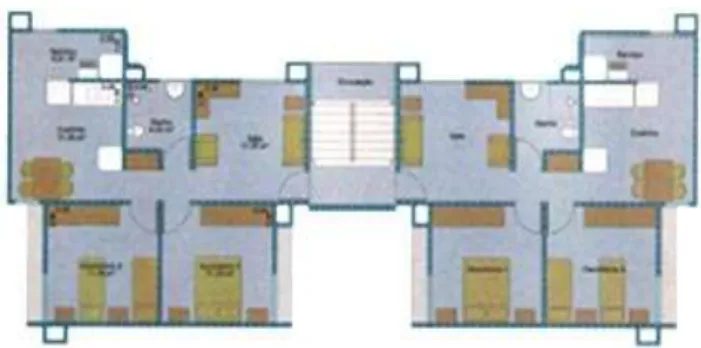
Figure 3 Jaragua Voith building typical floor Figure 2 Juta C building typical floor
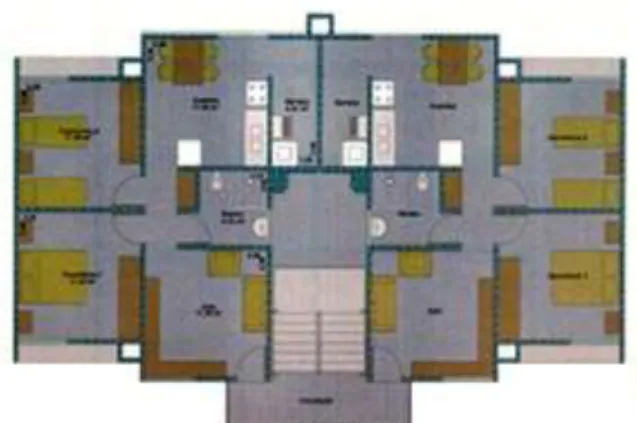
Figure 4 Paraisopolis building typical floor Figure 2 Juta C building typical floor
Some parameters played an important role in the development and outcomes of the research such as the weather information available for Sao Paulo. The weather file used for the climate data in ECOTECT 5.5 was the EPW file available from the Energy Plus Energy Simulation software. The file was an ext-based format and derived from the Typical Meteorological Year 2-TMY2- weather format. Some climate considerations about Sao Paulo should be highlighted: the city belongs to a southern hemisphere with a subtropical climate. Temperatures in the southern hemisphere are milder than that in the northern hemisphere, nevertheless extreme temperatures in winter and summer may occur. The latitude iss an additional factor to be taken into consideration, since solar radiation is one of the major causes of heat gain and influences building energy performance.
5. Results and Findings
The results from the simulations of the four cases revealed differences in energy consumption among them. Based on the results from the thermal comfort and energy consumption, one building was chosen to be further studied. From the thermal comfort analysis it could be seen that on all of the four cases the amount of hours the buildings were outside the comfort zone was significant. Hence, in order to maintain the internal comfort conditions and to more accurately assess energy performance, the buildings were equipped with air conditioning and heating system. In an air-conditioned zone, the internal comfort level is controlled and it is just a matter of the amount of energy required to keep the comfort level depending on external conditions.
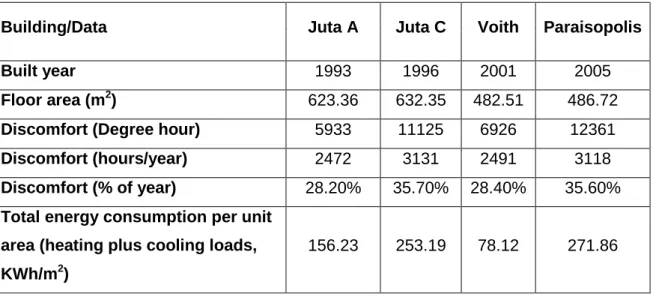
Therefore, the simulations were done in discomfort degree hour, which was the sum of degrees above or below the comfort band that the internal zone temperature was for each hour of each month; and in discomfort hours, which was the proportion of time each month that the temperatures were outside the comfort band. The comfort temperatures obtained from the simulations of the four initial buildings showed a significant difference, even though they had very similar design patterns, shape, area and materials. The results showed that the building with the least amount of hours out of the comfort zone was also the one that had the least energy consumption to keep the comfort level throughout the year. Similarly, the building Fig 4.4 Paraisopolis Housing Complex
with the higher number of hours outside the comfort zone was the one with highest energy consumption. Table 1 below summarizes the results for the initial simulations.
The results were compared and the most efficient building was chosen for further analysis in more depth in subsequent simulations. The objective was to observe the energy consumption performance of the building envelope with different types of materials within the same temperature range and under air conditioned system. The Voith building was selected for further studied since it represented the most efficient case among the four buildings. The further investigation evaluated whether differences in orientation, materials and shading would benefit the building’s energy consumption. Therefore, the case study was simulated for each predefined parameter and the results interpreted and compared with the current situation. The idea of remodeling the buildings was an attempt to find the best energy performance building model for low income public housing design.
Building/Data Juta A Juta C Voith Paraisopolis
Built year 1993 1996 2001 2005
Floor area (m2) 623.36 632.35 482.51 486.72
Discomfort (Degree hour) 5933 11125 6926 12361
Discomfort (hours/year) 2472 3131 2491 3118
Discomfort (% of year) 28.20% 35.70% 28.40% 35.60%
Total energy consumption per unit area (heating plus cooling loads, KWh/m2)
156.23 253.19 78.12 271.86
Once all parameters were analyzed in isolation, the best result of each category was combined in a final simulation. It was important to identify the best parameters from each category and then to have them mutually set in one model in order to understand if there was a significant improvement in the design by grouping all the different strategies. Following are the results for each parameter:
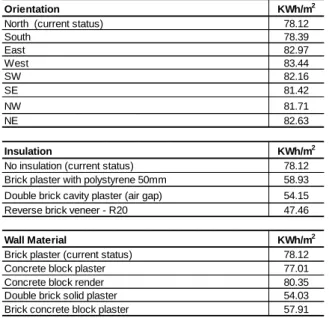
Table 2 shows a summary of the changes in the total energy consumption in orientation, wall material, insulation, roof, window type and shading. The optimal values of each parameter were then incorporated into a single model and simulated one more time in order to evaluate the overall energy savings that could be achieved when all design parameters were to taken into consideration at once.
Table 2 Results of simulations for each parameter
Figures 5 and 6 graphically show a sample of the results included in Table 2. The final simulation incorporated all of the best results from Table 2 and the results showed that both cooling and heating loads improved. From the initial 78.12 KWhr/m2, the final optimum building result reached 36.29 KWhr/m2, approximately 54 percent reduction. This was a result with all the variables working simultaneously.
The final model had south orientation; double brick with solid plaster and air gap; double glazed - low E - timber frame windows; and the current pitched tiled roof. It was apparent, in this case, that when more than one building element that had the potential to reduce energy consumption was used, the results improved. Furthermore, the final model evaluated in this study provided insights about the relationship between building design and energy consumption. It also provided ground for future simulations, since more variables could be incorporated and new strategies could contribute to improve design of public housing buildings in Sao Paulo.
Orientation KWh/m2
Shading Device KWh/m2
North (current status) 78.12 Pitched roof - clay tiled (current status) 78.12
South 78.39 Expantion south side of roof (1 meter) 77.84
East 82.97 Expantion south+ north side of roof ( 1 meter) 76.93
West 83.44 Expantion east+west side of roof (1 meter) 77.82
SW 82.16 Expantion all sides of roof (1 meter) 76.84
SE 81.42
NW 81.71 Window Type KWh/m2
NE 82.63 Single glazed aluminum frame (current status) 78.12
Single glazed - timber frame 76.62
Insulation KWh/m2
Double glazed - Low E - aluminum frame 67.66
No insulation (current status) 78.12 Double glazed - Low E - timber frame 67.68
Brick plaster with polystyrene 50mm 58.93
Double brick cavity plaster (air gap) 54.15 Roof Type KWh/m2
Reverse brick veneer - R20 47.46 Clay tiled roof (current status) 78.12
Concrete roof asphalt 71.14
Wall Material KWh/m2 Clay tiled roof - ref, foil, Gyproc1
98.75
Brick plaster (current status) 78.12 Corrugated metal roof 98.75
Concrete block plaster 77.01 1- Gyproc – a thermal insulating plaster board that provides additional
Concrete block render 80.35 performance for thermal control.
Double brick solid plaster 54.03
Brick concrete block plaster 57.91
http://www.fec.unicamp.br/~parc
p
i
60
Generally, comfort levels are not taken into consideration during the design process; however, by carefully analyzing materials, orientation and shading elements there is an opportunity to increase comfort levels and decrease energy loads. The simulation’s results presented here showed that there is still great potential for energy savings and improvements in the quality of the buildings, even in the most efficient design of public housing in Sao Paulo.
6. Conclusion
This paper assessed the current energy performance of low income public housing in Sao Paulo. It provided an overview of the current situation of the issue. The literature showed that
North South East West SW SE NW NE
Series1 78.12 78.39 82.97 83.44 82.16 81.42 81.71 82.63 75.00 76.00 77.00 78.00 79.00 80.00 81.00 82.00 83.00 84.00 En e rg y c o n s u m p ti o n (K W h r/ m 2 ) Orientation No insulation (current status)
Brick Plaster with polystyrene 50mm
Double brick cavity plaster (air gap)
Reverse brick veneer- R20 Series1 78.12 58.93 54.15 47.46 0 10 20 30 40 50 60 70 80 90 En e rg y c o n s u m p ti o n (K W h r/ m 2 ) Insulation
Figure 5 Graphic of orientation simulation results
affordable housing has been built around the world and great attention has been given to sustainable practices in this field. Later, the methodology was presented followed by the analysis and results. The simulations carried out herein reflected the reality of current public housing situation in Sao Paulo. The results showed that even small changes carefully applied to the current design process can significantly enhance the building’s energy performance. By incorporating building materials that have the potential to improve energy performance energy consumption in the building envelope can significantly decrease.
Furthermore, by assessing environmental characteristics of the site, by understanding climate elements, such as sun path to determine the best orientation for the building, public housing design in Sao Paulo can improve. It was showed that building elements such as windows can significantly improve energy consumption levels; insulation also demonstrated to contribute to improve indoor environmental conditions and lower energy consumption. Since insulation has not been part of construction practices in Brazil, this research showed how significantly this component can become among all of the materials investigated. In addition, shading devices should always be considered throughout the design process, since in this research they significantly reduced energy consumption when assessed independently.
By incorporating best practices into the design process of public housing in Sao Paulo the government has an opportunity to improve buildings and directly affect quality of life. Moreover, a more holistic approach in public housing design in Sao Paulo is a better approach in the long term than the “business as usual” model. With small changes in the design and construction process the public housing scenario in Brazil can improve.
References
Bonduki, N. G.1994 a. Origens da Habitacao Social no Brasil. Analise Social, XXIX; pp 715,716.
Davis, 1995 a. The architecture of affordable housing. University of California Press. Berkeley and Los Angeles, California; p1.
EIA, 2009. Available from: http://www.eia.doe.gov/emeu/cabs/Brazil/Background.html
FJP, 2009. Deficit Habitacional no Brasil 2007. Governo do Estado de Minas Gerais, MG; p
25. Available from:
http://www.fjp.mg.gov.br//index.php?option=com_content&task=view&id=84&Itemid=96 IEA 2009. Sectoral Approaches in Electricity: Building Bridges to a Safe Climate. Available
Holm, D. 1983. Energy Conservation in Hot Climates. The Architectural Press: London. Nichols Publishing Company: New York; p22.
Knight, I., Stravorravis, S. and Lasvaux, S. 2009.Predicting Operational Energy Consumption Profiles-Findings fron detailed Surveys and Modelling in a UK Educational Building Compared to Measured Consumption. International Journal of Ventilation, Vol. 7, No. 1, pp 49-67.
Lakshmanan LATA CHATTERJEEt and P. ROYI, 1977. III. HOUSING ANYONE?
Housing Requirements and National Resources: Implications of the U.N. World Model. HABITAT. An lnternational Journal. Vol. 2. No 3’4. pp, 277 2X9 Pcrgamon Pres. 1977 Pnntcd !n Grrat Bnlem. Available from: www.sciencedirect.com .
Lechner, N. 2001. Heating, Cooling, Lighting. Design Methods for Architects. Second Edition. John Wiley and Sons, INC. New York.p56
Lechner, N. 2001 a. Heating, Cooling, Lighting. Design Methods for Architects. Second Edition. John Wiley and Sons, INC. New York.p443
Lechner, N. 2001 b. Heating, Cooling, Lighting. Design Methods for Architects. Second Edition. John Wiley and Sons, INC. New York.p443
Makakaa, G., Meyerb, E.L. and McPhersona, M. 2009. Thermal Behavior and Ventilation Efficiency of a Low-Cost Passive Solar Energy House. Material and Design, Vol. 30, No. 6, pp 2173-2180.
NFRC, 2005. The Facts About Solar Heat Gain & Windows.National Fenestration Rating Council. Available from: www.nfrc.org
Rouse, R.E. 1983. Passive Solar Design for Multi-Family Buildings. Case Studies and Conclusions from Massachusetts’ Multi-family Passive design Program. Bradford & Bigelow, Danvers, MA.
SEHAB, 2009. Available from: http://www.habitacao.sp.gov.br/saiba-como-funciona-a- cdhu/index.asp
Song, F.Y, Diao, Y.F and Gu, P.D. 2009. Influence of Installation Angle of Building South Outer Window on Energy Consumption. Energy, Vol. 37, No. 2, pp 66*68.
UNSTATS, 2009. Indicators of population. Available from: http://unstats.un.org/unsd/demographic/products/socind/population.html
Utamaa. A. and Gheewala, S.H. 2009. Indonesian Residential High Rise Buildings: A Life Cycle Energy Assessment. Energy and Buildings, Vol. 41, No. 11, pp 1263-1268.