Developing The Business Plan
Presented by
Jeffrey Robinson
Assistant Professor
NYU Stern School of Business
The Berkley Center for
Entrepreneurial Studies
About the Presenter
Jeffrey Robinson joined the faculty the Stern School of Business of New York University July 2003 as an Assistant Professor of Management and Entrepreneurship. He holds a B.S. in Civil Engineering and a B.A. in Urban Studies from Rutgers, The State University of New Jersey; an M.S. in Civil Engineering Management from Georgia Institute of Technology and a pending Ph.D. from Columbia University’s Graduate School of Business. His dissertation, "An Economic Sociology of Entry Barriers" explores the processes and challenges of entrepreneurs and firms entering inner city markets. His findings provide fascinating insights for policy makers and practicing entrepreneurs. His work has caught the attention of the President’s Commission on White House Fellowships. He was recently named a National Finalist in the prestigious White House Fellowship Program.
Mr. Robinson is committed to three aspects of community and economic development: community building, entrepreneurship and the development of social enterprises. His unique combination of experience and training has prepared him well for the research, policy making and leadership endeavors in his future. He spends much of his time these days researching entrepreneurship and community/economic development issues for urban areas. He believes that long lasting change for inner city communities is stimulated when religious institutions, community leaders and business people work together toward the common goal of community revitalization.
Mr. Robinson is a 3rd generation entrepreneur. Both his grandmother and father had active businesses in the 1980s and 1990s. Mr. Robinson has co-founded two social enterprises: MBS Enterprises, LLC and Building Community Technology (BCT) Partners. As Seniors at Rutgers University, Robinson along with his college roommates Randal Pinkett and Aldwyn Porter, developed an on-campus music retailing business that funded educational programs they presented in underserved communities. As graduate students in 2001, Pinkett, Robinson, and three other co-founders launched BCT Partners, a community technology services and consulting firm that develops affordable solutions for non-profits, foundations, corporations and government agencies that use technology to support change strategies and improve organizational effectiveness. Through BCT he has worked on numerous community technology and community building projects in the State of New Jersey, and the cities of New York, Baltimore, and Atlanta. He now serves as the Chairman of BCT’s Advisory Board.
Mr. Robinson is a passionate advocate for entrepreneurship and the development of social enterprises. In 2000, he co-created the e-Commerce Development Program, an AOL funded entrepreneurship program in the Harlem, New York based community technology center named Playing2Win. By November 2001 the course he taught assisted 45 inner city entrepreneurs and small business owners in getting on-line and developing business plans used in pursuing seed funding. As a visiting doctoral fellow, he teaches entrepreneurship and business strategy to graduate, undergraduate and executive students at Loyola College's Sellinger School of Business & Management in Baltimore, Maryland. He is often called on to speak about inner city entrepreneurship and business strategy for non-profit organizations. As a result, he is in demand as a consultant and advisor to several non-profits and social enterprises in Baltimore, New York, Atlanta, and Chicago metropolitan areas.
Mr. Robinson is the son of the late Pastor Ron and Doreen Robinson of Parsippany, New Jersey. He resides in Piscataway, NJ with his wife, Valerie Mason-Robinson, formerly of Chicago, Illinois.
If a man can write a better book, preach a better sermon, or
make a better mousetrap than his neighbor, though he builds his
house in the woods the world will make a beaten path to his
door.
- from a lecture by Ralph Waldo Emerson (1803-82),
U.S. essayist, philosopher and poet
Are my goals well defined?
Personal Aspirations Business sustainability and size
Tolerance for risk
Do I have the right strategy?
Clear definition
Profitability and potential for growth Durability & Rate of growth
Can I execute the strategy?
Resources
Organizational infrastructure The founder’s role
If the answer is yes…
If the answer is no …
From A. Bhide, SSRB Chapter 4
“The Questions Every
Entrepreneur Must Answer”
Question about your ventures generally arise from four
different areas:
Management Team
The Opportunity
The Resources
The Financials
Your business plan is only as good as it addresses potential
concerns in these areas.
14 “Personal” Questions Every
Business Plan Should Answer
Adapted from
How to Write a Great Business Plan
by William Sahlman
1.
Where are the founders from?
2.
Where have they been educated?
3.
Where have they worked and for whom?
4.
What have they accomplished – professionally and personally – in the
past?
5.
What is their reputation within the business community?
6.
What experience do they have that is directly relevant to the
opportunity they are pursuing?
7.
What skills, abilities, and knowledge do they have?
8.
How realistic are they about the venture’s chances for success and the
tribulations it will face?
9.
Who else needs to be on the team?
10.
Are they prepared to recruit high-quality people?
11.
How will they respond to adversity?
12.
Do they have the mettle to make the inevitable hard choices that have
to be made?
13.
How committed are they to this venture?
14.
What are their motivations?
9 Questions About the Business Every
Business Plan Should Answer
Adapted from
How to Write a Great Business Plan
by William Sahlman
1.
Who is the new venture’s customer?
2.
How does the customer make decisions about buying this product or
service?
3.
To what degree is the product or service a compelling purchase for the
customer?
4.
How will the product or service be priced?
5.
How will the venture reach all the identified customer segments?
6.
How much does it cost (in time and resources) to acquire a customer?
7.
How much does it cost to produce and deliver the product or service?
8.
How much does it cost to support a customer?
9.
How easy is it to retain a customer?
Questions Likely to Be Asked
Adapted from
Entrepreneurship: Strategies and Resources
by Marc J. Dollinger
Resources
What rare, valuable, hard to copy, and non-substitutable resources does the firm have, can it control or will it produce?
The Financial Projections and Returns
What are the underlying assumptions?
What are the start-up costs? What are they used for?
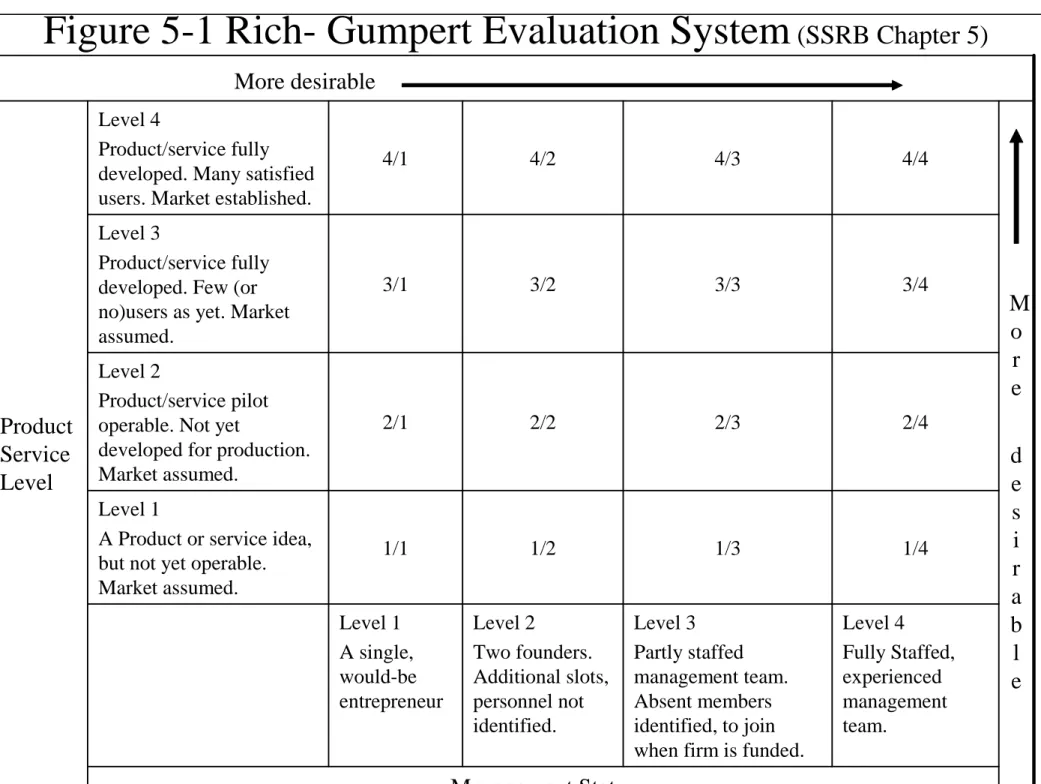
Figure 5-1 Rich- Gumpert Evaluation System
(SSRB Chapter 5)
Level 4
Fully Staffed,
experienced
management
team.
Level 3
Partly staffed
management team.
Absent members
identified, to join
Level 2
Two founders.
Additional slots,
personnel not
identified.
Level 1
A single,
would-be
entrepreneur
1/4
1/3
1/2
1/1
Level 1
A Product or service idea,
but not yet operable.
Market assumed.
2/4
2/3
2/2
2/1
Level 2
Product/service pilot
operable. Not yet
developed for production.
Market assumed.
3/4
3/3
3/2
3/1
Level 3
Product/service fully
developed. Few (or
no)users as yet. Market
assumed.
M
o
r
e
d
e
s
i
r
a
b
l
e
4/4
4/3
4/2
4/1
Level 4
Product/service fully
developed. Many satisfied
users. Market established.
Product
Service
Level
Business Plan Outline
The following is a top-level outline for a business plan. You should feel free to adapt this outline to the specific needs and nature of your business opportunity, but be aware that you should still incorporate the key elements.
I. Executive Summary
(The Executive Summary should encapsulate the key points from the full plan; it should grab the readers attentions, and be forced on the key arguments for investors. This will serve as a foundation for your oral presentation. It should be no more than two pages, although 1 page or 1½ pages are preferable). Make sure to briefly cover the following. It will need to written or revised a number of times – when you start the plan, when you are the middle and again when everything is done.
Business Concept
Market Size and opportunity Product/Service Description
Intellectual Property Summary (if any)
Business Model (i.e. how you will make revenues and profits) Key Competition
Key Points of Advantage and Difference Management biographies (1 paragraph) Financial Summary
II. Business Concept
Company Overview/History Description of Industry Product/Service Overview Factors giving rise to opportunity
Market opportunity and strategy to exploit it Industry segment and current participants Target addressable market and projections Sources of revenue
Milestone
Key drivers for success and critical assumptions
III. Market Analysis and Research
Target addressable market and projections Pricing
Willingness of Customers to Pay Above Corporate Cost
Value Added For Customers, Customer Benefits/Problems Solved Competition and Competitive Advantage
Overall marketing and selling strategy Projected sales and market share
IV. Business Model Economics
Gross and Operating Margins Fixed and Variable Costs
Cash Flow Analysis (time and money to cash flow positive) Break-even analysis (time and money to break-even)
Product or service unit analysis (cost and profit margins)
V. Marketing Plan
Strategy and positioning Tactics
Pricing
Distribution and selling
Communication strategy (Advertising, promotion and PR) Selling and Collection Cycle
Critical Mass/Reference Customers Required for Market Traction Implementation Strategy (Customer service, retention, warranty)
VI. Product Development
Development Status and Next Steps Risk Factors
Costs and Budget
Opportunity Specific Issues
VII. Operations Plan
Operating Cycle
How the Business Works
Manufacturing Process (or Retail Locations) Shipping/Product Delivery
Geographic Locations and Local Resources Physical Facilities and Equipment
Human Capital (hiring, requirements, training, compensation) Regulatory and Legal issues
VIII. Management Team
Organization (Chart)
Key Management Personnel (biographies, esp. key relevant accomplishments)
Management compensation and ownership Employee Incentive Plans
Board of Directors and other advisors
IX. Critical Risk Factors and Mitigation of them/Contingency Plans
X. Financing Requirements and Opportunity
Target financings (equity and debt) Current Offering
Capitalization Use of Proceeds
XI. Financial Projections
5 year summary projections
3 year detailed, quarterly projections Balance Sheet
Income Statement Cash Flow GAAP Cash Flow Operational Break-even Analysis
XII. Appendices
Resources
ON-LINE
Inc. Magazine www.inc.com
EntreWorld www.entreworld.org
Business Toolkit www.toolkit.cch.com
Google www.google.com
ARTICLES
HBR Reprint #584X– “How to Write a Winning Business Plan” by Stanley Rich and David Gumpert
HBR Reprint – “How to Write a Great Business Plan” by William Sahlman
BOOKS
Portable MBA for Entrepreneurship, 2nd Edition edited by William Bygrave The Entrepreneurial Venture by Sahlman, Stevenson, Roberts and Bhide, 1999.