The Regulation of Pre-Repllcative Complex
Formation in the Budding Yeast Cell Cycle
Elizabeth Anne Noton
Imperial Cancer Research Fund
and
University Coiiege London
Submitted for the degree of Doctor of Philosophy
ProQ uest Number: U 641855
All rights reserved
INFORMATION TO ALL U SE R S
The quality of this reproduction is d ep en d en t upon the quality of the copy subm itted. In the unlikely even t that the author did not sen d a com plete manuscript and there are m issing p a g e s, th e se will be noted. Also, if material had to be rem oved,
a note will indicate the deletion.
uest.
ProQ uest U 641855
Published by ProQ uest LLC(2015). Copyright of the Dissertation is held by the Author. All rights reserved.
This work is protected against unauthorized copying under Title 17, United S ta tes C ode. Microform Edition © ProQ uest LLC.
ProQ uest LLC
789 East E isenhow er Parkway P.O. Box 1346
Abstract
DNA replication m ust occur once and only once in every cell cycle to ensure that mitosis produces two daughter cells w ith the same complement of genomic DNA. Initiation of DNA replication depends upon pre-replicative complex (pre-RC) assembly at origins during G l. The pre-RC includes a six-subunit origin recognition complex (ORC) and Cdc6p which together load a complex of the Mcm2-7p family of putative helicases onto chromatin. Only one ORC subunit, Orc6p, is not required for binding of the others to origins in vitro. Using a tem perature sensitive orc6 m utant we have show n in vivo that although Orc6p is dispensable for binding of other ORC subunits to chromatin, it is essential for pre-RC formation and m ay function as an "adapter" betw een ORC and other pre-RC components.
The activity of cyclin dependent kinases (CDKs) regulates pre-RC formation in the cell cycle. CDKs inhibit the formation of pre-RCs during S phase, G2 and M phase, suggesting that inactivation of CDKs at the end of mitosis is essential for pre- RC form ation in G l. Other mitotic events m ay also be im portant for pre-RC
Table of Contents
Abstract... 2
Table o f Contents...3
List o f Figures and Table... 6
Acknowledgements...7
Abbreviations... 9
Nomenclature... 11
Chapter One: Introduction to Control o f DNA Replication in Mitotic Cell Cycles 12 Initiation of DNA replication in Escherichia coli, bacteriophage and SV40...12
Origins in S. cerevisiae...14
Identification of origin binding proteins in S. cerevisiae... 15
Origins of replication and ORC in other eukaryotes... 16
Other factors important for initiation of DNA replication...18
Formation of the pre-replicative complex... 20
S phase promoting factor... 25
CDKs... 25
Cdc7/Dbf4... 27
Progression through G l in & cerevisiae... 27
Progression through Gl in other eukaryotes... 29
Origin Firing in SV 40... 30
Origin firing in eukaryotes... 30
Replication foci...33
Cell cycle control of pre-RC formation: cell fusion studies...33
Licensing factor...34
Control of pre-RC formation by CDKs...36
Regulated transcription of pre-RC components... 37
Regulated stability of pre-RC components... 37
Regulation of protein localisation...38
Regulation of protein function by CDKs... 39
Other pathways important for initiation of DNA replication... 40
CDK control of DNA replication: a model... 41
Cell cycles where S Phase is not coupled to mitosis...41
Meiosis... 41
Endoreduplication...42
Gene amplification... 42
Mitosis and pre-RC formation...43
The APC/C and mitotic exit network in S. cerevisiae...43
The APC/C and mitotic exit network in other eukaryotes... 46
The role of the APC/C and mitotic exit network in DNA replication...47
Conclusion... 48
Chapter Two: Experimental Procedures...49
Yeast strains and media... 49
Yeast transformation... 49
Growth of E. coli...50
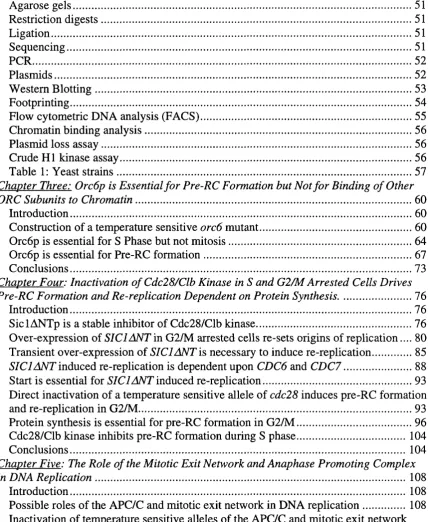
Agarose gels...51
Restriction digests... 51
Ligation... 51
Sequencing...51
PCR... 52
Plasmids...52
Western Blotting... 53
Footprinting...54
Flow cytometric DNA analysis (FACS)... 55
Chromatin binding analysis...56
Plasmid loss assay... 56
Crude HI kinase assay... 56
Table 1: Yeast strains... 57
Chapter Three: Orc6p is Essential fo r Pre-RC Formation but Not fo r Binding o f Other ORC Subunits to Chromatin...60
Introduction...60
Construction of a temperature sensitive orc6 mutant... 60
Orc6p is essential for S Phase but not mitosis...64
Orc6p is essential for Pre-RC formation... 67
Conclusions...73
Chapter Four: Inactivation o f Cdc28/Clb Kinase in S and G2/M Arrested Cells Drives Pre-RC Formation and Re-replication Dependent on Protein Synthesis... 76
Introduction...76
SiclANTp is a stable inhibitor of Cdc28/Clb kinase... 76
Over-expression of SICIANT in G2/M arrested cells re-sets origins of replication.... 80
Transient over-expression of SICIANT is necessary to induce re-replication...85
SICIANT induced re-replication is dependent upon CDC6 and CD C7... 88
Start is essential for SICIANT induced re-replication... 93
Direct inactivation of a temperature sensitive allele of cdc28 induces pre-RC formation and re-replication in G2/M...93
Protein synthesis is essential for pre-RC formation in G2/M... 96
Cdc28/Clb kinase inhibits pre-RC formation during S phase... 104
Conclusions... 104
Chapter Five: The Role o f the Mitotic Exit Network and Anaphase Promoting Complex in DNA Replication...108
Introduction... 108
Possible roles of the APC/C and mitotic exit network in DNA replication... 108
Inactivation of temperature sensitive alleles of the APC/C and mitotic exit network genes...110
The APC/C is not required for SICIANT induced pre-RC formation and re-replication ... 113
CDCI4, CDC5 and CDCI5 are not required for SICIANT induced pre-RC formation and DNA replication...118
The plasmid loss defect of cdcI4-I is rescued by over-expression of S I C l... 123
Conclusion... 123
CDK activity inhibits pre-RC formation... 127
Regulation of DNA replication by protein synthesis...127
Phosphatases...130
The role of Orc6p in pre-RC formation... 130
Pre-RC stability during the cell cycle... 132
Control of origin firing during S phase... 133
The role of the mitotic exit network and APC/C in control of DNA replication 134 Conclusion... 137
List of Figures and Table
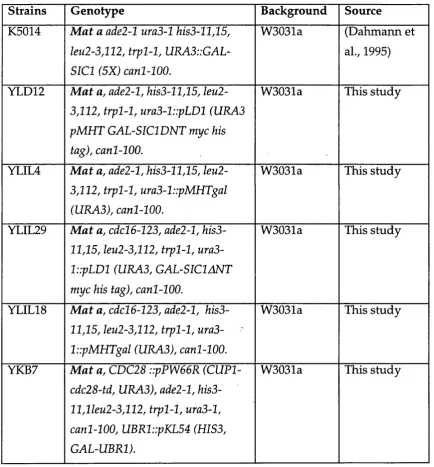
Table 1. Yeast Strains... 57
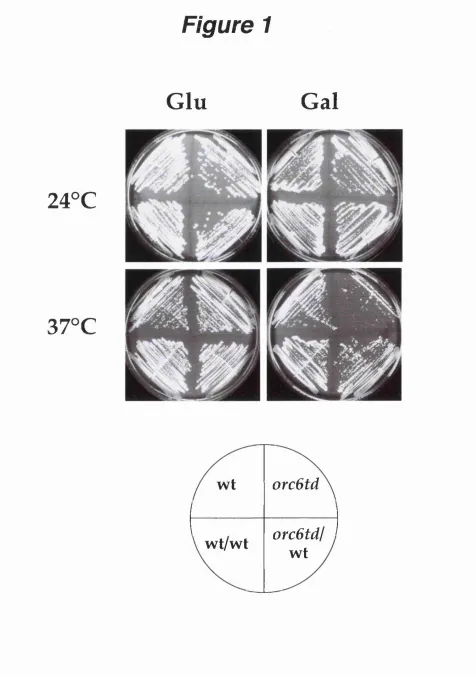
Figure 1. Construction of a temperature sensitive orc6 mutant... 62
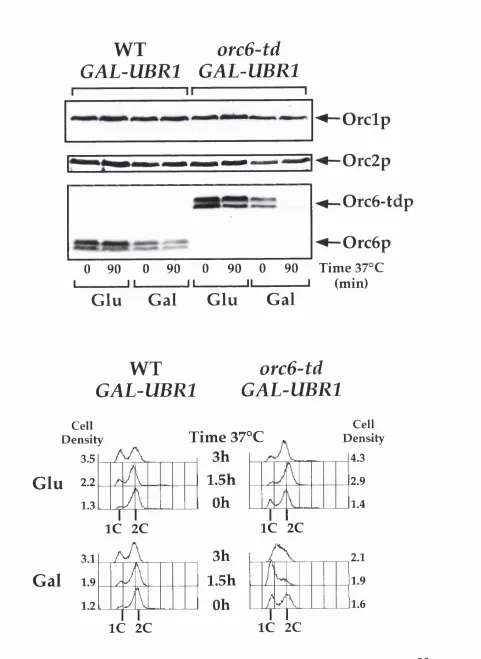
Figure 2. Orc6-tdp is degraded at 37°C and induces an S phase arrest...66
Figure 3. Orc6p is required for S phase but not mitosis... 69
Figure 4. Orc6p is essential for pre-RC formation...72
Figure 5. Orc6p is essential for Mcm2-7p loading but not for ORC loading onto chromatin...75
Figure 6. SICIANT encodes a stable inhibitor of Cdc28/Clb... 79
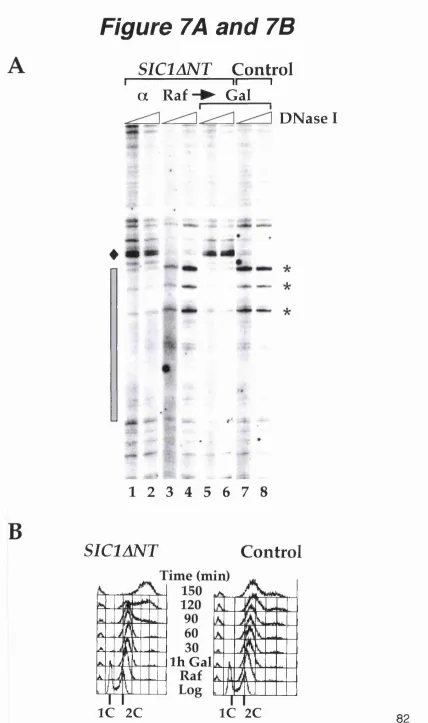
Figure 7A and 7B. SICIANT drives pre-RC formation and re-replication in G2/M arrested cells...82
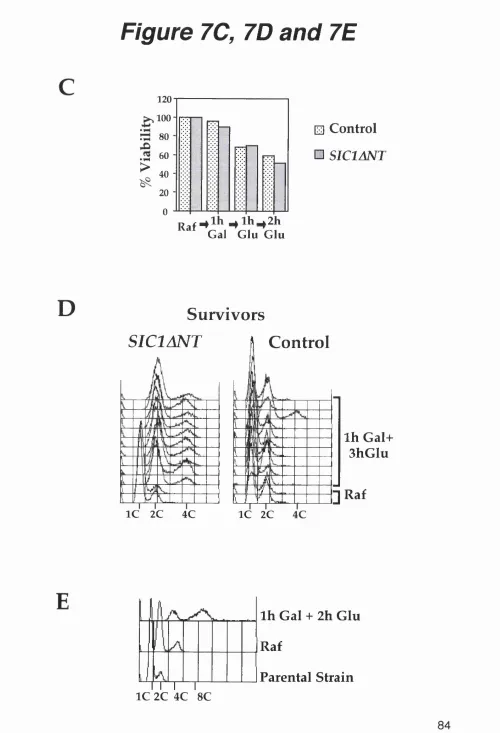
Figure 1C, ID and 7E. SICIANT drives complete re-replication in G2/M arrested cells ... 84
Figure 8. Transient expression of SICIANT induces re-replication...87
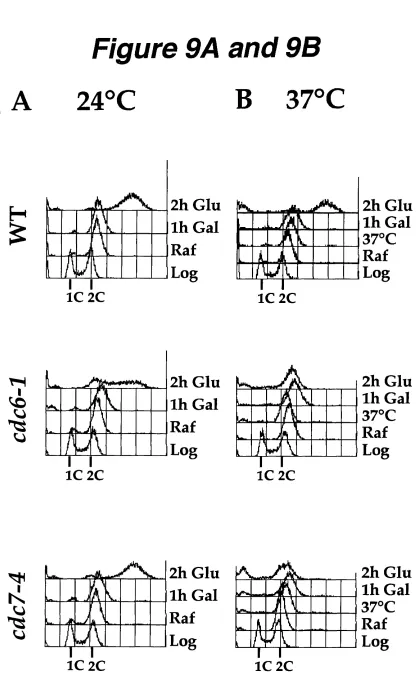
Figure 9A and 9B. CDC6 and CDC7 are required for SICIANT induced re-replication ... ;... 90
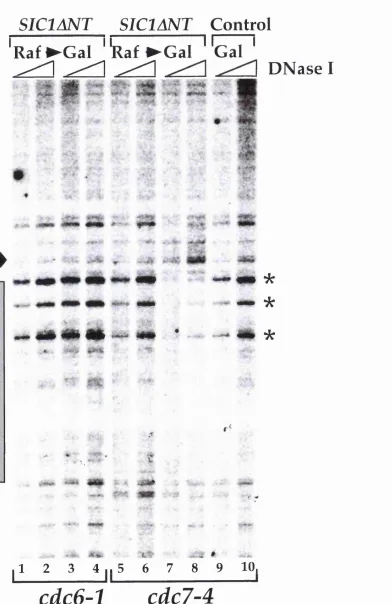
Figure 9C. CDC6 and CDC7 are required for SICIANT induced re-replication...92
Figure 10. Start is essential for SICIANT induced re-replication...95
Figure 11. Inactivation of cdc28-td induces re-replication... 98
Figure 12A and 12B. Protein synthesis is required for SICIANT induced re-replication 101 Figure 12C, 12D and 12E. Protein synthesis is required for SICIANT induced re replication ... 103
Figure 13. Over-expression of SICIANT drives pre-RC formation during S phase 106 Figure 15. Inactivation of of cdcI6-I23 and cdc20-3...112
Figure 16A. CDC16 is not required for SICIANT induced pre-RC formation... 115
Figure 16B. The APC/C is not required for SICIANT induced re-replication... 117
Figure 17A. The mitotic exit network is not required for SICIANT induced pre-RC formation... 120
Figure 17B. The mitotic exit network is not required for SICIANT induced re replication ... 122
Acknowledgements
M any thanks to all the people who have helped me in m y thesis, especially to my supervisor John Diffley, for all his guidance and advice and to past and present scientific officers Lucy Drury, Janet H arw ood and Maria Kitrilaki for all their help. Thanks to B24, Karim Labib, Jose Antonio Tercero, Takashi Seki and Helene Debrauwere, for helping me out m any times and for putting u p w ith me in limited space and to Miguel Godhino Ferreira for being a pal. Also thanks to other lab memebers, Katie H artland, Gordon Perkins, Aloys Scheppers, Corrado Santocanale, Kristine Bousset, Chantai Desdouets, David Garcia Q uintana, Seiji Tanaka, Stéphane Chedin, Helle Dhyr Mikkelson, Laurence Vernis Beringue and Mark M adine who have helped me in m any ways. The Chromosome
In memory o f A nnie Noton (née Peaker)
Abbreviations
ACS ARS consensus sequence
A P C /C anaphase prom oting complex or cyclosome ARS autonom ously replicating sequence
ATP adenosine tri-phosphate bp base pair
CDC cell division cycle
CDK cyclin dependent kinase C-term inus carboxy-terminus
CHX cycloheximide
6-DMAP 6-dimethylaminopurine DNA de-oxy ribonucleic acid
dNTP di-deoxy nucleotide triphosphate FACS fluorescent activated cell sorter Gal galactose
Glu glucose HU hydroxyurea kbp kilo base pair
MBF M lul element binding factor MCM minichromosome M aintenance Noc nocodazole
N -term inus amino-terminus
OBD origin of bi-directional replication ORC origin recognition complex
PCR polymerase chain reaction Post-RC post-replicative complex Pre-RC pre-replicative complex Raf raffinose
Rel release
RNA ribonucleic acid
SPF S phase prom oting factor
D. melanogaster E. coli
S. cerevisiae S. pombe X. laevis
Drosophila melanogaster Escherichia coli
Nomenclature
scGenep spGene xlGene hsGene cgGene dmGene
S. cerevisiae protein S. pombe protein X. laevis protein H um an protein Ham ster protein
D. melanogaster protein
S. cerevisiae:
GENE wild type gene
gene m utant gene Genep protein product
S. pombe: gene+ gene
Gene
wild type gene m utant gene protein product
Other eukaryotes:
Gene gene
Gene
wild type gene m utant gene protein product
E. coli: gene
gene
gene
Chapter One: Introduction to Control of DNA Replication In
Mitotic Cell Cycles
The grow th of an organism depends on production of new cells by mitotic cell division. A mitotic cell division involves grow th of the cell,
duplication of the organelles and division to produce two genetically identical daughter cells. In particular, a single accurate copy of the genome m ust be produced before cell division occurs. In all organisms new copies of the genome are generated directly from existing copies by semi-conservative DNA
replication. The two new copies of the genome are segregated equally during cell division so that each daughter receives an identical copy of the genome. It is essential that the genome remains unchanged through cycles of DNA replication and segregation during cell division as even tiny alterations in the content of the genome can be catastrophic for the organism. The mitotic cell cycle of eukaryotic cells generally consists of 4 phases including two gap phases (called G l and G2), S phase (when DNA replication occurs) and M phase (where the 2 copies of the genome are equally segregated and cell division takes place). Checkpoint controls ensure that inappropriate progression through the cell cycle does not occur. The rate of entry of cells into the cell cycle is controlled by extra-cellular signals from other cells and by the availability of nutrients necessary for cell growth.
This thesis will deal w ith some of the regulatory mechanisms w hich exist in eukaryotic cells to ensure that the genome is replicated only once in each mitotic cell cycle, using the yeast Saccharomyces cerevisiae as a m odel organism. The initiation of DNA replication in eukaryotes occurs from m ultiple origins and initiation from each origin is restricted to once per cell cycle. O ur understanding to date of the initiation reaction at a molecular level is detailed below.
Initiation of DNA replication in Escherichia coil, bacteriophage and SV40
sequences near the start site of DNA replication (known as the replicator), by a factor (called the initiator), which then induces assembly of the replication m achinery (Jacob et al., 1963). The initiation reaction in E. coli is relatively well understood (Kornberg and Baker, 1992). The E coli genome is a single circular chromosome and DNA replication initiates at a single origin, oriC, and proceeds until specific term ination sequences are reached. The functional elements of oriC
are contained w ithin a 245bp sequence which includes four 9bp sequences which the initiator protein, dnaA, binds in a sequence specific m anner (Fuller et al., 1984). A round 20-40 dnaA subunits bind to the origin in a co-operative manner, and footprinting studies have dem onstrated that it protects 200bp of the origin sequence from DNase I (Fuller et al., 1984). After binding to the origins, dnaA then induces melting in three ISmers in the origin sequence (Bramhill and Kornberg, 1988) and this allows 2 molecules of the DNA helicase, dnaB to bind as a complex w ith another protein, dnaC (Wahle et al., 1989). The activity of the helicase induces origin unw inding and assembly of a replication fork (Baker et al., 1987). dnaA function in initiation of replication is dependent on it being bound to ATP (Sekimizu et al., 1987). A polymerase HI processivity factor, the sliding P clamp induces conversion of active ATP-bound dnaA to replicatively inactive ADP-bound dnaA (Kurokawa et al., 1999). In this w ay assembly of an active replication fork is linked to inactivation of the initiator protein, thus preventing immediate re-initiation.
The initiation reaction in the bacteriophage X and the m am m alian specific SV40 virus have also been intensively studied (Kornberg and Baker, 1992). Four 19bp elements in the bacteriophage X origin is recognised by the phage protein O, which melts a flanking A /T rich sequence (Schnos et al., 1988). O then interacts w ith the ÀP protein which acts in a similar w ay to E. coli dnaC to recruit dnaB helicase to the origins (Dodson et al., 1986; Dodson et al., 1985; Zylicz et al., 1984). In SV40 replication, a single viral protein, the T-antigen, is sufficient to recognise four repeats of a 5bp sequence in the viral origin and induce origin m elting in a 15bp palindrom e, (reviewed Bullock, 1997; Kornberg and Baker, 1992). T-antigen helicase activity is sufficient for viral replication. Other replication proteins are provided by the host. Initiation of DNA
recognition of an origin by an initiator protein which then assembles a
replication fork and therefore conforms to the replicon m odel described above. Of eukaryotic cells, the initiation reaction in the budding yeast Saccharomyces cerevisiae, also conforms to the replicon m odel and is described below.
Origins in S. cerevisiae
In S. cerevisiae, origins of replication have been identified as sequences which were required for extra-chromosomal maintenance of plasm ids
(Stinchcomb et al., 1979). Such sequences are know n as autonom ously replicating sequences (ARS) and are approximately 100-150bp long. ARS sequences function as origins in the plasm ids which they are required to
replicate (Brewer and Fangman, 1987; H uberm an et al., 1987). ARS have an A /T rich 11 base pair consensus sequence called the ARS Consensus Sequence (ACS) (Broach et al., 1983) which is essential for origin function (Deshpande and
Newlon, 1992; Rivier and Rine, 1992). In addition to the ACS, surrounding DNA sequences are also im portant for origin function of ARS sequences. Analysis of the usage of ARS sequences using 2-D gel analysis has revealed that some but not all ARS sequences act as origins during a norm al S phase (Dubey et al., 1991; Newlon et al., 1993). Origin firing occurs in a tem poral program throughout S phase and there is now evidence that chromosomal ARS sequences which do not fire during a norm al S phase are simply very late firing origins which are
norm ally replicated by replication forks initiating from other origins before they fire themselves (Santocanale et al., 1999).
The best characterised origin in yeast is A R S l which has an ACS (or A element), essential for its function in vivo plus three additional functional elements know n as B elements, Bl, B2 and B3. No single B element is essential for origin function, however deletion of any 2 B elements severely disrupts origin use (Marahrens and Stillman, 1992). In addition a C element has been described which only affects ARS function in the absence of a B elem ent
origin sequences in S. cerevisiae was crucial for the identification of origin binding proteins which initiate the assembly of a replication fork.
Identification of origin binding proteins in S. cerevisiae
The first ARS binding protein identified was a transcription factor called A bflp which binds to the B3 element of A R S l in vivo and in vitro (Diffley and Stillman, 1988; Diffley and Cocker, 1992; Diffley and Stillman, 1989). abfl
m utants have a plasm id loss defect (Rhode et al., 1992) and A R S l sequences with m utated B3 element function less efficiently as origins com pared to w ild type
A R S l (Marahrens and Stillman, 1992). The B3 element in A R S l can be
substituted w ith binding sites for other transcriptional activators (Marahrens and Stillman, 1992) although the role of transcription factors in origin firing is still not well understood.
Biochemical purification of ARS binding proteins also resulted in the identification of another protein complex known as the origin recognition complex or ORC which binds all ARS sequences examined (Bell and Stillman, 1992). ORC binding to A R S l requires the A and Bl elements, furtherm ore DNase I footprinting has show n that ORC protects the A and Bl elements of
A R S l and induces a hypersensitive site in the Bl region (Bell and Stillman, 1992). ORC subunits can be chemically cross-linked to A and Bl regions on both
strands of the DNA (Bell and Stillman, 1992; Lee and Bell, 1997) and it has been suggested that origin DNA w raps around the ORC complex, perhaps facilitating ORC function. By analogy w ith dnaA of E. coli and T-antigen of SV40, it m ight be expected that ORC has some DNA melting properties, although no evidence for this has been described.
ORC consists of six polypeptides, O rel 6p, all of which are essential in vivo (Bell et al., 1995; H ardy, 1996; Li and Herskowitz, 1993; Loo et al., 1995; Micklem et al., 1993). DNase I footprinting and chrom atin immuno-
(Loo et al., 1995; Bell et al., 1993; Micklem et ai., 1993; Foss et al., 1993; Fox et al., 1995). orc2 and orc5 m utants have a reduced efficiency of origin firing and do not complete DNA replication at the non-permissive tem perature (Bell et al., 1993; Fox et al., 1995; Liang et al., 1995; Loo et al., 1995; Micklem et al., 1993). Furtherm ore orc2, orc5 and orc3 m utants have a plasm id loss defect, which can be rescued by addition of m ultiple origins to the plasm id(H ardy, 1996; Loo et al., 1995) and such a phenotype suggests a defect in initiation of DNA replication. In conclusion ORC clearly has an im portant role in initiation of DNA replication in S. cerevisiae.
Origins of repiication and ORC in other eukaryotes
Unlike S. cerevisiae, the origins of replication in other eukaryotes are m uch less well defined. In Schizosaccharomyces pombe ARS sequences about 500- lOOObp long have been identified. No consensus sequences essential for ARS function have been identified, although A /T rich regions about 20-50bp long are im portant for the function of some ARS sequences (Clyne and Kelly, 1995). Purification of proteins associating w ith tandem repeats of a conserved element in S, pombe ARS has identified two proteins, A b p l and Abp2 neither of which has been show n to have a role in DNA replication (Murakami et al., 1996; Sanchez et al., 1998). A six-subunit complex containing hom ologous
polypeptides to the ORC subunits of S. cerevisiae has now been identified in S.
pombe (Moon et al., 1999). Although no sequence specificity for spORC binding to origins has been dem onstrated, it binds A /T rich sequences using an "AT hook' in Orc4 (Chuang and Kelly, 1999). This does not appear to be a common mechanism for ORC binding to DNA as no other Orc4p hom ologues have more than one copy of this motif. spORC appears to bind origins of DNA replication
in vivo as O rp l can be cross-linked to functionally im portant elem ents in ars2004
and to ars3002 (Ogawa et al., 1999). Analysis of m utants of orpl and orp2 (ORCl
The nature of m etazoan replication origins is controversial (DePamphilis, 1999). No ARS sequences have been identified and origin m apping techniques give conflicting data about the location of origins. Over a dozen replication origins have now been identified in m etazoans however very few have been dem onstrated to direct initiation DNA replication in alternative chrom osomal locations. In Drosophila melanogaster, 430bp of the ACE3 region w hich is responsible for amplification of the chorion gene in follicle cells can direct initiation w ithin a 7.7kb P element (Orr-Weaver et al., 1989). In addition an Bkb region of the hum an p globin locus functions as an origin w hen
integrated at two different sites in the simian genome. In the latter case a
m inim um of 2kb of the hum an p globin locus can act as an origin, dependent on proxim al 5' or 3' auxiliary sequences (Aladjem et al., 1998). These experiments suggest that, as in yeast, specific sequences direct initiation of DNA replication in m etazoans, however this may not always be the case. At one extreme Xenopus laevis oocytes will replicate random sequences of DNA injected into them w ith apparently no sequence specificity (Harland and Laskey, 1980). The existence of specific initiation sites in m etazoan genomes rather than broad "initiation zones' is controversial (for example compare Dijkwel and Hamlin, 1995 ;Kobayashi et al., 1998), as is the notion that DNA sequence rather than chrom atin structure directs initiation. In addition it is possible that sequences distant from origins m ay be im portant for replication, for example, deletion of sequences 50kb away from the hum an p globin locus disrupts origin function, (Aladjem et al., 1995) although these sequences were not required for initiation from the 8kb replicator described above. In D. melanogaster chorion gene amplification, the ACE3
elem ent acts 1.5kb away from an origin in or near the AER-d amplification control element (Delidakis and Kafatos, 1989; Heck and Spradling, 1990). Origins of replication are also developmentally regulated. For example in X.
laevis the pattern of origin firing in rDNA genes alters w ith the activation of transcription at the m id-blastula transition (Hyrien et al., 1995).
Despite the confusion surrounding the nature of m etazoan origins of replication, complexes which contain several homologues of ORC subunits have now been identified in D. melanogaster (Chesnokov et al., 1999) and X. laevis
cells interactions have been described betw een Orc2p, Orc4p and Orc5p
hom ologues (Quintana et al., 1997; Q uintana et al., 1998). In D. melanogaster ORC specifically binds to ACE3 and AER-d DNA elements (Austin et al., 1999),
suggesting that there is at least some specificity for ORC binding to origins of replication in metazoans. In addition ORC subunits localise w ith elements undergoing gene amplification in vivo (Austin et al., 1999; Royzman et al., 1997). No association of ORC w ith origins of replication in other m etazoans has been described to date.
ORC appears to be functionally conserved throughout eukaryotes, for example, im m uno-depletion of ORC from X. laevis egg extracts results in a defect in initiation of DNA replication (Carpenter et al., 1996; Romanowski et al., 1996b; Rowles et al., 1996). In vitro experiments using D. melanogaster have
dem onstrated that extracts im m uno-depleted for ORC have a defect in initiation of replication (Chesnokov et al., 1999). Furtherm ore a D. melanogaster m utant in the gene encoding an Orc2p homologue has a defect in chorion gene
amplification (Landis et al., 1997). It has not been directly dem onstrated w hether ORC is required for DNA replication in m am m alian cells.
Other factors important for initiation of DNA repiication
Genetic screens in fission and budding yeasts have been invaluable for identification of other genes which have a role in initiation of DNA replication. Two types of screens have been especially useful; those for genes which are im portant for cell cycle progression (the CDC screen) and those for genes which have a role in minichromosome maintenance (the MCM screen). The S. cerevisiae
gene, CDC6 and in the S. pombe hornologue cdcl8+, were identified in screens for genes which have a role in cell cycle progression (Hartwell, 1976; N asm yth and Nurse, 1981). M utants in both genes, have a defect in initiation of DNA
replication as m easured by FACS analysis, pulsed field gel electrophoresis and 2- D gel analysis (Bueno and Russell, 1992; Kelly et al., 1993; Liang et al., 1995; Piatti et al., 1995). Furtherm ore cdc6-l m utants have a plasm id loss defect which can be rescued by addition of multiple origins to the plasm id (Hogan and Koshland,
Nurse, 1995), suggesting that cdcl8+ has a key role in controlling initiation of DNA replication. Cdc6p and Cdcl8 homologues have been identified in hum an cells (Williams et al., 1997)and in X. laevis (Coleman et al., 1996). In vitro studies using X. laevis egg extracts confirm that xlCdc6 is required for DNA replication (Coleman et al., 1996)and over-expression of a dom inant negative cdc6 m utant, or micro-injection of anti-Cdc6 antibodies in cultured m am m alian cells also induces a replication defect (Hateboer et al., 1998; Herbig et al., 1999; Yan et al., 1998). In conclusion Cdc6p homologues are im portant for initiation of DNA replication throughout eukaryotes.
Another group of proteins which are im portant for DNA replication are the Mcm2-7p family, which form a multimeric complex (see below). In S.
cerevisiae M CM 2, M CM 3 and M CM 5 were identified in a screen for m utants w hich have an ARS specific defect in the maintenance of minichromosomes (Maine et al., 1984). A screen for cell cycle genes identified CDC54 which was subsequently designated M CM 4 (Moir et al., 1982). M utants in cdc46 and cdc47
w ere identified as suppressers of cdc54 m utants and CDC46 w as found to be identical to M CM 5 (Chen et al., 1992; Moir et al., 1982), while CDC47 w as designated M CM 7. Homologues of these genes were identified in S. pombe in similar genetic screens. For example, a screen for cell cycle genes identified
ndal+ and nda4+ (Miyake et al., 1993) which are homologues of M CM 2 and
M C M 5 respectively, and ndal+ was also identified independently as cdcl9+
(Forsburg and Nurse, 1994). Another 5. pombe cell cycle gene, cdc21+ is a hom ologue of M CM 4 in S. cerevisiae (Coxon et al., 1992). Finally, a screen for m utants w ith a minichromosome loss defect in S. pombe identified mis5+
(Takahashi et al., 1994) which was subsequently designated M CM 6. FACS analysis of mcm2-7 m utants shown that they typically arrest w ith incompletely replicated DNA (Hennessy et al., 1990; Hennessy et al., 1991; Labib et al., 2000). Furtherm ore 2-D gel analysis reveals that mcm2 and mcm3 m utants in S. cerevisiae
have a reduced efficiency of origin firing, consistent w ith the observed plasm id loss defect (Gibson et al., 1990; Yan et al., 1991; Yan et al., 1993). These
In m am m alian cells the first homologue of Mcm2-7p (nam ed PI) was found to physically interact w ith the replication m achinery (polymerase a) (Thommes et al., 1992). In X. laevis, Mcm2-7 are essential for initiation of replication(Kubota et al., 1997; Madine et al., 1995a; Thommes et al., 1997). Injection of antibodies raised against a m am m alian hom ologue of Mcm2-7 into cultured cells resulted in a defect in DNA replication (Kimura et al., 1994;
Todorov et al., 1994). In D. melanogaster, m utants in mcm2 and mcm4 hom ologues also have defects in DNA replication (Feger et al., 1995; Treisman et al., 1995), and injection of antibodies against dmMcm4 and dmMcm5 into D. melanogaster
em bryos induces a phenotype consistent w ith partial inhibition of DNA replication (Su et al., 1997). These experiments suggest that the function of Mcm2-7p is conserved between eukaryotes.
cdt+ was originally identified in a screen in S. pombe for genes regulated by a cell cycle transcription factor (CdclO) (Hofmann and Beach, 1994). sp C d tl and the X. laevis homologue were both found to be essential for initiation of DNA replication, (Maiorano et al., 2000; Nishitani et al., 2000). No S. cerevisiae
hom ologue of C d tl has been characterised to date.
Genetic interactions betw een the genes encoding ORC, Cdc6, Mcm2-7 and C d tl have been described. For example, in S. cerevisiae, over-expression of
CDC6 can rescue the origin firing defect of an orc5-l m utant (Liang et al., 1995) and synthetic lethality has been observed betw een cdc6-l, cdc54-l or cdc47-l and either orc2-l or orc5-l (Liang et al., 1995; Loo et al., 1995). In S. pombe over expression of cdtl+ prom otes c^fcl8+ induced re-replication (Nishitani et al., 2000). Over-expression of 0R C 6 in S. cerevisiae is synthetically lethal w ith cdc6,
and mcm5 m utants (Kroll et al., 1996). Taken together these results suggest that ORC, Cdc6, C d tl and Mcm2-7 act at a common step in initiation of DNA replication.
Formation of the pre-replicative complex
Cocker, 1992; Rowley et al., 1995). Com intent w ith this, O rcl-6p are associated w ith chrom atin throughout the cell cycle (Donovan et al., 1997; Liang and Stillman, 1997)and chrom atin immuno-precipitation has dem onstrated that O rclp , Orc2p and OrcSp are associated w ith origins throughout the cell cycle (Aparicio et al., 1997; Tanaka et al., 1997). Interaction of ORC w ith origins in S.
cerevisiae requires an intact A R S element (Aparicio et al., 1997; Rowley et al., 1995; Tanaka et al., 1997). Similar results have been obtained in S. pombe;
chrom atin binding analysis has dem onstrated that O rp l, Orp2 and Orc5 are associated w ith chromatin throughout the cell cycle (Lygerou and N urse, 1999) and th at O rp l specifically immuno-precipitates w ith origins throughout the cell cycle (Ogawa et al., 1999). In m etazoans the pattern of ORC chrom atin binding is less clear. In hum an cell culture hsOrc2 is associated w ith chrom atin
throughout the cell cycle (Ritzi et al., 1998) as is cgOrc2 in ham ster cells, how ever cgO rcl becomes removed from origins during mitosis (Natale et al., 2000). Some studies have also suggested that the nature of X. laevis ORC association w ith origins changes during that cell cycle (Romanowski et al., 1996a; Rowles et al., 1996; Rowles et al., 1999). In conclusion, although in yeast ORC clearly
associates w ith origins throughout the cell cycle, this may not be the case in higher eukaryotes.
In vivo DNase I footprinting studies of origins of DNA replication in both S. cerevisiae and hum an cells have show n that the chrom atin structure at origins changes throughout the cell cycle (Abdurashidova et al., 1998; Diffley et al., 1994). In S. cerevisiae during G l, the DNase I footprinting pattern at origins changes and an extended region of protection appears at both active and inactive origins of replication (in A R S l this extends over the A, Bl and B2 elements), and the hypersensitive sites induced by ORC binding disappears (Diffley et al., 1994; Santocanale and Diffley, 1996). This alteration in the DNase I footprint is due to binding of a protein complex, called the pre-replicative complex (pre-RC) at origins. M utants in orc2, cdcS, mcm4 and mcm7 have a defect in pre-RC form ation (Cocker et al., 1996; Detweiler and Li, 1997; Santocanale and Diffley, 1996)
origins during G l in S. cerevisiae (Aparicio et al.,, 1997; Ogawa et al., 1999; Tanaka et al., 1997), consistent w ith the idea that all these proteins are p art of the pre-RC.
Chrom atin binding studies and chrom atin im m uno-precipitation studies in yeast and X. laevis have provided a model for pre-RC assembly (Aparicio et al., 1997; Coleman et al., 1996; Donovan et al., 1997; Romanowski et al., 1996b; Rowles et al., 1996; Tanaka et al., 1997). These studies have found that ORC binding to chrom atin is required for binding of Cdc6p to chromatin, while both ORC and Cdc6p are required for loading of Mcm2-7p onto origins. In budding yeast around half of the Cdc46p, Cdc47p and Mcm2p proteins present in a cell become loaded onto chromatin during C l (Donovan et al., 1997). In X. laevis and S. pombe C d tl is essential for Mcm2-7 chromatin binding but not for ORC and C dcl8 loading onto chrom atin (Maiorano et al., 2000; Nishitani et al., 2000). In S.
cerevisiae an unrelated protein, McmlOp has some role in Mcm2-7p binding to chromatin, b u t it is unclear if this represents a step in pre-RC form ation since McmlOp is present on chromatin throughout the cell cycle and binding of
McmlOp to chrom atin does not require ORC (Homesley et al., 2000). Estimations suggest that a single ORC complex and 10-20 Mcm2-7p complexes are loaded onto each origin of replication prior to initiation, suggesting that ORC and Cdc6p (and possibly C d tlp ) actively load m ultiple Mcm2-7p complexes onto origins of replication.
It is not understood how ORC and Cdc6p load Mcm2-7p onto origins although since O rclp and Cdc6p have homology to each other (Bell et al., 1995), it has been suggested that they form a complex which loads Mcm2-7p.
Consistent w ith this C dcl8 associates w ith one of the ORC subunits, Orp2, in fission yeast (Leatherwood et al., 1996) and purified, recom binant ORC and Cdc6p from S. cerevisiae form a complex dependent on the presence of origin DNA (Mizushima et al., 2000). In hum an cells hsO rcl and hsCdc6 co-purify away from the hsOrc2 subunit (Saha et al., 1998), suggesting that ORC m ay not necessarily function as a six subunit complex in mammals. Cdc6p, O rclp, Orc4p and OrcSp contain W alker A and B motifs which are thought to be im portant for ATP binding and hydrolysis respectively (Neuwald et al., 1999). The ATP
origins requires the presence of ATP, b u t not ATP hydrolysis (Bell and Stillman, 1992) and yeast which contain m utations in O rclp predicted to inhibit ATP binding are in viable and these m utations abolish sequence specific ORC binding to ARS sequences in vitro (Klemm et al., 1997). Cdc6p m utants in residues
predicted to be im portant for ATP binding will not support DNA replication or load Mcm2-7p onto chromatin (Wang et al., 1999; Weinreich et al., 1999).
Expression of an allele of cdc6 which encodes a protein predicted to have non functional ATP hydrolysis motifs has a dom inant negative phenotype in S.
cerevisiae and hum an cells, suggesting that this protein can interact w ith other pre-RC components (Herbig et al., 1999; Perkins and Diffley, 1998). M utation of conserved ATP hydrolysis motifs in Cdc6p allows pre-RCs to form, b u t bulk Mcm2-7p loading onto chromatin is disrupted (Perkins and Diffley, 1998). This may be explained if the m utant is able to load a single Mcm2-7p complex onto chrom atin b u t no more. This interpretation is controversial, as one group has reported that m utation of the ATP hydrolysis motif of Cdc6p from S. cerevisiae
does not affect the role of Cdc6p in DNA replication (Weinreich et al., 1999). Despite this, recent studies have dem onstrated that association of Cdc6p w ith ORC in vitro induces an increased specificity of ORC for ARS DNA dependent on ATP binding and hydrolysis motifs in Cdc6p (Mizushima et al., 2000). In addition biochemical remodelling of Orc2p and Orc6p, occurs upon association of ORC and Cdc6p. This is dependent on Cdc6p ATP binding motifs and is inhibited in the presence of non-hydrolysable ATP analogues (Mizushima et al., 2000), how ever the functional significance of these in vitro observations has not been addressed. Taken together, these data suggest that the ATPase activity of ORC and Cdc6p m ay be im portant for Mcm2-7p loading onto chromatin.
Loading of Mcm2-7p onto origins appears to complete the role of Cdc6p and ORC in initiation of DNA replication. After pre-RC formation, in both X.
Cdc6p present in pre-RCs is removed by this degradation (Drury et al., 1997). Contrary to these observations, inactivation of a tem perature sensitive allele of
cdc6 in S. cerevisiae cells arrested in G l disrupts the pre-replicative footprint (Cocker et al., 1996; Detweiler and Li, 1997), suggesting that some Cdc6p and ORC m ay be required to m aintain pre-RCs in S. cerevisiae.
Loading of Mcm2-7p onto chromatin is essential for initiation of DNA replication, although chromatin binding analysis in X. laevis has dem onstrated that Mcm2-7 are gradually removed as replication proceeds. In fission yeast and X. laevis Mcm2-7 are predom inantly found in hetero-hexameric complexes
(Adachi et al., 1997; Chong et al., 1996; Kubota et al., 1997) although sub complexes of Mcm4, 6, 7 and M cm 3,5 have also been identified. The role of these sub-complexes are unclear since all Mcm2-7 subunits are required for the function of Mcm2-7 in DNA replication (Prokhorova and Blow, 2000). Mcm2-7 have a region of homology know n as an "Mçm2-7 box' which includes the Walker A and B motifs characteristic of ATPases (Koonin, 1993). A single hom ologue of the eukaryotic Mcm2-7 proteins has been identified in the
the first know n components of the replication fork to be loaded onto origin sequences and this step links initiation and elongation of DNA replication.
S phase promoting factor
Loading of Mcm2-7p is the last know n event at origins before S phase. Cell fusion studies predicted that a factor in S phase cells can prom otes initiation of DNA replication in G1 phase nuclei (Rao and Johnson, 1970). This factor w as called S phase prom oting factor or SPF. We now know that at the end of G1 two kinases essential for origin firing, cyclin dependent kinases (CDKs), and
Cdc7/D bf4 become active and it is likely that these proteins are SPF. In S.
cerevisiae m utants which arrest prior to activation of CDKs and Cdc7/D bf4 arrest w ith pre-RCs at origins (Diffley et al., 1994). The two kinases are similar; both have a catalytic subunit which is constitutively expressed and regulatory subunits w ith cell cycle regulated expression patterns.
CDKs
In all eukaryotes CDKs control progression through the cell cycle. CDK activation requires binding of a regulatory cyclin subunit and phosphorylation of the CDK catalytic subunit by CDK activating kinase stabilises cyclin binding. Successive activation of different CDK/cyclin complexes controls cell cycle progression. This is achieved through regulated transcription of cyclin genes and regulated degradation of cyclin proteins. In addition, CDK/cyclin activity can be controlled through dephosphorylation of threonine and tyrosine residues in the ATP binding dom ain of the CDK partner. Proteins which specifically bind and inhibit CDKs also control cell cycle progression. For a review of the control of CDKs see (Morgan, 1997). CDK/cyclin complexes bind their substrates through contacts betw een the cyclin and cy (also called RXL) motifs in the substrate (Adams et al., 1999; Adams et al., 1996; Schulman et al., 1998). CDK /cyclin activity is necessary to enter both S phase and mitosis and at the end of mitosis CDKs are inactivated and remain low until the end of the following G l.
The first cy clins to become activated in the cell cycle are the G l cyclins, C lnl-3p w hich control progression through G l (Cross, 1988; H adw iger et a l, 1989; N ash et al., 1988; Richardson et al., 1989). Subsequently six B-type cyclins, Clbl-6p become expressed. The first B type cyclins to become activated at the G l/S transition are Clb5p and Clb6p and these trigger initiation of DNA replication (Epstein and Cross, 1992; Schwob and Nasmyth, 1993). Later during S phase and mitosis CLB3 and CLB4 and then CLBl and CLB2 become expressed (Fitch et al., 1992; Richardson et al., 1992; Surana et al., 1991). Clb3p and Clb4p probably prom ote spindle formation, while C lblp and Clb2p are im portant for entry into mitosis. Deletion of CLB5 and CLB6 results in a delayed entry into S phase, presum ably until Cdc28/Clb3 and Cdc28/Clb4 become activated (Schwob and N asm yth, 1993). Cdc28/Clb kinase activity is required throughout S phase for activation of both early and late origins. In particular Clb5p is required for late origin firing (Donaldson et al., 1998b). Therefore sequential activation of different C DK /cyclin complexes control progression through the cell cycle.
In S. pombe a single CDK, Cdc2 controls progression through S phase and mitosis (Nurse and Bissett, 1981). The three major cyclins in S. pombe are C igl, Cig2 and Cdcl3. Cdcl3 is essential for completion of mitosis and C igl also appears to have some role in mitosis. Initiation of DNA replication is probably triggered by Cig2, the first cyclin to become activated after mitosis (Martin- Castellanos et al., 1996). In strains where the cig2-\- gene is deleted, the mitotic cyclin C dcl3 is able to trigger initiation of DNA replication (Fisher and Nurse, 1996; M ondesert et al., 1996).
In vertebrates, the control of cell cycle progression is m uch m ore
(D'Urso G et al., 1990). Over-expression of cyclin E is cultured cells decreases the length of G l in serum depleted conditions (Ohtsubo and Roberts, 1993), while expression of dom inant negative alleles of Cdk2 arrests cells in G l
(Vandenheuvel and Harlow, 1993). Therefore both C dk2/cyclin A and
C dk2/cyclin E have im portant roles in S although the precise role of these two kinases in S phase is not understood.
Cdc7/Dbf4
CDC7 and DBF4 were originally identified in S. cerevisiae in screens to identify cell cycle genes. Cdc7p is a kinase which requires Dbf4p for activity (Hollingsworth and Sclafani, 1990; Jackson et al., 1993; Yoon and Campbell, 1991). A lthough Cdc7p levels are constant during the cell cycle, Dbf4p levels oscillate, being low during G l, b u t becoming induced as cells enter S phase, coincident w ith an increase in Cdc7/D bf4 kinase activity (Cheng et al., 1999; Godinho Ferreira et al., 2000; Oshiro et al., 1999). Cdc7 and Dbf4 are required throughout S phase for both early and late origin firing but do not play a role in progression through mitosis (Bousset and Diffley, 1998; Donaldson et al., 1998a). Hom ologues of Cdc7pwhich bind Dbf4p-like regulatory subunits have now been identified in mammals, fission yeast, X. laevis (Cdc7p b u t not Dbf4p) and D.
melanogaster (a Dbf4p homologue) and they are all im portant for initiation of DNA replication (Brown and Kelly, 1998; Jiang and Hunter, 1997; Landis and Tower, 1999; Sato et al., 1997; Takeda et al., 1999). Furtherm ore in m am m als and fission yeast, Dbf4 levels are regulated w ith a similar periodicity to S.
cerevisiae{Kumaga.i et al., 1999) (Takeda et al., 1999).
Progression through G l in S. cerevisiae
In S. cerevisiae S phase prom oting CDKs and Cdc7/D bf4 are m aintained in an inactive state by three mechanisms during early G l. Firstly, Clbs and Dbf4p are targeted for ubiquitin m ediated proteolysis by the anaphase
Schwob et al., 1994). Lastly, CLBl-6 and DBF4 are not transcribed during early G l (Chapm an and Johnston, 1989; Fitch et al., 1992; Richardson et al., 1992; Schwob and Nasm yth, 1993).
W hen cells become committed to the cell cycle at start in late G l C dc28/C ln kinases become activated. This activation depends upon
transcription of C LN l and CLN2 by the cell cycle regulated transcription factor SBF, which comprises Swi4p and Swi6p (for review of G l specific transcription see Lee, 1999). For m uch of the cell cycle Cdc28/Clb kinase activity inhibits SBF (Amon et al., 1993), b u t in late G l SBF m ediated transcription of CLN2 and CLN2
is activated by Cdc28/Cln3 (Dirick et al., 1995; Tyers et al., 1993). Cdc28/Cln3 also activates the transcription factor, MBF (Tyers et al., 1993), which activates transcription of CLB5, CLB6 and DBF4 (Chapman and Johnston, 1989; Epstein and Cross, 1992; Schwob and Nasmyth, 1993). C dc28/C lnl and Cdc28/Cln2 bring about activation of Cdc28/Clb kinase in two ways; C dc28/C lnl and Cdc28/Cln2 inhibit the A PC /C , and thereby inactivate Clb proteolysis (Amon, 1997). In addition C dc28/C ln targets the Cdc28/Clb inhibitor, Siclp, for ubiquitin m ediated proteolysis by the SÇF.
Ubiquitin m ediated proteolysis plays a crucial role in regulating entry into S phase. It involves covalent attachm ent of ubiquitin residues to lysine residues in the target proteins followed by proteolysis of ubiquitinated proteins by the proteosom e (reviewed Hershko and Ciechanover, 1992; H ershko and Ciechanover, 1998). Attachment of ubiquitin to target proteins requires an E l enzyme which activates ubiquitin, an E2 enzyme w hich is a ubiquitin
include Cdc4p (which targets Cdc6p, F arlp (an inhibitor of Cdc28/Cln) and Siclp for ubiquitination) and G rrlp (which targets C ln lp and Cln2p for ubiquitination) although SCF substrates are not only involved in cell cycle control (reviewed Patton et al., 1998b). SCF dependent degradation of Siclp at the end of C l requires phosphorylation of Siclp by C dc28/C ln kinases (Feldman et al., 1997; Skowyra et al., 1997; Verma et al., 1997a; Verma et al., 1997b). SCF dependent proteolysis of Siclp is essential for entry into S phase (Schneider et al., 1996; Schwob et al., 1994; Tyers, 1996).
Progression through G1 In other eukaryotes
In S. pombe, CDK activity is low during C l due to A P C /C m ediated proteolysis of Cdcl3, C igl and Cig2 (Blanco et al., 2000; Kominami et al., 1998b; Stern and Nurse, 1998; Yamaguchi et al., 2000). In addition C dc2/C ig2 and C d c2 /C d cl3 kinase activity is inhibited by R um l during C l (Correa Bordes and N urse, 1995; Martin-Castellanos et al., 1996). A homologue of the SCF
containing a Cdc53p homologue, Pcul and two F-box proteins P o p l and P o p 2 /S u d l m ay be im portant for degradation of phosphorylated R um l at the C l / S transition ( Benito et al., 1998; Kominami and Toda, 1997; Kominami et al., 1998a; Wolf et al., 1999). In addition Cdc2 inhibits A PC /C dependent
proteolysis of C igl and C dcl3 (Blanco et al., 2000; Yamaguchi et al., 2000). It not understood how the balance between inhibition of Cdc2 kinase activity and activation of Cdc2 becomes tipped in favour of Cdc2/Cig2 activation of the C l / S transition.
In metazoans, entry into S phase also involves activation of a
transcriptional program and degradation of CDK inhibitors. In quiescent cells m itogenic signals induce C dk4/cyclin D which phosphorylates and inhibits the Rb protein which is a negative regulator of the E2f transcription factors
Montagnoli et al., 1999; Tsvetkov et al., 1999). A homologue of Cdc34p, Ubc3 m ay also be involved (Pagano et al., 1995). In X. laevis extracts, inhibition of DNA replication by a dom inant negative Ubc3 protein can be overcome by C dk2/cyclin E, suggesting that degradation of Cdk2/cyclin E inhibitors is essential for entry into S phase (Yew and Kirschner, 1997). In conclusion, although the proteins involved in triggering activation of S phase in m etazoans are different from those in yeast the, ways they are activated are similar.
Origin Firing in SV40
The viral SV40 system has been used as a model system for studying origin firing in vitro, and all the components necessary for DNA replication in this system have been purified (Tsurimoto et al., 1989; Waga et al., 1994a). After origin recognition and unw inding by the T-antigen, a single stranded DNA binding protein (RFA) stabilises the unw ound DNA (reviewed Borowiec et al., 1990), (Wold and Kelly, 1988). DNA primase and polymerase a are then recruited by T-antigen and synthesise RNA and DNA prim ers (Gannon and Lane, 1987; M urakam i et al., 1986). Polymerase 6 together w ith a processivity factor, PCNA, is the only polymerase required for elongation of the prim ed DNA (Prelich et al., 1987). In addition a PCNA loading factor, RFC is required for replication (Tsurimoto and Stillman, 1989). Resolution of okazaki fragments requires ligase I, a DNA ligase and FENl an exonuclease (Waga et al., 1994a; Waga and Stillman, 1994). Topoisomerases I and II accommodate unw inding of the DNA at the replication fork and Topo II allows the two daughter molecules of DNA to be resolved (Yang et al., 1987). The proteins involved in the
recognition of chromosomal origins of DNA replication and origin unw inding are clearly different from those of SV40 and in addition replication of DNA involves additional proteins which are not required for replication of SV40 in vitro. Nevertheless origin firing in SV40 provides a useful m odel for
understanding origin firing in eukaryotes.
Origin firing in eukaryotes
m anner and interacts w ith origins in a 1-hybrid analysis using ARS sequences as bait (Dowell et al., 1994; Pasero et al., 1999). Reciprocal shift experim ents have suggested that activation of Cdc7/Dbf4 requires prior activation of Cdc28/C lb in
S. cerevisiae (Nougarede et al., 2000), how ever observations in X. laevis suggest that Cdc7p activation does not require prior activation of CDKs and th at Cdc7p binds to chrom atin through the Mcm2-7 proteins (fares and Blow, 2000).
Although the target of CDKs in activation of origin firing is not well understood, there is now convincing evidence that the essential target of C dc7/D bf4 in
initiation of DNA replication is the Mcm2-7p complex. For example in S.
cerevisiae, the function of Cdc7/Dbf4 in origin firing can be bypassed by an mcm5
m utant {hobl) (Hardy et al., 1997) and allele specific suppression has been
described betw een dbfé and m cm l m utants (Lei et al., 1997). In addition, Mcm2p, McmSp, Mcm4p and Mcm6p from S. cerevisiae can all be phosphorylated in vitro
by Cdc7/D bf4 (Lei et al., 1997; Oshiro et al., 1999). Mcm2p has also been found to be phosphorylated in vitro in a Cdc7p dependent m anner in S. pombe, X. laevis
and m am m alian cells (fares and Blow, 2000; Roberts et al., 1999; Sato et al., 1997; Takeda et al., 1999). Taken together these results suggest that Mcm2-7p are a target for Cdc7/D bf4p throughout eukaryotes.
The next know n step in origin firing requires binding of Cdc45p (which has S. cerevisiae and X. laevis homologues) to origins of replication. Activation of both Cdc7/D bf4 and Cdc28/Clb is appear to be im portant for the interaction of Cdc45p w ith origins (Owens et al., 1997; Zou and Stillman, 1998; Zou and
Stillman, 2000), although this is controversial as some studies have reported that Cdc45p is bound to origins during G l (Aparicio et al., 1997). Both results m ay be explained by a change in the nature of Cdc45p's association w ith origins upon activation of Cdc7/D bf4 and Cdc28/Clb. Cdc45p can be phosphorylated in vitro
replication initiates and is essential for the elongation phase of DNA replication (Aparicio et al., 1997; Tercero et al., 2000), suggesting that Cdc45p is part of the replication fork.
The following steps in establishment of a replication fork have been elucidated by chromatin imm uno-precipitation analysis in S. cerevisiae (Aparicio et al., 1997; Tanaka and Nasmyth, 1998) and chrom atin binding and recent studies of origin unw inding in X. laevis (Jares and Blow, 2000; W alter and
N ew port, 2000). Cdc45 loading is essential for binding of RFA to chrom atin and consequently for origin unw inding (Walter and N ew port, 2000). Origin
unw inding is essential for association of the polym erase a-prim ase complex with DNA and consistent w ith this, Cdc45 is essential for polymerase a-prim ase loading (Mimura and Takisawa, 1998; Walter and N ewport, 2000). In S. cerevisiae
Cdc45p has genetic and biochemical interactions w ith D b p llp and polym erase £. D b p llp is required for association of polymerase £ and polymerase a w ith ARS sequences (Masumoto et al., 2000). The role of D b p llp and polym erase £ in replication is not well understood and neither protein is required for replication in SV40. Analogy w ith DNA replication in E. coli and SV40 w ould suggest that after prim er synthesis by polymerase a , polymerase Ô loads via interactions with RFC and PCNA using a polymerase switching mechanism (Tsurimoto and Stillman, 1991; Yuzhakov et al., 1999). The composition of a replication fork and the function of the proteins within in it is a long way from being understood in eukaryotic cells.
Association of Cdc45p, polymerase £, and polymerase a w ith origins of DNA replication is tem porally controlled during S phase, w ith binding occurring first at early origins and later at late origins (Aparicio et al., 1999). The
Diffley, 1998; Shirahige et al., 1998; Tanaka and Nasmyth, 1998). It is still not understood how late origin firing is prevented in this checkpoint or w hether replication elongation is also inhibited.
Replication foci
M any observations of the incorporation of nucleotide analogues during S phase suggest that replication occurs at discrete foci w ithin nuclei w hich m ay represent the association of m any replication forks (Cox and Laskey, 1991; Leno and Laskey, 1991; Mills et al., 1989; N akam ura et al., 1986; N akayasu and
Berezney, 1989; N ew port and Yan, 1996; Pasero et al., 1997). Several replication proteins including RPA, PCNA and polymerase a , cyclin A and Cdk2 co-localise w ith sites of DNA replication in the nucleus (Bravo and Macdonald-Bravo, 1987) (Adachi and Laemmli, 1992; Cardoso et al., 1993; Hozak et al., 1993). In X. laevis
RPA foci can be observed before activation of Cdk2 kinase (Yan and New port, 1995 ). The pattern of replication foci characteristically alters during S phase (Bravo and Macdonald-Bravo, 1987; Fox et al., 1991; H ozak et al., 1994; N akayasu and Berezney, 1989; Okeefe et al., 1992), although the significance of this is not well understood. Regulation of replication foci assembly m ay represent another pathw ay through which initiation of replication can be controlled, although little is understood about this at present.
Ceii cycle control of pre-RC formation: ceil fusion studies
Licensing factor
The nature of the dependency of S phase upon mitosis w as partly
identified through in vitro studies using X. laevis oocytes. Extracts released from meiotic m etaphase form a nucleus around added sperm chromatin, undergo a round of DNA replication and can be arrested in the following m itosis by addition of inhibitor of protein synthesis. V/hen a m etaphase arrested nucleus w as exposed to fresh interphase extract another round of DNA replication could only occur upon permeabilisation of the nuclear envelope. This observation lead to the licensing factor m odel for control of DNA replication (Blow and Laskey, 1988). In this m odel a 'licensing factor' essential for DNA replication can only enter the nucleus during nuclear envelope breakdow n during mitosis. This licensing factor then remains nuclear until replication occurs, during w hich it is excluded from the nucleus. The licensing factor w ould only then be able to re enter the nucleus during the following mitosis.
The licensing factor m odel has lead to biochemical identification of some factors which are inactive in an extract prepared in the presence of an inhibitor of licensing factor. 6-DMAP, a kinase inhibitor, inhibits both replication
licensing and release from m etaphase arrest in X, laevis egg extracts (Blow, 1993). The ability of 6-DMAP treated extract to replicate DNA can be restored upon sim ultaneous addition of DNA and untreated interphase extract (Blow, 1993). Two biochemical fractions of X. laevis interphase extract, RLF-M and RLF- B have been found to be necessary for licensing in the presence of 6-DMAP (Chong et al., 1995). The RLF-M fraction contains xlMcm2-7 (Chong et al., 1995; Thommes et al., 1997). xlORC, xlCdc6 or xlC dtl present in 6-DMAP treated nuclei are competent to initiate DNA replication, suggesting that they do not form p art of licensing factor (Carpenter et al., 1996; M aiorano et al., 2000; Rowles et al., 1996; Tada et al., 1999). RLF-B is required for Mcm2-7 loading, and m ay be a novel com ponent of pre-RCs, or a factor which overcomes inhibition of pre-RC form ation (perhaps by geminin or CDKs, see below) in 6-DMAP treated extracts.
m em brane was necessary to re-set G2 nuclei w ith respect to initiation of DNA replication (Crevel and Cotterill, 1991; Leno et al., 1992). Mcm2-7 present in the X. laevis extract was found to be necessary for the re-replication observed in HeLa nuclei (Madine et al., 1995a). The intact HeLa nuclear m em brane was perm eable to xlMcm2-7, although nuclear m em brane perm eabilisation was required for xlMcm2-7 loading onto chromatin, suggesting that the nuclear localisation of some other factor is im portant for pre-RC formation (Madine et al., 1995b). Permeabilisation of the G2 nuclear m em brane followed by repair of the m em brane is not sufficient to allow another round of DNA replication upon exposure to a fresh interphase extract, suggesting that entry of a positive factor is required during nuclear envelope breakdown, rather than dilution of a
negatively acting one (Coverley et al., 1993). These observations suggest that the licensing factor model m ay be generally applicable to eukaryotic cells.
The licensing factor model in the form described above does not include all the different ways in which DNA replication is controlled w ith respect to mitosis. This was always likely to be the case since certain organisms, such as yeast, do not undergo nuclear envelope breakdow n during mitosis, yet DNA replication is still tightly regulated w ith respect to mitosis in these organisms. Furtherm ore, regulated DNA replication has been observed in the absence of a nuclear m em brane in X. laevis extracts (Walter et al., 1998). Nevertheless the concept of a positively acting licensing factor' has been useful for understanding how DNA replication m ight be co-ordinated w ith mitosis.
DNA replication can initiate only once from each replication origin during a mitotic cell cycle and consistent with this Mcm2-7p are not present at origins after origin firing. This fits well w ith the observation that the Mcm2-7p proteins form part of licensing factor. Upon initiation Mcm2-7p proteins travel w ith the replication fork and are gradually displaced from the nucleus (in S. cerevisiae)
1994; Santocanale and Diffley, 1998). Thus after initiation of DNA replication, Mcm2-7p move away from origins and the pre-RC is then prevented from
form ing until completion of the following mitosis. The inability to form pre-RCs during S phase and G2 could partly explain w hy fusion of a G2 cell to an S phase cell does not induce DNA synthesis in the G2 nucleus. Control of pre-RC
form ation during the cell cycle is a key step to ensure that DNA replication occurs once and only once per cell cycle.
Control of pre-RC formation by CDKs
We now know that the cyclin dependent kinases have a key role in regulating pre-RC form ation during the cell cycle. The first indication that CDK activity m ay have a negative as well as a positive role in control of DNA
replication came from observations in S. pombe which dem onstrated that cdc2
m utants can be induced to undergo re-replication under certain conditions (Broek et al., 1991) and that yeast deleted in the mitotic cyclin cdcl3 underw ent over-replication of the genome (Hayles et al., 1994). Furtherm ore over-
expression of the mitotic CDK inhibitor R um l also resulted in over-replication (Moreno and Nurse, 1994). Similar experiments in S. cerevisiae dem onstrated that inhibition of Cdc28/Clb kinase activity in G 2/M arrested cells by over- expression of the Cdc28/Clb kinase inhibitor Siclp induces pre-RC formation. Subsequent re-activation of Cdc28/Clb kinase then induces an additional round of DNA replication (Dahmann et al., 1995). Prem ature induction of Cdc28/Clb kinase activity in G l arrested cells by over-expression of Clb2p w as found to inhibit pre-RC form ation (Detweiler and Li, 1998) and in addition Cdc6p can only function to induce pre-RC formation if it is expressed prior to activation of Cdc28/Clb kinase activation at G l/S (Fiatti et al., 1996). Taken together these experiments suggest that Cdc28/Clb activity inhibits pre-RC form ation and that pre-RC form ation is restricted to G l, w hen Cdc28/Clb kinase is inactive. Recent data also suggests that C dc28/C ln kinase activity as well as C dc28/C lb kinase activity inhibits pre-RC formation.
rounds of DNA replication in the absence of mitosis), inhibits DNA replication (Follette et al., 1998; Weiss et al., 1998). Furthermore, G 2/M arrested HeLa nuclei treated w ith the CDK inhibitor 6-DMAP can be induced to load Mcm2-7p onto chrom atin and undergo an additional round of DNA replication (Coverley et al., 1996; Coverley et al., 1998). Interestingly, this is not dependent upon nuclear permeabilisation. Conditional alleles of CDC2 have been used to generate rounds of re-replication in cultured hum an cells (Itzhaki et al., 1997). Thus oscillating levels of CDK activity are im portant for re-setting origins of replication.
CDKs m ay regulate the activity of pre-RC components, their stability, their sub-cellular localisation and their transcription. The m any redundant m echanism s by which pre-RC formation is inhibited illustrates the importance of preventing re-replication during the cell cycle. .
Regulated transcription of pre-RC components
CDK activity regulates the transcription of genes which have a role in pre-RC formation. For example, in S. cerevisiae CDC6 transcription is at least partly under the control of the transcription factor Swi5p (Fiatti et al., 1995). The sub-cellular localisation of Swi5p is regulated by C dc28/Clb kinase such that phosphorylation of the N-term inus of Swi5p by C dc28/Clb inactivates its nuclear localisation signal (Jans et al., 1995), and inhibits its ability to regulate
CDC6 transcription.
Regulated stability of pre-RC components
Ubiquitin m ediated proteolysis controls the levels of proteins im portant in cell cycle progression. The stability of the pre-RC component Cdc6p in S. cerevisiae is the best understood example of how CDK dependent ubiquitin m ediated proteolysis can control pre-RC formation. A 2-hybrid screen first dem onstrated an interaction between Cdc6p and Cdc4p, an F box protein of the SCF (Drury et al., 1997). Substrates of the SCF are often targeted for destruction by phosphorylation and this is also the case for Cdc6p. Cdc6p interacts
considerably more stable than the wild-type protein (Drury et al., 2000; Elsasser et al., 1999; Elsasser et al., 1996). Surprisingly, both Cdc28/Clb kinase activity and C dc28/C ln kinase activity are able to target Cdc6p for proteolysis. Over- expression of CDC6 in S cerevisiae does not induce re-replication, suggesting that other mechanisms negatively regulate DNA replication in the cell cycle (Drury et al., 1997).
In S. pombe C dcl8 is stability is regulated by Cdc2 kinase activity (Baum et al., 1998; Jallepalli et al., 1997; Jallepalli and Kelly, 1996; Lopez-Girona et al., 1998). C dcl8 proteolysis requires P o p l and S u d l (also called Fop2), w hich are homologues of Cdc4p (Jallepalli et al., 1998; Kominami et al., 1998a; Kominami and Toda, 1997). M utation of CDK sites in C dcl8 stabilise the protein in vivo and abolish the interaction betw een S udl and C dcl8 (Jallepalli et al., 1998). Over- expression of cdcl8+ in S. pombe induces re-replication (Muzi-Ealconi et al., 1996; N ishitani and Nurse, 1995), suggesting that control of C dcl8 levels is the major m echanism by w hich pre-RC formation is regulated. How ever this m ay be an over-simplification as expression of C dcl8 w ith m utated CDK phosphorylation sites enhances the over-replication phenotype, associated w ith over-expression of wild-type Cdcl8, even w hen the proteins are present at comparable levels, suggesting that Cdc2 also inhibits C dcl8 function (Jallepalli et al., 1997; Lopez- Girona et al., 1998).
Regulation of protein localisation
The licensing factor m odel for control of DNA replication in the cell cycle suggests that at least one of the factors required for initiation of DNA replication becomes excluded from the nucleus as replication proceeds, until nuclear envelope breakdow n at the end of mitosis. As Mcm2-7 proteins were foimd to be p art of replication licensing factor in X. laevis it w as possible that they have a regulated nuclear localisation. How ever in both X. laevis, and hum an cells Mcm2-7 proteins are constitutively nuclear (Thommes et al., 1992; Todorov et al., 1994) dem onstrating that nuclear envelope breakdow n at mitosis is not required for entry of Mcm2-7 into the nucleus.
regulated. All six Mcm2-7 proteins have the same pattern of nuclear localisation; during G 2 / M phase Mcm2-7p are excluded from the nucleus. H ow ever as cells exit M phase, Mcm2-7p re-localise to nuclei w here they rem ain throughout G l and the beginning of S, phase, becoming re-localised to the cytoplasm upon completion of S phase (Hennessy et al., 1990; Yan et al., 1993; Labib et al., 1999; N guyen et al., 2000). Cdc28/Clb has been conclusively show n to inhibit
accumulation of Mcm2-7p in the nucleus (Labib et al., 1999; N guyen et al., 2000) and there is some evidence to suggest that C dc28/C ln also does (Labib et al., 1999). Its is not understood how CDKs regulate the nuclear localisation of Mcm2-7p, for example w hether CDKs inhibit entry of the Mcm2-7p to the nucleus or prom ote their nuclear export.
In m am m alian cells the sub-cellular localisation of Cdc6 is regulated so that it is excluded from the nucleus during S phase. C dk2/cyclin A appears to regulate this subcellular localisation and specifically phosphorylates Cdc6 in vivo
and in vitro (Fujita et al., 1999; Jiang et al., 1999; Peterson et al., 1999; Saha et al., 1998). M utation of consensus phosphorylation sites for CDKs in Cdc6 to non- phosphorylatable residues (alanines) results in accumulation of nuclear Cdc6p, while m utation of these residues to those which mimic phosphorylation results in constitutively cytoplasmic Cdc6. Therefore regulation of the subcellular distribution of proteins is one w ay in which pre-RC form ation is controlled by CDKs.
Regulation of protein function by CDKs
In S. cerevisiae Cdc6p dependent loading of Mcm2-7p onto A R S l
sequences in vitro has been observed in extracts prepared from G l arrested cells. However, extracts prepared from G 2/M arrest cells will not load Mcm2-7p onto
A R S l sequences, even in the presence high levels of Cdc6p (T. Seki and J. F. X. Diffley, unpublished data). This suggests that in S. cerevisiae, regulation of Mcm2-7p localisation and regulation of Cdc6p levels are redundant w ith other controls of pre-RC formation. It is possible that direct modification of pre-RC components by Cdc28/Clb contributes to this control. For example two subunits <3fORC, Orc2p and Orc6p have m ultiple consensus CDK phosphorylation sites