VOL.6, ISSUE 8, 2018; 557 – 562; http://ijpda.com; ISSN: 2348-8948
Review Article
A Review On Biomedical
Application Of Chitin And
Chitosan
Madhusudhan, K.N.*, Moorthy, S.M., Ranjini, M.S., Hukkeri, S.M. Sivaprasad, V.
Central Sericultural Research and Training Insti-tute, Central Silk Board, Srirampura, Manandavadi Road, Mysore-570008. Karnataka,
India.
Date Received: 07th July 2018; Date accepted: 11th
July 2018; Date Published: 16th July 2018
Abstract
Chitin is the second most available polysaccharide after cellulose. It is a fairly ubiquitous compound produced by many organisms: fungi and algae cell walls, insects, exoskeletons, endoskeleton of mollusks and crustacean shells. Annually, it has been estimated that on 1010 to 1011 tons are produced by living
organisms. However, commercially chitin is mainly recovered from marine sources, i.e., the crustaceans processing industries. More than 10,000 tons of chitin extracted from shellfish waste, which could provide sufficient raw material for develoopment of value-added processes and products. Chitosan, composing of randomly distributed β-(1→4) linked D-glucosamine and N-acetyl-D-glucosamine residues, is obtained by alkaline deacetylation of chitin. Due to its nontoxicity, good biocompatibility, and susceptibility to chemical modification, chitosan has gained significant interest for applications in biotechnology, wastewater, cosmetics, agriculture, food technology, textiles, medical and pharmaceutical research. The present review provides insight into the different biomedical application of chitin and chitosan.
Keywords: Chitin, Chitosan, Biomedical, Water treatment, Wound healing
INTRODUCTION
Chitin is the second renewable carbon source after lignocelluloses biomass and, in fact, about 1600 tons of chitin are annually produced. For industrial production, solid chitin is soaked in 40– 50% (w/v) NaOH. This process removes more than 80% of the acetyl residues and converts N-acetyl-D-glucosamine into β-1,4-D-glucosamine. Complete deacetylation is possible by repeating the alkaline treatment. Therefore, the term “chitosan” is not uniquely related to a defined compound, but to a group of commercially available copolymers that are heterogeneous for deacetylation degree, molecular mass, polymerization degree and acid dissociation constant (pKa value). These different characteristics, in particular the degree of deacetylation and the molecular weight, influence the physicchemical properties (including viscosity and solubility), and they have a direct influence on the biological properties of the substance and the effects on pathogens. All these characteristics make chitosan very useful for several industrial applications, namely cosmetology, food, biotechnology, pharmacology, medicine and, more recently, agriculture.
Chitin
world (Pal et al., 2014).
Chitin is highly hydrophobic and It is soluble in hexofluroacetone, and chloroalcohols in conjunction with aqueous solution of minerals acids and dimethyl acetomide containing 5% lithium chloride and insoluble in water and in
most solvents because of its compact structure. Therefore, chemical modifications of chitin are performed to obtain more soluble analogs, among which, chitosan, derived by partial N-deacetylation of chitin, is the most common such derivative (Rudall and Kenching., 1967).
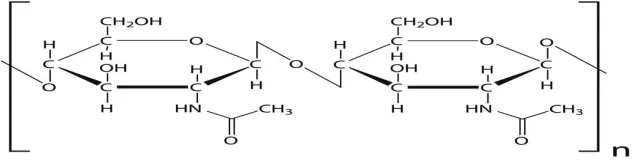
Fig. 1. Chemical structure of chitin. (Source: WEB-4, 2007).
Fig. 2. Structure of chitosan
Chitosan
Chitosan was first reported by Roughet in 1859, who obtained the acid soluble fraction of chitin during boiling in a concentrated potassium hydroxide solution. It occurs naturally in some fungi but its content is much lesser than that of chitin. Chitosan is chemically defined as a copolymer consisting of two residues 2 acetomido-2deoxy β-D glucopyranose.
Chitosan is a linear polysaccharide composed of randomly distributed β-(1→4)-linked glucosamine (deacetylated unit) and N-acetyl D-glucosamine (acetylated unit). It is made by treating the chitin shells of shrimp and other crustaceans with an alkaline substance, like sodium hydroxide. Chitosan widely used in vastly diverse, ranging from waste management to food processing, medicine, and biotechnology (Kalult, 2008). In agriculture, the use of chitosan has been established to improve the yield of rice and orchid production. Chitosan can be utilized in a large number of industrial applications.
Among main features include biocompatibility, biodegradability, antibacterial, chelating properties and non-toxicity (Kim, 2010).
properties (Domard and Domard, 2001).
Chitosans are used in dietary supplements, water treatment, food preservation, agriculture, cosmetics, pulp & paper and medical applications (Sanford, 2002).There has been a large increase in chitosan research during the past decade. This is due to its biocompability, biodegradability, non-toxicity, and other unique properties such as film forming ability, chelation and adsorption properties and antimicrobial activity (Kumar, 2000).
Chitosan is a natural polysaccharide comprising of copolymers of glucosamine and N-acetyl glucosamine, and can be obtained by the partial deacetylation of chitin. Chitosan has been widely used in vastly diverse fields, ranging from waste management to food processing, medicine and biotechnology. These products were characterized by their biological activity as antimicrobial and antifungal properties (Limam et al., 2011).
Application of chitin:
Chitin have immense applications in various fields such as food industry, cosmetics, agriculture, water treatment, biomedicine, textile, biotechnology, paper industry, wound healing agents etc. Chitin is used in toothpaste, mouthwashes and chewing gum. They freshen the breath and prevent the formation of plaque and tooth decay. The deacidifying ability of chitin is utilized in coffee industry and to clarify the beverages such as wine, beer and fruits juices. In paper industry, chitin helps in recycling paper (Bhavani and Dutta, 1999). In textile industry, chitin used in printing and finishing preparations.
Agriculture
Chitin is a good inducer of plant defense mechanisms for controlling diseases. It has also been assessed as a fertilizer that can improve overall crop yields. In agriculture, chitin treated seeds (wheat) were found to have growth accelerating and growth enhancing effects.
Industrial
Chitin is used in industry in many processes, examples of the potential uses of chemically modified chitin in food processing include the formation of edible films and as an additive to thicken and stabilize foods. Processes to size and strengthen paper employ chitin and chitosan. In food industry, microcrystalline chitin is good
emulsifying property, superior thickening and gelling agent. It also used as a dietary fibre in baked foods.
Medical
The interest in chitin originates from then study of the behavior and chemical characteristics of lysozyme, an enzyme present in the human body fluids it dissolves certain bacteria by cleaving the chitinous material of the cell wall. A wide variety of medical applications for chitin and chitin deravatives have been reported over the last three decade. It has been suggested that chitosan may be used inhibit fibroplasias in wound healing and to promote tissue growth and differentiation in tissue culture (Datta et al., 2004).
Application of chitosan
Tissue engineering
Tissue engineering is the development and manipulation of laboratory-grown cells, tissues or organs that would replace or support the function of defective or injured parts of the body. The special attention on chitosan has been paid for the repair of articular cartilage. Microporous chitosan/calcium phosphate composite scaffolds have been synthsized and characterized for tissue engineering. They reported that chitosan provides a scaffold form and calcium phosphates encourage osteoblast attachment which strengthens the scaffold (Zhang and Zhang, 2001)
Wound healing process
Chitin and Chitosan show good effect on wound dressing/wound healing process have the abilities to enhance the wound healing process.the repeating mono-subunit, which is present in chitin and chitosan, N-acetyl glucosamine (NAG),is an important component of dermal tissue and necessary for scar tissue repair. Chitin and chitosan effectively support cell growth by their high positive surface and their surface leads to thrombosis.
Gene therapy
in vitro studies have demonstrated their promise for applications in cancer treatment and diagnosis (Hang, 2010).
Chitosan film as food packing item
As chitosan shows antimicrobial activity so its film has shown great promise for their applicaton in food preservation. The antimicrobial activity limits or prevents microbial growth by extending the interval period and reducing the growth rate or decreasing live counts of microorganisms (Han, 2000) which support the chitosan film for its potentiality in the packaging of food items and food preservation.
Development of Artificial Kidney
The design of artificial kidney systems has made possible separative hemodialysis and the sustain-ing life of chronic kidney failure patients. Chi-tosan membrane has been proposed as an artifi-cial kidney membrane because of their suitable permeability and high tensile strength. The most important part of artificial kidney in the semi per-meable membrane and so far, made from com-mercial regenerated cellulose and cuprophone. Since the primary action of the cellulose mem-brane is that a sieve, there little selectivity in the separation of two closely elated molecules. A se-ries of membrane prepared from chitin and chito-son improved dialysis properties. One of the most serious problem of using these artificial mem-branes is surface induced thrombosis, where hep-arization of blood is needed to prevent clotting and people who are liable to internal hemorrhage can be dialysed only at great risk. most chance, hence there are the most challenging problems still to be resolved in the development of mem-brane which are inherently blood compatible from there point of view chitosan is haemostatic that is cause clots.
Chitosan in waste water treatment
Chitin and chitosan mixtures were found to re-move arsenic from contaminated drinking water. Chitosan molecule has the ability to interact with bacterial surface and in asorbed on the surface of the cells and stack on the microbial surface and forming impervious layer around the cell leading to block the channel.
Application of chitosan and chitosan as a nano-particle in waste water treatment
Water containing unwanted substances which ad-versely affect its quality and thus making it
unsuitable for use is termed as waste water. Waste water is generated from various sources such as residential areas, commercial/industrial proper-ties, agricultural etc. composition of waste water varies widely and depending upon the sources from which it generates, common constituents of wastewater are pathogenic and nonpathogenic micro organisms. The most important pathogenic organisms responsible for water borne diseases in India are bacteria viz., E. coli, Shigella flexinari and Vibrio cholera. Organic substances such as excreta, plant materials, food protein and inorganic sub-stances like metal particles, ammonia along with gases when left untreated these constituents may pose threat to living beings and the environment, which make it essential to threat waste water be-fore disposal various physical, chemical and bio-logical treatment process are used for waste water treatment. Metals which are discharged into nat-ural water as increased concentration from sew-age, industrial effluent or mining operation can have serve toxicological effects on human and aquatic ecosystem heavy metals As, Cr, Pb, Hg, Cu, Zn, Ni are toxic for plants and human beings. These metals even in traces amount, interfere with or inactivate enzymes of living cells. Therefore, their discharge into environment should be mini-mized and controlled carefully.
Chitosan as a nanoparticle
Synthesized nanoparticles of naturally occurring chitosan have many potentials in low cost water disinfection system. The antibacterial properties of chitosan nanoparticle have been explained by various mechanism one theory possess increase in membrane permeability and eventual rupture and leakage of intracellular components when the positively charged chitosan particle react with negatively charged cell membrane as the chief an-timicrobial mechanism. Another mechanism pro-poses chitosan penetrate cell membrane walls and binds with DNA and thus inhibit RNA synthesis in cell.
Base material for stem cell culture
objectives are to evaluate the potential of chitosan for tissue culture plate modification and to under-stand the mechanism of osteogenesis by chitosan in terms of gene expression and mineral matrix deposition. These results will pay way to develop chitosan-based culture plates and biomimetic scaffolds for various cell cultures and bone tissue engineering application.
Harmful effects of chitin and chitosan
Gavhane et al (2013) reported wide biomedical ap-plications of chitin and chitosan, however, he also highlighted some limitations such as allergy and constipation. Furhermore people with intestinal malasorption syndroms should not use chitosan. Its adverse effects on the growth of children and on the outcome of pregnancy were also reported. However, application of chitin and chitosan have faced some limitation with high viscosity and low solubility at neutral pH (Kim & Dewapriya, 2014)
References
Ali, A., & Ahmed, S. (2017). A review on chi-tosan and its nanocomposites in drug deliv-ery. Inter-national journal of biological macromole-cules.
Aranaz, I., Acosta, N., Civera, C., Elorza, B., Mingo, J., Castro, C., Heras Caballero, A. (2018). Cosmetics and Cosmeceutical Applications of Chitin, Chitosan and Their Deriva-tives. Poly-mers, 10(2): 213.
Babu, A., & Ramesh, R. (2017). Multifaceted appli-cations of chitosan in cancer drug delivery and therapy. Marine drugs, 15(4), 96.
Baxter, R. M., Dai, T., Kimball, J., Wang, E., Ham-blin, M. R., Wiesmann, W. P., and Baker, S. M. (2013). Chitosan dressing promotes healing in third degree burns in mice: Gene expression anal-ysis shows biphasic effects for rapid tissue regen-eration and decreased fibrotic signal-ing. Journal of Biomedical Materials Research Part A, 101(2), 340-348.
Bhavani, D. K., & Dutta, P. K. (1999). Physico-chemical adsorption properties on chitosan for dyehouse effluent. American dyestuff reporter 88(4), 53-58.
Damian, C., Beirão, L. H., Francisco, A., Santo, M. E., & Teixeira, E. (2005). Chitosan: an amino poly-saccharide with functional characteris-tics. Alim. Nutr, 16(2), 195-205.
Domard, A., & Domard, M. (2001). Chitosan: structure-properties relationship and biomedi-cal
applications. Polymeric biomaterials, 2, 187-212.
Dutta, P. K., Dutta, J., & Tripathi, V. S. (2004). Chi-tin and chitosan: Chemistry, properties and appli-cations. Journal of scientific and industri-al Re-search. 63: 20-31.
Gavhane, Y.N., A.S. Gaurav and A.V. Yadav. 2013. Chitosan and its application: A review of litera-ture. International Journal of Research in Pharma-ceutical and Biomedical 4: 312-331.
Habibie, S., Hamzah, M., Anggaravidya, M., & Kalembang, E. (2016). The effect of chitosan on physical and mechanical properties of pa-per. Journal of Chemical Engineering and Materials Science, 7(1): 1-10.
Han, J.H. 2000. Antimicrobial food packaging. Food Technology 54: 56-65.
Hang, T.T., D.E. Dunstan and D.R. Crispin. 2010. Anticancer activity and therapeutic ap-plications of chitosan nanoparticles. In: Chitin, chitosan, oli-gosaccharides and their deriva-tives, biological activities and applications. (Eds. S.K. Kim), New York, CRC Press. UK, Pp. 271-282.
Jayakumar, R., Menon, D., Manzoor, K., Nair, S. V., & Tamura, H. (2010). Biomedical applica-tions of chitin and chitosan based nanomateri-als—A short review. Carbohydrate Poly-mers, 82(2): 227-232.
Kalut, S.A. (2008) Enhancement of Degree of Deacetylation of Chitin in Chitosan Production pp. 5-31.
Kim, S.K. (2010) Chitin, Chitosan, Oligosaccha-rides and Their Derivatives., New York: CRC Press.
Kim, S.K. and P. Dewapriya. 2014. Biologically ac-tive compounds from seafood processing by-products. In: Biotransformation of waste bio-mass into high value biochemicals (Eds. S.K. Brar, G.S. Dhillon & C.R. Soccol). New York, Heidelberg Dordrecht London. Pp. 299-313.
Kumar, M. N. R. (2000). A review of chitin and chitosan applications. Reactive and functional polymers, 46(1), 1-27.
Levengood, S. K. L., & Zhang, M. (2014). Chi-to-san-based scaffolds for bone tissue engineer-ing. Journal of Materials Chemistry B, 2(21), 3161-3184.
and chitosan from crustacean by-products: Bio-logical and physicochemical properties. African journal of biotechnology, 10(4), 640-647.
Mathur, N. K., & Narang, C. K. (1990). Chitin and chitosan, versatile polysaccharides from marine animals. Journal of Chemical Educa-tion, 67(11), 938.
Patrulea, V., Ostafe, V., Borchard, G., & Jordan, O. (2015). Chitosan as a starting material for wound healing applications. European Journal of Phar-maceutics and BiopharPhar-maceutics, 97, 417-426.
Pontius, F. W. (2016). Chitosan as a Drinking Wa-ter Treatment Coagulant. American Journal of
Civil Engineering, 4(5), 205-215.
Sandford, P. A. (2003). Commercial sources of chi-tin and chitosan and their utiliza-tion. Advances in chitin science, 6, 35-42.
Sharp, R. G. (2013). A review of the applications of chitin and its derivatives in agriculture to mod-ify plant-microbial interactions and im-prove crop yields. Agronomy, 3(4), 757-793.
Zhang, Y., & Zhang, M. (2001). Synthesis and characterization of macroporous chi-tosan/cal-cium phosphate composite scaffolds for tissue en-gineering. Journal of Biomedical Ma-terials Re-search, 55(3), 304-312.
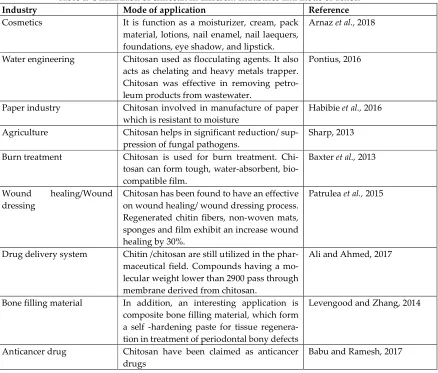
Table 1. Utilizatiaon of chitosan in different industries and mode of action
Industry Mode of application Reference
Cosmetics It is function as a moisturizer, cream, pack material, lotions, nail enamel, nail laequers, foundations, eye shadow, and lipstick.
Arnaz et al., 2018
Water engineering Chitosan used as flocculating agents. It also acts as chelating and heavy metals trapper. Chitosan was effective in removing petro-leum products from wastewater.
Pontius, 2016
Paper industry Chitosan involved in manufacture of paper which is resistant to moisture
Habibie et al., 2016
Agriculture Chitosan helps in significant reduction/ sup-pression of fungal pathogens.
Sharp, 2013
Burn treatment Chitosan is used for burn treatment. Chi-tosan can form tough, water-absorbent, bio-compatible film.
Baxter et al., 2013
Wound healing/Wound dressing
Chitosan has been found to have an effective on wound healing/ wound dressing process. Regenerated chitin fibers, non-woven mats, sponges and film exhibit an increase wound healing by 30%.
Patrulea et al., 2015
Drug delivery system Chitin /chitosan are still utilized in the phar-maceutical field.Compounds having a mo-lecular weight lower than 2900 pass through membrane derived from chitosan.
Ali and Ahmed, 2017
Bone filling material In addition, an interesting application is composite bone filling material, which form a self -hardening paste for tissue regenera-tion in treatment of periodontal bony defects
Levengood and Zhang, 2014
Anticancer drug Chitosan have been claimed as anticancer drugs