Vol. 05, Issue 12 (December. 2015), ||V1|| PP 39-44
Sedimentary characteristics of second section of the large grinding group in Baer
depression
Lishuming, Sunbo Fanyanwen
College of Earth Sciences, Northeast Petroleum University
Abstract:Using seismic sedimentology and seismic geomorphology, depicting the system of the second section of Damoguaihe guoup formation of the Beier depression in a basin.The main data of this research are lithologic profile data,log data and 3D seismic data,using the stratigraphic section image describe the sedimentary
characteristics of sequence stratigraphy and complex sedimentary system,and identify three types of sedimentary system:the meandering river delta system、the braided river delta system、lake system. Finally
according to the seismic sedimentology section of composite divided into three facies belt.In the process of practical application,Firstly,consider the parameters on the formation of the seismic data volume itself used slice image quality,then combining structure and sedimentary for the purpose of the study area selected interval control function,based on the analysis to discuss the control of quality parameters of strata slice imaging. The practical application of this study shows that:in the blank area of the lack of drilling data, the stratigraphic section can effectively predict the distribution of sand bodies in the delta,has progressive significance to the
development of lithologic reservoir.
Keywords:Beier depression、Dmoguaihe group、Stratigraphic framework、Seismic deposition、Sedimentary
characteristics
I.
INTRODUCTION
Seismic sedimentology appears after seismic stratigraphy and sequence stratigraphy ,is a kind of modern seismic technology and sedimentology of combining the interdisciplinary,which focuses on the plane and vertical distribution of sedimentary system and its evolution process.Through the analysis of 72 Wells’ data,
using seismic sedimentology and seismic geomorphology of high resolution seismic imaging plane distribe the sedimentary system.
Damoguaihe group of Beier depression’ research is focused on the Damoguaihe formation of seismic geomorphology description and application of seismic sedimentology,Seismic data used in the post stack 3D data cube,Through the related analysis synthetic records well,the results show that the data of well seismic data is fit for the high seismic data.The main frequency range of 10-100 Hz,the frequency of 30 Hz,And the data of the signal to noise ratio is relatively high,Using Landmark for 3D seismic interpretation And using Recon
software to generate stratigraphic section,using the actual research results enrich the basic theory of seismic sedimentology.
1 regional geological survey
Figure 1. Location map of the study area of Beier depression
II.
APPLICATION OF SEISMIC SEDIMENTOLOGY IN THE STRATIGRAPHIC
DIVISION
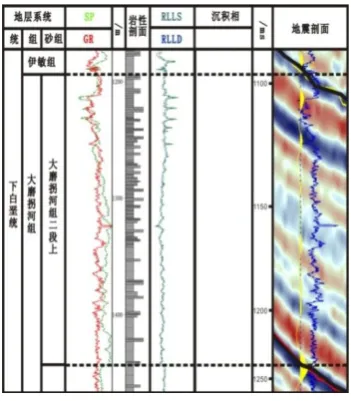
The results of previous studies show that the deposition of the second section of the Damoguaihe group is extensive,main sedimentary facies is Multiphase delta,Fan delta sedimentary.There are large progradation reflection structure on seismic section,drilling profile has not obvious on the cycle characteristics,
the second section of the Damoguaihe formation is the main water retreat type delta depositional system,due to the sediments filling lake basin,the lakes gradually narrowed down gradually formed lakes, swamps and alluvial plain environment,As shown in Figure 2
Figure 2 the relationship between well seismic integrated histogram
The evidence of this study is based on the regional structure,dynamic mechanism, seismic wave reflection mode, multi well drilling coring and logging data,reflect on seismic sedimentology section of
the positive cycle,In the border due to begin in nantun formation deposition,log cycle performance for lower GR value is higher,upward reduction,the value of resistivity curve gradually decreases,funnel shape,sediment
from the bottom up gradually become thin.At the boundary of the change of the thickness of the sediment,it shows that the water power has changed obviously,and it is the result of different water power.Therefore,this can be used as the upper bound of the formation of the Damoguaihe group.While in Damoguaihe ground ‘second and first section boundary is a continuous strong negative amplitude response,in the log responseit is a set of
mudstone in log responseit.
III.
HIGH RESOLUTION SEISMIC IMAGING OF THE SEDIMENTARY PATTERN
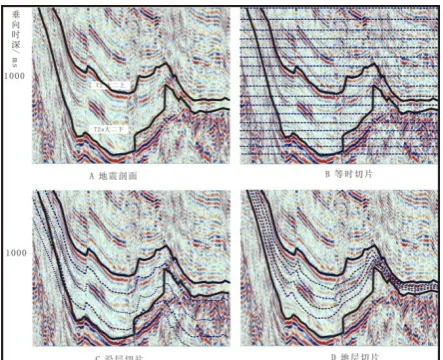
Seismic sedimentology is a powerful means of sedimentary section imaging,time section and horizontal section in many seismic interpretation software can be made.The essence of the stratigraphic section is to reflect a complete set of sedimentary system in seismic exploration.
As a result of the stratigraphic occurrence can't be horizontal,have a certain degree of fold and more significant lateral variation in thickness,the application of stratigraphic slicing technique can reflect the geological time of the same plane,as shown in figure 3.
Figure 3 Slice method used in the study area of Beier depression
The stratigraphic slicing technique is the using of professional and technical software -Recon,in accordance with the vertical time domain will be integrated into the various geological units of multiple seismic slice.First step,The seismic data body is carried to 90 degree phase rotation to give the seismic phase axis with lithology significance;The second step,according to the previously established stratigraphic framework,linear
interpolation is performed to determine the top and bottom boundary of seismic data slice,then can get an isochronous stratigraphic model;Third step,extract the amplitude attribute from the geological model of 3 d seismic data volume,create a strata amplitude attribute slice and the time domain of the slice body in vertical is
continuous ,in the plane is isochronous. The amplitude of the stratigraphic section can provide important information about lithology and geomorphology,can be used to study the sedimentary microfacies,By
observing the stratigraphic section, a higher resolution method of the simultaneous deposition system is studied. In the stratigraphic section of the Beier depression,there is a significant change in the amplitude of each picture,
amplitude zone is interpreted as the mudstone layer. 1) Meandering river delta system
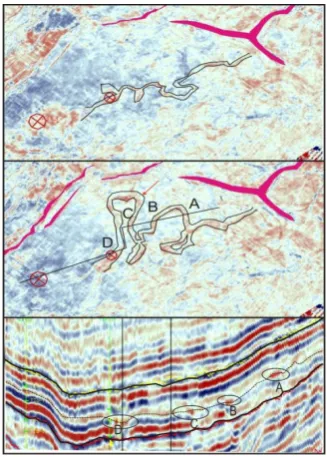
Analysis the slice near the northern Bei 18 well and identify the development phase of the oxbow lake,
From A to B form the arrow refers to the premises of oxbow lake.In B and C,X-X'section and its corresponding seismic section,it is indicated that the high amplitude of the seismic event axis is a reflection of
the river deposition position in the section. and can be found in the seismic section of the corresponding log and lithologic profile,The log response is more than the tooth of the bell type and the gear box type,whole present positive rhythm,as shown in figure 4,finally, the reality of the image response is implemented.
Figure 4 Seismic sedimentology response section
(2) Braided river delta system
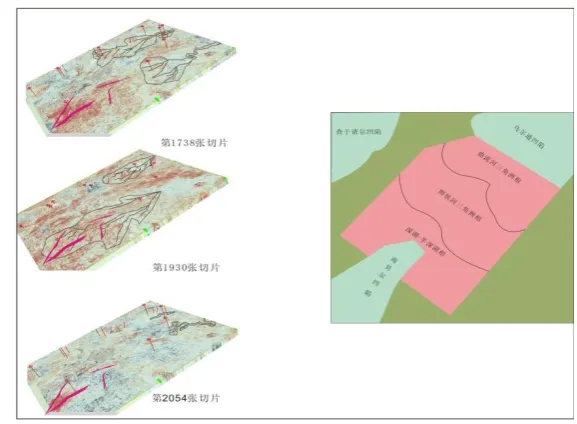
Braided river delta system is composed of the high energy braided river into the lake formation of the depositional system.The facies belts of braided river delta are related to the water flow energy and the characteristics of the lakes. Under the condition of large lake scale and water depth,the braided river delta can be divided into delta plain, delta front and the former delta.Analysis of section 1930th,observed obvious along the north east of strong amplitude lobate body,and in the direction of the material source,there is a clear channel
response of braided river.The log response of Huo 7 well is based on the diversion channel and the river mouth dam response,according to bei 61, bei 57 and Huo 7 seismic section observed lower part of the section time domain seismic phase and strong amplitude, high continuous foreset sand body. As shown in figure 5.
3) Semi deep lake and deep lake depositional system
In damoguaihe group the formation of the lake facies mud shale is very well developed, Shale in the vertical and horizontal stability is very strong,In the seismic phase,the structure of high continuous strong
amplitude sub parallel reflection is reflected. The logging curves is flat curve, at the same time the response of seismic sedimentology section is a large area of negative amplitude response,In the single well column, also can
identify significant deep lake facies logging curves, as shown in figure 5.
IV.
DISCUSSION AND APPLICATION OF SEISMIC IMAGING TECHNOLOGY
(1) The influence factors on the quality of the slice of the strata
1)The quality of seismic data is the key factor to influence the quality of slice image,to characterize the ancient
landscape by means of a good description of the strata,which is more in need of high quality seismic data.The seismic data of this study is a post stack 3D seismic data,by analyzing the dominant frequency spectrum and
phase spectrum of the seismic data, the characteristic is obtained by an effective 10 ~100HZ frequency range, a major frequency of about 30HZ and the signal to noise ratio is higher. Therefore, the high quality of seismic data is the basis of stratigraphic slicing。
2)If the geological environment is more complex, such as fault, the fault caused by the angle is not integrated, then the choice of seismic events in the event of the same time will be very difficult, and will cause problems such as channeling.But in the study area, in addition to the south part of the ancient uplift, the other area of the fault is not developed, so the integration of the research area is not damaged by the fault, Thus the clear deposition phenomena can be described by the stratigraphic section of the study area.
3)The purpose of this research is the second stage of the Dmoguaihe group,although the vertical time range is relatively short,but the sedimentary evolution of the seismic section is very clear.In this study,each deposition pattern has a different response on the slice. Among them,the meandering river can be intuitive description through its maximum width and different shapes of the meandering flow length ratio.The response of the fan can be explained by the fan delta and braided river delta,through the comparison of the drilling section and seismic section of the fan response, and the identification of the log curve,the fan response of the research area is determined by the shape of the braided river delta,semi deep lake and deep lacustrine depositional system showed a large continuous strong negative amplitude on the seismic events,and can quickly characterizes boundary from the slice of seismic sedimentology,which is other sedimentary facies research means can not achieve.
(2) The distribution of sedimentary facies in the study area
As the plane distribution of the depositional system is gradually changing with the depth of the vertical direction,the study area of Damoguaihe group’ second section’seismic geomorphology on the application itself by a vertical time range limit,this also limits the ultimate research results.——only according
Figure 6 Strata section of the second section of the Damoguaihe group
V.
CONCLUSIONS AND COGNITION
1)In the section of seismic sedimentology can clearly depict three types of depositional systems,and according to the case study of seismic sedimentology section has unique advantages in the study of sedimentary system in the delta,show very well application effect,this understanding can solve the problem of the
identification of sand bodies in the blank area,which has some guidance for the development of lithologic oil gas reservoirs.
(2)The seismic sedimentology analysis in the research area of braided river delta sedimentary system found that,the structure of the delta front with a strong amplitude is more continuous or the reflection of the former,and shows strong amplitude characteristics of delta lobes and underwater distributary channel and mouth bar in the section of seismic sedimentology,by adjusting the time window of the slice, the sedimentary
characteristics of the migration of the multi period leaf in the Delta region were observed.
(3)An important factor in obtaining high quality stratigraphic slice images is the high quality seismic data body and relatively simple structural geological features,for the vertical time range of the constraints in the
study did not reflect.
REFERENCE
[1] Linzhengliang,Wanghua. Current status and progress of seismic sedimentology[J]. Geological science and technology information,2011,29(2):418-419.
[2] Zenghongliu,Seismic sedimentology in China: Retrospect and Prospect[J]. Journal of deposition, 2011,29(3): 61-70
[3] Zhochao,Liuzhanguo. The application of seismic sedimentology in turbidite sand body recognition.[J]. Special oil gas reservoir, 2014,21(4):59-61.
[4] Dongchunmei,Zhangxianguo,Linchengyan. The concept, method and technology of seismic sedimentology [J]. Journal of deposition, 2006,24(5):700-703.
[5] Wangkaiyan,Xuqingyan. Overview of seismic attribute analysis technology [J]. Progress in Geophysics, 2013,28(2):816.