DISCLOSING ROMANTIC RELATIONSHIP CONFLICTS WITH A THIRD PARTY: A TEST OF THE DISCLOSURE DECISION-MAKING MODEL
by
Michelle Marie Jimenez
A thesis
submitted in partial fulfillment of the requirements for the degree of
Master of Arts in Communication Boise State University
© 2019
BOISE STATE UNIVERSITY GRADUATE COLLEGE
DEFENSE COMMITTEE AND FINAL READING APPROVALS
of the thesis submitted by
Michelle Marie Jimenez
Thesis Title: Disclosing Romantic Relationship Conflicts with a Third Party: A Test of the Disclosure Decision-Making Model
Date of Final Oral Examination: 8 March 2019
The following individuals read and discussed the thesis submitted by student Michelle Marie Jimenez, and they evaluated her presentation and response to questions during the final oral examination. They found that the student passed the final oral examination.
Kelly Rossetto, Ph.D. Chair, Supervisory Committee Matthew G. Isbell, Ph.D. Member, Supervisory Committee Heather Witt, Ph.D. Member, Supervisory Committee
iv
ACKNOWLEDGMENTS
First and foremost, I would like to thank my advisor, Dr. Kelly Rossetto, for her constant patience, guidance, and support throughout this process. Also, thank you for consistently reminding me about self-care when I would get too wrapped up in the research and writing process. Your positive attitude and confidence in my work was an absolute blessing. Thank you also to my committee members, Dr. Isbell and Dr. Witt, for always pushing me to think and write at a higher level.
A special thank you to both Dr. Rossetto and Dr. Isbell for not only being on my committee, but for always opening up your office doors to me when I had any questions or concerns about life and my future. Your guidance, both academically and
professionally, has greatly impacted my experience as a graduate student and pushed me to levels of greatness I didn’t know I was capable of.
To my mom, I can’t thank you enough for always listening to my nonsense and
offering continuous encouragement throughout my education experience. Thank you for always being my best friend and #1 supporter.
v ABSTRACT
This study utilized Greene’s (2009) health disclosure decision-making model (DD-MM) to better understand the process of romantic relationship conflict (RRC) disclosures to a confidant outside the relationship. In doing so, I investigated the changes in relational quality between the discloser and their romantic partner/confidant, while also proposing that the DD-MM would be valid for use in RRC disclosures. Results indicated that while relational quality does not change significantly between the discloser and their romantic partner/confidant after an RRC disclosure, the depth of disclosure is
vi
TABLE OF CONTENTS
ACKNOWLEDGMENTS ... iv
ABSTRACT ... v
LIST OF TABLES ... ix
LIST OF FIGURES ... x
CHAPTER 1: INTRODUCTION ... 1
CHAPTER 2: REVIEW OF LITERATURE ... 4
The Disclosure Decision-Making Model ... 4
Assessing the Information ... 5
Assessing the Receiver ... 6
Disclosure Efficacy ... 7
Depth of Disclosure ... 8
Model Critiques ... 9
Romantic Relationship Conflicts ... 10
The DD-MM in RRCs ... 13
Social Support ... 15
CHAPTER 3: METHOD ... 22
Participants & Recruitment ... 22
Procedure ... 23
vii
Intensity of Conflict ... 24
Perceived Support... 24
Multidimensional Scale of Perceived Social Support. ... 25
Relational Quality... 25
Disclosure Efficacy ... 26
Depth of Disclosure to Confidant ... 26
Open-ended Questions ... 27
CHAPTER 4: RESULTS ... 29
Validation of the DD-MM in RRCs ... 29
Reliability ... 29
Convergent Validity ... 30
Model Fit... 31
Hypotheses 1 and 2 ... 33
Research Question 2... 34
Research Question 3... 34
CHAPTER 5: DISCUSSION ... 36
Validation of the DD-MM in RRCs ... 36
Relational Quality and Disclosure ... 39
Limitations & Future Directions ... 42
Conclusion ... 44
REFERENCES ... 47
APPENDIX A ... 58
viii
APPENDIX C ... 62
APPENDIX D ... 64
APPENDIX E ... 67
APPENDIX F ... 69
APPENDIX G ... 71
APPENDIX H ... 73
APPENDIX I ... 75
APPENDIX J ... 77
APPENDIX K ... 79
APPENDIX L ... 81
ix
LIST OF TABLES
x
LIST OF FIGURES
CHAPTER 1: INTRODUCTION
Self-disclosure involves the process of voluntarily revealing private information (e.g., personal feelings, fears, stigmatized identities) that is otherwise unlikely to be known by others (Greene, Derlega, & Mathews, 2006; Ignatius & Kokkonen, 2007; Pearce & Sharp, 1973). Individuals often self-disclose to develop intimacy, gain support, organize their own thoughts related to an experience, or reduce interpersonal conflict (Bonnan-White, Hetzel-Riggin, Diamond-Welch, & Tollini, 2018; Greene et al., 2012). Disclosure for each of these reasons can help validate self-worth and personal identity, which, in turn, can increase the quality of interpersonal relationships (Greene et al., 2006). Individuals tend to adjust levels of disclosure to accommodate their unique dyadic relationships; but the more one discloses, the more likely they are to elicit reciprocity from their confidant (Levesque, Steciuk, & Ledley, 2002). Thus, there is potential to increase the levels of intimacy and relational quality through self-disclosure.
able to separate their identity from the information they are disclosing and may experience more anxiety through the co-ownership of the information, which can also decrease their self-esteem (Afifi & Caughlin, 2006).
There are two types of self-disclosure: disclosure about oneself (personal) and disclosure about one’s relationship with another person or interactions that they have had
(relational) (Greene et al., 2006). Within the context of romantic relationships, there is a dyadic relationship present prior to the introduction of the confidant. Disclosure about conflicts in one’s relationship then becomes not about just one’s personal information, but their partner’s personal information as well. As the discloser navigates their way
through the disclosure decision-making process, from assessing information, to the disclosure, to dealing with the consequences of disclosing, they consider their relational quality with their confidant (Greene et al., 2012). For relational disclosures, the discloser may also consider the relationship quality they have with their partner. Furthermore, the disclosure may impact the two dyadic relational quality assessments, understood through changes in relational quality between the discloser/confidant and the discloser/partner after the disclosure has occurred. Increased relational quality creates stronger
interpersonal relationships that can help reduce stress (Burleson, 2003), which could be particularly important when experiencing romantic relationship conflicts. As such, it is important to not only explore relational quality as a variable influencing the decision to disclose, but also as an outcome of disclosure across the different relationships involved in the disclosure.
CHAPTER 2: REVIEW OF LITERATURE The Disclosure Decision-Making Model
The Disclosure Decision-Making Model (DD-MM), is useful for understanding RRC disclosures because it analyzes the different steps one takes in deciding whether or not to disclose to others about personal issues (Greene, 2009). With uncertainty at its core, this model seeks to understand the dialectical nature of information sharing and examines what factors are more heavily weighted quantitatively in the process of disclosure (Greene et al., 2012). In Greene’s (2009) original model there are four main components, including assessing the information, assessing the receiver, disclosure efficacy, and depth of disclosure, used to understand the decision-making process for disclosure. The model has been used in a number of health contexts such as HIV, mental illness, and invisible conditions disclosures (e.g. Greene, Carpenter, Catona, &
stigmatized identities surrounding illnesses. For the purpose of this study, I will be focusing on the original model, its four major components, and their outcomes as they relate to RRCs.
Assessing the Information
Assessing information is the first component of the DD-MM, which encompasses five factors to be considered: stigma, preparation, prognosis, symptoms, and relevance to others (Greene, 2009). Because this model was originally developed in the context of health, each factor relates directly to mental or physical health disclosure. Stigma, defined as “an attribute that is deeply discrediting” (Goffman, 1986, p. 3), may decrease
intentions to disclose because there are potential negative effects from a stigma
surrounding one’s health issue (Greene, 2009). Divulging a stigmatized identity marker
may require one to have to externally manage a previously hidden identity.
Understanding the importance of the issue for oneself, and for others, may help decide whether or not support seeking, through disclosure, is the best route to take (Greene et al., 2012). Additionally, one’s preparation for their diagnosis, whether it was anticipated or not, may cause uncertainty and uneasiness about their current state and whether they are ready to disclose. Those certain of their diagnosis, such as a disease that is hereditary, may be more apt to share information with others versus those who are new to their diagnosis (Greene, 2009; Greene et al., 2012).
may choose to openly disclose from the start, while others may conceal the information until it is absolutely necessary (Schrimshaw & Siegel, 2002). The symptoms also play a role as there are potential risks and complications to overcome with any disease or illness. Those who are more symptomatic may disclose about their disease sooner rather than later in search of support physically, emotionally, and/or mentally (Greene, 2009). Visible symptoms may also prompt others to ask questions, which may speed up the disclosure process as well (Schrimshaw & Siegel, 2002).
The last factor that plays into information assessment is analyzing the disease’s relevance to others and whether or not they are directly affected by it (Greene, 2009). In situations such as STI diagnoses people may me more likely to disclose because they consider the risks of transferring the STI to their partner and want to let them know prior to engaging in a relationship (Greene, 2009). While figuring out what information one will disclose, the next component to assess is who one will choose as the confidant and the potential responses they may receive from that person.
Assessing the Receiver
After information assessment, one may begin assessing the potential receiver, including their relational quality with and the perceived support (i.e., anticipated response) from that person. Relational quality involves “the relative degree of positive, supportive, beneficent experiences as compared to the negative, potentially detrimental ones” within a relationship (Collins, Welsh, & Furman, 2009, p. 636). Relational quality
relationship with their potential confidant. People typically disclose to those they feel closer with, such as an informal partner (e.g., friend, family member), rather than formal partners or professionals (e.g., therapist) (Bonnan-White et al., 2018; Levesque, Steciuk, & Ledley, 2002).
Disclosers also perceive more support from close, informal relationship partners because they are typically more supportive and helpful than formal relationship partners (Bonnan-White et al., 2018; Choi et al., 2016; Greene et al., 2012). This relates to anticipated response as a consideration for disclosure; if a person expects a supportive response, they are more likely to disclose (Choi et al., 2016; Greene et al., 2012). For example, in HIV disclosures, an individual may choose to disclose in increments to gage the reaction of the confidant and maintain a level of control over the information so that negative stigmas can be managed (Catona, Greene, & Magsamen-Conrad, 2015). In sum, the higher the relationship quality, and the more positive the anticipated response (i.e., perceived support), the more likely one is to disclose.
Disclosure Efficacy
Disclosure efficacy roots itself in self-efficacy, which Bandura (1977)
conceptualizes as the ability to perform an action to produce an outcome. The stronger the perceived self-efficacy, the more adversity an individual believes they may overcome (Bandura, 1977). Disclosure efficacy is the perceived ability in oneself to disclose private information to a target or confidant (Greene, 2009). Those with a higher level of
DD-MM suggests that the greater the relational quality, the greater the disclosure efficacy and depth of disclosure to the confidant will be (Greene et al., 2012). For example, those who are diagnosed with cancer often feel an increased level of disclosure and
communication efficacy if their perceived relational quality with the confidant is high (Magsamen-Conrad, Checton, Venetis, & Greene, 2015). Those who do not have high disclosure efficacy may resort to other modes of disclosure, such as finding a third party to disclose the information for them or disclosing through
computer-mediated-communication (Greene, 2009; Greene et al., 2012). Disclosure efficacy is both the result of and resource for the closeness of relationships because it helps determine the depth of information to disclose to others (Greene, 2009).
Depth of Disclosure
As humans, we build relationships through self-disclosure, and some relationships may involve more disclosure than others. Self-disclosure can be achieved through verbal or written communication with another person about one’s own private information, such as personal facts, opinions, attitudes, and beliefs (Omarzu, 2000). It may also indicate an individual’s willingness to further develop a relationship (Baruh & Cemalcılar, 2018). In
considering how much to disclose, one may evaluate the breadth and depth of
change post-disclosure heavily influences whether someone feels comfortable enough to disclose to their confidant (Afifi & Caughlin, 2006). Overall, depth of disclosure often depends on the relational quality and perceived support from the confidant, which may range from person to person.
Model Critiques
Being fairly new, the DD-MM has yet to receive any major critiques from other researchers, however Greene offers some critiques of her own. The first is that the model is retrospective rather than projected, and that the process may not properly be
represented through reflections (Greene et al., 2012; Choi et al., 2016). Secondly, the model does not address the “ongoing nature of disclosure and disclosure updates” that
may follow, it simply ends after the first occurrence of disclosure (Greene et al., 2009, p. 366). There is also limited understanding on the depth, breadth, and duration of
disclosure. Third, there are potential interruptions not accommodated for in the model, such as someone asking questions and initiating the conversation (Greene, 2009). Lastly, the DD-MM has most often been used to analyze dyadic relationships between the discloser and the confidant.
discloser’s romantic partner. The following sections introduce romantic relationships then
highlight the relevance of the DD-MM when investigating the disclosure of RRCs. Romantic Relationship Conflicts
From casual dating to more serious relationships, couples experience increasing levels of commitment and relationship satisfaction if their relational needs, such as physical affection (Guerrero & Andersen, 1994; Gulledge, Gulledge, Stahmann, 2003) or support (Cutrona, 1996) are met throughout the relationship (Umphrey & Sherblom, 2001). According to the social exchange theory (SET), the interdependence of couples influences individuals’ tendencies to weigh the costs against the rewards to determine the
worth of the relationship (Nakonezny & Denton, 2008). Often, costs come in the form of RRCs, or “relationship problems,” which can be defined as “any form of emotional or
Sexual infidelity involves “participation in sexual intercourse with a person other than one’s partner” (Hertlein, Wetchler, & Piercy, 2005, p. 6). Emotional infidelity,
however, is more prevalent than such physical affairs and roots itself in emotional intimacy (Hertlein et al., 2005). Aspects of emotional intimacy include companionship, respect, understanding, or self-esteem in an otherwise close relationship (Glass & Wright, 1992). These forms of emotional intimacy, if with someone outside the romantic
relationship, may be interpreted as infidelity. Infidelity, in either form, is known to be one of the leading causes of relationship dissolution because it can result in diminished
relational quality, trust and intimacy levels within a couple (Allen, 2005; Hertlein, Wetchler, & Piercy, 2005; Owen, Rhoades & Stanley, 2013; Platt, Nalbone, Casanova & Wetchler, 2008; Vangelisti & Gerstenberger, 2004). It also creates stress (Barelds & Barelds-Dijkstra, 2007) and can cause jealousy within the relationship (Barelds & Barelds-Dijkstra, 2007; Kennedy-Lightsey & Booth-Butterfield, 2011; Rotenberg, Shewchuk, & Kimberley, 2001).
Jealousy involves an array of behavioral, emotional and informational responses that occur when an existing relationship’s norms and quality levels are threatened by a
third-party (Pfieffer & Wong, 1989). Gatzeva and Paik (2011) found that marriages with jealousy conflicts often suffer the most in terms of relationship satisfaction. There are three major types of jealousy that can occur: possessive, anxious, and reactive. Unlike reactive jealousy, both anxious and possessive jealousy can be “triggered in the absence of an extra dyadic rival” (Swami et al., 2012, p. 797). Possessive jealousy occurs when
this could be an individual enacting surveillance or manipulation attempts toward their partner to make sure they do not spend time with specific people outside the relationship (Guerrero et al., 1995). Anxious jealousy occurs in anticipation of a situation (Barelds & Barelds-Dijkstra, 2007; Barelds et al., 2017; Swami et al., 2012) while reactive jealousy occurs after a situation has already taken place (Rotenberg, Shewchuk, & Kimberly, 2001). Anxious jealousy often lowers the relational quality, as rumination of hypothetical situations causes anxiety and distress, while reactive jealousy has been shown to increase relational quality because it is often viewed as showing love or care for one’s partner (Barelsds & Barelds-Dijkstra, 2007). However, prolonged or intense jealousy could prove detrimental to a relationship (Guerrero & Eloy, 1992). For example, if a man constantly worries about his partner talking to another man (anxious jealousy), the man may enact higher surveillance responses designed to restrict his partner’s interactions with the rival relationship, which would then reduce their relational quality over time (Guerrero et al., 1995). However, if that same man is jealous after witnessing his partner talking to another man, that partner may view the reactive jealousy as showing care for the relationship and its stability (Barelsds & Barelds-Dijkstra, 2007; Yoshimura, 2004). Although jealousy often stems from interactions with others outside the romantic
relationship, it may also stem from societal or relational pressures, including quality time together, decreased communication, or questions about who should provide financially for the relationship or family (Jimenez, 2018).
and/or saving of any money that comes into the home (Miller, Yorgason, Sandberg, & White, 2003; Papp, 2018). While finances are typically not shared in newly developing romantic relationships, conflicts about money management still emerge. For example, RRCs surrounding money may ensue about who should pay for dates or how the couples should be saving for future events such as a vacation or wedding (Reese-Weber et al., 2015). In well-established and future-oriented couples, money has the most long-term importance in the relationship since financial strain or stability depend on the couple’s everyday financial decisions (Papp, 2018; Reese-Weber et al., 2015). RRCs about money are often prevalent and problematic in the relationship because they seldom have one solution (Papp, Cummings, Goeke-Morey, 2009). Based on the different types of RRCs, and the impact they can have on relationships, it is important to understand the process of conflict disclosure (i.e., relational quality, disclosure efficacy, perceived support, depth of disclosure) and how bringing in a third party may influence relational quality among the individuals involved.
The DD-MM in RRCs
Schrodt & Ledbetter, 2012). The idea of feeling caught arises when boundary rules created, and efforts to maintain them, are incompatible. For example, when divorced parents disclose too much information to their children, it creates a tension and makes the child feel like they need to choose sides (Afifi, 2003). Disclosing RRCs to a third party could also create triangulation in a similar way. Whether the information is disclosed to a family member or friend, one’s disclosure may cause the confidant to feel a need to pick a side based on information they were given. Specifically, negative relational disclosures may make the confidant in the triad feel caught because they now co-own negative information about another person with whom they may also be close (Schrodt & Afifi, 2018).
In romantic relationships, negative relational disclosures may also have similar effects. For example, RRC disclosures between a relationship partner and an outside confidant could create triangulation if the confidant feels caught between the two
relationship partners after learning the relational disclosure and feels they have to choose sides. An individual’s disclosure of an RRC to a third person may stem from desired support, but also creates a triadic relationship that could complicate the relational quality and disclosure in each of the involved relationships. Thus, triangulation has potential to decrease relational quality. However, there are potential positive outcomes of
triangulation as well.
Ledbetter, 2012). Children and young adults often form a stronger bond with the parent that supports them more and offers more guidance (Amato & Afifi, 2006). Support and confirming messages from a confidant are also important in alleviating the effects of negative relational disclosure and creating a supportive environment surrounding a relationship (Schrodt & Afifi, 2018; Schrodt & Ledbetter, 2012). While triangulation has primarily been studied in parent-child relationships, there are other contexts in which it may occur that are worth studying and further understanding. For emerging adults, triangulation is often created, and has potential to increase or decrease relational quality, when individuals look to their friends and family for support about their romantic relationships (Schrodt & Ledbetter, 2012)
Social Support
In assessing the information and potential confidant, the DD-MM assumes there is some form of motivation for one to disclose. In the case of RRCs, support seeking may be a major motivating factor. Because RRCs are known to weaken relationships due to the stress they create (Kuster et al., 2017), seeking social support is crucial in creating a healthy functioning relationship to overcome these stressors (Don, Mickelson, & Barbee, 2013; Kuster et al., 2017; Lee & Goldstein, 2016). Social support is often a resource used to prevent the deterioration of mental or physical health and well-being otherwise caused by recent or ongoing stressors (Cutrona, 1996; Cohen & Hoberman, 2006; Lee &
Goldstein, 2016; Porter & Chambless, 2017; Williams, Morelli, Ong, & Zaki, 2018). Weiss (1974) describes six major functions of social support including guidance, reliable alliance, reassurance of worth, opportunity for nurturance, attachment, and social
satisfaction between individuals, which is why support may be an important reason to disclose RRCs.
Social support provided through close relationships has a great impact on helping with problem-solving, managing emotions, and creating deeper interpersonal
relationships, which researchers claim are beneficial to legitimizing and combating stressors such as RRCs (Burleson, 2003; Don, Mickelson, & Barbee, 2013). Because relationships are built on reciprocity, self-disclosure and support are both ways of increasing relational quality (Gordon 2014; Hays, 1984). Individuals often rely on close friends or family to validate their romantic partner choices, so when conflicts arise and are disclosed, there may be changes in support and relational quality between the
discloser and their confidant (Rodrigues et al., 2017). According to Sprecher and Felmlee (1992):
The positive effect of social support from networks on relationship quality may occur because there is greater cognitive balance (due to the transitive
relationship between the network, dyad, and individual), a reduction in
Goldstein, 2015; Rodrigues et al., 2017), it is likely that individuals experiencing RRCs will disclose to those available networks.
Social support offers many benefits. Emotional support, specifically, may be beneficial because those who offer it provide expressions of care, love, interest and concern that may help individuals with their stresses surrounding a relationship (Burleson, 2003) and in return increase their relational quality. For example, when women of sexual assault and domestic violence are able to confide in someone and receive emotional support, it increases their success of coping and understanding the experience and strengthens their relationship with the confidant (Orbuch, Harvey, Davis, & Merbach, 1994). Specifically, in RRCs, if a discloser generally values emotional support and receives it from their confidant, their stress surrounding their relationship can be more quickly alleviated (Priem & Solomon, 2015). Informational support also holds importance in RRCs because it can include explicit advice (Xu & Burleson, 2004), generating concrete information that may be beneficial in dealing with stressful events (Jiang, Drolet, & Kim, 2018).
When it comes to such intimate RRC disclosures, people often have higher disclosure efficacy toward a friend or family member because they anticipate more support from those close networks (Schrodt & Ledbetter, 2012). Perceived support from one’s own family and friends has a large influence on satisfaction, love, and commitment
between the discloser and the confidant, the more depth of disclosure there will be (Greene et al., 2012). Additionally, if a confidant gives support to the relationship (not just the discloser) about a relational conflict, the discloser may be likely to feel a higher relational quality with their partner depending on the type of perceived, and later
received, support. Because of this, perceived and received social support play a vital role in the progression of the individual’s romantic relationship as well (Rodrigues, Lopes,
Monteiro, & Prada, 2017; Schrodt & Ledbetter, 2012).
Unfortunately, when searching for potential support, disclosure (personal or relational) harbors the risk of being misunderstood, exploited, criticized, or even rejected (Afifi & Caughlin, 2006; Sermat & Smyth, 1973). These risks could decrease the
likelihood of disclosure as well as the relational quality between the discloser and confidant. A person may regulate the information they disclose in fear of altering their explicit identity and potentially having others view them in a different light after the disclosure (Afifi & Caughlin, 2006). For example, one may choose to openly disclose superficial information knowing that there are less risks involved but omit intimate information when talking to their confidant because of the fear of negative repercussions (Omarzu, 2000). Any of the above-mentioned risks could cause the discloser to perceive that their personal thoughts and feelings are invalid and should be avoided (Lepore, Fernandez-Berrocal, Ragan, & Ramos, 2007).
(Omarzu, 2000). According to the model, anticipated support from the confidant also influences the individual’s disclosure efficacy. If the discloser does not anticipate being supported due to a lower relational quality, they are less likely to disclose to that
individual (Greene, 2009), or more likely to disclose less intimate information (Omarzu, 2000). Another potential challenge is that receiving social support may actually cause more stress on the individual because they worry about whether or not their distress is visible to others (Vangelisti, 2009) or they continue to experience the stress despite having perceived social support (Zimet, Dahlem, Zimet, & Farley, 1988). Furthermore, if these risks come to fruition, it would be less likely that the discloser would disclose any more information to that, or any other, confidant because of the anticipated decrease in relational quality (Omarzu, 2000). Thus, the discloser must be willing to not only share ownership of information, but to then navigate the management of information and potential changes in relational quality that come along after the disclosure.
Overall, because relationships are built on reciprocity, a way of increasing relational quality is through self-disclosure and support (Gordon 2014; Hays, 1984). People often choose to disclose to confidants with whom they have a strong established relationship with and feel more comfortable disclosing to because of more anticipated support. This aligns with the DD-MM, as it shows how relational quality influences perceived support. The higher the relational quality, the more likely one is to have higher anticipated support. Higher anticipated support then leads to higher disclosure efficacy.
disclosure (as opposed to relational disclosure), rather than the outcomes and impacts of disclosure (Afifi & Steuber, 2009; Chaudoir & Fisher, 2010). The emphasis has primarily been on how relational quality affects perceived support for disclosure, disclosure
efficacy, and depth of disclosure. Consequently, few researchers have tied back how relational quality may be affected post-disclosure as well. The current study seeks to extend our understanding of the disclosure decision-making process through
consideration of relational quality pre- and post-disclosure and disclosure outcomes in a context outside of health disclosure. Adding pre- and post-disclosure measures in the current study enables better understanding of relationship quality as a potential outcome of disclosure. Furthermore, the past decade of research with the DD-MM has primarily focused on HIV, stigma, and invisible illness disclosures. Contexts outside of health are far less represented, if at all, in the literature despite Greene’s (2009) assertion that the model has the capability to be used in new contexts. Considering a new context (i.e., relational conflict disclosures) and adding a third party to the disclosure process increases our understanding of disclosure’s impact on various relationships. The new context offers a platform to understand influences of relational quality with both confidant and partner on RRC disclosures.
to confirm that the measures used in the DD-MM are valid, hold their reliability in different contexts allowing them to be generalizable, and are measuring what they were intended to measure. Based on the aforementioned goals of the current study, in addition to testing specific hypotheses set forth by the DD-MM, the following research questions and hypotheses were posited:
RQ1: Is the Disclosure Decision-Making Model valid for use in romantic relationship conflict disclosure?
H1: Higher relational quality with a confidant is positively related to perceived support.
H2: Higher relational quality is positively related to disclosure efficacy toward the confidant.
RQ2: How does RRC disclosure influence relational quality between discloser/confidant and discloser/romantic partner?
CHAPTER 3: METHOD Participants & Recruitment
To be eligible to participate the study, participants had to meet a few inclusion criteria. They had to: a) be at least 18 years or older, b) currently (at the time of the study) be in a romantic relationship, c) self-identify as having experienced a romantic
Procedure
Upon approval from the Institutional Review Board, data was collected through an online survey using Qualtrics. Participants clicked on the link for the survey, posted on social media, where they were first presented with a consent form. Participants’
continuation of the survey (i.e., clicking “next”) represented consent (see Appendix B for
consent form). The surveys lasted no longer than 10 to 15 minutes for the participants. All answers remained anonymous; they were collected and submitted online with no identifying information. Only the researcher and advisor had access to the survey responses, which were stored on a password-protected computer.
Upon consent, participants were first asked to recall a time in their romantic relationship where there was a conflict they disclosed to a confidant. The participants were not primed with examples of RRCs to ensure individual interpretation of the word “conflict,” which allowed for more inclusive and varied responses. Next, participants had
the option to write a brief description of their romantic relationship, state what their relationship was with their confidant, and respond to questions about the conflict’s
social support; MSPSS) was added in order to test convergent validity with the DD-MM’s scale of perceived support. In the original DD-MM, information assessment was
measured, however this measure has many components directly related to health
disclosure (i.e., stigmas, preparation, prognosis, symptoms, relevance to others) that did not translate to romantic relationship conflicts. For this reason, information assessment was omitted from this study. Finally, participants responded to three (optional)
demographic questions: age, gender, and ethnicity. Specific measures for all variables are described below (see Appendix for full survey measures).
Survey Measures Intensity of Conflict
The intensity of the conflict was measures by three 5-point Likert scales: (1) Strongly disagree, (2) Disagree, (3) Neutral, (4) Agree, (5) Strongly agree. Sample items included, “The conflict was a major problem in my romantic relationship,” “The conflict was intense,” and “The conflict was ongoing (rather than a brief conflict).” This measure
was tested with moderately high reliability (Cronbach’s α=.71). Perceived Support
The measure of perceived support from the confidant was measured using five 5-point Likert items: (1) Strongly disagree, (2) Disagree, (3) Neutral, (4) Agree, (5) Strongly agree. The measure has been tested with high reliability (Cronbach’s α = .80; Checton, 2011). Sample items included, “My confidant supports me emotionally,” “My confidant helps me find support,” and “My spouse offers to help me.” While this measure
For this, I have chosen to add an outside scale to also later test convergent validity. The following measure allows us to understand perceived support in a more generalizable sense for the participant.
Multidimensional Scale of Perceived Social Support.
The survey questions for the MSPSS were duplicated from a previous study on support (Zimet et al., 1988). The items are divided into factor groups relating to sources of social support including family, friends, and significant other. All items were
measured using a 7-point Likert scale: (1) Very strongly disagree, (2) Strongly disagree, (3) Mildly disagree, (4) Neutral, (5) Mildly agree, (6) Strongly agree, (7) Very strongly agree. The MSPSS scale has been tested with high reliability (Cronbach’s α=.93; Zimet et al.,1988). Sample items included, “There is a special person who is around when I am in need” (significant other), “My family really tries to help me” (family), and “I have friends with whom I can share my joys and sorrows” (friends).
Relational Quality
Relational quality with a romantic partner and confidant, pre- and post-disclosure, were measured using eight items. Sample items (pre-disclosure) included, “I enjoy spending time with my romantic partner/confidant,” and “I am not close with my romantic partner/confidant” (reverse scored), and “My romantic partner/confidant and I are equally committed to our relationship.” Post-disclosure relational quality was measured using the same seven items, but the phrases will relate to feelings after the disclosure. Sample items included, “My romantic partner/confidant’s opinion is still just as important to me,” “My romantic partner/confidant does not fully understand my wants and needs” (reverse scored), and “My romantic partner/confidant and I are still equally committed to our relationship.”
Disclosure Efficacy
Disclosure efficacy (related to the confidant) was measured using a 5-point Likert scale: (1) Strongly disagree, (2) Disagree, (3) Neutral, (4) Agree, (5) Strongly agree. The measure has been tested with high reliability (Cronbach’s α = .84; Checton, 2011). Sample items for this measure included, “I am confident that I can share this information about my conflict with my confidant when I want to,” “I have difficulty sharing
information about my conflict with my confidant” (reverse scored), and “If I want to, I can talk to my confidant about my conflict”.
Depth of Disclosure to Confidant
issues,” “My confidant and I only talk about superficial issues related to my
relationship,” “I hold back from sharing intimate issues about my relationship with confidant” (reverse scored), and “I share my innermost fears and concerns about my
relationship with my confidant.”
Analyses of each measure are described below with respect to each research question and hypothesis.
Open-ended Questions
In this study, participants had the option to write their relationship with their confidant and the type of conflict they experienced before answering any other questions. For these open-ended responses, I used open-coding to create conceptual categories (Lindlof & Taylor, 2017). For confidant relationships, responses in which the participants wrote the confidant’s initials, rather than their relationship with that person, or left
answers blank were omitted. Open-coding was then performed on the remaining 77% of the participants’ responses that were usable for analysis (n = 62). Of these participants,
three groups emerged for confidant relationship: friends (n = 37, 60%), family (n = 23, 37%), and formal network (n = 2, 3%).
The RRCs that participants experienced were also open-coded (Lindlof & Taylor, 2017) by specific wording and overall spirit of the conflict within the conflict
“irresponsible budgeting” and “unemployment” were grouped under work/money. Those
CHAPTER 4: RESULTS Validation of the DD-MM in RRCs
To answer RQ3, and to understand whether the DD-MM is valid for use in
romantic relationship conflict disclosure, Confirmatory Factor Analysis (CFA) was tested using SPSS Statistics AMOS 25.0 (IBM Corp., 2017). CFA was chosen over exploratory factor analysis (EFA) because previous literature suggests that the process of disclosure should be similar for both personal health and romantic conflicts, and the factors used were fixed a priori (Stevens, 2009). Three steps were taken to measure the validation of the DD-MM in RRCs including: (1) testing reliability by comparing Cronbach’s alphas between the DD-MM and MSPSS, (2) testing for convergent reliability between MSPSS and the perceived support variable from the DD-MM, and (3) using SPSS AMOS to test for model fit. Each step and its results are provided below.
Reliability
To measure the internal reliability, Cronbach’s coefficient alphas were calculated
for each variable and compared to the original DD-MM and MSPSS alphas. The reason for this is to test internal consistency and scale reliability of the DD-MM (Stevens, 2009). Coefficient α for the 12-item MSPSS was .92 (MSPSS original; α = .93). The coefficient α’s for the 8-item relational quality scale was .83 for romantic partner pre-disclosure, .84
coefficient α of .79 was calculated (as compared to the original DD-MM; α = .80). Next, the coefficient α calculated for the 4-item Disclosure Efficacy scale was .84 (DD-MM; α = .84). Finally, Cronbach’s α = .80 calculated for the 4-item Depth of Disclosure scale
(DD-MM; α = .75). All alphas show reliability of the DD-MM measures in an RRC disclosure context and with an additional individual considered as part of the disclosure process.
Convergent Validity
In order to test for convergent validity, the MSPSS scores were examined for correlations with the Perceived Support scores. The DD-MM tests anticipated response through a measure of general perceived support from a confidant. The Multidimensional Scale of Perceived Social Support (MSPSS), a 12-item scale that measures social support, follows the same idea of testing for anticipated social support, however it is directed toward general friends, family, and significant other support, rather than toward the individual confidant. The MSPSS was originally used to understand urban adolescents support and was found to be highly reliable in testing social support from three major sources of support (i.e., friends, family, significant other) (α = .93) from those who individuals choose to disclose to (Zimet et al., 1988). This made logical sense to use this in place of the perceived support scale because it accounted for the variation among the discloser/confidant relationship types. Thus, the MSPSS was selected as a secondary scale because it measures a similar population while also having a complementary design and goal. The model would have convergent validity if there were a significant
< .001). These scores show that the MSPSS, an already established reliable scale, could take the place of the perceived support variable measure in the DD-MM, and the model would still maintain its reliability.
Model Fit
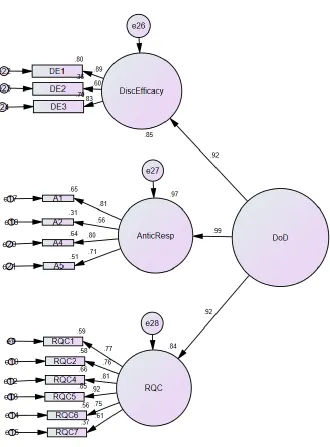
Finally, using SPSS AMOS, multilevel modeling was used to obtain factor
loadings to test overall model fit. To ensure proper running of AMOS testing, three of the original 81 participants were removed due to one or more missing values (n = 78). To maintain consistency with previous testing of the DD-MM, three goodness-of-fit indices were analyzed and reported in this study: Chi-square/degrees of freedom ratio (X2/df),
comparative fit index (CFI), and root mean square error of approximation (RMSEA) (Checton, 2011; Stevens, 2009; Taylor, 2013; Witt, 2017). X2/df scores assess the
difference between the covariances matrices (Witt, 2017), CFI scores compare the fit of a target model to the fit of a null model (Lai & Green, 2016), and RMSEA scores are used to measure the lack of fit per degree of freedom and avoid sample size related issues through evaluation of discrepancies between model and sample matrices (Browne & Cudeck, 1992; Witt, 2017). Cutoffs for acceptable values are based on those used in previous validation studies: CFI cutoff score is .90 or higher (Bentler & Bonet, 1980), RMSEA scores between .05 and .10 suggest an “acceptable” fit (Browne & Cudeck, 1992), and X2/df cutoff is less than 3.0 (Kline, 1998).
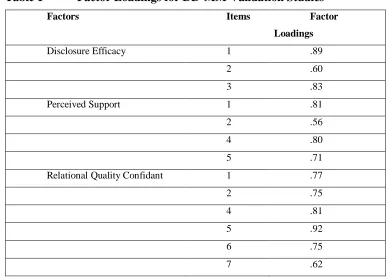
Prior to removing the items, model fit did not meet the cutoff levels for CFI or RMSEA (X2[116] =265.9, p < .001; RMSEA = .13; CFI = .82). Stevens (1992) claims
reliable. Thus, while having a few low factor loadings does not indicate that the entire measure does not hold internal consistency, the four variables with the lowest factor loadings (those less than .55) were removed from the model to align with more rigorous goodness-of-fit and to test improvements to the overall model fit. The lowest factor loadings included one item from each variable, with a second from pre-disclosure
relational quality with the confidant. These items included the following: “I do not know
what to say when trying to share information with my confidant about my conflict” (reverse coded; Disclosure Efficacy), “My confidant helps me find information” (Perceived Support), “I am not close with my confidant” (reverse coded; Relational Quality), and “I couldn’t ask for more from my confidant” (Relational Quality). After
Table 1 Factor Loadings for DD-MM Validation Studies
Factors Items Factor
Loadings
Disclosure Efficacy 1 .89
2 .60
3 .83
Perceived Support 1 .81
2 .56
4 .80
5 .71
Relational Quality Confidant 1 .77
2 .75
4 .81
5 .92
6 .75
7 .62
Hypotheses 1 and 2
In order to test the study’s hypotheses regarding the relationships between
relational quality and disclosure-related variables (i.e., perceived support, disclosure efficacy), two Pearson product-moment correlation coefficient tests were run. Because the disclosure was directed only to the confidant (not the relational partner), the
relationship between relational quality and perceived support was only tested with regard to the confidant. As predicted, relational quality with the confidant was significantly correlated with higher perceived support (r = .800, p < .001). Relational quality with both the confidant (r = .311, p < .01) and the romantic partner (r = .725, p < .001) were
Research Question 2
To answer RQ2, and to understand how disclosure influences relational quality, the difference between pre-disclosure relational quality scores and post-disclosure relational quality scores for the confidant and the partner were analyzed using paired-sample t-tests. For the romantic partner, there was no significant difference between mean scores for pre-disclosure relational quality (M = 4.21, SD = .63) and post-disclosure relational quality (M = 4.24, SD = .63); t(80) = -.539, p = ns. For the confidant, there was no significant difference found in the scores for pre-disclosure relational quality (M = 4.12, SD = .65) and post-disclosure relational quality (M = 4.12, SD = .70); t(80) = -.022, p = ns.
Research Question 3
In order to answer RQ3, and to understand how depth of disclosure influences relational quality influences, a Pearson product-moment correlation coefficient (PPMCC) test was run. The PPMCC measured correlations between depth of disclosure and the post-disclosure relational quality with the confidant and romantic partner. The
relationship between depth of disclosure and post-disclosure relational quality with their romantic partner was not significant (r = .061, ns). However, there was a significant correlation between the depth of disclosure and relational quality with the confidant (r = .380, p < .001). Overall, the depth of disclosure was significantly related to confidant relational quality disclosure, but not romantic partner relational quality post-disclosure.
showed associations between relational quality, perceived support, and disclosure efficacy, as the model predicts; however, it did not show a change in relational quality between the discloser and their romantic partner/confidant after a single disclosure. One unexpected finding in adding a third person to the model, was that relational quality with one’s romantic partner was positively correlated with disclosure efficacy toward the
CHAPTER 5: DISCUSSION
The purpose of this study was two-fold. The first goal was to understand changes in relational quality due to RRC disclosures and the second purpose was to validate the DD-MM in the context of romantic relationship conflict disclosures. The hypotheses and research questions guiding this study were designed to examine how a theoretically-based model translates to a context in which it has yet to be introduced. While this study
reiterates the importance of positive relational quality between the discloser and
confidant for disclosures, testing the DD-MM in a different type of disclosure also shows the complexities of the relationships involved. There were several findings within this study that were anticipated and some that were more unexpected. In the following sections I will discuss how relational quality influences RRC disclosures and what the validation of the DD-MM means for the future of the model. After discussing
implications of the findings, I will discuss limitations and possibilities for future research. Validation of the DD-MM in RRCs
friends, family) often have a more extensive history of disclosures, which not only increases the relational quality but also sets a precedent for positive anticipated support where advice eventually becomes expected as well (Feng & Magen, 2016).
For the second hypothesis, findings illustrated a positive correlation between and individual’s relational quality with their confidant and their disclosure efficacy. In the
disclosure process, the stronger the relational quality, the more disclosure efficacy one has toward their confidant, which may later lead to more depth of disclosure as well (Greene, 2009; Greene et al., 2012; Riggio et al., 2013). The current findings align well with this previous research; relational quality is related to higher disclosure efficacy, increased depth of disclosure, and increased relational quality (Greene, 2009; Greene et al., 2012; Checton et al., 2012; Levesque, Steciuk, & Ledley, 2002). It makes sense that disclosure efficacy was positively related to relational quality, especially in this context, because higher relational quality and disclosure efficacy beliefs are critical when
disclosing personal and difficult information, such as an RRC (Kearney & Bussey, 2013). These findings show that the process of disclosure between the confidant and the
discloser, as stated in the DD-MM, translates to the new context as well.
One unexpected finding in extending the model to include a third party was that relational quality with one’s romantic partner was also positively correlated with the person’s disclosure efficacy toward their confidant. These results then shift the focus of
relationships likely have stronger support systems, making individuals in strong
relationships feel more efficacy toward disclosing to these networks. Another reason for this finding may be that the higher the relational quality, the more stable an individual may feel within their relationship. This could then lead them to feel less risk and more efficacy in disclosing potentially negative aspects of their relationship to their confidant. In other words, they may be confident that their relational quality will not change with their romantic partner. This could also help explain why there were no changes between the pre- and post-disclosure relational quality with the romantic partner. In sum, the results from hypothesis two suggest that when considering the triad involved in relational disclosures, both the discloser’s relationship with the partner and confidant have a
positive influence on disclosure efficacy.
In testing for model validation, convergent validity was also assessed using a scale that had been identified as reliable for the desired population (i.e., friends, family, significant other) to see if it translated to the model in place of the less comprehensive DD-MM perceived support scale. The MSPSS worked well in place of perceived support in the DD-MM with RRCs, perhaps because it measures support from the same sources that participants reported as confidants. For example, participants’ chosen confidants were primarily friends and family; family mostly consisting of “mother” (n = 14; 65%).
confidants including family members, friends, or (as the MSPSS also includes) significant other.
Finally, the validation in the context of RRC disclosures also demonstrates that even though relational disclosures include another person (i.e., the romantic partner), they still follow similar processes as personal disclosures (e.g., health disclosures). While there is little literature on the disclosure process of conflicts with family and friends, researchers can now look at these different types of relational disclosures using the DD-MM. This study could also be used as a foundation for research surrounding other romantic relational disclosures that are not RRCs; there may be experiences within the relationship that were not conflicts, but still required a disclosure. For example, if an individual doesn’t know how to move their romantic relationship forward, or they are
trying to end the relationship, they may disclose the current state of their relationship to a friend in search of advice. These various disclosure types and targets should be
investigated in future research using the DD-MM.
Relational Quality and Disclosure
This study’s first research question was aimed at understanding whether
Diamond-Welch, & Tollini, 2018; Greene, 2009; Greene et al., 2012). However, the number of disclosures needed before relational quality increases is unknown. Rather, disclosure and relational quality are cyclical, so the level of disclosure adjusts with the intimacy of the relationship (Levesque, Steciuk, & Ledley, 2002).
While this study focused on the relational quality from the perspective of the discloser, it was not in its scope to capture the relational quality from the perspective of the romantic partner or confidant. It is possible that the romantic partner and/or confidant experienced changes in relational quality that even the discloser (i.e., the participant) did not experience and/or was unaware of. From the romantic partner’s perspective,
While there may be challenges, it would be beneficial for future researchers to obtain the perspectives of all individuals involved in the disclosure at multiple points in time, both pre- and post- disclosure, to better understand the changes in relational quality throughout the disclosure process. This would provide more insight to the potential relational changes and triangulation that occurs with relational disclosures.
retrospectively consider relational quality more positively. On the other hand, one might expect the relationship quality between the partners to go up if the confidant reminded the discloser about the positive qualities of their relationship/partner, or if the discloser was able to reflect on the conflict and come back with a more positive perspective. These possibilities need to be investigated in future research.
Over the past decade, researchers have acknowledged the DD-MM’s contribution to disclosure research, however the validation of this model now adds forward movement to the potential outreach of the DD-MM in new contexts. The validation results show us that the DD-MM can be used outside of physical and mental illnesses/conditions
disclosures and that the addition of a third person does influence the disclosure efficacy of the discloser.
Limitations & Future Directions
Although this study was useful in further understanding RRC disclosures and validation of the model, it was not without limitations. The first limitation is that the sample was quite homogenous and while it has enough participants to validate, a larger sample would have been preferable. Approximately 81% of the participants were
White/Caucasian (n = 66) and 79% were female (n = 64). Future research should seek to have a larger and more diverse sample of participants to truly understand the process of disclosure and changes of relational quality among a variety of individuals.
researchers should consider having individuals use a journaling method to track the changes in their relational quality before, during, and after an RRC is disclosed. Creating a more longitudinal design for this study and giving participants a constant way to score their relational quality throughout the entire experience would give a more accurate reading of the possible changes of relational quality. While this may be a longer process, the participants could track changes in real-time and not have to reflect simultaneously on how they were once feeling before, and after, a conflict disclosure.
A third limitation that should be noted is the lack of dyadic (or triadic) responses for the survey and having only one perspective represented. Using individual data to analyze dyadic relationships and disclosure processes produces limited reports of relational quality. While this study sought to add a third party to considerations of disclosure and the DD-MM, to accurately understand the impact on relational quality, both parties must be assessed. Without reports from the others involved, we cannot know the full impact of the disclosure on relational quality. If all individuals’ perspectives are accounted for, there may be more accuracy in understanding the changes of relational quality between each dyad. Similarly, having more perspectives on one event may decrease memory bias from an individual perspective. Future research should explore ways to recruit couples, and confidants, so that all three individuals can report on the conflict, disclosure variables, and relational quality to understand all relationship changes.
prognosis, relevance to others, symptoms), and it is possible that some could be translated to RRC disclosures using different conceptualizations and measurements. For example, stigma may still be applicable for RRCs, but conceptualized as whether or not the conflict is viewed as a taboo topic (i.e., sexual issues, infidelity). Preparation may also be adapted to work in RRCs when talking about whether the person anticipated that conflict or has had past experiences with conflicts like the one experienced. Prognosis may be viewed as the anticipation of the outcome of the conflict (i.e., break up or resolution). Relevance to others may be used to understand whether the participant feels like their conflict and decisions attached to it may affect others outside the relationship. Because they are health-specific, symptoms may be best replaced with measurements of depth and breadth (i.e., range, intensity) of the conflict.
Conclusion
that confidant into triangulation with the existing dyad. Practically speaking, these
findings can be useful not only for disclosers, but confidants as well. Because support is a key aspect for enabling the disclosure process and for increasing personal well-being, providing it helps make others feel more comfortable in disclosing personal information. As such, if a confidant wants to be the recipient of deeper disclosures, a great way to do so is by showing a willingness to listen and offering signs of support. However,
confidants (and disclosers) could also use this study as a warning of the possible triangulation that may occur, positive or negative, when sharing intimate relational disclosures.
One goal of this study was to examine the effects of relational quality when disclosing romantic relationship conflicts to a confidant. This research adds to the existing literature on disclosure by reiterating how more intimate disclosures are
positively related to higher relational quality between the discloser and confidant. It also brings forth an important finding that relational quality with one’s romantic partner is
positively related to their disclosure efficacy toward their confidant. This shows that our disclosures do not live in a relational vacuum, rather there are other relationship
could be used in other contexts including positive or negative disclosures about friends or family (e.g., sexual abuse, parental infidelity, personal achievements, new
REFERENCES
Allen, E. (2005). Intrapersonal, interpersonal, and contextual factors in engaging in and responding to extramarital involvement. Clinical Psychology: Science &
Practice, 12(2), 101–130.
Afifi, T. D. (2003). “Feeling Caught” in stepfamilies: Managing boundary turbulence through appropriate communication privacy rules. Journal of Social and Personal Relationships, 20(6), 729-755.
Afifi, T., & Steuber, K. (2009). The revelation risk model (RRM): Factors that predict the revelation of secrets and the strategies used to reveal them. Communication Monographs, 76(2), 144–176.
Afifi, W. A., & Caughlin, J. E. (2006). A close look at revealing secrets and some consequences that follow. Communication Research, 33(6), 467-488.
Amato, P. R., & Afifi, T. D. (2006). Feeling caught between parents: adult children's relations with parents and subjective well-being. Journal of Marriage and Family, 68(1), 222-235.
Bandura, A. (1977). Self-efficacy: Toward a unifying theory of behavioral change. Psychological Review, 84(2), 191-215.
Barelds, D. H., & Barelds-Dijkstra, P. (2007). Relations between different types of jealousy and self and partner perceptions of relational quality. Clinical Psychology & Psychotherapy, 14(3), 176-188.
Baruh, L., & Cemalcılar, Z. (2018). When more is more? The impact of breadth and depth of information disclosure on attributional confidence about and
interpersonal attraction to a social network site profile owner. Cyberpsychology, 12, 1–18.
Bentler, P. M., & Bonett, D. G. (1980). Significance tests and goodness of fit in the analysis of covariance structures. Psychological Bulletin,88, 588–606. Bodenmann, G. (1997). Dyadic coping: A systemic-transactional view of stress and
coping among couples: Theory and empirical findings. European Review of Applied Psychology / Revue Européenne de Psychologie Appliquée, 47(2), 137– 141.
Bodenmann, G., Charvoz, L., Bradbury, T. N., Bertoni, A., Lafrate, R., Giuliani, C., … Behling, J. (2007). The role of stress in divorce: A three-nation retrospective study. Journal of Social & Personal Relationships, 24(5), 707–728.
Bonnan-White, J., Hetzel-Riggin, M. D., Diamond-Welch, B. K., & Tollini, C. (2018). “You blame me, therefore I blame me”: The importance of first disclosure partner responses on trauma-related cognitions and distress. Journal of Interpersonal Violence, 33(8), 1260-1286.
Britt, S., & Huston, S. (2012). The role of money arguments in marriage. Journal of Family & Economic Issues, 33(4), 464–476.
Browne, M. W., & Cudeck, R. (1992). Alternative ways of assessing model fit. Sociological Methods and Research, 21, 230– 258.
Burleson, B. R. (2003). The experience and effects of emotional support: What the study of cultural and gender differences can tell us about close relationships, emotion, and interpersonal communication. Personal Relationships, 10, 1-23.
Chaudoir, S. R., & Fisher, J. D. (2010). The disclosure processes model: Understanding disclosure decision making and postdisclosure outcomes among people living with a concealable stigmatized identity. Psychological Bulletin, 136(2), 236–256. Checton, M. G. (2011). Health disclosure decision-making: The role of prognosis and
symptom uncertainty in ongoing disclosure to a spouse about a heart-related condition. (Doctoral dissertation). Retrieved from ProQuest Information & Learning.
Checton, M. G., Greene, K., Magsamen-Conrad, K., & Venetis, M. K. (2012). Patients’ and partners’ perspectives of chronic illness and its management. Families, Systems & Health: The Journal of Collaborative Family HealthCare, 30(2), 114– 129.
Choi, S. Y., Venetis, M. K., Greene, K., Magsamen-Conrad, K., Checton, M. G., & Banerjee, S. C. (2016). Planning a stigmatized nonvisible illness disclosure: Applying the disclosure decision-making model. Journal of Psychology, 150(8), 1004-1025.
Cohen, S., & Hoberman, H. M. (1983). Positive events and social supports as buffers of life change stress. Journal of Applied Social Psychology, 13(2), 99–125.
Collins, W., Welsh, D., & Furman, W. (2009). Adolescent romantic relationships. Annual Review of Psychology, 60, 631–652.
Cutrona, C. E. (1996). Social support in couples: Marriage as a resource in times of stress. Thousand Oaks, CA: Sage Publications, Inc.
Dallos, R., & Vetere, A. (2012). Systems theory, family attachments and processes of triangulation: Does the concept of triangulation offer a useful bridge? Journal of Family Therapy, 34(2), 117-137.
Don, B. P., Mickelson, K. D., & Barbee, A. P. (2013). Indirect support seeking and perceptions of spousal support: An examination of a reciprocal
Feng, B., & Magen, E. (2016). Relationship closeness predicts unsolicited advice giving in supportive interactions. Journal of Social and Personal Relationships, 33(1), 751–767.
Franzoi, S. L., Davis, M. H., & Young, R. D. (1985). The effects of private self-consciousness and perspective taking on satisfaction in close
relationships. Journal of Personality and Social Psychology, 48(6), 1584–1594. Gatzeva, M., & Paik, A. (2011). Emotional and physical satisfaction in noncohabiting,
cohabiting, and marital relationships: The importance of jealous conflict. Journal of Sex Research, 48(1), 29–42.
Glass, S. P., & Wright, T. L. (1992). Justifications for extramarital relationships: The association between attitudes, behavior, and gender. Journal of Sex
Research, 29(3), 361–387.
Goffman, E. (1986). Stigma; notes on the management of spoiled identity.
Gordon, M. (2014). Friendship, intimacy and humor.” Educational Philosophy and Theory, 46(2), 162-174.
Greene, K. (2009). An integrated model of health disclosure decision-making. In T. D. Afifi, W. A. Afifi, T. D. Afifi, W. A. Afifi (Eds.), Uncertainty, information management, and disclosure decisions: Theories and applications (pp. 226-253). New York, NY, US: Routledge/Taylor & Francis Group.
Greene, K., Derlega, V. J., & Mathews, A. (2006). Self-disclosure in personal relationships. In A. L. Vangelisti, D. Perlman, A. L. Vangelisti, D. Perlman (Eds.), The Cambridge handbook of personal relationships (pp. 409-427). New York, NY, US: Cambridge University Press.
Greene, K., Carpenter, A., Catona, D., & Magsamen, C. K. (2013). The brief disclosure intervention (BDI): Facilitating African Americans’ disclosure of HIV. Journal of Communication, 63(1), 138–158.
Guerrero, L. K., & Eloy, S. V. (1992). Relational satisfaction and jealousy across marital types. Communication Reports, 5(1), 23–31.
Guerrero, L. K., & Andersen, P. A. (1994). Patterns of matching and initiation: Touch behavior and touch avoidance across romantic relationship stages. Journal of Nonverbal Behavior, 18(2), 137–153.
Guerrero, L. K., Andersen, P. A., Jorgensen, P. F., Spitzberg, B. H., & Eloy, S. V. (1995). Coping with the green-eyed monster: Conceptualizing and measuring
communicative responses to romantic jealousy. Western Journal of Communication, 59(4), 270-304.
Gulledge, A. K., Gulledge, M. H., & Stahmann, R. F. (2003). Romantic physical affection types and relationship satisfaction. American Journal of Family Therapy, 31(4), 233–242.
Hair, J. F. (2010). Multivariate data analysis. Upper Saddle River, NJ: Prentice Hall. Hays, R. B. (1984). The development and maintenance of friendship. Journal of Social
and Personal Relationships, 1(1), 75–98.
Hecht, M. L. (1984). Satisfying communication and relationship labels: Intimacy and length of relationship as perceptual frames of naturalistic conversations. Western Journal of Speech Communication: WJSC, 48(3), 201–216.
Hertlein, K. M., Wetchler, J. L., & Piercy, F. P. (2005). Infidelity: An overview. Journal of Couple & Relationship Therapy, 4(2/3), 5–16.
Hill, E. J., Allsop, D. B., LeBaron, A. B., & Bean, R. A. (2017). How do money, sex, and stress influence marital instability? Journal of Financial Therapy, 8(1).
Horne, R. M., & Johnson, M. D. (2018). Gender role attitudes, relationship efficacy, and self-disclosure in intimate relationships. The Journal of Social
IBM Corp. Released 2017. IBM SPSS Statistics for Windows, Version 25.0. Armonk, NY: IBM Corp.
Ignatius, E., & Kokkonen, M. (2007). Factors contributing to verbal self-disclosure. Nordic Psychology, 59(4), 362–391.
Jiang, L., Drolet, A., & Kim, H. S. (2018). Age and social support seeking:
Understanding the role of perceived social costs to others. Personality and Social Psychology Bulletin, 44(7), 1104–1116.
Jimenez, M. (2018). Dating the green-eyed monster: A qualitative study on jealousy in college romantic relationships. Unpublished manuscript.
Jonzon, E., & Lindblad, F. (2005). Adult female victims of child sexual abuse: multitype maltreatment and disclosure characteristics related to subjective health. Journal of Interpersonal Violence, 20(6), 651–666.
Kearney, J., & Bussey, K. (2015). The longitudinal influence of self-efficacy,
communication, and parenting on spontaneous adolescent disclosure. Journal of Research on Adolescence (Wiley-Blackwell), 25(3), 506–523.
Kennedy-Lightsey, C., & Boot