World Maritime University World Maritime University
The Maritime Commons: Digital Repository of the World Maritime
The Maritime Commons: Digital Repository of the World Maritime
University
University
World Maritime University Dissertations Dissertations
11-5-2017
Fatigue-related medical conditions affecting seafarers : an
Fatigue-related medical conditions affecting seafarers : an
exploratory case-study of Indian seafarers
exploratory case-study of Indian seafarers
Saratkumar Chembukkavu Narayanan
Follow this and additional works at: https://commons.wmu.se/all_dissertations
Part of the Health Policy Commons
Recommended Citation Recommended Citation
Narayanan, Saratkumar Chembukkavu, "Fatigue-related medical conditions affecting seafarers : an exploratory case-study of Indian seafarers" (2017). World Maritime University Dissertations. 559.
https://commons.wmu.se/all_dissertations/559
WORLD MARITIME UNIVERSITY
Malmö, Sweden
FATIGUE-RELATED MEDICAL CONDITIONS
AFFECTING SEAFARERS:
An exploratory case study of Indian seafarers
By
SARAT KUMAR CHEMBUKKAVU NARAYANAN
India
A dissertation submitted to the World Maritime University in partial
fulfillment of the requirements for the award of the degree of
MASTER OF SCIENCE
In
MARITIME AFFAIRS
(MARITIME EDUCATION AND TRAINING)
2017
iii
ACKNOWLEDGEMENTS
I would like to express my heartfelt gratitude to my supervisor and the head of MET
specialization at WMU, Dr. Michael E. Manuel for his kind encouragement and the
suggestions for improvement during this dissertation study. He was always
accessible for discussions despite his busy schedule and I could not have
accomplished this without his valuable guidance and support.
I would like to thank all my seafarer friends and my colleagues at Anglo-Eastern Ship
Management who supported me and helped me by participating in the surveys
conducted as part of this dissertation. I would like to specially mention here Capt.
Pradeep Chawla, Group Managing Director (QHSE & Training), AESM; Capt. Vinay
Singh, Managing Director, AESM(I); Capt. K.N. Deboo, Director & Principal, AEMTC,
my friends Mr. Vineeth O.P., AGM, AESM (I); and Capt. K. Kamath, Sr. Supdt.,
AEMTC, who all went out of their way and encouraged many others to participate in
the survey.
I would like to express my sincere gratitude to Dr. Sanjiv Mukherjee, Maritime Medical
Consultancy, Kolkata; Dr. Hiranmayi Chikkala, Venkatarama Hospitals, Vizag; Dr.
Jayaprakash R., Aditya Hospitals, Chennai and Dr. Balaji, Balaji’s Clinic, Chennai for
taking some time out in between their busy schedules and participating in this
dissertation survey. I am highly indebted to Dr. Balaji and the staff in his clinic for the
extra efforts taken to compile all the seafarers’ medical examination data for the past
two years and sharing the relevant details with me.
I would like to thank the library staff of WMU, Mr. Christopher Hoebeke, Ms. Anna
Volkova and Ms. Sara Hurst for their help in the prompt procurement of any reading
materials and books on inter-library loan whenever I requested for the same.
Special thanks to all MET faculty members, Dr. Lisa Froholdt, Dr. Momoko Kitada,
Dr. Johan Bolmsten and all the students of the S-17 batch, especially those from
MET specialization, for the memorable time I spent here at WMU, studying, training
iv
ABSTRACT
Title of Dissertation:
Fatigue-related medical conditions
affecting seafarers: An exploratory
case study of Indian seafarers
Degree:
MSc
The role of fatigue, its degrading effects on the human performance and how it has
contributed either directly or indirectly to many of the major marine accidents is well
documented. Similarly, fatigue among the shift-workers caused due to sleep
deprivation and poor-quality sleep is known to cause cognitive disengagement, lack
of concentration and increased risk of accidents in the short run and many chronic
health disorders in the long run.
Studies indicate a tendency among the Indian seafarers, especially the officers, to
leave the sea-career quite early in life and take up alternate jobs ashore. Some
available data shows that almost two-third of all Indian merchant marine officers are
leaving the sea-career before the age of 40. This dissertation study explores whether
fatigue-related medical conditions are playing a part in those seafarers’ decision for
leaving the sea-career early and taking up shore-based jobs.
Conclusions are drawn based on the results of the analyses of two surveys
conducted; first, among the Indian seafarers and ex-seafarers, and the second,
among the medical practitioners who are involved in seafarers’ medical
examinations. In addition to the above, details about seafarers’ medical examinations
conducted during the past two years were collected from one clinic and analyzed in
detail. In the end, after a positive correlation emerged, recommendations were made
to seafarers, shipping companies, and maritime policy makers, underlining the need
for more effective fatigue mitigating measures and further investigation into the
domain of fatigue-related illnesses.
v
TABLE OF CONTENTS
Declaration ii
Acknowledgements iii
Abstract iv
Table of contents v
List of tables vii
List of figures viii
List of abbreviations ix
1 Introduction 1
1.1 Fatigue and its impact in the maritime sector 1
1.2 Description, classification and effects of fatigue 2
1.3 Supply of seafarers from India – the emerging trends 8
1.4 Research objectives 10
2 Common diseases and health conditions associated 12
with shift-work, stress, and fatigue
2.1 Introduction 12
2.2 Fatigue due to sleep deprivation 12
2.3 Chronic health conditions associated with fatigue 12
2.3.1 Maritime scenario 16
2.4 Summary 17
3 Research methodology 19
3.1 Research approach 19
3.2 Research procedures 19
3.3 Selection of participants 20
3.4 Study design 21
3.5 Compilation of data 21
vi
4 Summary of research findings 23
4.1 Survey questionnaire sent to seafarers 23
4.1.1 Age-wise distribution 23
4.1.2 Rank-wise distribution 24
4.1.3 Distribution based on type of ship 25
4.1.4 Report about extra tiredness after some contracts 25
4.1.5 Report about common diseases affecting seafarers 27
4.1.6 Report about obesity affecting seafarers 28
4.1.7 Report about constant feeling of fatigue 29
4.1.8 Priority reasons for leaving sea-career 29
4.2 Survey questionnaire sent to medical practitioners 32
4.3 Analysis of seafarers’ medical examination data 34
5 Analysis of research findings 35
5.1 Significant findings of the survey and the implications 35
5.1.1 Analysis of feeling of ‘extra-tiredness’ 35
5.1.2 Analysis of constant feeling of fatigue 35
5.1.3 Analysis of lifestyle diseases and obesity 36
5.2 Limitations of the study 37
5.3 Other significant findings of the survey 39
5.4 Summary of findings 40
6 Mitigation strategies 41
6.1 Legislative measures in place to control fatigue 41
6.1.1 Some gaps observed in regulatory regimes 43
6.2 Mitigation measures at organization/Individual level 44
6.3 Seafarers’ fatigue risk management: Conclusions and 47
the way forward
References 50
vii
LIST OF TABLES
Table – 1 Average age of seafarers and percentage of seafarers who are above 40 years
9
Table – 2 Age-wise distribution of survey respondents 24
Table – 3 Rank-wise distribution of survey respondents 24
Table – 4 Distribution of respondents based on types of ship 25
Table – 5 Percentage of respondents who felt 'extra-tired' after some contracts
25
Table – 6 Reasons indicated for 'extra-tiredness' after some contracts 26
Table – 7 Respondents who indicated that ‘extra tiredness’ even beyond leaving the vessel
26
Table – 8 Response about how long the feeling of extra-tiredness remained after leaving the vessel
27
Table – 9 A summary of common illnesses reported by seafarers 28
Table – 10 Percentage of respondents with above-normal BMI value 29
Table – 11 Report about constant feeling of fatigue or tiredness 29
Table – 12 Priority - 1 reason for leaving sea-life or contemplating doing so 30
Table – 13 Priority - 2 reason for leaving sea-life or contemplating doing so 31
Table – 14 Details about medical clinics who participated in the survey 32
Table – 15 Responses from different clinics about seafarers who are declared unfit
32
Table – 16 List of common diseases and their codes 33
Table – 17 Response from clinics showing priority of illness as reasons for declaring seafarers ‘unfit’
33
Table – 18 Details of seafarers’ medical examination data collected from Clinic No. 4 (2015-16)
viii
LIST OF FIGURES
Figure – 1 The Risk Factors, Perceptions, and Outcomes of Fatigue 4
Figure – 2 Interaction between the homeostatic sleep drive and the circadian drive
5
Figure – 3 A model of wakefulness-sleepiness & circadian timings of Shift-worker
6
Figure – 4 Supply of seafarers from India to global fleet 9
Figure – 5 An outline of dissertation including research question & methodology
11
Figure – 6 Ratio between active seafarers and ex-seafarers 23
Figure – 7 Priority 1 reason for active seafarers contemplating to leave sea-career
30
Figure – 8 Priority 1 reason for leaving sea-career as stated by ex-seafarers
30
Figure – 9 Priority 2 reasons for active seafarers contemplating leaving sea-career
31
Figure – 10 Priority 2 reasons as given by ex-seafarers for leaving the sea-career
ix
LIST OF ABBREVIATIONS
ATSB Australian Transport Safety Bureau
BMI value Body Mass Index value
B/P Blood Pressure
CVD Cardio-vascular diseases
DM Diabetes Mellitus
EEG Recorder Electro-Encephalo-Graphic Recorder
FDP Flight Duty Periods
FRMS Fatigue Risk Management System
FTL Rules European Union Aviation Flight Time Limitations Rules
HDL High Density Lipoprotein cholesterol
HTW IMO Sub-committee on Human Element, Training and Watchkeeping
ILO International Labour Organization
IMO International Maritime Organization
ISM Code International Safety Management Code
KSS Karolinska Sleepiness Scale
MAIB Marine Accident Investigation Branch of United Kingdom
NFHS National Family Health Survey in India
STCW Code Seafarers’ Training, Certification and Watchkeeping Code
1
CHAPTER – 1
INTRODUCTION
1.1 Fatigue and its impact in the Maritime sector
There is an increasing recognition of the role of fatigue, its degrading effects on the
human performance and how it has contributed either directly or indirectly to many of
the major marine accidents. A study conducted by the Marine Accident Investigation
Branch (MAIB, 2004) of United Kingdom, examined all the collisions, groundings,
contacts, and near collisions that had occurred in the United Kingdom waters from
1995 to 2003 and found that almost one-third of all groundings involved a fatigued
officer who was alone on the bridge at night at the time of incident.
The United States Coast Guard funded some research studies in the past (McCallum,
Raby & Rothblum, 1996; Sanquist, Raby, Forsythe & Carvalhais,1997) to analyze the
threat posed by fatigue to maritime safety. As part of these studies, over two hundred
maritime casualties which occurred between 1989 and 1995 were analyzed in detail
and it was found that fatigue was indeed a contributing factor in almost 16% of critical
vessel casualties and 33% of personnel injuries which occurred during that period.
The studies also revealed that mariners, on average, received considerably less
sleep than what is required daily and accrued substantial sleep debt over a time.
From the time these studies were published, till date, there have been many other
major maritime accidents, where the navigational watchkeeper’s or the maritime pilot’s fatigue was identified as being among the contributing factors. The grounding
of the Bahamas-flagged M.V. Crete Cement along the south-eastern tip of Aspond Island, Norway in 2008 (Accident Investigation Board Norway, 2010), grounding of
the Chinese registered bulk carrier Shen Neng1 on Douglas Shoal, Australia in 2010 (Australian Transport Safety Bureau, 2011), the grounding of the M.V. Danio off
Farne Islands, UK in 2013 (Marine Accident Investigation Board, 2014), are all
examples of maritime casualties where accident investigators have identified fatigue
2
The shipping industry with its 24x7 work culture has traditionally always considered
longer working hours for the crew as a part and parcel of daily life. In one of the
earliest systematic reviews of work hours, stress and safety at sea, Ivan Brown
(Brown, 1989) found little objective evidence of any stress management efforts
among seafarers. In his study, seafarers reported that they are expected to work
continuously, under any conditions of stress, whether task-induced or
environment-induced (Smith, 2007). Eleven years later, another study done in the British offshore
oil support industry by Collins, Mathews and McNamara (2011) found situations
which were similar to those described by Brown, concluding that stressors within the
maritime domain remain noticeably under-investigated.
All the maritime accident statistics mentioned above indicates that fatigue among
seafarers remains a threat to maritime safety even today, underlining the importance
of learning more about it, the need for identifying its causes and the mitigating
measures to be taken.
1.2 Description, classification and effects of ‘fatigue’
‘Fatigue’ is a term very loosely used to describe weariness which sets in after
applying oneself to any task over a period of time. Here, we may be referring to such
diverse activities as, any physical work done over lengthy periods such as gardening,
office-work, driving etc. or some mental tasks such as reading a book, playing a
computer game, solving mathematical puzzles etc. It may involve an activity which is
not very pleasant for us but which we are compelled to do, or it can even be an activity
which is very much enjoyable such as any sports activity. It may be something which
may develop over few minutes, depending on the quantum of efforts required or it
may take hours, days, weeks, or even months to develop, depending on the tasks
involved.
Craig and Cooper (1992) described ‘fatigue’ as a term broadly covering many
adverse, unwanted effects, which deters one from continuing to exercise an activity
3
Subjective – where the person involved is so tired that he/ she will be disinclined
to apply any more efforts to continue; or
Performance-based – which indicates a deteriorating performance where more
than usual errors creep in; or
Organic – which affects the body’s physiological functioning or its chemistry.
The effects of fatigue are multifaceted and complex, overlapping the areas of
performance, physiology, cognition, and emotion (Gawron, French & Funke, 2001, p.
583). Fatigue affecting humans can be sub-divided as physical and/or mental.
Physical fatigue is said to occur whenever a person who is exerting himself or herself
can no longer put forth the required effort to complete a task (Caldwell and Lyddan,
1971, pp.18-19). Mental fatigue is defined as decrements in performance of tasks
which require mental alertness or manipulation of data or retrieval of information
stored in memory (Stern, Boyer, Schroeder, 1994).
Fatigue has variously been described as:
a state of physical weakness which affects the human body after prolonged
periods of strenuous physical activities. (Gawron et al., 2001); or
a state of mental weakness or drowsiness which is the consequence of stress,
emotional exhaustion and high-demand work load over prolonged periods
(Yoshitake, 1978); or
a medical symptom which is associated with some diseases like diabetes,
multiple sclerosis, rheumatoid arthritis, AIDS and experienced by those who have
undergone cancer-related treatment like radiation or chemotherapy (Aaronson et
al., 1999).
Thus, in broader terms, fatigue can be described as a temporary inability or a
decrease in the ability of humans to adequately respond to a situation, mostly due to
inadequate recuperation from some previous strenuous activity, either physical,
mental or emotional. It thus encompasses a variety of symptoms ranging from the
pain in the muscles, difficulty in concentrating on one’s task, a general sensation of
4
The physical weakness occurring due to any prolonged physical activity can easily
be overcome by taking adequate rest. However, regular occurrence of any such
weakness can also be a pointer to a weaker body, lack of endurance/strength,
reduced levels of fitness or any underlying medical conditions. Mental weakness can
happen due to emotional stress and exhaustion or whenever there is long-term
disruption of the sleep-wake cycle and circadian rhythms.
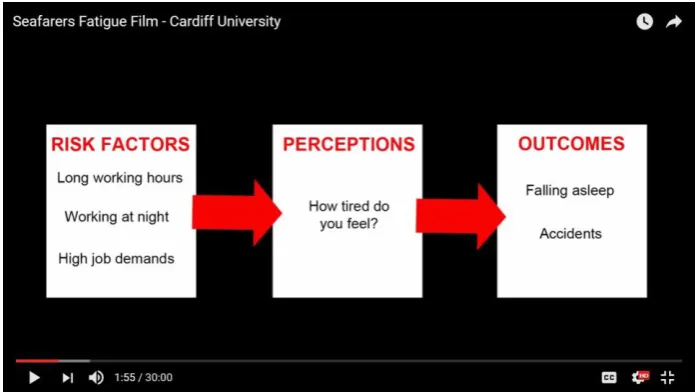
Figure 1: The Risk Factors, Perceptions and Outcomes of Fatigue
Source: Seafarers’ Fatigue film – Cardiff University
Retrieved from: https://www.youtube.com/watch?v=ua-ppReV684
Even though fatigue and sleepiness are terms often used interchangeably, they are
different in some respects. While sleepiness can be overcome after having adequate
sleep, the same is not the case with fatigue which also has other serious physical
aspects associated with it (Jepsen, Zhao, Pekcan, Barnett, and van Leeuwen, 2017).
Shen, Barbera and Shapiro (2006) tried to distinguish between ‘sleepiness’ and
‘fatigue’. They described these two states as interrelated but distinct phenomena.
Whereas, sleepiness mostly results from neurobiological processes regulating the
circadian rhythms and the drive to sleep, fatigue is a weariness after exertion
(Colwell, 1989) or a feeling of strain and exhaustion (Shen, Barbera and Shapiro,
5
van Dongen (2006) describes a two-process neurobiological model which regulates
the sleepiness and affects the extent of fatigue. The first process is homeostatic sleep
drive, which creates a ‘need for sleep’ and which keeps on increasing, the longer one
remains awake. This need is dissipated by getting proper sleep. The second
mechanism, found among all mammals, operates diurnally during a day (24 hourly
cycles) and is referred to as a circadian pacemaker. This affects not only sleepiness and fatigue, but also other bodily functions such as body temperature, endocrine
levels, metabolism rate, and other physiological functions. It leads to people
becoming sleepy about the same time each day, more typically at night, becoming
hungry about the same times, and so on. Since, most people sleep during the night
and remain awake during the day, the two drives remain in synchronization as
indicated in figure 2 below:
Figure 2: Interaction between the homeostatic sleep drive and the circadian drive
Source: https://www.howsleepworks.com
The two drives can become unsynchronized by following any work-schedule or
engaging in any other activity which alters the work & sleep times (e.g. shift work).
Such changes will disrupt the circadian sleep rhythm because the circadian
pacemaker is slow to adapt, rarely adjusting by more than 1 hour per day.
Consequently, when a rotating shift-worker tries to remain awake during a night-time
shift, the circadian drive causes sleepiness by the early morning hours. Conversely,
when he/she tries to sleep during the day time, the circadian arousal causes reduced
sleeping time and degraded quality of sleep (see figure 3). Thus, individuals who are
required to work during the biological night and who are most vulnerable to circadian
6
Figure 3: A model of wakefulness-sleepiness & circadian timings of Shift-worker
Source: Wright, Lowry and LeBourgeois. (2012). Circadian and wakefulness
sleep modulation of cognition in humans.
In general, rotating/night or early morning shift-work may result in circadian
misalignment which can further lead to impaired night-time performance, reduced
productivity, increased risk of accidents and disturbed daytime sleep (Wright, Lowry,
& LeBourgeois, 2012). Sleep deprivation and sleep disturbance are both recognized
as fatigue-causing factors (Akerstedt, Knutsson, Westerholm, Theorell, Alfredsson &
Kecklund, 2004; Balkin, Rupp, Picchioni & Wesensten, 2008; Short & Banks, 2014).
Fatigue can be classified either as acute or chronic, based on its onset and recovery
duration. The short-term ‘acute fatigue’ occurs whenever there is inadequate time for
rest and recovery after some strenuous work. Whenever there is insufficient recovery
from acute fatigue over longer periods, it then progresses into long-term chronic (or
7
According to Soames-Job and Dalziel (2008), acute fatigue can be induced by the
lack of or inferior quality of sleep, longer working hours, working at times of low
alertness (circadian lows), insufficient rest between work periods, excessive
workload, noise, vibration, motion etc. They further state that, effects of acute fatigue
caused by both sleep and work-related factors, can easily be restored by the right
interventions like sufficient rest or sleep. Short and Banks (2014, p.18) stated that
recovery from chronic fatigue will take much longer time as compared to acute
fatigue. According to them, the onset of chronic fatigue will be evidenced by a
constant, severe state of tiredness that is not relieved just by taking rest. Any
long-term sleep restriction often results in cumulative deficits in sleepiness and an
increase in fatigue, confusion, tension, mental exhaustion, and stress.
While acute fatigue may affect an individual’s performance in the short run, reducing
their safety and affecting their well-being, chronic fatigue will create a much longer
impact, possibly affecting the mental/physical health and increasing the risk of
contracting many chronic diseases including an increased risk of obesity, diabetes,
hypertension, irritability and an overall decrease in motivation (Boivin & Boudreau,
2014; Knutson, 2010; Zaharna & Guilleminault, 2010).
The World Health Organization defines ‘health’1 as a state of complete physical,
mental and social well-being and not merely the absence of disease or infirmity. With
reference to this definition, shift-work and associated long-term fatigue should be
considered as a risky condition as it is not only associated with many of the health
disorders (such as diseases affecting gastrointestinal, psychoneurotic,
cardiovascular, reproductive functions, and probably cancer), but which also perturbs
the psycho-physical homeostasis (e.g. sleep/wake cycle and circadian rhythms) and
overall hampers the family and social life of personnel. (Costa, 2010)
8
1.3 Supply of seafarers from India – the emerging trends
The global shipping industry is experiencing a shortage of officers to man the world’s
ships. This shortage is set to escalate further in the future as the world economy
moves out of recession and if a higher rate of attrition among officers is seen (Caesar,
Cahoon and Fei, 2014). The high cross-sectoral movement of personnel, i.e. early
movement of merchant marine officers to shore-based jobs, can be termed as
‘wastage’ as this movement is in a one-way direction and thus a loss for the industry
in general and for the specific shipping company in particular (Fei, Chen & Chen,
2009; Caesar et al., 2014).
The financial costs associated with the turnover of personnel in the shipping industry
can be high, as every departing seafarer costs the shipping company time and
money. Crew replacement costs can be high, especially with senior ranks. High rates
of turnover can also have a detrimental effect on workplace safety (Bhattacharya,
2015). Any early turnover also causes the greatest loss in the form of loss of
‘Company Knowledge’. Shipping companies, ideally, follow a strict safety
management system for control of shipboard operations as dictated by the
International Safety Management Code. These systems and procedures take time to
learn and all that knowledge is lost once a seafarer leaves the company (Oltedal,
2011).
India is the third largest supplier of manpower to the maritime industry, with more
than 44,500 officers serving the world fleet as per 2015 figures (Drewry, 2015).
Presently, China is the biggest supplier of marine officers, followed by the Philippines,
India, Indonesia and the Russian Federation in that order. While China is
continuously increasing the supply of seafarers, with the expected simultaneous
growth of the Chinese national fleet, not too many Chinese officers may be available
for serving the global shipping. Hence, in the near future, unless any new technology
emerges, which greatly impacts the safe manning requirements of ships, India and
Philippines will continue as the most important locations for sourcing of marine
9
Figure 4: Supply of seafarers from India to global fleet
Source: Drewry Manning Report, 2015
From the graph shown in figure 4 above, it can be seen that supply of seafarers from
India has steadily increased over the years. The table 1 below indicates the average
age of seafarers from a number of countries and the percentage of seafarers who
continue with sea-career beyond 40 years of age in each country (Glen, 2008). The
data indicates that only 31.8% of Indian seafarers are continuing with their sea
careers beyond the age of 40, whereas it is 50% or more in most other countries.
Thus, almost two-third of Indian seafarers are leaving their sea-career and taking up
a job ashore before the age of 40, indicating a high attrition rate.
Table 1: Average age of seafarers & percentage of seafarers who are above 40 years
Country Average Age % of Seafarers > 40 Yrs.
Philippines 41.2 57.4%
Poland 41.2 52.4%
UK 45.7 70.2%
Russia 39.7 49.8%
India 36.4 31.8%
Ukraine 39.3 48.4%
10
1.4 Research objectives
From the previous sections in this chapter, it can be summarized that,
Fatigue among the seafarers is very common and is among the major contributing
factors to maritime accidents;
Fatigue and stress associated with long-term shift-based jobs are considered to
be causing many chronic diseases and health conditions among the personnel
engaged in such jobs;
There is a high attrition rate among Indian seafarers as compared to other
nationalities.
The above three statements led to the research question – to what extent are
fatigue-related health issues contributing towards the high attrition rates observed among the
Indian seafarers?
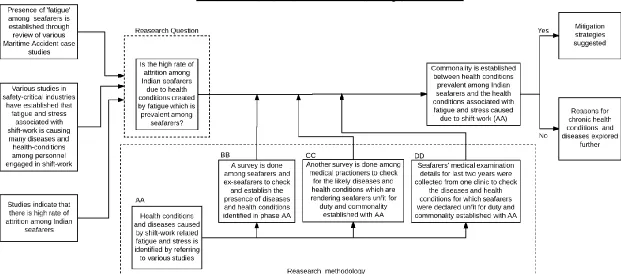
In this research study, an attempt was made to address the above query by the
following four steps:
1. Identifying the chronic medical conditions which are commonly found among
personnel engaged in shift-based jobs in other safety-critical industries by
referring to numerous literature on the subject.
2. Finding through a survey conducted among Indian seafarers, the common
medical conditions which are affecting them and comparing such diseases with
the diseases identified in step 1.
3. Finding through another survey conducted among medical practitioners, whether
the diseases and medical conditions identified in step 1, are among the prime
causes for Indian seafarers to be declared medically unfit;
4. Cross-verifying the above survey results by checking in detail, the medical
examination data of seafarers conducted in one clinic over the past two years.
After the survey results gave a positive indication that medical conditions commonly
affecting the shift-workers in other industries are also very common among Indian
seafarers, suitable mitigation strategies were suggested to seafarers, shipping
11
12
CHAPTER – 2
COMMON DISEASES AND HEALTH CONDITIONS
ASSOCIATED WITH SHIFT-WORK, STRESS AND FATIGUE
2.1 Introduction
In this chapter, an attempt is made to identify the common diseases and health
disorders which are associated with shift-work and related fatigue, by referring to
various research-based studies among the personnel engaged in round-the-clock,
safety-critical jobs.
2.2 Fatigue due to sleep deprivation
Fatigue due to sleep deprivation associated with shift-work is particularly an issue in
many safety-critical occupations such as shipping/maritime operations, health care,
aviation, mining, road and rail transport, nuclear safety etc. Reports on surveys
conducted among night shift workers in many of these industries indicate that a
sizeable percentage of the respondents are regularly deprived of adequate sleep with
many of them even admitting that they had fallen asleep at least once during their
work hours. (Dorrian, Hussey & Dawson, 2007; Philip, 2005;
Robb, Sultana, Ameratunga & Jackson, 2008; Williamson, Lombardi, Folkard, Stutts,
Courtney & Connor, 2011).
Particularly, within the transport industry, fatigue due to sleep deprivation and
poor-quality sleep which are associated with shift-work and longer working hours is a
recognized problem with its evident linkage to the cognitive disengagement and lack
of concentration, resulting in an increased risk of accidents. (Dorrian et al. 2007;
Philip, 2005; Robb et al. 2008; Williamson et al. 2011).
2.3 Chronic health conditions associated with fatigue
Sleep Disorders:
Shift-work and associated fatigue are often known to develop several types of sleep
13
reported sleep disorder by personnel engaged in irregular work hours. Fatigue
resulting from sleep deprivation often translates into a craving for high-calorie food
that ultimately leads to being overweight and further to many other metabolic changes
among shift-workers. Sleep apnoea - hypopnoea is another sleep disorder found commonly among overweight personnel who snore in their sleep. The person
affected may not be aware of the condition, but will experience sleepiness and fatigue
even when awake (Jepsen, Zhao and van Leeuwen, 2015). Delayed or advanced
sleep-phase syndrome occurs when the circadian rhythm is out of phase with the
environment. The delayed sleep-phase syndrome causes difficulties in sleeping at
night and for waking up early in the morning, whereas advanced sleep-phase
syndrome causes problems staying awake during the evening (Jepsen, Zhao,
Pekcan, Barnett, and van Leeuwen, 2017; Zhu and Zee, 2012). Fatigue associated
with shift-work is often known to develop sleeping disorders such as insomnia,
delayed or advanced sleep-phase disorders and in general interferes with the
behavior and social life of personnel (Harma and Ilmarinen, 1999; Jepsen, Zhao,
Pekcan, Barnett, and van Leeuwen, 2017).
Gastrointestinal and Cardiovascular diseases:
Fatigue arising from the long-duration night and shift work is often found to affect the
gastrointestinal and cardiovascular functions of the body (Jepsen, Zhao, Pekcan,
Barnett, and van Leeuwen, 2017). Any changes to the hormonal and sleepiness
cycles are also known to affect the lipid levels and glucose metabolism. These
metabolism changes, in turn, will interfere with the general behavior and social life of
the person involved and create an increased risk of job-related accidents (Garbarino,
Beelke, Costa, Violani, Lucidi, Ferrillo & Sannita, 2002; Knutsson & Bøggild, 2010).
Peptic ulcers and symptoms related to irritable bowel syndrome are often found
increased among shift workers and there is no doubt that shift-work adds to the risk
factor for coronary heart disease (Harma and Ilmarinen 1999; Jepsen, Zhao, Pekcan,
Barnett, and van Leeuwen, 2017). Obese personnel is found to be more prone to
chronic diseases such as coronary heart diseases, metabolic syndrome including
type II diabetes and gastrointestinal disorders including irritable bowel syndrome
(Hemio, Puttonen, Viitasalo, Harma, Peltonen & Lindstrom, 2015; Jepsen, Zhao and
14
Obesity and High Blood-pressure:
Wirth et al. (2014) conducted studies among volunteer police officers in Buffalo, New
York, with half of them involved in regular shift work. They observed that
night-shift work is a potential occupational stressor, with personnel involved often exhibiting
a tendency for increased consumption of calories, fat, protein, carbohydrates, sweets
and a lower intake of fruits and vegetables when compared to day-shift workers. This
also led to a higher ‘Body Mass Index’ (BMI) among the night-shift workers as compared to personnel doing the day-shift. Higher BMI is often related to changes
in physiological processes such as blood pressure, lipid dysregulation, elevated
inflammation and an overall increased risk of contracting diseases such as
cardiovascular diseases, altered lipid and glucose metabolism leading to type II
diabetes.
Hemio, Puttonen, Viitasalo, Harma, Peltonen & Lindstrom (2015) conducted a survey
among 1478 airline employees in Europe (55% Men & 45% Women) to study the
dietary habits among them. Here too, they identified that personnel who are engaged
in shift work are more likely to be engaged in unfavorable dietary habits and
consequently be overweight (Body Mass Index (BMI) value 30 or more).
Choi, Schnall and Dobson (2016, p.1123) conducted studies among 330 firefighters
in southern California to examine their working conditions vis-a-vis their health
status. It was found that, among the firefighters, those who followed a 24-hourly
shift often had to cope up with increased job demands. There was a greater number
of personnel with elevated blood pressure among night-shift workers.
Many studies have linked sleep deprivation among shift-workers to obesity which is
caused by increased intake of high-calorie food and a sedentary lifestyle during the
daytime (Jepsen, Zhao and van Leeuwen, 2015). Fatigue, adverse sleep patterns
and shift-work are known risk factors for obesity, which in turn can lead to elevated
levels of triglycerides and lower HDL cholesterol in the blood stream. These
15
Zhao, Pekcan, Barnett, and van Leeuwen, 2017; Kaltsas, Vgontzas & Chrousos,
2010).
Sleep duration may be an important factor influencing the regulation of body weight
and metabolism. Indeed, body weight is physiologically regulated, and this regulation
involves complex physiological systems encoded by an array of specific genes. Short
sleep duration predicts an increased risk of being overweight/obese in adults and is
related to a reduced circulating leptin level relative to what is predicted by fat mass.
Because sleep duration is a potentially modifiable risk factor, these findings might
have important clinical implications for the prevention and treatment of obesity
(Chaput, Després, Bouchard and Tremblay, 2007).
Short sleep duration is correlated with an increased risk of adult overweight/ obesity
and some studies claim this to be related to a reduced circulating leptin level relative
to what is predicted by fat mass, whereas few others have found increased circulating
leptin levels after a period of short sleep (Jepsen, Zhao and van Leeuwen, 2015; van
Leeuwen, Hublin, Sallinen, Härmä, Hirvonen & Porkka-Heiskanen, 2010).
Hypertension:
Kubo et al. (2013) investigated whether there is any association between shift work
and hypertension and if yes, whether that is independent of weight gain. Subjects
were 10,173 male employees (9209 daytime workers, 964 three-shift workers; mean
follow-up period: 12.7 years). Hypertension was defined as systolic blood pressure
140 mm Hg or more or diastolic blood pressure 90 mm Hg or more. The risk of
developing hypertension among shift workers was estimated using a Cox
proportional hazards model with adjustment for several factors. It was found during
the study that shift work created a significantly higher risk factor for hypertension that
was found independent of both starting weight and weight gained over years of work.
Diabetes:
Gan et al. (2015, pp.74-75) did a meta-analysis of a number of observational studies
and found a strong association between Diabetes Mellitus (DM) and shift-work. The
meta-analysis covered 12 studies, which involved 226,652 participants and out of
16
that when compared with individuals who never did shift work, the risk of contracting
DM increased by almost 9% among personnel who are associated with shift-work.
Breathing disorders:
van Mark et al. (2010) did a study among industrial workers in Germany (225 of them
shift-workers and 137 day-workers), to learn about shift-work induced chronic
circadian disruption. The study included a collection of blood samples, bio-metric data
and medical examination of respondents. The study concluded that shift-work often
induced chronic sleep debt as well as sleep-related breathing disorders. They
observed that personnel who are engaged in shift-work often do not find time to
engage in restorative physical exercises, smokes more often and generally have an
elevated risk of cardiovascular diseases.
Cancer/ Tumor:
Cancers of breast and prostate are the two most common cancers found among
women and men engaged in shift-related jobs. There is mounting evidence from
human and animal-based studies that shift-work involving work under artificial lighting
and circadian disruption may be an important risk factor. The International Agency
for Research on Cancer has classified shift work as a probable human carcinogen
but research on this issue is quite complex (Jepsen, Zhao, Pekcan, Barnett, and van
Leeuwen, 2017; Stevens et al., 2011). Compared with daytime workers, shift workers
showed a non-significant increase in the risk of prostate cancer. However, the result
was not statistically significant due to the very small number of cases identified. To
firmly establish the prostate cancer risk among shift workers, longer-term follow-up,
including the period after retirement, will be required (Kubo et al., 2011).
2.3.1
Maritime scenario
Work on board ships is not much different from the other previously mentioned
industries, with ships’ crew-members having to work round the clock in regular shifts.
Additionally, the ship is not only a workplace but also the temporary home for the
seafarers sailing on board, thus removing the luxury of recuperating after reaching
home which personnel engaged in the shore-based job has the opportunity to. While
watch-17
keeping hours etc. all affect the sleep and rest hour patterns of seafarers. Even when
the ship is in port, life on board can be quite hectic with the requirements for attending
to cargo work, maintenance routines, attending to visits by various officials, service
providers and any other miscellaneous visitors etc. All these activities really take a
toll on the rest period of seafarers, depriving them of essential undisturbed and
uninterrupted sleep. Studies indicate that even though all seafarers on board are
affected, individual susceptibility to fatigue varies and this also needs to be
considered while implementing corrective measures (Project HORIZON, 2012).
Later studies also have identified excessive work-load and stress on the Master of
the ship as compared to others (Project MARTHA, 2017).
Pedersen and Jepsen (2013), conducted some studies among Danish seafarers to
learn more about their health conditions and how that compared with the general
population. Necessary data for the studies were collected from four clinics in
Denmark where seafarers’ medical fitness examinations were conducted. Additional
details were collected from 527 volunteer seafarers. The study showed that Metabolic
Syndrome is significantly higher among the seafarers (24.2%) than the general
Danish population. Metabolic Syndrome has an etiological relation to nutritional
factors, sleep patterns, work-related stress, fatigue, and physical activity — all of
which are critical issues at sea. Metabolic Syndrome is known to be a strong risk
factor for a number of chronic diseases, including diabetes and cardiovascular
conditions. (Pedersen and Jepsen, 2013). The adverse effects of factors such as
smoking, sedentary lifestyle, obesity, all of which are widely prevalent among
seafarers, are adding to the already present ill-effects of their shift-work related job
(Harma and Ilmarinen, 1999; Jepsen, Zhao and van Leeuwen, 2015).
2.4 Summary
To summarize, the research studies referred to in this chapter, identified the following
common diseases and health conditions as the ones which are affecting the
personnel who are engaged in rotating/night shift-work in various fields:
Sleeping disorders (insomnia, sleep apnea, hypopnea, delayed or advanced
sleep-phase syndrome),
18 Abnormal blood pressure,
Diabetes,
Cardio-vascular diseases,
Mental disorders (including depression), Cancer and tumor, and
19
CHAPTER – 3
RESEARCH METHODOLOGY
3.1 Research approach
One of the main objectives of this research study was to identify the common
diseases which are affecting the Indian seafarers and which are rendering them unfit
for sea-service. This was done with the aim of cross-verifying such diseases and
health conditions with the diseases which are commonly associated with
fatigue/stress affected personnel engaged in shift-based jobs in other industries and
to seek commonality, if any.
For the above, one online survey was conducted and relevant health-related data
collected directly from the seafarers. Another online survey was conducted to collect
the data pertaining to the medical examinations of seafarers from medical
practitioners who regularly conduct such examinations. Afterwards, details about the
pre-joining medical examination of seafarers, covering a period of two years was
collected from one clinic with the intention of cross-verifying that data with the data
collected earlier from the seafarers and medical practitioners.
3.2 Research procedures
For conducting the above surveys, two sets of questionnaires were prepared; the first
one for collecting health-related details directly from the seafarers and the second
one for collecting seafarers’ medical-examination-related details from the medical
practitioners.
The first questionnaire was sub-divided into two parts, with the first part aimed at
active seafarers and the second part aimed at ex-seafarers. For the purpose of this
survey, seafarers were considered to be ‘active’ if they had sailed within the past two
20
at seafarers was prepared using ‘Google forms’ and the second questionnaire aimed at medical practitioners was prepared using ‘JotForms’.
After receiving the survey responses from different medical practitioners, it was
decided to create further supportive evidence to the survey findings by collecting
more detailed information about seafarers’ medical examination from one of the
major clinics involved. This data, pertaining to pre-joining medical examinations of
seafarers conducted in that clinic for the past two years was collected as an excel
spread-sheet, showing details like date of examination, rank, whether declared ‘fit’ or ‘unfit’, if ‘unfit’ then the reason for it etc.
3.3 Selection of participants
The first questionnaire was prepared and the link sent electronically to seafarers,
some of them who are currently sailing and few others who are on leave, in between
their onboard contracts. Similarly, a link to the questionnaire was also sent to many
ex-seafarers who have quit sailing and subsequently taken up shore-based jobs. To
get a balanced response, a good mix of respondents were chosen from
among active and ex-seafarers;
among officers presently serving (or earlier served) at management level and
operational level;
among seafarers serving on different types of vessels; and among seafarers who are from different age groups.
The request to participate in the survey was sent out to seven well-known clinics
engaged in the medical examination of seafarers in different cities and towns, in
North, East, South and Western parts of India. This was done with the aim of creating
a demographic diversity in the data being collected, with people from various parts of
the country, usually following different staple diets and food habits. However, only
four clinics out of seven responded within the time-frame indicated and these clinics
were from Calcutta in the eastern part of India, Vizag in the South-eastern part of
21
Of these, two clinics, one from Calcutta and other from Chennai metropolitan area
were major clinics where on an average, over 8000 seafarers’ medical examinations
are conducted annually. The remaining two clinics were of medium size, where on
an average 400 and 700 medical examinations are conducted annually.
3.4 Study design
The questionnaire for collecting health-related data from seafarers was prepared
using Google forms and consisted of 78 questions. Of these, 2 questions were
common for all seafarers; 38 questions included in section – A, were aimed at active
seafarers and the rest of the questions included in section – B, were aimed at
ex-seafarers. The questions were a mix of short-answer type questions, multiple choice
type questions and Likert-Scale response format type questions (see Annex I –
Questionnaire sent to Seafarers).
The questionnaire prepared for collecting seafarers’ medical-examination-related
data from medical practitioners was prepared using JotForms and consisted of 8
questions. The questions included were again a mix of short-answer type questions,
open-ended type questions, multiple-choice type questions and Likert-Scale
response format type questions (see Annex II – Questionnaire sent to Medical
Practioners).
3.5 Compilation of data
All survey related data collected from seafarers using Google Forms were
automatically compiled in the form of pie-charts, bar charts and graphical format for
quantitative analysis. In addition to this, the compiled data was also separately
downloaded in a spread-sheet format for doing detailed qualitative analysis, section
by section.
The survey data from medical practioners compiled using JotForms were
downloaded in PDF format. This data too was converted into a spread-sheet format
22
During the final phase, pre-joining medical examination data of seafarers covering a
period of two years (from Jan 2015 to Dec 2016), were collected from one clinic. This
included details of 1916 medical examinations of seafarers of different ranks. This
data was downloaded in excel sheet format and qualitative analysis done using
various excel statistical formulae.
3.6 Ethics statement
In compliance with the WMU Ethics Committee guidelines, on every survey forms as
well as during every correspondence with the survey respondents, the following
statements were included:
All data collected will strictly be used for academic purposes only.
Any personal and private information about participants and/ or organizations will
be treated with utmost confidentiality.
All data will be analysed in aggregate and no individual elements will be isolated without respondent’s direct permission.
Respondent has every right not to participate in the survey and may decide to
withdraw at any stage during the survey and
All data collected will temporarily be stored in a hard-drive and deleted after the
23
CHAPTER – 4
SUMMARY OF RESEARCH FINDINGS
4.1
Survey questionnaire sent to seafarers
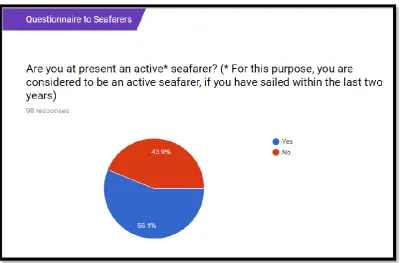
A desirable mix of responses was received from the seafarers who participated in the
survey. Of the 98 valid responses received, 55 respondents (56.1%) were active
seafarers and 43 were ex-seafarers (43.9%).
Figure 6: Ratio between active seafarers and ex-seafarers
4.1.1. Age-wise distribution
The survey respondents were sub-divided into five different age groups as indicated
in the table below. The maximum number of participants (47.7%) were in the
24
Table 2: Age-wise distribution of survey respondents
Age group Active
Seafarers
Ex-Seafarers Total
20 to 30 yrs. 61.80% 29.60% 47.67%
30 to 40 yrs. 12.70% 8.50% 10.86%
40 to 50 yrs. 20.10% 36.60% 27.34%
50 to 60 yrs. 1.80% 21.10% 10.27%
> 60 yrs. 3.60% 4.20% 3.86%
100.00% 100.00%
4.1.2 Rank-wise distribution
As indicated in table 3 below, 54% of the respondents were serving at Management
level during their last contract on board and 46% at Operational level.
Table 3: Rank-wise distribution of survey respondents
Active Seafarers Ex-Seafarers Total
Master 23.60% 60.00% 39.57%
Chief Mate 5.50% 1.70% 3.83%
Chief Engineer 5.50% 13.20% 8.88%
2nd Engineer 1.80% 1.70% 1.76%
Total - Management level 36.40% 76.60% 54.04%
2nd Mate 9.10% 3.30% 6.56%
3rd Mate 5.50% 1.70% 3.83%
Deck Cadet 45.00% 16.70% 32.58%
3rd Engineer 4.00% 1.70% 2.99%
Total - Operational level 63.60% 23.40% 45.96%
25
4.1.3 Distribution of respondents based on types of ships
Survey respondents have served on diverse types of ships as indicated in table 4
below, thus creating a good mix for the survey sample. The maximum number of
respondents have predominantly served on oil tankers (27.7 %), closely followed by
people with more experience on bulk carriers (24.3%).
Table 4: Distribution of respondents based on types of ship
Active Seafarers Ex-Seafarers Total
Gen. Cargo Ships 1.80% 5.20% 3.29%
Bulk Carriers 21.80% 27.60% 24.34%
Container Vessels 14.50% 20.70% 17.22%
Oil Tankers 29.10% 25.90% 27.70%
Chemical Carriers 7.30% 1.70% 4.84%
Gas Carriers 25.50% 12.10% 19.62%
Any Other types 0.00% 6.80% 2.98%
100.00% 100.00%
4.1.4
Report about ‘extra tiredness’ after some contracts
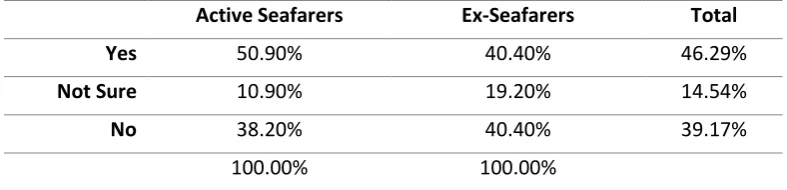
One of the survey questions sought feed-back from respondents about extra
tiredness they felt (if any) at the end of certain contracts. Almost 46.3% of
respondents admitted that there were instances when they felt more than usual
tiredness at the end of certain contracts. A greater number of active seafarers
(50.9%) reported such instances as compared to ex-seafarers (40.4%). About 14.5%
of respondents were not sure of such instances.
Table 5: Percentage of respondents who felt 'extra-tired' after some contracts
Active Seafarers Ex-Seafarers Total
Yes 50.90% 40.40% 46.29%
Not Sure 10.90% 19.20% 14.54%
No 38.20% 40.40% 39.17%
26
To those respondents who answered the previous question in the affirmative, it was
further asked ‘what in their opinion caused such extra-tiredness during certain contracts’. Almost 83% of respondents marked ‘vessel schedule’ related matters as the cause for extra tiredness. About 32% marked ‘vessel crew related’ matters, followed by 24% of respondents who felt ‘faulty vessel equipment/ frequent break-downs’ was the root cause for their tiredness. Only 5% of respondents marked ‘health and hygiene’ (this will include sickness) as the main reason for their tiredness. There
were some respondents who felt more than one reason as valid and marked so.
Table 6: Reasons indicated for 'extra-tiredness' after some contracts
Active Seafarers Ex-Seafarers Total
Vessel Schedule related 85.70% 80.60% 83.02%
Vessel Equipment related 10.70% 35.50% 23.73%
Vessel Crew related 25.00% 38.70% 32.20%
Health & Hygiene related 0.00% 9.70% 5.10%
Any other reasons 14.30% 6.50% 10.20%
135.70% ** 171.00%**
(** Higher percentage indicate more than one reason being ticked by some respondents)
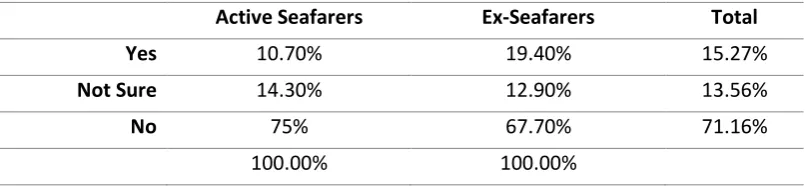
To those respondents who answered the initial question in the affirmative, it was
further asked whether such feeling of tiredness extended beyond their sign-off from
those vessels. About 15.3% of the respondents confirmed that the feeling of extra
tiredness extended beyond their sign-off and continued during their leave period.
Almost 14% marked that they were not very sure about this.
Table 7: Respondents who indicated that ‘extra tiredness’ even beyond leaving the vessel
Active Seafarers Ex-Seafarers Total
Yes 10.70% 19.40% 15.27%
Not Sure 14.30% 12.90% 13.56%
No 75% 67.70% 71.16%
27
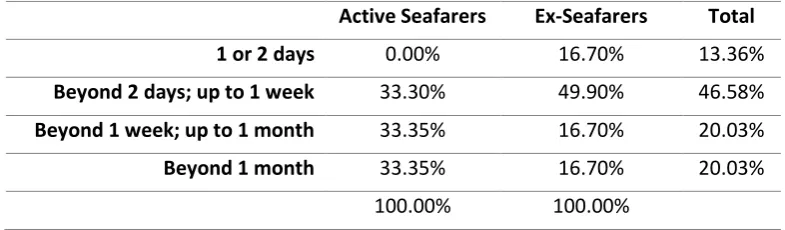
To those respondents who answered the previous question in the affirmative, it was
further asked ‘how long did such feeling of tiredness stay with them after they left the vessel and proceeded on leave’.
Table 8: Response about how long the feeling of extra-tiredness remained after leaving the vessel
Active Seafarers Ex-Seafarers Total
1 or 2 days 0.00% 16.70% 13.36%
Beyond 2 days; up to 1 week 33.30% 49.90% 46.58%
Beyond 1 week; up to 1 month 33.35% 16.70% 20.03%
Beyond 1 month 33.35% 16.70% 20.03%
100.00% 100.00%
About 13.4% of respondents stated that the feeling of constant tiredness stayed with
them for about 1 or 2 days. About 46.6% felt that such a feeling stayed with them
beyond 2 days and up to 1 week. About 20.3% felt that the feeling stayed with them
beyond 1 week and up to 1 month. Another 20.3% of respondents felt that the feeling
stayed with them even beyond 1 month.
4.1.5 Report about common diseases affecting seafarers
In the survey, respondents were asked to report any common diseases which they
are suffering from and the duration/period when they suffer or have suffered from
such diseases. The common diseases about which feed-back was sought were,
Abnormal Blood Pressure (High and Low B/P),
Cardio-vascular diseases (Hypertension, Stroke, Myocardial Infraction), Mental disorders (including depression),
Gastro-intestinal disorders (Peptic Ulcer, Irritable bowel syndrome),
Sleeping disorders (Insomnia, Sleep apnea, Hypopnea, Delayed/ advanced
sleep phase syndrome),
Multiple sclerosis, and
28
Table 9: A summary of common illnesses reported by seafarers
Active Seafarers
Ex-Seafarers Total
Abnormal Blood Pressure (High B/P; Low B/P)
12.70% 31.30% 20.86%
Cardio-vascular diseases (Hypertension, Stroke, Myocardial infraction)
0.00% 9.40% 4.12%
Metabolic disorders (Diabetes, Hyper lipemia, Metabolic syndrome)
3.60% 9.50% 6.19%
Mental disorders (Depression)
1.80% 3.20% 2.41%
Gastro-intestinal disorders (Peptic ulcer, Irritable bowel syndrome)
9.10% 14.30% 11.38%
Sleeping Disorders (Insomnia, Sleep apnea, Hypopnea, delayed/ advanced sleep phase syndrome)
7.30% 14.50% 10.46%
Multiple Sclerosis 0.00% 0.00% 0.00%
Cancer/ Tumor related 0.00% 1.60% 0.70%
As can be seen from the summary report as shown in Table - 9, the most frequently
occurring illness which is affecting Indian seafarers is High Blood Pressure with
almost a third of ex-seafarers being affected by this disease. Other common diseases
with a significant presence among ex-seafarers include Sleeping disorders (14.5%),
Gastro-intestinal disorders (14.3%), Diabetes (9.5%) and Hypertension (9.4%).
The same diseases were found present among the active seafarers too but a lesser
percentage of respondents were affected; Abnormal B/P (12.7%), Gastro-intestinal
disorders (9.1%), Sleeping disorders (7.3%) and Diabetes (3.6%).
4.1.6 Report about obesity affecting seafarers
There is a very high incidence of obesity reported among active seafarers as well as
ex-seafarers. The survey feed-back indicated almost 17.7% of respondents (9.1% of
active seafarers and 28.6% of ex-seafarers) have Body Mass Index values greater
29
Table 10: Percentage of respondents with above-normal BMI value
Active Seafarers Ex-Seafarers Total
Obesity (BMI Value > 30) 9.10% 28.60% 17.66%
4.1.7 Report about constant feeling of fatigue/tiredness
The survey sought feedback about any constant feeling of tiredness or fatigue among
the respondents. 6.32% of respondents reported in the affirmative about a constant
feeling of tiredness affecting them. About 32% of respondents reported that such a
feeling exists but only occasionally.
Table 11: Report about constant feeling of fatigue or tiredness
Active Seafarers Ex-Seafarers Total
Yes 3.60% 9.80% 6.32%
Occasionally 30.90% 32.80% 31.73%
No 65.50% 57.40% 61.95%
4.1.8 Priority reasons for leaving sea-career or contemplating doing so
The survey respondents were asked to list the main reasons (up to 5 reasons, in
order of priority) for leaving the sea-career (among ex-seafarers) or for contemplating
doing so (among active seafarers). The top priority reason which was marked by both
groups were ‘family related reasons’ (44.3%). This was followed by availability of ‘alternative career prospects ashore’ (22.9%), tough conditions on board (8.4%),
boredom with sea-life (4.7%) and medical reasons (4.1%) in that order.
The top priority reason as listed by the respondents for leaving the sea-career or for
30
Table 12: Priority - 1 reason for leaving sea-life or contemplating doing so
Active Seafarers Ex-Seafarers Total
Family related reasons 41.82% 47.46% 44.29%
Alternate career prospects ashore 18.18% 28.81% 22.85%
Tough conditions on board (crew/ high work load etc.)
10.91% 5.08% 8.35%
Medical reasons 7.27% 0.00% 4.08%
Financial security/ planning achieved 5.45% 1.69% 3.80%
Criminalization of Seafarers 5.45% 1.69% 3.80%
Maritime Security related reasons (Piracy etc.)
1.82% 1.69% 1.76%
Boredom with sea-life 1.82% 8.47% 4.74%
Any other reasons 3.64% 1.69% 2.78%
Left blank/ Do not want to leave Sea career
3.64% 3.39% 3.53%
Boredom with sea-life Family related reasons Financial security achieved Medical reasons
Alternate career prospects ashore
Tough conditions on board (crew, workload etc.) Maritime Security related
Criminalization of seafarers Any other reasons
Figure 7: Priority 1 reason for active seafarers contemplating to leave sea-career
Boredom with sea-life Family related reasons Financial security achieved Medical reasons
Alternate career prospects ashore
Tough conditions on board (crew, workload etc.) Maritime Security related
Criminalization of seafarers Any other reasons
31
Table 13 and Figures 9 & 10 below indicates the next priority reasons as recorded
by the respondents.
Table 13: Priority - 2 reason for leaving sea-life or contemplating to do so Active
Seafarers
Ex-Seafarers Total
Family related reasons 23.64% 18.64% 21.45%
Alternate career prospects ashore 18.18% 27.12% 22.10%
Tough conditions on board (crew/ high work load etc.)
5.45% 1.69% 3.80%
Medical reasons 14.55% 6.78% 11.14%
Financial security/ planning achieved 14.55% 11.86% 13.37%
Criminalization of Seafarers 1.82% 1.69% 1.76%
Maritime Security related reasons (Piracy etc.)
5.45% 5.08% 5.29%
Boredom with sea-life 0.00% 3.39% 1.49%
Any other reasons 3.64% 3.39% 3.53%
Left blank/ Do not want to leave Sea career
12.73% 20.34%
Boredom with sea-life Family related reasons Financial security achieved Medical reasons
Alternate career prospects ashore
Tough conditions on board (crew, workload etc.) Maritime Security related
Criminalization of seafarers Any other reasons
Figure 9: Priority 2 reasons for active seafarers contemplating leaving sea-career
Boredom with sea-life Family related reasons Financial security achieved Medical reasons
Alternate career prospects ashore
Tough conditions on board (crew, workload etc.) Maritime Security related
Criminalization of seafarers Any other reasons
32
4.2 Survey questionnaire sent to medical practitioners
The second survey questionnaire was sent to 7 clinics in different cities in India where
seafarers’ medical examinations are conducted. Out of these, 4 clinics sent
responses within time. Two of them were major clinics who have been operating for
many years and where +8000 medical examinations are conducted annually. The
other two clinics were of moderate size, conducting 400 and 700 medical
examinations annually.
Table 14: Details of medical clinics who participated in the survey
Question Clinic 1 Clinic 2 Clinic 3 Clinic 4
For how many years has your clinic been involved in the Medical Examination of Seafarers?
14 2 12 20
On an average, how many seafarers undergo medical examination in your clinic annually? (You may give last year's figure)
8200 400 700 25000 **
** This clinic is part of a chain of clinics where seafarers’ medical examinations are done
Each clinic was asked to report the frequency at which seafarers fail their medical
examination, their age-bracket and the most likely reasons for them to be declared
unfit. The responses received are tabulated in table 15 below:
Table 15: Responses from different clinics about seafarers who are declared unfit
Question Clinic 1 Clinic 2 Clinic 3 Clinic 4
In your experience, approx. how many seafarers fail in their medical examination during the first time? (You may give last year's figure)
Approx. 4 in 100
1 in 100 35 in 700 10 in 1000
In which age-bracket are most number of seafarers failing in their medical examinations? (Give order of priority)
40 to 50 yrs.; 30 to 40 yrs.
40 to 50 yrs. 30 & 40 yrs. >50 years
What reasons do you have, if any, for your observations in the previous questions?
Life style change; Poor dietary habits; Alcohol consumption Poor Dietary habits & Lifestyle
Long hours of work especially night time triggers high sugar response and High B/P
33
Doctors listed poor lifestyle, dietary habits, alcohol consumption, long working hours
at night etc. as the reasons leading to diseases like high B/P, Diabetes, Obesity,
Coronary diseases, Renal Calculus etc.
In the next section of the questionnaire, doctors were given a list of common diseases
and they were asked to classify these diseases as per their probability for being a
reason for seafarers to be declared unfit for service. The list of diseases was prepared
based on the experience of survey feedback obtained from seafarers. The table 17
below depicts the list of diseases and how each doctor classified them as highly likely,
moderately likely and least likely.
Table 16: List of common diseases and their codes
Code List of Common Diseases
A Blood Pressure - High B/P
B Cardio-Vascular diseases - Stroke; Hypertension
C Metabolic Disorders - Diabetes
D Mental Disorders - Depression
E Sleep Disorders - Insomnia, Sleep apnea
F Gastro-intestinal disorders - Peptic Ulcer
G Multiple Sclerosis
H Cancer/ Tumor
I Obesity (BMI > 30)
J Fatigue - Chronic Fatigue
K Other ailments not mentioned above
Table 17: Response from clinics showing priority of illness as reasons for declaring seafarers ‘unfit’
Clinic 1 Clinic 2 Clinic 3 Clinic 4
Highly Likely C, F, I B, D, E, H, A, C, A, B, C, I, K
Moderately likely A, B, K A, C, G, I, J B, I F
34
Doctors gave higher priority for diseases like high blood pressure, diabetes, obesity,
heart diseases and peptic ulcer, which agrees with the findings of the survey
conducted earlier among the seafarers. In the next section of the survey, doctors
were asked whether seafarers ever complained to them about job-related fatigue or
stress and if yes, how often did they get such complaints. All doctors responded in
the affirmative but indicated the frequency of receiving such complaints as low.
4.3 Analysis of seafarers’ medical examination data
From clinic no. 4 above, all the data pertaining to seafarers’ pre-joining medical
examination during the period 1st Jan 2015 to 31st Dec 2016 were collected
separately for analysis. This data collected included details