World Maritime University World Maritime University
The Maritime Commons: Digital Repository of the World Maritime
The Maritime Commons: Digital Repository of the World Maritime
University
University
World Maritime University Dissertations Dissertations
11-5-2017
Negative impacts of illegal, unreported and unregulated fishing
Negative impacts of illegal, unreported and unregulated fishing
perpetrated by Mozambican fishers
perpetrated by Mozambican fishers
Catarina Maria Arminda Elias Vasco
Follow this and additional works at: https://commons.wmu.se/all_dissertations Part of the Economics Commons, and the Environmental Policy Commons
Recommended Citation Recommended Citation
Vasco, Catarina Maria Arminda Elias, "Negative impacts of illegal, unreported and unregulated fishing perpetrated by Mozambican fishers" (2017). World Maritime University Dissertations. 551.
https://commons.wmu.se/all_dissertations/551
WORLD MARITIME UNIVERSITY
Malmö, Sweden
NEGATIVE IMPACTS OF ILLEGAL,
UNREPORTED AND UNREGULATED FISHING
PERPETRATED BY MOZAMBICAN FISHERS
By
CATARINA MARIA ARMINDA ELIAS VASCO
Mozambique
A dissertation proposal submitted to the World Maritime University in partial
Fulfilment of the requirements for the award of the degree of
MASTER OF SCIENCE
In
MARITIME AFFAIRS
(MARITIME SAFETY AND ENVIRONMENTAL ADMINISTRATION)
2017
I
II
ACKNOWLEDGEMENT
I would like to express my thanks first of all to God, by the grace of his love and his
mercy, by the blessing of my life, the life of my gracious family, for the life of my friends.
My dear fiancé, show here my infinite gratitude for being this person so special and
wonderful that was present in all moments of development of this study. Thank you for
your patience, enthusiasm, by force, by trust, by encouragment, by affection, for the
partnership and by his love. God bless you.
To my brothers Elias, Fatima, Lina and Tamires, thank you for the prayers, friendship,
the peaceful coexistence and the family. Thank you for being present in my life.
To my mother, I would like to thank you for the affection and the eternal love of mother.
Thanks for the encouragement of studies and by the teachings of love of neighbor. May
God always bless your life mother.
My father (in memoriam), by family, teachings, the respect and love of neighbor.
I would also like to offer my highly esteemed and sincere gratitude to my supervisor,
Vice President (Academic) and Professor Neil Bellefontaine, for his invaluable
guidance in leading me in accomplishment of the study.
Finally, my colleagues and friends from work and of the course the encouragement and
III
ABSTRACT
Title of Dissertation: Negative Impacts of Illegal Unreported Unregulated Fishing
Perpetrated by Mozambican Fishers
Degree: MSc
Illegal, Unreported and Unregulated Fishing (IUU) contributes to the over-exploitation
of fisheries resources and constitutes an impediment to the recovery of fish stocks and
ecosystems. It is universally recognized that there is a serious problem with the future
of global food security.
This study had as its objective to identify the best methods to assist in the formulation
of strategies and/or policies aimed at combating illegal, unreported and unregulated
fishing in Mozambique and the adverse impacts resulting therefrom.
Through research, it was possible to identify the main practices of IUU fishing in
Mozambique in general, and particularly in Nampula province, including its economic,
social and environmental impacts.
The study also noted that, although, Mozambique has several tools in terms of plans,
regulations, laws and adherence to international organizations that regulate the
activities of the sea and fishing, it is noticed on a large scale the practice of IUU fishing,
with trends of declining fish catches.
The study concludes with a discussion of the results achieved and raises some
challenges for institutions such as DPMAIP, ADNAP and ADMAR, the community and
society in general, with a view to finding better ways and solutions to prevent and
combat IUU fishing.
KEY WORDS: Illegal, Unreported, Unregulated Fishing, Mozambique fishers, Negative
IV
TABLE OF CONTENTS
DECLARATION ... I
ACKNOWLEDGEMENT ... II
ABSTRACT ...III
TABLE OF CONTENTS... IV
LIST OF TABLES ... VII
LIST OF FIGURES ... VIII
LIST OF ABBREVIATIONS ... IX
1 GENERAL INFORMATION ... 1
1.1 INTRODUCTION ... 1
1.2 DEFINITION OF IUUFISHING ... 2
1.3 CONSEQUENCES OF IUUFISHING ... 3
1.4 PRACTICES TO COMBAT IUUFISHING ... 5
1.5 PROBLEM STATEMENT... 6
1.6 SIGNIFICANCE OF PROJECT /MOTIVATION ... 6
1.7 GENERAL OBJECTIVE ... 7
1.7.1 SPECIFIC OBJECTIVES ... 7
1.8 RESEARCH QUESTIONS ... 8
1.9 HYPOTHESES ... 8
1.10 METHODOLOGY ... 8
1.11 THE AREA OF STUDY ... 9
1.12 ORGANIZATION OF THE DISSERTATION ... 9
1.13 POTENTIAL LIMITATIONS OF THE PROJECT ... 10
1.14 EXPECTED RESULTS ... 10
2 LITERATURE REVIEW OF MOZAMBIQUE ... 11
2.1 GEOGRAPHICAL LOCATION OF MOZAMBIQUE ... 11
2.2 SITUATION OF FISHING IN MOZAMBIQUE ... 12
2.3 FISHING IN MOZAMBIQUE ... 15
2.4 CONSEQUENCES OF IUU FISHING IN MOZAMBIQUE ... 16
2.4.1 ECONOMIC CONSEQUENCES ... 16
2.4.2 ENVIRONMENTAL CONSEQUENCES ... 17
2.4.3 SOCIAL CONSEQUENCES ... 17
V
3.1 CHARACTERISTICS OF NAMPULA PROVINCE ... 19
3.2 CHARACTERIZATION OF FISHING IN NAMPULA PROVINCE ... 20
3.2.1 ARTISANAL FISHING IN NAMPULA PROVINCE ... 22
3.2.2 SEMI-INDUSTRIAL FISHING IN NAMPULA PROVINCE ... 22
3.3 PRACTICES OF IUUFISHING IN NAMPULA PROVINCE ... 23
4 RESEARCH METHODOLOGY ... 25
4.1 RESEARCH METHOD ... 25
4.2 THE RESEARCH PARTICIPANTS ... 25
4.2.1 THE FISHERS QUESTIONNAIRE ... 26
4.2.2 PROVINCIAL DIRECTION OF THE SEA, INLAND WATERS AND FISHERIES (DPMAIP) ... 26
4.2.3 MARITIME ADMINISTRATION (ADMAR) ... 26
4.2.4 PROVINCIAL DELEGATION OF ADMINISTRATION OF FISHERIES (ADNAP) ... 27
4.3 ETHICAL ISSUES ... 27
4.4 LIMITATIONS OF THE RESEARCH ... 28
4.5 INSTRUMENT OF DATA COLLECTION (QUESTIONNAIRE) ... 28
4.6 DATA COLLECTION ... 29
4.7 REVIEW OF DATA ... 30
4.7.1 QUANTITATIVE ANALYSIS ... 30
4.7.2 QUALITATIVE ANALYSIS ... 30
4.8 PRESENTATION AND ANALYSIS OF DATA ... 30
4.8.1 STATISTICAL PRESENTATION OF THE RESULTS ... 30
4.8.2 DATA RESULTS FROM INTERVIEWS WITH FISHERS ... 31
4.8.2.1 Demographic Analysis of Respondents ... 31
4.8.2.2 Gender of the Participants ... 31
4.8.2.3 Function in Fishing ... 31
4.8.2.4 Experience in Fishing ... 32
4.8.2.5 Knowledge about Illegal, Unreported and Unregulated Fishing ... 33
4.8.2.6 Types of IUU Fishing are known by the Interviewees... 33
4.8.2.7 Awareness of the Existence of a Regulation on Fishing ... 34
4.8.2.8 Knowledge about Fishing with a License ... 34
4.8.2.9 Level of Knowledge in the Fishers Community about Illegal Unreported and Unregulated Fishing Practices ... 35
4.8.2.10 Types of IUU Fishing Practiced in the Communities of Fishers ... 35
4.8.2.11 Why does the Practice of IUU Fishing Occur in Fishing Communities? ... 36
4.8.2.12 Main Problems that Fishers have faced in Applying the Rules Governing Fishing .... 37
4.8.2.13 Comments of Respondents ... 38
4.8.3 RESULTS OF DATA FROM QUESTIONNAIRES IN INSTITUTIONS ... 39
4.8.3.1 Demographics of Respondents ... 39
4.8.3.2 Gender of the Participants ... 39
4.8.3.3 Function of the Interviewees ... 40
4.8.3.4 Professional Experience of respondents – Institutions ... 40
4.8.3.5 Knowledge of IUU Fishing ... 41
4.8.3.6 Forms of IUU fishing ... 41
4.8.3.7 Types of IUU Fishing in Nampula Province ... 42
VI
4.8.3.9 Tools Used in Combating IUU and how they have been used? ... 43
4.8.3.10 Strategies Used by the Administration of fishing in Relation to Preventing and Combating IUU Fishing ... 44
4.8.3.11 Employees Involved in the Surveillance of Fishing ... 44
4.8.3.12 Main Challenges in the Application of Rules and Regulations ... 44
4.8.3.13 Problems Faced in the Implementation of Rules and Regulations ... 45
4.8.3.14 Level of Resources and Available Capacity to Combat IUU Fishing ... 46
5 GOVERNMENT ACTION ON ILLEGAL UNREPORTED AND UNREGULATED FISHING (IUU) .. 48
6 FINAL CONCLUSIONS AND RECOMMENDATIONS ... 51
6.1 CONCLUSIONS ... 51
6.2 RECOMMENDATIONS ... 52
6.2.1 THE INSTITUTIONS OF STATE AND GOVERNMENT ... 53
6.2.2 THE FISHING COMMUNITY ... 55
6.2.3 TO THE GENERAL LEVEL ... 56
REFERENCES ... 57
ANNEXS ... 60
VII
LIST OF TABLES
Table 1-Global Fishing Production of 2014 - 2015 ... 13
Table 2- Participants of the Research ... 29
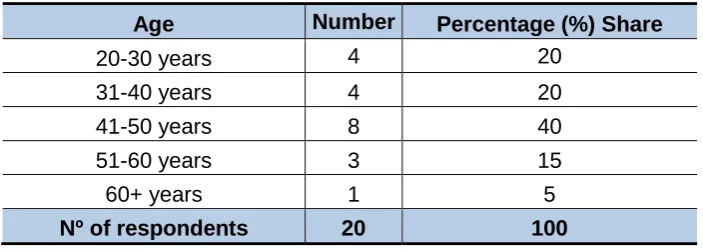
Table 3- Age of Respondents – Fishers ... 31
Table 4: Experience in Fishing of Respondents ... 32
Table 5 - Types of IUU fishing are known by the interviewees – Fishers ... 34
Table 6 -Types of Practices of IUU Fishing have been Reported in the ... 36
Table 7-Why the Practice of IUU Fishing by Fishing Community ... 37
Table 8 - Problems faced by fishers in the Implementation of the rules and ... 38
Table 9 - The Age of Respondents – Institutions... 39
Table 10 - Functions of the Interviewees – Employees ... 40
Table 11 - Professional Experience of the Interviewees – Employees ... 41
Table 12 - Forms of IUU fishing - Interview with employees ... 42
Table 13 - Problems Faced in the Implementation of Rules and Regulations ... 46
Table 14 - United States of the Indian Ocean (IOTC) ... 60
VIII
LIST OF FIGURES
Figure 1: Map of Mozambique (world map) ... 12
Figure 2: Map of Mozambique (Africa) ... 12
Figure 3: Exports of Fishery Products ... 14
Figure 4: Map of Nampula (Africa Map) ... 20
Figure 5: Map of Nampula (Mozambique Map) ... 20
Figure 6:Percentage Representation of Functions in the Fishery of the ... 32
Figure 7- Fisherman Interview in Ingure- Nampula ... 63
Figure 8- Fishers Interview in Angoche-Nampula ... 63
Figure 9 - Use of Mosquito Net in Mucoroge Beach-Angoche-Nampula... 63
Figure 10 - Use of Mosquito Net in Kuiricuije Beach – Angoche- Nampula ... 63
Figure 11 - Larvae of Fish Caught with Mosquito Net in Kuiricuidje Beach – Angoche -Nampula ... 64
IX
LIST OF ABBREVIATIONS
% Percentage
‘ Minute
ADMAR Maritime Administration
ADNAP Provincial Delegation of Fisheries Administration CCAMLR Commission for the Conservation of Antarctic Marine Living Resources
COFI Committee on Fisheries
DPMAIP Provincial Direction of the Sea, Inland Waters and Fisheries
EEZ Exclusive Economic Zone
FAO Food and Agriculture Organization of United Nations
HP Horse Power
ICCAT International Convention for the Conservation of Atlantic Tunas
ILO International Labour Convention
IMO International Maritime Organization
INAMAR National Maritime Authority
IOTC Indian Ocean Tuna Commission
IPOA-IUU International Plan of Action to Prevent, Deter and Eliminate Illegal, Unreported and Unregulated Fishing
IUU Illegal Unreported and Unregulated Fishing
KW Kilowatts
LTD Limited
Mts Metric Tonnes
NAFO Organisation of Fisheries in the North Atlantic
NEAF Organisation of the North-East Atlantic Fisheries
NEPAD New Partnership for Africa's Development
NGO Non-Governmental Organization
PGC/BS Management Plan for Fisheries of Shrimp in Banco de Sofala PNA-IUU National Plan of Action to Prevent, Deter and Eliminate Illegal, Unreported and Unregulated Fishing
REPMAR General Regulation of Marine Fisheries
RFMOS Regional Fisheries Management Organizations
S South
TC Growth Rate
TR Rate of Achievement
UNCLOS United Nations Convention on the Law of the Sea
USD United States Dollars
VMS Vessel Monitoring Systems
1
1 GENERAL INFORMATION
1.1 Introduction
“Fishing has been an important source of food for humanity and a provider of employment and economic benefits for those involved in this activity” (FAO, 1995).
According to Agnew et al. (2008), FAO (2008), quoted by Metuzals et al. (2009),
currently one of the most serious problems affecting world fisheries is illegal fishing.
Illegal or pirated fishing occurs in almost all fisheries and can absorb significant
amounts of overall catches.
Illegal fishing is a form of fishing, and in today's world of globalisation, the pirate'
itinerants are exploring not only the high seas (Berkes et al., 2006, quoted by
Metuzals et al., 2009) but also the coastal waters. In addition, large catches of
fisheries on artisanal and small-scale not regulated, are generally not reported in
developing countries (Pitcher et al., 2002, quoted by Metuzals et al., 2009).
During the last century, the activity of Illegal, Unreported and Unregulated (IUU)
fishing was largely neglected by those responsible for setting quotas and by
management, although since the 1980s some scientists used information from IUU
fishing for evaluation of stocks, usually gathered confidentially (Kaija Metuzals,
2009). Kaija Metuzals states that, in the last ten years, concerns about
over-exploitation and the increasing profile of non-governmental organisations (NGOS)
have focused attention on IUU fishing and there has been a movement toward
information gathering and transparency in IUU fishing.
Historically, the term “IUU fishing” was coined for the first time by the Commission
for the Conservation of Antarctic Marine Living Resources (CCAMLR), a regional
fisheries management organisation responsible for the marine resources in the
Antarctic Ocean, at its annual meeting in 1997 (Metuzals et al, 2009). The
Commission addressed the many-sided problems represented by Illegal, Unreported
2
Since 1997, the term “IUU fishing” has regularly been discussed in meetings of the
CCAMLR (has been a constant theme of agenda) and was later adopted by other
international bodies concerned with fisheries, such as the FAO, the International
Maritime Organization (IMO) and International Labour Organization. In addition, the
International Convention for the Conservation of Atlantic Tunas (ICCAT), the
organisation of fisheries in the North Atlantic (NAFO) and the organisation of the
North-East Atlantic Fisheries (NEAF), among others have adopted this terminology
(Metuzals et al, 2009).
1.2 Definition of IUU Fishing
FAO gives the international “definition of IUU fishing through the International Plan
of Action to Prevent, Deter and Eliminate Illegal, Unreported and Unregulated
Fishing (IPOA-IUU fishing)” (FAO, 2001) in three categories, as follows:
(i) “Illegal fishing refers to the activities:
● Performed by national or foreign vessels in waters under the jurisdiction of a
state, without the permission of that state or in violation of its laws and
regulations;
● By vessels flying the flag of States which are parties to a relevant regional
fisheries management organisation, but that operate in violation of
conservation and management measures adopted by that organisation and
by which the states are bound, or relevant provisions of applicable
international law; or
● In violation of national laws or international obligations, including those
undertaken by cooperating States to a relevant regional fisheries
management organisation” (FAO,2001).
Therefore, the use of any device, material, artifact or fishing gear for the purpose of
capturing fish, which is not regulated and properly licensed or authorised for the
3
(ii) “Unreported Fishing refers to fishing activities:
● Which have not been reported or have been the subject of incorrect
declarations to the competent national authority, in contravention of national
legislation; or
● Made in the area of competence of a regional fisheries management
organisation which has not been reported or has been incorrectly declared,
in violation of the notification procedures of that organisation;
● A fishing activity that has not been reported or poorly reported to the
competent national authority or the regional fisheries management
organisations (RFMOS), in violation of applicable laws and regulations”
(FAO, 2001).
(iii) “Unregulated Fishing refers to fishing activities:
● In the field of application of a relevant regional fisheries management
organization that are carried out by vessels without nationality; or by those
vessels with flags of a State which is not party to that organization or by a
fishing entity, in a manner that is not consistent with or contravenes
measures for the conservation and management of the organization; or ● In areas or on fish stocks for which there are no conservation or
management measures and where such fishing activities are conducted in a
manner incompatible with the responsibilities of the State about the
conservation of living marine resources under international law;
● By vessels without nationality, vessels flying the flag of a country which is not
part of Regional Fisheries Management Organizations (RFMOS) governing
this fishing area or vessels catching species in the high seas or in areas not
regulated” (FAO, 2001).
1.3 Consequences of IUU Fishing
According to the FAO (2006), (cited by Metuzal et. al 2009) demand for seafood
products continues to increase and the world consumption of fish per capita has
increased over the past four decades. Therefore, in terms of worldwide production,
the total capture in 2014 was 93.4 million tonnes, 81.5 million tonnes of which was
4
IUU fishing not only threatens the commercial viability of the target species of
fishing, as well as the marine ecosystems, but also undermines the legitimate
fisheries and the conservation measures, nationally and regionally, and challenges
the sovereignty of coastal States (Metuzals et al., 2009).
Agnew et al. (2009) state that Illegal Unreported and Unregulated fishing contributes
to the overexploitation of fisheries resources and constitutes an obstacle to the
recovery of fish stocks and ecosystems. It is widely accepted that there is a serious
problem with the future of global food security, boosted by substantial growth in
world population and increasing demand for fish proteins, but a large number of
stocks are currently depleted and, therefore, not capable of producing their
maximum sustainable yield.
According to Liddck (2014), the reduction of stocks of fish in local waters also
reduces employment opportunities, resulting in a decrease in income of households
and exacerbating impoverishment.
Agnew, et al. (2009) found that in analyzing the situation in 54 countries over the
last 20 years, and without the loss of illegal fishing on the high seas, it is estimated
that the lower estimates and higher total value of current losses of IUU throughout
the world are between $10 billion and $23.5 billion annually, representing between
11 and 26 million tonnes. And the overall estimates of FAO (2016) indicate that IUU
fishing is responsible for annual catches of up to 26 million tonnes, with a value of
up to $23 billion.
Agnew et al. (2009), state that the developing countries are most at risk of
occurrence of illegal fishing, with the estimated total catch in West Africa accounting
for 40% of the reported catches. The same author says that a significant relationship
has been demonstrated on a global scale between the level of illegal and
undeclaredfishing and World Bank indices of governance, and points to the benefits
of improving governance. Agnew et al. (2009) make the point that in the case of
developing countries, with poor indices of governance, society will not blame them
for IUU fishing, but they are more vulnerable to illegal activities conducted by their
5
In Africa, for example, many coastal States are licensing vessels of countries from
distant waters such as China, Taiwan, Korea, EU and Russia to fish in their waters.
A significant problem of illegal fishing arises from many of these vessels (Agnew et
al., 2009).
1.4 Practices to Combat IUU Fishing
Several efforts have been undertaken to combat Illegal, Unreported and
Unregulated fishing. In recent years, the world fisheries have become a dynamic
sector of the food industry, driven by the market. Coastal States have endeavoured
to take advantage of their new opportunities by investing in modern fishing fleets
and processing factories, in response to the growing international demand for fish
and fishery products (FAO, 2009). FAO further notes that, at the end of the 1980s, it
became clear that fisheries resources could no longer sustain fast paced exploration
and development, which is often perceived to be out of control, and which urgently
required new approaches to fisheries management, including considerations of
environmental conservation.
The situation was aggravated by the fact that unregulated fishing on the high seas,
in some cases, involves species of straddling fish stocks and highly migratory
species that occur within and outside exclusive economic zones, which was
becoming a matter of increasing international concern (FAO, 2009).
The FAO Committee on Fisheries (COFI), in its nineteenth session, in March 1991,
asked for the development of new concepts that lead to responsible fishing in a
sustainable manner. Subsequently, the International Conference on Responsible
Fishing, held in 1992 in Cancun (Mexico), also asked the FAO to prepare an
international code of conduct to address these concerns (FAO, 2009).
In November 1993, in the 27th session of the FAO Conference, the Agreement to
Promote Compliance with International Conservation and Management Measures
by Fishing Vessels on the High Seas was adopted (FAO, 2009).
On 31 October 1995, the Global Code of Conduct for Responsible Fisheries was
6
national and international efforts to ensure the sustainable exploitation of living
resources in harmony with the environment (FAO, 2009).
The International Plan of Action to Prevent, Deter and Eliminate illegal, Unreported
and Unregulated Fishing (IPOA-IUU) was adopted by consensus at the 24th session
of the COFI on March 2, 2001. Moreover, on 23 June 2001, an important voluntary
instrument relating to the Code of Conduct for Responsible Fisheries was approved
by the 120th Session of the FAO Council, which promotes improved fisheries
management measures by fishing fleet organizations on a global scale (FAO, 2001).
1.5 Problem Statement
The large expanse of coastline (2.780 km), maritime areas, the limited human
resources, the poor training of inspectors, the weak coordination and collaboration
between the institutions involved in surveillance and the lack of a strategy for
monitoring have been pointed out as the main causes of weak capacity of the State
to control the exploitation and use of fisheries resources in Mozambique.
(Chimarizene, 2016).
With the practice of illegal fishing, the population of the country, estimated at over 24
million inhabitants (National Institute of Statistics, 2007) may face great difficulty with
its fishery resource. Fisheries are a major source of economic growth and animal
protein for human consumption. Overexploitation of the fisheries resource can also
lead to the destruction of the marine ecosystem. This project will try to determine the
resulting impacts in order to analyze and assist in the formulation of policies and/or
strategies to mitigate the problem.
1.6 Significance of Project / Motivation
The motivations that led to the choice of this theme, “The negative impacts of Illegal, Unreported and Unregulated fishing perpetrated by Mozambican fishers”, are:
First of all, due to the fact that, at this time, the attention of the Mozambique
government is focused on the fight against absolute poverty, one of the strategies
for the sector of the Sea, Inland Waters and Fisheries is the promotion of
7
and specific, for the development of actions with a view to minimizing or eliminating
this poverty highlight for the sector of the Sea, Inland Waters and Fisheries. Such
policies aim to combating illegal fishing, for which the fisheries resources are used,
to take into account the future generations. The practice of fishing in Mozambique is
regulated, including subscription to international standards such as agreements and
conventions.
Second, despite existing policies, the practice of IUU fishing in the territorial waters
of Mozambique continues to be a significant problem. According to Chimarizene
(2016), fishing without a license is most common practice of IUU fishing, in addition
to violating bans, capturing of prohibited and protected species and using
unauthorizedfishing gear.
1.7 General Objective
The general objective of this study is to identify the best methods that can be
analysed to assist in the formulation of strategies and policies aimed at combating
illegal, unreported and unregulated fishing activities perpetrated by Mozambican
fisherman and the adverse impacts resulting from them.
1.7.1 Specific Objectives
The specific objectives of this study are to:
● Identify the best methods that can be analysed to deal with the different
practices of illegal, unreported and unregulated fishing, perpetrated by
fishers in Mozambique;
● Evaluate effects resulting from Illegal, Unreported and Unregulated fishing to
find the best way to raise awareness of the community for the abandonment
of this practice;
● Understand the strategies of the government of Mozambique in combating
Illegal, Unreported and Unregulated fishing, so that the study can help
8
1.8 Research Questions
● What are the types of illegal, unreported and unregulated fishing practices in
Mozambique? What are the best methods to combat each type and how can
they be analysed, so as to influence the combating of illegal, unreported and
unregulated fishing?
● What are the negative effects of Illegal, Unreported and Unregulated fishing
and what is the best way to raise awareness among the population of
Mozambique to abandon the use of this practice?
● What are the strategies adopted by the Mozambican Government to combat
illegal, unreported and unregulated fishing and how can this study help
improve the formulation of policies and strategies to combat the harmful
acts?
1.9 Hypotheses
The hypotheses of this study will be examining the following three areas with
respecting in IUU fishing:
● Damage to fragile marine ecosystems and vulnerability of species caught; ● Non-sustainable fishing;
● Direct losses of economic value of fish catches.
1.10 Methodology
The methodological approaches will be both quantitative and qualitative. The
research will be conducted through interviews, questionnaires and observations to
the target group. To achieve the objectives mentioned in the previous section, this
research will be divided into two parts:
● Data Collection: The collection of data began with a review of the literature
of some national and international resources on IUU fishing that are
available online and in libraries, through a questionnaire, and through
interviews with organisations linked to the activity of fishing and fishers. The
interviews were conducted on the ground, by phone and by email. The
9
observation, the author and Mr. Intave (that will help to translate Portuguese
to local language because most fishers do not speak the official language)
will collect in the form of images and notes of different actions and
behaviours of local fishers on the beaches, fishing centres and areas of
loading and unloading of fish;
● Analysis and interpretation of project: The results of the research will be
the subject to analysis. Then a summary of conclusions will be developed
from the information gathered. The analysis of the questionnaires, interviews
and observations of the research will be carried out manually; the treatment
of quantitative data will be in the form of software.
1.11 The Area of Study
This project will focus on illegal, unreported and unregulated fishing perpetrated by
local fishers in northern Mozambique, particularly in Nampula Province. Northern
Mozambique is composed of three (3) Provinces (Cabo Delgado, Nampula and
Niassa), two of which are located in the coastal zone (Nampula and Cabo Delgado
Provinces) and one in the pool (Niassa). Nampula has the highest population
density of Mozambique, with 3,988,613 inhabitants (census, 2007), and fishing is
one of the main activities of livelihood of the population in the province.
Similarly, Nampula province has a total 80,295 artisanal fishers, representing
approximately 28.1% of the artisanal fishers of Mozambique (285,549) and about
61.7% of the northern zone, against 40,794 artisanal fishers in Cabo Delgado
province and 9,020 artisanal fishers in the province of Niassa (National Institute for
Development of small-scale fisheries, 2013).
1.12 Organization of the Dissertation
The dissertation is organised in the following way:
1-General Information, definitions of IUU fishing, consequences of IUU fishing,
practices to combat IUU fishing, problem statement, meaning of the project, general
and specific objectives, research questions, hypotheses, methodology, area of
10
2-Literature Review of Mozambique, geographical Location of Mozambique,
situation of fishing in Mozambique (National Report), IUU fishing in Mozambique,
consequences of IUU fishing in Mozambique;
3-Description of the practice of IUU fishing by the Mozambican communities focused
in the Northern region
4-Research Methodology
5-Government action on IUU fishing
6-Conclusions and Recommendations
1.13 Potential Limitations of the Project
The large size of the territory of Mozambique, both in the area of maritime waters,
as well as the area of inland waters, the limited financial resources and the armed
conflict that has occurred in recent times in Mozambique, may be a limiting factor for
the collection of representative data for this study. The conception of methods used
in this project will be directed to the accessible information, without high costs and
the relevant entities of the public sector and private sector involved in fishing
activities and the activities their respective activities.
1.14 Expected Results
This research project is expected to achieve the following results:
● Identify the types of illegal, unreported and unregulated fishing perpetrated
by Mozambican fishers in Mozambique and find the best methods that can
be analysed and influenced to combat these practices;
● Identify the negative effects of Illegal, Unreported and Unregulated fishing
and strategies for the abandonment of these practices;
● Understand the strategies that the government is taking to prevent the illegal,
unreported and unregulated fishing, for which the study may assist in the
11
2 LITERATURE REVIEW OF MOZAMBIQUE
2.1 Geographical Location of Mozambique
Mozambique is located between the latitudes 10º 20' S and 26º 50' South, with an
area of approximately 783 000 Km2 and has one of the largest sea coasts of Africa,
about 1,430 nautical miles in length, all of it bathed by the Indian Ocean. The main
ports along the coast are the Maputo, Inhambane, Beira, Quelimane, Angoche,
Nacala and Pemba. The main rivers are the Rovuma and Lúrio in the northern zone,
Zambezi, Pungue, Buzi and Save in the centre, Limpopo, Incomáti and Maputo in
the south. All the rivers carry large volumes of sediment, a factor of great
importance for living organisms of the continental shelf (FAO, 1990).
Mozambique is a country on the southeast coast of Africa that has its borders with:
to the north, Tanzania; to the northwest, Malawi and Zambia; to the west,
Zimbabwe, South Africa and Swaziland; to the south, South Africa; to the east, the
section of the Indian Ocean known as the Mozambique Channel. In the
Mozambique Channel, the neighbours are Madagascar and the Comoros (including
the French possession of Mayotte). In the Indian Ocean, in the east of the
Madagascar Island, are located the dependencies of the Reunion, Juan de Nova
and Europe Island.
The Mozambique Channel has a substantial half distance between the continent
and Madagascar, and the atoll of Bassas of India, also a French possession. The
capital of Mozambique is Maputo (named Lourenço Marques during the Portuguese
domination). The northern half (north of the Zambezi River) is a great plateau, with a
small coastal plain bordered by coral reefs, limiting the pool with mountain ranges
belonging to the system of the Great Rift Valley. The southern half is characterised
by a wide coastal plain of alluvium, covered by savannahs and cut by valleys of
several rivers, the most important of which is the Limpopo River (Governo de
12
Figure 1: Map of Mozambique (world map) Figure 2: Map of Mozambique (Africa)
Source: Image from Google Earth
According to the Master Plan for Fisheries, 2010-2019, the coastline of
Mozambique, can be identified by three distinct sections in which the fishing
activities also have differences among them, which are highlighted as follows:
1. The north coast, with approximately 770 km, has a coastline characterized
by reefs and rocks and a close continental shelf, with some sheltered bays
and local inland waters to the coastal islands;
2. The central coast, with approximately 980 km, designated region by Banco
de Sofala, is crossed by numerous rivers and streams, and bordered by
mangrove forests that provide estuarine areas and extensive coastal
communities, sometimes protected by some coastal islands; and
3. The south coast, with approximately 950 km, is widespread in some areas,
with littoral seabed bottoms from banks of coral and rock. It has some
sheltered bays, and it is exposed to high winds from the south quadrant, in
particular from Inhambane to the extreme south of the territory (Ministério
das Pescas, 2010).
2.2 Situation of Fishing in Mozambique
The fisheries sector plays an important role in the Mozambican economy, both for
subsistence and for income and food security of fishing communities. Fishing is also
a driving force, articulated in the sectors of semi-industrial and industrial that focus
13
The different physical conditions and environments of the three coasts affect the
fauna, and the flora present and the fishing operations conducted. Some sites, by
their geographical conditions, provide a concentration of certain marine species. It is
estimated that the potential of fishery products from Mozambique is about 332
thousand tonnes, the main features being the shrimp of shallow waters (in the
Banco de Sofala and in the Baia de Maputo), the crustaceans of depth (in the
continental slope of the Central and South), the horse mackerel and mackerel (in the
Banco de Sofala) and demersal fish (in the north and south) (Ministério das Pescas,
2010).
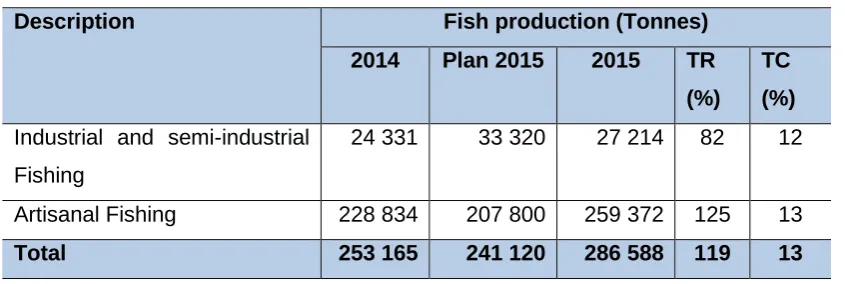
In 2015, the total catch was recorded at 286 thousand tonnes of fish with a revenue
of 147 million meticais (approximately 9.8 million USD), of which 27 thousand tons
was derived from commercial fishing (industrial and semi-industrial) and 259
thousand tons from artisanal fishing (Ministério do Mar, Águas Interiores e Pescas,
2016).
Table 1-Global Fishing Production of 2014 - 2015
Description Fish production (Tonnes)
2014 Plan 2015 2015 TR
(%)
TC
(%)
Industrial and semi-industrial
Fishing
24 331 33 320 27 214 82 12
Artisanal Fishing 228 834 207 800 259 372 125 13
Total 253 165 241 120 286 588 119 13
Source: Ministério do Mar, Águas Interiores e Pescas, 2016
The trends of catches and fishing effort in Mozambique are detailed as follows:
● The shrimp of the Baia de Maputo, with an estimated potential of
approximately 425 tonnes in 2014, had an actual recorded catch of 464
tonnes, and are considered to have been exploited;
● The shrimp from the surface of the Banco de Sofala, with an estimate of
around 6,125 tonnes in 2014, recorded 5,983 tonnes, also the fishery was
14
● The demersal fish, with an estimated 815 tonnes, recorded 1524 tonnes, it
was also considered overexploited in the southern zone and optimally
exploited in the centre, Banco de Sofala (Instituto de Investigação
Pesqueira, 2015).
In 2015 the fleet of industrial fisheries was compromised of 124 licensed fishing
vessels, against 138 licensed in 2014; 345 semi-industrial vessels were licensed
compared to 336 the previous year (2014); regarding artisanal fisheries, 20,368
were licensed against 15,116 the previous year (2014). A total of 52,777 fishing
gears were recorded by the census of fishing for 2012 (Ministério do Mar, Aguas
Interiores e Pescas, 2016).
In the same year, the exports of fish reached approximately 13 000 tons, equivalent
to 82 million USD, representing a growth of around 9% compared to the previous
year. The main products were lobster, crab, shrimp, prawn, crayfish, tuna, kapenta
and cephalopods (Ministério do Mar, Águas Interiores e Pescas, 2016). The
sub-sectors of industrial fishing, semi-industrial and artisanal contributed about 48%,
39% and 13%, respectively, as depicted in Figure 3.
Figure 3: Exports of Fishery Products
Source: Ministério do Mar, Águas Interiores e Pescas
The exercise of fishing activity in Mozambique is regulated by the Law of Fisheries,
Law no. 22/2013, of 1 November, whose Regulation of Fishing Gear for strategy
15
approved by Decree No. 43/2013, of December 10, regulation of fisheries in inland
waters, which was approved by Decree No. 57/2008, of December 30.
According to the Law of Fisheries, fishing resources existing in the jurisdictional
waters of Mozambique are owned by the State, which determines the conditions of
its use and exploitation. The law also states that fishery products obtained from
harvesting or capture of fish in Mozambican waters or animals, born or reared in the
territory of the Republic of Mozambique are considered to be of national origin
(Assembleia da República, 2013).
2.3 Fishing in Mozambique
According to the Ministério das Pescas (2009), in Mozambique there are various
types of Illegal, Unreported and Unregulated fishing:
1. Fishing without a license is the most common practice in IUU fishing. There
are regular incursions of fishing boats with purse and longliners that are not
licensed in Mozambique's EEZ, and whose targets are the resources of tuna,
swordfish and shark;
2. Another problem of IUU fishing, of medium severity, is the incursion of
fishing boats of deep sea shrimp and surface shrimp in prohibited areas. For
shrimp trawlers, this refers to the foray into the area of 3 nautical miles
reserved for artisanal fishing. In the case of deep sea fishing vessels, this
refers to the violation of the zones of depth required to be observed, where
there are deep shrimp fishing operations in water shallower than those to
which such vessels are confined by the provisions contained in the license;
3. Other causes for concern are reports of catches and landings, in particular
as regards the catches of tuna where there is inadequate control of data.
The data collected and compiled by the administrations of fishing, port
authorities and customs do not always conform, and often show different
16
2.4 Consequences of IUU fishing in Mozambique
Illegal unreported and unregulated fishing affects the Mozambican economy and
presents a series of economic, environmental and social challenges that are
explored below.
2.4.1 Economic Consequences
It is estimated that the national economy loses approximately US$27 million due to
the non-declaration in the shrimp sector, and $7.6 million due to non-declaration of
incidental catches (Ministério das Pescas, 2009).
According to the Ministério das pescas, 2009, based on the assumption that fish can
be captured without being reported, approximately 20,000 mts (metric tonnes) of
tuna are caught each year in the EEZs of Mozambique, and, establishing the value
of the tuna at US$1,500 per tonne, the loss to the economy would be US$30 million,
increasing the economic loss total due to IUU fishing to more than US$64 million per
year. Assuming that a tonne of tuna is valued at US$26.5, the lost revenue with
licenses for the Mozambican government due to lack of data presentation in tuna
fishing would be about US$530.000 (Ministério das Pescas, 2009).
Finally, Mozambique has been used as a transit country for the products of illegal
fishing of foreign origin, mainly shark' fins (part of which are probably originating
from illegal catches of their own EEZs), toothfish (Dissostichus spp) captured in the
CCAMLR area and free abalone from South Africa. There have been very few
seizures of poorly labelled products to leave the country, and the points of entry of
illegal products to the country remain unknown (Ministério das Pescas, 2009).
In small-scale fisheries, the illegal activities are confined to violations, especially in
the areas of use of illegal fishing gear, fishing without a license (fishing), capture and
landing of prohibited or protected species, violations and zonal transshipments at
sea, in particular of the artisanal and semi-industrial fishers, before the vessels enter
in ports (Ministério das Pescas, 2009).
Mualeque et al. (2011), mention that in the beach trawl net fishery, in the districts of
Angoche Larde and Moma there are negative correlations and substantial catches,
of fishing effort and the incomes. However,fishing effort in the districts of Larde and
Moma, although it has a downward trend, is not significant for the period under
17
In addition, with regards to fishing with drift nets in the district of Moma, the results
of the analysis show that catches were constant over the whole series in review.
However, due to the substantial increase in fishing effort, there is a reduction of
income.
Therefore, this trend of reduction in catches of fish can be influenced, in part, by
illegal fishing.
2.4.2 Environmental Consequences
Currently, there is a major global concern about environmental problems that
manifest in the degradation of ecosystems, climate change, deforestation, pollution
and extinction of certain species (flora and fauna) with negative consequences for
human well-being.
Anthropogenic action is considered one of the main causes of environmental
problems that occur as a result of the growing pressure on natural resources
dictated by the needs of modern societies (consumption) and by the growth of world
population (Da Silva et al., 2014).
Therefore, the use of harmful fishing gear and other instruments or artifacts
unregulated has resulted in the deterioration of the marine environment and its
ecosystems such as the case of capture of larvae and juvenile fish, in addition to
habitat destruction and the destruction of mangroves, which are used for building
houses, and wood and coral destruction with the use of tow gears and manufacture
of lime.
According to Da Silva et al. (2014), Mozambique currently has significant coastal
populations. This population increase was associated with the migration of the
population from the interior to the coastal zone and, especially, to urban areas. The
population growth and convergence of multiple interests in the coastal zone are
distinguished among the factors of degradation of coastal and marine ecosystems.
2.4.3 Social Consequences
At present, there is a migrational flow of artisanal fishers along the coastal area in
the provinces of Nampula, Zambezia and Sofala. The fishers from the Province of
Nampula move periodically to Sofala seeking other fishing areas. With this
displacement, the fishers bring with them all the means of work (fishing gears, and
18
Da Silva et al. (2014), mention that the character of the seasonality of this mobility
determines the ways of fixing of immigrants in fishing areas. Da Silva highlights the
seasonal nature of this mobility, conditioning the way immigrants settled in the target
fishing zones. This permanence of fishers in other areas causes some conflicts
among fishers residing in fishing areas, in addition to the emigrant fishers leaving
their families for a long time without proper support.
Therefore, it is assumed that this dynamic of migration of fishers from one province
to another is due to a lack of fish which derived from the use of gears in Illegal,
19
3 PRACTICES OF IUU FISHING BY THE MOZAMBICAN COMMUNITIES
FOCUSED IN THE NORTHERN REGION
As was mentioned in Chapter 1 of this dissertation, the study is focused on the
northern region of Mozambique, particularly in Nampula Province, where the author
lives and works.
3.1 Characteristics of Nampula Province
Nampula is the second of two Mozambican provinces of the north bathed by the
Indian Ocean (another is Cabo Delgado). It has a coastline with an extension of 580
kilometres, divided among ten coastal districts: Memba, a-Velha,
Nacala-Porto, Mossuril, Ilha, Mongincual, Liúpo, Angoche, Larde e Moma.
The Districts of Angoche (from the vicinity of the city of the same name) and Moma
are found in the coastal area with characteristics of the Center (Banco de Sofala),
while the remaining six districts have their characteristics on the north coast, with
the coast profusely populated by reefs and rocky bottom and a narrow continental
shelf (Ministério das Pescas, 2006).
The Ministério das Pescas (2006), also states that from Angoche, barrier coral
moves away from the coast. It is the source of a ring of Islands and shallows that
extend through the province of Zambezia through the Archipelago das Primeiras. On
the coast, this circumference is constituted by the Archipelago das Segundas, the
Mafamede Island, Puga-Puga, Njovo, Caldeira e Moma, located within 10-15 km
from the coast, not far from the depth 20m, and also by the shallow of Sangage, Sto.
António and Miguel.
The transition area between the two coasts allows for the proximity between coral
areas, off the coast, and mangroves, the latter situated nearby estuaries and mouths
of tidal channels (Ministério das Pescas, 2006). Furthermore, this coastline of
mangroves consists of a vast coastal plain, only 3 to 4 meters above sea level,
crossed by some tide channels, with or without links, which converge in the rivers or
20
to the coastline, separated from each other by fresh waterlogged depressions,
sometimes under the influence of the tides, and spreading across the coastal flood
plains from the network of rivers and channels.
The existence of important rivers, which flow along the whole coast of the province,
gives the occurrence of estuarine areas, where fisheries resources are important to
the livelihoods of local communities (Ministério das Pescas, 2006).
Figure 4: Map of Nampula (Africa Map) Figure 5: Map of Nampula (Mozambique Map)
Source: Image from Google Earth
3.2 Characterization of Fishing in Nampula Province
Fishing in Nampula is practically dominated by vessels of small-scale fisheries, in
particular: Ships of the fishing fleet of semi-industrial and artisanal fisheries, where
fishing is conducted primarily in marine waters.
According to Regulamento Geral da Pesca Maritima (2003), without prejudice to
other more restrictive rules which may be established by the Maritime Administration
in the context of maritime safety, the inland artisanal fisheries can operate in the
maritime waters up to a distance of:
a) Three nautical miles from the coast or the anchorage of base having an open
21
b) Six nautical miles from the coast or the anchorage of base, having an open
deck and fitted with mechanical means of propulsion or closed deck and
devoid of mechanical means of propulsion;
c) Twelve nautical miles from the coast or the anchorage of base, having a
closed deck and fitted with mechanical means of propulsion.
Therefore, according to the same document, these vessels must follow the
requirements of construction:
a) Have maximum length, measured from outside to outside, up to l0m;
b) Possess conditions of autonomy of not less than 24 hours, with the engine.
Under the law, artisanal fishing vessels propelled by engines cannot have an
installed propulsion power greater than 100 hp or 74 Kw.
Therefore, the Regulamento Geral da Pesca Maritima, (2003), deems without
prejudice to other more restrictive rules which may be established by the Maritime
Administration in the context of maritime safety, that semi-industrial fishing vessels
can operate along the coast in the maritime waters of the Republic of Mozambique,
up to a distance of 30 nautical miles from the coast, with the following construction
requirements:
a) Have length, measured from outside to outside, exceeding 10 m and less
than 20 m;
b) Possess mechanical means of propulsion;
c) Possess mechanical means of fishing when you apply;
d) Have autonomy of not less than 48 hours;
e) Have bathroom or any other equivalent to ensure personal hygiene without
risk of contamination of fish;
f) Have holds of fish thermally insulated to ensure the preservation of ice;
g) Possess the means for complete depletion of fish holds;
h) to have facilities for the maintenance of food independent of fish holds;
i) Have compartments which ensure a perfect separation between the housing
of the crew, sanitary facilities, the housing of appliances of propulsion and
fish holds;
j) Are equipped with radar, sonar, and radio media and other aids to navigation
22
k) Have deck seat;
l) Are provided with means of rescue and emergency care established by
appropriate legislation;
m) Have conditions of production or storage of drinking water.
Futhermore, Regulamento Geral da Pesca Maritima (2003), states that fishing
semi-industrial vessels should have propulsive power to ensure that the towage of the
fishing gear even when loaded cannot exceed 350 hp or 259 Kw of installed
propulsion power when it comes to fishing vessel for fishing trawling.
3.2.1 Artisanal Fishing in Nampula Province
According to data collected by Instituto Nacional de Desenvolvimento da Pesca de
Pequena Escala (2013), Nampula Province has a total of 195 fishing centres, of
which 188 are located in maritime waters and 7 in inland waters, representing 12.3%
of the fishing centres of the country. It should note that the fishing centres located in
maritime waters represent 23.7% of the entire country fishing centres.
Instituto Nacional de Desenvolvimento da Pesca de Pequena Escala states that
80,295 people practice fishing, and 31,580 people use non-conventional gear and
fish without using a vessel, and 48,715 crews using fishing vessels representing
approximately 40% of the country, use conventional gears.
The province has a total of 10,966 fishing gears of artisanal fishing out of a total of
52,778 throughout the country, representing approximately 21%, the main ones
being the drift, trawl, longline, purse seine, Chilimila, traps, handlines, cast nets and
harpoons. 9,003 boats are used, representing about 23% of the country (Instituto
Nacional de Desenvolvimento da Pesca de Pequena Escala, 2013).
3.2.2 Semi-industrial Fishing in Nampula Province
In 2015, Nampula Province recorded, in the fleet of semi-industrial fishing, a total of
14 semi-industrial boats, including 8 for fishing of shrimp and 6 for the capture of
small pelagics (Direcção Provincial do Mar, Águas Interiores e Pescas, 2016).
In addition to the semi-industrial boats whose ports are based in Nampula province,
other industrial and semi-industrial vessels have been noted, mainly in the districts
of Moma and Angoche that are based in other ports of the country, especially those
23
3.3 Practices of IUU Fishing in Nampula Province
In 2012, the Census of artisanal fishing, found, in Nampula province a total of 4,513
instances of fishing with non-conventional gear namely Quinia and Chicocota (local
names), i.e., illegal fishing gears, equipped with mosquito nets, representing about
19% throughout the country (Instituto Nacional de Desenvolvimento da Pesca de
Pequena Escala, 2013).
In artisanal fisheries, in northern Mozambique, particularly in the districts of Moma,
Angoche and Larde, Nampula province, beach seine, has been verified, wherein
fishers use mosquito nets, which are provided by the Ministry of Health to prevent
malaria, as bags, instead of using nets with appropriate mesh size, capturing larvae
and very young fish.
According to Regulamento Geral da Pesca Maritima (2003), the minimum mesh size
allowed for the drag the earth is 38 mm. In the same area, non-observance of the
closed fishing period by artisanal fishers has been verified. These fishers fish using
beach seine, even if they have received orders to the contrary from the competent
authorities.
These practices are carried out by fishers, in the light of day, including on beaches
along the towns and cities, where the state institutions responsible for supervision
and administrative measures can be found, but this issue tends to generalise itself
more and more.
In 2015, in Nampula Province, 73 fishing gears were seized that are harmful to the
fishery, as a result of 25 patrols in land and at sea (Direcção Provincial do Mar,
Águas Interiores e Pescas, 2016).
Also, in the artisanal fishery in Nampula province, fishing without a license is one of
the most common practices. According to the Ministerio do Mar, Aguas Interiores e
Pescas (2016), in 2015 only 2,818 fishing gears were licensed, against 2,226 in
2014, a total of 10,966 fishing gears were recorded by the census of the artisanal
fishery in 2012 in Nampula province. As a result of the supervision of competent
authorities, eight (8) fishing gears without a permit were seized in full
decommissioning of fishing (Direcção Provincial do Mar, Águas Interiores e Pescas,
24
Another concern of IUU fishing in Nampula is the capture of species protected by
law.
For example, in accordance with the Direcção Provincial do Mar, Àguas Interiores e
Pesca (2016), in 2015, a stealth fisherman in Ilha de Fogo in possession of a sea
turtle was questioned during the surveillance, and received a fine in the amount of
72,496 Meticais, around 1,150 USD. Subsequently, the process was channelled the
process to judicial bodies in the district of Moma District.
In the semi-industrial fishing in Nampula Province, the most notable form of IUU
fishing has been fishing in areas not authorised, mainly in areas reserved for
artisanal fishing, originated in certain conflicts. The Assembleia da República,
(2013) mentions that, without prejudice to what is laid down in the regulations on the
extent of fishing areas, the entire length of the territorial sea up to 3 nautical miles,
measured from the baselines is reserved exclusively for small-scale fisheries,
subsistence, scientific research, recreation and sport.
In 2015, two proceedings for infringement of fishing, which involved two fishing
vessels of the semi-industrial Yinuo, LDA Company, were initiated by the system of
control and monitoring of fishing (VMS). For having exercised the activity of fishing
outside the area established in the license to operate, the government, fined this
company, based in Angoche, the amount of 876,256 meticais, approximately 13,500
25
4 RESEARCH METHODOLOGY
Research methodology is a path to be traced by the researcher in the process of
producing knowledge about the reality that you seek to know (Reis, 2009). The
same author also points out that it can also be seen as a set of procedures that are
not limited to the use of research techniques and instruments, but which include
them.
4.1 Research Method
The method according to Garcia (1998), represents a rational procedure and
ordered (way of thinking), consisting of basic instruments, which involves using
reflection and experimentation, to proceed along the path (etymological meaning of
method) and achieve the goals pre-established in the planning of research (project).
This research aims to understand the types of Illegal, Unreported and Unregulated
fishing and its negative effects to find better ways to help formulate strategies to
combat it. Therefore, the research questions were:
● What are the types of fishing practices of illegal, unreported and unregulated
fishing in Mozambique?
● What are the negative effects of illegal, unreported and unregulated fishing? ● What are the strategies adopted by the Mozambican Government to combat
illegal, unreported and unregulated fishing?
4.2 The Research Participants
The research participants are persons or group of persons who participated in the
survey and for this study were selected based on their knowledge and experience in
26
For the purpose of the research, questionnaires containing open and closed
questions were formulated using qualitative and quantitative methods. The
questionnaires were addressed to the following entities, divided into four:
● Fishers;
● Provincial Direction of the Sea, Inland Waters and Fisheries (DPMAIP); ● Maritime Administration (ADMAR); and
● Provincial Delegation of Administration of Fisheries (ADNAP).
4.2.1 The Fishers Questionnaire
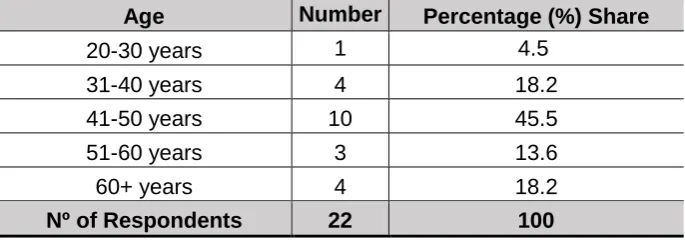
A total of twenty-two (22) questionnaire were distributed randomly by the author,
randomly to the same number of artisanal fishers who operate with different fishing
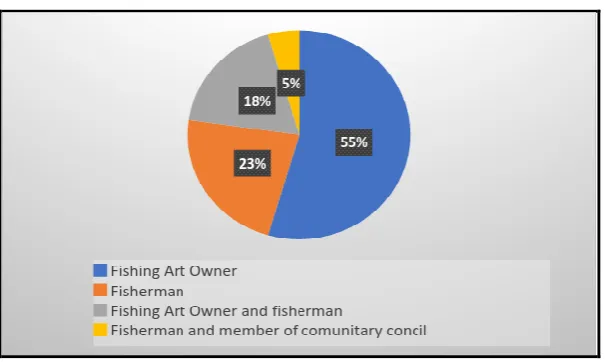
gears, including beach seine and gill nets, sailors and owners of fishing gear were
interviewed in three (3) fishing centers in Nampula province, namely: Inguri,
Sangage and Kuiricuidje.
4.2.2 Provincial Direction of the Sea, Inland Waters and Fisheries (DPMAIP)
The Provincial Direction of the Sea, Inland Waters and Fisheries is the provincial
body of the state apparatus which, in accordance with the principles, objectives and
tasks set by the government, directs and ensures the implementation of activities
under the sea, inland waters and fisheries at the provincial level (Ministério do Mar,
Águas Interiores e Pescas, 2016). A total of 6 employees were interviewed in the
absence of the provincial director, who was involved in other government missions.
4.2.3 Maritime Administration (ADMAR)
The Maritime Administration is the executive organ of the National Maritime
Authority (INAMAR) within its areas of jurisdiction at the territorial level. It has the
skills to pursue the maritime authority into the public domain by sea, monitor the
activities in waters and waterways, license the activities of the seas, ensure the
implementation and enforcement of legislation, proceed with registration of
seafarers, proceed with the customs clearance of ships in ports and investigate
maritime accidents (Conselho de Ministros, 2004).
In three (3) maritime administrations in Nampula Province (Angoche, Ilha de
27
(12) employees were interviewed, four (4) from each maritime administration, in
addition to the maritime administrators and some experienced staff.
4.2.4 Provincial Delegation of Administration of Fisheries (ADNAP)
The ADNAP is a public service led by the Minister that oversees the fisheries sector
which has competence to:
Ensure the implementation of policies, strategies and plans for the
management of fisheries;
Perform all administrative procedures leading to access to fisheries
resources under the conditions laid down in the laws of fishing;
Ensure that fishing activities and related matters of fishing are carried out in
a manner consistent with the management measures in place;
Analyze and propose the management measures that are deemed
necessary to achieve the objectives of the development of fisheries;
ensure the collection of statistical information and the availability of treatment
systems;
Monitor and control the activities of the fishing fleet both domestic and
foreign which operate in national ports;
Ensure the actions of co-management of fisheries at different levels including
the actions of community organizations;
Participate in the definition of fishing policy and ensure its implementation
(Assembleia da República, 2011).
For this study, due to the number of employees of that institution, only two
technicians were interviewed that deal with fisheries monitoring.
4.3 Ethical Issues
In accordance with Resnik (2015), (quoted by Katrina Recorder, 2016), it is very
essential for a researcher to learn to make decisions and act in an ethical manner in
various situations through the careful interpretation, evaluation and application of
various rules for research. In addition to what was mentioned by Prodanov, C.C. &
28
of systematic conduct that is morally correct, i.e., it conforms with the
"PREVALENT" ideas of human behaviour.
The research tools were approved by the research ethics committee of the World
Maritime University (WMU). The survey participants agreed on a voluntary basis to
respond to research questionnaires, understanding that data from the responses
was solely for the purpose of this dissertation and that the names of the respondents
would be anonymized in the final report.
4.4 Limitations of the Research
The sampling technique used in research was a limitation of the study since it is
intended for a given sample and not the entire population. As such, the results
cannot be generalised.
Furthermore, the size of the sample by being small was to some degree a limiting
factor to the research, since a larger sample could be drawn, but the nature of the
study required participants who dominate the subject of the research.
The accessibility of participants by the researcher was very difficult since the
research was being performed in Malmo and participants were in Mozambique
(Nampula Province). Mainly due to their daily schedules, the interview survey forms
completed by the representatives of the maritime administrations in the province and
other colleagues in DPMAIP and ADNAP were sent via e-mail to the researcher.
4.5 Instrument of Data Collection (Questionnaire)
According to Amaro et al. (2004 - 2005), a questionnaire is an instrument of
research that aims to collect information based, usually, in inquisition of a
representative group of the population under study. To this end, a number of issues
are raised that cover a topic of interest to researchers, and there is no direct
interaction between researchers and respondents.
For this study, four different types of questionnaires were prepared for an equal
number of groups surveyed. Available in Word format, all questionnaires required
qualitative and quantitative questions and open-closed questions (yes or no). “Part