KNOWLEDGE-SHARING AND VIRTUAL COMMUNITY OF PRACTICE POTENTIAL IN THE USCG’S AFLOAT COMMUNITY: A QUALITATIVE CASE
STUDY
by Lisa Rodman
A dissertation
submitted in partial fulfillment of the requirements for the degree of Doctor of Education in Educational Technology
Boise State University
BOISE STATE UNIVERSITY GRADUATE COLLEGE
DEFENSE COMMITTEE AND FINAL READING APPROVALS
of the dissertation submitted by
Lisa Rodman
Dissertation Title: Knowledge-Sharing and Virtual Community of Practice Potential in The USCG’s Afloat Community: A Qualitative Case Study
Date of Final Oral Examination: 16 November 2018
The following individuals read and discussed the dissertation submitted by student Lisa Rodman, and they evaluated her presentation and response to questions during the final oral examination. They found that the student passed the final oral examination.
Jesus Trespalacios, Ph.D. Chair, Supervisory Committee Patrick R. Lowenthal, Ph.D. Member, Supervisory Committee
Brett E. Shelton, Ph.D. Member, Supervisory Committee
iv
ACKNOWLEDGEMENTS
First, I would like to express my immense gratitude to my committee chair, Dr. Jesús Trespalacios, for his unwavering support of this research. Your professionalism, encouragement, and motivation were inspirational to me. I could not have hoped for a more dedicated mentor and research advisor! I would also like to thank my two
committee members, Dr. Patrick Lowenthal and Dr. Brett Shelton, for your tremendous expertise and guidance. Dr. Lowenthal, thank you for your incredible attention to detail and asking the tough questions. Dr. Shelton, thank you for keeping me grounded and focused on the potential to better serve all learners in all workplaces - well beyond the scope of the USCG.
Dr. Ross Perkins, thank you for that first phone call in 2013! You gave me the confidence to apply to this incredible program and made me believe that I had something unique to offer.
Thank you to the men and women of the USCG’s afloat community who graciously donated their time to this study. I endeavor to convey your perspectives in pursuit of future opportunities.
Lastly, but absolutely not least, thank you to my incredible husband, Michael, and our children, Luciana and Mick. Michael, you are my everything. I am here because of you. Lucy and Mick, I can’t wait to support you in achieving absolutely anything and everything that life has to offer!
v ABSTRACT
Virtual Communities of Practice (VCoP) may provide the afloat community of
the USCG greater opportunities for learning and professional development. The
affordances of virtual engagement, including increased access to learning and peer
feedback may enhance interaction and opportunities for the development and refinement
of professional expertise. Although the specific learning needs and constraints of this
community, including geographic separation and dynamic deployment schedules, appear
well-aligned with VCoP structure and objectives, it is critical that the knowledge-sharing
culture of the USCG’s afloat community be thoroughly explored before pursuing any
form of performance and learning intervention. Grounded in Lave and Wenger’s (1991)
concept of legitimate peripheral participation, along with situated learning, social
cognitive theory, and social exchange theory, this study revealed that the afloat
vi
vii
TABLE OF CONTENTS
ACKNOWLEDGEMENTS ... iv
ABSTRACT ...v
TABLE OF CONTENTS ... vii
LIST OF TABLES ... xii
LIST OF FIGURES ...xv
CHAPTER I: INTRODUCTION ...1
Statement of the Problem ...4
Trust ...5
Reciprocity ...6
Disposition Towards Online Learning ...6
Theoretical Framework ...7
Situated Learning and Legitimate Peripheral Participation ...7
Social Exchange Theory and Social Cognitive Theory ...8
Purpose of the Study ...9
Research Questions ...11
Definition of Terms...12
Chapter Summary ...12
CHAPTER 2: REVIEW OF THE LITERATURE ...14
viii
Trust ...19
Reciprocity ...20
Altruism ...21
Fostering Knowledge-Sharing ...22
VCoP Influences, Challenges, and Support Mechanisms ...23
Affordances of CoP...25
Constraints ...27
Technical Disposition and Constraints Specific to VCoP ...29
Chapter Summary ...31
CHAPTER 3: METHODS ...32
Qualitative Case Study Justification ...32
Pilot Study ...36
Participants ...36
Instrument and Data Collection ...37
Results ...37
Context of Study ...41
Participants ...42
Data Collection ...48
Open-ended Surveys ...49
Interviews ...53
Data Analysis ...54
ix
First Cycle Coding ...59
Second Cycle Coding ...63
Case Coding Comparison ...65
Validity ...67
Summary ...68
CHAPTER 4: RESULTS AND FINDINGS...69
Research Questions: ...70
Research Question One ...70
Frequency ...74
Forum ...83
Reciprocity ...93
Summary for Research Question One...100
Research Question Two ...101
Personal and Communal Comfort with Sharing Mistakes ...105
Personal and Communal Discomfort with Sharing Mistakes ...110
Communal Discomfort with Sharing Mistakes...116
Personal Discomfort with Sharing Mistakes...119
Summary for Research Question Two ...122
Research Question Three ...123
Experience with Virtual Knowledge-Sharing ...129
Survey Data ...129
x
Interest in Virtual Knowledge-Sharing ...151
Anonymity ...160
Research Question Three Summary...168
Chapter Summary ...169
CHAPTER 5: SUMMARY OF FINDINGS ...171
Reviewing the Findings ...173
Research Question 1: Afloat Members’ Willingness to Share Knowledge ...174
Research Question 2: Afloat Members’ Ability to Trust Other Members with Information Regarding Mistakes or Lessons Learned ...180
Research Question 3: Afloat Members’ Experience, Interest, and Comfort with Virtual Learning ...187
Implications for Practice ...196
Considerations for Selecting a Virtual Forum ...197
Effective Management and Facilitation Strategies ...198
Strategies for Enhancing Communal Trust ...200
Limitations of the Study...201
Recommendations for Further Research ...203
Conclusion ...204
REFERENCES ...207
APPENDIX A ...215
Informed Consent for Case Study ...215
APPENDIX B ...218
xi
Interview Script for Case Study ...222
APPENDIX D ...225
Open-ended Survey for Case Study ...225
APPENDIX E ...230
xii
LIST OF TABLES
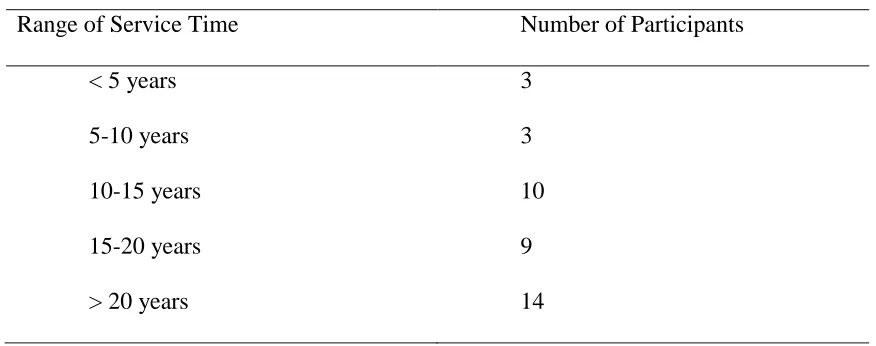
Table 1 Survey Participants’ Total Service Time ... 44
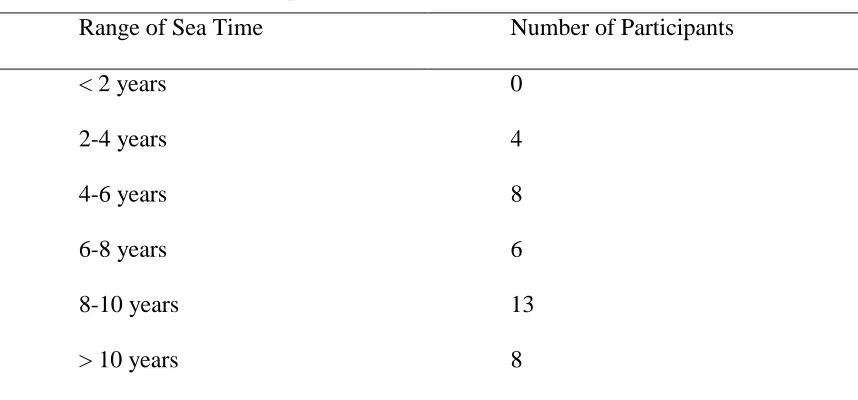
Table 2 Survey Participants’ Total Sea Time ... 45
Table 3 Interviewees’ gender, sea time, and service time ... 45
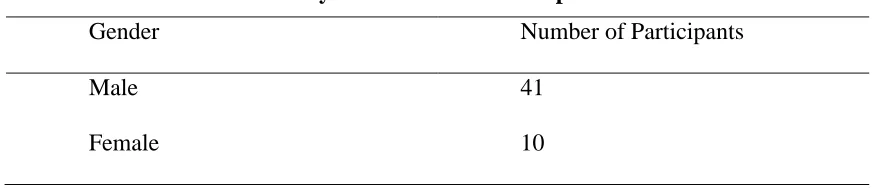
Table 4 Gender of Survey and Interview Participants ... 46
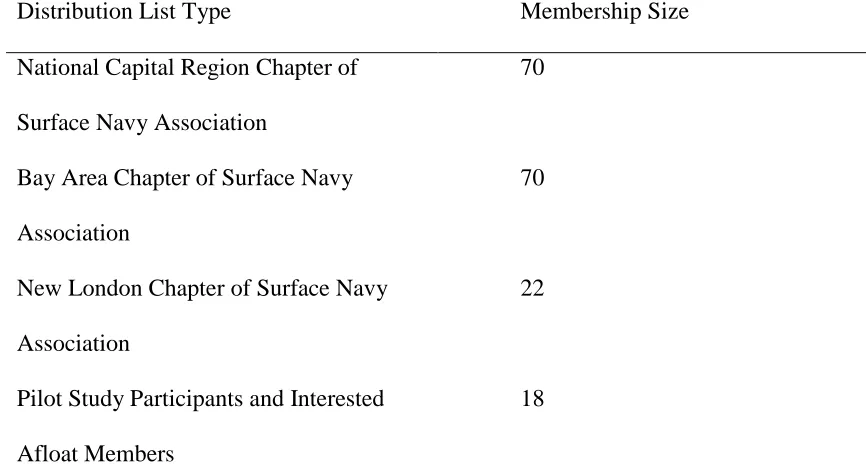
Table 5 Size and Type of Distribution Lists Used to Email Anonymous Survey Link ... 47
Table 6 Data Collection Methods and Timeline ... 48
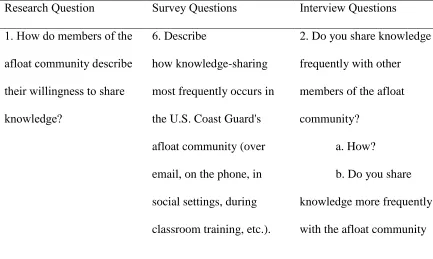
Table 7 Research Questions with Supporting Interview and Survey Questions .... 49
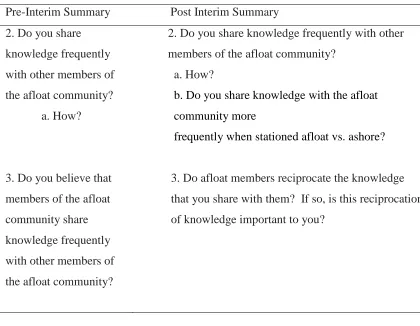
Table 8 Interview Questions Pre and Post Interim Summary ... 57
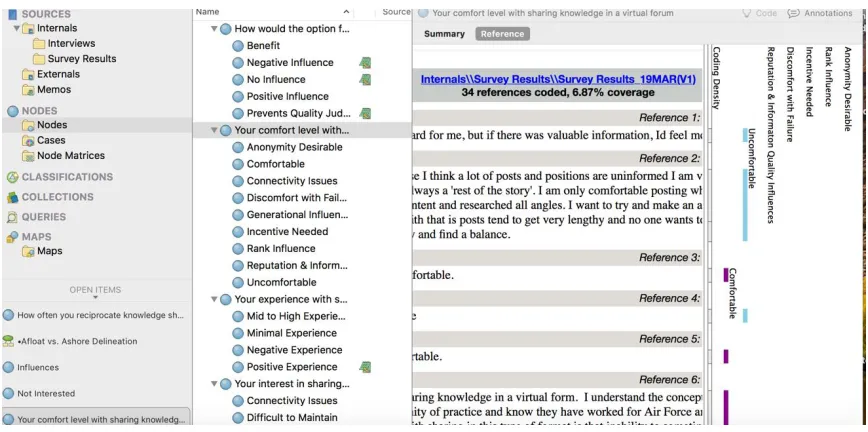
Table 9 Comparing structural and pattern codes supporting the thematic node, your comfort level with sharing knowledge in a virtual forum ... 65
Table 10 Research Question One with Supporting Interview and Survey Questions ... 71
Table 11 Themes and Supporting Categories from Research Question One ... 72
Table 12 Theme with Supporting Categories and Data Detailing the Frequency of Knowledge-sharing in the Afloat Community in Research Question One 74 Table 13 Theme with Supporting Categories and data detailing knowledge-sharing forums in the afloat community in research question one ... 84
Table 14 Theme with Supporting Categories and Data Detailing Knowledge Reciprocity in the Afloat Community... 93
xiii
Table 17 Themes with Supporting Categories and Data Detailing Personal and Communal Comfort with Sharing Mistakes and Lessons Learned in the Afloat Community ... 106 Table 18 Themes with Supporting Categories and Data Detailing Personal and
Communal Discomfort with Sharing Mistakes and Lessons Learned .... 111 Table 19 Theme with Supporting Categories and Data Detailing Communal
Discomfort with Sharing Mistakes and Lessons Learned ... 116 Table 20 Themes with Supporting Categories and Data Detailing Personal
Discomfort with Sharing Mistakes and Lessons Learned ... 119 Table 21 Research Question Three with Supporting Interview and Survey Questions
... 123 Table 22 Themes and Supporting Categories from Research Question Three ... 125 Table 23 Virtual Learning Experience as Described by Survey and Interview
Participants ... 129 Table 24 Themes with Supporting Categories and Data Detailing Members’
Preferences for Face-to-face Learning ... 131 Table 25 Theme with Supporting Categories and Data Detailing Afloat Members’
Preferences for Virtual Learning ... 134 Table 26 Themes with Supporting Categories and Data Detailing Afloat Members’
Perceptions of the Challenges of Learning in a Virtual Environment .... 138 Table 27 Themes, supporting categories, and data detailing afloat members’
comfort levels with learning in a virtual environment ... 143 Table 28 Themes with Supporting Categories and Data Detailing Afloat Members’
Perceptions of the Challenges of Learning in a Virtual Environment .... 151 Table 29 Themes with Supporting Categories and Data Detailing Afloat Members’
xiv
xv
LIST OF FIGURES
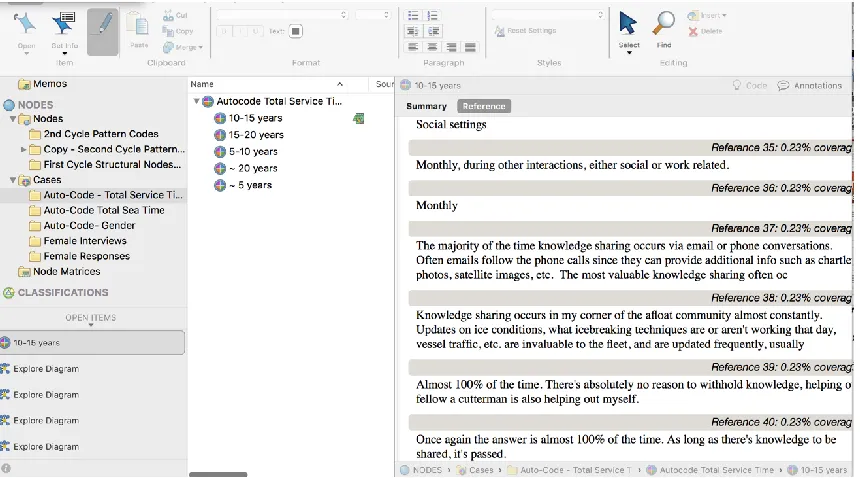
Figure 1. Mind map from NVivo 11 depicting afloat vs. ashore knowledge-sharing frequency and influences. ... 56 Figure 2. Screenshot from NVivo 11 depicting structural coding, pattern coding,
demographic case folders and analytic memo link. ... 58 Figure 3. Screenshot from NVivo 11 depicting first round structural coding,
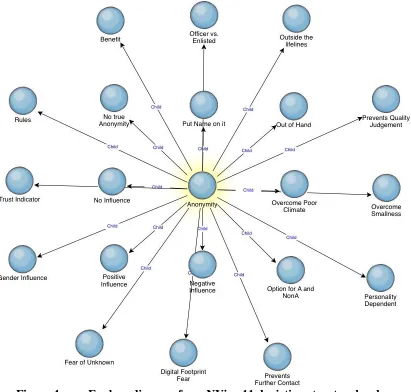
references, memos, and coding stripes. ... 61 Figure 4. Explore diagram from NVivo 11 depicting structural codes supporting
anonymity. ... 63 Figure 5. Screenshot of node matrix comparing frequencies of male and female data
coded at the theme, anonymity. ... 66 Figure 6. Comparing pattern codes supporting communal vs. personal discomfort
with sharing mistakes and lessons learned... 110 Figure 7. Factors influencing virtual challenges. ... 141 Figure 8. Attributes supporting an effective virtual knowledge-sharing forum. .... 150 Figure 9. Themes surrounding afloat members’ interest in virtual
CHAPTER I: INTRODUCTION
The afloat community of the United States Coast Guard (USCG) includes a network of individuals, including both commissioned officers and enlisted members, whose professional specialty involves the operation, maintenance, and management of ships, referred to as “cutters,” within the USCG. This community consists of a diverse amount of professional expertise and experience, ranging from members who have recently been accessed into the service to commanding officers of large ships who have spent the majority of their careers at sea. The afloat community’s geographic area of responsibility is also diverse and expansive. As the primary maritime protector of the Western Hemisphere, the USCG’s afloat members are deployed throughout the world and conduct a wide range of missions, including counterterrorism, border security,
environmental protection, drug interdiction, and rescue operations (USCG, 2014).
Experience at sea in these multiple mission sets and locations is so critical to establishing expertise and providing exposure to updated equipment, policy, and procedures that
officers must spend a minimum of three years stationed on ships to achieve entry-level
apprentice status within the afloat community. Conversely, officers typically do not
exceed seven consecutive years stationed in positions ashore in order to remain proficient
and retain their designation as afloat specialists. Additional tours afloat enable members
to accrue the sea time and afloat knowledge required of journeyman and master levels of
interaction, and practical application of shipboard knowledge are essential to the afloat
community’s professional development.
Gaining experience and subsequently achieving “permanent cutterman” (USCG,
2013b, p. 7-5) status is a universal goal of the afloat community. By achieving the
requisite professional qualifications, a positive endorsement from their commanding officer, and serving a minimum of five years at sea, afloat members may become
permanent cutterman and are authorized to wear the cutterman’s insignia on their uniform (USCG, 2013b). This coveted designation provides a visual representation of afloat experience and a member’s contribution to the afloat community. The permanent cutterman designation may be achieved concurrently or while in pursuit of the
professional hallmark of the afloat community, command at sea, whereby one assumes all authority, accountability, and responsibility for the vessel and its crew.
The USCG’s Officer Specialty Management System aligns afloat professional
development requirements, including training, education, professional certifications, and
sea time with corresponding specialty designations, including apprentice, journeyman,
and master (USCG, 2013a). Achieving the afloat specialty designation is critical to a
member’s career planning and viability. To achieve and maintain their afloat specialty,
members must fulfill a series of qualifications and positional requirements, including
formal training delineated by a master training list (USCG, 2013b). Training
requirements may also be achieved through a variety of mediums in addition to resident
training, including structured on the job training, and online training (USCG, 2017).
Although the master training list represents minimum training requirements for afloat
[formal] training will not normally be authorized unless special or exigent circumstances
are present” (USCG, 2013b, p. 3-2). Additionally, organizationally sponsored afloat
training opportunities are limited by funding and student throughput capacity (USCG,
2013b).
Virtual Communities of Practice (VCoP) offer an accessible and potentially cost-effective mechanism for professional development and knowledge exchange (Kok, 2010). In this study, VCoP are defined as learning communities in which members are geographically separated and communicate primarily through either synchronous or asynchronous online communication technologies (Dubé, Bourhis, & Jacob, 2005; Wenger, McDermott, & Snyder, 2002). The afloat community’s use of a VCoP may extend professional networking opportunities and access to subject matter experts associated with costly formal training and professional symposiums, such as the annual Commanding Officers Conference. Online communication technologies also offer flexible response time and rapid information exchange (Ho et al., 2010). These
efficiencies are in direct alignment with the military’s emphasis on consistent training and enhanced proficiency (Salas, Milham, & Bowers, 2003).
willingness to share knowledge. Literature reveals that these components are significant influences in the decision to share knowledge virtually. In order for the afloat community to form a successful virtual community of practice, its knowledge-sharing culture should reflect an overall willingness to share information virtually. Otherwise, the community will likely fail due to attrition (Johnson, 2001). The results of a pilot study and the researcher’s experience as a member of the afloat community suggest that afloat members are willing to share knowledge virtually and that a VCoP may enhance
professional development, knowledge management, and communal engagement. Since a VCoP does not yet exist, this research further explored the potential for VCoP
engagement in the afloat community.
Statement of the Problem
Due to unique and dynamic operational demands and a limited training budget, the USCG’s afloat community has limited opportunity for professional development and formal training. High personnel turnover rates challenge knowledge management and organizational stability as in many public sector organizations (Camilleri & Van Der Heijden, 2007). Afloat members typically only spend two years stationed on a ship before transferring to a job ashore. Shore tours provide afloat members the opportunity for professional broadening and work-life balance, but these tours may be one to two years
longer than shipboard tours and challenge members’ abilities to remain proficient and up
to date with afloat operations, specifically regarding updated policy and procedures.
In the afloat community, the majority of formal training occurs before a member’s
assignment to a ship and may include a combination of operational, administrative, and
community also engages in a robust unit training program, composed of structured
on-the-job-training (OJT), drills, and exercises (USCG, 2013b). OJT fulfills specific
performance requirements in pursuit of personal qualifications and proficiency. This type
of training is typically more prevalent and impactful for junior members because they are
working on their initial qualifications, whereas more senior members of the command
will be serving in a strategic, supervisory capacity and have already obtained their initial
watchstanding qualifications. More senior members of the crew, specifically the
commanding and executive (second in charge) officers (if funding is available), are
provided with a brief familiarization cruise prior to reporting to their ship. This intent of
this cruise is to provide a period of time at sea for the prospective commanding officer to
familiarize himself with the ship he will soon command.
The affordances of VCoP are well aligned to the needs of the afloat community.
Specifically, VCoP may afford increased access to subject matter experts, flexible
knowledge management, and opportunities for rapid performance feedback and
innovation (Wasko & Faraj, 2000; Yamklin & Igel, 2012). The afloat community’s
prioritization of these affordances and preference for virtual knowledge-sharing,
however, should not be assumed. The knowledge-sharing culture of the afloat community
was explored to determine its compatibility with a VCoP. Specifically, the afloat
community’s willingness to share knowledge, trust, reciprocity, and disposition towards
online learning was investigated to determine its potential engagement in a VCoP.
Trust
quantified trust in a virtual community according to the amount of integrity, benevolence, and shared professional competence members’ expressed in themselves and others. Although integrity and the desire to serve the greater good are highly regarded tenets within the USCG’s afloat community, perceptions of competence may be unduly influenced by the rank disparity. When studying a VCoP in the United States Air Force, Orhun and Hopple (2006) determined that perceived power imbalance negatively impact knowledge-exchange between members. Given the organizational similarities between the USCG and USAF as armed services, the impact of trust on knowledge sharing was examined.
Reciprocity
Despite the lack of face to face interaction, VCoP members exchange knowledge in accordance with a commonly held set of social expectations (Lin et al., 2009). Social exchange theory espouses that individuals typically contribute the quantity and quality of actions that they anticipate receiving from others (Blau, 1964; Cheung, Lee, & Lee, 2013). If afloat members do not perceive a balance between the information shared within the community, they may be less likely to contribute. Knowledge reciprocity was considered a potential influence on knowledge-sharing within the afloat community at the onset of this study.
Disposition Towards Online Learning
online learning, however, may not align with virtual communication preferences. The fact that members may choose to correspond on routine matters via email or conduct business via teleconference does not necessarily mean that they are willing to learn in a virtual environment. Understanding the willingness of afloat members to share knowledge virtually was critical to assessing the community’s potential engagement in a VCoP.
Theoretical Framework Situated Learning and Legitimate Peripheral Participation
Situated learning implies that knowledge cannot be separated from the
environment in which it is applied and poses that learners should participate in “complex, messy problem-solving” (Johnson, 2001, p. 47) where they leverage their capabilities and take ownership in the process. Participation is central to CoP structure and function, whereby individuals learn by doing. Situated learning in a CoP implies that practice and knowledge should not be separated from each other and learners must rely on experience and interpersonal interaction to construct knowledge (Cox, 2005). Lave and Wenger (1991) posed that learning occurs through “legitimate peripheral participation,” (p.29) when new learners acquire knowledge by becoming active and engaged in the
Community of Practice (CoP). Learners start at the periphery of their community when they have accrued minimal knowledge, and they move towards the center of activity and participate more fully as they learn from more experienced and skilled community members (Johnson, 2001).
learners attribute meaning to their practice according to the experience and social
interaction in which it occurred (Barab & Duffy, 2000; Lave, 1991; Resnick, 1987). This meaning also centers around the sense of personal identity that is generated by belonging to a community (Handley, Sturdy, Fincham, & Clark, 2006). Handley et al. (2006) emphasized the significance of social identity and interdependence within a CoP. As learners develop their identity and strive to solve real world-issues, they strengthen relationships with group members and collaboratively achieve objectives. Legitimate peripheral participation empowers learners to become communal insiders through practice and engagement (Brown & Duguid, 1991; Lave & Wenger, 2002). To facilitate communal engagement and peripheral participation, the factors influencing knowledge sharing in a CoP, including trust, reciprocity, and disposition towards virtual learning in a VCoP, must be understood.
Social Exchange Theory and Social Cognitive Theory
Social Exchange Theory (SET) and Social Cognitive Theory (SCT) are frequently applied when attempting to understand how and why individuals choose to share
knowledge and information with one another (Chen & Hung, 2010). Social exchange theory (SET) poses that individuals exchange knowledge in accordance with what they expect to receive from others (Blau, 1964; Chen & Hung, 2010; Cheung, Lee, & Lee, 2013; Lin et al., 2009). Expectations regarding the degree of knowledge exchange
2007). Understanding the impact of trust on knowledge-sharing is central to this study and frames the central research question, whereby the degree of trust shared within the afloat community will be explored.
Similar to SET, SCT is a widely accepted theory used to understand and detail individual behavior in a social learning environment (Chen & Hung, 2010). SCT relates learning to observation and social interaction. SCT poses that as individuals observe one another and are able to interact in their environment, learning occurs (Bandura, 1986). SCT provides a framework through which knowledge-sharing may be viewed in the virtual environment. Understanding the influences of knowledge-sharing and how afloat members perceive knowledge-exchange will aid the researcher in developing
recommendations for communal learning.
Purpose of the Study
willingness to share knowledge, perceptions of trust and knowledge reciprocity, and disposition towards online learning.
Participation and consistent knowledge exchange are critical to the development and sustainment of VCoP (Ardichvili, Page, & Wentling, 2003; Wenger, 1998b, 2000). The researcher applied Lave and Wenger’s (1991) theory of legitimate peripheral participation to understand the influences and possible limitations of communal
knowledge exchange in the afloat community. SCT and SET were also used to analyze afloat members’ perceptions of knowledge sharing and engagement in communal
learning. Specifically, SET was applied to analyze afloat member’s perceptions regarding the balance of information shared within the community and the potential influence of knowledge reciprocity on knowledge exchange. Additionally, this study emphasized the existence and influence of trust in the afloat community, including members’ expressed comfort with sharing mistakes and lessons learned with other afloat members. Trust is a major influence in the decision to share knowledge and was explored to further qualify the afloat community’s potential for VCoP engagement (McKnight, Choudhury, & Kacmar, 2002; Usoro et al., 2007).
the respondent pool. Through this research, an informed recommendation on the afloat community’s potential engagement in a VCoP was made, including recommendations for communal development and sustainment.
Research Questions
The afloat community’s potential for VCoP engagement was explored within the
context of effective knowledge-sharing. Research reveals that knowledge-sharing is
positively influenced by the presence of trust and reciprocity which are addressed in the
first two questions guiding this study (Ardichvili et al., 2003; Lin et al., 2009; Usoro et
al., 2007). The first question clarified members’ overall willingness to share knowledge and perceptions regarding the balance of knowledge shared, or reciprocated, within the
community. The second question addressed communal trust in accordance with
members’ comfort with sharing mistakes and lessons learned. Specific to VCoP, learners’
willingness to communicate in virtual forums and overall technical disposition are primary influences in knowledge-sharing (Wang & Haggerty, 2009). The last question addressed members’ disposition towards learning in a virtual environment.
The following research questions guided this study.
- How do members of the afloat community describe their willingness to share knowledge?
- How do members of the afloat community describe their ability to trust other members with information regarding mistakes or lessons learned on the job? - How do members of the afloat community describe their experience, interest,
Definition of Terms
Afloat Community - the collective group of USCG members who have served tours of duty or are currently serving tours of duty on ships.
Disposition towards online learning - afloat members’ desire and comfort with learning in a virtual forum.
Knowledge reciprocity - afloat members’ perceptions regarding the balance of information exchanged between members.
Trust - members’ comfort with sharing mistakes and lessons learned with other members.
Virtual Communities of Practice (VCoP) - learning communities in which members are geographically separated and communicate primarily through either synchronous or asynchronous virtual forums (Dubé et al., 2005; Wenger et al., 2002).
Communities of Practice (COP) – learning communities in which members communicate primarily in person.
Chapter Summary
VCoP may offer an opportunity for valuable professional development and
information exchange for the USCG’s afloat community. The structure of the virtual
environment and the efficiencies that it may provide to afloat members may have
significant organizational impacts. The community’s willingness to share knowledge and
the interplay between communal trust, reciprocity, and the desire to share knowledge
virtually should be explored to understand the potential for VCoP development. SCT,
SET, and legitimate peripheral participation provided the theoretical framework through
affordances, constraints, and applications was outlined in Chapter Two and compared to
the empirical research on the afloat community’s knowledge-sharing culture. Chapter
Three detailed the qualitative methods used to collect, analyze and validate data,
including modifications to these methods based upon emergent research developments.
Chapter Four provided a detailed discussion of the findings and Chapter Five summarized
the findings, addressed the three research questions, and offered limitations of the study
with recommendations for practice and future research. This study filled a research gap
on the knowledge-sharing culture of the afloat community and factors influencing the
CHAPTER 2: REVIEW OF THE LITERATURE
This chapter addresses the theoretical foundations, structure, influences,
opportunities, and limitations of CoP for collaborative learning. In this literature review, the term CoP versus VCoP will be applied to detail attributes of learning communities relevant to both face-to-face and virtual approaches. Specifically, knowledge-sharing practices and the impact of trust, altruism, and reciprocity in communal engagement will be discussed from a theoretical perspective common to virtual and face-to-face
communities. Methods for fostering effective knowledge-sharing will also be outlined. Unique qualities and limitations of VCoP involving members’ technical dispositions and opportunities for interaction will be addressed at the conclusion of this chapter.
Communities of Practice (CoP) offer collaborative learning environments to facilitate the pursuit of educational, occupational, or organizational objectives. Although originally considered an organically formed group of individuals bound by shared goals and likened to a system of apprenticeships, CoP are now frequently engineered around a specific objective or to promote cooperation and engagement (Lave & Wenger, 1991; Wenger, McDermott, & Snyder, 2002). Traditional face to face communities are augmented through the use of virtual communication forums and are able to engage a wider audience and talent base than previously imagined (Hildreth, Kimble, & Wright, 2000). From an educational perspective, CoP can broaden the reach and reality of
2005). From the performance improvement practitioner’s perspective, CoP offer the potential for personal and professional development through enhanced knowledge
management and interpersonal engagement (Johnson, 2001). Regardless of the objective, the capabilities, limitations, and suitability of CoP for a particular learning and
performance need must be fully understood before employment. Components, Purpose, and Applications of CoP
CoP are groups of individuals with shared history and objectives who work with and learn from one another in pursuit of a common goal (Lave & Wenger, 1991; Wenger et al., 2002). CoP can be deliberately engineered to facilitate the achievement of
organizational or learning objectives, but formal membership is not required for successful interaction. There are three components that CoP must possess in order to function effectively, including domain, community, and practice (Wenger et al., 2002). Barab and Duffy (2000) contributed the additional element of reproducibility, whereby the community must be capable of generating new members with requisite levels of expertise to develop and exchange knowledge. Domain refers to the community’s purpose and objectives, whereas communal structure includes the interactions and relationships of members. Lave and Wenger (1991) emphasized the natural development of these components, as demonstrated through traditional apprenticeships. By contrast, Wenger and Snyder (2000) advised that organizational investment is necessary to promote communal development and formally legitimize the communal domain.
engagement and support of communal outcomes (Wenger & Snyder, 2000). These approaches reflect the core differences in CoP objectives and engagement processes.
CoP are employed in a variety of academic and organizational forums.
Organizationally, CoP are linked to performance improvement efforts, whereby group collaboration is employed to maximize potential and promote the development of expertise (Brown & Duguid, 1991). Brown and Duguid (2001) stressed the role of
communities in enhancing both knowledge and practice within an organizational context. Noting that knowledge can be porous and easily leaked from an organization, Brown and Duguid (2001) implied that creating more effective practices and sources of interaction may foster knowledge development and help retain expertise that is otherwise lost through personnel turnover or during the course of inter-organizational transactions.
Participation is critical to knowledge exchange between members because this exchange adds new meaning and context to information that increases its versatility for future applications (Wenger, 1998b). Although seemingly counterintuitive, Wenger (2000) considered boundaries beneficial to participation and knowledge-sharing. Boundaries entail distinctions between core competencies and skills that can be
thoroughly enriched through interaction and cross-training. Wenger (2000) argued that boundaries increase transparency and enable learners to have a more accurate inventory of their talents and those of other communities. In turn, learners can augment their talent base by crossing boundaries to engage with other communities.
store knowledge for future succession and competitive advantage was initially heavily reliant upon technological solutions that did not involve personal interaction (Su, Wilensky, & Redmiles, 2012; Van Tiem, Moseley, & Dessinger, 2012). Subsequently, tacit knowledge and the intricacies of both practice and expertise were threatened. CoP provide a viable approach to retaining tacit knowledge that is exchanged and understood through practice and observation. CoP also enable organizations to embrace the
development of diverse groups and cross-functional engagement that enhances capability (Brown & Duguid, 2001). Combining technological solutions with CoP is an increasingly popular knowledge management technique throughout a variety of organizations
(Ardichvili et al., 2003; Su et al., 2012).
Just as CoP can enhance organizational potential, their proven efficacy in
academic settings yields meaningful engagement, discussion, and collaboration between learners. Contrary to a practice field in an academic setting, where students
collaboratively address real-world issues in a classroom or similar academic
environment, learning communities connect students to society (Barab & Duffy, 2000). In turn, students share and apply their knowledge to real-world issues. As an engineered version of a CoP with academic objectives, learning communities are bounded by the requirements of the formal course in which they function. In turn, bounded learning communities possess specific elements that instructors must design and foster. Wilson et al. (2004) noted seven elements that define a learning community, including a shared goal, safe and supportive environment, central identity, collaboration, inclusivity,
role in developing and maintaining learning communities by fostering productive discourse and establishing trusting relationships with students (Wilson et al., 2004). In order to uphold the tenants of constructivism and situated learning that Lave and Wenger (1991) considered essential to CoP, instructors should refrain from controlling the community in favor of promoting opportunities for learners to engage and develop.
Importance and Influences of Knowledge Sharing in CoP
Effective knowledge sharing, including the exchange of information between two or more learners, is essential to the development and sustainment of a CoP (Ku & Fan, 2009; Lin et al., 2009). Depending on the community, knowledge-sharing may occur in person or through virtual means. VCoP are communities in which members are
geographically or organizationally segregated and communicate primarily through synchronous or asynchronous virtual forums (Dubé et al., 2005; Wenger et al., 2002). Regardless of the preferred communication forum, there are two elements of knowledge sharing that must be fostered in order to maintain the flow of information between
members. Ardichvili, Page, and Wentling (2003) described these elements as the desire to share knowledge and willingness to use the CoP as a source of knowledge.
Trust, reciprocity, and the altruistic desire to contribute to the greater good are strong influences in an individual’s decision to share knowledge within a community (Ardichvili et al., 2003; Lin et al., 2009; Usoro et al., 2007). Specific to VCoP, learners’ comfort and willingness to communicate in virtual forums and overall technical
Trust
Trust is defined as a members’ positive perceptions and confidence in the good intentions and reliability of community members (Lin et al., 2009). Trust is an abstract concept and challenging to define exclusively, but its presence in a CoP and influence on knowledge sharing is palpable. Usoro et al. (2007) distinguished between knowledge-based and organizational trust, emphasizing the influence of both the individual and the surrounding environment in communal engagement. Knowledge-based trust is
established as members interact on a consistent basis and begin to understand what type of information, degree of complexity, and quality of contribution that they can expect from one another. Knowledge-based trust arises as individuals are able to manage their expectations and gain a greater sense of their role and the role of other members within the community (Ardichvili et al., 2003). Organizational trust is established as
participation in CoP becomes a normal standard of behavior. Ardichvili et al. (2003) noted that as members grow to expect organizational engagement and see all levels of their organization participate in knowledge-sharing, this behavior becomes the standard and members have confidence in the community.
knowledge with others (Yao, Tsai, & Fang, 2015). Overall personal comfort with one’s professional competence and faith in the benevolence and respect of other community members is critical to establishing trust and increasing the flow of knowledge within one’s community.
Reciprocity
When community members perceive the contributions of other members to be commensurate with their own, they are more likely to reciprocate these actions. Reciprocity, in accordance with SET, implies that CoP members return the knowledge and benefits that they receive from others (Blau, 1964; Cheung, Lee, & Lee, 2013; Lin et al., 2009). Chang & Jacobs (2012) compared members’ decisions to share knowledge to a cost-benefit analysis, determining that members would only exchange knowledge with others if they perceived the potential benefits worthy of the effort required to engage. The value that members ascribe to their community and potential knowledge exchange must be understood to effectively qualify communal reciprocity. Members’ perceptions of the community’s ability to enhance work performance or improve career longevity positively influences the decision to participate (Chang & Jacobs, 2012).
Altruism
Similar to the influence of reciprocity in learning communities, knowledge-sharing may be positively impacted by altruism (Wasko & Faraj, 2000). Altruism refers to behavior that is motivated by the desire to be helpful and assist others (Chen, Fan, & Tsai, 2014). Chen, Fan, and Tsai (2014) posed that altruism is a mediating factor in the relationship between trust and knowledge-sharing. Chen et al. (2014) determined that in trusting communities where members participated in communal learning, altruism was also present and members were more likely to make contributions to benefit others. Usoro et al. (2007) noted a similarly positive relationship between benevolence based-trust and knowledge-sharing, emphasizing the influence of based-trust in one’s decision to share-knowledge.
Altruism represents a strong source of intrinsic motivation for knowledge-sharing that may compel members to contribute to the community solely because they derive satisfaction from their contributions and assisting others (Chen et al., 2014). Altruism may also increase communal knowledge-sharing because the contributors’ sense of self-confidence is enhanced when the community places value on their knowledge
contributions (Chen et. al, 2014). As members gain confidence in their contributions, the quantity and quality of knowledge shared is likely to increase.
2000, p. 168) mentality in which one’s personal experience motivates him to provide others with the knowledge once needed in familiar situation or position. Individuals may share knowledge in an effort to improve opportunities for others in the community.
Fostering Knowledge-Sharing
Promoting effective knowledge-sharing within communities is not linked to extrinsic benefits. Wasko and Faraj (2000) determined that monetary benefits and material rewards for knowledge-sharing have a negative impact on motivation and knowledge exchange in a CoP. Promoting engagement in CoP as an enterprise and enhancing its legitimacy facilitates continued knowledge sharing and exchange between members (Rogers, 2000; Wenger, 1998a). Wenger (1998a) advocated establishing an identity and position for CoP within the greater organization. Legitimizing the CoP enterprise represents a public expression of faith and value in the communal contributions and capabilities of its members. Similarly, knowledge-sharing is enhanced through
structural assistance and support when members are provided with access to essential resources, people, and organizational insight to enhance their thinking and learning abilities (Wenger, 1998a; Wenger & Snyder, 2000).
Designation of a community leader or primary facilitator may also assist members in remaining focused on developing knowledge and tackling core issues. Rogers (2000) advocated the use of mentorship within CoP to provide members with guidance,
VCoP Influences, Challenges, and Support Mechanisms
The relationship between trust and knowledge-sharing is just as significant in a virtual community as it is in a traditional face to face environment. Hildreth, Kimble, and Wright (2000) considered VCoP to be disadvantaged due to their reliance on virtual communication forums. In the absence of face to face communication in VCoP, members may choose to remain “invisible” (Yao et al., 2015, p. 621) which significantly limits communal learning and productivity. Invisibility may also serve as a precursor to attrition when members discontinue participation in the VCoP. Invisibility is certainly not an option in a face to face environment, but it is also not impervious to purposeful virtual design and technical support.
Johnson (2001) considered attrition the greatest threat to successful VCoP
development and sustainment if not purposefully mitigated. To promote participation and appeal to a variety of communication preferences, a multitude of virtual forums may be employed within a single VCoP (Haythornthwaite, Kazmer, Robins, & Shoemaker, 2000). Synchronous and asynchronous options, including email, video conferences, blogs, and discussion forums can support the demands of multiple personalities and accommodate a variety of virtual infrastructures. Ultimately, the type of virtual forum that is selected should be aligned with business practices of the organization in which it is being employed and reflect the technical capacity of its users (Johnson, 2001; Kok, 2010).
VCoP where the concentration is on professional development and organizational achievement. For example, Jung and Suzuki (2015) described three methods of
scaffolding, including worked examples, grouping, and assessment, employed in a wiki based collaborative project to improve participation and outcome. Worked examples, in which learners are able to visualize the end goal, are particularly useful in VCoP and may augment the lack of face to face interaction. The use of assessments, however, may not assist organizational VCoP members given the inherently informal nature of communal learning. Jung and Suzuki (2015) noted that this approach was considered “too
confining” (p. 834) for some students.
Grouping efforts promote student interaction and foster working relationships that may take longer to build in a virtual environment (Hildreth et al., 2000). These
relationships may also reduce communal attrition and expedite the assimilation process for VCoP members. Grouping strategies are similar to participant structures that establish the periodicity and medium through which members will engage and develop
relationships. Barab, Barnett, and Squire (2002) noted that these structures alleviated concerns regarding inactivity and promoted a more regular meeting schedule. The frequency and formality of meeting structures, however, must be in alignment with the needs and preferences of the community in order to foster increased interaction.
systemic approach to the teacher’s community, whereby all aspects of individuals, activities, and online components were assessed and altered during development and implementation. Most significantly, Barab et al. (2004) demonstrated how VCoP can be used for multi-dimensional learning, whereby the VCoP facilitates knowledge-sharing for the community member. In turn, the process of learning is more readily observed, studied and better understood by the communal developers to gain a greater understanding for the potential and parameters of the online system. Barab et al.’s (2001) efforts demonstrated the sense of transparency that virtual forums offer the community. Transparency is a unique benefit of VCoP that is aptly suited to the needs of the public sector and its emphasis on accountability (Sabah & Cook-Craig, 2010).
Affordances of CoP
As a knowledge management tool, CoP have proven their value in a barrage of organizational contexts. Yamklin and Igel (2012) presented a case study of one
corporation that employed a CoP for knowledge management and dramatically improved its productivity and maintenance completion rates while reducing the number of
personnel accidents. The CoP was credited with innovating the corporation’s safety policies and approaches to energy management. This corporation excelled at establishing tangible organizational outcomes for the CoP to work towards and for the organization to effectively measure. Iaquinto, Ison, and Faggian (2011) advocated for a similarly
purposefully developed CoP to establish a common goal and facilitate a measurable outcome for the organization for assessment. Although formally structured, the pursuit of a common goal is in accordance with Lave and Wenger’s (1991) original definition of a CoP and reflective of social constructivist principles whereby learners pursue solutions to realistic problems when provided autonomy and the opportunity to excel (Johnson, 2001).
Lloyd (2005) assessed the benefit of a CoP from a strictly qualitative perspective by observing and interviewing the perspectives of librarians engaged in a CoP. Lloyd (2005) determined that the transfer of tacit knowledge was the most significant affordance of a CoP. Lloyd (2005) illustrated this affordance by describing the
firefighter community was the greatest benefit of communal learning.
Intangible benefits of CoP are frequently cited by members and considered the greatest affordances of belonging to a community. Wasko and Faraj (2000) noted that access to diverse opinions and rapid feedback are significant benefits of communal exchange. This access is particularly notable in VCoP where individuals who may not have been capable of face to face exchange are able to connect virtually and efficiently (Ho et al., 2010). Communal reputation is another benefit and motivating factor for individuals to participate within a CoP. Wasko and Faraj (2000) determined that individuals seek to better the reputation of the whole group. As more knowledge is accumulated, the perception of communal value and expertise is increased internally and externally. Members consider the reputation of their CoP to be a reflection of the viability and potential of their profession (Wasko & Faraj, 2000). CoP afford members the
opportunity to actively enhance their professional reputation through learning and interaction.
Constraints
Kerno (2008) and Roberts (2006) considered competitive market economies and cultural conflicts to be a potential knowledge-sharing constraint within CoP. Although organizational needs and the desire to achieve a competitive advantage are often the impetus for communal development, these factors may impact trust and openness within the community. Members may be less willing to share knowledge with others for fear of a loss of influence or financial benefit (Roberts, 2006). Organizational instability and the pressures of a weak economy also threaten trust and security, which are critical to
Collaborative learning may also be perceived as incompatible with hierarchical organizational structures (Kerno, 2008). Although VCoP have the potential to bridge communication gaps within organizations where personal position and rank are highly regarded, the “flat” (Kerno, 2008, p. 77) structure of CoP may prove incompatible with hierarchical personnel structures if virtual communication is ineffective. Cuddapah and Clayton (2011) examined a cohort of novice instructors participating in a new instructor indoctrination program within an urban school district. Contrary to a CoP in a rank-based organization, all members of the indoctrination program possessed similar levels of experience and educational backgrounds (Cuddapah & Clayton, 2011). Cuddapah and Clayton (2011) determined that novice cohorts yield tremendous benefits for instructors with regard to socialization. Specifically, they determined that members are more likely to engage in intellectual “risk taking” (p. 73) when surrounded by their peers than they are with more experienced instructors. Creating a more level playing field is, therefore, conducive to honest, innovative knowledge exchange within communities of practice. Achieving this type of equality, however, may prove difficult since it would require organizations to redefine core infrastructure including performance measures, incentives, job descriptions, reporting relations, information systems, and communication systems (Kerno, 2008).
Epistemic and regional culture can also constrain knowledge sharing and limit CoP development. Similar to the organizational concerns regarding sharing knowledge in an overly competitive work environment, some cultures do not value a collectivist
capabilities that these communities afford. Similarly, organizational climate may promote internal competition between different departments or groups of employees (Hofstede, 1998).
A competitive organizational climate can also deter knowledge sharing between different CoP. In the event that this competition is encouraged at the organizational level, overall climate may be negatively impacted and individuals will not communicate openly with one another. Similarly, Mørk, Aenestad, Hanseth, and Grisot (2008) noted that knowledge sharing between different professional fields in the same organization may be challenged by conflicting perceptions of value. In Mørk et al.’s (2008) study of medical and engineering communities in a hospital, some fields aligned and interacted more effectively with one another, but others were not included due to a lack of natural interaction or alignment. The result was a lack of cross-disciplinary studies and
recommendations for patient care. Mørk et al. (2008) advised that increased interaction will not occur naturally as a result of recommendations or “simply fostering links across professions” (p. 21). Promoting communal integration between different fields or professions in a hospital research environment, much like in a hierarchical public sector organization, requires tremendous organizational commitment and a total reworking of existing processes, infrastructure, legal policy, and research regulations (Mørk et al., 2008).
Technical Disposition and Constraints Specific to VCoP
variety of tools to accommodate individual preferences, but the selection of a virtual tool must be considered from a systemic standpoint. Kok (2010) studied the activity and contributions of IBM’s virtual community of practice to elucidate reasons why this community was relatively unproductive and its associated media tools were frequently under-utilized in favor of other online communication forums. Kok’s (2010) study revealed that members were more comfortable with email versus online discussion boards and programs engineered and endorsed by IBM, including Lotus Notes. Members explained that they preferred email because it was consistent with their business
processes and, most significantly, because they considered email more reliable. Kok’s (2010) findings reveal that VCoP communication forums must reflect the preferences and capabilities of users and their organizational infrastructure.
virtual tools, advance research and analysis should be conducted to assess the capabilities of learners and their virtual networks (Dube et al., 2005).
Chapter Summary
CoP, whether virtual or face-to-face, offer a structure through which learning may be enhanced and understood. Improved knowledge management, stronger sense of
CHAPTER 3: METHODS
VCoP may enhance learning and professional development opportunities for the
USCG, but not enough information exists to qualify the community’s potential
engagement in a VCoP. A single qualitative case study was conducted to explore the
knowledge-sharing culture of the USCG’s afloat community and its potential engagement
in a VCoP. A single qualitative case study methodology was chosen because qualitative
research is exploratory in nature and requires a reflexive and flexible approach by the
researcher to capture emergent data (Creswell, 2013; 2014; Yin, 2014). Additionally, a
single case study method is recommended when getting access to a case not previously
explored through empirical research (Creswell, 2013; 2014; Yin, 2014). This chapter
begins with a description of case study methodology and its appropriateness for this
research. The results of a pilot study and details on how data was collected and analyzed
for this case study are then described in detail.
Qualitative Case Study Justification
study was to explore how the knowledge-sharing culture of the afloat community is suited for VCoP engagement, understanding interpersonal interaction and social influences was necessary. The researcher felt that the nuances and complexities of this interpersonal engagement would not be appropriately addressed through quantitative methods, nor would participants’ voices be captured.
Exploration of the afloat community’s knowledge-sharing culture was aligned to the parameters and objectives of a single intrinsic qualitative case study. A single intrinsic case study focusses on the specific details of the case itself as opposed to illustrating an issue within a case or multiple cases (Creswell, 2013; Stake, 1995; Yazan, 2015; Yin, 2014). The presence of boundaries and specificity is critical to effectively defining, researching, and describing a case. Stake (1995) described a single case as an “integrated system” (p. 2) with unique attributes that are detailed and specific enough to be researched individually. Merriam (2009) similarly described a “bounded system” (p. 42) when defining a case. Accordingly, the afloat community of the USCG represents a specific operational segment of the USCG that is detailed and framed within the context of this study. Similarly, the subjects within the case, or afloat members, are exclusively defined by their involvement with the afloat community and further detailed according to demographic categories, including time in service, afloat time, and gender, that were analyzed during the third phase of the analysis cycle and highlighted in the summary of major findings.
research because it facilitates a holistic analysis and is the foundation of the research question being explored (Stake, 1995; Yazan, 2015). The specific components of
knowledge-sharing culture that were explored in this study, including willingness to share knowledge, trust, knowledge reciprocity, and disposition towards virtual learning, were influenced by the theoretical framework, literature review, and pilot study. Yin (2014) emphasized the importance of relying upon existing theoretical propositions to inform targeted data collection and analysis (Yazan, 2015). The results of the pilot study, indicating that communal trust and perceptions of anonymous knowledge-sharing
influenced members’ willingness to engage in a VCoP, guided the development of survey and interview questions intended to qualify afloat members’ perceptions of these
influences. Similarly, after initial structural coding of survey data, the researcher identified critical distinctions between respondents’ perceptions of afloat vs. ashore knowledge sharing practices and frequency. These critical contextual distinctions influenced the development of follow-on interview questions intended to elucidate members’ afloat and ashore knowledge exchange.
the researcher paraphrased and repeated participants’ statements. Member checks ensured accurate interpretation of participants’ statements for use in data analysis (Merriam, 2009; Stake, 1995). The use of thick description is a similarly unique and powerful tool employed within case study research (Creswell, 2013; Yazan, 2015, Merriam, 2009). By relying heavily upon direct quotations and survey excerpts throughout the description of the findings, an authentic account of the afloat community’s knowledge-sharing culture was presented. Thick description also provides a benchmark for transferability, whereby findings of this study may be applied to other settings (Merriam, 2009). Given the unique context and nature of the USCG’s afloat community, however, transferability is likely limited. Lastly, the researcher’s perspective, objectives, and interests within this case study as both a member of the afloat community and training manager within the USCG is explicity stated within this study. Understanding this perspective enhanced
transparency and provided consideration of potential subjectivity within data analysis and interpretation of findings (Creswell, 2013; Merriam, 2009).
Common criticisms of case study methodology address a less than systematic approach by the researcher, including inconsistent data collection efforts or biased, singular interpretation and presentation of findings (Yin, 2014). To overcome these challenges, an iterative approach to data analysis was conducted and described in detail within this chapter. Additionally, in vivo coding was applied during the first phase of data analysis to reduce subjectivity and to accurately reflect the participants’ perceptions within themes and major findings. Emphasizing the importance of honesty and balance in the presentation of findings, Yin (2014) drew a critical distinction between the
teaching, case study materials may be deliberately altered to demonstrate a particular point more effectively. In research, any such step would be strictly forbidden” (p. 14). These study’s major findings are presented objectively and compared to relevant
research, pilot study results, and the researcher’s experience as a member of the USCG’s afloat community.
Pilot Study
A pilot study was conducted during Fall and Spring 2017 to investigate the knowledge-sharing culture of the afloat community and its potential for engagement in a VCoP. The pilot study helped inform this case study and specifically the development of an open-ended survey (Appendix D) that seeks to amplify information on members’ desire for anonymity in online knowledge exchange. The pilot study employed an
individual interview approach to facilitate in-depth analysis of knowledge-sharing trends within the afloat community and their compatibility with research on knowledge-sharing trends within successful VCoP.
Participants
Instrument and Data Collection
An interview script (Appendix B) with semi-structured questions was developed to investigate members’ willingness to share knowledge, perceptions of trust and
knowledge reciprocity in the afloat community, and disposition towards virtual learning. Interviews lasted between 15 and 45 minutes and were conducted behind closed doors in a conference room at USCG Headquarters to facilitate privacy. Follow-up questions were asked during the interview as needed to clarify responses or further explore the opinions presented by members. The interviews were recorded (with members’ knowledge and consent as described in Appendix A) and then transcribed by the researcher.
Results
Interview responses were examined using the constant-comparative approach (Boeije, 2002; Glaser & Strauss, 1967; Lincoln & Guba, 1985). As advocated by Glaser and Strauss (1967), the researcher engaged in constant comparison by analyzing, coding, and consistently integrating codes within and between participant responses. Extensive memoing was employed when reviewing interview transcriptions to capture the
researcher’s thoughts on coding and categorization of data in a timely manner as themes emerged (Glaser & Strauss, 1967). Similar to Miles, Huberman, and Saldaña’s (2014) perceptions of “jotting” notes, memos provided the researcher with a mechanism for taking an inventory of data collected, analyzed and categorized at different points in the research process.
The comparative analysis of interview data occurred in a layered approach, whereby interview data was initially reviewed independently. Boeije (2002)
first made within a single interview response. The researcher reviewed individual interviews to get a sense of consistency and commonalities within each participant’s statement and assign open codes (Boeije, 2002). Interview responses were then compared between participants to further define patterns and connect codes as themes emerged. By comparing different participant responses and emergent themes, the researcher
established a rich description of participants’ perceptions of knowledge-sharing, trust, and disposition towards virtual learning. Themes were compared to the researcher’s experience and literature on VCoP development to enable thorough interpretation of findings and further categorization of data (Creswell, 2013; Merriam, 2009). The main themes found included (1) members’ confidence in overall knowledge-sharing, (2) the influence of service reputation and subject matter in one’s decision to share knowledge, and (3) overall willingness to share some types of knowledge virtually with a provision for anonymity.
development knowledge to be a less formal type of knowledge, referring to this as “knowledge you need to get the job done” or “best practices” and “lessons learned.”
Noting that some members of the afloat community are more “risk-averse,” one member highlighted “professional vulnerability” as preventing individuals from sharing or reciprocating knowledge shared by others regarding mistakes or lessons learned. Several members referred to the afloat community’s reputation for “eating its young” and considered this type of negativity and hypersensitivity surrounding service reputation to prevent an open exchange of mistakes or lessons learned. One member noted, “I would definitely feel comfortable sharing something that went well over something that didn't go well, but it depends on the situation.” The member went on to note that the decision to share knowledge would only be made after consideration of “what the risks are to my personal reputation.”
All members noted concern regarding the sharing of professional development knowledge, specifically regarding their own lessons learned and mistakes. They also considered this reluctance to be shared throughout the community. Two members specifically referenced a lack of tolerance for mistakes in the afloat world with one individual further detailing a “zero forgiveness mentality in the fleet…when sometimes things don’t work out, we don’t want to shed any more light on that path.” These opinions support the notion that reciprocity is negatively impacted when members are less willing to engage. As Lin et al. (2009) cautioned, knowledge-sharing is not reciprocated when members have doubts regarding the communal value of their
mistakes and potential vulnerabilities, benefits the greater community. This finding supports the concept of altruism, which Wasko and Faraj (2000) considered a key contributor to knowledge-sharing.
When discussing preferences for communication and willingness to share knowledge virtually, the desire for anonymity was expressed. One member stated:
I think it would be helpful to have something like that [virtual forum]…I think that we need a mechanism to do it that’s non retribution and, of course, there will be judgment in there, but you can't judge the particular person by name. If you were to have a mechanism available like that, people might be willing to put their toe in the water.
Three members noted that anonymity would be helpful and would potentially provide “protection from scrutiny and…preserve career viability.” Anonymity has the potential to positively influence both willingness to share knowledge and members’ disposition towards online learning. Members’ perceptions of anonymity in a virtual environment were explored in this case study.
have the greatest amount of exposure to the community. Similarly, these members may have a different perspective on virtual learning since this medium was not available for the entirety of their career as it has been for less experienced members of the community.
Context of Study
The afloat community includes a proud, close-knit group of professional mariners. This community consists of both officers and enlisted members of both genders, with a wide range of time in the service and time at sea. The USCG’s afloat community is often compared to the U.S. Navy’s (USN) Surface Warfare Community as both communities engage in rigorous training and qualification programs in support of professional maritime excellence. Like the USN’s Surface Warfare Community, the USCG’s afloat community is highly competitive. Afloat members aspire to achieve command of a ship. The selection process for command is highly competitive, and only a fraction of the members qualified for command actually attain this coveted position. In addition to being competitive, this community has minimal tolerance for mistakes. As affirmed by the pilot study, there is a perception that the afloat community eats its young, whereby members are held to extremely high standards and mistakes are often irrecoverable. These perceptions may influence members’ trust and willingness to share knowledge about mistakes or professional lessons learned. Despite the utility and value of such information and its potential to enhance safety and prevent future accidents at sea, members may refrain from sharing this information to preserve their reputation. Concerns regarding service reputation may serve as a barrier to effective knowledge-sharing.
VCoP may augment learning and professional development opportunities within
whereby resident training is minimized to reduce members’ time away from their units
and create a more cost-effective, sustainable learning program. Although this approach
may save time and money, it does not facilitate succession planning or knowledge
management, which are especially critical to a community so reliant upon tacit
knowledge. Unless their professional position entails afloat support, engagement, or
management, afloat members may have limited opportunity to remain involved with
shipboard operations when serving in staff tours.
Since a VCoP does not yet exist for the afloat community, this study concentrated
on the afloat community’s potential engagement in a VCoP. Although the specific
features and parameters of the virtual learning environment have yet to be established, the
potential VCoP referenced in this study was based on existing communities and available
virtual learning tools within the USCG. Some communities of the USCG have recently
started VCoP in an effort to consolidate knowledge and provide access to subject matter
expertise. In the enlisted community, storekeepers, referring to the occupational specialty
responsible for logistics and accounting, have a VCoP on the internal USCG internet.
Their site includes professional development information, links to published references
and knowledge repositories, and an asynchronous discussion board. A VCoP for the
afloat community may possess similar types of information and functional attributes.
Participants
Participants for this study included active duty members of the afloat community that were serving in either staff tours ashore or in afloat tours on ships. Survey