TECHNICAL REPORT
Neonatal Provider Workforce
Erin L. Keels, DNP, APRN-CNP, NNP-BC,a,bJay P. Goldsmith, MD, FAAP,cCOMMITTEE ON FETUS AND NEWBORN
abstract
This technical report reviews education, training, competency requirements,and scopes of practice of the different neonatal care providers who work to meet the special needs of neonatal patients and their families in the NICU. Additionally, this report examines the current workforce issues of NICU providers, offers suggestions for establishing and monitoring quality and safety of care, and suggests potential solutions to the NICU provider workforce shortages now and in the future.
To meet the critical and complex health needs of preterm neonates and neonates who are ill in the NICU, collaborative teams of health care providers work to render timely, safe, effective, efficient, and evidence-based care.1Many NICU provider teams include neonatologists, advanced practice registered nurses (APRNs), physician assistants (PAs), pediatric hospitalists, neonatal fellows, and pediatric residents.1In collaboration, these providers work together to consistently provide high-quality care throughout the neonatal hospitalization.
Training and licensure are different for the various NICU provider groups. Most APRNs and PAs working in NICUs have completed master’s or doctoral degree programs that require the acquisition of certain cognitive abilities and technical skills aimed at producing safe and effective patient care.2,3Neonatal nurse practitioners (NNPs) and pediatric nurse
practitioners (PNPs) are registered nurses with advanced education and training to enable them to care for neonatal, infant, and pediatric patients, respectively, as APRNs.4PAs are educated as medical generalists in programs that include pediatric and adult medicine.5After graduating from a master’s- or doctoral-level academic program and achieving national certification and state licensure, APRNs and PAs typically complete medical staff credentialing and a period of orientation to the provider role in the NICU on the basis of demonstrated skill sets and competencies. Pediatric hospitalists are physicians who have completed a graduate medical school program as well as a pediatric residency program that requires proficiency and skills in all areas of pediatrics, including neonatal medicine.6A minimum number of months in the newborn nursery and NICU settings are required as part of any
a
National Association of Neonatal Nurses, Chicago, Illinois;bNationwide Children’s Hospital, Columbus, Ohio; andcDepartment of Pediatrics, Tulane University, New Orleans, Louisiana
Technical reports from the American Academy of Pediatrics benefit from expertise and resources of liaisons and internal (AAP) and external reviewers. However, technical reports from the American Academy of Pediatrics may not reflect the views of the liaisons or the organizations or government agencies that they represent.
On behalf of the Committee on Fetus and Newborn, Drs Keels and Goldsmith conducted a thorough literature review, synthesized currently available information, authored and edited the manuscript, and approved thefinal manuscript as submitted.
The guidance in this report does not indicate an exclusive course of treatment or serve as a standard of medical care. Variations, taking into account individual circumstances, may be appropriate.
All technical reports from the American Academy of Pediatrics automatically expire 5 years after publication unless reaffirmed, revised, or retired at or before that time.
This document is copyrighted and is property of the American Academy of Pediatrics and its Board of Directors. All authors havefiled conflict of interest statements with the American Academy of Pediatrics. Any conflicts have been resolved through a process approved by the Board of Directors. The American Academy of Pediatrics has neither solicited nor accepted any commercial involvement in the development of the content of this publication.
DOI:https://doi.org/10.1542/peds.2019-3147
Address correspondence to Erin L. Keels, DNP, APRN-CNP, NNP-BC. E-mail: [email protected]
PEDIATRICS (ISSN Numbers: Print, 0031-4005; Online, 1098-4275).
Copyright © 2019 by the American Academy of Pediatrics
FINANCIAL DISCLOSURE:The authors have indicated they have no
financial relationships relevant to this article to disclose.
FUNDING:No external funding.
POTENTIAL CONFLICT OF INTEREST:The authors have indicated they have no potential conflicts of interest to disclose.
Accreditation Council for Graduate Medical Education (ACGME)–certified pediatrics residency program.7After completion of residency, pediatric hospitalists must maintain a medical license and medical staff
credentialing for their specific scope of practice. Neonatal fellows are physicians who have also completed graduate medical school as well as a pediatric residency program and are currently completing advanced subspecialty training in neonatology.8 Pediatric residents are physician trainees who have completed graduate medical school but have not yet completed their pediatric
residency program.7These physician trainees may have received different amounts of training, experience, and technical instruction in neonatal intensive care.9
The continued revision of pediatric resident duty hours prescribed by the ACGME has resulted in less
availability of the pediatric resident workforce to care for patients in the NICU.10,11This trend has further reduced training time and skill acquisition of these trainees and has shifted much of the work of providing care in many NICUs onto other providers, such as pediatric hospitalists, NNPs, and PAs.11 Concurrently, there appears to be a growing national workforce shortage of NNPs and insufficient numbers of PAs and pediatric hospitalists practicing in neonatal intensive care tofill the gap,
challenging many neonatal programs’ abilities to adequately staff their NICUs with providers.2,11,12This challenge has caused some programs to consider using various providers in different roles across NICU settings.11 Further guidance from national professional organizations and other groups may be useful regarding the use of these various provider types.
This technical report reviews education, training, competency requirements, and scopes of practice of the different neonatal care
providers who work to meet the specialized needs of neonatal patients and their families in the NICU. Additionally, this report examines the current workforce issues of the NICU providers, offers suggestions for establishing and monitoring quality and safety of care, and suggests potential solutions to the NICU provider workforce shortages now and in the future.
TEAM-BASED COLLABORATIVE CARE
In 2010, the Best Practices Innovation Collaborative of the Institute of Medicine (IOM) Roundtable on Value and Science-Driven Health Care defined team-based, collaborative care as the delivery of health services to individuals, families, and/or communities by at least 2 health providers who work collaboratively with patients to accomplish shared goals and achieve coordinated, high-quality care.13Collaboration, from the Latin term meaning“working”or laboring together, requires effective leadership, skillful communication, and sharing of information in an environment in which help can be sought and obtained freely and easily.14This often requires skills and practice in crew resource
management, performance review, communication, and simulation.
NICU provider team composition varies widely across the United States and, in addition to the neonatologist, may include pediatric hospitalists, NNPs, PNPs, PAs, neonatal fellows, and medical, APRN, and PA trainees.1 The knowledge base, scope of practice, and skill sets for each type of provider will vary on the basis of formal education, certification and/or licensure, clinical experience, medical staff privileging, state practice laws, and job descriptions. However, a certain basic set of behavioral competencies, cognitive abilities, and technical skills is necessary for all neonatal providers to practice in the specialized and high-risk setting of
the NICU. The ACGME provides direction on the development of competencies, skills, and abilities for pediatric residents and neonatal fellows,7,8which is largely beyond the scope of this article. However, it may be helpful to understand the
educational preparation,
competencies, scope of practice, and workforce issues of the pediatric hospitalists, APRNs, and PAs who work in the NICU to develop shared basic competencies for all neonatal providers.
Pediatric Physician Hospitalists
Pediatric hospitalists are physicians whose primary professional focus is the general medical care of pediatric patients who are hospitalized. Pediatric hospitalist activities include patient care, teaching, quality improvement, research, and leadership related to hospital care.15,16Clinical responsibilities and practice sites of pediatric hospitalists vary significantly and may include general inpatient pediatric care, emergency department care, perioperative surgical and medical subspecialty care, delivery room services, newborn nursery care, and NICU coverage.15,16Some
pediatricians pursue long-term careers in hospital medicine in the hospitalist role and have gained valuable experience and clinical expertise in thefield. Others may be hired to work as a hospitalist for a discreet amount of time, during which they can gain additional clinical experience before entering a general practice or a subspecialty fellowship.
numbers of academic centers across the United States.17Thefield of pediatric hospital medicine (PHM) will be an American Board of Pediatrics (ABP)–certified subspecialty starting in 2019.18
Some pediatric hospitalists working in the NICU environment may be graduates of PHM fellowship programs and may have additional training in the care of children who are hospitalized. Other pediatricians working in the hospitalist role are pediatric residency graduates and will have varying levels of NICU experience, depending on their training program and subsequent years of clinical experience. The 6 ACGME core competencies for residents include patient care, medical knowledge, professionalism, interpersonal and communication skills, practice-based learning and improvement, and systems-based learning.19The competencies are aimed at trainees in a particular specialty (ie, pediatrics). After graduation from a pediatric residency program, successful board
certification by the ABP validates foundational knowledge in pediatric care.20Individual state licensure grants authority to practice as a physician, and behavioral and procedural competencies for the neonatal and pediatric populations are confirmed through organizational credentialing and periodic review.21
In 2010, core competencies for pediatric hospitalist programs were developed in an effort to standardize and improve inpatient training programs.22These core competencies include common clinical diagnoses and conditions, core skills, specialized clinical services (including newborn care and delivery room management), and health care systems to support and advance child health.22These core competencies are continually being updated and revised. In addition, the Neonatal Hospitalist Subcommittee of the AAP Section on Hospital Medicine is helping to
develop and review goals and objectives related to delivery room management and common neonatal conditions for PHM fellowship curriculum as well as for the PHM subspecialty board certification examination.18
As PHM programs, fellowships, and subspecialty board certification become more formally established and grow in popularity, there will likely be an increasing workforce of pediatric hospitalists in the future. Many pediatric hospitalists possess the expertise necessary to care for newborn infants who are hospitalized and may become more commonly used in the nursery and NICU settings.
APRNs
APRNs are registered nurses who have gained additional education, training, certification, and licensure to practice as providers.23The 4 APRN roles are certified nurse practitioners (NPs), clinical nurse specialists, certified nurse midwives, and certified registered nurse
anesthetists.23National certification examinations are required for each of these categories of advanced practice nursing within 1 of 6 population foci: adult-gerontology, family and/or across the life span, pediatrics, psychiatric-mental health,
neonatology, or women’s health. In addition, the populations of adult-gerontology and pediatrics includes separate certifications in either acute care or primary care.23State-specific nurse practice acts regulate APRN licensure, certification, and education requirements.23To decrease
variability among states, the Consensus Model for APRN
Regulation was introduced in 2008 to help define and standardize these requirements.23Although progress has been noted, variation among states continues to exist, most notably related to physician oversight of practice. Some states require formal agreements between the APRN and
physician(s) related to supervised or collaborative practice, and other states have independent APRN practices.23,24
Commonly, APRNs in neonatal care include the neonatal clinical nurse specialist to direct care, education, and continuous improvement in outcomes for a population of patients and the NNP to provide care to individuals or populations of patients.25In some settings, the primary care–certified pediatric nurse practitioner (PC PNP) and/or the acute care–certified pediatric nurse practitioner (AC PNP) may provide care for various populations within the neonatal service line or NICU within their respective scopes of practice, such as a neonatal follow-up clinic visit for PNPs certified in primary care or inpatient NICU care of older infants with chronic conditions, such as
bronchopulmonary dysplasia or congenital heart lesions, for PNPs certified in acute care.26
Per the Consensus Model for APRN Regulation, the APRN scope of practice is defined as the culmination of the formal graduate- or doctoral-level education and board
certification in one or more of the population foci previously mentioned and is then further delineated by variable state practice rules and organizational bylaws and policies.23 General competencies for all NPs are developed by the National
NNPs
NNPs are APRNs educated at the graduate or doctoral level and are nationally board certified to care for high-risk neonates across the care continuum, from preterm and term birth to the age of 2 years.25,28,29NNP academic graduate training programs follow theEducation Standards and Curriculum Guidelines for Neonatal Nurse Practitioner Programs.29In addition to didactic instruction, NNP graduate students acquire supervised clinical preceptorship hours in delivery rooms; in level II, level III, and level IV NICUs; and in follow-up and well-infant programs.29The clinical preceptorship experiences include a wide variety of neonatal populations and disease processes as well as opportunities to build expertise in communication,
collaboration, transitions of care, and family-centered care strategies.29
After graduation, successful national board certification by the National Certification Corporation validates foundational knowledge competency in neonatal care.23,30Individual state licensure grants authority to practice as an APRN, and behavioral and procedural competencies are confirmed through organizational credentialing and periodic review.1 The NANN has developed a process for initial and ongoing neonatal competency maintenance and recommends that each NNP become and remain technically competent in endotracheal intubation, umbilical line insertion, needle-chest
thoracentesis, and arterial puncture at a minimum.31NNPs maintain their certification in 3-year cycles with a core-competency knowledge assessment and targeted continuing education based on their
assessments.25
Care to high-risk infants by NNPs has been found to be safe, of high quality, and cost-effective.32–36Accordingly, the role of the NNP in the care of high-risk neonatal patients has been
endorsed by the AAP37and in the Guidelines for Perinatal Care.1To monitor the quality of individuals and teams of NNPs, the NANN has developed a policy with
recommendations on NNP-related quality metrics associated with neonatal care.38
Currently, the demand for NNPs outpaces the supply, and a national NNP workforce shortage exists for a variety of reasons.39In a 2016 workforce survey, there were 5433 certified NNPs in the United States.40 Of the 1100 survey respondents, the average age was 49 years, 72% worked at least 35 hours per week, and more than half reported that they regularly worked more than their scheduled hours because of staffing vacancies.40The shortage of NNPs is felt at the bedside, where NNPs may have higher-than-recommended workloads, creating frustration and burnout, which may further challenge recruitment and retention
endeavors.39,41In a 2014 workforce survey, 5% of respondents planned to retire by the year 2020.39At last count, 35 academic programs across the United States reported graduating 240 NNP students each year,42 although that number has increased to more than 300 recently (S. Bellini, DNP, APRN, NNP-BC, CNE, personal communication, 2017), which is approximately 1.6% of all newly graduated NPs entering the workforce in the United States.43 Strategic modeling of the current NNP workforce predicts that the shortage may last for up to 10 years unless innovative recruitment and retention strategies are used to deal with this issue.41
PNPs
PNPs provide care to children from late preterm and term birth through adulthood.43,44Through formal graduate or doctoral training, PNPs become nationally certified in acute care, primary care, or both.43AC PNP training programs are focused on the
care of the child with acutely changing and/or unstable physiology and include advanced physiology and pharmacology of the infant, child, or adolescent and neonatal content on topics such as congenital heart lesions, chronic lung disease, and sepsis.4PC PNP training programs are focused on comprehensive, chronic, and continuous care; transitions in care; wellness; and prevention.4 Typical PC PNP neonatal curriculum includes immunizations,
breastfeeding, and common childhood diseases.4Invasive neonatal procedures are not part of the scope of practice for PC PNPs. Moreover, none of the AC PNP or PC PNP competencies, recommended curricula from the NONPF, or national PNP certification examination guidelines include content related to fetal or preterm infant physiology, pathophysiology, or management of high-risk preterm infants.4However, AC PNP national certification examination content does include competencies related to ventilator management, noninvasive positive-pressure ventilation, enteral and parenteral nutrition, diagnostic imaging, and laboratory test interpretation.4The management of high-risk deliveries and preterm infants who are critically ill and/or have low birth weight is not included in the national competencies for PNPs by the NONPF.4However, because the Consensus Model for APRN
Regulation has not been fully adopted and/or implemented in every state, inconsistent state nursing regulations and variable practices in individual organizations exist.24
preceptors.45,46Strategic modeling predicts that the shortage could continue for 13 years unless innovative strategies for recruitment and retention are implemented.47
PAs
PAs are nationally certified, state-licensed medical professionals who practice medicine on health care teams.48,49Medical education at the graduate level prepares PAs to take medical histories, perform physical examinations, order and interpret results of laboratory tests, diagnose illnesses, develop and manage treatment plans, prescribe
medications, and assist in surgery. PA programs include didactic content across the life span and clinical hours in a variety of settings, leading to a foundation in general medical knowledge.49,50Programs average 27 months in length and include 2000 hours of clinical rotations.50
Before beginning to practice, PA-program graduates must pass a national certification examination administered by the National Commission on Certification of Physician Assistants (NCCPA) and obtain a state license.50PAs must recertify every 10 years and complete at least 100 hours of continuing medical education (CME) every 2 years.50Neither recertification nor CME requirements are specific to neonatal care.
PAs prepare to practice in neonatology either by receiving further specialized education in the clinical workplace or through hospital-based postgraduate programs,51allowing each hospital-based program to develop its own curricula and competencies to meet the needs of the organization. Other centers may not have formal PA postgraduate training programs; instead, newly hired PAs who do not have neonatal experience receive additional training in the clinical
setting of unspecified scope and length of time.
The PA scope of practice is determined by education and experience, variable state laws that include degree of physician
oversight, policies of employers and facilities, and the needs of
patients.50,52PAs practice in every setting and specialty. Of 123 000 practicing PAs, approximately 4% (approximately 2400) practice in pediatrics.53An estimated 500 PAs work in neonatal-perinatal or pediatric critical care medicine, and the rest work in various pediatric subspecialties.53
Studies have revealed that PAs provide safe, high-quality, cost-effective care to infants. These studies demonstrate that PAs provide care that is equal in quality to that of other neonatal and pediatric
providers and complement the work of attending and resident physicians.32,54–56PAs are important members of the NICU provider team, as described the Guidelines for Perinatal Care.1
The PA workforce has experienced robust growth over recent years. Overall employment of PAs is projected to grow 37% from 2016 to 2026, much faster than the average for all occupations, creating potential for PAs to helpfill the need for neonatal providers.57–59The National Center for Health Workforce Analysis predicts that PAs in pediatric subspecialties will experience growth of 185% between 2010 and 2025.60 Growth in the overall number of PAs and strategies to recruit PAs to neonatology may help increase overall numbers of neonatal providers.
COMPETENCY, SAFETY, AND PATIENT OUTCOMES
Typically, health care providers acquire competence through education and training that begins during preclinical care settings and
continues over a continuum of time, leading to the emergence of expertise from novice to expert.61,62 In the IOM publicationHealth Professions Education: A Bridge to Quality, essential skills for all health care professionals’ education and preparation are identified to provide the foundation on which other specialty or
population-based competencies are further delineated to meet the goals of safe, effective, efficient, patient-centered, timely, and equitable health care.63,64
In addition to the IOM competencies, the ABP (adopted by the ACGME), national PA organizations (the NCCPA, the Accreditation Review Commission on Education for the Physician Assistant, the American Academy of Physician Assistants [AAPA], and the Physician Assistant Education Association), and the NONPF have each developed some neonatal competencies to guide the provision of safe and effective care.4,19,22,27,50,63,65 Simplistically, these core
competencies can be organized into 3 broad categories:
knowledge-based, procedural, and behavioral competencies. The organizations and their core competencies are summarized in Table 1.
Knowledge-Based Competency
Neonatal-perinatal medicine and NNP board certification
physical examination and health assessment, and pharmacology. This knowledge can be obtained during a formal academic program, during an employment orientation period, and throughout the provider’s career through clinical experience and CME. These knowledge-based competencies enable providers to effectively perform comprehensive physical examinations and take medical histories, develop plans for initial care and stabilization, and order laboratory tests, radiologic studies, medications, and
treatments for infants with acute and chronic illnesses.30,67Skills in discharge planning (which include medication reconciliation and management), in assessment of ongoing needs for nutrition and durable medical equipment, in making appropriate referrals, and in
educating and preparing parents for their infant’s discharge, including health promotion and disease-prevention activities, are also important attributes for all NICU providers.1,68
Procedural Competency
The ACGME Neonatal Fellowship Program requirements provide general guidance on procedural competencies for trainees, which includes general principles of critical care and neonatal resuscitation, venous and arterial access,
evacuation of air leaks, endotracheal intubation, preparation for
transport, ventilator support, continuous monitoring, and
temperature control.8Use of didactic instruction, simulation, and
supervised performance is
recommended to establish basic competencies.8
Likewise, the National Association of Neonatal Nurse Practitioners (NANNP), a subsidiary of the NANN that is focused on issues specific to neonatal APRNs, has delineated the necessary procedural competency for both practicing and student NNPs.28,29Neonatal procedures are taught in classrooms and/or simulation laboratories and are performed in the clinical setting under the supervision and mentorship of a competent
preceptor.29Documentation of initial competency is required.29National certification for AC PNPs requires competency in pediatric critical care, including mechanical ventilation, continuous monitoring, and invasive procedures.4In some programs, PA
TABLE 1Core Competencies by Organization
Professional Organization Core Competencies
AAP Section on Hospital Medicine22 Common clinical diagnoses and conditions
Core skills
Specialized clinical services
Health care systems: supporting and advancing child health
ABP and ACGME19,66 Patient care
Medical knowledge Professionalism
Interpersonal and communication skills Practice-based learning and improvement Systems-based learning
IOM (now the National Academy of Medicine)63 Provision of patient-centered care
Interdisciplinary teamwork
Employment of evidence-based practice Application of quality improvement strategies Use of informatics
NONPF4,27 Scientific foundations
Leadership Quality Practice inquiry
Technology and informatics literacy Policy
Health care delivery systems Ethics
Independent practice NCCPA, Accreditation Review Commission on Education for the Physician Assistant, AAPA, Physician Assistant
Education Association50,65
Medical knowledge
Interpersonal and communication skills Patient care
Professionalism
students may be exposed to neonatal procedures during their formal academic program and clinical rotations. Other avenues for PAs to become proficient in neonatology include hospital-based postgraduate neonatal training programs and courses69and additional training in the clinical setting as an employed PA. The definition of procedural competency is elusive and is not satisfied by the completion of an arbitrary number of procedures alone but includes ongoing instruction and/or feedback, simulation, and practice.70The recommendation for NNPs from the NANNP is no less than 3
performances of each procedure to be documented annually.28If the NNP does not meet these
requirements, other provisions can be made to ensure competency.28 National recommendations for procedural review for NNPs include logged procedures as well as practice laboratories, proctored simulation, and review of policy and procedural guidelines.
Documentation of procedures are kept by each NNP, including what procedures were performed, success rates, and complications. Data obtained from the logs are
a necessary component for quality improvement purposes.28,38
In consideration of the basic knowledge and procedural
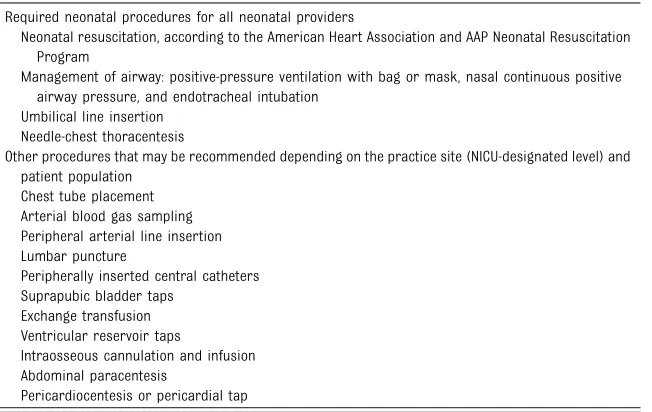
experience of NICU provider roles, we present in Table 2 procedures that are required and those that are recommended for hospitalists, NNPs, AC PNPs, and PAs in the NICU. Use of a quality improvement approach may be helpful to establish initial
competence and confidence.71Formal instruction and simulation can be completed, along with direct supervision by a credentialed and competent provider for initial procedural attempts, on patients in the NICU. Initial and ongoing competency can be documented through the use of procedure logs, observation, and/or proctored simulations and policy and procedure reviews.72–74
Behavioral Competency
The ABP, ACGME, various national PA organizations, and the NONPF provide guidance on behavioral competency in areas such as practiced-based learning and quality improvement, self-assessment, interpersonal and communication skills, professionalism, and
systems-based practice.3–5,7,8,16,19,20,67These emphasize independent and interprofessional practice; analytic skills for evaluating and providing evidence-based, patient-centered care; and advanced knowledge of health care delivery systems and are in accordance with the IOM
recommendations for health professions education.63,64At a minimum, NICU providers must be able to make complex decisions through analytical thinking and practice inquiry, communicate and collaborate with neonatologists and other health care providers, use and analyze information technology, develop effective teamwork and quality improvement skills, use patient- and family-centered care practices, and incorporate evidence-based practice, safety, and
knowledge of hospital and unit policy to promote the delivery of high-quality, safe, and cost-effective care to neonates.4,8Behavioral competencies are developed through structured education, mentorship, experience, and feedback, which may include individual coaching, team debriefings, simulations, and root-cause analysis exercises, and can be part of all providers’developmental process in training and throughout their careers.8,29Periodic
assessment of behavioral
competencies can be conducted and included in initial and ongoing performance evaluations.63
Initial and Ongoing Neonatal Competency Acquisition and Maintenance
TheGuidelines for Perinatal Care, Eighth Editionrecommends that procedures are established for the initial granting and subsequent maintenance of privileges, ensuring that the proper professional credentials are in place for each NICU provider.1Each institution is responsible to ensure that the neonatal provider, whether physician, APRN, or PA, has the formal education, experience, and
TABLE 2Essential Neonatal Procedures
Required neonatal procedures for all neonatal providers
Neonatal resuscitation, according to the American Heart Association and AAP Neonatal Resuscitation Program
Management of airway: positive-pressure ventilation with bag or mask, nasal continuous positive airway pressure, and endotracheal intubation
Umbilical line insertion Needle-chest thoracentesis
Other procedures that may be recommended depending on the practice site (NICU-designated level) and patient population
Chest tube placement Arterial blood gas sampling Peripheral arterial line insertion Lumbar puncture
Peripherally inserted central catheters Suprapubic bladder taps
Exchange transfusion Ventricular reservoir taps
Intraosseous cannulation and infusion Abdominal paracentesis
board certification to function within the requested scope of clinical and professional privileges. The credentialing process is best developed through a collaborative effort between nursing
administration and the medical staff governing body by using guidance from national bodies regarding the core competencies.1Hospitals accredited by The Joint Commission require physician and nonphysician health care providers, including APRNs and PAs, to obtain privileges to practice through a process of medical staff credentialing.75 Diagnostic and therapeutic services allowed by state and federal law may be further restricted by the hospital and/or medical staff.21,75Procedural privileges may be limited by professional degree, experience, or lack of ability to demonstrate appropriate training or competence to a credentialing body.21,75
Once an individual is credentialed, plans for initial and periodic reviews of safety and quality care can be developed, for individuals to maintain requested privileges, through a practice such as the focused professional practice evaluation and ongoing professional practice evaluation processes for those organizations accredited by The Joint Commission.76,77
POTENTIAL STRATEGIES TO ADDRESS WORKFORCE SHORTAGE OF NEONATAL PROVIDERS
Strategies to address provider workforce shortages in the NICU can include attempting to reduce the workload (ie, reduce the number of patients admitted to the NICU and/ or shorten the length of stay) and/or increase the number of providers. In addition to declining birth rates in the United States,78new care strategies may potentially change the acuity and locations where newborn infants receive their care and, over time, may lead to a redistribution and change the workloads of the
NICU provider workforce. These emerging care strategies include limiting elective cesarean deliveries to 39 weeks’gestation or
greater79,80; treating infants with neonatal abstinence syndrome outside of the NICU81; reducing the need for antibiotic administration and, therefore, length of hospital stay for mothers with intraamniotic inflammation or infection82; reducing NICU admissions for treatment of hypoglycemia with intravenous glucose administration by using dextrose or glucose gel83; and reducing length of NICU stay through quality improvement strategies, such as decreasing the incidence of central line–associated bloodstream infections.84
Strategies to increase the NICU provider workforce have mostly been concentrated on increasing the use of pediatric hospitalists, NNPs, and PAs.11,15,39–41,45–47Workforce surveys conducted by the NANNP have delineated the existing and future NNP workforce needs.39,40The authors noted that education, recruitment, and retention of NNPs were key areas of focus to increase supply.39,40
Education for NNPs has evolved over 5 decades from certificate programs, to bachelor’s and master’s degrees in nursing, to the doctorate of nursing practice degree, which could slow the NNP pipeline further.85,86 Barriers to obtaining this education are lack of higher degree (ie, doctorate of nursing) programs, funding of faculty, access to preceptors, and federal and state regulations.87Regulations posed by the US Department of Education related to long-distance learning have had an effect on NNP education and have contributed to a drop in enrollment in states with
significantly restrictive requirements.87Collaboration among educational institutions may be a strategy to overcome restrictive regulations and minimize costs and
faculty needs.39Locally, neonatal programs and hospitals can increase efforts to recruit more neonatal nurses within the workplace to pursue higher education as an NNP and offer tuition reimbursement or scholarships to assist with the
financial burden.88This strategy capitalizes on the professional expertise of neonatal nurses, facilitating success and easing the transition into the APRN role. A shortage of university nursing faculty is another limitation of enrollment in academic programs. The NANNP has led a strategy to support NNP programs to prepare expert NNP clinicians to become educators in clinical faculties. It is hoped that this effort to increase faculty will enable an increase in the student cohort size and consequently increase the numbers of newly graduated NNPs in the workforce.39
Recruitment of NNPs is vital to the NICU provider workforce. Practicing NNPs should contribute to
recruitment efforts by serving as clinical preceptors for NNP
students.25Mentoring programs for novice NNPs have been shown to be valuable recruitment tools for NNP practices and hospitals. Offering longer orientation or residency programs is attractive to new graduates as well.
Retention of NNPs in the workforce is another important aspect of maintaining the NNP supply. With an aging workforce, any additional reduction in manpower from burnout and early retirement will compound the workforce deficit and increase demand. The scope of responsibility for NNPs includes the NICU provider role along with other roles, such as transport NNP, educator, delivery room
safe and effective care to neonates.39 Consideration of patient load and acuity will help reduce burnout and increase job satisfaction.39In hospitals that maintain 24-hour work shifts, ensuring downtime for NNPs is critical to safe and
competent care.39Other strategies may include creating shorter shift lengths and devising creative scheduling techniques to offer better work-life balance in an attempt to increase longevity of the NNP role.39,40
AC PNPs, acting within their scope of practice, can be used as NICU providers for term and older infants, such as those with surgical conditions and chronic medical conditions. PC PNPs, working within their scope of practice, could be used to perform well-newborn and other types of consultations, discharge education, care coordination, and
neurodevelopmental follow-up. This team-based collaborative model capitalizes on the unique skill sets of each provider. However, the PNP workforce pipeline suffers from many of the same or similar issues as the NNP pipeline, and it is likely that applying some of the above recruitment and retention strategies may help.45–47
Additionally, some PNPs may consider achieving additional certification as an NNP through a post–master’s certification academic program.
Efforts to increase the PA workforce in the NICU have included the addition of postgraduate training programs,69and more hospitals are hiring PAs and providing onboarding for those without specific NICU experience. As the total population of PAs continues to increase, offering optional rotations through the NICU during student coursework and clinical rotations, creating more postgraduate training opportunities in neonatology for PAs, and formalizing neonatal PA orientation
programs may increase the numbers of these providers in neonatology. Reynolds and Bricker51note that PAs “represent a historically
underutilized resource to resolve neonatology’s workforce issues.”
Pediatric hospitalists have completed a formal pediatrics residency program and are licensed physicians who can be used as NICU providers within their scope of practice. Hospitalists can currently achieve board certification through the ABP in thefield of general pediatrics20and, if eligible, may also soon be able to obtain board certification in PHM.18The AAP Section on Hospital Medicine and its Neonatal Hospitalists Subcommittee are developing and reviewing content on delivery room care and common neonatal conditions for PHM fellowship programs and for the PHM board certification
process.18Recruitment and retention of pediatric hospitalists who are focused on newborn care and work as providers in the NICU may be helpful to the overall NICU provider workforce. The scope of
responsibility for pediatric and neonatal hospitalists may include clinical responsibilities for delivery room resuscitation, transport, cross-coverage for housestaff, well-newborn consultation and care, and the care of selected newborn infants in the intermediate and intensive care nurseries.6,15In addition, many pediatric hospitalists also serve as educators, researchers, and leaders of committees and quality
improvement activities.6,15Adequate staffing ratios are important to the practice environment and are required to balance the needs of the unit with safe and effective care to neonates. Consideration of patient load, acuity, and need for academic and professional development will help reduce burnout and increase longevity and job satisfaction of pediatric and neonatal hospitalists.
In addition to the pipeline,
recruitment, and retention strategies mentioned previously, efforts should also be focused on effective use and quality-outcomes metrics of all neonatal providers to improve effectiveness and efficiency issues and to improve the quality of care delivered to the neonate who is hospitalized.
SUMMARY AND CONCLUSIONS
•The NICU provider workforce consists of a variety of
professionals in varied stages of their careers with a wide range of degrees, training, experience, skills, and competencies.
•Increasing collaboration of neonatologists with other NICU providers (pediatric hospitalists, APRNs, and PAs) and physician trainees will be necessary to meet the needs of the NICU population going forward.
•The skill level, experience, and competency of neonatology physician trainees (residents and fellows) and NICU providers (PAs, pediatric hospitalists, and PNPs) can be variable, although the training model for NNPs is well developed and may serve as a model for other NICU providers.
•All neonatal providers should possess a basic set of knowledge, procedural, and behavioral-based competencies to provide safe and effective care.
•It is the responsibility of the medical and nursing leadership of the NICU, with the assistance of the hospital credentialing committee, to develop and periodically review competency criteria for all NICU providers.
care to the high-risk NICU population.
•Strategies to increase the overall NICU provider workforce should be evaluated and thoughtfully
employed at the national and state levels to remove barriers to education, training, and practice.
•Ultimately, the attending
neonatologist is responsible for the care given by NICU providers under his or her supervision and/or collaboration. He or she should be involved in the development and periodic review of competency criteria and should ensure that malpractice liability protection, of the institution or obtained personally, covers adverse events that may involve members of the neonatal care team.
LEAD AUTHORS
Erin L. Keels, DNP, APRN-CNP, NNP-BC Jay P. Goldsmith, MD, FAAP
COMMITTEE ON FETUS AND NEWBORN, 2018–2019
James J. Cummings, MD, FAAP, Chairperson Ira S. Adams-Chapman, MD, FAAP Susan Wright Aucott, MD, FAAP Jay P. Goldsmith, MD, FAAP Ivan L. Hand, MD, FAAP Sandra E. Juul, MD, PhD, FAAP
Brenda Bradley Poindexter, MD, MS, FAAP Karen Marie Puopolo, MD, PhD, FAAP Dan L. Stewart, MD, FAAP
Wanda D. Barfield, MD, MPH, FAAP, RADM, USPHS
LIAISONS
Yasser El-Sayed, MD–American College of Obstetricians and Gynecologists
Erin L. Keels, DNP, APRN, NNP-BC–National Association of Neonatal Nurses
Meredith Mowitz, MD, MS, FAAP–AAP Section on Neonatal-Perinatal Medicine Michael Ryan Narvey, MD, FAAP–Canadian Pediatric Society
Tonse N.K. Raju, MD, DCH, FAAP–National Institutes of Health
Kasper S. Wang, MD, FACS, FAAP–Section on Surgery
STAFF
Jim Couto, MA
ABBREVIATIONS
AAP: American Academy of Pediatrics
AAPA: American Academy of Physician Assistants ABP: American Board of Pediatrics ACGME: Accreditation Council for
Graduate Medical Education
AC PNP: acute care–certified pediatric nurse practitioner APRN: advanced practice
registered nurse CME: continuing medical
education
IOM: Institute of Medicine NANN: National Association of
Neonatal Nurses NANNP: National Association of
Neonatal Nurse Practitioners
NCCPA: National Commission on Certification of Physician Assistants
NNP: neonatal nurse practitioner NONPF: National Organization of
Nurse Practitioner Faculties
NP: nurse practitioner PA: physician assistant
PC PNP: primary care–certified pediatric nurse practitioner
PHM: pediatric hospital medicine PNP: pediatric nurse practitioner
REFERENCES
1. American Academy of Pediatrics Committee on Fetus and Newborn; American Academy of Pediatrics Committee on Fetus and Newborn. In: Kilpatrick SJ, Papile LA, Macones GA, eds.Guidelines for Perinatal Care, 8th ed. Elk Grove Village, IL: American Academy of Pediatrics Publishing; 2017
2. National Association of Neonatal Nurses.Neonatal Nurse Practitioner Workforce. Position Statement #3058. Chicago, IL: National Association of Neonatal Nurses; 2013
3. Accreditation Review Commission on Education for the Physician Assistant.
Accreditation Standards for Physician Assistant Education. 4th ed. Johns Creek, GA: Accreditation Review Commission on Education for the Physician Assistant; 2018. Available at: www.arc-pa.org/wp-content/uploads/ 2018/06/Standards-4th-Ed-March-2018. pdf. Accessed October 30, 2018
4. National Organization of Nurse Practitioner Faculties. Population focused nurse practitioner competencies. 2013. Available at: https://cdn.ymaws.com/www.nonpf.org/ resource/resmgr/Competencies/ CompilationPopFocusComps2013.pdf. Accessed October 25, 2019
5. American Academy of Physician Assistants. PA education—preparation for excellence. 2016. Available at: https://www.aapa.org/wp-content/ uploads/2016/12/Issue_Brief_PA_ Education.pdf. Accessed October 31, 2018
6. American Academy of Pediatrics; Section on Hospital Medicine. Guiding principles for pediatric hospital medicine programs.Pediatrics. 2013; 132(4):782–786
7. Accreditation Council for Graduate Medical Education. ACGME program requirements for graduate medical education in neonatal-perinatal medicine. Available at: www.acgme.org/ portals/0/pfassets/2013-pr-faq-pif/329_ neonatal_perinatal_peds_07012013.pdf. Accessed December 1, 2018
8. Accreditation Council for Graduate Medical Education. ACGME program requirements for graduate medical education in neonatal-perinatal medicine. 2007. Available at: http:// www.acgme.org/Portals/0/PFAssets/ 2013-PR-FAQ-PIF/329_neonatal_perinata l_peds_07012013.pdf. Accessed October 25, 2019
9. Sawyer T, Foglia E, Hatch LD, et al. Improving neonatal intubation safety: a journey of a thousand miles.
J Neonatal Perinatal Med. 2017;10(2): 125–131
Requirements/Summary-of-Proposed- Changes-to-ACGME-Common-Program-Requirements-Section-VI. Accessed December 1, 2018
11. Freed GL, Dunham KM, Moran LM, Spera L; Research Advisory Committee of the American Board of Pediatrics. Resident work hour changes in children’s hospitals: impact on staffing patterns and workforce needs.Pediatrics. 2012; 130(4):700–704
12. Typpo KV, Tcharmtchi MH, Thomas EJ, et al. Impact of resident duty hour limits on safety in the intensive care unit: a national survey of pediatric and neonatal intensivists.Pediatr Crit Care Med. 2012;13(5):578–582
13. Institute of Medicine (US) Roundtable on Value and Science-Driven Health Care. In: Yong PL, Olsen LA, McGinnis JM, eds.Value in Health Care: Accounting for Cost, Quality, Safety, Outcomes, and Innovation. Washington, DC: National Academies Press (US); 2010
14. Merriam-Webster. Collaborate. Available at: https://www.merriam-webster.com/ dictionary/collaborate. Accessed May 13, 2018
15. Freed GL, Brzoznowski K, Neighbors K, Lakhani I; American Board of Pediatrics, Research Advisory Committee. Characteristics of the pediatric hospitalist workforce: its roles and work environment.Pediatrics. 2007; 120(1):33–39
16. Section on Hospital Medicine. Guiding principles for pediatric hospital medicine programs.Pediatrics. 2013; 132(4):782–786
17. Gosdin C, Simmons J, Yau C, et al. Survey of academic pediatric hospitalist programs in the US: organizational, administrative, and
financial factors.J Hosp Med. 2013;8(6): 285–291
18. American Board of Pediatrics. Pediatric hospital medicine certification. 2018. Available at: https://www.abp.org/ content/pediatric-hospital-medicine-certification. Accessed March 7, 2018
19. Holmboe ES, Edgar L, Hamstra S.The Milestones Guidebook. Chicago, IL: Accreditation Council for Graduate Medical Education; 2016. Available at: https://www.acgme.org/Portals/0/ MilestonesGuidebook.pdf. Accessed March 7, 2018
20. American Board of Pediatrics. Board certification. Available at: https://www. abp.org/content/board-certification. Accessed December 1, 2018
21. Rauch DA; Committee on Hospital Care; Section on Hospital Medicine. Medical staff appointment and delineation of pediatric privileges in hospitals.
Pediatrics. 2012;129(4):784–787 22. Stucky ER, Ottolini MC, Maniscalco J.
Pediatric hospital medicine core competencies: development and methodology.J Hosp Med. 2010;5(6): 339–343
23. National Council of State Boards of Nursing. APRN consensus model. Available at: https://www.ncsbn.org/ aprn-consensus.htm. Accessed May 13, 2018
24. National Council of State Boards of Nursing. APRN consensus
implementation status. Available at: https://www.ncsbn.org/5397.htm. Accessed December 1, 2018
25. National Association of Neonatal Nurses.Advanced Practice Registered Nurse: Role, Preparation, and Scope of Practice. Position Statement #3059. Chicago, IL: National Association of Neonatal Nurses; 2014
26. Staebler SL, Alianiello L, Kosch B, Keels E. The long road home: neonatal long-term care.AACN Adv Crit Care. 2014; 25(4):330–333
27. NP Core Competencies Content Work Group, National Organization of Nurse Practitioner Faculties. Nurse practitioner core competencies content. 2017. Available at: https://cdn. ymaws.com/www.nonpf.org/resource/ resmgr/competencies/2017_ NPCoreComps_with_Curric.pdf. Accessed February 23, 2018
28. National Association of Neonatal Nurses.Standard for Maintaining the Competence of Neonatal Nurse Practitioners. Position Statement #3062. Chicago, IL: National Association of Neonatal Nurses; 2015
29. National Association of Neonatal Nurses.Education Standards and Curriculum Guidelines for Neonatal Nurse Practitioner Programs. Chicago, IL: National Association of Neonatal Nurses; 2014
30. National Certification Corporation. 2018 candidate guide: neonatal nurse practitioner. Available at: https://www. nccwebsite.org/content/documents/ cms/nnp-candidate_guide.pdf. Accessed February 3, 2018
31. National Association of Neonatal Nurse Practitioners.Competencies and Orientation Toolkit for Neonatal Nurse Practitioners, 2nd ed. Chicago, IL: National Association of Neonatal Nurses; 2014
32. Carzoli RP, Martinez-Cruz M, Cuevas LL, Murphy S, Chiu T. Comparison of neonatal nurse practitioners, physician assistants, and residents in the neonatal intensive care unit.Arch Pediatr Adolesc Med. 1994;148(12): 1271–1276
33. Mitchell-DiCenso A, Guyatt G, Marrin M, et al. A controlled trial of nurse practitioners in neonatal intensive care.
Pediatrics. 1996;98(6, pt 1):1143–1148 34. Karlowicz MG, McMurray JL.
Comparison of neonatal nurse practitioners’and pediatric residents’ care of extremely low-birth-weight infants.Arch Pediatr Adolesc Med. 2000; 154(11):1123–1126
35. Bosque E. Collaboration, not
competition: cost analysis of neonatal nurse practitioner plus neonatologist versus neonatologist-only care models.
Adv Neonatal Care. 2015;15(2):112–118 36. Sheldon RE, Corff K, McCann D, Kenner
C. Nursing perspectives: acute care nurse practitioners in the neonatal intensive care unit: why this is a successful collaboration.NeoReviews. 2015;16(3):e138–e143
37. Wallman C; Committee on Fetus and Newborn. Advanced practice in neonatal nursing.Pediatrics. 2009; 123(6):1606–1607
38. National Association of Neonatal Nurses.Quality Metrics. Position Statement #3068. Chicago, IL: National Association of Neonatal Nurses; 2016
39. Kaminski MM, Meier S, Staebler S. National Association of Neonatal Nurse Practitioners (NANNP) workforce survey.Adv Neonatal Care. 2015;15(3): 182–190
report offindings.Adv Neonatal Care. 2017;17(5):331–336
41. Schell GJ, Lavieri MS, Jankovic F, et al. Strategic modeling of the neonatal nurse practitioner workforce.Nurs Outlook. 2016;64(4):385–394 42. Bellini S. State of the state: NNP
program update 2013.Adv Neonatal Care. 2013;13(5):346–348
43. American Association of Nurse Practitioners. NP fact sheet. Available at: https://www.aanp.org/all-about-nps/ np-fact-sheet. Accessed April 28, 2018
44. National Association of Pediatric Nurse Practitioners; Professional Issues Committee. NAPNAP position statement on age parameters for pediatric nurse practitioner practice.J Pediatr Health Care. 2019;33(2):A9–A11
45. Freed GL, Moran LM, Dunham KM, Hawkins-Walsh E, Martyn KK; Research Advisory Committee of the American Board of Pediatrics. Capacity of, and demand for, pediatric nurse practitioner educational programs: a missing piece of the workforce puzzle.J Prof Nurs. 2015;31(4):311–317 46. Freed GL, Dunham KM, Martyn K, et al;
Research Advisory Committee of the American Board of Pediatrics. Pediatric nurse practitioners: influences on career choice.J Pediatr Health Care. 2014;28(2):114–120
47. Schell GJ, Lavieri MS, Li X, et al. Strategic modeling of the pediatric nurse practitioner workforce.
Pediatrics. 2015;135(2):298–306 48. American Academy of Physician
Assistants. What is a PA? Available at: https://www.aapa.org/what-is-a-pa/. Accessed January 31, 2018
49. American Academy of Physician Assistants. Physician assistants at a glance. 2016. Available at https:// www.aapa.org/wp-content/uploads/ 2019/08/What_Is_A_PA_Infographic_Le tterSize_July2019.pdf. Accessed January 31, 2018
50. American Academy of Physician Assistants. PA scope of practice. 2017. Available at: https://www.aapa.org/wp-content/uploads/2017/01/Issue-brief_ Scope-of-Practice_0117-1.pdf. Accessed October 31, 2018
51. Reynolds EW, Bricker JT. Nonphysician clinicians in the neonatal intensive care unit: meeting the needs of our smallest patients.Pediatrics. 2007;119(2): 361–369
52. National Conference of State Legislatures; Association of State and Territorial Health Officials. Physician assistants overview. Available at: http:// scopeofpracticepolicy.org/
practitioners/physician-assistants/. Accessed December 1, 2018
53. National Commission on Certification of Physician Assistants.2017 Specialty Report. Duluth, GA: National Commission on Certification of Physician Assistants; 2018. Available at: http://prodcmsstoragesa.blob.core.wi ndows.net/uploads/files/2017Statistica lProfilebySpecialty.pdf. Accessed November 8, 2018
54. Schulman M, Lucchese KR, Sullivan AC. Transition from housestaff to nonphysicians as neonatal intensive care providers: cost, impact on revenue, and quality of care.Am J Perinatol. 1995;12(6):442–446 55. Mathur M, Rampersad A, Howard K,
Goldman GM. Physician assistants as physician extenders in the pediatric intensive care unit setting-A 5-year experience.Pediatr Crit Care Med. 2005; 6(1):14–19
56. Hascall RL, Perkins RS, Kmiecik L, et al. PAs reduce rounding interruptions in the pediatric intensive care unit.JAAPA. 2018;31(6):41–45
57. Freed GL, Dunham KM, Moote MJ, Lamarand KE; American Board of Pediatrics Research Advisory Committee. Pediatric physician assistants: distribution and scope of practice.Pediatrics. 2010;126(5): 851–855
58. Bureau of Labor Statistics, US Department of Labor. Occupational outlook handbook, physician assistants. Available at: https://www.bls.gov/ooh/ healthcare/physician-assistants.htm. Accessed January 31, 2018
59. American Academy of Physician Assistants. 2013 AAPA annual survey report. Available at: https://www.aapa. org/wp-content/uploads/2016/12/ Annual_Server_Data_Tables-S.pdf. Accessed January 31, 2018
60. National Center for Health Workforce Analysis. Projecting the supply of non-primary care specialty and
subspecialty clinicians: 2010-2025. 2017. Available at: https://bhw.hrsa.gov/sites/ default/files/bhw/nchwa/projections/ clinicalspecialties.pdf. Accessed November 7, 2018
61. Merriam-Webster. Competency. Available at: https://www.merriam-webster.com/dictionary/competency. Accessed May 13, 2018
62. Kak N, Burkhalter B, Cooper M.
Measuring the Competence of Healthcare Providers. Bethesda, MD: Quality Assurance Project; 2001. Available at: https://usaidassist.org/site s/assist/files/measuring_the_compete nce_of_hc_providers_qap_2001.pdf. Accessed November 8, 2018
63. Institute of Medicine (US) Committee on the Health Professions Education Summit. In: Greiner AC, Knebel E, eds.
Health Professions Education: A Bridge to Quality. Washington, DC: National Academies Press; 2003
64. Institute of Medicine (US) Committee on Quality of Health Care in America.
Crossing the Quality Chasm: A New Health System for the 21st Century. Washington, DC: National Academies Press (US); 2001
65. National Commission on Certification of Physician Assistants; Accreditation Review Commission on Education for the Physician Assistant; American Academy of Physician Assistants; Physician Assistant Education Association. Competencies for the physician assistant profession. 2012. Available at: https://www.aapa.org/wp-
content/uploads/2017/02/PA-Competencies-updated.pdf. Accessed February 3, 2018
66. American Board of Pediatrics. ACGME core competencies. Available at: https:// www.abp.org/content/acgme-core-competencies. Accessed February 3, 2018
67. American Board of Pediatrics. Neonatal-perinatal medicine certification. Available at: https://www.abp.org/ content/neonatal-perinatal-medicine-certification. Accessed February 3, 2018
neonate.Pediatrics. 2008;122(5): 1119–1126
69. The Association of Post Graduate PA Programs. Postgraduate PA/NP program membership roster by specialty. Available at: https://appap. org/wp-content/uploads/2019/10/ APPAP-Postgraduate-PANP-Program- Membership-Roster-by-Specialty-as-of-Oct-2019.pdf. Accessed October 25, 2019
70. Sawyer T, French H, Ades A, Johnston L. Neonatal-perinatal medicine fellow procedural experience and competency determination: results of a national survey.J Perinatol. 2016;36(7):570–574 71. Starr M, Sawyer T, Jones M, Batra M,
McPhillips H. A simulation-based quality improvement approach to improve pediatric resident competency with required procedures.Cureus. 2017;9(6): e1307
72. Sawyer T, Gray MM. Procedural training and assessment of competency utilizing simulation.Semin Perinatol. 2016;40(7): 438–446
73. Butler-O’Hara M, Marasco M, Dadiz R. Simulation to standardize patient care and maintain procedural competency.
Neonatal Netw. 2015;34(1):18–30 74. Halamek LP. Simulation as
a methodology for assessing the performance of healthcare
professionals working in the delivery room.Semin Fetal Neonatal Med. 2013; 18(6):369–372
75. Joint Commission Resource.Medical Staff Essentials: Your Go-To Guide, 1st
ed. Oakbrook, IL: Joint Commission Resource; 2017
76. The Joint Commission. Standards interpretation. Available at: https:// www.jointcommission.org/standards_i nformation/jcfaqdetails.aspx?Standa rdsFaqId=1890&ProgramId=46. Accessed February 11, 2018
77. The Joint Commission. Standards FAQ details. Available at: https://www.jointco mmission.org/standards_information/ jcfaqdetails.aspx?StandardsFaqId= 1605&ProgramId=46 Accessed February 11, 2018
78. Martin JA, Hamilton BE, Osterman MJK, Driscoll AK, Drake P. Births:final data for 2017.Natl Vital Stat Rep. 2018;67(8): 1–50
79. Tita AT, Landon MB, Spong CY, et al; Eunice Kennedy Shriver NICHD Maternal-Fetal Medicine Units Network. Timing of elective repeat cesarean delivery at term and neonatal outcomes.N Engl J Med. 2009;360(2): 111–120
80. Chiossi G, Lai Y, Landon MB, et al; Eunice Kennedy Shriver National Institute of Child Health and Human Development (NICHD) Maternal-Fetal Medicine Units (MFMU) Network. Timing of delivery and adverse outcomes in term singleton repeat cesarean deliveries.
Obstet Gynecol. 2013;121(3):561–569 81. Holmes AV, Atwood EC, Whalen B, et al.
Rooming-in to treat neonatal abstinence syndrome: improved
family-centered care at lower cost.
Pediatrics. 2016;137(6):e20152929 82. Kuzniewicz MW, Puopolo KM, Fischer A,
et al. A quantitative, risk-based approach to the management of neonatal early-onset sepsis.JAMA Pediatr. 2017;171(4):365–371 83. Weston PJ, Harris DL, Battin M, et al.
Oral dextrose gel for the treatment of hypoglycaemia in newborn infants.
Cochrane Database Syst Rev. 2016;(5): CD011027
84. Payne V, Hall M, Prieto J, Johnson M. Care bundles to reduce central line-associated bloodstream infections in the neonatal unit: a systematic review and meta-analysis.Arch Dis Child Fetal Neonatal Ed. 2018;103(5):F422–F429 85. Bellflower B, Carter MA. Primer on the
practice doctorate for neonatal nurse practitioners.Adv Neonatal Care. 2006; 6(6):323–332
86. Pressler JL, Kenner CA. The NNP/DNP shortage: transforming neonatal nurse practitioners into DNPs.J Perinat Neonatal Nurs. 2009;23(3):272–278 87. Staebler S, Meier SR, Bagwell G,
Conway-Orgel M. The future of neonatal advanced practice registered nurse practice: white paper.Adv Neonatal Care. 2016;16(1):8–14
DOI: 10.1542/peds.2019-3147 originally published online November 18, 2019;
2019;144;
Pediatrics
Erin L. Keels, Jay P. Goldsmith and COMMITTEE ON FETUS AND NEWBORN
Neonatal Provider Workforce
Services
Updated Information &
http://pediatrics.aappublications.org/content/144/6/e20193147
including high resolution figures, can be found at:
References
http://pediatrics.aappublications.org/content/144/6/e20193147#BIBL
This article cites 45 articles, 15 of which you can access for free at:
Subspecialty Collections
http://www.aappublications.org/cgi/collection/neonatology_sub Neonatology
sub
http://www.aappublications.org/cgi/collection/fetus:newborn_infant_ Fetus/Newborn Infant
_newborn
http://www.aappublications.org/cgi/collection/committee_on_fetus_ Committee on Fetus & Newborn
http://www.aappublications.org/cgi/collection/current_policy Current Policy
following collection(s):
This article, along with others on similar topics, appears in the
Permissions & Licensing
http://www.aappublications.org/site/misc/Permissions.xhtml
in its entirety can be found online at:
Information about reproducing this article in parts (figures, tables) or
Reprints
http://www.aappublications.org/site/misc/reprints.xhtml
DOI: 10.1542/peds.2019-3147 originally published online November 18, 2019;
2019;144;
Pediatrics
Erin L. Keels, Jay P. Goldsmith and COMMITTEE ON FETUS AND NEWBORN
Neonatal Provider Workforce
http://pediatrics.aappublications.org/content/144/6/e20193147
located on the World Wide Web at:
The online version of this article, along with updated information and services, is
by the American Academy of Pediatrics. All rights reserved. Print ISSN: 1073-0397.