CLINICAL REPORT
Guidance for the Clinician in Rendering Pediatric CareSchool-aged Children Who Are Not
Progressing Academically:
Considerations for Pediatricians
Celiane Rey-Casserly, PhD,aLaura McGuinn, MD, FAAP,bArthur Lavin, MD, FAAP,cCOMMITTEE ON PSYCHOSOCIAL ASPECTS OF CHILD
AND FAMILY HEALTH,SECTION ON DEVELOPMENTAL AND BEHAVIORAL PEDIATRICS
abstract
Pediatricians and other pediatric primary care providers may be consultedwhen families have concerns that their child is not making expected progress in school. Pediatricians care not only for an increasingly diverse population of children who may have behavioral, psychological, and learning difficulties but also for increasing numbers of children with complex and chronic medical problems that can affect the development of the central nervous system and can present with learning and academic concerns. In many instances, pediatric providers require additional information about the nature of cognitive, psychosocial, and educational difficulties that affect their school-aged patients. Our purpose for this report is to describe the current state of the science regarding educational achievement to inform pediatricians’ decisions regarding further evaluation of a child’s challenges. In this report, we review commonly available options for psychological evaluation and/or treatment, medical referrals, and/or recommendations for referral for eligibility determinations at school and review strategies for collaborating with families, schools, and specialists to best serve children and families.
INTRODUCTION
Pediatricians and other pediatric primary care providers may be thefirst to be consulted when families have concerns that their child is not making expected progress in school. Furthermore, pediatricians are confronted with an increasingly diverse population of children who may have behavioral, psychological, and learning difficulties. They also provide care to increasing numbers of children with complex and chronic medical problems that affect the development of the central nervous system and have the potential to derail or divert the acquisition of behavioral capacities. In some cases, the problem can be sorted out through history and interventions conducted in a clinical visit. In other instances, pediatric providers require additional information about the nature of cognitive,
aDepartment of Psychiatry, Boston Children’s Hospital and Harvard
Medical School, Boston, Massachusetts;bDivision of Developmental-Behavioral Pediatrics, Department of Pediatrics, University of Alabama, Birmingham, and Children’s of Alabama, Birmingham, Alabama; and
cAdvanced Pediatrics, Beachwood, Ohio
All authors participated substantially in the concept, design, drafting, and revising of the manuscript, and all authors approved thefinal manuscript as submitted.
Clinical reports from the American Academy of Pediatrics benefit from expertise and resources of liaisons and internal (AAP) and external reviewers. However, clinical reports from the American Academy of Pediatrics may not reflect the views of the liaisons or the organizations or government agencies that they represent.
The guidance in this report does not indicate an exclusive course of treatment or serve as a standard of medical care. Variations, taking into account individual circumstances, may be appropriate.
All clinical reports from the American Academy of Pediatrics automatically expire 5 years after publication unless reaffirmed, revised, or retired at or before that time.
This document is copyrighted and is property of the American Academy of Pediatrics and its Board of Directors. All authors havefiled conflict of interest statements with the American Academy of Pediatrics. Any conflicts have been resolved through a process approved by the Board of Directors. The American Academy of Pediatrics has neither solicited nor accepted any commercial involvement in the development of the content of this publication.
DOI:https://doi.org/10.1542/peds.2019-2520
psychosocial, and educational difficulties that affect their school-aged patients’academic functioning. Psychological and educational evaluations can provide valuable diagnostic information and inform strategies for intervention that address cognitive, psychosocial, and learning needs. Evaluation of these domains is accomplished in a variety of health care, community-based, and school settings. Assessment
information may exist from previous evaluations, in which case the pediatrician’s role is one of review and analysis of results as they relate to intervention planning and ongoing medical management. In other cases, the pediatrician will refer a child for additional evaluation. With the information from in-depth assessments, pediatricians are strategically positioned to work in partnership with families and help them in collaborating with schools and other health care specialists.
Our purpose for this clinical report is to present a clinical approach to school-aged children who are not progressing academically. It complements existing American Academy of Pediatrics (AAP) clinical reports, practice guidelines, policy statements, tool kits, books, and case presentations that provide guidance regarding the early childhood age group as well as specific issues such as learning disabilities, mental health concerns, youth violence prevention, and foster care.1–21In this clinical report, wefirst provide a clinical overview of school-aged children with academic progress problems,
including the epidemiology, presentation, and differential diagnosis, and discuss the
pediatrician’s role in identification and management. A more detailed review follows, with strategies pediatricians can use to clarify why, when, how, and to whom to refer for further evaluation as well as guidance on how to understand evaluation results, communicatefindings with
families, and integrate the
information into clinical management. The clinical report is guided by the AAP’s medical home
care-coordination framework22and supports the pediatrician’s
collaboration and consultation across service system sectors. The
Supplemental Information provides resources for this collaboration, including coding and billing strategies to address the resource requirements for this type of collaboration.
It is important to acknowledge that the additional evaluation services for children can vary widely in how they are organized and funded across communities. Therefore, the content in this report does not indicate an exclusive course of treatment nor serve as a standard of care and may not be applicable to every
professional situation. The
suggestions are not definitive and are not intended to take precedence over the clinical judgment of pediatricians. Variations, taking into account individual circumstances, will be appropriate.
BACKGROUND
Failing to progress academically is a nonspecific symptom with many possible etiologies and forms of presentation. Problems may involve only 1 area or many aspects of academic functioning. Onset and expression of the symptom are highly variable. Some children have
accompanying behavioral problems, and others do not. The severity of the problem lies on a continuum and is dependent on characteristics of the child, the school, the family, and the community and its various cultures as well as the interplay of each of these factors. Furthermore, the problem likely will vary over time as children progress in age.
Magnitude of the Problem
Estimating the prevalence of academic progress problems in school-aged children is challenging
given the heterogeneity of the problem and the lack of a universally agreed on definition. In regard to neurodevelopmental and health disorders associated with academic dysfunction, statistics regarding provision of special education services offer proxy indicators (note that these numbers likely
underestimate the magnitude because the Individuals with Disabilities Education Act [IDEA],23 the US federal law mandating provision of special education services that was originally passed in 1975, requires a diagnosis, and a child’s underachievement may be significant before one can be made). Data used to monitor the compliance with IDEA have been collected since 1976. In 2014–2015, the most recent school year for which analysis is available, the number of children 3 to 21 years of age served by federally supported special education programs in the United States was estimated to be 6.6 million or 13% of the total public school enrollment.24 The distribution by disability type revealed that the highest percentage of children (35%) were qualified as having a specific learning disability (note that the IDEA defines a specific learning disability as“a disorder in one or more of the basic
psychological processes involved in understanding or using language, spoken or written, that may manifest itself in an imperfect ability to listen, think, speak, read, write, spell, or do mathematical calculations”). The next largest category of children included those with speech or language impairment (20%), followed by those with other health impairments (13%), which included children with
and those with intellectual disability and developmental delay represented 6% each. Children with multiple disabilities, hearing impairments, orthopedic impairments, visual impairments, traumatic brain injuries, and deaf-blindness each accounted for#2% of those served under IDEA.25The IDEA monitoring statistics are similar to those in other national surveys that reveal that
∼20% of US children have a special health care need.26,27Thesefigures provide an approximate estimate of the degree of likelihood to which pediatricians will encounter patients with problems progressing
academically and the relative frequency of specific etiologies.
Presentation of Academic Progress Problems
Timing of the onset of academic progress problems may provide clues to the type of underlying learning dysfunction present. In some cases, children’s academic problems come to attention before they are fully manifested because of
a developmental or medical condition that leads to them being more closely monitored. For example, cancer survival, prematurity, traumatic brain injury, seizures, language delays, or other conditions might place the child in contact with the health care and/or public education systems at an earlier age. In that context, risks for or problems with their academic functioning might come to recognition at an earlier stage of problem emergence through
screening or evaluations conducted in those systems.
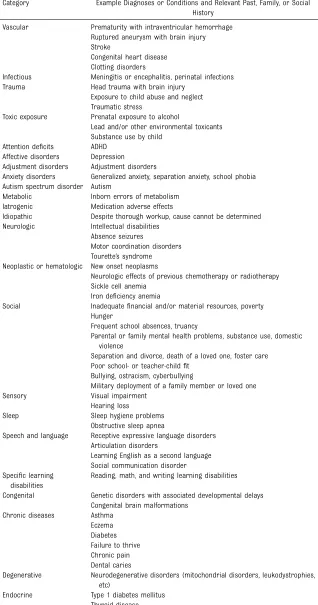
In school-aged children who have had no reason to be monitored similarly, academic progress problems often become apparent when classroom demands exceed an individual child’s capacity. Therefore, timing of onset varies in relation to the progression of demands in successive school years. For example, reading decoding problems may become evident in the TABLE 1Differential Diagnoses for Failing to Progress Academically, Organized by Category
Category Example Diagnoses or Conditions and Relevant Past, Family, or Social History
Vascular Prematurity with intraventricular hemorrhage Ruptured aneurysm with brain injury Stroke
Congenital heart disease Clotting disorders
Infectious Meningitis or encephalitis, perinatal infections Trauma Head trauma with brain injury
Exposure to child abuse and neglect Traumatic stress
Toxic exposure Prenatal exposure to alcohol
Lead and/or other environmental toxicants Substance use by child
Attention deficits ADHD Affective disorders Depression Adjustment disorders Adjustment disorders
Anxiety disorders Generalized anxiety, separation anxiety, school phobia Autism spectrum disorder Autism
Metabolic Inborn errors of metabolism Iatrogenic Medication adverse effects
Idiopathic Despite thorough workup, cause cannot be determined Neurologic Intellectual disabilities
Absence seizures
Motor coordination disorders Tourette’s syndrome Neoplastic or hematologic New onset neoplasms
Neurologic effects of previous chemotherapy or radiotherapy Sickle cell anemia
Iron deficiency anemia
Social Inadequatefinancial and/or material resources, poverty Hunger
Frequent school absences, truancy
Parental or family mental health problems, substance use, domestic violence
Separation and divorce, death of a loved one, foster care Poor school- or teacher-childfit
Bullying, ostracism, cyberbullying
Military deployment of a family member or loved one Sensory Visual impairment
Hearing loss
Sleep Sleep hygiene problems Obstructive sleep apnea
Speech and language Receptive expressive language disorders Articulation disorders
Learning English as a second language Social communication disorder Specific learning
disabilities
Reading, math, and writing learning disabilities
Congenital Genetic disorders with associated developmental delays Congenital brain malformations
Chronic diseases Asthma Eczema Diabetes Failure to thrive Chronic pain Dental caries
Degenerative Neurodegenerative disorders (mitochondrial disorders, leukodystrophies, etc)
early elementary years, whereas reading comprehension problems and mathematic learning disabilities may not be apparent until the middle-elementary years. Children who have problems inferring from reading material and those who have written language disabilities may go
unrecognized until the later elementary years, when those skills are expected regularly in the classroom. A common adage is that children learn to read before third grade and read to learn from third grade on. Some learning problems may escape detection until middle school. At that point, the increased demands to organize and prioritize materials for learning, to read larger volumes of material, or to complete long-term assignments may exceed the abilities of a child with subtler learning disabilities. Some individuals with learning disabilities who have been able to compensate throughout school years may not be recognized even until adulthood.
Whether the onset of the academic underperformance is acute or chronic may also help in determining etiology. For example, children with learning disabilities may chronically
underperform academically because of their neurologically based learning differences. On the other hand, acute academic decline in a child who previously was performing well may indicate onset of a physical condition or an acute stressor (eg, bullying, ostracization, change in teachers or schools, family concerns, death of a close friend or relative, substance use, etc).
Alternatively, behavioral or emotional challenges may present concerns before the neurodevelopmental disability that is causing the academic problem is discovered. Challenging behaviors may include hyperactivity, inattention, anxiety, irritability, sadness, aggression, oppositionality, and/or social isolation. Identification of the academic difficulty as the cause of the behavioral challenge allows for
optimal management of the behavior. A thorough evaluation is important in determining if behavioral and emotional challenges are co-occurring or the principal reason for the child’s concerns.
The location of where a behavioral problem occurs can also provide important clues to etiology for academic underachievement. A child who displays oppositional behavior only at school but is compliant at home, where parents are not placing academic demands, may have an undiagnosed learning disability. Another child might behave well in the classroom but decompensate emotionally or behaviorally at home while completing homework.
Differential Diagnosis of Academic Progress Problems
There are many conditions that can lead to the symptoms of academic dysfunction. Disorders can involve neurologic, emotional, or behavioral functioning abnormalities alone or in various combinations. In Table 1, we offer a list of such conditions, organized into a set of categories for consideration of the range of such causes. As with any differential diagnosis of a set of symptoms, multiple etiologies may be present in an individual child.
THE PEDIATRICIAN’S ROLE
Although the majority of the responsibility for evaluation and management of children who are failing to progress academically traditionally lies with the school system, as advocates for child health and well-being, pediatricians contribute importantly. In this section, we describe the pediatrician’s roles, which include prevention, early recognition, diagnosis of underlying medical conditions, referral,
treatment, advocacy, and monitoring. The Medical Evaluation section that follows includes a more in-depth exploration of the role along with tools and strategies feasible for use in
primary care settings when
pediatricians encounter a school-aged child who is failing to progress academically.
Prevention
The pediatrician’s role in preventing academic underachievement includes contributing to protecting children from brain injury. Performing immunizations; monitoring growth and nutrition; screening for anemia and lead exposure; encouraging the use of helmets, car seats, and seat belts; preventing alcohol, tobacco, nicotine, cannabis, and other substance use (including for female patients of childbearing age); and identifying and addressing
psychosocial risks are just some of the tools that pediatricians employ on a regular basis that contribute to preventing brain injury in children.
Bright Futures: Guidelines for Health Supervision of Infants, Children, and Adolescents, Fourth Edition, offers extensive resources to the
pediatrician who is considering the approaches to anticipatory guidance relevant to addressing possibly emerging difficulties children face when performing schoolwork.28
Early Recognition
Although the primary focus of this report is school-aged children, it is important to mention the role pediatricians have in early detection throughout childhood. Surveillance of all children, beginning in infancy, for risk factors with the potential to interfere with typical academic progress can lead to earlier identification and intervention. Practice guidelines and policy statements are available to help pediatricians systematically monitor developmental progress, screen for risk, and identify preschool-aged children who warrant early
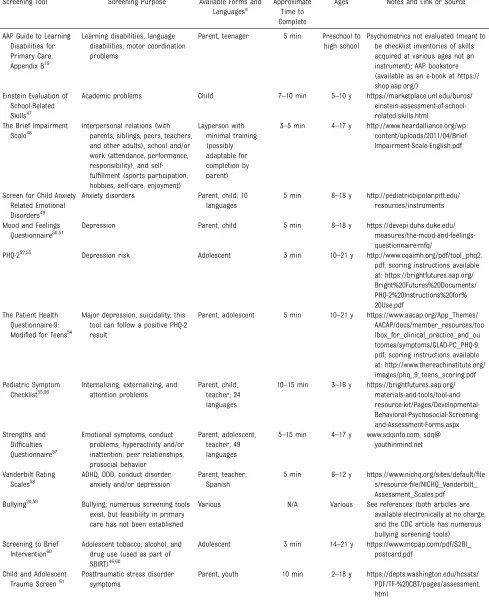
TABLE 2Selected Relevant Screening Tools Feasible for Use in Pediatric Primary Care
Screening Tool Screening Purpose Available Forms and Languagesa
Approximate Time to Complete
Ages Notes and Link or Source
AAP Guide to Learning Disabilities for Primary Care, Appendix B19
Learning disabilities, language disabilities, motor coordination problems
Parent, teenager 5 min Preschool to high school
Psychometrics not evaluated (meant to be checklist inventories of skills acquired at various ages not an instrument); AAP bookstore (available as an e-book at https:// shop.aap.org/)
Einstein Evaluation of School-Related Skills47
Academic problems Child 7–10 min 5–10 y https://marketplace.unl.edu/buros/ einstein-assessment-of-school-related-skills.html
The Brief Impairment Scale48
Interpersonal relations (with parents, siblings, peers, teachers, and other adults), school and/or work (attendance, performance, responsibility), and self-fulfillment (sports participation, hobbies, self-care, enjoyment)
Layperson with minimal training (possibly adaptable for completion by parent)
3–5 min 4–17 y http://www.heardalliance.org/wp- content/uploads/2011/04/Brief-Impairment-Scale-English.pdf
Screen for Child Anxiety Related Emotional Disorders49
Anxiety disorders Parent, child; 10 languages
5 min 8–18 y http://pediatricbipolar.pitt.edu/ resources/instruments
Mood and Feelings Questionnaire50,51
Depression Parent, child 5 min 8–18 y https://devepi.duhs.duke.edu/ measures/the-mood-and-feelings-questionnaire-mfq/
PHQ-252,53 Depression risk Adolescent 3 min 10–21 y http://www.cqaimh.org/pdf/tool_phq2. pdf; scoring instructions available at: https://brightfutures.aap.org/ Bright%20Futures%20Documents/ PHQ-2%20Instructions%20for% 20Use.pdf
The Patient Health Questionnaire-9: Modified for Teens54
Major depression, suicidality; this tool can follow a positive PHQ-2 result
Parent, adolescent 5 min 10–21 y https://www.aacap.org/App_Themes/ AACAP/docs/member_resources/too lbox_for_clinical_practice_and_ou tcomes/symptoms/GLAD-PC_PHQ-9. pdf; scoring instructions available at: http://www.thereachinstitute.org/ images/phq_9_teens_scoring.pdf Pediatric Symptom
Checklist55,56
Internalizing, externalizing, and attention problems
Parent, child, teacher; 24 languages
10–15 min 3–16 y https://brightfutures.aap.org/ materials-and-tools/tool-and- resource-kit/Pages/Developmental- Behavioral-Psychosocial-Screening-and-Assessment-Forms.aspx Strengths and
Difficulties Questionnaire57
Emotional symptoms, conduct problems, hyperactivity and/or inattention, peer relationships, prosocial behavior
Parent, adolescent, teacher; 49 languages
5–15 min 4–17 y www.sdqinfo.com; sdq@ youthinmind.net
Vanderbilt Rating Scales58
ADHD, ODD, conduct disorder, anxiety and/or depression
Parent, teacher; Spanish
5 min 6–12 y https://www.nichq.org/sites/default/file s/resource-file/NICHQ_Vanderbilt_ Assessment_Scales.pdf Bullying20,59 Bullying; numerous screening tools
exist, but feasibility in primary care has not been established
Various N/A Various See references (both articles are available electronically at no charge, and the CDC article has numerous bullying screening tools) Screening to Brief
Intervention60
Adolescent tobacco, alcohol, and drug use (used as part of SBIRT)46,60
Adolescent 3 min 14–21 y https://www.mcpap.com/pdf/S2BI_ postcard.pdf
Child and Adolescent Trauma Screen61
Posttraumatic stress disorder symptoms
achievement of prereading language milestones (see Table 2 for a list of suggested questions to ask). Another surveillance strategy includes focusing on sociodemographic variables at 2 years of age that are risk factors for low academic scores and problem behaviors in
kindergarten in children without developmental delay.28Important risk factors include parental level of education below a bachelor’s degree, little or no shared reading at home, food insecurity, family history, medical risk factors, and fair or poor parental health. Attention to the value of protective factors is also a helpful approach in surveillance strategy. Clinical strategies and
psychometrically sound tools feasible for use in busy primary care settings are available to identify frequently occurring risk factors in academic underachievement and are discussed further in the Medical Evaluation
section (Table 2 contains a selected list of relevant screening tools).
Diagnosis
An important aspect of the pediatrician’s role in caring for children who experience challenges with academic progress is to identify what conditions are contributing to the child’s difficulties. Table 1 offers a resource to help the pediatrician consider the range of conditions and situations that can lead to academic challenges. Many of the screening instruments listed in Table 2 can help with differential diagnosis and identification of the comorbidity. Pediatricians already routinely screen for hearing and vision problems in the course of providing health supervision,29which remains an important part of the comprehensive diagnostic workup for any child who is not progressing academically.
Referral
When additional information is required to clarify the etiology of the child’s academic progress problem, the pediatrician’s role is to refer the child, as available in the community, for evaluation to 1 or more of a number of subspecialists, such as child psychologists,
neuropsychologists, speech or language pathologists, occupational therapists, physical therapists, developmental-behavioral
pediatricians, child neurologists, and/ or child psychiatrists for further consultation. Pediatricians also may care for children with medical or neurologic conditions who require referral for serial reassessments every few years to measure progress and identify emerging issues.
When applicable, pediatricians also have a role in helping families navigate the school-based evaluation
TABLE 3Prereading Skills (in Native English Speakers)
By Approximate Mean Age
Saysfirst words 12 mo
Follows 1-part directions 15 mo
Uses 2- to 3-word phrases or sentences 2 y
Can speak many words, uses prepositions 2–3 y
Begins to sing the ABC song (as a string of connected letters) 3 y
Begins to enjoy rhyming games41 3 y, 4 mo
Can name parts of words that rhyme41 3 y, 6 mo
Recognizes and names written letters 4 y
Pronounces new words with little difficulty 4 y
Begins to learn the sounds that letters make 5 y
Masters the sounds of all letters 5 y (early in kindergarten)
Recognizes most or all lower- and upper-case letters 5 y (end of kindergarten)
TABLE 2 Continued
Screening Tool Screening Purpose Available Forms and Languagesa
Approximate Time to Complete
Ages Notes and Link or Source
Child Stress Disorders Checklist-Short Form, 4-question version62
Stress symptoms in children who have experienced trauma (including medical trauma)
Parent 3 min 6–18 y https://www.nctsn.org/measures/child-stress-disorders-checklist
Childhood Autism Spectrum Test63
Autism spectrum disorder Parent; Spanish 5–10 min 4–11 y https://psychology-tools.com/cast/
This list is not meant to be exhaustive but representative of a range of screening instruments suitable for primary care that are in the public domain (with the exception of the AAP Guide to Learning Disabilities, which is published in book format, and the Einstein Evaluation of School-Related Skills). Psychometric properties of the included measures vary on the basis of the findings of different studies; included are those for which evaluated psychometric properties indicate acceptable reliability and validity. The measures included in this table are presented to help pediatricians make informed decisions when choosing tools to use in their work. Several relevant proprietary online screening, monitoring, and decision-support platforms for use in primary care are available (eg, Child Health and Development Inventory System64and TriVox Health65) but are not free of charge for use and, therefore, are not included in this
table. CDC, Centers for Disease Control and Prevention; N/A, not applicable; ODD, oppositional defiant disorder; PHQ-2, Patient Health Questionnaire-2.
and intervention services available in the education system. Familiarity with special education legal rights allows pediatricians to support families effectively in advocating for their child who is not progressing as expected academically. The AAP Council on Children With Disabilities and the Council on School Health jointly published a clinical report in 2015 detailing the IDEA concept and process that contains key information and guidance for pediatricians.30
Treatment
When co-occurring mental or behavioral health concerns are present or suspected, the pediatrician’s role is to help the family initiate appropriate therapies. They can fulfill this role by either referring to individual and/or family counseling, initiating medication therapy, or referring for initiation of medication therapy, as
indicated.13,31,32 Collaborating with schools on medication management is a common activity expected of pediatricians. For treatments that occur in the school setting or the community, for example, reading tutoring for children with learning disabilities, classroom modifications for children with attention-deficit/ hyperactivity disorder (ADHD), etc, the pediatrician’s role is one of helping families locate services and ensure their quality and effectiveness with periodic monitoring of the child’s progress.
Advocacy and Monitoring
The factors discovered to be contributing to the child’s academic progress problems will guide the pediatrician’s role in advocacy and monitoring. When a psychological evaluation reveals the presence of neurodevelopmental disorders, such as language disorders, learning disabilities, intellectual disabilities, or emotional health issues, advocacy roles for the pediatrician include the following: (1) ensuring that the family understands the results and
recommendations after consultation visits (see Template for Referral Letter From Pediatrician to Allied Health and/ or Subspecialist for Additional
Evaluation in the Supplemental Information for help with understanding standardized test scores); (2) helping the family make a request for an evaluation at the public school to determine the child’s eligibility for an Individualized Education Program (IEP) or 504 plan (example letters, Template for Letter Requesting Initiating School Evaluation Written by Parent(s) and Template for Referral Letter for School Evaluation Written by Pediatrician, in the Supplemental Information); (3) providing guidance to the family regarding the goals and objectives in the child’s IEP (see the 2015 AAP guidance on special education30for additional information); (4) helping families advocate for the most
appropriate IEP for the child, including the initially formulated one and subsequent renditions; (4) periodically monitoring the child’s academic progress; and (5) facilitating referrals for repeated evaluation when indicated.
A key advocacy role for the pediatrician caring for a child discovered to have
a neurodevelopmental or mental health disorder is helping adults involved in the child’s life view the child’s strengths and challenges appropriately. Children with these disorders may be perceived as lazy or willfully oppositional rather than as having neurocognitive deficits that preclude typical academic progress.
Advocacy roles for pediatricians to improve the educational system at the community, state, and federal levels abound but are beyond the scope of this report. These roles are exemplified in publications from the AAP and other organizations.33–36
MEDICAL EVALUATION
The diagnostic workup starts with a detailed history. To determine why
academic progress is not occurring, information needed to characterize the nature, chronology, and context of the problem dictates what pertinent history should be obtained. Given that a comprehensive history is likely to be required to characterize the source and nature of the child’s academic progress problem and because obtaining a comprehensive history is relatively time consuming,
appropriate documentation supports billing for the additional time needed to evaluate the problem.
Perinatal History
Prenatal and perinatal events may be relevant to the child’s cognitive, emotional, and behavioral functioning later in life. As part of the evaluation of the child who is not progressing academically, obtaining the history of pregnancy, labor, and delivery can be helpful. Of concern are complications of previous pregnancies; history of prenatal exposures to alcohol, drugs, and medications; malnutrition; maternal medical conditions; maternal emotional and mental health challenges; prematurity and fetal growth difficulties; and complications of labor and delivery.
Results of a newborn hearing screening and metabolic screening should be obtained, if possible.
Past Medical History
The presence of medical conditions associated with neurologic
dysfunction (eg, meningitis, traumatic brain injury or loss of consciousness, seizures, anemia, lead intoxication, chronic illness, etc) is important to elicit in the past medical history. To increase pediatricians’awareness of issues regarding monitoring, assessing, and reducing children’s exposure to neurotoxic chemicals and environmental pollutants, the reader is referred to the 2015 consensus statement,“Project TENDR: Targeting Environmental Neuro-Developmental Risks.”37The authors pointed out that
socioeconomically stressed communities face disproportionately high exposures and health impacts,”38–40which emphasizes the need to keep a higher index of suspicion for toxin contribution in children with these factors in their history.
Developmental and Behavioral History
The child’s developmental history is also critical to assessing academic progress problems. Any delays in achieving developmental milestones or the presence of atypical behavior as an infant or young child should be recorded. Any regression in
milestones should be noted. A history of late-normal or mildly delayed onset of early speech and language milestones raises the suspicion for underlying language-based learning disabilities (see Table 3).
The child’s motor coordination (eg, ability to ride a tricycle or bicycle, tie shoes, fasten clothing, use utensils and writing instruments, etc) should be noted because children with learning disabilities may have associated subtle delays in the development of motor coordination.42
The behavioral history obtained through discussion can be
supplemented with and/or guided by structured questionnaires when indicated. See Table 2 for a list of selected tools relevant to assessments of school-aged children who are not progressing academically. The strategies for history-taking and questionnaires should include noting the presence of any symptoms of hyperactivity, impulsivity, inattention, and/or tics along with the child’s predominant mood, ability to self-regulate, any anxiety or exaggerated normal childhood fears, and the presence or absence of perseverative or stereotypical behaviors. The child’s play behaviors and interaction with peers are also useful details to elicit.
Regarding the screening tools selected for inclusion in Table 2, rather than create a comprehensive
list of the many questionnaires and screening tools available, included are ones that (1) screen for academic dysfunction in school-aged children; (2) screen for some of the more common reasons for academic progress problems, such as learning disabilities, mental health disorders, etc; (3) are feasible for use in primary care settings (ie, are brief, have questionnaire forms that can be completed by children and/or caregivers, and can be scored quickly, etc); (4) have sound psychometric properties (ie, acceptable validity and reliability); and (5) are available in the public domain (ie, at no cost to the pediatrician). Factors that will impact decision-making regarding screening tool selection include, for example, the unique characteristics of the
population of children in
a pediatrician’s practice, such as age groups, literacy levels, staffing considerations, and payer reimbursement policies.
Regarding inclusion of the Screening to Brief Intervention in Table 2, it is a public domain tool that can be used to screen for substance use of school-aged children who are not progressing academically, especially those who may have been performing well previously and then stopped progressing suddenly. The AAP and other organizations have recommended the screening, brief intervention, and referral to treatment (SBIRT) strategies to provide an organizing framework to assist primary care providers with this task.43–46For alcohol use screening, SBIRT includes asking 2 questions: 1 about friends’drinking and 1 about the child or teenager’s drinking.
The screening tools listed in Table 2 are meant to serve as a reference for tools general pediatricians might use as they deem useful. This is presented as a resource, not a list of tools that need to be used in every instance.
Sleep History
Assessing the child’s sleep patterns is important.66Along with other health
and mental health problems, causes of academic dysfunction, including the symptoms of ADHD, have been linked with inadequate sleep duration and quality.67–72Alternately, anxiety associated with academic problems may interfere with sleep onset or maintenance.73Growing evidence reveals that average sleep time per night for children has gradually been decreasing over the recent decades.74 Assessing adequacy of sleep hygiene, including screen use in the child’s bedroom, sleep duration, and symptoms of obstructive sleep apnea (excessive snoring, pauses in
breathing) and parasomnias (night terrors or nightmares, sleep walking, sleep talking), is important. The AAP has endorsed75the 2016 consensus guidelines from the American Academy of Sleep Medicine and the Sleep Research Society for the recommended sleep duration for children from infancy to
adolescence.76The guidelines recommend that school-aged children (6–12 years) sleep 9 to 12 hours per night on a regular basis and that teenagers (13–18 years) sleep 8 to 10 hours to promote optimal health. Additionally, the AAP suggests that all screens be turned off 30 minutes before bedtime and that televisions, computers, and other screens not be allowed in children’s bedrooms. The AAP also has advocated for later school start times for adolescents.77
Family and Social History
Eliciting information about relatives’ level of education completed, problems with early speech or language development, learning problems, attention and/or hyperactivity problems, anxiety symptoms, affective disorders, social interaction differences, substance use problems, seizures, and hearing or vision loss may provide information regarding possible etiologies for the child’s academic progress problems.
housing, family income sources and adequacy, transportation, food security, social network and/or degree of social support, and interpersonal violence or personal trauma history, can help to identify social determinants of health and well-being that may be contributory to the academic functioning
problems. When obtaining history of this nature, a thoughtful, family-centered approach that identifies not only risks but also resiliency factors is warranted.78
Children with a history of adversity and/or trauma (eg, poverty, homelessness, abuse, neglect, parental mental health issues, etc) deserve special consideration. Sometimes their historical or ongoing emotional trauma and anxiety may be interfering with learning. In other cases, children with these histories may also have specific learning issues related to the impact of trauma on the developing brain.16,17When a child has this history, it is not a reason to automatically expect them to do poorly, so if they are struggling academically, they warrant additional evaluation. It is important to consider that children in foster care or kinship care or children who have had involvement with child welfare not only have experienced trauma but also have possibly had multiple school changes. Each school change can essentially result in a loss of 4 months of academic skills.21For these children, making sure that basic supports are in place, such as corrective lenses and hearing aids that may have been lost during a move from one home to the next, is important. Assessing whether an existing IEP was transferred with the child to a new school is important. Awareness of the ongoing social trauma for children in foster care can help to unravel why a child might be struggling academically or
emotionally. Examples of such traumatic situations include visits with biological parents, entering
a new school in the middle of the year, and trying tofit into established social groups.
Physical Examination
The physical examination should be thorough. Growth percentiles in children with academic progress problems should be recorded. Obtaining head circumference percentiles can aid in differential diagnosis. For example, microcephaly may reveal a previously unrecognized congenital or acquired structural brain difference as a potential source of the child’s academic progress problems. Measuring it even in children older than 3 years can be helpful. Observing carefully for the presence or absence of any
neurocutaneous markers, dysmorphic features (eg, shortened palpebral fissures,flattened philtrum, and thinned upper lip when exposure to alcohol prenatally is known or suspected), and neurologic abnormalities, especially in tone, coordination, and symmetry, can contribute to the etiologic determination.
Behavioral Observation
Observe the child’s language, affect, and social interaction skills. A child’s behavior in the clinic may not be representative of their predominant behavioral, mood, or communicative repertoire, and asking parents whether they correlate is important. If adolescents’behavior observed when talking with them privately differs from that observed in the presence of their parents or caregivers, it reveals potential sources of academic dysfunction (eg, parent-child conflict) that need further historical exploration.
Imaging and Laboratory Tests
Generally, additional imaging and laboratory workups are unnecessary. However, in some children, history and physicalfindings reveal the need for additional testing, such as EEG,
neuroimaging, and genetic and/or metabolic testing.
Referral for Additional Evaluations
Clarifying the nature and etiology of academic progress problems may require referral for testing to assess cognitive abilities, adaptive
functioning, academic achievement, communication abilities, motor functioning, behavior, and/or emotional status. Various professionals perform these assessments. The child’s specific concerns as well as his or her source of health insurance, resources available in the community, and family preference will affect the decisions the pediatrician and family make together regarding whether and where additional referrals are made. Given that not all children referred to mental health specialists follow through with an initial appointment, engaging parents in the decision-making regarding referrals is important.79Motivational
interviewing and shared decision-making are family-centered strategies that pediatricians can use that hold potential to improve the effectiveness of making referrals.80–83
organized as a multidisciplinary team that includes a psychologist or neuropsychologist. Pediatricians can enhance their ability to provide comprehensive, coordinated, and collaborative care by developing familiarity with some of the relevant resources in their local community.
Creating a well-crafted referral is also of key importance to its success. An effective referral question includes brief but detailed-enough information to facilitate the evaluation by other specialists. Including any relevant clinic visit notes, in-office screening results, previous standardized testing results, and school documentation, such as report cards or IEPs, if available, is helpful to guide the specialist’s decisions regarding what to prioritize in the child’s assessment. A template for a referral letter is in the Supplemental Information (see Template for Letter Requesting Initiating School Evaluation Written by Parent[s]). Appendix S1 in the AAP clinical report on strategies for preparing a primary care practice to enhance mental health care12 contains a table used to summarize sources of specialty services to help pediatricians locate and catalog relevant professional resources in their community.
Insurance coverage for psychological and neuropsychological testing is a key driver in deciding to whom to refer an individual patient. The level of complexity involved in ascertaining the level of coverage for the various evaluation services required for a child has been documented to be daunting.85,86When making decisions to refer, it is important to understand that insurers may cover the cost of testing when they judge that the results will influence clinical decision-making but may restrict coverage if they judge that the purpose is to evaluate or determine educational interventions. Some policies cover testing through the child’s medical benefits, and others cover it through mental health
benefits. Insurance companies also vary on the type of professional training a clinician performing the testing must have. Some companies allow master’s level clinicians to perform the testing, others require that a psychologist or
neuropsychologist with a doctoral degree conduct the testing personally, and others will pay for a graduate trainee to administer the testing if they are supervised by a PhD or PsyD. A template for a letter of medical necessity is included in the Supplemental Information (see Template for Referral Letter for School Evaluation Written by Pediatrician). Additionally, billing and coding strategies that may offset some portion of the time and cost needed to conduct referrals are discussed in more detail in the Supplemental Information (see Letter of Medical Necessity for Psychological or Neuropsychological Evaluation from Pediatrician to Insurance Company).
Requests for School Evaluations and Ongoing Collaboration and/or Communication
With respect to testing performed through the school, it is important to understand that these evaluations are conducted for a different purpose from those performed by
psychologists and neuropsychologists in health care settings. Traditionally, private psychologists and
neuropsychologists perform testing to make diagnoses and
recommendations. In contrast, in school settings, school psychologists perform testing as part of a team to determine eligibility for special education. Public schools in different states and districts vary in their capacity to complete more complex evaluations. Some schools have clinical psychologists and/or neuropsychologists on staff; others may contract with private
psychologists or neuropsychologists to conduct evaluations. Another important resource in the school
setting is the school nurse, who can serve as an important coordinator between the school and the medical home. Furthermore, although pediatricians may be familiar with making referrals for additional evaluations to private or university-based colleagues and therapy agencies, in the case of public schools, the referral communication process is different. Although a letter from a pediatrician can be helpful, ultimately, it does not require the school to perform an evaluation. Pediatricians can help families by providing a letter template (Template for Referral Letter for School
Evaluation Written by Pediatrician in the Supplemental Information) that families can use to request the school to evaluate their child. The Template for Referral Letter From Pediatrician to Allied Health and/or Subspecialist for Additional Evaluation in the Supplemental Information is a sample letter template that pediatricians can use to communicate with schools in support of parents’requests for school evaluations. Another option is for the pediatrician to write a letter on behalf of the family and have the parents cosign it.
In some states and communities, school districts may have a physician who can be available to attend IEP meetings. Pediatricians can make families aware of the fact that parents can request the presence of the physician member of the committee on special education with at least 72 hours’notice to the school. It can be helpful for pediatricians to ask their local public schools if the committee includes a physician and, if so, develop a relationship with that physician. Pediatricians also can help families seeking special education resources for their child by providing them with information on state advocacy organizations and Web sites.
Pediatricians are likely most familiar with those governing the release of health information, namely the Health Insurance Portability and
Accountability Act of 1996 (HIPAA), but may have less familiarity with similar rules that protect the privacy of student public education records in the Family Educational Rights and Privacy Act (FERPA). HIPAA also governs the exchange of mental health information separately from physical health information, but only regarding psychotherapy counseling session notes and substance use, not results of clinical tests such as IQ and academic achievement testing.87Despite common misperceptions, HIPAA actually allows health care providers involved in the care of a mutual patient to exchange information, with the exception of psychotherapy and substance use records, without requiring patient consent. The US Department of Health and Human Services and the US Department of Education have guidance clarifying how HIPAA and FERPA apply in educational and health settings.88It is also important to understand that regulations across states vary and may be more restrictive than federal guidelines. Familiarity with specific state regulations is important to ensure compliance.89A strategy to foster bidirectional exchange of information that can be initiated in the medical home is to have families sign forms permitting bidirectional release of information at the time a referral is initiated. Supplemental Fig 2 includes example HIPAA and FERPA release-of-information forms in English and Spanish.
After appropriate permissions are secured and consultation results are received, another strategy to enhance collaboration with evaluators includes contacting the outside clinician directly to clarify any information in the report before discussing thefindings with families. For both before- and after-referral communication purposes, innovative, secure Web-based
platforms that facilitate meaningful interprofessional dialogues exist. However, significant barriers, such as proprietary protections, cost, and lack of interoperability with 1 or more electronic health records, can limit their widespread use. Regardless of the channel used, repeated episodes of communication with psychologists and neuropsychologists serves to
strengthen collaborations and, in turn, improve the quality of care
pediatricians provide to their patients who are not progressing academically.
Similarly, ongoing dialogue between pediatricians and schools that occurs in the course of providing care for children with academic progress problems strengthens collaborative relationships on behalf of children. As noted, pediatricians can provide letters to accompany parents’letters requesting school evaluations. Pediatricians regularly are called on to communicate with schools, for example, in the course of providing care for children with chronic health conditions or special health care needs, for medication management and monitoring, and for other issues.
Testing Assessments and Who Conducts Them
Structured instruments and
questionnaires are used to measure the child’s cognitive and adaptive
functioning, speech and language, behavioral and emotional status,fine motor skills, and coordination in assessments. Psychologists and neuropsychologists typically measure overall cognitive function (ie, IQ) and specific aspects of cognitive ability (eg, attention, working memory, and verbal comprehension), adaptive functioning, and behavioral and emotional
capacities and challenges. Psychologists also may observe a child’s behavior informally in the classroom.
The child’s academic achievement is assessed by using standard measures of reading decoding, readingfluency, and reading comprehension; writing (handwriting and composition); and
math reasoning and calculation ability to better understand what, if any, difficulties the child is experiencing. Sometimes psychologists conduct these evaluations, and in other situations, educators perform academic achievement assessments.
In some cases, psychologists and/or speech language pathologists may assess speech and language skills as part of a neuropsychological evaluation. Regardless of who conducts the speech and language evaluations, aspects of
communication that may be assessed include receptive and expressive vocabulary, speech sound production (articulation and phonology), language usage, pragmatics, discourse, and social interaction.
Having an audiologist conduct a formal hearing assessment is important when a child who is not progressing academically fails a hearing screen conducted in the pediatrician’s office or at the child’s school.
Occupational therapists assessfine motor abilities and gauge the degree of developmental coordination the child has attained to see whether coordination problems could be contributing to the academic problems.
Physical therapists may also be involved in evaluating a child who is not progressing academically, especially in cases in which a motor disability is known or suspected (eg, hemiplegia, cerebral palsy, etc).
In some communities, developmental-behavioral pediatricians,
neurodevelopmental disabilities pediatricians, neurologists, pediatric physiatrists, and/or child and adolescent psychiatrists may conduct some or all of the assessments.
Reviewing Consultants’Reports
child’s eligibility for special
education. As such, reports typically do not contain a diagnosis or recommendations. Those are instead included in the child’s IEP as educational categories (akin to diagnoses in medical reports) and goals and objectives (akin to the recommendations in medical notes).
Psychological and neuropsychological evaluations, on the other hand, are designed not only to address the child’s school curricular needs but also to provide a comprehensive conceptualization of the child’s cognitive, emotional, and learning strengths and challenges. In contrast to school psychologists’ reports, psychologists’and neuropsychologists’evaluation reports typically include not only cognitive and academic testing results but also assessments of mental health diagnoses, such as anxiety or depression, if relevant, along with diagnostic formulations and recommendations. These reports usually include details of the feedback provided to families and other recommended community and educational services that families can access. For information on
understanding test scores, see Understanding Test Scores in the Supplemental Information.
Treatment
The ultimate goal of treatment is to allow the child to achieve his or her maximum potential. Once the reason for the child’s failure to proceed academically has been diagnosed, the pediatrician’s role in management of the problem is to ensure the family’s understanding of the problem conceptualization, assist the family in obtaining comprehensive individualized educational
intervention strategies, monitor for and identify any secondary morbidities (eg, depression and/or anxiety because of the child’s inability to meet expectations that exceed his
or her neurologic capacity), prescribe medication and/or behavioral therapy when indicated, and initiate appropriate referral when deemed necessary.
Pediatricians can help parents interpret diagnostic results to ensure accurate parental understanding of the source of their child’s learning difficulties. Parents may believe that they have done something to cause their child’s problem or that their child is lazy. Pediatricians can help parents reframe their understanding of the problem as one arising instead from the child’s neurologic
functioning. Parents may benefit from an opportunity to discuss their feelings, including identifying their grief over the loss of their idealized version of their child’s future. Helping families to problem solve how they can adapt daily routines to help their child succeed and helping families to understand their educational rights so they can advocate effectively on behalf of their child are also important roles for pediatricians. A list of national support resources is available in Supplemental Table 4.
Pediatricians can help families advocate for appropriate educational supports to be included in their child’s IEP. Educational supports can include accommodations and modifications. Accommodations change how the material is delivered to a child, how they demonstrate their learning and understanding, and the settings where they learn. Accommodations can include those for presentation of material (eg, listening to audio recordings or watching a video, reading larger print, etc), those for responses (eg, dictate answers to a scribe, use a calculator or table of math facts, etc), those for settings (eg, work in a smaller room, sit close to the teacher, etc), those for organizational skills (eg, have work broken down into smaller increments, be allowed frequent breaks, use a highlighter or an alarm, etc), and those for extended time
for homework, other assignments, and testing sessions. Accommodations offered for instruction can be different from those used for testing.
Modifications change what a child is taught or what a child is expected to learn (eg, allowed to complete every other problem on a worksheet, continue working on addition while classmates move on to subtraction, etc). As mentioned previously, these supports are provided through either an IEP or a 504 plan, which are described in the AAP clinical report on the IDEA concept and process.30For children with dyslexia as the source of their academic progress problems, effective treatments are focused on remediation of phonologic deficits early on through emphasis on teaching sound recognition and sound-symbol relationships. In junior high and high school, the focus shifts from
remediation to providing accommodations.90,91
It is important to note that the preponderance of evidence reveals that having a child repeat a grade is not an effective strategy to help a child with academic difficulties meet his or her maximum potential.92,93
For children with learning disorders whose problems are based in language centers rather than in the visual cortex, no evidence supports interventions that are focused on improving visual-pathway functioning. Nonsupported treatments include eye muscle exercises, ocular pursuits, training with or without bifocals, balance-board training, crawling exercises, and tinted (Irlen) lenses. These treatments, at best, provide no benefit and, at worst, may delay receipt of effective evidence-based treatments and require significant out-of-pocket costs for the family.15
Ongoing monitoring is an important role for the pediatrician. Children with learning disabilities or other sources of academic progress problems are at risk for
self-esteem, and lack of sense of efficacy; they may develop or have co-occurring depression and/or
anxiety.94,95
Periodically monitoring children (eg, at annually scheduled health supervision visits or targeted follow-up visits) can contribute to early identification and treatment of co-occurring mental health and behavioral problems and, in turn, can help children meet their maximum potential. Given that the academic demands on children increase over time, assessing the appropriateness of the supports as children progress through
successive school years is important to ensure that adequate resources are available to the child.
SUMMARY AND RECOMMENDATIONS
When children struggle
academically, they typically turn to the adults in their life for help. Evaluation of the difficulty is key to ultimately responding to the needs of these children. Pediatricians play an important part in affecting children’s academic progress, including prevention and early detection of problems, diagnosis of contributory medical conditions and/or other psychosocial
contributors, referral for additional evaluation, assisting families with navigating school evaluations, treatment, medication management, and ongoing progress monitoring. The ultimate goal is to identify reasons why the child is struggling in school and to provide the child and family with realistic
opportunities to improve the child’s education. The process of achieving a good evaluation is complicated by the range of reasons children struggle, the range of professionals available to provide evaluation, the variability in insurance coverage for evaluation, and the resources needed to address the complex biopsychosocial issues. In this
clinical report, we offer guidance to the pediatrician to help families achieve a good evaluation for their child who is struggling in school while facilitating the feasibility for the pediatrician to provide this support.
Recommendations are as follows:
1. Pediatricians should take an active role in the prevention, early identification, diagnosis, and treatment of academic progress problems. To this end,
pediatricians should be knowledgeable of relevant AAP resources that allow them to effectively manage the care of school-aged children who are not progressing academically.
2. Care coordination for children who are not progressing academically should take place in the context of the child’s medical home. Team-based care must include the pediatrician, specialists, and other health and human services professionals and families, regardless of the location of, or source of payment for, these services.
3. Payment for all the activities, including non–face-to-face visits and coordination required to provide high-quality care to children who are not progressing academically, should be considered by payers.
4. Pediatricians need to understand the rights that all children in the United States have to receive a free and appropriate public education, including those with learning disabilities, developmental disabilities, and chronic health conditions. Understanding these rights allows pediatricians to most effectively support families as they advocate for evaluations and interventions in the public school.
5. Pediatricians should be familiar with the AAP clinical report on IDEA30so that they are familiar with the law, the processes, and the challenges of
the IDEA and Section 504 of the Rehabilitation Act of 1973.
6. Considerations when choosing an approach to evaluation need to include the depth of evaluation necessary, the complexity of the intervention that will be required, the resource costs to families for the various options, and the level of coverage by insurance plan(s) for the recommended evaluations.
7. Pediatricians can most effectively serve their patients by establishing relationships with colleagues who can conduct further diagnostic evaluations when a school-aged child is not progressing
academically, including subspecialists (such as developmental-behavioral pediatricians, neurologists, physiatrists, and child and adolescent psychiatrists),
psychologists, neuropsychologists, allied health professionals (such as occupational, physical, and speech therapists), and school nurses.
8. Pediatricians can develop an understanding of the different goals of evaluations to guide families to the most appropriate resources. Pediatricians should understand that the purpose of school psychology evaluations is to determine eligibility for education supports, and the purpose of evaluations by psychologists and
neuropsychologists is to determine diagnoses and interventions. In schools, interventions are determined by the goals and objectives written in IEPs or 504 plans.
9. Pediatricians may take an active role in the initiation, development, and implementation of IEPs and 504 plans when applicable.
LEAD AUTHORS
COMMITTEE ON PSYCHOSOCIAL ASPECTS OF CHILD AND FAMILY HEALTH, 2018–2019 Arthur Lavin, MD, FAAP, Chairperson George LaMonte Askew, MD, FAAP Rebecca Baum, MD, FAAP Evelyn Berger-Jenkins, MD, FAAP Thresia B. Gambon, MD, FAAP
Arwa Abdulhaq Nasir, MBBS, MSc, MPH, FAAP Lawrence Sagin Wissow, MD, MPH, FAAP
FORMER COMMITTEE ON PSYCHOSOCIAL ASPECTS OF CHILD AND FAMILY HEALTH MEMBERS
Michael Yogman, MD, FAAP, Former Chairperson
Keith M. Lemmon, MD, FAAP Gerri Mattson, MD, FAAP
Jason Richard Rafferty, MD, MPH, EdM, FAAP
LIAISONS
Sharon Berry, PhD, ABPP, LP–Society of Pediatric Psychology
Edward R. Christophersen, PhD, FAAP– Society of Pediatric Psychology
Norah L. Johnson, PhD, RN, CPNP-BC–National Association of Pediatric Nurse Practitioners Abigail Boden Schlesinger, MD–American Academy of Child and Adolescent Psychiatry Rachel Shana Segal, MD–Section on Pediatric Trainees
Amy Starin, PhD–National Association of Social Workers
STAFF
Carolyn L. McCarty, PhD
SECTION ON DEVELOPMENTAL AND BEHAVIORAL PEDIATRICS EXECUTIVE COMMITTEE, 2018–2019
Carol C. Weitzman, MD, FAAP, Chairperson
Nathan Jon Blum, MD, FAAP, Immediate Past Chairperson
David Omer Childers Jr, MD, FAAP Jack M. Levine, MD, FAAP
Ada Myriam Peralta-Carcelen, MD, MPH, FAAP
Jennifer K. Poon, MD, FAAP Peter Joseph Smith, MD, MA, FAAP John Ichiro Takayama, MD, MPH, FAAP, Web site Editor
Robert G. Voigt, MD, FAAP, Newsletter Editor
Carolyn Bridgemohan, MD, FAAP, Program Chairperson
FORMER SECTION ON DEVELOPMENTAL AND BEHAVIORAL PEDIATRICS EXECUTIVE COMMITTEE
Nerissa S. Bauer, MD, MPH, FAAP Nathan J. Blum, MD, FAAP Edward Goldson, MD, FAAP Michelle M. Macias, MD, FAAP Laura Joan McGuinn, MD, FAAP
LIAISONS
Marilyn Christine Augustyn, MD, FAAP– Society for Developmental and Behavioral Pediatrics
Beth Ellen Davis, MD, MPH, FAAP–Council on Children With Disabilities
Alice Meng, MD–Section on Pediatric Trainees
STAFF
Carolyn L. McCarty, PhD
ABBREVIATIONS
AAP: American Academy of Pediatrics
ADHD: attention-deficit/ hyperactivity disorder FERPA: Family Educational Rights
and Privacy Act HIPAA: Health Insurance
Portability and
Accountability Act of 1996 IDEA: Individuals with Disabilities
Education Act
IEP: Individualized Education Program
SBIRT: screening
brief intervention: and referral to treatment
Address correspondence to Arthur Lavin, MD, FAAP. Email: [email protected]
PEDIATRICS (ISSN Numbers: Print, 0031-4005; Online, 1098-4275).
Copyright © 2019 by the American Academy of Pediatrics
FINANCIAL DISCLOSURE:The authors have indicated they have nofinancial relationships relevant to this article to disclose.
FUNDING:No external funding.
POTENTIAL CONFLICT OF INTEREST:The authors have indicated they have no potential conflicts of interest to disclose.
REFERENCES
1. American Academy of Pediatrics.
Caring for Children With ADHD: A Resource Toolkit for Clinicians. 3rd ed. Itasca, IL: American Academy of Pediatrics; 2019
2. Council on Early Childhood; Council on School Health. The pediatrician’s role in optimizing school readiness.Pediatrics. 2016;138(3):e20162293
3. Council on Children With Disabilities; Section on Developmental Behavioral
Pediatrics; Bright Futures Steering Committee; Medical Home Initiatives for Children With Special Needs Project Advisory Committee.
Identifying infants and young children with developmental disorders in the medical home: an algorithm for developmental surveillance and screening [published correction appears inPediatrics. 2006;118(4): 1808–1809].Pediatrics. 2006;118(1): 405–420
4. Johnson CP, Myers SM; American Academy of Pediatrics Council on Children With Disabilities. Identification and evaluation of children with autism spectrum disorders.Pediatrics. 2007; 120(5):1183–1215
6. Earls MF, Yogman MW, Mattson G, Rafferty J; Committee on Psychosocial Aspects of Child and Family Health. Incorporating recognition and management of perinatal depression into pediatric practice.Pediatrics. 2019; 143(1):e20183259
7. Weitzman C, Wegner L; Section on Developmental and Behavioral Pediatrics; Committee on Psychosocial Aspects of Child and Family Health; Council on Early Childhood; Society for Developmental and Behavioral Pediatrics; American Academy of Pediatrics. Promoting optimal development: screening for behavioral and emotional problems [published correction appears inPediatrics. 2015; 135(5):946].Pediatrics. 2015;135(2): 384–395
8. Noritz GH, Murphy NA; Neuromotor Screening Expert Panel. Motor delays: early identification and evaluation [published correction appears in
Pediatrics. 2017;140(3):e20172081].
Pediatrics. 2013;131(6). Available at: www.pediatrics.org/cgi/content/ full/131/6/e2016
9. Noritz G, Murphy N; Neuromotor Screening Expert Panel. Authors’ response: Re: my concerns about the American Academy of Pediatrics clinical report on“Motor delays: early identification and evaluation”.
Pediatrics. 2013;132(5). Available at: www.pediatrics.org/cgi/content/ full/132/5/e1450.2
10. Foy JM; American Academy of Pediatrics Task Force on Mental Health. Enhancing pediatric mental health care: report from the American Academy of Pediatrics Task Force on Mental Health. Introduction.Pediatrics. 2010;125(suppl 3):S69–S74
11. Foy JM, Perrin J; American Academy of Pediatrics Task Force on Mental Health. Enhancing pediatric mental health care: strategies for preparing a community.
Pediatrics. 2010;125(suppl 3):S75–S86
12. Foy JM, Kelleher KJ, Laraque D; American Academy of Pediatrics Task Force on Mental Health. Enhancing pediatric mental health care: strategies for preparing a primary care practice.
Pediatrics. 2010;125(suppl 3):S87–S108
13. Foy JM; American Academy of Pediatrics Task Force on Mental Health.
Enhancing pediatric mental health care: algorithms for primary care.Pediatrics. 2010;125(suppl 3):S109–S125
14. American Academy of Pediatrics.
Addressing Mental Health Concerns in Primary Care: A Clinician’s Toolkit. 1st ed. Elk Grove Village, IL: American Academy of Pediatrics; 2010
15. American Academy of Pediatrics, Section on Ophthalmology, Council on Children with Disabilities; American Academy of Ophthalmology; American Association for Pediatric Ophthalmology and Strabismus; American Association of Certified Orthoptists. Joint statement–learning disabilities, dyslexia, and vision.Pediatrics. 2009; 124(2):837–844
16. Garner AS, Shonkoff JP; Committee on Psychosocial Aspects of Child and Family Health; Committee on Early Childhood, Adoption, and Dependent Care; Section on Developmental and Behavioral Pediatrics. Early childhood adversity, toxic stress, and the role of the pediatrician: translating
developmental science into lifelong health.Pediatrics. 2012;129(1). Available at: www.pediatrics.org/cgi/ content/full/129/1/e224
17. Shonkoff JP, Garner AS; Committee on Psychosocial Aspects of Child and Family Health; Committee on Early Childhood, Adoption, and Dependent Care; Section on Developmental and Behavioral Pediatrics. The lifelong effects of early childhood adversity and toxic stress.Pediatrics. 2012;129(1). Available at: www.pediatrics.org/cgi/ content/full/129/1/e232
18. A child with a learning disability: navigating school-based services.
Pediatrics. 2004;114(suppl 6):1432–1436
19. Silver LB, Silver DL.Guide to Learning Disabilities for Primary Care: How to Screen, Identify, Manage, and Advocate for Children With Learning Disabilities. Elk Grove Village, IL: American Academy of Pediatrics; 2010
20. Committee on Injury, Violence, and Poison Prevention. Policy
statement–role of the pediatrician in youth violence prevention.Pediatrics. 2009;124(1):393–402
21. Szilagyi MA, Rosen DS, Rubin D, Zlotnik S; Council on Foster Care, Adoption, and Kinship Care; Committee on
Adolescence; Council on Early Childhood. Health care issues for children and adolescents in foster care and kinship care.Pediatrics. 2015; 136(4). Available at: www.pediatrics. org/cgi/content/full/136/4/e1142
22. Council on Children With Disabilities; Medical Home Implementation Project Advisory Committee. Patient- and family-centered care coordination: a framework for integrating care for children and youth across multiple systems.Pediatrics. 2014;133(5). Available at: www.pediatrics.org/cgi/ content/full/133/5/e1451
23. Individuals With Disabilities Education Improvement Act, 20 USCx1400 et seq (2004)
24. Institute of Education Sciences, National Center for Education Statistics. Fast facts: students with disabilities. 2016. Available at: https://nces.ed.gov/ fastfacts/display.asp?id=64. Accessed September 4, 2019
25. Institute of Education Sciences, National Center for Education Statistics. The condition of education. 2016. Available at: https://nces.ed.gov/programs/coe/ indicator_cgg.asp. Accessed September 4, 2019
26. Data Resource Center for Child and Adolescent Health. 2016-2017 National Survey of Children’s Health. Available at: https://www.childhealthdata.org/ browse/survey/results?q=5355&r=1. Accessed July 29, 2019
27. Boyle CA, Boulet S, Schieve LA, et al. Trends in the prevalence of developmental disabilities in US children, 1997-2008.Pediatrics. 2011; 127(6):1034–1042
28. Nelson BB, Dudovitz RN, Coker TR, et al. Predictors of poor school readiness in children without developmental delay at age 2.Pediatrics. 2016;138(2): e20154477
29. Hagan JF Jr, Shaw JS, Duncan PM, eds.
Bright Futures: Guidelines for Health Supervision of Infants, Children, and Adolescents. 4th ed. Elk Grove Village, IL: American Academy of Pediatrics; 2017