www.nat-hazards-earth-syst-sci.net/13/2381/2013/ doi:10.5194/nhess-13-2381-2013
© Author(s) 2013. CC Attribution 3.0 License.
Natural Hazards
and Earth System
Sciences
On the puzzling feature of the silence of precursory electromagnetic
emissions
K. Eftaxias1, S. M. Potirakis2, and T. Chelidze3
1Department of Physics, Section of Solid State Physics, University of Athens, Panepistimiopolis, 15784 Zografos, Athens, Greece
2Department of Electronics Engineering, Technological Education Institute (TEI) of Piraeus, 250 Thivon & P. Ralli, 12244 Aigaleo, Athens, Greece
3M. Nodia Institute of Geophysics at the I. Javakhishvili Tbilisi State University, 1 Alexidze str., Tbilisi 0171, Georgia Correspondence to: K. Eftaxias ([email protected])
Received: 3 December 2012 – Published in Nat. Hazards Earth Syst. Sci. Discuss.: – Revised: 5 July 2013 – Accepted: 1 August 2013 – Published: 27 September 2013
Abstract. It has been suggested that fracture-induced MHz– kHz electromagnetic emissions (EME), which emerge from a few days up to a few hours before the main seismic shock occurrence permit a real-time monitoring of the damage pro-cess during the last stages of earthquake preparation, as it happens at the laboratory scale. Despite fairly abundant evi-dence, electromagnetic (EM) precursors have not been ade-quately accepted as credible physical phenomena. These neg-ative views are enhanced by the fact that certain “puzzling features” are repetitively observed in candidate fracture-induced pre-seismic EME. More precisely, EM silence in all frequency bands appears before the main seismic shock oc-currence, as well as during the aftershock period. Actually, the view that “acceptance of “precursive” EM signals without convincing co-seismic signals should not be expected” seems to be reasonable. In this work we focus on this point. We ex-amine whether the aforementioned features of EM silence are really puzzling ones or, instead, reflect well-documented characteristic features of the fracture process, in terms of uni-versal structural patterns of the fracture process, recent labo-ratory experiments, numerical and theoretical studies of frac-ture dynamics, critical phenomena, percolation theory, and micromechanics of granular materials. Our analysis shows that these features should not be considered puzzling.
1 Introduction
In recent years, the wind prevailing in the scientific commu-nity does not appear to be favorable for earthquake (EQ) pre-diction research, in particular for the research of short-term
prediction (Uyeda et al., 2009). Sometimes the arguments have been extended to the extreme claim that any precursory activity is impossible (Geller et al., 1997). Considering the difficulties associated with such factors as the highly com-plex nature and rarity of large EQs and subtleties of possi-ble pre-seismic signatures, the present negative views are not groundless.
An EQ is a sudden mechanical failure in the Earth’s crust, which has heterogeneous structures. The employment of ba-sic principles of fracture mechanics is a challenging field for understanding the EQ preparation process. A vital problem in material science is the identification of precursors of macro-scopic defects. Fracture-induced physical fields allow for a real-time monitoring of damage evolution in materials dur-ing mechanical loaddur-ing. More specifically, electromagnetic emissions (EME) and acoustic emissions (AE) in a wide fre-quency spectrum ranging from the kHz to the MHz bands are produced by opening cracks, which can be considered as the so-called precursors of general fracture. Recently, im-provements in the MHz–kHz EME technique have permitted a real-time monitoring of the fracture process (Fukui et al., 2005; Kumar and Misra, 2007; Chauhan and Ashok Misra, 2008; Baddari et al., 1999, 2011; Baddari and Frolov, 2010; Lacidogna et al., 2010; Schiavi et al., 2011; Carpinteri et al., 2012). However, the MHz–kHz electromagnetic (EM) pre-cursors are detectable not only at the laboratory but also at the geological scale; a stressed rock behaves like a stress-EM
transducer (Sadovski, 1982; Hayakawa and Fujinawa, 1994;
2012; Molchanov and Hayakawa, 2008). The idea that the fracture-induced MHz–kHz EM fields should also permit the monitoring of the gradual damage of stressed materials in the Earth’s crust, as happens in the laboratory experiments, in real time and step by step, seems to be justified: the aspect of self-affine nature of faulting and fracture is well documented. An interesting experimental research program would be the parallel monitoring of the corresponding observable mani-festations of both laboratory- and geophysical-scale fracture phenomena. Based on this idea we have installed a field ex-perimental network using the same instrumentation as in lab-oratory experiments for the recording of geophysical-scale EME. An exemplary telemetric station, as part of this net-work, has been operating on Zante Island (Greece) since 1994, mainly aiming at the detection of kHz–MHz EM pre-cursors. It has been installed in a carefully selected moun-tainous site in the southwest part of the island (37.76◦N, 20.76◦E), providing low EM background noise. The com-plete measurement system is comprised of (i) six loop anten-nas detecting the three components (EW, NS, and vertical) of the variations of the magnetic field at 3 and 10 kHz, respec-tively; (ii) three verticalλ/2 electric dipole antennas detect-ing the electric field variations at 41, 54, and 135 MHz, re-spectively; and (iii) other magnetic and electromagnetic sen-sors. All the time series are sampled once per second, i.e., with a sampling frequency of 1 Hz.
“Are there credible EM EQ precursors?” This is a question debated in the science community (Eftaxias, 2012). Despite fairly abundant evidence, EM precursors have not been ade-quately accepted as real physical quantities (Morgounov and Shakhraman’yan, 1996; Uyeda et al., 2009; Hayakawa and Hobara, 2010). There may be legitimate reasons for the crit-ical views concerning the reliability of EM precursors: the degree to which we can predict a phenomenon is often mea-sured by how well we understand it. However, many ques-tions about the fracture processes remain standing. Specifi-cally, many aspects of EQ generation remain yet to be un-derstood. The thorough understanding of EM precursors in terms of physics is a path to achieve deeper knowledge of the last stages of the EQ preparation process, and thus a path to more credible short-term EQ prediction. A seismic shift in thinking towards basic science will lead to a renaissance of strict definitions and systematic experiments in the field of EQ prediction. Kossobokov (2006) emphasizes that “no sci-entific prediction is possible without exact definition of the anticipated phenomenon and the rules, which define clearly in advance of it whether the prediction is confirmed or not.”
As noted above, there may be legitimate reasons for the critical views concerning the reliability of EM precursors. These negative views are supported by the fact that spe-cific “puzzling features” are systematically observed in can-didate pre-seismic EME. Specifically, (i) EM silence in all frequency bands appears before the main seismic shock oc-currence, and (ii) EM silence is also observed during the af-tershock period.
In this work we focus on this point. We examine whether the aforementioned features of EM silence are really puz-zling ones or, instead, reflect well-documented characteristic features of fracture process.
The main concept is to investigate whether laboratory ex-periments reproduce these “puzzling features”. It was sug-gested in the earlier literature that “the mechanism of EQs is apparently some sort of laboratory fracture process” (Mogi, 1962a, b, 1968, 1985; Ohnaka, 1983; Ohnaka and Mogi, 1982; Scholz, 1968, 1990; Scholz et al., 1973; Sobolev, 1995; Ponomarev et al., 1997; Ohnaka and Shen, 1999; Sobolev and Ponomarev, 2003; Muto et al., 2007; Kuksenko et al., 1996, 2005, 2007, 2009; Lei and Satoh, 2007). Recently, the aspect of self-affine nature of faulting and fracture is widely documented from analyses of data from both field obser-vations and laboratory experiments in the spatial, temporal, and energy domains (Mandelbrot, 1982; Mandelbrot et al., 1984; Zavyalov and Sobolev, 1988; Gabrielov et al., 1999; Kuksenko et al., 2007; Davidsen and Schuster, 2002; Lock-ner et al., 1992; Diodati et al., 1991; Kapiris et al., 2004). A number of studies indicate a similarity of the statistical properties of laboratory seismicity in terms of AE and EME on the one hand, and seismicity on the geological scale on the other hand, in the spatial, temporal, and energy domains. Therefore, we have the opportunity to ask the following im-portant question: Can we identify any accordance between the lab and the field by means of the two above-mentioned puzzling features?
Of course, it is a risky practice to extend findings rooted in laboratory experiments to the geophysical scale. However, one cannot ignore the comparison between failure precursors at the laboratory and geophysical scales, especially taking into account the ubiquitous power law in the fracture pro-cess, i.e., self-similarity between fracture patterns on various scales.
The remainder of this article is organized as follows. Sec-tion 2 presents the up-to-date theoretical and laboratory back-ground; this includes a brief description of the two-stage model for the EQ generation process and the percolation the-ory of fracture, upon which the presented analysis is based. Based on the evidence highlighted in Sect. 2, an explanation of the pre-seismic MHz and kHz EME silence is attempted in Sects. 3 and 4, respectively. In Sect. 5, the silence observed sequentially in all EM bands is interpreted from the percola-tion theory of fracture point of view. Finally, the results are discussed and summarized in Sect. 6.
2 The up-to-date theoretical and laboratory background
section, an explanation of the silence feature observed in the MHz–kHz EM precursory signals is attempted in Sects. 3, 4, and 5.
2.1 Two-stage model of EQ dynamics by means of MHz–kHz EM emissions
Based on the concepts presented in the Introduction, we have studied the possible seismogenic origin of the MHz–kHz anomalies recorded prior to significant shallow EQs that oc-curred on land, trying to answer three fundamental questions: (i) how can we recognize an EM observation as a pre-seismic one? (ii) How can we link an individual EM precursor with a distinctive stage of the EQ preparation process? and (iii) How can we identify precursory symptoms in EM observations that indicate that the occurrence of the EQ is unavoidable? The second question is the fundamental one. The answers to the other two questions should be rooted in the answer of the second one. EM phenomena associated with EQs may be rec-ognized as real EQ precursors only when the physical mech-anism of their origin is clarified (Pulinets and Boyarchuk, 2004; Cicerone et al., 2009).
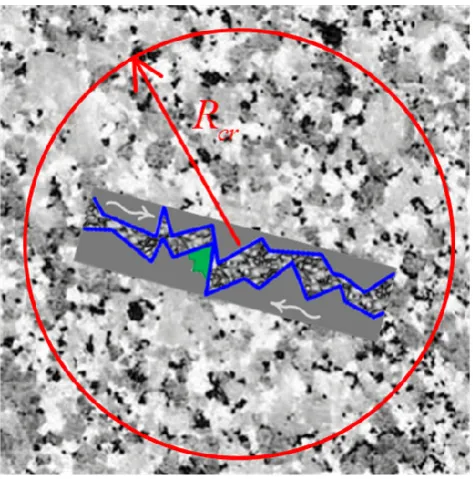
The basic information that guided our thinking was the following well-established evidence. An important feature, observed both at laboratory and geophysical scale, is that fracture-induced MHz radiation consistently precedes the kHz radiation, indicating that these two emissions corre-spond to different characteristic stages of the fracture/EQ preparation process (Kumar and Misra, 2007; Qian et al., 1994; Eftaxias et al., 2002, and references therein; Baddari and Frolov, 2010). It is believed that the crack size varies in inverse proportion to the carrier frequency. Therefore, the transition from the MHz to kHz EME signals the hierarchical development of failure, namely the transition from smaller to larger cracks. As is consistent with this, laboratory experi-ments in the context of mesomechanics support the concept that the MHz and kHz EM modes consecutively observed at the geophysical scale may signalize the transition of plastic flow localization from the mesoscale to the macroscale, cul-minating in global fracture (Eftaxias et al., 2007). Our studies have verified that the MHz and kHz EM physical fields refer to completely different fracture mechanisms. More precisely, we have introduced the following two-stage model (Fig. 1) (Kapiris et al., 2004; Contoyiannis et al., 2005; Contoyiannis and Eftaxias, 2008; Papadimitriou et al., 2008; Eftaxias et al., 2007, 2010; Eftaxias, 2012, and references therein):
1. The initially emerging MHz EM field originates from the cracking in the highly heterogeneous material that surrounds the backbone of asperities, distributed along the stressed fault sustaining the system.
2. The abrupt emergence of strong avalanche-like kHz EME is thought to be due to the fracture of the fam-ily of the asperities themselves.
Fig. 1. A fault (blue lines) is embedded in an heterogeneous
envi-ronment. The EQ preparation process at the first stage concerns an area ofRcrradius around the fault where the heterogeneous media
takes part in the fracture process, emitting MHz EME during the cracking of heterogeneous media. The symmetry breaking signals the transition from the phase of non-directional, almost symmetri-cal, cracking distribution to a directional localized cracking zone along the direction of the fault. The EQ is inevitable if and only when the asperities break (green highlighted area), emitting the kHz EME during the second stage, and then an EME silence follows.
2.1.1 Focus on MHz EM field
be described in analogy with a thermal, continuous, second-order transition in equilibrium. Recently, we have shown that this really happens (Contoyiannis et al., 2005). Moreover, combining ideas of Levy statistics, non-extensive Tsallis sta-tistical mechanics, and criticality with features hidden in the precursory MHz time series, we have shown that a truncated Levy-walk-type mechanism can organize the heterogeneous system to criticality (Contoyiannis and Eftaxias, 2008). We underline that the MHz EM anomaly includes the crucial feature of “symmetry breaking” of critical phenomena. This feature permits the real-time, step-by-step monitoring of the damage evolution of the heterogeneous component in the fo-cal area during mechanifo-cal loading. Indeed, our analysis re-veals the following consecutive rupture process epochs as the EQ approaches (Contoyiannis et al., 2005; Eftaxias, 2012):
i. The critical epoch (critical window) during which the short-range correlations between the opening cracks evolve to long-range ones.
ii. The epoch of the “symmetry breaking” occur-rence, namely the transition from the phase of non-directional, almost symmetrical, cracking distribution to a directional localized cracking zone.
iii. The completion of the “symmetry breaking”. The rup-ture process has been obstructed at the boundary of the backbone of strong asperities. We have proposed that the appearance of a MHz EM anomaly due to its nature is a necessary but not a sufficient requirement for the EQ occurrence. The completion of “symmetry break-ing” simply means that the “siege” of asperities has already been started; that is, the applied stresses have already been focused on them. The abrupt emergence of strong avalanche-like kHz EME activity reveals the fracture of asperities if and when the local stress ex-ceeds their fracture stress.
The aforementioned results not only clearly discriminate the recorded MHz anomalies from the background EM noise but are also consistent with the endorsement of the MHz EM anomaly as reflection of an underlying fracture process of a heterogeneous medium.
2.1.2 Focus on kHz EM field
The notably crucial character of the suggestion that the abrupt emergence of strong avalanche-like kHz EME activ-ity reveals the fracture of asperities distributed along the fault sustaining the system, implying that the occurrence of the ensuing EQ is unavoidable as soon as kHz EMEs have been observed, requires strong support by well-established funda-mental arguments.
Arguments in terms of statistical analysis
First, based on a multidisciplinary statistical analysis, we have shown that the kHz EM time series is characterized by
the following crucial symptoms of an extreme phenomenon (Potirakis et al., 2011, 2012a, b, c; Eftaxias, 2012, and ref-erences therein): (i) high organization or high information content. Tools of information theory, concepts of entropy rooted in the extensive and non-extensive Tsallis statistical mechanics, and measures of complexity have been used in order to identify the aforementioned features (Shannon n-block entropy, Shannon n-n-block entropy per letter, condi-tional entropy, entropy of the source, Kolmogorov–Sinai en-tropy, T enen-tropy, approximate entropy – ApEn, Fisher infor-mation, correlation dimension, R/S analysis, detrended fluc-tuation analysis, fractal dimension, and finally fractal wavelet spectral analysis). (ii) Strong persistency, indicating the pres-ence of a positive feedback mechanism in the underlying fracto-EM mechanism that leads the systems out of equilib-rium. (iii) Absence of any footprint of a second-order transi-tion in equilibrium or truncated Levy-walk-type mechanism. (iv) Existence of a clearly preferred direction of fracture ac-tivities (cf. Fig. 2) (Potirakis et al., 2012b). We note that, according to the description of laboratory experiments and seismicity observations, AE and seismicity hypocenters tend to concentrate close to the nodal plane of a future main rup-ture (Mogi, 1968; Scholz, 1968; Ponomarev et al., 1997). The aforementioned results are consistent with the endorsement of the kHz EM anomaly as reflection of an underlying ex-treme event.
Arguments in terms of universal structural patterns of the fracture process
Nevertheless, from our point of view, even the aforemen-tioned multidisciplinary statistical analysis per se does not link the kHz EM phenomenon with the fracture of asperities. The above-noted statistical results are likely to offer
neces-sary but not sufficient criteria in order to recognize a kHz EM
anomaly as an indicator of the fracture of asperities. The cru-cial question was whether different approaches could provide additional information that would allow for one to accept that the kHz EM anomalies signal the fracture of asperities. The basic information that guided our thinking was the follow-ing well-established evidence: despite the complexity of the fracture process, there are universally holding scaling rela-tions. The aspect of self-affine nature of faulting and fracture is widely documented (Mandelbrot, 1982; Huang and Tur-cotte, 1988; TurTur-cotte, 1997; Sornette, 2000). From our point of view, universal structural patterns of the fracture process should be included in a precursor associated with the fracture of asperities.
We have shown that the above-mentioned requirement is satisfied. Indeed, the following can be referenced:
Fig. 2. (a) The two strong impulsive bursts in the tail of the recorded
pre-seismic kHz EM emission prior to the Athens (Greece) EQ (M=5.9) that occurred on 7 September 1999 (please refer to Fig. 1 in Papadimitriou et al., 2008). For the specific signal excerpt, the EM energy (b), the Fisher information (c), and approximate en-tropy (d) evolutions with time are presented. The colored areas indi-cate the energy, information, and 1-ApEn corresponding to the two bursts. The first (left) burst is responsible for 22 % of the EM en-ergy, 20 % of the Fisher information, and 22 % of the ApEn, while the second (right) for 78, 80, and 78 %, respectively. All graphs are time aligned for direct reference. The time of the EQ occurrence is indicated by the thick vertical red line (Fig 1. in Potirakis et al., 2012b).
direction, we have shown that the populations of the EQs that precede a significant seismic event and oc-cur around its epicenter, and the “fracto-EM EQs” that emerge during the fracture of the population of asper-ities follow the same statistics, namely the relative cu-mulative number of EQs/EM-EQs vs. magnitude, ei-ther in terms of the traditional Gutenberg–Richter law (Kapiris et al., 2004) or by means of a model of EQ dy-namics that is based on first principles of non-extensive statistical mechanics (Papadimitriou et al., 2008; Mi-nadakis et al., 2012a, b). Furthermore, following the above-noted procedure, we have further shown that the activation of a single fault is a magnified self-affine im-age of laboratory seismicity as is observed by AE or EME (Kapiris et al., 2004).
ii. Fracture surfaces have been found to be self-affine following the persistent fractional Brownian motion (fBm) model over a wide range of length scales (Chakrabarti and Benguigui, 1998). It has been proved that the profile of the observed kHz EMEs follows this model (Contoyiannis et al., 2005; Minadakis et al., 2012a).
iii. The roughness of fracture surfaces is quantitatively characterized by the Hurst exponent,H, since the aver-age height differencehy (x)−y (x+L)ibetween two points on a profile increases as a function of their sep-aration,L, likeLH withH∼0.75, weakly dependent on the nature of the material, on the failure mode, and on the spatial scale of fracture (Hansen and Schmit-tbuhl, 2003; Mourot et al., 2006). We have shown that the roughness of the profile of the observed kHz EM anomaly is consistent with the aforementioned univer-salH value (Kapiris et al., 2004; Contoyiannis et al., 2005; Minadakis et al., 2012a).
2.2 Are the AE and EME two sides of the same coin?
The kHz EM emission is consistently launched in the tail of the fracture-induced EME both at the laboratory and the geo-physical scale. Its absence during the EQ occurrence consti-tutes the most enigmatic feature in the study of EM precur-sors because older considerations had led to the erroneous conclusion that there is a contradiction between the labora-tory and the field observed fracture-induced EME concerning the observed kHz EM silence. Indeed, the view up to a few years ago was that the observed AE and EME are two sides of the same coin. On the other hand, laboratory experiments in terms of AE were showing that this emission continues in-creasingly up to the time of the final collapse (Baddari and Frolov, 2010; Baddari et al., 2011; Schiavi et al., 2011). The combination of the above-mentioned information led to the erroneous conclusion that the appearance of kHz EM silence in field observations just before the EQ occurrence is a puz-zling feature in terms of laboratory experiments.
However, recent accumulated laboratory evidence indi-cates that the recorded AE and EME, in general, are not two sides of the same coin. There are two categories of AE signals – namely AE signals that are associated with EME signals, and AE signals that are not associated with EME signals (e.g., Yamada et al., 1989; Rabinovitch et al., 1995; Morgounov, 2001; Mori et al., 1994, 2004a, b, 2006, 2009; Mori and Obata, 2008; Lacidogna et al., 2010; Baddari and Frolov, 2010; Baddari et al., 2011; Carpinteri, 2012). Impor-tantly, laboratory experiments performed recently reveal that the final stage of the failure process coincided in time with the maximum of AE and quiescence in EME, while strong avalanche-like EME precedes this phase (Morgounov, 2001; Baddari et al., 2011). Therefore, the kHz EM silence just be-fore the final collapse is observed both at laboratory and geo-physical scale.
aforementioned laboratory results strongly support the hy-pothesis that, in general, EME and AE represent different phases of the destruction process, and the combination of both emissions is important for the study of failure kinetics.
In the following we attempt to explain the reason that leads to the existence of the above-mentioned two categories of AE signals, namely the AE associated with EME and the AE not associated with EME. We attempt this explanation in terms of (i) the possible mechanism of generation of the observed fracture-induced EME and (ii) the dependence of the sensitivity of the emitted EME to the geometrical mode of the opening crack (shear or tensile), the brittleness in-dex, Young modulus, and strength index of the material. We will see that the observed AE and EME are two sides of the same coin during the opening of tensile cracks in a ma-terial that is characterized by high brittleness index, Young modulus, and strength index. On the contrary, the phases of failure kinetics that are mainly characterized by frictional-noise-type rearrangements due to the frictional slip between the pre-formed fracture structures can be accompanied only by acoustic (EQ) events, and not by EM events (Mori et al., 1994, 2004a, b; Mori and Obata, 2008). Subsequently, we try to tally-correspond the two phases of the emerged strong kHz EME and the kHz EME silence to two distinct, last phases of the EQ preparation process, namely to the fracture of en-tities of high index of strength, bulk modulus, and brittle-ness via the opening of tensile cracks on the one hand, and the frictional-noise-type rearrangements due to the frictional slip between the pre-formed fracture structures that provide a bearing-like “lubrication” mechanism between fault plates on the other hand.
2.2.1 On the origin of the fracture-induced EME
Several atomic models have been put forth to explain the origin of EM emission (Bahat et al., 2002, and references therein). Consider in particular the “movement of charged crack surfaces” (see Sect. II in Contoyiannis et al., 2005, and references therein). In this model, when a crack opens, the rupture of interatomic bonds leads to intense charge separa-tion (Langford et al., 1987; Cress et al., 1987). Direct evi-dence of surface charges of opposite polarity on fresh frac-ture surfaces has been provided by Wolibrandt et al. (1983). Simultaneous measurements of the electron, ion, and pho-ton emission (fracto-emission) accompanying fracture sup-port the hypothesis that charge separation accompanies the formation of fracture surfaces (Langford et al., 1987; Dick-inson et al., 1998; Gonzalez and Pantano, 1990; Miura and Nakayama, 2000; Mizuno and Mizuno, 2002). On the faces of a newly created crack, the electric charges constitute an electric dipole or a multi-pole of higher order, and, due to the crack wall motion, EM radiation is emitted (Mirosh-nichenko and Kuksenko, 1980; Khatiashvili, 1984; O’Keefe and Thiel, 1995; Molchanov and Hayakawa, 1995; Koktavy et al., 2004). Crack motion in fracture dynamics has recently
been shown to be governed by a dynamical instability, which causes oscillations in the crack velocity and structure on the fracture surface. Evidence indicates that the instability mechanism is locally branching; that is, a multi-crack state is formed by repetitive, frustrated micro-fracturing events (Marder and Fineberg, 1996; Sharon and Fineberg, 1999). Laboratory experiments show intense EM fracto-emission during this unstable crack growth (Gonzalez and Pantano, 1990). In this unstable stage we regard the EME from the correlated population of opening cracks as a precursor of the final global instability (Contoyiannis et al., 2005).
If the above-mentioned interpretation is correct, the pro-duction of new fresh surfaces/rupture of bonds, due to crack-ing in the material, constitutes a necessary condition for the generation of EME. Mori and colleagues (Mori et al., 1994, 2004a, b; Mori and Obata, 2008) emphasize that the AE sig-nals that are associated with EME sigsig-nals are generated due to the creation of new fresh surfaces; on the contrary, AE signals that are not associated with EME signals are rooted in frictional noises due to the contact and/or the frictional slip/rolling between the pre-formed fracture surfaces. 2.2.2 On the sensitivity of the fracture-induced EM
anomaly to the geometrical mode of opening cracks
Cracks can appear in solids under stress mainly in two differ-ent geometrical modes: tensile and shear. In the tensile mode, the displacements during the opening of cracks are perpen-dicular to the fracture propagation. Conversely, in the shear mode the displacements are in the same direction as those of the crack propagation. Due to the fact that the tensile fracture mode leads to larger distances between the surface charges compared to the shear mode, it has been proposed that an opening tensile crack behaves as a more efficient EM emitter (e.g., Yamada et al., 1989; Mori and Obata, 2008; Lacidogna et al., 2009, 2010, 2011; Baddari et al., 2011). Of course, the shear source EME should not be omitted; a certain separation between oppositely charged surfaces is guaranteed even in the shear fracture. However, the EME is more sensitive to the generation of tensile cracks than shear cracks (Molchanov and Hayakawa, 1995).
2.2.3 On the sensitivity of the fracture-induced EM anomaly to elastic moduli, index of brittleness, and index of strength
hand, accumulated experimental and theoretical evidence in-dicates that the elastic modulus significantly decreases as damage increases, nearing zero as the global fracture ap-proaches (Lockner and Madden 1991; Guéguen et al., 1997; Lin et al., 2004; Shen and Li, 2004; Amitrano and Helmstet-ter, 2006; Chen, 2012; Chelidze et al., 1988, 1990).
Characteristically, a very important class of models of ma-terial failure is the fiber bundle models (FBMs), which cap-ture the most important aspects of material damage. In the context of the discrete FBM, the stored elastic energy,ef(t ), in a single fiber at the time of failure is given by the formula
ef(t )=VfE0εf2(t ) /2, (1) whereVfis the volume of the fiber,E0is the Young modulus of the fiber, andεf(t )the strain in the fiber at timet (Tur-cotte et al., 2003). Consequently, the elastic energy release should be greatly reduced during the softening mode. Labo-ratory studies show that EM energy release rate has a direct correlation with the elastic strain release rate (Kumar and Misra, 2007; Chauhan and Ashok Misra, 2008). Therefore, it is reasonable to assume that when an element fails during
the softening period, the emitted EM radiation is also greatly
reduced. In summary, the sudden drop of stress just before the shock occurrence of its own accord signals a correspond-ing abrupt decrease in the amount of the elastic/fracto-EM energy that can be released, and finally provides a possible explanation of the observed EME gap.
2.3 Fracture-induced EM anomalies in terms of percolation theory
In the following, we investigate the behavior of the elastic modulus of heterogeneous media during the fracture process and the way that this influences the emission rate of EM ra-diation in terms of percolation theory. Moreover, in the con-text of this theory, we examine the discrimination of different thresholds of concentration of defects in a medium. The first of them could correspond to transfer phenomena and the sub-sequent two of them to different phases of fracture.
2.3.1 On the dependence of the fracture-induced emission pattern on the elastic modulus
It has been shown that the problem of fracture of heteroge-neous media corresponds mathematically to problems of the
percolation theory, which describe quantitatively the
connec-tivity of components in a non-homogeneous system (Che-lidze, 1979, 1980a, b, 1982, 1986, 1987, 1993; Chelidze at al., 2006; Arbadi and Sahimi 1990). It appears that the elas-tic modulus, M, decreases from the initial value for an in-tact lattice over nearly five orders of magnitude according to the expressionM∝M0(x−xcr)−3.6, wherex is the cur-rent concentration of breakages and xcr is the percolation threshold for a given finite system; it has been found that
xcr=0.494. Arbadi and Sahimi (1990) have studied models
of mechanical breakdown in disordered solids by large-scale Monte Carlo simulations. Their results also show that the Young’s modulus Y reduces to zero well before the total breaking of bonds, namely when the fractionp of the un-broken bonds is approximately 0.2 (see Fig. 1 in Arbadi and Sahimi, 1990). A model of elastic wave emission and ampli-tude distribution during the failure has been developed (Che-lidze and Kolesnikov, 1984; Che(Che-lidze 1993) that assumes that the emergence of a new defect is associated with an emis-sion event and that the (conventional) emisemis-sion amplitudeAc generated by each elementary event depends directly on the increment of the size of the resulting defect cluster, induced by this single event,
Ac=A0
k+1
X
i=1
si !2
− k X
i=1
si2
1/2
, (2)
wherek is the number of clusters linked by the elementary defects, si is the number of sites in the i-th merging clus-ter, andA0is a conventional amplitude generated by the nu-cleation act of a single isolated defect. According to Eq. (2) the emission amplitude should increase with approach to the percolation threshold as merging of large clusters generates a larger dynamical event. Numerical experiments show that the amplitude spectrum of the quantity Ac possesses basic characteristics of the AE of fracture, namely the increase in mean amplitude, and the growth of the amplitude dispersion as the percolation threshold is approached (Chelidze, 1986, 1993). On the other hand, inA0we take into account the cur-rent elastic modulusMof the system, so thatA0=f (M), whereM∝(p−pc)α; that is, M and correspondinglyA0 also change with increase of damage p – namely M de-creases according to the power law of Chelidze (1993) andpc is the corresponding percolation threshold. Physical experi-ments involving artificial sequential damaging of the plastic lattice confirm the validity of the expressionM∝(p−pc)α witha= −3.6 (Chelidze et al., 1990).
A theoretical expression for energy emission,1E, at the addition of one damaged site, expressed by means of fun-damental percolation functions, is given in Chelidze (1986), where1E is calculated as a derivative of the mean size of finite clusters,s:
1E= d
dp
X
s
s2ns(p) ,
X
s
sns(p)=p ds(p)
dp +s(p)
=
k+1
X
i=1
si !2
− k X
i=1
si2
!
, (3)
wherens is the number of clusters of size s, and differen-tiating we take into account that the sumP
s
sns(p)=pfor
p < pc.
Forp→pcwe get
whereLR is the average number of cutting (“red”, single) bonds in an incipient infinite cluster (IC) (Chelidze and Kolesnikov 1984). The same approach has been used by Sammis and Sornette (2002), and they obtained similar ex-pressions for1E. In the above treatment the elastic modulus
M of the system was considered as a constant, and thus it was ignored. This is true on the first stage of fracture process when the cracks form relatively small finite clusters, which can be considered as isolated soft inclusions in the (globally) rigid medium. However, when approaching the percolation threshold the elastic modulus depends on the concentration of defectsp.
So the expression for emitted energy forp→pc, taking into account thatMis a function ofp, can be written as
1E≈dM
dp |p−pc|
−(γ+1)≈α|p−p
c|α−1|p−pc|−(γ+1)
≈α|p−pc|α−γ−2. (5) Equation (5) clarifies that the drastic decrease of elastic mod-ulus in the last stage of fracture of a heterogeneous medium can significantly change the emission pattern described by Eq. (2), because the “standard amplitude” A0, which in-cludes the elastic characteristics of media, should also dimin-ish when approaching the percolation threshold. Then, if the decrease ofA0 dominates over the increase of the second (right-hand) factor of Eq. (2) during the final stage of frac-ture, the mean amplitude of emission can even decrease with defect proliferation. This can cause apparent silence before the mechanical collapse.
2.3.2 On the discrimination of thresholds for transport and fracture in terms of percolation theory
The discrimination of thresholds for transport and fracture in terms of percolation theory also offers a quantitative ex-planation of the observed EM silence in various frequency bands. A percolation model, which considers the fracture of heterogeneous media as a critical phenomenon, was sug-gested in 1978 by T. Chelidze (first publications 1979, 1980a, b, 1982), and has been developed in many subse-quent works (see, for example, Herrmann and Roux, 1990). This model predicts the existence of “critical points” or
per-colation transitions in various properties of the material,
when its characteristics change dramatically (Eftaxias and Chelidze, 2005). These transitions (metal–dielectric, gel– sol, permeable–impermeable, consolidated–unconsolidated) are observed for all the so-called generalized conductivities or transport-related properties of materials, which critically depend on the connectivity of transport channels. In many cases, the percolation thresholds for various properties are the same, which means that the corresponding transport pro-cesses have the same geometrical basis. At the same time it is evident that the transition impermeable–permeable does not mean that the three-dimensional (3-D) systems become
mechanically unconsolidated. The transition consolidated– unconsolidated, which allows for the division of the 3-D material into at least two parts demands much larger con-centration of voids. Consequently, the percolation model of fracture is associated with two different thresholds of con-centration of defects,x, namely
i. the “hydraulic threshold”,xc, and
ii. the “mechanical or damage threshold”,xm, where the infinite cluster (IC) is formed, and the solid disinte-grates (Chelidze, 1986).
As a rule, the relationxm> xcholds.
The EQ is considered as a shear displacement along the fault plane. However, a layer of thicknesshof the material should contain the IC. Chelidze (1986) has proposed that the associated problem of shear displacement along the fault can be formulated in terms of mechanical percolation as follow-ing: “find the concentrationxmfat which the flat infinite clus-ter (FIC) of voids (cracks) spanning the layer of thicknessh
would be formed in a 3-D body”. The problem of such an FIC has been solved in the percolation theory (Shklovsky, 1984; Chelidze, 1987). The required critical concentration for the formation of FIC,xmf, is (Chelidze, 1986)
xmf=xm h
1+d (rs/ h)1/ν3 i
> xm, (6) wherersis the mean distance between defects,dis a constant close to unity, and ν3=0.9 for 3-D. The FIC mechanical percolation model is very similar to the well-known physi-cal models of seismic process evolution, namely dilatancy-diffusion and avalanche fracturing models (Mjachkin et al., 1975; Scholz et al, 1973). Based on the above-mentioned considerations, it might be concluded that many transport properties are activated before the collapse of the sample (Pa-terson, 1978; Chelidze, 1986). We note that the hydraulic per-colation thresholds correspond to a critical crack density of about 0.1, while experimental data show that the mechanical threshold is on the order of 1 (Zhang et al., 1994a, b).
3 An explanation of the observed pre-seismic MHz EME silence
In the following, we attempt an explanation of the observed pre-seismic MHz EME silence in terms of the two-stage model, laboratory experimental evidence, and percolation theory as presented in Sect. 2, as well as in terms of the fore-shock activity.
3.1 Arguments by means of the two-stage model of EQ generation
this emission stops well before the EQ occurrence, namely when the fracture of the heterogeneous material that sur-rounds the backbone of asperities distributed along the stressed fault sustaining the system has been completed and the stresses build up up on the family of asperities; the preparing EQ will occur if and when the local stress exceeds the fracture stresses of these strong entities. Accumulated ex-perimental and theoretical evidence support this proposal, as follows.
3.2 Arguments by means of laboratory experiments
Laboratory experiments by means of AE and EME strongly justify the appearance of MHz silence prior to the global failure; the MHz activities are rooted in earlier lower levels of fracture in comparison to that of the kHz activity (Eftax-ias et al., 2002, and references therein; Baddari and Frolov, 2010). Experimental studies by means of mesomechanics (see Sect. 2.1) support the consideration that the MHz activ-ities are launched earlier in comparison to the kHz activactiv-ities (Eftaxias et al., 2007).
3.3 Arguments by means of foreshock activity
We recall that the precursory MHz EM phenomenon can be described in terms of a second-order thermal phase transi-tion in equilibrium. It is reasonable to accept that such a phe-nomenon should be associated with a stage of the EQ prepa-ration process that precedes the final stage of the fracture where the extreme seismic event is formed; it cannot origi-nate from the final stage. Consequently, it might be deduced that the observed pre-seismic MHz EM silence before the seismic shock occurrence reflects a well-established precur-sory feature of the fracture process. However, the foreshock activity and the precursory fracture-induced MHz EM emis-sion constitute two sides of the same coin. A question that logically arises is whether the foreshock activity during the last week before the main shock occurrence also behaves as a critical phenomenon. A recent analysis leads to a positive answer. Based on the recently introduced concept of
natu-ral time (Varotsos et al., 2011), we have proved that
(Poti-rakis et al., 2013) (i) the foreshock seismic activity that oc-curs in the region around the epicenter of the oncoming sig-nificant shock from a few days up to one week before the main shock occurrence and (ii) the observed MHz EM pre-cursor that emerges during the same period both behave as critical phenomena. This result strongly supports the seismo-genic origin of the observed EM precursor, its behavior as a critical phenomenon, and finally the hypothesis that the ob-served MHz EM silence before the global instability occur-rence is an expected and non-puzzling feature in the context of fracture processes.
In the following paragraph we attempt to explain the ob-served MHz EM silence based on the pioneering work of
Chelidze, who first studied the EQ preparation process by means of the percolation theory (Stauffer, 1985).
3.4 Arguments by means of percolation theory
In Sect. 2.3.1 it has been shown by means of fundamen-tal percolation functions that the extreme decrease of elastic modulus when the percolation threshold is approaching di-minishes the fractured-induced AE or EME, causing appar-ent silence before the mechanical collapse of the heteroge-neous medium. We recall that laboratory experiments have shown that an increase of the elastic modulus enhances the AE or EME amplitude (see Sect. 2.2.3), while accumulated experimental and theoretical evidence indicate that the elastic modulus significantly decreases as damage increases, near-ing zero as the global fracture approaches (see Sect. 2.2.3).
Based on this evidence, the appearance of silence in the MHz EM band before the EQ occurrence is an expected fea-ture according to mechanical percolation theory.
4 An explanation of the observed pre-seismic kHz EME silence
Guided by the laboratory results presented in Sect. 2.2 – that (i) there are two categories of AE signals; (ii) an opening tensile crack behaves as a more efficient EM emitter than a shear crack; and (iii) the higher the brittleness index, strength index, and elastic modulus, the stronger the emitted EME – we propose that the consecutively emerging strong impul-sive kHz EME and kHz EM silence represent two different, distinct phases of the destruction process: the fracture of the asperities and the following frictional-noise-type mechanism phase that includes the occurrence of the main seismic event, respectively.
Note that laboratory studies support the aforementioned two-phase proposal. Characteristically, Zhang et al. (2009) have recently presented a physical theory for brittle fail-ure that aims to explain both the phenomenological and mi-crostructural observations. Based on experimental results, the authors conclude that “the localized failure process of rock experiences two stages: the brittle breakage stage (bond
rupture) and the sliding stage (frictional resistance of failure plane mobilization).”
4.1 Focus on the first phase
entities, which can store sufficient stress to produce a rup-ture that will not be easily stopped (Sornette, 1999, and ref-erences therein). On the other hand, the fracture of asperities happens through the opening of tensile cracks. Laboratory studies clearly suggest that the formation of the macroscopic fracture plane is more likely to be the result of a tensile than a shear process (Hallbauer et al., 1973).
Herein we present more evidence associating the observed pre-seismic kHz EME with the fracture of asperities. From experimental studies on the frictional movement between rock surfaces, it is known that when the static friction resis-tance is overcome, the frictional surfaces suddenly slip, lock, and then slip again in a repetitive manner (Matcharashvili et al., 2011). If one asperity fails, the stress is transferred to the adjacent element on which an induced failure could occur. The unstable transition from the static friction to ki-netic one is known as “stick–slip” state; EQs have long been recognized as resulting from a stick–slip frictional instabil-ity (Scholz, 1998). Recent works reveal that stick–slip fric-tion events observed in the laboratory and EQs in continen-tal settings, even with large magnitudes, have similar rup-ture mechanisms (Lockner and Okubo, 1983; McGarr and Fletcher, 2003; McGarr et al., 2010). During the fracture of an asperity a kHz EM avalanche, a “fracto-EM EQ” is emit-ted. The avalanche-like feature of the observed kHz EME ac-tivity is consistent with the suggestion that the population of the observed “fracto-EM EQs” reveal the population of the fractured asperities. We note that the time scale of the final tertiary stage of creep is characterized by an avalanche in the strain rate (Morgounov, 2001) as well.
The fracture of a strong asperity should be accompanied by a sharp drop in stress. Indeed, laboratory studies suggest that the strong avalanche-like EM signals are generated only during sharp drops in stress, while the amplitude of the emit-ted EM fields is proportional to the stress rate (Fukui, 2005; Carpinteri et al., 2011, 2012; Lacidogna et al., 2011). These sharp drops are attributed to a rapid decay of the mechani-cal properties, generated by formation of new micro-cracks during the loading process (Carpinteri et al., 2012).
We reiterate that the pre-seismic kHz EME behaves as a fractal radiation (see Sect. 2.1.2). Muto et al. (2007) con-ducted a friction laboratory experiment simulating the mo-tion of an asperity on a fault plane, and observed photon emissions due to electric discharges by dielectric breakdown of ambient gases from friction contact between rock min-erals. Those authors conclude that the frictional discharge occurring at asperities on the fault plane can be one of the origins of fractal EM radiation observed prior to EQs. 4.2 On the second phase (EM silence)
The herein-examined crucial question is whether, within the context of materials science, mechanisms have been pro-posed that could explain the absence of kHz EM radia-tion just before the EQ occurrence. We argue that such
mechanisms have been proposed, while recent laboratory and numerical experiments fully justify the hypothesis that the emerged silence is the last precursory feature of an imminent significant EQ and not a puzzling feature.
4.2.1 From microscopic to macroscopic mechanics
We propose that the resolution of the enigmatic feature un-der study may be hidden in the resolution of another well-known paradox of EQ dynamics that the geophysicists call
the heat-flow paradox (Anoosherhpoor and Brune, 1994;
Alonso-Marroquin et al., 2006, and references therein). Ac-cording to common sense, when two blocks grind against one another, there should be friction, and that should pro-duce heat. However, measurements of heat flow during EQs are unable to detect the amount of heat predicted by simple frictional models. Calculations using the value of rock fric-tion measured in the laboratory, i.e., a typical fricfric-tion coeffi-cient between 0.6 and 0.9, lead to overestimation of the heat flux. As an example, one refers in this context to the heat-flow observations made around the San Andreas fault, which show that the effective friction coefficient must be around 0.2 or even less (Alonso-Marroquin et al., 2006, and references therein).
cumulative slip but is instead formed by dynamic rock pul-verization during the propagation of a single EQ.
The above-mentioned picture, which refers to the phase that follows the fracture of asperities, seems to justify the ob-served EM silence. As the plates move, the grains can roll on each other as rolling bearings, and thus the resulting defor-mation is not accompanied by significant fracturing, i.e., by formation of new fracture surfaces via the opening of tensile cracks. Such frictional-noise-type rearrangements due to the frictional slip between the pre-formed fracture structures can be accompanied only by acoustic (corresponding to EQ in geophysical scale) events and not by EM events (Mori et al., 1994, 2004a, b; Mori and Obata, 2008). As already noted in Sect. 2.2, laboratory experiments reveal that AE of maximal intensity are recorded directly before and during the frag-mentation of the specimen, while strong avalanche-like EME precedes this phase (Baddari et al., 2011; Morgounov, 2001). Numerical studies support the proposal that the final stage of the failure process is not accompanied by significant frac-turing. Park and Song (2013) have presented a new numeri-cal method for the determination of contact areas of a rock joint under normal and shear loads. They report that “after the peak stage, the contact area ratio decreased rapidly with in-creasing shear displacement, and few inactive elements came into contact until the residual stage. At the residual stage, only small fractions of 0.3 % were involved in the contact”.
As already noted, the efficiency of generating EME is thought to be smaller in shear cracks than in tensile cracks. Yamada et al. (1989) conclude that “the final main shock is considered to be a result of shear faulting, which may occur by connecting numerous cracks produced previously”, while Stanchits et al. (2006) conclude that close to failure the rela-tive contribution of tensile events decreased. A concomitant increase of double-couple events indicating shear suggests that shear cracks connect previously formed tensile cracks. Therefore, it is reasonable to expect that the anomalous EME will be observed only before an EQ but not during the main shock (Yamada et al., 1989). According to Benioff (1951), creep may be purely compressional, purely shearing, or a combination of two. In the last case, the compressional phase occurs first. Importantly, the author proposes that the shear-ing phase follows an interval of 0.01–2.4 days. This time window is in agreement with the observed duration of the kHz EM gap.
5 Interpretation of the sequential appearance of the ULF-MHz-kHz precursors in terms of percolation theory of fracture
It must be mentioned here that well-established direct cur-rent (DC) ultra low frequency (ULF) EM precursors (<1 Hz) have been observed to appear earlier than the MHz and kHz ones. Their lead time extends up to three months before the EQ occurrence (Varotsos, 2005; Molchanov and Hayakawa,
2008). In this section we try to explain why the DC-ULF, MHz, and kHz EM anomalies appear one after the other and thus why the DC-ULF EM precursors are also absent dur-ing the EQ occurrence. The relevant arguments are based on the discrimination of thresholds for transport and fracture in terms of percolation theory (see Sect. 2.3.2).
It is reasonable to assume that the various short-lived EM pre-seismic anomalies should be observed with the following order of time: (i) first, precursory phenomena associated with
transport properties appear well before the collapse. (ii)
Sec-ond, fracture-induced precursory phenomena associated with the formation of the IC are launched. The MHz EM activity is such a phenomenon. It might be considered that the pre-cursory MHz EME, which is emitted during the last week before the shock occurrence, is associated with the mechan-ical thresholdxm, namely with the formation of flat cluster of thicknessh. During this formation, the fracture or grind-ing of weak heterogeneous material distributed around the main fault emits the antipersistent MHz radiation. Its behav-ior as a second-order phase transition as well as the observed
symmetry breaking during the temporal evolution of this
ra-diation strongly support the aforementioned hypothesis, es-pecially the association of the MHz precursor with the for-mation of flat cluster. (iii) Third, the fracture-induced precur-sory phenomena rooted in the formation of the FIC emerge. The kHz EME is such a phenomenon. The observed persis-tent kHz EM activity from a few tens of hours up to a few minutes before the EQ occurrence might emerge around the critical mechanical thresholdxmf, i.e., during the fracture of high strength and brittle asperities sustaining the system.
not observed in partially saturated disperse systems. A re-cent work (Surkov et al., 2002) strongly supports the above-mentioned hypothesis. Electrokinetic effects possibly associ-ated with the EQ preparation process have been theoretically investigated under the assumption that the structure of pore space around a hypocentral zone has fractal properties. This study verifies well-established experimental results – namely the predicted dependence of the electrical anomalies ampli-tudeE on the EQ magnitude, the weak values of magnetic variations at far distances, and the presence of highly con-ductive channel(s) between the source and observation in or-der for the precursory electrical anomalies to be detectable. We note that, as the electrokinetic processes are relatively slow, their contribution to higher frequency bands is negligi-ble; the electrokinetic phenomena decay at high frequencies. On the other hand, direct EM emissions at high frequencies are not detectable at this stage of fracture, as the concentra-tion of cracks at hydraulic threshold is very small, while their orientation is random and the emitted EM fields cancel each other.
6 Discussion and conclusions
In this work we studied a paradox associated with a series of different EM seismic precursors ranging from DC to MHz frequency bands, namely their observed silence before the main seismic shock occurrence. We conclude that the con-sidered puzzling features of the MHz–kHz fracture-induced EME are well-justified features and not paradoxical ones if we employ for their resolution a two-stage model for the EQ generation process and the percolation theory of frac-ture. Moreover, the silence of DC-ULF precursors is also ex-plained based on percolation theory and the hypothesis that they are generated due to the electrokinetic phenomenon. Well-established concepts of the rupture process – in terms of universal structural patterns of the fracture process; recent laboratory experiments that prove that AE and EME, in gen-eral, are not the two sides of the same coin; numerical and theoretical studies of fracture dynamics; the behavior of the elastic modulus of heterogeneous media during the fracture process; the discrimination of different thresholds of con-centration of defects in a medium; critical phenomena; and micro-mechanics of granular materials – support the above conclusion. We underline that the EM silence before an EQ is not a puzzling but an expected feature.
In this contribution, we have based our analysis on the two-stage model for fracture-induced EME presented in Sect. 2, and we have presented much strong evidence that supports the specific hypothesis. However, it should be noted that other hypotheses for the origin of the observed pre-EQ EME have also been expressed that do not agree with the hy-pothesis of fracture-induced EME. For example, it has been proposed that pre-EQ EME originate from discharges in the atmosphere modified by the pre-EQ effects (e.g., Sorokin et
al., 2011). Which hypothesis is true will be proved in the fu-ture, as the corresponding research evolves.
A crucial question arises immediately after the occurrence of a significant EQ referring to whether the EQ that occurred was the main shock or a foreshock of an ensuing larger EQ.
AE and EME studies of cracking in rocks have demon-strated that, in general, during cyclic loading, the level of AE and EME increases significantly when the stress ex-ceeds the maximum previously reached stress level (Khati-ashvili, 1984; Chelidze, 1986, and references therein; Li and Nordlund, 1993; Lavrov, 2005, and references therein; Mori and Obata, 2008; Mavromatou et al., 2008; Shkuratnik and Lavrov, 2002). This phenomenon was first reported in met-als (Kaiser, 1953) and is now known as the Kaiser “stress-memory” effect. If we accept that the EME Kaiser effect is extended to the geological scale, then we suggest the follow-ing hypothesis should be thoroughly investigated in the fu-ture:
An observed continuous absence of fracture-induced MHz–kHz EME after the occurrence of a significant EQ im-plies that the launched significant EQ was the main shock. If a new MHz–kHz EME sequence emerges during a time pe-riod of a few tens of hours after the already occurred signif-icant EQ, this means that a new signifsignif-icant EQ is preparing, however in a new undamaged region of the Earth’s crust out of the fractured region of the already occurred EQ.
Acknowledgements. Research co-funded by the EU (European
Social Fund) and national funds, action “Archimedes III-Funding of research groups in T.E.I.”, under the Operational Programme “Education and Lifelong Learning 2007–2013”.
Edited by: D. Keefer
Reviewed by: K. Baddari and three anonymous referees
References
Allegre, C., Le Mouell, J., and Provost, A.: Scaling rules in rock fracture and possible implications for earthquake prediction, Na-ture, 297, 47–49, 1982.
Alonso-Marroquin, F., Vardoulakis, I., Herrmann, H., Weatherley, D., and Mora, P.: Effect of rolling on dissipation in fault gouges, Phys. Rev. E, 74, 031306, 10 pp., 2006.
Amitrano, D. and Helmstetter, A.: Brittle creep, damage, and time to failure in rocks, J. Geophys. Res., 111, B11201, doi:10.1029/2005JB004252, 2006.
Anoosherhpoor, A. and Brune, J.: Frictional heat generation and seismic radiation in a foam rubber model of earthquakes, Pure Appl. Geophys., 142, 735–747, 1994.
Arbadi, S. and Sahimi, M.: Test of universality for three-dimensional models of mechanical breakdown in disordered solids, Phys. Rev. B, 41, 772–775, 1990.
Baddari, K. and Frolov, A.: Regularities in discrete hierarchy seismo-acoustic mode in a geophysical field, Ann. Geophys.-Italy, 53, 31–42, 2010.
Baddari, K., Sobolev, G. A., Frolov, A. D., and Ponomarev, A. V.: An integrated study of physical precursors of failure in relation to earthquake prediction, using large scale rock blocks, Ann. Geophys.-Italy, 42, 771–787, doi:10.4401/ag-3758, 1999. Baddari, K., Frolov, A., Tourtchine, V., and Rahmoune, F.: An
in-tegrated study of the dynamics of electromagnetic and acous-tic regimes during failure of complex macrosystems using rock blocks, Rock Mech. Rock Eng., 44, 269–280, 2011.
Bahat, D., Frid, V., Rabinovitch, A., and Palchik, V.: Exploration via electromagnetic radiation and fractographic methods of frac-ture properties induced by compression in glass-ceramic, Int. J. Fracture, 116, 179–194, 2002.
Mahmoodi Baram, R., Herrmann, H. J., and Rivier, N.: Space-filling bear- ing in three dimensions, Phys. Rev. Lett., 92, 044301, doi:10.1103/PhysRevLett.92.044301, 2004.
Benioff, H.: Earthquakes and rock creep, Part I: Creep characteris-tics of rocks and the origin of aftershocks, B. Seismol. Soc. Am., 41, 31–62, 1951.
Bowman, D., Ouillon, G., Sammis. C., Sornette, A., and Sornette, D.: An observational test of the critical earthquake concept, J. Geophys. Res., 103, 24359–24372, doi:10.1029/98JB00792, 1998.
Buchel, A. and Sethna, J. P.: Statistical mechanics of cracks: Fluctu-ations, breakdown, and asymptotics of elastic theory, Phys. Rev. E, 55, 7669–7690, 1997.
Carpinteri, A.: Mechanical Damage and Crack Growth in Concrete: Plastic Collapse to Brittle Fracture, Martinus Nijhoff Publishers, Dordrecht, 1986.
Carpinteri, A.: Cusp catastrophe interpretation of fracture instabil-ity, J. Mech. Phys. Solids, 37, 567–582, 1989.
Carpinteri, A.: A catastrophe theory approach to fracture mechan-ics, Int. J. Fracture, 44, 57–69, 1990.
Carpinteri, A.: Scaling laws and renormalization groups for strength and toughness of disordered Materials, Int. J. Solids Struct., 31, 291–302, 1994.
Carpinteri, A., Cornetti, P., and Sapora, A.: Brittle failures at rounded V-notches: a finite fracture mechanics approach, Int. J. Fracture, 172, 1–8, 2011.
Carpinteri, A., Lacidogna, G., Manuello, A., Niccolini, G., Schi-avi, A., and Agosto, A.: Mechanical and electromagnetic emis-sions related to stress-induced cracks, Exp. Techniques, 36, 53– 64, doi:10.1111/j.1747-1567.2011.00709.x, 2012.
Chakrabarti, B. and Benguigui, L., Statistical Physics of Fracture and Breakdown in Disordered Systems, Oxford University Press, Oxford, 1998.
Chauhan, V. and Ashok Misra: Effects of strain rate and elevated temperature of electromagnetic radiation emission during plastic deformation and crack propagation in ASTM B 265 grade 2 Tita-nium sheets, J. Mater. Sci., 43, 5634–5643, doi:10.1007/s10853-008-2590-5, 2008.
Chen, Y. Z.: A novel solution for effective elastic moduli of 2D cracked medium, Eng. Fract. Mech., 84, 123–131, 2012. Chelidze, T. L.: Percolation model of fracture of solids and
earth-quake prediction, Reports of Acad. Sci. USSR, 246, 51–54, 1979 (in Russian).
Chelidze, T.: Theory of percolation and fracture of rocks, in: Proc. of VI All Union Conf. on Mech. of Rocks, Frunze, 1978, 107– 117, 1980b (in Russian).
Chelidze, T.: Percolation Theory in Mechanics of Geomaterials, Nauka, Moscow, 273 pp., 1987 (in Russian).
Chelidze, T.: Fractal damage mechanics of geomaterials, Terra Nova, 5, 421–437, doi:10.1111/j.1365-3121.1993.tb00280.x, 1993.
Chelidze, T., Reusche, T., Darot, M., and Gueguen, Y.: On the elastic properties of depleted refilled solids near perco-lation, J. Phys. C Solid State, 21, L1007, doi:10.1088/0022-3719/21/30/001, 1988.
Chelidze, T., Kolesnikov, Yu., and Matcharaahvili, T.: Seismolog-ical critSeismolog-icality concept and percolation model of fracture, Geo-phys. J. Int., 164, 125–136, 2006.
Chelidze, T. L.: The model of fracture process of solids, Solid State Phys., Moscow, 22, 2865–2866, 1980a.
Chelidze, T. L.: Percolation and fracture, Phys. Earth Planet. In., 28, 93–101, doi:10.1016/0031-9201(82)90075-9, 1982.
Chelidze, T. L.: Percolation theory as a tool for imitation of frac-ture process in rocks, Pure Appl. Geophys., 124, 731–748, doi:10.1007/BF00879607, 1986.
Chelidze, T. L. and Kolesnikov, Yu. M.: On the physical interpreta-tion of a transiinterpreta-tional amplitude in percolainterpreta-tion theory, J. Phys. A., 17, L791, doi:10.1088/0305-4470/17/14/012, 1984.
Chelidze, T. L, Spetzler, H., Getting, I. C., and Avaliani, Z. A.: Ex-perimental investigation of the elastic modulus of a fractal system – A model of fractured rock, Pure Appl. Geophys., 134, 31–43, doi:10.1007/BF00878078, 1990.
Cicerone, R. D., Ebel, J. E., and Britton, J.: A systematic compi-lation of earthquake precursors, Tectonophysics, 476, 371–396, 2009.
Contoyiannis, Y. F. and Eftaxias, K.: Tsallis and Levy statistics in the preparation of an earthquake, Nonlin. Processes Geophys., 15, 379–388, doi:10.5194/npg-15-379-2008, 2008.
Contoyiannis, Y., Kapiris, P., and Eftaxias, K.: A monitoring of a pre-seismic phase from its electromagnetic precursors, Phys. Rev. E, 71, 061123, 14 pp., 2005.
Cress, G., Brady, B., and Rowell, G.: Sources of electromagnetic ra-diation from fracture of rock samples in the laboratory, Geophys. Res. Lett., 14, 331–334, 1987.
Davidsen, J. and Schuster, H. G.: Simple model for 1 /fα noise, Phys. Rev. E, 65, 026120, 4 pp., doi:10.1103/PhysRevE.65.026120, 2002.
Dickinson, J. T., Langford, S. C., Jensen, L. C., McVay, G. L., Kelso, J. F., and Pantano, C. G.: Fractoemission from fused silica sodium silicate glasses, J. Vac. Sci. Technol. A, 6, 1084–1089, doi:10.1116/1.575646, 1998.
Diodati, P., Marchesony, F., and Piazza, S.: Acoustic emission from volcanic rocks: an example of self-organized criticality, Phys. Rev. Lett., 67, 2239–2249, 1991.
Eftaxias, K.: Are there pre-Seismic electromagnetic precursors? A multidisciplinary approach, in: Earthquake Research and Anal-ysis – Statistical Studies, Observations and Planning, InTech, Chapter 11, 217–246, doi:10.5772/28069, 2012.
Eftaxias, K., Kapiris, P., Dologlou, E., Kopanas, J., Bogris, N., Antonopoulos, G., Peratzakis, A., and Hadjicontis, V.: EM anomalies before the Kozani earthquake: A study of their be-havior through laboratory experiments, Geophys. Res. Lett., 29, 69-1–69-4, doi:10.1029/2001GL013786, 2002.
Eftaxias, K., Kapiris, P., Polygiannakis, J., Peratzakis, A., Kopanas, J., Antonopoulos, G., and Rigas, D.: Experience of short term earthquake precursors with VLF-VHF electromag-netic emissions, Nat. Hazards Earth Syst. Sci., 3, 217–228, doi:10.5194/nhess-3-217-2003, 2003.
Eftaxias, K., Sgrigna, V., and Chelidze, T. (Eds): Mechanical and electromagnetic phenomena accompanying preseismic deforma-tion: From laboratory to geophysical scale, Tectonophysics, 431, 1–5, doi:10.1016/j.tecto.2006.10.001, 2007.
Eftaxias, K., Athanasopoulou, L., Balasis, G., Kalimeri, M., Nikolopoulos, S., Contoyiannis, Y., Kopanas, J., Antonopou-los, G., and Nomicos, C.: Unfolding the procedure of char-acterizing recorded ultra low frequency, kHZ and MHz elec-tromagetic anomalies prior to the L’Aquila earthquake as pre-seismic ones – Part 1, Nat. Hazards Earth Syst. Sci., 9, 1953– 1971, doi:10.5194/nhess-9-1953-2009, 2009.
Eftaxias, K., Balasis, G., Contoyiannis, Y., Papadimitriou, C., Kalimeri, M., Athanasopoulou, L., Nikolopoulos, S., Kopanas, J., Antonopoulos, G., and Nomicos, C.: Unfolding the procedure of characterizing recorded ultra low frequency, kHZ and MHz electromagnetic anomalies prior to the L’Aquila earthquake as pre-seismic ones – Part 2, Nat. Hazards Earth Syst. Sci., 10, 275– 294, doi:10.5194/nhess-10-275-2010, 2010.
Eftaxias, K., Maggipinto, T., Meister, C.-V., and Katz, O. (Eds): Progress in the research on earthquakes precursors, Special Issue, Nat. Hazards Earth, Syst. Sci., http://www. nat-hazards-earth-syst-sci.net/special_issue125.html, 2011. Frid, V., Rabinovitch, A., and Bahat, D.: Electromagnetic radiation
associated with induced triaxial fracture in granite, Phil. Mag. Lett., 79, 79–86, 1999.
Frid, V., Bahat, D., Goldbaum, J., and Rabinovitch, A.: Experimen-tal and theoretical investigation of electromagnetic radiation in-duced by rock fracture, Israel J. Earth Sci., 49, 9–19, 2000. Fukui, K., Ocubo, S., and Terashima, T.: Electromagnetic Radiation
from rock during uniaxial compression testing: the effects of rock characteristics and test conditions, Rock Mech. Rock Eng., 38, 411–423, 2005.
Gabrielov, A., Newman, W. I., and Turcotte, D. L.: An exactly soluble hierarchical clustering model: inverse cascades, self-similarity, and scaling, Phys. Rev. E, 60, 5293–5300, 1999. Geller, R., Jackson, D., Kagan, Y., and Mulargia, F.: Earthquakes
cannot be predicted, Science, 275, 1616–1617, 1997.
Gluzman, S. and Sornette, D.: Self-consistent theory of rupture by progressive diffuse damage, Phys. Rev. E, 63, 066129, 11 pp., 2001.
Gokhberg, M., Morgounov, V., and Pokhotelov, Q.: Earthquake Prediction. Seismo-electromagnetic Phenomena, Gordon and Breach Science Publishers, Amsterdam, 1995.
Gol’d, R. M., Markov, G. P., and Mogila, P. G.: Pulsed electro-magnetic radiation of minerals and rock subjected to mechanical loading, Izv.-Phys. Solid Earth, 7, 109–111, 1975.
Gonzalez, A. and Pantano, C.: Fractoemission during crack propa-gation in glass, Appl. Phys. Lett., 57, 246–248, 1990.
Guarino, A., Ciliberto, S., Garcimartin, A., Zei, M., and Scorretti, R.: Failure time and critical behaviour of fracture precursors in heterogeneous materials, Eur. Phys. J. B, 26, 141–151, 2002. Guéguen, Y., Chelidze, T., and Le Ravalec, M.: Microstructures,
percolation thresholds, and rock physical properties, Tectono-physics, 279, 23–35, 1997.
Hallbauer, D. K., Wagner, H., and Cook, N. G. W.: Some ob-servations concerning the microscopic and mechanical be-haviour of quartzite specimens in stiff, triaxial compression tests, Int. J. Rock Mech. Min., 10, 713–726, doi:10.1016/0148-9062(73)90015-6, 1973.
Hansen, A. and Schmittbuhl, J.: Origin of the universal roughness exponent of brittle fracture surfaces:stress-weighted percolation in the damage zone, Phys. Rev. Lett., 90, 45504–45507, 2003. Hayakawa, M.: Atmospheric and Ionospheric Electromagnetic
Phe-nomena Associated with Earthquakes, Terrapub, Tokyo, 1999. Hayakawa, M. (Ed.): Electromagnetic Phenomena Associated with
Earthquakes, Transworld Research Network, Trivandrum 695 023 Kerala, India, 2009.
Hayakawa, M. and Fujinawa, Y.: Electromagnetic Phenomena Re-lated to Earthquake Prediction, Terrapub, Tokyo, 1994. Hayakawa, M. and Hobara, Y.: Current status of
seismo-electromagnetics for short-term earthquake prediction, Geomatics, Natural Hazards and Risk, 1, 115–155, doi:10.1080/19475705.2010.486933, 2010.
Hayakawa, M. and Molchanov, O. (Eds): Seismo Electromagnet-ics, Lithosphere-Atmosphere-Ionosphere Couplimg, Terrapub, Tokyo, 2002.
Herrmann, H. and Roux, S.: Statistical Models for Fracture of Dis-ordered Media, Elsevier, Amsterdam, 1990.
Herrmann, H., Astrom, J., and Baram, R.: Rotations in shear bands and polydisperse packing, Physica A, 344, 516–522, 2004. Huang, J. and Turcotte, D.: Fractal distributions of stress and
strength and variations of b-value, Earth Planet. Sc. Lett., 91, 223–230, 1988.
Hudson, J. A., Crouch, S. L., and Fairhurst, C.: Soft, stiff and servo-controlled testing machines: A review with reference to rock fail-ure, Eng. Geol., 6, 155–189, 1972.
Kaiser, J.: Erkenntnisse und Folgerungen aus der Messung von Geräuschen bei Zugbeanspruchung von metallischen Werkstof-fen, Verlag Stahleisen, Archiv für das Eisenhüttenwesen, 24, 43– 45, 1953 (in German).
Kapiris, P. G., Eftaxias, K. A., and Chelidze, T. L.: Electromagnetic signature of prefracture criticality in heterogeneous media, Phys. Rev. Lett., 92, 065702, doi:10.1103/PhysRevLett.92.065702, 2004.
Khatiashvili, N.: The electromagnetic effect accompanying the frac-turing of alcaline-halide crystals and rocks, Izv.-Phys. Solid Earth, 20, 656–661, 1984.
Koktavy, P., Pavelka, J., and Sikula, J.: Characterization of acoustic and electromagnetic emission sources, Meas. Sci. Technol., 15, 973–977, 2004.
Kossobokov, V. G.: Testing earthquake prediction methods: “the West Pacific short-term forecast of earthquakes with magnitude MwHRV≥5.8”, Tectonophysics, 413, 25–31, doi:10.1016/j.tecto.2005.10.006, 2006.