Studies on Mechanical Properties of Mica Filled Polyphenylene Oxide Composite
with Coupling Agent
R.S.N.Sahai
1and Neha Pawar
21Department of General Engineering, Institute of Chemical Technology, Mumbai, India. 2Department of General Engineering, Institute of Chemical Technology, Mumbai, India.
Article Received: 24 July 2017 Article Accepted: 19 August 2017 Article Published: 22 August 2017
1.INTRODUCTION
Polyphenylene Oxide is an amorphous high-performance plastic. The main objective of this research is to improve the mechanical properties of PPO mainly used in automotive industries and household application. Mica is very cheap and it saves final cost of the composite. Because of their perfect cleavage, flexibility and elasticity, infusibility, low thermal and electrical conductivity, and high dielectric strength it is widely used as filler in polymers.
A. Tripathi et.al. [1] Studied effect of Particle Size and Concentration on Mechanical and Electrical Properties of the Mica Filled PVC .They found addition of mica in polymer composite materials shows significant improvement in dielectric properties of the plastics. These changes in the electrical properties of the mica filled polymer composites make them suitable for their use in electrical insulation applications on large extent. A,Wambach et.al. [2] studied the fracture properties of glass filled polyphenylene oxide composites. They found that with improve adhesion and increase in filler concentration there is decrease in fracture toughness. In general decrease in toughness is accompanied with increase in strength and stiffness. C.J.R. Verbeek [3] studied the mica as reinforcing filler in the polymer industry mainly because of the two-dimensional isotropic nature of reinforcement. Phlogopite linear low-density polyethylene LLDPE Composites containing20% and less LLDPE were manufactured to yield a composite with an application are similar to wood composites. The outstanding fire, chemical and heat resistance of phlogopite makes it especially suitable for this application. C.R.G. Furtado et.al. [4], studied the mechanical properties of mica–silica–SBR (styrene butadiene rubber) compositions. They observed that addition of mica does not result in any change in tensile strength, elongation at break and tear strength. However it has positive contribution on modulus. Enhancement in silica-rubber interaction is observed with addition of silane coupling agent. Addition of mica resulted in adverse effect on fatigue life of
silica filled elastomeric compound. Daoji Gan et.al [5], studied the properties of poly (ether ketone ketone) (PEKK) composites filled with mica which were developed using sulfonated poly (ether ketone ketone) (S-PEKK) as an interfacial modifier. Compared to PEKK, significantly improved mechanical properties were observed for the composite materials. The content of mica incomposites also affects the friction behavior of these materials. Fenton, Malcom, Hawley et.al. [6] studied that mica agglomeration; distribution, Wetting and adhesion with polymer resin determine the composite properties. Upgrading mica by increasing aspect ratio and coupling efficiency and combining mica with other fibers can improve the reinforcing effect of the composites. Hong Jae Lee et.al. [7] Studied the Modification of Hydroxyapatite Nanosurfaces for Enhanced Colloidal Stability and Improved Interfacial Adhesion in Nanocomposites. Glass beads were modified with vinyl triethoxyl silane (VTES) followed by in situ copolymerization with styrene (St) and by direct modification with St via in situ polymerization. It was seen that the presence of glass beads did not inhibit the polymerization of St, and FT-IR spectra confirmed that the polystyrene (PS) molecules were grafted on the surfaces of glass beads. When the modified glass beads were filled in a polyphenylene oxide (PPO) matrix, the PS segments on the surfaces of glass beads clearly improved compatibility and enhanced interfacial adhesion between the PPO matrix and glass beads, which was responsible for the slightly increased glass transition temperature of the PPO component. Surface modifications, especially by in situ copolymerization of VTES and St, increased significantly notch impact strengths and marginal stiffness and tensile strengths of PPO/glass bead composites. Jin Huang et.al [8] studied the mica-filled polypropylene (PP)-based GMT. (PP–mica–GMT) was prepared by a double-belt press and its mechanical properties were tested. The effect of the mica content on the mechanical properties of PP–mica–GMT was investigated. It was found that with lower mica content in matrix the tensile and flexural A B S T R A C T
In the present research work mica filled Polyphenylene oxide composites of different concentrations were prepared using untreated and surface treated mica and with coupling agent. Mica filled Polyphenylene oxide composites were compounded in twin screw extruder for various compositions (5% to 25%) and test samples were prepared using compression moulding process. These samples were tested for mechanical properties. There is a reduction in Melt flow index, Impact Strength, Tensile strength and Elongation. The result shows enhancement in Flexural Strength and Flexural Modulus. The improvement in mechanical properties is seen when mica is treated with N-(2-Aminoethyl)-3-aminopropyltrimethoxysilane as compared to untreated Mica filled PPO composites. Scanning electron microscopy was used to test the morphology of the samples which has shown proper distributions and adhesion of the filler mica in PPO matrix when Mica is treated with coupling agent.
properties were improved; however, at a high mica content level, the tensile and flexural properties decreased. With respect to the impact strength, there is a maximum value at an approximate 20 wt % mica content level. These results were attributed to the influence of mica on fiber–matrix adhesion. It is most likely that low mica content enhances fiber–matrix adhesion; however, high mica content is unfavorable to fiber–matrix adhesion. Maleic anhydride-grafted PP (MPP) was used to enhance the fiber–matrix adhesion at a higher mica loading level for PP–mica–GMT. With increasing MPP content in the matrix, the tensile properties were significantly improved, whereas the Izod impact strength decreased. In addition, with 5 wt % MPP and 40 wt % mica in the PP matrix formulation, the effect of the mica particle size and glass fiber content on the mechanical properties of PP–mica–GMT was investigated.
Myung Wook Kim et.al [9], studied the mechanical and thermal properties of poly (lactic acid) (PLA)/mica and poly (butylenes terephthalate) (PBT)/mica composites with a coupling agent. They found improvement in thermo resistance of the crystallized PLA/mica composite. Studies by P.Bajaj et al [10], revealed that mica filled composite sheets can utilize the planner reinforcing properties of mica, although other fabrication techniques are also used in fabrication of part of these composite. Use of mica as a filler in composite leads to initial breakage and delamination of its particles during processing, changing its size significantly influence the final properties of the composites.
Gupta et al [11] has found in their studies that microcracks resulted from internal stresses of mica filled composites have adequate strength and electrical properties. High modulus mica fillers do not distort during cooling of the composite and consequently leads to brittle matrix cracks. These microcracks in composite materials arise mainly from debonding of the Interface between mica and resin. It has been found that dimensional stability of the mica filled composites were more compared to wood and glass filled composites.
Sahai et al [12] studied mechanical properties of fly ash filled polyphenylene oxide composite with and without coupling agent. They found with the addition of fly ash as filler flexure strength and modulus increases but tensile strength, melt flow index and impact strength decreases. Silane coupling agent treated fly ash shows some improvement in impact strength as compared to untreated fly ash filled PPO composite.
2. EXPERIMENT
Materials
Polyphenylene Oxide of grade Noryl n110 for the project is obtained from General Electrical, USA. Mica is obtained from Hindustan mineral, Private Ltd, Mumbai. The particle size used for the experiment was 37μ.Silanecoupling agent was obtained from Aldrich chemistry, Dow corning corporation, USA.
Compounding Preheating
Mica was preheated in an oven at the temperature of 100°C for a 1 hour. It removes the residual moisture from the mica.
Applying silane coupling agent o the filler
Deposition from aqueous alcohol solutions is the most facile method for preparing silylated surfaces. A 95% ethanol – 5% water solution was adjusted to pH 4.5 – 5.5 with acetic acid. Silane was added with stirring to yield a 2% final concentration. Five minutes were allowed for hydrolysis and silanol formation. Filler was silylated by stirring them in solution for 2 – 3 minutes and then cure of the mixture was done at 100°C for 1 hour.
Mixing
Mixing was done in tumbler mixer at the different proportion of mica (coupling agent treated and untreated) with PPO for 5 minutes in Tumbler mixer.
Melt blending
The pre dried raw materials are dry blended in the require ratio (5,10,15,20,25 wt % of mica ) in twine screw extruder which is counter rotating with 16mm diameter and L/D ratio 25:1.The processing parameter and temperatures of extrusion moulding are given in Table 7.
Pelletization
The extrudate material which is mica filled PPO composite is pelletize using Boolani pelletizer. The rpm of the pelletizer was maintained between the ranges of 30-40 rpm.
Compression Molding
Compression moulding was done in to make a sheet of composite which is (180x180x2). For compression Teflon sheets were used. The material was placed in between two Teflon sheets in mould and mould is closed. The specimens were cut for the tensile molding as per the ASTM D1238, for the flexural test as per the ASTM D790M -92 and for the impact testing as per the ASTM D256. MFI of virgin polymer and composites is determined out by extrusion plastometer using melt flow index tester (Davenport, UK) according to ASTM D258. Tensile strength of was evaluated according to ASTM D638 using universal tensile tester LR50K (Lloyd instrument ltd.UK). The flexural strength and flexural modulus were measured using universal testing machine (LR50K, Lloyd instruments UK) according to ASTM D790 .Impact strength was measured using Avery Denison’s pendulum type Impact Strength Tester, (Model 6790).
3. RESULT and DISCUSSION
MELT FLOW INDEX
Table 1 presents variation in the melt flow index of untreated mica filled PPOcomposites. It is seen that melt flow index of mica filled Polyphenylene oxide decreases with increase in filler loading. At lower concentration may be due to interaction between filler and polymer and agglomeration of particles is low, thereby no restriction to polymer chains to flow, whereas at higher concentration there is increase in restriction of flow occurs, which decreases MFI of polymer. The trend in variation in melt flow index of untreated mica filled Polyphenylene oxide composite is shown in figure 1.
increase in adhesion between polymer and mica reduced the agglomeration of particles, resulting in less restricted flow of polymer composite. The trend in variation in melt flow index of coupling agent treated mica filled polyphenylene oxide composite is shown in figureImpact strength.
.
Figure 1Variation of M.F.I of untreated and treated mica filled Polyphenylene oxide composite
Figure 2 Variation of the Impact strength of Mica filled Polyphenylene Oxide composite
Table 2 presents the variation in the impact strength of untreated mica filled polyphenylene oxide composite. The variation in impact strength of Polyphenylene oxide mica composite supports the influence of platy structure of filler on impact strength of composite. The variation in impact strength at higher filler loading is, due to insufficient availability of matrix for filler matrix interaction, thereby impact strength reduce with higher concentration, with ought influencing the increment in stress bearing capacity structure
of filler. It is seen that impact strength decreases with increase in filler percents, at 15% loading it decrease drastically, whereas at 20% and 25% it is very low. The trend in variation in Impact strength of untreated mica filled polyphenylene oxide composite is shown in figure 2. Improvement is seen because of good adhesion between mica and PPO which improves the impact strength of composite. The trend in variation in Impact strength of coupling agent treated mica filled polyphenylene oxide composite is shown in figure 2.
Flexural Strength
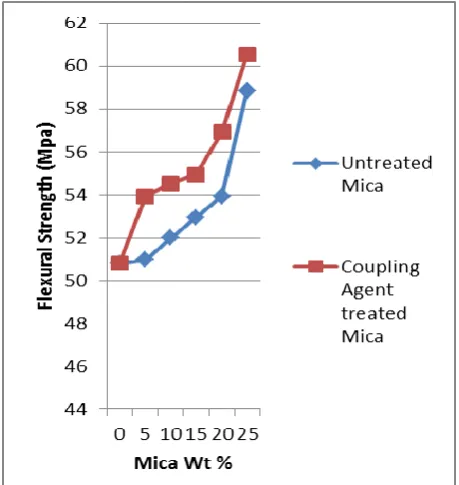
Table 3 presents the variation in flexural strength of mica filled polyphenylene oxide composite. It is seen that the value of flexural strength increases with increase in filler concentration. The trend in variation in Flexural strength of untreated mica filled polyphenylene oxide composite is shown in figure 3.
It is seen that as the filler loading percent increases, the flexural strength is also increases, whereas the improvement in the flexural strength is better in case of coupling agent treated mica filled PPO than untreated mica filled PPO. At higher concentration the value of flexural strength is high, due to proper uniform distribution of particles in matrix. Silane coupling agent improves the adhesion between the filler and polymer, thereby improvement in flexural properties is seen.
Figure 3 Variation of flexural strength of mica filled PPO composite
Flexural modulus
The trend of change in flexural modulus of polypropylene oxide mica filled composite remains same, as that of flexural strength.
modulus, which is the ratio of loss modulus to storage modulus. The trend in variation of flexural modulus is shown in figure 4.
It is seen that after treatment of mica with coupling agent the flexural modulus is increases. The increase in flexural modulus is due to adhesion promotion ability of coupling agent. At 10% of mica filled PPO composite the good improvement in flexural modulus is seen when it is treated with coupling agent. The trend in variation of flexural modulus is shown in the figure.
Figure 4 Variation of flexural modulus of mica filled PPO composite
Figure 5 Variation of Tensile strength of mica filled Polyphenylene oxide composite
Tensile strength
It is seen that tensile strength decrease, as the percent loading of mica increases in PPO, which may due to platy structure of
mica extending its stress bearing capacity to the composite. The marginal reduction in tensile strength may be due to insufficient filler matrix interaction at higher concentration. The trend in variation in the tensile strength of untreated mica filled PPO composite is shown in figure 5.
It is seen that there is decrease, in tensile strength with silane coupling agent treated mica filled PPO composite as concentration of filler increases. But there is an improvement in tensile strength, when mica is treated with silane coupling agent as compare to untreated Mica filled PPO composite. The increase in tensile strength is due to adhesion promotion ability of coupling agent. An increase of the tensile strength is expected to take place in the case of strong interfacial adhesion between the mica and the matrix in order to generate effective stress transfer from the matrix to the filler. The trend in variation of tensile strength of mica filled PPO composite treated with silane coupling agent is shown in figure 5.
Elongation at break
It is seen that elongation at break reduces drastically at initial loading, indicating the influence of platy structure of mica on restriction of polymer chain movement. The total effective influence of platy structure of mica remains same, at all the concentration and hence percentage elongation remains unaffected with variation in concentration of mica loading. An elongation of the PPO Mica composite decrease with addition of the mica, may be due to interference is created through the physical interaction and immobilization of the polymer matrix by the presence of mechanical restraints. So as the filler concentration increases the elongation gets reduced. This decrease in elongation is attributed to restriction of polymer chain movements.
Figure 6Values Elongation at break of Mica filled PPO composites
appeared unable to withstand shear strain and elongations at rupture of mica filled composites failing it catastrophically, as the concentration of filler increases the polymer chain moment and displacement due to applied force reduces. Tensile stresses more likely at low volume fractions, and it is possible that these stresses may generate interface cracking. In the flakes, the possibility of a tensile stress near the periphery of the flakes is low.
However, between two neighboring flakes and away from the edges, a tensile stress is likely to develop to maintain overall equilibrium. Strength reduction in mica filled PPO composite in relation with virgin PPO could be attributed to formation of micro cracks in the resin matrix due to the internal stresses developed during curing and difference in the thermal shrinkage of PPO and mica. The lowering of extension of the Mica filled PPO composite may be associated with weak fiber matrix adhesion. The weak filler polymer matrix has less elongation at break as compared to neat polymer. More filler content of the polymer matrix reduces its elongation considerably. The variation in elongation at break of untreated mica filled PPO composite is shown in figure 6.
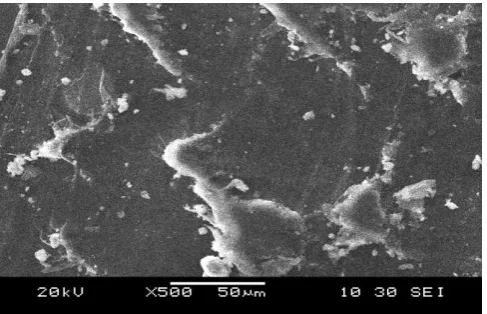
Figure 7 SEM of Untreated Mica (10%) with PPO
Figure 8 SEM of Treated Mica (10%) with PPO
It is seen that elongation at break is increases from 5% to 10% of mica as compare to untreated mica filled PPO composite. At 20 and 25% elongation at break reduces as like untreated mica PPO composite. The increase in deformability of polymer composites with an increase in coupling agent treated mica concentration indicates that silane coupling agents probably provide a plasticizing/lubricating effect. The variation in elongation at break of coupling agent treated mica filled PPO composite is shown in figure 6. Figure 7 and
figure 8 shows scanning electron microscopy of the samples, which shows proper distributions and adhesion of the filler mica in PPO matrix when Mica is treated with coupling agent.
4. CONCLUSIONS
M.F.I, Impact strength, Tensile strength and Elongation at break of the composite decreases with increase in increasing concentration of mica for treated and untreated filler filled PPO composites. Flexural strength and flexural modulus of the Mica filled composite increases as filler loading is
increases. Coupling agent such as N-
(2-Aminoethyl)-3-aminopropyltrimethoxysilane for mica was found to be good coupling agent for the Mica PPO composite. Addition of mica as filler into the Polyphenylene oxide with coupling agent increased the mechanical properties such as tensile strength, Impact strength, elongation at break, flexural strength and flexural modulus as compare to untreated filler filled PPO composite.
REFERENCES
[1] A.Tripathi, A. K. Tripathi, P.K.C. Pillai, J of Mtl Sci. letters 9, pg. 443-45, (1990).
[2] A. Wambach, K. Trachte, A. Dibenedetto, Department of Chemical Engineering Washington, University St. Louis, Missouri, Journal of Composite Materials vol. 2 no. 3 266-283 July( 1968).
[3] C.J.R. Verbeek, Department of Chemical Engineering, University of Pretoria, Pretoria, 0002 South Africa, Materials Letters 52 453–457, June (2001).
[4] C.R.G. Furtado, J.L. Leblanc, R.C.R. Nunes, Polymer Journal, Volume 36, Issue 8, 1, Pages 1717-1723. August (2000).
[5] Daoji Gan, Shiqiang Lu, Caisheng Song, Zhijian Wang, European Polymer Journal, Volume 37, Issue 7, , Pages 1359-1365, July (2001).
[6] Fenton,Malcom, Hawley, George, Pol. Composites, vol. V3, Issue N4, pg. 218-229,Oct. (1982).
[7] Hong Jae Lee, Hyung Woo Choi, Kyung Ja Kim, and Sang Cheon Lee, Chemistry of Materials, 18 (21), (2006).
[8] Jin Huang, Ruofei Zhao, Bin Sun, Gance Dai, John Wiley & Sons, Inc. J Appl Polym Sci 82: 2719–2728.
[9] Myung Wook Kim, Young Seok Song, Jae Ryoun Youn, Composites Part A: Applied Science and Manufacturing, Volume 41, Issue 12, Pages 1817-1822. , December (2010).
[10] P. Bajaj, NK Jha, Anand Kumar, J Appl. Polym. Sci. Vol 44, 1921-1930 (1992).
[11] V. B. Gupta., C. Brahatheeswaran., J. Appl. Polym. Sci.. vol 52, 107- 118 (1994).