e-ISSN: 2278-067X, p-ISSN: 2278-800X, www.ijerd.com
Volume 12, Issue 10 (October 2016), PP 39-50
Stationary Compression Ignition Internal Combustion Engines
(CI-ICE) CO
2Capturing Via Microalgae Culture Using A
Mini-Photobioreactor
Enio C. Telles
∗
, Sam Yang† , Jose V. C. Vargas
∗
, Juan C. Ordonez† , Andre B.
Mariano
∗
, Mauricio B. Chagas† , Taylor Davis†
∗
Abstract:
This paper presents the development and analysis of a multigeneration system prototype associated with microal- gae culture for biomass production. The system was designed to recover waste heat from the compression ignition internal combustion engine (e.g., diesel engine) and to capture CO2 in its emissions for microalgae growth. Two algae species, Scenedesmus sp. and algae mixture from a local park in Curitiba, were separately cultured in a 20 L-jug by supplying two distinct CO2 sources: air and diesel engine emissions. Subsequently, microalgae growth rates were determined from absorbances and analyzed to construe whether emissions in lieu of air enhanced the microalgae growth. Similarly, mini-photobioreactor (mPBR) was employed to culture local algae mixture with air and emissions as CO2 sources, to assess the practicality of using mPBR for microalgae culture compared to traditional methods. In addition to microalgae culture, a thermodynamic analysis of the multigeneration system was performed to examine the effects of waste heat recovery and biomass production on the overall system efficiency. According to the analysis, the system efficiency increased by 13.55% with waste heat recovery and the use of biodiesel obtained from microalgae. Furthermore, experimental results proved increased biomass production using diesel engine emissions, and PBR was determined to be more effective than tanks or ponds for microalgae culture. As a result, this work verified the possible use of CO2 -rich diesel engine emissions for microalgae culture using mPBR and waste heat recovery for an improved multigeneration system free of greenhouse gas emissions.I.
INTRODUCTION
According to World Energy Outlook [1], world energy consumption will grow by approximately 40% between 2006 and 2030 along with significant increase in greenhouse gas emissions. Rise in the global energy demand, lack of supply, and at last but not least, depletion of fossil fuels are motivating the search for renewable ways to provide electricity, heating, cooling, transportation, etc. One possible scenario, in which the use of low-intensity renewable energy resources becomes feasible, is the distributed power generation at the application site using small-scale systems that are less detrimental to the environment. Such systems, however, become costly and emit gases that have pernicious effects on the environment. Thus in light of economical and environmental sustainability, carbon- neutral renewable fuels are suitable replacements for traditional
fossil fuels.
Biodiesel extracted from plants is one of carbon-neutral fuel alternatives to fossil fuels. Nevertheless, biodiesel from plants, vegetable oil, and animal fats can only cover a small portion of the total fuel demand; it will otherwise require unrealistic plantation and livestock area. Chisti [2] reported if palm oil was used to produce biodiesel, 24% of the total arable land area in the United States would be required to meet 50% of the annual transportation fuel demand.
One viable alternative is to use microalgae as renewable biodiesel sources. Microalgae are microscopic organisms with exceptional aptitude for oil production, reaching 77% of their own dry weight [2]. Moreover, the number of microalgae cells can double in a day due to their high growth rate. If microalgae were used to produce biodiesel to meet the transportation fuel demand in the United States, only 1 to 3% of its arable land area would be required [2].
Microalgae require sunlight and CO2 to grow and produce oil, with significantly higher efficiency than oilseed crops. A recent study demonstrated that microalgae oil productivity was remarkably higher than that of oilseed crops [2], emphasizing the practicality of using microalgae for biofuel production. The easiest and economical way to culture microalgae is to grow them in tanks or ponds, which is a traditional method intended to grow algae for human consumption and aquaculture. This type of culture, however, exhibits low yield and little use of CO2 in the air. Furthermore, tanks and ponds may accumulate contaminants such as bacteria, fungi, and protozoa that are detrimental to algae growth.
Extensive research on practical microalgae culture, biomass
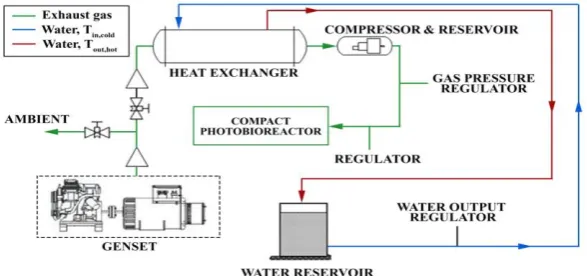
Fig. 1. A flowchart of the proposed multigeneration system by NPDEAS- UFPR
Production, and biodiesel extraction processes has been con- ducted by the group at NPDEAS-Federal University of Parana´ (UFPR) in Brazil. The objective of NPDEAS is to demonstrate the concept of self-sustained distributed power generation using biodiesel; from design and installation to commission, operation, and maintenance of the system comprised of: PBRs developed to grow microalgae, biodiesel production system, bio-digestion system for waste products, and diesel/biodiesel engine coupled to an AC generator. The system has been designed for concurrent provision of electricity, heating, and cooling, while its byproducts (e.g., CO2 ) are used to grow mi- croalgae. A flowchart of the proposed multigeneration system is illustrated in Fig. 1
The present work consisted of testing and analyzing a multigeneration system that provided electricity and heating to NPDEAS building and CO2 to a conceptual 60 L-PBR designed to produce biodiesel as its end product. As a result, this work had three objectives:
1) Test a diesel-driven multigeneration system proto- type.
2) Evaluate the system performance based on a thermo- dynamic analysis.
3) Examine the effects of diesel engine emissions and the use of PBR on microalgae growth.
II. MULTIGENERATION SYSTEM DESCRIPTION
The current multigeneration system was designed to re- cover waste heat rejected during electricity generation and feed diesel engine emissions into PBR for microalgae growth. The system shown in Fig. 2 can be divided into three subsystems: the engine-AC motor generator set, heating unit, and mini- PBR.
A. Diesel Engine-AC Motor Generator Set
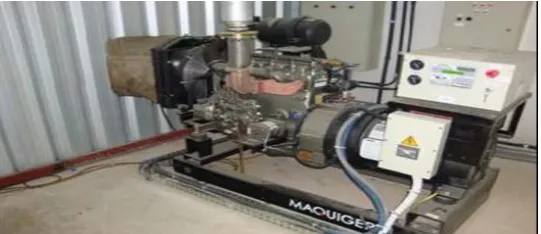
Engine-AC motor generator set (GENSET) is composed of a diesel/biodiesel engine and an AC generator (alternator). The set is controlled by a series of electronic devices and mechanical parts for continuous or intermittent supply of
controlled by a tension-monitoring module that started the motor and generated electricity in the event of power outage. A microprocessor USCAMAQ-21 was integrated into the GENSET to monitor the operation, collect data on the rotation, tension, power generation, number of starts, and total operation time. The module could be triggered by the user in case the automatic transfer switch fails, or if the user desired to operate independently of the power grid.
B. Heat exchanger
The heat exchanger was sized according to the desired temperatures at its inlet and outlet as well as the overall heat transfer coefficient provided by the manufacturer. The total heat transfer rate in the heat exchanger Q˙ hx is given by:
Q˙ hx = U A∆Tm (1)
where U is the overall heat transfer coefficient, A is the heat transfer area, and ∆Tm is the mean logarithmic temperature
Fig. 3. GENSET installed in NPDEAS-UFPR
difference expressed as: ∆T1 − ∆T2
∆Tm =
ln(∆T /∆T ) (2)
1 2
where
∆T1 = Tin,hot − Tout,cold (3a) ∆T2 = Tout,hot − Tin,cold (3b) Therefore, the heat transfer area can be determined by:
Q˙ A = U ∆Tm
(4)
From the previous equation, heat transfer area was obtained using the following parameters:
Tin,hot = 250 ◦ C Tout,hot = 40 ◦ C Tout,cold = 40 ◦ C Tin,cold = 25 ◦ C U = 70 W/m2 K
from which A = 3.87 m2 . As a result, single-pass shell-and- tube heat exchanger, Apema TST 175-5-1-A shown in Fig. 4, was selected for the system.
C. mini-PBR
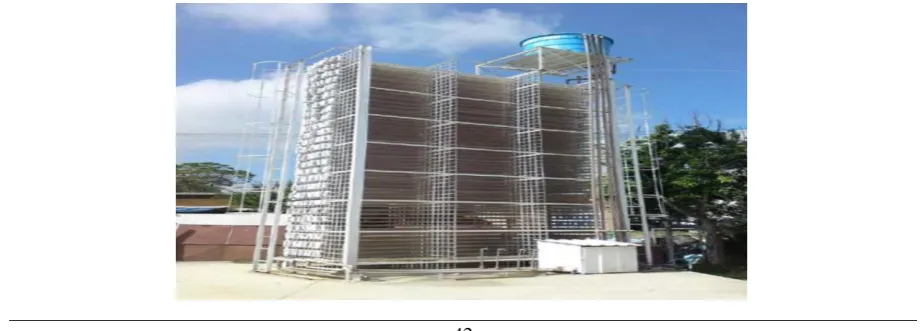
holds 60 L. mini-PBR (mPBR) shown in Fig. 5 is a replica of an industrial-scale PBR built at NPDEAS-UFPR in Fig. 6, scaled-down by a factor of 133. Both PBRs are comprised of the same components (e.g., tubes, pumps, valves, etc.) and flow configuration.
The purpose of a mPBR is to conduct small-scale exper- iments to examine algae growth that is susceptible to hostile environment, and predict possible outcomes for industrial-scale PBRs. Main constituents of the mPBR are transparent pipes, hydraulic pump, and lighting system.
1)MPBR: Transparent PVC pipes in mPBR have inner and outer diameters of 57 mm and 60 mm, respectively. In lieu of an ideal pump for PBRs suggested by Vandanjon et al. [4], 1/4 hp Dancor CAM-W4C centrifugal pump with the following characteristics was used: 220 V , 3450 rpm,
24 m.ca, and 9.4 m3 /hr of maximum flow. Microalgae growth
Fig. 4. Single-pass shell-and-tube heat exchanger Apema TST 175-5-1-A
Fig. 5. mini-PBR (mPBR) built at NPDEAS-UFPR
was prone to be interfered by materials making up the pump, such as the rotor and the casing. Hence the pump rotor was made of Noryl, an inert high strength thermoplastic that did not react with microalgae, and the housing was made of a special Al-Si alloy.
2) Lighting system: The sunlight was simulated by using a series of 40 W -fluorescent lamps, which provided light with wavelengths in the range between 500 and 650 nm, with peaks in between 400 and 450 nm. These values were within the range of wavelengths considered ideal for the microalgae growth according to Leher and Poste [5], which were between
400 and 700 nm. The provided light intensity was 5, 500 lux.
Fig. 6. Industrial-scale PBR built at NPDEAS-UFPR the rise in the mPBR operating temperature and facilitate O2
removal in the degasser.
4) Degasser: In the degasser, CO2 was fed into the mPBR by adding air or emissions while removing excessive O2 from it. Elimination of O2 facilitated the pressure adjustment between the pipes and the degasser. Furthermore, the fluid en- tering the degasser tank underwent a reduction in flow velocity and attained positive pressure and temperature gradients, which facilitated dissolution of C02 in microalgae.
The heat supplied to the water through the heat exchanger is calculated as: Q˙ hx = m˙ w Cp,w (Tout − Tin) (7)
where m˙ w and Cp,w are mass flow rate and specific heat of water, respectively, and Tout and Tin are water temperatures at the heat exchanger outlet and inlet, respectively.
The relationship between biomass production and its con- version into biodiesel is expressed in terms of mass flow rate m˙ biod and lower calorific value P CIbiod of biodiesel as:
D. Data Acquisition
Data collection was realized in two ways; using a data Q˙ bm
= m˙ biod P CI biod
(8) acquisition system and via laboratory procedures. Data acqui- sition system was constituted of National Instrument platform, K-type thermocouples, 44031RC thermistors, Omega HHF The multigeneration system performance depends primary on the calorific value of combustion fuels P CIcomb.
Therefore, the total power from combustion Q˙ comb is computed as:
300A digital anemometer, and Omega FL-6315ABR flow meter. Microalgae growth rate is commonly expressed by its pop- Q˙ comb
= m˙ comb P CI comb (9)
ulation size, which can be obtained from cell density or other information such as biomass, absorbance (spectrophotometer), where m˙ comb is combustion rate. Consequently, the system efficiency is given by:
or pigment level as described by Alonso [6]. Subsequently, pH, temperatures, and absorbances were measured accordingly. ηsys =
W˙ ele
+ Q˙ hx + Q˙ bm
.
(10) Dry biomass was obtained at the start and end of every culture and their difference was recorded as the amount of biomass produced. pH was measured with a Gehaka PG1800 digital pH meter, which operated between 0.00 and 14.00 pH, with a resolution of 0.01. In order to leverage mPBR for microalgae culture, harvests were conducted at an optimal point when exponential algae growth curves reached a plateau.
The absorbance used to determine the population density of microalgae in a culture medium is noted in Beer-Lambert Law, according to which there is a linear relationship between the absorbance α and cell concentration c, expressed in terms of the molar extinction coefficient ε and the distance the light has to travel through the sample l as:
α = ) εicil (5) i=1
where N is the number of attenuating species. Absorbances were measured using a Shimadzu UV -1800 spectrophotometer, with operating wavelength ranging from 190 to 1100 nm with 1 nm resolution. The measurements were taken for a wavelength of 540.0 nm using a 1 cm-spectrophotometer cuvette.
Dry biomass was obtained by means of a vacuum filtration process. In this procedure, 100 ml of microalgae were
filtered, flocculated, and dried in an oven at 60 ◦ C for 24 hours. Consequently, the difference in filtered mass before and after drying was recorded.
III. THERMODYNAMIC ANALYSIS
A thermodynamic analysis of the multigeneration system was performed to evaluate its performance. The electrical power W˙ ele was computed using the voltage V and current I acquired with USCAMAQ-21 according to the following relationship:
W˙ ele = V · I (6)
Q˙ comb
IV.
EXPERIMENTAL SETUP
Thermocouples and thermistors were placed at the heat exhchanger inlets and outlets to measure gas and water tem- peratures and thus, to compute Q˙ hx. From the GENSET, the exhaust gas flowed through the heat exchanger, compressor reservoir, and to the PBR in a sequential order as depicted in Fig. 2. Hot water from the heat exchanger was stored in a reservoir. Diesel engine emissions stored in the compressor reservoir was used to supply CO2 to the mPBR along with a culture medium. In addition, specific amounts of microalgae were inoculated in a proportion of 20% to the total medium volume. The absorbance, pH, and temperature of the culture medium was measured daily to record the microalgae growth rate.
Before each experiment, mPBR was cleaned to remove contaminants and unwanted organisms in the system for the microalgae growth. This task was realized by filling the mPBR with water to which sodium hypochlorite was added in a proportion of 10 to 12% relative to the equipment volume, and the resulting solution was circulated for a day. Afterwards, sodium thiosulfate was introduced to neutralize the solution, and necessary nutrients were added to the culture medium for microalgae growth.
Microalgae culture was performed in two different ways: in 20 L-jugs and using mPBR. The culture medium selected for this study was modified Chu [7]. The light was shone for
24 hours and each culture was conducted at room temperature but not under a controlled environment, e.g., relative humidity, wind speed, etc.
The effects of diesel engine emissions on microalgae growth were assessed for two distinct algae species. The first was Scenedesmus sp. and the second one was algae mixture collected at a local ecosystem in Curitiba. Both species were isolated and cultured at NPDEAS-UFPR laboratory.
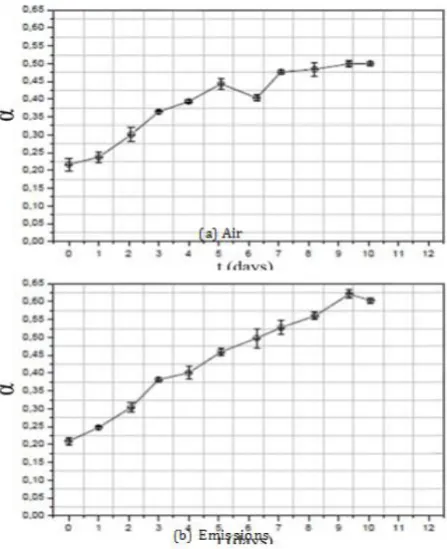
Fig. 7 depicts the growth trends (in terms of the abosrbance
α) of Scenedesmus sp. cultured in 20 L-jugs with the addition of (a) air and (b) emissions as its CO2 sources. Uncertainty analysis was performed according to [8]. According to Fig. 7a, there is a steady increase in the growth until day 6, where sudden absorbance drop is observed. Such a behavior may occur due to measurement error or presence of contaminants. However, the previous trend is recovered on day 7 and gradu- ally reaches steady state on day 10. This curve will eventually decay due to depletion of nutrients in the culture medium.
(a) Air
(b) Emissions
Fig. 7b shows the absorbance curve of Scenedesmus sp. with the addition of the diesel engine emissions as its CO2 source. In this figure, a more steady increase and higher absorbance are attained because the emissions contain signifi- cantly greater proportions of CO2 than air. Furthermore, higher microalgae growth rate is observed with emissions between day 9 and 10 compared to Fig. 7a.
Fig. 8 shows the absorbance curve of the algae mixture collected at a local park cultured with (a) air and (b) emissions as its CO2 sources. According to Fig. 8a, there is a retarded growth rate on the first two days, which is followed by an accelerated growth until it starts to decay due to lack of nutrients in the culture medium. Local algae mixture shows growth trends similar to those of Scenedesmus sp.. According
Fig. 8. Absorbance curve of local algae mixture
to Fig. 8b, diesel engine emissions increased both the overall growth rate as well as the peak absorbance attained by the local algae mixture.
In addition to previous cultures performed in 20 L-jugs, the growth of local algae mixture using mPBR, with air and emissions as its CO2 sources, was examined. Fig. 9 illustrates the absorbance curve of local algae mixture cultured using mPBR with (a) air and (b) emissions. In Fig. 9a, a steady growth trend is observed until day 2, when it begins to increase and reaches a plateau on day 3. The peak absorbance is observed on day 7.
According to Fig. 9, local algae mixture cultured using mPBR displays a more sporadic growth trend than that cultured in 20 L-jugs as depicted in Fig. 8. The local algae mixture cultured in 20 L-jugs reached its peak absorbance between day 9 and 10, while its peak was on day 7 using mPBR. As shown in Fig. 9a, the life span (i.e., growth rate and stagnation period) of microalgae cultured using mPBR with air supply was extended compared to Fig. 8a.
(a) Air
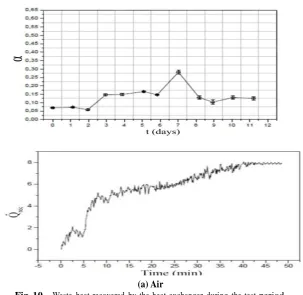
Fig. 10. Waste heat recovered by the heat exchanger during the test period
The sequestration of the emissions was realized by means of a compressor with 350 L-tank, which was pressurized to 8 bar for 10 minutes at room temperature.
Such a volume corresponded to the emissions supply for 24 hours. According to the ideal gas law:
(b) Emissions
Fig. 9. Absorbance curve of local algae mixture in mPBR
pV = memRT (11)
where mem = 5 kg. Therefore, m˙ em = 5.787 × 10⁻⁵ kg/s. This particular emissions mass flow rate m˙ em produced 41.4 g of dry biomass using 60 L-mPBR in 5 days. Assuming continuous production in the peak time between day 4 and
5, dry biomass produced daily was 8.28 g, from which 30% of lipids were extracted whereas [2] reported extractions up to 80%. Produced dry biomass is equivalent to the following power:
initial growth was associated with shorter time span before Q˙ biod = 0.30 · m˙ bmP CIbiod (12)
reaching the peak absorbance. In 20 L-jugs, for instance, the observed time span until the peak was 9.5 days while it was
7 days for mPBR. Table I lists microalgae absorbances from where P CIbiod = 42, 500 kJ/kg. Consequently, 1.22 W , which is insignificant to the system.
all cultures performed and analyzed in this work:
B. Thermodynamic Analysis
A comparative study of the system performance with and without waste heat recovery was conducted. Tests were carried Extrapolating a case with full-time supply of all diesel en- gine emissions to the mPBR, such as 10 minutes of emissions supply to the mPBR for 24 hours with the multigeneration system constantly operating, results in the following multipli- cation factor M F :
with a power demand of 20 ± 0.5 kW , an average demand from NPDEAS building. As shown in Fig. 10, steady-state waste heat recovery rate attained 40 minutes after the operation was 7.91 ± 0.24 kW .
Fig. 11 depicts the thermodynamic efficiency of the system with waste heat recovery throughout the test period. In the absence of waste heat recovery, maximum thermodynamic efficiency of the system was 26%, while it increased to 36.2% with waste heat recovery.
Table i. Absorbance values for all cultures performed
Fig. 10. Waste heat recovered by the heat exchanger during the test period
= 144 (13)
10 min Gallon
Scenedesmus sp. (air) 0.217 0.5 0.283 8.2 Scenedesmus sp. (emissions) 0.209 0.621 0.412 9.3 Local algae (air) 0.0583 0.256 0.197 9.35 Local algae (emissions) 0.0583 0.264 0.206 8.2 mPBR
Multiplying this factor by the mPBR volume yields: M F × VmP BR = 8, 640 L (14)
This value is roughly equivalent to the volume of an industrial- scale PBR, which yields 1, 192.32 g of dry biomass per day that is equivalent to 176 W of power. The efficiency of a multigeneration system with waste heat recovery increase to 39.55% according to (10).
The present extrapolation does not consider the possibility of increasing the microalgae density in the PBR nor problems such as more frequent microalgae flow through the pump rotor, which certainly affect the biomass production. The need to operate an industrial-scale PBR has been verified with a significantly higher biomass concentration, with a daily output of approximately 14 times greater than the present extrapolation due to improved lipid production capacity. Based on these observations, 20 industrial-scale PBRs need to operate together in order to meet the power demand from NPDEAS building. In regards to the mPBR, Converti et al. [9] obtained expected biomass yield that was 6 to 7 times greater using mPBR compared to traditional tanks. Therefore, there is a room for significant improvement in the mPBR.
The assessments elaborated in this paper are based on the assumption that physics in the mPBR is identical to an industrial-scale PBR shown in Fig. 6, which can be adverse. Microalgae in mPBR are subjected to notably higher hydro- dynamic stress than in an industrial-scale PBR, since the microalgae and water recirculation occurs more frequently. Moreover, heat transfer through the pump in a mPBR is sig- nificant while for an industrial-scale PBR, such heat transfers and hydrodynamic stresses are remarkably reduced due to its volume and length 144 times greater than the mPBR.
VI. CONCLUSION
In this study, we developed a multigeneration system which consisted of a diesel/biodiesel engine coupled to an AC gen- erator, a heat exchanger, and a mini-photobioreactor (mPBR). The system was designed to recover waste heat rejected from the engine during power generation to increase the overall system efficiency, and to utilize diesel engine emissions for algae growth using the mPBR.
The effects of the emissions on microalgae growth were assessed by comparing microalgae culture with air and emis- sions as CO2 sources. In 20 L-jugs, the effects of the emissions on Scenedesmus sp. and the local algae mixture were exam- ined. Similarly, local algae mixture was cultured using mPBR with air and emissions to assess the performance of mPBR compared to conventional culturing methods. According to the experimental analysis and comparison of the algae growth, it was concluded that:
1) Microalgae cultures using the mPBR was more effi- cient with higher production with a life span 51.3% and 25% shorter than those cultured in 20 L-jugs with air and emissions, respectively.
2) The diesel engine emissions had a positive effect on the growth of both Scenedesmus sp. and local algae mixture. 3) Emissions catalyzed the algae growth and caused a life span reduction in all cases except for
Scenedesmus sp., where life span increased by 13.4% with higher microalgae production.
A thermodynamic analysis on the multigeneration system was performed based on an experiment consisted of 20 kW of power demand, 7.91 kW of hot water supply, and diesel engine emissions supplied to the mPBR. Consequently, the following conclusions were construed from the analysis:
1) The overall system efficiency according to (10) increased by 13.55% from the efficiency of the GENSET operating alone, which was 26%. Such an increase was mainly due to waste heat recovery.
2) The biomass produced with the mPBR was insuf- ficient to cause remarkable impact on the overall system efficiency.
3) Extrapolated results for an industrial-scale PBR showed 40% increase in the efficiency than the GENSET operating alone.
ACKNOWLEDGMENT
The authors acknowledge with gratitude the support of the Brazilian National Council of Scientific and Technological Development, CNPq (projects 552867/2007-1, 574759/2008-5,
558835/2010-4, and 482336/2012-9), and of NILKO Technol- ogy Ltd.
REFERENCES
[1]. F. Birol et al., “World energy outlook,” Paris: International Energy [2]. Agency, 2008.[3]. Y. Chisti, “Biodiesel from microalgae,” Biotechnology advances, vol. 25, no. 3, pp. 294–306, 2007.
and scaleup,” Journal of biotechnology, vol. 70, no. 1, pp. 231–247, 1999.
[5]. L. Vandanjon, N. Rossignol, P. Jaouen, J. Robert, and F. Que´me´neur, “Effects of shear on two microalgae species. contribution of pumps and valves in tangential flow filtration systems,” Biotechnology and bioengineering, vol. 63, no. 1, pp. 1–9, 1999.
[6]. F. Lehr and C. Posten, “Closed photo-bioreactors as tools for biofuel production,” Current opinion in biotechnology, vol. 20, no. 3, pp. 280–285, 2009.
[7]. J. E. A. Alonso, Microalgas: cultivo y aplicaciones, 1995.
[8]. S. Harisha, An introduction to practical biotechnology. Firewall Media, 2005. [9]. J. P. Holman, “Experimental methods for engineers,” 1966.