Smart Precision based Irrigation System
using Embedded Systems
1
Chinmay Salaskar,
2Meet Shah,
3Ankush Kumar,
4Priyank Doctor,
5Narendra Vishwakarma
1,2,3,4Dept. of Information Technology, MPSTME, NMIMS University5Dept. of Computer Engineering, MPSTME, NMIMS University
Abstract
In the recent technology obsessed world, the need for inclusion of technology in the existing agricultural techniques has become the need of the hour. This project proposes a layout of a smart precision based agricultural irrigation system with the use of embedded machines which is value effective along with improvements in
the existing conventional techniques and practices in the field of
agriculture. Presently, the Indian agriculture is well developed in comparison to many nations. The Indian agriculture contributes approximately 14% to the overall GDP of the country. However, there is much scope for improvement using technology in the existing agricultural methods. Compared to many other foreign countries the Indian farmer is not very well exposed to the technology. One of the major problems is that there is a lot of human intervention needed even after installation of current systems that exists. Also, there is a need of economical and easy-to-use agricultural systems that can be an active companion to the farmers. Also, there is an upcoming term, precision agriculture which is about the observation and measuring of real-time values. The functions carried out by our proposed system is to control water supply to the crops automatically. The outcome of the system will be based on various sensors like temperature, humidity, soil moisture and raindrop sensor that acquire dynamic values from the surrounding which can be used to set the threshold parameters for carrying automated decisions. The sensor will be coupled with the combination of microcomputer and microcontroller. The other functions in the system include remotely controlling as well as monitoring the overall working system.
Keywords
Automation; Precision; Irrigation; Embedded; Farming; System.
I. Introduction
In our nation, Agriculture is a significant wellspring of nourishment
creation to the developing interest of human populace. In horticulture, the water system is a basic procedure that impacts edit creation. For the most part, ranchers visit their horticulture
fields intermittently to check soil dampness level and in view of
prerequisite, water is pumped by engines to inundate separate
fields. Agriculturist needs to sit tight for certain period before
turning off the engine with the goal that water is permitted to
stream inadequate amount fields. This water system strategy
takes a parcel of time and exertion especially when a rancher
needs to inundate numerous agribusiness fields disseminated in
various geological regions. Generally, ranchers will exhibit in their
fields to do water system handle. However, these days farmers
need to deal with their horticultural action alongside different occupations. Mechanization in water system framework makes rancher work considerably less demanding. Sensor based robotized water system framework gives a promising answer for ranchers
where nearness of agriculturist in a field is not necessary. A little
processor customized for control an electromagnetic valve and
furthermore contrast with electromagnetic valve work engine to begin watering. Truly Indian agriculturists require shoddy and basic UI for controlling sensor based mechanized water system framework. Presently a day's web is generally utilized. Utilizing
web rancher think about the agribusiness field water system status. This helps farmers to know the status of cultivate field watering
bearing through an android application whether the agriculturist
is far from field know the status of water engine is ON or OFF
and course of watering. In this paper, we introduce a model for complete computerization getting to of water system engine where Prototype incorporates a number of sensor hub put in various
bearings of homestead field. Each Sensor is coordinated with a
remote systems administration gadget and the information got by the "ATMEGA-328" microcontroller which is on an
"Arduino-UNO" advancement board. The Raspberry-Pi is used to send data using UART communication to the microcontroller. This
helps farmers to control the system remotely through an android application. The system will be able monitor soil moisture, humidity and temperature. There is also an automatic option within the application which will help system to operate automatically. In addition, it consists of a fault tolerance mechanism which will tell user whether the operations in application is working properly or not.
II. Importance of Irrigation
In the following 35 to 45 years, world sustenance generation should twofold to meet the requests of expanded populace. 90% of this expanded nourishment creation should originate from existing terrains and 70% of this expanded nourishment creation should originate from watered land. Without water system cultivating is extremely restricted and if the precipitation declines to under 30cm, agribusiness gets to be distinctly inconceivable without the water system. It expands edit yield. It shields from starvation. It develops prevalent products with the water supply according to a
need of the yields. At last, it helps in financial improvement. Water
system water enhances water conditions in the dirt, builds the water substance of plant stands, breaks up supplements and makes
them accessible to plants. Water system influences temperature
conditions by controlling the temperature of the surface layer of the dirt and the ground layer of the air and moreover makes conceivable control of the development and advancement of plants and change of the nature of the gather. In natural product and berry edits that get ideal amounts of dampness, the sugar substance of the natural product increments and in oil trims the fat substance in the seeds is more noteworthy. For rice and wheat) with supplementary nitrogen encouraging), the protein content in the grain increments
and for cotton, the nature of the fiber is moved forward.
III. Methods of Irrigation
There are distinctive sorts of a technique for irrigation farm field for various types of the crop field. Fundamentally Indian farmers
a water system. But a smart irrigation system is a new technology
to irrigating farm field automatically.
A. Channel System
This system is broadly utilized as a part of a farming irrigation system. As this system is a minimal effort system for irrigating
a vast territory cultivating the field. In this system, funnels are
associated with a water pump and keeping in mind that pump began water to move through the pipe from a lake, waterway,
bore well to cultivating the field. Also, the farmers completely drew in for inundating the harvest field with several specialists.
Immense measure of water waste and vast number of specialists are locked in amid watering.
B. Sprinkler System
This system is more helpful whether the water is accessible in a smaller amount. At the point when pump began then water move through the primary pipe and furthermore move through the opposite funnels. A spout on the highest point of opposite pipe is joined and pivoting consequently at customary interims. This system is extremely valuable on the sandy soil. Less number of specialist required water waste is less.
C. Drip System
This is utilized particularly where there is a lack of water and salt issue. The drip method of irrigation, also called trickle irrigation. The strategy is a standout amongst the latest advancements in the water system. It includes moderate and regular utilization of water to the plant root zone and empowers the use of water and compost at ideal rates to the root framework. It limits the loss of water by profound permeation beneath the root zone or by dissipation from the dirt surface. Trickle water system is sparing in water use as well as gives higher yields with low-quality water.
IV. Components of Proposed System A. Arduino
The Arduino-Uno is a microcontroller which is ATmega328 based having 14 digital input/output pins (of which 6 can be utilized as PWM outputs), a 16 MHz ceramic resonator, an ICSP header, a USB connection, a power jack, 6 analog inputs and a reset button. It contains everything expected to support the microcontroller; simply interface it to a PC with a USB link or power it with an AC-to-DC connector or battery to begin.
B. Raspberry-pi
The Raspberry Pi is a powerful, small and lightweight PC based on ARM which can do as many things that a desktop PC can do.
The effective and powerful capabilities and HDMI video output make it perfect for multimedia applications, for example, media
centers and narrowcasting arrangements. The Raspberry Pi is a
Broadcom BCM2835 chip based. It doesn't include an inherent hard drive or solid-state drive, rather it depends on an SD card for booting and long-term storage.
C. Soil Moisture Sensor
The Soil Moisture Sensor is used to quantify the volumetric water substance of soil. This makes it perfect for performing tests in courses, for example, soil science, agriculture science, environmental science, horticulture, botany, and biology. Soil Moisture Sensor can be used to:
Measure the loss of dampness after some time because of
•
dissipation and plant update.
Monitor soil dampness substance to control water system
•
in nurseries.
Enhance your Bottle Biology tests.
•
D. DHT22 (Temperature and Humidity) Sensor
DHT22 output calibrated digital signal. It comprises a digital-signal-collecting-technique and a humidity sensing technology, which assures reliability and its stability. The 8-bit single-chip computer is connected to its sensing elements. In this model, every sensor is temperature compensated. Having a very small size with low consumption and transmission distance (20m), it enables it to be suited for all kinds of harsh application occasions. Four pins in a single-row package make it a convenient connection.
E. Rain Drop Sensor
The rain sensor module is an easy tool for rain detection. It can be used as a switch when raindrop falls through the raining board and for measuring rainfall intensity. The module features, a rain board and the control board that is separate for more convenience, power indicator LED and an adjustable sensitivity though a potentiometer. The analog output is used in detection of drops in the amount of rainfall. Connected to 5V power supply, the LED will turn on when induction board has no rain drop, and DO output is high. When dropping a little amount water, DO output is low, the switch indicator will turn on. Brush off the water droplets, and when restored to the initial state, outputs high level.
V. Implementation
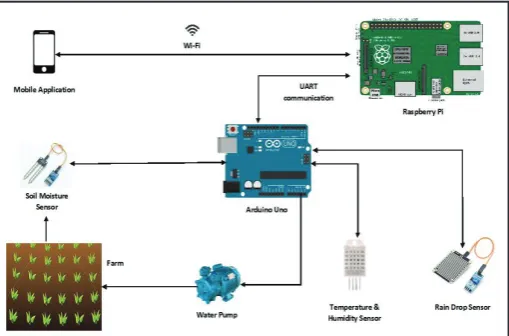
Fig. 1, shows the work flow diagram of the system where soil
moisture sensors are used to detect the dampness level in soil which sends the information to the wireless network device and the information from network device is sent to Arduino Uno where an Atmega-328 microcontroller handle the information and ascertain the rate of dryness and therefore the information is
sent to Raspberry Pi.
Fig. 1: Modular View of the Overall Working
The Raspberry-Pi is used for controlling the irrigation system
and connects it to the local network to send data to the mobile application. Automatic status to be sent is developed using python
programming in Raspberry Pi. If the farmer is far away from his field, he will be always updated with the field status through mobile application. The Raspberry Pi checks the condition in which direction of the farm field is dry then ON the pump automatically.
where in manual option every control of the system will be in the hand of user while in the automatic option, system itself will be responsible to take decision according to the requirements.
VI. Architecture Design
The system will operate with a combination of software and hardware component. The mobile application made will be for Android-based mobile devices. The microcomputer will be running
Linux operating system. The microcontroller will be flashed with
the program needed for communicating with the master computer as well as to perform actions on its own. The client side code in the Android application is written in Java whereas the server-side code is written in python. When the system starts, there is a client server socket created between the client android application and the server hardware. The programming language used in Arduino is a C-like language which is also known as The Arduino Language, where the code to handle the feedback from the sensors is written. Various libraries are included in Arduino code to as to interface the sensors with Arduino. The obtained values are sent back to the
server hardware i.e. the Raspberry Pi and it, in turn, sends it back
to the Android application, where its values are displayed.
VII. Output and Results
According to Fig. 2, the system will provide two types of system mode which is shown on the screen will allow a user to use the system in two ways which are manual and automatic. If the user wishes to go for manual, then the whole control of the system will be in the hands of the user and if he opts for automatic then the control goes with the system. The application is also multilingual which will help user to understand the functionality and therefore gives an advantage to him to use that app in different languages.
Fig. 2: Working of the System in Automatic Mode
The following figure shows the multilingual interface of the mobile
application. The various values received from the sensors that are used to evaluate the need to supply water to the plants are as follows.
Fig. 3: Language Options
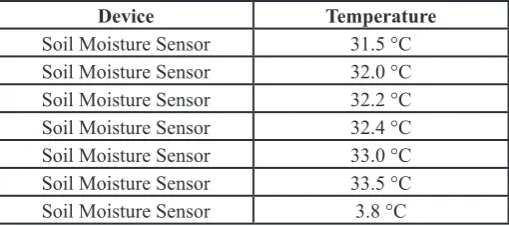
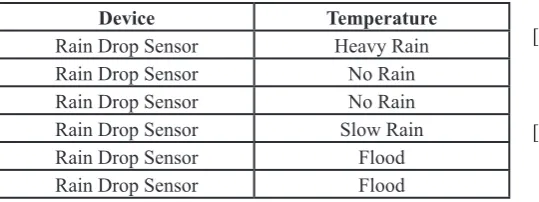
Table (1) shows the sample values from the temperature and humidity sensor (DHT22). Table (2) shows the sample values from the soil moisture sensor. Table (3) shows the sample values received from the rain drop sensor.
Table 1: Sample Values From DHT22 Sensor
Device Temperature Humidity in air
DHT22 31.5 °C 43%
DHT22 32.0 °C 44%
DHT22 32.2 °C 44%
DHT22 32.4 °C 45%
DHT22 33.0 °C 45%
Table 2: Sample Values From Soil Moisture Sensor
Device Temperature
Table 3: Sample Values From Rain Drop Sensor
Device Temperature
Rain Drop Sensor Heavy Rain
Rain Drop Sensor No Rain
Rain Drop Sensor No Rain
Rain Drop Sensor Slow Rain
Rain Drop Sensor Flood
Rain Drop Sensor Flood
VIII. Conclusion
Our System is designed to monitor soil moisture and control
irrigation process remotely in real-time. An Arduino,
Raspberry-pi based automated irrigation system that involves switching the irrigation drive as per the real-time data provided by the soil moisture sensor, Temperature and Humidity sensor, rain drop sensor to perform actions. This system can be a stepping stone towards precision based agriculture in Indian Agricultural techniques. This system can also be vital in introducing the existing agricultural practices to the world of technology. Automating the overall agricultural process will not only prove a comfort but also reduce the unproductive time spent in human efforts. The overall
implementation of Our system will also be cost efficient and highly
scalable in comparison to many other existing systems.
IX. Future Work
At present Our system is working good. We can do a lot of enhancements in the project in context of implementation such as, to make the circuit much more compact it can be ported on to a
PCB. Artificial Intelligence can be used to add much more precision based on the previous log files collected. Communication medium
between the master and slave hardware can be replace by a wireless communication to increase the range of communication. Interactive voice response communication can be added to communicate with the application through voice commands. High quality sensors can be used to make the values more accurate and adaptive to use. The client side mobile application can also be made available in other popular mobile operating systems. Develop sensor optimization techniques to reduce the no. of require sensors during scalability. Increase the overall dataset for different crops.
X. Acknowledgment
This research was supported by the department Information Technology, Mukesh Patel School of Technology Management
and Engineering, NMIMS.
Reference
[1] A.N. Arvind, Keerthika D., “Experimental Investigation of Remote Control Via Android Smart Phone of Arduino-Based
Automated Irrigation System Using Moisture Sensor”, 3rd International Conference on Electrical Energy Systems, 2016.
[2] Chandan Kumar Sahu, Pramitee Behera,“A Low Cost Smart
Irrigation Control System”, ICECS 2015.
[3] Siwakorn Jindarat, Pongpisitt Wuttidittachotti,“Smart Farm Monitoring Using Raspberry Pi and Arduino”, April 2015. [4] Nikhil Agrawal, Smita Sighal,“Smart Drip Irrigation System
using Raspberry pi and Arduino”, ICCCA2015
[5] Rajeev G Vishwakarma, Vijay Choudhary,“Wireless
Solution for Irrigation in Agriculture”, Proceedings of 2011 International Conference on Signal Processing,
Communication, Computing and Networking Technologies (ICSCCN 2011)
[6] Santoshkumar, R. Y. Udaykumar,“Development of WNS
system for precision agriculture”, In International Conference on Innovation in Information, Embedded and Communication System (ICIECS), 2015, pp.1-5,19-20 March 2015
[7] M. Usha Rani, Kamalesh S.,“Energy efficient fault tolerant
topology scheme for precision agriculture using wireless sensors network”, In International Conference on Advanced Communication Control and Computation Technologies (ICACCCT), 2014, pp.1208-1211, May 2014
[8] “Crops Seasons in India”. [Online]. Available: https://
testbook.com/blog/crops-in-india-gk-notes-pdf/
[9] “Fertilizer use by crop in India”. [Online]. Available: http://
www.fao.org/docrep/009/a0257e/A0257E05.htm
Mr. Meet Shah is a 4th year student pursuing his Bachelor of Technology degree in the field of Information Technology from the institute Mukesh Patel School of Technology
Management and Engineering, NMIMS.
At present his research interest lies in embeded system and machine learning
and their applications into the field of
precision based agriculture.
Mr. Chinmay Salaskar is a 4th year student pursuing his Bachelor of Technology degree in Information
Technology from NMIMS Mukesh Patel
School of Technology Management and Engineering, India, in 2017. His work interests include Embedded Systems and Mobile development and
its application in the field of precision
based agriculture.
Mr. Ankush Kumar is a 4th year student
pursuing his Bachelor of Technology degree in the field of Information Technology from the institute Mukesh Patel School of Technology Management
and Engineering, NMIMS. At present
his research interest lies in embeded system and machine learning and their
applications into the field of precision
Mr. Priyank Doctor is a 4th year student pursuing his Bachelor of Technology degree in the field of Information Technology from the institute Mukesh Patel School of Technology
Management and Engineering, NMIMS.
At present his research interest lies in embeded system and machine learning
and their applications into the field of
precision based agriculture.
Narendra Vishwakarma received his M.
Tech. degree in Computer Technology from Indian Institute of Technology Delhi, India, in 2014 and B.E. from SGSITS Indore, India, in 2012. He has more than 2 years of experience in Teaching and is currently working as Assistant Professor in Computer
Engineering Department, NMIMS