http://www.ijcmph.com pISSN 2394-6032 | eISSN 2394-6040
Original Research Article
A cross sectional study to assess knowledge, attitude and practice
regarding voluntary blood donation among medical students of
Jabalpur, central India
Prashant Verma
1, Aditya Thakur
1*, Deepak Saklecha
2, Pradeep Kumar Kasar
1INTRODUCTION
Human blood is a vital constituent of human life which is universally recognized as the most valuable element that sustains life and there are no substitutes to blood as yet. Blood transfusion is a essential and a obligatory part of any nation’s health care delivery system for a lifesaving
Interventions. The need for blood and blood products is rising in all parts of the world.1,2
Had there been adequate and safe blood transfusion service such a significant mortality would have been averted. Availability of safe blood and blood products is a critical aspect in improving health care.2-4 Globally
ABSTRACT
Background: Blood transfusion is a crucial and an essential part of any nation’s health care delivery system for a lifesaving Interventions. Positive attitude towards blood donation practices among the younger generation would play a crucial role in improving health care structure. Objectives of the study were to assess knowledge, attitude, and practice towards blood donation and its associated factors among undergraduate medical students.
Methods: It was a descriptive cross sectional study conducted on the 322 under graduate medical students of different professional years during September to December 2016 at Netaji Subash Chandra Bose medical college Jabalpur (M.P.). A pretested, self administered, structured questionnaire was used to collect data on knowledge, attitude and practice regarding voluntary blood donation. Scores for three domains i.e. knowledge, attitude, practice was calculated. Data on Socio demographic details and reason behind non donation of blood were also collected.
Results: On correlation between the scores of attitude and practice with knowledge. Attitude has a positive statistically significant correlation with the increase in knowledge and vice versa. On the other hand Increase in attitude shows a negative statistically significant correlation with practice and vice versa. Students belongs to >20 years of age group has significantly more knowledge and good attitude regarding blood donation (p<0.001). Female students when compared with male have more knowledge and good attitude regarding blood donation. But in case of practice of blood donation female significantly lag behind male students (p<0.001).
Conclusions: Opportunities for blood donations should be created regularly by conducting blood donation camps this will not only increase the Sense of social responsibility among medical students through positive attitude but will also narrowed down the gap between the demand and the supply of the country.
Keywords: Voluntary blood donation, Medical students, Knowledge, Attitude, Practice
1Department of Community Medicine, N.S.C.B Medical College, Jabalpur, Madhya Pradesh, India 2
ADMO, Ratlam Madhya pradesh, Western Railways, India
Received: 26 January 2018
Revised: 15 February 2018
Accepted: 16 February 2018
*Correspondence:
Dr. Aditya Thakur,
E-mail: [email protected]
Copyright: © the author(s), publisher and licensee Medip Academy. This is an open-access article distributed under the terms of the Creative Commons Attribution Non-Commercial License, which permits unrestricted non-commercial use, distribution, and reproduction in any medium, provided the original work is properly cited.
around 92 million unit blood donations are collected annually from all types of blood donors. The lowest levels of availability are found in low and middle income countries, particularly in India.3,4
According to the World Health Organization (WHO), 1% of the population is generally the minimum needed to meet the country’s most basic requirements for blood, hence the estimated blood requirement of South East Asia is about 18 million units per year, and the annual collection is about 9.4million units, leaving a gap of 6million units.5-7 Every year, our country requires about four crore units of blood, out of which only inadequate 40 Lakh units of blood are available. A country can meet all its requirement for blood if only one percentage to three percentage of its eligible population donate blood. India on an average has 50% of eligible donors.4
In India, the proportion of blood units collected through voluntary blood donation at National AIDS Control Organization (NACO) supported blood banks was 84.3% in 2012.8 There is a need to fill this gap of demand and supply from various sources
One of the potential sources that can be tapped for blood donation is the young and physically fit students from educational institutions across India. They can meet the blood demands of our nation and endow with safe and quality blood and blood components collected from healthy voluntary donors. In this present study we had focused on the undergraduate medical students who are going to be doctors in future. There were very few studies which was conducted on the medical students regarding voluntary blood donation in the country but also these students had greater exposure towards general public then students of other fraternity. It is significant to have information regarding their attitude towards blood donation and whether they have adequate knowledge to make the decision to donate blood. These students with positive attitude and good practice may influence the peer groups and general public. Therefore the aim of this study was to assess knowledge, attitude, and practice towards blood donation and its associated factors among undergraduate medical students.
METHODS
It was a descriptive cross sectional study conducted on the under graduate medical students of different professional years during September to December 2016 at Netaji Subash Chandra Bose medical college Jabalpur (M.P.)
All the students who were present on the voluntary basis during the study time and who had given oral consent were included in the study. A total of 322 students were volunteered in the study.
Those students who are not willing to participated were excluded from the study. A briefing was given to the participants about objective of the study.
A pretested, predesigned, self administered, structured questionnaire was used to collect data on knowledge, attitude and practice regarding voluntary blood donation. Knowledge parts has 22 questions covering benefits of blood donation in donor, disease transmitted through unsafe Blood transfusion, investigation and minimum body weight required before donating blood, while attitude and practices has 12 and 10 questions. Attitude of students regarding blood donation was assessed using 5 point Likert scale. Scores for three domains i.e. knowledge, attitude, practice was calculated. Data on socio demographic details and reason behind non donation of blood were also collected.
The data were coded and validated .Data entry and analysis were done using EPI info (version 7) and MS Excel software and then generation of descriptive Statistics was done. Non parametric test -Man Whitney U was used to identify factor associated with voluntary blood donation in students.
The study was done according to world Helsinki declaration and informed oral consent was obtained from the participants before administrating questionnaire. Anonymity of participants was maintained by avoiding any information revealing the identity of the participants in the questionnaire.
RESULTS
A total of 322 medical students participated in the present study. 13 self administered questionnaire were incompletely filled, so the analysis of 309 completely filled questionnaires was done (Table 1). Shows mean score for knowledge regarding blood donation was 12.02±2.6. Whereas the Attitude of students had a mean score of 41.21±5.9. While the mean score of practices were least 2.72±1.8. On correlation between the scores of attitude and practice with knowledge. Attitude has a positive statistically significant correlation with the increase in knowledge and vice versa. On the other hand Increase in attitude shows a negative statistically significant correlation with practice and vice versa.
Table 1: Descriptive statistics.
N=309 Knowledge Attitude Practice
Range of score 15 25 7
Minimum score among students 4 30 0
Maximum score among students 19 55 7
Mean score (SD) 12.02±2.6 41.21±5.9 2.72±1.8
Median 12.00 40.00 3.00
Correlation between the score in three domains
Knowledge 1.00 0.322** 0.005
Attitude 0.322** 1.00 - 0.133*
Practice 0.005 - 0.133* 1.00
** Correlation is significant at the 0.01 level (2-tailed); *Correlation is significant at the 0.05 level (2-tailed).
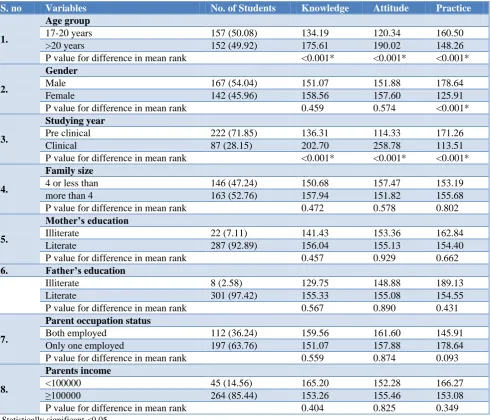
Table 2: Association of socio demographic variable with knowledge attitude and practice.
S. no Variables No. of Students Knowledge Attitude Practice
1.
Age group
17-20 years 157 (50.08) 134.19 120.34 160.50 >20 years 152 (49.92) 175.61 190.02 148.26 P value for difference in mean rank <0.001* <0.001* <0.001*
2.
Gender
Male 167 (54.04) 151.07 151.88 178.64
Female 142 (45.96) 158.56 157.60 125.91
P value for difference in mean rank 0.459 0.574 <0.001*
3.
Studying year
Pre clinical 222 (71.85) 136.31 114.33 171.26 Clinical 87 (28.15) 202.70 258.78 113.51 P value for difference in mean rank <0.001* <0.001* <0.001*
4.
Family size
4 or less than 146 (47.24) 150.68 157.47 153.19 more than 4 163 (52.76) 157.94 151.82 155.68 P value for difference in mean rank 0.472 0.578 0.802
5.
Mother’s education
Illiterate 22 (7.11) 141.43 153.36 162.84 Literate 287 (92.89) 156.04 155.13 154.40 P value for difference in mean rank 0.457 0.929 0.662
6. Father’s education
Illiterate 8 (2.58) 129.75 148.88 189.13 Literate 301 (97.42) 155.33 155.08 154.55 P value for difference in mean rank 0.567 0.890 0.431
7.
Parent occupation status
Both employed 112 (36.24) 159.56 161.60 145.91 Only one employed 197 (63.76) 151.07 157.88 178.64 P value for difference in mean rank 0.559 0.874 0.093
8.
Parents income
<100000 45 (14.56) 165.20 152.28 166.27 ≥100000 264 (85.44) 153.26 155.46 153.08 P value for difference in mean rank 0.404 0.825 0.349
* Statistically significant <0.05.
Students studying the clinical subjects show significantly more knowledge and good attitude (p≤0.001) than the students studying pre clinical subjects but significantly lags behind in terms of practice regarding blood donation (p<0.001). Students belong to family size 4 or less than 4
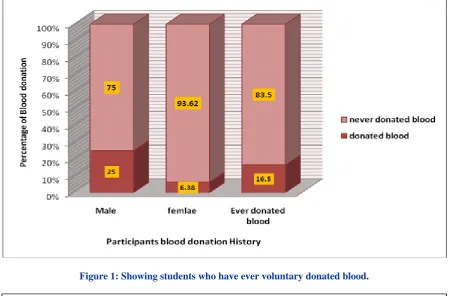
Figure 1: Showing students who have ever voluntary donated blood.
Figure 2: Reasons for non donation of blood.
Mother’s and father’s education of the students were also analyzed. Most the mother’s and father’s of the students were literate i.e. 92.89% and 97.42% respectively. Students of Literate mothers and fathers had more knowledge and good attitude but they practice less blood donation than the students of illiterate mothers and fathers. But there were no significant difference among them.
Maximum of students had either of their parents employed i.e. 63.76 while remaining students had both of
Of total 309 students 83.5% of the students never voluntary donated the blood while the remaining i.e. 16.5 % has donated blood on one or two occasions. Only 25% of the male students has donated blood while only 6.38 % of the female students has donated the blood as shown in Figure 1.
In Figure 2, reasons of non donation of blood among students were shown. Most common reason was lack of awareness regarding when and where to donate blood, which constitute about 50.5 %. Second most common reason was fear of pain and discomfort which constitute about 19.1 % while the 13.9 % of the students said they never got an opportunity to donate blood. Reasons like family discouragement, busy life, concern about sterility of equipments were also noted.
DISCUSSION
The study was conducted with the objectives to determine knowledge, practice of blood donation and assess attitude towards voluntary blood donation among undergraduate medical students.
This baseline information was important for understanding the KAP about voluntary blood donation. This information can be the basis for improving or augmenting the blood donation strategy at the state level and may be even at the national level.
Findings of the present study shows that with increase in knowledge there is increase in good attitude towards blood donation but there is decrease in practices with increase in a good attitude which was similar to studies done in Ethopia and Yazd Iran.9,10 The reason could be the lack of information on where, when, and how to donate blood, fear of being anemic after blood donation as there were 45 % of the female in the study participants, and fear of health risk after donation.
Some contrast finding was also found in the studies Ponmari et al and Verma et al where there was an increase in attitude with increase in practices.7,8
Present study shown the knowledge and attitude was higher among >20 yrs age group while practice was higher among younger age group i.e. 17-20 yrs. Similar finding were found in the studies done by Ahmed et al in Karachi, Hosain et al in Dhaka and Mwaba in Mmabatho.11-13 This suggests that there is sufficient basic knowledge and good attitude regarding blood donation among undergraduate medical students but the same was not correlating with the Practice of blood donation. This could be due to the reason as a new medical undergraduate when comes to institution they undergo extensive health education by professional teachers which might influence them to do voluntary blood donation but as the years passed they get involved in their studies which might be difficult for them to find out time to do voluntary blood donation.
Knowledge and good attitude regarding blood donation was higher in female participants as shown in the present studies but there was significantly lower practice in female regarding blood donation when they were compared with male. This finding is in agreement with studies conducted by Danasikaran et al and other authors.14-17 This could be due to fear of being anemic and perceived inconvenience which might be associated with blood donation.
This shows that sufficient steps should be developed to involve female students and create opportunities for them to donate blood.
Studying years was found to be a significant factor in present study. Undergraduate students who were studying clinical subject had significantly good knowledge and good perception towards blood donation this might be due to the clinical exposure they had during their clinical posting but the practice was lower when compared to undergraduate students studying pre clinical subjects. This finding was in agreement with the findings of Nigatu et al.18
The reason behind it might be the time constraint, studies burden and frequent exams which increase when the undergraduate medical students proceeds in the final years. This finding was in contrast with the finding of Ahmed et al as in their studies there was no association with the studying year and Knowledge, attitude and practice regarding blood donation. Knowledge and good attitude towards blood donation was higher in students whose parents are literate but the practice was higher in students whose parents are illiterate.11 These finding were corroborating with the finding of Nigatu et al in Ethiopia.18 This could be due to lack of audience segmentation for providing information or applying equal motivation strategy for both literate and illiterate population. Present study shows that the both employment status and parents income of students do not have any significant association between the knowledge, attitude and practice regarding blood donation. Which was in contrast with the findings of the study done by Jemberu et al in ethopia where they found the occupational and income to be associated with positive attitude and increase in practice.19
donation and indicates that may be, we have a larger pool of female donors, which is untouched. However, in a country like India where conditions like low haemoglobin values, low weight, and fear of pain may be a deterring factor, similar finding were observed by a study done by Uma et al in South India.17
The present study shows the most common reason for non donating blood was lack of awareness, fear of pain and lack of opportunity which were also common reason in the studies of Verma et al, Giri et al.8,20 This suggests that designed awareness and motivational programs in campuses among students, allaying their unfound fears are necessary to bring encouraging changes in voluntary blood donation.
CONCLUSION
The present study concludes that students had adequate knowledge and good attitude towards blood donation. However, the level of blood donation practice was low and perception like fear of pain during blood donation, fear of being anemic after blood donation in female and lack of information on where, when, and how to donate blood were the major reason for not donating blood. Awareness campaign for cleaning myths among students should be organized more frequently in medical colleges. Opportunities for blood donations should be created regularly by conducting blood donation camps this will not only increase the Sense of social responsibility among medical students but will also narrowed down the gap between the demand and the supply of the country.
Funding: No funding sources Conflict of interest: None declared Ethical approval: Not required
REFERENCES
1. World Health Organization. WHO Global Data Base on Blood Safety, Summary Report. Geneva; 2011.
2. National Guidebook on Blood donor motivation. Ministry of Health and Family Welfare, National AIDS Control Organisation, Government of India. Second edition; 2003.
3. World Health Organization (WHO). Blood safety and availability. Factsheet 2017. Available: http://www.who.int/mediacentre/factsheets/fs279/en /. Accessed on 7 June 2017.
4. Agrawal A, Tiwari AK, Ahuja A, Kalra R. Knowledge, attitude and practices of people towards voluntary blood donation in Uttarakhand. Asian J Transfus Sci. 2013;7:59-62.
5. National Voluntary Blood Donation Day. Message of the Secretary General of the Indian Red Cross Society.2015. Available atwww.indianredcross.org/sg-messages.htm. Accessed June 2017.
6. World Health Organization (WHO). Blood transfusion factsheet 2017. Available: http://www.who.int/features/factfiles/blood_transfus ion/en/. Accessed June 2017.
7. Ponmari JS, Sivaraman M, Balasubramanian A. A study on knowledge, attitude and practice on blood donation among medical students in a tertiary care teaching hospital, Chennai, Tamil Nadu, India. Int J Basic Clin Pharmacol. 2016;5:802-4.
8. Verma S, Sharma RK, Sharma M, Pugazhendi S. Voluntary Blood Donation: Attitude and Practice among Indian Adults. J Community Med Health Educ. 2016;6:436.
9. Melku M, Terefe B, Asrie F, Enawgaw B, Melak T, Tsegay YG, et al. Knowledge, Attitude, and Practice of Adult Population towards Blood Donation in Gondar Town, Northwest Ethiopia: A Community Based Cross-Sectional Study. J Blood Transfus. 2016;2016:10. doi:10.1155/2016/7949862
10. Javadzadeh SH, Yavari MT, Attar M, Ahmadiyeh MH. Knowledge, attitude and practice study about blood donation in the urban population of Yazd, Iran, 2004. Transfusion Med. 2006;16(6):403–9. 11. Ahmed Z, Zafar M, Khan AA, Anjum MU,
Siddique MA. Knowledge, Attitude and Practices about Blood Donation among Undergraduate Medical Students in Karachi. J Infect Dis Ther. 2014;2:134.
12. Hosain GM, Anisuzzaman M, Begum A. Knowledge and attitude towards voluntary blood donation among Dhaka University students in Bangladesh. East Afr Med J. 1997;74:549-53. 13. Mwaba K, Keikelame MJ. Blood donation
behaviour and beliefs among a sample of high school students in Mmabatho. Curationis. 1995;18:2-3.
14. Danasikaran R, Mani G, Annadurai K. A Cross – sectional study on Awareness and Practices about Blood donation among Medical students. Int J Multidisciplinary Res Develop. 2014;1(6):131-4. 15. Siddiqui UF, Yasmeen A, Hina N, Alam SH .Who
donate more Medical or Non-Medical Students. J Dow Univ Health Sci Karachi. 2009;6(1);17-21. 16. Safizadeh H, Pourdamghan N, Mohamadi B.
University Students Awareness and Attitude towards Blood Donation in Kerman City. Iranian J Blood Cancer. 2014;1(3):107-10.
17. Uma S, Arun R, Arumugam P. The Knowledge, Attitude and Practice towards Blood Donation among Voluntary Blood Donors in Chennai, India. J Clin Diagnos Res. 2013;7(60):1043-46.
18. Nigatu A, Demissie DB. Knowledge, Attitude and Practice on Voluntary Blood Donation and Associated Factors among Ambo University Regular Students, Ambo Town, Ethiopia. J Community Med Health Educ. 2014;4:315.
town, Northwest Ethiopia. BMC Hematol. 2016;16(1):23.
20. Giri PA, Phalke DB. Knowledge and Attitude about Blood Donation Amongst Undergraduate Students of Pravara Institute of Medical Sciences Deemed University of Central India. Ann Trop Med Public Health. 2012;5:569-73.
21. Shaz BH, Demmons DG, Crittenden CP, Carnevale CV, Lee M, Burnett M, et al. Motivators and barriers to blood donation in African American College students. Transfus Apher Sci. 2009;41:191-7.
22. Shenga N, Pal R, Sengupta S. Behavior disparities towards blood donation in Sikkim, India. Asian J Transfus Sci. 2008;2:56-60.
23. Sabu KM, Remya A, Binu VS, Vivek R. Knowledge, Attitude and Practice on Blood Donation among Health Science Students in a University campus, South India. Online J Health Allied Sci. 2011;10:6.
24. Okpara RA. Attitudes of Nigerians towards blood donation and blood transfusion. Trop Geogr Med 1989;41:89-93.
Cite this article as: Verma P, Thakur A, Saklecha D, Kasar PK.A cross sectional study to assess