Original Research Article
Does health seeking behaviour influences on quality of life of type II
diabetes patients, an untouched area in diabetes, study
done in JSS Hospital, Mysore
Savitha Rani B. B.*, Praveen Kulkarni, Ashok N. C, Renuka M., Vinay K. S.
INTRODUCTION
Diabetes affects people worldwide and is becoming a major public health problem posing significant socioeconomic challenges.1
The disease is reported to be growing at an alarming rate in most developing countries. For example, it is estimated that by the year 2025 about 80% of all new cases of diabetes will occur in developing countries (International Diabetes Federation, Diabetes Atlas). Seventy percent of
current cases of diabetes occur in low and middle income countries, with India being top on the list,India leads the world with largest number of diabetic subjects earning the dubious distinction of being termed the “diabetes capital of the world”.2
Life expectancy in diabetic patients is reduced because of increased morbidity and mortality.3
Underlying living conditions such as the affordability of drugs, food, equipment for self-monitoring of blood
ABSTRACT
Background: Diabetes mellitus is a multisystem disorder associated with number of complications. If patients are to
contribute to the effective control of diabetes, awareness and practices can assist in reducing the incidence of its complications.
Methods: A cross-sectional study of 200 type II diabetic patients at JSS Hospital, Mysuru was conducted, assessment
of health seeking behaviour using semi structured questionnaire was done. Quality of life was assessed using WHO QOL-BREF Questionnaire.
Results: Among 200 study participants 53.5% belongs to age group 41-60, 57.5% were males, 44.5% were having family history of diabetes, 68.5% were on oral hypoglycemic agents. 163 (81.5%) were anxious when they were diagnosed as diabetics, 123 (61.5%) were influenced by themselves to go for investigations, 68 (34%)were influenced by Doctors, 131 (65.5%) had no money as the barrier to attend hospital for check-up, 186 (93%) visit hospital once in less than 3 months, 180 (90%) of them believed oral drugs are the treatment for diabetes, 188 (94%) prefer Allopathic medicine. Association between initial response on diagnosis and interval for regular monitoring with Quality of life of diabetic patients was statically significant (p≤0.05).
Conclusions: Health seeking behaviour is an important determinant of controlled glycaemic status and Quality of life
of people living with diabetes.
Keywords: Diabetes mellitus, Glycaemic status, Health seeking behaviour, Quality of life
Department ofCommunity Medicine, Sri Siddhartha Medical College, Tumkur, Karnataka, India
Received: 22 January 2019
Revised: 06 March 2019
Accepted: 22 March 2019
*Correspondence: Dr. Praveen Kulkarni,
E-mail: [email protected]
Copyright: © the author(s), publisher and licensee Medip Academy. This is an open-access article distributed under
the terms of the Creative Commons Attribution Non-Commercial License, which permits unrestricted non-commercial use, distribution, and reproduction in any medium, provided the original work is properly cited.
glucose and different gender roles also determine beliefs about health and illness and affect health-related practices including health-care seeking behaviour.4
In developing countries, type 2 diabetes mellitus appears to be fuelled by rapid cultural changes, aging populations, dietary changes, decreased physical activity and other unhealthy lifestyles, all of which are associated with westernization and urbanization.
Diabetes self-management is essential for diabetes control. Yet little is known about patient preferences for sources of health information or about the extent to which information is sought directly or received passively through various media sources.
Patients knowledge regarding disease and their practice plays major role in control of glycaemic status which further influence on their health seeking behaviour. The problem of diabetes management in developing country is characterised by late and poor clinic attendance, delayed diagnosis and poor quality care.
The present study aims at assessing the influence of health seeking behaviour on Quality of Life of diabetes patient attending tertiary care hospital at Mysore.
METHODS
This was a cross-sectional study conducted in Department of Medicine and Community Medicine, JSS Medicine Mysuru during the period January to December 2015. In the diabetic clinic of JSS hospital Mysore there are 2000 diabetic patients registered, who come for regular check-up and follow up.
Study was done including Duration of Diabetes more than 1 year and registered type II diabetes mellitus patients. Excluding gestational diabetes and those who was not able to communicate due to physical or mental disability.
Taking the prevalence of diabetes, which was 12.1% in urban area of India with 5% allowable error. It was calculated to interview 200 subjects of type II diabetic patients. By taking all the consecutive diabetic subjects who attended JSS hospital for the first time in the study period till the sample size was reached.
Inclusion criteria
Inclusion criteria were duration of type II diabetes more than 1 year.
Exclusion criteria
Exclusion criteria were gestational diabetes; inability to communicate due to physical or mental disability.
Methods of collection of data
Information regarding socio-demographic characteristics like gender, education, occupation and Health Seeking Behaviour was collected using a pretested proforma by interview technique.
Glycaemic status of type II diabetic patient was assessed taking HbA1C as criteria.
For comparing Health seeking behaviour between controlled and uncontrolled diabetic status glycaemic index was used (HbA1C >7 - uncontrolled, HbA1C<7– controlled)3
Statistical analysis
Data thus obtained was coded and entered into Microsoft excel work sheet. This was analysed using SPSS 22 version.
Analysis done e by descriptive statistics like frequency distribution of the study subjects according to age, sex, marital status, educational status, employment, type of occupation and socioeconomic status, controlled and uncontrolled status of diabetes, first symptoms perceived at the time of diagnosis and health seeking behaviour. To find out the association of health seeking behaviour with above factors, chi-square test was applied for each factor. The statistical significance was evaluated at 5% level of significance.
RESULTS
The study was conducted on 200 type II Diabetes Mellitus patients attending diabetic clinic in JSS Hospital Mysuru.
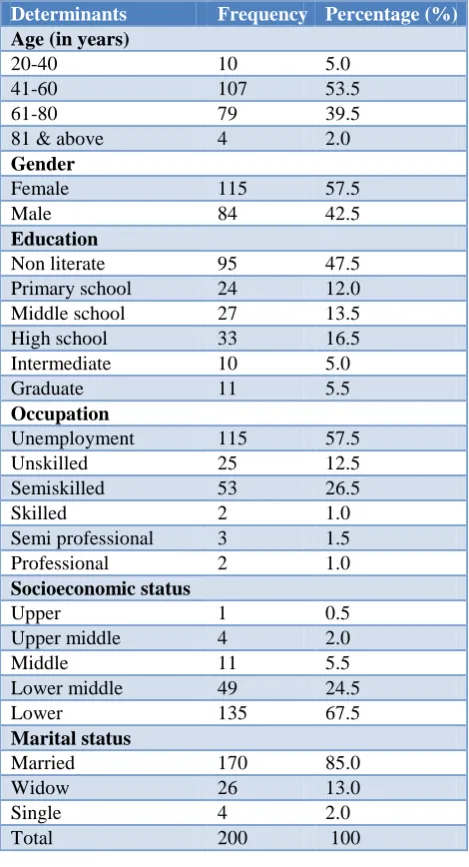
Out of 200 subjects most of them, that is 53.5% belongs to age group 41-80 years and 39.5% belongs to 61-80 years. 57.5% were males and 42.0% were Females 47.5% were Non-literate, 16.5% studied till High school and 5.5% were graduates. majority of them around 57.5% were Unemployed which includes Housewife, retired and those who are not working,26.5% were semiskilled workers and 12.5% were unskilled workers and 1% were professionals.
Majority 67.5% belongs to lower socio-economic status and 24.5% belongs to lower middle socio-economic status according BG Prasad scale of socio economic status classification. 85% were married and 13% were widow.
Table 1: Distribution study subjects based on socio-demographic characteristics.
Determinants Frequency Percentage (%)
Age (in years)
20-40 10 5.0
41-60 107 53.5
61-80 79 39.5
81 & above 4 2.0 Gender
Female 115 57.5
Male 84 42.5
Education
Non literate 95 47.5 Primary school 24 12.0 Middle school 27 13.5 High school 33 16.5 Intermediate 10 5.0
Graduate 11 5.5
Occupation
Unemployment 115 57.5
Unskilled 25 12.5
Semiskilled 53 26.5
Skilled 2 1.0
Semi professional 3 1.5 Professional 2 1.0 Socioeconomic status
Upper 1 0.5
Upper middle 4 2.0
Middle 11 5.5
Lower middle 49 24.5
Lower 135 67.5
Marital status
Married 170 85.0
Widow 26 13.0
Single 4 2.0
Total 200 100
Table 2: Distrubution of Study subjects based on BMI.
BMI Grade Frequency Percentage (%)
Underweight 5 2.5
Normal 50 25.0
Overweight 43 21.5
Obese 102 51.0
Total 200 100.0
Table 3: Distribution of study subjects based on family history of diabetes.
Family history of
diabetes Frequency Percentage (%)
Yes 89 44.5
No 111 55.5
Total 200 100
Table 4: Distribution of study subjects based on presence of co-morbidities like hypertension.
Hypertension Frequency Percentage (%)
Yes 96 48
No 104 52
Total 200 100
Table 5: Distribution of study subjects based on symptoms during diagnosis.
Symptoms Frequency Percentage (%)
Generalised
weakness 60 30.0
Polyuria 30 15.0
Polydipsia 6 3.0
Non healing wound 12 6.0
By self 9 4.5
Pre-operative
investigation 16 8.0
Headache 7 3.5
Fever 19 9.5
Blurring of vision 4 2.0
Burning foot 6 3.0
Pedal edema 4 2.0
GDM 1 0.5
Generalised
weakness, polyuria & polydipsia
26 13.0
Total 200 100.0
Table 6: Distribution of study subjects based on glycaemic status.
Diabetes status Frequency Percentage (%)
Controlled 82 41.0
Uncontrolled 118 59.0
Total 200 100.0
Table 7: Distribution of study subjects based on type of anti-diabetic medication.
Medication Frequency Percentage (%)
Oral 137 68.5
Insulin 21 10.5
Both 41 20.5
Diet 1 0.5
Total 200 100.0
Diabetic profile and associated co-morbidities
13% had classical symptoms of diabetes like generalised weakness, polyuria and polydipsia,30% had generalised weakness before diagnosis of diabetes,15% had polyuria
and 12.5% didn’t had any symptoms got diagnosed during pre-operative check-up and regular check-up.
Table 8: Distribution of study subjects based on Quality of Life.
Determinants Good (%)>50% Poor (%)<50%
Total score 86 (43) 114 (57)
Physical QOL 86 (43) 114 (57)
Psychological QOL 91 (45.5) 109 (54.5)
Social QOL 92 (46) 108 (54)
Environmental QOL 87 (43.5) 113 (56.5)
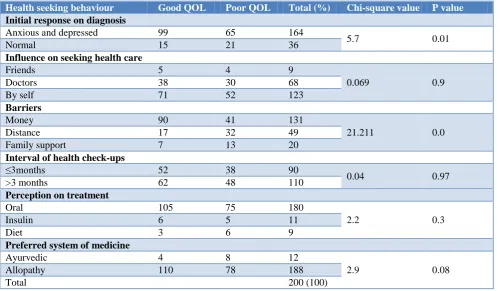
Table 8: Distribution of study subjects based on health seeking behaviour.
Health seeking behaviour Good QOL Poor QOL Total (%) Chi-square value P value
Initial response on diagnosis
Anxious and depressed 99 65 164
5.7 0.01
Normal 15 21 36
Influence on seeking health care
Friends 5 4 9
0.069 0.9
Doctors 38 30 68
By self 71 52 123
Barriers
Money 90 41 131
21.211 0.0
Distance 17 32 49
Family support 7 13 20
Interval of health check-ups
≤3months 52 38 90
0.04 0.97
>3 months 62 48 110
Perception on treatment
Oral 105 75 180
2.2 0.3
Insulin 6 5 11
Diet 3 6 9
Preferred system of medicine
Ayurvedic 4 8 12
2.9 0.08
Allopathy 110 78 188
Total 200 (100)
Quality of life of type II diabetes mellitus subjects
Median score of overall QOL was 75.6±12.7, mean score of physical domain was 435.7±99.8. Pyscological domain was 351.7±75.1, social domain was 67.1±18.6 and environmental domain was 606.5±93.2.
The QOL scores were further converted into categorical variable by obtaining the median score and dividing the group into those who got a score above the mean and those below the mean. They were labelled as good and poor QoL.
It is observed that, 114 (57%) had poor total QOL, 114 (57%) had poor physical QOL and 86 (43), 109 (54.5%) had poor psychological QOL, 108(54%) had poor social QOL, 113 (56.5%) had poor environmental QOL
Health seeking behaviour
Out of 200 subjects in our study, 164 (82%) were anxious when they were diagnosed to have diabetes, 36 (18%) were normal and only one was depressed.
It is observed that out of 200 subjects in our study, 123 (61.5%) were influenced by self, 68 (34%) were influenced by Doctors and 9 (4.5%) were influenced by friends for decision making.
It is observed from the table that out of 200 subjects 131(65.5%) had Money has the barrier to attend hospital for check-up, 49 (24.5%) had distance has barrier and for 20 (10%) family support was the barrier.
investigation, and 14 (7%) go for check-up more than 3 months once.
Out 200 subjects 180 (90%) of them believed oral drugs is the treatment for diabetes, 11 (5.5%) believed insulin is the treatment for diabetes and 9 (4.5%) of them believed Diet modification is the treatment choice.
Out of 200 subjects in our study majority 188 (94%) prefer allopathic medicine and only.
On applying chi-square test to study association between health seeking behaviour and Quality of life, association between initial response to diagnosis with QOL diabetic patients showed statistical significance (p=0.01), similarly barriers to attend health checkup and QOl also showed statistical significance (p=0.0).
DISCUSSION
The study was conducted to know the untouched area in diabetes like influence of health seeking behaviour on Quality of life of diabetes patients.
Understanding the health seeking behaviour of patients gives the idea of individual perception of disease, knowledge about the disease, their beliefs, attitude, practice and barriers to seek medical care which plays a major role in control of glycaemic status in diabetics. It is observed that out of 200 Subjects in our study, 123 (61.5%) were influenced by self, 68 (34%) were influenced by doctors and 9 (4.5%) were influenced by friends to seek Health care, 131 (65.5%) money was the barrier to attend hospital for check-up, for 49 (24.5%) distance was the barrier and for 20 (10%) family support was the barrier.
Study done in Tanzania by Avi et al reported 14.9% of the diabetic patients were not taking any treatment at the time of interview and most common reasons for not taking treatment were lack of money and long waiting hours and queues apart from a distance of health facility from the residence.5
Another study done by Mehrotra et al reported poor availability of transport, physical distance to the health facility and the time taken to reach such facilities have been found to influence health-seeking behaviour and health service utilization.6
It is observed that out of 200 subjects 186(93%) visited hospital for follow-up once in less than 3 months and 14 (7%) were visiting hospital at interval of more than 3 months once.
The reason for frequent visits to health care may be due to accessibility and availability of services.
Study done in Tanzania by Avi et al observed that many patients could not attend their regular clinic appointments due to lack of financial resources to pay for public transport. Additionally health care coverage is another major factor influencing timely accessibility to care and treatment for diabetes in sub-Saharan Africa.6
It is also observed that out of 200 subjects 180 (90%) of them believed that oral drugs is the treatment for diabetes, 11 (5.5%) believed insulin is the treatment and 9 (4.5%) of them believed diet modification is the treatment choice.
In the study conducted in Tanzania Avi et al more than 50 percent of people with type II diabetes are reported not to be aware of having the disease and about the treatment of diabetes.
This type of situations leads to late care seeking with consequent complications in the care and management of diabetes. Given the chronic nature of diabetes, patients’ knowledge and skills in its management become essential.
Our study reported 6% were using Ayurvedic medicine along with Allopathy, whereas study carried out by Mehrotra et al in Allahabad, India, which showed that 67.8% of patients were using the alternative system of medicine apart from allopathic system of medicine.7 Perceived failure in managing diabetes and effects of western medicine proved to be the determinants for using alternative medicine in the folk sector, consistent with previous studies.8
People get influenced by friends, neighbours and the media and go for alternative system of medicine for better control of glycaemic status. There is also misbelief in the community that traditional healing methods will cure the disease.
Uncontrolled glycaemic status makes them to feel that allopathic medicine is not sufficient or it is not the right choice and get influenced by other system of medicine either as supplement with Allopathic system or replacing it with other systems of Medicine like Ayurvedic or Homeopathic Medicines.
Association between initial response to diagnosis and barriers to attend health checkup with Quality of life showed statistical significance, Health seeking behaviour has positive impact on glycaemic control which further improves Quality of life.
Financial status, transport facilities and the patient’s income were other factors effective on health behaviour. Much research should be done on these areas and identify the lacunae and provide appropriate intervention which is acceptable to the population.
CONCLUSION
Understanding the health seeking behaviour of patients gives the idea of individual perception of disease, knowledge about the disease, their beliefs, attitude, practice and barriers to seek medical care.
By understanding these factors, it helps the care provider to overcome these barriers and fills the gap between care giver and care receiver and better quality care can be given to the population.
Limitations
The study was conducted in hospital; a longitudinal study involving larger population in community should be conducted to generalize the results.
Recommendations
Improving the knowledge regarding diabetes mellitus and its management, addressing the barriers for health seeking will improve the disease status. Specific efforts should be made to improve awareness of complications of diabetes to the patients and impact of uncontrolled glycaemic status.
ACKNOWLEDGEMENTS
The authors would like to extend their heartfelt gratitude to JSS Hospital, staffs of Department of Medicine, study participants, and their family members.
Funding: No funding sources Conflict of interest: None declared
Ethical approval: The study was approved by the Institutional Ethics Committee
REFERENCES
1. Mbanya J, Motala A, Sobngwi E, Assah F, Enoru S. Diabetes in sub-Saharan Africa. Lancet. 2010;375:2254-66.
2. Joshi SR, Parikh RM. India - diabetes capital of the world: now heading towards hypertension. J Assoc Physicians India. 2007;55:323–4.
3. WHO. World Health Organisation: Chronic Diseases: A Vital Investment World Health Organisation: Geneva; 2005.
4. Hjelm K, Nambozi G. Beliefs about Health and illness: A comparison between Ugandan men and women living with diabetes mellitus. Int Nurs Rev. 2008;55(4):434–44.
5. Basavana Gowdappa H, Gangadhar MR, Ashok NC, Madhu B, Kulkarni P. A study of Tribal Health – Jenu Kuruba Tribe in Karnataka with Special Reference to Diabetes and Hypertension. Mysore: JSS University Mysore; 2013:21.
6. Avi B, Colford J. Prevalence and Treatment of Diabetes in Rural Tanzania. In: Stephenson R, Hennink M, editors. Asia Pac Pop J. Vol. 19. Berkeley: University of California at Berkeley; 2012;2004:5–26.
7. Mehrotra R, Bajaj S, Kumar D. Use of complementary and alternative medicine by patients with diabetes mellitus. Natl Med J India. 2004;17:243–5.
8. Singh V, Raidoo DM, Harries C. The prevalence, patterns of usage and people’s attitude towards complementary and alternative medicine (CAM) among the Indian community in Chatsworth, South Africa. BMC Complement Alernat Med. 2004;4(3):1-7.
Cite this article as: Savitha RBB, Kulkarni P, Ashok