Short Communication
Empower parents, enable breastfeeding:
a behavioral change communication exercise conducted at a
community health centre of Haryana
Aravind Gandhi Periyasamy
1*, Nairita Dalui
1, Arun K. Aggarwal
1, Sanjeev Goyal
2, Rupa Jain
3INTRODUCTION
Breast milk or mothers’ milk is the first source of nutrition a child receives and the defense it mounts against the disease causing organisms. It is a natural secretion and the most appropriate food for a child below 6 months of age. It provides all the nutrition required by a child in adequate quantities, reduces the Infant mortality by 13%.1 It helps in proper weight gain of the baby and contains antibodies against infectious organism. Breastfeeding increases the chances of survival of less than 6 months babies by 6 times.2 Docosahexaenoic acid
(DOHA) present in the mother’s milk improves the IQ of the children, by promoting brain development. In addition to the above benefits for children, breastfeeding also protects the mothers against the chances of getting pregnant immediately after the delivery. Breastfeeding also reduces incidence of depression in mothers and improves the attachment between mother and child. Considering all the above, it is vital to initiate the breastfeeding within 1 hour of child birth, followed by exclusively breastfeeding the child till 6 months of age. It is also essential to feed breast milk along with other complimentary food, from 6 months to 2 years of age.3
ABSTRACT
In India, only 41.6% of the children are breastfed within 1 hour and 54.9% of the children are exclusively breastfed till 6 months. In order to promote breastfeeding, the first week of August is being observed as World Breastfeeding week. We organized a brainstorming session followed by an Interactive, audio-visual health education event on breastfeeding for the pregnant women and their household members at a Community Health Centre (CHC) in Haryana, during that week. A behavior change communication (BCC) session was held on 1st August 2019 at the Antenatal clinic of the CHC. Target population was the pregnant, lactating mothers and their household members. Needs assessment was done to assess their current knowledge, attitude and needs about the breastfeeding and breast milk, by interacting with them and posing questions. Based on the above needs assessment exercise, we delivered a health education session. The household members were enlightened about their role in breastfeeding. The behavior change communication exercise, tailored to local population and conducted by us would have improved the knowledge, attitude of the pregnant women and their family members towards breastfeeding, and in turn will improve the practice in near future. The exercise is replicable in other settings, by tailoring it according to the local needs.
Keywords: Breastfeeding week, Breast milk, Good feeding practices, Behavior change communication
1
Department of Community Medicine and School of Public Health, Post-Graduate Institute of Medical Sciences and Research, Chandigarh, India
2CHC Raipur Rani, Panchkula, Haryana, India
3Department of Obstetrics and Gynecology, CHC Raipur Rani, Panchkula, Haryana, India
Received: 14 September 2019 Accepted: 18 October 2019 *Correspondence:
Dr. Aravind Gandhi Periyasamy, E-mail: [email protected]
Copyright: © the author(s), publisher and licensee Medip Academy. This is an open-access article distributed under the terms of the Creative Commons Attribution Non-Commercial License, which permits unrestricted non-commercial use, distribution, and reproduction in any medium, provided the original work is properly cited.
However, in India, only 41.6% of the children are breastfed within 1 hour and 54.9% of the children are exclusively breastfed till 6 months.4 Also, the practice of giving other edible items like ghutti, honey, and cow’s milk along with or instead of breast milk during the birth and till 6 months is also culturally present in our country. It has also been reported that major population of women are not aware of the benefits of exclusive breastfeeding.5 The government of India envisages to improve the breastfeeding practices by means of an exclusive program called Mothers Absolute Affection (MAA), which targets pregnant/lactating women and the community at large and has sustained awareness as a major component.6
In order to promote the good practices associated with breast milk and breastfeeding, the first week of August is being observed as World Breastfeeding week. During this period, hospitals, organizations involve themselves in activities engaging the community at large for creating awareness and promotion of breastfeeding. In 2019, this world breastfeeding week was observed with the theme ‘Empower Parents, Enable Breastfeeding’. Utilizing the opportunity, we, the Department of Community Medicine & School of Public Health, PGIMER in collaboration with the Senior Medical Officer of CHC, Raipur Rani, organized a brainstorming session followed by an Interactive, audio-visual health education event on Breastfeeding for the pregnant women and their household members, attending the Ante-Natal Clinic of CHC, Raipur Rani.
METHODS
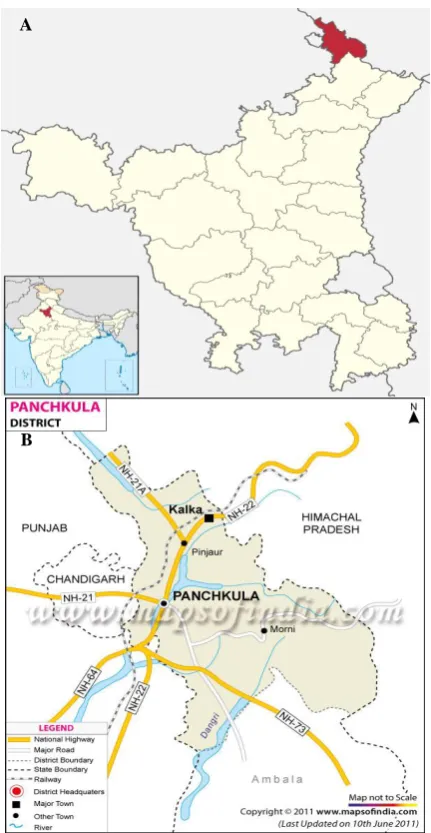
The Department of Community Medicine & School of Public Health under PGIMER- Chandigarh, an Institute of National Importance, provides community and preventive health services in the rural area of Community Health Centre (CHC), Raipur Rani. Raipur Rani is a block in the Panchkula District of Haryana state (Figure 1 and 2).
The Ante-Natal Clinic (ANC) of the CHC has an OPD attendance of 30-40 and 15-20 deliveries per month is conducted in the center. We decided to hold a Behavior Change Communication (BCC) session on 01.08.2019 at the ANC of the CHC. Target population were the pregnant, lactating mothers and their household members. The ASHAs of the area were informed to mobilize the pregnant women and their household members for the session. There were 42 participants present in the session, among which 23 were pregnant women, 1 lactating mother and 18 family members. The event was conducted by the residents and staff of the PGIMER. It was started with a brainstorming session to initiate the talk with the participants, and to assess the knowledge and needs of the population, with regards to breastfeeding practices. Once the needs were ascertained, health education was imparted by means of audio-visual aids and demonstrations, according to the gaps identified in needs,
event was registered with the World Association for Breastfeeding and certified from the same.
Figure 1: (A) Haryana state and (B) Panchkula district.
RESULTS
Needs assessment was done to assess their current knowledge, attitude and needs about the breastfeeding and breast milk, by interacting with them and posing questions. During the interaction, it was found that majority of them were not aware about the concept of early initiation of breastfeeding at all, and only few of them responded that the baby must be breastfed as early possible. But none of them knew the exact timeframe for early initiation. Similarly, when the participants were probed about the status of colostrum, majority had no positive or negative opinion about it and stated that the colostrum feeding is family’ choice. Only 5 among the participants, expressed that it should not discarded but given to the newborn baby. Almost everyone present in the event was sure about the duration of exclusive breastfeeding i.e., six months. They revealed that they got the information from the ASHAs and ANMs. However, only a few knew about the overall duration of breastfeeding as 2 years.
We moved on to probe the common feeds that are given to new born. Few of them said they have the custom of feeding Ghutti as the first feed, few others said they would give cow’ milk along with mothers milk from the time of birth. When they were asked to enlist the benefits of exclusive breastfeeding, they had the only reply that breast milk is good for baby’ health.
The participants were then asked whether the household members have any role in breastfeeding. Everyone replied in negative, which was a major misconception identified. When asked whether mother can breastfeed if she or the baby is ill, few of them said yes and few others said no. Majority of them replied that they don’t know. When asked about the signs of hunger and how will they identify that the child wants breast milk, majority of the responded that crying is the sign of baby hunger.
The pregnant and lactating women present there were asked to demonstrate the proper positioning of the baby during breastfeeding. Only one lactating women could demonstrate all the steps involved in proper position of baby while breastfeeding, while none of the pregnant women were not able to. The lactating women attributed her knowledge to the counselling and assistance given to her in the post natal ward after parturition.
DISCUSSION
Based on the above needs assessment exercise, we delivered a health education session. Audio-Visual aids in the form of pictures, videos were shown to them, along with the explanations by the residents and female multi-purpose health worker of the department. The principle of early initiation of breastfeeding within 1 hour of birth and the exclusive breastfeeding till 6 months which includes at least 8 feeds during day and one feed during night, followed by breastfeeding along with complementary feeding till 2 years was clarified to the participants. The demerits of top feeding in the form of cow’ milk and pre-lacteal feeds like Ghutti was elaborated.
The benefits of breastfeeding for the child as well as for the mother, was conveyed with the help of the animated video clip, so that it will be a motivation for good breastfeeding practices (Table 1). Also, the problems and diseases associated with bottle feeding were shown. The participants were informed in clear terms that breastfeeding shall be continued irrespective of mother or child being ill. If the child vomits the feed often, too ill to breast feed, unconscious or convulsing, he shall be brought to the nearest PHC or hospital for further management. The participants actively posed questions regarding breastfeeding during specific illness such as fever, diarrhea, acute respiratory infections etc., which was clarified by the residents.
Table 1: Benefits of breastfeeding.7,8
For the child:
1. Provides adequate nutrition
2. Protects against common infection by improving immunity 3. Lowers the risk of chronic diseases like diabetes in later part of life 4. Improved brain development and Intelligence Quotient
5. Stimulates proper growth of mouth and jaw
6. Improves the behavior and sense of well-being of child in future For the mother:
1. Reduced risk of post-partum bleeding
2. Provides protection against pregnancy immediately after delivery. 3. Decreases risk of post-partum depression
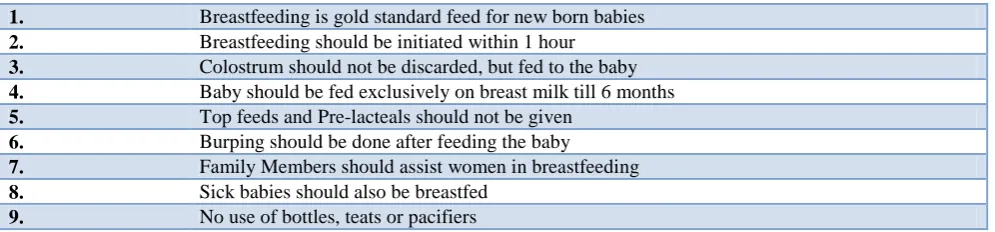
Table 2: Key messages delivered to the participants.
1. Breastfeeding is gold standard feed for new born babies 2. Breastfeeding should be initiated within 1 hour
3. Colostrum should not be discarded, but fed to the baby 4. Baby should be fed exclusively on breast milk till 6 months 5. Top feeds and Pre-lacteals should not be given
6. Burping should be done after feeding the baby
7. Family Members should assist women in breastfeeding 8. Sick babies should also be breastfed
9. No use of bottles, teats or pacifiers The household members were enlightened that they have a major role in breastfeeding. They can assist the mother, by relieving her from household chores and thus providing adequate rest, an essential for breastfeeding. They can help in burping and putting the child to sleep, once the mother completes the feeding. Proper method of burping was demonstrated. They were also informed that they should not wait to breastfeed till the baby cries, but they should identify much earlier signs of hunger like lip smacking, sucking movements, sounds, hand to mouth movements etc.3 Proper positioning and attachment of the child during breastfeeding was demonstrated to the participants.6 Finally, the key messages with regards to breastfeeding practices were reiterated (Table 2).
Almost every one of our participants (41) were aware that the exclusive breastfeeding should be given till 6 months, which is high when compared to the national and the state averages,4 and in line with the analysis by POSHAN which revealed a positive trend in Exclusive Breastfeeding, in Indian states.9 Majority of the participants in our session opined that it’s not mandatory to feed colostrum to the new born, while Saqib N et al found in their study that 47.5% of the mothers did not feed colostrum.10 Chinnasamy et al in their study reported 25% felt that colostrum is bad and hence should not be given.11
We observed from the above behavior change communication exercise that the concept of early initiation of breastfeeding was not known by majority of the community members, a finding similar to that of NFHS 4.4 A quantitative study which was conducted in the same area in 2009 revealed a similar results in which only 19% were aware about or have done early initiation of breast feeding and practicing it within 1 hour,12 which may indicate that there is no much improvement in this aspect of early initiation of breastfeeding over the last 10 years in the community. Gupta et al in their feasibility analysis done for IMNCI implementation in the villages under the Raipur Rani block observed that none of the lactating women were practicing proper attachment and positioning of child during breastfeeding.13 During our BCC session, it was found that the only lactating mother present was aware about and properly demonstrated the good positioning and attachment of baby during
breastfeeding, whereas none of the pregnant women were even aware about proper positioning of the baby.
Under the ANC care envisaged by the RMNCH+A program of India, breastfeeding counselling is a part of advice given during Ante-Natal period, to prepare the mothers for lactation in post-partum. We came to know from our session that apart from the concept of EBF that has percolated well with the ANC mothers, the other key messages of breastfeeding of the baby, appears to have not been imbibed by the target population, as they remain at the same level which was 10 years ago.12 The proportion of women having early registration of pregnancy increased by 25.2% and at least 4 Ante Natal visits increased by 29.4% over the last decade, indicating a greater use of ANC services.4 But it appears that it has not helped in improving the breastfeeding knowledge and practices in our study participants. This may be due to the barriers to the good breastfeeding practices in that community in the form of customs and traditions. They must be identified by having a qualitative research in the community in the form of Focused Group Discussions with the women, elder women and fathers. Alternatively, or additionally, this lag in breastfeeding knowledge and practices may also be attributed to the increased workload on the existing workforce at the health care delivery institutes. There is increase in quantum of work due to increase in the number of women attending the ANC clinic for registrations and routine visits. It might not be possible for them to deliver the breastfeeding counselling, since increased workload reduces the time available for doing tasks thus compromising patient care.14 This must be further researched by having in-depth interviews with the CHC staff, time motion study, work sampling and activity analysis of the staff. The density of health workers in India is also not encouraging with an added bias against rural areas.15 The Mother’ Absolute Affection (MAA) program envisages to promote and sustain breastfeeding. Lactation counsellors are being suggested in the program, to promote breastfeeding management. This can be leveraged and feasibility of their employment at the CHC can be studied.
In our session, it was reported that practice of giving pre-lacteal feeds like ghutti, honey and cow’ milk, similar to the findings of Chinnasamy where 10.5% of the mothers
participants in our session grossly downplayed the role of the fathers and other household members in breastfeeding. This is in contrast to findings of a qualitative study conducted among the fathers in Pakistan, wherein they have recognized they can be of assistance to mothers in breastfeeding.16 WHO also recommends that the fathers and other family members can assist the breastfeeding women in various ways by doing household chores, changing diapers, burping etc.17 An analysis of the health system delivering the education and practices about breastfeeding must be done and evaluated, to identify the points for action, so that the good practices of breastfeeding can be improved to desired levels.
CONCLUSION
Breast milk is every child’ right and it’s the duty of the public health professionals and para-medical staff to bring awareness and remove the myths about breastfeeding from the community. The above behavior change communication exercise, tailored to local population and conducted by us would have improved the knowledge, attitude of the pregnant women and their family members towards breastfeeding, and in turn will improve the practice in near future. The exercise is replicable in other settings, by tailoring it according to the local needs. Further analysis on health systems must be conducted to study the bottlenecks in the system that contributes to the lack of knowledge about breastfeeding and breast milk. A concrete action plan must be taken based on the analysis.
ACKNOWLEDGEMENTS
We would like express our sincere thanks to Ms Jagdeep, FHSW for her support during the event. We feel grateful to the CHC staff and ASHAs of the area for mobilizing the participants and making arrangements at the CHC for the event.
Funding: No funding sources Conflict of interest: None declared Ethical approval: Not required
REFERENCES
1. Lal V, Rai SK. The culture of bottle-feeding. Indian Assoc Prev Social Med. 2009;34:247.
2. Breastfeeding: Impact on child survival and global situation. UNICEF. Available at https://www.unicef. org/nutrition/index_24763.html#targetText=Breastfe eding%20also%20lowers%20the%20risk,adulthood %20than%20formula%2Dfed%20babies. Accessed 11th September 2019.
3. Guidelines for Enhancing Optimal Infant and Young Child feeding practices, Ministry of Health & Family Welfare.
4. India Fact sheet: National Family Health Survey 4. International Institue for Population Sciences.
5. Mahmood SE, Srivastava A, Shrotriya VP, Mishra P. Infant feeding practices in the rural population of north India. J Family Community Med. 2012;19:130.
6. Mothers Absolute Affection. Ministry of Health & Family Welfare. Available at https://nhm.gov.in/ MAA/Operational_Guidelines.pdf. Accessed 11th September 2019.
7. Breastfeeding. World Health organisation. Available at https://www.who.int/nutrition/topics/exclusive _breastfeeding/en/.. Accessed 11th September 2019. 8. Benefits of Bresatfeeding, UNICEF. Available at
https://www.unicef.org.uk/babyfriendly/about/benef its-of-breastfeeding/. Accessed 11th September 2019.
9. Exclusive Breastfeeding in India: Trends and Data Gaps. POSHAN. Available at https://poshan.ifpri. info/2017/08/04/exclusive-breastfeeding-in-india-trends-and-data-gaps/. Accessed 11th September 2019.
10. Saqib N, Qazi M. Factors associated with exclusive breastfeeding in the first six months of life in Northern India. 2018. 2018;5:6.
11. Chinnasami B, Sundar S, Kumar J, Sadasivam K, Pasupathy S. Knowledge, attitude and practices of mothers regarding breastfeeding in a South Indian Hospital. Biomed Pharmacol J. 2016;9:195-9. 12. Kishore MSS, Kumar P, Aggarwal AK.
Breastfeeding knowledge and practices amongst mothers in a rural population of North India: a community-based study. J Tropical Pediatr. 2008;55:183-8.
13. Gupta M, Aggarwal AK. Feasibility study of IMNCI guidelines on effective breastfeeding in a rural area of North India. Indian Assoc Prev Social Med. 2008;33:201.
14. 14. Kaur. M. Work Load On Nurses And It’s Impact On Patientcare. IOSR J Nurs Health Sci. 2017;6:22–6.
15. The health workforce in India. World Health Organisation. Available at https://www.who.int/hrh/ resources/16058health_workforce_India.pdf. Accessed 11th September 2019.
16. Mithani Y, Premani ZS, Kurji Z, Rashid S. Exploring fathers’ role in breastfeeding practices in the urban and semiurban settings of Karachi, Pakistan. Journal Perinatal Educ. 2015;24:249-60. 17. Breastfeeding mothers need peer counselling. World
Health Organisation. Available at http://www.euro. who.int/en/health-topics/Life-stages/pages/news/ news/2013/08/breastfeeding-mothers-need-peer-counselling. Accessed 11th September 2019.
Cite this article as: Periyasamy AG, Dalui N, Aggarwal AK, Goyal S, Jain R. Empower parents, enable breastfeeding: a behavioral change