http://www.ijcmph.com pISSN 2394-6032 | eISSN 2394-6040
Original Research Article
Influence of patients’ rights charter on health systems responsiveness in
selected counties in Kenya: health care provider perspective
Susan Njuguna
1*, Wanja Mwaura Tenambergen
2, Job Mapesa
3INTRODUCTION
Health care providers in primary care facilities (Tier 2, health centers) are frontline service providers to the community that they serve. Kenya is divided administratively into 47 counties and its health system is organized in four tiers for health service provision. The Tier 1 is the community level with community health volunteers who promote public healthcare services, Tier 2 is comprised of dispensaries and health centers which
provide the primary care health services, Tier 3 consists of sub-county and county hospitals that provide secondary healthcare services, and Tier 4 are the national referral hospitals.1
Health care providers contribute majorly to successful implementation of national health policies and strategies for desired outcomes in health systems.2 It is therefore imperative that the health care providers are aware of the policies and how to implement in the context of the environment in which they operate.3
ABSTRACT
Background: The role of health care providers in the implementation of responsiveness of health systems is unclear. Responsiveness of health systems is one of the goals set out by WHO in 2000. Effective leadership and governance of health systems incorporates all players involved in policy implementation. The objectives of the study were to establish how the health care provider’s awareness of patients’ rights charter influence health systems responsiveness and to establish how the health care provider practice of patients’ rights charter influence responsiveness of health systems in primary care settings.
Methods: This was an exploratory cross section descriptive study design that used a psychometric semi- structured questionnaire to collect qualitative data that was analyzed quantitatively. Respondents were 62 purposively sampled health care providers from four, primary care health facilities. Key informant interviews from the four health facilities in-charges were carried out. Data was analyzed using SPSS vs 25 and themes.
Results: Health care provider awareness of the content of patients’ rights charter (r=0.612*,p<0.001) and practice of patient’s right charter (r=0.610*,p<0.001) were statistically significant and influenced health systems responsiveness.
Conclusions: Implementation of patients’ rights charter has an influence on responsiveness of health systems. Leadership and Governance of health systems requires a structured approach to implementation of policies that positively influence responsiveness of health systems. Supervision of health care providers for best practice can provide a basis for replication in other primary care facilities and lead to achieving responsiveness of health systems.
Keywords: Responsiveness, Patients’ rights charter, Healthcare provider 1
School of Nursing, Daystar University, Kenya
2Department of Health Systems Management, Kenya Methodist University, Kenya
3Department of Public Health, Nutrition and Dietetics, Kenya Methodist University, Kenya
Received: 13 September 2019
Revised: 10 October 2019
Accepted: 14 October 2019
*Correspondence:
Susan Njuguna,
E-mail: [email protected]
Copyright: © the author(s), publisher and licensee Medip Academy. This is an open-access article distributed under the terms of the Creative Commons Attribution Non-Commercial License, which permits unrestricted non-commercial use, distribution, and reproduction in any medium, provided the original work is properly cited.
The World Health Organization introduced the concept of responsiveness with the classification under eight domains. Responsiveness is one of the three goals of health systems together with better health for the population and fairness in financial contributions.4 Responsiveness of health systems refers to the ability to meet the patients’ non-medical health needs as they seek the services of the health care provider in the health facilities. Responsiveness to people’s legitimate non-medical needs and expectations has been seen to influence the patients’ health outcome and therefore the need to focus on it as a goal.4 The domains of responsiveness have been described using various frameworks and adopted for different contexts.5,6 The two main classification of the domains are respect of persons which relates to the point of interaction with service delivery from the health care provider and includes dignity, autonomy, confidentiality, communication and client orientation refers to interaction and support within the facility to include, promptness in attendance, access to social support of family while receiving services at the facility, quality of amenities used by patients, and choice of health care provider and or facility.
The Kenya health policy 2014-2030 has responsiveness of health systems as an objective towards achieving patient centered care.1 The outpatient departments of primary care facilities are practical points for assessing responsiveness due to the nature of services provided that require monitoring of return visits. An example is a well child clinic where growth monitoring and immunizations for over nine months provides an opportunity for health care providers aware of the concept of responsiveness to ensure effective implementation.
The implementation of patients’ rights charter by countries has occurred at different times since the declaration by the United Nations in 1948.7,8 The patients’ rights charter has three components which are patients’ rights, the patients’ responsibilities, and mechanisms of dispute handling.9 There are statements within the patients’ rights charter that are implied in the concept of responsiveness therefore suggesting a relationship between patients’ rights charter and responsiveness. Curriculum for health care providers in Kenya incorporate the concepts of patients’ rights and the role of the health provider for professional practice implying that the graduate from a health training institution should be able to implement the patients’ rights charter in the practice of their profession. Despite the professional preparation of health care providers, complaints by patients of being ill-treated as they sought services have been found in many countries. This informed the focus by Ministries of Health to implement the patients’ rights charter as a policy with methods of implementation that vary between countries.
The study aimed at establishing how the implementation of patients’ rights charter influenced responsiveness from the perspective of the health care providers. A list of health centers in the selected counties was obtained from
the county health services and the sub counties identified. From the sub counties the health centers were identified and 30% sampled health centers serving 300 to 700 patients a month were identified as the study sites.
METHODS
Study design
This was an exploratory descriptive cross-sectional study design utilizing both quantitative and qualitative approaches for data collection.
Study setting and participants
Kiambu and Machakos counties which are two of the three counties that share a border with Nairobi a major city were selected. The two counties both have a population of over one million. The population size is synonymous with the number of health care providers required to serve the population. The health centers that were considered for the study provided outpatient services for adults and children and were situated in the more rural parts of the county serving between 300-700 patients in a month. The counties, Kiambu and Machakos met the criteria of serving a population of over one million and had rural health facilities that were accessible to the major towns.10 Health care providers were the primary respondents in this study and they were drawn from the four public primary care facilities. The health care providers included in the study had direct consultations with the patient and they comprised the following cadres: community health nurses, clinical officers and laboratory technologist. At the time of this study, none of the health facilities had medical physician.
Sampling procedure
The respondents were purposively sampled from the health care providers who provided direct patient care at the health centers in the outpatient department due to the regular contact with patients. These were the nurses and clinical officers on duty on the day of data collection since they worked on shifts. From each facility 17 respondents were sampled, and one facility in-charge was sampled as key informant.
Data collection
Qualitative data was collected using a structured psychometric questionnaire which was administered face-to-face to 68 respondents. Data was collected from the four-health facility in charges through key informant interviews using a key informant guide. Data was collected between February to March 2018.
Data analysis
statistics. Non-parametric methods were used for presenting data from the five-point Likert scale. The data was interpreted using correlations of Spearman’s rho and its corresponding p-value interpreted.
RESULTS
The study had a response rate of 62 (91%). The demographic characteristics of the respondents are shown in Table 1.
Majority of the respondents were female 48 (77%) and had a diploma as their highest level of education. On how long the respondents had worked at the health facility,
nearly all 59 (95%) had worked for more than two years in the current facility.
Respondents level of awareness of patients’ rights charter
The researchers sought to establish the respondents’ level awareness on patients’ rights charter. The results are shown in Table 2. A five-point Likert scale was used where 5=strongly agreed, 4=agreed, 3=neutral, 2=disagreed and 1=strongly disagreed. The respondents were requested to state their agreement with the statements regarding their own awareness of the patients’ rights charter.
Table 1: Demographic characteristics of respondents (n=62).
Characteristics N (%)
Gender
Male 14 (23)
Female 48 (77)
Highest level of education
Diploma 48 (77)
Degree 14 (23)
Length of time worked at health center
Less than one year 3 (5)
2-5 years 31 (50)
More than 5 years 28 (45)
Table 2: Respondents awareness of patients’ rights charter.
Statements
Strongly
agree Agree
Not
sure Disagree
Strongly disagree
N (%) N (%) N (%) N (%) N (%)
I know where to get information on patients’ rights 1 (2) 44 (71) 11 (18) 2 (3) 4 (7)
Patients should always be given emergency health
services 2 (3) 36 (58) 1 (2) 15 (24) 8 (13)
The patient has a right to the content of their health
insurance 5 (8) 46 (74) 5 (8) 6 (10) 0 (0)
The patient has a right to the best quality of care 6 (10) 55 (89) 0 (0) 1 (2) 0 (0)
Patients confidentiality must be maintained 11 (18) 44 (71) 0 (0) 7 (11) 0 (0)
A patient should only be treated after they give their
consent 13 (21) 49 (79) 0 (0) 0 (0) 0 (0)
After lodging a complaint, the patient should be made
aware of the outcome 9 (15) 48 (77) 1 (2) 0 (0) 4 (7)
Patients medical insurance should provide for all the
services they require 17 (27) 43 (69) 1 (2) 1 (2) 0 (0)
Overall, the findings indicated that nearly all respondents 92% were aware of the patients’ rights charter while 8% were not aware. A third 55(73%) said they knew where to get information on patient rights, 51 (82%) knew that a patient has a right to the content of their health insurance, nearly all 55 (81%) knew that patients confidentiality must be maintained and 57 (92%) said that after lodging a complaint; the patient should be made aware of the outcome. The respondents indicated that all 62 (100%)
practiced the contents of the patients’ rights charter as stipulated by the MOH.
Responsiveness of the health systems
develop questions for the study.11-13 The respondents were asked to rate how responsive they were to the health system. Findings indicate that 58 (94%) agree that the system was responsive while 4 (6%) disagreed.
A bivariate analysis was conducted to determine whether each of the independent variables in this study that is, awareness of patients’ rights charter (X1) and practice of
patients’ rights (X2), influenced responsiveness of the
health systems (Y) (Table 3).
Table 3: Bivariate correlation: all variables.
Responsiveness of health systems
Responsiveness of health systems
Correlation coefficient 1 Sig. (2-tailed)
N 62
Awareness of content of patients’ rights charter
Correlation coefficient 0.610** Sig. (2-tailed) 0.000
N 62
Practice of patients right charter
Correlation coefficient 0.612** Sig. (2-tailed) 0.000
N 62
**: Correlation is significant at the 0.01 level (2-tailed); *: Correlation is significant at the 0.05 level (2-tailed).
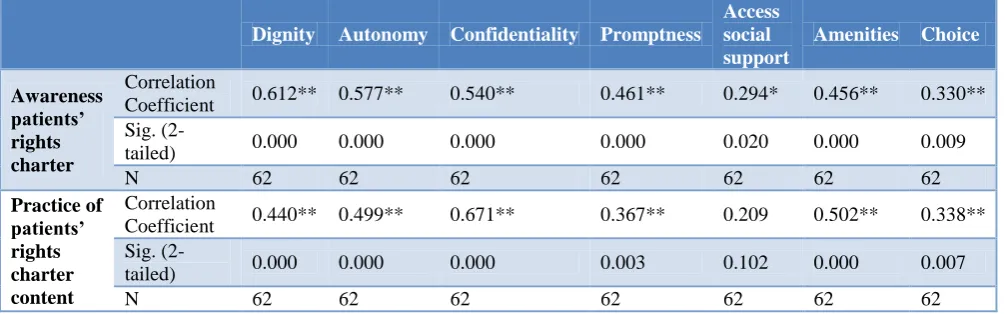
Table 4: Bivariate analysis of awareness and practice of patients’ rights and their influence on the individual domains of responsiveness.
Dignity Autonomy Confidentiality Promptness
Access social support
Amenities Choice
Awareness patients’ rights charter
Correlation
Coefficient 0.612** 0.577** 0.540** 0.461** 0.294* 0.456** 0.330** Sig.
(2-tailed) 0.000 0.000 0.000 0.000 0.020 0.000 0.009
N 62 62 62 62 62 62 62
Practice of patients’ rights charter content
Correlation
Coefficient 0.440** 0.499** 0.671** 0.367** 0.209 0.502** 0.338** Sig.
(2-tailed) 0.000 0.000 0.000 0.003 0.102 0.000 0.007
N 62 62 62 62 62 62 62
**: Correlation is significant at the 0.01 level (2-tailed); *: Correlation is significant at the 0.05 level (2-tailed).
Results indicate that respondent’s awareness of the patient rights charter content as well as practice of patient’s right charter had a significant relationship with perceived responsiveness of the health systems (r=0.610**, p<0.001), and (r=0.612*, p<0.001) respectively.
A further analysis was done to determine whether awareness of the patients’ rights charter and practice of patients’ rights charter content influence each of the seven responsiveness domains in this study that is (dignity, autonomy, confidentiality, promptness, access to social support, quality of amenities and choice of providers and health services (Table 4).
The results for each variable in this study are given by the Spearman Rho ® and its corresponding p-value. The results of the correlation analysis revealed a varied degree of interrelationships between awareness, practice of patients’ rights content with each of the seven domains of
responsiveness. The results revealed that awareness of the patients’ rights charter was statistically significantly correlated with all the seven domains of responsiveness: dignity (r=0.612**, p<0.001), autonomy (r=0.577**, p<0.001), confidentiality (r=0.540**, p<0.001), promptness (r=0.461**, p<0.001), access to social support (r=0.294**, p<0.020), quality of amenities (r=0.456**, p<0.001) and choice of providers and health services (r=0.330**, p<0.001).
consider social support for outpatient healthcare as being a domain of responsiveness.
Documentation of implementation process of patients’ rights charter
The qualitative data was obtained from key informants from each of the four-health facility in-charges. The aim was to find out documentary evidence of the implementation process of the patients’ rights charter at the health facilities.
The four key informants agreed that the healthcare providers were aware of the patients’ rights charter content and that they practiced patient rights during service delivery. Below are some quotes from respondents:
“… all the health providers in this facility are aware of the patients’ rights charter content, because it is clearly displayed on the wall…”
Female, health facility in-charge A
“… we try to ensure that the health providers practice responsiveness during delivery of healthcare services. We often remind the health providers about the contents of the patients’ rights charter during our meetings… “
Male, health facility in-charge C
“… we are all aware of the importance of health systems responsiveness during the delivery of healthcare services. Although we have a lot of challenges in this health facility e.g. insufficient consultation rooms, short of health workers but we try to observe confidentiality and respond to our patients needs as much as possible…”
Male, health facility in-charge B
The respondents were asked if they had any type of documentation on the implementation process of the patients’ rights charter at the health facilities. Results showed that none of the four health facilities had documented evidence on patients’ rights charter implementation. One question asked was if there was evidence of communication to patients on how disputes had been handled, this did not exist. One key informant said the following:
“… We do not document patients’ complaints. Complaints raised by patients are usually addressed directly with the patients or later if they are facility related or health systems issues, but we do not write to patients when their issues are solved … “
Male, health facility in-charge D
All the key informants were aware of the domains of dignity, confidentiality, autonomy and promptness
displayed during emergency medical care and cited that this was the norm among other health providers in practice. They however did not relate the quality of amenities, access to social support and choice of health care provider to responsiveness as it was not related component of medical ethics. When asked if there was documentation evidence on how information was disseminated to health care providers or patients, all the KII said there was no documented evidence. One had the following to say:
“…. there was no directive from the Ministry of Health on the documentation of implementation of responsiveness during the healthcare delivery …”
Male, health facility in-charge B and C
“… There is no circular requiring us to implement patients’ rights or responsiveness…”
Female and male health facility in-charge A and D
The facility in-charges were asked if they had received any formal training on the implementation of the patients’ rights charter in order to be responsive to patients’ needs. There was no record of training sessions or updates for health care providers on either patient rights charter or responsiveness of health systems at the Tier 2 facilities. One of the key informants had the following to say:
“…we have not been trained on the job on how to implement responsiveness. We are just working based on how we were trained in college…”
Male, health facility in-charge D
“… Since I was trained in college, I have not received any new information on patient responsiveness. I have to search for any new information in the internet…”
Male, health facility in-charge B.
DISCUSSION
Health care providers in primary care settings are key to implementation of policies that improve patient outcomes. Each of the primary care health facility in the study had a copy of the chart of the patients’ rights charter displayed in an office. The health care providers were aware of the patients’ rights and a majority agreed that they practiced it even though there was no formal induction or training. The study findings were similar to those in other countries where the health care providers were aware of the patients’ rights and practiced.14-16
the study findings, there was no formal way in which both patients’ rights and responsiveness were being implemented in the primary care facilities. This compares with findings of policy implementation through a shared understanding of an ethical code of conduct that is influenced by the expectations of the patients and clients in other health care settings.17 This explains the responses by health care providers as respondents in the study with the high scores on all items yet without documented evidence of implementation could be due to their professional exposure and context of service delivery due to the patient’s expectations.
As main actors in operationalizing policy at primary level, health care providers can influence the process of policy implementation, while improving the patient experiences at the facility in clinical care. Health care providers at operational level can either be a barrier or enhancer of achievement of goals.18 Policy implementations at primary care settings require an understanding of the setting, attitudes and the culture of the health care providers to enable the process of implementation to be tailored to the context.19-21 The health care providers were aware of patients’ rights charter and stated that it was implemented. This is similar to studies on awareness by health care providers in different settings for clinicians and nurses who rated high on knowledge of patients’ rights.22-24 The main
contributor to this finding is the training of health care providers which is not enough to ensure best practice. The use of directives coupled with supportive supervision has been associated with better outcomes of implementation of policy to achieve desired change.25,26
The study findings indicate that overall, health care providers are aware of responsiveness and perceived the primary health care facilities as being responsive. These findings are similar to other studies that found that health care providers rated knowledge on responsiveness to be high in various health service delivery systems.27,28,29 The correlation coefficient with individual items however found statistical significance on all domains except on access to social support. Health care providers did not consider allowing patients family to participate in their care as contributing towards responsiveness.
CONCLUSION
Health care providers were aware of the patients’ rights charter and practiced it, though no documentation was found. They were aware of the domains of health systems responsiveness and perceived the primary care settings to be responsive. Health care providers’ awareness and practice of patients’ rights was statistically significantly correlated with responsiveness overall and with the individual domains except for access to social support. Access to social support was not correlated to either awareness of the patients’ rights charter or the practice of the charter. Strategic interventions in health systems like
the implementation of patients’ rights charter and the concepts of health systems responsiveness both aim at facilitating processes for improvement of patient outcomes.30 This should be structured for ease of monitoring of progress in documentation of practices that enhance both patients’ rights and responsiveness. Policy implementation should be accompanied by regular supervision of the process and documentation for best practice to be replicated in other primary care facilities towards achieving responsiveness by health care providers.
ACKNOWLEDGEMENTS
I wish to acknowledge Daystar University management. Ms. Eunice Mwangi who has been part of my journey and my social support system David Mwangi, Melody and Aaron Kandia and Elsie Somi.
Funding: No funding sources Conflict of interest: None declared
Ethical approval: The study was approved by the Institutional Ethics Committee
REFERENCES
1. MOH. Kenya. Health Policy. 2014;18(2):81-7. 2. Chukwuneke FN. Medical incidents in developing
countries: A few case studies from Nigeria. Niger J Clin Pract. 2015;18(7):S20-4.
3. Hill MJ, Hupe PL. Implementing public policy: governance in theory and practice. London: Thousand Oaks; 2002.
4. World Health Organization. Health systems: improving performance. World Health Rep; 2000. 5. Fazaeli S, Ahmadi M, Rashidian A, Sadoughi F. A
framework of a health system responsiveness assessment information system for Iran. Iran Red Crescent Med J. 2014;16(6):e17820.
6. Hadi M, Swinburn P, Gibbons E. Defining and capturing patient-centered care in long-term conditions: The development of a patient-reported experience measure. Value in Health. 2019;19(3):A97.
7. Parsapoor A, Bagheri A, Larijani B. Patient’s rights charter in Iran. Acta Med Iran. 2014;52(1):24-8. 8. Silver MH. Patients’ rights in England and the
United States of America: The Patient’s Charter and the New Jersey Patient Bill of Rights: a comparison. J Med Ethics. 1997;23(4):213-20.
9. Ministry of Health. The Kenya National Patients’ Rights Charter, 2013. 1st ed. Republic of Kenya. 10. Kenya Demographic and Health Survey, 2014. 11. De Silva A. A framework for measuring
responsiveness. World Health Organization. 2016; GPE Discussion Paper Series: No. 32.
13. Robone S, Rice N, Smith PC. Health systems’ responsiveness and its characteristics: a cross-country comparative analysis. 2010;46(6):2079-100. 14. Akca SO, Akpinar YY, Habbani T. Knowledge and attitudes of nurses regarding patient rights: a Corum/Turkey sample. Rev Assoc Med Bras (1992). 2015;61(5):452-7.
15. Elewa HA, Elalim A, Guindy HA. Nursing Interns’ Perception Regarding Patients’ Rights and Patients’ Advocacy. SOJ Nur Health Care. 2016;2(3):1-6. 16. Kagoya HR, Kibuule D, Mitonga-Kabwebwe H,
Ekirapa-Kiracho E, Ssempebwa JC. Awareness of, responsiveness to and practice of patients’ rights at Uganda’s national referral hospital. Afr J Prim Health Care Fam Med. 2013;5(1):491.
17. Lehmann U. Master’s in public health. Understanding and Analysing Health Policy Module Guide; 2014.
18. Gilson L, Lehmann U, Schneider H. Practicing governance towards equity in health systems: LMIC perspectives and experience. Int J Equity Health. 2017;16(1):171.
19. Barasa EW, Molyneux S, English M, Cleary S. Hospitals as complex adaptive systems: A case study of factors influencing priority setting practices at the hospital level in Kenya. Soc Sci Med. 2017;174:104-12.
20. Kwamie A, Asiamah M, Schaaf M, Agyepong IA. Postings and transfers in the Ghanaian health system: a study of health workforce governance. Int J Equity Health. 2017;16(1):85.
21. Saltman RB, Duran A. Governance, Government, and the Search for New Provider Models. Int J Health Policy Manag. 2015;5(1):33-42.
22. Abou Zeina HA, El Nouman AA, Zayed MA, Hifnawy T, El Shabrawy EM, El Tahlawy E. Patients’ rights: a hospital survey in South Egypt. J Empir Res Hum Res Ethics. 2013;8(3):46-52. 23. Ghodsi Z, Hojjatoleslami S. Knowledge of students
about patient rights and its relationship with some
factors in Iran. Procedia- Social Behavior Sci. 2012;31:343-8.
24. Nejad EM, Begjani J, Abotelebi G, SalariA, Ehsani SR. Nurses awareness of patients’ rights in a teaching hospital. J Med Ethics Hist Med. 2011;4:2. 25. Opwora A, Toda M, Waweru E, Edwards T, Fegan
G, Goodman C, et al. Health Service Delivery, Governance and Supportive Supervision under the Health Sector Services Fund National Baseline Survey Volume I: Main Report; 2011.
26. Yarney L, Buabeng T, Baidoo D, Bawole JN. Operationalization of the Ghanaian Patients’ Charter in a Peri-urban Public Hospital: Voices of Healthcare Workers and Patients. Int J Health Policy Manag. 2016;5(9):525-33.
27. Joarder T, George A, Sarker M, Ahmed S, Peters DH. Who are more responsive? Mixed-methods comparison of public and private sector physicians in rural Bangladesh. Health Policy Plan. 2017;32:14-24.
28. Peltzer K, Phaswana-Mafuya N. Patient experiences and health system responsiveness among older adults in South Africa. Global Health Action; 2012. 29. Sajjadi F, Moradi-Lakeh M, Nojomi M, Baradaran
HR, Azizi F. Health system responsiveness for outpatient care in people with diabetes Mellitus in Tehran. Med J Islam Repub Iran. 2015;29:293. 30. Lodenstein E, Dieleman M, Gerretsen B, Broerse
JE. A realist synthesis of the effect of social accountability interventions on health service providers’ and policymakers’ responsiveness. Syst Rev. 2013;2(1):98.