RESEARCH ARTICLE
LIVELIHOOD OF PEOPLE IN DEVELOPING COUNTRIES AS AFFECTED BY CLIMATE
CHANGE: A REVIEW
1,*
Begum, F. and
2Islam, M. A.
1
Department of Rural Sociology, Bangladesh Agricultural University, Mymensingh-2202, Bangladesh
2
PhD Candidate, School of Environmental and Rural Sciences, University of New England-2350 NSW, Australia
ARTICLE INFO
ABSTRACT
This review paper explores coping patterns of poor people affected by natural hazards in developing countries. One of the major coping patterns is migration. People migrate from one place to another if they are not able to adjust at the place where disaster occurs. Several factors cause this migration. People migrate due to safety concerns, for income recovery, or for meeting their family needs. The purpose of migration varies from person to person and depends on the financial condition of the family. This paper also briefly reviews the literature on the impact of climate change on people’s health and on the agricultural and livestock sector, on which many vulnerable households depend for their income. Finally, necessary adaptation actions to adjust to hazards in the future are considered.
Copyright © 2018,Begum and Islam. This is an open access article distributed under the Creative Commons Attribution License, which permits unrestricted use, distribution, and reproduction in any medium, provided the original work is properly cited.
INTRODUCTION
Climate change is considered to be one of the most serious threats to sustainable development of a country. It has adverse impacts on the environment, people’s health, economic activity, housing, education, food security, and physical infrastructure. Global warming affects, both developed and developing countries, as it changes temperature, changes rainfall pattern, and create other natural hazards which hampers peoples livelihood patterns (Dore, 2005).A natural disaster can be defined as a serious disruption of the functioning of a community or society involving widespread human, material, economic or environmental losses and impacts, which exceeds the ability of the affected community or society to cope using its own resources(UNISDR, 2009). Least-developed countries (LDC) in general and Sub- Saharan Africa in particular will be more vulnerable due to climate change and increased climate variability than the developed
countries (Thornton et al., 2009; Conway and Schipper,
2011).Natural hazards have a larger impact in rural areas than in urban areas because rural people have less coping capacity due to lack of employment for the landless (Penning-Rowsell
et al., 2012). Most of the people in developing countries live in
rural areas. If a natural disaster occurs in one year, it has an impact on the next year or sometimes many years which may hampers development of that country.
*Corresponding author: Begum, F.
Department of Rural Sociology, Bangladesh Agricultural University, Mymensingh-2202, Bangladesh.
As many people are living in rural areas and many development activities depend on them, it is important to know their coping patterns during natural hazards and how to improve their condition. Without improving the livelihood patterns of poor people, the overall development of that country is impossible. Floods, hurricanes, cyclones, drought, and excessive temperatures etc. are very common natural threats in developing countries. During these threats different people have different coping patterns as their capacities like resources and financial conditions vary from person to person. For adapting, sometimes they migrate from one place to another for getting better opportunities such as jobs, safety and education or for some other purposes. In Sub- Saharan Africa, due to annual drought, peoples are displaced from one place to another. Similarly, floods affected millions of people in Pakistan and China in 2010(Black, 2013).A developing country like Bangladesh also faces a serious problem due to climate change. Poor people suffer a lot during natural hazards and face some difficulty to adjust at that time. Communities have adapted and developed resilience for normal flood. However, very severe events can have adverse impact on the
economy and can cause major loss in life (Penning-Rowsell et
al., 2012).The overall objective of this paper is to document
the coping patterns of poor people through revising the previous researches: how they adjust and what type of strategies they follow to cope during natural hazards? The specific objectives of the article are i) to document the climate change impacts on peoples movement; ii) to estimate the hazards impact on people’s health; iii) to evaluate the impacts of hazards on agriculture and livestock sector through which
ISSN: 0976-3376
Vol. 09, Issue, 02, pp.7596-7604, February,Asian Journal of Science and Technology 2018SCIENCE AND TECHNOLOGY
Article History:
Received 13th November, 2017
Received in revised form
15th December, 2017
Accepted 11th January, 2018
Published online 28th February, 2018
Key words: Climate Change,
poor people’s earn money and iv) to explore poor people’s adaptation strategy and future policy options.
MATERIALS AND METHODS
This review paper is based on reviewing some articles related to climate change. For preparing this review paper, at first the researchers selected one specific title about climate change on which they are interested to review. After selecting title, the researchers searched some articles of climate change in
Google scholar and in university library of Gent University,
Belgium. Among the articles, the researchers reviewed those articles which are very relevant with the title and recently published.
Natural Hazards and their Impacts
Both developed and developing countries has always faced natural hazards, climate change merely increases their
frequency and severity. The assessment of the
Intergovernmental Panel on Climate Change (IPCC, 2007) have demonstrated that the climate is changing and the future will see higher sea levels, more heat waves, intense storms and heavy precipitation events and extension of drought areas. These climate hazards are having impacts on human settlements causing major loss of life, social disruption and economic hardship. The response of people during hazards in developing countries is more challenging than developed countries as they have less capacity to adapt and less financial resources to reduce risk (McBean and Ajibade, 2009).
Floods, drought, cyclones, riverbank erosion and earthquakes etc. are very common natural hazards. These disasters cause widespread displacement among the human population. People’s houses, roads, schools, bridges might be affected. Communication from one place to another and from one person to another person becomes difficult at that time. Power supplies are often seriously disrupted. The last 200 years in Bangladesh, there have been 70 major cyclones hitting the coastal belt, and nearby 900,000 people are estimated to have died in these events during the last 35 years (Mallick and Vogt, 2009). Natural hazard also reduce the economic growth of the country. Natural hazards are responsible for making already poor people even more vulnerable (McBean and Ajibade, 2009). There are two major competing paradigms of vulnerability to hazards (Cutter, 2003; Adger, 2006). The behaviouralist paradigm, suggests that natural disasters are a failure of planning response and rationality. They suggest that natural disasters occur due to lack of planning and foresight from actors in the public and private sphere. An alternative paradigm, sometimes labeled as a political ecology or structuralist view, suggests that it is deep seated structures in society that explain who and what is vulnerable to natural and human made disasters (Black, 2013).The vulnerability of poor people due to climate change can be explained through the impacts of climate on people’s migration, health and agriculture and livestock.
Impact on migration
Natural hazards have impacts on people’s migration (Black, 2012). Sometimes they are willingly migrated or sometimes they are forced to migrate due to adverse effect of hazards. This migration happened may be for short time for some person or for long time or permanent for another person.
Penning- Rowsell et al. (2012) focused that different kinds of
“push” and “pull” factors are responsible for creating hazard related migration. They conducted a study on some hazard prone villages in Bangladesh and focused on hazards related population movement. By using the method of focus group discussion they found that people’s short term and permanent movement happened due to hazards. This movement occurred for safety or for income recovery after hazards. They also found that there is little permanent movement from hazard prone areas. Rural populations are more vulnerable and this vulnerability is increasing as their saving reduced. Comparatively, males are migrated more than female, leaving their women and children behind. Population movement and migration appears generally to be the “last resort” despite seriousness of the risks that are faced by the people. On the other hand, Black (2013) used a new framework for identifying five drivers which affect migration decision. These drivers are economic, political, social, demographic and environmental. Environmental change has the potential to affect directly the hazardousness of place. Environmental change also creates migration indirectly through economic driver such as changing livelihood pattern and through political drivers which affect conflict over resources.
Temperature is another very important factor which creates migration. Due to global warming peoples are forced to migrate because it reduces the productivity and hamper economic growth. But higher temperature reduce economic
growth in poor countries but not rich countries (Dell et al.,
2008). Petkovic and Thordarson (2012) predict that in Europe
mean annual temperature will rise by 1о to 5.5O.As a result, sea
level in some areas will rise up to 0.9 m by the end of the century. In 1996-2000, about 5 million peoples in Sub- Saharan Africa are displaced due to temperature and rainfall
anomalies. They predict that by the end of 21st century, annual
displacement will occur of about 11.8 million people
(Marchiori et al., 2012).
Leal- Arcas (2012) also focus on people’s migration due to climate change. The prediction is that about a billion people
moving during middle of 21st century due to climate change
impacts such as rising sea level, drought, desertification or other weather events. People may also move from Mexico to the United States as a result of climate change. Sometimes it causes a widespread displacement of population. Climate change creates migration suddenly or sometimes it creates slow migration. Instant river erosion, severe flood, storm etc. are responsible for taking peoples migration decision instantly. Due to drought and severe floods, peoples are forcing from
one place to another place frequently (Xu et al., 2012).
During deficit of rainfall, most of the peoples who are involved in farming wait for rain water for operating their farming activities or they use other neighbor water source who preserve water in exchange of money. If there is severe drought, soil losses it’s all fertility and at that time poor people have no work in their field.
This situation is happened in many northern parts of Bangladesh every year. During that time they migrate to nearby district for searching work in order to maintain their family needs. This situation may be different in other developing countries. Rainfall shocks increase both the probability of people leaving the village and the distance
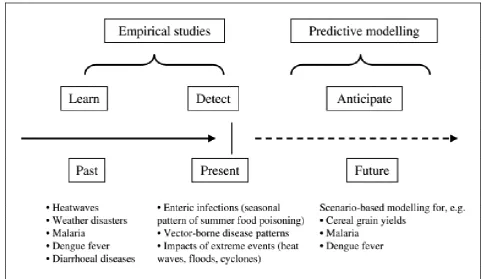
Figure 1. Potential health effects of climate variability and change from Haines and Patz, 2004
moved in Northern Tanzania (Beegle et al., 2011). Proper rainfall reduces the movement of people from origin to other destination. Due to fluctuation in harvest, local and internal migrations are found to significantly increase but not international migration (Gray, 2009). By using IPCC climate
prediction, Marchiori et al. (2011) found in Sub- Saharan
Africa, there will be large climate induced migration outflows. Internal migration is larger than international migration due to shortage of rainfall. Erosion is also responsible for migration of rural peoples. Erosion is a long-term or permanent loss of land along with any immovable property on that land: ‘staying put’ is not an option (Haque and Zaman, 1989). In the erosion prone- areas of Hatia Island in Bangladesh, households threatened with loss of their houses, as a result, they moved to
in laws’ houses, away from the immediate threat (Parvin et al.,
2008). In the short term, this movement may be to nearby relatives homesteads or public lands. In the long term, those who have lost both homestead and cultivable land due to river bank erosion, they generally shelter on other people’s land or on public land which is close to their original homes, or they move to urban areas, where work facility is available
(Penning-Rowsell et al., 2012).
Impacts on health
Natural hazards have several kinds of impacts onpeople’s health such as disease, scarcity of drinking water, adequate health care services, and sanitation. Many people’s died at that time especially women and children suffer a lot. Due to mixture of dead body of peoples, birds and animals, water becomes polluted. Trees, woods are also rotten in the river water. As a result, water losses its purity and poor people have no resources to buy pure water from nearby shop as a drinking purposes and other cooking activities or for bathing. They use that polluted water for different kind of activities which creates different types of disease in their health. Malaria, diarrhea, dengue, alergetic disease etc. are very common type of diseases during that time. Khasnis and Nettleman (2005) reported that global warming will cause changes in the epidemiology of infectious diseases and the vector- borne disease like malaria transmission is influenced as the earth warms. Warm, moist climates are most conducive to mosquito propagation and survival. Global warming provides conditions conducive to the spread of malaria. Climate change has the impact on the economy which induced changes in human health, viz. cardiovascular and respiratory disorders, diarrhea,
malaria, dengue fever and schistosomiasis (Bosello et al.,
2008). Air quality is also deteriorating due to climate change impact which affects human health. Changes in the global atmospheric composition, changes in the regional air quality and the organization of the thematic issue of near surface pollutants that determine the air quality (Vautard and Hauglustaine, 2007). Household financial condition and age differentiations are also responsible for creating health problems in the affected populations because of adjusting capacity and purchasing power and other related issues depend on those factors. Due to low income, gender and age differentiation, households suffer different kinds of diseases than those household who have higher income. Adjusting capacity among poor people during hazards also depends on the financial support from inside and outside the country. The people, who get proper support, will suffer less health and other related problems than those who do not get proper support. Among 277 Sidr survivor respondents in Bangladesh,
only 52 persons suffered Sidr- related illnesses and their illnesses were significantly associated with low household income and gender. This is due to efficient distribution of food and safe drinking water as well as timely health care services. Comparatively, females suffer more than male due to climate
change (Penning Rowsell et al., 2012). Impacts of climate
change of malaria distribution are likely to be largest in Africa
and Asia (Van Lieshout et al., 2004). Especially children and
old aged people suffer a lot due to climate change because they have less coping capacity. Children’s health affect through weather related disasters, air pollution, excessive heat, food shortage and greater exposure to toxicants. As a result, children experience greater risk of mental disorders, malnutrition, infectious diseases, allergic diseases and
respiratory diseases (Xu et al., 2012).
Stern et al. (2007) reported that climate change could cause an
additional 40,000 to 160,000 children’s death in South Asia and Sub-Saharan Africa in every year. High rates of sleep disturbance, sadness and other mental health related problems among children’s are associated with weather related disasters (Ahern, 2005). After weather related disasters, high stress for adults have implication on children as adults are not able to takecare their children properly. Sometimes they neglect their
children (Xu et al., 2012). In Ethiopia and Kenya, children
aged under six years who were born during drought season were more likely to be malnourished than those born in non drought years (UNDP, 2007). Every year, water borne diseases such as cholera and other diarrheal diseases are responsible for causing deaths of millions of children in the developing world, a number that will increase as climate change (Back and Cameron, 2008).
Impacts Agriculture and livestock
In rural areas of developing countries most of the people depends on agriculture (Maohua, 2001). Agriculture plays a major source of poor people’s earning income. When flood, cyclone, storm and other natural hazards occur, this sector is affected largely than other sectors. Peoples are falling into poverty because their agriculture and livestock are destroying due to climate change through which they earn money. Hertel and Rosch (2010) explore how climate change affects poverty (or income) through the effect on agricultural crop production, profit and factor markets. They distinguish between three different methodologies for estimating the agricultural impacts of climate change: crop growth simulation models, statistical models and hedonic models. The crop growth simulation models are typically used for predicting impacts of future climate scenarios based on data intensive calibrations. They are field- and crop- specific and therefore not built to take into account the perspective of small subsistence farmers in less
LDCS who employ a variety of different crop and livestock
Thus, economic impacts of climate change on the agricultural sector can be estimated by changes in land values, where the value of all adaptive strategies is taken into account. These models have been substantially criticized. Among three models, statistical model is the most relevant for analyzing the impact of climate change and increased climate variability on income level in LDCs (Lilleørand Van Den Broeck, 2011).
Schilling (2012) in his article focused on the interaction of climate change to socioeconomic and agricultural development in North Africa. Precipitation in North Africa is decreasing between 10% and 20%. This situation is happened in north- western parts in northern Africa. Climate change will likely have the strongest effect on Morocco where agriculture plays a most important sector for the country’s economy particularly for poor people. The study of climate change impacts and adaptation options in Morocco suggests that the agricultural incentives used in the past are inadequate to buffer drought effect. To increase resilience against climate change, agricultural policies should shift from maximizing agricultural output to stabilizing it. In Tanzania climate change hamper
yield production (Rowhani et al., 2011). Barrios et al. (2010)
explores a relationship between temperature and Gross Domestic Product (GDP) growth. In Sub-Saharan Africa, there is relatively large positive effect of rainfall on GDP growth. These mean that they are reliable on rainfall for their agricultural activities. This situation is not found in other LDCs. In contrast, there is a negative effect of temperature on GDP and no significant effect of rainfall among poor countries
(Dell et al., 2008).
People follow different kinds of farming system in developing countries. So, climate change has several kinds of impact as they have different kinds of farming system. If rainfall is good for one country, it is not good for another country. Morton (2007) reported that it is difficult to predict the impact as around the world there exists different kinds of complex, diverse and risk prone farming system which features a variety of crop and livestock species in any one household. He also found that there is lack of research that is needed to understand how climate change will impact this farming system as farmers have different kinds of adaptive strategy like changing production technology, adjusting crop mix, changing land use pattern etc. Soil fertility and productivity of crops are also decreasing by flood and drought. Standing crops and livestock
sector are also affected by flood (Penning Rowsell et al.,
2012). In Bangladesh, rice productivity fell during flood years such as 1987-1988 and 1988-1989 (Banerjee, 2010). Due to cyclone Sidr in (2007) in Bangladesh, 1.2 million livestock animals were killed and 2.5 million acres of crops were destroyed (Oxfam, 2008). Natural hazards are also responsible for creating price fluctuation of agricultural products.
Adaptation and action
Some of the adaptation options are needed especially for vulnerable people how to cope with changing climate. Different kinds of adaptive responses are available such as technological (more drought tolerant crops), behavioral (changes in dietary choices), managerial (different farm management practices) and policy options such as planning regulation and infrastructure development. Adaptation options to climate change have been summarized by Kurukulasuriya
and Rosenthal (2003), who define typology of adaptation options that includes the following:
Technological developments such as the development
and promotion of new crop varieties and livestock feeds, improvement in water and soil management and improved animal health technology;
Income related responses that are potentially effective
adaptation measures to climate change, such as crop, livestock and flood insurance schemes, credit schemes and income diversification opportunities;
Farm production adjustments such as diversification
and intensification of crop and livestock production, changing land use and irrigation and altering the timing of operations;
Institutional changes, including pricing policy
adjustments such as the removal or putting in place of subsidies, the development of income stabilization options, agricultural policy including agricultural support and insurance programs and improvement in local agricultural markets.
How to create on and off farm income source in different
situation, it is also needed as an adaptive strategy (Thornton et
al., 2009). The Intergovernmental Panel on Climate Change
(IPCC) defines adaptation as the natural or human system adjustment in response to climate stimuli or their effects (Parry, 2007). Different kinds of barriers and limits to adaptation have physical, ecological, technological, financial, informational, cognitive and socio-cultural elements. For proper climate monitoring and forecasting additional financial resources are needed. Proper development of institutional
arrangement is also needed to drive to development (Burley et
al., 2012). Not only planning tools but also planning process is
important to adapt. In Latin America, switching to mixed farming system rather than sticking to a specialized crop or livestock system can be a preferred strategy as a response to climate change. Similarly out migration of one or more household members for even larger diversification of income source may also see as an adaptive or compensatory strategy of farming households (Seo, 2010). In Morocco, farmers used barley instead of wheat because barley needs less water and it ripens faster, which increases the capacity of resistance against
water deficit (Kuhn et al.,2010). They also used drought prone
wheat during drought season which was supported by many governmental initiatives (FAO, 2010).
shelter during that time. The remaining percentage of people (around 70%), they didn’t use anything as their shelter purpose
(Paul et al., 2010). In 2010, Bangladesh had more than 2400
emergency shelters of various kinds (Dasgupta et al., 2010),
although Paul et al., (2010) state the number as 3976 at the
time of the Sidr landfall. Another article found that it is necessary to stabilize agricultural sector rather than maximizing agricultural output. Their own bio-economic model suggests that for sustaining pastoral productivity, it is necessary to replace firewood by electric energy (Schilling, 2012). Reduction of poverty and wealth disparity, sustainable economic development, food security, education and improvement in health condition are the best forms of climate change adaptation. Where resource are limited, different kinds of awareness programs relating to school, home and communities can contribute as adaptation options and help children during disasters (UN, 2008). An integrated approach relating to climate change adaptation and disaster risk reduction is very relevant and valuable to vulnerable cities and coastal communities seeking to enhance their adaptive capacity and build resilience against a rapidly changing climate (McBean and Ajibade, 2009). During drought season better water access, irrigation, drought resistant crops can be helpful as adaptation actions (Lilleørand Vanden Broeck, 2011). Radio, television also plays a very important role especially for poor people for getting weather related any
information (Paul et al., 2010). Mobile phone is another very
important adaptive action for transferring weather related
information among poor people (Penning-Rowsell et al.,
2012). Diversified agriculture and diversified income source can play a very important role for maintaining livelihood pattern during natural hazards.
Adaptation to climate change requires changes to or modifications to behavior. Research cannot effectively contribute to the improvement of adaptive capacity without a comprehensive understanding of the context in which
decisions about adaptation are made (Thornton et al., 2009).
RESULTS AND DISCUSSION
Climate change has a large impact on people’s migration. Also due to climate change people’s health, agriculture and livestock sector influenced through which poor people earn money. Flood, cyclone, storm negatively influence agricultural crop and animal sector. As climate change destroys that sector, poor people are falling from poor to more poor. In rural areas housing condition of the rural people is also not good. Strong wind and storm destroy their houses. In that situation how they cope, this focus is very limited. From reviewing articles, we have learned that during natural hazards, very few people go to cyclone shelter to protect themselves. Also cyclone shelter is not enough in many developing countries.
It is important to take into considerations that how big are the shelters and how many people they are expected to accommodate. For this appropriate policy is needed in future. People migrate from one place to another during natural hazards. This migration pattern may be permanent or for short time basis. Some people remain there origin place despite unusual condition because they have no capacity to migrate or because of less social network. Proper attention is not given regarding the coping pattern of the people who do not migrate in that situation. Sometimes they sell their land and livestock or they borrow from rich neighbor or relatives for meeting their family needs.
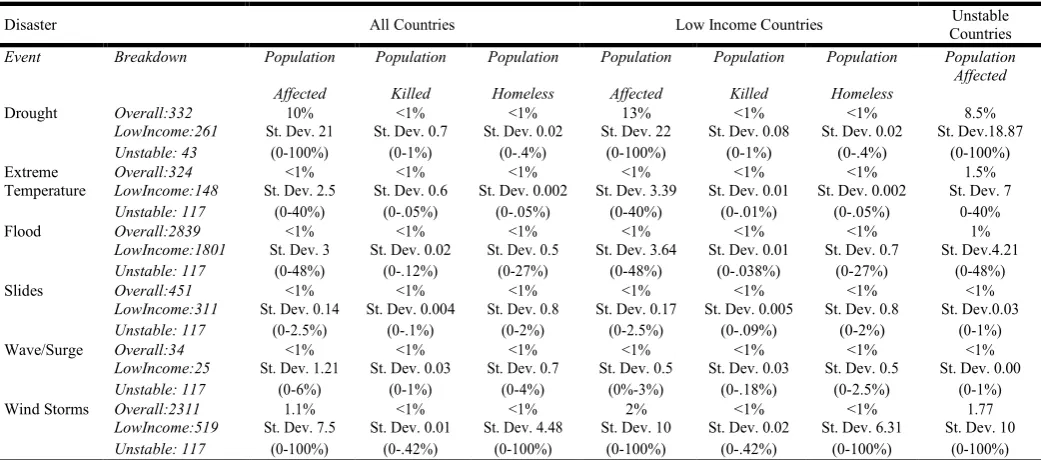
Table 1. Summary of EM-DAT Statistics by Disaster* (Adapted from Raleigh et al., 2008 p8)
Disaster All Countries Low Income Countries Unstable
Countries
Event Breakdown Population Population Population Population Population Population Population Affected Affected Killed Homeless Affected Killed Homeless
Drought Overall:332 10% <1% <1% 13% <1% <1% 8.5%
LowIncome:261 St. Dev. 21 St. Dev. 0.7 St. Dev. 0.02 St. Dev. 22 St. Dev. 0.08 St. Dev. 0.02 St. Dev.18.87
Unstable: 43 (0-100%) (0-1%) (0-.4%) (0-100%) (0-1%) (0-.4%) (0-100%)
Extreme Overall:324 <1% <1% <1% <1% <1% <1% 1.5%
Temperature LowIncome:148 St. Dev. 2.5 St. Dev. 0.6 St. Dev. 0.002 St. Dev. 3.39 St. Dev. 0.01 St. Dev. 0.002 St. Dev. 7
Unstable: 117 (0-40%) (0-.05%) (0-.05%) (0-40%) (0-.01%) (0-.05%) 0-40%
Flood Overall:2839 <1% <1% <1% <1% <1% <1% 1%
LowIncome:1801 St. Dev. 3 St. Dev. 0.02 St. Dev. 0.5 St. Dev. 3.64 St. Dev. 0.01 St. Dev. 0.7 St. Dev.4.21
Unstable: 117 (0-48%) (0-.12%) (0-27%) (0-48%) (0-.038%) (0-27%) (0-48%)
Slides Overall:451 <1% <1% <1% <1% <1% <1% <1%
LowIncome:311 St. Dev. 0.14 St. Dev. 0.004 St. Dev. 0.8 St. Dev. 0.17 St. Dev. 0.005 St. Dev. 0.8 St. Dev.0.03
Unstable: 117 (0-2.5%) (0-.1%) (0-2%) (0-2.5%) (0-.09%) (0-2%) (0-1%)
Wave/Surge Overall:34 <1% <1% <1% <1% <1% <1% <1%
LowIncome:25 St. Dev. 1.21 St. Dev. 0.03 St. Dev. 0.7 St. Dev. 0.5 St. Dev. 0.03 St. Dev. 0.5 St. Dev. 0.00
Unstable: 117 (0-6%) (0-1%) (0-4%) (0%-3%) (0-.18%) (0-2.5%) (0-1%)
Wind Storms Overall:2311 1.1% <1% <1% 2% <1% <1% 1.77
LowIncome:519 St. Dev. 7.5 St. Dev. 0.01 St. Dev. 4.48 St. Dev. 10 St. Dev. 0.02 St. Dev. 6.31 St. Dev. 10
Unstable: 117 (0-100%) (0-.42%) (0-100%) (0-100%) (0-.42%) (0-100%) (0-100%) *Population Affected: Affected people are those requiring immediate assistance during a period of emergency, i.e. requiring basic survival needs suchas food, water, shelter, sanitation and immediate medical assistance and includes the appearance of a significant number of cases of an infectious disease introduced in a region or a population that is usually free from that disease
Population Killed: Persons confirmed dead and those presumed dead. Population Homeless: People needing immediate assistance of shelter.
Low Income Countries: Countries with an annual GDP per capita less than $3000.
Appropriate future research is needed in that case for improving their livelihood pattern. Focus group discussion, case study, individual interview method will be helpful for knowing their present situation after hazards. Sometimes, migration is not good. It creates different kinds of problems in the place where people migrate. Also it creates problems for those people who migrate. They face different kinds of problems like work, health, education etc. For facing different kinds of problem in new environment, the poor people fall from poor to more poor. It should also need to take into consideration, how to maximize the benefit due to human migration. It is necessary to improve the local situation of the country. If the local situation of the country like agricultural sector and industrial sector is improved, no need migration. Improved disaster prevention measure including improved forecasting and warning system is necessary.
Due to past experience of false warning, people sometimes don’t want to migrate. In official storm warning, there is still lack of clarity. So, it is necessary to improve the institutional arrangements. Further research is also needed to investigate the plight of those women and children who are left behind by permanently migrating men. Only young women, they can find work in their local rurality. But old aged women and children, they need to rely on their relatives for subsistence
(Penning-Rowsell et al., 2012).There are some researches which give
strong evidence that climate change is influencing and will increasingly affect children health which creates vulnerability. Nevertheless, substantial information gaps remain regarding the risk climate change poses to children’s health and child
specific protection measures (Xu et al., 2012). Institutional
arrangement plays a very important role for improving the condition of the poor people. Proper institutional arrangement helps peoples to overcome their problems during hazards.
There is also lack of research into how climate change and increased climate variability affect economic drivers of migration. Much information is needed about the on-and off-farm income sources in different situation. For adaptation, people used different kinds of options such as new technology, alternative crops etc. But with this, it is necessary to see the capacity of peoples for adapting new options. Also the amount of cultivated land of rural people is very limited. Diversified agriculture will be helpful for meeting the needs of rural people. The review will also be helpful for those countries that face similar kinds of natural hazards. The method which is good for one country may not be good for another country. Poor people need to understand what type of method is appropriate for them. In this case, it is necessary to create awareness among poor people. Also appropriate microfinance facility will help people to adjust during hazards.
REFERENCES
Adger, W. N. 2006. Vulnerability. Global environmental
change, 16(3), 268-281.
Ahern, M., Kovats, R. S., Wilkinson, P., Few, R., &Matthies, F. 2005. Global health impacts of floods: epidemiologic
evidence. Epidemiologic reviews, 27(1), 36-46.
Back, E., Cameron, C. and UNICEF. 2007. Our climate, our children, our responsibility: the implications of climate
change for the world's children. In Our climate, our
children, our responsibility: the implications of climate
change for the world's children. Unicef.
Banerjee, L. 2010. Creative destruction: Analysing flood and
flood control in Bangladesh. Environmental Hazards, 9(1),
102-117.
Barrios, S., Bertinelli, L., & Strobl, E. 2010. Trends in rainfall and economic growth in Africa: A neglected cause of the
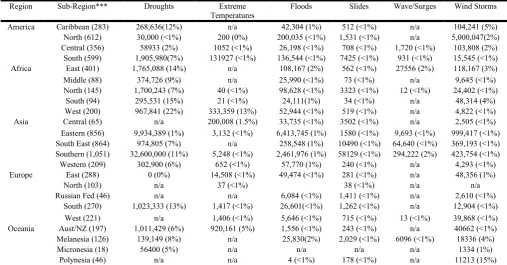
Table 2. Summary of EM-DAT Disaster Statistics by Region (Adapted from Raleigh et al., 2008 p9)
Region Sub-Region*** Droughts Extreme
Temperatures
Floods Slides Wave/Surges Wind Storms
America Caribbean (283) 268,636(12%) n/a 42,304 (1%) 512 (<1%) n/a 104,241 (5%)
North (612) 30,000 (<1%) 200 (0%) 200,035 (<1%) 1,531 (<1%) n/a 5,000,047(2%)
Central (356) 58933 (2%) 1052 (<1%) 26,198 (<1%) 708 (<1%) 1,720 (<1%) 103,808 (2%)
South (599) 1,905,980(7%) 131927 (<1%) 136,544 (<1%) 7425 (<1%) 931 (<1%) 15,545 (<1%)
Africa East (401) 1,765,088 (14%) n/a 108,167 (2%) 562 (<1%) 27556 (2%) 118,167 (3%)
Middle (88) 374,726 (9%) n/a 25,990 (<1%) 73 (<1%) n/a 9,645 (<1%)
North (145) 1,700,243 (7%) 40 (<1%) 98,628 (<1%) 3323 (<1%) 12 (<1%) 24,402 (<1%)
South (94) 295,531 (15%) 21 (<1%) 24,111(1%) 34 (<1%) n/a 48,314 (4%)
West (200) 967,841 (22%) 333,359 (13%) 52,944 (<1%) 519 (<1%) n/a 4,822 (<1%)
Asia Central (65) n/a 200,008 (1.5%) 33,735 (<1%) 3502 (<1%) n/a 2,505 (<1%)
Eastern (856) 9,934,389 (1%) 3,132 (<1%) 6,413,745 (1%) 1580 (<1%) 9,693 (<1%) 999,417 (<1%)
South East (864) 974,805 (7%) n/a 258,548 (1%) 10490 (<1%) 64,640 (<1%) 369,193 (<1%)
Southern (1,051) 32,600,000 (11%) 5,248 (<1%) 2,461,976 (1%) 58129 (<1%) 294,222 (2%) 423,754 (<1%)
Western (209) 302,900 (6%) 652 (<1%) 57,770 (1%) 240 (<1%) n/a 4,293 (<1%)
Europe East (288) 0 (0%) 14,508 (<1%) 49,474 (<1%) 281 (<1%) n/a 48,356 (1%)
North (103) n/a 37 (<1%) 38 (<1%) n/a n/a
Russian Fed (46) n/a n/a 6,084 (<1%) 1,411 (<1%) n/a 2,610 (<1%)
South (270) 1,023,333 (13%) 1,417 (<1%) 26,601(<1%) 1,262 (<1%) n/a 12,904 (<1%)
West (221) n/a 1,406 (<1%) 5,646 (<1%) 715 (<1%) 13 (<1%) 39,868 (<1%)
Oceania Aust/NZ (197) 1,011,429 (6%) 920,161 (5%) 1,556 (<1%) 243 (<1%) n/a 40662 (<1%)
Melanesia (126) 139,149 (8%) n/a 25,830(2%) 2,029 (<1%) 6096 (<1%) 18336 (4%)
Micronesia (18) 56400 (5%) n/a n/a n/a n/a 1334 (1%)
Polynesia (46) n/a n/a 4 (<1%) 178 (<1%) n/a 11213 (15%)
**Each disaster total is the total affected people (including killed and homeless) by disaster. In parentheses is the percent by region and disaster as proportion of population.
African growth tragedy. The Review of Economics and
Statistics, 92(2), 350-366.
Barrios, S., Bertinelli, L. and vStrobl, E. 2010. Trends in rainfall and economic growth in Africa: A neglected cause
of the African growth tragedy. The Review of Economics
and Statistics, 92(2), 350-366.
Black, R., Arnell, N. W., Adger, W. N., Thomas, D. and Geddes, A. 2013. Migration, immobility and displacement
outcomes following extreme events. Environmental
Science & Policy, 27, S32-S43.
Bosello, F., Roson, R. and Tol, R. S. 2006. Economy-wide estimates of the implications of climate change: Human
health. Ecological Economics, 58(3), 579-591.
Burley, J. G., McAllister, R. R., Collins, K. A. and Lovelock, C. E. 2012. Integration, synthesis and climate change adaptation: a narrative based on coastal wetlands at the
regional scale. Regional Environmental Change, 12(3),
581-593.
Conway, D., &Schipper, E. L. F. 2011. Adaptation to climate change in Africa: Challenges and opportunities identified
from Ethiopia. Global Environmental Change, 21(1),
227-237.
Cutter, S. L., Boruff, B. J. and Shirley, W. L. 2003. Social
vulnerability to environmental hazards. Social science
quarterly, 84(2), 242-261.
Dasgupta, S., Huq, M., Khan, Z. H., Ahmed, M. M. Z., Mukherjee, N., Khan, M. F. and Pandey, K. D. 2010. Vulnerability of Bangladesh to cyclones in a changing climate: potential damages and adaptation cost.
Dell, M., Jones, B. F. and Olken, B. A. 2008. Climate change
and economic growth: evidence from the last half century
(No. w14132). National Bureau of Economic Research. Dore, M. H. 2005. Climate change and changes in global
precipitation patterns: what do we know?.Environment
international, 31(8), 1167-1181.
Gray, C. L. 2009. Environment, land, and rural out-migration
in the southern Ecuadorian Andes. World Development,
37(2), 457-468.
Haines, A. and Patz, J. A. 2004. Health effects of climate
change. Jama, 291(1), 99-103.
Haque, C. E. and Zaman, M. Q. 1989. Coping with riverbank erosion hazard and displacement in Bangladesh: Survival
strategies and adjustments. Disasters, 13(4), 300-314.
Hertel, T. W., & Rosch, S. D. 2010. Climate change,
agriculture, and poverty. Applied Economic Perspectives
and Policy, 32(3), 355-385.
Karim, M. F. and Mimura, N. 2008. Impacts of climate change and sea-level rise on cyclonic storm surge floods in
Bangladesh. Global Environmental Change, 18(3),
490-500.
Khasnis, A. A. and Nettleman, M. D. 2005. Global warming
and infectious disease. Archives of medical research, 36(6),
689-696.
Kuhn, A., Heidecke, C., Roth, A., Goldbach, H., Burkhardt, J., Linstädter, A. and Gaiser, T. (2010). II-5.1 Importance of resource management for livelihood security under Climate Change in Southern Morocco.
Kurukulasuriya, P. and Rosenthal, S. 2013. Climate change and agriculture: A review of impacts and adaptations. Leal-Arcas, R. 2012. Climate migrants: Legal options.
Procedia-social and behavioral sciences, 37, 86-96.
Lilleør, H. B. and Van den Broeck, K. (2011). Economic
drivers of migration and climate change in LDCs. Global
Environmental Change, 21, S70-S81.
Mallick, B. and Vogt, J. 2009. Analysis of disaster vulnerability for sustainable coastal zone management: a case of Cyclone Sidr 2007 in Bangladesh. IOP Conference Series: Earth and Environmental Science.
McMichael, A. J. and Powles, J. W. 1999. Human numbers,
environment, sustainability, and health. BMJ: British
Medical Journal, 319(7215), 977.
Maohua, W. 2001. Possible adoption of precision agriculture for developing countries at the threshold of the new
millennium. Computers and electronics in agriculture,
30(1), 45-50.
Marchiori, L., Maystadt, J. F. and Schumacher, I. 2011. The impact of climate variations on migration in sub-Saharan
Africa. In CSAE 25th Anniversary Conference.
Marchiori, L., Maystadt, J. F. and Schumacher, I. (2012). The impact of weather anomalies on migration in sub-Saharan
Africa. Journal of Environmental Economics and
Management, 63(3), 355-374.
McBean, G., &Ajibade, I. 2009. Climate change, related
hazards and human settlements. Current Opinion in
Environmental Sustainability, 1(2), 179-186.
Morton, J. F. 2007. The impact of climate change on
smallholder and subsistence agriculture. Proceedings of the
national academy of sciences, 104(50), 19680-19685.
Parvin, G. A., Takahashi, F. and Shaw, R. 2008. Coastal hazards and community-coping methods in Bangladesh.
Journal of Coastal Conservation, 12(4), 181-193.
Paul, B. K. 2005. Evidence against disaster induced migration: the 2004 tornado in north central Bangladesh.
Disasters, 29(4), 370-385.
Paul, B. K., Rahman, M. K. and Rakshit, B. C. 2011. Post-Cyclone Sidr illness patterns in coastal Bangladesh: an
empirical study. Natural hazards, 56(3), 841-852.
Penning-Rowsell, E. C., Sultana, P. and Thompson, P. M. 2013. The ‘last resort’? Population movement in response
to climate-related hazards in Bangladesh. Environmental
science & policy, 27, S44-S59.
Parry, M. L., Canziani, O. F., Palutikof, J. P., van der Linden, P. J. and Hanson, C. E. 2007. Contribution of working group II to the fourth assessment report of the
intergovernmental panel on climate change, 2007. Climate
change.
Petkovic, G. and Thordarson, S. 2012. Adaptation to Climate
Change–Task Group Under CEDR. Procedia-Social and
Behavioral Sciences, 48, 2555-2565.
Rowhani, P., Lobell, D. B., Linderman, M. and Ramankutty, N. 2011. Climate variability and crop production in
Tanzania. Agricultural and Forest Meteorology, 151(4),
449-460.
Raleigh, C., Jordan, L. and Salehyan, I. 2008. Assessing the impact of climate change on migration and conflict. In
Paper commissioned by the World Bank Group for the Social Dimensions of Climate Change workshop,
Washington, DC (pp. 5-6).
Schilling, J., Freier, K. P., Hertig, E. and Scheffran, J. 2012. Climate change, vulnerability and adaptation in North
Africa with focus on Morocco. Agriculture, Ecosystems &
Environment, 156, 12-26.
Schilling, J., Freier, K. P., Hertig, E. and Scheffran, J. 2012. Climate change, vulnerability and adaptation in North
Africa with focus on Morocco. Agriculture, Ecosystems &
Environment, 156, 12-26.
systems in Latin America. Applied Economic Perspectives
and Policy, 32(3), 489-514.
Stern, N. 2008. The economics of climate change. American
Economic Review, 98(2), 1-37.
Thornton, P. K., Van de Steeg, J., Notenbaert, A. and Herrero, M. 2009. The impacts of climate change on livestock and livestock systems in developing countries: A review of
what we know and what we need to know. Agricultural
Systems, 101(3), 113-127.
United Nations(UN). 2008. Climate change, human rights and forced human displacement: case studies as indicators of durable solution. In The 60th Anniversary of the Universal Declaration of Human Rights and International Human Rights Day; UN: Canberra, Australia.
United Nations Development Program (UNDP). 2007. Human Development Report. New York, NY, USA.
Van Lieshout, M., Kovats, R. S., Livermore, M. T. J. and Martens, P. 2004. Climate change and malaria: analysis of
the SRES climate and socio-economic scenarios. Global
Environmental Change, 14(1), 87-99.
Vautard, R. and Hauglustaine, D. 2007. Impact of global climate change on regional air quality: Introduction to the
thematic issue. ComptesRendus Geoscience, 339(11),
703-708.
VijayaVenkataRaman, S., Iniyan, S. and Goic, R. 2012. A review of climate change, mitigation and adaptation.
Renewable and Sustainable Energy Reviews, 16(1),
878-897.
Warner, K. 2010. Global environmental change and migration:
Governance challenges. Global environmental change,
20(3), 402-413.
Xu, Z., Sheffield, P. E., Hu, W., Su, H., Yu, W., Qi, X. and Tong, S. 2012. Climate change and children’s health—A call for research on what works to protect children.
International journal of environmental research and public
health, 9(9), 3298-3316.