R E S E A R C H
Open Access
An implementation-focused process evaluation of
an incentive intervention effectiveness trial in
substance use disorders clinics at two Veterans
Health Administration medical centers
Hildi J Hagedorn
1,2,3*, Cheryl B Stetler
4, Ann Bangerter
2, Siamak Noorbaloochi
2,3, Maxine L Stitzer
5and Daniel Kivlahan
6,7Abstract
Background:One of the pressing concerns in health care today is the slow rate at which promising interventions, supported by research evidence, move into clinical practice. One potential way to speed this process is to conduct hybrid studies that simultaneously combine the collection of effectiveness and implementation relevant data. This paper presents implementation relevant data collected during a randomized effectiveness trial of an abstinence incentive intervention conducted in substance use disorders treatment clinics at two Veterans Health Administration (VHA) medical centers.
Methods:Participants included patients entering substance use disorders treatment with diagnoses of alcohol dependence and/or stimulant dependence that enrolled in the randomized trial, were assigned to the intervention arm, and completed a post intervention survey (n = 147). All staff and leadership from the participating clinics were eligible to participate. A descriptive process evaluation was used, focused on participant perceptions and contextual/ feasibility issues. Data collection was guided by the RE-AIM and PARIHS implementation frameworks. Data collection methods included chart review, intervention cost tracking, patient and staff surveys, and qualitative interviews with staff and administrators.
Results:Results indicated that patients, staff and administrators held generally positive attitudes toward the incentive intervention. However, staff and administrators identified substantial barriers to routine implementation. Despite the documented low cost and modest staff time required for implementation of the intervention, securing funding for the incentives and freeing up any staff time for intervention administration were identified as primary barriers.
(Continued on next page)
* Correspondence:[email protected] 1
Veterans Health Administration Substance Use Disorder Quality Enhancement Research Initiative, Minneapolis VA Healthcare System, One Veterans Drive, Minneapolis, MN 55417, USA
2Veterans Health Administration Health Services Research and Development
Center of Excellence, Minneapolis VA Healthcare System, Minneapolis, MN 55417, USA
Full list of author information is available at the end of the article
(Continued from previous page)
Conclusions:Recommendations to facilitate implementation are presented. Recommendations include: 1) solicit explicit support from the highest levels of the organization through, for example, performance measures or clinical practice guideline recommendations; 2) adopt the intervention incrementally starting within a specific treatment track or clinic to reduce staff and funding burden until local evidence of effectiveness and feasibility is available to support spread; and 3) educate staff about the process, goals, and value/effectiveness of the intervention and engage them in implementation planning from the start to enhance investment in the intervention.
Keywords:Substance use disorders treatment, Abstinence incentive intervention, Implementation, Process evaluation, Hybrid design
Introduction
One of the most pressing concerns in healthcare today is the slow rate at which promising clinical interventions, supported by research evidence, move into clinical prac-tice [1-6]. While effectiveness trials are a step in the re-search pipeline designed to determine whether promising clinical interventions work when tested in“real world” set-tings, the results of such trials generally do not provide cli-nicians, administrators, or quality improvement specialists with the information that they will need to successfully implement the new practice in their clinic or hospital [7-10]. This is the role of implementation trials which at-tempt to develop successful strategies for implementing new, effective practices, which then can be disseminated/ spread to other clinical settings [8,11].
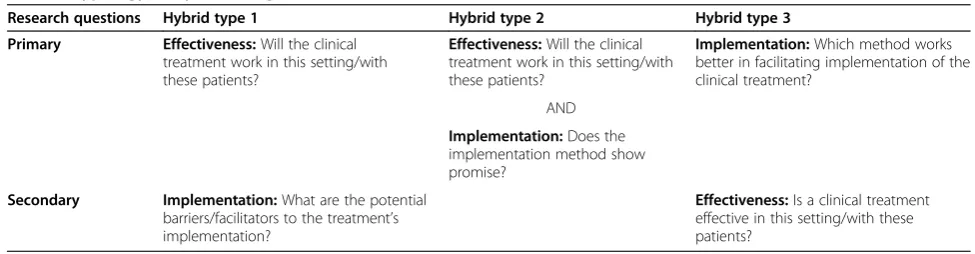
Unfortunately, the timeline from a promising efficacy trial, through effectiveness and implementation trials, and finally to dissemination can be measured in multiple years if not decades and adds to the slow rate of routine uptake of promising clinical interventions [4,12-14]. Methods to speed this process are needed. One recently proposed method is to integrate effectiveness and implementation study methods using a hybrid design [15]. Curran and col-leagues propose three hybrid types varying in the degree to which they focus on effectiveness data versus implementa-tion data (See Table 1). The Hybrid Type I encourages re-searchers to initiate the study of implementation as early as possible in a program of research; more specifically, this design focuses on integrating implementation research into
efforts primarily focused on collecting effectiveness data. As described by Curran and colleagues, the additional in-corporation of process evaluation methods into an effect-iveness trial design can help explain effecteffect-iveness results while at the same time efficiently informing future imple-mentation efforts. In contrast to process evaluation, as de-fined in this study as part of a Hybrid I design, formative evaluation [9] is used in a Hybrid II or III design to gather information for monitoring andactivelyenhancing imple-mentation during the course of the impleimple-mentation- implementation-focused aspect of the study.
Traditionally, process evaluations are used when test-ing complex clinical interventions and involve collect-ing data from patients and providers to assess issues such as whether the clinical intervention was delivered as designed, whether the patients received the planned
“dose” of the clinical intervention, and whether pro-viders maintained fidelity to the clinical intervention protocol [16-18]. Implementation questions in Hybrid Type I studies instead focus more prominently on bar-riers and facilitators to uptake/adoption efforts, feasibil-ity of the clinical intervention, acceptabilfeasibil-ity of the clinical intervention to providers and patients, and on identifying tools and training that would assist with high fidelity implementation. Therefore, information is collected not only from patients and providers but from clinical and organizational leaders that would be re-sponsible for guiding implementation of the clinical intervention.
Table 1 Typology of hybrid designs*
Research questions Hybrid type 1 Hybrid type 2 Hybrid type 3 Primary Effectiveness:Will the clinical
treatment work in this setting/with these patients?
Effectiveness:Will the clinical treatment work in this setting/with these patients?
Implementation:Which method works better in facilitating implementation of the clinical treatment?
AND
Implementation:Does the implementation method show promise?
Secondary Implementation:What are the potential barriers/facilitators to the treatment’s implementation?
Effectiveness:Is a clinical treatment effective in this setting/with these patients?
Process evaluations frequently involve mixed-methods, combining data collected through qualitative methods such as interviews, focus groups, and field notes with data collected through quantitative methods such as sur-veys and administrative data. While there has been a call for hybrid studies integrating quantitative effectiveness data with quantitative and qualitative implementation-focused process evaluation data, there are few published protocols documenting the design, execution, and results of such trials. This paper describes an implementation-focused process evaluation that was tied to a random-ized, controlled effectiveness trial of an abstinence incentive intervention for substance use disorders [19]. The current paper reports how the process evaluation was developed and carried out, results of the evaluation, and discussion of how these results may inform future implementation efforts.
Methods Participants
This study was conducted at two VHA medical centers. At one medical center, participants were recruited from the outpatient substance use disorders treatment clinic and a dual diagnosis partial hospitalization clinic. At the second medical center, participants were recruited from the outpatient substance use disorders treatment clinic. As approved by the institutional review boards at each facility, patient participants completed written informed consent and staff participants completed verbal informed consent. Patients were eligible to participate if they were beginning a new treatment episode for alcohol depend-ence and/or stimulant dependdepend-ence. All clinical staff and clinic leaders were eligible to participate. Clinical staff was recruited through announcements at clinical staff meetings and emails. Clinic leaders were recruited through email and telephone contacts. During the study, patients were randomized to receive usual care sub-stance use disorders treatment with or without financial abstinence incentives. All participants were scheduled to submit alcohol breath and drug urine screens twice per week for eight weeks. Those in the incentive condition could draw from a prize bowl when they submitted negative breathalyzer and urine screens. The prize bowl contained slips that either said “Good Job” but had no monetary value or were worth $1, $20, or $80 vouchers, which could be redeemed at a VHA cafeteria or gift shop. The number of drawings earned increased with each consecutive week of abstinence.
Process evaluation plan
The initial step in development of the process evaluation plan was the selection of an implementation framework that would guide the questions asked. For the purpose of this study, our team selected the RE-AIM framework
[20-22] as the primary guide supplemented with ele-ments from the Promoting Action on Research Imple-mentation in Health Services (PARIHS) framework [23-25]. RE-AIM is an acronym for reach, effectiveness, adoption, implementation and maintenance. Briefly,
Reach refers to the percentage of eligible patients that agree to the clinical intervention. Effectiveness evaluates whether the clinical intervention achieved the desired patient outcomes. Adoptionrefers to the decision of the leadership and staff at the targeted settings to implement the clinical intervention.Implementationrefers to whether the clinical intervention is implemented with high fidelity and consistency. Implementation also includes an assess-ment of the cost of the intervention. Finally,Maintenance
refers to whether the clinical intervention is sustained after implementation support is withdrawn. The frame-work proposes that each of these elements is essential to consider when planning an implementation strategy or an implementation evaluation.According to Kessler and col-leagues [26], RE-AIM has been used to“plan, evaluate and review a variety of health promotion and disease manage-ment interventions” and “over 150 published studies… state they are using the RE-AIM model.”However, many of these studies did not include a comprehensive evalu-ation of all framework elements. See Kessler and col-leagues’paper [26] on employing the RE-AIM framework for an excellent description of general questions prompted by each element of the model.
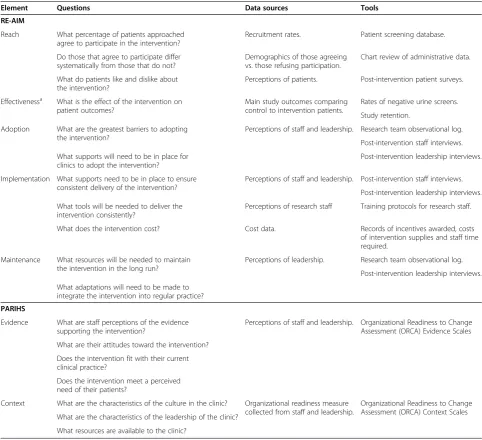
Guided by the framework, we developed a series of questions that would provide valuable information for future implementation efforts. (See Table 2, which also includes measurement tools discussed below.) Because our purpose was to collect information during an effect-iveness trial to inform future implementation rather than to evaluate an actual implementation effort, our ques-tions are slightly different from those recommended by Kessler [26].
The PARIHS framework proposes that successful im-plementation is a function of evidence, context and fa-cilitation. For our purposes, we chose to evaluate the elements ofevidenceandcontextas follows:
Evidence:In the PARIHS framework, this element refers to the strength and extent of evidence for clinical practice changes and includes research evidence, evidence from clinical practice, perceived patient needs and preferences, and local data/information. The RE-AIM framework lacks a component specifically addressing clinicians’assessments of the evidence supporting an innovation.
setting in which the proposed change is to be
implemented”[23]. Given the importance of context in a number of implementation frameworks e.g., [27-29] and the fact that RE-AIM does not specifically address context, we felt that assessing this element would add important information to our process evaluation. Specifically, it could enhance our interpretations of setting-related barriers and facilitators to this innovation.
PARIHS’sfacilitationelement is defined as an appointed role wherein an individual helps and enables others to change [23]. Evaluation of facilitation was not felt to be relevant to this study as the research staff administered the study’s clinical intervention and were not providing such help or support to assist clinical staff with real-time
implementation. However, information gained from asses-sing the RE-AIM framework, as well as PARIHS’evidence
and context elements, was expected to provide sufficient information to inform development of future facilitation strategies.
Data collection tools
Data tools included pre-existing scales, surveys and in-terviews designed specifically for this study, observa-tional notes, data forms completed by research staff, and chart reviews to collect administrative data (Table 2).
Chart review data
In order to track Reach of the intervention, a screen-ing database was maintained which contained basic Table 2 Implementation framework elements guide process evaluation questions and tools
Element Questions Data sources Tools RE-AIM
Reach What percentage of patients approached agree to participate in the intervention?
Recruitment rates. Patient screening database.
Do those that agree to participate differ systematically from those that do not?
Demographics of those agreeing vs. those refusing participation.
Chart review of administrative data.
What do patients like and dislike about the intervention?
Perceptions of patients. Post-intervention patient surveys.
Effectivenessa What is the effect of the intervention on
patient outcomes?
Main study outcomes comparing control to intervention patients.
Rates of negative urine screens.
Study retention.
Adoption What are the greatest barriers to adopting the intervention?
Perceptions of staff and leadership. Research team observational log.
Post-intervention staff interviews.
What supports will need to be in place for clinics to adopt the intervention?
Post-intervention leadership interviews.
Implementation What supports need to be in place to ensure consistent delivery of the intervention?
Perceptions of staff and leadership. Post-intervention staff interviews.
Post-intervention leadership interviews.
What tools will be needed to deliver the intervention consistently?
Perceptions of research staff Training protocols for research staff.
What does the intervention cost? Cost data. Records of incentives awarded, costs
of intervention supplies and staff time required.
Maintenance What resources will be needed to maintain the intervention in the long run?
Perceptions of leadership. Research team observational log.
Post-intervention leadership interviews.
What adaptations will need to be made to integrate the intervention into regular practice?
PARIHS
Evidence What are staff perceptions of the evidence supporting the intervention?
Perceptions of staff and leadership. Organizational Readiness to Change Assessment (ORCA) Evidence Scales
What are their attitudes toward the intervention?
Does the intervention fit with their current clinical practice?
Does the intervention meet a perceived need of their patients?
Context What are the characteristics of the culture in the clinic? Organizational readiness measure collected from staff and leadership.
Organizational Readiness to Change Assessment (ORCA) Context Scales What are the characteristics of the leadership of the clinic?
What resources are available to the clinic? a
demographic and diagnostic information on every patient that was approached regarding participation in the study. This information was used to determine the percentage of patients approached that agreed to participate and to compare basic demographic and diagnostic characteristics of those agreeing and declining participation.
Cost records
One consideration in regards to Implementation of a new intervention is the cost associated with the inter-vention. A standardized computer data entry screen was used to document the amount of time required for each participant intervention appointment and the monetary value of any vouchers earned. Staff time was converted into costs using three different wage rates plus a 30% fringe rate. Average wage rates were calculated for: 1) li-censed practical nurses, which clinic leadership indicated would be the most likely staff position to administer the intervention if one person were assigned to administer it to all patients, 2) the actual research staff that adminis-tered the intervention for the study (Bachelor’s level re-search assistants), and 3) licensed clinical social workers, which clinic leadership indicated would be the most likely staff position to administer the intervention if each case manager were assigned to administer it to their own patients.
Patient surveys
To collect information that could improve the Reachof the incentive intervention, participating patients com-pleted post-intervention surveys at the end of the eight week intervention period. The survey queried patients about what they liked and did not like about the inter-vention, any interactions they had with their clinical treatment team related to their participation in the inter-vention, and their thoughts on potential modifications to the incentive intervention.
The Organizational Readiness to Change Assessment (ORCA)
The ORCA is a 77-item scale designed to measure ele-ments of the PARIHS framework [30,31]. Items pertaining to theevidenceandcontextelements were administered.
Theevidencescale both assesses the respondents’ opin-ions regarding support for the proposed intervention based on research evidence, clinical experience and pa-tient preferences, as well as their perception of colleagues’ related support. Because preliminary discussions with staff indicated that incentive interventions can be controversial, we added an additional eight items to assess personal opinions and intentions regarding incentive interventions (see Table 3). The context scale contains six subscales: leadership culture, staff culture, leadership practices, measurement (e.g., leadership feedback), readiness to
change among opinion leaders and resources to support general practice changes.
ORCA surveys were handed out at clinical staff team meetings after all patient participants had completed the intervention phase of the trial. No identifying informa-tion was collected so that compleinforma-tion of the assessment was voluntary and anonymous.
Staff interviews
To collect information on Adoption, Implementationand
Maintenance, after all patient participants had completed the intervention phase of the trial, staff members that agreed to be interviewed were asked their opinions regard-ing the intervention and how it impacted the clinic, their interactions with their patients, and their workload. They were also asked about barriers and facilitators to maintain-ing the intervention as part of standard clinical care. No identifying information was collected during the inter-views other than the staff members’role in the clinic.
Leadership interviews
To collect information on Adoption, Implementationand
Maintenance,after all patient participants had completed the intervention phase of the trial, clinic leaders were asked about their plans to continue the incentive interven-tion in their clinic, perceived incentives for maintaining the intervention, barriers and facilitators to maintaining the interventions, and types of support that would be most helpful in adopting and maintaining the intervention. Table 3 Items added to organizational readiness to change scale to assess providers personal preferences and intentions
Construct Item
Preferences •If monetary rewards can help patients to achieve abstinence, I support it.
•Giving patients monetary rewards for staying abstinent or attending treatment is wrong. (reverse coded)
•Patients who really want to stay abstinent shouldn’t need monetary rewards. (reverse coded)
•We need to use every possible tool, including monetary rewards, to help patients succeed in treatment.
•Giving patients monetary rewards for abstinence or treatment attendance is an inappropriate use of VHA funds. (reverse coded)
•Giving patients monetary rewards will recognize their achievements and give them a sense of accomplishment.
Intentions •I would like to see the use of incentive interventions in this clinic.
Research staff observational log
To supplement information regarding Adoption, Imple-mentation and Maintenance,a shared research staff ob-servational log was created to document interactions with clinical staff and patients that provided information on their expressed attitudes toward the intervention and their comments on perceived barriers and facilitators to adoption, implementation, and maintenance of the intervention. The idea behind the log was that opinions might surface during day-to-day interactions with re-search staff that might not be readily reported when utilizing more formal data collection methods such as surveys and interviews.
Data analysis
Descriptive quantitative results are reported in percent-ages. Chi-square tests, and Z or t-tests were used to com-pare distributions, proportions and means of different subgroups. Qualitative information from open-ended sur-vey questions, interviews, and research log entries were transcribed and analyzed using common coding tech-niques for qualitative data [32]. The principal investigator (HH) and the research coordinator (E. Marut) independ-ently reviewed the transcripts and developed initial coding lists. A deductive analysis approach was used during the development of the initial coding list to focus codes on pre-determined domains of interest. This included attitudes toward the intervention, barriers to and faci-litators of implementation, and recommendations for improvement of the intervention. Following develop-ment and refinedevelop-ment of the initial coding list, each transcript was coded, with additional inductive codes added that identified important themes not represented by the pre-determined domains. Consensus meetings were held for review of consistency in coding. Inconsist-encies were resolved through mutual discussion and agreement.
Results
Patient screening data
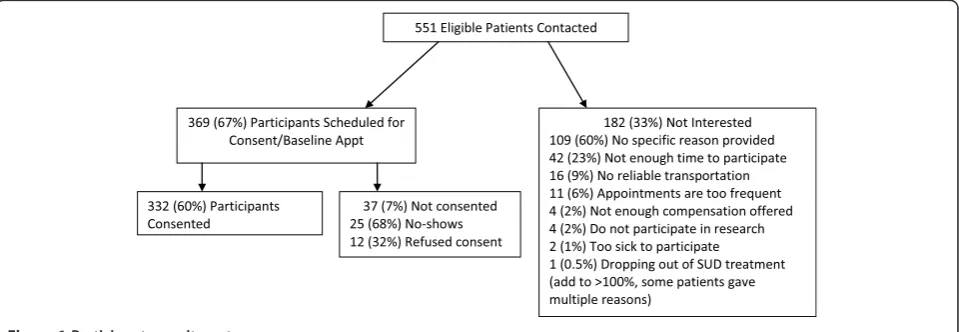
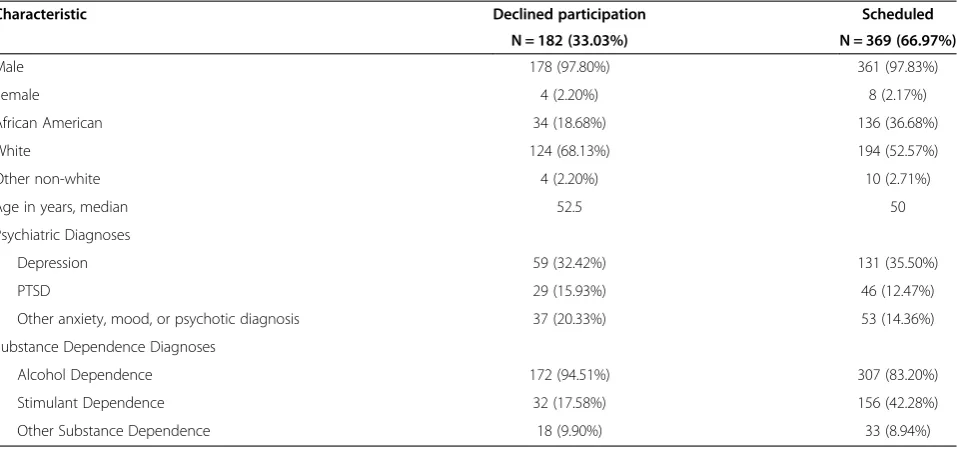
Figure 1 provides recruitment information including per-cent of contacted patients that participated and declined and reasons for declining. Table 4 provides demograph-ics for those that declined participation and those that agreed to a baseline appointment. African Americans and patients with stimulant dependence diagnoses agreed to participate at higher rates than patients in other demo-graphic and diagnostic categories.
Costs
Table 5 presents cost information. Most substance use disorders clinics have a breathalyzer unit available so the cost of the unit was not included as a cost of the inter-vention. However, if a clinic needs to purchase a breath-alyzer, one can be purchased for less than $500. The system to track appointment length indicated that mean appointment length was 7.0 minutes (SD = 4.5). Costs were assessed based on 15 minute appointments because the minimum appointment scheduling time in the VHA is 15 minutes and 15 minutes per appointment would have allowed sufficient time for 96% of all appointments. Staff costs were multiplied by the 16 scheduled appoint-ments rather than the number of appointappoint-ments actually attended. This accounted for staff time spent document-ing no-shows and contactdocument-ing patients to reschedule.
Patient surveys
The post-intervention survey was completed by 147 of the 165 patients (89%) that were assigned to the incentive intervention. When asked what they liked about partici-pating in the intervention, 94% of participants gave a response. When broadly categorized, the top response categories were“liked earning the rewards”(44.3%),“the intervention supported abstinence” (37.0%), and “liked working with the research staff” (22.4%). One partici-pant summarized her experience in the following way:
“It was very positive. The program doesn’t dwell on your short-comings. It is focused on positives with the incentives. It helped me to stay sober and helped me to commit to not drinking. I really liked it.”
When asked what they did not like about participating in the intervention, 78% of participants stated “nothing.” The most frequent category, reported by 10% of partici-pants, were complaints about the reward system, e.g., the rewards were not big enough. Participants stated that:
“I didn’t like the reward scale, the odds of not winning.”
“Those“Good Job”things, I didn’t like picking those.”
“Dang it, (name of other participant) won $80 and not me!”
Other responses included “the appointments were in-convenient”(8%) and“did not like the testing procedures” (3%).
When asked to rate the impact of the incentive interven-tion on their personal treatment outcomes, 81 (55.1%) par-ticipants rated the impact as highly positive, 47 (32.0%) participants rated the impact as somewhat positive and 19 (12.9%) participants rated the incentives as having no im-pact on their treatment outcomes. None of the participants rated the impact of the incentives on their personal treat-ment outcomes as either somewhat or highly negative.
Only 22.8% of patients reported that someone from the clinical team had discussed their intervention partici-pation with them. Of these conversations, the majority were neutral (63.0%) and involved a clinical staff person either mentioning the opportunity to be involved in the study or asking how participation was going. The remain-der of the conversations were positive (37.0%) with the clinical team member indicating that it was a good thing for the patient’s recovery to be involved in the interven-tion. There were no reports from patients of clinical staff making negative comments about their intervention par-ticipation. There were only two instances where a patient reported that a clinical team member discussed specific urine and breathalyzer screen results from the interven-tion with the patient.
Participants indicated that the intervention would have been more effective if it had been longer (greater than 8 weeks), if the prizes available had been bigger, and if it Table 4 Demographic characteristics of patients that declined participation and patients that scheduled baseline appointment
Characteristic Declined participation Scheduled N = 182 (33.03%) N = 369 (66.97%)
Male 178 (97.80%) 361 (97.83%)
Female 4 (2.20%) 8 (2.17%)
African American 34 (18.68%) 136 (36.68%)
White 124 (68.13%) 194 (52.57%)
Other non-white 4 (2.20%) 10 (2.71%)
Age in years, median 52.5 50
Psychiatric Diagnoses
Depression 59 (32.42%) 131 (35.50%)
PTSD 29 (15.93%) 46 (12.47%)
Other anxiety, mood, or psychotic diagnosis 37 (20.33%) 53 (14.36%)
Substance Dependence Diagnoses
Alcohol Dependence 172 (94.51%) 307 (83.20%)
Stimulant Dependence 32 (17.58%) 156 (42.28%)
Other Substance Dependence 18 (9.90%) 33 (8.94%)
Table 5 Costs of the intervention
Expense item Cost (Mean)
Incentive Vouchers $103.07
Rapid Urine Test Cups $60.90
($5.25/cup × 11.6a)
Breathalyzer Mouthpieces $2.78
($0.24 × 11.6)
Staff Costs LPNb= $102.72
(16 appointments × 15 minutes each) BAc= $125.60
LCSWd= $152.00
Total Cost per Patient $266.93 - $316.21
a
11.6 = mean number of intervention appointments attended. b
Licensed Practical Nurse: $41,101 base + 30% fringe. c
Bachelor’s level research assistant: $50,275 base + 30% fringe. d
offered a larger number of prizes and more large and jumbo prizes. The participants indicated that the inter-vention would have been less effective if it had been shorter (less than 8 weeks), if the appointments had been less frequent (less than 2 times per week), and if the intervention had taken place in a group setting where patients would know each other’s test results and reward earnings.
Organizational readiness to change assessment
The ORCA was completed by 13 staff members from each of the two participating substance use disorders clinics (Total N = 26/39, 67% response). At the first site, respon-dents included five social workers, three nurses, two psy-chiatrists, one psychologist, and two staff members that did not record their role in the clinic. At the second site, respondents included five social workers, one nurse, three psychiatrists, three psychologists, and one staff member that did not record his/her role in the clinic.
Staff at both sites expressed agreement with the evi-dence supporting incentive interventions. On a scale of 1 to 5, with 5 representing strong agreement, the mean evidence scale rating was 3.7 for site one and 3.9 for site two. Mean scores on the three evidence subscales (re-search evidence, clinical experience, and patient prefer-ences) were all above 3.7 for both sites. None of the differences between sites were significant. On the six items related to personal opinions regarding incentive interventions, site one had a significantly lower rating (M = 3.5) compared to site two (M = 4.2; p = .01) al-though site one was still in the supportive range (> 3). In regards to the intentions questions, on the item asking whether they would like to see an incentive intervention continue in their clinic, site one had a significantly lower rating (M = 3.8) than site two (M = 4.5; p = .027) but both sites were in the supportive range. In looking at individual scores, site one had three individuals that had clearly negative opinions regarding the incentive in-tervention which pulled down the overall score for the clinic despite the majority of staff expressing support. When asked if there were any specific plans in place to continue an incentive intervention in the clinic, the mean rating for both sites was 2.8 indicating that while they were supportive of the intervention, they were un-aware of any clear plans in place to sustain it following the research study.
Staff at both sites also indicated that their sites had contexts that were supportive of innovation in general. The mean context scale rating was 3.6 for site one and 3.3 for site two. Mean scores on five of the six context subscales (leadership culture, staff culture, leadership practices, measurement, and opinion leaders) were all above 3.1 for both sites. None of the differences between sites were significant. The only context subscale to have
negative mean ratings from both sites was the resource subscale indicating that staff at both sites did not feel that they had the financial resources, training, facilities or staffing necessary to adequately support implementa-tion of innovaimplementa-tions. Site two had a significantly lower mean rating on resources (M = 2.0) than site one (M = 2.9; p = .01).
Staff interviews
Seven interviews were conducted with staff from site one and two were conducted with staff from site two. The professional roles of those interviewed included two nurses, two social workers, one psychologist, one addiction therapist, and three whose roles were not identified.
When staff were asked what they liked about having the incentive intervention in their clinic, the most com-mon themes to emerge, mentioned by three or more re-spondents, were that the intervention motivated patients to continue treatment, the intervention provided the pa-tients with tangible rewards for success, the intervention provided the patients with additional support, the inter-vention provided the staff with objective outcome data, and that the intervention was a positive/enjoyable ex-perience for patients. For example, one staff member summed up her experience with the intervention in the following way:
“I liked it because it motivated the clients. There was a possibility for them to win something. Also, praise goes a long way. They come to (name of treatment program) beaten down and the incentives provided them with positive reinforcement.”
When staff was asked what they did not like about hav-ing the incentive intervention in their clinic, six of nine responded nothing. Two staff reported a concern that the intervention focused patients on external rather than in-ternal motivation for change as exemplified by the follow-ing quote:
“Sometimes it seemed that the patients enrolled in the intervention were more superficial in their treatment. They had to stay sober for the rewards and money, not for deeper reasons.”
Two staff also reported a concern that the intervention could trigger gambling behavior.
“The intervention added to the overall goal of working together as a team to help the patients. I think the patients got the sense that, as a clinic, we were committed to helping them to get and stay sober. The incentive study helped with that.”
None indicated a negative impact of the intervention. When asked whether the study intervention had any im-pact on individual respondents’ workloads, six of nine respondents stated that there was no impact. Those that reported an impact reported co-signing incentive inter-vention appointment notes and having more contact with patients during the aftercare phase of treatment. All three agreed that this increased interaction improved treatment for the patients. As one staff member described it:
“There were a lot of notes to cosign, although it was always optional. I like to have the information about who was showing up for intervention appointments and who was testing positive and negative.”
When asked if the intervention influenced their inter-actions with their patients, five of nine respondents indicated that it did not. Those that did indicate an in-fluence reported talking with their patients about their study earnings and adding ongoing participation in the intervention to patients’aftercare recovery plans.
When asked if they would like to see the intervention continue in the clinic after the research study ended, seven of the nine respondents said yes. The remaining two stated that their opinion would depend on the results of the study. When asked about barriers to adopting the intervention as part of standard clinical treatment, the most common theme, cited by six respondents, was cost. An additional barrier mentioned by three respondents was allocating staff time to administer the intervention. As summed up by one staff person:
“The time commitment would be a barrier. You need staff that would be in charge of this. The expense would also be a barrier. I see the lab costs as being the most expensive cost. Sending confirmations to the lab is very expensive but I think it’s really important that we do that.”
When asked what would make it easier to adopt the intervention as part of standard clinical treatment, themes reported by three or more respondents were dedicated staff and soliciting buy-in from all staff in the clinic prior to implementation to decrease resistance. For example, one staff person stated:
“Everybody needs to be on the same team. There needs to be staff buy-in from everyone involved. Another
thing is that it should not be considered a secondary part of treatment. It should be an integral part.”
Leadership interviews
All three leaders of the participating clinics indicated that they were interested in implementing an incentive intervention but that it was not currently feasible due to significant barriers. In the outpatient substance use dis-orders clinics, the main perceived barriers were as fol-lows: staff were already stretched beyond capacity, the need to either gain additional staff or reallocate staff time from other priorities, and the need to identify a funding source for both the incentives and the rapid urine test cups. As one of the leaders put it:
“The biggest barrier is that I would have to pull staff from other tasks in order to do it. There are only so many staff members and something else would have to give.”
In the dual diagnosis partial hospitalization clinic, the main barrier cited was that their program was primarily group based and therefore, they would need expert con-sultation to determine the best way to incorporate the intervention into the group setting. Staff time was also a concern for this clinic.
All of the leaders indicated that there were significant incentives for pursing implementation. The leaders in the substance use disorder treatment clinics noted that the intervention appeared to improve treatment retention and that this improved their clinics’ functioning on a VHA substance use disorders treatment continuity of care per-formance measure that was monitored by national leader-ship as demonstrated by the following quote:
“For me, the continuity of care is a big incentive. It (the intervention) keeps the patients engaged in treatment and coming in for appointments.”
The leader of the dual diagnosis clinic noted that incen-tive interventions are an empirically supported treatment and that empirically supported treatments generally, and incentive interventions specifically, were strongly sup-ported by national leadership. When asked what types of assistance would be most beneficial to support implemen-tation, suggestions included educating staff and facility leadership regarding the evidence for incentive interven-tions and expert consultation in designing an incentive intervention that would fit into the current practices of the clinic.
Research observational log
were positive. Clinical staff demonstrated support for the intervention both through assisting the research staff with recruitment of participants and with maintaining contact with participants during enrollment in the study. Clinical staff comments indicated the intervention was useful to their work with patients by allowing regular monitoring of urine screen results and keeping patients connected to aftercare. When one of the research assis-tants approached a staff member about recruitment of a specific patient, the staff member spontaneously replied:
“I really appreciate how the study keeps the patients coming back to the clinic. It helps keep them connected to aftercare after they complete their intensive program. It gives them another long term connection and support.”
The research log also prompted the research staff to identify and act on suggestions from clinicians to enhance clinician involvement with the intervention. For example, staff at both facilities requested that they re-ceive regular updates on participants’ progress in the incentive intervention. Research staff worked with the clinicians to identify the best way to achieve this goal at each facility. A second suggestion that came from clin-ical staff was that the patient’s case manager should be invited to the final intervention appointment in order to celebrate this achievement with their patient; however when this was offered, staff attended infrequently.
As stated above, the vast majority of recorded interac-tions were positive but there were barriers and negative responses to the intervention recorded as well. The major barrier to integrating the intervention into clinic processes at one facility was that the clinicians did not want to rely on the rapid urine test cups for clinical test-ing of substance use. They preferred to send samples directly to the laboratory. This created a great incon-venience for patients who were often asked to submit two urine samples (one for research and one for clinical purposes) within a very short time frame. During the course of the intervention, several instances arose where clinical staff required immediate knowledge regarding whether a patient was under the influence of substances and sought out research staff to request access to a rapid test cup, which the research staff readily provided. As the clinicians gained familiarity with the test cups, they gained confidence in the rapid test cup results and even-tually allowed patients to use their research sample as their clinical sample. An additional complaint was that some clinicians noted that patients were consistently attending their research intervention appointments but skipping their clinical care appointments.
Research staff recorded over 50 interactions with patients involving spontaneous comments about the intervention in
the research log. The majority of these comments were positive and related to patients’perceived benefits of the intervention. Several patients reported that the inter-vention was helping them to maintain their sobriety. Four patients recounted specific instances in which they were experiencing a craving to use substances and thought about the incentives they hoped to earn to assist them in fighting the craving. In one of these cases, the participant stated while he was picking that he had really wanted to have a drink the previous weekend but that he did not want to have his picks reset. He then pulled out a $20 voucher and was so excited that he started to dance around the office. He stated:
“That reward was so worth not having a drink over the weekend!”
Several participants also reported that they had recom-mended participation in the intervention to other patients. Additional positive comments included appreciating being able to see their urine test cup results immediately and that the intervention gave them a documented record of urine screens that their clinicians could access. Patients also expressed satisfaction with the wide selection of items available at the VHA gift shop that could be pur-chased with their vouchers. The majority of the complaints about the intervention centered on disappointment with not drawing the larger vouchers.
Discussion
The final step in conducting our process evaluation was to triangulate the results from the various data sources to answer the questions that were developed based on the elements of the selected frameworks (see Table 1) and to summarize lessons learned (see Table 6).
Reach
agreed to participate felt the intervention experience was a positive one.
Effectiveness
The primary outcomes of this study are reported else-where [19]. However, in brief, in the alcohol dependent subgroup, incentive participants submitted significantly more negative samples (13 vs. 11 samples), were retained significantly longer (7 vs. 6 weeks), and achieved signifi-cantly longer median durations of abstinence (16 vs. 9 consecutive visits compared to usual care participants).
Intervention effects were non-significant for the stimu-lant dependent subgroup. While these non-significant re-sults for the stimulant dependent group were surprising, we believe these results were related to the characteristics of the recruited participants, specifically that they ap-peared to have less serious stimulant dependence com-pared to samples in several previous significant trials. Despite the non-significant results of this one trial, we be-lieve that the extensive literature supporting incentive in-terventions with stimulant dependent patients supports implementation e.g., [33-36]; and further the results of this trial may provide some guidance in selecting patients most likely to benefit from incentive interventions.
Adoption
Leadership identified some strong rationales for adoption of incentive programs. They perceived that incentive in-terventions would be valuable to improve their treat-ment retention performance ratings. Additionally, they believed national leadership viewed implementation of incentive interventions as a priority, and in fact, incen-tive interventions had been designated by national lead-ership as an evidence-based practice. The fact that the clinic leaders both expressed dissatisfaction with their own clinics’ performance on the treatment retention performance rating and perceived the incentive inter-vention as directly addressing this issue appeared to be the strongest motivator for adopting a change in prac-tice. Clinic leaders that do not perceive issues with the effectiveness of their program at baseline may be less likely to express motivation to adopt practice change. This highlights the importance of having measures available to assess clinic effectiveness which can help to identify gaps in performance and assess the impact of changes in clinic practices.
However, these strong rationales for adoption could not override the greatest barrier, which was lack of resources in the form of staff time and funding for vouchers and urine testing supplies. Multiple data sources, including the ORCA, staff interviews, leadership interviews, and the re-search log, all indicated that lack of resources was the pri-mary perceived barrier to adoption of the intervention. To address the perceptions regarding staff time, we can sug-gest two implementation strategies that may decrease leadership concerns about staffing burden: providing edu-cation in advance as regards the amount of time necessary to administer the incentive intervention (15 minutes or less per instance); and presenting various options for inte-grating the intervention into current clinic staffing pat-terns especially when group sessions are the predominant modality. While cost of the intervention is traditionally considered to fall under theImplementationconstruct of the RE-AIM framework, we consider cost under the
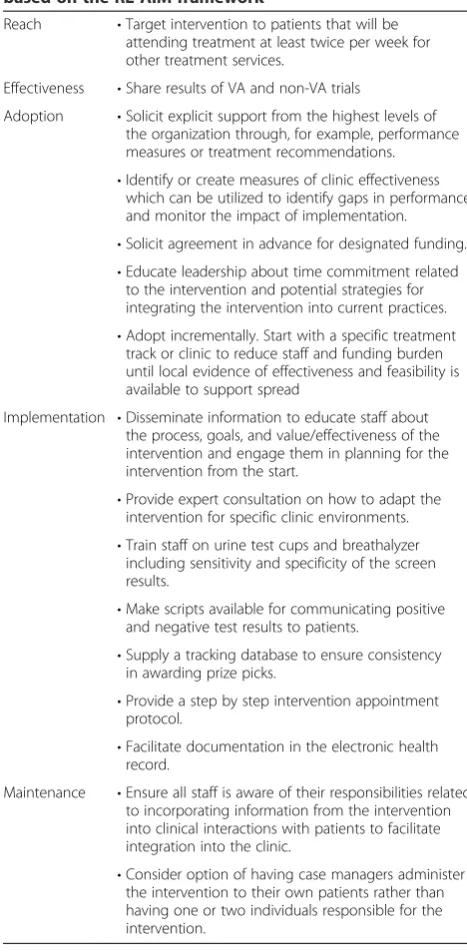
Adoption construct given the high relevance of funding Table 6 Suggestions to enhance implementation efforts
based on the RE-AIM framework
Reach •Target intervention to patients that will be attending treatment at least twice per week for other treatment services.
Effectiveness •Share results of VA and non-VA trials
Adoption •Solicit explicit support from the highest levels of the organization through, for example, performance measures or treatment recommendations.
•Identify or create measures of clinic effectiveness which can be utilized to identify gaps in performance and monitor the impact of implementation.
•Solicit agreement in advance for designated funding.
•Educate leadership about time commitment related to the intervention and potential strategies for integrating the intervention into current practices.
•Adopt incrementally. Start with a specific treatment track or clinic to reduce staff and funding burden until local evidence of effectiveness and feasibility is available to support spread
Implementation •Disseminate information to educate staff about the process, goals, and value/effectiveness of the intervention and engage them in planning for the intervention from the start.
•Provide expert consultation on how to adapt the intervention for specific clinic environments.
•Train staff on urine test cups and breathalyzer including sensitivity and specificity of the screen results.
•Make scripts available for communicating positive and negative test results to patients.
•Supply a tracking database to ensure consistency in awarding prize picks.
•Provide a step by step intervention appointment protocol.
•Facilitate documentation in the electronic health record.
Maintenance •Ensure all staff is aware of their responsibilities related to incorporating information from the intervention into clinical interactions with patients to facilitate integration into the clinic.
concerns to the decision whether or not to adopt this par-ticular intervention. The mean total cost of the eight week intervention was $266.93–$316.21 per patient depending on the salary rate of the individual administering the inter-vention. This cost could be reduced by using lower wage staffing. While a full cost-effectiveness evaluation is be-yond the scope of this paper, the incentive intervention was shown to increase participants’ longest duration of abstinence during treatment [19] which is one of the best predictors of long-term patient outcomes [37-39]. Olm-stead and colleagues have published two articles reporting on the cost-effectiveness of incentive interventions [40,41]. The potential for decreased societal costs related to med-ical expenses, criminal/legal costs, and lost productivity would suggest that this is a low price for an intervention that improves substance use disorders treatment outcomes. Providing education regarding the low cost and the cost-effectiveness of the intervention and soliciting agreement in advance from facility leadership for dedicated funding appear to be essential to adoption.
It should be noted that adoption of many new evidence-based practices into an existing clinic milieu will require additional resources, so such barriers are not unique to in-centive interventions. Another potential implementation strategy may be to assist clinic leadership in identifying current clinic practices that are not evidence-based or that have been shown to contribute little to treatment out-comes, e.g., didactic education [42]. The implementation team and the clinic leadership could then focus on strat-egies for reallocating existing resources from current non-evidence based practices to implementation of non-evidence based practices not currently available in the clinic.
Clinic leadership also indicated that it would be an easier “sell” to facility leadership to begin by targeting the intervention to a small group of patients. This would offer a way to test the intervention in the clinic and col-lect local outcome data that could then be used to advo-cate for sustained funding support for the intervention at a later date. Starting with a “test” of the intervention could also lessen staff resistance and allow them to ob-serve the effectiveness of the intervention in their own clinic and the impact of the intervention on their work-load prior to committing to sustained implementation.
Implementation
Once a clinic has made a decision to adopt the incentive intervention, supports must be in place to ensure that implementation is carried out with high levels of fidelity and consistency. The staff and leadership interviews sug-gested several ways that high quality implementation could be enhanced. These include: 1) involving staff in implementation planning to increase knowledge regard-ing essential intervention elements; 2) providregard-ing support for adapting the intervention to fit the current clinic
structure through expert consultation and recommended strategies based on common clinic structures; and 3) de-fining clear roles for all clinical staff related to the inter-vention so that it would be a clinic-wide initiative rather than viewed as only the responsibility of specific people. In addition to these supports, the research log suggested that it would be beneficial to train all staff on the use of rapid urine test cups and their specificity and sensitivity prior to implementation to address concerns about the reliability of that technology.
Other observations related to implementation tools that could be used to enhance consistent delivery of this intervention come from our experience in training the research staff. Research assistants (RAs) were provided with training on the accurate use of the rapid urine test cups and the breathalyzer unit and with scripts for how to communicate screening results to patients. Addition-ally, a database was created that tracked the number of picks that a patient was entitled to at a given appoint-ment based on their previous record of attendance and test results. This simplified the work of the RAs and en-sured the consistency with which the incentives were distributed. RAs were also provided with a manual that described the steps of an intervention appointment from beginning to end. Once an RA had completed their training and read the manual, they completed a mock intervention appointment with one of the investigators (HH, DK) prior to completing intervention appoint-ments with patients. These same training tools and steps could be provided to clinical staff to ensure consistent delivery of the intervention.
Maintenance
not know enough about the intervention or how best to incorporate information from the intervention into their therapeutic interactions. This could be mitigated by providing better education to all staff about the inter-vention and by developing explicit expectations regard-ing how staff should integrate information from the intervention into their interactions with patients. An-other option would be to have each case manager pro-vide the incentive intervention to their case load rather than assigning administration of the incentive interven-tion to one or two isolated individuals. This opinterven-tion would also eliminate the staff concern that patients were attending their intervention appointments more regu-larly then their clinical appointments as these would be provided concurrently.
Evidence
Ratings on the ORCA indicated that staff at both facil-ities generally agreed with the evidence supporting the intervention, that the intervention met the needs of their patients, and that the intervention fit with their treat-ment philosophy. Staff interviews supported results from the ORCA. The research log data also supported staff’s reported enthusiasm for the intervention with multiple reports of clinical staff members assisting research staff with recruitment and facilitating communication be-tween research staff and study participants.
However, despite this general enthusiasm, there were clear exceptions to this support with a small minority of staff reporting a serious conflict between their personal treatment philosophy and incentive interventions. They strongly felt that the incentives created a“false”, external motivation for abstinence that would undermine patients’ internal motivation for change and would interfere with longer term treatment success. It is likely that these beliefs are even more prevalent in community treatment settings that do not have the strong focus on evidence-based prac-tice currently promoted within the VHA system. While these beliefs tend to be highly entrenched, having discus-sions up front with staff and leadership to identify such beliefs or concerns and to determine what types of evi-dence staff would find compelling might encourage the staff to consider supporting implementation. For example, staff may simply not be aware of the level and detail of evi-dence supporting incentive interventions. They also may benefit from a more in-depth understanding of how be-havioral reinforcements function in a variety of settings. They may be encouraged by discussing incentive interven-tions with other clinics that have already implemented or, as suggested earlier, they may be willing to engage in a brief test of incentive interventions in their own clinic that would allow staff to see the benefits and risks of the intervention among their own patients. The important point is to engage the staff in a respectful discussion
about implementation early on so that their concerns can be heard and addressed prior to a formal decision to make a change in how they are going to treat their patients. The Promoting Awareness of Motivational In-centives (PAMI) website, based on knowledge gained from the National Institute of Drug Abuse (NIDA) Clin-ical Trials Network (CTN) Motivational Incentives for Enhanced Drug Abuse Recovery study, provides several excellent resources for staff education and training in-cluding testimonial videos from patients and clinicians regarding the impact of incentive interventions on clinic culture and patient outcomes (http://www.bettertxoutcomes. org/bettertxoutcomes/PAMI.html).
Context
ORCA survey results indicated that staff perceived a gen-erally positive leadership/staff culture and positive leader-ship practices. The ORCA survey supported interview data, indicating that staff generally disagreed that they had access to the necessary resources to support innovation.
Despite general agreement with the evidence support-ing incentive interventions and contexts that support innovation in general, the clinics involved in this study perceived substantial barriers to implementation. The implication is that barriers may be perceived as even more substantial in sites that do not have these support-ive characteristics. This highlights the importance of conducting local assessment of Evidence and Context
when undertaking implementation efforts [43].
Limitations
effectiveness trial with research staff conducting the incen-tive intervention rather than an implementation trial with the clinical staff conducting the intervention, staff percep-tion of the intervenpercep-tion, particularly related to its impact on workload, may be quite different than if they were re-sponsible for conducting the intervention themselves.
Conclusion
An implementation-focused process evaluation guided by the RE-AIM and PARIHS frameworks led to signifi-cant insights about the processes involved in implemen-tation of incentive interventions and allowed us to formulate concrete suggestions about implementation strategies. Some of the most important insights were: 1) the need to spend substantial effort on education and persuasion strategies in sites where staff are skeptical of the value of implementing incentive programs, and 2) the need to assist leadership in developing strategies for financing and staffing. Overall, the study demonstrates the value of conducting implementation process evalua-tions as a concurrent part of effectiveness research.
The goals of this paper were to describe an implemen-tation-focused process evaluation conducted during a randomized trial and distil findings into practical guid-ance to others who wish to implement incentive inter-ventions in substance use disorders clinics. Table 6 presents a summary of the key lessons learned from this effort. It is our hope that this summary speaks to the value of the effort expended on the process evaluation and highlights issues to consider when attempting im-plementation of an incentive intervention.
Competing interests
The authors declare that they have no competing interests.
Authors’contributions
HH conceived of the study, led the study design, interpreted data and drafted the manuscript. CS participated in the study design, provided extensive consultation on data interpretation, and provided critical revisions to the manuscript. AB developed the data collection strategies, provided database management, produced the demographic table and recruitment figure, and provided comments on the manuscript. SN participated in study design, performed statistical analyses, and provided comments on the manuscript. MS participated in study design and provided critical revisions to the manuscript. DK participated in study design and provided critical revisions to the manuscript. All authors read and approved the final manuscript.
Acknowledgments
This material is based on work supported by grant number IIR 03–120 from the Department of Veterans Affairs, Veterans Health Administration, Office of Research & Development, Health Services Research & Development. The views expressed in this article are those of the authors and do not necessarily reflect the position or policy of the Department of Veterans Affairs or the United States government. The authors would like to express their gratitude to the following individuals for their contribution to this study: Nancy Rettmann, Lee Ann Heim, Tabitha Leighton, Eliza McManus, Evelina Marut, Alisha Baines Simon, Carl Isenhart, Brittney Hamilton, Tina Marie Schmidt, Michelle Ingalsbe, and Carl Rimmele.
Author details
1
Veterans Health Administration Substance Use Disorder Quality Enhancement Research Initiative, Minneapolis VA Healthcare System, One Veterans Drive, Minneapolis, MN 55417, USA.2Veterans Health Administration Health Services Research and Development Center of Excellence,
Minneapolis VA Healthcare System, Minneapolis, MN 55417, USA.3University of Minnesota, Minneapolis, MN 55455, USA.4Health Services Department,
Boston University School of Public Health; and Independent Consultant, Amherst, MA 01002, USA.5Johns Hopkins University School of Medicine,
Baltimore, MD 21224, USA.6Center of Excellence in Substance Abuse Treatment and Education, VA Puget Sound Healthcare System, Seattle, WA 98108, USA.7University of Washington School of Medicine, Seattle, WA 98185, USA.
Received: 11 June 2013 Accepted: 2 December 2013 Published: 9 July 2014
References
1. Institute of Medicine:Crossing the quality chasm: a new health system for the 21stcentury.Washington D C: Institute of Medicine of the National Academics Press; 2001.
2. Sung NS, Crowley WF Jr, Genel M, Salber P, Sandy L, Sherwood LM, Johnson SB, Catanese V, Tilson H, Getz K, Larson EL, Scheinberg D, Reece EA, Slavkin H, Dobs A, Grebb J, Martinez RA, Korn A, Rimoin D:Central challenges facing the national clinical research enterprise.JAMA2003,
289:1278–1287.
3. Rosenberg RN:Translating biomedical research to the bedside: a national crisis and a call to action.JAMA2003,289:1305–1306.
4. Glasgow RE, Lictenstein E, Marcus AC:Why don’t we see more translation of health promotion research to practice? rethinking the efficacy-to-effectiveness transition.Am J Public Health2003,93:1261–1267. 5. Grol R, Wensing M, Eccles M:Improving patient care: the implementation of
change in clinical practice.Toronto: Elsevier; 2005.
6. Stetler CB, McQueen L, Demakis J, Mittman BS:An organizational framework and strategic implementation for system-level change to enhance research-based practice: QUERI Series.Implement Sci2008,3:30. 7. March JS, Siva SG, Compton S, Shapiro M, Califf R, Krishnan R:The case for practical clinical trials in psychiatry.Am J Psychiatry2005,162:836–846. 8. Rubenstein LV, Pugh J:Strategies for promoting organizational and
practice change by advancing implementation research.J Gen Intern Med 2006,21:S58–S64.
9. Stetler CB, Legro MW, Wallace CM, Bowman C, Guihan M, Hagedorn H, Kimmel B, Sharp ND, Smith JL:The role of formative evaluation in implementation research and the QUERI experience.J Gen Intern Med 2006,21:S1–S8.
10. Stetler CB, Mittman BS, Francis J:Overview of the VA quality enhancement research initiative (QUERI) and QUERI theme articles: QUERI series.
Implement Sci2008,3:8.
11. Hagedorn H, Hogan M, Smith JL, Bowman C, Curran GM, Espadas D, Kimmel B, Kochevar L, Legro MW, Sales AE:Lessons learned about implementing research evidence into clinical practice: experiences from VA QUERI.
J Gen Intern Med2005,21:S21–S24.
12. Wells KB:Treatment research at the crossroads: the scientific interface of clinical trials and effectiveness research.Am J Psychiatry1999,156:5–10. 13. Tunis SR, Stryer DB, Clancey CM:Increasing the value of clinical research
for decision making in clinical and health policy.JAMA2003,
290:1624–1632.
14. Proctor EK, Landsverk J, Aarons G, Chambers D, Glisson C, Mittman B:
Implementation research in mental health services: an emerging science with conceptual, methodological, and training challenges.Adm Policy Ment Health2009,36:24–34.
15. Curran GM, Bauer M, Mittman B, Pyne JM, Stetler C: Effectiveness-implementation hybrid designs: combining elements of clinical effectiveness and implementation research to enhance public health impact.Med Care2012,50:217–226.
16. Oakley A, Strange V, Bonell C, Alleln E, Stephenson J, RIPPLE Study Team:
Process evaluation in randomized controlled trials of complex interventions.BM J2006,332:413–416.
18. Craig P, Dieppe P, Macintyre S, Michie S, Nazareth I, Petticrew M:
Developing and evaluating complex interventions: the new medical research council guidance.BMJ2008,337:979–983.
19. Hagedorn H, Noorbaloochi S, Baines Simon A, Bangerter A, Stitzer ML, Stetler CB, Kivlahan D:Rewarding early abstinence in veterans health administration addiction clinics.J Subst Abuse Treat2013,
2013(45):109–117.
20. Glasgow RE, Vogt TM, Boyles SM:Evaluating the public health impact of health promotion interventions: the RE-AIM framework.Am J Public Health1999,89:1322–1327.
21. Glasgow RE, McKay HG, Piette JD, Reynolds KD:The RE-AIM framework for evaluating interventions: what can it tell us about approaches to chronic illness management?Patient Education & Counseling2001,44:119–127. 22. Gaglio B, Glasgow RE:Evaluation approaches for dissemination and
implementation research.InDissemination and implementation research in health: translating science into practice.Edited by Brownson R, Colditz G, Proctor E. New York: Oxford University Press; 2012:327–356.
23. Rycroft-Malone J, Kitson A, Harvey G, McCormack B, Seers K, Titchen A, Estabrooks C:Ingredients for change: revisiting a conceptual framework.
Qual Saf Health Care2002,11:174–180.
24. Rycroft-Malone J:The PARIHS framework: a framework for guiding the implementation of evidence-based practice.J Nurs Care Qual2004,
19:297–304.
25. Kitson A, Rycroft-Malone J, Harvey G, McCormack B, Seers K, Titchen A:
Evaluating the successful implementation of evidence into practice using the PARIHS framework: theoretical and practical challenges.
Implement Sci2008,3:1.
26. Kessler RS, Purcell EP, Glasgow RE, Klesges LM, Bendeser RM, Peek CJ:What does it mean to“employ”the RE-AIM framework?Evaluation and the Health Professions2013,36:44–66.
27. Greenhalgh T, Robert G, Macfarlene F, Bate P, Kyriakidou O:Diffusion of innovations in service organizations: systematic review and recommendations.Milbank Q2004,82:581–629.
28. Simpson DD, Dansereau DF:Assessing organizational functioning as a step toward innovation.NIDA Science & Practice Perspectives2007,3:20–28. 29. Damschroder LJ, Aron DC, Keith RE, Kirsh SR, Alexander JA, Lowery JC:
Fostering implementation of health services research findings into practice: a consolidated framework for advancing implementation science.Implement Sci2009,4:50.
30. Helfrich CD, Li YF, Sharp ND, Sales AE:Organizational readiness to change assessment (ORCA): development of an instrument based on the promoting action of research in health services (PARIHS) framework.
Implement Sci2009,4:38.
31. Hagedorn HJ, Heideman PW:The relationship between baseline organizational readiness to change assessment subscale scores and implementation of hepatitis prevention services in substance use disorders treatment clinics.Implement Sci2010,5:46.
32. Miles MB, Huberman AM:Qualitative data analysis: an expanded sourcebook. 2nd edition. Thousand Oaks, CA: Sage Publications; 1994.
33. Katz EC, Robles-Sotelo E, Correia CJ, Silverman K, Stitzer ML, Bigelow G:
The brief abstinence test: effects of continued incentive availability on cocaine abstinence.Experimental & Clinical Psychopharmacology2002,
10:10–17.
34. Petry NM, Martin B, Simcic F Jr:Prize reinforcement contingency management for cocaine dependence: integration with group therapy in a methadone clinic.Journal of Consulting & Clinical Psychology2005,
73:354–359.
35. Roll JM, Petry NM, Stitzer ML, Brecht ML, Peirce JM, McCann MJ, Blaine J, MacDonald M, DiMaria J, Lucero L, Kellogg S:Contingency management for the treatment of methamphetamine use disorders.Am J Psychiatr2006,
163:1993–1999.
36. Silverman K, Robles E, Mudric T, Bigelow GE, Stitzer ML:A randomized trial of long-term reinforcement of cocaine abstinence in methadone-maintained patients who inject drugs.Journal of Consulting & Clinical Psychology2004,72:839–854.
37. Higgins ST, Wong CJ, Badger GJ, Ogden DE, Dantona RL:Contingent reinforcement increases cocaine abstinence during outpatient treatment and 1 year of follow-up.J Consult Clin Psychol2000,68:64–72.
38. Petry NM, Alessi SM, Hanson T, Sierra S:Randomized trial of contingent prizes versus vouchers in cocaine-using methadone patients.J Consult Clin Psychol2007,75:983–991.
39. Petry NM, Barry D, Alessi SM, Rounsaville BJ, Carroll KM:A randomized trial adapting contingency management targets based on initial abstinence status of cocaine-dependent patients.J Consult Clin Psychol2012,
80:276–285.
40. Olmstead TA, Sindelar JL, Petry NM:Cost-effectiveness of prize-based incentives for stimulant abusers in outpatient psychosocial treatment programs.Drug Alcohol Depend2007,87:175–182.
41. Olmstead TA, Petry NM:The cost-effectiveness of prize-based and voucher-based contingency management in a population of cocaine- or opioid-dependent outpatients.Drug Alcohol Depend2009,102:108–115. 42. National Quality Forum:National voluntary consensus standards for the
treatment of substance use conditions: evidence-based treatment practices– a consensus report.Washington, D.C: National Quality Forum; 2007. 43. Stetler CB, Damschroder LJ, Helfrich CD, Hagedorn HJ:A guide for applying
a revised version of the PARIHS framework for implementation.
Implement Sci2011,6:99.
44. Kirby KC, Carpenedo CM, Stitzer ML, Dugosh KL, Petry NM, Roll JM, Saladin ME, Cohen AJ, Hamilton J, Reese K, Sillo GR, Stabile PQ, Sterling RC:
Is exposure to an effective contingency management intervention associated with more positive provider beliefs?J Subst Abuse Treat2012,
42:356–365.
45. Rash CJ, Petry NM, Kirby KC, Martino S, Roll J, Stitzer ML:Identifying provider beliefs related to contingency management adoption using the contingency management beliefs questionnaire.Drug Alcohol Depend 2012,121:205–212.
46. Rash CJ, DePhilippis D, McKay JR, Drapkin M, Petry NM:Training workshops positively impact beliefs about contingency management in a nationwide dissemination effort.J Subst Abuse Treat2013,45(3):306–312. 47. Ducharme LJ, Knudsen HK, Abraham AJ, Roman PM:Counselor attitudes
toward the use of motivational incentives in addiction treatment.
Am J Addict2010,19:496–503.
doi:10.1186/1940-0640-9-12
Cite this article as:Hagedornet al.:An implementation-focused process evaluation of an incentive intervention effectiveness trial in substance use disorders clinics at two Veterans Health Administration medical centers.
Addiction Science & Clinical Practice20149:12.
Submit your next manuscript to BioMed Central and take full advantage of:
• Convenient online submission
• Thorough peer review
• No space constraints or color figure charges
• Immediate publication on acceptance
• Inclusion in PubMed, CAS, Scopus and Google Scholar
• Research which is freely available for redistribution