STATE-OF-THE-ART REVIEW ARTICLE
The Ketogenic Diet: One Decade Later
John M. Freeman, MD, Eric H. Kossoff, MD, Adam L. Hartman, MD
John M. Freeman Pediatric Epilepsy Center, Johns Hopkins Medical Institutions, Baltimore, Maryland
The authors have indicated they have no financial relationships relevant to this article to disclose.
ABSTRACT
The ketogenic diet, a high fat, adequate protein, low carbohydrate diet, has, during the past decade, had a resurgence of interest for the treatment of difficult-to-control seizures in children. This review traces its history, reviews its uses and side effects, and discusses possible alternatives and the diet’s possible mechanisms of action. Finally, this review looks toward possible future uses of the ketogenic diet for conditions other than epilepsy.
www.pediatrics.org/cgi/doi/10.1542/ peds.2006-2447
doi:10.1542/peds.2006-2447
Key Words
ketogenic diet, pediatric epilepsy, mechanisms of action
Abbreviations
KD— ketogenic diet
MCT—medium-chain triglyceride LCT—long-chain triglyceride
Accepted for publication Oct 18, 2006 Address correspondence to John M. Freeman, MD, John M. Freeman Pediatric Epilepsy Center, Departments of Neurology and Pediatrics, Johns Hopkins Medical Institutions, Baltimore, MD 21287-7247. E-mail: jfreeman@ jhmi.edu
T
HE KETOGENIC DIET (KD), developed in the early 1920s, had fallen into disuse during the 1970s and 1980s with the rapid development of newanticonvul-sant agents for epilepsy.1The recent resurgence of
inter-est and use of the diet can be dated to the American Epilepsy Society’s meeting in 1996. Currently, it is per-haps more effective than most of the newer medications. The rediscovery of this effective therapy for childhood epilepsy has, within the past decade, had a major impact on the most difficult-to-control seizures of childhood and promises to have an impact on adults with epilepsy as well. It will, perhaps, be used for other medical con-ditions as well. New research into its mechanism of action shows promise in changing our thinking about cerebral metabolism and our understanding of the con-trol of epilepsy. This review was intended to document and summarize the remarkable progress in the use and understanding of the diet over the past 10 years. How-ever, it is important to first understand its past.
HISTORY OF THE KD
1920 –1990
In the early 1920s, epilepsy was treated with the bro-mides and phenobarbital. Both drugs had major sedating adverse effects and were frequently ineffective in com-pletely controlling seizures. Hugh Conklin, an osteo-pathic physician and faith healer in Battle Creek, Mich-igan, believed, without any evidence, that epilepsy was attributable to intoxication of the brain from substances
coming from the intestine.2He postulated that putting
the intestine completely at rest would rid the body of the intoxication, and he thereby developed his “fasting” or “water treatment” for epilepsy. This treatment deprived the children with epilepsy of all food, giving nothing but water for as long as 25 days. In 1922, he reported a high percentage of cures, and many more children were free
of seizures for prolonged periods of time.2 But even
before Conklin’s report, word of his successful treatment
had spread to others in more mainstream medicine.3,4
These reports promised hope for children with epi-lepsy and set off a flurry of clinical and research activity. Studies of the metabolic changes during fasting were undertaken in an attempt to understand the interrela-tionships of fat, protein, and carbohydrate metabolism. A review article at that time stated that ketone bodies caused by starvation were the immediate result of the oxidation of certain acids in the absence of sufficient
glucose and postulated that they were anticonvulsant.5
Although prolonged fasting was difficult for those with severe epilepsy, it was far better than the constant seizures. The first article to suggest that a diet high in fat and low in carbohydrates could simulate the metabolic effects of starvation was published in 1921 from the
Mayo Clinic.4 This diet provided adequate protein for
growth, minimal carbohydrate, and the remainder of the
calories as fat and was virtually identical to the KD that is used today.
Reports of the effectiveness of this new “ketogenic” diet appeared throughout the next 2 decades until phe-nytoin (Dilantin) was discovered in 1938, and the atten-tion of physicians and epilepsy researchers turned from the mechanisms of action and efficacy of the diet to the development and mechanisms of action of new
anticon-vulsant agents.6 The era of medication treatment for
epilepsy had begun, and the KD, then thought to be relatively difficult, rigid, and expensive, fell by the way-side. Encouraged by the drug companies, physicians be-lieved that new and more effective medications were on the horizon. As pediatric neurologists and epileptologists had less and less experience with the “classical” KD, fewer children were started on it, and fewer dieticians were trained in its rigors and nuances. Therefore, the diets prescribed were often less precise, rigorous, and effective than in previous years. These failures led to the widespread opinion that the diet did not work and was very difficult to tolerate. A review of the KD in 1995 cited the feelings of many physicians that the KD was no longer justified.7
The Early 1990s
The KD had continued to be implemented in⬃10
chil-dren each year at Johns Hopkins Hospital, initially under the direction of Dr Samuel Livingston and, subse-quently, Dr John Freeman and their dietician Millicent
Kelley.8 In the late 1980s, in response to a challenge
from a recently graduated nutritionist who asked if the diet was still effective in this “era of anticonvulsant
medications,” Kinsman9reviewed 58 recent patients and
found that despite the use of many new anticonvulsant medications, patients with refractory seizures had the same success rate with the KD as had been reported decades earlier.
The start of the new era of the KD began with a Hollywood producer, Jim Abrahams, and his son Char-lie, who was incapacitated by uncontrollable seizures that were refractory to multiple medications and other treatments. Reading about the diet, Abrahams brought his son to Johns Hopkins Hospital, and the child’s sei-zures were stopped completely soon after starting the diet. To make other parents aware of the KD, Abrahams created the Charlie Foundation, which published a book
about the KD, now in its fourth edition,10 and made a
film about the diet for parents and physicians.11 NBC
filmed a network television program (Dateline) about the diet in 1994, and Abrahams created a made-for-television movie, “First Do No Harm,” starring Meryl Streep. In anticipation of these events, the Charlie Foun-dation funded a 7-center study of the diet designed to allow these centers to treat the patients resulting from
the anticipated publicity.12 The multicenter study was
Society in 1996. The reports from the multicenter
study12and of 150 patients from Johns Hopkins13,14were
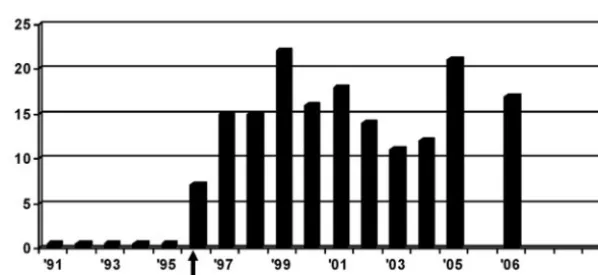
the first of an avalanche of abstracts and articles on the clinical outcomes of children who were treated with the diet, including outcomes of various aspects and modifi-cations of the diet. The amazing increase in the number of clinical abstracts presented at the American Epilepsy Society meetings is shown in Fig 1. Considering the time involved for new anticonvulsant medications to be de-veloped, investigated, marketed, and then widely ac-cepted, it is difficult to imagine now that just 10 years ago was the first time in recent years that an abstract on the KD was presented at the American Epilepsy Society.
1996 –2006: The Explosion of Interest and Studies
Efficacy Demonstrated
Authors from Johns Hopkins reported the outcomes of 150 consecutive children 3, 6, and 12 months after
ini-tiating the diet,13as well as their 3- to 6-year follow-up14
(Table 1). With an intention-to-treat methodology, these 150 children (who had averaged 410 seizures per month and whose seizures had failed to adequately improve on a mean of 6.2 medications) had a dramatic outcome. Twelve months after initiating the diet, 7% of the chil-dren were seizure free, and another 20% had a 90% decrease in seizures. Three to 6 years later, 27% of these same children had few or no seizures. Most of them were now off the diet and on fewer or even no medica-tions.
Since the 1920s, reports of efficacy have been re-markably consistent across all age groups, seizure
fre-quencies, and international locations.15–18 In general,
10%–15% of children who initiated the diet were
sei-zure free 1 year later, 30% had a ⬎90% reduction in
seizures, and 40% to 50% found that the diet was either too difficult to continue or insufficiently effective and therefore discontinued it during the first 6 months.
Although over the past decade there has been a dra-matic increase in the number of anticonvulsant drugs available, the KD continues to demonstrate a higher
degree of effectiveness, even in children whose seizures are refractory to these newer medications. Several re-cent meta-analyses have examined the publications about the diet and, although finding a lack of prospective controlled studies, found an enormous amount of
pro-spective uncontrolled and retropro-spective evidence.15–18
Nearly all reviews have stated that despite the lack of class I and II data, the scientific basis for the diet is strong and future studies should help identify ideal candidates and ways to improve tolerability rather than solely to
prove the diet’s efficacy in a controlled manner.18
Rise in Usage Internationally
Ten years ago the KD was nearly unknown internation-ally. In the past 8 years there has been a dramatic
in-crease in its use worldwide, and currently⬃75 centers in
45 countries offer the KD.19With the exception of parts
of Central America and Africa, parents only need look to their country or a neighbor for a KD center. There have been sponsored conferences and symposia in Canada, Croatia, Cuba, England, Germany, Greece, India, and Italy in the past 2 years alone.
Cultural, religious, and financial differences among these centers have led to differences in approaches to providing the KD. Some use less or no fasting, some use different ratios (to encompass more rice and less fat in some countries in the East), and some allow increased
fluid and calorie consumption.19These practices have led
to insights into other methods for providing the KD that will be discussed later in this review. It should be noted that especially in developing nations, the KD may be a cost-effective epilepsy therapy when compared with the rising costs of anticonvulsant medications.
Challenges and Changes to the Traditional Diet Protocol
The Johns Hopkins protocol10 for initiating and
main-taining the KD has been gradually modified both at Johns Hopkins and other centers and is continually evolving. Highlights of its evolution and changes are shown in Table 2.
FIGURE 1
Recent studies have demonstrated that the diet may not require a fasting phase at initiation and may be
initiated either with full calories20,21 or without an
ad-mission to the hospital.22,23However, many centers still
use at least some fasting periods because of the
occa-sional immediate benefits seen for some children. We have observed a dramatic effect of fasting similar to a
“loading” dose of intravenous anticonvulsant agents.24
Most centers still admit children to observe their initial response to the diet and possible immediate adverse effects.
TABLE 1 Outcomes of a 150-Patient Cohort Using the KD at Johns Hopkins Hospital
3 mo 6 mo 12 mo 3–6 y and Longer
Seizure reduction,n(%)
Seizure free 4 (3) 5 (3) 11 (7) 20 (13)
90%–99% 46 (31) 43 (29) 20 (20) 21 (14)
50%–89% 39 (26) 29 (19) 34 (23) 24 (16)
⬍50% 36 (24) 29 (19) 8 (5) 18 (12)
No. (%) remaining on the KD 125 (83) 106 (71) 83 (55) 18 (12)
Sources: Freeman JM, Vining EP, Pillas DJ, Pyzik PL, Casey JC, Kelly LM.Pediatrics. 1998;102:1358 –1363; and Hemingway C, Freeman JM, Pillas DJ, Pyzik PL.Pediatrics. 2001;108:898 –905.
TABLE 2 Factors Involved in KD Initiation and Maintenance, With Changes Described
Diet Factor Management Comment
Diet initiation
1950s Admission and fasting until the child had lost 10% of body weight and had urinary ketones of 160 mg/dL
1960s–1990s Admission and fasting 48 h
Current Johns Hopkins: admission and fasting 24 h⫾ketosis, calories gradually increased; other centers have demonstrated efficacy without a fast and with full calories immediately; most centers still admit for education and immediate adverse-effect monitoring
Value of admission and fasting unproven; Atkins and low glycemic index treatment studies do neither
Modified Atkins diet and low glycemic index under study, both 1:1 ratio diets
Old 3:1 infants and adolescents
4:1 other children
Current Generally still the same Many countries in Asia use lower ratios
Atkins diet under study, probably 2:1
Boston: low glycemic index treatment even lower Fluids
Old Tight restriction to 80% daily requirement Most children before the diet were drinking less fluids than either the daily requirement or the diet allotment
Current Unclear if fluid restriction is necessary May be helpful to prevent kidney stones by giving ad lib
Calories
Old Tight restriction to 75% daily requirement, with
modifications made afterward
Current Variable on the basis of estimated needs Animal, not human, studies demonstrate benefit to caloric restriction
Carbohydrates
Old ⬍10 g/d
Current Unclear maximum amount Atkins studies show that 20 g/d may be efficacious
Ketones
Old ⱖ3 toⱖ4 (80–160 mg/dL) urine ketones, checked
frequently, believed crucial for seizure control
Current Necessary level and even importance unclear Interest in alternative methods of measurement (breath and serum)
Duration of diet (maximum)
Old 2 y
Current As long as it is helpful Some evidence for patients with infantile spasms
Alternative KDs
The medium-chain triglycerides (MCTs) diet uses fat sources that are more ketogenic than the saturated long-chain triglycerides (LCTs) typically consumed in the tra-ditional KD, thus allowing more carbohydrates to be
incorporated into the diet.25–27 A trial comparing the
MCT diet, classic LCT diet, and a modification of the 2 (the Radcliff diet) found they were of roughly equal efficacy, but the MCT diet had a higher incidence of
abdominal cramps, diarrhea, nausea, and vomiting.27
Occasionally we add small quantities of MCT oil to the classic KD to alleviate constipation and dyslipidemia. An ongoing trial is investigating the LCT and MCT diets in a randomized manner (J. H. Cross, MD, personal commu-nication, 2006).
A modified Atkins diet also is emerging as a possible
alternative dietary treatment for seizures.28,29 With
re-striction of carbohydrates (10 –20 g per day), the Atkins diet can induce ketosis and does not restrict protein, fluid, or calories and does not require an admission or a fast. In a follow-up study, 65% of patients on the Atkins
diet had a⬎50% reduction in seizures and 6 (35%) had
a⬎90% reduction.29Additional studies of the modified
Atkins diet are underway including adult patients with epilepsy.
A third diet is the low glycemic index diet,30in which
fruits, breads, and starches are discouraged. This diet has even fewer carbohydrate restrictions than the modified Atkins diet.
Who Are the Best Candidates for the Diet?
The efficacy of the diet is independent of the type of seizure and is effective for both generalized and partial
seizures13 at varied ages.31–35 Some refractory disorders
that respond to the diet include Dravet syndrome,36
myoclonic-astatic epilepsy,37–39 Rett syndrome,40,41
mi-grational disorders,42and tuberous sclerosis complex.43,44
The KD may be particularly helpful in the treatment of infantile spasms, especially when used earlier in the
course of the disorder.31,45Formula-based diets, whether
fed via bottle or gastrostomy tube, have shown improved
compliance as well as efficacy.46,47Although no one
par-ticular anticonvulsant medication has been described as specifically beneficial in combination with the diet, the use of the diet in combination with vagus nerve
stimu-lation may be synergistic.48
Patients with partial-onset (focal) seizures seem less likely to either improve significantly or become
perma-nently seizure free.49,50 Children with a demonstrated,
surgically approachable focus may respond to the diet
but have less likelihood of either⬎90% seizure
reduc-tion or actual seizure freedom (unpublished data). In a limited case series, Lafora body disease did not respond well to the diet.51
Mechanisms of Action of the Diet
The mechanism(s) through which the KD exerts its an-ticonvulsant effects remains elusive. Although there is an abundance of data regarding the physiologic effects a KD exerts on humans and rodents, how these effects contribute to seizure protection is unclear. The diet has both anticonvulsant (ie, stopping a discrete seizure) properties and antiepileptic (ie, stopping the propen-sity to develop recurrent unprovoked seizures, or epi-lepsy) effects. The latter is suggested by series that ex-amined the diet’s potential disease-modifying effects in patients who discontinued the diet, sometimes after only months, yet still enjoyed long-term freedom from seizures.14,52
Anticonvulsant effects of the KD have been studied primarily in models of nonepileptic rodents receiving a KD and later exposed to proconvulsant agents or elec-trical stimuli (eg, pentylenetetrazol, maximal
electro-shock).53,54 Studies in mice that examined changes in
glutamate (eg, the primary central nervous system
excitatory neurotransmitter) and ␥-aminobutyric acid
(GABA) (eg, the primary central nervous system inhib-itory neurotransmitter) suggested a key role for the KD
in protection from seizures.55Although actual levels of
these neurotransmitters may not be elevated, there is a suggestion that flux through the GABA shunt may be increased, thus favoring inhibition of aberrant neuronal
firing.56Changes in levels of GABA (measured by
mag-netic resonance spectroscopy) and other cerebrospinal fluid amino acids have been documented in patients on the KD, which suggests that they may play a role in seizure protection.57,58
Changes in mitochondrial biogenesis (eg, increased metabolic enzymes and mitochondrial number) also have been documented, reviving an old hypothesis that changes in cellular metabolism may modify the cellular milieu into a less hyperexcitable (and hence, less
epi-leptiform) state.54,59 Early work on the KD suggested
that ketone bodies, especially-hydroxybutyrate, might
be anticonvulsant.25 Subsequent in vitro work argued
against this idea, but acetone (another ketone body), initially believed to be unimportant because of its
vola-tility, has anticonvulsant properties.60–62
The KD may also have antiepileptic effects. One spec-ulation is that the antiepileptic effect is exerted via neuroprotection, but the mechanism for this is unclear. Neuroprotection may involve either protection from free oxygen radicals or prevention of apoptosis. Protection from free radicals may be provided via a decrease in
coenzyme Q semiquinone,63elevated mitochondrial
un-coupling proteins, or elevated glutathione peroxidase. Uncoupling proteins, shown to be induced in mice that consume a KD, dissipate the mitochondrial membrane
potential, thus protecting against free radical damage.64
KD.42,65 The KD also induces glutathione peroxidase,
which subsequently prevents damage to the cell
mem-brane caused by lipid peroxidation.66 The KD may
pro-tect against apoptosis via increased levels of the protec-tive protein calbindin or prevention of the accumulation
of the pro–cell-death protein clusterin.67,68 Very recent
work has shown the role of 2-deoxyglucose, an inhibitor
of glycolysis, in protection from seizures.69Reports of its
anticonvulsant and antiepileptic properties suggest that there may be antiglycolytic compounds which may pos-sibly mimic some of the mechanisms of action of the KD and constitute a new class of drugs for treating epilepsy. Additional investigations into the mechanism(s) of ac-tion of the KD may lead to answers not only as to why it works but also what may cause seizures and epilepsy to develop.
Adverse Effects of the Diet
Adverse effects of the KD only infrequently require the diet to be discontinued but are important for neurolo-gists and pediatricians to recognize. Early-onset adverse effects associated with diet initiation include acidosis, hypoglycemia, gastrointestinal distress, dehydration, and lethargy. They are typically transient and easily managed and are minimized if patients are not fasted. Later adverse effects include dyslipidemia, kidney stones, and slowing of growth.
Cholesterol and lipids are adversely affected on the diet. The most extensive study of dyslipidemia on the
diet followed 141 children prospectively over 2 years.70
In these children, there was an increase in atherogenic apoB-containing lipoproteins very low-density lipopro-tein and low-density lipoprolipopro-tein and a decrease in the antiatherogenic high-density lipoprotein cholesterol.
Cholesterol increased ⬃130% but then stabilized over
the 2-year period. It is interesting to note that the lipid
profiles of children on the KD⬎6 years returned toward
baseline.71 The long-term effects of these changes in
lipids, if any, are unknown, but it should be recalled that most patients remain on the diet for only 2 years and then return to a diet with normal fat ingestion.
Kidney stones occur in 5% of children on the KD and is thought to be secondary to a combination of acid-osis, urine acidification, hypercalciuria, and
hypocitratu-ria.72 Although anticonvulsant agents with carbonic
anhydrase-inhibition properties (topiramate and zoni-samide) have an independent risk of stones, the com-bined prevalence with the diet was not higher than
either therapy alone.73 The risk of stones has
signifi-cantly decreased since the prophylactic use of oral
po-tassium citrate (Polycitra K) to alkalinize the urine.74
Children on the diet grow normally, but the growth of younger children seems to be slowed more than that
of older children.75Those on the diet for⬎6 years were
typically in the⬍10th percentile for height and weight.71
Growth seems to increase rapidly after diet
discontinu-ation.76Children on the KD are monitored carefully and
regularly by a registered dietitian for weight and height slowing.
Bone density may be decreased by the KD. A higher risk of skeletal fractures in children on the KD has been
reported.71,77,78 Prevention with calcium
supplementa-tion, pamidronate, or lower KD ratios remain unproven. Deaths have been reported in patients on the diet, although it is unclear that any of the deaths have been a result of the diet.
It is clear that the success and safety of the diet are best achieved by the close supervision of the patient by an experienced team that includes the physician, the dietician, and, often, a nurse.
Other Uses Beyond Epilepsy
Multiple uses of the KD are being investigated. All re-ported studies to date are very preliminary but are dis-cussed in this review to indicate possible future uses of the diet. Neurodegenerative disorders provide a unique opportunity to study cellular protection via dietary means. In fact, the mechanism of the KD in neuropro-tection might be more straightforward than its mecha-nism of protection against seizures.
Parkinson disease may be partly attributable to
dys-function of mitochondrial complex I.79 The KD, which
effectively bypasses the requirement for complex I, may provide an alternative pathway for normal cellular me-tabolism. This notion served as the rationale for a case series that showed some improvement in clinical rating scales in 7 adults with Parkinson disease who consumed
a KD for 28 days.80Although the hypothesis that
bypass-ing complex I is an attractive one, it is possible that lower dietary protein levels and weight loss in patients on the diet simply improved the patients’ baseline levodopa
pharmacokinetics.81
A KD reduced amyloid-40 and 42 in a mouse model
of Alzheimer disease.82 Administration of a KD for 43
days was associated with a decrease in the amount of
total brain amyloid- content, although performance
on an object-recognition task was unchanged. The KD also was associated with delayed progressive motor neuron loss and improved performance on a motor task (compared with controls) in a transgenic mouse model of amyotrophic lateral sclerosis, with in vitro data again
showing a protective effect of-hydroxybutyrate.83The
KD was associated with decreased cortical contusion volumes 7 days after a standardized controlled cortical
impact in rats of specific pediatric ages.84A key role for
ketone bodies was suggested in a study that showed im-proved adenosine triphosphate production in the same
trauma model after an infusion of-hydroxybutyrate.85
The KD has been reported to have decreased tumor
size in 2 patients with astrocytomas86and recently has
been shown to inhibit brain tumor growth in a mouse
migraine headaches in a manner similar to the beneficial
preventive effect of many anticonvulsant drugs.88 The
Atkins diet has been reportedly effective for narcolepsy
in a small case series, as well.89
Psychiatric disorders have also been treated with the KD. Recent studies have demonstrated its use for autism
and depression.90,91The mechanism of action of the KD
for psychiatric disorders is unclear.
In addition, the diet may have uses beyond neuro-logic disorders. Very preliminary studies indicate that the KD may be useful in conditions that involve an imbal-ance of glucose metabolism, including type 2 diabetes
mellitus and polycystic ovary syndrome.92,93The diet has
been described for use in hypercholesterolemia.94
CONCLUSIONS
The past decade has been an amazing one for those interested in the KD. Its increasing use in children with difficult-to-control seizures has opened new vistas for these children and also for our understanding of epi-lepsy. Its potential use in adults by using a less restrictive Atkins diet may make a difference to this population as well. The diet’s documented efficacy and tolerability have opened new horizons as it is tried for a variety of ills from brain tumors to migraine, and from head trauma to neurodegenerative diseases. Most exciting is the realization that beliefs concerning a high-fat diet making people fat and dyslipidemic have been proven false. Researchers are rediscovering that ketone bodies are not necessarily bad and that glucose is not necessar-ily good. A whole new era of metabolic research has opened up. It is not completely clear where it will lead, but its promise is exciting.
ACKNOWLEDGMENT
Dr Hartman was supported by the Epilepsy Foundation through the generous support of Pfizer, Inc.
REFERENCES
1. Swink TD, Vining EP, Freeman JM. The ketogenic diet: 1997.
Adv Pediatr.1997;44:297–329
2. Conklin HW. Cause and treatment of epilepsy.J Am Osteopath
Assoc.1922;26:11–14
3. Geyelin HR. Fasting as a method for treating epilepsy.Med Rec. 1921;99:1037–1039
4. Wilder RM. The effect of ketonemia on the course of epilepsy. Mayo Clin Bull.1921;2:307
5. Gamble JL, Ross GS, Tisdall FF. The metabolism of fixed base during fasting.J Biol Chem.1923;57:633– 695
6. Peterman MG. The ketogenic diet in the treatment of epilepsy: a preliminary report.Am J Dis Child.1924;28:28 –33
7. Wheless JW. The ketogenic diet: fa(c)t or fiction.J Child Neurol. 1995;10:419 – 423
8. Livingston S, Pauli LL, Pruce I. Ketogenic diet in the treatment of childhood epilepsy.Dev Med Child Neurol.1977;19:833– 834 9. Kinsman SL, Vining EP, Quaskey SA, Mellits D, Freeman JM. Efficacy of the ketogenic diet for intractable seizure disorders: review of 58 cases.Epilepsia.1992;33:1132–1136
10. Freeman JM, Kossoff EH, Freeman JB, Kelly MT.The Ketogenic
Diet: A Treatment for Children and Others With Epilepsy. 4th ed. New York, NY: Demos; 2006
11. Abrahams J.An Introduction to the Ketogenic Diet: A Treatment for
Pediatric Epilepsy [videotape]. Santa Monica, CA: Charlie
Foundation; 2000
12. Vining EPG, Freeman JM, Ballaban-Gil K, et al. A multicenter study of the efficacy of the ketogenic diet.Arch Neurol.1998; 55:1433–1437
13. Freeman JM, Vining EP, Pillas DJ, Pyzik PL, Casey JC, Kelly LM. The efficacy of the ketogenic diet: 1998 —a prospective evaluation of intervention in 150 children.Pediatrics.1998;102: 1358 –1363
14. Hemingway C, Freeman JM, Pillas DJ, Pyzik PL. The ketogenic diet: a 3- to 6-year follow-up of 150 children enrolled prospec-tively.Pediatrics.2001;108:898 –905
15. Levy R, Cooper P: Ketogenic diet for epilepsy.Cochrane
Data-base Syst Rev.2003;(3):CD001903
16. Lefevre F, Aronson A. Ketogenic diet for the treatment of refractory epilepsy in children: a systematic review of efficacy. Pediatrics. 2000;105(4). Available at: www.pediatrics.org/cgi/ content/full/105/4/e46
17. Keene DL. A systematic review of the use of the ketogenic diet in childhood epilepsy.Pediatr Neurol.2006;35:1–5
18. Henderson CB, Filloux FM, Alder SC, Lyon JL, Caplin DA. Efficacy of the ketogenic diet as a treatment option for epilepsy: meta-analysis.J Child Neurol.2006;21:193–198
19. Kossoff EH, McGrogan JR. Worldwide use of the ketogenic diet.Epilepsia.2005;46:280 –289
20. Bergqvist CAG, Schall JI, Gallagher PR, Cnaan A, Stallings VA. Fasting versus gradual initiation of the ketogenic diet: a pro-spective, randomized clinical trial of efficacy.Epilepsia.2005; 46:1810 –1819
21. Kim DW, Kang HC, Park JC, et al. Benefits of the nonfasting diet compared with the initial fasting ketogenic diet.Pediatrics. 2004;114:1627–1630
22. Vaisleib II, Buchhalter JR, Zupanc ML. Ketogenic diet: outpa-tient initiation, without fluid, or caloric restrictions. Pediatr
Neurol.2004;31:198 –202
23. Wirrell EC, Darwish HZ, Williams-Dyjur C, Blackman M, Lange V. Is a fast necessary when initiating the ketogenic diet? J Child Neurol.2002;17:179 –182
24. Freeman JM, Vining EP. Seizures decrease rapidly after fasting: preliminary studies of the ketogenic diet.Arch Pediatr Adolesc Med.1999;153:946 –949
25. Huttenlocher PR, Wilbourn AJ, Signore JM. Medium-chain triglycerides as a therapy for intractable childhood epilepsy.
Neurology.1971;21:1097–1103
26. Trauner, D. A. Medium-chain triglyceride (MCT) diet in intract-able seizure disorders.Neurology.1985;35:237–238
27. Schwartz RH, Eaton J, Bower BD, Aynsley-Green A. Ketogenic diets in the treatment of epilepsy: short-term clinical effects.
Dev Med Child Neurol.1989;31:145–151
28. Kossoff EH, Krauss GL, McGrogan JR. Efficacy of the Atkins diet as therapy for intractable epilepsy. Neurology. 2003;61: 1789 –1791
29. Kossoff EH, McGrogan JR, Bluml RM, Pillas DJ, Rubenstein JE, Vining EP. A modified Atkins diet is effective for the treatment of intractable pediatric epilepsy.Epilepsia.2006;47:421– 424 30. Pfeifer HH, Thiele EA. Low-glycemic-index treatment: a
liber-alized ketogenic diet for treatment of intractable epilepsy.
Neu-rology.2005;65:1810 –1812
31. Kossoff EH, Pyzik PL, McGrogan JR, Vining EPG, Freeman JM. Efficacy of the ketogenic diet for infantile spasms. Pediatrics. 2002;109:780 –783
ketogenic diet in young infants.J Inherit Metab Dis.2002;25: 449 – 460
34. Mady MA, Kossoff EH, McGregor AL, Wheless JW, Pyzik PL, Freeman JM. The ketogenic diet: adolescents can do it, too. Epilepsia.2003;44:847– 851
35. Sirven J, Whedon B, Caplan D, et al. The ketogenic diet for intractable epilepsy in adults: preliminary results. Epilepsia. 1999;40:1721–1726
36. Caraballo RH, Cersosimo RO, Sakr D, Cresta A, Escobal N, Fejerman N. Ketogenic diet in patients with Dravet syndrome.
Epilepsia.2005;46:1539 –1544
37. Caraballo RH, Cersosimo RO, Sakr D, Cresta A, Escobal N, Fejerman N. Ketogenic diet in patients with myoclonic-astatic epilepsy.Epileptic Disord.2006;8:151–155
38. Laux LC, Devonshire KA, Kelley KR, et al. Efficacy of the ketogenic diet in myoclonic-epilepsy of Doose [abstract]. Epi-lepsia.2004;45(suppl 7):251
39. Oguni H, Tanaka T, Hayashi K, et al. Treatment and long-term prognosis of myoclonic-astatic epilepsy of early childhood.
Neuropediatrics.2002;33:122–132
40. Haas RH, Rice MA, Trauner DA, Merritt TA. Therapeutic effects of a ketogenic diet in Rett syndrome.Am J Med Genet Suppl. 1986;1:225–246
41. Liebhaber GM, Reimann E, Baumeister FA. Ketogenic diet in Rett syndrome.J Child Neurol.2003;18:74 –75
42. Freeman J, Veggiotti P, Lanzi G, Tagliabue A, Perucca E; Insti-tute of Neurology IRCCS C. Mondino Foundation. The keto-genic diet: from molecular mechanisms to clinical effects. Epi-lepsy Res.2006;68:145–180
43. Kossoff EH, Thiele EA, Pfeifer HH, McGrogan JR, Freeman JM. Tuberous sclerosis complex and the ketogenic diet.Epilepsia. 2005;46:1684 –1686
44. Coppola G, Klepper J, Ammendola E, et al. The effects of the ketogenic diet in refractory partial seizures with reference to tuberous sclerosis.Eur J Paediatr Neurol.2006;10:148 –151 45. Eun SH, Kang HC, Kim DW, Kim HD. Ketogenic diet for
treatment of infantile spasms.Brain Dev.2006;28:566 –571 46. Kossoff EH, McGrogan JR, Freeman JM. Benefits of an
all-liquid ketogenic diet.Epilepsia.2004;45:1163
47. Hosain SA, La-Vega-Talbott M, Solomon GE. Ketogenic diet in pediatric epilepsy patients with gastrostomy feeding. Pediatr
Neurol.2005;32:81– 83
48. Kossoff EH, Pyzik PL, Rubenstein JE, et al. Combination keto-genic diet and vagus nerve stimulation: rational polytherapy? Epilepsia.2007; In press
49. Than KD, Kossoff EH, Rubenstein JE, Pyzik PL, McGrogan JR, Vining EP. Can you predict an immediate, complete, and sus-tained response to the ketogenic diet? Epilepsia. 2005;46: 580 –582
50. Maydell BV, Wyllie E, Akhtar N, et al. Efficacy of ketogenic diet in focal versus generalized seizures. Pediatr Neurol.2001;25: 208 –212
51. Cardinali S, Canafoglia L, Bertoli S, et al. A pilot study of a ketogenic diet in patients with Lafora body disease.Epilepsy Res. 2006;69:129 –134
52. Marsh EB, Freeman JM, Kossoff EH, et al. The outcome of children with intractable seizures: a 3- to 6-year follow-up of 67 children who remained on the ketogenic diet less than one year.Epilepsia.2006;47:425– 430
53. Bough KJ, Eagles DA. A ketogenic diet increases the resistance to pentylenetetrazole-induced seizures in the rat. Epilepsia. 1999;40:138 –143
54. Appleton DB, DeVivo DC. An animal model for the ketogenic diet.Epilepsia.1974;15:211–227
55. Yudkoff M, Daikhin Y, Nissim I, Lazarow A, Nissim I. Ketogenic diet, brain glutamate metabolism and seizure control. Prosta-glandins Leukot Essent Fatty Acids.2004;70:277–285
56. Erecinska M, Nelson D, Daikhin Y, Yudkoff M. Regulation of GABA level in rat brain synaptosomes: fluxes through enzymes of the GABA shunt and effects of glutamate, calcium, and ketone bodies.J Neurochem.1996;67:2325–2334
57. Wang ZJ, Bergqvist C, Hunter JV, et al. In vivo measurement of brain metabolites using two-dimensional double-quantum MR spectroscopy: exploration of GABA levels in a ketogenic diet.Magn Reson Med.2003;49:615– 619
58. Dahlin M, Elfving A, Ungerstedt U, Amark P. The ketogenic diet influences the levels of excitatory and inhibitory amino acids in the CSF in children with refractory epilepsy.Epilepsy Res.2005;64:115–125
59. Bough KJ, Wetherington J, Hassel B, et al. Mitochondrial biogenesis in the anticonvulsant mechanism of the ketogenic diet.Ann Neurol.2006;60:223–235
60. Thio LL, Wong M, Yamada KA. Ketone bodies do not directly alter excitatory or inhibitory hippocampal synaptic transmis-sion.Neurology.2000;54:325–331
61. Rho JM, Anderson GD, Donevan SD, White HS. Acetoacetate, acetone, and dibenzylamine (a contaminant in l-(⫹ )-beta-hydroxybutyrate) exhibit direct anticonvulsant actions in vivo. Epilepsia.2002;43:358 –361
62. Likhodii SS, Serbanescu I, Cortez MA, Murphy P, Snead OC 3rd, Burnham WM. Anticonvulsant properties of acetone, a brain ketone elevated by the ketogenic diet.Ann Neurol.2003; 54:219 –226
63. Veech RL. The therapeutic implications of ketone bodies: the effects of ketone bodies in pathological conditions: ketosis, ketogenic diet, redox states, insulin resistance, and mitochon-drial metabolism.Prostaglandins Leukot Essent Fatty Acids.2004; 70:309 –319
64. Sullivan PG, Rippy NA, Dorenbos K, Concepcion RC, Agarwal AK, Rho JM. The ketogenic diet increases mitochondrial un-coupling protein levels and activity. Ann Neurol. 2004;55: 576 –580
65. Fraser DD, Whiting S, Andrew RD, Macdonald EA, Musa-Veloso K, Cunnane SC. Elevated polyunsaturated fatty acids in blood serum obtained from children on the ketogenic diet.
Neurology.2003;60:1026 –1029
66. Ziegler DR, Ribeiro LC, Hagenn M, et al. Ketogenic diet in-creases glutathione peroxidase activity in rat hippocampus.
Neurochem Res.2003;28:1793–1797
67. Noh HS, Kim DW, Kang SS, Cho GJ, Choi WS. Ketogenic diet prevents clusterin accumulation induced by kainic acid in the hippocampus of male ICR mice.Brain Res.2005;1042:114 –118 68. Noh HS, Kang SS, Kim DW, et al. Ketogenic diet increases calbindin-D28k in the hippocampi of male ICR mice with kainic acid seizures.Epilepsy Res.2005;65:153–159
69. Garriga-Canut M, Schoenike B, Qazi R, et al. 2-Deoxy-D-glucose reduces epilepsy progression by NRSF-CtBP-depen-dent metabolic regulation of chromatin structure.Nat Neurosci. 2006;9:1382–1387
70. Kwiterovich PO Jr, Vining EP, Pyzik P, Skolasky R Jr, Freeman JM. Effect of a high-fat ketogenic diet on plasma levels of lipids, lipoproteins, and apolipoproteins in children.JAMA.2003;290: 912–920
71. Groesbeck DK, Bluml RM, Kossoff EH. Long-term use of the ketogenic diet in the treatment of epilepsy. Dev Med Child
Neurol.2006;48:978 –981
72. Furth SL, Casey JC, Pyzik PL, et al. Risk factors for urolithiasis in children on the ketogenic diet. Pediatr Nephrol. 2000;15: 125–128
73. Kossoff EH, Pyzik PL, Furth SL, Hladky HD, Freeman JM, Vining EPG. Kidney stones, carbonic anhydrase inhibitors, and the ketogenic diet.Epilepsia.2002;43:1168 –1171
stones and the ketogenic diet: risk factors and prevention. J Child Neurol.2007; In press
75. Vining EP, Pyzik P, McGrogan J, et al. Growth of children on the ketogenic diet [abstract]. Dev Med Child Neurol.2002;44: 796 – 802
76. Liu TC, Megan P, Campbell K, Curtis R. A retrospective study: growth status of children with epilepsy post treatment with the ketogenic diet [abstract].Epilepsia.2005;46(suppl 8):155 77. Hahn TJ, Halstead LR, DeVivo DC. Disordered mineral
metab-olism produced by ketogenic diet therapy. Calcif Tissue Int. 1979;28:17–22
78. Bertoli S, Striuli L, Testolin G, et al. Nutritional status and bone mineral mass in children treated with ketogenic diet [in Ital-ian].Recenti Prog Med.2002;93:671– 675
79. Greenamyre JT, Sherer TB, Betarbet R, Panov AV. Complex I and Parkinson’s disease.IUBMB Life.2001;52:135–141 80. Vanitallie TB, Nonas C, Di Rocco A, Boyar K, Hyams K,
Heyms-field SB. Treatment of Parkinson disease with diet-induced hyperketonemia: a feasibility study. Neurology. 2005;64: 728 –730
81. Jabre MG, Bejjani BP. Treatment of Parkinson disease with diet-induced hyperketonemia: a feasibility study. Neurology. 2006;66:617
82. Van der Auwera I, Wera S, Van Leuven F, Henderson ST. A ketogenic diet reduces amyloid beta 40 and 42 in a mouse model of Alzheimer’s disease.Nutr Metab (Lond).2005;2:28 83. Zhao Z, Lange DJ, Voustianiouk A, et al. A ketogenic diet as a
potential novel therapeutic intervention in amyotrophic lateral sclerosis.BMC Neurosci.2006;7:29
84. Prins ML, Fujima LS, Hovda DA. Age-dependent reduction of cortical contusion volume by ketones after traumatic brain injury.J Neurosci Res.2005;82:413– 420
85. Prins ML, Lee SM, Fujima LS, Hovda DA. Increased cerebral uptake and oxidation of exogenous betaHB improves ATP fol-lowing traumatic brain injury in adult rats.J Neurochem.2004; 90:666 – 672
86. Nebeling LC, Miraldi F, Shurin SB, Lerner E. Effects of a ketogenic diet on tumor metabolism and nutritional status in pediatric oncology patients: two case reports.J Am Coll Nutr. 1995;14:202–208
87. Seyfried TN, Sanderson TM, El-Abbadi MM, McGowan R, Mukherjee P. Role of glucose and ketone bodies in the meta-bolic control of experimental brain cancer.Br J Cancer.2003; 89:1375–1382
88. Strahlman RS. Can ketosis help migraine sufferers? A case report.Headache.2006;46:182
89. Husain AM, Yancy WS Jr, Carwile ST, Miller PP, Westman EC. Diet therapy for narcolepsy.Neurology.2004;62:2300 –2302 90. Evangeliou A, Vlachonikolis I, Mihailidou H, et al. Application
of a ketogenic diet in children with autistic behavior: pilot study.J Child Neurol.2003;18:113–118
91. Murphy P, Likhodii S, Nylen K, Burnham WM. The antide-pressant properties of the ketogenic diet.Biol Psychiatry.2004; 56:981–983
92. Yancy WS Jr, Foy M, Chalecki AM, Vernon MC, Westman EC. A low-carbohydrate, ketogenic diet to treat type 2 diabetes.
Nutr Metab (Lond).2005;2:34
93. Mavropoulos JC, Yancy WS, Hepburn J, Westman EC. The effects of a low-carbohydrate, ketogenic diet on the polycystic ovary syndrome: a pilot study.Nutr Metab (Lond).2005;2:35 94. Dashti HM, Al-Zaid NS, Mathew TC, et al. Long term effects
of ketogenic diet in obese subjects with high cholesterol level.
Mol Cell Biochem.2006;286:1–9
MOST STUDENTS IN BIG CITIES LAG BADLY IN BASIC SCIENCE
“At least half of eighth graders tested in science failed to demonstrate even a basic understanding of it in 9 of 10 major cities, and fourth graders, the only other group tested, fared little better, according to results released here Wednesday. The outcome of those tests, part of the National Assessment of Educational Progress, often called the nation’s report card, showed that student performance in urban public schools was not only poor but also far short of science scores in the nation as a whole.”
DOI: 10.1542/peds.2006-2447
2007;119;535
Pediatrics
John M. Freeman, Eric H. Kossoff and Adam L. Hartman
The Ketogenic Diet: One Decade Later
Services
Updated Information &
http://pediatrics.aappublications.org/content/119/3/535 including high resolution figures, can be found at:
References
http://pediatrics.aappublications.org/content/119/3/535#BIBL This article cites 89 articles, 15 of which you can access for free at:
Subspecialty Collections
http://www.aappublications.org/cgi/collection/nutrition_sub Nutrition
following collection(s):
This article, along with others on similar topics, appears in the
Permissions & Licensing
http://www.aappublications.org/site/misc/Permissions.xhtml in its entirety can be found online at:
Information about reproducing this article in parts (figures, tables) or
Reprints
DOI: 10.1542/peds.2006-2447
2007;119;535
Pediatrics
John M. Freeman, Eric H. Kossoff and Adam L. Hartman
The Ketogenic Diet: One Decade Later
http://pediatrics.aappublications.org/content/119/3/535
located on the World Wide Web at:
The online version of this article, along with updated information and services, is
by the American Academy of Pediatrics. All rights reserved. Print ISSN: 1073-0397.