Ten Steps for Improving
Blood Pressure Control
in New Hampshire
A Practical Guide for Clinicians
and Community Partners
Edited by
Rudolph Fedrizzi, MD
Director of Community Health Clinical Integration
Cheshire Medical Center/Dartmouth-Hitchcock Keene
Kimberly Persson, MSW
Project Director
Ten Steps for Improving
Blood Pressure Control
in New Hampshire
A Practical Guide for Clinicians
and Community Partners
Edited by
Rudolph Fedrizzi, MD
Director of Community Health Clinical Integration
Cheshire Medical Center/Dartmouth-Hitchcock Keene
Kimberly Persson, MSW
Project Director
Partners
This guide was created by the New Hampshire Million Hearts Learning Collaborative, through funding from the Association of State and Territorial Health Officials and Centers for Disease Control and Prevention.
New Hampshire Department of Health and Human Services
José Montero, MD, MHCDS; Director, Division of Public Health Services
Patricia Tilley, MS Ed; Chief, Bureau of Population Health and Community Services, Division of Public Health Services
Lia Baroody; Program Coordinator, Heart Disease and Stroke Prevention, Bureau of Population Health and Community Services, Division of Public Health Services
Regina Flynn; Grant Coordinator, Chronic Disease Prevention and Management, Healthy Eating and Physical Activity Section, Division of Public Health Services
Jill Fournier, RN, BSN; Prenatal/Quality Assurance Public Health Nurse Consultant, Bureau of Community Health Services, Division of Public Health Services
Laura Holmes, MPA, CPM; Performance Improvement Manager, Division of Public Health Services Doris Lotz, MD, MPH; Chief Medical Officer, Office of Medicaid Business and Policy
Trinidad Tellez, MD; Director, Office of Minority Health and Refugee Affairs
Institute for Health Policy and Practice at the University of New Hampshire
Kimberly Persson, MSW; Project Director
Cheshire Medical Center/Dartmouth-Hitchcock Keene
Rudolph Fedrizzi, MD; Director of Community Health Clinical Integration April Kerylow; Patient Data Coordinator
Erin Knuepfer; Patient Data Coordinator Donna Longo; Patient Data Specialist Julia Sirois; Patient Data Coordinator
City of Manchester Health Department
Timothy Soucy, MPH, REHS; Public Health Director
Manchester Community Health Center
Kris McCracken, MBA; President/CEO Gavin Muir, MD; Chief Medical Officer Stephanie Piet, RN; Clinical Nurse Manager
Lamprey Health Center - Nashua
Marcy Doyle; Chief Operating Officer – Newmarket Vesuki Nagaraj, MD; Medical Director
Angela Hildreth, BSN, RN; Team Nurse Niki Watson, BSN, RN; Clinical Director
Nashua Department of Public Health and Community Services
Kerran Vigroux, MPH; Director
Susan Myers, BSN, MEd; Health Department Manager Melissa Whalen; Health Program Specialist
New Hampshire Medical Society
Scott Colby, MD; Executive Vice President
Community Health Access Network
Kirsten Platte; Executive Director
Carlene Ferrier, RN, MPH; Quality Improvement Director
American Heart Association
Nancy Vaughan; Government Relations Coordinator
Anthem BCBS
Table of Contents
Partners . . . ii
Focusing on Hypertension Makes Sense for New Hampshire . . . .vi
How to Use This Guide . . . .viii
Step 1: Engaging Providers and Staff . . . 1
Step 2: Agreeing on a Shared Vision and Measures . . . 10
Step 3: Understanding the Current Process and Flow . . . 13
Step 4: Creating Algorithms for Hypertension Care . . . 17
Step 5: Ensuring Accuracy of Blood Pressure Measurement . . . 21
Step 6: Sharing Provider Data Dashboards . . . 23
Step 7: Managing Patient Registries . . . 25
Step 8: Consistent Communication and Celebrating Success . . . 28
Step 9: Engaging Patients . . . 30
Step 10: Fostering Community-Clinical Collaboration . . . 34
Appendix A: Million Hearts Fact Sheet . . . 37
Appendix B: Using Simple Quality Improvement Tools . . . 39
Appendix C: Registry Management Flow Chart . . . 40
Appendix D: Sample Job Description for Registry Coordinator . . . 41
Appendix E: Nashua’s Million Hearts Fact Sheet . . . 42
Appendix F: CMC/DHK Community Hypertension Brochure . . . 43
Dear Colleagues:
The mission of the New Hampshire Department of Health and Human Services is
to join communities and families in providing opportunities for citizens to achieve
health and independence. The Division of Public Health Services (DPHS) plays a
key role by improving access to high quality services and disseminating
evidence-based practices. With limited resources, we must be strategic in targeting health
conditions and social determinants of health, and have a clear understanding of
how we will measure progress or impact.
Prevention of heart disease and stroke is just one of DPHS’ top ten health priorities,
as indicated in the State Health Improvement Plan (NH SHIP). NH SHIP is a road
map for improved health outcomes, which includes common metrics for tracking
progress toward a shared goal across organizations. Together with clinical and
community partners, a shared objective for Cardiovascular Disease is to reduce the
percent of adults with high blood pressure from 31% (2011) to 26% by 2015 and
22% by 2020.
1In the fall of 2013, New Hampshire embarked on a test of rapid cycle public health
funding called Million Hearts, a national initiative to prevent one million heart
attacks and strokes by 2017. Responding to a national request for proposals from
the Association of State and Territorial Health Officials, DPHS requested that the
Institute of Health Policy and Practice at the University of New Hampshire act as a
bona fide agent to apply for and manage this fast-paced initiative.
Relying on a proven model developed by Cheshire Medical
Center/Dartmouth-Hitchcock Keene, supported through partnerships in many parts of the State,
the New Hampshire Million Hearts Learning Collaborative was able to move the
needle on hypertension control quite drastically. This approach confirms that
when the health care delivery system works jointly with the public health system,
we improve population health outcomes quickly and efficiently.
This manual reflects an intense year of work by dedicated professionals, who I am
proud to call my colleagues. I urge you to consider this manual when attempting
to implement hypertension control strategies within your own communities.
Respectfully,
José T. Montero, MD, MPH, MHCDS
Focusing on Hypertension Makes Sense
for New Hampshire
High blood pressure is the single most common chronic illness in the United States, affecting 50 million people.2 The majority of Americans are aware of their high blood pressure and nearly 75% are being
treated with medication. However, only 50% of American adults have achieved adequate blood pressure control, defined as a blood pressure below 140/90.3
Similar to the national rates, data from the Behavioral Risk Factor Surveillance System (BRFSS) indicate that the New Hampshire rate of hypertension is over 30%.4 Heart disease is the second leading cause of
death in New Hampshire, and the prevalence of hypertension has increased significantly from 23% (95% CI: 22%, 25%) in 2001 to 31% (95% CI: 29%, 32%) in 2011. Given the significant burden of heart disease, New Hampshire identified cardiovascular disease as a state health priority in its 2011 New Hampshire State Health Profile and seeks to implement proven strategies for reducing cardiovascular morbidity and mortality in its 2013 New Hampshire State Health Improvement Plan.5,6 More specifically, New Hampshire
has identified addressing the major risk factors, including hypertension, diabetes, tobacco use, and elevated cholesterol levels as priority issues.
Beyond acknowledging the importance of hypertension in New Hampshire, several state-level efforts demonstrate the need to integrate public health and clinical care to improve population health. The Health Promotion Disease Prevention Pillar Group of the New Hampshire Citizens Health Initiative (NHCHI) completed a Strategic Plan for Integrating the Work of New Hampshire’s Public Health and Medical Care Systems in 2010.7 The Plan was based on the premise that collaborative health promotion efforts involving
public health and medicine play a critical role in reducing the burden of preventable disease in New Hampshire. Additionally, since 2012, the Medicine and Public Health Task Force of the New Hampshire Medical Society (NHMS) has been working to coordinate the collaboration of Society members with public health and community partners in activities that improve the overall health of New Hampshire residents, giving specific attention to the national Million Hearts8 initiative, co-sponsored by the United
States Department of Health and Human Services (US DHHS), the Centers for Disease Control and Prevention (CDC), and the Centers for Medicaid and Medicare Services (CMS), to prevent 1 million heart attacks and strokes by 2017. Appendix A includes a flyer outlining the Million Hearts initiative.
A specific example of integration from Cheshire Medical Center/Dartmouth-Hitchcock Keene (CMC/ DHK) serves as the basis for the New Hampshire Million Hearts project. This county-level effort demonstrated that rapid, measureable improvement in blood pressure control was possible for a
Using the success at CMC/DHK as its guide, the New Hampshire Division of Public Health Services (DPHS), in partnership with the Institute for Health Policy and Practice (IHPP) at the University of New Hampshire (UNH), developed a proposal to begin addressing hypertension in New Hampshire, an issue highlighted in the State Health Improvement Plan.9 The scope of work was structured to replicate proven
strategies at CMC/DHK, and to adapt them for New Hampshire’s most urban communities – Manchester and Nashua.
From October 2013 to September 2014, a group of stakeholders from across New Hampshire received funding from the Association of State and Territorial Health Officials (ASTHO) to form a New Hampshire Million Hearts State Learning Collaborative. The goal of the Learning Collaborative was to focus on hypertension identification, control, and improvement.
The City of Manchester Department of Public Health (MDPH) and the Nashua Department of Public Health and Community Services (NDPHCS) led the community-based hypertension work in their respective regions, while engaging Manchester Community Health Center (MCHC) and Lamprey Health Care – Nashua (LHC-N) to address hypertension from a clinical perspective. Each municipality partnered with community-based organizations to provide additional support to patients with hypertension and to integrate care. A full listing of these partners can be found on pages ii and iii.
How to Use This Guide
This manual was developed from the premise that improving a complicated health condition like hyper-tension requires solutions based on a multi-faceted approach. To affect change, providers and public health practitioners must:
• Understand the current health burden;
• Assess existing processes;
• Weigh possible best-practice interventions;
• Focus on data-driven decision-making; and
• Engage a community of stakeholders.
The ten chapters of this manual include easy to follow, pragmatic steps to implement a comprehensive approach to hypertension care originally developed by CMC/DHK. This approach was successful in improving hypertension control for the greater Keene community, and was successfully replicated in the communities of Manchester and Nashua.
The first seven steps are best implemented sequentially, whereas steps eight through ten can be undertaken anytime, as they involve patient and community engagement. However, considering that each medical practice and community is unique, the steps can be customized to accommodate the distinct degree of readiness or available resources.
The chapters are formatted with the following headings to help the user understand the rationale and the practical elements necessary to accomplish each step:
WHY?
Based on research or experience, why is this step felt to be a critical component of a comprehensive BP control improvement initiative?
HOW?
How did CMC/DHK develop and implement this step in their improvement efforts?
WHAT?
What did the pilot sites in Nashua and/or Manchester do in undertaking this step or what might another practice do to accomplish this step?
LESSONS LEARNED?
STEP 1:
Engaging Providers and Staff
How to engage providers and staff by providing a tool for collecting feedback
WHY?
For an organization to successfully implement change, its key stakeholders must be engaged. In the case of New Hampshire’s Million Hearts Learning Collaborative, the organizations recognizing the need of change were MCHC and LHC-N. Key stakeholders included providers and staff.
Benchmarking data from January 2014 revealed that 66% of adult patients with hypertension at MCHC and 69.5% of equivalent patients at the LHC-N had adequate blood pressure control (below 140/90). Though better than the national average, these rates are much lower than highest achieving settings.
The majority of Americans are aware of their high blood pressure and nearly 75% are being treated with medication. According to Yoon, Ostchega, & Louis, nation-wide only 50% of adults have achieved adequate blood pressure control, defined as a blood pressure below 140/90.10 Many barriers to effective
blood pressure control have been suggested in a review by Volpe & Dedhiya, including unhealthy lifestyle, inadequate patient education and awareness, inconsistency of provider clinical behavior, non-adherence to established treatment protocols, and non-compliance with medication.11
Provider and staff engagement was initiated through use of a brief survey. The tool served two purposes. It provided the organization with information, and, perhaps more importantly, it offered the providers and staff an opportunity and an outlet to share their perspectives on effective treatment strategies, clinical barriers, and potential solutions, which cultivated a sense of engagement in the process.
HOW?
In 2011, CMC/DHK, working in collaboration with the Dartmouth Prevention Research Center, created and administered a four-question multiple-choice survey. It was designed to take no more than five minutes to complete and can be administered in paper or electronic format.
The questions were developed using a review of literature and other evidence-based sources regarding lifestyle, as well as clinical and structural factors that impact hypertension control.12,13 Questions and
multiple choice options can be customized based on the unique needs of practices.
A short introduction describes the purpose of the survey – to help plan future interventions and messaging around the prevention and control of hypertension.
Responses should remain anonymous and results should be aggregated by provider and nurse groups.
STEP 1
The survey consists of the following questions:
1. Considering your patients with uncontrolled hypertension and using the list below, please choose three lifestyle factors that you feel contribute most to continued high blood pressure.
l Excessive weight
l Inadequate physical activity
l Unhealthy diet
l Excessive sodium
l Smoking
l Stress
l Excessive alcohol
2. Considering your patient population with uncontrolled hypertension and using the list below, please select what you feel are the top 5 barriers for achieving adequate control for these patients.
l Improper blood pressure measurement
l No convenient way (or place) to follow blood pressure between office visits
l Target of <140/90 is unrealistic given medical complexity of patients
l Performance measure misses charted measurements in narrative dictation
l Guidelines are not well known by providers and staff
l Clinic-wide protocols are not established to follow the guidelines
l Clinic-wide protocols are not adequate to meet guidelines
l Clinic protocols to address HTN are not consistently followed
l There is not enough time to follow clinic protocols
l Patient does not understand hypertension and its causes
l Patient does not understand health implications of hypertension
l Patient does not understand ways to reduce hypertension
l Patient is not concerned about health implications of hypertension
l Patient does not understand importance of medication
l Patient lacks financial resources to purchase medications
l Medication is not taken as prescribed
l Patient pressures provider into less aggressive medication dosing
3. What three approaches do you use most frequently with patients who have not gained adequate blood pressure control?
l I provide printed educational materials
l I make recommendations regarding lifestyle changes to my patients in a one on one meeting
during their office visit
l I refer the patient to the Nurse Clinic for education and follow up
l I schedule additional appointments for the patient
l I ask staff to follow up with patients who do not come in for follow-up appointments
l I develop goals for improvement with my patients – we develop these together and monitor
them over time
l I ask patients to monitor their own blood pressure
l I ask patients to bring in their blood pressure readings to appointments
l I elicit cooperation of the patient’s family in reinforcing care
l Other: ___________________________________________________________
4. Choose up to 5 resources you feel would most improve blood pressure control for your patients with hypertension.
l Community-wide messaging campaign about hypertension prevention and importance of control
l Evidence-based patient education materials consistent across CMC/DHK
l Targeted nurse follow-up education for patients
l An improved “Know Your Numbers” BP wallet card
l Provider training regarding national treatment guidelines and algorithms
l Revised clinic protocols for uncontrolled HTN patients
l Agreed-upon clinic protocols for uncontrolled HTN patients
l Assistance from pharmacists with patient consults and suggestions for providers
l Evidence-based self-management or group management programs
l Community-based lifestyle coaching available to patients
l Nutrition classes targeted to DASH (fruits, vegetables, low fat, low sodium) diet
l Additional community-based, accessible, affordable programs to promote exercise
l Other:______________________________________________________________
When administered to 30 nurses and 40 primary care providers in 2011, CMC/DHK had an 84% response rate with remarkable consistency between the two groups. Responses collected through this survey were displayed to staff in bar graphs and helped to inform the model developed by CMC/DHK. Responses include:
For question 1, considering your patients with uncontrolled hypertension and using the list below, please choose three lifestyle factors that you feel contribute most to continued high blood pressure, top responses, shown in Graph 1 below, included:
a. Inadequate physical activity b. Excessive weight
c. Unhealthy diet
STEP 1
Graph 1: Lifestyle Factors That Contribute to Continued High Blood Pressure In Patients With Uncontrolled Hypertension
Excessive weight (39)
Inadequate physical activity (43)
Unhealthy diet (26)
Excessive sodium (18)
Smoking (20)
Stress (18)
0 5 10 15 20 25 30 35 40 45 50
NUMBER OF PROVIDERS AND NURSES
TYPES OF LIFESTYLE FACTORS
For question 2, considering your patient population with uncontrolled hypertension and using the list below, please select what you feel are the top five barriers for achieving adequate control for these patients, top responses, shown in Graph 2 below, included:
a. Medication is not taken as prescribed
b. Patient does not understand health implications of hypertension c. Patient lacks financial resources to purchase medications
d. Patient is not concerned about health implications of hypertension e. Patient does not understand importance of medication
STEP 1
0 5 10 15 20 25 30 35 40
NUMBER OF PROVIDERS AND NURSES
TYPES OF BARRIERS
Graph 2: Barriers for Achieving Adequate Control for Patients with Uncontrolled Hypertension
Improper BP measurement (7)
No convenient way (or place) to follow blood pressure between office visits (17)
Target of <140/90 is unrealistic given medical complexity of patients (8) Performance measure misses charted measurements in narrative dictation (11)
Guidelines are not well known by providers and staff (2)
Clinic-wide protocols are not established to follow the guidelines (7)
Clinic-wide protocols are not adequate to meet guidelines (2)
Clinic protocols to address HTN are not consistently followed (13)
There is not enough time to follow clinic protocols(4)
Patient does not understand hypertension and its causes (16)
Patient does not understand health implications of hypertension (37)
Patient does not understand ways to reduce hypertension (15)
Patient is not concerned about health implications of hypertension (27)
Patient does not understand importance of medication (20)
Patient lacks financial resources to purchase medications (31)
Patient pressures provider into less aggressive medication dosing (12)
For question 3, what three approaches do you use most frequently with patients who have not gained adequate blood pressure control, top responses, shown in Graph 3 below, included:
a. I ask patients to bring in their blood pressure readings to appointments
b. I make recommendations regarding lifestyle changes to my patients in a one on one meeting during their office visit
c. I ask patients to monitor their own blood pressure
STEP 1
I ask patients to bring in their BP readings to appointments (37)
I ellicit cooperation of the patients family in reinforcing care (1)
I provide printed educational materials (17)
I make recommendations regarding lifestyle changes to my patients in a one on one meeting during their office visit (35)
I refer the patient to the Nurse Clinic for education and follow up (21)
I schedule additional appointments for the patient (14)
I ask staff to follow up with patients who do not come in for follow-up appointments (10)
I develop goals for improvement with my patients –
we develop these together and monitor them over time (12)
I ask patients to monitor their own BP (31)
0 5 10 15 20 25 30 35 40
Graph 3: Approaches Taken With Patients Who Have Not Gained Adequate Blood Pressure Control
NUMBER OF PROVIDERS AND NURSES
For question 4, choose up to five resources you feel would most improve blood pressure control for your patients with hypertension, top responses, as shown in Graph 4 below, included:
a. Additional community-based, accessible, affordable programs to promote exercise b. Nutrition classes targeted to DASH (fruits, vegetables, low fat, low sodium) diet c. Targeted nurse follow-up education for patients
d. Evidence-based patient education materials consistent across CMC/DHK
e. Community-wide messaging campaign about hypertension prevention and importance of control
STEP 1
0 5 10 15 20 25 30 35 40
Graph 4: Resources To Improve Blood Pressure Control in Patients With Hypertension
NUMBER OF PROVIDERS AND NURSES
Community-wide messaging campaign about hypertension prevention and importance of control (29)
Evidence-based patient education materials consistent across CMC/DHK (31)
Targeted nurse follow-up education for patients (31)
An improved “Know Your Numbers”-based BP wallet card (25)
Provider training regarding national treatment guidelines and algorithms (4)
Revised clinic protocols for uncontrolled HTN patients (6)
Agreed-upon clinic protocols for uncontrolled HTN patients (23)
Assistance from pharmacists with patient consults and suggestions for providers (10)
Evidence-based self-management or group management programs (16)
Community-based lifestyle coaching available to patients (25)
Nutrition classes targeted to DASH (fruits, vegetables, low fat, low sodium) diet (32)
Additional community-based, accessible, affordable programs to promote exercise (34)
WHAT?
In November 2013, MCHC and LHC-N conducted their own provider and staff surveys. Responses are listed below, and were somewhat consistent with those given by the CMC/DHK respondents, suggesting that New Hampshire caregivers perceive similar challenges and needs.
Manchester Community Health Center
The MCHC questionnaire was administered to 34 nurses and primary care providers, with 12 responding, for a response rate of 35%.
The MCHC providers believed that excessive weight, inadequate physical activity, and unhealthy diet contribute most to uncontrolled hypertension in their patients.
When asked about the top barriers to adequate control in those patients with uncontrolled hypertension, the challenges identified included medications not being taken as prescribed, patients not understanding the health implications of hypertension, patients not understanding their hypertension and cause, with a tie between patients not being concerned about health implications of hypertension and patients lacking financial resources.
In attempting to gain improved hypertension control, the most frequent provider-initiated strategies were to recommend lifestyle changes, asking patients to monitor their own hypertension, scheduling additional office follow-up appointments, and to record results to share at provider appointments.
In terms of resources to improve hypertension control, the group identified nutrition classes, community-wide messaging, community-based exercise programming, patient education materials, and targeted nurse follow-up.
Lamprey Health Care – Nashua
The LHC-N questionnaire was administered to ten primary care providers and nurses and 80% completed the survey.
Responses are listed below, and are similar to responses collected at both CMC/DHK and MCHC.
The Nashua providers and staff believed that tobacco, unhealthy diet, and excessive weight were the lifestyle factors that contribute most to continued uncontrolled hypertension in their patients.
When asked about the top barriers to adequate control in those patients with uncontrolled hypertension, the challenges identified included concerns about the patient’s lack of awareness, understanding, or concern regarding the health implications of hypertension. Additionally, there were concerns related to the financial aspect of effective medication management, as well as a lack of a convenient setting for hypertension follow-up appointments.
In attempting to gain improved hypertension control, the most frequent provider-initiated strategies were to recommend lifestyle changes, scheduling additional office follow-up appointments, asking patients to monitor their own hypertension, and to record results to share at provider appointments.
In terms of resources to improve hypertension control, the group identified additional nursing capacity to provide follow-up education, adopting clinic-wide protocols for care, providing nutrition and exercise programming, and lifestyle modification.
LESSON(S) LEARNED?
The responses from a brief questionnaire of providers and nurses should help to inform a feasible, cohesive, and collaborative plan of action that encourages cooperation and team work to effectively improve hypertension control rates in clinical settings. When administered early in a hypertension control improvement project it also serves as a simple tool for initial provider and staff engagement in the process.
STEP 2:
Agreeing on a Shared Vision
and Measures
How an aim statement and a defined measure can provide a common goal
for all stakeholders
WHY?
Before working towards change can begin, a measure of success must be defined. Otherwise, how will anyone know change has taken place?
Impact is achieved when all participants tackling a complex challenge have a shared vision for change, including a common understanding of the problem, and a commitment to solving it through coordinated actions.14 A well-crafted aim statement can provide a clear, shared vision to provide direction to the overall
direction of the improvement effort.
HOW?
Answering these four guiding questions can help stakeholders create a concise aim statement:15
1. What will improve (be concrete and detailed)?
2. When will it improve (when will the outcome be accomplished)? 3. How much will it improve (how much change do you expect)? 4. For whom will it improve (who is the target population)?
WHAT?
Aim Statements
Generally speaking, one aim statement is sufficient. The New Hampshire Million Hearts Learning
Collaborative felt that for this particular project, both a specific aim statement and a global aim statement were necessary:
Specific Aim: Within 9 months, improve the rate of controlled hypertension by 5% among
individuals 18-85 who are diagnosed with hypertension and are patients at the MCHC and LHC-N.
STEP 2
Global Aim: Integrate medicine and public health to build a foundation of sustained improvement
of health through community partnerships by developing consistent, data-driven, evidence-based processes that can be expanded and institutionalized in communities statewide.
The specific aim addressed the group’s desire to show measurable improvements in hypertension control rates. The global aim addressed the group’s desire to incorporate a comprehensive, proven strategy to address change.
Choosing Measures
Defining the reporting measure is a vital step in measuring success, something that was reinforced with New Hampshire’s Million Hearts experience. The collaborative’s specific aim indicates that a 5% improvement was desired within the Million Hearts grant period.
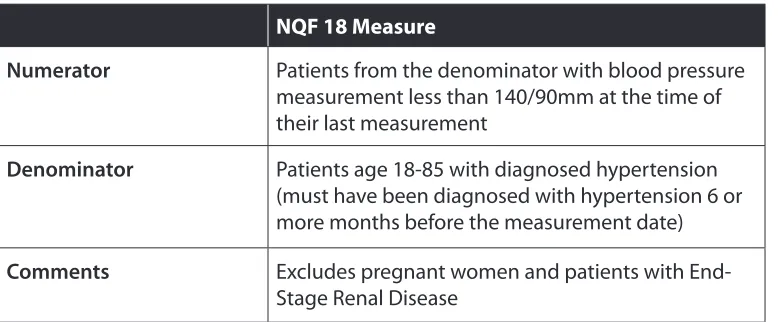
The Million Hearts Learning Collaborative was funded by ASTHO, with support from CDC. The request for proposals (RFP) was specific in noting that reporting for Million Hearts would be done using quality measure NQF 18, which is the hypertension measure supported by CDC. This measure comes from the National Quality Forum (NQF), a not-for-profit, nonpartisan, membership-based organization that works to catalyze improvements in healthcare.16 NQF 18 is described as follows:
Figure 1: NQF 18 Measure Description
NQF 18 Measure
Numerator Patients from the denominator with blood pressure measurement less than 140/90mm at the time of their last measurement
Denominator Patients age 18-85 with diagnosed hypertension (must have been diagnosed with hypertension 6 or more months before the measurement date)
Comments Excludes pregnant women and patients with End-Stage Renal Disease
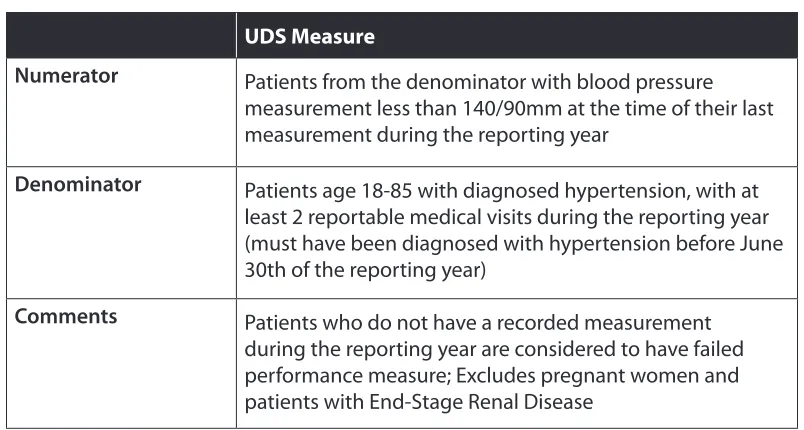
Both MCHC and LHC-N are federally qualified health centers (FQHC). An FQHC is any organization that receives grant funding under Section 330 of the Public Health Service Act.17 FQHCs report quality
Figure 2: UDS Hypertension Measure Description
UDS Measure
Numerator Patients from the denominator with blood pressure measurement less than 140/90mm at the time of their last measurement during the reporting year
Denominator Patients age 18-85 with diagnosed hypertension, with at least 2 reportable medical visits during the reporting year (must have been diagnosed with hypertension before June 30th of the reporting year)
Comments Patients who do not have a recorded measurement during the reporting year are considered to have failed performance measure; Excludes pregnant women and patients with End-Stage Renal Disease
In order to thoroughly understand baseline hypertension control rates, eventually leading to
improvements, it was imperative that all stakeholders of the Learning Collaborative spoke the same data language. For the purpose of Million Hearts, that language was NQF 18.
LESSON(S) LEARNED?
When undertaking quality improvement projects, progress is tracked using defined measures. In many cases, a single indicator can be reported using a multitude of measures. To which organization does your practice report? Does that organization have a preferred/required measure? At both the State and Federal level there is growing consensus that hypertension control should be consistently measured using the standards of NQF 18. Choosing the correct measure and remaining consistent with its use is an imperative step in quality improvement work.
STEP 3:
Understanding the Current Process
and Flow
How outlining the current processes around the detection and treatment of high blood
pressure can identify inconsistencies and offer opportunities for improvement
WHY?
Before existing processes or practices can be improved, they need to be understood. An emerging field of research, called improvement science, attempts to achieve quality improvement and increased patient safety by providing resources to guide providers and administrators in applying evidence-based strategies to their practice.18 A variety of tools exist to help examine current approaches to care and to support
organizations in envisioning and implementing change. These tools can help to temper the clinical tendency to jump to conclusions, which leads to short-sighted treatment solutions.
Public health has a longer history of embracing quality improvement theory and tools than clinical medicine does – especially in terms of program development, implementation, and evaluation. Many of these resources can be used by improvement teams to develop integrated solutions to a multitude of health challenges.19
HOW?
In the fall of 2012, a multi-disciplinary team at CMC/DHK met in several facilitated sessions, using quality improvement tools to understand current workflow processes and influences. Among the tools used were a
cause and effect diagram (also called a fishbone) and flowcharting.
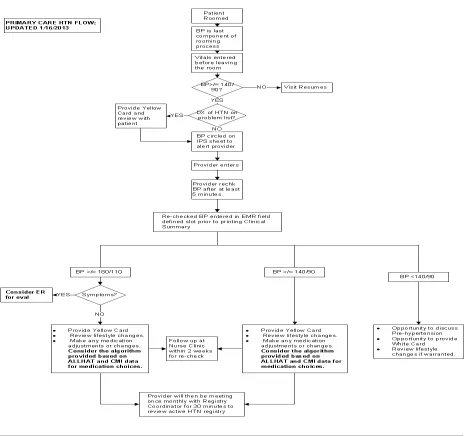
Flowcharting uses simple symbols to describe processes. Flowcharts are best created by those individuals who are on the front lines of the workflow, such as the medical assistants, nurses, and providers involved in the daily delivery of services. Once the current flow is completely diagramed, deviations from ideal (redundancies, inefficiencies, barriers) are often apparent. CMC/DHK’s flowcharting is shown in Figure 3 below.
Figure 3: Simple Flowchart
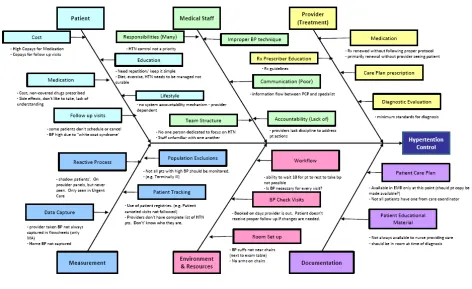
Cause and effect diagrams, sometimes called fishbone diagrams, help to describe all the possible
contributors to a given problem. The main arms (or “bones”) of the diagram are labeled as main categories of influence. For the purpose of hypertension control, these arms might be labeled as Treatment, Patient, Medical Staff, Documentation, Measurement, and Environment. Since each practice and/or community is unique, each needs to generate its own diagram. CMC/DHK’s fishbone diagram is shown in Figure 4 below.
STEP 3
Figure 4: Sample Fishbone for Hypertension
The CMC/DHK team used the flow chart and cause and effect diagrams to document every piece of their current clinical workflow, which helped them to identify areas of improvement.
Flow chart and cause and effect diagram templates are provided in Appendix B.
WHAT?
The CMC/DHK team made the following observations after completing its flowcharting and fishbone process which helped to direct subsequent improvement activities:
1. Inconsistent work flow across primary care medical homes and individual providers; 2. Inconsistent or absent engagement of specialty care departments;
3. Inconsistent documentation (dictation and vital flow sheet), especially of second blood pressure reading;
4. Inconsistent documentation of blood pressure readings by providers in electronic health record (EHR);
5. Inconsistent blood pressure measurement technique;
7. Existence of a cost barrier to blood pressure re-checks and a lack of a consistent, centralized process for timely follow-up of adjustments in treatment;
8. No agreement on universal triage and treatment algorithms among providers;
9. Unnecessary variation in the process for flow staff to notify provider of elevated blood pressure; and
10. Lack of staffing resources to effectively manage patient registries.
This process led to new hypertension process flow algorithms (to be discussed in a later chapter), which were used in Manchester and in Nashua to help refine their treatment protocols for Million Hearts.
LESSON(S) LEARNED?
Use of the flowchart and cause and effect diagrams provided CMC/DHK with a list of initial opportunities for improvement that helped to focus future work.
Taking the time to understand current practice and workflow can identify inconsistencies and help to target evidence-supported solutions to dysfunctional processes.
STEP 4:
Creating Algorithms for Hypertension
Care
How guidelines provide for consistency and application of best-practices across
care settings
WHY?
For decades, evidence-supported guidelines for screening, triage, and pharmacologic treatment for hypertension have been widely shared with clinicians.20 Unfortunately, the existence of these guidelines
does not translate into consistent care. Clinical resistance to universal protocols by primary care and specialty medicine is based on the idea that guidelines reflect “cookbook medicine,” and are viewed as an erosion of provider autonomy.21,22 However, it has been shown that variability in care leads to unnecessary
expense and poorer patient outcomes. Standardizing care through the purposeful agreement and adoption of clinical management protocols is one approach to ensure patients receive evidence-supported care across care settings. Dr. Tom Friedan, Director of the CDC, has strongly advocated for this approach as a key to eliminating variability in care.23
HOW?
The Joint National Committee (JNC) on the Prevention, Detection, Evaluation and Treatment of High Blood Pressure represents consensus recommendations from dozens of professional and governmental health organizations that periodically publish their findings in both scholarly reports and also
shorter, more clinically-actionable, provider reference guides. The CMC/DHK team used the JNC-7 recommendations as a starting point for crafting its own treatment and triage algorithms to guide care across primary and specialty offices. The team also engaged community partners, such as an independent nonprofit home healthcare agency, in the process. In December 2013, the JNC-8 recommendations were released as updates to prior JNC-7 recommendations. CMC/DHK has not yet modified its approach to meet these recommendations, instead electing to maintain the simpler and more stringent JNC-7 targets since these are familiar to patients, staff, and providers and are already reflected in existing printed materials.
WHAT?
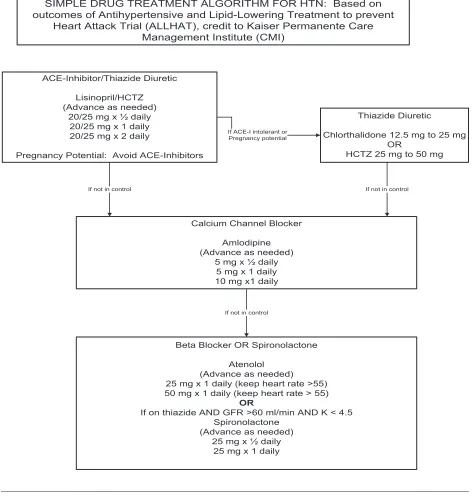
When looking back at Chapter 1: Engaging Providers and Staff, CMC/DHK’s survey of provider and nurse perceptions indicated that one barrier to effective treatment of hypertension patients was the absence of standardization protocols. The team proposed two evidence-supported algorithms to pilot.
Medication Treatment Algorithm
Below is a simple medication treatment algorithm adopted by the CMC/DHK team after endorsement by staff cardiologists and taken directly from published evidence-supported recommendations.
STEP 4
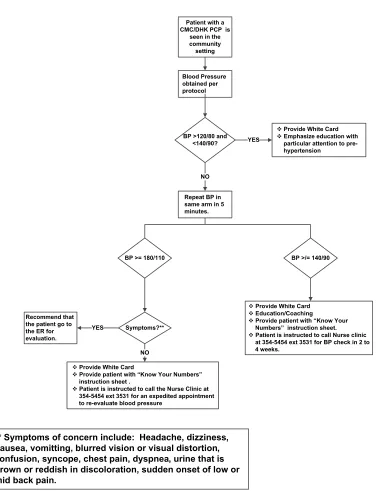
Triage Algorithm
Below is the triage algorithm adopted by the CMC/DHK team for use with patients who are screened and identified in community settings. This algorithm was based on best-practice recommendations from the literature, with the final version reflecting consensus of the team with agreement of local community-based screening partners:
Figure 6: Sample Triage Algorithm
Algorithm For Blood Pressures Performed Outside Of CMC/DHK
Patient with a CMC/DHK PCP is
seen in the community setting
Blood Pressure obtained per protocol
BP >120/80 and <140/90?
Repeat BP in same arm in 5 minutes.
NO
BP >= 180/110 BP >/= 140/90
Provide White Card
Provide patient with “Know Your Numbers” instruction sheet .
Patient is instructed to call the Nurse Clinic at 354-5454 ext 3531 for an expedited appointment to re-evaluate blood pressure
Provide White Card
Education/Coaching
Provide patient with “Know Your Numbers” instruction sheet.
Patient is instructed to call Nurse clinic at 354-5454 ext 3531 for BP check in 2 to 4 weeks.
Provide White Card
Emphasize education with particular attention to pre-hypertension
YES
Symptoms?**
NO Recommend that
the patient go to the ER for evaluation.
YES
The team at CMC/DHK learned that triage protocols could be modified for use with community partners, so that patients received consistent advice and reinforcement regardless of where they had a blood pressure screening performed.
Implementing Treatment Algorithms in Manchester and Nashua
For New Hampshire’s Million Hearts work, CMC/DHK provided MCHC and LHC-N with the algorithms developed for medication use and for triage. Both sites vetted the algorithms with their Medical Directors and then implemented them center-wide through changes in policy, describing them in detail during departmental meetings.
LESSON(S) LEARNED?
Prior to implementing universal algorithms CMC/DHK experienced a significant number of patients being sent unnecessarily to the emergency department or to the cardiologist for elevated blood pressure readings that did not meet the threshold for such intensive and expensive care. Evidence-supported consistency in treatment and triage throughout the community helps eliminate variability in care and provides both patients and providers with clear courses of action to guide best care. This should also lead to more cost-effective care.
STEP 5:
Ensuring Accuracy of Blood Pressure
Measurement
Why using best-practices to maintain blood pressure equipment and standardizing
technique for blood pressure measurement are important early steps in improving
detection and control of hypertension
WHY?
In typical medical practice, manual blood pressure measurement is viewed as a simple and repetitive task to be completed swiftly, before delving into what are felt to be higher priority items. This mindset contributes to inaccurate blood pressure measurement that can be attributed to a combination of faulty equipment and poor technique.
HOW?
When CMC/DHK began its hypertension quality improvement work, the quality improvement team knew it needed to start at a very basic level. Looking back at Chapter 2: Agreeing on a Shared Vision and Measures, it is clear that consistency in measurement is crucial. Errors in measurement can have undesired effects on numbers and could lead to inappropriate care decisions. Because of this, CMC/DHK chose to look at blood pressure measurement technique and equipment as the basis for its work.
The team began reviewing literature in search of evidence-based techniques to achieve accurate blood pressure measurement, identifying seven best practices to improve patient care. Studies suggest that disregarding these practices can result in inadvertent 5-10 mmHG increases in blood pressure readings:
1. Equipment – Be sure the blood pressure cuff is intact and that the manometer needle reads “0” (within oval area) prior to inflation. If the needle is outside of the oval area then the manometer requires recalibration. Note: blood pressure cuffs should be calibrated regularly according to manufacturer’s direction in addition to any time the manometer needle is outside the “0” range. 2. Appropriate Rooming – The patient should not feel rushed, be in significant pain, or have a
need to urinate.
3. Remove Clothing – Be sure that the blood pressure cuff is not applied over clothing or that tight clothing has not been pushed up the arm creating a tourniquet-like effect.
4. Correct Cuff Size – If a cuff is too small, the blood pressure will be inaccurately high. Choose the appropriate cuff size based on printed circumference ranges printed on the inner side of the cuff.
STEP 5
5. Positioning – Both the patient and the provider should be quiet. The patient should be seated with his or her back supported, the cuffed arm outstretched at heart-level and supported, with legs uncrossed and both feet flat on the floor.
6. Slowly Deflate Cuff – Deflation rates of 2-3 mmHg per second are recommended as they result in the lowest variability between readings.24,25,26
7. Repeat – If the initial blood pressure reading was greater than 140/90, the provider should wait 3-5 minutes and then repeat the measurement. In the majority of cases, the second reading is lower than the first.
WHAT?
All manometers are checked for calibration with each use and cuffs are inspected for excessive wear and to ensure they are inflating properly. Recalibration usually should occur yearly or sooner depending on the manufacturer’s recommendations.
Additionally, the team began developing a training module to ensure all CMC/DHK providers were measuring blood pressure using best practices. This module consists of a PowerPoint curriculum and written post-test, as well as a practical competency component, assessed through direct observation. These materials may be obtained by contacting Dr. Fedrizzi (one of this manual’s editors) at CMC/DHK.27
At CMC/DHK, the policy is to reassess competency in blood pressure technique each year. Similarly, MCHC and LHC-N have also chosen to add this training module into annual competency training.
Note: In order to better evaluate whether team members increased their skills and knowledge after the training, a pre-test can be used prior to implementation of the module.
LESSON(S) LEARNED?
Accurate blood pressure measurement is critical, as all future treatment decisions rely on responding to the systolic and diastolic numbers obtained.
STEP 6:
Sharing Provider Data Dashboards
How sharing data among providers and care teams results in more positive outcomes
WHY?
When attempting great change within a community, stakeholders often reference the collective impact model. While this model is most commonly applied to large-sector, cross-sectional initiatives, it can also be applied in other ways – like smaller scale public health interventions. One of the core conditions of that model indicates that data should be widely shared in order to achieve the greatest improvements.28
Quality improvement success is tied to data. One way to share data is through a provider data dashboard. A provider dashboard visibly displays patient panel outcomes data in a public way. “Public” can be defined as narrowly or as widely as desired, whether that is internal to a provider team, an entire practice, or more broadly to patients. A provider dashboard serves to identify top and lower performers for a particular outcome. Through further analysis, a provider dashboard may lead to a better understanding of what concrete provider behaviors tend to produce better patient outcomes. Providers can be reluctant to embrace data transparency. Often times, they voice concerns about differing disease acuity between panels, and that focusing on one outcome diverts attention from others.29 Though these concerns might
occasionally be true, experience has shown that patient outcomes tend to improve when data is shared among peers.
HOW?
The CMC/DHK team worked to develop its monthly primary care provider dashboards utilizing data from its EHR. CMC/DHK has an internal patient data analyst that can generate real time dashboards (and registries – see Step 7) at the request of providers.
MCHC and LHC-N dashboards were compiled from their EHRs. A dashboard may also be compiled by using external data reporting entities such as commercial insurers and CMS.
WHAT?
In developing provider dashboards for MCHC and LHC-N, practices chose to replicate CMC/DHK’s method to capture data existing in EHRs.
The health centers partnered with the Community Health Access Network (CHAN) for assistance in developing their provider dashboards. CHAN, a Health Center Controlled Network (HCNN), has developed and supports an integrated clinical and administrative system infrastructure for its eleven
FQHC members, which includes MCHC and LHC-N. Central to CHAN’s focus has been the automation of the primary care health record. The health record is linked to the GE Centricity Practice Management system and shares a common reporting tool, a robust data warehouse. CHAN developed a provider dashboard report, which pulls EHR data from the data warehouse and resides on the CHAN report server and can be accessed by MCHC and LHC-N.
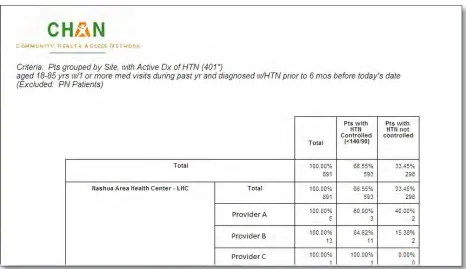
A sample portion of this hypertension provider dashboard is included below. It provides the total number/ percentage of patients with hypertension, the total number/percentage of patients with controlled
hypertension, and the total number/percentage of patients with uncontrolled hypertension, and it does this by provider.
Figure 7: Sample Provider Dashboard for Hypertension
A provider dashboard can help administrators gauge which providers are in need of additional resources to support his or her patient populations. For example, when LHC-N reviewed its provider dashboard for the first time, it was determined that the provider with the lowest percentage of patients with adequate hypertension control would receive extra resources.
This provider dashboard is just one version of the many provider dashboards being created and utilized across the state.
LESSON(S) LEARNED?
Dashboards provide clinically-relevant information in a simple manner for descriptive or comparative
purposes.30 Experiences at CMC/DHK, MCHC, and LHC-N have shown that dashboards raise provider
awareness of population-level health status of their patients and motivate a healthy degree of provider competition and action that leads to better patient outcomes.
STEP 7:
Managing Patient Registries
How using real-time patient listings can focus provider attention on needed care
WHY?
A registry is a visible and actionable list of timely, patient information organized in such a way as to highlight particular care needs. Before the utilization of registries, a provider’s perspective of care was focused on the individual patient in the office at a particular moment in time. In contrast, a registry gives providers a view of their entire patient panel, which can be hundreds of patients. A registry provides a population-level overview of gaps in evidenced-supported care and allows for proactive outreach to patients outside the typical office visit encounter.31,32
HOW?
CMC/DHK recognized that a provider and Registry Coordinator working together to systematically “manage the registry” could address dozens of patient needs regarding poorly controlled hypertension in a very short time (less than one hour). Treatment methods might include recommending follow-up visits for blood pressure rechecks, advising adjustments in medications or confirming medication compliance, and reinforcing lifestyle improvements. Over time, teams learned that additional chronic disease care management and preventive care needs could be added to the registries to provide opportunities to advise needed immunizations, recommended screenings, and lifestyle modification such as smoking cessation.
Though the CMC/DHK, MCHC and LHC-N registries were compiled from EHRs, a registry could also be abstracted from paper records using simple spreadsheet software or even paper and pencil. A basic flowchart outlining elements of registry management is included in Appendix C. A sample job description for a Registry Coordinator can be found in Appendix D.
WHAT?
MCHC and LHC-N again looked to CMC/DHK when developing their own hypertension patient registries. CMC/DHK provided a template design, containing many more data fields than necessary for just hypertension management, with the idea that this patient registry model could be used to manage patient needs more comprehensively, and possibly provide a way to manage other chronic diseases.
The sites again partnered with CHAN for assistance in report development. They worked together to develop a reporting format that would work for both locations, choosing to also include data fields not typically reviewed for hypertension management. CHAN was able to create patient registries based on diagnosis codes and then capture data from the EHR to create a panel or registry that can be used for pre-
Manchester Community Health Center
Given the multicultural, multilingual population of patients served by MCHC, with 47% of visits requiring translating services, it was important to include non-clinical data to support care decisions.
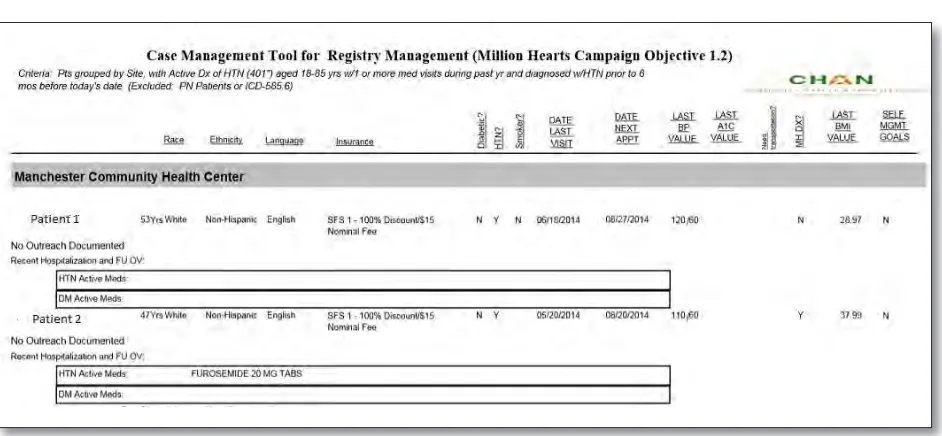
Below is a sample of a comprehensive patient registry created for MCHC, as shown in Figure 8. Indicators captured in this registry include:
• Race • Ethnicity
• Language
• Insurance Status
• Diabetes Diagnosis
• Hypertension Diagnosis
• Smoking Status
• Date of Last Visit
• Date of Next Appointment
• Last Blood Pressure Value
• Last HbA1C Value
• Transportation Needs
• Mental Health Diagnosis
• Last BMI
• Self-Management Goals
Figure 8: Sample Hypertension Patient Registry
This version of the registry can be exported to Excel so that columns can be displayed or hidden as desired, depending on the health care team’s goals.
In terms of registry management, MCHC’s work is spearheaded by a registered nurse who coordinates the Center’s Patient Centered Medical Home Project. Support is provided by Community Health Workers, who assist in managing hypertension for patients who speak Spanish or Arabic.
STEP 7
Lamprey Health Care - Nashua
While MCHC staff was comfortable working with such an expansive listing of data fields, others may find it overwhelming. To accommodate this, CHAN was also able to create the report with functionality to provide less information, called Registry-Lite. Indicators captured in this registry include:
• Last Blood Pressure Value
• Date of Next Appointment
• Provider Comments
LHC-N chose to implement the hypertension registry using the approach of Registry-Lite. The site began using this registry with one provider, and then expanded use with other providers over time. They plan to augment Registry-Lite slowly, adding data fields one at a time as staff becomes more comfortable with the tool.
In terms of registry management, LHC-N also utilizes a registered nurse to lead the work. The nurse is supported by a Medical Assistant, a Translator, and a Data Coordinator.
LESSONS LEARNED?
Patient Registries provide a system to collect uniform data points about each patient and can be categorized by disease, condition, or other definition to evaluate specific outcomes. The use of a hypertension registry is believed to be one of the most important strategies used by CMC/DHK in effectively managing its hypertension patients.
STEP 8:
Consistent Communication and
Celebrating Success
How clear communication about the project and celebrating successful work can lead to
clinical spread and positive outcomes
WHY?
Ensuring effective collaboration among multiple partners requires ongoing communication so that all stakeholders understand the shared vision, expectations, activities, and outcomes data involved in the collective effort.33 Consistency of written materials makes it easier for providers, staff, and patients alike to
share the same evidence-supported messaging and care expectations. Celebrating early success can help to maintain the momentum of an initiative by sustaining and growing staff and community engagement in shared achievement.34
HOW?
CMC/DHK used a variety of internal channels such as department meetings, newsletters, and written charters for outlining the improvement team’s charge; shared electronic files for all project materials; and used a PowerPoint-based “storyboard” that chronicled the process’ improvement milestones as they occurred. Through transparency of data dashboards, the campus followed the monthly progressive improvement in CMC/DHK hypertensive patient control data. CMC/DHK also developed two blood pressure wallet cards with a complementary blood pressure brochure (discussed in Step 9) that became the primary patient education and engagement tools across care settings and the community.
The blood pressure improvement work was also nominated and ultimately won the CMC/DHK Chairman’s Award, with all team members sharing in the recognition, and which included a small monetary award.
WHAT?
Communication efforts around New Hampshire’s Million Hearts work took place at a project management level, site-level, and community level. In terms of project management level communication, efforts around Million Hearts were communicated through bi-monthly articles in the NHMS’s monthly
newsletter and presentations to constituent groups through the NHCHI. The group also took advantage of peer-to-peer calls and meetings offered by ASTHO for states participating in the Million Hearts initiative.
STEP 8
These opportunities allowed New Hampshire to discuss its approach, solicit feedback, and to consider next steps based on methods rolling out in other states.
This manual will serve as a dissemination tool for this work.
Manchester
In terms of site-level communication, one tactic used to share success is through use of staff meetings. MCHC kept its staff abreast of positive outcomes through discussion and center-wide emails. Additionally, high performing providers were provided financial incentives.
Nashua
The Nashua community chose to communicate about its Million Hearts work through the development of a project fact sheet. Partners from LHC-N and NDPHCS Public Health worked together to create a flyer about the project to ensure consistent communication about the efforts for the duration of the project. A copy of this fact sheet can be found in Appendix E. LHC-N shares its clinical success internally during staff meetings.
LESSONS LEARNED?
STEP 9:
Engaging Patients
How a simple, inexpensive card proved to be the best tool to achieve patient engagement
WHY?
Among the many reasons considered to be barriers35 to effective treatment of hypertension, a few can be
eliminated through enhanced patient outreach and education. Specifically, these barriers are unhealthy lifestyle, inadequate patient education and awareness, and identification of occult disease. To effectively address hypertension within a community, patients must be considered a partner in the treatment strategy. Patient engagement is crucial.
HOW?
Million Hearts (Prevention) Wallet Card
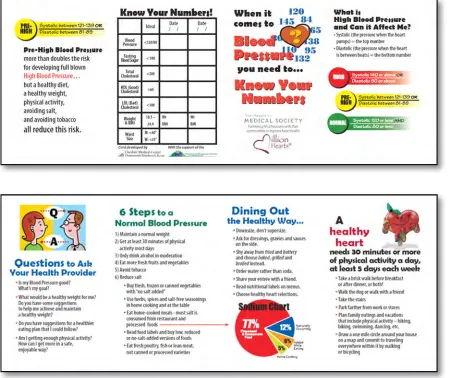
To raise awareness about the importance of hypertension and control within the community, CMC/DHK needed a tool that could be distributed to patients that would educate them about hypertension, provide guidance about making healthy lifestyle choices, and engage them in understanding their biometric numbers. CMC/DHK developed a foldable wallet card to do this after investigating simple, inexpensive patient education and engagement tools as part of a collaborative project with the Prevention Research Center at Dartmouth. The original wallet card is an 8-panel, white card distributed to non-hypertensive patients by providers during clinical visits. The goal of this card is to assist patients in preventing
hypertension. The wallet card’s messaging is based on existing models36,37 considered to be best practices in
creating awareness about blood pressure in a community population.
STEP 9
Figure 9: Million Hearts (Prevention) Wallet Card
Use of the wallet card began as a pilot program in two worksites for a period of three months. Participants were drawn from a convenience sample. Fifty adults who saw the worksite nurse at any time during the first month of the pilot study were considered to be enrolled in the pilot.
Data analysis revealed that most people accepted the card and were optimistic that it might help them improve their health. Most returned with the card over three visits up to one month apart. A large number of “normal” participants were identified as having pre-high blood pressure, allowing the opportunity for a brief educational conversation. And finally, by the third contact more than half had made some positive change in lifestyle and nearly 6 in 10 had shared the card with someone.
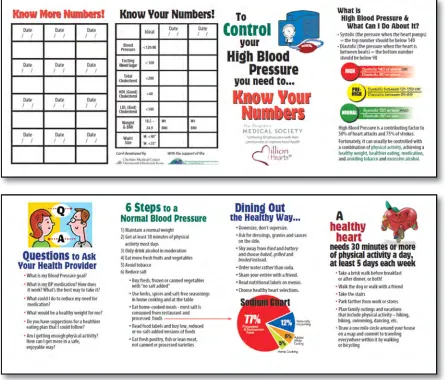
Million Hearts (Control) Wallet Card
Figure 10: Million Hearts (Control) Wallet Card
In November 2012, the cards were featured at the CDC’s Prevention Research Center Summer Seminar Series as a patient engagement tool to be used in clinical and worksite settings.
CMC/DHK also developed a hypertension brochure that complemented the wallet card. The brochure’s back panel is designed to prompt conversation between a provider and patient to assist in developing a simple lifestyle improvement plan. The brochure was embraced by local partners and purposefully replaced other existing hypertension resources available within the community so that all settings – YMCA, Senior Center, worksites, and home health agencies – relied on one consistent message. The brochure can be found in Appendix F.
WHAT?
Following the success of the pilot, use of the wallet cards expanded across CMC/DHK as well as the Keene community, along with guidance on how to use them most effectively.
STEP 9
The cards were designed as a patient engagement tool for clinical interactions. Each time a card is given to a patient by a provider, it is to be used as a tool to begin a brief therapeutic conversation to educate the patient about hypertension as well as the importance of healthy lifestyle choices. The following simple scripting is suggested to guide conversation, which is based on the card’s traffic light design (green is normal, yellow is pre-hypertension, and red suggests possible hypertension):
• If the patient’s blood pressure reading is in the red (>140/90), identify the helpful features of the
card and refer to established triage processes for abnormal values.
• If the patient’s blood pressure reading is in the yellow (>120-80 but <140/90), explain this as a
“borderline” value that is putting unnecessary wear and tear on the body. Identify the helpful features of the card that may assist in normalizing future readings.
• If the patient’s blood pressure reading is in the green (<120/80), reinforce positive health
behaviors, reminding the patient that there are still ways to improve. Suggest that the patient share the card within his or her social circle.
For New Hampshire’s Million Hearts work, the communities of Nashua and Manchester followed CMC/ DHK’s lead to better engage patients. Both MCHC and LHC-N agreed that it was important to incorporate wallet cards into their outreach in both clinical and community settings. In addition to distributing the prevention and wallet cards in English, they also translated the cards to Spanish and Portuguese (and are working to develop an Arabic card), to better accommodate their diverse patient population.
The wallet cards have been embraced by the NHMS’s Public Health Task Force. NHMS has committed to printing wallet cards for physician members for the duration of the Million Hearts initiative. The cards were allowed to be co-branded with the NHMS and Million Hearts logos and have been made available to NHMS physician members free of charge.
LESSONS LEARNED?
STEP 10:
Fostering Community-Clinical
Collaboration
Integrating health care through community-based partnerships with public health,
physical activity, and nutrition resources lead to maximum impact
WHY?
Strong evidence from the Community Preventive Services Task Force indicates that barriers to health improvement are decreased through effective community-clinical collaboration, which increases communication across sectors; improves referrals and tracking; and leads to enhanced coordination of services for individuals.38
Several efforts in New Hampshire demonstrate the State’s understanding of the need to integrate public health and clinical care to improve community health. In 2005, Governor John Lynch convened the New Hampshire Citizen’s Health Initiative (NHCHI) as a long-term, collaborative effort to improve the health of New Hampshire citizens. The current pillar projects of NHCHI are Health Payment Reform, Medical Home, and Health Promotion and Disease Prevention (HPDP). Since 2007, HPDP has been working to address the major underlying causes of death and disability in New Hampshire (unhealthy eating, sedentary lifestyle, tobacco use, and unhealthy alcohol use—all risk factors related to heart health). Recognizing that both public health and clinical care play critical roles in reducing the burden of preventable disease, in 2009 HPDP began investigating New Hampshire-based health promotion and disease prevention projects/programs involving both sectors. HPDP grounds its work in promoting public health and health care integration approaches to improve population health through evidence available in the literature and from the field, and has developed a tool entitled Medical Care and Public Health System Integration: A Practical Guide, and a primer for clinicians entitled The Clinician’s Role in Integrating Medicine and Public Health to Improve Individual and Population Health.
HOW?
CMC/DHK’s hypertension control work is a prime example of the integration of medicine and public health. In addition to the clinical interventions outlined in earlier chapters, CMC/DHK took a two-fold multidisciplinary approach to engage community members around this issue.
In addition to the wallet cards, CMC/DHK developed partnerships with local community agencies, such as a nonprofit home health care organization and the YMCA. Patients were able to access blood pressure checks through these agencies as a convenience, and with the wallet cards, they were able to document the readings to share with their providers. The cards, however, provided more than just a vessel to share