R E S E A R C H A R T I C L E
Open Access
Evaluation of a simple intervention to
reduce exchange transfusion rates among
inborn and outborn neonates in Myanmar,
comparing pre- and post-intervention rates
G. Arnolda
1,2*, A. A. Thein
3, D. Trevisanuto
4,5, N. Aung
6, H. M Nwe
7, A. A. Thin
8, N. S. S. Aye
9, T. Defechereux
10,
D. Kumara
1and L. Moccia
1,4Abstract
Background:In Myanmar, approximately half of all neonatal hospital admissions are for hyperbilirubinaemia, and tertiary facilities report high rates of Exchange Transfusion (ET). The aim of this study was to evaluate the
effectiveness of the pilot program in reducing ET, separately of inborn and outborn neonates.
Methods:The study was conducted in the Neonatal Care Units of four national tertiary hospitals: two exclusively treating inborn neonates, and two solely for outborn neonates. Prior to intervention, no high intensity phototherapy was available in these units. Intervention in late November 2011 comprised, for each hospital, provision of two high intensity LED phototherapy machines, a photo radiometer, and training of personnel. Hospital-specific data were assessed as Relative Risk (RR) ratios comparing ET rates pre- and post-intervention, and individual hospital results were pooled when appropriate.
Results:In 2011, there were 118 ETs among inborn neonates and 140 ETs among outborn neonates. The ET rate was unchanged at Inborn Hospital A (RR = 1.07; 95 % CI: 0.80–1.43;p= 0.67), and reduced by 69 % at Inborn Hospital B (RR = 0.31; 95 % CI: 0.17–0.57; p< 0.0001). For outborn neonates, the pooled estimate indicated that ET rates reduced by 33 % post-intervention (RRMH= 0.67; 95 % CI: 0.52–0.87;p= 0.002); heterogeneity was not a problem. Conclusion:Together with a photoradiometer and education, intensive phototherapy can significantly reduce the ET rate. Inborn Hospital A had four times as many admissions for jaundice as Inborn Hospital B, and did not reduce ET until it received additional high intensity machines. The results highlight the importance of providing enough intensive phototherapy units to treat all neonates requiring high intensity treatment for a full course.
Trial registration:Australian New Zealand Clinical Trials Registry ACTRN12615001171505, 2 November 2015.
Keywords:Neonatal jaundice, Phototherapy, Exchange transfusion, Neonates, Hyperbilirubinemia
Background
Neonatal jaundice is found in about 60 % of term and 80 % of preterm neonates in the first week of life [1], because neonates produce bilirubin at unusually high rates, and are inefficient at metabolising and excreting it [2]. This ‘physiological jaundice’ usually resolves
spontaneously, and can be differentiated from a number of pathological conditions (e.g., Rh (D) isoimmunisation, ABO incompatibility) which result in extreme hyperbiliru-binaemia [3]. Blood exchange transfusion (ET) is a com-mon intervention to treat extreme hyperbilirubinaemia with the goal of preventing bilirubin encephalopathy and death [4], rapidly removing about 50 % of the circulating bilirubin [5]. While effective, ET is associated with a range of procedure-related risks of mortality and morbidity [4].
We are not aware of any estimates of national ET rates, but hospital-based studies provide some guide. A * Correspondence:[email protected]
1Thrive Networks, Oakland, CA, USA
2School of Public Health & Community Medicine, Faculty of Medicine, University of New South Wales, Sydney, NSW, Australia
Full list of author information is available at the end of the article
Greek study reported the ET rates in an Athens mater-nity hospital during 1957–1961 at 435 ET per 100,000 live births and, after the introduction of routine photo-therapy, a much lower rate of 50 ET per 100,000 live births in a separate Athens maternity hospital in 1980– 1992 [6]. Similarly, the ET rate among inborn neonates at a single hospital in the USA during the period 1986– 2006 averaged an estimated 74 neonates per 100,000 live births, with a statistically significant reduction in ex-change transfusion incidence over time [7]. The re-duction in ET in industrialised countries can be attributed to a number of factors, including screening for ABO and Rh blood types and obstetric or neo-natal treatment [7], early neoneo-natal screening for jaun-dice, and the adoption of phototherapy as a means of preventing exchange transfusion [8].
In Myanmar, the National Hospital Statistics Report for 2011 reveals that admissions relating to neonatal jaundice are responsible for 46 % of all hospital admis-sions for conditions originating in the perinatal period [9]. While we are not aware of national data on ET rates in Myanmar, internal data from two tertiary maternity hospitals (the Central Women’s Hospitals of Yangon and Mandalay; ‘Inborn Hospitals A and B’) and two tertiary paediatric hospitals (Yangon Children’s Hospital and Mandalay 300-bedded Children’s Hospital; ‘Outborn Hospitals A and B’) showed unexpectedly high rates of ET. A pilot program was implemented at these four hospitals, to improve treatment of neonates admitted to the Neonatal Care Units (NCUs).
The aim of this study was to evaluate the effectiveness of the pilot program in reducing ET, separately of inborn and outborn neonates.
Methods
Setting and context
Inborn Hospitals A and B are both national tertiary ob-stetric referral hospitals that only admit inborn neonates, while Outborn Hospitals A and B are both tertiary paediatric referral hospitals that only admit outborn neo-nates. Prior to 2014, all four hospitals had NCUs which provided care at American Academy of Pediatrics [AAP] Level 2B [10].
All hospitals used conventional blue-light photother-apy machines (Philips 20 W/52 blue tubes or Yondon 20 W YD-FL-20W) at the time of intervention. Despite the fact that hospital staff attempted to replace lights regularly, the lack of a photo radiometer meant that cli-nicians were frequently uncertain as to the quality of treatment they were providing. The irradiance of some of the conventional phototherapy machines was measured using a photo radiometer (BLMv7; Medical Technology Transfer and Services [MTTS], Hanoi, Vietnam) in June 2011. Results are shown in Table 1 separately for single
and double-sided machines; the irradiance and was in the range 5–23μW/nm/cm2.
Intervention
In November 2011, each hospital participated in an intervention funded and implemented by the Breath of Life (BOL) program of Thrive Networks, an inter-national non-governmental organization. The interven-tion comprised provision of NCU equipment, including two LED phototherapy machines (MTTS PTV3000) and a photo radiometer (MTTS BLMv7), and training from one of the authors (DT) covering a variety of clinical subjects including management of neonatal hyperbiliru-binaemia and phototherapy. The MTTS PTV3000 pro-vides phototherapy from above, using Philips ‘Luxeon Rebel Royal Blue’ LED bulbs with a peak wavelength of 455 nm, calibrated at shipping to a maximum irradiance of 40 μW/nm/cm2 as measured at 40 cm. Calibration was done using the MTTS BLMv7, which has a sensor element with a half power response band from 420 to 505 nm (TCS3404CS, Taos Inc., Austria) [11] and a filter with a half power response band from 441 to 466 nm [#071 ‘Tokyo Blue’, Filters Op Maat, Netherlands] [12]. The Philips LED bulbs have an expected life (70 % lumen maintenance) of 50,000 h [13].
Training encouraged use of the AAP 2004 Guidelines for management of hyperbilirubinaemia in neonates born at 35 weeks gestation and above [14]; for neonates born <35 weeks gestation, training promoted use of the
phototherapy treatment and exchange transfusion
thresholds recommended by the UK National Institute for Clinical Excellence [1]. These were the guidelines already in use at the Central Women’s Hospital, Yangon, which is the hospital responsible for setting policy on fa-cility based neonatal care in Myanmar. Hospital staff Table 1Irradiance of conventional blue light phototherapy machines prior to intervention
Hospital Single or double-sided
No. machines
No. measured
Median readings [Range] µW/nm/cm2
Inborn A Single 6 6 12.0 [8–23]
Double - above 2 2 15.0 [10–20]
Double - below 15.0 [10–20]
Inborn B Single 7 7 7.0 [5–11]
Double - above 2 2 11.0 [5–17]
Double - below 12.5 [8–17]
Outborn A Single 9 3 20.0 [11–23]
Double - above 1 1 10.0 [n/a]
Double - below 10.0 [n/a]
Outborn B Single 10 4 11.0 [7–13]
Double - above 3 0 n/a
attended a 4 h meeting to provide training in manage-ment of hyperbilirubinaemia and use of the equipmanage-ment, and to establish a register to record data on neonates treated on the LED phototherapy machines.
In November and December 2012, additional MTTS PTV3000 LED machines were donated to each of the hospitals; three each to Inborn Hospital A and Outborn Hospital A, and one each to Inborn Hospital B and Outborn Hospital B.
Data sources for comparing pre- and post-intervention periods
For the purposes of evaluation we defined the pre-intervention period as calendar 2011 and the post-intervention period as calendar 2012. While not pre-cisely aligned with the date of intervention (late November 2011), the misclassification was considered minor. This definition permitted the use of NCU Annual Reports as the main data sources for the evaluation in three of the four hospitals. The Annual Reports provided information on the number of: live births (inborn); NCU admissions for any reason; NCU admissions specifically for jaundice or, at Inborn Hospital A where admission for jaundice was not recorded, NCU admissions treated with phototherapy; and ETs.
The Annual Reports at Outborn Hospital A did not contain the relevant data, so de-identified data were retrospectively collected from the NCU Admission Register (total admissions and admissions for jaundice) and the ET Register (number of ETs); as the available 2011 ET Register only commenced in mid-June 2011 (the previous register was not locatable), the pre-intervention period for this hospital was defined as July– December 2011, and the post-intervention period as July–December 2012.
Data source for information on neonates treated on LED in the post-intervention period
To assist with understanding the intervention, all four hospitals agreed to collect a limited amount of informa-tion on each neonate treated, during project implemen-tation. An LED Treatment Register was established, including: age at admission (days); Total Serum Bilirubin (TSB) at admission; duration of LED phototherapy treat-ment in days (date of end of treattreat-ment –date at start); and TSB prior to exchange transfusion. The LED Treat-ment Register data was only available following interven-tion, and for different durations at each hospital, ranging from 12 to 20 months; at three hospitals reporting was continuous, stopping at different dates, but in the fourth (Outborn Hospital A) there were gaps in reporting.
TSB readings at the four facilities could be processed in a variety of locations: the NCU; the hospital labora-tory; or an external laboratory. In three of the four
hospitals, the vast majority of tests were performed on the NCU bilirubin meter, while in the fourth (Outborn Hospital B) most readings were performed in the hos-pital laboratory. At one of the hoshos-pitals (Outborn Hos-pital A), the NCU bilirubin reader had a maximum reading of 30 mg/dL (513 μmol/L); no other Bilirubin analyser had a maximum reading.
Ethical approval
Retrospective ethics clearance was sought and re-ceived from the Ethical Committee on Medical Research Involving Human Subjects, Department of Health, Myanmar (approval #14/2014), before any publication. As the study was an evaluation comparing outcomes before and after routine implementation of an evidence-based facility-level intervention, approved retrospectively, the Ethics Committee did not require informed parental consent.
Analysis
Relative Risk ratios (RRs) were calculated by comparing pre- and post-intervention ET rates. Inborn and Out-born hospitals were analysed separately and the two hos-pitals in each group were treated as separate strata. Heterogeneity was assessed by examining Cochran’s Q and the I2statistic [15], with an I2value of >40 % taken to indicate important levels of heterogeneity. If im-portant heterogeneity was identified, hospital RRs were reported individually and sources of heterogen-eity explored. If heterogenheterogen-eity was not identified, hospital-specific RRs were pooled using the Mantel-Haenszel method, assuming a fixed-effects model. As-sessments of heterogeneity and pooling of data, where appropriate, were performed in RevMan 5.3 [16].
Results
Pre- and post-intervention data
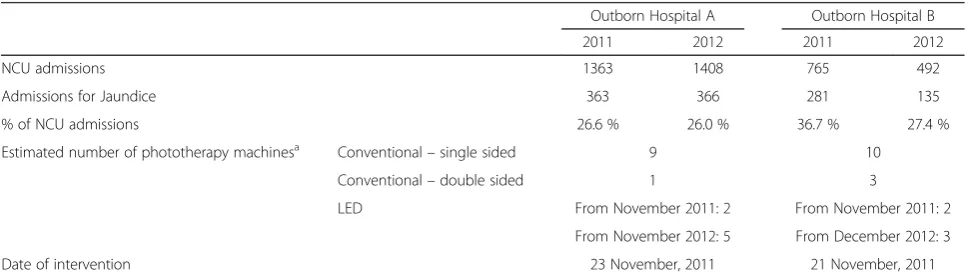
Table 2 shows key characteristics of the two mater-nity hospitals, and Table 3 shows key characteristics of the two paediatric hospitals.
In 2011, there were 118 ETs among inborn neo-nates at the two maternity hospitals, decreasing to 94 ETs in 2012 (Table 4). At Inborn Hospital A, the ET rate among neonates admitted for jaundice was 10.0 % pre-intervention and 10.7 % post-intervention (RR = 1.07; 95 % CI: 0.80–1.43; p= 0.68). At hospital B, by contrast, the intervention rate reduced dramat-ically from 17.8 % pre-intervention to 5.5 % post-intervention, resulting in a 69 % relative reduction in ET rates (RR = 0.31; 95 % CI: 0.17–0.57;p< 0.0001). The pres-ence of substantial heterogeneity (I2= 92 %) prevented the pooling of these data.
from the LED machines before treatment was complete, to try and offer the benefit of the higher irradiance to as many neonates as possible; we were informed that this practice stopped after an additional three LED machines were provided in November 2012. We therefore decided to undertake apost hocanalysis, comparing 2013 ET data with the 2011 (baseline) data, to explore the possible impact of additional machines. The results or the post hoc analysis, are shown in Table 5: the 2013 ET rate at Inborn Hospital A reduced to 3.2 %, leading to a 68 % relative reduction in ET rates (RR2013 vs 2011= 0.32; 95 % CI: 0.21–0.48; p<
0.0001), while the 2013 ET rate at Inborn Hospital B was 7.8 % resulting in a 56 % relative reduction (RR2013 vs 2011=
0.44; 95 % CI: 0.25–0.77;p< 0.0001). As heterogeneity was no longer observed, a pooled result was calculated, showing a reduction of ET by 64 % among inborn neonates (RRMH
2013 vs 2011= 0.36; 95 % CI: 0.26–0.49; p< 0.0001). Relevant
to this analysis, we note that Inborn Hospital A also
received 7 Lullaby LED Phototherapy Units [GE Health-care, Maryland, USA] [17] in November 2013, overlapping the end of the second post-intervention period.
Among outborn neonates, there were 140 ETs in 2011 and 47 in 2012. As shown in Table 6 the ET rate at Out-born Hospital A reduced from 31.7 % of admissions for jaundice in 2011 to 19.2 % in 2012 (RR = 0.61; 95 % CI: 0.42–0.87; p= 0.008). At Outborn Hospital B, the ET rate reduced from 29.2 % in 2011 to 21.5 % in 2012 (RR = 0.74; 95 % CI: 0.51–1.07; p= 0.10). As there was lim-ited heterogeneity the pooled result was calculated, lead-ing to an overall estimate of a 33 % relative reduction in ET rates across the two paediatric hospitals (RRMH=
0.67; 95 % CI: 0.52–0.87;p= 0.002).
Post-intervention data on LED treated neonates
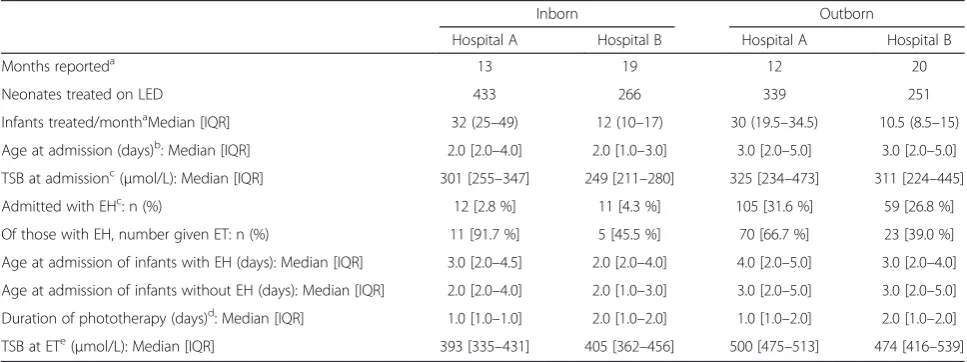
Selected characteristics of neonates treated on the LED phototherapy machines are shown at Table 7 Conventional Table 2Characteristics of two tertiary Myanmar maternity hospitals, in 2011 and 2012
Inborn Hospital A Inborn Hospital B
2011 2012 2011 2012
Live births 7509 8720 5696 5369
NCU admissions 1102 1259 1678 1644
NCU admission rate 14.7 % 14.4 % 29.5 % 30.6 %
Admissions for Jaundicea 747 832 242 220
% of NCU admissions 67.8 % 66.1 % 14.4 % 13.4 %
Estimated number of phototherapy machinesb Conventional–single sided 6 7
Conventional–double sided 2 2
LED From November 2011: 2 From November 2011: 2
From November 2012: 5 From December 2012: 3
Date of intervention 23 November, 2011 21 November, 2011
a
At Inborn Hospital A this was actually infants treated with phototherapy, rather than being admissions for jaundice b
Number of conventional machines are as recorded as hospital visit in June 2011–this number was not subsequently monitored, but is not believed to have changed markedly in 2012
Table 3Characteristics of two tertiary Myanmar paediatric hospitals, in 2011 and 2012
Outborn Hospital A Outborn Hospital B
2011 2012 2011 2012
NCU admissions 1363 1408 765 492
Admissions for Jaundice 363 366 281 135
% of NCU admissions 26.6 % 26.0 % 36.7 % 27.4 %
Estimated number of phototherapy machinesa Conventional–single sided 9 10
Conventional–double sided 1 3
LED From November 2011: 2 From November 2011: 2
From November 2012: 5 From December 2012: 3
Date of intervention 23 November, 2011 21 November, 2011
a
blue-light phototherapy machines were also used during this period, but clinicians indicated that the LED machines were preferentially allocated to neonates with higher TSB.
Median age at admission was 2 days for neonates admit-ted to the inborn NCUs compared to 3 days in the two outborn NCUs. While the median TSB at admission was slightly lower for the inborn neonates (301 and 249μmol/ L) than the outborn neonates (325 and 311μmol/L), there is a marked difference in the distributions. The proportion of neonates admitted with extreme hyperbilirubinemia (TSB > 427μmol/L) was 3.7–4.3 % of inborn neonates, in comparison to 28–32 % among outborn neonates.
Of those with extreme hyperbilirubinaemia, the propor-tion who had an ET varied enormously: 92 % and 45 % in the two maternity hospitals, and 67 % and 39 % in the two paediatric hospitals. The median age at admission of neo-nates with extreme hyperbilirubinaemia was 2–3 days for the two maternity hospitals, and 3–4 days for the two paediatric hospitals, and was not markedly later than for neonates without extreme hyperbilirubinaemia at admis-sion (median of 2 days at both maternity hospitals, and 3 days at both paediatric hospitals). The only statistically significant difference was in Outborn Hospital A, where ne-onates with extreme hyperbilirubinaemia were admitted at a median of 4 days compared to 3 days for neonates with-out extreme hyperbilirubinaemia (p= 0.03 by Kruskal-Wallis test).
The duration of LED phototherapy was a median of 1 day at Inborn Hospital A and Outborn Hospital A, and 2 days at the Inborn Hospital B and Outborn Hospital B. TSB at ET was available for a subset of neonates that re-ceived LED phototherapy and went on to receive a trans-fusion. Median TSB at ET was noticeably lower among
the inborn neonates having ETs (393 and 405 μmol/L) than the outborn neonates (500 and 474μmol/L).
Discussion
While ET is valuable for preventing bilirubin encephalop-athy, the procedure is itself associated with mortality and morbidity and should be avoided whenever possible. In high resource settings, estimates of procedure related mortality from the 1950s to the 1970s, before it was estab-lished that phototherapy was effective at reducing ET, ranged from 3.7/1000 to 32.0/1000 ETs [18–24]. In low resource settings, where ET is still required at least in part due to unavailability of intensive photo-therapy, results have been reported ranging from 0 to 182 deaths/1000 ETs [25–30]. The commonest mor-bidities associated with ET are thrombocytopenia and hypocalcaemia in both high [7, 31] and low resource settings [4, 25–28].
Phototherapy has been proven by randomised trial to markedly reduce the need for ET in high resource set-tings [8], so the current study merely seeks to quantify the reduction possible in a low resource setting. The current study confirms that simple provision of LED phototherapy, a photo radiometer, and provision of stan-dardised training in use of existing guidelines, can result in a 33 % reduction in ET among outborn neonates, and a reduction of ET of 68 % at one hospital treating inborn neonates, and no reduction at the other.
In exploring this heterogeneity in the inborn hospital results, clinicians stated that patients were being re-moved from the LED phototherapy machines early in an attempt to share the high intensity treatment among as many patients as possible, as there were too many Table 4Relative risk of ET in two tertiary Myanmar maternity hospitals, in 2011 and 2012
Hospital Period Admissions for jaundice ET % ET RR [95 % CI] RRMH[95 % CI]
Inborn Hospital A 2011 747 75 10.0 % 1.07 [0.80–1.43]
nca
2012 832 82 10.7 %
Inborn Hospital B 2011 242 43 17.8 % 0.31 [0.17–0.57]
2012 220 12 5.5 %
RRRelative Risk ratio,RRMHMantel-Haenszel pooled RR a
RRMHnot calculated due to extreme heterogeneity (I2= 92 %)
Table 5Relative risk of ET in two tertiary Myanmar maternity hospitals, with 2013 as post-intervention period
Hospital Period Admissions for jaundice ET % ET RR [95 % CI] RRMH[95 % CI]
Inborn Hospital A 2011 747 75 10.0 % 0.32 [0.21–0.48]
0.36 [0.26–0.49]
2013 968 31 3.2 %
Inborn Hospital B 2011 242 43 17.8 % 0.44 [0.25–0.77]
2013 192 15 7.8 %
patients to be treated. A supplementary, post hoc, ana-lysis was therefore defined comparing a period after add-itional LED machines had been provided to the inborn hospitals (2013); there was no heterogeneity in this ana-lysis, and it suggested a reduction of 64 % among inborn neonates across the two hospitals. Caution must be taken in interpreting this result, because the time pe-riods was defined post hoc, but the absence of hetero-geneity in the results across the two inborn NCUs, and its conformance with randomised trial results, suggest that it is plausible. Nevertheless, it is also plausible that other relevant factors, the specifics of which we are un-aware, also changed.
Differential impact among inborn vs outborn neonates
The estimated relative reduction in ET at one maternity hospital in the formal analysis, and both in the supple-mentary period, was twice that found in paediatric
hospitals. Data from the LED Treatment Registers show that that the median TSB at admission is roughly similar for both inborn and outborn neonates, but the distribu-tions are strikingly different, with almost a third of outborn neonates admitted with extreme hyperbilirubi-naemia in comparison to just 4 % of inborn neonates.
Late admission of outborn neonates has been reported in many case series. For example, one Nigerian case series found that 25 of 28 neonates admitted with Acute Bilirubin Encephalopathy (ABE) were outborn [32], another found that all six neonates with kernicterus were outborn [33], and a third reported that 26 of 27 cases of ABE were outborn–the sole inborn neonate to develop ABE followed parental refusal of ET [34]. When neonates are admitted with signs of ABE, prompt ET is recommended [14].
The results in the paediatric hospitals demonstrate that the simple interventions reported here can have a Table 6Relative risk of ET in two tertiary Myanmar paediatric hospitals, in 2011 and 2012
Hospital Period Admissions for jaundice ET % ET RR [95 % CI] RRMH[95 % CI]
Outborn Hospital A 2011 a
183 58 31.7 %
0.61 [0.42–0.87]
0.67 [0.52–0.87]
2012a 182 35 19.2 %
Outborn Hospital B 2011 281 82 29.2 % 0.74 [0.51–1.07]
2012 135 12 21.5 %
RRRelative Risk ratio, RRMHMantel-Haenszel pooled RR a
Outborn Hospital A data restricted to the 6 months July–December of these years, as ET Register unavailable prior to July 2011
Table 7Characteristics of neonates treated for jaundice with LED machines post-intervention
Inborn Outborn
Hospital A Hospital B Hospital A Hospital B
Months reporteda 13 19 12 20
Neonates treated on LED 433 266 339 251
Infants treated/monthaMedian [IQR] 32 (25–49) 12 (10–17) 30 (19.5–34.5) 10.5 (8.5–15)
Age at admission (days)b: Median [IQR] 2.0 [2.0–4.0] 2.0 [1.0–3.0] 3.0 [2.0–5.0] 3.0 [2.0–5.0] TSB at admissionc(μmol/L): Median [IQR] 301 [255–347] 249 [211–280] 325 [234–473] 311 [224–445]
Admitted with EHc: n (%) 12 [2.8 %] 11 [4.3 %] 105 [31.6 %] 59 [26.8 %]
Of those with EH, number given ET: n (%) 11 [91.7 %] 5 [45.5 %] 70 [66.7 %] 23 [39.0 %]
Age at admission of infants with EH (days): Median [IQR] 3.0 [2.0–4.5] 2.0 [2.0–4.0] 4.0 [2.0–5.0] 3.0 [2.0–4.0] Age at admission of infants without EH (days): Median [IQR] 2.0 [2.0–4.0] 2.0 [1.0–3.0] 3.0 [2.0–5.0] 3.0 [2.0–5.0] Duration of phototherapy (days)d: Median [IQR] 1.0 [1.0–1.0] 2.0 [1.0–2.0] 1.0 [1.0–2.0] 2.0 [1.0–2.0] TSB at ETe(μmol/L): Median [IQR] 393 [335–431] 405 [362–456] 500 [475–513] 474 [416–539]
ETExchange Transfusion,EHExtreme Hyperbilirubinaemia (TSB >428μmol/L),IQRInterquartile range a
Outborn Hospital A reported 12 months of data, spread over 20 months from late November 2011 to June 2013, due to staffing interruptions. The other three hospitals reported data for consecutive month. Data at Inborn Hospital A were partial for the first and last of 14 reporting months, leading to an estimated 13 reporting months; the median and IQR exclude the first and last month
b
Age at admission was missing for one record at Inborn Hospital A and four records at Inborn Hospital B c
TSB at admissions was missing for eight records at Inborn Hospital B, seven at Outborn Hospital A, and 31 at Outborn Hospital B d
Duration of phototherapy was missing for 1 neonate at Inborn Hospital A, 2 at Inborn Hospital B, 84 at Outborn Hospital A and 22 at Outborn Hospital B e
positive impact, but the extent of that impact may be limited by the ‘late’ presentation of many outborn neo-nates. In only one of the four hospitals does the data show that neonates presenting with extreme hyperbiliru-binaemia at admission were older than neonates present-ing with lower levels of hyperbilirubinaemia; thus ‘late presentation’must be defined in terms of the severity of illness at the time of hospital presentation, rather than age of the neonate in days. This can only be addressed by additional interventions to ensure that parents are educated to identify rapidly developing jaundice, and that neonates are regularly and routinely assessed and promptly referred for treatment when appropriate. It is estimated that 36 % of births in Myanmar deliver in facilities [35]; as a substantial proportion of the facility-born neonates are promptly discharged home, education of parents and community-based intervention represents a major undertaking.
Finally, it should be noted that neither maternity hos-pital NCU accepted inborn neonates back into the nursery after they were discharged; if inborn neonates required treatment for jaundice after discharge from the hospital, they had to be admitted to a separate hospital as an out-born admission. Thus any ETs avoided by inout-born neonates in this study were ETs during the birth admission. This policy was unchanged between the two study periods and does not therefore alter our conclusions about the poten-tial impact of the intervention on ET rates.
Which intervention elements were important?
The current study was implemented as operational re-search, exploiting readily available or relatively easily collected data to evaluate routine roll-out of an evidence-based intervention. As a result, we are unable to comment formally about which element(s) of inter-vention are most important, but can only explore the evidence. There are three elements of intervention: provision of LED phototherapy machines; provision of a photo radiometer; and provision of training using stand-ard guidelines. We will consider the potential contribu-tion of each of the elements individually but, as noted below, we believe that all three elements are essential components of any intervention to reduce ET.
Role of LED Phototherapy machines
Prior to the provision of LED phototherapy, none of the phototherapy machines in use at the four pilot hospitals was providing‘intensive phototherapy’(>30μW/nm/cm2) as defined in the 2004 AAP Guidelines [14]. The provision of LED machines delivering irradiance of 40 μW/nm/cm2 represented an increase of irradiance by a factor of 2–5 times that previously available on the conventional blue light machines used at the four hospitals. This increase in irradiance is to some
extent offset by the increase in surface area exposed by the use of double-sided phototherapy machines, at least one of which was available in each of the four NCUs.
Two LED phototherapy machines were provided to each of the four hospitals. This number of machines was adequate to facilitate reduction in ET in the three hospitals with fewer admissions for jaundice (135–366 admissions for jaundice in the post-intervention period; one LED machine per 68–183 jaundiced neonates), but inadequate for a hospital with a high volume of jaun-diced neonates (832 treated neonates; one LED machine per 416 treated). While we would have anticipated par-tial reduction in ET rates at this hospital, no reduction was observed, and we interpreted this as due to the early cessation of treatment to permit more babies to be treated with LED. When the number of LED machines was increased to 5 (968/5 = 194 treated neonates per LED machine at Hospital), the ET rates reduced sharply; this suggests that one LED machine is required per 150– 200 admissions for jaundice.
Role of photo radiometer
None of the four hospitals had a photo radiometer prior to the intervention, and clinicians did not therefore know the irradiance being provided by each machine. In addition, very few of the conventional phototherapy ma-chines in use prior to the intervention had counters which recorded cumulative hours of use, to facilitate timely bulb replacement, in line with manufacturers’ specifications (usually 1500 or 2000 h of use). In the absence of counters, staff can only know when to change the blue light tubes if they carefully log the number of hours of use of each machine, to ensure that bulbs are changed at the appropriate time.
In Myanmar and elsewhere, the BOL program has noted that simple provision of a photo radiometer often leads to rapid improvement in the average irradiance of the conventional machines (due to timely replacement of tubes) and to triaging of the neonates with the highest TSB to the machine with the highest irradiance. We did not systematically assess whether this was the case be-fore and after the intervention in the current study, so we cannot confirm, using objective measures, whether this occurred in any or all of the pilot hospitals, or con-jecture as to whether it contributed to the observed re-ductions in ET rates. Clinicians do however confirm these practices occurred.
Role of agreement to adopt uniform guidelines
Women’s Hospital, Yangon. During the initial hospital visits in Myanmar, BOL staff and volunteers noted that hospitals were using different thresholds for photother-apy and ET, and were often performing ET below the recommended thresholds. In discussion with clinicians it became apparent that the lack of efficacious photother-apy encourages clinicians to make conservative decisions and perform ET. For example, if there is little reason to trust the efficacy of the available phototherapy machines, it can make sense to do an ET as a threshold is approached, while the blood bank services are available, rather than waiting a few hours until the threshold is inevitably reached and recalling staff to the hospital premises.
When considered in this context, the provision of ef-fective phototherapy facilitates compliance with guide-lines. It is plausible that compliance will increase over time as clinicians adjust to a new clinical reality, where rapidly increasing TSB can be treated without ET.
Limitations
There are a number of limitations in the current study. Some limitations relate to the fact that this study was implemented as unfunded operational research, reliant on data collected by hospital staff while performing their clinical and administrative roles. BOL did not employ in-country staff with a primary role of supporting hospi-tals with data-collection until late 2012. A number of other specific limitations are discussed below.
First, pre-intervention evaluation data was collected according to local convention rather than external defin-ition, so it was considered inappropriate to impose an external definition that applied only to the post-intervention period. While ET for hyperbilirubinaemia (the numerator) is straightforward, there was important variation in the definition of the number of jaundiced neonates (the denominator). At Inborn Hospital A, the Annual Report reported the total number of neonates receiving phototherapy regardless of the reason for admission; at other hospitals, the number of admis-sions for jaundice was based on a review of the NCU Admission Register. To our knowledge, the denominator definitions did not change markedly in the pre- and post-intervention periods so, while the ET rates of the four hospitals may not be directly comparable, the presented relative risk estimates are believed to be unbiased.
Second, when the NCU Annual Report at Outborn Hospital A was found to be inaccurate in the recorded number of ETs for 2011, a retrospective review of the Admission and ET Registers was undertaken. The rela-tive risk was calculated by comparing the ET rate for the 6 months July–December 2011 as the pre-intervention period and the same 6 months of 2012 as the post-intervention period. Full-year data for 2011 could not be
collected as the available ET Register was initiated in June 2011. In this hospital, as in the other three pilot hospitals, the intervention took place in late November 2011, but data for late November and all December 2011 were included as part of the pre-intervention period. We consider this to be an appropriate designa-tion as we consider November and December 2011 to be a‘wash-in’ period, during which new treatment pro-tocols were rolled out in the NCUs. Nevertheless, the fact of having LED phototherapy during this 5 week-period has the effect of making the pre- and post-intervention periods more similar, potentially reducing the size of the estimated relative risks reported here.
Third, Outborn Hospital B saw a one third reduction in total admissions and halving of the number of neo-nates admitted for phototherapy. This occurred because a larger, better-resourced paediatric hospital opened in the same catchment during the post-intervention period. It is plausible that the reduction of admissions reflected the self-referral of sicker neonates to the new hospital. If so, the average acuity of jaundiced patients in the post-intervention period may be lower than in the pre-intervention period, but we lack individual patient data for the two periods which could support or refute this hypothesis. Comparing the two paediatric hospitals in-cluded in this study, however, shows that they had simi-lar results (ET rates reduced from roughly 30 % pre- to 20 % post-intervention), and patient profiles.
Fourth, the LED Treatment Register data presented in this report does not represent the entire cohort of
neonates receiving phototherapy during the
post-intervention period. No data was collected on neonates treated exclusively with conventional phototherapy. Cli-nicians indicate that the subset of neonates reported here are likely to be the neonates with higher TSB values, or who were otherwise considered to be at higher risk. We do not believe this impacts our interpretations in any significant way.
Fifth, and finally, we note that for simplicity of data collection the LED Treatment Register recorded date at start and end of treatment and calculated duration of treatment in ‘days’ by subtracting start date from end date; clearly, it would have been more accurate to count hours, but this was not done as it would have increased the reporting load on clinicians.
Conclusions
training in the use of standard guidelines for manage-ment of hyperbilirubinaemia. This intervention led to a one-third reduction in the ET rate for outborn neonates and a reduction by two-thirds in the ET rate for inborn neonates in one hospital, and no change in the other; a supplementary analysis, with a new post-intervention period defined post hoc, showed both inborn NCUs achieved a two-thirds reduction in ET after provision of additional high intensity phototherapy machines.
An important lesson from the current pilot was that provision of two LED machines was sufficient to make a difference in a hospital with fewer than 400 annual ad-missions for jaundice, but failed to have an impact in a hospital with over 800 annual admissions for jaundice. We hypothesise that this was because neonates were being removed from LED phototherapy before the completion of their treatment due to high demand for machines. In line with the remedial action taken in the current study, the provision of one LED ma-chine per 150–200 annual admissions for jaundice treatment is recommended. If this is not feasible, the current data suggest that it is preferable to ensure complete treatment on a subset of high risk neonates, to prevent ET in that subset, rather than partial treat-ment on multiple neonates, which risks no benefit in terms of ET averted.
Abbreviations
AAP:American Academy of Pediatrics; ABE: Acute Bilirubin Encephalopathy; BOL: Breath of Life program; CI: confidence interval; ET: exchange transfusion; NCU: Neonatal Care Unit; NS: not statistically significant; RR: relative risk ratio; RRMH: Pooled (Mantel-Haenszel) relative risk ratio; TSB: Total Serum Bilirubin.
Competing interests
The authors declare that they have no competing interests.
Authors’contribution
GA led the study design, analysis and drafting of the manuscript. AA Thein, DT and LM conceived of the study, and played significant advisory roles in its design and in drafting of the manuscript; additionally, LM coordinated study implementation. AN, NHM, AA Thin and ANSS contributed to the design and oversaw in-hospital data collection. DT and DK oversaw overall data collection and entry, and played significant advisory roles in drafting the manuscript. All authors read and approved the final manuscript.
Acknowledgments
The funding for the pilot project described in this study was provided in a fund matching agreement between three partners: the Archdioceses of Trento, Italy, and the Autonomous Province of Trento, Italy; donors to Amici della Neonatologia Trentina, an international non-governmental organization headquartered in Trento, Italy; and Eric Hemel and Barbara Morgen, donors to Thrive Networks, an international non-governmental organization headquartered in Oakland, California, USA.
The pilot project was implemented by the Breath of Life Program, Thrive Networks, which supported the involvement of some of the authors as employees [DK], consultants [GA, LM] and volunteers [DT, TD]. Other authors [AA Thein, AN, NHM, AA Thin, ANSS] were financially supported by the Myanmar Ministry of Health, in their roles as hospital clinicians. Data was collected by many hospital staff. We gratefully acknowledge the contribution of donors and staff who, together, made this work possible.
Author details
1Thrive Networks, Oakland, CA, USA.2School of Public Health & Community Medicine, Faculty of Medicine, University of New South Wales, Sydney, NSW, Australia.3Department of Neonatology, University of Medicine (1), Yangon, Myanmar.4Amici della Neonatologia Trentina, Trento, Italy.5Children and Women’s Health Department, Medical School University of Padua, Padua, Italy.6Senior Consultant Neonatologist, Central Women’s Hospital, Mandalay, Myanmar.7Associate Professor, Department of Paediatrics, University of Medicine (1), Yangon, Myanmar.8Senior Consultant Neonatologist, Mandalay Children’s Hospital (300), Mandalay, Myanmar.9Senior Consultant
Neonatologist, Central Women’s Hospital, Yangon, Myanmar.10Department of Surgery, Liege University Hospital, Liege, Belgium.
Received: 15 June 2015 Accepted: 9 December 2015
References
1. National Collaborating Centre for Women's and Children's Health (UK). Neonatal Jaundice. London: RCOG Press; 2010. (NICE Clinical Guidelines, No. 98.) Available from: http://www.ncbi.nlm.nih.gov/books/NBK65119/. 2. Maisels MJ. Neonatal jaundice. In: Sinclair JC, Bracken MB, editors. Effective
care of the newborn infant. Oxford: Oxford University Press; 1992. p. 507–61. 3. Stevenson DK, Wong RJ. Metalloporphyrins in the management of neonatal
hyperbilirubinemia. Semin Fetal Neonatal Med. 2010;15(3):164–8. 4. Murki S, Kumar P. Blood exchange transfusion for infants with severe
neonatal hyperbilirubinemia. Semin Perinatol. 2011;35(3):175–84. 5. Murray NA, Roberts IAG. Neonatal transfusion practice. Arch Dis Child Fetal
Neonatal Ed. 2004;89(2):101–7.
6. Valaes T, Koliopoulos C, Koltsidopoulos A. The impact of phototherapy in the management of neonatal hyperbilirubinemia: comparison of historical cohorts. Acta Paediatr. 1996;85(3):273–6.
7. Steiner LA, Bizzarro MJ, Ehrenkranz RA, Gallagher PG. A decline in the frequency of neonatal exchange transfusions and its effect on exchange-related morbidity and mortality. Pediatrics. 2007;12(1):27–32.
8. Brown AK, Kim MH, Wu PY, Bryla DA. Efficacy of phototherapy in prevention and management of neonatal hyperbilirubinemia. Pediatrics. 1985;75(2 Pt 2): 393–400.
9. Department of Health. Annual hospital statistics report: 2010–2011. Nay Pyi Taw, Myanmar: Department of Health Planning; 2013.
10. American Academy of Pediatrics. Levels of neonatal care. Pediatrics. 2004;114(5):1341–7.
11. Sensor Datasheet 137A [http://www.ams.com/eng/content/download/ 250257/975989/142696]. Accessed date 16 December 2015.
12. Filter Response Data [http://www.philipslumileds.com/uploads/265/DS68-pdf]. Accessed date 16 December 2015.
13. Lumileds LED Datasheet DS68 [http://www.philipslumileds.com/uploads/ 265/DS68-pdf]. Accessed date 16 December 2015.
14. American Academy of Pediatrics. Management of hyperbilirubinemia in the newborn infant 35 or more weeks of gestation. Pediatrics. 2004;114:297– 316.
15. Higgins JPT, Thompson SG, Deeks JJ, Altman DG. Measuring inconsistency in meta-analyses, vol. 327. 2003.
16. Review Manager (RevMan). Copenhagen: the nordic cochrane centre, the cochrane collaboration. 2012.
17. Lullaby LED Phototherapy System [http://www3.gehealthcare.in/en/ products/categories/maternal-infant_care/phototherapy/lullaby_led_ phototherapy_system#tabs/tab92C6676075C24F97BA93B18C86DBD1DE]. Accessed date 16 December 2015.
18. Kitchen WH. Neonatal mortality in infants receiving an exchange transfusion. J Paediatr Child Health. 1970;6(1):30–40.
19. Panagopoulos G, Valaes T, Doxiadis SA. Morbidity and mortality related to exchangetransfusions. J Pediatr. 1969;74(2):247–54.
20. Weldon VV, Odell GB. Mortality risk of exchange transfusion. Pediatrics. 1968;41(4):797–801.
21. Boggs TR, Westphal MC. Mortality of exchange transfusion. Pediatrics. 1960;26(5):745–55.
22. Hovi L, Siimes MA. Exchange transfusion with fresh heparinized blood is a safe procedure. Acta Paediatr. 1985;74(3):360–5.
24. Keenan WJ, Novak KK, Sutherland JM, Bryla DA, Fetterly KL. Morbidity and mortality associated with exchange transfusion. Pediatrics. 1985;75(2 Pt 2):417–21.
25. Sanpavat S. Exchange transfusion and its morbidity in ten-year period at King Chulalongkorn Hospital. J Med Assoc Thai. 2005;88(5):588–92. 26. Behjati S, Sagheb S, Aryasepehr S, Yaghmai B. Adverse events associated
with neonatal exchange transfusion for hyperbilirubinemia. Indian J Pediatr. 2009;76(1):83–5.
27. Hosseinpour Sakha S, Gharehbaghi MM. Exchange transfusion in severe hyperbilirubinemia: an experience in northwest Iran. Turk J Pediatr. 2010;52(4):367–71.
28. Badiee Z. Exchange transfusion in neonatal hyperbilirubinaemia: experience in Isfahan. Iran Singapore Med J. 2007;48(5):421–3.
29. Bhat AW, Churoo B, Iqbal Q, Sheikh M, Iqbal J, Aziz R. Complication of exchange transfusion at a tertiary care hospital. Seizure. 2011;1:1. 30. Rasul CH, Hasan MA, Yasmin F. Outcome of neonatal hyperbilirubinemia in
a tertiary care hospital in Bangladesh. MJMS. 2010;17(2):40. 31. Patra K, Storfer-Isser A, Siner B, Moore J, Hack M. Adverse events
associated with neonatal exchange transfusion in the 1990s. J Pediatr. 2004;144(5):626–31.
32. Adebami OJ. Factors associated with the incidence of acute bilirubin encephalopathy in Nigerian population. J Pediatr Neurol. 2011;9(3):347–53. 33. Eneh A, Oruamabo R. Neonatal jaundice in a special care baby unit (SCBU)
in Port Harcourt, Nigeria: A prospective study. Port Harcourt Med J. 2008;2(2):110–7.
34. Owa JA, Ogunlesi TA. Why we are still doing so many exchange blood transfusion for neonatal jaundice in Nigeria. World J Pediatr. 2009;5(2):51–5. 35. UNICEF. The state of the world’s children 2013. New York: United Nations
Children’s Fund; 2013.
• We accept pre-submission inquiries
• Our selector tool helps you to find the most relevant journal
• We provide round the clock customer support
• Convenient online submission
• Thorough peer review
• Inclusion in PubMed and all major indexing services
• Maximum visibility for your research
Submit your manuscript at www.biomedcentral.com/submit