The Evaluation of an Automated Drug Distribution System
Using a Health Technology Assessment Approach
A thesis presented for the degree of
Doctor of Philosophy
in the
University of London
by
D B Jenkins BSc MSc MRPharmS
ProQuest Number: 10104437
All rights reserved
INFORMATION TO ALL USERS
The quality of this reproduction is dependent upon the quality of the copy submitted.
In the unlikely event that the author did not send a complete manuscript and there are missing pages, these will be noted. Also, if material had to be removed,
a note will indicate the deletion.
uest.
ProQuest 10104437
Published by ProQuest LLC(2016). Copyright of the Dissertation is held by the Author.
All rights reserved.
This work is protected against unauthorized copying under Title 17, United States Code. Microform Edition © ProQuest LLC.
ProQuest LLC
789 East Eisenhower Parkway P.O. Box 1346
Abstract
Aim
This study assessed the potential of Meditrol, an automated, ward based dispensing system from the USA. The system was claimed to reduce drug administration errors (DAEs), reduce staff costs, prevent pilfering and provide drug use information.
Methods
The study was conducted in a 625 bed NHS trust hospital. A health technology
assessment (HTA) approach was used to examine clinical, economic and social impacts. A before and after study design was used. DAE rate was measured using an observation method. Impact on pharmacy and nursing time was measured using activity sampling, direct timing and examination of estabhshment changes. A variety of inventory parameters were calculated, including ‘absolute consumption discrepancy’, the sum of drug losses and gains (as opposed to the net discrepancy where these cancel out). Information management was examined using a case study technique. Staff attitudes were explored using structured interviews.
Results
DAE rate was unchanged (3.5 ± 0.7%). Nurses spent an additional 68 minutes (22%) per ward per day on drug rounds (p = 0.03). Pharmacists spent an additional 30 minutes (120%) on each ward per day. An additional 7.5 FTEs were employed in the pharmacy. The quantity o f drugs on the wards was reduced by 48% (significant at 5% level), but the cost was unchanged. Absolute consumption discrepancy was 40 ± 3% before and 34 ± 8% after implementation. Information was not used during the study period. Staff attitudes were positive initially, though mainly negative afterwards.
Conclusions
The Meditrol system did not provide the benefits expected. There is httle scope in the UK for funding systems by improved efficiency and inventory management. Further research should quantify the benefits of improved safety and information. This study measured proxy outcomes, later stages should examine real ones. Drug distribution systems should be considered in the NHS R&D process and attention should be directed to the
Acknowledgements
I would like to thank my supervisor, Nick Barber for his continuous support,
encouragement, words of wisdom and cunning application o f psychological techniques for
motivating the despondent student. Likewise, I would like to thank Peter Noyce, my co
supervisor for offering constructive criticism which, although painful at the time, provided
valuable direction and focus for the writing-up process.
For exceptional secretarial and organisational abilities and friendly banter, I would like to
thank Julia Dean, Peter Noyce’s secretary. In particular for transcribing interviews,
sending various bits of stationery through the post and, not least, for making the
arrangements for a trip to Atlanta!
I would also like to thank various people for their expert advice; Andy Blackett from the
NW Thames Clinical Pharmacy Unit for providing me with computer software for
analysing pharmacist interventions; Gary Headly from Symbol for providing bar-codes
and technical support for the ward pharmacy activity study; and Karren Hassell from the
Pharmacy Department at the University of Manchester for advice on questionnaire design.
The research carried out would not have been possible without the co-operation and
contribution from pharmacists at Luton and Dunstable Hospital who, as well as coping
with the upheavals of a new system of work, were burdened with the task of collecting
Thanks is also due to Ken Barker and his team from Auburn University, Alabama who, as
well as offering hospitality in the States, provided an invaluable insight into American
drug distribution systems which could not be gleaned from the literature.
The Meditrol evaluation and hence this thesis would not have been possible without The
Boots Company PLC, who were not only brave enough to conduct the first trial of an
automated drug distribution system in the UK, but also commissioned the evaluation.
Finally, I would like to thank my fiiends and family for their support, tolerance and for
understanding, particularly for absence from social events and gatherings. In particular, I
would like to thank Phil for pointing out some home truths in the way only fiiends can.
Contents
Abstract 2
Acknowledgements 3
Contents 5
List of tables 8
List of figures 11
List of plates 12
1 Background 13
1.1 Aims of the study 15
2 Introduction 16
2.1 Drug distribution systems - a brief history 16
2.1.1 UK Hospitals 16
2.1.2 North American hospitals 23
2.2 Computerisation and automation in the drug distribution process 26 2.2.1 Computer applications in hospital drug distribution systems in the UK 26 2.2.2 Computer applications in drug distribution systems in the USA 31
2.3 An overview of health technology assessment 34 2.3.1 The influence of technology on the delivery o f health care 35 2.3.2 The origins of health technology assessment 38
2.3.3 The HTA process 39
2.3.4 Health technology assessment in the UK health service. 45
2.3.5 Summary 48
2.4 A review of the literature on the evaluation of drug distribution systems 49
2.4.1 UK evaluations 50
2.4.2 North American evaluations 51
3 Background to the Meditrol trial 58
3.1 An overview of the Meditrol System 58
3.2.2 The pharmacy department 62 3.2.3 The original drug distribution system 63
3.3 History of the Meditrol trial 73
3.4 The Meditrol drug distribution system 78
4. Research strategy for the Meditrol evaluation 89
4.1 Identification of potential impacts of the Meditrol system 89
4.2 Development of a HTA fi*amework for the evaluation of the Meditrol system 93
4.3 Evaluation design 98
5 The impact of Meditrol on patient safety 102
5.1 Drug administration errors 108
5.2 Pharmacists’ clinical interventions 120
6 The Impact of Meditrol on staff time 132
6.1 Nursing staff 136
6.2 Ward pharmacists 146
7 The impact of Meditrol on inventory control 155
7.1 General methodology 158
7.2 The quantity of drugs kept on the ward 161
7.3 The accuracy of the Meditrol computerised inventory 163
7.4 Drug losses 167
7.5 Discussion 173
8 The impact of Meditrol on information management 181
8.1 An exploration of staff views on the role and application of drug use
information 183
9 Staff attitudes towards the Meditrol system 189
9.1 General Methods 190
9.2 Nursing Staff 192
9.3 Medical staff 196
9.4 Pharmacists 198
9.5 Pharmacy Technicians 202
9.6 Pharmacy Assistants 206
10 Discussion 212
10.1 Summaiy of the study findings 212
10.2 Lessons for the introduction of new technologies 214
10.3 Limitations of the Meditrol trial 219
10.3 .1 Limitations of the study design 219 10.3.2 Limitations of the research methodology 225 10.3.3 Implications of changes to the implementation schedule for the
evaluation 230
10.4 Lessons for the development of drug distribution systems in the UK 233
10.5 HTA of drug distribution systems - policy context 239
10.6 Conclusions 240
Appendix 1 Ward configuration at the study hospital 243
Appendix 2 Consultant episodes per annum at the study hospital 244
Appendix 3 Pharmacy department staffing levels before and after the implementation
of the Meditrol system 245
Appendix 4 The drug chart used at the study hospital 246
Appendix 5 The impact of Meditrol on the quality of written prescription 252
Appendix 6 Intervention record forms 266
Appendix 7 Data collection form used in nurse activity analysis 269
Appendix 8 Interviews used to assess staff attitudes 271
List of tables
Table 2.1 The impact of technology on the medical profession since the
invention of the stethoscope 36
Table 2.2 Summary of the steps in the HTA process in the UK NHS 48
Table 2.3 Summary of North American evaluations of drug distribution
systems 52
Table 4.1 Summary of the potential benefits of the Meditrol system stated
in promotional literature 90
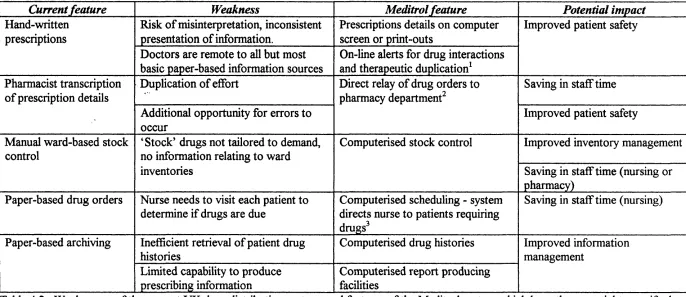
Table 4.2. Weaknesses of the current UK drug distribution systems and features of the Meditrol system which have the potential to
rectify them 91
Table 4.3 HTA framework - Littenberg (1992) 93
Table 4.4 HTA framework - Jennett (1983, 1993) 95
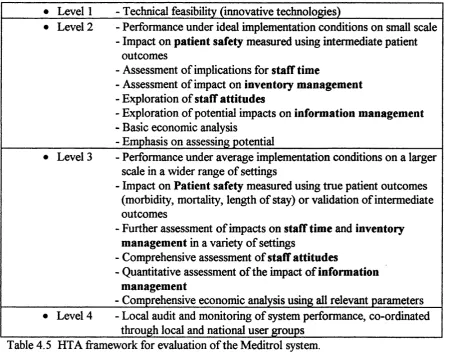
Table 4.5 HTA framework for the evaluation of the Meditrol system 97
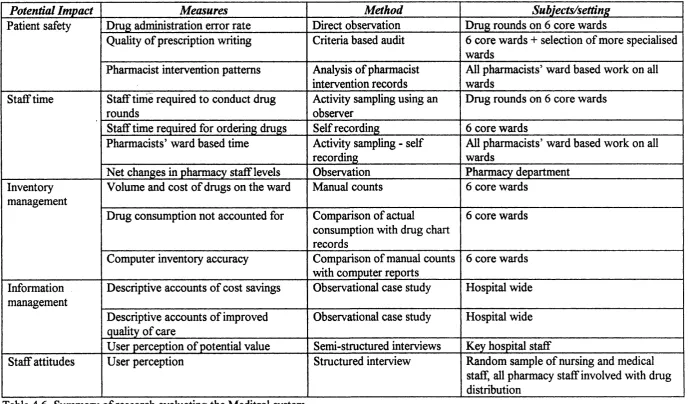
Table 4.6 Summary of research evaluating the Meditrol system 100
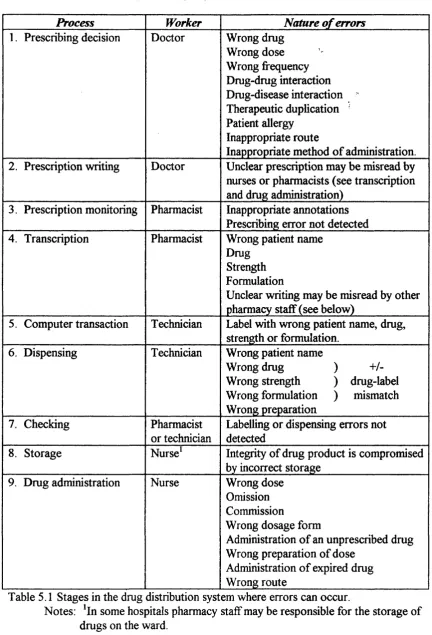
Table 5.1 Stages in the drug distribution system where errors can occur 103
Table 5.2 Drug administration error rate 112
Table 5.3 Types of drug administration error 113
Table 5.4 Timing of drug administration 113
Table 5.5 Intervention categories according to nature of the problem 122
Table 5.6 Intervention categories according to outcome 123
Table 5.7 Pharmacist intervention rates 125
Table 5.8 Nature of pharmacists’ clinical interventions 126
Table 5.10 Prime reason for pharmacists’ clinical interventions 127
Table 6.1 Aggregated activity categories used during the observation of
drug administration rounds 138
Table 6.2 Drug administration standard times (Minutes per patient
receiving drugs) 140
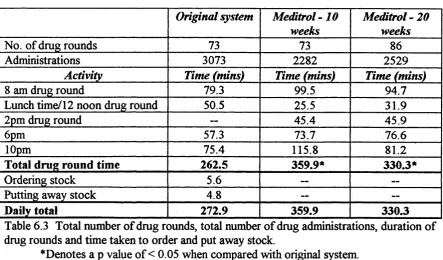
Table 6.3 Total number of drug rounds, total number of drug administrations, duration of drug rounds and time taken
to put away stock 141
Table 6.4 Ward pharmacy activity categories 148
Table 6.5 Ward pharmacy location categories 149
Table 6.6 Ward pharmacy activity analysis showing standard times for
activities and locations 150
Table 7.1 Total quantity and cost of drugs kept on the ward 162
Table 7.2 Distribution of volume and cost by inventory category 162
Table 7.3 Comparison of stock counts with inventory reports, showing net
inventory discrepancies 166
Table 7.4 Comparison of stock counts with inventory reports, showing
absolute inventory discrepancies 166
Table 7.5 Comparison of calculated consumption with drugs administered
by drug quantity 172
Table 7.6 Comparison of calculated consumption with drugs administered
by drug cost 172
Table 7.7 Comparison of calculated consumption with drugs administered
by Meditrol inventory category 173
Table 9.1 Grades of nurses interviewed 192
Table 9.2 Grades of doctors interviewed 197
Table 9.3 Grades of pharmacists interviewed 198
Table 9.4 Grades of technicians interviewed 202
Table 10.2 Possible influence of implementation factors on study findings 231
Table 10.3 ‘What if analysis of the cost of omitted doses due to extended
length of hospital stay 23 4
Table A1.1 Ward configuration at the study hospital 243
Table A2.1 Consultant episodes per annum at the study site 244
Table A3.1 Pharmacy department staffing levels before and after the
implementation of Meditrol 245
Table A5.1 Quality criteria for regular prescription entries 253
Table A5.2 Quality criteria for as required medication 254
Table A5.3 Quality criteria for once only and pre-anaesthetic medication 254
Table A5.4 Quality criteria for intravenous infusions 254
Table A5.5 Quality criteria for intermittent intravenous medication 254
Table A5.6 Origin of prescriptions by speciality 255
Table A5 .7 Criteria failures for regular prescription entries 256
Table A5.8 Criteria failures for when required medication orders 257
Table A5.9 Criteria failures for once only medication orders 258
Table A5.10 Criteria failures for intravenous fluid orders 260
Table A5.11. Criteria failures for fluid additive orders 261
List of figures
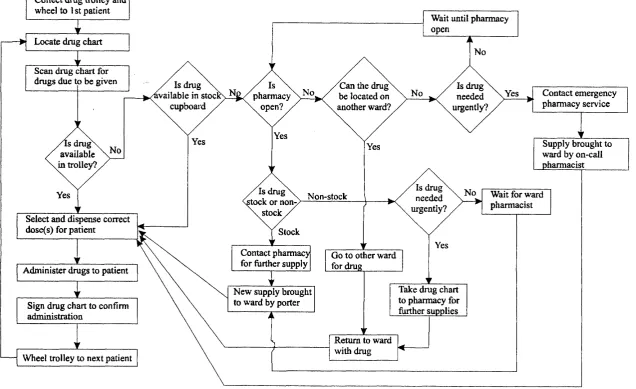
Figure 3.1 Flow chart representation of the original drug distribution system 65
Figure 3.2 Flow chart representation of the original drug administration
round 72
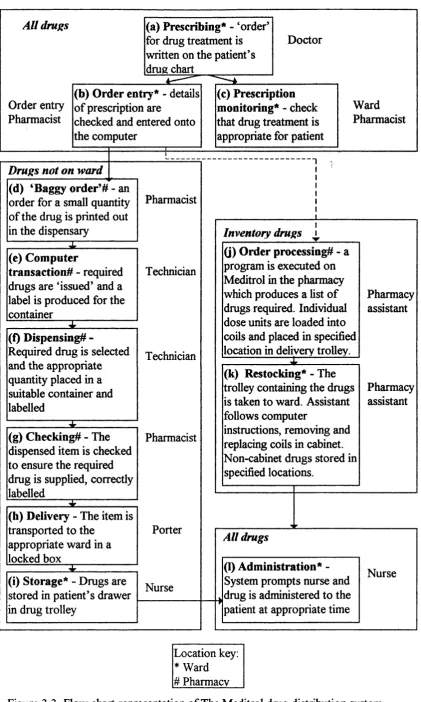
Figure 3.3 Flow chart representation of the Meditrol drug distribution
system 79
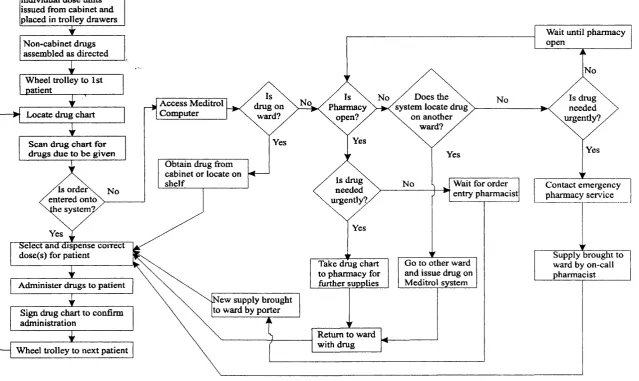
Figure 3.4 Flow chart representation of the Meditrol drug administration
round 86
Figure 7.1 Drug movements into and out of a hospital ward 168
Figure 10.1 Suggested process for the introduction of a new drug distribution 218 technology
Figure 10.2 Randomised controlled trial of the Meditrol system 222
List of plates
Plate 3.1 Meditrol cabinet, terminal and printer 58
Plate 3.2 The Meditrol cabinet with doors open showing coils loaded with
1 Background
The drug distribution system currently operating on most UK NHS hospital wards starts
with the doctor making a decision to treat a patient with drugs and writing a prescription
on the drug chart. The pharmacy department supplies some drugs according to the
prescription (though most are already kept on the ward as stock drugs), and the nurse
administers drugs to the patient, making the appropriate records on the drug chart.
Pharmacists scrutinise the drug chart in order to ensure that the patient is receiving
optimum treatment. The.patient’s response to treatment is monitored by medical,
pharmacy and nursing staff. After discharge the drug chart is archived in the patient’s
case notes. These processes are governed or influenced by local policies, professional
codes of conduct and acts of parliament.
Of the steps in the drug distribution process only those carried out within the pharmacy
department are normally supported by computer. These systems were originally
introduced to support purchasing, stock control and dispensing, the incentive then being
to improve operational aspects of the service and to generate management information;
the drive to computerise came mainly from within the profession. The information
generated by these systems is product-orientated with, at best, only a fraction of data
relating to individual patients; a factor not recognised as important at the time of their
design.
capable of achieving. Of the original six RMI pilot sites, two have now implemented
ward-based computerised prescribing systems as an element of a hospital information
support system (HISS), though incentives have shifted from that of obtaining costs of
individual patient drug therapy to that of operational support and the creation of
electronic patient records. However, for NHS trusts to be able to develop in hne with
market philosophy, the ability to cost all services to case level for the purposes of contract
calculation remains a desirable goal, if not a necessity for survival. The application of
communications and ordering systems with the capability to provide decision support
have the potential to improve both the efficiency and quality of the drug use process.
Orders for drugs can be relayed directly to the pharmacy department for processing
(eliminating transcription of information), patient drug histories can be retrieved much
faster than paper based records and the display of prescriptions in a standard, legible form
may improve patient safety as well as process efficiency.
With these advantages considered and with the pressures to operate efficient and effective
contracting systems, NHS trust hospitals may consider the procurement of ward based
computerised and automated systems. Investment in an information and clinical support
system carries both financial and clinical risks; the need to evaluate new health technology
has been emphasised by the Department of Health (Advisory Group on Health
Technology Assessment 1992).
This thesis explores the application of health technology assessment (HTA) techniques in
the evaluation of automated drug distribution systems and draws implications for policy
making. HTA principles involve the measurement or examination of a wide range of
of HTA has been used to develop a framework for the evaluation of an automated, ward-
based dispensing system. The experience of a real life evaluation can provide valuable
guidance for friture HTA in this area.
1.1 Aims of the study
This study was carried out to investigate the use of a health technology assessment model
in the evaluation of automated drug distribution systems. The aims of the study were:
1. To apply HTA philosophy to the production of a framework for the
assessment of an automated technology which supports the drug distribution
process.
2. To evaluate an automated drug distribution system using this framework.
3. To provide direction for the future development of drug distribution systems
2 Introduction
2.1 Drug distribution systems - a brief history
2.1.1 UK Hospitals
A drug distribution system should ensure that the right drug should be readily available
for administration to the correct patient according to the prescriber’s instructions and held
securely to prevent misuse. Accurate records should be compiled in order to create an
audit trail. For the purposes of this thesis, the components of a drug distribution system
are defined as:
1. The prescribing of drugs.
2. Supply of drugs to the ward by the pharmacy department.
3. The storage of drugs on the ward.
4. The administration of drugs to the patient.
5. Monitoring of the prescribing process and the patient’s response to drug
treatment.
Up to the late 1960s doctors prescribed onto order sheets. The details on this sheet were
then transcribed by nursing staff onto a ‘medicines list’ which acted as the document
against which drugs were administered. In 1958, as a result of the recognition that the
transcription stage was a major source of error, the Aitken report recommended that the
doctors prescription sheet should act as the guide to drug administration (Central Health
Services Council 1958). This advice was largely ignored for three reasons. Firstly, the
transcription of prescription details meant that the original prescription could be presented
to pharmacy as an order for drugs not available on the ward, whilst keeping the
page) was such that it was not considered suitable as a guide to drug administration.
Thirdly it is likely that many workers were ignorant of the true scale o f drug
administration errors and so the incentive to change was lacking.
In the late 1960s the results of research into drug administration error rates provided the
incentive to re-think drug control systems. Studies in London (Vere 1965) and Aberdeen
(Crooks et al 1965) showed that the drug administration error rate was unacceptably high
(15%). The old systems were perceived to be outdated for the following reasons:
1. The complexity of prescribing; the range and potency of drugs available was
increasing.
2. The transition to metric measurements was causing confusion.
Over the next few years and in response to these findings, groups fi'om The London
Hospital (Sykes and Oakes 1968, Lee et al 1971), Westminster Hospital (Baker 1967),
Aberdeen Royal Infirmary (Calder 1965, Crooks et al 1965, Calder and Barnett 1967),
the Royal Free Hospital (Walsh 1969) and other hospitals, developed new systems which
promoted safety, eflSciency and the integration of the pharmacist into the ward team.
The solution proposed by the Aberdeen group consisted of the following components:
1. A purpose designed prescription sheet served as a guide for the administration
of drugs (Calder 1965, Crooks e ta l 1965).
2. A separate drug administration record sheet (Calder 1965, Crooks et al 1965).
3. The pharmacist visited the ward on a daily basis to review prescription sheets
and was responsible for ordering and maintaining drug supplies on the ward (Anon
1967, Calder and Barnett 1967)
‘The London system’ was essentially the same except that:
1. The drug chart formed the common record of prescribing and administration
(Sykes and Oakes 1968).
2. The use of a stock/non-stock system^ where stock drugs were those which
were used frequently on the ward (or those which may be have been needed in an
emergency) and were suitable for storage in the ward environment (Lee ei al
1971). These were supplied in bulk containers (for example, pots of 50 tablets,
packs of 10 ampoules). Non-stock drugs were supplied on an individual patient
basis; a pharmacist needed to see the drug chart before the drugs were supplied
and the containers were labelled with the patient’s name.
Following the introduction of the revised system for drug distribution at The London
Hospital, the drug administration error rate was found to have been significantly reduced
fi-om 15.3 to 6.1% (Hill and Wigmore 1967).
In 1970, the Gillie Report, a health circular entitled ‘Measures for controlling drugs on
wards’, formally recommended the innovations described above (DHSS 1970a). In the
same year the Noel Hall report on the structure of the hospital pharmaceutical service
(DHSS 1970b) further emphasised the need for a patient orientated rather than the
traditional product orientated approach.
Further progress was made with drug distribution systems by the introduction of
pharmacy technician ‘top-up’ services which relieved nursing staff of the role of ordering
ward drug stocks (Hetherington 1972), This placed the responsibility of ordering stock
drugs with the pharmacy department; pharmacy technicians visit the ward at regular
intervals to assess stock levels and compile an order to be processed by the pharmacy
distribution section. Other hospitals adopted the card-based ‘Shotley Bridge’ ordering
system (Lidgate 1970) which still involved nurses ordering stock, though minimum and
maximum stock levels were allocated to each item. The nurse filled in a card (one for
each stock item) which was then sent to the pharmacy for processing, often accompanied
by an empty container. Neither system was widely adopted until the publication o f an
economic evaluation of technician top-up which demonstrated financial savings due to
improved stock control (Collins et al 1985). Technician top-up is now the most
commonly used system for ordering stock drugs. Few developments have been made
with the basic concepts o f drug distribution systems since these reports were produced,
with most hospitals now adopting the London or less commonly the Aberdeen system.
Technician top-up is operated in most acute hospitals, though the Shotley Bridge system
is still used, particularly for long-stay care. Exceptions are the adoption of the American
unit dose system in at least two hospitals (Ellis et al 1973, Anon 1989, Clark et al 1990)
and more recently two hospitals report pharmacy services which have been de-centralised
as part of the hospital’s shift to a patient-focused approach to health-care (Bunn et al
1994, Blain et al 1994). Most systems are now supported by computerisation and/or data
capture technology and unit dose systems by automated unit dose packaging and labelling
Development of clinical pharmacy services in UK hospitals
The modem practice of clinical pharmacy is essentially a process of individualising drug
treatment, balancing the efficacy of the dmg against its safety and cost, taking into
account the patient’s clinical status and respecting the patient’s choice. Probably the most
significant step in the development of clinical pharmacy was the integration of the
pharmacist into the ward environment (originally to prevent the need for the drug chart to
leave the ward). Soon after this strategy was introduced, the benefits of the ward
pharmacist’s contribution to patient care were reported (Calder 1967, Hetherington,
1969, Anon 1972) and formally recognised in the Gillie Report (DHSS 1970a) and the
Noel Hall Report (DHSS 1970b).
Throughout the 70’s and 80’s pharmacists developed their skills further, clinical pharmacy
specialists emerged and descriptions of prescription monitoring by pioneers in clinical
pharmacy demonstrated the complex and professional nature of the process o f tailoring
drug treatment to the individual patient (Cairns and Prior 1983, Wilson 1983). The
schools of pharmacy responded with changes in the undergraduate curriculum and
introduced post graduate MSc courses and, later, diploma courses in clinical pharmacy.
In 1986 a report of inquiry into pharmacy commissioned by the Nuffield Foundation
(1986) recommended that clinical pharmacy should be practiced in all hospital. Two
years later the Department of Health (1988) responded with firm direction for clinical
pharmacy services in the health circular entitled ‘The way forward for hospital pharmacy’
(HC(88)54). This document described clinical pharmacy as ‘the developing role of
pharmacists in which pharmaceutical skills are systematically applied to medicine usage
formalised the role of the pharmacist in processes such as drug use evaluation (GrifiQths
1989) and formulary management (Collier and Foster 1985, Baker at al 1988).
The recent health reforms (Secretaries of State 1989) introduced the directorate system
into hospitals and promoted medical audit. Clinical pharmacy services are in the process
of responding to these changes by developing methods of supporting clinical directorates
(Barber 1993) and contributing to the medical audit process (Barber et al 1992).
The main aim of clinical pharmacy is to promote good prescribing. The aims of good
prescribing have been described as “appropriate, safe, effective and economic” (Parish
1973). These were incorporated into the original definition of clinical pharmacy, though
(Barber 1991) argued that the patient’s quality of life should be a prime consideration
and has more recently refined this aim to that of respecting the patient’s choice (Barber
1995).
In summary, the introduction of the pharmacist onto the ward served as a foundation for
the development of clinical pharmacy as a discipline. The mission of the clinical
pharmacist has been refined to consider the cost effectiveness of prescribing as well as
safety and efficacy. Further changes in philosophy have gradually occurred to adopt a
much more global approach. The health reforms have lead to new roles in medical audit
and directorate liaison.
A critical appraisal of the UK drug distribution system
indicating the performance of this system. Furthermore, there are several inefiBciencies
and inadequacies in the processes that constitute this system. These are:
1. Hand-written prescriptions - Written prescriptions can be illegible or ambiguous
(Jenkins et al 1993) which may contribute to the occurrence of errors. Doctors are
remote to all but the most basic paper-based drug information sources (usually the British
National Formulary and possibly a local formulary).
2. The pharmacist's transcription of doctors’ orders - This process is time consuming
(Jenkins et al 1992) and could also contribute to errors. Furthermore, there is a time lag
between when the prescription is written and when the pharmacist transcribes the order,
often producing an unnecessary delay before the drug reaches the ward. Electronic order
transfer has the potential to alleviate these problems and smooth out the flow of work into
the pharmacy department.
3. Manual ward-based stock control - Pharmacy computer systems in most UK
hospitals facilitate stock control within the pharmacy department only; manual methods
are used on the wards. Computerisation of this process has the potential to streamline the
supply of drugs fi’om pharmacy to the wards and reduce the quantities of drugs held on
wards by exploiting ‘just in time’ delivery methods.
4. Paper-based drug orders - Nurses are required to visit every patient while carrying
out the drug round in order to establish if the patient needs any drugs prescribed for that
time. Computerised scheduling methods could improve the efficiency of this process.
Drug administration is one of the only nursing processes performed as a ‘round’, that is
one nurse performing a task for all patients on the ward; other activities are carried out
according to the primary nursing model, where all the care for any patient is provided by a
5. Paper-based archiving - Health services in general have been extremely slow in
adopting computerisation. The computerised recording of drug prescribing and
administration could have a profound impact on resource management, clinical audit,
contract calculation, the provision of seamless pharmaceutical care and the efficiency of
record retrieval.
The above list represents the main weaknesses in the current drug distribution systems in
the UK. Research assessing the performance of the system may reveal further
inadequacies or provide insight into the extent of these problems. This would provide
direction for the development of technologies aimed at improving system performance
and efficiency. Nevertheless, these observations still provide useful direction.
2.1.2 North American hospitals
At the same time as concerns were being expressed over the safety of drug administration
in the UK, the issue was also raised on the other side of the Atlantic (Barker and
McConnell 1962). The then current system of drug distribution consisted of the hospital
pharmacy supplying all drugs to wards as floor stock and required nursing staff to order
drugs, organise their storage and prepare them for administration to the patient. Nurses
were found to be spending 45% of their time on medication activities (Blumberg 1961) in
a time when there was a shortage of nurses. The issue of best utilising professional
expertise (i.e. the optimal application of the pharmacist’s superior knowledge of drug
products) was also raised (Jeffiey 1967). American pharmacists also identified
unacceptable drug losses in existing systems (Kurtz and Smith 1961) and problems with
The American solution was more idealistic than that of the UK and focused on the role of
the pharmacy department. The dedicated prescription and administration chart(s), the
focus of the UK solution, was not viewed as a viable option (Philips Roxane Laboratories
Inc. 1978). Instead, developmental work focused on the philosophy of delivering exactly
what was needed for an individual patient just before the time of administration and so
almost eliminated the need for wards to keep drugs as floor stock (Schwartau and
Sturdavant 1961, Barker and Heller 1963a). This was achieved by the pharmacy
supplying the exact number of doses needed by a patient at any one time in a single
envelope for the nurse to open and then administer all of the contents. This concept of
pharmacy based unit dose production was essentially taking away the nursing
responsibility of preparing doses for administration to the patient. The resultant systems
often required the use of multiple-carbon copy forms of the doctors orders (typically
records for nursing, pharmacy and the accounts department) and some transcription of
prescription details.
The task of assembling and delivering all doses to the ward just before administration to
the patient required a 24 hour pharmacy service, a rapid response to new prescriptions
and a resultant increase in staffing levels. A comprehensive study of the cost of drug
distribution systems conducted by the US General Accounting Office (1972) concluded
that although 50% more pharmacists and 100% more technicians were required for a 259
bed reference hospital, savings on nursing time would offset this and bring about a net
saving over a 25 year life-cycle. For hospitals handling small numbers of prescriptions a
net saving was not predicted, however this study did not consider savings from reduced
drug ‘losses’, more accurate billing or the intangible financial benefit of reducing the
In the 1960’s several studies demonstrated a reduction in error rates following the
introduction of unit dose systems (Barker and Heller 1963a-b, 1964a-b, Heller et al 1964,
Barker et al 1964, Black and Tester 1969, Barker 1969a-b). However, a study carried
out in the mid 80’s with the aim of improving an established unit dose system, detected an
error rate comparable with that o f the traditional American systems (Barker et al 1984a).
This deficit in reliability was attributed to the operating of a system which deviated fi’om
the original unit dose philosophy; not all doses were supplied as unit dose, some requiring
further manipulation by the nurse, others supplied as bulk containers. Also the supply of
drugs to the ward was occurring only twice daily which meant that doses for several
administration times were present in the unit dose cart and problems occurred when
patients drug orders were amended. Furthermore response times were slow mainly due to
inefficient drug delivery. On the basis of this study a new system was designed (Barker et
al 1984b), however due to the incomplete implementation of this system, particularly with
respect to computerisation and dose preparation, the drug administration error rate
remained unchanged when the new system was evaluated (Barker et al 1984c).
The lesson fi’om the studies described above is that, for unit dose systems to be effective,
the original concept of unit dose must be adhered to rigidly; deviation fi*om the ideal of
supplying the precise doses in a form ready for administration, just prior to the time they
are required may lead to a significant deficit in performance. Efficient communication
systems, accurate and efficient record compilation and data sorting, dedication to true unit
dose packaging and efficient delivery systems are essential, yet inevitably labour intensive.
For these reasons automation is a common feature and is being widely adopted (Somani
data capture tools and computerised systems for checking the drug administration
process.
2.2 Computerisation and automation in the drug distribution process
2.2.1 Computer applications in hospital drug distribution systems in the UK
In 1895, in response to the introduction of eyesight testing machines in railway stations,
the British Medical Journal predicted (most likely tongue-in-cheek) that the pharmacist’s
shop would ultimately be crammed full of slot machines which would diagnose complaints
and produce typed prescriptions which would be dispensed by the pharmacist’s assistant
while ‘the chemist, free from all responsibility, will take the fee and flourish
accordingly.’(Anon. 1895). While to date automation has not produced a major threat to
the roles of most health care professionals, pharmacists have readily utilised and
developed the application of computers; a VDU and keyboard are a familiar sight in both
hospital and community pharmacies.
Computer systems were originally introduced into hospital pharmacy in the UK to
facilitate purchasing and stock control (Stainton et al 1983, Downie 1984); manual
systems were extremely labour intensive and unreliable. An additional advantage of these
computerised system was the ability to generate information which, although limited to
the volume and cost of issues from the pharmacy department (usually to ward or
consultant cost centres) was found to offer great advantages over manual system for drug
budget management (Stainton et al 1983, Downie 1984, Longshaw and Berg 1986; Lewis
and Rushforth 1989). Information produced could be used to monitor expenditure and
Most hospitals in the UK Operate a stock/non-stock system for drugs; that is the majority
of drugs (about 80% by cost) are supplied to and kept on the ward in bulk containers
(typically a pot of 50 or 100 tablets or a box of 10 injections), with the remainder (usually
less frequently used drugs) being supplied for individual patients in smaller quantities
(typically one week’s supply). The pharmacy computer facilitates the processing and
documentation of stock orders (most commonly compiled by the ‘top-up technician’) with
remaining non-stock issues (about 20% by cost) being issued to individual patients. As a
result, a major limitation of these systems is that no or very little patient specific
information is held on computer. A solution adopted by some centres is to use computers
to create patient medication profiles (Allan 1985, Batson 1985, Bunn et al 1990). Such
profiles act as an aid to prescribing review and dispensing and may also be used for
costing purposes (Holmes and Taylor 1988). In a long-stay environment this strategy
may be feasible, however in the acute setting the time commitment required to maintain
such records would be considerable.
Capture of prescription data has been largely by keyboard entry for non-stock drugs,
dispensary staff using either the drug chart or a ward pharmacist’s transcription of
prescription details as the source of information. Re-ordering of stock items directly into
a portable computer using bar-code scanning tools has proved successfiil (Edwards and
Ehrenzweig 1987) and is now not uncommon in UK hospitals. Light sensitive and tpuch
sensitive screens have been used in the US (Schroeder and Pierpaoli, 1986, Larson and
Blake 1988) and are currently being used in UK computerised prescribing systems. These
may offer advantages for persons who are not keyboard literate, though the speed of data
Other methods for collection of data in the health care environment have been described,
including optical character recognition, optical mark reading and optical image scanning
(Emberton and Meredith 1993). Optical character recognition is a process by which text
can be scanned into an ASCII file, however prescriptions are seldom, if ever, in printed
form and the technique is error prone; should systems be developed which allow accurate
scanning of hand writing they may be of use for pharmacy departments • Related
technology is available in the form of write-on screens (such as the Apple Newton hand
held computer), however accuracy in character recognition has not yet been optimised
and keyboard entry by the experienced user may be quicker. Optical mark reading
technology has been widely used for automated marking of multiple choice examinations
and analysis of questionnaires and involves computer recognition of areas marked in
pencil in a specified area. Optical image scanning is an updated version o f optical mark
reading which utilises the increased processing speed of modem computers, allowing
greater flexibility and data processing ability. These systems are suitable where there are
limited permutations of the data e.g. anaesthetic data collection, some forms of audit data
and patient satisfaction questionnaires. With a typical hospital pharmacy holding around
3,000 different drug lines, some with a number of different possible dosing regimens, their
potential for use in this field is limited.
A major incentive for the further development of pharmacy computer systems was
provided by the Resource Management Initiative (RMI), a DHSS pilot project carried out
at six hospitals (DHSS 1986). The aim of the RMI was;
‘to enable the National Health Service to give a better service to its patients by
helping clinicians and other managers to make better informed judgements about
In brieÇ the implementation of resource management (RM) necessitated major cultural
and organisational changes (Buxton et al 1991), most significantly the active involvement
o f service providers (doctors, nurses and professions allied to medicine) in the
management of resources and the arrangement of these providers into sub-units (the now
familiar clinical directorate structure). In the RM process clinical staff make decisions
about the deployment of resources and take responsibility for the consequences.
In order that services can be planned and the use of resources monitored, accurate
information relating expenditure to activity is an essential requirement o f RM. This was
achieved by the creation of RM databases (also known as case-mix databases) which were
designed to provide cost per case; operational systems for wards and departments fed
data into the RM database. Of the six pilot sites, four were developing computerised
prescribing systems, to collect patient specific drug data and hence costs (Anon 1990).
However only two of the sites, Arrowe Park Hospital and the Royal Hampshire County
Hospital have actually implemented computerised prescribing (Bould 1993, Farrar 1995).
Both prescribing systems are part of a larger hospital information support system (HISS),
consisting of a number of interdependent modules for departments (e.g. pathology,
radiology) or for administrative functions (e.g. admissions). The system provides
operational support by allowing electronic ordering of services and viewing of patient
records and clinical information. Both HISS systems are supplied by the same US
vendor (Technicon Data Systems), and both have been modified to suit the purposes of
each site.
the RM process was undertaken by the Health Economics Research Group, Brunei
University, though the health reforms initiated the dissemination of RM throughout the
NHS before the end of the evaluation (Packwood et al 1991). Furthermore, the
implementation of RM at the pilot sites was much slower than had been anticipated and
the evaluators concluded that it was not possible to provide a definitive assessment of the
process within the time available (Buxton et a l\9 9 \).
Evaluation of the operational benefits of computer systems was not an aim of the RMI
and as a consequence there was little published relating to these aspects. With specific
reference to the computerised prescribing modules, only a small amount of research has
been published by pharmacists at Arrowe Park (Hughes and Farrar 1993, Anon 1994).
However, the NHS Information Management and Technology Strategy (NHS ME 1992)
incorporated plans to create an NHS wide, person-based information system. The
continuing strategy to create the electronic patient record has included the procurement of
a national telecommunications network and the commissioning of several ‘demonstrator
projects’. In the hospital environment these projects included the further development of
HISS systems (NHS ME 1992) and the design of integrated clinical workstations (NHS
ME 1994). In the private sector, the creation of an electronic patient record has been
achieved at the Health Care International Hospital, a private hospital near Glasgow (Anon
1995), where a completely paper-less HISS has been implemented, though to date only a
small fi-action of the hospital’s beds have been occupied at any one time.
Hospital pharmacy managers are showing a great deal of interest in computerised
prescribing systems, though the emphasis is on operational support rather than costing
economic functioning of health care services, should case specific contracting, rather than
block contracting, become the standard method, NHS managers will still require detailed
costing data. But, most patients’ drug costs per admission are very low, suggesting that
indiscriminate collection of this data for financial purposes may not be the most
appropriate way forward (Jenkins et al 1995); selective data collection or screening for
high cost patients may be better.
If computerised prescribing systems are to be adopted throughout the UK, whether stand
alone or as part of a HISS, purchasers (pharmacy managers, hospital managers or IT
managers) will need evidence to support the choice of system, particularly in view of their
expense and potential impact on the critical process of drug distribution.
2.2.2 Computer applications in drug distribution systems in the USA
The adoption o f the unit dose system in many hospitals in the US offered a large incentive
to computerise the process. Manual systems which needed to create pharmacy, nursing
and accounting records were very inefficient, often requiring several transcription stages.
Computer systems were introduced to create patient medication profiles to support the
unit dose process and reduce or eliminate the need for transcription steps. However, even
with computerised support, the unit dose system remains complex, labour intensive and
error prone. With economic constraints being applied more firmly to US health-care,
measures are being taken to fiirther computerise or automate the drug distribution
process. A recent review of automated ‘medication management systems’ (Perini and
Vermeulen 1994) categorised available devices as: medication distribution devices based
bedside). A further recent development is the application of decision support software to
the order entry component of these systems. These applications are discussed further
below.
Patient medication profiles
Computerisation was first considered in the early 60’s; Barker et al (1963a) used an IBM
punch card system for processing patient prescription data allowing data sorting to
support the unit dose process. By 1987 a survey of hospital pharmacy services revealed
that nearly three quarters of American acute hospitals operated the unit dose system, most
of them supported by computerised patient medication profiles. Entry of data onto the
computer system is normally by pharmacist, though some systems allow direct entry of
data on the wards by doctors, nurses or clerks (Schroeder and Pierpaoli 1986, Larson and
Blake 1988, Kawahara and Jordan 1989). Verification of the order by a pharmacist
normally occurs before the order becomes active.
Medication distribution devices based on the ward
Medication distribution devices based on the ward are designed to either replace the
system of delivering unit doses to the ward in carts (Access and Meditrol) or to allow
easier, more controlled access to floor stock and/or controlled drugs (Lionville CD
module, Argus, Pyxis Medstation and Medstation Rx, Sure-Med and SelecTrac-Rx).
These devices allow rapid access to drugs, either as unit dose or as bulk packs. A
problem with traditional unit dose systems has been the capture of drug administration
data (and hence costs for billing purposes) of controlled drugs and the relatively small
quantities of floor stock; automated systems create records of drugs obtained and the
procedures required by nurses are eliminated, resulting in a substantial time saving (there
is a wider range of controlled drugs in the USA than in the UK), though an additional
workload is incurred by the pharmacy department in stocking the devices (especially for
those which dispense individual doses) and reconciling stocks against dispensing records.
A further advantage is the secure nature of the automated cabinet (though less so for
systems which hold bulk items); in the USA the price paid by patients for prescription
drugs is often much higher than in the UK and so there is a greater incentive for pilferage.
Pharmacy based médication-distribution systems
Currently three pharmacy based médication-distribution systems are available (Automated
Pharmacy Station, Baxter ATC 212 and Medispense). These systems are designed to
improve accuracy and efficiency of unit dose systems. The Automated Pharmacy Station
is a robotic arm which originates from technology used in the knitwear industry. It relies
on unit doses being packed into bar-coded sachets and maintains these within the system.
It facilitates cart-filling, dose verification, automated restocking of returned doses,
removal of outdated unit doses and stock control. The Baxter ATC 212 is a unit dose
packing system which packs on demand for specific patients for direct transfer into unit
dose carts.
Point of care information systems
Point of care information systems allow entry and retrieval of patient specific data at the
patient’s bedside. The MedTake clinical information system consists of terminals at each
patient’s bedside, allowing verification and documentation of drug administration as well
devices which enable wireless retrieval and entry of data at the patients bedside. The
Automated Medication Administration Tracking System is dedicated to drug
administration, is wireless and utilises a bar-code scanning system for verification and
documentation of drug administration. MedLynk is a similar system, again wireless and
bar-code driven which uses specially designed medication carts. Bar-code verification of
drug administration (by checking the patient identification and the dose administered
against the patient's medication profile) could play a significant role in reducing drug
administration errors, however this has yet to be demonstrated.
Decision support systems
A future trend towards using computerised decision support for prescribing using expert
systems is likely (Morrell 1994) and vendors currently offer databases to screen
prescription entries for drug interactions, contra-indications and therapeutic duplication.
Several benefits of computerised decision support or patient monitoring have been
demonstrated, including improved antibiotic selection (Kawahara and Jordan 1989) and a
significant reduction in the occurrence of drug-induced renal damage (Rind et al 1994).
2.3 An overview of health technology assessment
In the previous sections the development of drug distribution systems on both sides of the
Atlantic and the role of automation in this process have been described. Having provided
a background to the technologies being considered by this thesis, this section now
considers the influence of technology on the delivery of health care, the philosophy of
health technology assessment as described in the literature and the process adopted by the
2.3.1 The influence of technology on the deliveiy of health care
It is widely accepted that technology has had a profound impact on the effectiveness of
healthcare in terms of intervention success rates, patient survival, quality of life and other
clinical outcomes. These outcomes have mostly been beneficial, however some
technologies have been associated with unacceptable morbidity or mortality, resulting in
the withdrawal of the technology. It is also accepted that some form of financial outlay is
usually associated with the implementation and maintenance of a new technology. This
cost is balanced against the impact of the intervention in monetary or other terms.
However, the wider impacts o f technology on the processes by which healthcare is
provided, the structure of the organisations providing this care and on society in general
are less often considered.
In his book entitled ‘Medicine and the reign of technology’. Reiser (1978) described the
influence of technology throughout the history of medicine. Reiser’s findings are
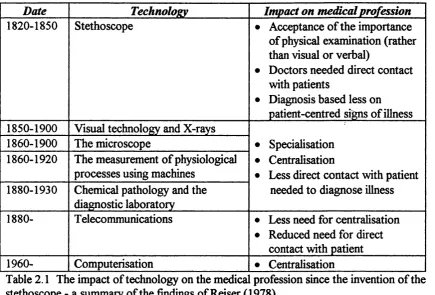
summarised in table 2,1. In the seventeenth century, the examination of the patient was
restricted to a verbal and visual techniques and as such it was not always necessary for the
doctor to be present to make a diagnosis; the patient’s narrative could be relayed to the
physician by messenger or letter. In the eighteenth century however, the technique of
physical examination began to emerge in the form of percussion and palpitation of the
body for evidence of disease, requiring that the physician be in direct contact with the
patient in order to make a diagnosis. At the same time the post-mortem dissection
became an important means o f further exploring the physical changes associated with
Date Technology Impact on medical pro fession 1820-1850 Stethoscope • Acceptance of the importance
of physical examination (rather than visual or verbal)
• Doctors needed direct contact with patients
• Diagnosis based less on patient-centred signs of illness 1850-1900 Visual technology and X-rays
• Specialisation • Centralisation
• Less direct contact with patient needed to diagnose illness 1860-1900 The microscope
1860-1920 The measurement of physiological processes using machines
1880-1930 Chemical pathology and the diagnostic laboratory
1880- T elecommunications • Less need for centralisation • Reduced need for direct
contact with patient 1960- Computerisation • Centralisation
Table 2.1 The impact of technology on the medica profession since the invention of the stethoscope - a summary of the findings of Reiser (1978)
In the first half of the nineteenth century the introduction of the stethoscope allowed the
physician to use his sense of hearing to examine the patient. This compounded the need
for the doctor to have direct physical contact with the patient. Significantly, for some
time after the introduction of the stethoscope, now a ‘tool of the trade’, the opinion of the
medical profession on its usefulness was divided. The introduction of tools which allowed
visual examination o f internal anatomy, such as the ophthalmoscope, further expanded the
doctor’s use of sight in the diagnostic process. However, with the advent of x-rays,
machines which measure physiological processes (for example the electrocardiogram) and
the medical laboratory, the diagnosis itself was increasingly being made remote to the
patient. These techniques produced permanent, objective records (as opposed to one
person’s subjective account) which could demonstrate trends in the patient’s condition
to specialist equipment meant that the treatment of patients became increasingly
centralised. As a result of rapidly increasing knowledge within the medical profession,
specialisation was occurring; the convenience of being able to consult with a range of
specialists under one roof exacerbated the trend towards centralised health care.
In the 1880’s, the use of the telephone meant that doctors were more accessible to
patients than ever before. The convenience of the telephone meant that doctors could
provide advice to patients, could make a diagnosis and could send prescriptions by
telegram. Furthermore the ability to consult with specialists in other hospitals diminished
the need for the centralisation of health care. More recently the use of
telecommunications has allowed the transmission of video pictures and other information,
such as ECG traces and digitalised x-rays, to medical specialists remote to the patient so
that they can contribute to the management of the patient.
Reiser predicted that computerisation would lead to a further centralisation because
doctors would need to be in close proximity to the machines that would allow the
processing of vast amounts of information. This may have been true in some cases in the
70’s and 80’s, though diSusion o f computer technology in health care has been fidrly slow
and the use of technology which enables the networking o f computer systems is now
established; the tendency to centralise is probably less significant than Reiser predicted.
Reiser’s account demonstrates the impact that technology has had on the processes and
structure of health care and the doctor-patient relationship. The technologies he
computerisation. The eflfect of basic technologies on fundamental issues emphasises the
importance of a thorough assessment of the wider impacts of the introduction of new
technologies, whether they are aimed at specific treatment goals or are more generic in
nature.
2.3.2 The origins of health technology assessment
Health technology assessment (HTA) has its origins with technology assessment (TA), a
process which has been practised in various forms since the 1930’s (Morgall 1991). Early
TA focused on industrial policy; was ad-hoc and confined to safety, efficacy and cost-
benefit; and was isolated either in industry as option appraisal exercises or in special
interest and pressure groups. In the late 60’s and early 70’s TA became broader based
and a matter of public policy and interest. This was largely a response to technological
and environmental disasters and the resultaiit public protest which occurred. In the 70’s
the modem concept o f TA was conceived with the formation o f the US Office of
Technology Assessment (OTA), resulting mainly fi*om the campaigning of Congressman
Emilio Daddario, who had sensed a growing public mistmst in science and perceived a
need to tackle urgent public health and welfare problems. In particular, Daddario
emphasised the need to consider social, economic and legal considerations of technology
as well as purely technical merits (Goodman 1992). He further emphasised that TA was a
class of policy studies and that emphasis should be placed on unintended, indirect or
delayed consequences. These features are still key to the process of TA (and HT A)
2.3.3 The HTA process
Definitions
Various definitions o f ‘health technology’ and ‘health technology assessment’ have been
stated and a number of interpretations and emphases are evident in the literature.
Goodman (1992) expressed concern over the equivocal nature of HTA, both in terms of
definitions and its relationship to other processes such as quality assurance, health services
research, effectiveness research and medical informatics. A detailed debate on the
subtleties of the definition and process of HTA is beyond the scope of this thesis. One
interpretation of the HTA process is provided, with particular influence taken fi*om the
current NHS strategy.
Health technology was described by the Advisory Group on Health Technology
Assessment (1992) as:
The variety of methods used by health professionals to promote health, to prevent and treat disease, and to foster improved rehabilitation and long-term care.’
The US OTA describes health technology as:
The drugs, devices and medical and surgical procedures, used in medical care, and the organisational and supportive systems within which such care is provided’ (US Congress Office of Technology Assessment 1982).
The broad nature of these definitions reflects the wide variety of health technologies and
also allows for a flexible interpretation. Emphasis is placed on the inclusion of ‘low-tech’
products such as syringes and dressings as well as ‘high-tech’ products such as imaging
devices or lasers. The definitions also include health policies and the time and skills of
health professionals. Littenberg (1992) stated that hospitals and the doctor-patient
definitions contrast with a popular perception (by many health workers as well as the
general public) that ‘health technology’ refers to the hard-ware used in health care.
An advisory panel to the Department of Health Central Research and Development
Committee (Advisory Group on Health Technology Assessment 1992) stated that;
‘Rigorous assessment of new technologies is essential to evaluate their effectiveness and safety, their cost-effectiveness, and their social, ethical and organisational impacts’.
The US Institute of Medicine (1985) defines HTA as:
‘any process examining and reporting properties of a medical technology used in health care, such as safety, efficacy, feasibility, and indications for use, cost, cost- effectiveness, as well as social, economic, and ethical consequences, whether intended or unintended.’
The OTA defines HTA as:
‘a structured analysis of health care technology or related techniques, or
technology related issues, that is performed for the purpose o f providing input to a policy related decision’ (Irving 1995).
These definitions imply that a range of outcomes should be used in HTA, which may be
used to assess clinical, economic, social, legal and ethical impact, depending on the
technology. The philosophy is that the whole is greater than the sum of the parts. The
measurement of a range of outcomes also implies a multidisciplinary approach to HTA.
This does not necessarily mean that every assessment must be an examination of all
outcomes possible; early assessments may provide information on the potential of a
technology and offer guidance to the future development of the product and the methods
used to evaluate it (Sculpher et al 1995). In this way, the HTA process can be regarded
as iterative, each step providing more information. It should also be stressed that HTA is
The emphasis on the early work of the US OTA was to formulate policies to protect
society from dangerous technologies. This still remains true for HTA, particularly as the
introduction of many technologies remains outside of the control of any formal regulatory
systems. The introduction of a new drug into the UK market requires years of carefully
documented research and development and detailed submissions to the Medicines Control
Agency. In contrast, there is no comprehensive regulation of medical devices (except a
system for alerting health workers to dangerous or faulty technology), surgical techniques
or computerised clinical support systems. For example, laparoscopic surgical techniques
have been widely practised in the UK since the start of the decade despite there being
little evidence to demonstrate safety or cost effectiveness. Assessment of this type of
surgery has now been prioritised by the NHS (Spiby 1994).
Assessment of performance
The traditional assessment of health care includes measurement of both safety and
performance. A range of qualitative and quantitative methods have been used to either
measure these factors or obtain relevant opinion. These include randomised controlled
trials (RCTs), performance analysis, case series, case studies, meta-analysis, consensus
development conferences and opinion surveys (Hendee 1991). The RCT for assessing
health technologies is considered to be the gold standard by many workers (for example,
Laupacis et al 1992). While RCTs provide information concerning the potential for new
technologies, they are limited in that they are usually conducted under ideal conditions
(and so provide a measure of efficacy); performance under normal conditions
(effectiveness) may be an equally usefiil measure to decision makers (Goodman 1992,
al 1986). The medical audit processes should provide the final practice-based
measurements of effectiveness. Following widespread difiusion of a technology,
epidemiological methods may provide information concerning the effectiveness of the
technology on a macro level when set against a baseline, pre-intervention measurement
(Tugwell et al 1986). Such techniques are also useful for prioritising the development
and assessment of new technologies, based on potential for reducing the incidence of
treatable diseases or events.
Outcomes used to measure performance include survival rates, quality of life measures
and other, intermediate or proxy outcomes such as reduction in blood pressure or tumour
shrinkage. While the latter parameters are easier to measure in the short-term, they offer
less meaning than true outcomes. Nevertheless intermediate outcomes have been deemed
useful in early HTA research to assess the potential of a technology (Goodman 1992,
Littenberg 1992, Sculpher et al 1995) and can eliminate the need for studies requiring
patient follow-up over long periods. Moreover intermediate outcomes such as reduction
in blood pressure have been validated by studies which confirm associations with reduced
morbidity and mortality. This approach, however carries the risk that other effects such
as adverse drug reactions are not detected.
Economic factors
A feature of eveiy health care system in the world is the availability of limited resources
with which to satisfy an unlimited demand. It is generally accepted that even if all harmful
health technologies or those with no benefit were eliminated, there would still be an
excess demand for resources (Buxton 1988). This fact makes rationing of health care
(Buxton 1993, Sheldon and Maynard 1993), for example waiting lists have been a
consequence o f this. With the acceptance that some form of rationing is inevitable, it is
desirable to prioritise the funding of (safe and effective) health technologies by objective
means. Chris Ham (1993) emphasised the diflSculty in prioritising different types of health
care by describing the process as being like ‘comparing apples, oranges and kiwi fruit’. A
measure of the value for money provided by technologies may provide some direction.
Economic methods of assessing value for money are well established (Adang et al 1995,
Drummond et al 1987) and include cost-benefit analysis (CBA, where costs and benefits
are expressed in monetary terms), cost-effectiveness analysis (CEA, where treatments can
be compared in terms of cost per unit of outcome) and cost-utility analysis (CUA, where,
for example, treatments can be compared in terms of cost per quality-adjusted life year
gained). CBA is useful for comparing technologies which have different impacts, though
does rely on the ability to place a financial value on costs and outcomes, which is not
always possible; willingness to pay is a commonly used approach. CEA is suitable for
comparing technologies in the same clinical area, for example reduction in blood pressure
or, less specifically, life years gained. CUA is useful for assessing technologies which
have a multi-dimensional impact on both quality of life and survival.
W ider issues
Evaluation of efScacy, effectiveness and value for money may not provide a complete
assessment of the technology in question. Wider issues should also be taken into account.
The patient’s satisfaction with the health technology is increasingly being sought, for