Electronic Thesis and Dissertation Repository
7-30-2012 12:00 AM
Does a Group Lifestyle Behaviour Change Program (PREPARE)
Does a Group Lifestyle Behaviour Change Program (PREPARE)
Have an Impact on the Nutritional and Health Characteristics in
Have an Impact on the Nutritional and Health Characteristics in
Adults with Prediabetes?
Adults with Prediabetes?
Jennifer Broxterman
The University of Western Ontario Supervisor
Dr. Isabelle Giroux
The University of Western Ontario
Graduate Program in Foods and Nutrition
A thesis submitted in partial fulfillment of the requirements for the degree in Master of Science © Jennifer Broxterman 2012
Follow this and additional works at: https://ir.lib.uwo.ca/etd
Part of the Human and Clinical Nutrition Commons
Recommended Citation Recommended Citation
Broxterman, Jennifer, "Does a Group Lifestyle Behaviour Change Program (PREPARE) Have an Impact on the Nutritional and Health Characteristics in Adults with Prediabetes?" (2012). Electronic Thesis and Dissertation Repository. 653.
https://ir.lib.uwo.ca/etd/653
This Dissertation/Thesis is brought to you for free and open access by Scholarship@Western. It has been accepted for inclusion in Electronic Thesis and Dissertation Repository by an authorized administrator of
CHARACTERISTICS IN ADULTS WITH PREDIABETES?
Spine Title: Nutritional Impact of a Prediabetes Behaviour Change Program
Thesis Format: Monograph
by
Jennifer Broxterman
Graduate Program in
Foods and Nutrition
A thesis submitted in partial fulfillment of the requirements for the degree of Master of Science in Food and Nutrition
School of Graduate and Postdoctoral Studies Brescia University College
The University of Western Ontario London, Ontario, Canada
CERTIFICATE OF EXAMINATION
Supervisor
______________________________ Dr. Isabelle Giroux
Supervisory Committee
______________________________ Dr. Alicia Garcia
______________________________ Dr. Danielle Battram
Examiners
______________________________ Dr. Danielle Battram
______________________________ Dr. Peter Lemon
______________________________ Dr. Sharareh Hekmat
______________________________ Dr. June Matthews
The thesis by
Jennifer Nicole Broxterman
entitled:
Does a Group Lifestyle Behaviour Change Program (PREPARE)
have an Impact on the Nutritional and Health Characteristics in
Adults with Prediabetes?
is accepted in partial fulfillment of the requirements for the degree of Master of Science in Food and Nutrition
______________________ _______________________________
Date Chair of the Thesis Examination Board
Objective: Lifestyle interventions that target diet and physical activity have been shown
to reduce the development of Type 2 diabetes (T2DM) in individuals at risk; however,
accessible and effective community-based prevention programs remain lacking. The
purpose of this study was to assess the impact of PREPARE, a group lifestyle behaviour
change program in adults with prediabetes.
Methods: Adults diagnosed with prediabetes could self-select PREPARE (n=48,
intervention arm), consisting of six monthly group nutrition and physical activity
education sessions, or, a one-time group education session (n=15, controls), both aimed
to prevent Type 2 Diabetes Mellitus (T2DM). Primary outcome measures included
dietary, anthropometric, and hemodynamic parameters associated with T2DM. Program
impact was evaluated with a one-way ANOVA, while paired t-tests assessed
within-group pre-/post- changes.
Results: The PREPARE program did not have a significant impact on the dietary factors
examined; however, intervention participants did increase their intake of vegetables and
fruit (V&F) by +0.3 servings/day, achieving a mean daily intake of 6.3 V&F servings/day
post-program. Additionally, participants that attended ≥50% of the education sessions
(n=25) significantly reduced their sodium (p<0.004), saturated fat (p=0.01), weight
(p=0.01), waist circumference (p=0.01), and diastolic (p=0.03) and systolic (p=0.048)
blood pressure from baseline.
Conclusions: These preliminary results show potential for modifying key lifestyle
behaviours known to contribute to T2DM development.
Keywords: Type 2 diabetes mellitus, impaired fasting glucose, impaired glucose
tolerance, nutrition, diet, group education, prevention, weight loss, community-based
lifestyle program
I would like to thank Dr. Isabelle Giroux for her guidance and support as my
thesis supervisor. Her endless hours of hard work to create such an important research
initiative that benefits individuals in our community dealing with prediabetes truly speaks
to her selfless nature and passion for dietetic research. I would also like to express
gratitude to Dr. Alicia Garcia, Dr. Danielle Battram, and Dr. Paula Dworatzek for their
expertise, input, constructive feedback, and support along the way, and to Mr. Larry Stitt
for his statistical expertise and insight. I would also like to acknowledge and thank the
impressive Prediabetes Initiative and Partnership research team:
• Research investigators (Dr. Isabelle Giroux, Dr. Paula Dworatzek,
Dr. Danielle Battram)
• Graduate students (Lisa Cianfrini, Laura Francis, Anna Shier, Markie
Harbos)
• St. Joseph’s Health Care Diabetes Education Centre (Dr. Irene Hramiak,
Pam Colby, Janine Mathyssen)
• Research coordinator (Gillian Mandich)
• Senior volunteer coordinators (Deborah Sloan, Linnaea Mancini)
• Junior volunteer coordinators (Heidi Los, Bre Urquhart)
• Brescia work-study students (especially Megan Healey)
• Interdisciplinary student volunteer team
• Canadian Diabetes Association - Southwest Ontario Regional Leadership
Centre
• Canadian Centre for Activity and Aging - The University of Western
Ontario
• Lawson Foundation (our generous funding agency)
The co-operation and dedication of so many individuals and organizations working
together to benefit clients with prediabetes is truly amazing. Finally, thank you to my
family, friends, and most importantly, to Dave, for helping me learn to keep things in
balance. I couldn’t have done this without your love, patience, laughter, and support
along the way!
Certificate of Examination... ii
Abstract ... iii
Acknowledgements... iv
Table of Contents...v
List of Tables ... vii
List of Figures ... viii
List of Appendices ... ix
List of Abbreviations ...x
CHAPTER 1: INTRODUCTION ...1
CHAPTER 2: LITERATURE REVIEW ...3
2.1 Defining Prediabetes ...3
2.2 Prevalence and Incidence of Prediabetes and Diabetes ...3
2.3 Economic Burden of Prediabetes and Diabetes ...4
2.4 Health Consequences of Prediabetes and Diabetes...5
2.5 Risk Factors Contributing to the Development of Type 2 Diabetes Mellitus...6
2.5.1 Modifiable Risk Factors...7
2.5.1.1 Nutrition...7
2.5.1.2 Obesity ...11
2.5.1.3 Abdominal Obesity ...12
2.5.1.4 Hypertension ...14
2.6 Successful Lifestyle Interventions Aimed at the Prevention or Delay of T2DM ....14
2.6.1 Da Qing Diabetes Prevention Outcome Study...14
2.6.2 Finish Diabetes Prevention Study...15
2.6.3 Japan Lifestyle Intervention Trial...16
2.6.4 Diabetes Prevention Program ...17
2.7 Translation of Successful Diabetes Lifestyle Intervention Programs at the Community Level...17
2.7.1 GOAL Implementation Trial ...18
2.7.2 Weight Loss though Living Well (WILLOW) ...18
2.7.3 DEPLOY Pilot Study...19
2.8 Clinical Practice Guidelines for the Management of Prediabetes...20
2.9 Rationale for the Proposed Intervention...21
2.9.1 Objectives ...21
2.9.2 Hypotheses...22
CHAPTER 3: METHODS...24
3.1 Ethics Approval...24
3.2 Study Design ...24
3.3 Study Participants...24
3.4 Pre-Recruitment of Clients with Prediabetes ...26
3.5 Recruitment of Study Participants...27
3.6 Parameters Examined...28
3.7 Data Collection/Analysis Procedures...29
3.7.1 Three-Day Food Intake Record and Medication Log Procedure...29
3.7.2 Questionnaire Procedure...30
3.8 Statistical Analysis ...32
CHAPTER 4: RESULTS...33
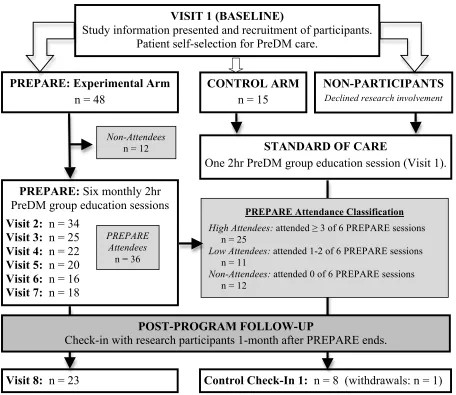
4.1 Recruitment ...33
4.2 Retention Rates ...34
4.3 Participant Characteristics...35
4.4 Risk Factors for the Development of Type 2 Diabetes Mellitus...36
4.5 Program Impact on Average Number of Vegetable and Fruit Servings and Sub-categories of Vegetables and Fruit ...37
4.5.1 Within-Group Changes for Average Number of Vegetable and Fruit Servings and Sub-Categories of Vegetables and Fruit...38
4.5.2 Participants’ Intake of Vegetables and Fruit in Comparison to Canada’s Food Guide Recommendations...41
4.6 Program Impact on Average Number of Canada’s Food Guide Daily Servings ...43
4.6.1 Within-Group Changes for Average Number of Canada’s Food Guide Daily Servings...45
4.7 Program Impact on Dietary Intake of Macro- and Micro-Nutrients ...47
4.7.1 Within-Group Changes for Dietary Intake of Macro- and Micro-Nutrients.49 4.8 Subjective Assessment of Changes in Dietary Habits via Focus Group Discussions and Overall Program Feedback Form ...51
4.9 Anthropometric and Hemodynamic Data ...55
CHAPTER 5: DISCUSSION...58
5.1 Insight to the Nutritional Findings ...58
5.1.1 Total Vegetables and Fruit...58
5.1.2 Dark Green Vegetables ...60
5.1.3 Starchy Vegetables...60
5.1.4 Qualitative Feedback on Vegetable and Fruit Intake...61
5.1.5 Saturated Fatty Acids ...62
5.1.6 Sodium ...63
5.1.7 Unexpected Dietary Findings...65
5.1.7.1 Grain Products...65
5.1.7.2 Meat and Alternatives ...66
5.1.7.3 Protein ...67
5.2 Insight to the Anthropometric and Hemodynamic Findings...68
5.3 Insight to the Program’s Retention Rates...71
5.4 Limitations ...73
5.5 Strengths...76
CHAPTER 6: CONCLUSIONS ...77
6.1 Relevance to Practice ...77
6.2 Areas for Future Research...78
6.3 Closing Remarks ...79
REFERENCES ...82
APPENDICES ...88
CURRICULUM VITAE...166
Table Description Page
1 Plasma Glucose (PG) Concentrations for Diagnosis of Impaired Fasting
Glucose (IFG), Impaired Glucose Tolerance (IGT), and Diabetes
3
2 Risk Factors for Type 2 Diabetes Mellitus 6
3 Health Risk Classification According to Body Mass Index (BMI) 11
4 Health Risk Classification According to Waist Circumference (WC) 13
5 Dietary Components Evaluated 28
6 Sub-categorization of Vegetables and Fruit 30
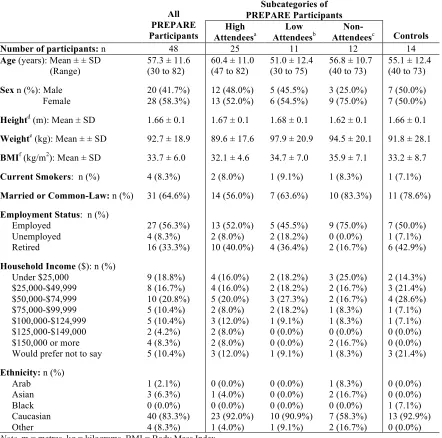
7 Participant Characteristics 36
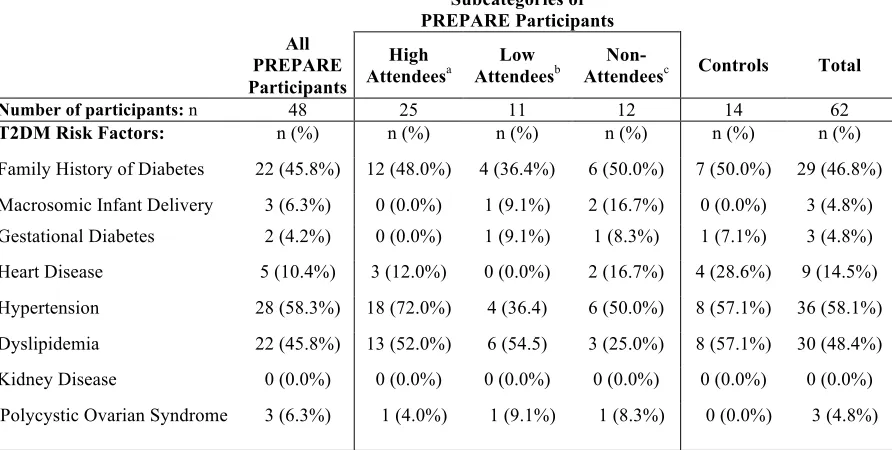
8 Participant Risk Factors for Type 2 Diabetes Mellitus 37
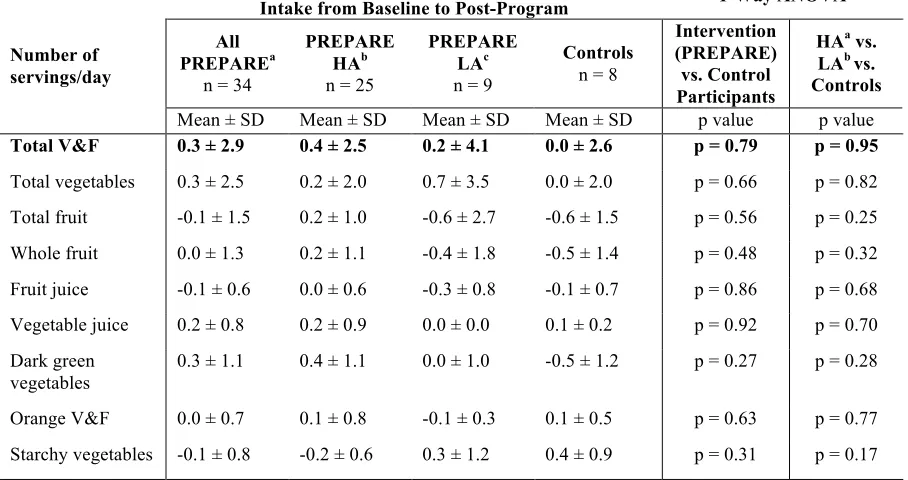
9 Program Impact on Delta Change of Participants’ Vegetable and Fruit
Average Daily Intake from Baseline to Post-program
39
10 Within-group Comparisons for Changes Made to Sub-categories of
Vegetables and Fruit from Baseline to Post-program
40
11 Program Impact on Delta Change of Participants’ Canada’s Food Guide
Average Daily Intake from Baseline to Post-program
44
12 Within-group Comparisons for Changes Participants Made to Canada’s
Food Guide from Baseline to Post-program
46
13 Program Impact on Delta Change of Participants’ Macro- and
Micro-nutrient Intake from Baseline to Post-program
48
14 Within-group Comparisons for Changes Made to Macro- and
Micro-nutrient Average Daily Intake from Baseline to Post-program
50
15 What Participants Liked Most and Least about the PREPARE Program 54
16 Within-group Comparisons for Changes made to Anthropometric and
Hemodynamic Data from Baseline to Post-program 57
17 Delta Change of PREPARE High Attendees’ versus Low Attendees’
Anthropometric and Hemodynamic Data from Baseline to Post-program
57
Figure Description Page
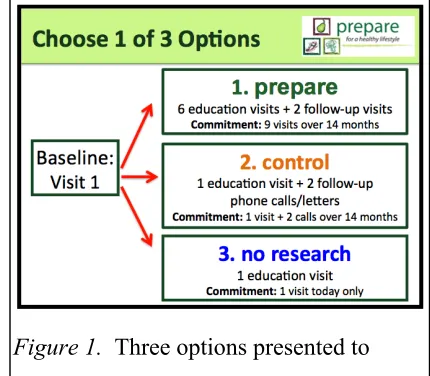
1 Three options presented to potential research participants at Visit 1 to
assist with self-selection. 27
2 Study recruitment and retention results. 33
3a Total vegetables and fruit: percentage of participants who met
Canada’s Food Guide recommendations for minimum daily intake pre- and post-program.
42
3b Dark green vegetables: percentage of participants who met Canada’s
Food Guide recommendations for minimum daily intake pre- and post-program.
42
3c Bright orange vegetables and fruit: percentage of participants who met
Canada’s Food Guide recommendations for minimum daily intake pre- and post-program.
42
Appendix Description Page
A UWO Certificate of Approval of Human Research 88
B Lawson Health Research Institute Approval 89
C Brescia Research Ethics Board Approval 90
D Flow Chart of the Research Methodology 91
E Diabetes Education Referral Form 92
F Letter of Information and Consent 93
G Screening Questionnaire 103
H Letter to Family Physicians 105
I Recruitment Poster 107
J Recruitment Brochure 108
K Phone Script for Clients at Baseline 109
L Letter to Clients Scheduled for Baseline Visit 112
M 3-Day Food Intake Record and Medication Log 114
N Demographic Questionnaire 121
O Lifestyle Questionnaire 123
P Session Feedback Form 125
Q Overall Feedback Form 128
R Sample 3-Day Food Intake Record ESHA Analysis 135
S Eating Well with Canada’s Food Guide 136
T Eating Well with Canada’s Food Guide, What is a Serving Size of…
Vegetables and Fruit? 142
U Procedure for Physical Measurements 144
V Focus Group Questions 148
W Attendance Log 150
X Overall Program Feedback Form Responses 154
# number
% percent
2hPG 2-hour plasma glucose
3d-FIR 3-day food intake record and medication log
A1c glycosylated hemoglobin
AMDR acceptable macronutrient distribution range
BMI body mass index
CAD coronary artery disease
CFG Canada’s Food Guide
CHO carbohydrate
CI confidence interval
CKD chronic kidney disease
cm centimeter
CPG clinical practice guidelines
CRIC Clinical Research Impact Committee
CVD cardiovascular disease
d day
DEC Diabetes Education Centre
DPP Diabetes Prevention Program
EtOH alcohol
FFQ food frequency questionnaire
FPG fasting plasma glucose
g grams
GDM gestational diabetes mellitus
HA high attendees
HDL-C serum high density lipoprotein cholesterol concentration
HTN hypertension
IFG impaired fasting glucose
IOM Institute of Medicine of the National Academy
kcal kilocalories
kg/m2 kilograms per meter squared
kJ kilojoules
LA low attendees
LDL-C serum low density lipoprotein cholesterol concentration
m meter
mm Hg millimeters of mercury
mmol/L milimoles per litre
n number
n/a not applicable
NHANES National Health and Nutrition Examination Survey
ns not significant
OGTT oral glucose tolerance test
ON Ontario
PG plasma glucose
PreDM prediabetes
PREPARE Prediabetes Research & Education Promoting Activity & Responsible
Eating
RCT randomized control trial
SD standard deviation
SE standard error
SES socioeconomic status
SFA saturated fatty acids
SJHC St. Joseph’s Health Care London
T2DM Type 2 diabetes mellitus
V&F vegetables and fruit
WC waist circumference
Chapter 1: Introduction
Prediabetes (PreDM), defined as the presence of impaired fasting glucose (IFG)
and/or impaired glucose tolerance (IGT), identifies individuals at high risk for developing
Type 2 diabetes mellitus (T2DM), the metabolic syndrome, and cardiovascular disease
(CVD) (Canadian Diabetes Association, 2008a). The healthcare costs to deal with the
epidemic of T2DM are already staggering, and are projected to rise to $8.14 billion in
Canada by 2016 (Ohinmaa, Jacobs, Simpson, & Johnson, 2004). It is recommended that
healthy individuals over the age of 40 be screened for diabetes every three years, while those
diagnosed with PreDM must be evaluated annually (Canadian Diabetes Association, 2008b).
Studies have shown that lifestyle interventions that target physical activity and diet
reduce the risk for developing T2DM by about 58% (Knowler et al., 2002; Pan et al., 1997;
Tuomilehto et al., 2001). Although these results have been available for the past decade,
there is still a lack of accessible community-based interventions in Canada designed to delay
or prevent the development of T2DM in those identified as high risk.
In London, Ontario, Canada, over 600 individuals with PreDM were referred to the
Diabetes Education Centre (DEC) of St. Joseph’s Health Care (SJHC) London between 2006
and 2008. To deal with the growing patient load, in 2007 the diabetes educators of the SJHC
London DEC (led by Irene Hramiak, MD) aligned forces with Brescia University College
(led by Isabelle Giroux, PhD, RD) to create the Prediabetes Initiative and Partnership, which
began as a single education session intended to increase diabetes risk awareness and to offer
guidance in lifestyle modification to a larger number of individuals with PreDM in the
community. In the program’s first year, ten individual 2-hour group education sessions were
delivered to 270 people with PreDM. This first education session then became the standard
of care for the DEC in 2008 for people diagnosed with PreDM. The program delivery was
overseen by Registered Dietitians/Certified Diabetes Educators from the DEC, who were
supported by volunteer undergraduate students from the Foods & Nutrition program at
Next, the PreDM education program expanded to two 2-hour sessions, and from 2007
to 2009, 27 education sessions were delivered to a total of 535 clients at Brescia University
College. Based on the feedback from individuals with PreDM and recent funding from The
Lawson Foundation in 2010, the current PreDM education program was expanded and
piloted in May 2011 as a six session group education series over six months to better meet
the needs of this population. The new program had an increased focus on behaviour change
related to nutrition and physical activity, with a greater emphasis on increased self-efficacy
via hands-on activities, goal setting, and social support to help translate the program into
sustainable lifestyle behaviour change to decrease risk factors associated with T2DM
development. To better identify the new PreDM education program, it was named
PREPARE, which is an acronym for “Prediabetes Research and Education Promoting
Activity & Responsible Eating”.
The overarching purpose of the entire PREPARE study is to assess whether or not a
6-month, community-based PreDM lifestyle program focused on nutrition and physical
activity will result in positive lifestyle behaviour change in a sample of middle and older
adults with PreDM from London, ON. This current thesis will look at the impact of the
PREPARE program on the dietary intake of the first group of participants recruited to the
program in comparison to a control group (cohorts 1 and 2). The results of this research may
offer insights for improvements to the program to better deliver healthcare in this patient
Chapter 2: Literature Review
2.1 Defining Prediabetes
PreDM is a condition where blood glucose (BG) concentrations are elevated, but
remain below the threshold for a formal diagnosis of diabetes (Canadian Diabetes
Association, 2008a). Similar to the procedures for diabetes diagnosis, PreDM is measured
using two blood tests, fasting plasma glucose (FPG) and oral glucose tolerance test (OGTT),
except with lower cut-off points (Public Health Agency of Canada, 2009a). Individuals with
PreDM can have impaired fasting glucose (IFG) and/or impaired glucose tolerance (IGT),
placing them at higher risk for the development of T2DM and CVD (Canadian Diabetes
Association, 2008a). Although there is no worldwide consensus on the definition of IFG
(Shaw et al., 2000; Forouhi et al., 2006), the Canadian Diabetes Association defines IFG as a
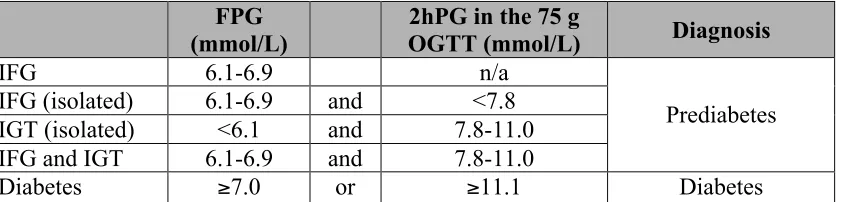
FPG value of 6.1 to 6.9 mmol/L (Canadian Diabetes Association, 2008b). See Table 1 for a
summary of the BG concentrations used to diagnose IFG, IGT, and T2DM.
Table 1
Plasma Glucose (PG) Concentrations for Diagnosis of Impaired Fasting Glucose (IFG),
Impaired Glucose Tolerance (IGT), and Diabetes
FPG
(mmol/L) OGTT (mmol/L) 2hPG in the 75 g Diagnosis
IFG 6.1-6.9 n/a
IFG (isolated) 6.1-6.9 and <7.8
IGT (isolated) <6.1 and 7.8-11.0
IFG and IGT 6.1-6.9 and 7.8-11.0
Prediabetes
Diabetes ≥7.0 or ≥11.1 Diabetes
Note. PG = plasma glucose, IFG = impaired fasting glucose, IGT = impaired glucose tolerance, FPG = fasting
plasma glucose, mmol/L = millimoles per litre, 2hPG = 2-hour plasma glucose, OGTT = oral glucose tolerance test, n/a = not applicable (Canadian Diabetes Association, 2008a).
2.2 Prevalence and Incidence of Prediabetes and Diabetes
Precise data on the prevalence and incidence of PreDM in Canada is currently
lacking, as the key OGTT was excluded from the latest Canadian Health Measures Survey
estimated that the number of Canadians over age 20 with PreDM was about 5 million, which
is projected to increase to more than 6.3 million by 2016 (Public Health Agency of Canada,
2009a). In 2008, a press release from the Canadian Diabetes Association estimated that
approximately 6 million Canadians had developed PreDM (Canadian Diabetes Association,
2008c).
According to the Report from the National Diabetes Surveillance System: Diabetes in
Canada, in 2006-2007 approximately two million Canadians aged one and older, or 6.2%
(roughly 1 in 16 people), were living with diagnosed diabetes (prevalence) (Public Health
Agency of Canada, 2009b). The most recent Canadian statistics from 2006-2007 indicate
that 211,168 individuals were newly diagnosed with diabetes that year (incidence), which
translates to 6.7 individuals per 1,000 people aged one and older (Public Health Agency of
Canada, 2009b).
Globally, diabetes mellitus affects a large number of people from diverse ethic and
socioeconomic backgrounds (Zimmet, Cameron, & Shaw, 2005), and the most recent
statistics about diabetes prevalence from the International Diabetes Federation Atlas suggest
that in 2010, approximately 285 million individuals (or 6.6% of the world’s population) were
living with diabetes and an additional 344 million (7.9%) have PreDM (International
Diabetes Federation, 2009). By 2030, this figure is projected to reach 438 million (7.8%) for
diabetes prevalence and 472 million (8.4%) for PreDM prevalence (International Diabetes
Federation, 2009).
2.3 Economic Burden of Prediabetes and Diabetes
Diabetes is currently one of the most costly chronic diseases (Sherwin, Robert S,
Anderson, Robert M, Buse, John B, & Chin, Marshall H, 2002), creating a significant
economic burden for the Canadian healthcare system. This is largely due to the associated
costs of treating diabetes-related complications (Goeree et al., 2009). Data examining the
comprises the economic cost of diabetes for Canada at large. On a conservative note, one
study estimated that the total healthcare costs associated with diabetes in Canada was $4.66
billion in the year 2000, and this number was projected to increase to $8.14 billion in 2016
(Ohinmaa et al., 2004). The Canadian Diabetes Association reports that diabetes will cost
the Canadian healthcare system $15.6 billion per year, and will rise to $19.2 billion by 2020
(Canadian Diabetes Association, 2008d). These figures demonstrate that the development of
diabetes does impose a significant economic burden on the healthcare system in Canada, and
some of these associated costs may be reduced by the prevention or even delay of the
development of T2DM.
2.4 Health Consequences of Prediabetes and Diabetes
Chronic health conditions, such as T2DM, impart not only a major economic burden
to the Canadian healthcare system and the individual, but also has many associated clinical
outcomes. This is largely due to the macrovascular and microvascular complications of the
disease, which include: coronary artery disease (CAD), CVD, dyslipidemia, hypertension
(HTN), acute coronary syndrome (ACS), heart failure, chronic kidney disease (CKD),
retinopathy, neuropathy, and erectile dysfunction (Canadian Diabetes Association, 2008e).
The personal costs of getting T2DM may include a reduced quality of life and the
increased likelihood of medical complications such as heart disease, stroke, kidney disease,
blindness, amputation, and erectile dysfunction (Canadian Diabetes Association, 2008d).
Psychological well-being can also be negatively affected in individuals with diabetes, and
depressive symptoms are more common in people living with diabetes compared to the
general population (Canadian Diabetes Association, 2008i). Specifically, depressive
disorders alongside diabetes are associated with poorer self-care behaviour, poorer glycemic
control, health complications, and decreased quality of life (Canadian Diabetes Association,
According to one patient fact sheet distributed by the Canadian Diabetes Association,
approximately 80% of people with diabetes will die as a result of heart disease or stroke, and
Canadian adults with diabetes are twice as likely to die prematurely, compared to people
without diabetes (Canadian Diabetes Association, 2008d). These serious health
consequences are important to communicate to those at risk, because if left untreated,
approximately 25% of people with PreDM will progress to T2DM within three to five years
(Canadian Diabetes Association, 2008c). A meta-analysis of studies predicting risk for
progression from PreDM to T2DM concluded that, compared to individuals with
normoglycemia, annualized relative risks are: 4.66 for those with IFG, 6.35 for those with
IGT, and 12.13 for those with both IFG and IGT (Gerstein et al., 2007). Therefore,
prevention of T2DM should remain a top priority for those individuals that already have
PreDM to help avoid many of the serious health complications of the disease.
2.5 Risk Factors Contributing to the Development of Type 2 Diabetes Mellitus
Prospective cohort studies have identified historical, physical, and biochemical
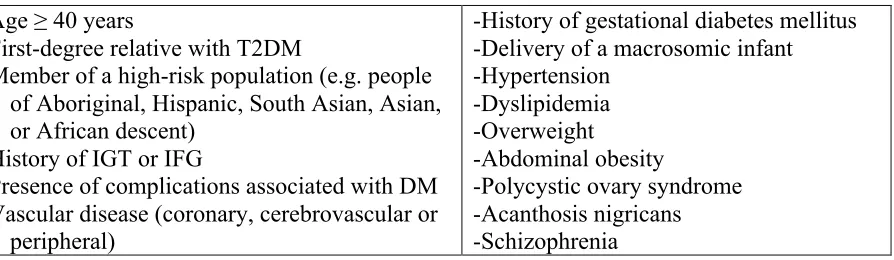
variables associated with the development of T2DM (see Table 2). The main factors include
older age, certain ethnic backgrounds, obesity (especially abdominal obesity), physical
inactivity, history of gestational diabetes mellitus, overt coronary artery disease, and high
fasting insulin concentrations and IGT (Canadian Diabetes Association, 2008f).
Table 2
Risk Factors for Type 2 Diabetes Mellitus
-Age ≥ 40 years
-First-degree relative with T2DM
-Member of a high-risk population (e.g. people of Aboriginal, Hispanic, South Asian, Asian, or African descent)
-History of IGT or IFG
-Presence of complications associated with DM -Vascular disease (coronary, cerebrovascular or peripheral)
-History of gestational diabetes mellitus -Delivery of a macrosomic infant -Hypertension
-Dyslipidemia -Overweight
-Abdominal obesity
-Polycystic ovary syndrome -Acanthosis nigricans -Schizophrenia
Note. T2DM = Type 2 diabetes mellitus, IGT = impaired glucose tolerance, IFG = impaired fasting glucose, DM = diabetes
2.5.1 Modifiable Risk Factors. While there are several non-modifiable risk factors
associated with the development of T2DM, many of the risk factors are modifiable, offering
individuals with PreDM an opportunity to reduce their risk of developing T2DM if they take
steps to change what is in their control. Some of the main modifiable risk factors for T2DM
include: dietary habits, body weight, body composition, physical activity, and stress
management. As a whole, this pilot study specifically explored the impact that a 6-month
lifestyle behaviour change program could potentially have on impacting diet, weight,
abdominal obesity, and blood pressure in adults with PreDM. These key dietary and
anthropometric factors will be discussed further below.
2.5.1.1 Nutrition. Many dietary factors have been researched to help understand the
connection between diet and the development of T2DM, and intake of vegetables and fruit
(V&F) has been an important area. A diet high in V&F is associated with a decreased risk
for many chronic diseases (World Health Organization, 2000), and additionally, because
V&F typically have low energy densities (i.e. lower amount of energy relative to a given
weight of a food, stated in kcal/g or kJ/g), an increase in daily consumption could be
beneficial for weight management (Rolls, Ello-Martin, & Carlton Tohill, 2004). Given that
obesity is the dominant modifiable risk factor for T2DM (which drives many of the physical
risk factors listed in Table 2), it is reasonable to postulate that adequate V&F consumption
may lower the risk by helping an individual lose weight. Most V&F are low in energy
density because of their high water, high fibre, and low fat content. As a strategy to
encourage weight loss, adding additional V&F to the diet allows for an increase in the
amount of food that can be consumed for a given level of energy intake while promoting
satiety (Rolls et al., 2004). This is because individuals tend to eat a similar weight of food
each day, thus, when energy density of food is decreased, energy intake is spontaneously
reduced with similar levels of satiation reported (Poppitt & Prentice, 1996; Yao & Roberts,
One of the earliest studies that sought to make a connection between V&F
consumption and T2DM incidence looked at 9,665 Americans (45.5% male, 54.5% female)
aged 25-74 years who participated in the first National Health and Nutrition Examination
Survey (NHANES I), of which 1,018 went on to eventually develop T2DM (Ford &
Mokdad, 2001). The NHANES I was conducted from 1971 to 1975, where trained
nutritionists interviewed participants to collect dietary intake data with a single 24-hour recall
and asked about all foods consumed on the preceding day. From the baseline NHANES I
data, it was determined that the mean intake of V&F, as well as the percentage of participants
who consumed five or more V&F servings per day was lower among participants who
developed T2DM than among participants who remained free of the disease. Specifically,
the men with T2DM included in the study had a mean V&F intake of 3.1 (SE, 0.2) servings
per day, while the non-diabetic men had a mean intake of 3.3 (SE, 0.1) V&F servings per day
(P = 0.257). The percentage consuming five or more servings of V&F per day was 19.6%
among men with T2DM, and 25.6% among non-diabetic men (P = 0.055). Among women,
mean intake was 2.9 (SE, 0.1) and 3.6 (SE, 0.1) V&F servings per day for diabetic and
non-diabetic women respectively (P < 0.001), while the percentage consuming five or more V&F
servings per day was 18.9% for women with T2DM and 30.2% for non-diabetic women (P <
0.001). After adjusting for age, ethnicity, smoking, systolic blood pressure, use of
antihypertensive medication, serum cholesterol concentration, BMI, exercise, and alcohol
consumption, the hazard ratio for participants consuming five or more servings of V&F per
day was 0.73 (95% CI, 0.54-0.98), demonstrating that the overall incidence rate decreased
with increasing consumption of V&F. The reduction in diabetes risk with increased V&F
intake tended to be greater for women than for men (P = 0.071). Among women, those
consuming five or more servings of V&F per day had a hazard ratio of 0.61 (95% CI,
0.42-0.88) and a dose response appeared to be present.
In a more recent systematic review and meta-analysis published in 2010, a team of
intake of V&F and an assessment of the development of T2DM (Carter, Gray, Troughton,
Khunti, & Davies, 2010). The combined population of the six studies resulted in 223,512
male and female study participants that ranged in age between 30 to 74 years. Specifically,
the meta-analysis looked at the lowest V&F intake values (ranging between 0 to 2.57
servings/day) versus highest intake values (ranging from 5.0 to 10.16 servings/day), and
overall, found that there were no significant reductions in the risk of T2DM incidence for
consumption of fruit, vegetables, or V&F combined, though their data did suggest a trend
toward a benefit of consuming greater quantities (Carter et al., 2010). What was interesting
however, was that in those studies that examined intake of green leafy vegetables, Carter et
al. (2010) found that consuming 1.35 servings per day of green leafy vegetables (highest
intake) compared with 0.2 servings (lowest intake) resulted in a 14% reduction in risk (P =
0.01) of T2DM (hazard ratio 0.86, 95% CI, 0.77-0.96).
Of those six studies included in the meta-analysis, Villegas et al. (2008) found that
vegetable intake examined on its own in 74,942 Chinese women was associated with a
decreased risk of developing T2DM, and inverse associations were especially prevalent for
increased intake of specific sub-categories of vegetables, including: green leafy vegetables
(i.e. spinach), cruciferous vegetables (i.e. green cabbage, cauliflower), yellow vegetables (i.e.
sweet potatoes, carrots), allium vegetables (i.e. garlic, onions), and other vegetables (i.e.
asparagus, cucumbers, mushrooms, peppers, tomatoes). Conversely, this study did not find
an association between fruit intake and risk of T2DM (Villegas et al., 2008).
Results from the Nurses’ Health Study (Bazzano, Li, Joshipura, & Hu, 2008), which
included 98,462 female registered nurses between the ages of 30 and 55 years enrolled in the
diet cohort found that the median intake of fruit in this population was 1.08 servings/day,
whereas that for vegetables was 3.09 servings/day. Interestingly, the intake of fruit juices
was positively associated with T2DM incidence, with a hazard ratio of 1.33 (95% CI,
1.19-1.48) for those in the highest quintile of fruit juice intake (0.7 servings/day) compared with
found to be inversely associated. Previous findings have demonstrated that whole fruit
provides greater satiety compared to fruit juice due to the fibre content and effects on glucose
homeostasis, as well as the fact that beverages may affect the regulation of energy intake
differently than solid foods, for instance, they offer no displacement of energy later in the
day (Rolls et al., 2004).
Also included as part of the meta-analysis, Montonen and colleagues (2005) found
that consumption of vegetables (especially green vegetables) and fruit/berries was associated
with a reduced risk of T2DM, while conversely, intake of potatoes (a starchy vegetable) was
associated with an increased risk (relative risk = 1.42, 95% CI, 1.02-1.98, P = 0.03). These
findings were gathered from diet history interviews conducted by trained interviewers on
Finnish citizens (n = 10,054) that did not have a history of diabetes who were included in the
Finnish Mobile Clinic Health Examination Survey (Montonen, Jarvinen, Heliovaara,
Reunanen, & Knekt, 2005).
Results from the Women’s Health Study (Liu et al., 2004) reported similar findings in
39,876 female health professionals aged ≥ 45 years at baseline who completed a
semi-quantitative FFQ. In models adjusted for age, total energy intake, and smoking, significant
inverse relationships with T2DM risk were seen for total V&F intake, fruits, citrus fruits,
green leafy vegetables, dark yellow vegetables, and legumes, while a significant positive
association was found with intake of potatoes (Liu et al., 2004). In both of these studies,
abundant potato intake was linked to the development of T2DM though increased
post-prandial BG concentrations due to the high starch content and glycemic index of potatoes
relative to other vegetables (Montonen et al., 2005).
Although these studies yield mixed results, continuing to promote increased V&F
intake as a strategy for weight management and potential protective factor against developing
T2DM remains appealing. For few calories, most V&F offer a host of beneficial components
including water, fibre, phytochemicals and antioxidants, as well as numerous vitamins and
at the same time acting as a marker for a healthy lifestyle (Villegas et al., 2008).
Furthermore, the overall nutrition message remains positive emphasizing the increased
consumption of particular foods rather than restriction (Rolls et al., 2004).
2.5.1.2 Obesity. Obesity is often defined as a condition of excessive fat (adipose tissue)
accumulation, to the extent that health may be impaired (World Health Organization, 2000).
Body mass index (BMI) has frequently been used as a measure of obesity and a predicting
factor for the development of chronic disease. BMI is defined by the following formula:
weight (kg) / height (m)2 (World Health Organization, 2000). The BMI formula provides a
useful, easy to administer, albeit crude measure of obesity and the health risks associated
with it, by placing individuals into categories of risk based on BMI scores. Canada uses the
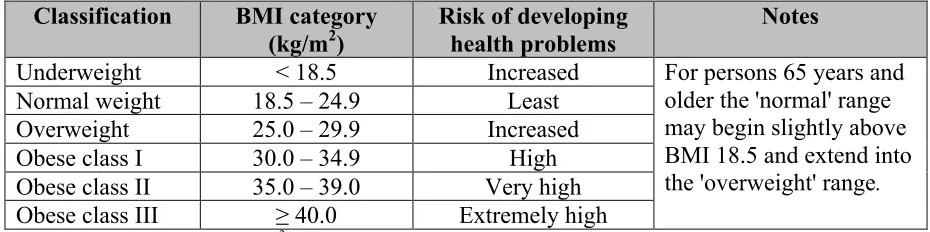
following BMI categories to assess disease risk based on an individual’s height and weight:
Table 3
Health Risk Classification According to Body Mass Index (BMI)
Classification BMI category
(kg/m2)
Risk of developing health problems
Notes
Underweight < 18.5 Increased
Normal weight 18.5 – 24.9 Least
Overweight 25.0 – 29.9 Increased
Obese class I 30.0 – 34.9 High
Obese class II 35.0 – 39.0 Very high
Obese class III ≥ 40.0 Extremely high
For persons 65 years and older the 'normal' range may begin slightly above BMI 18.5 and extend into
the 'overweight' range.
Note. BMI = body mass index, kg/m2 = kilograms per meter squared (Health Canada, 2003a).
The graded classification of BMI is useful for several reasons: (a) it allows for
meaningful comparisons of weight status within and between populations; (b) permits the
identification of individuals and groups at increased risk of morbidity and mortality; (c) helps
prioritize interventions aimed at the individual and community level; and (d) provides an
objective basis for the evaluation of interventions (World Health Organization, 2000). The
use of BMI as a measure of obesity has become common practice, and it is well recognized
including T2DM, CVD, and stroke (World Health Organization, 2000; National Institutes of
Health: National Heart, Lung, and Blood Institute, 2000). Despite BMI’s widespread
adoption by health authorities, its major limitation is that BMI cannot distinguish between
weight associated with muscle as compared to weight associated with fat.
Within the data emerging from the Botnia diabetes study by Lyssenko et al. (2005), in
reviewing the risk of developing T2DM in 1,715 relatives of patients with T2DM and 400
control subjects without a family history of diabetes, it was found that subjects with BMIs or
waist circumferences (WC) above the median had approximately a twofold (P = 0.0002)
increase in the risk of developing T2DM compared to those with values below the median.
Interestingly, this effect was stronger in those subjects with IFG-IGT (Lyssenko et al., 2005).
Achieving moderate weight loss (defined as 5-7% of initial body weight) in
overweight or obese persons with T2DM and/or those at risk of developing T2DM can
improve insulin action, decrease fasting blood glucose concentrations, reduce the need for
diabetes medications, and improve risk factors for CVD, such as reducing high blood
pressure and improving serum lipid profile (Klein et al., 2004; Diabetes Prevention Program
Research Group, 2002; Tuomilehto et al., 2001).
2.5.1.3 Abdominal Obesity. Abdominal obesity has specifically been demonstrated to be an
independent risk factor for the development of T2DM, often indicating early signs of insulin
resistance (Canadian Diabetes Association, 2008b) and other potential chronic diseases
(World Health Organization, 2000). It has been established that abdominal obesity, assessed
by WC, is a good predictor of obesity-related health risk (World Health Organization, 2000;
National Institutes of Health: National Heart, Lung, and Blood Institute, 2000; Zhu et al.,
2002), and further evidence indicates that WC coupled with BMI predicts health risk better
than does BMI alone (Ardern, Katzmarzyk, Janssen, & Ross, 2003; Janssen, Katzmarzyk, &
Ross, 2002). A careful analysis of the relationship between increasing abdominal obesity
risk factor, even after controlling for age, smoking, and family history (World Health
Organization, 2008).
The sex-specific WC cutoff points were originally developed to compare WC and
BMI in a large, heterogeneous sample of white men and women (n = 2,206) (Lean, Han, &
Morrison, 1995). In that sample, researchers found that a WC of 102 cm in men and 88 cm
in women corresponded to a BMI of ≥ 30.0 kg/m2, with only about 2% of the sample being
misclassified. In Canada, the following WC categories are used to assess risk of health
problems based on an individual’s WC:
Table 4
Health Risk Classification According to Waist Circumference (WC)
WC cut-off points Risk of developing
health problems*
Notes
Men ≥ 102 cm (40 in.) Increased
Women ≥ 88 cm (35 in.) Increased
*Risk for type 2 diabetes, coronary heart disease, hypertension
Note. WC = waist circumference, cm = centimeter, in. = inches (Health Canada, 2003b).
Janssen, Katzmarzyk, and Ross (2002) specifically examined whether the prevalence
of HTN, T2DM, dyslipidemia, and the metabolic syndrome was greater in individuals with
high compared to normal WC values within the same BMI category (Janssen et al., 2002).
Using data collected by the National Centre for Health Statistics for the NHANES III study,
Janssen et al. (2002) looked at a sample of 14,924 subjects aged 17 and older in whom
measures of WC, height, weight, and metabolic variables were obtained and who fit the BMI
categories examined. With few exceptions, Janssen et al. (2002) found that within the three
BMI categories studied (normal weight: 18.5-24.9 kg/m2; overweight: 25.0-29.9 kg/m2; and
obese class I: 30.0-34.9 kg/m2), those with high WC values were more likely to have HTN,
T2DM, dyslipidemia, and the metabolic syndrome compared to those with normal WC
values. Furthermore, the authors found that a high WC independent of BMI predicted
is a stronger marker of health risk than is BMI (Zhu et al., 2002; Janssen, Katzmarzyk, &
Ross, 2004).
2.5.1.4 Hypertension. According to the Canadian Diabetes Association, most people with
diabetes will develop HTN (Canadian Diabetes Association, 2008g). The Canadian
Hypertension Education Program has confirmed that up to 75% of specific diabetic
complications are attributable to high blood pressure (BP) (Canadian Hypertension Education
Program Task Force, 2010). In the United Kingdom Prospective Diabetes Study consisting
of 3,642 British patients with T2DM, it was found that for each 10 millimeters of mercury
(mm Hg) decrease in mean systolic BP, the risk of microvascular complications declined by
13% (P < 0.0001), the risk for myocardial infarction decreased by 11% (P < 0.0001), the risk
for death related to diabetes decreased by 15% (P < 0.0001), and individuals with T2DM saw
an overall 12% reduction in risk for any complication related to diabetes (P < 0.0001) (Adler
et al., 2000). Current Canadian clinical practice guidelines suggest that persons with diabetes
and HTN should be treated to attain systolic BP <130 mm Hg and diastolic BP <80 mm Hg
(Canadian Diabetes Association, 2008h; Canadian Hypertension Education Program Task
Force, 2010), and that lifestyle interventions including achieving and maintaining a healthy
weight and limiting sodium and alcohol intake should be initiated concurrently with
pharmacological intervention to reduce BP (Canadian Diabetes Association, 2008g).
2.6 Successful Lifestyle Interventions Aimed at the Prevention or Delay of T2DM
2.6.1 Da Qing Diabetes Prevention Outcome Study. One of the first studies that looked at
lifestyle intervention in those with IGT was the Da Qing Diabetes Prevention Outcome study
(Pan et al., 1997; Gong et al., 2011). In 1986, 577 adults with IGT from 33 clinics in Da
Qing, China were randomly assigned into a control group or one of three intervention groups
(diet only, exercise only, or diet-plus-exercise). The diet group was prescribed a diet
containing 55-65% carbohydrate, 10-15% protein, and 25-30% fat and was encouraged to
Those subjects with BMI ≥ 25 kg/m2 were encouraged to reduce their caloric intake so as to
gradually lose weight at a rate of 0.5-1.0 kg per month until they achieved a BMI of 23
kg/m2. The exercise group was taught and encouraged to increase the amount of leisure
physical exercise, and the rate of increase and type of exercise recommended was
individualized based on age, exercise patterns, and the existence of health problems other
than IGT. The diet-plus-exercise group received counselling for both diet and exercise
similar to those for the diet-only and the exercise-only intervention groups. The control group
was exposed to general information about diabetes and IGT but did not receive any
individualized instruction. At the 6-year mark of intervention the cumulative incidence of
diabetes was 67.7% (95% CI, 59.8-75.2) in the control group compared with 43.8% (95% CI,
35.5-52.3) in the diet group, 41.1% (95% CI 33.4-49.4) in the exercise group, and 46.0%
(95% CI, 37.3-54.7) in the diet plus exercise group (P < 0.05) (Pan et al., 1997). In 2006, a
20 year follow-up study of the original participants (n = 542, 94% of the 577 original
participants) was completed to compare the incidence of microvascular complications in the
combined intervention groups versus the control group. The cumulative incidence of severe
retinopathy was 9.2% in the combined intervention group and 16.2% in the control group (p
= 0.03). After adjusting for clinic location and age, the incidence of severe retinopathy was
47% lower in the intervention group than the control group (hazard rate ratio 0.53, 95% CI
0.29-0.99, p = 0.048). No significant differences were found in the incidence of severe
nephropathy (hazard rate ratio 1.05, 95% CI 0.16-7.05, intervention versus control, p = 0.96)
or in the prevalence of neuropathy (8.6% versus 9.1%, p = 0.89) among the 20 year survivors
(Gong et al., 2011).
2.6.2 Finish Diabetes Prevention Study. The Finish Diabetes Prevention Study was
conducted to determine the feasibility and effects of a program aimed at modifying lifestyle
factors that could prevent or delay the onset of T2DM in 522 subjects with IGT (172 men
with IGT were randomly assigned to either the intervention group or the control group
(Tuomilehto et al., 2001). Each subject in the intervention group received individualized
counselling aimed at reducing weight (≥ 5% of initial body weight), total fat intake (< 30%
of energy consumed), and saturated fat intake (< 10% of energy consumed), while increasing
fibre intake (≥ 15 g per 1000 kcal) and physical activity (moderate exercise for at least 30
minutes per day) (Tuomilehto et al., 2001). Dietary recommendations included frequent
consumption of whole grains, vegetables, fruits, low-fat milk and meat products, soft
margarines, and vegetable oils rich in monounsaturated fatty acids. The intervention group
received dietary advice provided by a nutritionist over seven sessions within the first year,
and one session every three months thereafter, with nutritional feedback tailored to each
individual on the basis of his/her three-day food intake record (3d-FIR) completed four times
per year. Supervised, progressive, individually tailored, circuit-type resistance-training
sessions were also offered during the first year. Subjects randomized to the control group
were given general oral and written information about diet and exercise at baseline and at
subsequent annual visits, but no specific individualized feedback. Overall, the Finish
Diabetes Prevention Study found a mean weight loss of 4.2 ± 5.1 kg in the intervention group
and 0.8 ± 3.7 kg in the control group (P < 0.001) within the first year (Tuomilehto et al.,
2001). After an average follow-up of 3.2 years, there was a 58% relative reduction in the
incidence of diabetes in the intervention group compared with control subjects (P < 0.001),
which was directly associated with changes in lifestyle (Tuomilehto et al., 2001).
2.6.3 Japan Lifestyle Intervention Trial. In another large lifestyle intervention trial
conducted in Japan (Kosaka, Noda, & Kuzuya, 2005), 483 Japanese males with IGT were
randomly assigned in a 4:1 ratio to a standard intervention group (control group, n = 356) or
an intensive intervention group (n = 102). The control and intervention groups were advised
to maintain a BMI of < 24.0 kg/m2 and < 22.0 kg/m2, respectively, by diet and exercise. The
hospital visits. Body weight decreased by 0.39 kg in the control group and by 2.18 kg in the
intervention group (P < 0.001). The cumulative 4-year incidence of diabetes was 9.3% in the
control group, versus 3.0% in the intervention group, and the reduction in risk of diabetes
was 67.4% (P < 0.001). (Kosaka et al., 2005).
2.6.4 Diabetes Prevention Program. Last but certainly not least, is the Diabetes Prevention
Program (DPP) (Diabetes Prevention Program Research Group, 1999; Diabetes Prevention
Program Research Group, 2000; Diabetes Prevention Program Research Group, 2002). The
DPP involved 3,234 non-diabetic subjects with IFG and IGT who were randomly assigned to
placebo, metformin (850 mg twice daily), or a lifestyle-modification program with intensive
nutrition and exercise counselling with the goals of at least a 7% weight loss and at least 150
minutes of physical activity per week. The mean age of participants was 51 years with a
mean BMI of 34.0 kg/m2; 68% were women, 45% were members of minority groups (e.g.
African American, Hispanic), and 20% were ≥ 60 years of age (Diabetes Prevention Program
Research Group, 2000). After an average follow-up of 2.8 years, a 58% reduction in the
progression to T2DM was observed in the lifestyle-modification group (absolute incidence
4.8%), and a 31% relative reduction in the progression of T2DM was observed in the
metformin group (absolute incidence 7.8%) compared with control subjects (absolute
incidence 11.0%). On average, 50% of the lifestyle group achieved the goal of ≥ 7% weight
reduction, and 74% maintained at least 150 minutes/week of moderately intense physical
activity (Diabetes Prevention Program Research Group, 2002).
2.7 Translation of Successful Diabetes Lifestyle Intervention Programs at the
Community Level
Without question, programs like the DPP have demonstrated that intensive lifestyle
interventions with individualized nutrition counselling and physical activity sessions can
known about the feasibility of offering such interventions in the community with fewer
financial and human resources. Listed below are a number of key studies that have attempted
to answer this question by delivering group education and lifestyle behaviour change
strategies in a community-based setting.
2.7.1 GOAL Implementation Trial. The GOAL implementation trial, designed for delivery
in primary health care settings, was piloted on 353 middle-aged Finnish participants at risk
for T2DM (Absetz et al., 2007). The program was a group-based, task-oriented counselling
model that focused on attainment of five key objectives to prevent T2DM (i.e. <30% kcal
from total fat, <10% of kcal from saturated fat, at least 15 g of fibre/1,000 kcal, at least 4
hours/week of moderate physical activity, >5% weight reduction). The program components
included information provision, group discussions, self-monitoring of behaviour, goal
setting, and planning, and all six program sessions were scheduled for two hours/session. In
regards to attrition, 57% of the participants reported attending all six counselling sessions and
only thirty-three participants dropped out of the study during follow-up. At baseline 70% of
participants were obese (BMI > 30 kg/m2) and had a mean waist circumference of >100 cm
among women and 110 cm among men. After one year follow-up, diastolic BP, weight, and
BMI (only men), and waist circumference (both sexes) decreased significantly. This study
found that program exposure significantly correlated with weight loss, and favourable
nutrition outcomes may partly have been attributed to investment in a program dietitian
(Absetz et al., 2007).
2.7.2 Weight Loss through Living Well Study (WILLOW). One 2009 study further
discussed the successes and challenges to implementing a group-based version of the DPP
lifestyle curriculum in a large medicine practice that included 166 overweight or obese
participants referred by their primary healthcare provider, of which 81 enrolled in WILLOW
(McTigue, Conroy, Bigi, Murphy, & NcNeil, 2009). The program was delivered by a nurse
one-on-one counselling in the DPP) to help participants meet program goals derived from the DPP:
7% weight loss; 150 minutes/week of moderate physical activity; a total fat intake reduction
to 25% of calories; and a calorie restriction of 500- to 1000-kcal/day. Each session included
group education, relevant demonstrations (e.g. healthy portion sizes, food labels), and
opportunities for participants to share personal experiences, while behavioural techniques
focused on goal setting, self-monitoring, and problem solving. The program was made
available on a fee-for-service basis, with a charge of $100 for the twelve weekly sessions.
Those participants who enrolled in WILLOW had a mean weight change of 5.19 kg (CI,
-7.71 to -2.68) versus +0.21 kg (CI, -1.50 to 1.93) among the non-enrollees. Furthermore,
27% of the enrollees versus 6% of the non-enrollees lost ≥ 7% of their initial body weight (p
= 0.001), which was considered not only statistically but clinically significant (McTigue et
al., 2009). The strong counselling skills of the clinical educators were cited as one reason
that facilitated patient engagement, and the researchers concluded that WILLOW could fit
naturally within the preventive services of primary care medicine while helping patients
overcome the daunting challenge of developing and maintaining healthy lifestyles.
2.7.3 DEPLOY Pilot Study. In the DEPLOY pilot study (n = 92), adults who attended a
group-based DPP lifestyle intervention program in semi-urban YMCA facilities lost
significantly more weight (6% versus 2% weight loss, p < 0.001) compared to those who
received brief counselling alone (control) (Ackermann, Finch, Brizendine, Zhou, & Marrero,
2008). This study was unique from the others in that it was able to show that partnering with
local YMCAs may be another promising channel for wide-scale dissemination of a low-cost
approach to lifestyle diabetes prevention, outside of a traditional primary healthcare setting.
From these group-based education programs, some of the key factors that were
attributed to their success included the social interaction between participants (via group
discussions); the expansion of participants’ knowledge, skills, and self-efficacy (via
encouragement of self-monitoring and planning behaviours (via goal setting, food diaries,
etc.); investment in program educators with strong counselling skills; and regular program
attendance by participants. Clearly a variety of DPP translation programs appear to be
effective in a group setting; however, the key is to find ways to systematically implement
them into the existing healthcare system to ensure that they are integrated with care delivery,
cost-effectiveness, and are broadly supported by patients, healthcare providers, and funding
agencies.
2.8 Clinical Practice Guidelines for the Management of Prediabetes
The 2008 Canadian Diabetes Association Clinical Practice Guidelines (CDA-CPG)
emphasizes designing and implementing T2DM prevention programs that: a) target high-risk
individuals in the community (i.e. those with PreDM or obesity); b) target high-risk
subgroups (i.e. ethnic groups); and c) are aimed at the general population, such as those
designed to promote physical activity and healthy eating habits in adults and children
(Canadian Diabetes Association, 2008f). Specifically, the 2008 CDA-CPG recommends that
healthcare providers and program planners offer “a structured program of lifestyle
modification that includes moderate weight loss and regular physical activity… to reduce the
risk of T2DM in individuals with IGT [Grade A, Level 1A] and IFG [Grade D, Consensus]”
(Canadian Diabetes Association, 2008f).
In a 2004 position paper released by the American Diabetes Association, the North
American Association for the Study of Obesity, and the American Society for Clinical
Nutrition, the following key recommendations were made based on the evidence that T2DM
could be prevented and managed by achieving and maintaining a healthy weight and through
lifestyle modification: (a) weight loss is recommended for all overweight or obese adults
(BMI ≥ 25.0 kg/m2) who have or are at risk for developing T2DM; (b) the primary approach
for achieving weight loss is therapeutic lifestyle change, which includes a reduction in energy
pounds/week) and an increase in regular, moderate intensity physical activity 3-5 days per
week to improve insulin sensitivity (Klein et al., 2004).
2.9 Rationale for the Proposed Intervention
Currently in Canada, lifestyle counselling for PreDM is limited in many practice
settings, due to the burden of constrained resources (i.e. time, personnel, financial) within the
healthcare system. There is now substantial evidence that T2DM can be prevented or
delayed, and community-based group education programs have the potential to alleviate
some of the strain on the healthcare system by reaching a larger number of high-risk
individuals through a more efficient delivery of resources, as compared to the more
individualized, intensive T2DM prevention programs such as the DPP. It is presently
unknown if a group education program delivered free of charge in a Canadian
community-based setting will be equally effective at achieving sustained lifestyle modifications including
weight reduction and increased physical activity in a population of adults with PreDM, as
compared to those programs delivered in a traditional, primary healthcare setting.
2.9.1 Objectives. The goal of this research project was to provide an exploratory analysis on
the first two cohorts of participants enrolled in a 6-month PreDM lifestyle education program
(PREPARE). Only a small subset of the overall study population was included in this early
analysis, providing preliminary results while the main study remains ongoing. The primary
objective of this research project was to evaluate the impact of PREPARE from a nutritional
standpoint, examining changes made by PREPARE participants after receiving six months of
nutrition education to help prevent or delay the onset of T2DM. Secondary objectives
included evaluating changes in anthropometric and hemodynamic risk factors associated with
T2DM in PREPARE participants. Specifically, this study sought to investigate the impact of
(a) Quantifying changes in vegetable and fruit (V&F) consumption from baseline to the
end of the study (i.e. intake of whole V&F, V&F juice, dark green vegetables, bright
orange V&F, and starchy vegetables).
(b) Quantifying changes in average daily intake of Canada’s Food Guide (CFG) servings
over the course of the program, and to also assess the percentage of participants who
met current minimum CFG V&F recommendations at baseline and at the end of the
program.
(c) Quantifying changes PREPARE and control participants made to specific nutrients of
interest (i.e. macronutrients, fibre, sodium, saturated fatty acids, alcohol) from
baseline to the end of the program.
Secondary outcome objectives were to:
(d) Qualitatively capture changes in PREPARE participants’ dietary habits via focus
group discussions and questions pertaining to nutrition from the overall program
feedback forms post-study.
(e) Quantify changes in key anthropometric and hemodynamic parameters known to
increase the risk of developing T2DM from baseline to the end of the study in the
PREPARE participants.
2.9.2 Hypotheses. Given the success of other group lifestyle modification programs for the
prevention of T2DM, it was hypothesized that this pilot study would:
• Increase participants’ average number of daily servings of V&F from baseline, and
improve intake of dark green vegetables and bright orange V&F, compared to
controls.
• Increase the number of participants who met CFG food group recommendations
post-program.
• Reduce physical risk factors associated with T2DM, including a reduction a weight,
Chapter 3: Methods
3.1 Ethics Approval
Ethics approval for the involvement of human participants was obtained through the
University of Western Ontario (Appendix A), the Lawson Health Research Institute Clinical
Research Impact Committee (CRIC) of St. Joseph’s Health Care in London, ON (Appendix
B), and Brescia University College at the University of Western Ontario (Appendix C).
3.2 Study Design
The overall study was a pilot program evaluation utilizing a quasi-experimental
design. This single-centre study took place at Brescia University College in London, ON.
Individuals diagnosed with PreDM referred to the DEC at SJHC London were offered the
opportunity to self-select PREPARE (experimental arm) or the current standard of care
(control arm). PREPARE was a newly developed community-based lifestyle and behaviour
change program for adults with PreDM that was comprised of six monthly 2-hour group
education sessions with hands-on activities related to nutrition and physical activity. The
control arm received the current standard of care for PreDM, which was a one-time 2-hour
group education session at Brescia University College. Appendix D illustrates a detailed
flow chart of the overall study design. This pilot study followed the first 48 research
participants that selected PREPARE and the first 15 control participants that
self-selected the current standard of care. Mixed quantitative and qualitative methods were used
to assess the program’s impact on dietary behaviour change, specifically focusing in V&F
intake from baseline to the end of the study, as well as, examining other key anthropometric
and hemodynamic parameters known to increase the risk for developing T2DM.
3.3 Study Participants
A sample of individuals recently diagnosed with PreDM referred to the DEC of SJHC
Diabetes Education Referral Form used by physicians to refer clients may be found in
Appendix E. All referred clients were mailed a Letter of Information and Consent (Appendix
F) and were invited to participate in the research study if they met the following criteria:
Inclusion criteria:
• Adults30 years of age or older
• From London, ON or surrounding area (including Middlesex)
• Prediabetes diagnosisby a healthcare provider (e.g. family physician) who have been
referred to the DEC of SJHC London
• Ability to perform low-impact physical activity
• Ability to eat a normal, balanced diet
• Ability to understand English well enough to participate in the educational
discussions and activities and to complete required questionnaires
Exclusion criteria:
• Adults less than 30 years of age
• Participation in another lifestyle or behaviour change education or research program
• Poor mobility (i.e. wheelchair-bound), limiting low-impact physical activity
• Unable to chew, digest food, or follow a normal balanced diet (e.g. being on a
specialized diet such as a low-fibre diet or enteral nutrition support due to a
pre-existing condition, such as Crohn’s disease, celiac disease or other digestive disease)
• Pregnant or lactating females
• Diagnosis of Type 1 or Type 2 diabetes mellitus
• Diagnosis of any major health condition (e.g. cancer)
• Diagnosis of any behavioural or psychiatric issues (e.g. major depression, eating
Study participants gave informed consent in accordance with the research procedures
approved by the Research Ethics Board for Health Sciences Research involving Human
Studies at The University of Western Ontario. To confirm participant eligibility, all
interested study participants were screened by the research team utilizing a Screening
Questionnaire (Appendix G).
The power analysis suggested a sample size of 240 participants for the overall
research study. This calculation was based on the primary outcome variable of average
number of V&F servings/day. From historical referral records (2007-2010 inclusive)
tracking DEC patient referrals for the current standard of care, it was estimated that it would
take approximately two years to recruit all 240 participants. This study was a preliminary
evaluation of the project’s nutritional impact in a sample of individuals from London, ON
recently diagnosed with PreDM. As such, all study participants recruited between May 5th to
August 26th 2011 who met the eligibility criteria, consented to research involvement, and
self-selected to participate in PREPARE or the control arm were included in this exploratory
analysis (cohorts 1 and 2).
3.4 Pre-Recruitment of Clients with Prediabetes
Individuals recently diagnosed with PreDM from London, ON and surrounding area
were informed of PreDM education programming available to them through their family
physicians and the DEC of SJHC London. These referral channels have been previously
successful and were used to book clients for the current standard of care (a 2-hour group
education session) at Brescia University College since 2007.
A Letter to Family Physicians (Appendix H) was mailed to the majority of practicing
family physicians in the London area, so that they could inform their patients with PreDM
about the three education options available: (i) PREPARE: 6 monthly 2-hour group education
sessions with a research component, (ii) the current standard of care, one 2-hour group