ABSTRACT
BARRIER, MARIANNE. Selection and Rapidly-Evolving Genes. (Under the direction of Michael D. Purugganan and William R. Atchley)
Rapidly-evolving genes which exhibit an increased rate of amino acid
rapidly-evolving genes were identified in Arabidopsis using a powerful evolutionary expressed sequence tag (EST) approach. One indicator of adaptive selection at the molecular level is an excess of amino acid replacement fixed differences per
replacement site relative to the number of silent fixed differences per silent site (ω =
Ka/Ks). The evolutionary EST approach was used to estimate the distribution of ω
among 304 orthologous loci between Arabidopsis thaliana and Arabidopsis lyrata to identify genes potentially involved in the adaptive divergence between these two Brassicaceae species. Twenty-one of 304 genes (7%) were found to have an estimated
ω > 1 and are candidates for genes associated with adaptive divergence. A
hierarchical Bayesian analysis of protein coding region evolution within and between species also indicates that the selection intensities of these genes are elevated
DEDICATION
This work would not have been possible without the continued love and
support of my parents, Jack and Jean Barrier, who instilled in me the desire to learn
and to help others. I thank my sister, Melinda Kroeze and her family: Darryl,
Matthew, and Adriana, for providing support and a place to go whenever I needed a
break. I thank my best friend, Dina Sieroslawski, for being there almost all of my life
and for believing in me. I thank the scientists I worked with at EPA who inspired me
to follow my scientific interests. I thank the rest of my family, my friends, and the
members of Millbrook Baptist Church for their continued support. I dedicate this in
honor of my grandfather, Kelly Howard, and in memory of my grandmothers, Tannie
BIOGRAPHY
Marianne Barrier was born on May 20, 1970 in Endicott, New York. She
received her early education in Raleigh, North Carolina, graduating from William G.
Enloe High School in 1988. She received her Bachelor of Science in Mathematics
with a Computer Science concentration and Art minor from the University of North
Carolina at Greensboro in 1992. She worked as a Business Systems Analyst providing
computer graphics and systems support for the Environmental Criteria and
Assessment Office of the Environmental Protection Agency until beginning graduate
school in 1996. During that time she obtained further education with a certificate in
Architectural CAD and Drafting in 1994 from Wake Technical Community College in
Raleigh and a certificate in 3D Art and Animation in 1995 from the School of
Communication Arts, also in Raleigh.
She was admitted to the Genetics Department at North Carolina State
University in 1996 as a candidate for the degree of Doctor of Philosophy. She has
undertaken her doctoral research under the guidance of Dr. Michael D. Purugganan.
On July 1, 2002 she will begin her postdoctoral position with Dr. Philip E. Mirkes in
the Department of Pediatrics at the University of Washington Medical School in
ACKNOWLEDGEMENTS
I would like to thank my advisor, Michael Purugganan, who has been a great
mentor during my years of doctoral research. I appreciate his guidance and
enthusiasm, especially at the beginning when I was a novice in the field of scientific
research. I am grateful to all of the members of the Purugganan Lab, past and present,
for their friendship and counsel over the years. I would especially like to thank Jane
Suddith for all of her help and for taking care of my rotation project, so that it was
ready for me when I officially joined the lab.
I thank my co-conspirator, Bill Atchley, for his pearls of wisdom and for
allowing me to assist in many educational side-projects. I thank my teaching mentor,
Betty Gardner, for her guidance in teaching the genetics laboratory course and for
giving me a greater appreciation for the amazing efforts of all teachers. I thank the
GRL staff for their assistance when my work kept me there for a couple of months. I
thank Rob Robichaux, Bruce Baldwin, and Elizabeth Friar for their assistance with my
research projects and guidance during our fieldwork trips in Hawai’i and California.
Finally, I would like to thank everyone in the Genetics Department at NCSU:
Stephanie Curtis and the genetics office staff, who keep the department going, Jeff
Hawley who keeps the labs running (or moving), and everyone else in the department
who has provided supplies or guidance. I greatly appreciate the friendship and support
TABLE OF CONTENTS
LIST OF TABLES...x
LIST OF FIGURES...xii
LIST OF SYMBOLS AND ABBREVIATIONS...xiv
CHAPTER 1. Introduction and Literature Review...1
Introduction...2
Selection and Rapidly-Evolving Genes...5
Mutation and selection...5
Forms of selection...7
Rates of substitution as indicators of selection...8
Population-based tests of selection...11
Rapidly-evolving genes...13
Evolution of the Adaptively Radiating Hawaiian Silversword Alliance...16
The Hawaiian silversword alliance...16
Morphology and ecology of the Hawaiian silversword alliance...17
A monophyletic group...19
Tarweed ancestry...20
Allopolyploidization...22
Adaptive radiation...23
Polyploidy...25
Identifying Rapidly-Evolving Genes in Arabidopsis...28
Evolutionary EST approach...28
Arabidopsis – a model for plant research...29
Population genetics of Arabidopsis...30
Relatives of Arabidopsis thaliana...32
Tools for genetic research in Arabidopsis...33
CHAPTER 2. Interspecific Hybrid Ancestry of a Plant Adaptive Radiation: Allopolyploidy of the Hawaiian Silversword Alliance
(Asteraceae) Inferred From Floral Homeotic Gene
Duplications...48
Abstract...49
Introduction...51
Materials and Methods...54
Sampling and nucleic acid isolation...54
Isolation of the Argyroxiphium sandwicenseAP3/TM6 and AP1 genes...55
Phylogenetic analyses...57
Interspecific hybridizations...57
Results and Discussion...59
Floral homeotic genes as sources of characters for plant phylogeny reconstruction...59
AP3/TM6 and AP1 orthologs in the Hawaiian silversword alliance...60
Duplicate copies of the floral homeotic genes in the Hawaiian silversword alliance...63
ASAP3/TM6 gene tree...66
ASAP1 gene tree...68
A hybrid (Allopolyploid) ancestry of the Hawaiian silversword alliance...71
Plausibility of the inferred evolutionary reticulation based on evidence from artificial hybrids...74
Genomic constitution of the Hawaiian founder and extinction implications...76
Genetic consequences of allopolyploidy in the Hawaiian silversword alliance...77
Acknowledgments...79
CHAPTER 3. Accelerated Regulatory Gene Evolution in an Adaptive
Radiation...84
Abstract...85
Introduction...87
Materials and Methods...91
Isolation of genes...91
Reverse transcription (RT)-PCR assay of regulatory gene expression...93
Rate analyses...95
Results and Discussion...96
Regulatory and structural genes in the Hawaiian and North American species...96
Accelerated gene evolution in the Hawaiian species...99
Accelerated rate confined to the Hawaiian species...103
Neutral mutation rates do not display significant acceleration in the Hawaiianspecies...104
Accelerated regulatory gene evolution and adaptive radiation of the Hawaiiansilversword alliance...108
Acknowledgements...111
Literature Cited...112
CHAPTER 4. Selection on Rapidly-Evolving Genes in the Arabidopsis Genome...116
Abstract...117
Introduction...118
Materials and Methods...121
Isolation and sequencing of expressed sequence tags...121
Analyses of ESTs...121
Isolation and sequencing of alleles...122
Results and Discussion...125
Expressed sequence tags in Arabidopsis lyrata...125
Variation in selective constraints among Arabidopsis genes...131
Molecular population genetics of putative rapidly-evolving Arabidopsis genes...132
Elevated levels of fixed replacement differences among rapidly-evolving Arabidopsis genes...135
Putative rapidly-evolving genes display elevated selection intensities in protein-coding regions...138
Evolution of rapidly-evolving genes in the genome...144
Acknowledgements...147
Literature Cited...148
CHAPTER 5. Summary...152
Hawaiian Silversword Alliance Ancestry...153
Regulatory Gene Evolution in the Hawaiian Silversword Alliance...155
Identifying Fast-Evolving Genes in Arabidopsis With Evolutionary ESTs...157
Summary...159
Literature Cited...160
APPENDICES ...161
APPENDIX A Supplemental Information for Chapter 4...162
Hierarchical model...165
Results for conditional posterior distributions...167
Markov chain Monte Carlo algorithm...169
APPENDIX B Interspecific Evolution in Plant Microsatellite
Structure...172
Abstract...173
Introduction...174
Materials and Methods...176
Gene sampling...176
Evolutionary analyses...177
Results and Discussion...179
Acknowledgements...186
Literature Cited...187
APPENDIX C Supplemental Tables of Chapter 3...189
LIST OF TABLES Chapter 3
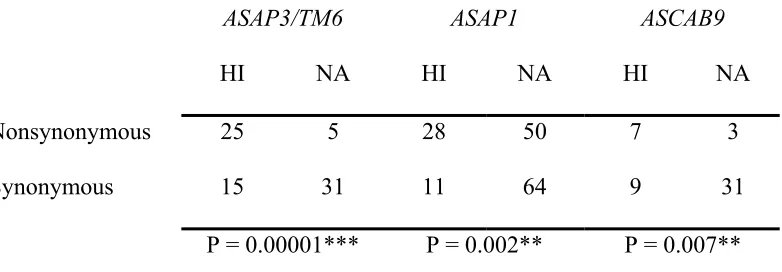
1. Contingency analyses of coding region substitutions in the Hawaiian and North American genes...
107
Chapter 4
3. Nucleotide variation levels of rapidly-evolving Arabidopsis thaliana
genes... 134
4. Replacement and synonymous changes at rapidly-evolving A. thaliana
genes... 136
Appendix C
2. Nonsynonymous (Ka) and synonymous (Ks) substitutions in
Hawaiian ASAP1-A...
190
3. Nonsynonymous (Ka) and synonymous (Ks) substitutions in
Hawaiian ASAP1-B...
191
4. Nonsynonymous (Ka) and synonymous (Ks) substitutions in North American ASAP1...
192
5. Nonsynonymous (Ka) and synonymous (Ks) substitutions in
Hawaiian ASAP3/TM6-A... 193
6. Nonsynonymous (Ka) and synonymous (Ks) substitutions in
Hawaiian ASAP3/TM6-B... 194
7. Nonsynonymous (Ka) and synonymous (Ks) substitutions in North American ASAP3/TM6...
195
8. Nonsynonymous (Ka) and synonymous (Ks) substitutions in
Hawaiian ASCAB9-A... 196
9. Nonsynonymous (Ka) and synonymous (Ks) substitutions in
10. Nonsynonymous (Ka) and synonymous (Ks) substitutions in
Hawaiian ASCAB9-C...
198
11. Nonsynonymous (Ka) and synonymous (Ks) substitutions in North American ASCAB9...
199
Appendix D
1. Primers for amplifying population dataset... 201
LIST OF FIGURES Chapter 2
1. MADS-box sequences of isolated floral homeotic gene orthologs... 62
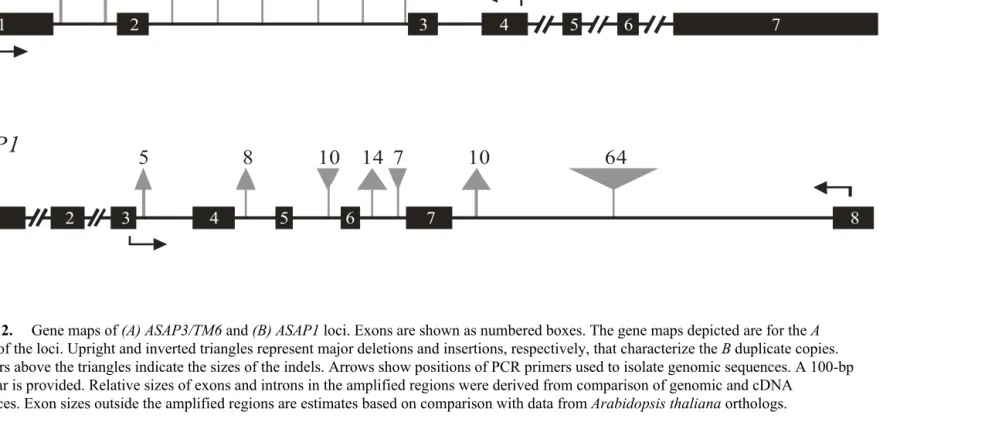
2. Gene maps of (A)ASAP3/TM6 and (B)ASAP1 loci... 65
3. Phylogenetic reconstruction of (A)ASAP3/TM6 and (B)ASAP1 loci.... 70
4. Comparison of nuclear and cpDNA trees of the Hawaiian silversword alliance and North American tarweeds...
73
5. Flowering capitula of (A)Raillardiopsis muirii, (B)Raillardiopsis scabrida, and (C) their interspecific hybrid (R. muirii X R. scabrida)..
75
Chapter 3
1. (A) Gene maps of ASAP3/TM6 and ASAP1 loci. (B) Expression of the
ASAP3/TM6 and ASAP1 floral regulatory genes in developing
inflorescences of D. arborea...
94
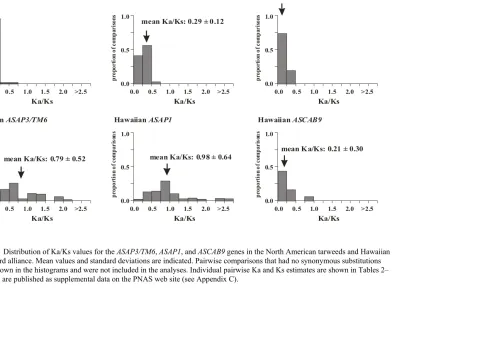
2. Distribution of Ka/Ks values for the ASAP3/TM6, ASAP1, and
ASCAB9 genes in the North American tarweeds and Hawaiian
silversword alliance. ... 102
3. Phylogenies of the (A)ASAP3/TM6 and (B)ASAP1 genes in the North American tarweeds (green) and Hawaiian silversword alliance (blue).
106
Chapter 4
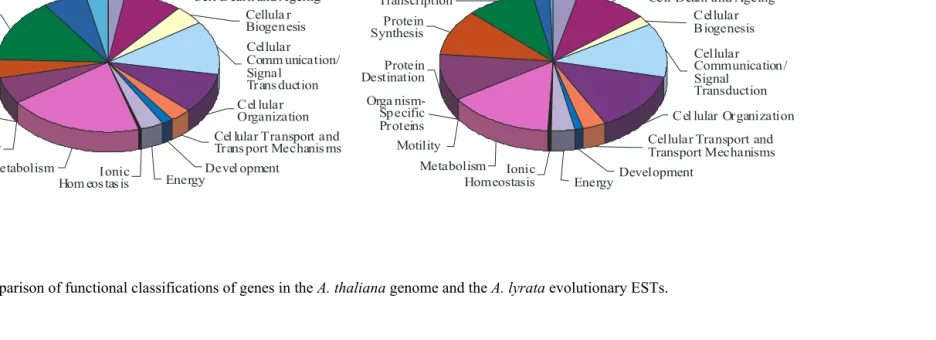
1. Comparison of functional classifications of genes in the A. thaliana
genome and the A. lyrata evolutionary ESTs...
127
2. Distributions of (A) synonymous (Ks*) and (B) nonsynonymous (Ka*) sequence distances, as well as (C)ω* estimates, among 304
orthologues between A. thaliana and A. lyrata...
130
3. Selection intensities, γ, of A. thaliana nuclear genes... 142
Appendix B
1. Structures of the ASAP1 and ASAP3/TM6 genes... 181
LIST OF SYMBOLS AND ABBREVIATIONS
aa Amino acid
AFLP Amplified Fragment Length Polymorphism
AGI Arabidopsis Genome Initiative
AP1 Arabidopsis APETALA1
AP3 Arabidopsis APETALA3
ASAP1 A. sandwicenseAPETALA1 ASAP3/TM6 A. sandwicenseAPETALA3/TM6
ASCAB9 A. sandwicense CHLOROPHYLL A/B BINDING PROTEIN9
BAC Bacterial Artificial Chromosome
bp Base pair
CAB9 Arabidopsis CHLOROPHYLL A/B BINDING PROTEIN9
CAL Arabidopsis CAULIFLOWER
CDR Complementarity-Determining Regions
CI Confidence Interval
cpDNA Chloroplast DNA
DEF Antirrhinum DEFICIENS
EST Expressed Sequence Tag
ETS External Transcribed Spacer
FR Framework Region
HLA Human Leukocyte Antigens
HPCI Highest Posterior probability Credibility Interval
indel(s) Insertion/Deletion mutation(s)
ITS Internal Transcribed Spacer
K Number of nonsynonymous (replacement) substitutions
Ka Proportion of amino acid replacement (nonsynonymous) substitutions Ks Proportion of silent (synonymous) substitutions
MHC Major Histocompatibility Complex
mya Million Years Ago
N Number of nonsynonymous (replacement) substitutions
Ne Effective population size
PCR Polymerase Chain Reaction
PI Arabidopsis PISTILLATA
QTL Quantitative Trait Loci
RACE Random Amplification of cDNA Ends
rDNA Ribosomal DNA
RT Reverse Transcription
S Number of synonymous (silent) substitutions
SQUA Antirrhinum SQUAMOSA
ssp Subspecies
SSR Simple Sequence Repeats
t Scaled species divergence parameter
VH Immunoglobulin heavy-chain variable-region
YAC Yeast Artificial Chromosome
ε Sequencing error
γ Selection intensity on replacement changes
µ Mean
π Nucleotide diversity
σ2 Variance
θ Nucleotide diversity
θR Mutation rates at replacement sites
θS Mutation rates at silent sites
CHAPTER 1.
Introduction
Rapidly-evolving genes have been of particular interest in evolutionary
research because they often provide insight into the mechanisms of adaptive
differences within or between species (e.g., Schmid and Tautz 1997; Purugganan
1998, 2000). One definition of rapidly-evolving genes, which is the definition used
throughout this dissertation, refers to those genes which exhibit an increased rate of
amino acid substitution resulting in greater amino acid sequence difference. In
molecular systematics, this difference can sometimes make these genes useful as
markers for determining phylogenetic relationships (e.g., Kim and Jansen 1995; Hedin
and Maddison 2001). In this dissertation research, the evolution of those
rapidly-evolving genes demonstrating the effects of diversifying selection is examined with
the goals of determining which types of genes have undergone diversification and how
best to identify them.
This dissertation first examines the molecular evolution of genes in a group of
species, the Hawaiian silversword alliance, which has undergone a spectacular
adaptive radiation leading to a great variety of morphological and ecological
adaptations (Barrier et al. 1999, 2000, 2001). This research clarifies the origin of the
ancestral tetraploid Hawaiian silversword alliance species as originating from an
interspecific hybridization of two lineages of diploid North American tarweeds
(Barrier et al. 1999). The added genomic diversity from the polyploidization event
the spectacular adaptation and speciation that followed the radiation across the
Hawaiian archipelago (Stebbins 1971).
Next, the evolution of regulatory genes in the Hawaiian silversword alliance is
examined (Barrier et al. 2001), since divergence of regulatory genes is believed to
underlie the evolution of morphology (Purugganan 1998, 2000). The regulatory genes
analyzed are the homologs of the Arabidopsis APETALA1 (AP1) and APETALA3
(AP3) genes, members of the MADS-box family of plant transcriptional activators
(Riechmann and Meyerowitz 1997). In previous research, AP1 has been shown to be
involved in regulating the initiation of flowering as well as in controlling sepal and
petal organ identity in Arabidopsis flowers (Weigel 1998). AP3 has been shown to be
involved in petal and stamen development in Arabidopsis flowers (Weigel 1998). The
homolog to the Arabidopsis AP3 gene in the silverswords is called ASAP3/TM6
because phylogenetic analysis indicates it is also an ortholog of the Lycopersicon TM6
locus (Purugganan 1997; Kramer, Dorit and Irish 1998). In this dissertation research,
the homologs to these regulatory genes (called ASAP1, ASAP3/TM6 in the alliance and
tarweed species) exhibit an increased rate of protein evolution in the Hawaiian
silversword alliance species when compared to their homologs in the North American
ancestral species, which have not undergone a similar type of adaptive radiation. The
photosynthetic structural gene CHLOROPHYLL A/B BINDING PROTEIN9 (CAB9)
(Pichersky et al. 1991) was also studied as a comparison to the regulatory genes
because previous studies failed to show a correlation between rates of molecular
1975; Sturmbauer and Meyer 1992). Only a slight increase in amino acid evolution is
observed in the homolog of this structural gene (called ASCAB9) in the Hawaiian
silversword alliance species when compared to the homolog in the North American
tarweeds.
Finally, an evolutionary expressed sequence tag (EST) approach is used to
identify rapidly-evolving genes in the model organism Arabidopsis thaliana (Barrier
et al. manuscript, Chapter 4). Arabidopsis lyrata is used for comparison to identify
genes which might be involved in the adaptive divergence between these
closely-related species. This approach identifies 21 putatively fast-evolving genes in
Arabidopsis out of the 304 unique ESTs examined. Population studies for 7 of the
potentially fast-evolving genes reveal that these genes display possible evidence of
Selection and Rapidly-Evolving Genes
Mutation and selection
Selection comes in many forms, but, in general, selection acts to retain or to
remove random nucleotide mutations. Rates of mutation vary between genes in an
organism as well as between the same genes in different populations. In E. coli genes,
for example, mutation rates range from 10-5 to 10-9 mutations per cell per generation
(Hartl and Jones 2001). Most mutations in noncoding regions are selectively neutral,
so for individual genes the rate of mutation at noncoding sites can be used to estimate
the neutral mutation rate for the whole gene region (Kreitman 2000). This estimate
cannot be applied to the genome as a whole because across the genome there is
significant variation in the levels of polymorphism in noncoding regions, which are
strongly correlated with rates of recombination (Begun and Aquadro 1992; Aquadro
1997).
In protein-coding regions, some mutations are neutral or even advantageous,
although most are deleterious. Neutral or nearly-neutral mutations are usually
removed or maintained by random genetic drift rather than by selection (Ohta 1995,
2000). Typically, deleterious mutations are eliminated quickly by purifying selection
while advantageous mutations are kept in the population by some form of positive
selection (Ohta 1991a, 1991b).
Linkage extends the effects of selection to other loci linked to the selected site,
when neutral mutations at linked sites are brought along with the fixation of
advantageous mutations (Majewski and Cohan 1999; Barton 2000). In contrast,
background selection results in the loss of neutral variants that are linked to
deleterious mutations eliminated by purifying selection (Schug et al. 1998; Andolfatto
Forms of selection
Balancing, diversifying, and directional selection are three specific forms of
selection. Balancing selection can be observed at individual residues where two or
more variants are maintained in the population (e.g., Erlich and Gyllensten 1991;
Verra and Hughes 1999). Erlich and Gyllensten (1991) observed balancing selection
of multiple variants at select residues of the antigen binding site (ABS) β-chain, as
well as at sites implicated in susceptibility to disease. At each polymorphic residue,
they found that the same limited set of amino acids was maintained in all of the
primate species studied.
Balancing selection can be the result of overdominance, where the
heterozygous condition at a locus is more fit than either homozygote (e.g., Hughes et
al. 1990; Garrigan and Hendrick 2001; Aidoo et al. 2002). Sickle-cell anemia is a
common example of overdominance, also known as heterozygote advantage. The
presence of a single copy of the sickle-cell hemoglobin gene (HbS) is believed to
provide protection from malaria, while two copies (HbSS) produce the sickle-cell
disease and no copies (HbAA) provide no protection from malaria (Aidoo et al. 2002).
Aidoo et al. (2002) examined the protective advantage of the heterozygote (HbAS) in
malaria endemic regions and confirmed that in children age two to sixteen months old,
who are most at risk for malaria, HbAS was associated with lower mortality rates.
Diversifying selection, similar to balancing selection, also results in amino acid
diversity at a site or region (e.g., Burstein et al. 1982; Tanaka and Nei 1989), but the
complementarity-determining regions (CDRs) and framework regions (FRs) of mouse and human
immunoglobulin heavy-chain variable-region (VH) genes, Tanaka and Nei (1989)
observed higher nonsynonymous rates than synonymous rates of substitution in the
CDRs but the reverse in the FRs. This high degree of VH gene CDR diversity supports
the previous hypothesis of Gojobori and Nei (1984) that these regions are subject to
diversifying selection.
Directional selection is evident when specific mutations are driven to fixation
in a population while others are eliminated (e.g., Blanco-Gelaz et al. 2001; Hoekstra et
al. 2001). Blanco-Gelaz et al. (2001) examined twenty-three closely related alleles
(B*2701-23) of the HLA-B27 gene in order to identify the patterns of synonymous
and nonsynonymous polymorphisms at this gene in human populations from around
the world. This gene has been extensively studied because it has a strong association
with human conditions such as ankylosing spondylitis. They discovered a striking
correlation between the structural features of B27 subtypes and their ethnic
distribution which suggests a model of strong directional evolution of these subtypes
from the B*2705 allele.
Rates of substitution as indicators of selection
Molecular evolutionists have sought to develop methods to identify genes, and
even nucleotide positions, which may have experienced recent bursts of balancing,
directional, or diversifying selection. One way to identify the type of selection acting
synonymous substitutions in the protein coding regions. In protein coding sequences,
synonymous substitutions are those which do not alter the amino acid coding and are,
therefore, more likely to be neutral. Nonsynonymous or replacement substitutions,
which do alter amino acid coding, tend to be deleterious. Values often used to analyze
mutations in coding regions are: Ks, the estimated number of synonymous changes per
synonymous site, and Ka, the estimated number of amino acid replacements per
replacement site (Nei and Gojobori 1986).
Many of the commonly used models for estimating Ka and Ks are based on
using nucleotides as the evolutionary unit. These include Jukes and Cantor (1969),
Kimura (1980), and Nei and Gojobori (1986). These models examine each nucleotide
as an individual unit, independent of the surrounding nucleotides and assume uniform
base composition. The Jukes and Cantor model (1969) assumes that all kinds of
substitutions occur at the same rate, while the Kimura two-parameter model (Kimura
1980) allows for different rates of transitions and transversions. Tests of these models
have determined that they tend to underestimate substitution rates, particularly of Ka,
so they provide a conservative estimate of the substitution rates. These methods
underestimate these rates due to a parsimony approach used to infer the minimal
number of nucleotide substitutions between two homologous codons and because they
do not fully account for multiple substitutions.
Another way of estimating Ka and Ks is by using the codon as the unit of
evolution rather than individual nucleotides (Muse and Gaut 1994). Codon-based
single coding unit. Two common codon-based models developed by Muse and Gaut
(1994) and Goldman and Yang (1994) are based on the maximum likelihood
framework of Felsenstein (1981). These likelihood-based models often provide a
better estimate of Ka and Ks because they include factors such as
transition/transversion rate bias and codon usage bias (Goldman and Yang 1994).
Multiple substitutions are handled by assuming that they happen as a series of single
substitution events rather than as simultaneous substitutions (Muse and Gaut 1994).
They can also use physicochemical distances between amino acids (e.g., Grantham
1974) to account for the selective restraints at the protein level (Goldman and Yang
1994). The method of Muse and Gaut (1994) estimates the equilibrium frequency of
each codon based on each of the three positions in the codon. The method of
Goldman and Yang (1994) does not examine the three codon positions separately, but
rather estimates the equilibrium frequencies for each of the 61 sense codons as a
whole (stop codons are excluded). Since these codon-based models tend to have more
parameters to estimate, this approach can be computationally intensive.
The ratio of replacement (Ka) to synonymous (Ks) substitutions, ω, (ω =
Ka/Ks) is often used as an indicator of selection (Messier and Stewart 1997), with ω
values falling into three categories. First, ω > 1 (Ka > Ks) indicates diversifying
selection. Examples of diversifying selection are further discussed below. Second, ω
= 1 (Ka = Ks) indicates neutrality or no selection, as is the case for pseudogenes (e.g.,
Cadavid et al. 1996). Third, ω < 1 (Ka < Ks) indicates negative selection, the category
selection acts to eliminate deleterious mutations (e.g., Boyson et al. 1999; Bustamante,
Townsend and Hartl 2000). In observations of nuclear genes, the average ω value
typically falls in the range of purifying selection: 0.14 for monocot and dicot plant
genes (Martin et al. 1989; Huang et al. 1992) and 0.16 for mammalian genes (Li et al.
1985).
One way to determine if ω is significantly different from 1 is to perform a
Z-test on the difference between Ka and Ks to see if it is significantly greater than 0. A
concern about this as a test of selection is that the criterion of ω > 1 for diversifying
selection is very stringent. This criterion may miss cases where selection is limited to
a region of the gene, so that the evidence of selection is neutralized by neutral or
negatively selected regions when the gene is examined as a whole (Sharp 1997;
Crandall et al. 1999).
Population-based tests of selection
Selection can also be inferred by examining the levels and patterns of
nucleotide divergence within and between species. One molecular population genetic
test of neutrality is the McDonald-Kreitman test (McDonald and Kreitman 1991)
which determines the evolutionary forces that act on protein coding regions. This test
compares the numbers of nonsynonymous, N (or K), and synonymous, S,
polymorphisms within species as well as divergence between species. These values
are tested in a two-by-two contingency table where, under neutral evolution, the N/S
two selective scenarios are possible. The most common is when there are more fixed
replacement differences between species than replacement polymorphisms within
species as a result of adaptive protein evolution between species. The opposite case,
where within-species replacement polymorphism is greater, may be the result of an
accumulation of deleterious mutations within species or as the result of balancing
selection. The statistical significance of these contingency tables can be calculated
with the two-tailed Fisher’s exact test and the G-test of independence. Both of these
tests determine whether there is significant difference between the N/S ratios. The
McDonald-Kreitman test can also be applied to other categories, such as the direction
of mutation from a preferred to an unpreferred codon or vice versa, within and
between species (Akashi 1995).
This test of selection examines a single gene and may not always detect weak
selection. A newer method by Bustamante et al. (2002) uses the same basic
contingency table categories as the McDonald-Kreitman test, but analyzes multiple
genes from the same species pair. By pooling the information from a set of genes and
making use of the fact that they all share the same interspecies divergence time, a
hierarchical Bayesian method is used to estimate selection coefficients for replacement
changes under a Poisson Random Field model. The direction and intensity of
selection is estimated for each gene based on this model (See Appendix A). This is a
more powerful test of selection because it utilizes information about selective forces
Rapidly-evolving genes
The term “rapidly-evolving genes” encompasses circumstances in which genes
exhibit rapid genetic change. One example is seen in viruses where many genes tend
to evolve rapidly because of high mutation rates and the absence of proofreading and
mismatch repair mechanisms (Holland et al. 1982). In another example, repeat
regions such as microsatellites tend to be highly variable due to their susceptibility to
strand slippage during replication and unequal crossing over (Scherf et al. 1988).
Weber and Wong (1993) determined the mutation rate of microsatellites to be 10-2 to
10-3 per locus per gamete per generation. (See Appendix B for a study of two genes
that appear to be hotspots for microsatellite formation.) Finally, the types of
rapidly-evolving genes examined throughout this dissertation are those genes which exhibit a
greater rate of amino acid substitutions than of synonymous substitutions. These types
of genes are often associated with adaptive variation within or between species or
populations. In this case, ω > 1, the higher rate of substitution is not just due to an
increase in the neutral mutation rate (µ). A general increase in the neutral mutation
rate would result in higher rates of substitution not only at nonsynonymous sites but
also at noncoding and synonymous sites. Two of the main factors that contribute to
increased nonsynonymous variation in these rapidly-evolving genes are a lack of
strong structural or functional constraint (e.g., Avedisov et al. 2001; Hedin and
Maddison 2001) and diversifying selection.
This dissertation research is based on an interest in genes evolving rapidly due
Selection for adaptation is usually in response to various stimuli such as changes in the
environment (e.g., Donohue et al. 2001), or reproductive pressures (e.g., Begun et al.
2000; Armbrust and Galindo 2001). Many well-known rapidly-evolving genes are
those involved in the immune systems of animals, where being able to identify a wide
range of pathogens is vital. For example, in mice and humans diversifying selection
was observed in the antigen recognition site of the major histocompatibility complex
(MHC) class I loci (Hughes and Nei 1988; Bergstrom and Gyllensten 1995) and in the
complementarity-determining (hypervariable) regions (CDR) of immunoglobulins
(Burstein et al. 1982; Tanaka and Nei 1989). The defense mechanisms in plants also
display regions of diversifying selection. In many dicots, positive selection was
observed in plant class I chitinase, which attacks plant pathogens (Bishop et al. 2000).
Interactions between predator and prey or pathogen and host can drive
selection as each competes for the advantage. In the predatory snail, Conus
abbreviatus, its “weapon”, conotoxin, is under strong selection for functional diversity
with a rate of evolution higher than that of most other known proteins (e.g., Duda and
Palumbi 1999). In a study of the malaria parasites (Plasmodium ssp.), the
immunogenic regions of the malaria proteins, targeted by host antibodies, display
positive selection for the ability to evade the host’s defense mechanism (Hughes 1991,
1992). On the host side, in cattle the CD45 locus, encoding a plasma
membrane-associated tyrosine phosphatase, is thought to be subject to strong pathogen-driven
Rapid protein evolution is also observed following gene duplication (e.g., type
II 18S rDNA genes, Carranza et al. 1999; Acp70A gene in Drosophilasubobscura,
Cirera and Aguade 1998; mammalian defensin gene, Hughes and Yeager 1997) due to
either relaxed constraints (Li 1985), advantageous mutations (Ohta 1991a), or both.
Many gene families are the result of duplications followed by rapid evolution (e.g.,
chalcone synthase (CHS) multigene family in Ipomea, Durbin et al. 1995; MHC
complex, Hughes and Yeager 1997; pregnancy-associated glycoproteins (PAG) in
Evolution of the Adaptively Radiating Hawaiian Silversword Alliance
The Hawaiian silversword alliance
The research discussed in this dissertation utilizes two plant systems. One
system includes species in the Compositae (Asteraceae: Heliantheae Madiinae): the
Hawaiian silversword alliance and their closest living relatives, the North American
tarweeds. The Hawaiian silversword alliance was chosen for this study because it has
long been considered a prime example of an insular plant adaptive radiation (Carlquist
1980; Carr 1985; Robichaux et al. 1990; Raven et al. 1992; Baldwin and Robichaux
1995; Baldwin 1997). The alliance is a group of species which arose from a single
ancestor (Carlquist 1957, 1959a; Witter 1986; Witter and Carr 1988; Crins et al. 1988;
Crins and Bohm 1990; Robichaux 1985; Robichaux and Canfield 1985; Robichaux et
al. 1990; Baldwin et al. 1990) and are found exclusively on the Hawaiian archipelago
(Carr 1985). The founding individual was the product of an interspecific hybridization
of two different species of North American tarweeds (Barrier et al. 1999). The
alliance ancestor arrived on the Hawaiian Islands no earlier than 5-6 million years ago
(mya), around the time of the formation of the oldest of the major islands, Kaua’i
(Baldwin and Sanderson 1998). Since this arrival, the species have undergone a
spectacular adaptive radiation with explosive speciation, spreading across the islands
into a wide array of habitats and diversifying into the thirty morphologically distinct
Despite the striking morphological differences, these species are genetically
very similar and have not yet become reproductively isolated by sterility barriers.
Vigorous hybrids have been formed between many of the alliance members within and
between genera as well as between some members of the Hawaiian silversword
alliance and North American tarweeds (Carr and Kyhos 1981, 1986; Carr et al. 1989,
1996; Baldwin et al. 1991, 1998; Baldwin 1997). The significant morphological
diversity resulting from this relatively recent adaptive radiation makes this an
interesting group for studying the evolutionary genetics of adaptive divergence.
Morphology and ecology of the Hawaiian silversword alliance
In 1985, after almost a decade of research in the area, Gerald D. Carr published
a monograph on the Hawaiian Madiinae summarizing all that was known at that time
(Carr 1985). What follows is a summary of the morphology and ecology of this
group, taken mostly from this monograph with some recent updates.
The Hawaiian silversword alliance is comprised of 30 perennial species
divided into three endemic genera: Argyroxiphium, Dubautia, and Wilkesia. This
group is found exclusively on the six major islands of the Hawaiian archipelago:
Kaua’i, O’ahu, Moloka’i, Lana’i, Maui, and Hawai’i. Islands of the Hawaiian
archipelago were formed through the buildup of lava from a “hot spot” in the ocean
floor followed by their slow drift to the Northwest. The major islands today range in
age from 0.4 million years for the youngest, Hawai’i, at the Southeast end of the chain,
continuing process of rebirth, along with erosion and subsidence, has shaped the vast
array of habitats now occupied by the alliance species: dry alpine deserts of cinder and
lava, dry scrub and woodland, wet scrub and forest, and bogs. All but five species of
the alliance are single-island endemics with half of these single-island species isolated
to a single volcano, to an area of the island, or even to a specific lava flow. These
various habitats extend from 75 m to 3750 m in elevation (cf. Smathers and
Mueller-Dombois 1974) and on average receive from less than 40 cm to more than 1230 cm of
annual rainfall.
Along with this environmental diversity, there is a remarkable amount of
morphological variation between species. Members of the genera Argyroxiphium and
Wilkesia are either monocarpic or polycarpic rosette plants with the placement of their
rosette either at the base of the plant or elevated up to five meters on the woody stem.
The members of Dubautia are more varied and include trees, shrubs, mat-forming
shrubs, cushion plants, and a liana. Stems of the alliance range from subherbaceous
stalks only a few millimeters in diameter to massively woody trunks up to at least 5
dm in diameter. Their leaves differ in size (from 5 mm to 500 mm in length), in shape
(including linguate, elliptic, lanceolate, linear, ovate, and oblong) and in arrangement
on the stems (opposite, whorled, or helical). Their ray or disk flowers are seen in an
assortment of colors including white, yellow, and purple. Very sticky resinous
secretions from glandular trichomes are what give their North American ancestors
Hawaiian alliance species. With all of this morphological variation, it is easy to see
how difficult it initially was to recognize these species as members of a single group.
A monophyletic group
Early on it was unclear whether the Hawaiian silversword alliance species
arose from a single founding event or from several independent arrivals. In the late
1950s, Sherwin Carlquist’s examination of the vegetative anatomy of Argyroxiphium,
Dubautia, and Wilkesia provided structural evidence that the Hawaiian Madiinae
originated from a single colonizing species (Carlquist 1957, 1959a). Later, G. D. Carr
and D. W. Kyhos added to this evidence their cytogenetic studies of hybrids. They
noted that there is still enough genetic similarity between alliance species that
spontaneous interspecific and intergeneric hybrids are found at high frequency in
nature (Carr and Kyhos 1981) and are easily produced in the lab (Carr and Kyhos
1986). By studying the chromosomal pairings of these hybrids, they were able to
identify eight different reciprocal translocations and an aneuploid reduction, each
characterizing a group of alliance species (Carr and Kyhos 1986). Despite these
chromosomal alterations, hybrids between groups were not sterile, but produced some
proportion of viable pollen. Further evidence to support the relationship of these
species from a single founding event include allozymic data (Witter 1986; Witter and
Carr 1988), flavonoid variation (Crins et al. 1988; Crins and Bohm 1990), ecophysical
properties (Robichaux 1985; Robichaux and Canfield 1985; Robichaux et al. 1990),
used to analyze putative hybrid taxa and their potential parental species (Carr et al.
1989; Baldwin 1997; Baldwin et al. 1998), providing further evidence for a single
colonizing ancestral species by showing that the Hawaiian silversword alliance is a
genetically cohesive group.
Tarweed ancestry
As the monophyly of the silverswords was being resolved, their ancestry was
also in question. As early as 1852, an affinity of Argyroxiphium species to the
American tarweeds was suggested by A. Gray (1852), but was disputed by D.D. Keck
in 1936, based on presumed morphological dissimilarities and the magnitude of the
oceanic barrier to migration from mainland North America to Hawai’i (Keck 1936).
This uncertainty is understandable since the tarweeds do not share the life-form
diversity of the silversword alliance species, but are mostly ephemeral herbs (Baldwin
and Sanderson 1998). Even in 1948, relationships to the Hawaiian species were still
considered obscure in “Derivation of the flora of the Hawaiian islands” (Fosberg
1948). A decade later, S. Carlquist hypothesized that the Hawaiian silversword
alliance arose from the American tarweeds based on his anatomical studies of their
wood, trichome, and vegetative structures (Carlquist 1958a, b, 1959b). Carlquist
addressed the problem of the extremely long-distance dispersal needed by concluding
that the sticky bracts and fruit appendages of the perennial tarweeds were perfect
adaptations for animal-mediated dispersal (Carlquist 1966, 1967). The prospect of this
birds and accidental arrivals are regularly sighted onthe Hawaiian Islands (cf.
Shallenberger 1981).
As the alliance-tarweed relationship became accepted, the classification
schemes of the sunflower family in 1977 easily accommodated the Hawaiian
silversword alliance in the subtribe Madiinae of the tribe Heliantheae (Stuessy 1977).
This association was further reinforced when Baldwin et al. (1991) used
restriction-site comparisons of chloroplast DNA in the Hawaiian alliance and perennial
continental tarweeds to reveal a close affinity of the monophyletic Hawaiian
silversword alliance not just to the North American tarweeds, but to two specific
diploid members of the group, Kyhosia bolanderi (formerly Madia bolanderi) and
Carlquistia muirii (formerly Raillardiopsis muirii). They further supported their
phylogenetic analyses by producing vigorous hybrids of Dubautia laevigata X C.
muirii and (D. knudsenii X D. laxa) X K. bolanderi. This study refined the ancestral
relationship of the alliance to specific lines of continental tarweeds by showing that
the monophyletic Hawaiian alliance group was nested within a western American
lineage of the genera Kyhosia and Carlquistia. This nested phylogeny was supported
further by sequence analyses of ribosomal DNA ITS and ETS regions (Baldwin and
Sanderson 1998, Baldwin and Markos 1998). While the ancestry of the alliance was
now solidly linked to a branch of the North American tarweeds, the specific nature of
Allopolyploidization
Initially researchers believed the polyploid ancestor to the Hawaiian
silversword alliance would still be extant on the mainland, so they focused on the
existing polyploid continental tarweeds (n = 14) (Carr et al. 1996). Carr et al. (1996)
produced vigorous hybrids between polyploid Hawaiian alliance and diploid
continental tarweed species and successfully crossed the hybrid of two tarweeds
(Kyhosia bolanderi X Carlquistia muirii) with an alliance species (D. scabra). After
looking at meioses of hybrid pollen as well as the morphologies of the hybrids and
their parents, they proposed that these data suggest an allopolyploid origin for the
Hawaiian silversword alliance genome.
Genetic evidence for the allopolyploid origin is uncovered in the research
described here in Chapter 2 (Barrier et al. 1999). By examining the sequences of two
nuclear regulatory genes in members of the Hawaiian silversword alliance and the
North American tarweeds, it is determined that the founding member of the alliance
was, in fact, the result of an allopolyploidization event. In the sequencing of these
genes, it is discovered that the Hawaiian alliance species have two distinct copies of
each gene (called A and B), while the diploid North American tarweed species has
only a single copy of each. Phylogenetic analysis of these genes reveals that the
alliance A and B copies each form a monophyletic group and that each group clusters
with specific individuals of the North American tarweeds: Carlquistia muirii,
Anisocarpus scabridus (formerly Raillardiopsis scabrida), and possibly Harmonia
tarweeds Baldwin et al. (1991) initially established as the closest-living ancestors to
the alliance. From this it is determined that the founding member of the Hawaiian
silversword alliance was the result of an interspecific hybridization between members
of the lineages including C. muirii and A. scabridus. Further support for this comes
from previous reports of a vigorous hybrid combination between C. muirii and A.
scabridus (Baldwin 1989; Kyhos, Carr and Baldwin 1990). By determining that the
founding member of the Hawaiian silversword alliance was most likely an
allopolyploid from the North American tarweeds, this information can now be used to
examine possible evolutionary mechanisms for the spectacular adaptive radiation of
the alliance species.
Adaptive radiation
Adaptive radiations are particularly interesting because they involve the
ecological differentiation of individuals within a lineage and are often associated with
increases in morphological diversity and rates of speciation (Givnish and Sytsma
1997). They are especially noticeable on islands where the relative isolation leads to
“numerous vacant niches or ecological opportunities for island immigrants” (Carlquist
1974). Volcanic islands like the Hawaiian archipelago can provide a wide range of
climatically and physiographically differentiated habitats due to the recurrent volcanic
eruptions and constant erosion (e.g., rainfall) (Knapp 1975). The isolation of the
a lineage will undergo an adaptive radiation is greatly increased by this absence of
competition (Mayr 1942; Simpson 1953; Skelton 1993).
It is believed that the ancestral Hawaiian silversword alliance species arrived
on the oldest of the major islands, Kaua’i, and radiated out from there. Baldwin and
Sanderson were able to determine a maximum age for the divergence of the Hawaiian
silversword alliance by using paleoclimatic and fossil data as an “external” calibration
and rate-constant ribosomal DNA sequence evolution of the Internal Transcribed
Spacer (ITS) region (Baldwin and Sanderson 1998). Their maximum-age estimate for
the most recent common ancestor of the alliance was 5.2 ± 0.8 mya, which falls within
the history of the modern high islands (5.1 mya for Kaua’i). This would indicate that
the ancestral alliance species most likely arrived on the island of Kaua’i when it was
still young and open to colonization. The alliance members then spread out into the
various habitats available on the island and made their way southeast to each new
island as it arose from the ocean. It is possible to trace the evolution of a character
across the islands by examining the patterns of variability of that character. Carr and
Kyhos (1981, 1986) hypothesized that a chromosome number of n = 14 was the
alliance’s ancestral type. They demonstrated that plants with n = 14 occurred on the
older islands of the Hawaiian archipelago, while the n = 13 plants were restricted to
the younger islands. Molecular phylogenetic data from cpDNA nuclear ribosomal
DNA confirmed the dysploid descent from n = 14 to n = 13 and verified monophyly of
the n = 13 taxa (Baldwin et al. 1990; Baldwin and Robichaux 1995; see Baldwin
which found the n = 14 Dubautia species to be more highly divergent than the n = 13
species and therefore older. The aneuploid reduction (from n = 14 to 13) in a
monophyletic group of Dubautia species was shown to be correlated with several
major ecological, morphological, and physiological differences (Robichaux et al.
1990).
The diversification of the Hawaiian silversword alliance into the many species
currently observed was most likely due to these isolated populations adapting to their
particular habitats, as is seen in studies of other island endemics (Crawford and
Stuessy 1997). The genetic similarity between alliance species, despite their
ecological and morphological divergence, has also been observed in other studies of
plant and animal adaptive radiations (Rieseberg and Swensen 1995). The
allopolyploid nature of the Hawaiian silversword alliance members may have added to
their ability to adapt to the various habitats.
Polyploidy
Polyploidy is known as a common mechanism of speciation in flowering
plants (Grant 1981; Levin 1983; Carlquist 1995; Stebbins 1971). Polyploids often
exhibit an increased rate of evolutionary change because of an initially high amount of
genetic redundancy due to duplicated gene loci (Stebbins 1971). Allopolyploids have
the added benefit of two complete, but dissimilar genomes, providing a wealth of
genetic diversity in a single individual (Levin 1983). Wendel (2000) reviewed the
genomes and discussed how experiments of synthetic allopolyploids have provided
much of the knowledge about the ‘dynamic nature of polyploidy genomes’ (Soltis and
Soltis 1995).
In one study of natural allopolyploids, Small, Ryburn and Wendel (1999)
studied the nucleotide diversity at the homoeologous AdhA loci in allotetraploid cotton
species, Gossypium hirsutum, using the closely-related G. barbadense for comparison.
These are two of the five allotetraploid cotton species believed to have come from the
same allopolyploidization event 1-2 mya. The pair of nuclear AdhA loci represent the
two diploid lineages (A and D) which formed the ancestral allotetraploid plant.
Instead of increased diversity from the polyploidization, Small, Ryburn and Wendel
(1999) observed estimates of nucleotide diversity for AdhA that were lower than that
of any other plant nuclear gene described. This is believed to be due to a history of
genetic bottlenecks, rapid population expansion and a slow mutation rate. The
nucleotide diversity for AdhA from the D-subgenome is approximately twice as high
as that from the A-subgenome, indicating that the two subgenomes of these
allotetraploids may be subject to different evolutionary pressures.
In another study, Song et al. (1995) produced reciprocal synthetic
allopolyploids in Brassica in order to study the effects of polyploidy over five
generations of selfing. Using Southern hybridizations, in each generation they
detected a high frequency of genomic changes including recovery and loss of parental
fragments and frequent appearances of novel fragments. Similar experiments of
Liu et al. 1998) also produced similar striking examples of polyploidy-induced
genomic changes, particularly with rapid, non-random sequence elimination. In the
case of the Hawaiian silversword alliance, the profound adaptive radiation may have
Identifying Rapidly-Evolving Genes in Arabidopsis
The latter part of this dissertation research focuses on the mustard plant,
Arabidopsis thaliana (Brassicaceae) and its relative, Arabidopsis lyrata. Here an
evolutionary Expressed Sequence Tag (EST) approach (Swanson et al. 2001) is used
to identify potential fast-evolving genes in Arabidopsis. A subset of these
rapidly-evolving ESTs is then chosen and a population analysis performed to examine the
variation within A. thaliana as well as between species. This EST approach allows for
the identification of a set of genes which may be involved in the divergence of these
species.
Evolutionary EST approach
An evolutionary EST approach is a method of comparing sequences of
expressed genes from two closely-related species in order to identify genes involved in
functional divergence. Swanson et al. (2001) used this approach to identify
rapidly-evolving male reproductive proteins in Drosophila. In their study, EST sequences
from the male accessory gland of Drosophilasilmulans were compared to their
orthologs in D. melanogaster, using the complete genomic sequence now available
(Adams et al. 2000). Of 176 unique genes isolated, nineteen were identified as
showing evidence of rapid divergence between these closely related species by an
For this dissertation research, a cDNA library is created from Arabidopsis
lyrata flowering material and a collection of ESTs sequenced. Homologous sequences
from Arabidopsis thaliana are found by searching online databases with NCBI’s
BLAST software. By observing the pairwise differences for each of the 304 unique
genes isolated, 21 potential rapidly-evolving genes with an ω value (Ka/Ks) greater
than one are identified. Seven of these genes are then sequenced in a set of A. thaliana
and A. lyrata individuals in order to verify the between-species differences and further
examine the pattern of differences both within A. thaliana and between species. The
study identifies a group of genes which may be undergoing positive selection in
Arabidopsis.
Arabidopsis – a model for plant research
Arabidopsis thaliana (L.) Heynh. is the chosen organism because it is a
well-developed model organism for plant research with a long history. Johannes Thal, a
16th century German physician, first described Arabidopsis in a Flora Book of the
Harz Mountains in 1577 and was later honored with the “thaliana” name (Redei
1992). It wasn’t until 1907 that the first Arabidopsis research was conducted by
Friedrich Laibach, who published a significant paper on the individuality and
continuity of chromosomes after correctly counting the 10 somatic and 5 meiotic
chromosomes of Arabidopsis (Redei 1992). Later, in a 1943 publication, Laibach
listed many of the same favorable features of A. thaliana which have allowed it to
Arabidopsis thaliana is a weed in the mustard family comprised of a rosette of
small leaves with a main stem topped by an inflorescence. The plant is very small
with a height up to just 30 or 40 cm and mature flowers about 3 mm long and 1 mm in
diameter (Meyerowitz 1987) which allows for cultivation in limited space.
Arabidopsis has the benefit of rapid development in the lab, where seeds germinate in
a few days and sometimes grow to flowering in just four to five weeks (Meyerowitz
1987). The mature Arabidopsis plant can then produce more than 10,000 seeds
(Meyerowitz 1987). The standard Arabidopsis flower has four whorls from outside to
inside containing: four sepals, four white petals, six stamens (two short and four long),
and an ovary of two carpals in the center. The simple structures of this plant have
allowed for the development of basic models for characterizing gene interactions like
the ABC model of flower development (Bowman et al. 1991). A large number of
genes involved in Arabidopsis development, from germination to floral structures,
have been characterized through the analysis and mapping of natural and induced
mutants (Meyerowitz 1987).
Population genetics of Arabidopsis
Arabidopsis thaliana is believed to be native to Western Eurasia (Hoffman
2002). Currently, A. thaliana ecotypes are widely distributed in open or disturbed
habitats in temperate regions of Eurasia, North Africa, and North America (O’Kane
and Al-Shebaz 1997; Mitchell-Olds 2001). Many molecular studies have examined
Suddith 1998, 1999; Aguade 2001) groups of genes (Olsen et al. 2002; Bustamante et
al. 2002), microsatellite markers (Clauss, Cobban and Mitchell-Olds 2002), and AFLP
polymorphisms (Miyashita, Kawabe and Innan 1999).
Population genetic studies of Arabidopsis thaliana at individual loci provide
evidence of the evolutionary forces acting at these specific genes. Purugganan and
Suddith (1998) observed an excess of intraspecific replacement polymorphisms in
alleles of the Arabidopsis CAULIFLOWER (CAL) floral regulatory gene, with 16 of
the 21 coding-region polymorphisms being replacement substitutions. Comparisons
between A. thaliana and A. lyrataCAL alleles revealed 13 fixed replacement
differences out of the 28 total fixed differences between these closely-related species.
The McDonald-Kreitman test demonstrated that this data is significantly different
from expectations of neutrality, suggesting positive selection may be acting at this
locus in Arabidopsis thaliana. A similar pattern of increased intraspecific replacement
polymorphism was observed in two other floral regulatory genes, APETALA3 (AP3)
and PISTILLATA (PI) by Purugganan and Suddith in 1999. The results from both of
these studies are suggestive of a recent species expansion. In contrast, a population
genetic study of two genes, FAH1 and F3H, coding for enzymes in the
phenylpropanoid pathway, revealed no evidence for significant replacement
polymorphism (Aguade 2001).
Studies of individual genes can only provide snapshots of the evolutionary
processes occurring throughout the genome. In order to observe the overall
A study by Olsen et al. (2002) examined six regulatory genes involved at different
stages of the floral development pathway. They observed different patterns of
molecular evolution in these regulatory genes along the pathway, with the two earlier
acting genes showing evidence of adaptive evolution. Bustamante et al. (2002)
examined a group of 12 nuclear genes of diverse function in Arabidopsis and a group
of 34 genes in Drosophila in order to compare the pattern and intensity of selection in
the two genomes. This study revealed contrasting trends of gene substitution, possibly
attributable to the different mating systems. They found evidence for predominantly
beneficial gene substitutions in the outcrossing Drosophila species, but mostly
detrimental substitutions in the self-fertilizing Arabidopsis. A similar effect of mating
system was also observed by Miyashita, Kawabe and Innan (1999) in an Amplified
Fragment Length Polymorphism (AFLP) analysis of 374 polymorphic bands in
Arabidopsis. In observing the levels and patterns of DNA variation in Arabidopsis,
they observed an excess of singleton variation, often associated with inbreeding.
Their data also suggested a recent spread of this species with limited migration
between populations.
Relatives of Arabidopsis thaliana
A. thaliana was compared to the closely-related species A. lyrata in the
dissertation research in order to eliminate the problem of multiple substitutions which
obscure selection as species become more distant (Swanson et al. 2001). From
parsimony and Neighbor-joining trees that agree that A. halleri and the three
subspecies of A. lyrata are most closely related to A. thaliana. Koch et al. (2000)
determined that A. thaliana diverged from A. halleri and A. lyrata approximately 5
million years ago (mya), relatively recently on the evolutionary timescale.
Despite their close relationship, A. thaliana and A. lyrata do exhibit significant
differences in chromosome number (A. thaliana 2n = 10, A. lyrata 2n = 16), mating
type, ecology, and life history (Clauss, Cobban and Mitchell-Olds 2002). A. thaliana
is 99.7% selfing (Abbott and Gomes 1989) while A. lyrata is 99% outcrossing and
mostly self-incompatible (Savolainen et al. 2000). In a population genetic study using
microsatellite markers (Clauss, Cobban and Mitchell-Olds 2002), the effects of the
different mating systems could be seen in the genetic variability of these species. The
selfing A. thaliana was shown to have only 8% polymorphic loci while loci of the
self-incompatible A. lyrata ssp. petraea were 86% polymorphic. This is consistent with
predictions that outcrossing species maintain higher levels of genetic variation
(Charlesworth and Charlesworth 1995).
Tools for genetic research in Arabidopsis
Currently, the Arabidopsis thaliana genetic toolkit includes DNA libraries,
mapping populations, YACs, BACs, and mutants all available for molecular analysis
from stock centers (Koch et al. 1999). Extensive physical and genetic maps of all five
chromosomes are available online at the Arabidopsis Genome Initiative (AGI) website
(Columbia ecotype) was sequenced (The Arabidopsis Genome Initiative 2000) and is
also available on the AGI website.
With the genome sequenced and available online, the job of identifying and
properly annotating genes in the Arabidopsis genome has been taken on by many
groups such as The Institute for Genomic Research (TIGR – www.tigr.org/tdb), the
Munich Information center for Protein Sequences (MIPS – mips.gsf.de) and the
Kazusa Arabidopsis data opening site (KAOS – www.kazula.or.jp/kaos). These
groups and others provide various database tools and options for analyzing and
visualizing regions of the Arabidopsis genome. As of May 2002, the MIPS A.
thaliana database (MAtDB) website (http://mips.gsf.de/proj/thal/db/index.html) lists
25,628 gene/protein entries, but only 2565 of the entries have been classified so far.
As more genomes are sequenced, comparative genomics will allow more genes to be
Literature Cited
Abbott, R. J. and Gomes, M. F. (1989) Population genetic structure and outcrossing rate of Arabidopsis thaliana (L.) Heynh. Heredity 62:411-418.
Adams, M. D., Celniker, S. E., Holt, R. A., et al. (2000) The genome sequence of
Drosophila melanogaster. Science 287: 2185-2195.
Aguade, M. (2001) Nucleotide sequence variation at two genes of the
phenylpropanoid pathway, the FAH1 and F3H genes, in Arabidopsis thaliana.
Mol. Biol. Evol. 18: 1-9.
Aidoo, M., Terlouw, D. J., Kolczak, M., McElroy, P. D., ter Kuile, F. O., Kariuki, S., Nahlen, B. L., Lal, A. A. and Udhayakumar, V. (2002) Protective effects of the sickle cell gene against malaria morbidity and mortality. The Lancet359: 1311-1312.
Akashi, H. (1995) Inferring weak selection from patterns of polymorphism and divergence at “silent” sites in Drosophila DNA. Genetics 139: 1067-1076.
Alba, R., Kelmenson, P. M., Cordonnier-Pratt, M. M. and Pratt, L. H. (2000) The phytochrome gene family in tomato and the rapid differential evolution of this family in angiosperms. Mol. Biol. Evol. 17: 362-373.
Andolfatto, P. and Przeworski, M. (2001) Regions of lower crossing over harbor more rare variants in African populations of Drosophila melanogaster. Genetics 158: 657-665.
Aquadro, C. F. (1997) Insights into the evolutionary process from patterns of DNA sequence variability. Curr. Opin. Genet. Dev.7: 835-840.
Arabidopsis Genome Initiative (2000) Analysis of the genome sequence of the flowering plant Arabidopsis thaliana. Nature408: 796-815.
Armbrust, E. V. and Galindo, H. M. (2001) Rapid evolution of a sexual reproduction gene in centric diatoms of the genus Thalassiosira. Appl. Environ. Microbiol. 67: 3501-3513.
Avedisov, S. N., Rogozin, I. B., Koonin, E. V. and Thomas, B. J. (2001) Rapid

![Figure 3. Phylogenetic reconstruction of R = (A) ASAP3/TM6 (tree length = 343 steps, consistency index [CI] = 0.860) and (B) ASAP1 loci (tree length = 211 steps, CI = 0.863) in the Hawaiian silversword alliance and North American tarweeds using maximum-pa](https://thumb-us.123doks.com/thumbv2/123dok_us/1695284.1214632/87.612.136.689.121.429/phylogenetic-reconstruction-consistency-hawaiian-silversword-alliance-american-tarweeds.webp)