Effect of Injection Pressure and Nozzle Hole
Diameter on Combustion Parameters of CI
Engine Fuelled with B20 Neem Blend
Praveen A. Harari¹, Akshatha D. S², Manavendra.G³
P.G Student (MTP), Department of Mechanical Engineering, BIET Davangere, Karnataka, India¹. Assistant Professor, Department of Mechanical Engineering, BIET Davangere, Karnataka, India². Associate Professor, Department of Mechanical Engineering, BIET Davangere, Karnataka, India³.
ABSTRACT: In the present study an experimental work had been carried out to analyze the combustion parameters of B20 neem blend by varying injection pressure and nozzle hole diameter. The engine tests are conducted on kirloskar 4-stroke single cylinder 1500 rpm water cooled direct injection diesel engine with eddy current dynamometer with standard injection timing 23˚bTDC was maintained constant throughout the experiment. 3 different injection pressures such as 210 bar, 230 bar, 250 bar and 3 different nozzles such as (3×0.28mm), (4×0.23mm), (5×0.20mm) varied to analyze the combustion parameters. From the test results, it could be observed that among 3 different nozzles (3×0.28mm) nozzle gives higher Peak pressure rise as compared to 4 hole nozzle and 5 hole nozzle.
KEYWORDS: Neem biodiesel, nozzle, injection pressure, combustion, B20 blend, CI engine.
I. INTRODUCTION
II. METHODOLOGY
A. TRANSESTERIFICATION PROCESS
It is most commonly used and important method to reduce the viscosity of vegetable oils. In this process triglyceride reacts with three molecules of alcohol in the presence of a catalyst producing a mixture of fatty acids, alkyl ester and glycerol. The process of removal of all the glycerol and the fatty acids from the vegetable oil in the presence of a catalyst is called esterification.
Neem Glyceride Alcohol Glycerine Neem Biodiesel
Fig 1. Chemical reaction.
B. PROPERTIESOFFUELS
Properties Diesel Neem biodiesel
(NOME)
B20
Density (kg/m³) 827 890 835 Kinematic viscosity at 40˚C (cSt) 3.517 5.648 4.403
Flash point (˚C) 47 174 69 Fire point (˚C) 54 186 83 Calorific value (MJ/kg) 42 39.66 40.87
Table 1. Properties of fuels.
C. EXPERIMENTAL SETUP
D. ENGINE SPECIFICATIONS
Engine Parameter Specifications
Engine type Kirloskar, Four stroke, Single cylinder, Water cooled, Direct injection
Bore × Stroke 87.5 mm × 110 mm Compression Ratio 17.5:1
Rated speed and Rated power 1500 rpm and 5.2 kW Dynamometer Eddy current dynamometer
Injection pressure 210 bar, 230 bar, 250 bar
Injection timing 23˚ bTDC
Table 2. Engine specifications.
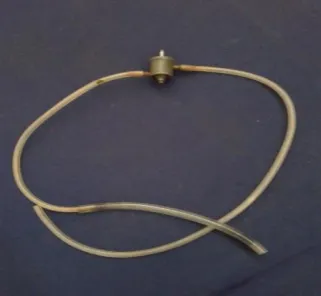
The experiment was carried out to investigate the effect of change in injection pressure and nozzle hole diameter on combustion characteristics of B20 neem blend in a stationary single cylinder diesel engine and to compare it with diesel fuel. Technical specifications of the engine are given above. The engine was coupled with eddy current dynamometer. The engine was operated on diesel first and then on B20 blend of neem methyl ester. The combustion parameters were analyzed from the graphs regarding Peak pressure rise and Indicated mean effective pressure (IMEP) for the blends of B0 and B20. Pressure transducer is used to indicate peak pressure rise and indicated mean effective pressure. For determining the effect of injector nozzle diameter on diesel engine combustion, the number of nozzle holes are increased such as 3 hole, 4 hole and 5 hole. All 3 holes have diameter of 0.28 mm. All 4 holes have diameter of 0.23 mm. All 5 holes have diameter of 0.20 mm.
E. NOZZLE SPRAY PATTERN
Fig 4. 3 hole nozzle spray pattern. Fig 5. 4 hole nozzle spray pattern. Fig 6. 5 hole nozzle spray pattern.
III. RESULTS AND DISCUSSION
A. PEAK PRESSURE RISE
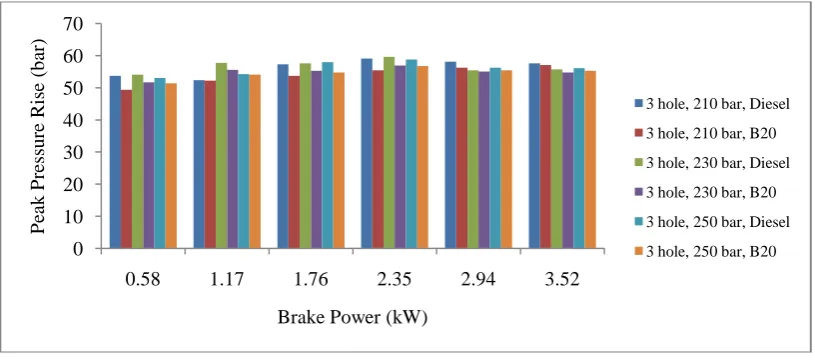
57.61 bar at 0.58, 1.17, 1.76, 2.35, 2.94, 3.52 kW of BP respectively. For 3 hole nozzle with B20 fuel at 210 bar injection pressure the peak pressure rise were found to be 49.36, 52.22, 53.74, 55.42, 56.26, 57.11 bar at 0.58, 1.17, 1.76, 2.35, 2.94, 3.52 kW of BP respectively. For 3 hole nozzle with diesel fuel at 230 bar injection pressure the peak pressure rise were found to be 54.11, 57.78, 57.61, 59.63, 55.42, 55.76 bar at 0.58, 1.17, 1.76, 2.35, 2.94, 3.52 kW of BP respectively. For 3 hole nozzle with B20 fuel at 230 bar injection pressure the peak pressure rise were found to be 51.72, 55.59, 55.25, 56.94, 55.09, 54.75 bar at 0.58, 1.17, 1.76, 2.35, 2.94, 3.52 kW of BP respectively. For 3 hole nozzle with diesel fuel at 250 bar injection pressure the peak pressure rise were found to be 53.06, 54.24, 57.95, 58.79, 56.26, 56.1 bar at 0.58, 1.17, 1.76, 2.35, 2.94, 3.52 kW of BP respectively. For 3 hole nozzle with B20 fuel at 250 bar injection pressure the peak pressure rise were found to be 51.38, 54.07, 54.75, 56.77, 55.42, 55.25 bar at 0.58, 1.17, 1.76, 2.35, 2.94, 3.52 kW of BP respectively.
Fig 7. Variation of peak pressure rise vs. brake power for 3 hole nozzle at different injection pressures.
Fig 8. shows the variation of peak pressure rise vs. brake power for 4 hole nozzle at different injection pressures. At all loads, the peak pressure rise of diesel fuel is more than B20 fuel due to lower cetane number and lower heating value of B20 fuel as compared to diesel fuel results in lower cylinder pressure rise for biodiesel [6]. At the time of injection, biodiesel has less air fuel mixture for combustion. The peak pressure rise depends upon premixed combustion phase. Due to premixed combustion phase of burning, lower pressure was obtained for biodiesel blend [7]. For 4 hole nozzle with diesel fuel at 210 bar injection pressure the peak pressure rise were found to be 50.54, 52.39, 49.86, 50.2, 50.71, 49.69 bar at 0.58, 1.17, 1.76, 2.35, 2.94, 3.52 kW of BP respectively. For 4 hole nozzle with B20 fuel at 210 bar injection pressure the peak pressure rise were found to be 48.35, 51.55, 49.36, 49.69, 50.37, 49.02 bar at 0.58, 1.17, 1.76, 2.35, 2.94, 3.52 kW of BP respectively. For 4 hole nozzle with diesel fuel at 230 bar injection pressure the peak pressure rise were found to be 51.21, 52.22, 52.90, 52.05, 52.56, 54.41 bar at 0.58, 1.17, 1.76, 2.35, 2.94, 3.52 kW of BP respectively. For 4 hole nozzle with B20 fuel at 230 bar injection pressure the peak pressure rise were found to be 51.04, 51.38, 51.88, 51.55, 50.54, 52.73 bar at 0.58, 1.17, 1.76, 2.35, 2.94, 3.52 kW of BP respectively. For 4 hole nozzle with diesel fuel at 250 bar injection pressure the peak pressure rise were found to be 49.86, 50.87, 50.37, 50.54, 50.37, 49.86 bar at 0.58, 1.17, 1.76, 2.35, 2.94, 3.52 kW of BP respectively. For 4 hole nozzle with B20 fuel at 250 bar injection pressure the peak pressure rise were found to be 49.86, 50.37, 48.85, 50.03, 49.69, 49.19 bar at 0.58, 1.17, 1.76, 2.35, 2.94, 3.52 kW of BP respectively.
0 10 20 30 40 50 60 70
0.58 1.17 1.76 2.35 2.94 3.52
P ea k P ress u re R is e (b ar )
Brake Power (kW)
3 hole, 210 bar, Diesel
3 hole, 210 bar, B20
3 hole, 230 bar, Diesel
3 hole, 230 bar, B20
3 hole, 250 bar, Diesel
Fig 8. Variation of peak pressure rise vs. brake power for 4 hole nozzle at different injection pressures.
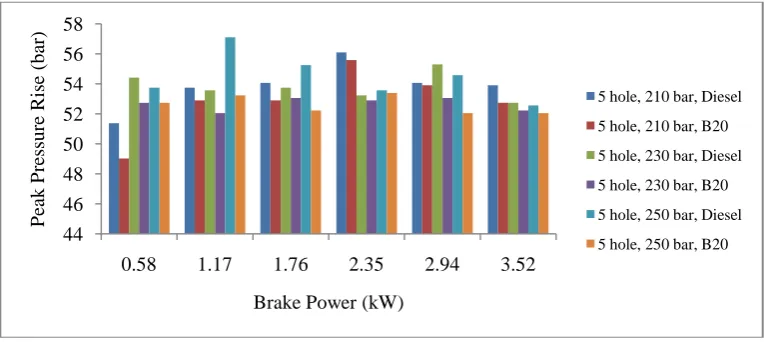
Fig 9. shows the variation of peak pressure rise vs. brake power for 5 hole nozzle at different injection pressures. At all loads, the peak pressure rise of diesel fuel is more than B20 fuel due to lower cetane number and lower heating value of B20 fuel as compared to diesel fuel results in lower cylinder pressure rise for biodiesel [6]. At the time of injection, biodiesel has less air fuel mixture for combustion. The peak pressure rise depends upon premixed combustion phase. Due to premixed combustion phase of burning, lower pressure was obtained for biodiesel blend [7]. For 5 hole nozzle with diesel fuel at 210 bar injection pressure the peak pressure rise were found to be 51.38, 53.74, 54.07, 56.1, 54.07, 53.91 bar at 0.58, 1.17, 1.76, 2.35, 2.94, 3.52 kW of BP respectively. For 5 hole nozzle with B20 fuel at 210 bar injection pressure the peak pressure rise were found to be 49.02, 52.9, 52.9, 55.59, 53.91, 52.73 bar at 0.58, 1.17, 1.76, 2.35, 2.94, 3.52 kW of BP respectively. For 5 hole nozzle with diesel fuel at 230 bar injection pressure the peak pressure rise were found to be 54.41, 53.57, 53.74, 53.23, 55.29, 52.73 bar at 0.58, 1.17, 1.76, 2.35, 2.94, 3.52 kW of BP respectively. For 5 hole nozzle with B20 fuel at 230 bar injection pressure the peak pressure rise were found to be 52.73, 52.05, 53.06, 52.9, 53.06, 52.22 bar at 0.58, 1.17, 1.76, 2.35, 2.94, 3.52 kW of BP respectively. For 5 hole nozzle with diesel fuel at 250 bar injection pressure the peak pressure rise were found to be 53.74, 57.11, 55.25, 53.57, 54.58, 52.56 bar at 0.58, 1.17, 1.76, 2.35, 2.94, 3.52 kW of BP respectively. For 5 hole nozzle with B20 fuel at 250 bar injection pressure the peak pressure rise were found to be 52.73, 53.23, 52.22, 53.4, 52.05, 52.05 bar at 0.58, 1.17, 1.76, 2.35, 2.94, 3.52 kW of BP respectively.
Fig 9. Variation of peak pressure rise vs. brake power for 5 hole nozzle at different injection pressures.
44 46 48 50 52 54 56
0.58 1.17 1.76 2.35 2.94 3.52
P ea k P ress u re R is e (b ar ) BP (kW)
4 hole, 210 bar, Diesel
4 hole, 210 bar, B20
4 hole, 230 bar, Diesel
4 hole, 230 bar, B20
4 hole, 250 bar, Diesel
4 hole, 250 bar, B20
44 46 48 50 52 54 56 58
0.58 1.17 1.76 2.35 2.94 3.52
P eak P res su re R is e (b ar )
Brake Power (kW)
5 hole, 210 bar, Diesel
5 hole, 210 bar, B20
5 hole, 230 bar, Diesel
5 hole, 230 bar, B20
5 hole, 250 bar, Diesel
B. INDICATED MEAN EFFECTIVE PRESSURE (IMEP)
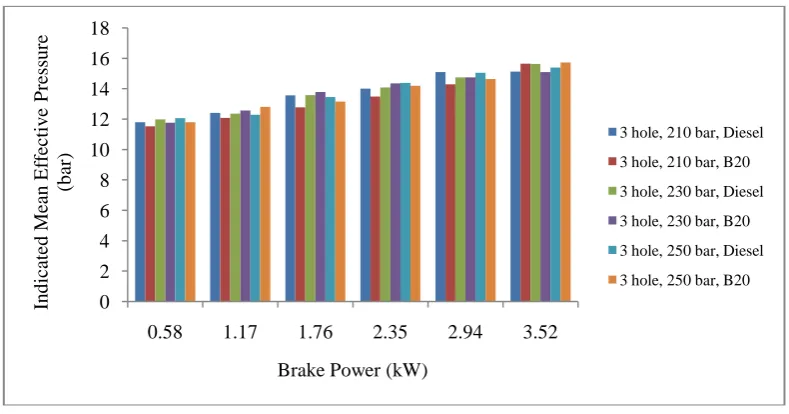
Fig 10. shows the variation of indicated mean effective pressure vs. brake power for 3 hole nozzle at different injection pressures. IMEP increases gradually with increase in BP. For 3 hole nozzle with diesel fuel at 210 bar injection pressure the IMEP were found to be 11.8, 12.41, 13.57, 14.01, 15.09, 15.12 bar at 0.58, 1.17, 1.76, 2.35, 2.94, 3.52 kW of BP respectively. For 3 hole nozzle with B20 fuel at 210 bar injection pressure the IMEP were found to be 11.52, 12.08, 12.77, 13.49, 14.29, 15.65 bar at 0.58, 1.17, 1.76, 2.35, 2.94, 3.52 kW of BP respectively. For 3 hole nozzle with diesel fuel at 230 bar injection pressure the IMEP were found to be 11.98, 12.36, 13.58, 14.09, 14.75, 15.63 bar at 0.58, 1.17, 1.76, 2.35, 2.94, 3.52 kW of BP respectively. For 3 hole nozzle with B20 fuel at 230 bar injection pressure the IMEP were found to be 11.77, 12.57, 13.78, 14.36, 14.74, 15.1 bar at 0.58, 1.17, 1.76, 2.35, 2.94, 3.52 kW of BP respectively. For 3 hole nozzle with diesel fuel at 250 bar injection pressure the IMEP were found to be 12.06, 12.29, 13.45, 14.38, 15.04, 15.4 bar at 0.58, 1.17, 1.76, 2.35, 2.94, 3.52 kW of BP respectively. For 3 hole nozzle with B20 fuel at 250 bar injection pressure the IMEP were found to be 11.79, 12.81, 13.16, 14.2, 14.64, 15.73 bar at 0.58, 1.17, 1.76, 2.35, 2.94, 3.52 kW of BP respectively.
Fig 10. Variation of indicated mean effective pressure vs. brake power for 3 hole nozzle at different injection pressures.
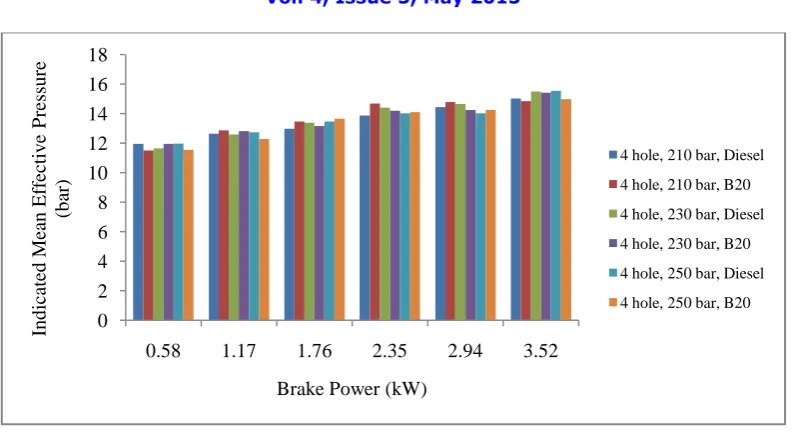
Fig 11. shows the variation of indicated mean effective pressure vs. brake power for 4 hole nozzle at different injection pressures. IMEP increases gradually with increase in BP. For 4 hole nozzle with diesel fuel at 210 bar injection pressure the IMEP were found to be 11.95, 12.63, 12.98, 13.87, 14.44, 15.02 bar at 0.58, 1.17, 1.76, 2.35, 2.94, 3.52 kW of BP respectively. For 4 hole nozzle with B20 fuel at 210 bar injection pressure the IMEP were found to be 11.5, 12.86, 13.47, 14.69, 14.78, 14.85 bar at 0.58, 1.17, 1.76, 2.35, 2.94, 3.52 kW of BP respectively. For 4 hole nozzle with diesel fuel at 230 bar injection pressure the IMEP were found to be 11.64, 12.59, 13.38, 14.41, 14.65, 15.49 bar at 0.58, 1.17, 1.76, 2.35, 2.94, 3.52 kW of BP respectively. For 4 hole nozzle with B20 fuel at 230 bar injection pressure the IMEP were found to be 11.95, 12.81, 13.15, 14.19, 14.24, 15.42 bar at 0.58, 1.17, 1.76, 2.35, 2.94, 3.52 kW of BP respectively. For 4 hole nozzle with diesel fuel at 250 bar injection pressure the IMEP were found to be 11.96, 12.73, 13.47, 14.01, 14.02, 15.54 bar at 0.58, 1.17, 1.76, 2.35, 2.94, 3.52 kW of BP respectively. For 4 hole nozzle with B20 fuel at 250 bar injection pressure the IMEP were found to be 11.55, 12.27, 13.66, 14.09, 14.24, 14.97 bar at 0.58, 1.17, 1.76, 2.35, 2.94, 3.52 kW of BP respectively.
0 2 4 6 8 10 12 14 16 18
0.58 1.17 1.76 2.35 2.94 3.52
In d icate d Me an E ff ec tiv e P ress u re (b ar )
Brake Power (kW)
3 hole, 210 bar, Diesel
3 hole, 210 bar, B20
3 hole, 230 bar, Diesel
3 hole, 230 bar, B20
3 hole, 250 bar, Diesel
Fig 11. Variation of indicated mean effective pressure vs. brake power for 4 hole nozzle at different injection pressures.
Fig 12. shows the variation of indicated mean effective pressure vs. brake power for 5 hole nozzle at different injection pressures. IMEP increases gradually with increase in BP. For 5 hole nozzle with diesel fuel at 210 bar injection pressure the IMEP were found to be 12.09, 12.62, 13.27, 13.5, 13.91, 15.34 bar at 0.58, 1.17, 1.76, 2.35, 2.94, 3.52 kW of BP respectively. For 5 hole nozzle with B20 fuel at 210 bar injection pressure the IMEP were found to be 11.59, 12.21, 12.93, 14.03, 14.62, 14.85 bar at 0.58, 1.17, 1.76, 2.35, 2.94, 3.52 kW of BP respectively. For 5 hole nozzle with diesel fuel at 230 bar injection pressure the IMEP were found to be 11.69, 12.73, 13.09, 14.09, 14.66, 15.03 bar at 0.58, 1.17, 1.76, 2.35, 2.94, 3.52 kW of BP respectively. For 5 hole nozzle with B20 fuel at 230 bar injection pressure the IMEP were found to be 11.95, 12.09, 13.28, 14.00, 14.87, 15.00 bar at 0.58, 1.17, 1.76, 2.35, 2.94, 3.52 kW of BP respectively. For 5 hole nozzle with diesel fuel at 250 bar injection pressure the IMEP were found to be 12.35, 12.86, 13.42, 14.25, 15.00, 15.46 bar at 0.58, 1.17, 1.76, 2.35, 2.94, 3.52 kW of BP respectively. For 5 hole nozzle with B20 fuel at 250 bar injection pressure the IMEP were found to be 12.52, 13.01, 13.59, 14.2, 14.88, 15.79 bar at 0.58, 1.17, 1.76, 2.35, 2.94, 3.52 kW of BP respectively.
Fig 12. Variation of indicated mean effective pressure vs. brake power for 5 hole nozzle at different injection pressures.
0 2 4 6 8 10 12 14 16 18
0.58 1.17 1.76 2.35 2.94 3.52
In d icate d Me an E ff ec tiv e P ress u re (b ar )
Brake Power (kW)
4 hole, 210 bar, Diesel
4 hole, 210 bar, B20
4 hole, 230 bar, Diesel
4 hole, 230 bar, B20
4 hole, 250 bar, Diesel
4 hole, 250 bar, B20
0 2 4 6 8 10 12 14 16 18
0.58 1.17 1.76 2.35 2.94 3.52
In d icate d Me an E ff ec tiv e P ress u re (b ar )
Brake Power (kW)
5 hole, 210 bar, Diesel
5 hole, 210 bar, B20
5 hole, 230 bar, Diesel
5 hole, 230 bar, B20
5 hole, 250 bar, Diesel
IV. P-θ CURVES
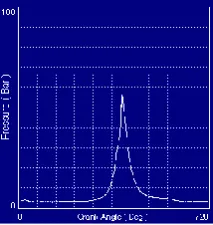
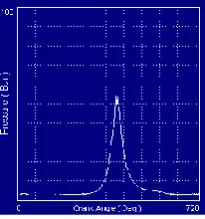
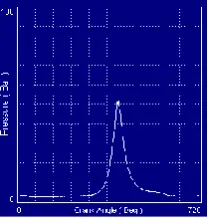
Fig 13. Shows highest peak pressure rise for 3 hole nozzle with diesel fuel at 210 bar injection pressure. At 210 bar injection pressure for 3 hole nozzle with diesel fuel highest peak pressure rise was found to be 59.13 bar at 2.35 kW of BP.
Fig 13. Highest peak pressure rise for 3 hole nozzle with diesel fuel at 210 bar injection pressure.
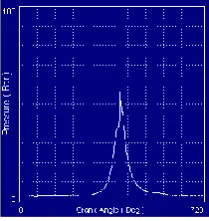
Fig 14. Shows highest peak pressure rise for 3 hole nozzle with diesel fuel at 230 bar injection pressure. At 230 bar injection pressure for 3 hole nozzle with diesel fuel highest peak pressure rise was found to be 59.63 bar at 2.35 kW of BP.
Fig 14. Highest peak pressure rise for 3 hole nozzle with diesel fuel at 230 bar injection pressure.
Fig 15. Shows highest peak pressure rise for 3 hole nozzle with diesel fuel at 250 bar injection pressure. At 250 bar injection pressure for 3 hole nozzle with diesel fuel highest peak pressure rise was found to be 58.79 bar at 2.35 kW of BP.
Fig 15. Highest peak pressure rise for 3 hole nozzle with diesel fuel at 250 bar injection pressure.
Fig 16. Highest peak pressure rise for 3 hole nozzle with B20 fuel at 210 bar injection pressure.
Fig 17. Shows highest peak pressure rise for 3 hole nozzle with B20 fuel at 230 bar injection pressure. At 230 bar injection pressure for 3 hole nozzle with B20 fuel highest peak pressure rise was found to be 56.94 bar at 2.35 kW of BP.
Fig 17. Highest peak pressure rise for 3 hole nozzle with B20 fuel at 230 bar injection pressure.
Fig 18. Shows highest peak pressure rise for 3 hole nozzle with B20 fuel at 250 bar injection pressure. At 250 bar injection pressure for 3 hole nozzle with B20 fuel highest peak pressure rise was found to be 56.77 bar at 2.35 kW of BP.
Fig 18. Highest peak pressure rise for 3 hole nozzle with B20 fuel at 250 bar injection pressure.
Fig 19. Highest peak pressure rise for 4 hole nozzle with diesel fuel at 210 bar injection pressure.
Fig 20. Shows highest peak pressure rise for 4 hole nozzle with diesel fuel at 230 bar injection pressure. At 230 bar injection pressure for 4 hole nozzle with diesel fuel highest peak pressure rise was found to be 54.41 bar at 3.52 kW of BP.
Fig 20. Highest peak pressure rise for 4 hole nozzle with diesel fuel at 230 bar injection pressure.
Fig 21. Shows highest peak pressure rise for 4 hole nozzle with diesel fuel at 250 bar injection pressure. At 250 bar injection pressure for 4 hole nozzle with diesel fuel highest peak pressure rise was found to be 50.87 bar at 1.17 kW of BP.
Fig 21. Highest peak pressure rise for 4 hole nozzle with diesel fuel at 250 bar injection pressure.
Fig 22. Highest peak pressure rise for 4 hole nozzle with B20 fuel at 210 bar injection pressure.
Fig 23. Shows highest peak pressure rise for 4 hole nozzle with B20 fuel at 230 bar injection pressure. At 230 bar injection pressure for 4 hole nozzle with B20 fuel highest peak pressure rise was found to be 52.73 bar at 3.52 kW of BP.
Fig 23. Highest peak pressure rise for 4 hole nozzle with B20 fuel at 230 bar injection pressure.
Fig 24. Shows highest peak pressure rise for 4 hole nozzle with B20 fuel at 250 bar injection pressure. At 250 bar injection pressure for 4 hole nozzle with B20 fuel highest peak pressure rise was found to be 50.37 bar at 1.17 kW of BP.
Fig 24. Highest peak pressure rise for 4 hole nozzle with B20 fuel at 250 bar injection pressure.
Fig 25. Highest peak pressure rise for 5 hole nozzle with diesel fuel at 210 bar injection pressure.
Fig 26. Shows highest peak pressure rise for 5 hole nozzle with diesel fuel at 230 bar injection pressure. At 230 bar injection pressure for 5 hole nozzle with diesel fuel highest peak pressure rise was found to be 55.59 bar at 2.94 kW of BP.
Fig 26. Highest peak pressure rise for 5 hole nozzle with diesel fuel at 230 bar injection pressure.
Fig 27. Shows highest peak pressure rise for 5 hole nozzle with diesel fuel at 250 bar injection pressure. At 250 bar injection pressure for 5 hole nozzle with diesel fuel highest peak pressure rise was found to be 57.11 bar at 1.17 kW of BP.
Fig 27. Highest peak pressure rise for 5 hole nozzle with diesel fuel at 250 bar injection pressure.
Fig 28. Highest peak pressure rise for 5 hole nozzle with B20 fuel at 210 bar injection pressure.
Fig 29. Shows highest peak pressure rise for 5 hole nozzle with B20 fuel at 230 bar injection pressure. At 230 bar injection pressure for 5 hole nozzle with B20 fuel highest peak pressure rise was found to be 53.06 bar at 2.94 kW of BP.
Fig 29. Highest peak pressure rise for 5 hole nozzle with B20 fuel at 230 bar injection pressure.
Fig 30. Shows highest peak pressure rise for 5 hole nozzle with B20 fuel at 250 bar injection pressure. At 250 bar injection pressure for 5 hole nozzle with B20 fuel highest peak pressure rise was found to be 53.40 bar at 2.35 kW of BP.
Fig 30. Highest peak pressure rise for 5 hole nozzle with B20 fuel at 250 bar injection pressure.
V. CONCLUSION
For 3 hole nozzle, highest Peak pressure rise was found to be 59.63 bar for diesel fuel at 2.35 kW of BP and 230 bar injection pressure, 57.11 bar for B20 fuel at 3.52 kW of BP and 210 bar injection pressure and highest IMEP was found to be 15.63 bar for diesel fuel at 3.52 kW of BP and 230 bar injection pressure, 15.73 bar for B20 fuel at 3.52 kW of BP and 250 bar injection pressure.
IMEP was found to be 15.54 bar for diesel fuel at 3.52 kW of BP and 250 bar injection pressure, 15.42 bar for B20 fuel at 3.52 kW of BP and 230 bar injection pressure.
For 5 hole nozzle, highest Peak pressure rise was found to be 57.11 bar for diesel fuel at 1.17 kW of BP and 250 bar injection pressure, 55.59 bar for B20 fuel at 2.35 kW of BP and 210 bar injection pressure and highest IMEP was found to be 15.46 bar for diesel fuel at 3.52 kW of BP and 250 bar injection pressure, 15.79 bar for B20 fuel at 3.52 kW of BP and 250 bar injection pressure.
REFERENCES
1. Nishant Tyagi, Ambuj Sharma, “Experimental Investigation Of Neem Methyl Esters As Biodiesel on C.I Engine”, International Journal of Engineering Research and Applications (IJERA), Vol. 2, Issue 4, pp.1673-1679, 2012.
2. L. Prabhu, S. Sathish Kumar, M. Prabhahar and K. Rajan, “COMBUSTION, PERFORMANCE AND EMISSION CHARACTERISTICS
OF DIESEL ENGINE WITH NEEM OIL METHYL ESTER AND ITS DIESEL BLENDS”, American Journal of Applied Sciences 10 (8), pp.810-818, 2013.
3. Shraddha R. Jogdhankar, S. D. Rahul Bharadwaj, “ALTERNATIVE FUELS AND PERFORMANCE OF CI-ENGINE RUNNING ON NEEM OIL AND BIO-DIESEL BLENDS”, International Journal of Environmental Science: Development and Monitoring (IJESDM), Volume.4, No.2, pp.70-73, 2013.
4. Dharmendra Yadav, Nitin Shrivastava and Vipin Shrivastava, “EXPERIMENTAL INVESTIGATION OF PERFORMANCE PARAMETERS OF SINGLE CYLINDER FOUR STROKE DI DIESEL ENGINE OPERATING ON NEEM OIL BIODIESEL AND ITS BLENDS, International Journal of Mechanical Engineering and Robotics Research, Vol. 1, No. 3, 2012.
5. Akshatha D.S, Manavendra.G, S.Kumarappa, “PERFORMANCE EVALUATION OF NEEM BIODIESEL ON CI ENGINE WITH DIETHYL ETHER AS ADDITIVE”, International Journal of Innovative Research in Science, Engineering and Technology, Vol. 2, Issue 8, pp.3729-3736, 2013.
6. Jagadeesh Sannagoudra, G.Manavendra, S.Kumarappa, “EFFECT OF INJECTION PRESSURE ON THE PERFORMANCE AND EMISSION CHARACTERISTICS OF SINGLE CYLINDER DIESEL ENGINE USING ESTERIFIED COTTONSEED OIL AND NEEMSEED OIL AS BIO-DIESEL”, International Journal of Innovative Research in Science, Engineering and Technology, Vol. 2, Issue 8, pp.3956-3963, 2013.
7. A. Haiter Lenin, R. Ravi and K. Thyagarajan, “Performance Characteristics of a Diesel Engine Using Mahua Biodiesel as Alternate Fuel”, Iranica Journal of Energy & Environment (IJEE), pp.136-141, 2013.
8. Cenk Sayin, Metin Gumus, Mustafa Canakci, “Influence of injector hole number on the performance and emissions of a DI diesel engine fueled with biodiesel-diesel fuel blends”, ELSEVIER PUBLICATIONS, Applied Thermal Engineering, pp.121-128, 2013.
9. Subhash Lahane, K.A. Subramanian, “Impact of nozzle holes configuration on fuel spray, wall impingement and NOx emission of a diesel engine for biodiesel-diesel blend (B20)”, ELSEVIER PUBLICATIONS, Applied Thermal Engineering, pp.307-314, 2014.
10. USV Prasad, K.Madhu Murthy, and G.Amba Prasad Rao, “Influence of Fuel Injection Parameters of DI Diesel Engine Fuelled With Biodiesel and Diesel Blends”, International Conference on Mechanical, Automobile and Robotics Engineering (ICMAR'2012) Penang. Malaysia, pp.261-264, 2012.