International Journal of Advanced Research in Computer Science
RESEARCH PAPER
Available Online at www.ijarcs.info
Application of Three Estimates Fuzzy TOPSIS(TEFTOPSIS) Method using pentagonal
Fuzzy Number in Analyzing the Causes for increase in Old Age Home
Dr.A.Praveenprakash
1Professor, Department of Mathematics, Hindustan University,
Chennai, India
Kanimozhi Raman
Assistant Professor, Department of Mathematics, KCG College of Technology,
Chennai, India
R.Sumathi
Assistant Professor, Department of Mathematics, KCG College of Technology,
Chennai, India
Abstract: In this paper the three estimates(eo,em,ep) technique is adapted to get the experts opinion. Usually, triangular and trapezoidal numbers are used in Fuzzy TOPSIS. In this paper, Pentagonal fuzzy number is used for our analysis. The important common factors for preferring old age homes are analyzed by the proposed algorithm.
Keywords:TOPSIS, Fuzzy TOPSIS, Fuzzy Number, Old Age People, Old Age Home
I.INTRODUCTION
In our day to day life, the data obtained for decision making are known approximately. Zadeh[1] introduced the concept of fuzzy set theory to meet those problems. In 1978 Dubios and Prade defined fuzzy numbers as the fuzzy subset of the real line [2]. A fuzzy number is a quantity whose value is imprecise, not exact as in “ordinary” numbers [3,6]. Any fuzzy number can be defined as a function whose domain is a specified set. In many situations, fuzzy numbers depict the physical world more realistically than any single valued numbers. Fuzzy numbers enable us to create the mathematical model of linguistic variable. Fuzzy numbers are used in statistic, computer related techniques.
Technique for Order of Preference by Similarity to Ideal Solution (TOPSIS) is one of the well-known method in Multiple Attribute Decision-Making (MADM). Hwang and Yoon [7] have introduced TOPSIS in 1981. An algorithmic procedure is used to rank the alternatives in TOPSIS. Wang and Chang [8] developed an evaluation approach based on TOPSIS in a fuzzy environment where the vagueness and subjectivity were handled with linguistic terms parameterized by triangular fuzzy numbers. A fuzzy multi-criteria decision analysis method based on the concepts of ideal and anti-ideal points was introduced by Kuo et al.[9].
II. PENTAGONAL FUZZY NUMBER AND THE ALGEBRAIC OPERATION
A. Fuzzy Number
If a fuzzy set is convex and normalized, and its membership function is defined in R and piecewise
continuous, it is called as fuzzy number. So fuzzy number (fuzzy set) represents a real number interval whose boundary is fuzzy. Fuzzy number is expressed as a fuzzy set defining a fuzzy interval in the real number R. Since the boundary of this interval is ambiguous, the interval is also a fuzzy set.
A Fuzzy number à on R to be a Pentagon fuzzy number
(PFN) if its membership function Ã
(x)
:
R
0
,
1
isequal to following Eq (1).
otherwise
e
x
d
d
e
x
e
d
x
c
c
d
x
d
c
x
b
b
c
b
x
b
x
a
a
b
a
x
,
0
,
)
(
,
)
(
,
)
(
,
)
(
(x)
The operational Laws of PFN Ã1=(a1,b1,c1,d1,e1) and Ã2=( a2,b2,c2,d2,e2) are shown below.
(a) Addition of the fuzzy number
Ã1 Ã2 = (a1,b1,c1,d1,e1) ( a2,b2,c2,d2,e2) = (a1+ a2 , b1+b2, c1+ c2, d1+d2 , e1+e2)
(b) Subtraction of the fuzzy number
Ã1 Ã2 = (a1,b1,c1,d1,e1) ( a2,b2,c2,d2,e2) = (a1- e2 , b1-d2, c1- c2, d1-b2 , e1-a2)
B. Five-point linguistic scale of the Pentagonal fuzzy number
The five-point scales are not only easy to be used by the respondents and also widely used in TFNs and TrFNs. Therefore, here we define a new five-point linguistic scale of the Pentagonal fuzzy number.
Table I: The five-point linguistic scale of the Pentagonal fuzzy number
Linguistic Variable Linguistic scale of the Pentagonal Fuzzy Number
Very Low(VL) (0.0,0.1,0.2,0.3,0.4)
Low(L) (0.1,0.2,0.3,0.4,0.5)
Medium(M) (0.3,0.4,0.5,0.6,0.7)
High(H) (0.5,0.6,0.7,0.8,0.9)
Very High(VH) (0.6,0.7,0.8,0.9,1)
C. Three Time Estimates.
This technique, takes into account the uncertainty of activities into account.
Optimistic estimate:
It is a opinion of the expert when everything goes on very well during the activity.
Pessimistic estimate:
It is a opinion of the expert when almost everything goes against our will and a lot of difficulties is faced
Most likely estimate:
It is a opinion of the expert when sometimes things go on very well and sometimes things goes on very bad
Expected opinion of the expert,
6
D. Three Estimates Fuzzy TOPSIS(TEFTOPSIS):
The distance between two pentagonal fuzzy
numbers
Let
a
~
(
a
1,
a
2,
a
3,
a
4,
a
5)
and
b
~
(
b
1,
b
2,
b
3,
b
4,
b
5)
be two pentagonal fuzzy numbers. The distance between them is given by)
E. Algorithm for Three Estimates Fuzzy TOPSIS(TEFTOPSIS):
Step 1: The weights of evaluation dimensions
(1)
Obtain the experts opinion (Linguistic
values ) in the estimation format.
n pentagonal number
(1) Apply the Numerical values of the Linguistic values.
(2) Using Estimation formula(2) , find the expected opinion.
(3) Combine the three experts opinion using arithmetic average, which is the decision matrix D .
Let the decision matrix
n
Step 2: Get the weights of the attributes from experts
)
,
,
(
w
1w
2w
nW
Step 4: Construct the normalized decision matrix by using the following formula.
)
max(
,
,
,
,
ij ijij ij
ij ij
ij ij
ij ij
ij ij
ij
where
e
e
e
e
e
d
e
c
e
b
e
a
r
R
Step 5: According to different importance of the attributes, Find the weighted normalized decision matrix as
. ,... 2 , 1 , ,... 2 , 1 , ) (
2 1
2 22
21
1 12
11
n j
m i
w r v
v v
v
v v
v
v v
v
V ij ij j
ij i
i
j j
Where, vij is a normalized PeFN and varies in closed interval [0, 1].
Step 6:Find the Fuzzy Positive Ideal Solution(FPIS) S+ , Fuzzy Negative Ideal Solution(FNIS)S-
)
max
max
,
max
max
,
(max
max
)
,
,
(
, ,
2 1
ij ij
ij ij
ij ij ij
ij i i
e
d
c
b
a
v
v
where
v
v
v
S
)
min
min
,
min
min
,
(min
min
)
,
,
(
, ,
2 1
ij ij
ij ij
ij ij ij
ij i i
e
d
c
b
a
v
v
where
v
v
v
S
Step 7: Find the Fuzzy Positive Distance(FPD) and Fuzzy Negative Distance(FND) between each weighted normalized matrix to FPIS and FNIS (using the formula (3)).
Step 8: Find the closeness co efficient.
FPD
FPD
FND
CC
iStep 9: Rank the alternatives.
III. DESCRIPTION OF THE PROBLEM
When they are 60 plus and retired, all their responsibilities are discharged, all ambitions are spent and there is nothing more to achieve. They dream that, they will be at home, surrounded by the loved ones and someone to give helping hand when they are sick. But the dreams can turn sour. Sometimes circumstances conspire to make these successful people helpless and at other times the children who they groomed all their life dump them. They always love to be in a joint family where there is security, love and care. But the growing materialistic outlook of the society and break down in understanding between the past and the present generations is making all this a dream for the old age people.
The most important common factors for preferring old age home are
A1.Daughter in law, A2.No male Child, A3. No children, A4. Attitude Problem A5. Health Problem
To analyse the factors the following family status where analyzed
B1.Poor family,
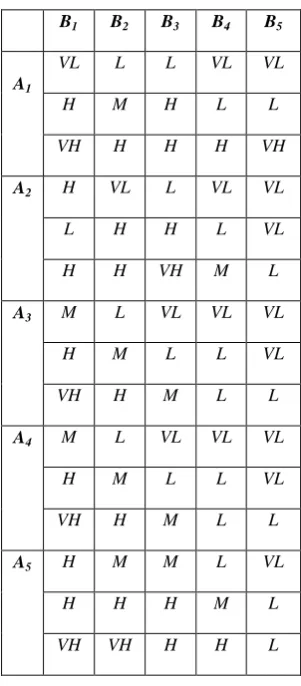
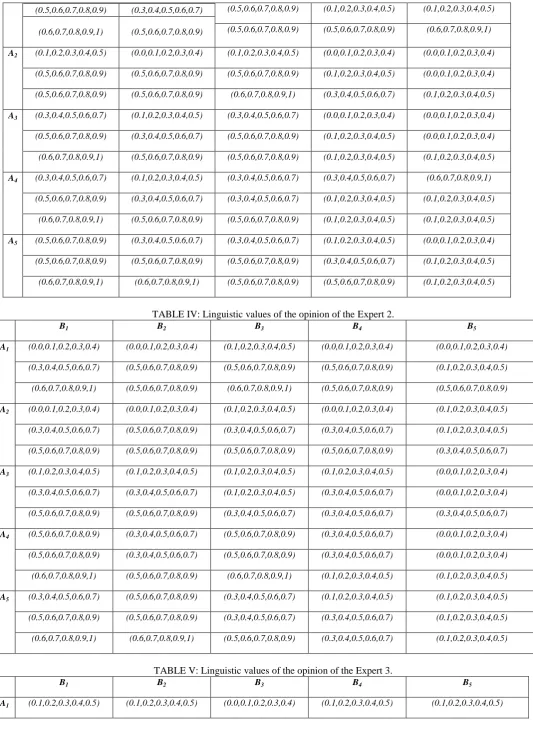
TABLE III: Linguistic values of the opinion of the Expert 1
B2. Low middle family, B3. Middle family, B4. High middle family B5. Rich family
Three experts opinion was obtained in the three estimates(eo,em,ep) technique format
TABLE II: Opinion of the Expert 1.
B1 B2 B3 B4 B5
A1
VL L L VL VL
H M H L L
VH H H H VH
A2 H VL L VL VL
L H H L VL
H H VH M L
A3 M L VL VL VL
H M L L VL
VH H M L L
A4 M L VL VL VL
H M L L VL
VH H M L L
A5 H M M L VL
H H H M L
VH VH H H L
B1 B2 B3 B4 B5
(0.5,0.6,0.7,0.8,0.9)
(0.6,0.7,0.8,0.9,1)
(0.3,0.4,0.5,0.6,0.7)
(0.5,0.6,0.7,0.8,0.9)
(0.5,0.6,0.7,0.8,0.9) (0.1,0.2,0.3,0.4,0.5) (0.1,0.2,0.3,0.4,0.5)
(0.5,0.6,0.7,0.8,0.9) (0.5,0.6,0.7,0.8,0.9) (0.6,0.7,0.8,0.9,1)
A2 (0.1,0.2,0.3,0.4,0.5) (0.0,0.1,0.2,0.3,0.4) (0.1,0.2,0.3,0.4,0.5) (0.0,0.1,0.2,0.3,0.4) (0.0,0.1,0.2,0.3,0.4)
(0.5,0.6,0.7,0.8,0.9) (0.5,0.6,0.7,0.8,0.9) (0.5,0.6,0.7,0.8,0.9) (0.1,0.2,0.3,0.4,0.5) (0.0,0.1,0.2,0.3,0.4)
(0.5,0.6,0.7,0.8,0.9) (0.5,0.6,0.7,0.8,0.9) (0.6,0.7,0.8,0.9,1) (0.3,0.4,0.5,0.6,0.7) (0.1,0.2,0.3,0.4,0.5)
A3 (0.3,0.4,0.5,0.6,0.7) (0.1,0.2,0.3,0.4,0.5) (0.3,0.4,0.5,0.6,0.7) (0.0,0.1,0.2,0.3,0.4) (0.0,0.1,0.2,0.3,0.4)
(0.5,0.6,0.7,0.8,0.9) (0.3,0.4,0.5,0.6,0.7) (0.5,0.6,0.7,0.8,0.9) (0.1,0.2,0.3,0.4,0.5) (0.0,0.1,0.2,0.3,0.4)
(0.6,0.7,0.8,0.9,1) (0.5,0.6,0.7,0.8,0.9) (0.5,0.6,0.7,0.8,0.9) (0.1,0.2,0.3,0.4,0.5) (0.1,0.2,0.3,0.4,0.5)
A4 (0.3,0.4,0.5,0.6,0.7) (0.1,0.2,0.3,0.4,0.5) (0.3,0.4,0.5,0.6,0.7) (0.3,0.4,0.5,0.6,0.7) (0.6,0.7,0.8,0.9,1)
(0.5,0.6,0.7,0.8,0.9) (0.3,0.4,0.5,0.6,0.7) (0.3,0.4,0.5,0.6,0.7) (0.1,0.2,0.3,0.4,0.5) (0.1,0.2,0.3,0.4,0.5)
(0.6,0.7,0.8,0.9,1) (0.5,0.6,0.7,0.8,0.9) (0.5,0.6,0.7,0.8,0.9) (0.1,0.2,0.3,0.4,0.5) (0.1,0.2,0.3,0.4,0.5)
A5 (0.5,0.6,0.7,0.8,0.9) (0.3,0.4,0.5,0.6,0.7) (0.3,0.4,0.5,0.6,0.7) (0.1,0.2,0.3,0.4,0.5) (0.0,0.1,0.2,0.3,0.4)
(0.5,0.6,0.7,0.8,0.9) (0.5,0.6,0.7,0.8,0.9) (0.5,0.6,0.7,0.8,0.9) (0.3,0.4,0.5,0.6,0.7) (0.1,0.2,0.3,0.4,0.5)
(0.6,0.7,0.8,0.9,1) (0.6,0.7,0.8,0.9,1) (0.5,0.6,0.7,0.8,0.9) (0.5,0.6,0.7,0.8,0.9) (0.1,0.2,0.3,0.4,0.5)
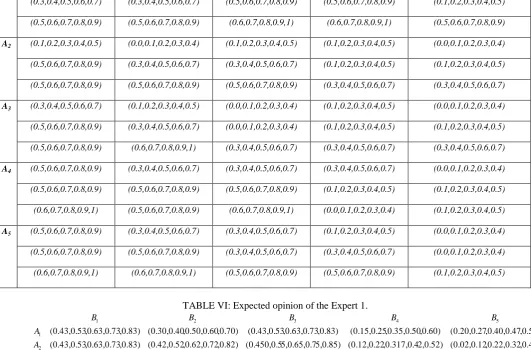
TABLE IV: Linguistic values of the opinion of the Expert 2.
B1 B2 B3 B4 B5
A1 (0.0,0.1,0.2,0.3,0.4) (0.0,0.1,0.2,0.3,0.4) (0.1,0.2,0.3,0.4,0.5) (0.0,0.1,0.2,0.3,0.4) (0.0,0.1,0.2,0.3,0.4)
(0.3,0.4,0.5,0.6,0.7) (0.5,0.6,0.7,0.8,0.9) (0.5,0.6,0.7,0.8,0.9) (0.5,0.6,0.7,0.8,0.9) (0.1,0.2,0.3,0.4,0.5)
(0.6,0.7,0.8,0.9,1) (0.5,0.6,0.7,0.8,0.9) (0.6,0.7,0.8,0.9,1) (0.5,0.6,0.7,0.8,0.9) (0.5,0.6,0.7,0.8,0.9)
A2 (0.0,0.1,0.2,0.3,0.4) (0.0,0.1,0.2,0.3,0.4) (0.1,0.2,0.3,0.4,0.5) (0.0,0.1,0.2,0.3,0.4) (0.1,0.2,0.3,0.4,0.5)
(0.3,0.4,0.5,0.6,0.7) (0.5,0.6,0.7,0.8,0.9) (0.3,0.4,0.5,0.6,0.7) (0.3,0.4,0.5,0.6,0.7) (0.1,0.2,0.3,0.4,0.5)
(0.5,0.6,0.7,0.8,0.9) (0.5,0.6,0.7,0.8,0.9) (0.5,0.6,0.7,0.8,0.9) (0.5,0.6,0.7,0.8,0.9) (0.3,0.4,0.5,0.6,0.7)
A3 (0.1,0.2,0.3,0.4,0.5) (0.1,0.2,0.3,0.4,0.5) (0.1,0.2,0.3,0.4,0.5) (0.1,0.2,0.3,0.4,0.5) (0.0,0.1,0.2,0.3,0.4)
(0.3,0.4,0.5,0.6,0.7) (0.3,0.4,0.5,0.6,0.7) (0.1,0.2,0.3,0.4,0.5) (0.3,0.4,0.5,0.6,0.7) (0.0,0.1,0.2,0.3,0.4)
(0.5,0.6,0.7,0.8,0.9) (0.5,0.6,0.7,0.8,0.9) (0.3,0.4,0.5,0.6,0.7) (0.3,0.4,0.5,0.6,0.7) (0.3,0.4,0.5,0.6,0.7)
A4 (0.5,0.6,0.7,0.8,0.9) (0.3,0.4,0.5,0.6,0.7) (0.5,0.6,0.7,0.8,0.9) (0.3,0.4,0.5,0.6,0.7) (0.0,0.1,0.2,0.3,0.4)
(0.5,0.6,0.7,0.8,0.9) (0.3,0.4,0.5,0.6,0.7) (0.5,0.6,0.7,0.8,0.9) (0.3,0.4,0.5,0.6,0.7) (0.0,0.1,0.2,0.3,0.4)
(0.6,0.7,0.8,0.9,1) (0.5,0.6,0.7,0.8,0.9) (0.6,0.7,0.8,0.9,1) (0.1,0.2,0.3,0.4,0.5) (0.1,0.2,0.3,0.4,0.5)
A5 (0.3,0.4,0.5,0.6,0.7) (0.5,0.6,0.7,0.8,0.9) (0.3,0.4,0.5,0.6,0.7) (0.1,0.2,0.3,0.4,0.5) (0.1,0.2,0.3,0.4,0.5)
(0.5,0.6,0.7,0.8,0.9) (0.5,0.6,0.7,0.8,0.9) (0.3,0.4,0.5,0.6,0.7) (0.3,0.4,0.5,0.6,0.7) (0.1,0.2,0.3,0.4,0.5)
(0.6,0.7,0.8,0.9,1) (0.6,0.7,0.8,0.9,1) (0.5,0.6,0.7,0.8,0.9) (0.3,0.4,0.5,0.6,0.7) (0.1,0.2,0.3,0.4,0.5)
TABLE V: Linguistic values of the opinion of the Expert 3.
B1 B2 B3 B4 B5
(0.3,0.4,0.5,0.6,0.7) (0.3,0.4,0.5,0.6,0.7) (0.5,0.6,0.7,0.8,0.9) (0.5,0.6,0.7,0.8,0.9) (0.1,0.2,0.3,0.4,0.5)
(0.5,0.6,0.7,0.8,0.9) (0.5,0.6,0.7,0.8,0.9) (0.6,0.7,0.8,0.9,1) (0.6,0.7,0.8,0.9,1) (0.5,0.6,0.7,0.8,0.9)
A2 (0.1,0.2,0.3,0.4,0.5) (0.0,0.1,0.2,0.3,0.4) (0.1,0.2,0.3,0.4,0.5) (0.1,0.2,0.3,0.4,0.5) (0.0,0.1,0.2,0.3,0.4)
(0.5,0.6,0.7,0.8,0.9) (0.3,0.4,0.5,0.6,0.7) (0.3,0.4,0.5,0.6,0.7) (0.1,0.2,0.3,0.4,0.5) (0.1,0.2,0.3,0.4,0.5)
(0.5,0.6,0.7,0.8,0.9) (0.5,0.6,0.7,0.8,0.9) (0.5,0.6,0.7,0.8,0.9) (0.3,0.4,0.5,0.6,0.7) (0.3,0.4,0.5,0.6,0.7)
A3 (0.3,0.4,0.5,0.6,0.7) (0.1,0.2,0.3,0.4,0.5) (0.0,0.1,0.2,0.3,0.4) (0.1,0.2,0.3,0.4,0.5) (0.0,0.1,0.2,0.3,0.4)
(0.5,0.6,0.7,0.8,0.9) (0.3,0.4,0.5,0.6,0.7) (0.0,0.1,0.2,0.3,0.4) (0.1,0.2,0.3,0.4,0.5) (0.1,0.2,0.3,0.4,0.5)
(0.5,0.6,0.7,0.8,0.9) (0.6,0.7,0.8,0.9,1) (0.3,0.4,0.5,0.6,0.7) (0.3,0.4,0.5,0.6,0.7) (0.3,0.4,0.5,0.6,0.7)
A4 (0.5,0.6,0.7,0.8,0.9) (0.3,0.4,0.5,0.6,0.7) (0.3,0.4,0.5,0.6,0.7) (0.3,0.4,0.5,0.6,0.7) (0.0,0.1,0.2,0.3,0.4)
(0.5,0.6,0.7,0.8,0.9) (0.5,0.6,0.7,0.8,0.9) (0.5,0.6,0.7,0.8,0.9) (0.1,0.2,0.3,0.4,0.5) (0.1,0.2,0.3,0.4,0.5)
(0.6,0.7,0.8,0.9,1) (0.5,0.6,0.7,0.8,0.9) (0.6,0.7,0.8,0.9,1) (0.0,0.1,0.2,0.3,0.4) (0.1,0.2,0.3,0.4,0.5)
A5 (0.5,0.6,0.7,0.8,0.9) (0.3,0.4,0.5,0.6,0.7) (0.3,0.4,0.5,0.6,0.7) (0.1,0.2,0.3,0.4,0.5) (0.0,0.1,0.2,0.3,0.4)
(0.5,0.6,0.7,0.8,0.9) (0.5,0.6,0.7,0.8,0.9) (0.3,0.4,0.5,0.6,0.7) (0.3,0.4,0.5,0.6,0.7) (0.0,0.1,0.2,0.3,0.4)
(0.6,0.7,0.8,0.9,1) (0.6,0.7,0.8,0.9,1) (0.5,0.6,0.7,0.8,0.9) (0.5,0.6,0.7,0.8,0.9) (0.1,0.2,0.3,0.4,0.5)
TABLE VI: Expected opinion of the Expert 1.
,0.48)
TABLE VII: Expected opinion of the Expert 2.
,0.50)
TABLE VIII: Expected opinion of the Expert 3.
,0.15)
TABLE IX: Aggregated Expected opinion of the three expert, Decision Matrix
,0.46)
VH
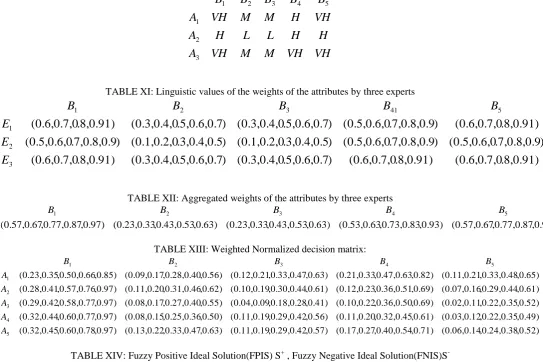
TABLE XI: Linguistic values of the weights of the attributes by three experts
.8,0.91)
TABLE XII: Aggregated weights of the attributes by three experts
,0.97)
TABLE XIII: Weighted Normalized decision matrix:
,0.52)
TABLE XIV: Fuzzy Positive Ideal Solution(FPIS) S+ , Fuzzy Negative Ideal Solution(FNIS)S
-,0.52)
TABLE XV: Fuzzy Positive Distance(FPD),Fuzzy Negative Distance(FND) ,Closeness Co-efficient and Rank .
IV. CONCLUSION
From the calculation we found that A1- Daughter-In-Law is ranked No.1. A5 – Health Problem and A2 – No male child are ranked next to A1. So the major reason for preferring old age home is Daughter-In-Law. To avoid this scenario in future, Daughter-In-Law must play the role of daughter in her In – Law’s home for happy family life.
V.REFERENCES
[1] L. A. Zadeh, “Fuzzy set”, Information and Control, vol.8,no.3, pp.338-353, 1965.
[2] D. Dubois and H. Prade, “Operations on fuzzy numbers”.International Journal of Systems Science, vol.9,no.6,pp.613-626,1978.
[3] S. Heilpern, “Representation and application of fuzzy numbers”, Fuzzy sets and Systems, vol.91, no.2, pp.259- 268, 1997.
[5] R. Fuller and P. Majlender, “On weighted possibilistic mean and variance of fuzzy numbers”, Fuzzy Sets and Systems, vol.136, pp.363-374,2003.
[6] G. J. Klir, “Fuzzy arithmetic with requisite constraints”. Fuzzy Sets System, vol. 91, pp. 165–175,1997.
[7] C.L. Hwang, K. Yoon, Multiple Attribute Decision Making, Springer Verlag, Berlin, 1981.
[8] T.C. Wang, T.H. Chang, Application of TOPSIS in
evaluating initial training aircraft under a fuzzy environment, Expert Systems with Applications 33 (2007) 870–880.
[9] M.S. Kuo, G.H. Tzeng, W.C. Huang, Group decision- making based on concepts of ideal and anti-ideal points in fuzzy environment, Mathematical and Computer