Volume 8, No. 3, March – April 2017
International Journal of Advanced Research in Computer Science
RESEARCH PAPER
Available Online at www.ijarcs.info
ISSN No 0976 5697
Implementation of improved (I_AODV) algorithm and comparison with traditional
AODV routing protocol in MANETs
Madhu Bala
M.Phil Scholar, Department of Computer Science applications, SBBS University,
Jalandhar Punjab, India
Harpreet Kaur
Assistance Professor, Department of Computer Science Application, SBBS University,
Jalandhar Punjab, India
Abstract: Today, person sitting at either end of the nation can speak with each other with the aid of wireless technology. Mobile ad hoc Network (MANETs) is a type of wireless ad hoc network which is a collection of mobile devices that creates random topology for communication. The fineness of MANETs is that it not required any central controller or base station. MANETs is only a network in which devices worked as a host as well as router. In this paper we proposed a new approach, named Improved ad hoc on demand distance vector (I_AODV) routing algorithm. It is a modified version of traditional AODV routing protocol. The objective of this thesis work is to improve the performance of AODV protocol with high throughput and less amount of end to end delay which are essential metric and Comparison of improved (I_AODV) algorithm with traditional AODV routing protocols in MANETs with following parameters: end to end delay, throughput and packet delivery ratio. In this work network simulator NS-2.34 tool is used for simulation. Implementation and performance analysis of (I_AODV) done by network simulator. Simulation result shows the improved ad hoc on demand distance vector (I_AODV) routing protocol perform better than traditional AODV routing protocol.
Keywords: MANETs, AODV, I_AODV, Network Simulator
I. INTRIDUCTION
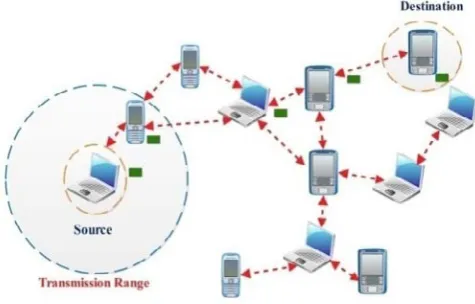
Mobile Ad-hoc Network (MANET) [3] consists of wireless mobile nodes that dynamically organize themselves in random network structures. There is no pre-installed infrastructure, which can facilitate the forwarding of packets from one host to another and MANETs is only a network in which devices worked as a host as well as router. [1] Now days we have latest several multimedia applications such as digital television, video conferencing and web games and real-time interactive audio and video streaming which needs high throughput and less amount of end to end delay which are main essential quality of service metrics. [2] MANETs have become quite popular due to its fundamental characteristics like fast and cost effective deployment, self-manageable, infrastructure-less etc. Ad hoc network are applicable in many application particularly where the establishment of fixed base station or access point is very difficult or impossible. [9] Mobile ad hoc networks (MANETs) are made out of an accumulation of nodes which can move freely and speak with each other utilizing a remote physical medium. Routing protocols are the set of rules that decide the movement of data between the wireless nodes [12]. Figure 1 shows a mobile Ad hoc network with 12 nodes.
In wireless communication [1], routing process plays an important responsibility for flow of data packets that to specially in mobile adhoc networks and it is a major subject for researchers , presently several concepts have been discussed and lots of changes are made and even many different routing protocols are developed. In this paper we proposed new routing protocol I_AODV which provides better performance and has different technique when compared to AODV types of reactive routing protocols in wireless ad-hoc networks.
An improved (I_AODV) protocol using Manet Side Units (MSU) that contain more power for
[image:1.595.321.559.435.587.2]packet forwarding from one node to another nodes in network it reduce end to end delay. We particularly focused on three performance metrics such as throughput, end-to-end delay, and packet delivery ratio.
Figure 1 : Mobile Ad- hoc Network
The flow of this paper is as follows: In section 2 we discuss literature review. In section 3, it tells about proposed method of I_AODV. In section 4, we discuss simulation results and analysis. Finally in section 5, we end with the conclusion and the future work of our research work.
A. AODV Routing Protocol
source to destination[7] AODV is a very simple, efficient, and effective routing protocol for Mobile Ad-hoc Networks which do not have fixed topology. This algorithm was motivated by the limited bandwidth that is available in the media that are used for wireless communications [10]s. In this protocol, a node discovers a route on demand, i.e., only when it is needed, and caches it. Network wide flooding is used to discover the routes.
Working of AODV
Each mobile host in the network acts as a specialized router and routes are obtained as needed, thus making the network self-starting.
The AODV protocol is a reactive routing protocol based on the distance vector Principle, it supports unicast and multicast routing, it does not require nodes to maintain routes to destinations that are not in active communication and it allows mobile nodes to respond to link breakages and changes in network topology in a timely manner [4]. One distinguishing feature of AODV is its use of a destination sequence number for each route entry to ensure loop freedom [5] .Each node in the network maintains a routing table with the routing information entries to its neighboring nodes, and two separate counters: a node sequence number and a broadcast-id. When a node (source node ‘S’) has to communicate with another (destination node ‘D’), it increments its broadcast-id and initiates path discovery by broadcasting a route request packet RREQ to its neighbors. AODV are:
Route Request Message (RREQ) Route Reply Message (RREP) Route Error Message (RERR)
Route Reply Acknowledgment (RREP-ACK) Message HELLO Messages [4]
The RREQ contains the following fields: – Source-addr
– Source-sequence# - to maintain freshness info about the route to the source.
– Dest-addr
– Dest-sequence# - specifies how fresh a route to the destination must be before it is accepted by the source. – Hop-cnt
The (source-addr, broadcast-id) pair is used to identify the RREQ uniquely. Then the dynamic route table entry establishment begins at all the nodes in the network that are on the path from S to D. Ad-hoc On-Demand Distance Vector (AODV) Protocol As RREQ message travels from node to node, it automatically sets up the reverse path from all these nodes back to the source. Each node that receives this packet records the address of the node from which it was received. This is called Reverse Path Setup [10]. The nodes maintain this information for enough time for the RREQ to traverse the network and produce a reply to the sender and time depends on network size. If an intermediate node has a route entry for the desired destination in its routing table, it compares the destination sequence number in its routing table with that in the RREQ. [10] If the destination sequence number in its routing table is less than that in the RREQ, it rebroadcasts the RREQ to its neighbors. Otherwise, it unicast a route reply packet to its neighbor from which it was received the RREQ if the same request was not processed previously (this is identified using the broadcast-id and source-addr). Once the RREP is generated,
it travels back to the source, based on the reverse path. As the RREP travels back to source, each node along this path sets a forward pointer to the node from where it is receiving the RREP and records the latest destination sequence number to the request destination. This is called Forward Path Setup. If an intermediate node receives another RREP after propagating the first RREP towards source it checks for destination sequence number of new RREP [10]. The intermediate node updates routing information and propagates new RREP only. Periodic hello messages can be used to ensure symmetric links, as well as to detect link failures.
II. RELATED WORK
This section gives the overview of related work done by various researchers for mobile ad hoc networks.
Ashraf Abu-Ein et al. (Jan 2014) [5] In this paper, a new routing protocol for Mobile Ad-Hoc networks (MANETs) has presented the proposed power-hop based Ad-hoc on demand Distance Vector (AODV) is named PH-AODV, it uses the node power and the hop count parameters to select the best routing path. It is compared with AODV in terms of throughput, end to end delay and number of drop packets. The proposed PH-AODV routing protocol is simulated using GlomoSim network simulator and compared to AODV routing algorithm. It is observed that the new protocol is much better than original AODV.
Vinay P.Viradia et al. (Jan 2014) [4]This paper proposed a new protocol Enhanced AODV (E-AODV) which is a modified version of AODV with enhanced packet delivery ratio and minimized end to end delay. The objective of this paper is to enhance the network performance of AODV, when frequent link failure in network due to mobility of the nodes in the network. After observing the simulation and analyzing the data, it is found that packets could get less end to end delay with a QoS based routing protocol when the traffic on the network is high.
Supriya Sawwashere et al. (April 2015) [6] In the paper, the conventional AODV is compared with proposed Improved Cost efficient AODV routing protocol using Euclidean distance. The route with shortest Euclidean distance is selected for communication. The proposed AODV routing protocol thus helps to overcome the factors like End to End Delay, Packet Loss and Network Routing Load which generally occurs in conventional AODV routing protocol due to changing topology of the network. The simulation is done using Network Simulator 2.35. It is observed even though if numbers of nodes are increased, still the improved cost efficient AODV protocol performs well and yields better throughput level with less delay and consumes less energy.
any link breakage does not occur. In this case packets traveling long distance while optimal shortest path is available and increases the chance of packet dropping. And simulation studies are conducted using NS2 to prove that proposed approach enhance network performance when network size, load or the mobility increases. The simulation results clearly indicate the efficiency and effectiveness of proposed approach over the traditional AODV routing protocol.
Siddharth Samal et al. (August 2016) [8] this paper proposed a new method by modifying the traditional AODV protocol called EPRAODV routing protocol which will introduce a power efficient plan in the MANETs. The existing protocol works properly if the network is very small but if the system is a complex one then the protocol does not work properly. But our proposed protocol that is EPRAODV can work efficiently in the complex scenarios. EPRAODV saves a lot of energy at the time of packet forwarding and packet receiving thus it increases the lifetime of the network. R.Mohan Kumar et al. [11] presented the modified version AODV in which the network performance is enhanced by balancing the load using queue length and link quality. This study focuses on introducing two metrics such as, Aggregate Interface Queue Length (AIQL) and link quality, in AODV to deal with load balancing issues. The modified protocol performs better than the conventional AODV in terms of the average throughput, average end to end delay and packet delivery ratio.
III. PROPOSED METHOD OF I_AODV ROUTING PROTOCOL
Various techniques have been proposed to minimization of end to end delay; improve the loss of packets in the network individually. There is need for considering a technique for reduced the delay in the network.
The proposed protocol I-AODV is similar to AODV with some additional constraint on route discovery process. Generally in AODV, during route discovery process AODV used flooding process to send RREQ message to all intermediate nodes to reach destination in networks. I_AODV also using same process for sending RREQ but used four Manets station unit for forwarding RREQ message
which is deployed with high battery power integration provide faster communication and provides lesser end to end
delay with higher packer delivery ratio, we know that
mobile ad hoc network is mobility of nodes and quick link breakage because every node have no more energy power .Traditional AODV increase more end to end delay because every node wait for RREP in which intermediates node fell down and loss more data packets in transmission. In I_AODV source node sending the RREQ message to these units and then these units checked the status of all node those in range of units ,if destination is available then send (reply message) RREP ,otherwise forward RREQ message to next unit in networks. The use of these units reduce end to end delay, more throughput ,increase packets delivery ratio and main thing is reduce loss of data packets in networks during the transmission of data packets from source to destination.
IV. PERFORMANCE METRICS AND PARAMETERS
In order to calculate the performance of routing protocol such as Improved I_AODV and traditional AODV, we compare them with three performances metric such as Throughput, Packet Delivery Ratio (PDR) and end to end delay.
Avg. Throughput: - It determines the speed of sending the data over a network. It tells about how many packets are delivered without any constraint. This is a very important parameter in evaluating the overall performance of a network [12]. It is calculated by sum of successful delivered packets divided by total simulation duration. It is given by:
TP=PR*SZ/SE
Where, PR is Sum of packet received by destination node, SZ is Packet Size, SE is Simulation End Time. The unit of throughput is kbps [1].
End to End Delay: - The average time from the beginning of a packet transmission at a source node until packet delivery to a destination [2]. This includes delays caused by buffering of data packets during route discovery, queuing at the interface queue, retransmission delays at the MAC, and propagation and transfer times. Delay is calculated by subtraction of time at which packet is sent from the time at which packet is received. Where PS is no of packet sent.
E2E= End Time –Start Time/PS
Packets Delivery Ratio: - it is measured by actual number of packet received divided by actual number of packets sent by source node. The ratio of the number of data packets successfully delivered to the destinations to those generated by CBR sources.
PDR=PR*100%/PS
[image:3.595.309.566.577.785.2]Where, PR is Sum of packet received by destination node, is Sum of packet sent by source node [1]
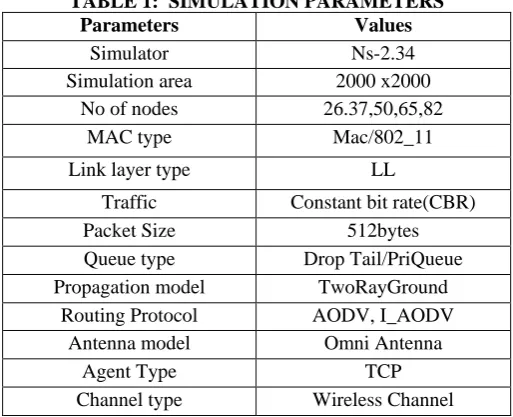
TABLE 1: SIMULATION PARAMETERS
Parameters Values
Simulator Ns-2.34
Simulation area 2000 x2000 No of nodes 26.37,50,65,82
MAC type Mac/802_11
Link layer type LL
Traffic Constant bit rate(CBR) Packet Size 512bytes Queue type Drop Tail/PriQueue Propagation model TwoRayGround
Routing Protocol AODV, I_AODV Antenna model Omni Antenna
Agent Type TCP
V. SIMULATION RESULTS AND ANALYSIS
[image:4.595.325.567.141.376.2]The performance analysis of AODV and I_AODV routing protocol in MANETs is performed in a simulated environment. NS 2.34 simulator is used under Linux Backtrack 5 and windows platform for simulation. The performance analyses are performed by following simulation parameters for both protocols.
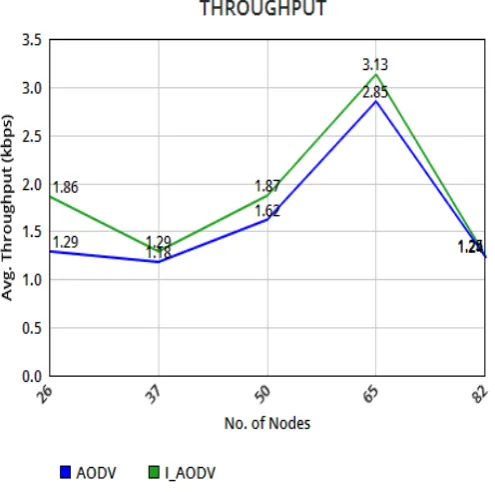
[image:4.595.41.289.177.423.2]Figure 2: Avg. Throughput (kbps)
Figure 2 shows average throughput with respect to different node values. It is seen that I_AODV has higher throughput value except 26 nodes than AODV routing protocol. Higher the throughput value more number of messages is delivered successfully.
Figure 3: End to End Delay (ms)
Figure 3 shows average end to end delay that exists at AODV and I_AODV routing protocol. It is observed that I_AODV has less end-to-end delay than AODV routing protocol.
Figure 4: Packet Delivery Ratio
Figure 4 shows packet delivery ratio of each routing protocols on varying value of nodes. It is seen that I_AODV has higher packet delivery ratio than AODV routing protocol. Higher the packet delivery ratio more the packets received with respect to packets sent. I_AODV routing protocol shows better performance in packet delivery ratio.
TABLE 2: Overall Performance of Protocols in Tabular Form
Sr. no.
No. of nodes
Protocols
Performance metric Avg.
Throu ghput (kbps)
PDR E2E Delay
(ms)
1 26
AODV I_AODV
1.29 1.86
25.85 33.59
537.12 306.12
2 37
AODV I_AODV
1.18 1.29
24.79 25.30
285.52 273.55
3 50
AODV I_AODV
1.62 1.87
27.39 28.74
423.32 270.57
4 65
AODV I_AODV
2.85 3.13
38.86 41.95
466.25 429.1.
5 82
AODV I_AODV
1.24 1.25
17.55 17.78
202.64 204.14
VI. CONCLUSION
[image:4.595.308.566.502.719.2] [image:4.595.47.291.525.763.2]proposed which attempts four Manet station units (MSU)
which is deployed with high battery power integration provide faster communication and provides lesser end to end
delay with higher packer delivery ratio. I_AODV route
discovery succeeds in fewer tries than AODV routing protocol. We have carried out an a extensive simulation study to analysis the performance of proposed R-AODV and compared it with that of existing AODV routing protocol using NS-2 simulator NS-2.34 tool. The simulation results show that the performance of I_AODV routing protocol is better than traditional AODV routing protocol in most of the metrics, such as the average packet delivery ratio, average end to end delay and average throughput. Future work can be done on same protocol (I_AODV) with other parameters such as, normalized the route overloading, energy consumption and security.
REFERENCES
[1] Prahlad Kulkarni, Siddalingappagouda Biradar, “An Improved Quality of Service Using R-AODV Protocol in MANETs” 3rd International Conference on Artificial Intelligence, Modeling and Simulation, DOI 10.1109/AIMS.2015.69, 2015 IEEE [2] Anupam Kumar Sharma, Munesh Chandra Trivedi,
“Performance Comparison of AODV, ZRP and AODVDR Routing Protocols in MANET” Second International Conference on Computational Intelligence & Communication Technology, DOI 10.1109/CICT.2016.53, IEEE 2016
[3] Vinay Rishiwal, Sandeep Kumar Aggarwal, Mano Yadav, “Performance of AODV Protocol for H-MANETs” 978-1-5090-0673-1/16/$31.00 ©2016 IEEE.
[4] Vinay. P.Viradia, “Improved AODV Routing Protocol for MANET” Int. Journal of Engineering Research and Applications www.ijera.com ISSN: 2248-9622, Vol. 4, Issue 1(Version 3), January 2014, pp.368-374 .
[5] Ashraf Abu-Ein, Jihad Nader, “An enhanced AODV routing protocol for MANETs” IJCSI International Journal of Computer Science Issues, Vol. 11, Issue 1, No 1, January 2014 ISSN (Print): 1694-0814 | ISSN (Online): 1694-0784 ,www.IJCSI.org.
[6] Supriya Sawwashere, Ashutosh Lanjewar, “Improved Cost Efficient AODV Routing Protocol” International Journal of Engineering Research and General Science Volume 3, Issue 2, Part 2, March-April, 2015, ISSN 2091-2730
[7] Ritu Parasher, Yogesh Rathi, “A_AODV: A Modern Routing Algorithm for Mobile Ad-Hoc Network” International Research Journal of Engineering and Technology (IRJET) e-ISSN: 2395 -0056 Volume: 02 Issue: 01 | Apr -2015
[8] Siddharth Samal, Dr. Pradeep Reddy C.H, S.Bharath Bhushan, “IMPLEMENTING A MODIFIED POWER AWARE ROUTING PROTOCOL USING AODV PROTOCOL IN MANET, International Journal of Pharmacy & Technology, Accepted on 28-08-2016.
[9] Mohammed Aashkaar Purushottam Sharma, “Enhanced Energy Efficient AODV Routing Protocol for MANET” International Conference on Research Advances in Integrated Navigation Systems (RAINS - 2016)
[10] Krunal Sbhavsar, Dr. Kamaljit Lakhtaria, “ comparison of DSDV and AODV routing protocol in mobile ad hoc network, International Journal of Advanced Research in Computer Science and Software Engineering, Volume 6, Issue 3, March 2016 , ISSN: 2277 128X
[11] Venkatasubramanian, Mohankumar, .Hemalatha, “Improved AODV Routing Protocol for Manet to Enhance The Network Performance” International Journal of Advanced Research in Computer Science & Technology (IJARCST ), Vol. 2, Issue 4 (O ct. - Dec. 2014).
[12] Neha Aggarwal, Teglovy Singh Chohan, Karamveer Singh,Rajan Vohra, Dr.Shalini Bahel, “Relative Analysis of AODV & DSDV Routing Protocols for MANET based on NS2” International Conference on Electrical, Electronics and Optimization Techniques (ICEEOT)-2016, IEEE.