Patterns on the Academic Performance and Career Decision-making Self-efficacy of First Generation College Students. (Under the direction of Dr. Raymond Ting).
Career development studies show that First Generation College Students (FCGS) have unique career development needs, less college knowledge, and the increased likelihood that they will not complete college. There is evidence in the research that changing majors could impact a student’s ability to complete college successfully, especially if they change majors late in their college experience. FGCS may be differently impacted by changing majors than their non-first generation peers because they have unique career development needs that negatively impact their career paths and decisions. The goal of this research was to gain a better understanding of how changing majors might impact the career decision-making self-efficacy of FGCS (particularly those who are redeciding). The Career Decision-Making Self Efficacy Scale – Short Form was used to compare the career decision- making self-efficacy of first generation college students who changed their majors to first generation college students who did not change their major.
Results of a one-way ANOVA comparing the mean CDSE-SF scores of FGSC who did not change their major to those who did change their major at least one time did not render any statistically significant differences. A meaningful difference was found (F(1, 227) = 1.092, p>.05) between the means of the two groups was found for the self-appraisal item, “Decide what you value most in an occupation.” Additionally, when comparing FGCS with
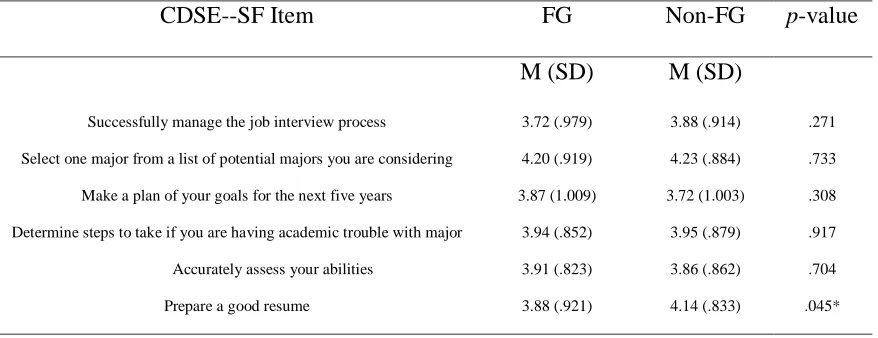
90 or more credit hours, a statistically significant difference in CDSE-SF item “Prepare a good resume” was found between those who changed majors at least once and those who did
resulted in a statistically significant difference t (221) = 2.233, p <.05) between the mean GPA of the two groups.
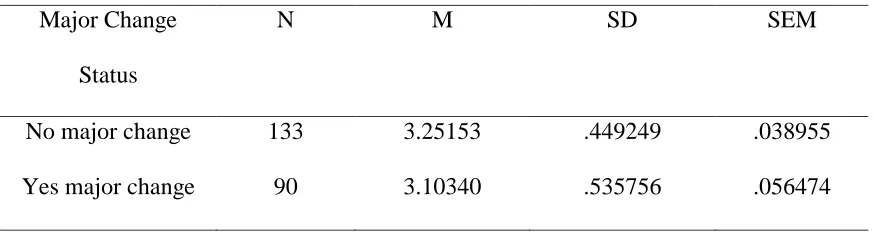
A comparison of the academic performance (as measured by grade point averages) of first generation college students who did not change their majors and those who did change their major resulted in a statistically significant difference t (221) = 2.233, p <.05) between the mean GPA of the two groups. This analysis revealed that the first-generation college students who did not change their major had a significantly higher GPA (M = 3.25, SD = .449) than the first-generation college students who did change their major at least one time (M = 3.10, SD = .536). This analysis revealed that the first-generation college students who did not change their major had a significantly higher GPA (M = 3.25, SD = .449) than the first-generation college students who did change their major at least one time (M = 3.10, SD = .536).
by
Carrie Frederick McLean
A dissertation submitted to the Graduate Faculty of North Carolina State University
in partial fulfillment of the requirements for the Degree of
Doctor of Philosophy
Counseling & Counselor Education
Raleigh, North Carolina 2016
APPROVED BY:
_______________________________ ______________________________
Dr. Raymond Ting Dr. Stanley Baker
Committee Chair
_______________________________ ______________________________
Dedication
This dissertation is dedicated to my oldest son, Christian McLean, my greatest supporter who has been my strongest inspiration to complete this degree.
This dissertation is dedicated to my mentor, Dr. John Ambrose, who taught me about the hidden rules of higher education and challenged me to complete this course of study.
Biography
Carrie Frederick McLean currently serves as the Assistant Dean of University
College and Executive Director of Advising at North Carolina State University where she has worked for more than thirty years. She holds a Bachelors of Arts in Communications from North Carolina State University, a Masters of Library and Information Science from North Carolina Central University; a Masters of Higher Education Administration from North Carolina State University; and is currently completing requirements for a Doctor of Philosophy degree in Counseling and Counselor Education at North Carolina State University.
Acknowledgements
"The way to develop the best that is in a person is by appreciation and encouragement." Charles Schwab
I would like to thank my committee chair, Dr. Raymond Ting, for inspiring me to pursue my graduate education and conveying his passion for research and scholarship. My committee members, Dr. Stanley Baker, Dr. Marc Grimmett, and Dr. Angela Smith have each provided me with encouragement and support in very different ways. Many thanks to Dr. Stanley Baker for making me believe that I have valuable ideas and inspiring me to explore them; Dr. Marc Grimmett for pushing me outside of my comfort zone to consider nontraditional thoughts and ways of meaning making; and to Dr. Angela Smith for always making me feel intelligent, and for providing me with hard messages swaddled in soft, caring packages to foster my personal growth. Thank you to Dr. Tim Luckadoo for his electronic reminders and for showing up at all the right times. I could not have completed this degree without them.
My sincere gratitude is submitted to the doctoral students in my PhD cohort. I have never felt so supported and embraced by a peer group. I thank each of you for all that you have given of yourselves to help me make it through one of the most challenging years and experiences in my life. I never would have completed without your support, especially “King David” and Dr. Hicks. Special thanks to Pauline Ellefson who creates a climate of success and maintains a “De-stress Zone” for the students in the Counselor Education Community.
I extend special appreciation to my colleagues in Exploratory Studies who have given their support and time to help me complete my program, and who continued to believe in me even when I wasn’t so sure of myself. Words cannot express how much my big and wieldy
Table of Contents
List of Tables ...x
Chapter 1 ...1
Introduction ...1
Statement of the Problem ...4
Rationale ...7
Purpose...8
Significance of the Study ...8
Research Questions ...9
Definition of Terms ...9
Limitations of the Study ...11
Summary ...12
Chapter 2 ...13
Review of the Literature ...13
Degree Completion for FGCS Students ...13
Nontraditional students ...14
Low-income students ...14
Challenges to institutional infrastructure ...18
Social Cognitive Career Theory ...18
Key theoretical tenets ... 20
Self-efficacy ...21
Outcome expectations ...21
Goals ...22
Applicability ...23
Summary ...24
Characteristics of Exploratory Students ...25
Undecided exploratory students ...25
The new group of exploratory students ...29
Redeciding exploratory students ... 31
Career Decision-Making in First Generation College Students (FGCS) ...36
Institutional barriers ...36
Socioeconomic status (SES) ...39
Summary ...40
Major Change and College Success...40
Major-changing frequency ...41
Defining major-change ...41
Characteristics of major-changers ...42
Challenges to degree completion ...44
Major Choice and College Success ...46
Academic preparation and performance ...48
Identification of a major ...48
Parental influence ...49
Interest-major fit ...50
Career decision-making readiness...52
Race and ethnicity ...52
Gender ...53
Chapter 3 ...54
Method ...54
Research Questions ...54
Research Design ...54
Participants ...57
Sample ...61
Demographics ... 62
Instrumentation...62
Career decision-making self-efficacy scale ...62
Demographic survey ...65
Data Collection ...66
Procedures ...66
Data Analysis ...68
Dependent variables...68
Independent variables ...68
Limitations ...70
Chapter 4 ...72
Results ...72
Sample ...72
Demographics ...73
Quantitative Analysis...77
Differences in career decision-making self-efficacy ...78
GPA of first generation college students who changed their major status...85
Impact of major-changing on career decision-making self-efficacy ...87
Chapter 5 ...90
Discussion...90
Differences in Career Decision-making Scale Scores ...91
Limited access to career resources ... 91
Parental influence ... 93
Need for mentors ... 94
Impact of Major-Changes on Career Decision-Making Self-Efficacy ...98
Impact of Major-Changes on GPA ... 100
Implications for Practice in Higher Education Institutions ... 104
Implications for Future Research ...106
Limitations of the Study ...108
Conclusion ...110
References ...112
Appendix ...153
Appendix A IRB Approval ...154
Appendix B Invitation to Participate ...155
Appendix C Informed Consent ...156
Appendix D Demographic Survey ...157
List of Tables
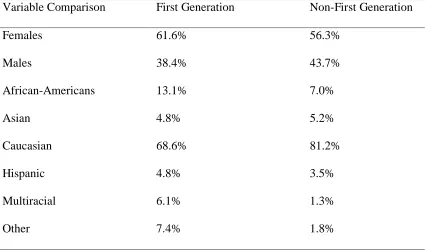
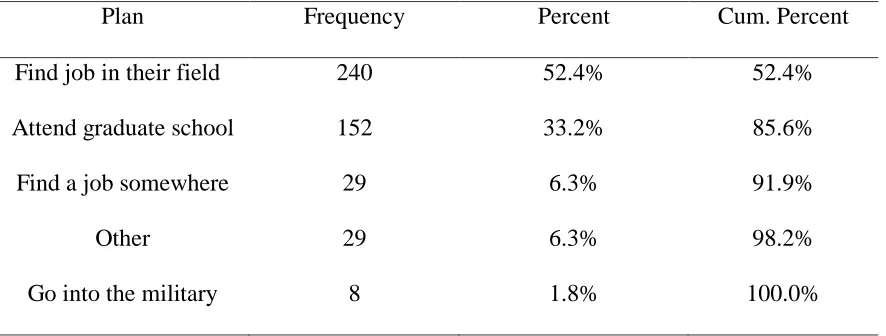
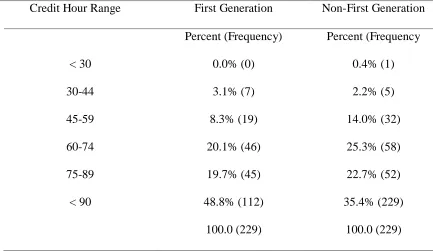
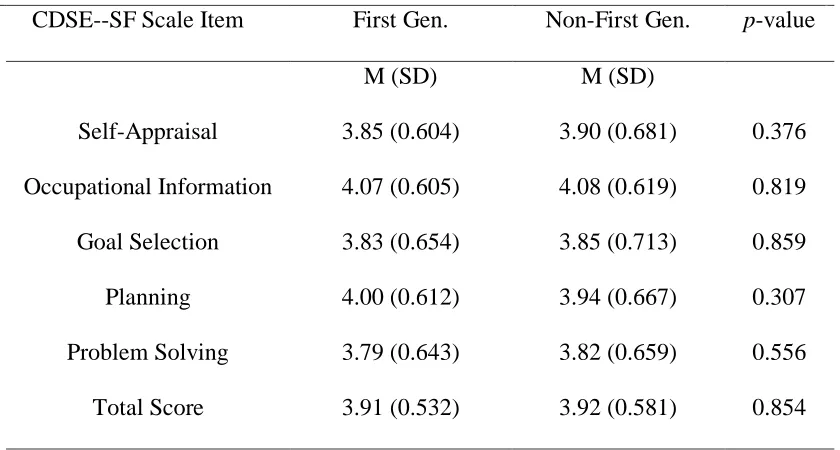
Table 4.1 Demographic Summary of the Sample...75 Table 4.2 Educational and Career Plans Following College...76 Table 4.3 Total Number of Credit Hours Completed by Student Status ...77 Table 4.4 Means and Standard Deviations for CDSE--SF Score for First Generation
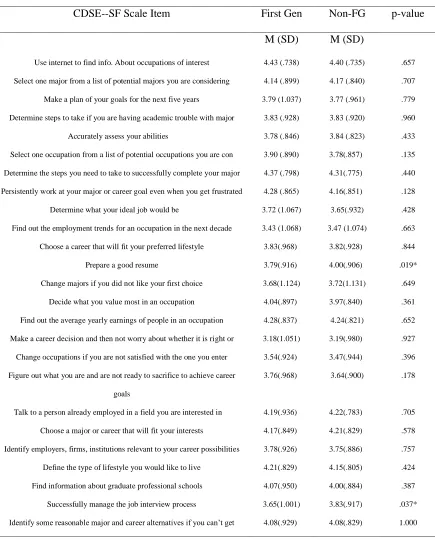
College Students and Non-First Generation College Students...79 Table 4.5 CDSE--SF Item Level Scores for First Generation College Students and
Non-First Generation College Students...81 Table 4.6 Means and Standard Deviations for CDSE-SF Score for First Generation
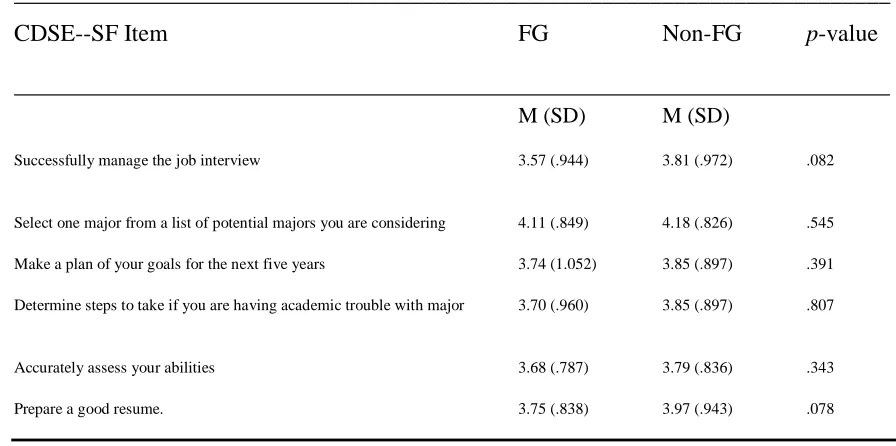
College Students and Non-First Generation College Students (Group1) ...83 Table 4.7 Means and Standard Deviations for CDSE-SF Score for First Generation
College Students and Non-First Generation College Students (Group 2) ...84 Table 4.8 Means and Standard Deviations for CDSE-SF Score for First Generation
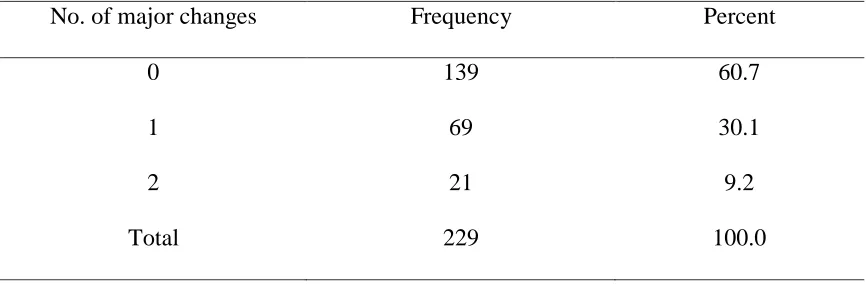
College Students and Non-First Generation College Students (Group 3) ...85 Table 4.9 Number of Major Changes for First Generation Students ...86 Table 4.10 Levine’s Test for Equality of Variance (Independent Samples t-test) Result...86
Table 4.11 Differences in GPA for First Generation Students Who Changed Majors and First Generation Students Who Did Not Change Majors ...87 Table 4.12 Means and Standard Deviation for CDSE-SF Score for Students who Changed
Chapter 1 Introduction
First Generation College Students (FGCS) are students whose parent did not attend college (Choy, 2001). These students are among the fastest growing groups of students in higher education today. Some 27% of all college-bound high school graduates in the United States are first generation college students (Choy, 2001). While FGCS have seen some gains in college access over the past 20 years they have seen little change in college graduation rates and continue to lag behind their non-first generation peers in both graduation and retention. Chen (2005) reports that 43% of the FGCS who entered college between 1992 and 2000 had not earned a degree eight years later. Some 20% of their non-FGCS peers had graduated within the same eight-year timespan.
of success of FGCS in high school and college is well-documented in the research literature; however, Chen (2005) reports that even when academic preparation and other demographic factors are similar, first generation students still tend to underperform compared to their non-first generation peers. Much less of the research effort focuses on identifying what happens to FGCS while they are enrolled in college and the factors that limit their ability to be successful.
Increasing the graduation and persistence rates for FGCS has proven to be a challenge for these students all across the United States (Chen, 2005; Engle, 2007). According to Engle and Tinto (2008) only 25% of first generation college students and 11% of low income first generation college students will earn a degree within six years compared to 55% of their non- first generation peers. Ishitani (2003) found that most FGCS are African American, Hispanic, and come from low-income families. The fastest growing populations in the United States have historically had difficulty gaining access to education, and when they do gain access, they graduate at a lower rate than other students (National Center for Education Statistics [NCES], 2012). In 2012, Hispanics and African Americans together comprise about 22% of the general population, but they account for only 19% of college enrollment and 14% of all degrees earned (US Dept. of Education, 2013). Moreover, among college students, Hispanics and African Americans are more likely to be overrepresented in lower income brackets, which is another factor associated with lower college attendance and lower graduation. Only 50.9% of low income high school students attend two- or four-year
many people from high income families do so (Bailey & Dynarski, 2011).
Some research suggests that low income students are less likely to attend college because they are more likely to be underprepared (Adelman, 1999). The perception of preparedness may differ among the individual student, college admissions officers, and parents between high income and low income students. However, other studies reveal that high income students are more likely to attend college and graduate faster than their low income peers even when their academic preparation is similar. For instance, only 29% of the highest achieving quartile of low income students earns a bachelor’s degree, compared to
74% of their high income peers in the highest achieving quartile (Digest of Educational Statistics, 2013). According to Bowen, Chingos, and McPherson (2011) about a quarter of the variance between low- and high-income students at public universities can be explained by such characteristics as high school grades, college entrance exam scores, race, ethnicity, and gender. The rest of the variance is attributable to other non-cognitive or non-academic factors (Sommerfield, 2011). There is a recent focus in the research on understanding and identifying the impact of these non-cognitive and institutional factors on graduation and retention rates (Robbins, Allen, Casillas, Peterson, & Le, 2006; Ting, 2003).
More specifically, a lack of career decision-making self-efficacy is directly related to career making difficulty. The same contextual variables that impact career decision-making impact a student’s decision to remain enrolled in college (Paulsen & St. John, 2002).
College students who have low career decision-making self-efficacy are less likely to participate in career exploration activities and more likely to make poor career decisions, such as making an uninformed or ill-informed decision about a major (Taylor & Betz, 2001). Hence, increasing a low-income student’s self-efficacy regarding a career choice is critical to a student’s chance of being successful academically, making better career choices, and being
successful in their careers after college. Career decision-making self-efficacy has been proven to be critical to persistence in college and degree attainment (Taylor & Betz, 2001). It is of utmost importance to identify factors that impact and enhance the career decision-making self-efficacy of low-income college students to increase the likelihood of retention and graduation.
Statement of the Problem
Selecting a college major is undoubtedly one of the most important career decisions that a college student has to make (Gordon, 2007). Career decision-making self-efficacy impacts a student’s level of confidence in their ability to successfully complete a college
major and secure a job in a chosen field. According to Taylor and Popma (1990) students who have high levels of self-efficacy also report higher levels of confidence in their career decisions. Additionally, a student’s level of career decision-making self-efficacy is
vocational indecision in a diverse range of undecided college students. These studies are evidence of the impact that selecting or changing a college major can have on the career decision-making self-efficacy of students.
There is a limited amount of research that focuses, specifically, on how changing one’s major might uniquely impact the career decision-making self-efficacy and academic
success of FGCS during college and their career success after college. This study will provide additional depth to the knowledge base related to one particular career development task of FGCS, specifically, changes in academic major. This study will also examine the impact that changing majors can have on the career decision-making self-efficacy of FGCS who are “redeciding” during the early years of college. Redeciding students are those
students who enter college decided on a major but later decide to change that major. The ultimate goal of this research is to gain insights that will inform the development of career exploration programs, activities, and infrastructure which increase the likelihood that redeciding FGCS will persist to graduation and reduce time to degree.
(Wiljanen, 2003). They face many barriers that may limit the experiences and information needed to make sound career decisions such as limited access to role models, financial stress associated with college cost, and a tendency to have parents with limited knowledge about how best to support them while they are enrolled in college (Choy, 2001; Horn, Nunez, & Bobbit, 2000). Additionally, FGCS are challenged by limited information about the
importance of education and college to be successful, family pressure to enter the workforce after high school, and under-preparedness for college coursework (Engle & O’Brien, 2007; NCES, 2000; Sickles, 2004). These barriers are significant and can shape the career
development, career decision-making, and have implications on both the academic and career goal attainment of low-income students and first generation college students (Gore, 2005).
It logically follows, then, that the career decision-making self-efficacy of FGCS could be adversely impacted. This may be attributed to their perceptions that they are from
oppressed populations who are more likely than other non-FGCS to have negative
students apply to institutions that are not an appropriate match for their abilities. This tendency impedes the students’ ability to achieve optimal academic career success.
Rationale
Career decision-making self-efficacy has been correlated with academic success in college as well as career success following college (Evans, Forney, Guido, Patton, & Renn, 2010). Results of research conducted by Multon, Brown, and Lent (1991) showed that poor grades, lack of persistence, and psychological dysfunction were related to low levels of self-efficacy. More specifically, a lack of career decision-making self-efficacy is directly related to career decision-making difficulty. Students who have low career decision-making self-efficacy early in their college careers are less likely to participate in career exploration activities and more likely to make poor career decisions (Evans et al., 2010). Identifying an academic major is among the most important career decisions that a student makes in their college career. Hence, increasing a first generation student’s career decision-making self-efficacy is critical to improving that student’s chance of being successful academically,
making better career choices, and being successful in their careers after college. A student’s confidence and belief in their ability to make a well-informed decision about a college major is critical to a student’s ability to complete college (Taylor & Betz, 1983). Student’s
behavior regarding changing majors can significantly impact their ability to graduate on time and reduce the cost of the college experience (Micceri, 2002; Staley, 2014). The specific goal of this study is to understand how the career decision-making behavior of low-income
Purpose
The purpose of this study is to examine patterns of major changing in FGCS who attend NC State University in an attempt to understand how changing majors might impact these students’ career decision-making self-efficacy and their ability to persist in college and
graduate in a timely manner. Significance of the Study
Much of the research literature about college students who change majors is focused on determining why students leave college early and identifying the characteristics of the students who leave and/or stay. However, much less of the literature is focused on what happens to students while they are enrolled in college and the quality of their college experience, the length of time to graduation, and the amount of money spent obtaining a college degree. It is clear that the comprehensive college experience, the success indicators, and expected outcomes of college are much different for FGCS, who are mainly from low-income families, than for their higher-low-income peers (Daire, LaMothe, & Fuller, 2007). First generation college students are much more likely than their non-first generation peers to be from low income families. Some 42% of first generation college students enrolled in two- and four-year colleges came from families who earned less than $25,000 per year (Choy, 2001). This compares to 18% of their non-first generation peers. Low- income and first generation students have historically faced barriers and challenges in higher education over the past 30 years (Engle & Tinto, 2008).
toward degree and their career success (Education Advisory Board [EAB], 2014; Kelly & Hatcher, 2013). However, there is much less research exploring how the career decision-making self-efficacy of FGCS might be particularly affected because of these barriers. The lack of career networks, information, mentors, and resources are among the many barriers faced by FGCS (Kelly & Hatcher, 2013). Understanding how these barriers uniquely impact their decision-making about an academic major, their ability to complete a college degree, and their confidence in future career decision-making after college will move higher education administrators one step closer to bridging the gap in graduation rates, retention rates, and academic success between FGCS and their peers who are not first generation. Research Questions
The following research questions guided this study:
1. What are the differences in the levels of career decision-making self-efficacy scores between first generation college students FGCS and other college students?
2. What are the differences in the GPA of FGCS who changed their majors at least one time compared to those students who did not change majors?
3. What are the differences in the levels of career decision-making self-efficacy scores between first-generation college students who changed their majors at least one time and FGCS who did not change their major?
Definition of Terms
is defined as a new categorization of undecided student created by the author. Phantom major is defined as it is used informally by many practitioners but there is no evidence of the definition of the term in the formal research literature.
Academic performance. The achievement of a satisfactory grade point average and progression toward an academic degree in college. For the purpose of this paper academic performance is measured by accomplishing a grade point average that is above a 2.0 on a 4.0 grading scale.
Academic success. The continuous enrollment and completion of a bachelor’s degree program.
Career decision-making self-efficacy. An individual’s confidence and belief in his or her capability to make a career decision (Hackett & Betz, 1981).
Career decision self-efficacy scale --short form (CDSE--SF). An instrument developed to measure one’s belief that he/she can successfully complete necessary actions to
make sound career decisions (Betz, Klein, & Taylor, 1996).
First generation college student. A student whose parents did not complete an undergraduate college degree.
Low-income student. A student who has limited access to economic and social resources. For this study low-income students are students whose family income is below 150% of the federally established poverty level for their family size (Choy & Bobbit, 2000).
Non-traditional student. A student who delays enrollment and does not enter college immediately following their completion of high school. Generally, the student is more than 24 years old and works at least part-time. (Choy, 2002).
Persistence. The continuous enrollment in college without taking time off until a degree has been completed.
Redeciding. The act of changing from one designated academic curriculum in college to a different academic curriculum. Curricula are indicated by college curriculum codes. (McLean, 2013 unpublished).
Retention. The continuation of one’s college experience usually measured from one academic year to the next year
Self-efficacy. An individual’s confidence and belief in his or her capacity to achieve a specified outcome or result (Bandura, 1977)
Undecided student. A student who is not able to or not willing to commit to an academic major upon entering college (Gordon, 1984)
Limitations of the Study
1. The sample for this study was collected from students enrolled at NC State University during the spring 2015 semester and may not be generalizable across different kinds and sizes of institutions.
Summary
This study is grounded in a Social Cognitive Career Theory framework and is
Chapter 2
Review of the Literature
A review of the literature was conducted to examine the academic success of FGCS, their career decision-making self-efficacy, and their major changing behavior. The salient groups of literature that contributed to the investigation of the constructs and the insights gained during the examination are presented in this chapter. The literature review is given context by providing some background information on the state of degree completion in the United States and should provide the reader with broader context for current issues and trends that impact the study. The rest of the chapter is divided into five sections which include: (a) the state of degree completion for FGCS; (b), Social Cognitive Career Theory; (c) characteristics of exploratory students (undecided, decided, redeciding); (d) career decision-making self-efficacy; and (e) major choice and major changing behavior in college students.
Degree Completion for FGCS Students
46.3% by 2060. Racial and ethnic minorities are the fastest-growing populations in the country but are disproportionately represented among the lowest income brackets (United States Census Bureau, 2014). Hispanics and African Americans comprise approximately 22% of the general population, but only 19% of the college enrollment and 14% of the degrees earned in the United States (US Dept. of Education, 2013). The United States college graduation rates reflect that the fastest growing segments of society have difficulty gaining access to education (Engle, 2007; Engle & Tinto, 2008). When they do gain access there is disparity in graduation rates (Engle, 2007; Engle & Tinto, 2008).
Nontraditional students. The research literature discusses changes in the college going population and the increased presence of nontraditional students (Lipka, 2012). According to a report by the NCES (2012), 73% of all students are nontraditional students and 39% of students are over the age of 25. While these students are committed to getting a college education they have to balance this goal with working a job to support themselves, competing family transitions, transferring across colleges, and the need to take courses during nontraditional hours (Forbus, Newbold, & Mehta, 2011). College-going practices are also impacted by job layoffs that cause many older students to return to college to complete degrees or gain further training, veterans returning to school after completing their service to the military, changing workforce demands, and the retrenched economic condition of the country (McGraw & Burr, 2011).
students who are low income face even more challenges than other first generation students and are even less likely to graduate than other first generation students (Engle & Tinto, 2008). Low-income students demographically tend to be first generation, racial and ethnic minorities, single parents, and have English as a second language (Engle & Tinto, 2008). Therefore, increasing the college degree attainment for first generation low income students, particularly, is critical to the economic well-being of the country. Only 50.9% of low-income high school students attend two- or four-year colleges after high school compared to 80% of their higher-income peers (NCES, 2012). One of every 10 people from low-income families earn a bachelor’s degree by age 25 compared to five out of 10 people from high-income families (Bailey & Dynarski, 2011). Generally, while the nation’s college going
rates are increasing, this increase is due to the increase in the rates of middle and high income students. The college going rate for low income students has seen much slower growth (NCES, 2012).
Many research studies show low-income students are less likely to attend college because they are more likely to be underprepared to do so (Adelman, 2006). However, other studies reveal that only 29% of the highest-achieving quartile of low-income students earns a bachelor’s degree compared to 74% of their peers who are in the highest-achieving quartile
college entrance exam scores, race, ethnicity, and gender. The rest of the variance is attributable to other factors some of which remain unidentified.
Low-income first generation college students are four times more likely than other students to leave college after their first year, and 89% of these students still have not graduated in six years (Paul, 2012). According to a report conducted by the NCES (2012), 50% of college students are first generation. When the numbers are disaggregated the report shows that students of color comprise the greatest percentage of first generation students: 48.5% of Hispanic or Latino students report that they are first generation; 45% of African Americans; 32% of Asians; 35% of Native Americans; and 28% of Caucasians (NCES, 2012). Identifying factors that impact first generation students’ ability to complete college is
critical to improving graduation rates.
Chen and Carroll (2005) defined first generation college students as those students whose parent(s) never completed a college degree. Much of the research on first generation college students has focused on the characteristics of first generation college students (Murphy & Hicks, 2006; Tym, McMillion, Barone, & Webster, 2004); barriers and
(Choy, 2001; Nunez & Cuccaro-Alamin, 1998). This is especially true for low-income first generation students (Murphy & Hicks, 2006; Thayer, 2000). This disparity between the completion rate of FGCS and their non-first generation peers is especially concerning given that both groups of students enter college with high aspirations and the intention of
completion. The results of the annual Freshman Survey, a report produced by the
Cooperative Institutional Research Program, shows that FGCS’s aspirations for advanced
degrees have increased from 41.9% in 1974 to 75% in 2014 (Egan, Stolzenberg, Ramirez, Aragon, Suchard, & Hurtado (2014). This reflects only a 3% difference in aspirations when compared to their non-first generation peers.
Challenges to institutional infrastructure. First generation low-income students have challenged the traditional higher education infrastructure in many ways. Administrators and policy makers struggle to find ways to increase the academic success of first generation low–income students and close the graduation gap between first generation low-income students and their higher-income peers. However, the barriers that today’s students face make it difficult to measure graduation rates. Measuring graduation rates is a fairly new phenomenon in higher education. The Education Department established regulations for measuring graduation rates in mid-1990s and defined the graduation rate as the “percentage of first-time, full-time students who enrolled in the fall and completed their degree within 150% of normal time” which meant six years for students seeking a bachelor’s degree
(Selingo, 2012). While this definition and metric of the graduation rate was useful for earlier times in higher education, there has been significant change in both student populations and society that has rendered the current definition obsolete for many students (Selingo, 2012). Nontraditional students are increasing in higher education and have become the impetus for many changes in the higher education arena (Choy, 2002). All of these changes taken together are the driving force to redefine the term graduation rate. By any proposed definition of the term there will still remain a disparity between first generation students, especially those who are low income, and other students (DeSilver, 2014).
Social Cognitive Career Theory
requisite tasks that must be accomplished in sound career decision-making (Lent et al., 1994). The theory has particular utility for understanding the interrelationships between career barriers, career goals, career decision- making efficacy, and academic self-efficacy. SCCT takes into account environmental factors, person inputs, and contextual variables that impact one’s learning experiences (Lent et al., 1994). These learning
experiences will ultimately impact one’s willingness to make career decisions and the confidence that one has in their decision-making ability (Lent, et al., 1994).
SCCT evolved from Bandura’s (1986) general Social Cognitive Learning Theory.
The major premise is based on the relationships that exist between the personal, cognitive, and environmental factors that determine learning. Bandura theorized that self-efficacy is developed by four types of learning experiences: a person’s earlier personal performance
outcomes and achievements; vicarious learning; social persuasion; and emotional and
physiological condition (Bandura, 1986). These four attributes can also provide a foundation for self-efficacy enhancing interventions (Lent et al., 2000). SCCT initially focused on cognitive variables as they relate to learning. Lent et al. (1994) extended SCCT to the field of career development and included personal perceptions and environmental variables as well.
SCCT focuses on both cognitive variables and person variables (self-efficacy, outcomes, and goals) that interact with the person and the person’s environment. SCCT
et al. (1994) explored the relationship between career and academic interest development, career choice development, and the process by which these choices develop into career action. They theorized that individuals use personal agency (intention and self-direction) to make career decisions. They further contend that personal agency and intentions are
impacted by the interaction between social cognitive factors of self-efficacy, outcomes expectation, and personal goals. Together these factors function to influence an individual's career interests, career decision-making and career development (Lent et al., 1994).
development of career interests, career thoughts, and the career behaviors that then influence career choice, career goals, and career performance. Career barriers and career supports defined as contextual factors by the theorists also influence career choice goals and actions.
Lent et al. (1994) discovered that personal performance achievement would impact outcome expectations and self-efficacy more than would vicarious learning, verbal
persuasion, and physiological states. The authors further posit that the correlation between goals and interests and the correlation between goals and actions is higher when perceived barriers are low and perceived support and opportunity are high. This premise offers broad utility and accommodates the circumstances of groups and individuals who have been historically marginalized and/or oppressed. These insights help explain why students who are highly capable by every cognitive measure might not be successful academically or have low confidence in their ability to succeed at accomplishing career goals.
Self-efficacy. Self-efficacy refers to the beliefs an individual has about his or her ability to successfully complete a given task or activity. Individuals develop their sense of self-efficacy from social interactions, personal performance, learning by example, and their perceptions of a given situation or activity. Most researchers argue that self-efficacy is applicable to diverse groups because it addresses both personal background and
environmental factors. However, some theorists argue that self-efficacy is not applicable across cultural groups. Pajares (1996), for instance, cautions researchers that they should be specific and identify the context of self-efficacy when they conduct research.
expectations are thought to develop from past performance of a given action, observation of the outcomes produced by others, reaction of others to outcomes, attraction to personally generated outcomes, and emotions associated with task performance. Career goals and intentions are directly impacted by outcome expectations (Ochs & Roessler, 2004). The more success that an individual has accomplished or experienced in past, the more likely that person is to believe that they will continue to be successful in future endeavors. It logically follows that when individuals have a long history and experience with limited or no success, they are less likely to have the confidence that they will find future success.
Goals. Goals are defined as the decisions developed to begin a particular activity or achieve a future plan. Goals are critical to success and behaviors result from and are sustained by previously set goals (Lent et al., 1994). There is a direct relationship between goal achievement and increases in self-efficacy. As self-efficacy increases, the likelihood that a positive outcome will result from similar performance in the future increases. Positive and negative experiences with goal achievement can create repetitive cycles of success or failure respectively. Individuals with specific goals tend to achieve more, establish more challenging future goals, and evaluate expected outcomes more effectively. Moreover, individuals with high self-efficacy tend to set high and more specific goals while those with low self-efficacy set lower and more broad-based goals (Lent et al., 1994). Lent et al. (1994) contend that goals and intentions can positively impact behavior even when there is a lack of
perception that they can be successful and more likely to succeed despite their background circumstances.
Applicability. The research literature well-reflects the applicability of SCCT across a diverse range of groups: Iranian college students (Rajabi, Papzan, & Zahedi, 2012); African American college students (Dickinson, 2007); athletes (Demulier, Scanff, &Yannick, 2013); school-to-work transition (Kelly, 2009); unemployed adults (Dahling, Melloy, & Thompson, 2013); women’s career choice (Hackett & Kohlhart, 2012); and lesbian, gay, and bisexual
students (Arnett, 2013). Some critics question the applicability of SCCT across groups who are not college educated because so much of the related research has been conducted on college students (Lindley, 2005; Nauta, 2004). Critics have also articulated concern because most of the empirical research that has been conducted on SCCT is focused on its
applicability to students in specific disciplines such as Science, Technology, Engineering, and Math (STEM) and professional fields. Only recently have scholars begun to explore applicability of SCCT in other disciplines such as school to work transition (Kelly, 2009); women teachers (Montgomery, 2009); women athletes (Smith, 2010); school counselors (Tang, 2003); and middle school students (Gibbons & Borders, 2010).
They found that Asian American students are most influenced by family background, self-efficacy, and acculturation when choosing occupations.
SCCT has also been applied to Chinese students and shown applicable across that cultural group as well. Jin, Watkins, and Yuen (2009) studied the stability of the relationship between career decidedness and personality characteristics in Chinese students. Using survey research with a sample of 2,046 students, the researchers found that career decision-making self-efficacy correlated with personality characteristics, conscientiousness, and
agreeableness. Rogers, Creed, and Glendon (2008) also studied how personality
characteristics, self-efficacy beliefs, social supports, outcome expectations, and intentions impact career planning, career exploration, and career readiness in college students. Studying a group of 414 high school students, they found that career planning is associated positively with self-efficacy and career exploration is associated with goals and social supports.
Summary. SCCT is a comprehensive theory that focuses on how career barriers (both personal and contextual) impact career self-efficacy, goals, and interests. The research literature focuses more on the person-level characteristics than on perceptual barriers. Recently researchers have begun to focus more attention on the objective, systemic, societal and institutional contextual career barriers that influence people. A major contextual factor that impacts an individual’s ability to develop career decision self-efficacy are perceived
barriers (Luzzo & McWhirter, 2001). Perceived barriers have been shown to be relevant to individuals’ career development and self-efficacy, especially for women and people of color
particular (Luzzo & McWhirter, 2001). Women’s perceptions of their ability to be
successful in science and technology degrees have been shown to have significant impact on both outcome expectations and performance expectations (Walsh & Savikas, 2005).
Characteristics of Exploratory Students
Undecided exploratory students. There is no doubt that the state of being
undecided impacts a student’s ability to be successful in college and renders the undecided
student an at-risk population (Gordon, 2007; McLean & Hauschild, 2007). Undecided students make up a much larger proportion of the total student population than anyone realizes because they are often undecided but have declared a major. The actual number of students who are undecided when they enter college is unknown and very difficult to assess because many students select majors upon admission to college due to parental pressure, popular culture, high predicted salary potential, and peer pressure (Montag, Campo, Weissman, Walmsley, & Snell, 2012). Students’ initial major choices are rarely ever
well-informed and seldom reflect sound career decision-making strategies. More often than not, major choices are made prematurely with little exploration or thought given to the selected major (Gordon, 2007).
in an attempt to forecast the number of college support professionals needed to serve undecided high school students. Their goal was to predict human and financial resources needed by colleges by predicting major choice and placement of entering college freshmen students in Taiwan. They discovered that the major change patterns were difficult to predict and recommended that freshmen students participate in career exploration programs.
While the number of undecided students is difficult to predict researchers have been much more successful at identifying the characteristics of students who are known to be undecided. Since the mid-to-late 1970s, researchers described the stigma associated with undecided students. Fullerton and Britton (1976) say that students who entered college undecided were often thought of as an unproductive expense both to society and to themselves. It was well-established in the earlier literature that undecided students have lower self-efficacy (Bandura, 1997), lower confidence in decision-making (Gordon, 1998), higher anxiety levels (Santos, 2001), low levels of psychological separation towards parents (Santos, 2001), a poorly defined sense of identity (Fuqua & Hartman, 1983), and are less likely to be retained (Gordon, 1994) than students who enter college decided.
than ever before, students’ anxiety levels about college are the driving force behind a rapid increase in mental health concerns among college students (Fleming, 2011). According to a report by the American Psychological Association (APA, 2010) over the past 10 years there has been a 10% increase in the number of students on psychiatric medicines in college.
Santos (2001) highlights the fact that undecided students are a large diverse group and that there are varying types of indecision. He further asserts that despite the existing controversy about the varying types of indecision, there is general agreement pervasive in the research that simple or developmental indecision associated with developmentally
appropriate exploration of alternatives (selecting a major) can be differentiated from
generalized indecision which reflects extreme difficulties in making life-altering decisions. Gordon (1998) concurs that undecided students are a very diverse group. Many researchers have attempted to categorize undecided students and differentiate them from decided students (Crites, 1998; Gordon; 2007; Gordon & Steele, 2003; Savickas, 1989). After conducting an extensive review of the research literature about undecided students Gordon (2007) re-categorized undecided students into seven subgroups: “chronically indecisive”, “seriously undecided”, “developmentally undecided”, “tentatively undecided”, “unstable decided”, “somewhat decided”, and “very decided.”
The more recent studies of undecided students have tried to identify those students who are indecisive from those who are undecided for other reasons. Indecisiveness and indecision are two very different states (Crites, 1998). He explains that indecisiveness is a trait that tends to pervade one’s total life and is the result of maladaptive habits and thinking.
they have access to all the information necessary to do so and all other conditions needed to make the decision--such as freedom to make a choice, incentive to make a choice, and supply of choices are met. Indecision is a more temporary developmental state that can be changed when one has the information and resources needed and necessary conditions are met (Gordon, 2007). Hartman and Fuqua (1983) studied students who were chronically
undecided and noted the association between indecisiveness and anxiety and psychological dysfunction. Gordon (2007) distinguishes the developmentally undecided from the
chronically indecisive student. She highlights the importance of recognizing that developmentally undecided students’ self-efficacy increased over time.
Gordon (1984) suggests that the label undecided be abandoned and recommends the use of exploratory or investigative to describe the “new” undecided students. She also emphasizes the positive attributes of developmentally undecided students and states that many students are undecided because they have a diverse range of interests which spans many different subject areas. These students choose to delay their commitment to a major until they have enough information and experience to make an informed decision about their major and/or career. Gordon (1984) believes this time taken to explore should be encouraged and describes exploratory students as intentional critical thinkers who are reflective and very deliberate. Gordon’s (1984) description of undecided students sounds very similar to the
decision. The front-end career exploration experience is proving beneficial to students and the career decision-making skills gained as part of this experience will actually serve student well in their post-college career (Creed, Patton & Padeaux, 2006; McLean et al., 2010).
The new group of exploratory students. The changing workforce demands and changes in the type of individuals across the nation who need to be educated are shifting the face of indecision and the undecided student. As disciplines blend and world problems become increasingly complex, it has become less important to name a major in college and more important to build a set of skills that are portable across majors. As displaced workers return to college to reposition themselves in the workforce it has become less critical for them to identify a particular major, but more important for them to complement a pre-existing knowledge base or skillset with supplemental learning experiences and skills. Undeclared and undecided students are taking a new form. They are becoming the new normal student in higher education (Simon, 2012). It has become acceptable and advisable that students take the time and effort to explore majors, careers, and courses before
identifying or customizing their educational experience and desired learning outcomes (Slowinski & Hammock, 2003). It is much more prudent financially and vocationally to make an informed career decision. Employers, legislators, and workers are seeking efficient delivery of educational outcomes and the accurate and early identification of a major has become more important both inside the walls of higher education and to other constituents outside of the college as well (Simon, 2012).
deciding label also better reflects the needs of the new undecided student. Thus, college administrators and student support professionals have developed many services and interventions for undecided or deciding students (Gore, 2005; McLean et al., 2007).
Colleges have developed courses, advising delivery models, major selection workshops and programs, coaching, learning communities, and many more resources for students who are knowingly undecided (Gordon, 2007). These programs have been documented, well-researched, and assessed since the early-1990s. At many large universities there are first year experiences built into the infrastructure of colleges to support undecided students (Steele, 2003). Undecided students have been supported to the extent that they are performing as well as students who enter college already decided on a major. Research findings show that undecided students now graduate at the same rate as a matched cohort of decided students (Gordon, 2007; Micceri, 2002).
Colleges and universities across the nation are forced to repackage degrees,
graduating from college. Colleges are trying to be much more intentional about building an exploration experience for the undecided student into the infrastructure of the organizations (Gordon, 2007; Cuseo, 2005). However, the research does not reflect much success in infrastructure and policy improvement that better accommodates the developmental career decision-making needs of students.
Redeciding exploratory students. The traditional student who enters college undecided is very visible and demands and acquires needed services (Gordon, 2007).
However, the new group of undecided students is a population of undecided students who are quite invisible (Staley, 2014). They are admitted into the university as decided students. They are enrolled in majors all across the university yet make little to no progress towards the degree in which they are enrolled. These students, sometimes referred to as phantom majors by university support professionals and practitioners, are at-risk but undetected. They are hidden amongst their decided peers and struggling to find their way (Gordon, 2007). Even when educators and researchers attempt to count the numbers of undecided students, they routinely overlook the undecided students who entered the university decided, but somewhere along the educational experience became undecided and needed to redecide on a different and more suitable major. Because the redeciding student is hidden, no one is seeking them out to provide services and these redeciding students are at a higher risk of dropping out or stopping out of college (Staley, 2014). Even when redeciding students are retained, they may have a prolonged time to graduation if they don’t make a timely decision
The results of the EAB (2014) study also reflected that 18% of students in a nationwide sample of 110 institutions were adult degree seekers who did not have an established career plan or goal. They labeled this group of students academic wanderers. This group of students is very similar to the student described in this paper as redeciding. Though they did not have clearly established career goals these “academic wanderers” were found to be extremely cost conscious, believed that their degree would open doors to new opportunities, and were adult degree seekers without an established degree plan (Staley, 2014). The research report also describes five other diverse student groups that are rapidly increasing on college campuses in the U. S. These subgroups included 24% aspiring academics who are traditional aged students, interested in internships and research
students, although not comprehensively, as the changing student population in higher education (Diel-Amen, 2011). These groups reflect the complexity of career decision-making needs now represented in the academy.
Staley’s (2014) results also showed that most undergraduate students who drop out of
college leave in good standing and have completed between 4.5 and 5.7 semesters. The students also have between a 2.0-3.0 grade point average. In further analysis of this group they found that students who finish their first year with a grade point average of less than 2.0 are not likely to graduate, and those who finish with a 3.0 are highly likely to graduate. However, they suggest that college administrators pay closer attention to the students in what they describe as the murky middle because they may be more easily retained than the at-risk first- year group who have been given most of the support. Several researchers advocate shifting resources from the first-year group to support those students in the middle (Tyson, 2014). Further study is necessary for these middle students (2.0-3.0 grade point average) because the number of students in this group who drop out of college is very similar to the number of students who graduate. Little attention has been given to this group in the literature.
There was a paucity of research studies that explored these students in the murky middle. Research suggests that 50-60% of all first year students enter college undecided and 77% of all first-year and sophomores are undecided (Freedman, 2013; Gordon, 2007;
majors can impact a student’s ability to graduate and graduate in a timely manner. To
prevent dropout and to increase graduation rates for redeciding students will require advisors, student support professionals, and administrators to rethink and reframe the manner in which services are provided to this population of students (Gordon, 2007; Staley, 2014).
Traditional advising and support models continue to be effective for some groups of
exploratory students. However, students who enter college decided but need to redecide later in their college experience will need an intentionally designed strategy that addresses their career decision-making needs, the exploratory process, and also the psychological and emotional well-being of the student (Gordon, 1994).
Redeciding students who entered college decided have often developed relationships with faculty, staff, and peers in their major of choice. These networks are dismantled when they are forced to detach themselves from these networks and identify a new major. Their support networks are being dismantled at the same time that they are most in need of academic and psychological support. This leads to feelings of isolation, and students are more likely to lose their sense of self-efficacy and belonging through this transition (McDaniels et al., 1994). Additionally, there continues to be pressure for students to be decided when they enter college (Gordon, 1984). The stigma to declare majors is
perpetuated by parents and peers more than it is by administrators who now have some data that helps them to better understand students’ need for exploration. Some students select a
decision-making near the end of the college experience is much less popular and less acceptable than it is to solicit help at the beginning of the college experience (Steele, 2003).
Redeciding students are likely to have financial problems because taking longer to graduate equates with increased cost to complete their education. The longer the students are enrolled in college, the more debt that they will accrue (Cook & Pullaro, 2010). Not only are they putting themselves at-risk financially for their extended stay in college, but they are also a strain on the college or university’s retention and graduation rates. While retention is a
concern for redeciding students, graduation is a much bigger concern. Colleges and universities must create infrastructure, support, and services to facilitate career decision-making and career development in redeciding students. All students, but especially redeciding students, must be provided the support necessary to help them graduate in a timely fashion and to help them develop the skills and experiences that foster a successful transition out of college and into the workforce.
The research literature well-documents that redeciding students are at-risk of not completing college and that they tend to be growing in number (Gordon, 2007; Micceri, 2002). Benton et al. (2003) conducted a 13-year longitudinal study to review trends in problems experienced by college counseling center therapists. They found that vocational and educational problems decreased during the first five years of the study but increased in the second half of the study. Referencing R.B. Culiffe’s research published in 1927, Gordon
emphasize the developing trend and significant increase in students who were challenged with career decision-making problems and recommended the development of intentional career services as well as an increase in career counseling.
Career Decision-Making in First Generation College Students (FGCS)
FGCS represent 27% of all high school graduates (Gibbons & Shoffner, 2004). First generation college students are 1.3 times more likely to leave college at the end of their first year of college than other students (Ishitani, 2006). Research data show that 24% of first-time first-year students are both low-income and first generation (Staley, 2014).
Additionally, 89% of low-income, first-generation college students leave college after six years without a degree and the drop-out rate for low-income students is four times higher than that of their higher-income peers (Staley, 2014). FGCS are seven times more likely to complete a bachelor’s degree if they were enrolled in a four-year college. Only 25% of
FGCS enroll in four-year colleges (Chen, 2005). Changing the graduation and retention rates of FGCS could make a significant positive impact on changing the graduation rates for the nation.
Institutional barriers. FGCS have unique career decision-making challenges that can make them even more at risk of career indecision than their higher income peers (Wiljanen, 2003). They face many barriers that may limit the experiences and information needed to make sound career decisions such as limited access to role models, financial stress associated with college cost, tendency to have first generation parents with limited
O’Brien, 2007; Horn, Nunez, & Bobbit, 2000; Sickles, 2004). FGCS are also more likely to
attend college closer to home, delay college after high school, be older than the traditional-aged college student, attend college part-time, live off-campus, and work full-time while enrolled in college (NCES, 2005). These barriers differently shape the career development, career decision-making, and both the academic and career goal attainment of FGCS (Gore, 2005; Ting, 2003).
Stephens, Markus, Fryburg, Johnson, and Covarrubias (2012) posit that American universities’ tendency to focus on independence is a cultural mismatch for FGCS who are
motivated by reasons of interdependence to attend college. They found that representing the university’s culture as interdependent (sense of community) rather than independent (finding one’s own way) reduced student’s perceptions of difficulty. Stephens et al. (2012)
recommend that colleges should focus efforts to support FGCS on eliminating cultural barriers that impede student success.
goals, and expectations about careers and majors due to their limited exposure to and experience with college and careers.(Garriot, Flores & Martens, 2012; Hicks, 2003; Olsen, 2009 ).
The negative influence of environmental and demographic factors on the career development and decision-making of FGCS extends beyond the higher education arena into the students’ career following college. Some researchers describe perceived barriers related
to prejudice and social justice that impact the academic and career success of FGCS (Patel, Salahuddin, & O’Brien, 2008; Rollins & Valdez, 2006). Others emphasize the impact of social, political, personal, and environmental barriers that impact the students’ success
(Gladieux, 2004; Oliverez & Tierney, 2005). However, whether career barriers are perceived or real, the research clearly reflects that these barriers diminish students’ level of confidence
and generate the tendency in students to avoid and/or delay making critical career decisions (Grier-Reed & Ganuza, 2012). Bandura (1986) defines this lack of confidence in one’s ability to successfully complete a given career-specific task as career decision- making self-efficacy. He emits that perseverance despite obstacles, successful performance in future related tasks, and the willingness and/or motivation to perform a given task are positively associated with a student’s self-efficacy.
impact of contextual barriers on career interest and career choice. The direct effect of contextual variables on choice was small when compared to the indirect effect (Lent et al., 2003; Quimby & O’Brien, 2004). Interest and choice were more strongly related when
contextual barriers were low (Lent et al., 2003). This relationship between contextual variables and choice might explain why FGCS students are not well-represented in prestigious careers or higher paying jobs (Fouad & Byars-Winston, 2005). The underrepresentation of FGCS has already been substantiated earlier in this study.
Socioeconomic status (SES). The literature makes it clear that there is a relationship between socioeconomic status and career decision-making (Engle & Tinto, 2008; Grier-Reed & Ganuza, 2012; Hsieh & Huang, 2014; Parks-Yancey, 2012). Engle and Tinto (2008) confirmed that socioeconomic status impacts job and career related experiences. They further found that socioeconomic status impacts one’s confidence and perceptions about their ability to be successful in high profile careers. Ultimately their results showed that
Summary. These studies offer great insights into why FGCS students might have more difficulty making decisions about a major in college. They also offer a rationale for the gap in achievement of FGCS students in particular STEM fields. The limited academic achievement, limited attainment of higher paying jobs and careers, the tendency for FGCS to attend colleges that are not selective, increased debt accrued trying to complete college, and longer times to degree completion are reflected extensively in the research literature. Little research addresses what happens during the college experience that impedes FGCS students’ ability to graduate in a timely fashion. If career decision-making is impacted differently in FGCS students then it logically follows that their major-changing patterns might be impacted by career decision-making self-efficacy as well (Lent et al., 2003). Most of the research on major choice and FGCS focuses on the impact self-efficacy has on the students’ academic success. Less research focuses on the unique impact career decision-making self-efficacy might have on major-changing behavior in FGCS and how that impact consequently limits their success in college. This study is an attempt to understand how FGCS’s career
decision-making self-efficacy and major- changing patterns impact their ability to successfully complete a college degree.
Major Change and College Success
Students’ initial majors are rarely ever well-informed and rarely employ sound career
Theophilides, Terenzini, and Lorang (1984) surveyed entering freshmen at a large public university and found that 15% of his respondents had changed their major by the end of the first year and 45% changed their major during those first two years.
Major-changing frequency. Montag, Campo, Weissman, Walmsley, and Snell (2012) indicate that between 40-85% of all students change their major at least once before they graduate from college, and as many as 10% of students change their majors at least four times. Willingham (1985) found that only 30% of students graduated in the same major in which they enrolled upon admission to college. A Chen (2005) study showed that the number of students who change majors at least once is closer to 80%. Staley (2014) studied a sample of 2,693 students across 50 different institutions and found that 75% of students changed majors at least once. The earlier literature reflects that 40 -50% of students change their majors (Foote, 1980; Noel, 1985). But more recent studies reflect that 75-80% of students change their majors at least once. The number of students who change their majors in college is clearly increasing as time progresses. Kramer, Higley, and Olsen (1994) report over the course of their longitudinal study from 1980-1989 the percent of freshmen who changed majors rose from 46% in 1980 to 68% in 1989.
Defining major-change. There is some variation in the research literature about the definition of the term “major change.” Virginia Gordon refers to students who enter college
should be made between the student who chooses to change their major and those who are forced to change their major. The latter student who is forced to change majors by university policy or lack of progress in the chosen major is better defined as the redeciding student as it will be used in this study.
Characteristics of major-changers. The characterization of major-changers is equally as ambiguous in the research literature as is the definition of major-changers. Major-changers, undecided students, and deciding and redeciding students are all used
synonymously throughout much of the literature. Each group of students (undecided,
deciding, redeciding, and major-changers) experience very different circumstances; however, there is little distinction made between the groups in the research literature (Chen, 2005; EAB, 2014; Gordon, 1984; Gordon, 2007; Steele, 1994). They are generally reflected as one group but warrant individual attention. Virginia Gordon (1984) has focused much of her recent research on distinguishing the redeciding student from the deciding students. She conceptualizes seven different categories of undecided students: the “very decided,” “ unstable decided,” “ somewhat decided,” “tentatively undecided,” “developmentally
undecided,” “seriously undecided,” and “chronically indecisive.” She further identifies the
characteristics of each type of student but still does not separately capture the redeciding student in any particular category. The rediciding student can be represented in any of the seven categories.
“experts,” and “systematic.” Gordon’s conceptualization of categories distinguishes those
students who are willing to explore from those who are forced to explore (Gordon, 2007). She describes drifters as those students who realize early in their college career that they have chosen a major that is not the best fit but they delay participating in an exploration process. Closet changers are students who change their major without telling others or without notifying their academic advisor. These students may be particularly worried about how others may perceive their major change.
Externals are quite content changing majors and may change majors frequently trying to identify a perfect fit major or trying to avoid making a wrong choice. Externals typically gather information from anyone in their social network but are less likely to participate in formal exploration of a major before changing. Up-tighters are those major-changers who have been denied admission into their initial choice of a fairly selective major and may have unrealistic expectations about their skills and abilities or unrealistic expectations of the aptitude and skills necessary to successfully complete their major of choice.
Experts also have not participated in a formal exploration process but they proceed through the major as if they have made a well-informed decision. These students are often unwilling to change majors despite their poor performance. Systematic major-changers are knowingly in need of exploration and willing to investigate alternate options for a major. They usually will request the support that they need to make an informed decision (Gordon, 2007).