University of Windsor University of Windsor
Scholarship at UWindsor
Scholarship at UWindsor
Electronic Theses and Dissertations Theses, Dissertations, and Major Papers
2012
Emotional Processing in an Expressive Writing Task on Trauma
Emotional Processing in an Expressive Writing Task on Trauma
Shawn J. Harrington
University of Windsor
Follow this and additional works at: https://scholar.uwindsor.ca/etd
Recommended Citation Recommended Citation
Harrington, Shawn J., "Emotional Processing in an Expressive Writing Task on Trauma " (2012). Electronic Theses and Dissertations. 4813.
https://scholar.uwindsor.ca/etd/4813
This online database contains the full-text of PhD dissertations and Masters’ theses of University of Windsor students from 1954 forward. These documents are made available for personal study and research purposes only, in accordance with the Canadian Copyright Act and the Creative Commons license—CC BY-NC-ND (Attribution, Non-Commercial, No Derivative Works). Under this license, works must always be attributed to the copyright holder (original author), cannot be used for any commercial purposes, and may not be altered. Any other use would require the permission of the copyright holder. Students may inquire about withdrawing their dissertation and/or thesis from this database. For additional inquiries, please contact the repository administrator via email
Emotional Processing in an Expressive Writing Task on Trauma
By
Shawn J. Harrington
A Thesis
Submitted to the Faculty of Graduate Studies through the Department of Psychology in Partial Fulfillment of the Requirements for
the Degree of Master of Arts at the University of Windsor
Windsor, Ontario, Canada
2012
Emotional Processing in an Expressive Writing Task on Trauma
By
Shawn J. Harrington
APPROVED BY:
______________________________________________ Committee Member, Department
______________________________________________ Committee Member, Department
______________________________________________ Advisor’s Name, Advisor
______________________________________________ Chair of Defense Name, Chair of Defense
iii
Declaration of Originality
I hereby certify that I am the sole author of this thesis and that no part of this thesis has been published or submitted for publication.
I certify that, to the best of my knowledge, my thesis does not infringe upon anyone’s copyright nor violate any proprietary rights and that any ideas, techniques, quotations, or any other material from the work of other people included in my thesis, published or otherwise, are fully acknowledged in accordance with the standard referencing practices. Furthermore, to the extent that I have included copyrighted material that surpasses the bounds of fair dealing within the meaning of the Canada Copyright Act, I certify that I have obtained a written permission from the copyright owner(s) to include such material(s) in my thesis and have included copies of such copyright clearances to my appendix.
iv Abstract
The current study took a different approach to studying expressive writing by
examining the emotional processes by which it confers its benefits. An archival sample of
110 undergraduates, who suffered traumas, were instructed to write based on differing
theories of emotional processing. Participant narratives were coded for depth of
emotional processing and the presence of key emotions. Outcome was assessed at
baseline and four weeks following writing. Conditions differed in their presence of key
emotions (χ2
[4, N = 110] = 39.160, p < .001), though not as expected. Depth of
emotional processing differed as a function of condition and writing session, F(4,105) =
6.056, p < .001. Depth of emotional processing was negatively correlated with anxiety,
r(107) = -.209. The results suggest that writing instructions are not always adhered to,
writing instructions might differentially promote emotional processing over time, and
v Dedication
To my parents:
Thank-you for instilling in me, at a young age, the importance of taking time to listen to
vi
Acknowledgements
I would like to express my gratitude to the following:
Dr. Antonio Pascual-Leone: for believing in me, beginning in my undergraduate years.
Your insight, encouragement, and support throughout this process are immeasurable. I
appreciate the time you have invested in me and the ways you have challenged me. You
are not only a great advisor but a mentor and a friend.
Dr. Chris Abeare and Dr. Kimberly Calderwood: Your thoughtful input as members of
my committee greatly shaped my project and allowed me to refine it for the best.
Samantha Metler and Orrin-Porter Morrison: My top-notch narrative coders. Thank-you
for all of your hard work, eyes for detail, and friendship—a key aspect of making this
project enjoyable.
Marissa Reaume: for her unwavering love and encouragement, which have made these
past two years possible.
Mr. Daniel Sikl: for his constant support, objective eye, and reminding me to live a
balanced life.
Social Sciences and Humanities Research Council: for making my graduate studies
vii
Table of Contents
Declaration of Originality ... iii
Dedication ...v
Acknowledgements ... vi
List of Tables ...x
List of Figures ... xi
List of Appendices ... xii
CHAPTER I ...1
Introduction ...1
Trauma and Expressive Writing ...1
Main Objective for the Study: What is the Role of Emotional Processing in Psychological Change? ...2
Benefits of Expressive Writing ...4
Psychological benefits of expressive writing. ... 4
Physical benefits of expressive writing ... 6
Processes of Emotional Change ...7
Catharsis ... 9
Exposure, venting, and habituation as forms of emotional processing. ... 10
Cognitive re-evaluation and meaning-making as forms of emotional processing. 11 Experiential processes as forms of emotional processing. ... 12
The depth of experiencing as an indicator of processing. ... 13
Sequential patterns of experience as emotional processing ... 14
Current Study: Aims and Hypotheses ...17
Aims. ... 17
Making Use of Archival Outcome Research ...19
Hypotheses...20
viii
Hypothesis 2: Differences exist in depth of emotional processing as a function of
emotional processing condition. ... 21
Hypothesis 3: Predicting psychological functioning outcome from depth and quality of emotional processing. ... 21
CHAPTER II ...23
Method ...23
Participants ...23
Measures ...25
Conditions. ... 25
Process measures. ...27
Classification of affective-meaning states-modified ... 27
Rating procedures for CAMS. ... 28
Rating procedures for EXP ... 29
Treatment outcome measures. ... 30
The Impacts of Events Scale-Revised ... 32
Procedure for Collection of Raw Data in the Parent Study ...32
CHAPTER III ...34
Results ...34
EXP Reliability ...34
CAMS Reliability ...34
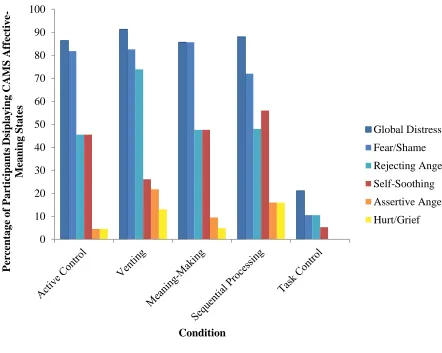
Hypothesis 1: Participants in Different Process-Directive Conditions Will Evidence Differences in Emotional States in their Written Narratives ...35
Hypothesis # 2: Depth of Emotional Processing as a Function of Writing Condition (Main Effect of Condition) ...38
Differences in level of experiencing as a function of time (main effect of time). . 40
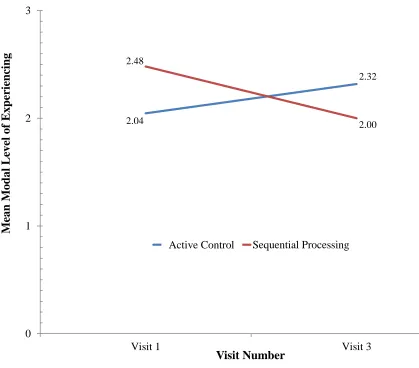
Experiencing: The interaction of time by condition. ... 40
Additional analyses: design controls. ... 41
Hypothesis 3: Predicting Psychological Functioning Outcome from Depth and Quality of Emotional Processing ...42
CHAPTER IV ...44
ix
Summary of Key Findings ...45
Differences in Emotional States in Written Narratives ...45
Depth of Emotional Processing Based on Writing Condition ...50
Relating Depth and Quality of Emotional Processing to Outcome ...53
Methodological Conundrums: The Problem with Randomly Assigning Process ...56
Strengths and Limitations ...57
Future Research Directions ...59
Implications for Clinical Work and Theory ...61
References ...63
Appendix A: Original Writing Instructions by Condition ...81
Appendix B: List of Available Measures in Parent Study ...83
Appendix C: CAMS Coding Category Flowchart ...85
Appendix D: Experiencing Scale Level Summary ...86
Appendix E: The Resolution Scale-Modified ...87
Appendix F: State-Trait Anxiety Inventory ...90
Appendix G: Impact of Events Scale-Revised ...93
x List of Tables
xi List of Figures
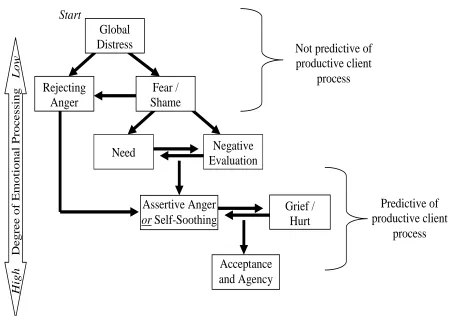
Figure 1: Pascual-Leone and Greenberg (2007) Model of Emotional Processing ... 77
Figure 2: Depth of Experiencing: Sequential Processing and Active Control Condition by
Writing Session Interaction... 78
Figure 3: Percentage of Participants Who Displayed CAMS States by Condition ... 79
xii
List of Appendices
Appendix A: Original Writing Instructions by Condition and Day ... 81
Appendix B: List of Available Measures... 83
Appendix C: CAMS Coding Category Flowchart ... 85
Appendix D: Experiencing Scale Level Summary ... 86
Appendix E: RS-M ... 87
Appendix F: STAI... 90
1 CHAPTER I
Introduction
Trauma and Expressive Writing
Expressive writing as a psychological intervention has garnered a great deal of
research attention over the last few decades. Like the early study of psychotherapy, most
expressive writing research has concentrated on client outcome. In particular, research
has been focused on the evaluation of expressive writing’s impact on psychological
change and physical functioning of individuals following a traumatic event (Frattaroli,
2006). This area of inquiry has wide relevance since it is estimated that around 50-60% of
individuals experience a traumatic event within their lifetime (Kessler et al., 1995).
Events of this kind include, but are not limited to, sexual assault, physical assault,
combat, witnessing violence, motor vehicle collisions, and natural disasters. Of those
who experience a traumatic event, approximately 7-8% go on to develop post-traumatic
stress disorder (PTSD; Kessler et al., 1995; Kessler et al., 2005). For a diagnosis of PTSD
to be given, a specific event, which causes or threatens bodily harm or injury to the self
or another, must occur. Yet, a study conducted by Mol and colleagues (2005) found that
individuals who experienced a distressing life event (e.g., sudden unemployment,
divorce, relational problems, theft from the home, death of a loved one) experienced
higher PTSD symptomatology than individuals who had experienced a traumatic event as
defined by the DSM-IV. Similarly, Shapiro and Maxfield (2002) distinguish between
events considered to be traumatic by DSM criteria, referred to as capital ―T‖ trauma, and
equally traumatic events resulting from experiences of rejection, embarrassment, or
2
of traumatic and distressing life events and the resulting psychological consequences,
expressive writing is an easily accessible and administered intervention that is both time
and cost-effective.
Main Objective for the Study: What is the Role of Emotional Processing in
Psychological Change?
The main purpose of this study, however, was not to add to the well-established
outcome literature on expressive writing and trauma but to examine processes that are
surmised to contribute to expressive writing’s reliable impact as an intervention.
Elucidating the processes that contribute to the gains of individuals in the expressive
writing paradigm is important because such information can be used to improve the
intervention; that is, to maximize the processes that best contribute to good outcome.
Furthermore, research on curative processes in the expressive writing paradigm may also
have further reaching implications for psychotherapy among other, more elaborate,
interventions. Thus, the current research is an effort to investigate the processes that will
strengthen the expressive writing task as an intervention for individuals who have
experienced a psychological trauma.
Specifically, the current study examined emotional processing as a mechanism of
change within the expressive writing paradigm. In the general framework of this study,
the effect of different writing instructions promoting different types of emotional
processing was examined. Manipulating writing instructions provide a way to examine
different emotional processing types, which allows for conclusions to be drawn about the
contribution of these processing types to psychological functioning. This study examined
3
whether or not it is possible to encourage different types of emotional processing in an
expressive writing task; (b) whether one type of instruction for emotional processing
produced deeper experiences of emotional processing; and (c) whether deepened
emotional processing contributed to a better outcome for individuals who have
experienced a distressing/traumatic event.
Positive findings from the proposed study would provide evidence for the
development of expressive writing as an efficacious, easily administered, and
cost-effective intervention that is of interest to individuals in need of psychological services,
organizations, and researchers and clinicians alike. Part of the appeal of developing an
expressive writing task is that it is scalable. Specifically, it has the potential to have a
small, but consistent, widespread positive impact on any sized population, especially if
administered via the internet, with the added benefit of being cost-effective. Although the
effects of expressive writing are small (i.e., r =.056 to .152) when compared to those of
psychotherapy (i.e., d = .75 to .80; Lambert & Ogles, 2004; Wampold, 2001), the fact
that an effect is present at all is impressive given the ease with which expressive writing
is administered, the minimal length of time devoted to writing (i.e., one hour total), and
the absence of guidance from a trained therapist (Frattaroli, 2006). Therefore, as
suggested by Baikie and Wilhelm (2005), expressive writing might work best as an
adjunct to psychiatric or psychological treatment or perhaps as treatment maintenance
following the termination of psychological or psychiatric care. Finally, positive findings
from the current study would appeal to researchers as they would represent a bridge in
theory from the processes that contribute to successful psychotherapy to the similar
4
of this study is to contribute to the knowledge of the most useful emotional processes in
expressive writing in order to better facilitate psychological change following a trauma.
Benefits of Expressive Writing
An expressive writing task involves writing about a past or current traumatic
experience or situation. Also known as the Pennebaker Trauma Narrative (Pennebaker &
Beall, 1986), the original expressive writing task instructed individuals to write about
their ―deepest thoughts and feelings‖ related to a trauma over the course of three or more
sessions. In the first study conducted on expressive writing, Pennebaker and Beall (1986)
demonstrated that students who wrote about a personal traumatic event experienced
fewer health-related visits in the six months following writing. Since then, several studies
have extended Pennebaker and Beall’s findings, demonstrating that expressive writing
has a salutary effect on individuals experiencing a number of psychological and physical
stressors (Frattaroli, 2006).
Psychological benefits of expressive writing. The expressive writing task was
originally designed to help individuals who had experienced a psychological trauma.
Since then, it has been well demonstrated that expressive writing contributes to a
decrease in PTSD symptom severity (see for example, Possemato, Ouimette, & Geller,
2010; Sloan & Marx, 2004) among individuals who have experienced a traumatic stressor
and an increase in PTSD-related growth among individuals meeting the DSM-IV-TR
criteria for a PTSD diagnosis (Smyth, Hockemeyer, & Tulloch, 2008). With regard to
other symptoms, expressive writing has led to a small but reliable decrease in depression
5
2009) and other symptoms of anxiety not unique to PTSD (Graf, Gaudiano, & Geller,
2008).
The literature also suggests that expressive writing’s positive psychological
effects are evident among a range of populations. In a recent study involving expressive
writing about trauma, Pachankis and Goldfried (2010) instructed a sample of gay men to
either write about the most stressful or traumatic gay-related event in their life or a
neutral topic (control). The authors found that gay men who wrote about a stressful or
traumatic gay-related event experienced an increase in positive affect and openness with
their sexual orientation at a three-month follow up when compared to their neutral topic
counterparts. Results of this study also revealed that the men who wrote about a stressful
or traumatic gay-related event evidenced deeper levels of emotional processing than
controls, as measured by the experiencing scale (an index of good psychotherapy
process). Conclusions like this echo Hunt’s (1998) finding that emotional processing is a
mechanism of change in a writing disclosure task, and that writing about emotions in this
way is more helpful than more cognitively-oriented writing tasks.
Another study (Lepore & Greenberg, 2002) showed that among individuals who
experienced a romantic break-up, those who completed an expressive writing exercise
about their break-up were more likely to reunite with their partners than controls.
Furthermore, expressive writers in the study also experienced a decrease in resentment
towards their ex-partners and guilt for their role in events leading to the break-up over
time. In yet another study, individuals who wrote expressively about the experience of
losing a loved one to suicide reported less grief associated with the death than controls
6
number of psychological benefits for specific psychological symptoms and populations.
Indeed, one of the largest meta-analyses to be completed on the topic examined 146
studies and indicated that the benefit of expressive writing for psychological health had
an average effect size of r = .056 and an even larger effect (r = .152) for individuals’
subjective evaluation of expressive writing’s success in resolving the difficulties related
to their trauma (Frattoroli, 2006).
Physical benefits of expressive writing. The benefits of expressive writing have
been shown to extend to the improvement of physiological functioning, including
increasing lung and liver functioning, decreasing hypertension (e.g., Davidson et al.,
2002; Francis & Pennekbaker, 1992; Smyth et al., 1999; as cited in Baikie & Wilhelm,
2005) and promoting positive immune functioning (e.g., Pennebaker, Kiecolt-Glaser, &
Glaser, 1988; Petrie, Fontanilla, Thomas, Booth, & Pennebaker, 2004).The salubrious
effects of expressive writing on physiological functioning have further been corroborated
by a meta-analysis, which showed the effect size for positive physiological effects (r =
.059), as measured by objective physiological assessments (e.g., enzyme levels, lung
volume, blood pressure), to be comparable to psychological effects with an even greater
effect (r = .072) for self-reported health outcomes (Frattaroli, 2006).
Expressive writing has also been shown to benefit specific clinical populations in
the way of symptom reduction and improved physical functioning. For example, studies
have established expressive writing’s small effect in reducing self-reported somatic
symptoms among cancer patients (Henry, Schlegl, Talley, Molix, & Bettencourt, 2010;
Rosenberg et al., 2002; Stanton et al., 2002). Symptom reduction was similarly found
7
Strosberg, 2006; Smyth, Stone, Hurewitz, & Kale, 1999) and asthma (Smyth et al., 1999;
Warner et al., 2006). In summary, the overall benefit of expressive writing on health, at
large, has been supported by both the meta-analyses of Frisin, Borod, and Lepore (2004)
and by Frattaroli (2006).
Processes of Emotional Change
In the specific context of expressive writing, King (2002) summarized the
research when she stated, ―Two strong conclusions can be made with regard to the
benefits of writing. First, expressive writing has health benefits. Second, no one really
knows‖ (p. 119). Though the general sentiment of her statement is true, it is important to
recognize that King was being hyperbolic in order to call attention to the need for more
research on the processes that contribute to expressive writing’s impact as a
psychological intervention. As mentioned earlier, an abundance of research corroborates
her contention that both physical and psychological health benefits result from expressive
writing with an average overall effect size of r = .075 (Frattaroli, 2006).
Although this is a small effect in comparison to the large effect of psychotherapy,
for example (see Wampold, 2001), this effect must be considered in the context of the
intervention itself. Indeed, given that the task only requires participants to write about
their experiences for around 20 minutes at a time, and on just a few occasions, it is
noteworthy that there is any effect at all. Meanwhile, the brief writing intervention is
extremely scalable and cost-effective. Even so, as King posits, the question of how
changes in symptomatology and functioning occur as a result of writing should be further
8
research is necessary to uncover the processes that contribute to expressive writing’s
small, but consistent effects.
Within the realm of psychotherapy research, the investigation of how a particular
intervention produces a successful outcome, or the mechanisms by which an intervention
produces a successful outcome for a client, is referred to as psychotherapy process
research. One of the client processes that have been extensively studied is emotional
processing (e.g., Foa & Kozak, 1986; Fosha, 2000; Pascual-Leone & Greenberg, 2007).
However, research has not reached a consensus on the definition of emotional processing,
such that different theoretical perspective have led to different interpretations of what
really constitutes emotional processing. As we will see in the literature review that
follows, there is reason to consider emotional processing from a multiplicity of
perspectives. Emotional processing is understood as experiencing emotion, and
diminishing or transforming the effect of that emotion, so that it is no longer distressing
(Rachman, 1980). Emotional processing has been characterized as essential to change in
short-term psychodynamic approaches to therapy (Fosha, 2002; McCullough et al.,
2003), behavioural, exposure-based therapies (Foa & Kozak, 1998; Foa et al., 2006), and
cognitive-behavioural therapies (Borkovec, Alcaine, & Behar, 2004; Samoilov &
Goldfried, 2000). Within the literature, emotional processing, in its broadest sense, has
received the most research attention and theoretical speculation as an explanation for
9
Catharsis. One of the first proposed emotional processing mechanisms by which
expressive writing produces successful outcomes was the Freudian concept of catharsis
(Baikie & Wilhelm, 2005). The idea is that the mere disclosure of previously undisclosed
emotions would lead to a decrease in negative affect, an increase in positive affect, and,
consequently, a decrease in physical symptoms. The reasoning behind this hypothesis
was that undisclosed thoughts and emotions resulted in stress and subsequent physical
and psychological symptoms (Frattaroli, 2006).
Although it may still be one of several factors contributing to a successful
expressive writing outcome, research conducted since this hypothesis was put forth
clearly refutes catharsis as a sole and sufficient mechanism responsible for positive
effects following expressive writing for at least three reasons. First, writing solely about
emotions related to a trauma is not as beneficial as writing about the events of the trauma
in addition to the associated emotions (Pennebaker & Beall, 1986), indicating that
catharsis is not an isolated process contributing to success in expressive writing. Second,
according to the concept of catharsis, one would expect to see an immediate decrease in
negative affect and an increase in positive affect following the purging of negative
thoughts and feelings – but this has not been shown to be the case. In fact, individuals
have evidenced increased negative affect immediately following writing disclosure tasks
(Murray & Segal, 1994) and the proportion of negative affect words in such writing tasks
seems to be unrelated to their overall benefit (Smyth, 1998). Third, those who have
previously disclosed their written trauma topic do not differentially benefit from those
who have not previously disclosed their trauma topic (Frattaroli, 2006). However, if
10
writers, one would expect that those whose traumas were previously undisclosed would
benefit more than those who had already disclosed their traumas. For these and other
reasons, it seems untenable that catharsis be considered a sole change mechanism in
expressive writing, although it may still be a mediating or moderating factor in the final
outcomes of expressive writing.
Exposure, venting, and habituation as forms of emotional processing.
Another emotional processing mechanism proposed to account for the salutary effects of
expressive writing is the behavioural process of repeated exposure. In general, repeated
exposure is believed to be successful as a form of emotional processing because it
repeatedly subjects individuals to a feared stimulus, which allows them to see that the
characteristics of the stimulus that they fear are actually incongruent or at least
disproportionate with the stimulus (Foa & Kozak, 1986). When individuals experience
high physiological arousal upon the presentation of a feared stimulus and then go on to
endure subsequent repeated exposures to it, they begin to experience an attenuation of the
arousal response. The process of reduced physiological arousal over repeated exposure to
the feared stimulus is referred to as habituation, and is understood by behavioural
therapists as a form of emotional processing (Rachman, 1980). Exposure and habituation
can often be thought of in terms of ―venting‖ because it represents the repeated venting of
one’s relatively undifferentiated emotions. This particular conceptualization does not see
emotional processing as occurring as the result of movement from more undifferentiated
to more differentiated emotions. Instead, it views emotional processing as occurring from
the repeated ―venting‖ of one’s primary, undifferentiated emotions, which results in
11
Exposure and habituation in psychotherapy has been positively related to overall
therapeutic outcome (Foa, 1983; Jaycox, Foa, & Moral, 1998). Taken together, the
evidence of habituation over time and its positive relationship with overall outcome
suggests that repeated exposure is a mechanism of emotional processing. In the case of
expressive writing, the feared stimuli are the thoughts and emotions associated with the
traumatic experience and having three or more writing sessions serve as a context for
repeated exposure. Indeed, there is evidence to suggest that expressive writing facilitates
an increase in physiological arousal during the first writing session followed by decreased
physiological arousal in subsequent writing sessions, characteristic of habituation, in
addition to a reduction in psychological symptoms (Sloan & Marx, 2004). Therefore,
preliminary evidence suggests that repeated exposure as a mechanism of emotional
processing might be responsible for the positive effects of expressive writing.
Cognitive re-evaluation and meaning-making as forms of emotional
processing. Cognitive reappraisal as a mechanism of emotional processing has also been
thought to play a causal role in the success of emotional processing as a psychological
intervention. In this conceptualization of emotional processing, cognition plays a key role
in the ―absorption‖ of emotional difficulties, as Rachman (1980) described it. To that end,
cognitive theorists posit that emotional processing occurs when emotionally distressing
material is ascribed new meaning by thinking of it in a different light (e.g., by using a
cognitive re-frame; Greenberg et al., 1996; Samoilov &Goldfried, 2000). Thinking of the
emotionally distressing material in a more meaningful way carries with it an appraisal of
12
In this sense, cognitive re-evaluation can be thought of as ―meaning-making;‖ that is, the
generation of meaning associated with the experience of a distressing event.
A change in personal meaning from pre-to-post writing task has been associated
with a decrease in reported stress, suggesting that cognitive reappraisal could be
responsible for this reduction in stress (Park & Blumberg, 2002). A more recent study
(Lu & Stanton, 2010) examined the effects of cognitive reappraisal by manipulating
writing task instructions. Results of the study revealed that those who wrote in the
cognitive reappraisal condition reported a decrease in physical symptoms following the
task. However, contrary to findings expected from the cognitive reappraisal hypothesis,
participants did not benefit from either a decrease in negative affect or an increase in
positive affect as compared to the contrasting condition of emotional disclosure or a
combined condition (i.e., emotional disclosure and cognitive reappraisal). Hunt (1998)
had a similar finding, and, like Lu and Stanton, suggests that cognitive reappraisal
actually results in increased negative affect if individuals attempt to suppress their
negative affect while engaging in cognitive reappraisal. On the whole, evidence seems to
support cognitive reappraisal as an emotional processing mechanism responsible for the
psychological and physical benefits that expressive writing has been empirically
demonstrated to confer. In spite of this, further research needs to be conducted to better
determine the physical and psychological effects that are attributable to the process of
cognitive reappraisal.
Experiential processes as forms of emotional processing. From the
humanistic-experiential perspective at least two constructs have been suggested as forms of
13
their narratives. Specifically, depth of experience refers to the degree to which people are
engaged with the emotional experience and its meaning stemming from distress. The
second is sequential patterns of emotion that seem to be related to progression toward
resolving distress. In this conceptualization, people move through sequences of different
emotional and meaning states in an effort to resolve their personal difficulties.
The depth of experiencing as an indicator of processing. From this vantage
point, one conceptualization of experiential emotional processing is depth of experiencing
(Gendlin, 1996). A client’s level of experiencing within psychotherapy refers to the
degree to which clients engage and explore their feelings and meaning related to personal
distress (Klein, Mathieu-Coughlan, & Kiesler, 1986). It is a measure of ―depth,‖ where
certain kinds of processing are considered deeper and more meaningful than others. At
the lowest level of experiencing, clients do not speak about their internal experience,
including emotions, and refer to external events in a removed manner. At the highest
level of experiencing, not only are clients engaged with all aspects of their internal
experience, but these elements are integrated in an insightful, meaningful manner. In the
context of experiential psychotherapy, changes in client experiencing have been shown to
be predictive of overall treatment outcomes (Goldman, Greenberg, & Pos, 2005).
Furthermore, the prediction was even stronger when the segments being rated on depth of
experience had been already identified as emotional episodes as opposed to simply being
thematic (Pos, Greenberg, Goldman, & Korman, 2003). Similarly, client depth of
emotional processing predicted an improvement in clinical symptomatology (Greenberg
& Malcolm, 2002; Pos et al., 2003) and resolution of the presenting traumatic issue
14
outcomes in psychotherapy suggests that it will likely be effective in evaluating
emotional processing within an expressive writing paradigm. The only studies known to
examine depth of experiencing in expressive writing to date (Mundorf & Paivio, 2011;
Pachankis & Goldfried, 2010) have shown promising results. In their study, Mundorf and
Paivio examined narratives written by adult victims of childhood abuse and found that
their depth of experiencing within the narratives increased over time, when their
narratives were compared from before to after a 16-20 session treatment of
emotion-focused therapy for complex trauma. In a study of the benefits of expressive writing for
gay men who experienced gay-related trauma, Pachankis and Goldfried found that men
who wrote about a trauma evidenced significantly deeper levels of experiencing when
compared to a control group, consisting of gay men who experienced a gay-related
trauma but wrote about a neutral topic.
Sequential patterns of experience as emotional processing. Based on more
recent theory from emotion focused therapy, a step-by-step model of emotion processing
whereby client emotional distress is resolved has been developed (Pascual-Leone &
Greenberg, 2007; see Figure 1). In this model, which was developed in the context of
psychotherapy sessions and based on Greenberg’s (2002) broader theory of emotional
change, clients move through a sequence of different affective and meaning states, which
facilitate the resolution of personal distress.
Early phase emotional states in the model (i.e., global distress, rejecting anger,
and fear/shame) were present in client sessions wherein emotional distress was resolved
and in sessions where it was not resolved. In contrast, later phase emotional states in the
15
sessions wherein emotional distress was resolved, going beyond the early phase
emotions. According to empirical research by Pascual-Leone and Greenberg (2007), the
early phase emotional states are often characterized by high arousal and undifferentiated
―bad‖ feelings or by differentiated but maladaptive states (i.e., traumatic fear, core
shame). That is, individuals experiencing these emotional states show signs of high
affective arousal (e.g., crying and yelling) and the emotional states are poorly defined
and/or not directed towards the resolution of their distress. On the other hand, individuals
in later phase emotional states tend to have more regulated emotional arousal and the
emotional states themselves are more differentiated and focused towards the resolution of
distress. Furthermore, it is worth noting that while ―anger‖ and ―sadness,‖ are categories
of emotion, they are each represented (albeit in qualitatively different ways) among both
early phase and later phase steps in the model; such that the Darwinian ―emotion
category‖ or its original conceptualization as one emotion type, as such is less central to
this model of processing than the quality with which certain emotions are experienced.
That is to say the ―type‖ (i.e., quality) of anger or sadness, for example, is more important
than the all-encompassing ―emotion category‖ as is often defined in basic emotion
research (i.e., Ekman & Friesen, 1975).
The process model presented in Figure 1 follows four major developments in
terms of emotional processing. First, all clients in a state of global distress begin by
expressing their distress with high arousal and a very low meaning as to what the object
of their distress is about, or where to orient their concern. Second, as clients start to
articulate their concern in general terms they move towards resolution by progressing to
16
fear/shame). Third, in order for clients to move from an early phase to a later phase
emotional state, they usually first identify an unmet existential need (e.g., to be loved, to
feel safe) or a negative self-evaluation (i.e., a core dysfunctional belief). Fourth,
following the identification of an existential need or a negative self-evaluation, new
meaning can be ascribed to the problem resulting in a positive evaluation of the self (i.e.,
―I am deserving/entitled to having my core needs met…‖) and thereby a movement
towards the advanced meaning-making states such as assertive anger, grief, or
self-soothing. Then in a final step, from the synthesis of several later phase emotional states
comes the experience of resolution. This sense of agency and acceptance is produced
through a second positive evaluation of the self: ―it is possible to cope and thrive.‖ Singh
(2008) confirms the emotional processing model’s utility in predicting good
within-session outcomes among clients. In his study, Singh demonstrated that advanced client
emotional states (i.e., assertive anger, grief, self-soothing) mediated the relationship
between a therapist’s experiential focus and the outcome of a client’s within-session
event. In short, the impact of a therapist’s intervention was contingent on identified client
states as described in the Pascual-Leone and Greenberg model. Singh’s findings suggest
that this type of emotional processing may also be applicable as a causal mechanism that
contributes to psychological change among expressive writers.
Given the promising findings that emotional processing mechanisms responsible
for change in psychotherapy (e.g., catharsis, repeated exposure and cognitive reappraisal)
also seem to be responsible for change within the expressive writing paradigm, it is worth
investigating whether or not a more humanistic, experiential emotional processing
17
of inquiry has an established tradition in psychotherapy research (see Greenberg &
Pascual-Leone, 2006) there are only a few isolated examples of this being explored in the
expressive writing paradigm.
It is likely that the totality of emotional change in expressive writing is
over-determined (Greenberg & Pascual-Leone, 2006). In fact, all of the emotional processing
theories discussed thus far probably, to some degree, correctly explain the pathways of
emotional change that occur as a result of expressive writing. However, emotional
processing theories of experiencing and sequences of meaning making have received
considerably less attention as processes of change in expressive writing.
Current Study: Aims and Hypotheses
Aims. The main purpose of this study is to examine the process of expressive
writing within the broader conceptual and methodological approach of psychotherapy
research in the hopes of drawing conclusions that are also relevant to psychotherapy.
Gaining insight into psychotherapy processes informs clinicians on how to maximize
helpful processes while in-session with their clients in order to facilitate their
achievement of the best possible therapy outcome. Specific to the psychotherapy process
of emotionally processing, research in this area tells clinicians what aspects of emotional
processing contribute to the best outcome for the client so that clinicians can tailor their
interventions to assist the client in achieving them and, subsequently, a good therapy
outcome. A number of researchers and theoreticians have already argued that expressive
writing, as a psychological intervention, is somewhat analogous to psychotherapy (see for
example, Kerner & Fitzpatrick, 2007; Murray & Segal, 1994). Following this notion, the
18
investigate whether or not experiential mechanisms of emotional processing are present,
and causally contribute to successful intervention outcomes.
Pascual-Leone and Greenberg’s (2007) model of emotional processing (see
Figure 1) has shown promise in predicting outcome in psychotherapy (Paivio &
Pascual-Leone, 2010; Singh, 2008). Therefore, a more specific aim of this study is to test this
model of emotional processing in general and as it applies to expressive writing. Keeping
in mind the ultimate goal of process research, the current study will investigate whether
or not the manipulation of writing instructions enables individuals to be successfully
―walked through‖ the successful stages of emotional processing according to
Pascual-Leone and Greenberg’s model.
The notion of being process-directive is a relatively new approach to expressive
writing. Frattaroli’s (2006) meta-analysis revealed that only 4% of known studies gave
specific instructions aimed at eliciting a process, such as cognitive processing or positive
versus negative emotion. Since the publication of that review, only a few studies have
given specific instructions, and most were aimed at promoting exposure and habituation
(e.g., Kovac & Range, 2002; Nazarian, 2009; Pachankis & Goldfried, 2010) and
cognitive reappraisal among participants (e.g., Gidron et al., 2002; Lu & Stanton, 2010;
Nazarian, 2009). Of these studies, only three (i.e., Kovac & Range, 2002; Lu & Stanton,
2002; Nazarian, 2009) evaluated participant adherence to writing instructions. While
Kovac and Range found that instructions had no influence on participant writing, the
other two studies concluded that, for the most part, participants’ writing was strongly
19
The current study made use of archival data that included several emotional
processing conditions modelled after the theories of exposure, cognitive re-evaluation,
and sequential processing in order to examine which mechanism of emotional processing
results in the deepest emotional processing in the expressive writing paradigm (See Table
1 for a summary). Furthermore, this study sought to test whether or not the depth of
emotional processing was predictive of outcome.
Making Use of Archival Outcome Research
In psychotherapy and intervention research, process research is most often
conducted in the context of some existing outcome study (see Greenberg, 1991). This
programmatic approach to research allows studies on ―process‖ to piggyback on the
archival data of an existing outcome study, making the study of process more feasible,
and providing a context of already determined outcomes when examining the preceding
processes. Thus, the current study on emotional change processes made use of written
narratives collected as part of a broader outcome study by Pascual-Leone et al. (2011). In
that study, writing took place over three days in a quiet laboratory setting with special
care given to individual privacy. All measures and writing were web-based and therefore
completed on a computer. Furthermore, the population consisted of undergraduate
university students enrolled in a psychology class and who volunteered to participate if
they met certain inclusion criteria of having suffered from a traumatic experience.
For analyses in the current study, participants’ raw narratives were used to
develop a second generation of ―process data‖ through observation-based coding.
Selected measures from the original outcome study were also used. This study made use
20
emotions in accordance with specific theories of emotional processing. In addition to a
control condition, the emotional processing conditions included a venting condition
modelled after exposure theory, a meaning-making1 condition modelled after cognitive
reappraisal theory, and a sequential processing condition modelled after a theory of
experiential change, described in more detail below.
In summary, this study investigated the differential effects of different
mechanisms of emotional processing on depth of emotional processing in expressive
writing. It further examined the extent to which depth of emotional processing predicted
overall outcome (i.e., psychological functioning) among individuals who expressively
wrote about a trauma they experienced. The expressive writing format further provided a
unique way of studying processes common across psychotherapy and expressive writing
without the influence of confounding therapist or treatment characteristics.
Hypotheses
Hypothesis 1: Participants in different process-directive conditions will
evidence differences in emotional states in their written narratives. Although all
participants were instructed to write about their emotions, and that the writing conditions
were intended to influence the quality with which participants write about those feelings,
it cannot be taken for granted that these differences will manifest in the actual written
accounts. While session outcomes may or may not be different, such changes may or may
not be apparent from a reading of the narratives. The aim of this hypothesis is to
1 The parent study (Pascual-Leone et al., 2011) referred to this as the meaning-making group. However, it
21
demonstrate the degree to which the qualitative process of participants’ written narratives
can actually be influenced in a highly nuanced way.
Hypothesis 2: Differences exist in depth of emotional processing as a function
of emotional processing condition. Although emotional processing does occur via the
behaviour mechanism of exposure in therapy (e.g., Foa & Kozak, 1998; Foa et al., 2006)
and expressive writing (Sloan & Marx, 2004), individuals undergoing this type of
emotional change are not believed to reach the advanced emotional states of emotional
processing identified by Pascual-Leone and Greenberg (2007) as relevant to resolving
distress. Instead, participants reportedly stay with, and habituate to, the early expressions
of distress in the Pascual-Leone and Greenberg model. In the case of cognitive
reappraisal, individuals undergoing emotional change evidence the advanced
meaning-making states of the model characteristic of meaning-meaning-making. However, Pascual-Leone
and Greenberg’s sequential model states that both early expressions of distress and
advanced meaning making states are required for deepened emotional processing. For
these reasons, it was hypothesized that individuals in the sequential processing condition
will evidence significantly deepened levels of emotional processing in their writing when
compared to written narratives in the venting (i.e., exposure) condition and the
meaning-making (i.e., cognitive reappraisal) condition.
Hypothesis 3: Predicting psychological functioning outcome from depth and
quality of emotional processing. As described, psychotherapy research suggests that
depth of emotional processing is predictive of a good therapeutic outcome (e.g., Goldman
et al., 2005; Pascual-Leone & Greenberg, 2007; Pos et al., 2003; Singh, 2008). Therefore,
22
in the current study. That is, deepened emotional processing will predict a good outcome
(i.e., self-reported affective improvement and subjective resolution of trauma from
23 CHAPTER II
Method
Participants
A sample of 110 undergraduate students (N = 110), previously recruited from a
voluntary undergraduate psychology participant pool as part of a larger outcome study on
expressive writing (Pascual-Leone et al., 2011), was used for this process study. The
sample consisted of 97 females, 12 males, and one transgendered individual.
Unfortunately, the age characteristics of the sample were not available, but a total of
14.5% of individuals were in their first year of university, 27.3% in their second year,
29.1% in their third year, and 29.1% in their fourth year or above. In all, 63 participants
were single, 44 were married or in a committed relationship, 2 were separated or
divorced, and 1 was widowed. Of the participants, 67.3% identified their racial or ethnic
background as white or Caucasian, 10.9% as black for African Canadian, 10% as South
Asian, 3.6% as Arab or Middle Eastern, 1.8% as Hispanic or Latino, 1.8% as East Asian,
.9% as Aboriginal or Native Canadian, and 3.6% did not identify with a racial or ethnic
background listed.
Upon completion of the original outcome study, participants were compensated
with a total of three course percentage points and $35. Inclusion criteria required that
subjects (a) endorse the past experience of a ―very stressful or upsetting event, crisis, or
upsetting personal upheaval,‖ and (b) that they still experienced distress or had
unresolved bad feelings about, or felt stuck and pessimistic about the traumatic
24
including: suffering from the betrayal of a romantic partner or friend; being the victim of
sexual assault, childhood abuse or maltreatment, a non-violent crime; the death of a
family member or romantic partner; an eating disorder; and physical injury resulting in
disfigurement.
There were no significant differences in participant outcomes (i.e., on the RS,
STAI, and IES-R) as a function of trauma recency (p’s > .338), which is contrary to
Frattaroli’s (2006) finding of a large effect for those who wrote about a recent versus less
recent trauma.
In order to roughly gauge how much support or processing of the traumatic event
had occurred, participants were asked several questions, including if they had spoken to
anyone about their trauma, if they had received counselling for their trauma, if they had
received any psychiatric medication to help them deal with their trauma, or if they were
in therapy or taking psychiatric medication at the time of the study. Only 24.5% of
participants acknowledged not talking to someone about their trauma a. A total of 28.2%
had received counselling for their identified traumatic experience. Similarly, 20.9% of
participants were prescribed psychiatric medication to help them deal with their trauma.2
Participants rated how upsetting the traumatic occurrence was to them on a
7-point scale with a greater number indicative of more distress. The frequency statistics
revealed that 41.8% of participants rated their trauma as a 7, 19.1% rated it as 6, 21.8%
rated it as a 5, 6.4% rated it as a 4, 1.8% rated it as a 2 or a 3 and no one rated their
trauma as a 1 or minimally upsetting. Of the sample, 52.72% of participants reported the
2 At the time of the study, 8.2% of participants were in therapy and 8.2% were taking psychiatric
25
year of the occurrence of their trauma. The recency of participants’ traumatic events
ranged from less than 1 year up to 26 years prior to writing (M =4.26, SD = 6.55).
Narratives ranged in length from 139 to 1051 words with an average of around
600 words. In an effort to avoid rater bias procedures created a double-blind (for raters
and the researcher) to mask the origin of narratives. Thus, each narrative was assigned a
randomized number, therefore masking the condition the narrative was written in and the
visit at which the narrative was written. After completion of random number assignment,
narratives were only referred to by their randomized number for the duration of coding.
Measures
Conditions. Participants in the parent (archival) study were randomly assigned to
one of five control or experimental expressive writing conditions. The two control
conditions consisted of an active and a task control condition. Those in the task control
condition were instructed to write a non-emotional account of their activities in the 24
hours prior to their writing session. Participants in the active control condition were
instructed to write about their ―deepest thoughts and feelings‖ related to their trauma as in
the classic expressive writing task (Pennebaker & Beall, 1986).
Three additional writing conditions—venting, meaning-making, and sequential
processing—were subjected to experimental manipulation. The venting writing condition
was modelled after the behavioural conceptualization of emotional processing, exposure,
and guided participants to only write about the highly arousing, but undifferentiated
emotions, of distress, rage, fear or shame related to their traumatic experience. The
emotions that participants were instructed to write about in this condition represent early
26
of emotional processing. In contrast, participants in the meaning-making condition3,
modelled after the cognitive-behavioural conceptualization of emotional processing, were
instructed to only write about grief, mourning, assertive anger, or self-soothing related to
their traumatic experience, which represent the low arousal, highly differentiated,
advanced meaning-making states indicative of cognitive reappraisal, in Pascual-Leone
and Greenberg’s (2007) emotional processing model.
Finally, the sequential processing condition represents the only condition in which
participants were guided to write differently on each of the three consecutive writing
days. Together, this last set of writing instructions represents Pascual-Leone and
Greenberg’s (2007) complete, sequential model of emotional processing. In keeping with
this, on the first day of writing, participants in the sequential condition were instructed to
write about distress, rage, fear or shame related to their traumatic experience as in the
venting condition. Then, on the second day of writing, participants were instructed to
only write about a central self-related concern (e.g., self-criticism, sense of inadequacy,
etc.) and thoughts and feelings related to unmet personal needs, whether they are
interpersonal or existential. The third day writing instructions encourage participants to
only write about grief, mourning, assertive anger, or self-soothing related to their
traumatic experience as in the meaning-making writing condition. See Table 1 for a
summary of the conditions and their theoretical derivations. The five conditions from the
Pascual-Leone et al. (2011) outcome study will be used in the present study as predictors
of depth of emotional processing using the process measures outlined in the following
section.
3 The label ―meaning-making‖ is not intended to be an empirical observation or fact but rather a hypothesis
27 Process measures.
Classification of affective-meaning states-modified (CAMS-M; based on
Pascual-Leone & Greenberg, 2007). The original CAMS measure, an operationalization
of Pascual-Leone and Greenberg’s (2007) model of emotional processing, was designed
to code for the presence of emotional states experienced by clients, when they are open
to, and engaged with emotion while in psychotherapy. For the purposes of the current
study, the original observational measure was modified to code for the presence of the
same emotional states in expressive writing narratives. The original measure used three
indicators, emotional tone, involvement, and meaning, to inform the presence of each
emotional state. Given that the current study made use of written narratives rather than
video footage of emotionally activated events, the criteria for involvement was modified
to suit coding from written text. As previously mentioned, global distress, rejecting anger,
and fear/shame are considered early expressions of emotional states due to their presence
in cases wherein client distress was and was not resolved. On the other hand, assertive
anger, self-soothing, and hurt/grief are considered advanced meaning-making emotional
states due to their presence only in cases wherein client emotional distress was resolved.
Thus, six affective-meaning (i.e., emotion) states were coded from each participant
narrative.
In the present study, each narrative was coded for the presence or absence of each
emotion state. The CAMS has demonstrated good predictive validity of psychotherapy
within-session effects. Furthermore, inter-rater reliability coefficients have ranged from
.76 to .86 Kappa (Pascual-Leone & Greenberg, 2007; Singh, 2011) when client
28
Rating procedures for CAMS.CAMS coding was completed after the completion
of EXP coding, by the same raters, to avoid influencing coding on either measure. Each
rater completed a total of 30 hours training on the measure, consisting of reading the
original CAMS manual (i.e., Pascual-Leone, 2005) and Pascual-Leone and Greenberg’s
(2007) study involving the CAMS, training with an expert rater (Dr. Antonio
Pascual-Leone), and the independent coding of 30 practice narratives. The raters met after each
set of 10 narratives to discuss discrepancies and any coding difficulties that arose.
Regular meetings were also scheduled with the expert rater to ensure conformity to
coding guidelines. Visit three narratives were coded for the presence or absence of the six
CAMS affective states: global distress, fear/shame, rejecting anger, assertive anger,
self-soothing, and hurt/grief. The primary rater, the author, coded 110 narratives (100% of
narratives from visit 3) and the secondary rater coded 55 visit three narratives, resulting
in 50% overlap. CAM rating was only conducted on visit 3 narratives.
The experiencing scale (EXP; Klein, Mathieu-Coughlan, & Kiesler, 1986).
Originally designed to code written psychotherapy transcripts, the EXP is a 7-point scale
used by expert raters to assess the extent to which individuals attend to and explore their
personal experiences and use this information to resolve their problems. At the very
lowest levels of the scale (i.e., 1 and 2), participants speak about their personal
experiences in a detached, superficial cognitive manner. Intermediate levels (i.e., 3 and 4)
represent an individual’s internal reaction to external events, including the description of
resulting emotions. Advanced levels of experiencing (i.e., 5 to 7) involve participants’
exploration of a core problem, movement toward its resolution, newly emerging feelings
29
While it was originally designed for rating each talk-turn of spoken discourse, the
scale has also been successfully used to reliably code written discourse (Le, 2006;
Mundorf & Paivio, 2011; Sells & Martin, 2001). Following this, the current study will
also apply ratings to written trauma narratives such that each statement or complete idea
will be assigned an EXP coding and a modal EXP score for each narrative will be used in
analyses. The experiencing scale is a highly validated measure and is considered a gold
standard of experiential process in psychotherapy (Greenberg & Pascual-Leone, 2006). In
previous research inter-rater reliability coefficients for the scale have ranged from
Pearson correlation of .76 to .91 (i.e., Greenberg & Malcolm, 2002; Klein at al., 1986)
.76 to.84 Kappa (i.e., Pos et al., 2003; Singh, 2008).
Rating procedures for EXP. As with previous studies of experiencing (e.g.,
Mundorf & Paivio, 2011; Pos et al., 2003), modal scores were taken as the unit for
analyses involving EXP as they represent participants’ more enduring levels of
experiencing (Pos, Greenberg, & Warwar, 2009). Narratives were divided into meaning
units; a sentence or complete thought consisting of no more than four sentences, which
was then coded for modal EXP level.
For the current study, two raters were responsible for determining the modal EXP
level of narratives. The primary rater (the author) is a graduate student in clinical
psychology with over 200 hours of videotaped therapy session EXP rating experience
prior to this study and was trained by an expert rater (Dr. Antonio Pascual-Leone). The
secondary rater, an undergraduate student in psychology, received 30 hours of training on
the EXP. Training consisted of reading Klein et al.’s (1986) coding guidelines, reviewing
30
narratives to familiarize the secondary rater with the measure and establish inter-rater
reliability. Both raters met after each set of 10 narratives to discuss discrepancies and any
other coding issues. A coding aid (see Appendix D) was used to facilitate
decision-making during coding.
Treatment outcome measures.Treatment outcome refers to an individual’s
overall outcome (e.g., symptom reduction, change in affect) once a particular intervention
is completed. Session outcome, on the other hand, refers to an individual’s outcome after
a given session during the course of an intervention. Only treatment outcome measures
were used to assess participant psychological functioning and, as such, are described
below.
The Resolution Scale-Modified (RS-M; based on Singh, 1994).The original RS
was developed to measure the degree of personal resolution of a past interpersonal
trauma or emotional injury. Since then, it has been used in several outcome studies on
―unfinished business‖ to assess the degree of resolution of long-standing interpersonal
grievances a participant may have with a personally significant other (e.g., Greenberg &
Malcolm, 2002; Paivio & Greenberg, 1995). In this self-report measure, individuals rate
their degree of agreement with 12 items aimed at assessing the extent to which they feel
that their interpersonal trauma has been resolved on a 6-point Likert scale (1 = not at all,
6 = very much). Items in the RS-M have been modified slightly for the current study to
refer to a target ―issue or concern‖ (i.e., traumatic experience) rather than a ―significant
other‖ per se. For example, items include, ―I feel frustrated about not having my needs
met regarding this issue‖ and ―I feel unable to let go of my unresolved feelings regarding
31
resolution. Test-retest reliability of the original RS has ranged from Pearson correlations
of .73 to .81 and demonstrated pre-to-post concurrent validity with other outcome
measures (Singh, 1994). The RS has further evidenced good internal consistency
reliability (α = .82; Paivio et al., 2001).
As indicated, the original (Singh, 1994) scale was modified only minimally to
reflect traumatic and stressful experiences that may not be exclusively interpersonal in
nature (see Appendix E). As a result, it is expected that the RS-M will demonstrate
similar psychometric properties to the original given that few changes were made to the
scale and that the scale is still assessing the same construct, resolution of psychological
trauma and personal difficulty regarding a target concern.
The State-Trait Anxiety Inventory (STAI; Spielberger, Gorsuch, Lushene,
Vagg, & Jacobs, 1983). The STAI is a measure designed to assess state anxiety, a more
temporary type of anxiety; and trait anxiety, a more enduring type of anxiety rooted in
personality, among adults. The inventory also yields an overall anxiety score. In the
current study, only trait portion of the inventory was used, The trait inventory consists of
20 statements to which individuals rate the frequency they have experienced these
statements in the past two weeks on a four-point Likert scale, ranging from ―almost
never‖ to ―almost always.‖ Statements include the following, ―I feel nervous and
restless,‖ and ―I take disappointments so keenly that I can’t put them out of my mind.‖
Some items are reversed scored and higher scores are indicative of greater anxiety (see
Appendix F). In order to best capture anxiety as an outcome measure, and to prevent
32
to rate how they have been feeling in ―the past two weeks‖ instead of how they
―generally feel,‖ Internal consistency reliability estimates have ranged from .86 to .95.
The Impacts of Events Scale-Revised (IES-R; Weiss & Marmar, 1997). The
IES-R is a 22-item questionnaire designed to assess how a traumatic event has affected an
individual’s psychological functioning. Although it contains three subscales that assess
the PTSD symptom clusters of intrusion, avoidance, and hyperarousal, the IES-R is not a
PTSD diagnostic tool. Individuals rate the extent to which each of the 22 statements have
been distressing to them in the past seven days on a 5-point Likert scale, ranging from 0
―not at all‖ to 4 ―extremely.‖ Statements include, ―I had trouble staying asleep,‖ ―I tried
not to think about it,‖ and ―pictures about it popped into my head.‖ Higher scores indicate
greater difficulty with a stressful life experience (see Appendix G). The measure has
evidenced good discriminant validity and good internal consistency reliability.
Procedure for Collection of Raw Data in the Parent Study
In the original outcome study of Pascual-Leone et al. (2011), prior to the first
expressive writing session, participants completed the Resolution Scale (Singh, 1994),
State-Trait Anxiety Inventory (Spielberger, Gorsuch, Lushene, Vagg, & Jacobs, 1983),
and the Impacts of Events Scale (Weiss & Marmar, 1997) among other measures (not
used in the current study) and these served as a baseline measure. During each writing
session, participants received detailed writing instructions specific for one of the five
conditions and were allotted 15 minutes to write about the traumatic experience they had
chosen to focus on for the study. Writing sessions took place on each of three consecutive
days (i.e., Monday, Tuesday, and Wednesday) and all writing was completed on
33
and partitions were erected to increase the privacy for each participant. On a fourth visit
two weeks after the final writing session, participants once again completed the RS,
STAI, and IES-R (and other measures not used in the current study). Finally, study
debriefing, including the distribution of on-campus counselling resources, and payment
34 CHAPTER III
Results
EXP Reliability
Following the training period, the primary rater coded 220 narratives (i.e., 100%
of visit one and three) and the secondary rater coded 80 narratives, resulting in 36%
overlap. Inter-rater reliability was calculated using Cohen’s Kappa and resulted in a
coefficient of .827. According to Fleiss (1981), agreement of .75 or higher is considered
excellent agreement beyond chance. This level of agreement is also in line with past
findings (Pascual-Leone & Greenberg, 2007; Singh, 2011) of EXP reliability between 76
and .86 Kappa. All coding discrepancies were resolved by consensus for use in
subsequent analyses, which suggests that the true level of reliability of this data set is
likely to be higher than reported.
CAMS Reliability
As discussed in the methods section, rating on the CAMS consisted of binary
coding (presence vs. absence); however, the objective of coding emotional states using
the CAMS was to capture ―emotional profiles‖ based on the presence (or absence) of six
different emotions (global distress, fear/shame, rejecting anger, assertive anger,
self-soothing, and hurt/grief). For this reason, the reliability of ratings for a given emotion
was not as important as establishing reliability on the profile of emotions. As reference
for comparison, the likelihood of nested probabilities was 1.6% (i.e., .5 [chance
probability of presence or absence] to power of 6 [one for each coded emotion]), thereby
making it unlikely that an emotional profile with six emotions would be agreed upon by