University of Windsor University of Windsor
Scholarship at UWindsor
Scholarship at UWindsor
Electronic Theses and Dissertations Theses, Dissertations, and Major Papers
9-20-2019
Cooperative Traffic Control Solution for Vehicle Transition from
Cooperative Traffic Control Solution for Vehicle Transition from
Autonomous to Manual Mode exploiting Cellular
Autonomous to Manual Mode exploiting Cellular
Vehicle-to-Everything (C-V2X) Technology
Everything (C-V2X) Technology
Stefano Caserini
University of Windsor
Follow this and additional works at: https://scholar.uwindsor.ca/etd
Recommended Citation Recommended Citation
Caserini, Stefano, "Cooperative Traffic Control Solution for Vehicle Transition from Autonomous to Manual Mode exploiting Cellular Vehicle-to-Everything (C-V2X) Technology" (2019). Electronic Theses and
Dissertations. 7802.
https://scholar.uwindsor.ca/etd/7802
This online database contains the full-text of PhD dissertations and Masters’ theses of University of Windsor students from 1954 forward. These documents are made available for personal study and research purposes only, in accordance with the Canadian Copyright Act and the Creative Commons license—CC BY-NC-ND (Attribution, Non-Commercial, No Derivative Works). Under this license, works must always be attributed to the copyright holder (original author), cannot be used for any commercial purposes, and may not be altered. Any other use would require the permission of the copyright holder. Students may inquire about withdrawing their dissertation and/or thesis from this database. For additional inquiries, please contact the repository administrator via email
Cooperative Traffic Control Solution for Vehicle Transition from Autonomous to
Manual Mode exploiting Cellular Vehicle-to-Everything (C-V2X) Technology
By
Stefano Caserini
A Thesis
Submitted to the Faculty of Graduate Studies
through the Department of Mechanical, Automotive and Materials Engineering
in Partial Fulfillment of the Requirements for
the Degree of Master of Applied Science
at the University of Windsor
Windsor, Ontario, Canada
2019
Cooperative Traffic Control Solution for Vehicle Transition from Autonomous to
Manual Mode exploiting Cellular Vehicle-to-Everything (C-V2X) Technology
by
Stefano Caserini
APPROVED BY:
______________________________________________
C. Lee
Department of Civil and Environmental Engineering
______________________________________________
J. Ahamed
Department of Mechanical, Automotive and Materials Engineering
______________________________________________
Y.H. Kim, Advisor
Department of Civil and Environmental Engineering
______________________________________________
J. Johrendt, Co-Advisor
Department of Mechanical, Automotive and Materials Engineering
iii
DECLARATION OF ORIGINALITY
I hereby certify that I am the sole author of this thesis and that no part of this thesis has been published or submitted for publication.
I certify that, to the best of my knowledge, my thesis does not infringe upon anyone’s copyright nor violate any proprietary rights and that any ideas, techniques, quotations, or any other material from the work of other people included in my thesis, published or otherwise, are fully acknowledged in accordance with the standard referencing practices. Furthermore, to the extent that I have included copyrighted material that surpasses the bounds of fair dealing within the meaning of the Canada Copyright Act, I certify that I have obtained a written permission from the copyright owner(s) to include such material(s) in my thesis and have included copies of such copyright clearances to my appendix.
iv
ABSTRACT
Nowadays, automated vehicles represent a promising technology to face the stringent requirements for safety and traffic efficiency in the automotive environment. Driving responsibilities will be gradually addressed to the machine, and the role of human pilots will be progressively reduced to passengers. The interaction between passengers and the automated system will create different risks that have not been considered in the past. In particular, the transition between autonomous and manual mode is understood as a risky situation. During the transition, the driver manifests driving irregularities and loss of situation awareness that may endanger himself and other participants on the road. Hence, the vehicle transitioning needs a higher quantity of space around it to be considered safe.
However, no effective solution has been developed yet. This thesis aims to design a cooperative traffic control solution that will manage the movements of the group of vehicles to increase the free space around the one transitioning. It will exploit another tool that will play a fundamental role in the future of the automotive industry: connected vehicles technology. C-V2X technology will create a medium for vehicles to exchange information and cooperate. A controller managing the cooperation between vehicles has been developed to help a smooth and safe vehicle repositioning. The controller will be positioned in a centralized computing facility and it will communicate with all the vehicles. The controller defines rules to move vehicles together and enlarge the free space around the vehicle transitioning without collisions. The rules are modeled by a spring-mass-damper system, that can be exploited to control the longitudinal behavior of automated vehicles. In particular, the spring-mass-damper system can manage smooth migration between vehicle dispositions without oscillations.
A computer simulation is used to test the performance of the proposed traffic control system. The simulation environment is constituted by three main components: traffic flow, controller and communication network. It has been tested with the software VEINS, which provides interaction between a network simulator (OMNeT++) and a traffic simulator (SUMO). The traffic flow represents the interactions between vehicles. The controller analyzes the data and sends control messages to all vehicles. The communication network will share the data concerning vehicles’ position and speed and control messages.
v
TABLE OF CONTENTS
DECLARATION OF ORIGINALITY ... iii
ABSTRACT ... iv
LIST OF TABLES ... vii
LIST OF FIGURES ... viii
LIST OF ABBREVIATIONS ... x
1 Introduction ... 1
1.1 Background ... 1
1.2 Scope of the research ... 2
1.3 Thesis Contribution ... 3
1.4 Thesis Outline ... 4
2 Literature Review ... 5
2.1 Automation Effects on Vehicles Equipped with both Manual and Autonomous Driving Modules ………6
2.1.1 Automation Levels for the Automotive Industry ... 7
2.1.2 Automated Vehicles: Where They Stand Now? ... 9
2.1.3 Transition between Autonomous and Manual Modes... 11
2.1.4 The Dual Processing Paradigm ... 12
2.1.5 Effects on Drivers ... 14
2.1.6 Solution Methods to the Issues of Vehicle Transition ... 15
2.2 Cooperation between Vehicles ... 18
2.2.1 Traffic Control-Based Solutions ... 18
2.2.2 Microscopic Traffic Model for Traffic Control ... 19
2.2.3 Technological Requirements for Cooperative Reaction: Connected Vehicles ... 23
2.2.4 DSRC ... 27
2.2.5 5G C-V2X ... 28
2.2.6 The Debate between DSRC and 5G C-V2X ... 35
2.2.7 Technological Requirements for Cooperative Reaction: Positioning Systems ... 36
3 Model ... 41
3.1 Model Workflow ... 41
3.2 Centralized Controller ... 46
3.2.1 Input Management ... 47
3.2.2 Definition of Vehicle’s Relations... 49
3.2.3 Proprieties of the relations ... 52
vi
3.3 Application Running in Vehicles ... 66
3.3.1 Intra-vehicle Computation Implementation ... 66
4 Simulation Models and Setup ... 69
4.1 SUMO ... 69
4.2 OMNeT++ ... 70
4.3 SimuLTE ... 70
4.4 VEINS ... 71
4.5 Simulation Setup ... 71
4.5.1 Traffic Setup ... 71
4.5.2 Communication Network Setup ... 76
5 Simulation Results ... 81
5.1 Flexibility of the System when the Time Buffer is Varied ... 81
5.2 Evaluation of Safety and Comfort ... 85
5.3 Time Buffer equal to 16 s: Safe and Comfortable Operation ... 87
5.4 Time Buffer equal to 8 s: Safe Operation ... 91
6 Conclusions and Future Work ... 94
6.1 Conclusions ... 94
6.2 Future Work ... 95
REFERENCES: ... 99
vii
LIST OF TABLES
Table 1 DSRC use cases through V2V and V2I communication ... 27
Table 2 GNSS Error Sources [66]... 38
Table 3 Dynamic Memory Allocated for each Vehicle ... 49
Table 4 Data struct for vehicle relations ... 50
Table 5 Reaction Time in autonomous and manual mode and longitudinal distance at 36 m/s ... 55
Table 6 Numerical example for the definition of Kx ... 59
Table 7 Numerical example for the definition of Kn ... 61
Table 8 Numerical example for the definition of Bn ... 63
Table 9 Comfortability evaluation parameters with time buffer equal to 16 s ... 90
viii
LIST OF FIGURES
Figure 2-1SAE levels of automation [9] ... 8
Figure 2-2 Roadmap of automated driving for passenger cars [11] ... 10
Figure 2-3 Simplified schematic representation of Norman and Shallice's model on willed and automatic control of behavior [16] ... 13
Figure 2-4 Scheme of longitudinal matching zones for vehicles [22] ... 20
Figure 2-5 Usage Scenario of 2020 and beyond [52] ... 31
Figure 2-6 C-V2X communication modes ... 33
Figure 2-7 Sidelink operations mode 3 (network assisted) and mode 4 (self-managed) [57]... 34
Figure 2-8 How GPS works [67] ... 37
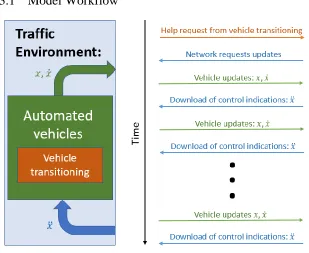
Figure 3-1 Model logical workflow ... 41
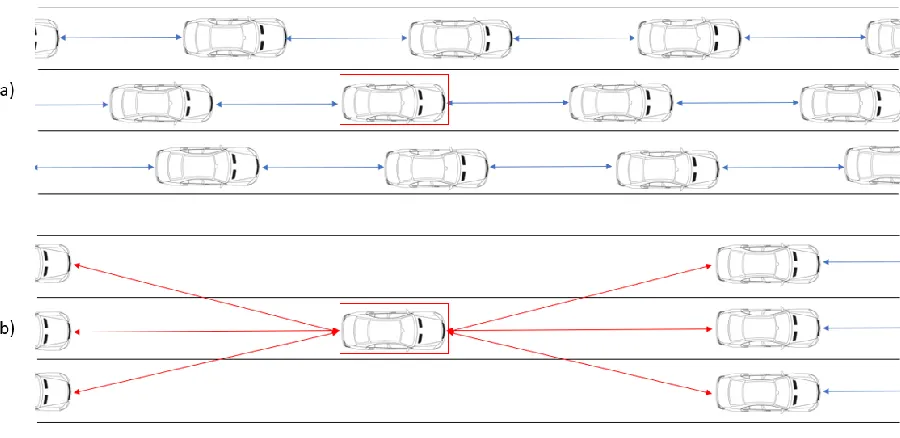
Figure 3-2 Longitudinal distance between automated a) and human-driven b) vehicles ... 43
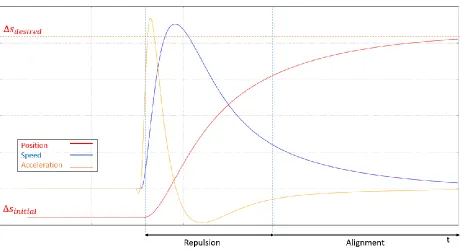
Figure 3-3 Space/Speed/Acceleration evolution vs. time, following spring-damper system motion ... 43
Figure 3-4 Centralized Controller scheme for two vehicles ... 44
Figure 3-5 Scheme of disposition for high-density traffic before the transition a) and after b) ... 45
Figure 3-6 Scheme for the Centralized Controller for multiple vehicles ... 46
Figure 3-7 Force of the spring based on geometrical disposition a) and optimal behavior b) ... 51
Figure 3-8 SMD system a) and constant time headway in SMD system b)... 53
Figure 3-9 Bidirectional and Unidirectional representation ... 54
Figure 3-10 Space allocated for a safe driving condition for an autonomous vehicle a) and a vehicle after transition b) ... 56
Figure 3-11 Space allocation before transition a) and after b) ... 57
Figure 3-12 Repulsion and alignment zone scheme ... 58
Figure 3-13 Single lane speed-time analysis for critical damping a), overdamping b) and underdamping c) conditions ... 63
Figure 3-14 Single lane unidirectional relations a) and bidirectional relations b) ... 65
Figure 3-15 Variation of Spring Constant and Damping Coefficient ... 67
Figure 4-1 Example of SUMO configuration file ... 72
Figure 4-2 Example of an environment that can be created using NETEDIT ... 73
Figure 4-3 Example of .rou.xml routes file ... 74
Figure 4-4 Vehicle disposition before of transition detection ... 76
Figure 4-5 Cellular Network definition ... 77
Figure 4-6 Car module used in the simulation ... 78
Figure 4-7 Manager assignments within the initialization file ... 79
Figure 4-8 Example of .launchd.xml file ... 80
Figure 5-1 Area required by vehicle transitioning ... 81
Figure 5-2 Initial disposition a), risk detection b), final disposition c) in the simulated environment ... 82
Figure 5-3 Variation of relative longitudinal distance within the simulation time ... 83
Figure 5-4 Variation of speed vs. simulation time ... 83
Figure 5-5 Final speed of vehicle transitioning with different time buffers ... 84
Figure 5-6 Percentage of required space that is cleared at the end of the time buffer ... 85
Figure 5-7 Maximum Acceleration and Jerk registered with different time buffers ... 86
Figure 5-8 Variation of relative longitudinal distance within simulation time, time buffer equal to 16 s .. 88
Figure 5-9 Variation of speed within simulation time, time buffer equal to 16 s ... 88
Figure 5-10 Acceleration vs. simulation time, time buffer equal to 16 s ... 89
ix
Figure 5-12 Variation of speed within simulation time, time buffer equal to 8 s ... 91
Figure 5-13 Acceleration vs. simulation time, time buffer equal to 8 s ... 92
Figure 6-1 Cooperative ramp entrance maneuver ... 96
x
LIST OF ABBREVIATIONS
3GPP 3rd Generation Partnership Project
4G 4th Generation
5G 5th Generation
5GAA 5G Automotive Association
ACC Adaptive Cruise Control
ADAS Advanced Driver Assistance System
C-V2X Cellular – V2X
CAV Connected and Automated Vehicle
CES Consumer Electronics Show
CSMA Carrier Sense Multiple Access
CV Connected Vehicle
DSRC Dedicated Short-Range Communication
eMMB Enhanced Mobile BroadBand
EPC Evolved Packet Core
ETSI European Telecommunication Standards Institute
EU European Union
FCC Federal Communication Commissions
IEEE Institute of Electric and Electronical Engineers
INET Internet Networking
IP Internet Protocol
ITS Intelligent Transportation System
KPI Key Performance Indicator
LIDAR LIght Detection and Ranging
LTE Long Term Evolution
xi
GNSS Global Navigation Satellite System GPRS General Packed Radio Service
GPS Global Positioning System
GTP GPRS Tunneling Protocol
MAC Multiple Access Control
MEC Multi-access Edge Computing
mMTC Massive Machine Type Communication MmWave Millimeter-length electromagnetic waves
NED NEtwork Definition
NFV Network Function Virtualization NGNM Next Generation Mobile Network
NHTSA National Highway Traffic Safety Administration
PGW Packet Data Network Gateway
PHY Physical layer
PSA Peugeot S.A.
RADAR Radio Detection And Ranging
RAT Radio Access Technology
SAE Society of Automotive Engineers SAS Supervisory Attentional System SDN Software-defined networking
SMD Spring-Mass-Damper
SUMO Simulation of Urban MObility TCP Transmission Control Protocol TRACI TRAffic Control Interface
UDP User Datagram Protocol
UE User Equipment
xii
V2N Vehicle to Network
V2P Vehicle to Pedestrian
V2V Vehicle to Vehicle
V2X Vehicle to Everything
VEINS Vehicles in Network Simulations
1
1
Introduction
1.1
Background
Nowadays, self-driving cars represent an engineering problem that is being gradually solved. In the last decades, automation has been spreading inside the automotive environment. Ground vehicles are now supported by intelligent systems capable of controlling the longitudinal as well as the lateral behavior of the vehicle. In the past, these systems were though as an aid to the pilot. The human was still in possession of all the responsibilities deriving by the vehicle behavior. The current scenario is showing a gradually decreased involvement of humans in the act of driving, and always more control is given in the hands of the autonomous systems. The positive outcomes are easily derived. Automated systems do not get tired, they are not subjected to lowered psychological performances, and they have a reaction time that vastly outperforms human reflexes. Hence, safety and traffic efficiency on our roads will be radically increased. While the positive aspects of autonomous vehicles' introduction are vastly debated, less space has been given to the problematics arising. The functions addressed to human drivers are reduced with automation. With them, it will also be decreased the implicit and explicit attention that the drivers will give to the environment. From the literature, regarding also the experience collected by the aviation industry, one of the most severe problematics introduced with automation is the possibility to have an undesired transition from autonomous to manual driving modes. Experiments made on vehicle simulators show a highly irregular path of the vehicles when they are manually resumed after a long drive in autonomous mode. Moreover, drivers were subjected to dangerous behavior, such as not keeping a safe distance from the following vehicle or switching lane without gazing mirrors. The vehicle switching to manual mode thus develops risks for itself and other vehicles in its area.
In the next decade, it is foreseen that the penetration rate of autonomous vehicles will see a steep increment. The problematics related to handover, shown by a multitude of simulations and already experienced by the aviation industry, have convinced automakers to design proactive solutions. However, traditional solutions simply try to foresee the transition event. The prediction can be theoretically achieved by comparing data incoming from different sensors and stored map data. The discrepancy between these two sets of information will be an indicator of autonomous driving performance. The result is to provide the driver the largest amount of time as possible to gain control of the vehicle.
2
normally drive at a limited lateral distance, and with longitudinal space based on their reaction time. Irregular path and lowered reactions are registered after the transition. Hence, both lateral and longitudinal spatial requirements are increased. Under high-density traffic situations, the necessities can only be respected exploiting the collaboration of vehicles in the same area. Precise control of the traffic in the region of the event must be actuated.
The technological evolution comes again as support. The progress in cellular communication technology toward 5G has reduced the gap existing between the current state of the automotive scenario and a fully connected environment. Connected vehicles are seen as one of the fundamental enablers of fully automated driving vehicles, and they are becoming a reality with the latter. Vehicle connectivity will provide the possibility to exchange data, gather information, and send out indications to all entities embedded with this technology. Vehicles will be seen as powerful sensors flowing in the environment and collecting data that can be exploited by all the parties. Vehicles will move on the road regarding the influence that each action will have on all the participants. Novel control solutions will be enabled, improving the management of the traffic.
In the past, traffic control has been based on macroscopic parameters. Traffic lights varied their timing based on the density registered on the two segments forming the intersection, reduction of speed limits was based on the environmental conditions and applied homogeneously to the heterogeneous group of vehicles in the area interested. General indications were given since the capabilities in sensing, transmitting, and analyzing specific parameters such as position and speed of each vehicle were limited. Vehicular connectivity is going to overcome these boundaries. New models will address a microscopic vision of the environment, producing efficient solutions which act independently on each vehicle, always regarding the requirements of the group.
1.2
Scope of the research
The scope of this research is to provide a new solution to the issues related with vehicle transition. It will be based on the cooperation between vehicles. The solution will exploit vehicle connectivity and automated systems, relying on cellular communication and autonomous longitudinal control of vehicles. The cellular communication network will provide a centralized computational facility, and vehicles will be enabled to send information to it. In particular, vehicles will send data related to the event developing (e.g. the time buffer available for the transition and its spatial requirements) and to their physical state (their position, speed, orientation). Then, our purpose is to develop a control system that will take as input these values and will provide as output the dynamic behavior to be actuated by all vehicles in order to reach a safer disposition.
3
transitioning will reduce the risk incoming by the situation. Hence, the concept rotates around the idea to allocate space for the vehicle in transition. Other vehicles will not be able to enter the reserved area until the problem is solved.
We also aim to enable a protocol that can be considered efficient. Efficiency regards the possibility to reach a safer disposition without disturbing the level of comfortability of the passengers.
An analogy with the well-known spring-mass-damper system has been adopted. Hence, vehicles will be ideally connected by spring and dampers. The acceleration resulting will be dependent on the stiffness of the spring. The stability of the protocol is based on the combination of spring constant and damper coefficient used. The distance between vehicles (hence the space freed around the vehicle in transition) will be based on the relaxation length of the springs. The analogy is pertinent because the SMD system takes into account the fundamental parameters to analyze vehicle behavior (position, orientation, speed, acceleration). Moreover, the intelligent setting of parameters will provide smooth motion. All vehicles will belong to the same physical system through SMD connections. Changing the parameters of interest, we will vary the disposition of vehicles in the road.
As said, we aim to increase the space around the vehicle transitioning. By increasing the relaxation length of the springs that connect the latter to its neighbors, a new mechanical equilibrium will be created. Hence, the controller (in analogy with a SMD system) will start to send indications to all vehicles to reach the new equilibrium.
1.3
Thesis Contribution
This thesis contributes to developing a solution to the issues arising with vehicle transition. We have designed a controller that can enlarge the free space around the vehicle transitioning to a magnitude that wholly reduces the risk for neighboring vehicles. Moreover, after the transition, the human-driven vehicle has more space available to manifest its path irregularities without impacting other objects: hence, its own safety is largely improved.
The controller’s rules are based on the SMD system analogy. The SMD system involves all the parameters of interest in traffic control (position, orientation, speed, acceleration).
Methods for the parametrization of the fundamental constants of the system (relaxation length, spring constant, damping coefficient) are provided. The rules flexibly change based on the demanded operation and on time available. As a result, the system adopts motions for all vehicles that are as smooth as possible, considering the limit in time in which the operation must be completed. Furthermore, the control system constitutes a basis of traffic control mechanisms that can be adopted outside the specific case of transition, e.g. ramp entrance.
4
VEINS, coupling a traffic simulator (SUMO) and a network simulator (OMNeT++). In this way, realistic results that consider the available technology for vehicular connectivity are provided.
1.4
Thesis Outline
5
2
Literature Review
The model studied as a reaction to vehicle transition will interest diverse areas. First, it is crucial to catch how the coexistence of human-based and autonomous control will affect the automotive environment in the future. We will show the automation levels as defined by SAE, and the roadmap of autonomous vehicle introduction. Then, the physical and psychological effects that will condition the human driver while regaining the vehicle control will be explained. It will concern current studies, experiments, and psychological research. Hence, the necessities for the driver after the transition will be motivated.
Transition is well understood as a dangerous situation that is likely to happen in the future. However, no satisfactory solution has been designed yet as a reaction to it. We believe that the limitations of previous resolutions are due to the lack of collaboration between vehicles. The model we aim to enable is based on the cooperation between vehicles. Vehicle cooperation, as far as we are concerned, will be split into two analysis. Traffic control models that aim to manage the traffic safely and efficiently will be shown. Traffic control is undergoing a total revolution with the enhancements of computational and communication technology. Vehicles will be treated considering their individual proprieties. New traffic control models consider the parameters of single vehicles, with the same traditional purposes: developing new methods to improve overall safety and traffic efficiency. Second to traffic control is the technology used in order to enable communication and cooperation between vehicles. Connected Vehicles is an engineering problem that is near to be finally solved by automakers. Two primary communication technology options have been considered by automakers for vehicular connectivity: DSRC and C-V2X. Here, we will show the positive and negative sides of both.
Finally, new traffic control solutions need more precise positioning systems. The information of interest for our model regards position, position variation, and orientation of the participating vehicles. Traditional positioning systems based either on GNSS or on cellular communication networks are not able to provide the accuracy needed. Hence, the novel solutions presented for vehicular scenarios are shown.
6
2.1
Automation Effects on Vehicles Equipped with both Manual and Autonomous
Driving Modules
Connected vehicles will dramatically speed up the evolution in automation [1], and automated vehicles of SAE level 4 are likely to be common in our roads before 2030 [2]. While this evolution will bring a large variety of solutions for existing inefficiencies, it will also create new problems related to the high level of automated controls that will be at risk of failure. The aviation industry has always been forefront when debating about automation. For this reason, it will be briefly considered.
Planes are the safest transport medium, both considering mileage traveled and hours traveled [3]. It is due in part to the professionality of trained personal (a pilot must spend several years of training, in which he gets used also to failure and critical conditions, before having in his own hands the control of a commercial flight) and to the large utilization of automated systems. Under particular operative conditions, a plane can complete an entire flight relying on its sensors and control mechanisms, without even involving a human pilot. Automation is thought to provide precise and over the human capacity controls, and it is considered to help the pilot in the task of conducting safely the airplane. It is also understood that automation involvement has made planes far safer than in the past and, in most cases, people feel safe when the driving task is in control of the machine [4].
7
took manual control of the vehicle, the plane would have had no other reason to crash. Thus, why did not the pilot do that? Which would have been the risks in suddenly taking control under stressed circumstances? Which is, finally, the right level of interaction between the human and the machine?
Automated driving brings two main key points to be analyzed for the safety of the passengers.
● The degree of reliability of the sensors and actuators in charge of autonomous driving. Moreover, it is needed to understand when the control system is inhibited or fails, in order to give back the commands to a human driver.
● The relationship that develops between human and machine when there is a transition of commands between two driving modalities.
Only one example has been debated in order to understand the issues related to automation, but in the aviation industry problems in this area are countless [6], [7]. At this point, it is essential to be clear on the fact that automation does not come in a whole without the possibility of failures and, during the evolution of automated systems, considerations on sources of issues and reaction protocols must be made. In the following, the automation levels and state of the art for the automotive industry will be analyzed. Then, the risk associated with the relationship between a highly automated machine and human pilot (that plays the role of a passenger during autonomous mode) will be specified.
2.1.1
Automation Levels for the Automotive Industry
8
Figure 2-1SAE levels of automation [9]
Level 0: No automation
The vehicle has no automated assistance technologies. Hence, it relies on human to actuate each driving action.
Level 1: Driver assistance
The vehicle should have at least one advanced driver assistance feature to enter this category. Mobility is still supervised by a human, but the vehicle can maintain its speed under certain circumstances. Lane-keeping technology also falls into this category.
Level 2: Partial Automation
A vehicle that belongs to the second level is embedded with two or more advanced driver assistance systems (ADAS) that are able to control breaking, steering and acceleration under some circumstances. The assists features comprehend adaptive cruise control, active lane keep assist and automatic emergency breaking. The coordination between two or more of these technologies helps them in the Level 2 qualification. Importantly, the human driver must monitor constantly the vehicle’s movements.
Level 3: Partial Automation
9
For example, a vehicle that can manage itself the highway, excluding ramp entrance and exits, may be considered Level 3 automated. This level of automation requires advanced sensor packages, hardware backups and sophisticated software to keep occupants safe.
The driver must remain vigilant, even when the vehicle is self-driving, in the event of a failure. Even with Level 3, a driver monitor system is all but a prerequisite to ensure that the person in the driver's seat is sufficiently alerted to take over when conditions dictate.
Level 4: High Automation
A Level 4 vehicle is capable of completing an entire journey without driver intervention, even operating without a driver at all, but the vehicle does have some constraints. As an example, a Level 4 vehicle may be confined to a specific geographical area (i.e., geofenced), or it could be prohibited from operating beyond a certain speed. A Level 4 vehicle likely still maintains driver controls like a steering wheel and pedals for those instances in which a human may be required to assume control.
Level 5: Full automation
Level 5 is the ultimate goal of self-driving vehicle developers. A Level 5 vehicle is capable of complete hands-off, driverless operation under all circumstances. This is the level where there may be no provisions for human control. A vehicle's passenger would be able to, in theory, play a videogame, unconcerned about the act of driving. A Level 5 autonomous vehicle is unconstrained geographically and theoretically able to travel at all speeds in safety, thanks to advanced software and vehicle (V2V) and vehicle-to-everything (V2X) communications [9].
2.1.2
Automated Vehicles: Where They Stand Now?
10
Figure 2-2 Roadmap of automated driving for passenger cars [11]
11
2.1.3
Transition between Autonomous and Manual Modes
In the specific, this thesis will discuss the issue related to the handover of commands between autonomous and manual mode, and it will focus on a reaction method based on new technological introductions to make the transition as safe and efficient as possible. For this, it will be needed to study which are the logical passages to be made, and which are the technological and physical components needed to perform these functions.
Handover between driving modes is well-understood as one of the trickiest situations to be aware of in the next decades. Different studies have been pursued to testify it. These studies have been entirely led on driving simulators. In many cases, researchers have exploited advance drivers’ simulator capable of reproducing forces on the body when the vehicle accelerates or steers.
Driving simulator experiments have been designed to study driver capability to gain back the controls from an automated vehicle [12]. Eye-tracking data were used to understand the attention of the driver to the surrounding. Furthermore, driver steering control and acceleration behaviors were studied in the seconds next to the disengagement. In this research, drivers were also asked to engage a secondary task in order to reflect the course of a realistic situation. The results show that at the moment in which the driver was gaining back control, irregularities in both the longitudinal and lateral direction of the vehicle appeared. While, in general, vehicles have some gap they can play with on the longitudinal axis, laterally (when adjacent lanes are present) the distance between vehicles is limited. It is understood which the first issue related to handover is: the driver gaining back the control of the vehicle is lacking sensibility with his vehicle, the lateral paths caused by the reduced performance can bring the vehicle to overcome the limits of the road or to impact neighbor cars.
Furthermore, a reduction of the longitudinal distance between two vehicles during autonomous driving will be possible (because of shorter reaction time for the machine compared to the human reflexes), increasing the overall road capacity. During a transition, it will be needed to increase the gap, simply because the human driver will not be able to react as fast as a vehicle in autonomous mode.
12
indicate the manifestations of automation effects, since they represent the degradation in driver performance when a transition from autonomous to manual occurs.
Another study led by Borowsky et al. analyzes the behavior of drivers when they are asked to execute a secondary visual task that requires them to take the eyes of the road [14]. The eye-tracking system was used to detect their gaze directions. Even if in this simulation the driving mode was always set to manual, the results are interesting, and they indicate the difficulties to keep up the situational awareness if the manual piloting is partially interrupted by the request to perform a second operation. Moving toward our specific case, during the autonomous driving, passengers are likely to lose attention toward the environment, and this can impair their capabilities once they are asked to resume control.
While it is easier to understand the danger created by the reduction of sensibility with the vehicle since small irregularities at high speed may have as consequence hazardous movements, it is less direct to understand the gravity of the loss of situation awareness to which drivers in the experiments are subjected. In the following, the degradation of performance will be analyzed from a psychological point of view. This investigation is useful to understand the causes of performance reduction and the safety necessities for the passengers.
2.1.4
The Dual Processing Paradigm
To explain how virtually our brain will interact with driving tasks and transition in the automated environment, the dual processing theory as explained by Norman and Shallice has been chosen as an example [15]. In this theory, a distinction is made between automatic human processing of information and controlled human processing of information. The most important role is played by mental structure based on the action to be executed called schemata. Schemata enable the human mind to understand situations without involving much mental computation and, in our case, it helps the driver to complete a regular drive with minimal mental effort. Understanding the dual-process theory shows the reason why a transition from autonomous driving to manual may be critical in some circumstances.
13
conceptualisms on how to behave (no hard accelerations, no strict turns) and what to expect from the environment (no vulnerable road users crossing the road).
This course of action is based on two assumptions. Firstly, routine actions are based on schemas. In routine situations, based on sensory information, schemas are selected or inhibited with no need for central control. This selection is indicated in figure 2-3 as Contention Scheduling. In familiar situations, all the selected schemas form a high-level schema that is used with the low computational effort needed by the driver. On the other hand, when a non-familiar or out-of-routine situation is developing, conscious attention is needed in order to change some of the parameters activated or inhibited during routine actions. In the figure, the conscious operations are carried out by the Supervisory Attentional System (SAS).
Figure 2-3 Simplified schematic representation of Norman and Shallice's model on willed and automatic control of behavior [16]
14
are no longer needed. When the transition is developing, all the functions needed to drive are reallocated but, as in the moment in which we try to open a program on our pc, the procedure takes time. This time gap in which the “driving program” is not fully operative opens a window of risk.
Autonomous driving is thought to be one of the most powerful solutions of all time to increase safety and efficiency for terrestrial vehicles. However, this feature will also bring with it a series of tricky situations that must be considered in advance in order to have a ready solution. Dual processing theories predict that the driver will not hold all the functions needed to drive a car when the vehicle is driving in automated mode. Driver performance and hazard prediction will be reduced, with consequent risks derived from the situation.
2.1.5
Effects on Drivers
Studies completed on the argument show that when it is necessary for the driver to resume control from a highly automated vehicle, his performance is impaired. When the pilot is trusting the autonomous system, he loses contact with the driving environment, and he is just not ready to resume control safely. Hence, a window of risk is created when an unexpected transition is occurring, increasing the hazards for the vehicle with handover and vehicles nearby in the area. In experimental results it is consistently seen that drivers may switch lane without considering the availability of the decided lane, they are subjected to hard acceleration and deceleration, and they have higher reaction time than other people driving the vehicle manually.
The listed conditions are more evident when the handover is sudden and not expected. However, also in the case in which the handover is announced, it is seen that the pilot needs time to gain sensibility with the vehicle and, in the moments after the transition, he shows both lateral and longitudinal irregularities [12]. Different factors must be examined deeply, such as how the trust in the system influences the transition or which is the best way to advertise the switching in the case of planned handover. Which is the rate of instability in driving after the handover and how much time the driver needs to regain full control under each situation. Few general conclusions that can help in directing further research for understating and reacting to the problem are listed here:
● The driver state (attentive or not) while in the fully autonomous mode influences the duration of the performance reduction of the driver when resuming control. It is directly correlated with the level of trust that the pilot has for the system.
15
● Moreover, there is no standardized protocol for the interface that will advertise the pilot to resume control. In the future, it will be needed to examine different alternatives and choose the optimal combination.
Even if the considerations above influence quantitatively the driver reaction when a transition occurs, it is seen that the qualitative behavior of the driver is identical under all circumstances. Two main consequences are derived:
● Reduction of situational awareness after resumption to manual driving. The pilot is not confident with the environment, and this can endanger himself and vehicles positioned locally nearby. The loss of situational awareness also varies the reaction time of the driver.
● The reduced driving performance of the driver due to reduced sensibility with its vehicle. The driver shows path irregularities that, combined with the high speed in motorways, may bring large fluctuations, with the risk of impacting vehicles nearby [18].
It shall be derived from these that the transition between autonomous and manual driving brings inevitable increment of the local risk. It is crucial to react proactively and to enable new mechanisms to solve this problem.
2.1.6
Solution Methods to the Issues of Vehicle Transition
Arrangements related to transition, are still an unexplored area of the automotive industry. From the past studies, it emerged the possibility to program systems that can understand when a transition is necessary, hence the pilot can be advertised with a certain margin of time. The main issue is that this type of protocol cannot foresee every type of failure. Consequently, the risk of having no time to prepare to gain control is reduced but not nulled. Moreover, the negative consequences of takeovers are related not only to the impossibility to be consciously prepared to the task by a timer but also to the impossibility to be physically sensible with the vehicle commands once regained the control.
The novelty of this project is to provide a method to generate on the road a certain degree of freedom for the vehicle. This freedom is afforded by clearing space resources around the vehicle for a certain period after handover, in order to have enough distance between vehicles to reduce the risk related to the driving irregularities that follow the transition.
16
James et al. try to provide an implementation to react to inevitable handover by understanding a time buffer relying on sensors and map data [19]. In the following, all the considerations made will exploit what depicted form the same study.
The procedure can be divided into three main steps:
● Determining whether a transition is occurring, in particular when the following operational mode is involving a larger amount of manual control from the driver;
● Determining the time buffer for continuing in the first operational mode. Time buffer here defines the interval of time between the detection of the necessity of handover and the last time step at which the vehicle will be able to pursue the first operational mode decently. This interval will be the time available for the driver to get ready in gaining the controls;
● Presenting a transition alert within the vehicle. The alert should advertise the driver of the necessity of takeover, recalling the pilot without distracting him. Moreover, if step 2 is completed successfully and a computed time buffer is accessible, the time should be shown to the driver. For this solution, the vehicle needs to be equipped with one or more processors. “Processor” indicates any component or group of components configured to execute any process needed to analyze data and compute a solution.
Next, the vehicle needs to include a data store. “Data store” can include volatile and non-volatile memory. It is needed in order to allocate memory that is not instantaneously utilized. Hence, it is stored to be used when needed in time. The data stores should include map data. Map data includes geographical information of roads or regions in suitable forms. This map data is located almost in part on board the vehicle.
The vehicle also needs a sensor system. With sensor, it is defined any device, component and/or system that can detect, determine, assess, monitor. Sensors can work independently from each other or in combination to provide redundant and/or more precise data. In particular, a set of sensors to scan the external environment (LIDAR, RADAR and/or camera) is needed. It is important for the vehicle to understand the relative position of both static and dynamic objects in its area. The sensor system should also include sensors to quantify the absolute position of the system, together with its orientation and position variation.
Given the circumstances of the case, the vehicle must include an autonomous driving module, to fulfill SAE level 3 of automation or higher, together with a manual driving module.
17
view of the environment around the vehicle. The captured data can be compared with the map data (of which it is assumed having a memory space allocated in the data store) to determine whether the sensed data matches the map data. A certain threshold can be defined to understand if these are substantially identical to set a confidence level.
Based on the confidence level understood from the comparison between predetermined data (map data) and sensed data (e.g., LIDAR), the time buffer can be determined. The time buffer is dependent on the confidence level: lower the confidence level, higher the differences in the comparison, lower the time buffer. It may also be dependent on the characteristics of the environment: higher complexity in the environment, lower the time buffer.
Analyzing the mismatch and environment characteristics, a precise interval for the transition can be understood. At this point, it becomes essential to advertise the pilot of the transition. In the arrangements, the transition alert can have any suitable form. The modalities taken into consideration are visual output, either with a warning signal and/or a countdown clock indicating the time buffer, audial or haptic. Any combination of these three should be taken into consideration to find the best compromise.
It has just been explained what is emerged from the literature as a method to ease the handover of controls from the machine to the human. Few considerations can be driven from it:
● The method is useful if the detection of the transition is possible and successful. Not all cases that can bring to the deteriorating of autonomous performance have been studied, and not all possible reasons are already clear to automakers. This limits the range of applicability of a system of this type, since there may be conditions in which the time buffer will not be successfully understood. ● Even in the case in which the detection is possible and successful, the method extends the time
between the first transition alert and the actual transition. It gives to the pilot all the time that can be extracted from the situation, without actively increasing the interval or diminishing risks. There will be cases in which the time buffer will be large enough for the pilot to increase his situational awareness, and there will be instead situations where the time buffer available will be short and practically useless. This represents a second limit.
● Moreover, also in the case in which the detection is possible, successful and with a time buffer large enough to increase the situational awareness of the pilot, this method will not reduce risk to a minimum. In this chapter, it has been also described how an aware driver finds difficulties in regaining the sensibility with the driving task while resuming controls. Other vehicles are not advertised, in a multiple lane highway there is the possibility of other cars passing laterally next to the vehicle transitioning, and irregularities of the last vehicle can endanger cars nearby.
18
partially diminish, or even not diminish at all, will arise. The limit is to consider just an individual mechanism involving only the vehicle losing the capability of autonomous driving, a condition that makes this vehicle the most incapable of reacting. In the future, because of the rapid evolution in communication technologies and computational capabilities, new valid solutions with a centralized viewpoint and the possibility to control multiple vehicles in the traffic will be achieved. The centralization of commands will provide safer and more efficient solutions.
Control of a group of vehicles is certainly not a new concept. For example, traffic lights are a method exploited for a long time to control a group of vehicles, enhancing efficiency and safety in the automotive environment. Technological evolution has provided tools that can improve massively the degree and precision of the control that we can have on the traffic. Hence, enhanced cooperation between vehicles will be possible.
2.2
Cooperation between Vehicles
2.2.1
Traffic Control-Based Solutions
In the past, traffic control features have been adopted to make the driving condition generally safer and more efficient. Traffic control has been mainly based on macroscopic value (e.g., the density of vehicles on the two roads of an intersection) and it was providing macroscopic solutions common for a large number of vehicles (e.g., varying timing of traffic lights). The limitations were mainly given by the quantity and precision of information that could be sensed, controlled, and transmitted in the past. With the evolution of sensors, computational resources and transmission methods, the quantity and quality of data moving inside the automotive environment are exponentially improved.
19
2.2.2
Microscopic Traffic Model for Traffic Control
Traffic problems (such as congestion, management, emission, collisions) have been widely analyzed in the last decades. In recent years, there has also been a revolution in the approach used for the analysis. Due to improvements in algorithms and software for simulations, it is possible to reproduce the behavior that vehicles keep in a real environment on computer simulations, reaching a high level of fidelity. The vehicular environment represents an intricate system and, to catch the complexity of the phenomena hiding inside of it, different traffic flow models have been developed, simulating the action/reaction mechanism of vehicles sharing the same environment.
Generally speaking, the existing traffic flow models can be divided into two main categories: macroscopic and microscopic. Macroscopic traffic flow models generalize the traffic flow as compressible fluid formed by vehicles, and they use collective variables such as density or average speed to characterize a comprehensive view of the environment [20]. This category will have no relevance for our topic, and no further information will be given on it. From the perspective of microscopic traffic models, instead, each vehicle is represented as a particle, and the vehicular traffic flow is treated with variables representing the interaction of each particle with the others. Therefore, microscopic values such as velocity, position, and acceleration are used to capture the relationships between vehicles.
The latter was used to mime the behavior of vehicles, in order to test new traffic management solutions on computer simulation relying on the efficiency of the simulator. This approach brings positive effects in terms of safety and costs (since new protocols are first tested in a simulated environment), while it is limited by the trustworthiness of the model. The similarity between microscopic traffic models and the concept of microscopic traffic control is given by the parameters that are taken into account in both cases. Speed, acceleration, position, and orientation of each vehicle are considered to model the traffic flow. A microscopic traffic controller will interact with the same values in order to redistribute the flow.
20
For traffic control and cooperation between vehicles, we need to define rules to be followed by the vehicles. One of the most valued control methods for autonomous vehicle applications is represented by the SMD control model. The SMD system has motion rules that can be adapted for vehicular applications, and it will be the basis for the controller in the role of managing the transition.
2.2.2.1 Spring-Mass-Damper System Analogy:
The strength of a SMD based traffic control model is the self-organization capability that the system provides. Under all traffic circumstances, vehicles should move inside the environment regarding safety first, then efficiency. In order to move safely and efficiently, the vehicles need to keep a particular longitudinal gap between each other. It means that they should align at a certain distance to balance road capacity, safety, and traffic efficiency. The existence of an alignment distance, at which a vehicle should neither accelerate nor decelerate to be in its best position, also means that a repulsion zone and attraction zone exist, as shown in figure 2-4. This concept can be generalized for each vehicle and creates a line for the association for the behavior of two vehicles on the same lane and two masses connected by a spring and a damper.
Figure 2-4 Scheme of longitudinal matching zones for vehicles [22]
In this way, exploiting the similarity of the motion for the two systems and adjusting the values for the spring and damper objects, it is possible to build a model for control that respects the requirements of the traffic flow. This analogy has been exploited by researchers to structure both microscopic traffic models and traffic control models for vehicular applications.
21
inspired by a mass-spring-damper-clutch system is proposed. In this study, the mechanical clutch is added to the system in order to resemble delayed actions due to the reaction time of the entity in control. Compared to the traditional car following models, the novelties introduced offer physically interpretable insights of the following behavior. Moreover, they characterize the impact of a vehicle on its leader, concept usually neglected by previous models. The fact that we can directly chain multiple vehicles in different directions makes the SMD system well suited in traffic control applications for the automated environment. Automated vehicles will no longer have the sensing limitations that characterize human driving, and building relationships with other parties at 360 degrees will undoubtedly result in more efficient and safer protocols.
A strategy to control single lane vehicle behavior is proposed in [22]. This paper relies on swarm intelligence, which describes fish schooling or bird flocking, respecting rules that are common to the entire formation. These rules, in the automotive environment, are formed to move vehicles in formation without collision, and they are expressed by spring mass damper systems. Connected and autonomous vehicles platoon formation and evolution are thus controlled by the spring constant and the damping coefficient assigned to each subsystem. In the same study, valid domains for these constants to provide realistic control and behavior, together with stability, were derived based on vehicle physical proprieties, such as acceleration/deceleration capabilities. The authors have also analyzed the possibility of using the same concept in mixed traffic, with connected and automated vehicles sharing the road with human-driven vehicles [25]. In [26], the ideas are further expanded with the consideration of cut-in movements in the platoon. In this way, the theoretical framework takes into consideration the presence of multiple lanes, from which vehicles can switch based on their necessity. Hence, the SMD control system gives also the possibility to treat multiple lane environment.
Even if the treatment reserved for the fundamental parameters is not the same for all the studies, we can derive some common considerations:
● In all the previous studies made on a SMD based traffic control system, the fundamental parameters are the relaxation length of the springs, the spring constant, and the damping coefficient;
● Regarding the relaxation length of the spring, it gives the distance at which two vehicles will be neither attracted or repulsed by each other. It means that the distance that two vehicles will keep from each other is defined by this parameter. Hence it is directly derived by the reaction time of the entity controlling the vehicle and the vehicle speed;
22
● The damping coefficient intervenes in the stability of the motion of the vehicles. If the damping coefficient is too low, the vehicles will oscillate around the equilibrium position they aim to reach. Moreover, if it is too high, the response speed of the system will be lower, and vehicles will need more time to reach the position desired.
The correct combination of the previous parameters can provide both realistic outputs for traffic simulations and efficient and stable control mechanisms. For this thesis, we are more interested in which are the controlling capabilities attributed to the model.
It is also interesting to compare the effects of various SMD controller characteristics. A framework that analyzes the efficiency and stability of different models is provided by Eyre and Yanakiev [27]. In particular, the study takes into consideration various combinations of spacing policy and coupling directionality.
Spacing Policy: Constant Spacing vs. Time Headway:
If the control mechanism is using a constant spacing technique, its purpose will be to maintain a constant distance in terms of space between itself and the following vehicle at whatever speed. On the other hand, time headway policy aims to keep the same distance in terms of time between a vehicle and its predecessor. This means that the space distance will change based on the speed at which the vehicle is going. When driving, the human pilot is suited to follow more the latter policy, adapting it to his reaction time. A comparison between the two cases is useful to define which system is more efficient.
Directionality: Unidirectionality vs. Bidirectionality:
The bidirectional control scheme is the concept that directly comes to mind when speaking of a SMD control system. It is the technical implementation coming directly from the physical model. Each mass (vehicle in our case) is considered coupled by springs and dampers to both preceding and following masses. In this way, both information coming from the follower and following vehicles are used to compute the desired output. In the unidirectional coupling scenario, instead, each body is considered connected only to the following vehicle without receiving any information about its follower. There is not a direct physical implementation of a unidirectional coupling, but it is considered useful to compare the two situations to derive a qualitative analysis of these two systems.
23
that may not represent the actual case. For these reasons, during our simulation, we have tested both bidirectional and unidirectional combination before deriving the final choice on the control method.
2.2.2.2 Vehicle Connectivity for the Traffic Control Model
It is important to stress the fact that enhanced communication between the parties is necessary when enabling modern control systems for the cooperation between vehicles. The main variables of the controller are decided based on the conditions of the overall flow. When the situation is interesting a group of vehicles, information exchange between them is necessary.
Furthermore, fast, reliable, and organized computation is needed to elaborate all the information. It is probable that the computational capabilities needed will be available only in fixed computational resources. Hence, a communication line between a computational facility that can host the application and all the involved vehicles becomes necessary [28]. Given the importance that cooperation between vehicles takes for the protocol, the Connected Vehicles state of art and technology will be analyzed next.
2.2.3
Technological Requirements for Cooperative Reaction: Connected Vehicles
It is not correct to affirm that cooperation between vehicles is entirely a new argument. For example, in the case of a vehicle entering the motorway from a ramp, visual communication between drivers has always been utilized during the execution of the function. The vehicle approaching the ramp position from the motorway can understand the intention of the one arriving from the ramp and it can operate in a manner that facilitates the action of the other driver. The problem is the low quality of this communication, which can often bring to misjudgments that reduce the efficiency of the operation. There is a multitude of cases in which drivers try to understand others’ intentions on the road, to ease the consequent operations. Again, the problem comes from how easy it is to misunderstand this information.
It is clear that communication on the road is a key for safety and efficiency, and its limitations are given by boundaries settled by the medium used to communicate. In the future, new advantages will be provided with the introduction of new communication methods. Hence, vehicles on the road will see each other as teammates. Every action will be compared with the positiveness given to the group. In this way, we will reach under each condition the best operative state.
CVs intend to enable vehicles to exchange information with each other. Hence, a comprehensive view of the environment can be built, and new efficient solutions can be given to improve traffic situations. Moreover, the concept of connected vehicles is directly correlated with vehicle automation, since automation is strongly related to the quality of information that can be gathered regarding vehicles’ state and traffic conditions [29]. In the following, a general review of the use cases and system requirements to enable CVs will be given.
24
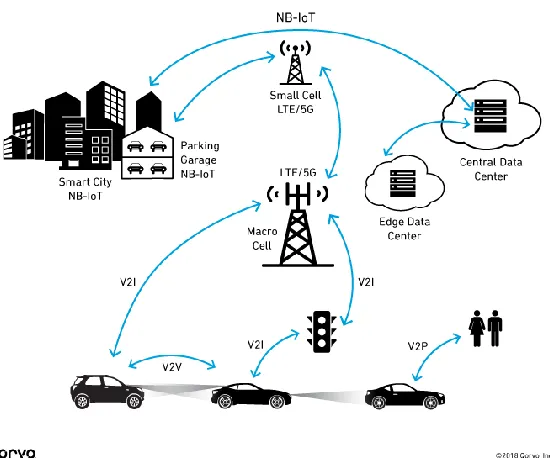
connected vehicle and inter-vehicular communication will bring a new set of features which will change the transportation environment completely. The safety of our road transports will reach an entirely new level, communication with road infrastructures and users (pedestrians, bicycles) will change the way we see our movements in a way difficult to analyze in advance. Ground transportation will be positively influenced by the massive amount of information that will be shared by vehicles. In particular, we are going to organize the areas involved in the following classification:
● Safety;
● Fuel consumption reduction; ● Time wasted reduction; ● Entertainment.
Safety:
Connected vehicles are providing improvements in safety applications. In the past, human drivers were not able to understand what was happening inside other vehicles. For example, we were generally not able to understand the drowsy state of another driver. Moreover, the spatial division of the road was not clearly defined. The aviation industry has a marked difference on this side: airplane routes are centrally controlled. Hence, the space needed for the airplane is reserved also based on its future positions. Ground transportation is lacking this concept. Drivers know they cannot occupy the amount of space where another vehicle is currently positioned, but they are not conscious of its future route. Last, humans are likely to get annoyed while driving, tired, physically or psychologically compromised. There is a high probability for humans of committing errors. Vehicular connectivity and automation will overcome all the limitations state above. Hence, CAV technology introduction is foreseen to play an important role in increasing vehicle safety in the future.
Fuel consumption:
Fuel consumption is one of the significant aspects that automotive companies are trying to improve in new cars [30] . The ecological requirements are every year more stringent, and buyers are always paying more attention to this aspect. The driving style has a major impact on fuel consumption. CVs will increase knowledge about the relationship between vehicle behavior and fuel efficiency. Centralized management can help in varying vehicle behavior, considering a multitude of factors that are not in the line of sight of the human driver. Hence, the engine map can be exploited more efficiently, reducing fuel consumption. Moreover, routing will be optimized with real-time solutions to reduce congestion. Hence, fuel waste will be limited.
Traffic Efficiency:
25
can be sensed. Experience increases in performance when sensors can detect more data, and they can exchange this information between different data stores. Evolution in communication and computation gives a more significant number of possibilities in managing and controlling. Because of the more conscious view that managing entities will have on the environment, vehicular connectivity becomes actively part in increasing traffic efficiency.
Entertainment:
The idea that customers have of their vehicles is changed. In the past, the car was seen solely as a transport medium. Nowadays, new infotainment solutions are asked, since passengers desire new ways to enjoy their travels.
Thanks to a large amount of data exchanged, and because the vehicle will be connected to the network, even this aspect will be subjected to a revolution. All the occupants of the car will use the screen made available to them as they use their computers at home on the couch. Video streaming and online gaming are examples of novel solutions that are likely to be available [31].
NGMN has defined the requirements for enabling connected vehicle applications [32]. These requirements are defined starting from the use cases addressed. The features that the users will be able to exploit belong to a multitude of use cases in a highly heterogeneous environment. For this reason, the requirements may differ between diverse applications. In some cases, low latency and high reliability will be the focus, while there will be scenarios in which high data rate will be the only necessity. In the following, the primary necessities that interest connected vehicle applications are briefly explained.
Data rate:
The data rate is measured in bit/s at the application layer. The user experience data rate is related to the use cases considered, different applications ask for diverse conditions, and a video streaming on a vehicle consumes more data than the small and periodic messages sent to monitoring and maintenance. In vehicles with a lower degree of automation, the required data rate will be lower than 50 MB/s, while in the case of sensor information sharing between UEs supporting V2X application, and considering a high degree of automation, data rate of 1Gb/s will be necessary. 50 Mb/s will be the lower limit that is going to be available almost everywhere in the next future [33].
Latency:
Latency is not always a concern, e.g. in the use cases related to remote diagnostics and management. It becomes a fundamental KPI (key performance indicator) in safety applications and autonomous driving. For the use cases that require very low latency, end to end latency of 1 ms should be provided and, in more relaxed cases, the end to end latency should be around 10 ms [33][32].
Mobility:
26
provide a seamless and continuous connection when the user is moving [34]. Communication technology must be able to identify which users will need specialized mobility solutions. The requirement, in this case, is expressed in terms of the relative speed between nodes and devices at which service of quality can be delivered. In the future, the service quality should be assured up to 500 km/h [32].
Location:
In this section, we are referring both to contextual information(to deliver services ad hoc for the user) and to the importance of having much more precise location information (accuracy of 1m or less [35]) in order to evaluate the position of a vehicle. This becomes even more complicated when the device is moving at a high speed. Positioning will be deeply discussed in Chapter 2.2.7.
Security:
In the following years, the idea of security will become even more important than our current vision. An utterly connected environment will enhance our safety, but it can also be a tricky ambient if the security protocols are not sufficiently strong to defend the variety of sensitive information and applications enabled by the system. All data needs to be protected by external unauthorized access, attack, damages, and modifications. Moreover, many applications may be provided by third parties, and poorly designed applications of external partners may allow hackers to infiltrate (e. g. an edge computing platform) and then affect network functions deriving by the platform if they are not robustly segregated by each other [36].
Reliability:
Reliability is defined as the amount of packet delivered to the receiver in an amount of time predefined for the delivery of the packet, divided the total amount of sent packet. The reliability requirements are dependent on the use cases considered. In a practical situation, the communication technology should provide reliability about 99.999% for safety messages. In the case of vehicular communication, collision mitigation in an intersection is an example of an application that requires that level of reliability. In other cases, e.g. infotainment application, reliability requirement may be relaxed at 99% [32].
Connectivity Options:
![Figure 2-1SAE levels of automation [9]](https://thumb-us.123doks.com/thumbv2/123dok_us/1338894.1166842/21.612.146.468.74.343/figure-sae-levels-of-automation.webp)
![Figure 2-2 Roadmap of automated driving for passenger cars [11]](https://thumb-us.123doks.com/thumbv2/123dok_us/1338894.1166842/23.612.79.535.75.431/figure-roadmap-automated-driving-passenger-cars.webp)
![Figure 2-3 Simplified schematic representation of Norman and Shallice's model on willed and automatic control of behavior [16]](https://thumb-us.123doks.com/thumbv2/123dok_us/1338894.1166842/26.612.96.538.255.466/figure-simplified-schematic-representation-norman-shallice-automatic-behavior.webp)
![Figure 2-5 Usage Scenario of 2020 and beyond [52]](https://thumb-us.123doks.com/thumbv2/123dok_us/1338894.1166842/44.612.120.494.304.531/figure-usage-scenario.webp)
![Figure 2-8 How GPS works [67]](https://thumb-us.123doks.com/thumbv2/123dok_us/1338894.1166842/50.612.72.537.201.475/figure-how-gps-works.webp)