ISSN(Online): 2320-9801
ISSN (Print) : 2320-9798
I
nternational
J
ournal of
I
nnovative
R
esearch in
C
omputer
and
C
ommunication
E
ngineering
(An ISO 3297: 2007 Certified Organization)
Vol. 4, Issue 3, March 2016
Android Based Automated Smart Wheel
Chair
Prof. Rakhi Bhardwaj, Poonam Gupta, Pooja Jadhav , Bhagyashree Kadam, Amruta Kedari
B. E Students, Dept. of Computer, TCOER, Savitribai Phule Pune University, Pune, Maharashtra, India
ABSTRACT: Our project is specifically related to the Smart Android phone handling the wheel chair system using voice-recognisation system. The wheelchair System is recommended to control a wheel chair by using the android application in the mobile device and voice- recognisation system. The main focus of this project or application is to facilitate and increase the mobility of handicapped and old aged people who are not able to move well because of their disabilities of organs. Using this wheel chair will allow handicapped people to live a life independently without depending on others for their movement as a daily need. Speech recognition technology is a key technology which will provide a new way of human interaction with machine or tools. Therefore the problems that they face can be solved by using speech recognition technology for the movement wheel chair. This can be realized and optimized with use the smart phone device as an intermediary or interface. In this project interfaces has been designed therefore to develop a program for recognize speech also controls the movement of chair and an application which can handle or manage the graphical commands. This project uses arduino kit Microcontroller circuit and DC motors to create the movement of wheel chair and IR Sensors to detect the hurdles in between wheelchair and the way of direction.
.
KEYWORDS: Android Application, Wheel chair, physically Challenged, IR Sensors, Voice Command, Bluetooth, Ardiuno Micro-controller
I. INTRODUCTION
In this project we are using Android Application and Voice Recognisation System. But many of individuals with disabilities who need wheelchairs are satisfied with it, few members of the disabled community find it is difficult or impossible for operating a standard power wheelchair. This project is included in assistive technology. For handicapped and depended disable it is more independent, productive and enjoyable living. [1] To perform functions a handicapped person with locomotive disabilities needs a wheelchair that require him or her to move around. He/She can do so manually by pushing the wheelchair with his/her hands. However many of us have weak upper limbs or find the manual mode of operating too tiring. Therefore it is desirable to provide them with a motorized wheelchair which is controlled by moving a voice commands. Since motorized wheelchair is important that it be able to avoid obstacles automatically in real time, it can move at a fair speed. Cost of this motorized wheelchair is affordable for many handicapped people as possible, as well as for organizations that support it. With these requirements in mind we propose an automated wheelchair with real-time Herald avoidance capability. The power wheelchair control interfaces currently still not enough to provide mobility for substantial number of person with disabilities. Through research and design wise, the wheelchair to control development along safe and effective use of the provision independence and self-use mobility. This project will provide disability weight innovative solutions to handle the wheel chairs to self-use voice interface. [2]. this project describes a wheelchair which can be controlled only by using the android application and user's voice also. The main aim of this project is to facilitate the movement of the disabled people and elderly people who cannot move properly so with this we can enable them to lead better lives without any problem. Speech recognition is a key technology which can provide human interaction with machines for controlling a wheelchair. This project includes two parts which is software and hardware. It is realized that for input of human voice we are using Android phone as an intermediary. In this project, Ardiuno kit (Atmega 328) is used as controller to control the movement of wheelchair based on the human voice as an input. [3] There are five basic movements of a wheelchair to be applied by the user.
ISSN(Online): 2320-9801
ISSN (Print) : 2320-9798
I
nternational
J
ournal of
I
nnovative
R
esearch in
C
omputer
and
C
ommunication
E
ngineering
(An ISO 3297: 2007 Certified Organization)
Vol. 4, Issue 3, March 2016
2) Moving backward 3) Turning to the right 4) Turning to the left 5) Stop condition
II. RELATED WORK
Several studies have concluded that the independent mobility or movement which is included powered wheel chair, manual wheelchair and walker access the benefit to all the disabled human beings .Independent mobility increases vocational and educational opportunities, reduces dependence on other members, and promotes feelings of self-reliance and independability. [1] Independent mobility plays a vital role in building the foundation for much early learning for young people. The lack of exploration and control often results into a cycle of deprivation and lack of motivation that leads to learned helplessness. For aged people, independent movement is an important aspect of self-esteem and plays a vital role in “aging in place.” Mobility difficulties led to the problem of activities of daily living (ADL) and instrumental ADL disabilities because of the need to move to accomplish many of these activities. [2] The impaired mobility often results in reduced opportunities to have socialized policies, which leads to social isolation, and many mental problems. While the needs of many individuals with disabilities can be satisfied with traditional manual or self-automated wheelchairs, a segment of the disabled community finds it difficult or impossible to use wheelchairs independently. [5] The disabled population includes people with low vision, visual field reduction, spasticity, tremors, or cognitive deficits. These individuals dependent on other people for mobility to push them in a manually handled wheelchair. To accommodate this population, several researchers have used technologies originally developed for power wheelchairs have been designed of different ways, such as assuring collision free travel, aiding the performance of specific tasks (e.g., passing through doorways), and autonomously transporting the user between locations. [7]The idea of using voice based technology for controlling the motion of the wheels of wheelchair is to prove that this project stands one step ahead of other average projects. [8 ] The use of this new technology in conjunction with a mechanical system in order to simplify everyday life would spark interest in the developing modern society. Many people with disabilities do not have the dexterity necessary to control a joystick on an electrical wheelchair. [9]
III. PROPOSED SYSTEM
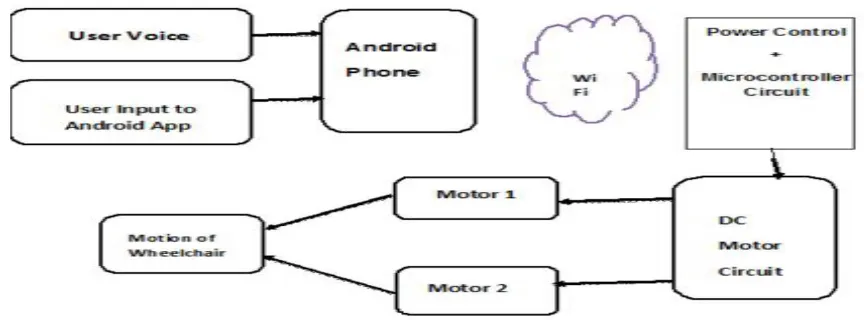
A. Architecture:
ISSN(Online): 2320-9801
ISSN (Print) : 2320-9798
I
nternational
J
ournal of
I
nnovative
R
esearch in
C
omputer
and
C
ommunication
E
ngineering
(An ISO 3297: 2007 Certified Organization)
Vol. 4, Issue 3, March 2016
B. Components of Wheelchair
i) Wheelchair battery:
The battery is used in this work is wet type. To create electrical energy the chemical reaction between lead and sulphuric acid which is use wet batteries. There is need filling with distilled water to the batteries, wheelchair battery do have a higher maintenance rate, but are lighter than AGM (Absorbed Glass Mat) or Gel batteries.
ii) Wheels :
Wheelchair has two rear wheels. Universal wheel is fixated in wheelchair base in front both wheels have the same diameter.
The two rear wheels are drive using two DC motor connected to each wheel. The instructions are passed through micro-controller to the motor, the wheels rotated in the specific direction.
i) Motors :
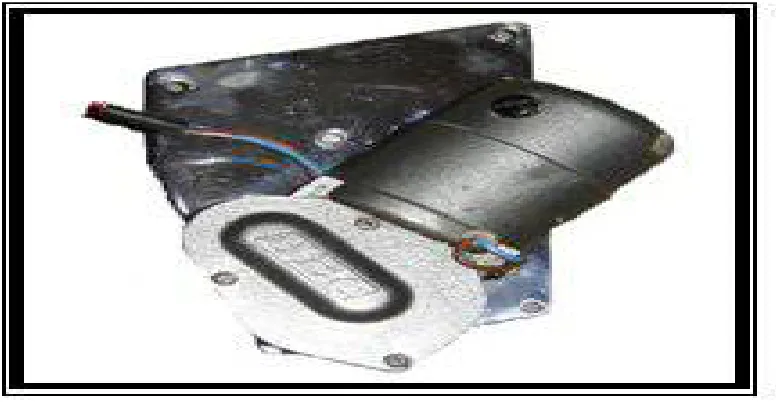
Motors are arguably one of the most important parts of a mobile robotics platform. Overpowered motors cause waste the already limited supply of power and inefficiency from the on-board batteries. At critical times undersized motors could be short on torque. The available speed range as well as the optimal rotation speed of the motor must also be taken into consideration. Too high of an output rpm from the motor shaft will cause the robot to operate at a fast, uncontrollable speed. Too low of an output and the robot will not be able to attain a speed and the available speed range of the motor must also be considered. Too high of an output rpm from the motor shaft will cause the robot to operate at a fast, uncontrollable speed. To meet the user’s needs it is low of an output and the robot will not be able to attain a suitable speed. The torque is the output of the motor plays a role in the performance because locomotion may not occur in certain situations .Therefore, the selection of the proper motor for the platform is very important. There is many shapes and sizes of motors. Figure shows the 12V DC motor use in wheelchair.
The 12VDC motor is connected to the wheels and driver of the microcontroller Atmega328. One Driver is sufficient to control two motors simultaneously.
Fig 2: DC motor used in wheel chair
ISSN(Online): 2320-9801
ISSN (Print) : 2320-9798
I
nternational
J
ournal of
I
nnovative
R
esearch in
C
omputer
and
C
ommunication
E
ngineering
(An ISO 3297: 2007 Certified Organization)
Vol. 4, Issue 3, March 2016
v) Motor Driver: It is an interface between the DC motor and the microcontroller Atmega328. The commands are processed further to Atmega 328 towards driver and executed by DC motor to rotate the wheels in specific direction or to stop.
VI) IR Sensors: Sensors are used to detect the hurdle from specific distances and alert the user about it. They are highly effective and efficient.
vii) Alarm: An alarm is used for alerting the user so that he can get idea about hurdle and control the wheelchair.
IV.RESULT
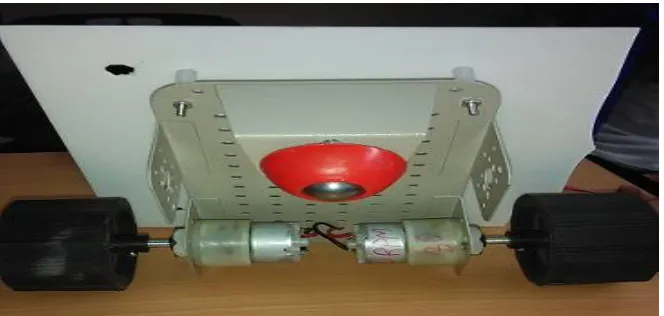
Fig 3: Hardware implementation of wheelchair
This is the overview of the project implementation where all the hardware is implemented on board. The main components are Bluetooth, Arduino kit,Bluetooth, Microcontroller, l23D9 Motor Drivers, wheels, Universal wheel, sensors, alarm etc. the specific wires are used for interfacing every device with each other perfectly. So that the wheels of the chair move as per the users requirement.
ISSN(Online): 2320-9801
ISSN (Print) : 2320-9798
I
nternational
J
ournal of
I
nnovative
R
esearch in
C
omputer
and
C
ommunication
E
ngineering
(An ISO 3297: 2007 Certified Organization)
Vol. 4, Issue 3, March 2016
This is the downside view of the wheelchair we implemented .Two wheels are used which gives the moment to the chair as per the D.C. Motor gets instruction from the driver. The universal wheel moves as per the force and movement of the motor connected wheels.
V.FLOWCHARTS
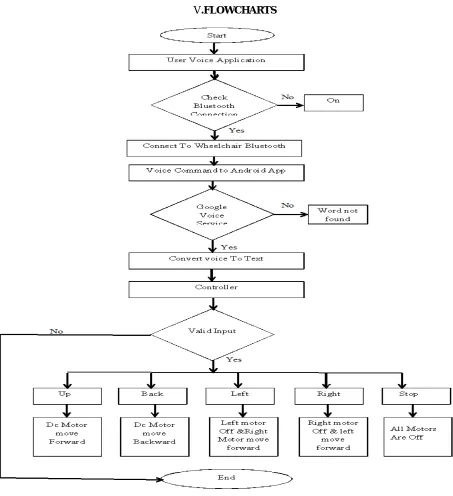
Fig 6: Flowchart for User Voice Command
ISSN(Online): 2320-9801
ISSN (Print) : 2320-9798
I
nternational
J
ournal of
I
nnovative
R
esearch in
C
omputer
and
C
ommunication
E
ngineering
(An ISO 3297: 2007 Certified Organization)
Vol. 4, Issue 3, March 2016
The above flowchart shows the functioning of the wheel chair using voice commands. Firstly the user voice application is connected with the wheelchair Bluetooth device. Then user is supposed to speak specific commands through the application .Then using the Google voice service the word is checked and converted to text. The text format it processed further to controller, it checks for the valid input and then gives specific instruction to the motor drivers for its movement towards left, right, straight, backward otherwise stop.
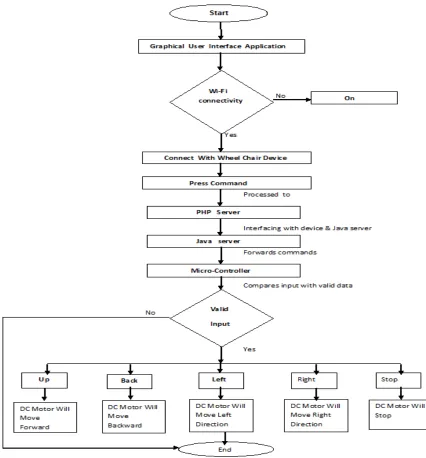
Fig 7: Flowchart for GUI Command
ISSN(Online): 2320-9801
ISSN (Print) : 2320-9798
I
nternational
J
ournal of
I
nnovative
R
esearch in
C
omputer
and
C
ommunication
E
ngineering
(An ISO 3297: 2007 Certified Organization)
Vol. 4, Issue 3, March 2016
checks for the valid input and then gives specific instruction to the motor drivers for its movement towards left, right, straight, backward otherwise stop.
VI. ADVANTAGES
This project describes the design and development of the motion control using voice recognition and graphical Android App for a wheelchair application.
A. Objectives of Project:
• To develop a voice controlled wheelchair system by using Visual Basic for wheelchair control. • To design and develop an android app through which we can operate a movement of wheel chair Using android device.
• To implement and use the voice based system so that users voice as an input to control the mobility Of wheelchair.
• Helps to implement movement for disabled people and aged people who can’t move properly. • Easy to drive with negligible efforts.
• Less Complexity and Hardware to mount. • Can be mounted on the existing wheelchair. • Wireless control helps to monitor the wheelchair.
• Reduces manpower and dependency on other human drive. • Wheelchair is compact and economical.
• Provides easy movement for physically challenged people. • Low power consuming and easy to operate the wheelchair.
VII. FUTURE SCOPE OF PROJECT
Voice recognition module is used to develop the voice recognition system. Voice recognition issues a command to control the movement of wheelchair. For movement of wheelchair Microcontroller Atmega328 and DC motor circuit were built. For not to occur disorder during recognize the user voice, this system works in a quiet environment. Furthermore, the pronunciations accuracy must be ensured and the word-related (voice) the users voice must clear in short distance on microphone was essential in this innovation.
Using gear box we can produce high speed moving wheelchair.
PWM modulation can also increase speed.
Solar Panel can also be used to charge the battery for power supply to the components required to drive the
wheelchair.
The wheelchair can also include the gesture feature to operate the wheelchair.
Wheelchair only can function properly when the weight of the load for this system must be below 50 kilogram. Obstacle avoidance sensors are used.
VIII. CONCLUSION
By using an Android app & voice recognition we have successfully designed and implemented a motorized
wheelchair. For most of the commands (over 95%) the voice recognition system worked.
The system did not recognize it, only when a word was not properly vocalized. However, for a fool proof
backup in this case the joystick can always be used.
The project implementation will help all the people who are dependent on wheelchair for their mobility.
All the common man can reach out for this smart wheelchair to become independent for mobility if they hold
a smart phone.
ISSN(Online): 2320-9801
ISSN (Print) : 2320-9798
I
nternational
J
ournal of
I
nnovative
R
esearch in
C
omputer
and
C
ommunication
E
ngineering
(An ISO 3297: 2007 Certified Organization)
Vol. 4, Issue 3, March 2016
IX. RESULTS AND DISCUSSIONS
The project was tested for the movement of the wheel chair using trained voice after the design and development of the self-automated wheel chair with its various interfacing units.
On the basis of two important aspects, firstly, on the accuracy of the voice system and secondly, wheelchair
velocity by means of control commands this design is experimented. This would be implemented for disabled people. Firstly the voice recognition system will be tested in a quiet room with only one single user. Every word was correctly recognized.
For a next time we will test it with a different user on whom the system was not trained .For example words
like “right” were recognized as “write” in this way about 5% errors occurred in this case.
This was because the recognizer heard a different pronunciation. However, after the user had to speak the
word a number of times the system had enough examples and properly determined what pronunciation the user speak of the word.
After this system was tested in a noisy room by turning on some music in that room. There was no problem
in correctly recognizing the words when the music was light but the recognizer found it difficult to recognize the user’s voice when we turned the volume high and often took commands from what it heard in the song.
REFERENCES
[1] Chin-Tuan Tan and Brian C. J. Moore, Perception of nonlinear distortion by hearing-impaired people,International Journal of Ideology 2008, Vol. 47, No. 5 , Pages 246-256.
[2] Oberle, S., and Kaelin, A. "Recognition of acoustical alarm signals for the profoundly deaf using hidden Markov models," in IEEE International symposium on Circuits and Systems (Hong Kong), pp. 2285-2288., 1995.
[3] A. Shawki and Z. J., A smart reconfigurable visual system for the blind, Proceedings of the Tunisian-German Conference on: Smart Systems and Devices, 2001.
[4] C. M. Higgins and V. Pant, Biomimetic VLSI sensor for visual tracking of small moving targets, IEEE Transactions on Circuits anSystems, vol. 51, pp. 2384– 2394, 2004.
[5] F. Daerden and D. Lefeber, The concept and design of pleated pneumatic artificial muscles. International Journal of Fluid Power, vol. 2, no. 3, 2001, pp. 41–45 [6]http://msdn.microsoft.com/enus/ library/default.aspx
[7] K. R. Castle man, Digital Image Processing, Pearson Education, 1996.
[8] M. A. Maziddi, AVR micro controller and Embedded Systems, 2008. [9]http://electronics.howstuffworks.com/gadgets /hightech-gadgets/speech-recognition.htm
[10] D. Murray and A. Basu, ‘Motion tracking with an active camera’, IEEE Trans. Pattern , Analysis and Machine Intelligence, Vol 16, No. 5, pp. 449-459, 1994.
[11] http://www.voicerecognition.com/
[12] N. Otsu. A threshold selection method from gray-level histogram, IEEE Trans. System, Man, and Cybernetic. vol. 9, no.1, pp. 62-66, 1979
BIOGRAPHY