HINSHAW, GARRETT DENTON. Developmental and Non-Developmental Community College Transfer Students’ Performance and Experiences in Higher Education. (Under the direction of Don C. Locke.)
Ideally, developmental education programs provided in the community college
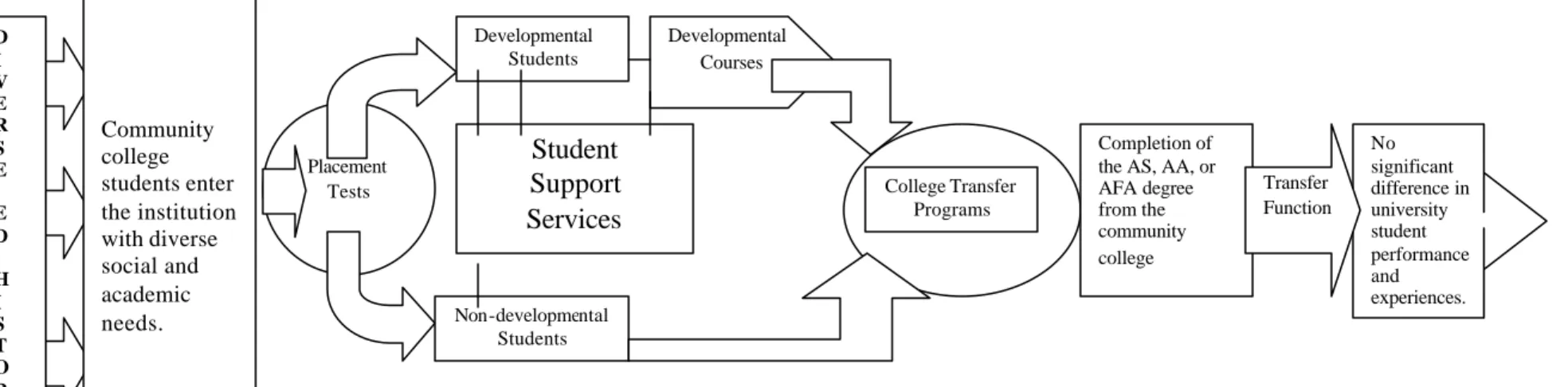
accomplish their objective of enhancing the basic learning skills of under-prepared students and preparing them for further college level coursework. The number of students that place into developmental education programs in North Carolina community colleges has grown to approximately 60 percent since the initial implementation of developmental education in the 1960’s. After successful completion of developmental coursework, students that enter the community college with deficienc ies in basic reading, English, or math (developmental students) should exhibit performance and have experiences that are consistent with their peers who enter without those identified academic deficiencies (non-developmental students).
This study compared the academic performance and experiences of developmental and non-developmental community college transfer students after their first year at the university. The participants had completed an Associate in Arts (A.A.), Associate in Science (A.S.), or Associate in Fine Arts (A.F.A ) degree from one of nine selected rural community colleges in North Carolina and matriculated into one of the 16 public universities of the University of North Carolina system. The North Carolina Transfer Student Questionnaire (NC-TSQ) was administered during the Summer of 2003.
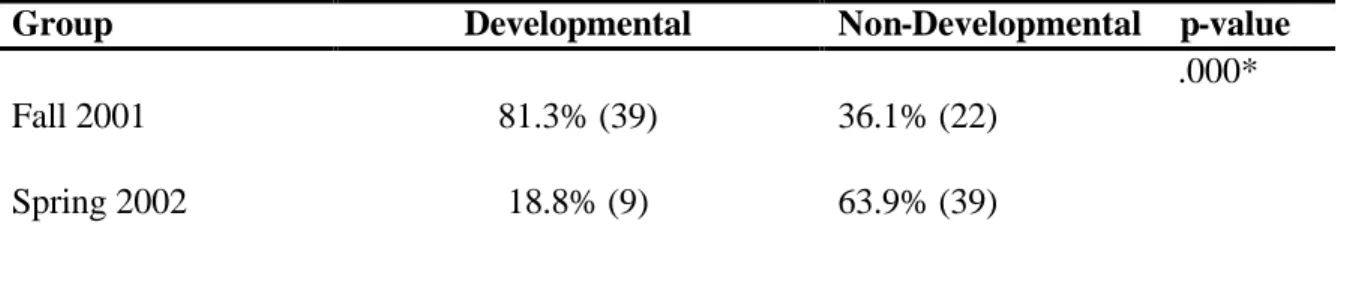
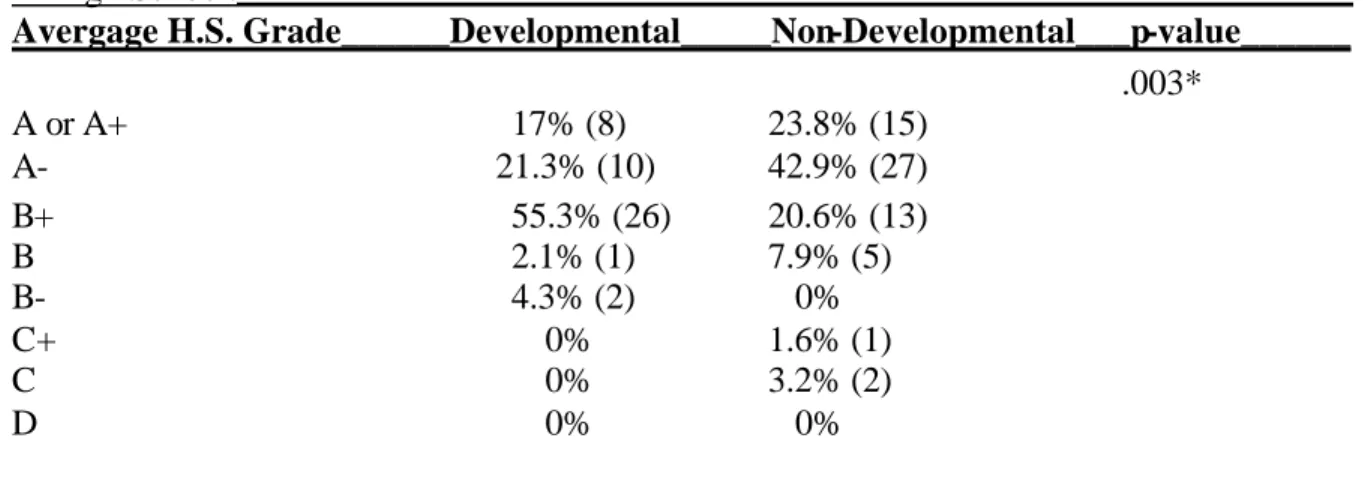
(with Bonferroni adjustment) for synthesized interval scales, this study reported that the two groups were quite similar in most areas assessed by the NC-TSQ. However, significant differences were identified in time of transfer, high school average grades, hours spent working while enrolled at the community college, experiences with faculty at the community college, participation in activities at the university, and self ratings on academic abilities and social skills.
Developmental and Non-Developmental Community College Transfer Students’ Performance and Experiences in Higher Education
By
Garrett Denton Hinshaw
A dissertation submitted to the Graduate Faculty of North Carolina State University in partial fulfillment of the requirements for the
Degree of Doctor of Education
Adult and Community College Education
Raleigh, North Carolina 2003
Approved by:
___________________________________ ______________________________ Bruce I. Mallette Thomas E. H. Conway, Jr.
___________________________________ ______________________________ Ephraim I. Schechter Don C. Locke, Chair of Advisory
Biography
Acknowledgments
I would like to express my appreciation to the members of my advisory committee, Dr. Don C. Locke (Chair), Dr. Ephraim I. Schechter, Dr. Bruce I. Mallette, and Dr. Thomas E. H. Conway, Jr. While serving as Director of the Asheville Cohort, Dr. Locke has also provided exemplary guidance and encouragement in the completion of this project. I would like to thank Dr. Robbie Pittman, faculty member at Western Carolina University, for assistance with the statistics of this study and his instruction in the statistics application course in our program.
I would like to thank Dr. Swanson Richards, Dr. James Reeves, Dr. Frank Sells and Dr. Ken Bo ham, the four presidents that I have worked for in the North Carolina Community College System, for allowing me the opportunity to continue my education and pursue my professional goals. Everyone needs a champion in order to complete a task of this nature and I would like to express my sincerest gratitude to Dr. Boham for his encouragement and support during this process.
I will always be grateful for the support and friendship of all the members of the NCSU-Asheville Cohort II, who supported and challenged me to persist throughout this program. Two members of our cohort, Jeanette Staley and Dua ne Crane, who died before the end of our work, served as an inspiration to us all.
always encouraged me to continue forward in the pursuit of my goals. And lastly, my parents, Paul and Letty Hinshaw, have always been there for me through thick and thin and have helped me to understand that life long learning is a key to a fulfilling life.
TABLE OF CONTENTS
Page
LIST OF TABLES ...ix
LIST OF FIGURES………..xi
CHAPTER ONE: INTRODUCTION ...1
Context of the Problem...1
Statement of the Problem...3
Research Questions ...5
Significance of the Study ...8
Limitations of the Study ...10
Assumptions of the Study ...11
Definitions ...11
CHAPTER TWO: LITERATURE REVIEW...14
Historical Foundations ...14
Community College Students ...15
Evolution of Community Colleges and the Transfer Function ...17
Transfer Student Adjustment...21
Transfer Student Success ...23
Characteristics of Developmental Students...26
Implementation of Developmental Education...29
Financial Resources...29
Program Accountability ...32
Student Support Services...34
Developmental Education Program Organizational Structure ...41
Adult Learning Theories and Developmental Education ...45
Program Planning and the Open Door...47
Conceptual Model for Community College Students and the Transfer Function...53
Summary ...55
CHAPTER THREE: METHODOLOGY ...59
Introduction...59
Research Design...60
Population...61
Instrumentation ...62
Validity and Reliability of the Instrument ...64
The NC-TSQ...65
Data Collection...66
Data Ana lysis...66
Demographic Variables...67
Community College Variables...70
University Variables...76
Statistical Methods ...84
Hypotheses...85
Summa ry ...89
CHAPTER FOUR: FINDINGS...92
Introduc tion...92
Community College Questions ...101
University Que stions ...110
Summary ...125
CHAPTER FIVE: CONCLUSIONS, RECOMMENDATIONS, AND IMPLICATIONS ...128
Introduction...128
Overview of the Study, Research Questions, and Hypothesis ...129
Key Findings and Conclusions ...133
Summary of the Findings ...142
Recommendations for Future Research ...143
Implications for Practice ...144
Summary ...145
REFERENCES ...147
APPENDICES ...155
APPENDIX A North Carolina Transfer Student Questionnaire…………..155
APPENDIX B Cover Letter for Mailing of the Survey Instrument………..162
LIST OF TABLES Table 1. Inter- group Comparisons of Developmental and
Non-developmental Community College Transfer Students...8
Table 2. Description of the Demographic Variables from the NC-TSQ ...67
Table 3. Description of the Community College Variables from the NC-TSQ ...71
Table 4. Description of the University Variables from the NC-TSQ ...77
Table 5.1. Chi-Square Analysis by Group on Responses Related to Year of Transfer to the University………...94
Table 5.2. Chi-Square Analysis by Group on Responses Related to Students’ Average Grade in High School……….95
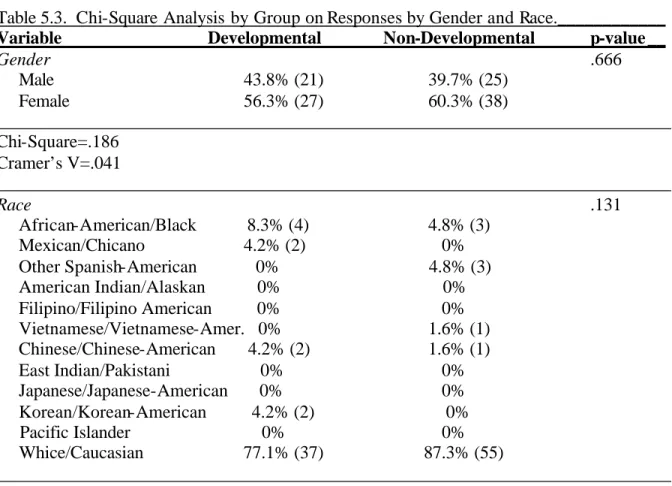
Table 5.3. Chi-Square Analysis by Group on Responses by Gender and Race ...96
Table 5.4. ANOVA by Group on Responses Related to Students’ Age ...97
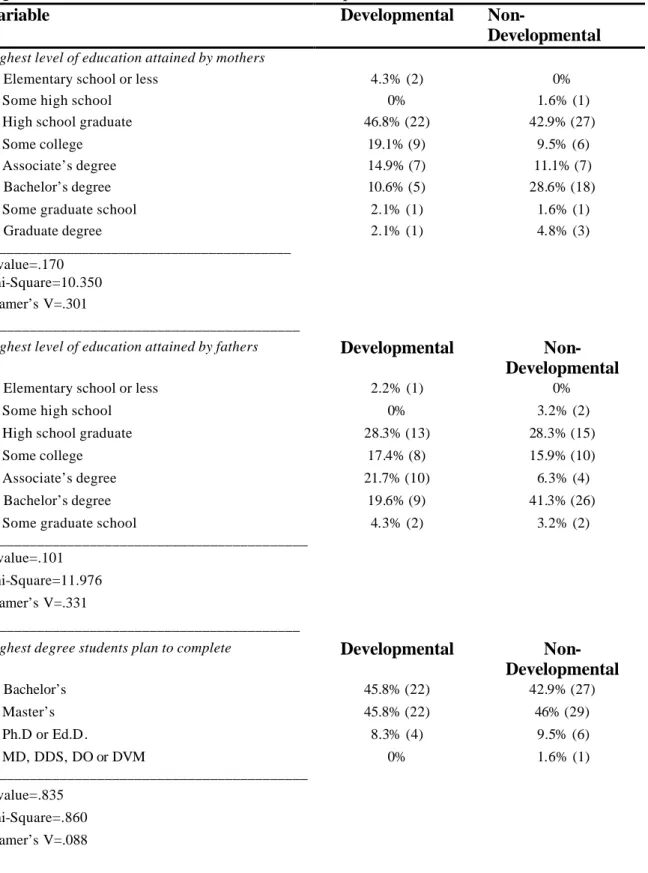
Table 5.5. Chi-Square Analysis by Group on Responses to Parents’ Level of Education and Highest Level of Education Students Plan to Complete………..98
Table 5.6. ANOVA by Group on Responses to Parents’ Household Income and the Students’ Self Rating………..100
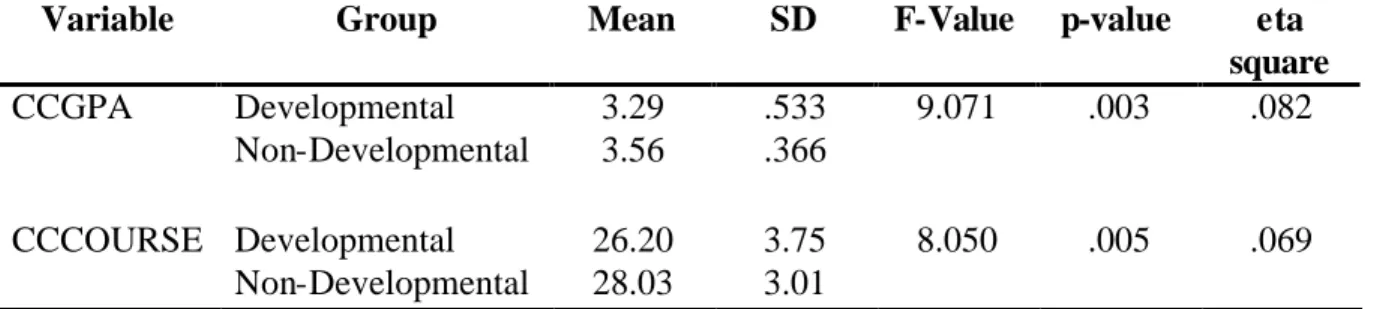
Table 6.1. ANOVA by Group on the Responses to Community College g.p.a. and Perceptio ns Concerning Coursework……….102
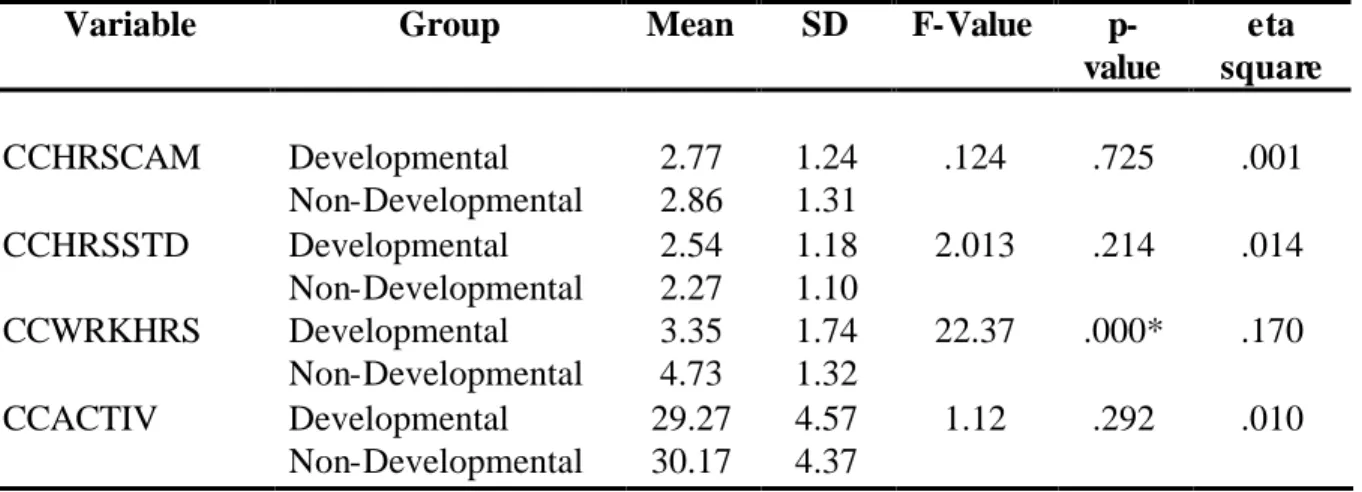
Table 6.2. ANOVA by Group on the Responses to Weekly Hours Spent on Campus, Studying, Working, and Involvement in Activities………...103
Table 6.3. ANOVA by Group on the Responses to Experiences with Various Aspects of the Community College Environment………...105
Table 7.1. ANOVA by Group on the Responses to Experiences with University g.p.a. and Weekly Ho urs Spent Working………...111
Table 7.2. Chi-Square Analysis by Group on the Responses to Place of Residence at the University and Expected Graduation Date for the Two Groups…………112
Table 7.3. Chi-Square Analysis by Group on the Responses to Students’ University Field of Study and Reasons for Attending the University………...114
Table 7.5. Chi-Square Analysis by Group on Responses to Participation in a Summer Transfer Orientation Program at the University……….116 Table 7.6. ANOVA by Group on the Involvement in Activities, Participation in
Activities, and Chances Things Would Happen While Attending the
University……….117 Table 7.7. ANOVA by Group on the Responses to Experiences with Faculty,
Experiences with Clubs and Organizations, Experiences with Learning, and Experiences with Academic Counseling Services at the University……...120 Table 7.8. ANOVA by Developmental and Non-developmental Groups in Experiences with
Adjustment to the University………123
Table 7.9. ANOVA Analysis by Group on the Responses to General Perceptions and Overall Satisfaction……….124 Table 8.1. Tests on the Null Hypotheses for Community College Variables………...132 Table 8.2. Tests on the Null Hypotheses for University Variables………...132 Table 9. Summary of the Demographic Profiles of Developmental and
Non-developmental Community College Transfer Students………134 Table 10. Summary of the Comparison of Differences on the Community College
Variables………...138 Table 11. Summary of the Comparison of Differences on the
LIST OF FIGURES
CHAPTER ONE: INTRODUCTION Context of the Problem
North Carolina community colleges enroll over 800,000 students each year, offering them a diverse curriculum of vocational, technical, transfer, continuing education, and personal enrichment opportunities (North Carolina Community College System, August 2001). These students enter the 58 community colleges in North Carolina with varying levels of academic ability and social preparation. The challenge to accommodate the needs of the adult learner in these institutions creates an environment that is rich with opportunity for study and analysis by today’s educational researchers.
The long-term implications of a community college education, in relation to life long learning, continues to be controversial and widely debated (Brint & Karabel, 1989;
Dougherty, 1994; Parnell, 1982; Zwerling, 1976). One of the primary factors that influence this debate is the mission of community colleges to serve anyone who wishes to continue his or her education. Open door admission creates a diverse student population with varying academic abilities and sociological needs. As a method of responding to open-door admission, virtually all community colleges offer a comprehensive array of services and programs that contribute to the overall development of their students (Roueche & Roueche, 1993).
writing, basic mathematics, and arithmetic. Some form of developmental education has been in existence at colleges and universities since the early nineteenth century (Roueche & Roueche, 1993). These programs are designed with a wide range of interventions to assist under-prepared students in reaching their higher education goals (Boylan, 1999). Demashak (1999) suggested that entering first year students needing developmental coursework at some institutions make up the majority of the total class. The public resources that are allocated to programs of this nature require administrators to rigorously measure the effectiveness of developmental education programs.
The ability to measure effectiveness for community college programs establishes a direct link to other institutions of higher education through its transfer function. Shearon,
Brownlee, and Johnson (1990) found that 48 percent of North Carolina community college students intended to pursue a baccalaureate degree at some point in their future. This influx of community college students into universities has led researchers to investigate the
performance and experiences of this unique population. Fredrickson (1998) developed a useful profile of this group and concluded that the makeup of the university student body has dramatically changed as a result of the growth in the numbers of community college
their chosen universities. Attending a community college lessens the chance of completion for students pursuing four-year degrees as compared to native freshmen of the university (Astin, 1971; Brint & Karabel, 1989; Dougherty, 1992). This information, along with the importance of the first-year experience for community college students leads to a perplexing problem for both university and community college professionals. An analysis of
community college transfer students who enroll in developmental education and community college transfer students who do not enroll in developmental education at the community college should prove to be of importance to faculty and administrators in dealing with this population of students from the time they begin their educational pursuits until they complete their educational goals.
Statement of the Problem
Ideally, developmental education programs provided in the community college setting accomp lish their objective of enhancing the basic learning skills of under-prepared students and preparing them for further college level coursework. The number of students that place into developmental education programs in North Carolina community colleges has grown to approximately 60 percent since the initial implementation of developmental education in the 1960’s. This growth has resulted in increased expenditures, the addition of developmental education departments, and a changing role for the system in general. Measuring
effectiveness of developmental education is an essential part of determining appropriate funding allocations and objective attainment throughout the community college structure in the United States. After successful completion of developmental coursework, students that enter the community college with deficiencies in basic reading, English, or math
consistent with their peers who enter without those identified academic deficiencies (non-developmental students).
However, determining the effects of developmental education in the community college has been described with inconsistent research practices and reports. Therefore, it is important to examine the long-term impact of developmental education programs based on future academic performance and experiences beyond the community college environment in order to establish its effectiveness for community college transfer students. This can be accomplished through intra-group comparisons of students who have extended their academic pursuits into the university setting through the community college transfer function.
Researchers have used various methods to examine the impact of developmental education and its goal of bridging the academic gap for students who enter community colleges under-prepared. Some have concluded that students who take developmental courses tend to lag behind students who do not take developmental courses (Boylan & Bonham, 1994). Other studies have indicated that students who take developmental courses perform better than students who do not enroll in these programs (Napoli & Hiltner, 1993). With these conflicting reports, it is necessary for researchers to continue the stud y of various aspects of developmental education to determine its value.
experience is more difficult to measure and requires additional analysis beyond the basics of performance measures such as grade point averages and completion rates. Grimes and David (1999) conducted a study based on the experiences of under-prepared students that provides a basis for conducting a comprehensive study on the value of developmental education for community college transfer students participating in the university setting. However, it is important to expand on the current research by focusing on the transfer students’ first- year university experience to determine if developmental education programs are having the desired outcomes for specific groups of students that participate in these types of interventions.
Roueche and Roueche (1999) suggested in their studies that although major expenditures continue to be dedicated to developmental education, researchers have failed to provide convincing evidence of the overall value of these programs. Additional studies may provide data that can result in changes and modifications of current educational plans and policies to better prepare the students in higher education to reach their desired outcomes.
Research Questions
This study focuses on the academic performance and experie nces of students attending universities who transferred from community colleges. Students will be grouped according to their community college participation in developmental education. The overarching question that is the focus for debate throughout the current literature is: “Does participation in
developmental programs in community college level the differences between developmental and non-developmental transfer students?”
be discussed to develop a profile of the developmental and non-developmental community college transfer students.
For the purpose of this study two research questions will be presented to assist in the understanding of the overarching question as follows:
Research Question One. Are there differences in community college performance and experience variables between developmental transfer students and non-developmental transfer students?
Research Question Two. Are there differences in college/university performance and experience variables between developmental transfer students and non-developmental
transfer students?
To study the research questions, the data will be presented in three categories; the demographic profiles of developmental transfer students and non-developmental transfer students, the community college performance and experiences of developmental and non-developmental transfer students, and the university performance and experiences of the developmental and non-developmental transfer students. Variables will be categorized based on their relevance to community college or university experiences and performance. This process is necessary to identify levels of difference before and after entrance into the university.
Demographic Variables
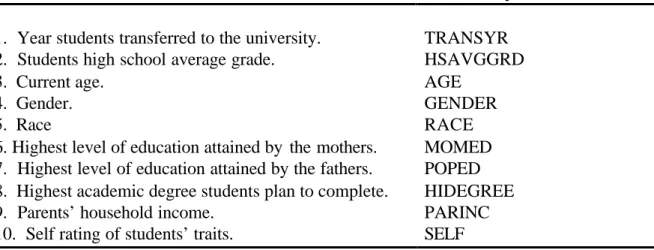
The purpose of these variables will be to address differences between the two groups in average grades in high school, age, racial or ethnic identification, gender, parents’
educational level, academic goals, parents’ total household income, and self perception. These items will be used to develop intra-group comparisons. Hudson (1991) determined that demographic differences were significant in predicting academic performance of community college transfer students.
Community College Variables
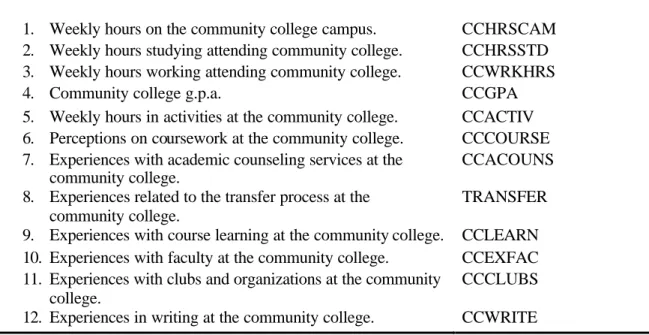
participation in clubs and organizations, and experiences in writing. Inter-group comparisons will be made for developmental and non-developmental community college transfer students. University Variables
The final set of variables will address the students’ performance and experiences after their first year at the university. These variables include graduation plans, university residence, field of study, reasons for attendance at the chosen university, participation in a transfer orientation, experiences with faculty, participation in clubs and organizations, course learning, involvement in activities, use of academic counseling services, perceptions of the university after transfer, the adjustment process, satisfaction with the university, social life, and academic performance. Inter-group comparisons will be made for developmental and non-developmental transfer students at the university. An example of the comparisons that will be used for the purposes of this study are presented in Table 1.
Table 1. Inter-group Comparisons of Developmental and Non-developmental Community College Transfer Students._____________________________________________________ Questions
Demographic Questions
Comparisons
Developmental Non-Developmental
Community College Questions Developmental Non-Developmental
University Questions Developmental Non-Developmental
___________________________________________________________________________ Significance of the Study
because students may enter a university under-prepared does not mean that they cannot be successful there given appropriate interventions…” (p. 3). This realization should guide community college and universities in the direction of evaluating, planning, and providing interventions that are appropriate for the populations they serve.
Through the evaluation of the interaction, perceptions, effort, and performance of community college transfer students, educators at community colleges and universities should be able to identify primary interventions that are effective in providing prospective students the best opportunities to succeed both academically and socially. Specifically, critically comparing the academic performance and experiences of students who enroll in developmental education with those students who do not enroll in developmental education at community colleges will assist professionals in determining if the desired outcomes of such programs are being reached. As resources continue to be allocated in significant proportions to these efforts, administrators must be able to demonstrate the impact through adequate qualitative and quantitative research.
Therefore, data from this study should indicate if differences are evident in specific functions of the students’ progress toward attaining the baccalaureate degree. Analyzing differences will be useful in determining appropriate modifications for developmental education programs within North Carolina community colleges. The analysis should also provide important information concerning the development of services needed by these students at universities and allow professionals the opportunity to better understand the composition of these populations.
community college transfers and developmental education. The role of developmental coursework has been an object of debate for policy makers throughout the United States over the past decade. The completion of this study should provide future researchers with avenues of continued study.
There is considerable literature available on the topics of community college transfer students and developmental education. However, very little research has been conducted on the specific performance and experiences of community college transfer students who take developmental courses and those community college transfer students who do not take developmental courses in their preparation for the university setting. These data from the proposed research should be valuable in understanding the complexities of student success and the factors that impact the students’ progress. As public financial resources continue to be allocated to large programs within systems of higher education, professionals will be held accountable for assuring that these resources are being spent on interventions and programs that are proven to be effective.
Limitations of the Study
1. Participants in this study were limited to those students who matriculated in one of the nine community colleges and subsequently enrolled in one of the sixteen public universities/colleges in North Carolina.
3. In measuring variables associated with student success, researchers are limited in determining if factors not measured would have higher levels of
significance than those that are measured.
4. It will be difficult to administer surveys through mailings made to the students in the university setting. Response rates may be low, affecting the statistical power of the study.
Assumptions of the Study
1. Community colleges included in the study follow the course content guidelines established in the common course library of the North Carolina Community College System establishing general consistencies in programs and students.
2. The researcher will rely on accurately recorded data concerning students at each of the community colleges included in the study to produce an adequate sample for each group of students.
3. It is assumed that students will accurately and honestly report their experiences on their community college and first-year experience at the university.
4. It is assumed that students will accurately report their academic performance at the community college and university.
Definitions
For the purposes of this study, the following definitions will apply:
System Common Course Library. For the purposes of this study,
developmental education will be courses that students are required to take prior to advancing into regular curriculum course work at the community college. Developmental education is instruction or coursework for students who would not ordinarily be expected to succeed in college (Kulik & Kulik, 1991).
2. Under-prepared- Students that enter community colleges with deficiencies in basic reading, writing, or math based on placement instruments. These deficiencies may be attributed to inadequate high school preparation, test anxiety, or historical lower achievement abilities in academic programs. 3. Developmental Students- Students who are required to take one or more
developmental education courses based on placement testing requirements at the participating community colleges.
4. Non-developmental Students- Students who are not required to take
developmental education courses based on placement testing requirements at the participating community colleges.
5. Transfer Students- Students who graduated from a community college with an A.A., A.S. or A.F.A degree in the Spring semester of 2001 and who have subsequently transferred to a public university in North Carolina.
7. Cutoff Scores- Minimum scores on placement tests used at community colleges that determine if students are to be placed into developmental education courses or non-developmental education courses.
8. G.P.A.- Grade Point Average- a numerical calculation of academic performance.
9. Retention- continued enrollment in an institution of higher education. 10.Academic performance- analysis of data related to community college and
university G.P.A., university retention, and hours earned versus hours attempted at the university.
11.College experiences- analysis of self reported data associated with community college and university interaction with faculty, level of effort, course learning activities, social activities, interaction with staff, interaction with other
students, psychological adjustment, academic adjustment, writing activities, and overall satisfaction with the university.
12.Inform Statements- a means of generating data from the community college information system that describe specific characteristics to be included in the data output from the system.
CHAPTER TWO: LITERATURE REVIEW Historical Foundations
Basic democratic ideas of the United States institutionalized the right for all citizens to develop to their fullest potential. This drive for enlightenment and human development has emerged as the foundation for the historical development of community colleges. During the late nineteenth century, the state of Massachusetts created common schools that became the basis for the idea of free education in the United States (Roueche & Baker, 1987). However, during this same time period, most of the successful entrepreneurs in the United States had not been educated through systems of higher education, but rather through their experiences in the marketplace (Brint & Karabel, 1989). The elitist view of access to higher education for only white, upper class males was a developing crisis that affected the social and
economic survival of the United States. In 1862, the passage of the Morrill Land Grant Act, establishing land-grant colleges, was the first step to breaking down the traditionalist views of access to highe r education (Roueche & Baker).
The passage of the GI Bill after World War II further advanced the opportunities for adult access to higher education through financial aid packages targeted at significant numbers of veterans (Cohen & Brawer, 1996). The Truman Commission on Higher Education in 1947 advanced the rights of the United States’ citizenry to access higher education as a
requirement for the survival of the economic and social growth of the country (Roueche, Baker, & Roueche, 1987). Brint and Karabel (1989) noted that the Great Depression was also a driving force that prodded a more intense focus and increased participation in higher education. These historical occurrences substantiated the development and focus of community colleges.
As the population of adults entering colleges and universities across the United States continued to increase, the composition of the traditional student body also evolved,
presenting different challenges for institutions of higher education. The passage of the 1964 Civil Rights Act, the Higher Education Act of 1965, the 1965 Affirmative Action Executive Order 11246, the 1967 Executive Order 11375 prohibiting sex discrimination, the 1971 Basic Educational Opportunity Grants, and the 1972 Adams decision, essentially eliminated the last legal racial, religious, and sexist barriers to higher education (Cohen & Brawer, 1987;
Wilson, 1986). The philosophy of open access in the United States’ community colleges focused the majority of the higher education population expansion into these institutions. Community College Students
to attend institutions of higher education (Griffith & Connor, 1994). The curricular goals, expectations, and academic abilities of these individuals are diverse, creating difficult
challenges for the community colleges that serve them. The curricular functions as described by most states’ legislative documents for community colleges includes academic transfer preparation, vocational-technical education, continuing education, developmental education, and community service (Cohen & Brawer, 1996). Due to the expansion in admissions and enrollments of the adult population in the United States, many of the students entering into community colleges lack the basic academic skills necessary to be successful (Deegan, Tillery, & Associates, 1985). These students are a product of the breakdown in the
secondary educational systems of the United States and the mass growth in opportunities for access to higher education in the 1960’s (Cohen & Brawer). The scope of under-preparedness of the student body in the community college places developmental education as an
overarching focus in curriculum development for community college educators.
cognitive abilities and that those who are successful in the community college environment are similar in relation to demographics and academic abilities. Therefore, it becomes as important to assess the characteristics of community college transfer students upon entry at four-year institutions, as it is to assess the persistence rates of all students entering
community colleges with aspirations to attain a baccalaureate degree (Pascarella). Evolution of Community Colleges and the Transfer Function
One of the driving forces that led to the development of community colleges in the United States was the transfer function (Cohen & Brawer, 1996). According to Brint and Karabel (1989), William Raney Harper, David Starr Jordan, and Alexis F. Lange were the three major reformists who sparked national interest in creating public junior colleges in the 1890’s for the purpose of offering the first two years of instruction of a four- year
baccalaureate degree. Their intentions were not necessarily tied to the humanistic movement of the times to address social problems that were present during the era, but rather to improve their own institutions by allowing them to focus on research and scholarship. However, their philosophies were the springboards for the ideology necessary to create a new class of
institutions in higher education called community colleges.
Even though these new institutions of higher education began to diversify in the way they were created, governed, and operated, their central tendency remained constant with a primary focus on the liberal arts programs designed for transfer to a four-year university (Brint & Karabel, 1989). It should be noted that many of the junior colleges established in the early 1900’s were associated with technical institutes created by the Morrill Act of 1862 and its later amendments; still these junior colleges maintained a transfer function to their mother institutions (Baker III, 1994).
One of the major problems that junior and community colleges have faced since their inception is the demonstration of their worth within all systems of education in the United States (Brint & Karabel, 1989). Throughout the history of community colleges, these schools have struggled with their associations with elementary, secondary, and higher education, creating an identity crisis that permeates the core of these institutions even today (Cohen & Brawer, 1987; Ratcliff, 1994). This identity crisis dramatically impacts the transfer function of community colleges as they attempt to negotiate transfer credit with four- year institutions. During the late 1930’s, a large number of the students who were entering junior colleges were not able to transfer to four-year institutions due to a lack of required academic skills or a lack of transfer articulation between the junior college and the four-year institution
(Deegan, et al., 1985). However, researchers during this time period minimized these
additional tensions and neglect (Deegan, et al.). The negative forces that were attacking the role of the junior college created a de-emphasis on transfer education and an overall
diversified focus.
During the 1950’s a paradigm shift occurred in junior colleges across the United States and the new community college began to emerge as a predominant philosophy (Cohen & Brawer, 1996). According to Deegan, et al. (1985), “although faculty members generally identified themselves with colleagues in the university, they increasingly committed themselves to the open-door mission of the community college” (p. 13). New courses in technical, paraprofessional, cooperative, and remedial education began to emerge. This paradigm shift continued through the 1960’s and into the 1970’s when the Carnegie Commission for Higher Education issued a statement on “The Open Door Colleges”
(Deegan, et al.). This document recognized the importance of community colleges in higher education and emphasized a need for greater federal support, expansion of community colleges, and greater articulation between other institutions of higher education.
community colleges lessens the chance for community college students of attaining a
baccalaureate degree and may therefore lessen students’ ability to advance occupationally or economically. These reports during the late 1980’s and early 1990’s were the impetus behind new legislative accountability measures aimed toward improving the stature of community colleges in the higher education system.
Fredrickson (1998) saw the role of transfer education as being integrated into all facets of community college education and that transfer is not as clearly defined as previous research had indicated. This idea provides us with a new understanding of the historical role of transfer education in the functioning of community colleges. McIntyre (1987) suggested that the transfer function is one of the most important aspects of the community college mission, but is also the most poorly measured. This further challenges the theory that the transfer function has diminished in community colleges in the United States. According to Eaton (1994), the transfer function of community colleges must not only be a part of the mission of these institutions, but should also provide the foundation for the community college
Transfer Student Adjustment
Traditionally, researchers have used GPA and retention as the primary factors that indicate a student’s academic success. However, Tinto (1975) focused on the importance of social adjustment as a key indicator of academic success and persistence. One of the
emerging concerns for researchers studying the function of community college transfer is the ability of the students to adjust academically and socially to the four-year institutional
environment upon entry (Laanan, 1996). Many of the community college students who transfer report substantial difficulty in adjusting to the culture of the four- year institution which may be a more effective determinant of persistence than slight drops in their grade point averages (Davies & Casey, 1999). This growing field of research may provide
important insights for faculty and staff at four-year colleges and universities relating to their management of first-year university experiences for community college transfer students. Application of adult learning theories to the first-year university experience for
community college transfer students could provide directions for a student’s psychological, sociological, and academic development. Applying the theory of andragogy and the
humanistic orientation to the first- year university experience of community college transfer students would seem to be initially appropriate. Based on the five assumptions of Knowles (1984), this experience would meet four of the five assumptions.
Casey, 1999). This is an important assumption based on the fact that the majority of community college students are commuters who remain in their hometowns (Cohen & Brawer, 1996). Transfer students in their first-year at universities would continue to build on experiences that enhance their ability to learn. The transfer student would also experience a new social role as interactions with new students, faculty, and staff increased. The university experience would force the transfer student to develop internal motivators rather than
receiving motivation from family and other external motivators associated with their local environment. By applying four of the five assumptions of andragogy to community college transfer students, university professionals should seek to place emphasis on these changes and assist the student in environmental adaptation.
The social learning orientation described by Merriam and Caffarella (1991) would also provide insights into the effective adjustment into the first-year university experience for community college transfer students. These students would have opportunities to learn through interaction and observations of a new social context. University faculty members would have an opportunity to model new roles and offer mentoring for the purpose of increasing social integration for the transfer students. Just as community colleges have evolved developmental education practices for the under-prepared students who enter the open door, universities should focus comprehensive programs of social integration for the college transfer population.
result of the perceived knowledge and abilities of university faculty and staff. The skill development aspect of this orientation could be focused on enhancing the transfer students’ ability to change their behavior related to living skills, social integration, and academic practices. Professionals could implement strategies to engage the student through specialized activities specifically developed for the community college transfer population.
Applying the basic principles of adult learning theories to specific at-risk populations within the university environment could prove to be an effective practice in increasing the opportunities of success for all students. A substantial body of research has emerged on the first-year experience at universities in general, but further work needs to focus specifically on community college transfers. Some of the social and academic experiences of native first-year university students would also apply to the first- first-year university community college transfer population. However, there would be major differences in levels of maturity, past educational performance, and basic academic abilities based on the assumption that the majority of students that begin at a community college s are academically, socially, and demographically different than students that begin at the university . Community colleges have attempted to effectively prepare students for transfer, but due to the nature of their missions and environment, major differences may be evident in students’ expectations compared to the expectations of traditional first-year university students. Therefore, it is important for community colleges and universities to communicate effectively in order to meet the needs of the students who use both to achieve their educational goals.
Transfer Student Success
universities (Dougherty, 1992). The survival process for entering community college students aspiring to attain a baccalaureate degree can be broken down into three stages; surviving at the community college, transferring to a university, and persisting in the university. Tinto (1975) demonstrated that one of the key risks for drop-out occurs during the first year of a student’s involvement in higher education. The combination of initial academic performance and the community college’s ability to engage the student into the college environment are primary indicators of student persistence. Various studies have indicated that community colleges do not integrate their students as effectively as four-year universities. The commuter nature of community college students does not provide the same engagement opportunities as the on campus residency experienced in unive rsities
(Dougherty). Obligations outside of the participation in higher education in community colleges contribute significantly to a community college student’s ability to succeed. Those individuals who do survive at the community college and intend to transfer must face the challenges of transfer adjustment as mentioned earlier in this chapter. In North Carolina, community college transfers are benefited by a comprehensive articulation agreement that guarantees the acceptance of a predetermined core set of courses by the 16 universities of the University of North Carolina System (North Carolina Community College System, 2001). This agreement provides transfers with an increased opportunity of success and satisfaction with their experiences in highe r education. However, this does not guarantee that transfer students will be able to adjust adequately to the university environment. Social and academic integration is a dilemma for all transfers as they enter into an institution where the majority of their classmates have already experienced academic success, become
and are familiar with the overall campus environment. The transfer process affects the higher education continuum for community college students and many times is the ultimate barrier for the attainment of a baccalaureate degree.
Making it through the first two years of college and the transfer process does not
guarantee that community college transfer students will be successful in attaining their four-year degrees. Many studies have indicated that transfer students are older than students with the same academic status and deal with more barriers associated with external factors away from the university in attempting to complete their degree requirements (Dougherty, 1992). Anglin, Davis, and Mooradian (1995) suggested that traditional university student support services were not effective in dealing with the issues associated with transfer students. Transfer students are affected less by academic performance and more by responsibilities outside of the university.
Pace’s (1984) concept on “Quality of Effort” describes student differences in level of effort committed to the educational experience and what colleges offer in determining student success. Colleges and universities are accountable for the educational process, while students are accountable for the level of effort provided to the experience. These factors combined determine whether a student will be successful in higher education. Transfer student success depends on the amount of time and effort students spend engaged in quality activities provided by the university. This study will provide data to determine if community colle ge students that participate in developmental education at the community college engage in quality activities at the same level of those students that do not participate in this
universities in developing appropriate strategies to enhance the opportunity for success of their transfer students.
Characteristics of Developmental Students
In order to understand the historical development of developmental education programs in community colleges, one must also understand the characteristics of the students who
participate and the scope of these programs as they relate to the curriculum. Spann and McCrimmon (1994) reported that from the late 1800’s to the early 1900’s, poor academic performance was thought to be a result of poor study habits. However, current researchers have developed theories that lead us to believe that there are a number of related variables that impact the success of students in higher education. The developmental education function of the community college became prevalent during the 1960’s as a result of the expansion of higher education to all social classes (Cohen & Brawer, 1996; McGrath & Spear, 1987; Roueche & Baker, 1987). Under-prepared students in the community colleges are defined as students who lack the academic ability to perform successfully in college level curriculum courses (Maxwell, 1988). This new ideology for understanding the dynamics of students who have difficulty in academic programs changed the way institutions of higher education viewed their new student bodies. According to a 1995 report from the National Center for Education Statistics, approximately 41 percent of the students who attend community colleges place into developmental education courses. This large population within community colleges requires extensive resources. In 1995, developmental education programs involved almost three million students, and over 100,000 faculty and staff
The pressures to create programs of developmental education stemmed from societal expectations for community colleges to provide open door access while maintaining academic integrity (Roueche & Roueche, 1993). Cross (1974) described three eras in the historical development of higher education known as the aristocratic period characterized by upper-class admissions, the meritocratic period characterized by admissions based on ability, and the democratic or egalitarian period characterized by open access to higher education. Each of these periods is based on philosophies of access to higher education and how our society has responded to the issue. The democratic or egalitarian period is best represented by community colleges and their roles in addressing the social and economic issues that were prevalent in the 1960’s and 1970’s. Developmental education programs evolved initially to assist with new enrollments of ethnic minorities, women, and socio-economically
disadvantaged students in higher education that historically had not experienced the same educational opportunities as the white male, upper-class (Cross, 1974). However, Boylan (1995a) reported that the majority of the students enrolled in developmental education programs are white males, demonstrating the breakdown in the ability of secondary education to prepare all students for college.
implemented in Florida and Georgia during the 1980’s, with several other states implementing similar policies soon afterwards (Cohen & Brawer, 1996). The use of
placement practices varies from institution to institution and has developed into the primary foundation for implementing developmental education in the United States. The application of adult learning theories to the testing and placement functions of the community college may affect the effective implementation of developmental education programs. Addressing the common components of human development theories such as, motivation, cognitive functioning, behavioral changes, and learning readiness should provide a theoretical
background for use during the testing and placement process. These theories also support the notion of mandatory testing and placement.
Dougherty (1991) stated, “pre-transfer academic preparation would be improved by familiarizing community college teachers with the university’s academic expectations for students and by more rigorously testing students when they enter the community college and not allowing them to enter transfer courses until they are functioning at the collegiate level” (p. 205). Placement and testing offices could use the adult learning theories to effectively interpret scores and increase students’ awareness of their abilities, skills, and potential. Integration into the community college environment usually begins during the testing, placeme nt, and admissions processes. The barriers associated with this suggestion would be the lack of resources and time constraints. To effectively connect the student to the
perceive that their worth, as well as their academic abilities, are being judged. Therefore, student services professionals could use personable methods in interpreting, advising, and counseling to assure that the critical first connection is made.
Implementation of Developmental Education
According to Boylan (1995b), the full implementation of developmental education programs was a result of the educators’ realization that students not only needed specific basic skills courses to assure academic success, but that they also needed full support services, counseling, learning centers, and special advising. This realization created an organizational dilemma for community college faculty and administrators throughout the United States. Understanding the dynamics of developmental education forced community colleges to rethink their traditional instructional practices as well as their overall andragogy and administrative structures (McGrath & Spear, 1987). To explore the organizational impacts of developmental education one must discuss fiscal, legislative implications, program evaluation, administrative practices, student support services, and departmental organization.
Financial Resources
justifiably concerned about paying twice for educational services that should have been provided in high school. This scrutiny has resulted in the adoption of performance accountability standards for developmental education programs in many states (Boylan, 1995b).
Levin and Koski (1998) suggested that the only way to increase financial support for the programs that support the under-prepared student population in community colleges is to prove that they are effective in enhancing student success. The primary goal of this initiative would be to increase the number of under-prepared students that can complete developmental coursework on the first attempt and advance successfully in traditional college level
coursework. This would increase the number of courses that could be taken with higher proficiencies resulting in quicker degree completion and potentially higher returns in the labor market. The cost to the institution would also be decreased because developmental students would take developmental courses less often and therefore reduce the need for additional support services over time. Community colleges will likely be pressured to justify expenses of developmental education programs and encouraged to find cost effective ways to reduce the need to re-educate their student body through collaboration with secondary school systems.
Legislative Implications
government committed to the theory that higher educatio n was a viable mechanism for dealing with a deteriorating social structure. However, legislators left the processes and procedures of these institutions to educational professionals. Roueche and Baker also indicated that the challenge to deal with the removal of the economic, academic, social, and geographical barriers in higher education was thrust upon community colleges in the United States. Offering open access while providing quality education was the dilemma created for community colleges directly through this legislation.
To deal with this challenge community colleges have necessarily developed very close ties with the communities in which they exist (Griffith & Connor, 1994). Local autonomy and governance have also evolved as the preferred means of operation for most community colleges as they attempt to find identities in their hometowns. Local boards of trustees, presidents, administrative staff, faculty, and students have traditionally provided the strategic directions for their own ins titutions. These stakeholders believe that they know best about what is effective in their local environments.
However, Cohen and Brawer (1996) suggested that the current trends are moving toward more state level coordination. This creates uneasiness for those administrators and faculty that have built the community college systems throughout the United States based primarily on local decision- making. Increasing state control means that more extensive accountability measures will be employed to justify funding levels currently in place. This issue can result in both positive and negative effects for individual community colleges. Local
compliance with regulations. Presidents and local boards of trustees will still maintain strong voices through their respective statewide organizations.
These changes in legislative involvement will impact programs associated with the primary mission of community colleges more than some of the lower profile functions. Developmental education will be affected through a more thorough evaluation process, required reporting, and increased accountability measures focused on student success. This will result in more support of developmental programs that are already operating effectively. However, those that are deemed to be ineffective will have to transform to meet the
necessary accountability standards or risk losing already limited state funding. This issue will require institutions to develop more extensive and meaningful internal developmental education evaluation programs to assure that they are operating in a manner that will produce effective results.
Program Accountability
The developmental education impact on the organizational structure of community
colleges in the United States has been dramatic. Many critics have asserted that the results of the implementation of developmental education have substantially decreased the collegiate function of community colleges in the United States (Cohen & Brawer, 1987).
adoption of comprehensive programs continues to progress, but institutions must improve on the evaluation processes used in order to adequately depict the value of developmental programs for the growing number of under-prepared students who enter the open doors of community colleges.
Systematic program evaluation is lacking in developmental education (Boylan, et al., 1994). Boylan, et al. suggested that the majority of community colleges that offer developmental education programs do evaluate individual courses through student evaluations, gain scores, or analysis of completion rates, but that other components of effective programs are essentially ignored. Community colleges must develop evaluation methods for assessment and placement, tutoring, advising and counseling, and instructional methods. Comprehensive, systematic evaluation is time-consuming and expensive for institutions that are already stretched to the limit in human and fiscal resources. However, without a systematic process, it is impossible to tell if a program is accomplishing its primary or secondary objectives. Overall, this is the weakest practice in today’s developmental education programs.
Rossi, Freeman, and Lipsey (1999) defined program evaluation as “...the use of social research procedures to systematically investigate the effectiveness of social intervention programs that is adapted to their political and organizational environments and designed to inform social action in ways that improve social conditions” (p. 20). This definition can be applied to a systematic plan of evaluation for developmental education programs in
community colleges. Developmental program evaluation generally meets the criteria
developmental education programs in individual community colleges would have to be assessed to assure that these criteria are indeed present. Evaluators of developmental
education programs would also need the flexibility to access academic-related data to provide a comprehensive report on most program evaluation processes initiated at institutions of higher education. As discussed earlier, the historical development of developmental
education attempted to address societal needs for expanding access and accommodating the diversified needs of under-prepared students. Therefore, the application of a systematic approach to evaluation would serve these programs well.
Organizational evaluation for developmental education programs would need to be a comprehensive and continuous process due to the diverse needs of those who are the intended primary target of the developmental intervention. The objectives and relevance of the program evaluation methodologies would need to be instilled into the departmental mission, goals, and objectives. The evaluation process would also need to be built into all components of comprehensive developmental programs to assure that the reporting of results is inclusive and presents practitioners with viable improvement strategies.
Student Support Services
Student support services in higher education have changed dramatically over time. Faculty members performed the functions of student services in the early universities
universities, student services developed into a legitimate profession. Today’s organizational groupings of student support services functions in community colleges typically consist of academic support, student activities, financial assistance, personal and career counseling services, and testing. These services are vital for the success of under-prepared students. Academic support usually is associated with admissions, registration, and advising in community colleges. Cross (1981) identified several institutional barriers for adult learners that are directly related to the academic support function of the organization such as; lack of information about programs and procedures and time consuming registration processes. Under-prepared students are usually intimidated by the higher education environment and can be easily discouraged from engaging with the institution if these initial barriers exist without mechanisms to overcome them.
Student activities may be one of the most important functions of student services in community colleges. Tinto’s (1975) model of student retention suggests that social
The financial assistance function of student services is also critical for students. According to Boylan, Bonham, and Bliss (1994), 45 percent of the students enrolled in developmental programs at community colleges received federal financial aid compared to 75 percent of the students enrolled in developmental education programs at four-year universities. This disparity creates new challenges for community college financial assistance personnel to identify additional sources of aid for this population. The figures presented could be skewed due to the lack of federal aid qualification for some of the lowest level developmental courses. Cohen and Brawer (1996) concluded that financial aid
availability affects both the students’ initial intent to enter higher education and their ability to stay enrolled. Noel, Levitz, Saluri, and Associates (1985) also concluded that financial difficulty is one of the primary reasons students leave college. Therefore, specific grants and scholarships should be explored to increase the financial assistance opportunities for
developmental students in order to minimize this issue as a barrier to their persistence at community colleges.
academic function of community colleges through effective orientation and awareness initiatives.
The initial experience for students with admissions and placement testing in the student services departments of community colleges can determine success or failure for the
participants in higher education. The open door mission of the community college creates a great challenge for this system of higher education to meet the diversified needs of the adult learner. Placement testing practices were developed in the 1970’s to guide students into appropriate programs of study within the community college setting (Cohen & Brawer, 1996). Spann and McCrimmon (1994) suggested that the dilemma of appropriately placing under-prepared students is magnified due to their avoidance of what they perceive to be painful or threatening, such as basic skills courses. Morante (1994) believes that community colleges should make testing and placement mandatory for entering students. The
implementation of mandatory testing and placement affects the organization of the
community college dramatically. This action increases the scope of developmental education at the community college and also becomes a part of interdepartmental collaboration. The organizational adoption of mandatory testing and placement also impacts an institut ion’s philosophy as it relates to career education. By requiring all under-prepared students to complete a course or program of developmental work, the institution redefines its focus on the collegiate function of the community college.
However, many researchers and community college educators question the validity of such testing practices and argue that mandatory testing and placement create another barrier for students considered to be at-risk from the beginning (Cohen & Brawer, 1987).
creating more questions concerning their use and worth. Another argument against mandatory testing and placement practices questions the economic legitimacy of such programs (Morante, 1994). This argument is based on the premise that the institution will have to hire more faculty and staff members to accommodate the numbers of students placed into developmental programs and that the increased cost to the student who is required to take additional courses, creates a financial barrier. Thus, the policies and procedures used in testing and placement differ from community college to community college (Roueche & Roueche, 1993).
Testing and placement will continue to be primary forces in organizational practices as they relate to developmental education in community colleges. Some states are taking the lead in developing required practices for their community colleges in determining testing and placement practices (Cohen & Brawer, 1996). As the nation continues to place emphasis on accountability within higher education, community colleges must continuously evaluate their student populations to determine the efficacy of their admissions practices and the impacts that these practices have on their students’ ability to succeed in the classroom.
college students, and additional support data need to be included in the placement process” (p. 46). Placement tests are the best predictors of academic ability, but other social needs should also be assessed with a complete assessment battery. This theory further defines the organizational role of student services as an integral part of the developmental education programs in community colleges.
Boylan, et al. (1994) suggests that most developmental programs in the United States offer a combination of coursework and support services. The organizational structure of these programs integrates student support functions with academic functions to provide stability and the opportunity for developmental students to experience success in higher education.
Student development professionals should embrace the challenge of acculturating
community college transfer students into the university environment. These students should also receive transitional support from their local community college student development staff. By developing proactive measures to address the issues of academic and social integration, student development would further establish itself as a vital player in higher education. Pascarella and Terenzini (1991) indicated that effective orientation and
important in higher education as the barriers for access have been dissolved (Delworth, et al., 1980).
Historically, faculty involvement in student development has shifted from consistent involvement to limited contact (Delworth, et al., 1980). According to Pascarella and
Terenzini (1991), interactive faculty and student development models during orientation and advisement have positive impacts on degree attainment. Therefore, administrators at four-year universities and community colleges should provide appropriate resources to encourage innovative approaches in increasing social and academic integration for their first-year community college transfer students.
Difficulty in encouraging at-risk students to access services provided by student services has been identified as a primary factor in the inefficienc ies of student development practices in higher education (Noel, et al., 1985). This creates a need for institutions to establish practices that will increase student awareness of the services available and also encourages strong communication processes between faculty and student development. According to Noel, et al., students will generally approach faculty members or other students first during times of crisis. This first contact is crucial in the dealing effectively with issues that may impede academic success. If the student development department and services are well established and integrated throughout the institution, individuals will be more likely to seek initial assistance from these strong support units.
primarily due to the open-door nature of the community college and the association with the under-preparedness of the students who arrive there. These poor perceptions are also found at the receiving institutions, decreasing the focus and resources needed for the retention of community college transfer students. Student development can play a key role in changing these perceptions by working more rigorously to understand the trans fer function and using that increased awareness to educate other faculty and staff. Increased communication and articulation should be encouraged between the student development professionals at four-year institutions and those working in the community colleges.
An understanding of adult learning theories and the characteristics of first-year community college transfer students within the university are imperatives for effective implementation of support services. Delworth, et al. (1980) discussed the importance of effective professional development opportunities for the student services profession. Membership in formal associations and specialty area training create more effective
applications of the processes established to meet the needs of the adult student. Research in student development is relatively limited when compared to other formal functional units within four-year institutions and community colleges. Therefore, student development professionals should engage in systematic research practices to add to the body of knowledge currently available in their field (Shaw, 1989).
Developmental Education Program Organizational Structure
development of developmental education practices in community colleges (McGrath & Spear, 1987). Proponents of this organizational design suggest that this practice builds integration into non-developmental coursework and creates a seamless transition for students who participate in developmental education at the beginning of their studies. However, the decentralized approach is criticized for lowering the standards of traditional courses to meet the demands of growing under-prepared student populations. Opponents also discuss the lack of sound instructional methods for basic skills improvement.
The centralized approach to developmental education creates a separate organizational unit to work with students. This approach is characterized by having a single administrator who is responsible for the overall operation of the department and faculty members who specialize in this field by subject area. Proponents of the centralized organizational structure emphasize the importance of including student support services as a part of the overall
program (Boylan, et al., 1994). However, researchers and administrators have identified some shortcomings associated with this approach. First, the creation of an additional