iii
AN OBSERVER DESIGN FOR ACTIVE SUSPENSION SYSTEM
ADIZUL AHMAD
This project report is submitted in partial of the fulfillment of the
requirement for the award of the Master of Engineering (Electrical - Mechatronics & Automatic Control)”
Faculty of Electrical Engineering Universiti Teknologi Malaysia
DEDICATION
This thesis is dedicated to my beloved parent, Ahmad Bin Razak and Halimah Binti Haji Dris, my sisters, Noormadiad and Zuhana,to my brother Azman and not forgotten to all
vi
ACKNOWLEDGEMENT
In the name of ALLAH SWT, the most Gracious, who has given me the strength and ability to complete this study. All perfect praises belong to ALLAH SWT, lord of the universe. May His blessing upon the prophet Muhammad SAW and member of his family and companions.
I gratefully acknowledge the co-operation of Associate Professor Dr. Yahaya Md. Sam who has provided me with the reference, guidance, encouragement and support in completing this thesis. All the regular discussion sessions that we had throughout the period of study have contributed to the completion of this project.
PUBLICATION
The following paper, based on the work described in this thesis, has been submitted for publishing:
viii
ABSTRACT
ABSTRAK
x
TABLE OF CONTENTS
CHAPTER TITLE
PAGE
DECLARATION ii
DEDICATION iii
ACKNOWLEDGEMENT iv
PUBLICATION v
ABSTRACT vi
ABSTRAK x
TABLE OF CONTENT viii
LIST OF TABLE xvi
LIST OF FIGURES xvii
1 INTRODUCTION 1.1 Suspension System 1
1.2 Active Suspension System Control Strategies 5
1.3 Objective of Study 5
1.4 Scope of Work 6
1.5 Structure and Layout of Thesis 7
2 SYSTEM MODEL 2.1 Introduction 8
2.2.1 Passive Suspension System 9
2.2.2 Active suspension System 12
2.3 Road Profile 16
2.4 Conclusion 17
3 PROPORTIONAL INTEGRAL SLIDING MODE CONTROL
3.1 Introduction 18
3.2 Proportional Integral Sliding Mode Control Design 19
3.2.1 Switching Surface design 20
3.2.2 Stability During Sliding Mode 22
3.2.3 Controller Design 24
3.3 Improve Performance 25
3.4 Conclusion 26
4 OBSERVER DESIGN
4.1 Introduction 27
4.2 Literature Review on Observer Design 27
4.3 Observer design 29
5 SIMULATION
5.1 Simulations 34
5.1.1 Performance of PISMC on Road Handling and Ride
Comfort 36
5.1.2 Effect of the Suspension Performance on Various
Road Profiles 46
5.1.3 Effect of the reaching Mode condition on varying Design
Parameter, ρ 49
xii
6 CONCLUSION AND SUGGESTIONS
6.1 Conclusion 54
6.2 Suggestion For Future Research 55
LIST OF TABLES
TABLE TITLE PAGE
xiv
LIST OF FIGURES
FIGURE TITLE
PAGE
1.1 The passive suspension system 2
1.2 The semi-active suspension system 3
1.3 The active suspension system 4
2.1 The passive suspension system 10
2.2 The active suspension for the quarter car model 13 2.3 Road profile represented a 10 cm bump 16 5.1 Road profile that generated to the system 38 5.2 Estimated road profile for the system using PISMC 39 5.3 Estimated road profile for the system using LQR controller 39 5.4 Wheel deflection fro active suspension system 40 5.5 Body acceleration for active suspension system 40 5.6 Suspension travel of active suspension 41
5.7 Sliding surface 41
5.18 Body acceleration for active suspension system for road profile 2 48 5.19 Wheel deflection of active suspension for road profile 2 48 5.20 Suspension travel of active suspension for road profile 2 49 5.21 Body acceleration for varying the parameter
ρ( positive sliding gain) 50
5.22 Body acceleration for varying the parameter
ρ( negative sliding gain) 50
5.23 Suspension travel for varying the parameter
ρ( positive sliding gain) 51
5.24 Suspension travel for varying the parameter
ρ( negative sliding gain) 51
5.25 Wheel deflection for varying the parameter
ρ( positive sliding gain) 52
5.26 Wheel deflection for varying the parameter
1
CHAPTER 1
INTRODUCTION
1.1 Suspension System
Comfort and road-handling performance are the characteristics that have to be considered in order to achieve a good suspension system. Ideally, the suspension should isolate the body from road disturbance and inertial disturbances associated with cornering and braking or acceleration. The suspension must also be able to minimize the vertical force transmitted to the passengers for their comfort. This objective can be achieved by minimizing the vertical car body acceleration [1].
stiffness and damping parameters. In other words, it is desirable that the above parameters could be adjustable to improve the performance of the system.
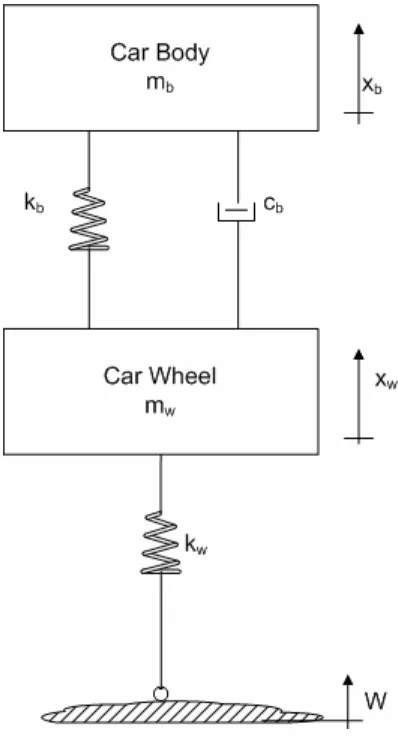
Figure 1.1: The passive suspension system.
3
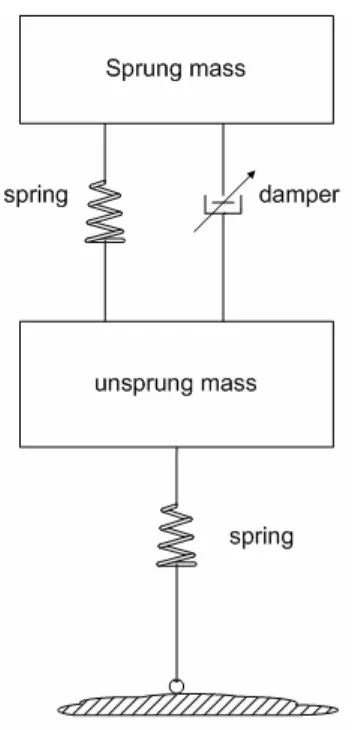
Figure 1.2: The semi-active suspension system
suspension system; namely, body acceleration, suspension travel and wheel deflection. The performance of the system can be further improved by introducing the suitable controller into the active suspension system.
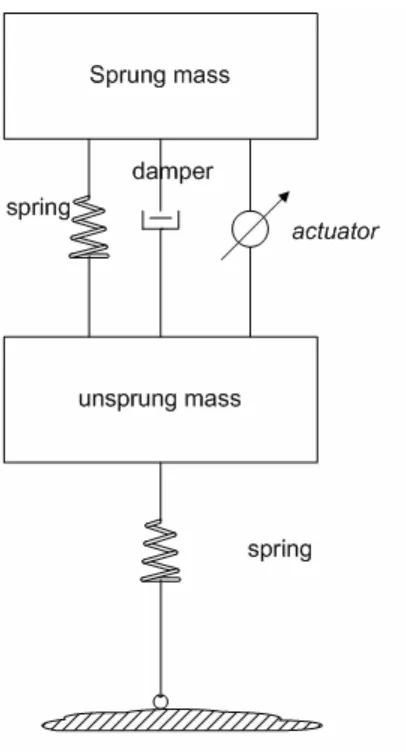
Figure 1.3: The active suspension system
1.2 Active Suspension System Control Strategies
5
observer [9]. The results of the study have demonstrated that active suspension system is more effective in the vibration isolation of the car body is compared with passive system.
The purpose of this study is to utilize the concept of proportional integral sliding mode control in active suspension system [1, 2, 5, 6,] with observer design for road estimator. Therefore, the estimated road disturbance will be another state for the system.
1.3 Objective of study
The objectives of this research are as follows:
I. To develop the mathematical model of quarter car active suspension system with an observer.
II. To design an observer that act as a road profile estimator for the active suspension system.
III. To design a Proportional Integral Sliding Mode Control (PISMC) for the quarter car active suspension system.
IV. To study the performance of the PISMC with a disturbance observer.
1.4 Scope of work
The scopes of work for this study are as follows:
I. Familiarization of a quarter car active suspension system with Proportional-Integral Sliding Mode Controller
II. Mathematical derivation of an observer for a quarter car active suspension system.
III. Design an Observer for a quarter car active suspension system using Sliding Mode Control technique.
IV. Perform a simulation works by using a MATLAB/Simulink to observe effectiveness of the observer.
V. Compare the performance of the proposed PISMC with Observer design with Validate with a Linear Quadratic Regulator (LQR) technique.
1.5 Structure and Layout of Thesis
The necessary components for achieving objective of the study are given in the succeeding chapters. The mathematical modeling of a quarter car is derived in chapter 2. The state space representation of the dynamic model of the passive, semi active and active suspension system are outlined. Finally, various road profiles that represent the uncertainty in the suspension systems will be represented.
7
Chapter 5 represents the computer simulation for the proposed observer and controller. In this chapter, the performance of road handling and ride comfort will be compared with the LQR controller. To assure the robustness of the proposed observer, various road profiles will be applied in the system. The chattering and boundary layer effect of the controller will be presented by varying the parameter in the continuous switching gain.
REFERENCES
[1] Yahaya Md Sam. (2004).“Modeling and Control of Active Suspension System Using PI Sliding Mode control”, Universiti Teknologi Malaysia, PhD Thesis.
[2] Yahaya Md Sam, Johari Halim Shah Osman., and Mohd Ruddin Abd Ghani. ( 2003), “A Class of Proportional Integral Sliding Mode Control with Application to Active Suspension System”, System and Control Letter,pp.217-223
[3] Yahaya Md Sam, Johari Halim Shah Osman., and Mohd Ruddin Abd Ghani. (2002), “A Class Of Sliding Mode Control for Mismatched Uncertain Systems”, Student Conference On Research and Development Proceedings (SCOReD 2002), Shah Alam, Malaysia, pp.31-4.
[4] T. Yoshimura, A. Nakminami, M. Kurimoto And J. Hino. (1999), “Active Suspension of Passenger Cars Using Linear and Fuzzy logic Control”, Control Engineering Practice, pp 41-47
55
[6] T. Yoshimura, S. Matumura, M. Kurimoto and J. Hino. (2002), “Active Suspension System of One-Wheel Car Models Using The Sliding Mode Control with VSS Observer”, International Journal of Vehicle Autonomous Systems, Vol 1, No 1.
[7] Christophe Lauwerys, Jan Swever, Paul Sas, “Robust Linear Control of an Active Suspension System on a Quarter Car Test-rig”, Control Engineering Practice.
[8] S. Ohsaku, T. Nakayama, I. Kamimura, Y. Motozono. (1999), “Nonlinear H∞ Con
trol For Semi-active”, JSAE Review 20, pp. 447-452
[9] Rajesh Rajamani, and J. Karl Hedrick. (1995), “Adaptive Observer for Active Automotive Suspension: Theory and Experiment” IEEE Transactions on Control System Technology, Vol. 3, No 1 March
[10] Christopher Edwards and Sarah K. Spurgeon. (1998), “Sliding Mode Control: Theory and Applications”, London: Taylor & Francis Group Ltd.
[11] Vadim Utkin, Jurgen Guldner, Jingxin Shi. (1999), “Sliding Mode Control in Electromechanical Systems”, Taylor & Francis Group Ltd.
[12] H.D. Taghirad, E. Esmailzadeh. (1995), “ Passenger Ride Comfort Through Observer Based Control” ASME Conference on Mechanical Vibaration and Noise