Available Online atwww.ijcsmc.com
International Journal of Computer Science and Mobile Computing
A Monthly Journal of Computer Science and Information Technology
ISSN 2320–088X
IJCSMC, Vol. 4, Issue. 5, May 2015, pg.804 – 809
RESEARCH ARTICLE
Development of Efficient Signal Pre-Processing
Algorithm for Hybrid BCI
Abhijeet Mallick
1, Deepak Kapgate
21 Department of Computer Science & Engineering, G.H.R.A.E.T, Nagpur University, India 2
Department of Computer Science & Engineering, G.H.R.A.E.T, Nagpur University, India
1 [email protected]; 2 [email protected]
Abstract— In this paper we discuss novel algorithm to develop the hybrid brain-computer interface (hBCI) system using electroencephalogram (EEG) signal. The main idea is to employ effective methods for reducing the number of channels and optimizing feature vectors. The removal unnecessary channels and reducing the feature dimension results in cost decrement, time saving and improves the BCI implementation. This study introduces a new technique for detecting and sorting action potentials (spikes) of neurons from multiunit recordings. This method combines the wavelet transform which is used for localizing distinctive spike features, with super paramagnetic clustering, which is used for automatic classification of the data without the assumptions such as Gaussian distributions or low variance. The focus of this paper is proposing the development of an integrated artifacts removal technique that can automatically discover and remove the artifacts in order to smooth the progress of EEG Assessment.
Keywords— Brain Computer Interface (BCI), Electroencephalogram (EEG), Spikes, Artifacts Removal.
I. INTRODUCTION
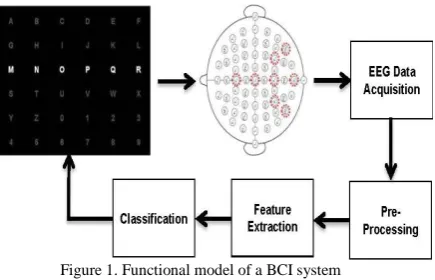
Figure 1. Functional model of a BCI system
Figure 1 depicts the basic functional model of a BCI system. The figure shows a generic BCI system in which a user controls a device such as, a powered wheelchair through series of functional components. In this, the user’s brain activity is used to generate control signals that help to operate the BCI system. The state of the device is monitored by the user to determine the results of his control efforts. A BCI system whether it is invasive or non-invasive is composed of following phases i.e. 1) Signal Acquisition, 2) Signal Pre-Processing, 3) Feature Extraction, 4) Signal Classification and 5) Computer Interaction.[5]
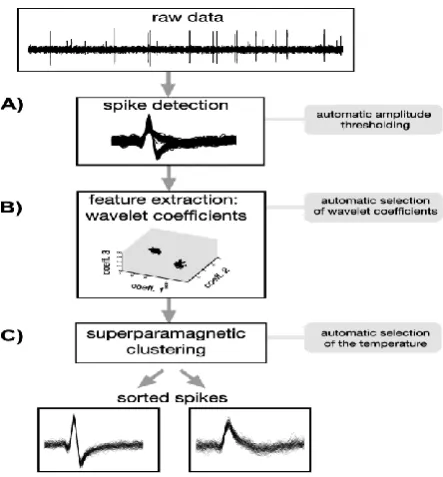
In recent years a large amount of research in neurophysiology is based on the analysis of extracellular potentials recorded with microwires that capture the action potentials (spikes) of neurons in their surroundings. For many applications it is crucial to know which spike correspond to which neuron, namely -spike sorting- and since recent acquisition systems allows the simultaneous recording of hundreds of channels, it is also important to do this automatically (or semi automatically) and fast[15]. In our proposed system of spike classification the basic algorithmic steps are as follows: (1) spike detection, (2) Extracting distinctive features from spike shapes, and (3) clustering of spikes using these features.
This paper conducts comprehensive review of various algorithms for signal pre-processing for BCI’s system. It focuses on data processing, artifact removal, signal pre-processing. This paper is organized as follows: section II depicts theoretical background of signal preprocessing techniques. Section III introduces methods for effective signal preprocessing for effective use and to gain higher accuracy. Section IV gives the results of the experiment and under section V conclusion are included
II. THEORETICAL BACKGROUND
Wavelet Transform: -The wavelet transform (WT) is a time-frequency representation of the signal having two main advantages over the conventional methods: it provides optimal resolution in both the time and frequency domain and it eliminates requirement of the signal stationarity. It is defined as convolution between signal x (t) and wavelet functions ψa,b(t),
WψX(a, b) = (x(t) | ψa,b(t)), (1)
where ψa,b(t) is dilated (contracted), and shifted version of a unique wavelet function ψ(t),
(2)
where the a and b are scale and translation parameters respectively. Equation 1 can be inverted, thus giving reconstruction of x(t). The Wavelet Transform maps the signal represented by one independent variable t onto functions of two independent variables a, b. This procedure is inefficient and redundant for algorithmic implementations and therefore the WT is usually defined at the discrete scales a and the discrete times b by choosing set of parameters {aj = 2−j; bj.k = 2−jk}, with integers j and k.[12] Contracted versions of wavelet
function matches the high-frequency components, while the dilated versions matches the low-frequency components. Then, by correlating the original signal with the wavelet functions of different sizes, we can get details of the signals at several scales. These correlation with different wavelet functions could be arranged in a hierarchical scheme called multi-resolution decomposition. This multi-resolution decomposition algorithm separates signal into details at different scales and the coarser representation of a signal named “approximation”.
K-nearest neighbours. The first step is representing the m selected features of each spike i by point xi in a
m-dimensional phases space. The interaction strengths between the points xi is defined as
(3)
where a is the average nearest-neighbours distance and K represents number of nearest neighbours. In second step, an initial random state s from 1 to q is assigned to each point xi. Then N Monte Carlo iterations is run for
different temperatures T. The main idea is that from a given initial configuration of states s, a xi point is
randomly selected and its state s change to new state snew, randomly chosen between 1 and q. The probability
that the nearest neighbours of xi will also change their state to snew is given by
(4)
where T is the temperature. Note only those nearest neighbours of xi that were in the same previous state s are
the candidates to change their values to snew[17]. Neighbours that changes their values create a “frontier” and
cannot change their values again during the same iterations. Then for each point of frontier, we apply equation 4 again for calculating the probability of changing the state to snew for their respective neighbours. The frontier is
updated, and the update is repeated until the frontier does not changes any more. At that stage, we starts the procedure again from another point and repeat it several times in order to get representative statistics. Points that are relatively close (i.e., corresponding to a given clusters) will change their state together.[18]
III. PROPOSED ALGORITHM
This section presents the proposed algorithm for detecting and sorting spikes, the three stages of the algorithm: (1) spikes are detected automatically via amplitude thresholding; (2) wavelet transform is calculated for each spikes and an optimal coefficients for separating spike classes is automatically selected; (3) the selected wavelet coefficients then serves as the input to the SPC algorithm, and clustering is performed after automatic selection of the temperature corresponding to the super-paramagnetic phase..
Spike Detection: - This is performed by amplitude thresholding after the bandpass filtering of the signal. The threshold (Thr) was automatically set to
(5)
where x is bandpass-filtered signal and σn is an estimate of standard deviation of the background. Then for each
detected spike, 64 samples (i.e., ~2.5 ms) were saved for further analysis. To avoid spike misalignment due to low sampling, spike maxima are determined from the interpolated waveforms of 256 samples using the cubic splines.
Selection of Wavelet Coefficients: - After detecting spikes their wavelet transform is calculated thus providing 64 wavelet coefficients for each spike. The goal is to select a few coefficients that best separates the different spike classes. This selection perform automatically by using the Lilliefors modification of the Kolmogorov-Smirnov (KS) tests for normality. Note that we are interested in deviation from normality as a sign of a multimodal distribution and do not rely on any of the particular distribution of the data. Given a data set x, the test compares cumulative distribution function of data (F(x)) with Gaussian distribution with same mean and variance (G(x)). The deviation from normality is quantified by
(6)
In our implementation, first 10 coefficients with largest deviation from normality are used. The selected set of the wavelet coefficients provides a compressed representation of spike features that serves as input to the clustering algorithm [22].
SPC and Localization of the Super-paramagnetic Phase: - After the selected set of the wavelet coefficients is chosen, we run SPC algorithm for a wide ranges of temperatures spanning the paramagnetic, super-paramagnetic and ferromagnetic phases. In order to localize super-super-paramagnetic phases automatically, a criterion which is based on the cluster sizes are used. The main idea is that for both paramagnetic and ferromagnetic phases the temperature increases can only leads to the creation of the clusters with few members each. Indeed in ferromagnetic phase there is almost no changs when the temperature is increased and in paramagnetic phase (i.e. very high temperature) the clusters breaks down into several small ones. In contrast, in super-paramagnetic phase increasing the temperature will creates new clusters with large number of members
IV.RESULTS
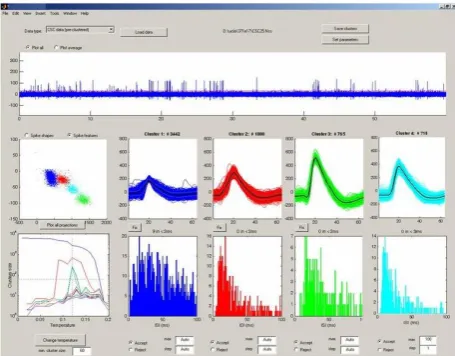
Figure 3. Spike sorting of a recording from the human medial temporal lobe.
V. CONCLUSIONS
A hybrid brain computer interface (hBCI) is a combination of two BCI systems. The hBCI is a communications system that enables humans to control various devices by using control signals generated from electroencephalographic (EEG) activity. Unfortunately the acquired EEG signal consists of unnecessary artifacts and noise hence the role of signal pre-processing is crucial in the development of a BCI system. This paper mostly concentrated on the Pre-processing which is achieved by the use of wavelet transform with super-paramagnetic clustering which allows automatic detection and classification of spikes process. This method improves the quality of separation spikes and artifacts removal. We conclude that the performance of this method is better than other methods and works well in the artifacts cancellation to a wider set of corrupted recordings.
References
[1] G. Bin, X. Gao, B. Hong, Z. Yan and S. Gao, “An online multi-channel SSVEP-based brain-computer interface using a canonical correlation analysis method,” Journal of Neural Engineering, vol. 6, no. 4, Article ID 046002, 2009.
[2] Puneet Mishra, Sunil Kumar Singla ,”Artifact Removal from Biosignal using Fixed Point ICA Algorithm for
Pre-processing in Biometric Recognition”, MEASUREMENT SCIENCE REVIEW, Volume 13, No. 1, 2013
[3] Yuanqing Li, Fei Wang, Jiahui Pan and Zhuliang Yu, “A Hybrid BCI System Combining P300 and SSVEP and Its
Application to Wheelchair Control”, IEEE TRANSACTIONS ON BIOMEDICAL ENGINEERING, VOL. 60,
NO. 11, NOVEMBER 2013
[4] Erwei Yin, Zongtan Zhou, Fanglin Chen, Jun Jiang, Yadong Liu and Dewen Hu “A Speedy Hybrid BCI Spelling
Approach Combining P300 and SSVEP”,IEEE TRANSACTIONS ON BIOMEDICAL ENGINEERING, VOL.
61, NO. 2, FEBRUARY 2014 473
[5] S. G. Mason and G. E. Birch, “A general framework for brain-computer interface design,” IEEE Trans. Neural Syst. Rehabil. Eng., 11: 70-85, 2003.
[6] Y. J. Wang, R. P. Wang, X. R. Gao, B. Hong and S. K. Gao, “A practical VEP-based brain-computer interface,” IEEE Trans. Neural Syst. Rehabil. Eng., 14: 234-239, 2006.
[7] Luis Fernando Nicolas-Alonso and Jaime Gomez-Gil,” Brain Computer Interfaces, a Review,” Sensors 2012, 12, 1211-1279; doi:10.3390/s120201211
[8] Setare Amiri, Reza Fazel-Rezai, and Vahid Asadpour.” A Review of Hybrid Brain-Computer Interface Systems”,
Hindawi Publishing Corporation Advances in Human-Computer Interaction Volume 2013
[10] P.L. Lee, J. J. Sie, Y. J. Liu, C. H. Wu, M. H. Lee, C. H. Shu, P. H. Li, C. W. Sun and K. K. Shyu, “An
SSVEP-actuated brain computer interface using phase-tagged flickering sequences: a cursor system,” Ann. Biomed. Eng.,
38: 2383-2397, 2010.
[11] Z. D. Deng, X. Q. Li, K. H. Zheng and W. T. Yao, “A humanoid robot control system with SSVEP-based
asynchronous brain-computer interface,” Jiqiren/Robot, 33: 129-135, 2011.
[12] G. Garcia-Molina, D. H. Zhu and S. Abtahi, “Phase detection in a visual-evoked-potential based brain computer
interface,” Proc.18thEuropean Signal Processing Conf., 949-953, 2010.
[13] Zongyuan Zhao, Byeong Ho Kang Mir Md Jahangir Kabir, Shuxiang Xu, “Investigation of Multilayer
Perceptron and Class Imbalance Problems for Credit Rating”, International Journal of Computer and Information
Technology ,Volume 03– Issue 04, July 2014.
[14] Minkyu Ahn, Mijin Lee, Jinyoung Choi and Sung Chan Jun, “A Review of Brain-Computer Interface Games and
an Opinion Survey from Researchers, Developers and Users”, Sensors 2014.
[15] Antara Bhattacharya, Dr. N. G. Bawane, S. M. Nirkhi, Brain Computer Interface Using EEG Signals, and Available at: http://www.schalklab.org/sites/default/files/misc/Abrain-computer interface using electrocorticographic signals in humans.pdf.
[16] Mohammed J. Alhaddad, Common Average Reference (CAR) Improves P300 Speller, Int. J. of Engg. and Tech., Vol. 2 No. 3, 2012.
[17] Thomas C Ferree and Ramesh Srinivasan, Theory and Calculation of the Scalp Surface Laplacian, Electrical Geodesics, Inc., August 24, 2000.
[18] Siyi Deng, William Winter, Samuel Thorpe, Ramesh Srinivasan, EEG Surface Laplacian using realistic head geometry, Int. J. of Bioelectromagnetism, Vol. 13, No. 4, pp. 173-177, 2011.
[19] C. Tandonnet, B. Burle, T. Hasbroucq, F. Vidal, Spatial Enhancement of EEG traces by Surface Laplacian Estimation: Comparison between Local and Global Methods, Clinical Neurophysiology 116 (2005) 18–24. [20] Claudio G. Carvalhaes, Patrick Suppes, A Spline Framework for Estimating the EEG Surface Laplacian Using
the Euclidean Metric, Neural Computation 23, 2010.
[21] Dieter Devlaminck, BartWyns, Moritz Grosse-Wentrup,Georges Otte, and Patrick Santens, Multisubject Learning for Common Spatial Patterns in Motor-Imagery BCI, Computational Intell. and Neuroscience Volume 2011. [22] Fabien Lotte and Cuntai Guan, Regularizing Common Spatial Patterns to Improve BCI Designs: Unified Theory
and New Algorithms, IEEE Trans. On Biomedical Engg., Vol. 58, No. 2, 2011.
[23] A Garcés Correa, E Laciar, M E Valentinuzzi, H D Patiño, Artifact removal from EEG signals using adaptive filters in cascade, 16th Argentine Bioengineering Cong. and the 5th Conf. of Clinical Engg., IOP Publishing J. of Physics: Conf. Series 90 (2007).