O R I G I N A L R E S E A R C H
Clinical effectiveness of quercetin
supplementation in the management of weight
loss: a pooled analysis of randomized controlled
trials
This article was published in the following Dove Press journal:
Diabetes, Metabolic Syndrome and Obesity: Targets and Therapy
Haohai Huang1,*
Dan Liao2,*
Yong Dong3
Rong Pu4
1Department of Clinical Pharmacy,
Dongguan Third People’s Hospital,
Affiliated Dongguan Shilong People’s
Hospital of Southern Medical University, Dongguan, Guangdong, People’s Republic
of China;2Department of Gynaecology,
Dongguan Third People’s Hospital,
Affiliated Dongguan Shilong People’s
Hospital of Southern Medical University,
Dongguan, Guangdong, People’s Republic
of China;3Department of Cancer Center,
Dongguan Third People‘s Hospital,
Affiliated Dongguan Shilong People’s
Hospital of Southern Medical University,
Dongguan, Guangdong, People’s Republic
of China;4Department of Clinical
Laboratory, Dongguan Third People’s
Hospital, Affiliated Dongguan Shilong
People‘s Hospital of Southern Medical
University, Dongguan, Guangdong, People’s Republic of China
*These authors contributed equally to this work
Purpose:The previous investigations which considered the possible effect of the quercetin supplementation for overweight and obesity have led to inconsistent results. Here, we aimed to evaluate the effects of quercetin on weight loss using a meta-analysis of randomized controlled clinical trials (RCTs).
Methods: Relevant studies were systematically searched from the MEDLINE, EMBASE, Google Scholar, and Scopus databases. RCTs that investigated the effects of quercetin on weight loss in humans were included for quality assessment, meta-analyses, sensitivity analysis, subgroup analyses, and publication bias assessment. Effect size was expressed as weighted mean difference (WMD) and 95% CI by using a random-effects model. The Grading of Recommendations Assessment, Development and Evaluation (GRADE) metho-dology was used to rate the level of evidence.
Results:Nine RCTs (11 treatment arms) with 525 participants werefinally included for data pooling. Our meta-analysis revealed that daily quercetin supplementation did not signifi -cantly affect the body weight (WMD:−0.35 kg, 95% CI:−2.03, 1.33;P=0.68), body mass index (WMD: −0.04 kg/m2, 95% CI: −0.54, 0.45; P=0.87), waist circumference (WMD:
−0.37 cm, 95% CI: −1.81, 1.06; P=0.61), and waist to hip ratio (WMD:−0.01, 95% CI:
−0.03, 0.01;P=0.48). Subgroup analysis could not identify factors significantly influencing these parameters. These results were robust in sensitivity analysis, and no significant pub-lication bias was found.
Conclusion: The current evidence suggests that quercetin intake did not show a notably favorable effect on weight loss. Future well-designed and long-term clinical trials are required to confirm these results.
Keywords:quercetin, body weight, obesity, overweight, meta-analysis
Introduction
The prevalence of obesity has dramatically increased globally and has nearly tripled since 1975. According to the reports of the World Health Organization, more than
1.9 billion adults were overweight and 650 million were obese in 2016.1It is well
known that obesity is a strong risk factor for type 2 diabetes mellitus, musculoske-letal problems, some cancer, and cardiovascular diseases (eg, hypertension,
athero-sclerosis, heart disease, and stroke).2–4 Furthermore, obesity was associated with
higher disability rates and mortality rates in the elderly. Owing to its fast growth in Correspondence: Haohai Huang
Department of Clinical Pharmacy,
Dongguan Third People’s Hospital,
Affiliated Dongguan Shilong People’s
Hospital of Southern Medical University, No.1, Huangzhou Xianglong Road of Shilong Town, Dongguan, Guangdong
523326, People’s Republic of China
Tel +86 769 8136 8831 Fax +86 769 8136 8802 Email [email protected]
Diabetes, Metabolic Syndrome and Obesity: Targets and Therapy
Dove
press
open access to scientific and medical research
Open Access Full Text Article
Diabetes, Metabolic Syndrome and Obesity: Targets and Therapy downloaded from https://www.dovepress.com/ by 118.70.13.36 on 21-Aug-2020
prevalence, complications, burden on the economy, obe-sity has become a major public health threat in most developed countries and developing countries. A large
body of evidence has shown that a weight loss of 5–10%
reduces the risk of diabetes and cardiovascular disease.5,6
The optimal management of the individual with or at high risk of overweight/obesity requires the weight reduction of 10% to achieve recommended goal established by the
National Institutes of Health.7 Treatment of obesity
includes conventional treatments, such as diet, exercise,
lifestyle modification as well as medications and bariatric
surgery.8Lifestyle modification particularly adherence to
a healthy diet and physical activity are regarded as impor-tant not only for the prevention but also for the treatment of the chronic disease. It is revealed that adherence to healthy dietary patterns which contain alpha-lipoic acid, low-carbohydrate diets, very-low-energy diets, and func-tional food supplementation might improve the
manage-ment of weight loss.9–12
Quercetin, the most abundant of the flavonoids, is
mainly identified in apples, capers, cocoa powder, berries,
red grapes, red wine, citrus fruits, and onion peel,13and it
has been widely investigated for its anti-inflammatory,
anti-hypertension, anti-hyperglycemia, anticoagulant, and
the improvement of lipid metabolism disorders effects.14,15
Experimental and a series of the clinical trial have been conducted to assess the anti-obesity properties of querce-tin. Results from randomized controlled clinical trials (RCTs) suggested that quercetin supplementation might
beneficially affect weight loss; however, as other
publica-tions could not replicate the same results. Given the amount of accumulated data, we, therefore, conducted a comprehensive meta-analysis of RCTs to provide a more precise estimate of the overall effects and safety of quercetin supplementation on weight loss in humans.
Material and methods
Search strategy
A systematic literature search was performed in MEDLINE, EMBASE, Google Scholar, and Scopus databases from their
inception to August 2018. The following search terms“
quer-cetin” were used in titles and abstracts to find the related
studies. No restrictions on the language, publication date, or
other filters were applied. Bibliographies of the selected
studies and relevant reviews were also checked. This process was performed iteratively until no additional articles could be
identified.
Eligibility criteria
Studies were included if they met all of the following inclusion criteria: a) Population: adult participants (healthy or otherwise); b) Intervention: investigated quercetin or standardized quercetin enriched extracts as a stand-alone
intervention for≥2 weeks; c) Comparators: placebo or no
interventions were used; d) Outcomes: including body weight, body mass index (BMI), waist circumference (WC), and waist to hip ratio (WHR); and e) Study design: each study was an RCT with either a parallel or crossover
design. Tofind the eligible studies, all titles and abstracts
were independently screened by two authors (HH and DL). When the titles/abstracts were inconclusive, the
full-texts were evaluated. Furthermore, studies identified from
reference lists of the related literatures were added. A third reviewer (YD) rechecked the retrieved articles to ensure that they meet the inclusion criteria.
Data extraction
Two authors (DL and YD) independently extracted the data, crosschecked and reached a consensus on all items, and the
third author (YD) made thefinal decision in case of
disagree-ments. The following data were extracted from studies
included in the present review: surname of thefirst author,
publication year, the country in which the study was per-formed, study design, sample size, sex and mean age of the participants, the levels of baseline body weight, follow-up duration, details of the strategy administered to the interven-tion and the control groups, and the study outcomes. Extracted data were entered into a standardized Excel
(Microsoft Corporation)file.
Risk of bias assessment
The quality assessment in individual RCTs was assessed
using the Cochrane collaboration’s tool.16Random sequence
generation, allocation concealment, blinding of the partici-pant and outcome data, incomplete outcome data, and selec-tive reporting were used to evaluate the quality of studies.
The risk of bias in each study was rated as“low”,“high”, or
“unclear”regarding each domain.
Statistical analysis
The mean change and standard deviation (SD) in outcome variables for the quercetin and control groups were extracted from the included studies. If the SD was not provided directly, we calculated them from standard error mean or
95% confidence interval (CI) with the equations listed in the
Huang et al Dovepress
Diabetes, Metabolic Syndrome and Obesity: Targets and Therapy downloaded from https://www.dovepress.com/ by 118.70.13.36 on 21-Aug-2020
Cochrane handbook. To calculate the pooled effect sizes, a random effects model was used to compute the weighted mean differences (WMDs) and their corresponding 95% CI. The between-study statistical heterogeneity was assessed
with the I2 statistic. For the I2 statistic, I2 values ˂25%,
˂50%,≤75%, and˃75% indicated no, little, moderate, and
significant heterogeneity, respectively.17Sensitivity analysis
was performed to evaluate the potential bias and robustness of the overall effect estimate by omitting one study at a time. Subgroup analysis was conducted to determine possible sources of heterogeneity, including types of study design
(parallel or crossover design), quercetin dose (≤100 mg/d
or ˃100 mg/d), type of intervention (quercetin capsules/
tablets or quercetin-rich onion peel extract capsules), gender
(male or female or mix), baseline BMI levels (≥25 kg/m2or
˂25 kg/m2), and intervention duration (≥8 weeks or ˂8
weeks). As potential confounders of treatment effects, dosage and duration of supplementation with quercetin were applied by the unrestricted maximum likelihood method-based meta-regression analysis to explore their asso-ciation with the overall estimated effect size in body weight
and BMI. To check the publication bias, funnel plot and
Egger’s weighted regression statistics were assessed.18 We
performed all analysis using the STATA software (version 12.0, Stata Corp, College Station, TX), and statistically
significant was defined asP-values ˂0.05 as with the use
of a two-sided test unless otherwise specified.
Results
Literature search and study
characteristics
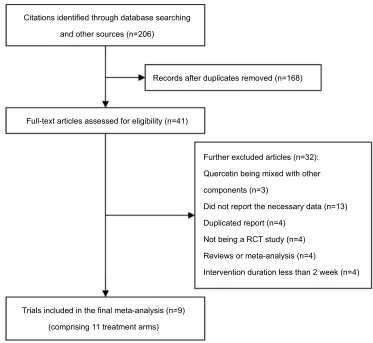
Figure 1 shows the details of our literature research and study
selection. Briefly, 196 articles were recorded from the
elec-tronic database search, and 155 publications were remained after the duplicates were removed. These studies were screened by reading their title and abstract and 20 relevant full-texts were selected for further consideration. Finally, nine RCTs with eleven treatment arms met the eligibility
criteria and were included in the present meta-analysis.19–27
The characteristics of the included studies are demon-strated in Table 1. In total, 525 participants were allocated
Citations identified through database searching
and other sources (n=206)
Records after duplicates removed (n=168)
Full-text articles assessed for eligibility (n=41)
Further excluded articles (n=32):
Quercetin being mixed with other
components (n=3)
Did not report the necessary data (n=13)
Duplicated report (n=4)
Not being a RCT study (n=4)
Reviews or meta-analysis (n=4)
Intervention duration less than 2 week (n=4)
Trials included in the final meta-analysis (n=9)
(comprising 11 treatment arms)
Figure 1Preferred reporting items for systematic reviews and meta-analysesflow diagram of study selection.
Diabetes, Metabolic Syndrome and Obesity: Targets and Therapy downloaded from https://www.dovepress.com/ by 118.70.13.36 on 21-Aug-2020
to quercetin and control group in the selected studies. The number of participants in these trials ranged from 39 to 86. The eligible articles were published ranged from 2011 to 2017, and were carried out in Korea, USA, Iran, and Germany. The mean age of participants in each trial ran-ged from 29.5 to 59.4 years, and the mean BMI ranran-ged
from 24.8 to 29.1 kg/m2. The dose of quercetin used varied
from 100 to 1,000 mg/day. Five trials were used
quercetin-rich onion peel extract capsules,19–22,26 and four trials
were used quercetin capsules or tablets.23–25,27 The range
of supplementation periods with quercetin was from 2 weeks to 12 weeks. All trials were randomized, double-blinded, placebo-controlled trials with six trials utilizing a parallel design and three trials utilizing a crossover
design.22,23,25Moreover, the baseline health status of
par-ticipants was as follows: overweight and obese subjects, healthy participants, hypertensive subjects, patient with polycystic ovary syndrome.
Assessment of the risk of bias
All studies were low risk in at least three domains of the
Cochrane collaboration’s tool for assessing the risk of bias
and were classified as good quality. Among the included
studies, only three studies provided adequate random
sequence generation.21,26,27 All of the included studies
achieved were low risk in incomplete outcome data, selec-tive reporting, and other sources of bias. Blinding of partici-pants and personnel and blinding of outcome assessment was explained in the included studies. The detailed results for the assessment of the included articles are provided in Table 2.
Meta-analysis
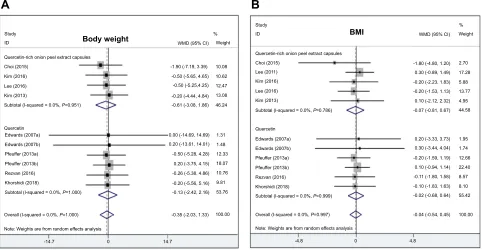
Body weight and BMI change. Eight studies (ten treatment arms) with 433 participants assessed the effect of the quer-cetin on body weight. The overall results demonstrated that
quercetin consumption had no significant effect on body
weight (WMD =−0.35 kg, 95% CI: −2.03, 1.33,P=0.68),
and there was no evidence of between-study heterogeneity
(I2=0%). Eleven treatment arms (including 525 participants)
evaluated the effect of quercetin on BMI and were included
for pooling. The analysis showed that no significant change
was detected for the BMI outcome in participants who followed the quercetin supplementation when compared to
the controls (WMD=−0.04 kg/m2, 95% CI: −0.54, 0.45,
P=0.87), and no heterogeneity was observed between
included studies (I2=0%). Figure 2 represents the forest
plot of these results.
WC and WHR change. Two eligible studies reported data on WHR. The meta-analysis revealed that the consumption
of quercetin did not significantly influence the WHR
(WMD, −0.01, 95% CI, −0.03 to 0.01; P=0.48, I2=58%).
Five studies including a total of 328 participants reported WC as an outcome measure. Overall results from the ran-dom-effects model indicated that quercetin consumption
resulted in the non-significant reduction in WC (WMD,
−0.37 cm, 95% CI,−1.81 to 1.06;P=0.61,I2=0%).
Sensitivity analysis and publication bias
In the sensitivity analysis, we found no significant
differ-ence between the pre- and post-sensitivity pooled WMDs
for the weight loss, with a WMD range from −0.47 kg
(95% CI, −2.33 to 1.38) to –0.18 kg (95% CI, −1.95 to
1.59). Similarly, the pooled effect estimates on BMI did not change substantially after leave-one-out sensitivity
analyses, with a WMD range from −0.11 kg/m2 (95%
CI,−0.66 to−0.43) to 0.01 kg/m2(95% CI,−0.49 to 0.51).
Egger’s test suggested that no significant publication
bias for meta-analyses of assessing the effect of quercetin
on weight loss (P=0.677) and BMI (P=0.410). Similarly,
the publication bias was also confirmed by visual
inspec-tion of the funnel plots which showed no substantial asymmetry (Figure 3).
Subgroup analysis
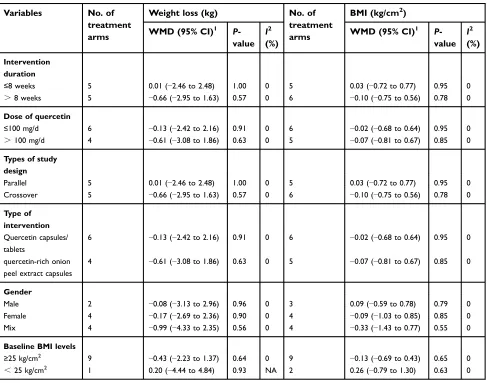
Complete subgroup results of body weight and BMI changes
are shown in Table 3. There were no statistically significant
differences in the pooled effects of quercetin on body weight
in the subgroups stratified by types of study design (parallel
or crossover design), quercetin dose (≤100 mg/d or˃100 mg/
d), type of intervention (quercetin capsules/tablets or querce-tin-rich onion peel extract capsules), gender (male or female
or mix), baseline BMI levels (≥25 kg/m2or˂25 kg/m2), and
intervention duration (≥8 weeks or˂8 weeks). Similarly, the
subgroup analyses indicated that differences in types of study design, quercetin dose, type of intervention, and intervention
duration did not appear to significantly influence pooled
mean differences in BMI levels. No significant heterogeneity
was detected in the subgroup analysis.
Meta-regression
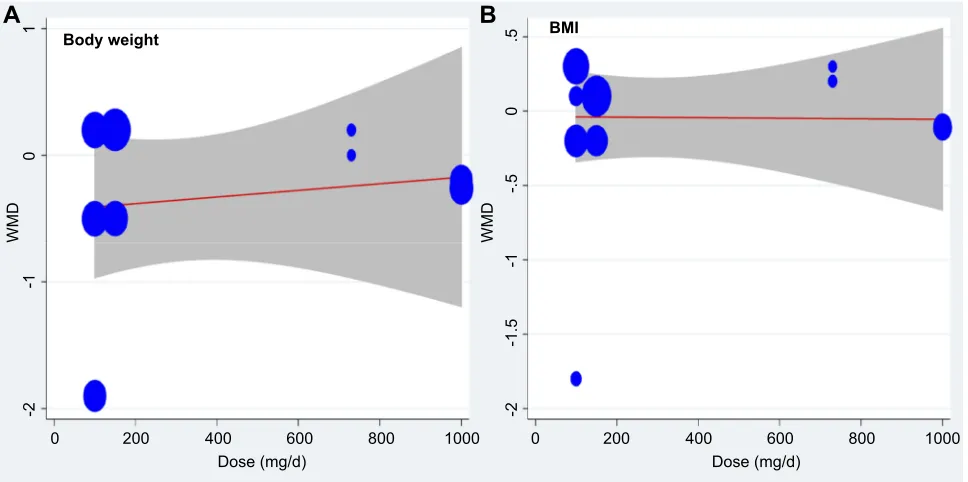
Since quercetin was administered with different durations and dose among the included trials, random-effect meta-regression analyses were performed to evaluate the associa-tion between the potential effects of quercetin and dose and duration of supplementation as potential moderator variables.
The meta-regression results did not indicate any significant
association between duration of supplementation and impact
of quercetin on body weight (coefficient, −0.09; 95% CI,
−0.66 to 0.47;P=0.711) and BMI (coefficient,−0.04; 95%
CI,−0.26 to 0.17;P=0.644) (Figure 4). Similarly, as shown in
Huang et al Dovepress
Diabetes, Metabolic Syndrome and Obesity: Targets and Therapy downloaded from https://www.dovepress.com/ by 118.70.13.36 on 21-Aug-2020
T able 1 Characteristics of the included studies Refer ence (Y ears of publication) Study design Location Sample siz e Gender (M/F) P opulation characteristics Mean ag e BMI (kg/m 2) Inter v ention
Dose (mg/ da
y)
Duration (we
ek)
Baseline body weight
(kg)
Outcomes of measure
s Inter v ention Gr oup Contr ol Gr oup Lee et al (2016) R, DB, PC , P K or ea 72 11/61 Ov erwei ght and obese subjects 43.25 26.55 Quer cetin-rich onion peel extract capsules Placebo 100 12 69.7±10.47 Body w eight, BMI, WC Lee et al (2011) R, DB, PC , P K or ea 92 92/0 Health y male smok ers 44.25 24.8 Quer cetin-rich onion peel extract capsules Placebo 100 10 NA BMI, WC Kim et al (2016) R, DB, PC , P K or ea 37 0/37 Health y obese participants 45.00 26.3 Quer cetin-rich onion peel extract capsules Placebo 100 12 66.55±8.26 Body w eight, BMI, WC Kim et al (2013) R, DB, PC , C K or ea 12 0/12 Health y normal-weig ht w omen 20 – 25 20.2 Quer cetin-rich onion peel extract capsules Placebo 100 2 52.8±5.71 Body w eight, BMI, WHR Edwar ds et al (2007) R, DB, PC , C USA 41 26/15 Hypertensive Subjects 48.50 29.55 Quer cetin tablet Placebo 730 4 90.15±4.91 Body w eight, BMI Rezvan et al (2016) R, DB, PC , P Iran 82 0/82 Patient with P olycystic Ovar y Syndr ome 29.72 28.96 Quer cetin capsules Placebo 1,000 12 75.67±11.81 Body w eight, BMI, WHR Pfeuffer et al (2013) R, DB, PC , C German y 49 49/0 Health y male subjects with APOE genotype 3/3, 3/4 and 4/4 59.40 26.3 Quer cetin deh y-drate capsules Placebo 150 8 84.9±7.70 Body w eight, BMI, WC Choi et al (2015) R, DB, PC , P K or ea 62 11/51 Health y ov erwei ght and obese individuals 43.05 26.6 Quer cetin-rich onion peel extract capsules Placebo 100 12 70.05±10.74 Body w eight, BMI Khorshidi et al (2018) R, DB, PC , P Iran 78 0/78 Ov erwei ght or obese wom en with polycystic ovar y syndr ome 29.50 29.1 Quer cetin capsules Placebo 1,000 12 75.95±12.05 Body w eight, BMI, WC Abbre viations: BMI, body mass index; C , cr ossov er ; F, female; M, male; NA, Not applicable; PC , placebo-contr olled; P, parallel; R, randomized; WC , waist cir cumfer e nce; WHR, waist to hip ratio .
Diabetes, Metabolic Syndrome and Obesity: Targets and Therapy downloaded from https://www.dovepress.com/ by 118.70.13.36 on 21-Aug-2020
Table 2Quality assessment of the included studiesa Study ID/Year Random sequence generation Allocation concealment
Blinding of par-ticipants and personnel Blinding of outcome assessment Incomplete outcome data Selective reporting Other sources of bias Lee (2016)
U U L L L L L
Lee (2011)
U U L L L L L
Kim (2016)
L L L L L L L
Kim (2013)
U U L L L L L
Edwards (2007)
U U L L U L L
Rezvan (2016)
U U L L L L L
Pfeuffer (2013)
U U L L L L L
Choi (2015)
L L L L L L L
Khorshidi (2018)
L L L L L L L
Note:a
In all eligible studies, criteria defined for quality assessment are based on the Cochrane guidelines.
Abbreviations:L, low risk of bias; U, unclear or unrevealed risk of bias.
Study ID
Quercetin-rich onion peel extract capsules
Choi (2015) -1.90 (-7.19, 3.39) WMD (95% CI) Body weight %Weight
Study
ID BMI WMD (95% CI)
% Weight
10.08 -1.80 (-4.80, 1.20)
0.30 (-0.89, 1.49) -0.20 (-2.23, 1.83) -0.20 (-1.53, 1.13) 0.10 (-2.12, 2.32) -0.07 (-0.81, 0.67)
2.70
0.20 (-3.33, 3.73) 0.30 (-3.44, 4.04) -0.20 (-1.59, 1.19) 0.10 (-0.94, 1.14) -0.11 (-1.80, 1.58) -0.10 (-1.83, 1.63) -0.02 (-0.68, 0.64)
-0.04 (-0.54, 0.45) 1.95 1.74 12.66 22.40 8.57 8.10 55.42 100.00 17.28 5.88 13.77 4.95 44.58 10.62 12.47 13.08 46.24 -0.50 (-5.65, 4.65)
-0.50 (-5.25,4.25) -0.20 (-4.44, 4.84) -0.61 (-3.08, 1.86)
1.31 1.48 12.33 18.07 10.76 9.81 53.76 100.00 0.00 (-14.69, 14.69) 0.20 (-13.61, 14.01) -0.50 (-5.28, 4.28) 0.20 (-3.75, 4.15) -0.26 (-5.38. 4.86) -0.20 (-5.56, 5.16) -0.13 (-2.42, 2.16)
-0.35 (-2.03, 1.33) Kim (2016)
Kim (2013)
Subtotal (I-squared = 0.0%, P=0.951)
Quercetin Edwards (2007a) Edwards (2007b) Pfeuffer (2013a) Pfeuffer (2013b) Rezvan (2016) Khorshidi (2018)
Subtotal (I-squared = 0.0%, P=1.000)
Overall (I-squared = 0.0%, P=1.000)
Note: Weights are from random effects analysis
-14.7 0 14.7 -4.8 0 4.8
Lee (2016)
Quercetin-rich onion peel extract capsules Choi (2015)
Kim (2016)
Kim (2013)
Subtotal (I-squared = 0.0%, P=0.786)
Quercetin Edwards (2007a) Edwards (2007b) Pfeuffer (2013a) Pfeuffer (2013b) Rezvan (2016) Khorshidi (2018)
Subtotal (I-squared = 0.0%, P=0.999)
Overall (I-squared = 0.0%, P=0.997)
Note: Weights are from random effects analysis Lee (2016)
Lee (2011)
A
B
Study ID
Quercetin-rich onion peel extract capsules
Choi (2015) -1.90 (-7.19, 3.39) WMD (95% CI) Body weight %Weight
Study
ID BMI WMD (95% CI)
% Weight
10.08 -1.80 (-4.80, 1.20)
0.30 (-0.89, 1.49) -0.20 (-2.23, 1.83) -0.20 (-1.53, 1.13) 0.10 (-2.12, 2.32) -0.07 (-0.81, 0.67)
2.70
0.20 (-3.33, 3.73) 0.30 (-3.44, 4.04) -0.20 (-1.59, 1.19) 0.10 (-0.94, 1.14) -0.11 (-1.80, 1.58) -0.10 (-1.83, 1.63) -0.02 (-0.68, 0.64)
-0.04 (-0.54, 0.45) 1.95 1.74 12.66 22.40 8.57 8.10 55.42 100.00 17.28 5.88 13.77 4.95 44.58 10.62 12.47 13.08 46.24 -0.50 (-5.65, 4.65)
-0.50 (-5.25,4.25) -0.20 (-4.44, 4.84) -0.61 (-3.08, 1.86)
1.31 1.48 12.33 18.07 10.76 9.81 53.76 100.00 0.00 (-14.69, 14.69) 0.20 (-13.61, 14.01) -0.50 (-5.28, 4.28) 0.20 (-3.75, 4.15) -0.26 (-5.38. 4.86) -0.20 (-5.56, 5.16) -0.13 (-2.42, 2.16)
-0.35 (-2.03, 1.33) Kim (2016)
Kim (2013)
Subtotal (I-squared = 0.0%, P=0.951)
Quercetin Edwards (2007a) Edwards (2007b) Pfeuffer (2013a) Pfeuffer (2013b) Rezvan (2016) Khorshidi (2018)
Subtotal (I-squared = 0.0%, P=1.000)
Overall (I-squared = 0.0%,P=1.000)
Note: Weights are from random effects analysis
-14.7 0 14.7 -4.8 0 4.8
Lee (2016)
Quercetin-rich onion peel extract capsules Choi (2015)
Kim (2016)
Kim (2013)
Subtotal (I-squared = 0.0%,P=0.786)
Quercetin Edwards (2007a) Edwards (2007b) Pfeuffer (2013a) Pfeuffer (2013b) Rezvan (2016) Khorshidi (2018)
Subtotal (I-squared = 0.0%,P=0.999)
Overall (I-squared = 0.0%,P=0.997)
Note: Weights are from random effects analysis Lee (2016)
Lee (2011)
Figure 2Meta-analysis of the efficacy of quercetin on body weight (A) and BMI (B) change compared with control.
Abbreviations:BMI, body mass index; WMDs, weighted mean differences.
Huang et al Dovepress
Diabetes, Metabolic Syndrome and Obesity: Targets and Therapy downloaded from https://www.dovepress.com/ by 118.70.13.36 on 21-Aug-2020
Figure 5, there was no association between the amount of quercetin consumed per day and respective changes in body
weight (coefficient, −0.0003; 95% CI, −0.005 to 0.005;
P=0.915) and BMI (coefficient,−0.0001; 95% CI,−0.0017
to 0.0027;P=0.981).
GRADE pro
fi
le evidence evaluation
The GRADE Working Group grade levels of evidence are of high quality for levels of body weight, BMI, and WC; and of moderate quality for WHR.
Discussion
The increasing prevalence of overweight and obesity has led to a global public health problem. Identifying effective long-term treatment strategies for overweight and obesity is of paramount importance. The crucial role of oxidative stress in the initiation and progression of obesity leads to the hypothesis that antioxidants can be used as therapeutic agents
for obesity treatment.28Quercetin is the most common dietary
antioxidants widely distributed in vegetables, fruits, tea, and wine. Experimental and limited clinical trial evidence
sup-ports that quercetin has potential benefit functions on obesity
treatment through different molecular pathways. Research suggested that quercetin-induced lipolysis of adipocytes in a dose- and time-dependent manner by increasing cyclic adenosine monophosphate levels and hormone-sensitive lipase activity. Moreover, quercetin also can inhibit adipogen-esis by decreasing gene expression levels of the key
adipogenic factors peroxisome proliferator-activated receptor
γand CCAAT/enhancer binding proteinα.29Later reports
have shown that quercetin works to block adipogenesis actions through stimulating the MAPK signal pathway. At the same time, quercetin induced the apoptosis of mature adipocytes by controlling the important ERK and JNK
pathways.30 Finally, quercetin is beneficial in controlling
weight loss by ameliorating the expression of markers of
oxidative stress and inflammation, such as nuclear factor
kappa B, nuclear factor-related factor 2, and heme
oxygenase-1.30,31
However, findings of available RCTs are conflicting.
The purpose of the present study was to assess the efficacy
of quercetin as a weight-loss supplement by conducting a systematic review and meta-analysis of RCTs. A total of
nine trials (eleven treatment arms) were included, ourfi
nd-ings demonstrate that quercetin intake did not lead to any
significant changes in body weight, BMI, WC, or WHR in
comparison with control group. TheI2values suggest that
there is no significant heterogeneity amongst the studies.
The quality of original studies was checked according to
PRISMA statement and most of the studies fulfilled all
components. The Egger’s regression test’s symmetry testing
of the funnel plot did not indicate a notable publication bias for the overall effect estimation of WMDs in the primary outcomes. The results remain robust and consistent when
pre-specified defined subgroup analyses were conducted.
Our meta-regression analysis did not indicate any
Funnel plot with pseudo 95% confidence limits
Body weight
0
2
4
se (WMD)
6
8
-20 -10 0
WMD
10 20
Funnel plot with pseudo 95% confidence limits
BMI
0
.5
1
se (WMD)
1. 5
2
-4 -2 0
WMD
2 4
A
B
Figure 3Funnel plot of effect size of body weight (A) or BMI (B) change s between the acupuncture and control groups.
Abbreviations:BMI, body mass index; WMDs, weighted mean differences.
Diabetes, Metabolic Syndrome and Obesity: Targets and Therapy downloaded from https://www.dovepress.com/ by 118.70.13.36 on 21-Aug-2020
significant association between duration of administration/ dose of quercetin and impact of quercetin body weight and BMI. Finally, sensitivity analyses based on the exclusion of any single study did not materially alter the pooled results. Quercetin treatment was well tolerated, and no drug-related adverse reactions were reported among the eligible trials during the follow-up period.
Previous studies have suggested that weight reduction from quercetin can be time and dose-dependent. Studies in our meta-analysis explored various doses of quercetin
intervention (100–1,000 mg/day) and different
interven-tion durainterven-tions (2–12 weeks). Such variation in doses and
duration creates uncertainty about the anti-obesity effec-tive of quercetin. We, therefore, performed a random-effect meta-regression analysis to evaluate the association between the potential effects of quercetin and dose and
duration of supplementation as potential moderator
vari-ables. The findings from our dose–response graphs seem
to suggest that the effects of quercetin on body weight and BMI are unrelated to dosage and intervention durations. These factors prevent us from being certain about the
efficacy of quercetin as a weight-reducing agent.
Body weight and BMI were two variables that were considered as for assessing weight loss of the participants.
The waist–hip ratio, which evaluates the degree of visceral
(major risk factor for metabolic disorders) vs subcutaneous (benign to metabolic disorders) adiposity, is one of the most common and standard protocols for measuring the
health of obese subjects.32In our present study, we failed
tofind any statistically significant differences between the
relation between dietary quercetin supplementation and
reductions in WHR (WMD: −0.01, 95% CI: −0.03 to
Table 3Subgroup analyses of body weight and body mass index stratified by previously defined study characteristics
Variables No. of
treatment arms
Weight loss (kg) No. of
treatment arms
BMI (kg/cm2)
WMD (95% CI)1 P -value
I2 (%)
WMD (95% CI)1 P -value
I2 (%)
Intervention duration
≤8 weeks 5 0.01 (−2.46 to 2.48) 1.00 0 5 0.03 (−0.72 to 0.77) 0.95 0
>8 weeks 5 −0.66 (−2.95 to 1.63) 0.57 0 6 −0.10 (−0.75 to 0.56) 0.78 0
Dose of quercetin
≤100 mg/d 6 −0.13 (−2.42 to 2.16) 0.91 0 6 −0.02 (−0.68 to 0.64) 0.95 0
>100 mg/d 4 −0.61 (−3.08 to 1.86) 0.63 0 5 −0.07 (−0.81 to 0.67) 0.85 0
Types of study design
Parallel 5 0.01 (−2.46 to 2.48) 1.00 0 5 0.03 (−0.72 to 0.77) 0.95 0
Crossover 5 −0.66 (−2.95 to 1.63) 0.57 0 6 −0.10 (−0.75 to 0.56) 0.78 0
Type of intervention Quercetin capsules/ tablets
6 −0.13 (−2.42 to 2.16) 0.91 0 6 −0.02 (−0.68 to 0.64) 0.95 0
quercetin-rich onion peel extract capsules
4 −0.61 (−3.08 to 1.86) 0.63 0 5 −0.07 (−0.81 to 0.67) 0.85 0
Gender
Male 2 −0.08 (−3.13 to 2.96) 0.96 0 3 0.09 (−0.59 to 0.78) 0.79 0
Female 4 −0.17 (−2.69 to 2.36) 0.90 0 4 −0.09 (−1.03 to 0.85) 0.85 0
Mix 4 −0.99 (−4.33 to 2.35) 0.56 0 4 −0.33 (−1.43 to 0.77) 0.55 0
Baseline BMI levels
≥25 kg/cm2 9 −0.43 (−2.23 to 1.37) 0.64 0 9 −0.13 (−0.69 to 0.43) 0.65 0
<25 kg/cm2 1 0.20 (−4.44 to 4.84) 0.93 NA 2 0.26 (−0.79 to 1.30) 0.63 0
Abbreviations:BMI, body mass index; WMDs, weighted mean differences; NA, not applicable.
Huang et al Dovepress
Diabetes, Metabolic Syndrome and Obesity: Targets and Therapy downloaded from https://www.dovepress.com/ by 118.70.13.36 on 21-Aug-2020
0.01;P=0.48). However, these results are inconclusive and should be interpreted cautiously because of the limited number of RCTs (only two studies) regarding the effect of quercetin interventions on the measure of WHR; further
large-scale, well-designed RCTs on this topic are urgently needed.
This is thefirst systematic review and meta-analysis
of RCTs investigating the effect of quercetin
BMI
WMD
2
-2
-1
0
1
4 6 8 10 12
Duration (weeks)
Body weight
WMD
2
-2
-1
0
2
1
4 6 8 10 12
Duration (weeks)
A
B
Figure 4Meta-regression plots of the association between mean changes in body weight (A) and BMI (B) and duration of supplementation with quercetin. The size of each
circle is inversely proportional to the variance of change.
Abbreviations:BMI, body mass index; WMDs, weighted mean differences.
BMI Body weight
WMD WMD
0 200 400 600 800 1000
-2 -2
-1.5
-1
-.5
0
.5
-1
0
1
Dose (mg/d)
0 200 400 600 800 1000
Dose (mg/d)
A
B
Figure 5Meta-regression plots of the association between mean changes in body weight (A) and BMI (B) and dose of supplementation with quercetin. The size of each
circle is inversely proportional to the variance of change.
Abbreviations:BMI, body mass index; WMDs, weighted mean differences.
Diabetes, Metabolic Syndrome and Obesity: Targets and Therapy downloaded from https://www.dovepress.com/ by 118.70.13.36 on 21-Aug-2020
supplementation on weight, BMI, WC, and WHR. We employed a robust search strategy, and the nine trials included in this review were of moderate quality; this is corroborated by the low heterogeneity observed for the majority of the meta-analyses. We also used the GRADE criteria to rate the strength of the overall body of evidence. Most of our sensitivity and subgroup ana-lyses were also consistent with our overall anaana-lyses, which add robustness to our main results. Our negative
findings suggest that unpublished studies (which also
tend to be negative) would be very unlikely to alter our conclusions. We found no evidence for publication bias from the funnel plots. The limitations of our study need to be acknowledged in interpreting the current results. Firstly, because the effect of quercetin on body weight was not the primary endpoint in most of the studies
included here, and the null findings of secondary
out-comes may not always have been published; future clinical trials evaluating the impact of quercetin on weight loss as the primary outcome are mandatory to
obtain robust evidence in this field. Secondly, the
num-ber of studies included in the meta-analyses of the effects of quercetin on WC and WHR were low, thus meaning that these results should be interpreted with caution; further large-scale and well-performed studies that report a more comprehensive set of indicators for weight loss, such as body weight, BMI, body fat, WC, body mass, percent body fat, WHR, are needed. Thirdly, the results of most studies were not adjusted for confounding factors which can affect the weight reduction. Finally, the intervention durations of the included studies were relatively short (ranging from 2 to 12 weeks), and the more long-term durability of the quercetin treatment, therefore, is unknown. Research that considers many aspects of weight control such as satiety hormones, fatty acid metabolism, mitochondrial biogenesis, thermogenesis, and molecular metabolic pathways are needed.
Conclusion
In conclusion, quercetin intake did not show notably favor-able effects on improvements in body weight, BMI, WC, and WHR. The current evidence suggests that daily quer-cetin supplementation is not recommended as a potential therapeutic strategy in weight loss. Future well-reported RCTs according to standardized intervention protocol should be of adequate sample size and duration.
Acknowledgments
This work was supported by the Traditional Medicine Research Program of Guangdong Province (No. 20181270).
Disclosure
The authors report no conflicts of interest in this work.
References
1. World Health Organization. Obesity and overweight. 2018. Available from: https://www.who.int/news-room/fact-sheets/detail/obesity-and-overweight. Accessed February 16, 2018.
2. Kopelman P. Health risks associated with overweight and obesity.Obes Rev. 2007;8(Suppl 1):13–17. doi:10.1111/j.1467-789X.2007.00311.x 3. Berenbaum F, Eymard F, Houard X. Osteoarthritis, inflammation and
obesity. Curr Opin Rheumatol. 2013;25(1):114–118. doi:10.1097/ BOR.0b013e32835a9414
4. Dixon JB. The effect of obesity on health outcomes. Mol Cell Endocrinol. 2010;316(2):104–108. doi:10.1016/j.mce.2009.07.008 5. Wing RR, Lang W, Wadden TA, et al. Benefits of modest weight loss
in improving cardiovascular risk factors in overweight and obese individuals with type 2 diabetes. Diabetes Care. 2011;34 (7):1481–1486. doi:10.2337/dc10-2415
6. Van Gaal LF, Mertens IL, Ballaux D. What is the relationship between risk factor reduction and degree of weight loss?Eur Heart J. 2005;Suppl, 7S:21–26. doi:10.1093/eurheartj/sui082
7. Padwal RS, Majumdar SR. Drug treatments for obesity: orlistat, sibutramine, and rimonabant. Lancet. 2007;369(9555):71–77. doi:10.1016/S0140-6736(07)60033-6
8. Alfadda AA, Al-Dhwayan MM, Alharbi AA, et al. The Saudi clinical practice guideline for the management of overweight and obesity in adults. Saudi Med J. 2016;37(10):1151–1162. doi:10.15537/smj.2016.10.14353 9. Kucukgoncu S, Zhou E, Lucas KB, Tek C. Alpha-lipoic acid (ALA)
as a supplementation for weight loss: results from a meta-analysis of randomized controlled trials. Obes Rev. 2017;18(5):594–601. doi:10.1111/obr.12528
10. Churuangsuk C, Kherouf M, Combet E, Lean M. Low-carbohydrate diets for overweight and obesity: a systematic review of the systematic reviews.Obes Rev. 2018;19(12):1700–1718. doi:10.1111/obr.12744 11. Li P, Fan C, Lu Y, Qi K. Effects of calcium supplementation on body
weight: a meta-analysis.Am J Clin Nutr. 2016;104(5):1263–1273. doi:10.3945/ajcn.116.136242
12. Canfora EE, Jocken JW, Blaak EE. Short-chain fatty acids in control of body weight and insulin sensitivity.Nat Rev Endocrinol. 2015;11 (10):577–591. doi:10.1038/nrendo.2015.128
13. Andres S, Pevny S, Ziegenhagen R, et al. Safety aspects of the use of quercetin as a dietary supplement.Mol Nutr Food Res. 2018;62:1. doi:10.1002/mnfr.201700879
14. Gormaz JG, Quintremil S, Rodrigo R. Cardiovascular disease: a target for the pharmacological effects of quercetin.Curr Top Med Chem. 2015;15(17):1735–1742.
15. D‘Andrea G. Quercetin: a flavonol with multifaceted therapeutic applications? Fitoterapia. 2015;106:256–271. doi:10.1016/j.
fitote.2015.09.018
16. Higgins JP, Green S. Cochrane handbook for system-atic reviews of interventions version 5.1.0. 2011. Accessed March 2011. Available from: http://handbook.cochrane.org/.
17. Higgins JP, Thompson SG, Deeks JJ, Altman DG. Measuring incon-sistency in meta-analyses. BMJ. 2003;327(7414):557–560. doi:10.1136/bmj.327.7414.557
18. Song F, Gilbody S. Bias in meta-analysis detected by a simple, graphical test. Increase in studies of publication bias coincided with increasing use of meta-analysis.BMJ. 1998;316(7129):471.
Huang et al Dovepress
Diabetes, Metabolic Syndrome and Obesity: Targets and Therapy downloaded from https://www.dovepress.com/ by 118.70.13.36 on 21-Aug-2020
19. Lee JS, Cha YJ, Lee KH, Yim JE. Onion peel extract reduces the percentage of body fat in overweight and obese subjects: a 12-week, randomized, double-blind, placebo-controlled study. Nutr Res Pract. 2016;10(2):175–181. doi:10.4162/ nrp.2016.10.2.175
20. Lee KH, Park E, Lee HJ, et al. Effects of daily quercetin-rich supplementation on cardiometabolic risks in male smokers. Nutr Res Pract. 2011;5(1):28–33. doi:10.4162/nrp.2011.5.1.28
21. Kim KA, Yim JE. Antioxidative activity of onion peel extract in obese women: a randomized, double-blind, placebo controlled study. J Cancer Prev. 2015;20(3):202–207. doi:10.15430/JCP.2015.20.3.202 22. Kim J, Cha YJ, Lee KH, Park E. Effect of onion peel extract supplementation on the lipid profile and antioxidative status of healthy young women: a randomized, placebo-controlled, double-blind, crossover trial. Nutr Res Pract. 2013;7(5):373–379. doi:10.4162/nrp.2013.7.5.373
23. Edwards RL, Lyon T, Litwin SE, Rabovsky A, Symons JD, Jalili T. Quercetin reduces blood pressure in hypertensive subjects.J Nutr. 2007;137(11):2405–2411. doi:10.1093/jn/137.11.2405
24. Rezvan N, Moini A, Janani L, et al. Effects of quercetin on adiponectin-mediated insulin sensitivity in polycystic ovary syn-drome: a randomized placebo-controlled double-blind clinical trial. Horm Metab Res. 2017;49(2):115–121. doi:10.1055/s-0042-118705 25. Pfeuffer M, Auinger A, Bley U, et al. Effect of quercetin on traits of
the metabolic syndrome, endothelial function and inflammation in men with different APOE isoforms. Nutr Metab Cardiovasc Dis. 2013;23(5):403–409. doi:10.1016/j.numecd.2011.08.010
26. Choi EY, Lee H, Woo JS, et al. Effect of onion peel extract on endothelial function and endothelial progenitor cells in overweight and obese individuals. Nutrition. 2015;31(9):1131–1135. doi:10.1016/j. nut.2015.04.020
27. Khorshidi M, Moini A, Alipoor E, et al. The effects of quercetin supplementation on metabolic and hormonal parameters as well as plasma concentration and gene expression of resistin in overweight or obese women with polycystic ovary syndrome. Phytother Res. 2018;32(11):2282–2289. doi:10.1002/ptr.6166
28. Karam BS, Chavez-Moreno A, Koh W, Akar JG, Akar FG. Oxidative stress and inflammation as central mediators of atrialfibrillation in obesity and diabetes. Cardiovasc Diabetol. 2017;16(1):120. doi:10.1186/s12933-017-0624-5
29. Ahn J, Lee H, Kim S, Park J, Ha T. The anti-obesity effect of quercetin is mediated by the AMPK and MAPK signaling pathways. Biochem Biophys Res Commun. 2008;373(4):545–549. doi:10.1016/j.bbrc.2008.06.077
30. Chen S, Jiang H, Wu X, Fang J. Therapeutic effects of quercetin on inflammation, obesity, and type 2 diabetes. Mediators Inflamm. 2016;2016:9340637. doi:10.1155/2016/9340637
31. Panchal SK, Poudyal H, Brown L. Quercetin ameliorates cardio-vascular, hepatic, and metabolic changes in diet-induced metabolic syndrome in rats. J Nutr. 2012;142(6):1026–1032. doi:10.3945/ jn.111.157263
32. Chan DC, Watts GF, Barrett PH, Burke V. Waist circumference, waist-to-hip ratio and body mass index as predictors of adipose tissue compartments in men.Qjm. 2003;96(6):441–447.
Diabetes, Metabolic Syndrome and Obesity: Targets and Therapy
Dove
press
Publish your work in this journal
Diabetes, Metabolic Syndrome and Obesity: Targets and Therapy is an international, peer-reviewed open-access journal committed to the rapid publication of the latest laboratory and clinicalfindings in the
fields of diabetes, metabolic syndrome and obesity research. Original research, review, case reports, hypothesis formation, expert opinion
and commentaries are all considered for publication. The manu-script management system is completely online and includes a very quick and fair peer-review system, which is all easy to use. Visit http://www.dovepress.com/testimonials.php to read real quotes from published authors.
Submit your manuscript here:https://www.dovepress.com/diabetes-metabolic-syndrome-and-obesity-targets-and-therapy-journal
Diabetes, Metabolic Syndrome and Obesity: Targets and Therapy downloaded from https://www.dovepress.com/ by 118.70.13.36 on 21-Aug-2020