Scholarship@Western
Scholarship@Western
Electronic Thesis and Dissertation Repository
8-24-2012 12:00 AM
Water Treatment Using Advanced Oxidation Processes:
Water Treatment Using Advanced Oxidation Processes:
Application Perspectives
Application Perspectives
Charles R. Gilmour
The University of Western Ontario
Supervisor
Dr. Madhumita Ray
The University of Western Ontario
Graduate Program in Chemical and Biochemical Engineering
A thesis submitted in partial fulfillment of the requirements for the degree in Master of Engineering Science
© Charles R. Gilmour 2012
Follow this and additional works at: https://ir.lib.uwo.ca/etd
Part of the Catalysis and Reaction Engineering Commons, and the Environmental Engineering Commons
Recommended Citation Recommended Citation
Gilmour, Charles R., "Water Treatment Using Advanced Oxidation Processes: Application Perspectives" (2012). Electronic Thesis and Dissertation Repository. 836.
https://ir.lib.uwo.ca/etd/836
This Dissertation/Thesis is brought to you for free and open access by Scholarship@Western. It has been accepted for inclusion in Electronic Thesis and Dissertation Repository by an authorized administrator of
(Spine title: Water Treatment Using Advanced Oxidation Processes)
(Thesis format: Monograph)
by
Charles Gilmour
Graduate Program in Engineering Science Department of Chemical and Biochemical Engineering
A thesis submitted in partial fulfillment of the requirements for the degree of
Masters in Engineering Science
The School of Graduate and Postdoctoral Studies The University of Western Ontario
London, Ontario, Canada
ii
THE UNIVERSITY OF WESTERN ONTARIO School of Graduate and Postdoctoral Studies
CERTIFICATE OF EXAMINATION
Supervisor
______________________________ Dr. Mita Ray
Examiners
______________________________ Dr. Lars Rehmann
______________________________ Dr. José E. Herrera
______________________________ Dr. Jason I. Gerhard
The thesis by
CHARLES GILMOUR
entitled:
Water Treatment using Advanced Oxidation Processes: Application
Perspectives
is accepted in partial fulfillment of the requirements for the degree of
Masters in Engineering Sciences
______________________ _______________________________
iii
Abstract
Advanced oxidation processes (AOPs) using hydroxyl radicals and other oxidative radical
species are being studied extensively for removal of organic compounds from various waste
streams. However, large scale applications of these highly effective technologies in water
and wastewater treatment are still very limited due to cost and inadequate information about
the resultant water quality. This study focuses on the evaluation of the upstream processing
and downstream post treatment analysis of selective AOPs. In the first stage of research, the
performance of a proprietary catalyst (VN-TiO2) was compared with the industry standard
P25 TiO2, for the use in a pilot-scale immobilized photocatalytic reactor. Using a dip coated
fibreglass disk support in the VN-TiO2 solution and calcining, porous films with high surface
area were produced. Although films formed by VN-TiO2 on fibreglass disks had a reaction
rate 50% lower than that of P25, the VN-TiO2 disks were mechanically robust in the reactor,
compared to those coated with P25. The addition of 15% P25 in the VN-TiO2 solution
increased the reaction rate by 40%, while maintaining the mechanical stability. Reuse
potential of both catalysts (VN-TiO2 and P25) was tested, and the rates of deactivation were
comparable for both catalysts. Deactivation occurred possibly due to sustained adsorption of
intermediates as well as loss of active sites due to heat treatment for reactivation. The low
cost of the fibreglass, as compared to commonly used borosilicate glass, in combination with
the VN-TiO2 catalyst is ideal for testing pilot scale reactor designs.
In the second stage of the study two bioassays were used to evaluate and compare the toxicity
of bisphenol A, and its degradation intermediates formed in three AOPs, namely UV/H2O2,
ozonation, and photocatalysis. Two assays were used in evaluating water quality, namely the
Ames Test for mutagenicity and the YES assay for estrogencity. Both UV/H2O2 and
ozonation removed less than 10% of the initial total organic carbon (TOC), whereas
photocatalysis resulted in a 50% reduction of TOC indicating a significant difference in
intermediate formation. No mutagenicity was found over the entire tested range of BPA
degradation in any of the AOPs. Estrogenicity steadily decreased in accordance with BPA
degradation, and was below the limit of detection for photocatalysis. UV/H2O2 and ozonation
results indicated the possible formation of intermediates with slight estrogenic activity as
iv in determining performances of AOPs.
Keywords
v
Dedication
vi
Acknowledgments
I would like to start by giving my complete gratitude to my supervisor, Dr. Mita Ray, for
taking me on two years ago; your exceptional academic and scientific guidance has guided
me towards success and hopefully a very bright future.
I would like to thank Sura Ali, for performing the YES and Ames Test for my research,
without your help I could have never completed my thesis. As well, I would like to give my
gratitude to Dr. Lars Rehmann for letting me use his laboratory equipment and for always
being willing to help explain many challenging concepts.
At the lowest point in my research, Mehran Andalib provided the strict, but motivating
leadership and guidance to help get my thesis back on track. As well, I would like to thank
Noshin Hashim for, if you had not been willing to communicate with me two years ago and
introduced me to Dr. Ray, I would have never gotten this far. I would also like to thank my
laboratory colleagues Charu Chawla and Shubhajit Sarkar.
Finally, as has been the fact for more than six years, I could have never accomplished any of
my successes without my beautiful and loving wife, Rosie. I owe you so much for all of your
vii
Table of Contents
CERTIFICATE OF EXAMINATION ... ii
Abstract ... iii
Dedication ... v
Acknowledgments... vi
Table of Contents ... vii
List of Tables ... xi
List of Figures ... xii
Chapter 1 ... 1
1 Introduction ... 1
1.1 Background ... 1
Chapter 2 ... 5
2 Literature Review ... 5
2.1 Background ... 5
2.2 Advanced Oxidation Processes ... 5
2.2.1 Ozonation ... 6
2.2.2 UV/H2O2 ... 7
2.3 Semi-Conductor Photocatalysis ... 8
2.3.1 Photocatalytic Mechanism ... 8
2.3.2 Photocalysis Model Compound – Methylene Blue ... 10
2.3.3 Immobilisation of Titanium Dioxide ... 11
2.3.4 Immobilisation Procedures ... 12
2.3.5 Titanium Dioxide Thin Films from Sol-Gel ... 13
2.4 Bioassays for AOP Water Quality Analysis ... 13
viii
2.7 Mutagenicity Analysis of Water ... 20
2.7.1 The Ames Test ... 20
2.8 Yeast Estrogen Screen ... 22
2.9 Summary of Literature Review and Literature Gaps ... 22
Chapter 3 ... 24
3 Photocatalytic Performance of Titanium Dioxide Thin Films from Polymer Encapsulated Titania ... 24
3.1 Introduction ... 24
3.2 Experimental ... 26
3.2.1 Preparation of Support Mediums and Coating Procedures ... 26
3.2.2 Characterization of Titanium Dioxide Films ... 27
3.2.3 Photocatalytic Activity Measurement ... 28
3.3 Results and Discussion ... 30
3.3.1 Proprietary Titanium Dioxide Catalyst ... 30
3.3.2 Support Material and Coating Procedure ... 32
3.3.2.1 Glass Plate with Spray Coatings ... 33
3.3.2.2 Inorganic Fibres with Dip Coating ... 36
3.3.2.2.1 TGA & DSC Analysis ... 36
3.3.2.2.2 Surface Morphology ... 38
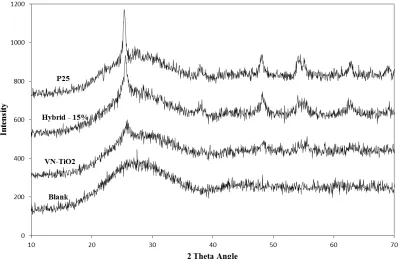
3.3.2.2.3 XRD ... 41
3.3.2.2.4 Surface Area and Pore Size Distribution... 43
3.3.3 Photocatalytic Performance ... 47
3.3.4 Mechanical Stability of the Films ... 51
3.3.5 Long-Term Photocatalytic Performance ... 52
ix
3.4 Summary and Economic Consideration for Proposed Application ... 60
Chapter 4 ... 63
4 Assessment of the Mutagenicity and Estrogenicity of BPA Following Advanced Oxidation Treatment ... 63
4.1 Introduction ... 63
4.2 Experimental ... 65
4.2.1 Chemicals ... 65
4.2.2 HPLC Analysis ... 65
4.2.3 Other Analyses ... 66
4.2.4 Ozonation ... 66
4.2.5 UV/H2O2... 67
4.2.6 Photocatalysis ... 68
4.2.7 The Ames Test Protocol... 68
4.2.8 Yeast Estrogen Screen ... 69
4.2.8.1 Calculation of Sample Response ... 71
4.3 Results and Discussion ... 72
4.3.1 BPA Degradation ... 72
4.3.2 Degree of Mineralisation and Intermediate Formation ... 73
4.3.3 Mutagenicity Comparison ... 76
4.3.4 Removal of Estrogenicity ... 79
Chapter 5 ... 80
5 Conclusions and Recommendations ... 80
5.1 Conclusions ... 80
5.2 Recommendations ... 82
xi
List of Tables
Table 2.1: Properties of methylene blue. ... 11
Table 2.2: General properties of bisphenol A. ... 15
Table 2.3: Detected primary intermediates for BPA degradation by AOPs. ... 19
Table 3.1: Surface characteristics and crystal properties of VN-TiO2 and hybrid films. ... 47
Table 3.2: Change in mass for coated fibreglass disks after reusability testing. ... 53
xii
List of Figures
Figure 2.1: Photo-induced formation of electron–hole pair and corresponding reaction
pathways in a spherical TiO2 particle.. ... 9
Figure 2.2: Ozonation degradation mechanism of BPA. ... 17
Figure 2.3: UV/TiO2 degradation mechanism of BPA. ... 18
Figure 2.4: Frameshift mutation mechanism. ... 21
Figure 2.5: Base pair substitution resulting in a missense mutation. ... 22
Figure 3.1: Image of blank fibreglass and quartz wool disks. ... 27
Figure 3.2: Cross-sectional diagram of swirl flow reactor. ... 29
Figure 3.3: Photograph of coated fibreglass disk in swirl flow reactor. ... 30
Figure 3.4: General scheme of VN-TiO2 synthesis procedure. ... 31
Figure 3.5: PDDA and titanium precursor chemical structure. ... 31
Figure 3.6: TEM image and size distribution of VN-TiO2 encapsulated nano-particles in solution. ... 32
Figure 3.7: SEM of coatings on borosilicate glass. ... 34
Figure 3.8: EDX of coatings on borosilicate glass. ... 35
Figure 3.9: Dissociation of PDDA monomer ... 37
Figure 3.10: TGA and DSC curve for VN-TiO2 dried powder sample. ... 37
Figure 3.11: SEM of coatings on fibreglass... 40
Figure 3.12: EDX of coatings on fibreglass... 41
xiii
2
disks. ... 43
Figure 3.15: Pore size distribution of each thin film coating, P25 as powder. ... 44
Figure 3.16: Adsorption/desorption isotherms for each coating, scraped from glass and P25 as powder. ... 45
Figure 3.17: Film characteristics of two separately prepared VN-TiO2 films, adsorption/desorption isotherm and pore size distribution curve. ... 46
Figure 3.18: Removal of MB for immobilised P25. ... 48
Figure 3.19: Optimal loadings for VN-TiO2 and P25 on fibreglass disks. ... 49
Figure 3.20: MB degradation curve for various coatings on fibreglass. ... 50
Figure 3.21: Effect of P25 mass loading on hybrid VN-TiO2 coated fibreglass disks. ... 51
Figure 3.22: Image of coated fibreglass disks. ... 52
Figure 3.23: Reusability tests for VN-TiO2 coated fibreglass. ... 54
Figure 3.24: Reusability tests for P25 coated fibreglass. ... 54
Figure 3.25: Images of the effect of long-term testing and regeneration on the apparent colour of coated fibreglass disks. ... 55
Figure 3.26: First order rate constants for regenerated fibreglass disks compared to initial rate of degradation. ... 56
Figure 3.27: Comparison in the degree of blue shifting relative to MB conversion for different catalysts on fibreglass. ... 57
Figure 3.28: N-demethylation products of methylene blue. ... 58
xiv
2
Figure 4.1: Experimental set-up for ozonation. ... 67
Figure 4.2: Experimental set-up for UV/H2O2. ... 68
Figure 4.3: Estradiol 50 µg/L standard curve using methanol. ... 70
Figure 4.4: Degradation curves for BPA in each AOP tested. ... 72
Figure 4.5: Determination of apparent first order rate constant, k (min-1) for each AOP BPA degradation experiment. ... 73
Figure 4.6: Degree of mineralization for BPA removal in each AOP ... 74
Figure 4.7: HPLC chromatogram of BPA degradation. ... 76
Figure 4.8: Mutagenicity analysis using the Ames Test for BPA degradation in different advanced oxidation processes. ... 78
Chapter 1
1
Introduction
1.1 Background
Continuing processes of industrialization and urbanization due to population growth,
deforestation, and pollution are exerting pressure on the depleting freshwater resources in
many parts of the world. A recent UN report (Reuters, 2010) mentions that the world’s
“freshwater is not being used sustainably” and calls for a “radical rethink” of policies to
manage competing claims. The long-term sustainability of clean water supply is dictated
by source water protection, management of water resources, and the efficiency of water
reclamation from various effluents. Trace concentrations of numerous organic
compounds (emerging contaminants (EC), and endocrine disrupting compounds (EDCs))
such as pharmaceuticals and personal care products (PPCP), including prescription drugs
and biologics, "nutraceuticals," fragrances, sunscreen agents, and numerous others are
reported in various wastewater effluents and aquatic systems. In addition to these,
increasing levels of naturally occurring organic materials (NOM) directly linked to
societal nutrient management practices are of serious consequence for managing water
resources (Caliman & Gavrilescu, 2009; Onesios et al., 2009; Li et al., 2010). These
compounds and their bioactive metabolites are continually being introduced to the
aquatic environment as complex mixtures via a number of routes but primarily through
both untreated and inadequately treated sewage. Growing health and environmental
concerns have made PPCPs of particular interest as long-term exposure to low levels of
PPCPs could have adverse effects on aquatic and terrestrial ecosystems and/or human
health (Environment Canada, 2009). For example, chronic exposure to small levels (2-6
ng/L) of the synthetic estrogen used in birth control pills (ethynylestradiol-EE2) has been
shown to feminize wild fish populations in Canadian lake systems (Kidd et al., 2007).
In the past, many countries including Canada have relied on “dilution being the solution”
for discharging of micropollutants, but with increasing populations along major
dilution is proving to be no longer a cheap, viable solution. The occurrence of
micropollutants, therefore, poses problems for two major water management aspects,
protection of source water, and reuse potential of a vast majority of municipal and
industrial wastewater effluents. The traditional treatment methods such as secondary
biodegradation cannot appreciably remove many of these contaminants of emerging
concern. While advanced treatment technologies such as activated carbon and reverse
osmosis can produce high quality water, they only transfer and concentrate the pollutants
from one phase to another, requiring further processing to render the compounds inert.
Advanced oxidation processes (AOPs), which produce reactive species like hydroxyl
radicals in-situ, are identified as one of the potential technologies for the removal of trace
concentrations of organics from various water streams (Abdelmelek et al., 2011).
Traditional water disinfection treatment processes such as ozonation and UV disinfection
can easily be retrofitted to accomplish advanced oxidation in both water and wastewater
treatment plants. There has been over three decades of intense research into many
different types of AOPs as well as wide adoption of some of these processes. Of the
many AOPs tested, ozonation, UV/ozone, UV/hydrogen peroxide, and UV/photocatalysis
are most commonly studied and used for many applications. Unfortunately, the common
disadvantage shared between all AOPs is the high operating cost, which has somewhat
limited large-scale application of this otherwise very powerful technology. However,
with the advent of higher efficiency UV lamps, visible light catalysts, and improved
reactor design, with the help of computational fluid dynamics and energy modeling, both
UV and solar-based photocatalysis have great potential for large-scale application (Chong
et al., 2010). However, further research is still needed in developing new immobilised
photocatalysis reactors and to improve the performance, the immobilisation, and
illumination in the reactor of the photocatalyst.
Although AOPs are perceived to be expensive for complete mineralization of the organic
compounds, partial oxidation of the initial compounds to less stable intermediates is a
viable option, if the intermediates readily degrade in the environment and are harmless to
the aquatic environment and human health. However, partial oxidation of organic
the parent compound (Rizzo, 2011), and the nature and number of the degradation
products will depend on the employed oxidation process, reaction time, and water quality
metrics. Quantifying the accumulated effects of the resulting mixture of compounds on
living systems rather than on the precise quantification of their chemical compositions,
which is costly and time consuming, and can be futile without the prior knowledge of
dose and effect relationship of an intermediate, can be beneficial to assess the
performance of a specific AOP. Application of various bioassays to characterize the
effluent quality from different AOPs could be a useful tool to optimize the performance
of AOPs. Although bioassays have been used in determining toxicity of individual
chemicals, they have never been used in determining efficacy and comparative
performance of various AOPs.
Objectives of the Present Study
Based on the above, further research and development are needed in both upstream
process optimization and downstream water quality evaluation in order to implement
AOPs in large-scale water treatment. The objective of this work is to address both the
upstream and downstream issues, specifically to (i) determine an effective
immobilization technique and catalyst support for a proprietary photocatalyst and
compare its performance with the industry standard P25 TiO2 using methylene blue as a
model compound, and (ii) to evaluate the effectiveness of three commonly used AOPs
namely ozonation, UV/H2O2, and UV photocatalysis for the removal of bisphenol A
using two different bioassays, the Ames Test and yeast estrogen screen (YES).
Overview of Dissertation
This thesis is divided into the following chapters:
Chapter 1 provides the background and the objectives of the research.
Chapter 2 presents a literature review of the relevant theories for both stages in the
Chapter 3 describes the first stage of the research, in which a proprietary catalyst was
evaluated for the use in an immobilised photocatalytic reactor, and was characterised and
compared to the performance of the reference catalyst P25.
Chapter 4 discusses the secondary stage of the research where the toxicity using two
bioassays is compared for the degradation of bisphenol A in three commonly studied
advanced oxidation processes.
Chapter 2
2
Literature Review
2.1 Background
The widespread occurrence of organic micropollutants such as pesticides,
pharmaceuticals and personal care products, flame retardants, and endocrine disrupting
compounds (EDCs) in receiving bodies and drinking water influents has been a global
issue of concern for academia and environmental agencies for over two decades, and
more recently in the general public. In many cases, these pollutants can be traced back to
their incomplete removal and discharge from wastewater treatment facilities. Although
the direct effect of these compounds on human health is not yet fully understood the
detrimental effect on organisms in these receiving bodies from EDCs has already been
demonstrated (Routledge & Sumpter, 2005), such as the feminization of male fish due to
the release of natural hormones (Rodgers-Gray et al., 2000). Research on organic
micropollutants in relation to the point of wastewater discharge can be divided into two
major areas: upstream treatment and downstream monitoring. Developing advanced
technologies and improved operation of wastewater treatment plants results in higher
quality effluents. At the same time, in the downstream analysis, improved techniques to
detect pollutants at lower concentrations and tools to evaluate the toxicity of the
contaminated stream, feed back to the upstream process in order to optimize plant
operation. With looming water scarcity in many parts of the world, providing clean
drinking water and sustainable development will require the use of water recycling in the
future and it will be imperative that recycled water will not impact both environmental
and human health (Falconer et al., 2006). Consequently, extensive research and
development in both upstream processing and downstream monitoring are needed.
2.2 Advanced Oxidation Processes
For the treatment of drinking water and tertiary wastewater, a group of chemical
oxidative technologies classified as advanced oxidation processes (AOPs) has garnered a
AOPs are characterized by the production of highly reactive and non-selective hydroxyl
radicals, which are the strongest oxidants in an aqueous medium (Staehelin & Hoigne,
1985). Hydroxyl radicals are capable of oxidizing nearly all organic compounds to
water, carbon dioxide, and mineral salts through a process termed mineralization (Chen
et al. 2000b). The technologies that can be classified as AOPs fall under two general
categories. The first utilizes UV in conjunction with other chemical additives, examples
of this are: UV/H2O2, UV/O3, UV/TiO2, and UV/Fenton. When no UV source is used the
technology can be termed as a dark oxidative process, such as: ozonation (O3), Fenton’s
reagent, ultrasound, and microwaves to name a few. Of the many AOPs developed three
have garnered the most study and use industrially: ozonation, UV/H2O2, and
photocatalysis utilizing either ultraviolet (UV) or solar irradiation with titanium dioxide
(TiO2). There has been significant research done on each of these AOPs with respect to
reactor design, optimization, and modeling. In-depth reaction kinetics of many pollutants
have also been investigated, which are essential for large-scale application.
2.2.1
Ozonation
The use of ozonation in water treatment has seen the most application compared to all
other AOPs and has been used for disinfection, odor control, and colour removal (Rice et
al., 1981). The degradation of pollutants in water using ozonation occurs through two
mechanisms. The first is the direct oxidation by ozone, which is a highly selective
process with low reaction rates (Hoigne, 1998). The other is an indirect mechanism to
produce hydroxyl radicals. The first step of this process is the decomposition of ozone by
hydroxide ions (Eq. 2.1). The formed hydroperoxyl radical is in an equilibrium state (Eq.
2.2). The superoxide anion radical and ozone then react to form ozonide anion radical
(Eq. 2.3), which then immediately decomposes into oxygen and a hydroxyl radical (Eq.
2.5) (Gottschalk et al., 2010). Overall, three ozone molecules theoretically produce two
O3 + OH-→ O2● + HO2● (2.1)
HO2● ↔ O2● - + H+ (2.2)
O3 + O2● -→ O3● - + O2 (2.3)
O3● - + H+↔ HO3● (2.4)
HO3●→ ●OH + O2 (2.5)
Overall:
3O3 + OH- + H+→ 2OH° + 4O2 (2.6)
A major limitation of ozonation is the formation of potentially harmful by-products
reacting with background compounds in water, one of which, bromate, is regulated and is
considered a possible human carcinogen (Gunten & Hoigne, 1994; Boorman et al., 1999).
It is then important to optimize both the disinfection and oxidation processes of ozonation
to minimize toxic by-product formation.
2.2.2
UV/H
2O
2UV irradiation of tertiary wastewater for disinfection is common practice, but photolysis
alone does not appreciably degrade the vast majority of organic micropollutants of
increasing concern. The addition of hydrogen peroxide (H2O2) in conjunction with UV
radiation at 254 nm cleaves apart the O-O bond to generate hydroxyl radicals (Eq. 2.7)
(Legrini et al., 1993). Due to the low molar extinction coefficient (19.6 M-1s-1) of
hydrogen peroxide at 254 nm (Andreozzi et al., 1999), a high concentration of H2O2 is
needed for adequate radical formation, but it is essential not to add too much of the
peroxide as it can act as a scavenger (Eq. 2.8). Therefore, it is important to determine the
optimal peroxide concentration necessary based on the parameters of the polluted water.
H2O2 +hv→ ●OH + ●OH (2.7)
●OH + H
The advantages of UV/H2O2 are that it has high reaction rates and a modular reactor
design, leading to a smaller footprint in the treatment plant. Since UV-254 nm lamps are
used, the system also provides disinfection. Unlike ozonation and chlorination there are
no toxic disinfection by-products formed after treatment that require expensive removal
units. On the other hand, UV/H2O2 requires water with a very high UV transmittance. A
pre-treatment filtration unit is required to lower the turbidity before the water enters the
reactor, especially in wastewater applications. Energy for the UV lamps and the addition
and removal stages of hydrogen peroxide result in a high operating cost.
2.3 Semi-Conductor Photocatalysis
Unlike the previously mentioned AOP methods, photocatalysis up to this point has seen
limited full-scale application either in drinking or wastewater treatment, but has garnered
a significant amount of research interest in academia over the last three decades. The one
major advantage of this process is the potential to use natural sunlight. Combined with a
highly active catalyst, this technology could be applied worldwide not only for water
treatment, but for hydrogen production, self-cleaning coatings, and many other uses.
This explains the fact that even though it has the least industrial application to date
compared to ozonation and UV/H2O2, it has received the majority of the academic
research, with >1000 papers published per year over the last decade, mostly with P25
TiO2, an inexpensive and non-toxic photocatalyst.
2.3.1
Photocatalytic Mechanism
Titanium dioxide in either the anatase or rutile phase has a band-gap of 3.2 or 3.0 eV,
respectively (Carp et al., 2004). When the energy of a photon from the light source
exceeds this gap, λ< 388 nm, a photoexcited electron will be promoted to the conduction
band, leaving a positive hole in the valence band, this is termed as the electron – hole
pair (e- - h+), where cb and vb denotes conduction band and valance band respectively
(Eq. 2.9). The charged particles can then: recombine to produce heat (Eq. 2.10), become
trapped, where tr is the trapped charge (Eq. 2.11-2.12), or migrate to the surface to
TiO2 + hv→ e-cb + h+vb (2.9)
e-cb + h+vb→ heat (2.10)
e-cb→ e-tr (2.11)
h+vb→ h+tr (2.12)
Figure 2.1: Photo-induced formation of electron–hole pair and corresponding
reactions pathways in a spherical TiO2 particle (Chen et al., 2000b).
Dads + h+tr→ D+ads (2.13)
H2Oads + h+tr→ OH●ads + H+ (2.14)
OH-ads + h+tr→ OH●ads (2.15)
In the aqueous solution under irradiation the catalyst remains in an electrostatic
equilibrium, where at steady-state there is an equal rate of electron and hole migration to
the surface (Pruden Childs & Ollis, 1981). Surface trapped holes are responsible for the
and hole, where ads is the adsorbed species (Eq. 2.13) or by reacting with surface
adsorbed molecular water and hydroxide ions to produce hydroxyl radicals, Eq.
2.14-2.15.
(O2)ads + e-→ O2●- (2.16)
H+ + O2●-→ HO2● (2.17)
2HO2●→ H2O2 + O2 (2.18)
H2O2 + O2●-→ OH● + O2 + OH- (2.19)
H2O2 + e-→ OH● + OH- (2.20)
As the holes are involved in the oxidative reactions, the surface electrons must also react
to maintain the charge equilibrium and to minimize recombination. Oxygen is used as an
electron scavanger due to the minimal processing cost of sparging the solution with air.
Dissolved oxygen will adsorb onto the catalyst surface and be reduced by the surface
trapped electron (Eq. 2.16). From there, a series of further reactions occur as shown in
Eq. 2.17 –2.20. Even though hydrogen peroxide is produced, its contribution to the
reactive hydroxyl radicals towards mineralisation is deemed minimal.
2.3.2
Photocatalysis Model Compound – Methylene Blue
Textile dyes and industrial dyestuffs represent an important class of aqueous pollutant
found in industrial wastewater discharge. A large amount of industrial dyes are lost in
the dying process. In the textile industry, this loss can be 4% of the dye used
(Martínez-Huitle & Brillas, 2009). If released directly into the aqueous environment, this can cause
an aesthetic effect by changing the visible colour of the water. These dyes are highly
stable and are not completely removed in conventional wastewater treatment processes.
The dyes and their by-products formed from the transformation during treatment and in
the receiving body, can have a toxic effect on organisms in the environment (Platzek et
al., 1999; Sharma et al., 2007). For photocatalytic research, dyes are one of the most
common model compounds tested not only because they represent a persistent water
provides a quick and simple qualitative response. As well dyes have characteristic
absorption properties in the UV/visible spectrum, allowing UV-spectrophotometers to be
used to determine kinetic data. Methylene blue (MB) is a cationic dye and the chemical
structure and basic properties are shown in Table 2.1. In terms of use as a model
compound: kinetic data in terms of parameters (Lakshmi et al., 1995), photocatalytic
degradation mechanisms with intermediate analysis (Houas et al., 2001), and tests on
reactor configurations (Guillard et al., 2003; Ling et al., 2004) provide a framework for
catalytic evaluation. MB also has a high extinction coefficient in the visible range,
allowing for lower concentrations to be used in the reaction. MB is relatively transparent
to UV radiation, which is used by the TiO2 catalyst (Fretwell & Douglas, 2001).
Table 2.1:Properties of methylene blue.
Properties Structure
Formula C16H18N3SCl
Molecular Mass (g/mol) 319.85
2.3.3
Immobilisation of Titanium Dioxide
Laboratory studies on photocatalysis are typically performed using nano-sized catalyst
suspended in the reactor. In these designs the catalyst is evenly dispersed in the solution
as it passes through the reactor. The uniform catalyst distribution provides very high
surface area to volume ratios with low mass transfer limitations. Even though there have
been several patents pertaining to the catalyst in suspension, there has been very little
application at a larger scale for water treatment (Mukherjee & Ray, 1999; Chong et al.,
2010). Since the catalyst is dispersed as very small particles, energy intensive
post-treatment filtration and recycling units are required, which are cost prohibitive (Pozzo et
al., 1997). It is essential to provide efficient exposure of light to the catalyst, and due to
(Mukherjee & Ray, 1999). The second reactor configuration is immobilisation of the
catalyst onto a support. The supports can range from macro particles, such as glass beads
and sand (Serpone et al., 1986), to the glass tubes that surround the light source in the
reactor (Ray & Beenackers, 1998). Coating the catalyst reduces the active surface area
and mass transfer limitations can occur, reducing pollutant degradation in the reactor.
Since the catalyst is in a continuous operation, fouling of the active sites on the coated
support can reduce the rate over time. Reactor designs that have been developed
involving immobilised catalysts include: fluidized bed (Pozzo et al., 2000), supported
membrane (Kim et al., 2003), and coated optical fibre (Peill & Hoffmann, 1996) to name
a few.
2.3.4
Immobilisation Procedures
One of the standard ways of coating a support with catalyst is to simply create a dispersed
solution of commercial catalyst, typically Aeroxide P25. Coating techniques such as dip
coating (Fretwell & Douglas, 2001; Rodriguez et al., 2009), spin-coating (Fretwell &
Douglas, 2001), electrophoric coating (Byrne et al., 1998), and spray coating (Byrne et
al., 1998) have been used. The coating cycle is followed by high temperature treatment
to better bond the commercial catalyst to the support. Dip coating is the easiest of all the
coating methods and produces non-uniform films that require several dipping cycles
(Byrne et al., 1998; Fretwell & Douglas, 2001). As well, these films are not typically
mechanically robust and can be easily wiped off or damaged in the reactor (Mills et al.,
2005). The other coating solutions are relatively stable, but could be difficult to produce
at larger scales. The other procedure for immobilisation is to synthesize a
nano-crystalline thin film of TiO2 onto the support. Thin films can be synthesized from a
solution-route or gas phase deposition (Carp et al., 2004). Sol-gel is the most common
solution technique; others include reverse micelles, solvo-thermal, and electrochemical
deposition. Common gas phase methods include chemical vapor deposition, electron
beam evaporation, spray pyrolysis deposition, and DC-sputtering. As mentioned
previously, it is essential to choose a synthesis and coating technique compatible with the
support and required film configuration in the reactor, this limits the practical use of
2.3.5
Titanium Dioxide Thin Films from Sol-Gel
Titanium dioxide can be produced from sol-gel using two methods based on the precursor
employed. The first is a non-alkoxide route using inorganic titanium salts such as
nitrates, chlorides, and sulfates (Sivakumar et al., 2002). Further processing to remove
the inorganic anion is required and application for inorganic TiO2 films is limited. TiO2
can also be made using alkoxide precursors, most commonly metal alkoxides, such as
titanium isoproproxide (Xagas et al., 1999) and titanium proproxide (Kwon et al., 2004).
Upon making a stable sol, which is a colloidal suspension of titanium oxide particles
formed from the hydrolysis and condensation of the alkoxide, the support is then coated
with this solution. The coated film is dried further, condensing to form a gel of
amorphous TiO2 (Brinker et al., 1991). Final heat treatment, typically >400°C,
crystallizes the amorphous TiO2 into the anatase phase, which is usually the desirable
crystal phase for photocatalysis. The overall reaction is shown in Eq. 2.21 (Su et al.,
2004), where R is the alkyl group. The sol-gel method is advantageous for making TiO2
thin films, because these films are prepared from highly pure and stable solutions, which
require relatively inexpensive reagents and simple batch processing, typically just mixing
and a high temperature treatment. The solutions are adaptable to many different coating
techniques which further allows for the coating of complex supports. Composition
control allows for the addition of dopants to modify optical properties and other additives
to better improve film quality towards photocatalytic activity by simply adding the
desired reagent (Kim et al., 2002). Scale-up production would still require extensive
research and investment, but once an economically feasible reactor design, support, and
sol-gel recipe are achieved this would be one of the most viable options available for
large-scale application of photocatalysis.
Ti(OR)n + n
2H2O → TiOn/2 + nROH (2.21)
2.4 Bioassays for AOP Water Quality Analysis
Emerging contaminants in wastewater effluents and drinking water influents have
become a cause for concern in terms of potential impact on human health. The
effectively demonstrated with ever-increasing applications worldwide. Although these
technologies have potential for complete mineralization of organic compounds to CO2
and H2O, cost-optimized technologies for water treatment will lead to the partial
oxidation of organic micropollutants. This leads to concern over the formation of
potentially more toxic degradation intermediates relative to the starting compounds
(Rizzo, 2011). For treated water samples, chemical analysis can determine the existence
of specific chemical species but does not provide any information on the adverse effects
in absence of prior knowledge about compound and concentration specific toxicity. Also
the synergetic and additive toxic effects of the complex chemical mixtures may not be
determined by chemical compositional analysis alone. Bioassays measure the acute or
chronic response of the test organism relative to the water matrix, based on a specific
endpoint for analysis such as: mortality, growth rate, enzymatic activity, and
luminescence (Rizzo, 2011). A toxic response is determined by comparing the sample to
a positive control and the background, where based on statistical analysis, a confidence of
toxicity can be made. The three classes of organisms used in bioassays are:
microorganisms, plants and algae, invertebrates and fish for a water sample. The most
common assays that have been applied for AOP analysis are: Daphnia magna, yeast
estrogen screen, salmonella mutagenicity, and Vibrio fischeri (Rizzo, 2011). The major
advantages of bacterial assays are that they require a comparatively short time for
analysis, have simple operation, are relatively inexpensive, and can be used on demand as
the bacteria can be stored long-term. The combination of a battery of tests may be
implemented as a continuous monitoring technique to confirm the safety of water treated
by advanced oxidation processes, both for discharge into the environment and for human
consumption.
2.5 Model Compound - BPA
One of the most studied aqueous pollutants has been bisphenol A (BPA) due to its
widespread use as an intermediate in the production of mainly polycarbonate and epoxy
resins which represent ~94% of the total produced BPA (The Dow Chemical Company,
2012). In 2008, the total global production capacity of BPA was estimated at 5.2 million
result of its use in plastics production, BPA ends up in a variety of consumer goods such
as plastic bottles and canned food liners. Major routes for BPA to enter the aqueous
environment are through wastewater effluent (Nakada et al., 2004; Hing-Biu & Peart,
2000) and land-fill leachate(Yamamoto et al., 2001; Asakura et al., 2004). Hing-Biu and
Peart (2000) studied the occurrence of BPA in both municipal and selected industrial
wastewater effluents and found the concentration to range from 0.01-1.08 µg/L to
0.23-149.2 µg/L, respectively. The higher range of the industrial effluents was attributed to
the chemical and chemical products sector, commercial dry cleaning and paper products
(Hing-Biu & Peart, 2000). Consequently as so many commercial products contain BPA,
eventually they end up in landfills and can leach from the products into the wastewater
stream. Yamamoto et al. (2001) found BPA at a range of 1.3-17,200 µg/L in land-fill
leachate in Japan.
Table 2.2: General properties of bisphenol A.
Property
Structure
Chemical Formula C15H16O2
Molecular Mass 228 g/mol
Water Solubilitya 120-300 mg/L
a
(Ali et al., 2006)
BPA is considered as a weak synthetic endocrine disrupting compound (EDC), which as
defined by the U.S. Environmental Protection Agency (EPA) is: “an exogenous agent
that interferes with synthesis, secretion, transport, metabolism, binding action, or
elimination of natural blood-borne hormones that are present in the body and are
responsible for homeostasis, reproduction, and developmental process” (United States
Environmental Protection Agency, 2011). The discharge of EDCs into receiving bodies
from wastewater treatment plants has been shown to cause a detrimental impact on
ubiquitous use, proven toxicity, and occurrence in a variety of aqueous pathways, BPA is
a very good representative compound for use in environmental engineering research.
2.6 Application of AOPs for BPA Degradation
BPA has gained increased attention from the scientific community for its potential impact
on human health, and has gained general public awareness due to its potential to leach
from baby bottles and food containers (Diamanti-Kandarakis et al., 2009). This has
resulted in a large amount of research focused on its removal from water using advanced
oxidation processes such as: UV/H2O2 (Rosenfeldt & Linden, 2004), O3 (Deborde et al.,
2005), O3/UV (Irmak et al., 2005), UV/TiO2 (Ohko et al., 2001), UV/Fenton (Katsumata
et al., 2004), sono-Fenton (Ioan et al., 2007), and ultrasound (Torres et al., 2008). The
intermediate analysis below focuses on the three most common AOPs which are relevant
to this study: UV/H2O2, O3, and UV/TiO2. All three AOPs produce hydroxyl radicals and
it would be expected that there would be similar intermediate formation in these AOPs.
On the other hand, photocatalysis can also oxidize pollutants using photogenerated holes
and superoxide radicals (Guo et al., 2010). Ozone can also directly react with the
pollutant. This, along with changes in reaction conditions such as pH, can result in the
formation of a variety of intermediates, with each compound having potential toxic
effects. For intermediates formed from ozonation of BPA, Deborde et al. (2008) found
five primary intermediates and proposed the following reaction pathway shown in Fig
2.2. All experiments were run with tert-butanol as a hydroxyl radical scavenger
(Deborde et al., 2008) in order to determine the reaction products formed from direct
oxidation of ozone. Resorcinol and acetone have also been identified as intermediates of
BPA ozonation (Garoma et al., 2010). Further ozonation transformed these primary
intermediates to organic acids such as acetic, formic, maleic, and oxalic acids (Garoma et
al., 2010). Deborde et al. (2008) also noted the formation of higher molecular weight
intermediates formed from the secondary reaction between BPA and smaller
intermediates. For the removal of BPA by TiO2 photocatalysis, Fukahori et al. (2003)
proposed a mechanism for the formation of quinone derivatives from two initial reactions
(Fig 2.3). BPA hydroxylation results in the formation of water by the abstraction of a
further reacted to form quinone derivatives (p-HMS, p-BQ and p-HBA) (Fukahori et al.,
2003). The continued photocatalytic degradation resulted in acetaldehyde, formic acid,
and acetic acid (Watanabe et al., 2003).
A non-exhaustive list of the different intermediates that have been found for the
degradation of BPA by ozonation and photocatalysis is presented in Table 2.3.
Table 2.3: Detected primary intermediates for BPA degradation by AOPs.
O3 UV/TiO2
Name (if given) Structurea,b Name (if given) Structurec,d 4-hydroxyacetophenone
2-(4- hydroxyphenyl)-propanol-2-ol
acetaldehyde
4-isopropylphenol
hydroquinone
1,4-benzoquinone p-isopropenylphenol
resorcinol p-hydroxybenzaldehyde
acetone 4-hydroxyphenyl-
2-propanol
a
(Deborde et al., 2008)
b
(Garoma et al., 2010)
c
(Fukahori et al., 2003)
d
2.7 Mutagenicity Analysis of Water
A mutagenic substance is one that can cause permanent and transmittable changes to the
genetic material of cells in an organism. These mutations can cause alterations in the
expression of genes or changes in the structure of gene products (Höfer et al., 2004). The
major use of in-vitro mutagenic bioassays is as an initial screening for genotoxic
carcinogens, as there is a high degree of correlation between the carcinogenicity of a
compound and its mutagenicity (McCann et al., 1975; Ashby & Tennant, 1988). Upon
obtaining a positive mutagenic response from several assays, compound-specific analysis
to determine the occurrence of known carcinogens, or further investigation of the suspect
compounds’ carcinogenicity using the long-term rodent test, can then be conducted
(Zeiger, 1987). One of the most important areas for the screening of mutagenicity is in
drinking water post-treatment for disinfection by-products (DBPs) (Richardson et al.,
2007). There are many established bioassays developed to determine specific mutagenic
mechanisms, but a limited number have been applied to water quality analysis (Ohe et al.,
2004). The most commonly used assays are: the Salmonella mutagenicity, micronucleus,
comet, and alkaline elution (Ohe et al., 2004), with by far the most used test (>60%)
being the Salmonella assay which is discussed in following section. The mutagenicity of
BPA has been tested using several in-vitro assays: the Ames Test, the mouse lymphoma
mutagenesis assay (MOLY), sister chromatid exchange (SCE) induction, chromosomal
aberration (ABS) analysis, and mammalian gene mutation assay (V79/HPRT) with no
mutagenic response found (Schweikl et al., 1998; Schrader et al., 2002; Tennant et al.,
1987). The use of mutagenic bioassays in water quality analysis can help screen for
compounds that can produce genetic damage without specific information on the physical
and chemical properties of the water. Bioassays using bacteria are quick, inexpensive,
reliable, and sensitive. These tests can be run as a battery of tests to identify various
classes of mutagens in water samples.
2.7.1
The Ames Test
The Ames Test (Salmonella typhimurium/microsome assay) is a widely used and
standardized bio-assay for determining substances that can cause mutations from specific
strains each with specific pre-existing mutations that render the bacteria unable to
synthesize an essential amino acid (histidine) for their growth. Each of these strains tests
for a point mutation; a positive mutagen will cause a reversion of the gene and the
Salmonella bacteria will be able to grow independent of histidine (Mortelmans & Zeiger,
2000). Specific Salmonella tester strains have been developed and standardized to test
for different mutagenic mechanisms. The two strains used in this study are TA97a and
TA100. TA97a responds to a frame-shift mutation which occurs when there is an addition
or deletion of nucleotides, (Fig 2.4) shifting the reading frame of the codon, which can
severely alter the amino acid sequencing (Davis & Weller, 1998). TA100 responds to a
base-pair substitution, where a nucleotide is replaced with another (Fig 2.5). This can
result in a silent mutation which causes no change in the gene expression, a nonsense
mutation which results in the stopping of protein synthesis, or in the case of TA100 a
missense mutation. A missense mutation occurs when there is a change in the codon
from the substitution codes for a different amino acid (Davis & Weller, 1999).
Figure 2.4: Frameshift mutation mechanism (U.S. National Library of Medicine,
Figure 2.5: Base pair substitution resulting in a missense mutation (U.S. National
Library of Medicine, Genetics Home Reference, 2010).
2.8 Yeast Estrogen Screen
Developed by Routledge and Sumptar (1996), the yeast estrogen screen (YES) is a
cellular bioassay for measuring the total estrogen response of the water matrix, without
prior knowledge of the specific pollutants and their concentrations in the sample. The
assay uses genetically modified yeast cells (Saccharomyces cerevisiae) in which the
chromosome in the cells has the gene sequence for the human estrogen receptor (hER),
and the reporter gene lac-Z are integrated into it. When the receptor is activated by the
EDC, this causes the expression of lac-Z, which produces the enzyme b-galactosidase.
This enzyme is released into the growth medium and metabolizes a chromogenic
substrate, turning the solution colour from yellow to red. Based on the change in
absorption of the solution, the estrogenicity can be determined relative to a reference, 17- β estradiol. The assay is commonly applied to monitor the change in estrogenicity in AOP treatment studies of EDCs (Klavarioti et al., 2009). The assay has been used to
monitor the removal of estrogenicity following treatment using AOPs for several EDCs such as: 17β-estradiol and 17α-ethinylestradiol by ozonation (Maniero et al., 2008), and mixtures of EDCs by UV/H2O2 (Chen et al., 2007). Chen et al. (2006) investigated the
the YES assay found BPA transformed into intermediates which retained some estrogenic
activity.
2.9 Summary of Literature Review and Literature Gaps
The extensive literature review indicates that although exhaustive scientific studies have
been conducted on kinetics and mechanisms of oxidation, various oxidants and catalysts,
limited studies have been conducted on large-scale application of AOPs. Specifically, for
photocatalysis, the issues of suitable catalyst precursor formation for a durable catalyst
film on inexpensive, mechanically strong, and high surface area supports can be explored
in further detail. On the other hand, bioassays have been used for determining toxicity of
drinking water after treatment, estrogenicity of selective compounds in water, and
mutagenicity of intermediates of AOPs. However, no studies were found where
bioassays were conducted to determine the comparative performance of the various
AOPs and correlate that with parent compound degradation, as well as relate to
intermediate and TOC degradation. These are the objectives of this study, which are
elaborated in Chapters 3 & 4. In this chapter, a broad literature review with respect to
various aspects of AOPs has been presented. A short background on prevailing literature
pertinent to the specific objectives of this work is presented in Chapters 3 and 4.
Chapter 3
3
Photocatalytic Performance of Titanium Dioxide Thin
Films from Polymer Encapsulated Titania
3.1 Introduction
Among various semiconductor photocatalysts, titanium dioxide (TiO2) in nanocrystaline
form has been demonstrated extensively to be highly effective for water and air treatment
(Herrmann, 1999). The majority of research for this application is focused on utilizing
titanium dioxide in a suspended form, whereby the catalyst is dispersed in water to be
treated (Herrmann, 1999). So far, detailed investigations into the degradation of a vast
number of pollutants (Konstantinou & Albanis, 2004; Pera-Titus et al., 2004; Klavarioti
et al., 2009) have provided essential information on the kinetics and degradation
pathways critical for reactor design and modeling (Chong et al., 2010). However, the
design of large-scale suspension reactors has critical limitations. Post-treatment
separation and recycling of the suspended nano-catalysts are very energy intensive, and
the light penetration in suspension is limited (Mukherjee & Ray, 1999). The focus on
reactors utilizing the catalyst in an immobilized form has been very attractive to alleviate
these issues, but immobilized catalysts also have disadvantages, such as: reduced surface
area to volume ratio, difficulty in light penetration to the entire thickness of catalyst, as
well as increased mass transfer limitations reducing the overall rate of pollutant removal
(Pozzo et al., 1997). The development of both reactors and immobilization techniques to
overcome these issues is still on-going.
By far the most studied immobilised system has been the development of titanium
dioxide thin films from a tailored sol-gel route (Shan et al., 2010), where, in most cases,
the film is formed on the chosen substrate through a simple dip coating and sintering
technique (Carp et al., 2004). This technique allows for a highly controllable preparation
route utilizing inexpensive reagents and simple operations. Modifying the sol-gel
formulation allows for control over the characteristics of the film and when combined
(Choi et al., 2007), researchers have demonstrated, in some cases, greatly enhanced
photocatalytic activity when compared to similar unmodified sols.
Even though there have been a number of sol-gel recipes developed by a variety of
researchers globally with a variety of relevant substrates tested such as glass (Lee et al.,
2002), stainless steel (Byrne et al., 1998), and inorganic fibres (Horikoshi et al., 2002),
the development and testing of larger scale immobilized photocatalytic reactors are still
limited (Mukherjee & Ray, 1999; Chong et al., 2010). For the implementation of
large-scale immobilized photocatalytic reactors, major challenges include (i) production of
specific catalyst precursors in bulk to be adopted for supports with high surface area, (ii)
production of uniform and stable thin coating of catalyst on various supports, (iii) an
efficient light and catalyst coated support assembly, and (iv) a flow regime free of mass
transfer limitations with sufficient contact time. Of all the above factors, (iii) and (iv) are
independent of the nature of catalyst precursors and immobilization techniques.
Large-scale photocatalytic processes are significantly affected by factors (i) and (ii), where there
is a lack of cost-effective and simple methods to synthesize suitable precursors, such as
sol-gel, suspension, etc. to produce titanium dioxide thin films on suitable supports that
can be easily scaled up. The objective of the work presented in this chapter is to
characterize a cost effective proprietary catalyst precursor that can be easily used to
create titanium dioxide thin films for the use in immobilized photocatalytic reactors at a
pilot scale. In this chapter, experimental results for the application of a proprietary
solution-based precursor ideally suited for making thin films of titanium dioxide on
various supports are presented. The catalyst precursor is a suspension of polymer
encapsulated titanium dioxide. Experiments were performed to determine the most
appropriate coating technique as well as suitable supports. Subsequently, photocatalytic
performance of the catalyst films was evaluated in a semi-batch swirl flow reactor. The
films’ surface morphology and characteristics, mechanical stability, and re-use potential
were also investigated. The performance of a hybrid catalyst (proprietary and
3.2 Experimental
3.2.1
Preparation of Support Mediums and Coating Procedures
The polymer encapsulated titanium dioxide was received as a yellowish solution from
Vive Crop Protection Inc. (Toronto, ON, Canada), a partner company in this project. The
solution had a solids concentration of 20 g/L of which 20% (w/w) was titanium dioxide.
It was stored in polypropylene containers at room temperature were the solution remained
stable for several months.
Fibreglass insulation papers (McMaster-Carr, Atlanta, GA, USA) with a thickness of 0.32
cm were cut into 11.43 cm diameter disks to support the catalyst (Fig. 3.1). These disks
had a 0.5 cm hole punched through the centre for flow to exit from the reactor. The disks
were first heated in an oven for 1 h at 500°C to remove the organic binding agent.
Following heat treatment and cooling, the disks were dipped into the catalyst solution and
dried at 100°C for 1 h. The dipping and drying was repeated to increase the catalyst
loading on the disks, if required. Finally, the coated disks were calcined at 500°C at a
ramp rate of 10°C/min and held for 3 hours and then allowed to cool down naturally.
For the hybrid catalyst coatings the same disk preparation method as above was used, but
the dipping solution was modified by the addition of Aeroxide P25 from Sigma–Aldrich
(Oakville, Ontario, Canada). Based on the titanium dioxide content (400 mg in 100 mL)
of the VN-TiO2 stock solution, P25 was added accordingly to obtain different ratios of
VN-TiO2 and Aeroxide TiO2. The powder was added to the solution under vigorous
stirring followed by 30 min of sonication to disperse the P25 catalyst. The fibreglass disk
was then dipped and dried at 100°C twice followed by calcination at 500°C for 3 hours.
For the investigation of higher calcination temperature, quartz wool mat (Fig. 3.1)
(Technical Glass Products, Inc.) was used, as the fibreglass mat was not stable above
600°C. This mat consisted of quartz fibres of similar size and configuration to the
fibreglass, but was stable up to 1200°C. A dip coating procedure similar to fibreglass
was followed for the quartz mat, but it was held for 1h at the selected temperature for
Figure 3.1: Blank fibreglass (left) and quartz wool disks (right).
3.2.2
Characterization of Titanium Dioxide Films
Determining the characteristics of titanium dioxide thin film directly on the fibreglass
surface is very difficult due to low surface area of the fibreglass and the small amount of
catalyst material on the support. Thus, thin film characterization for the various samples
was conducted with scraped-off titanium dioxide films produced on borosilicate glass
disks. Since both the glass fibres and borosilicate glass disks are of very similar chemical
composition, this technique provided a good representation of the characteristics of the
films formed on the fibres. This characterization technique has been previously
demonstrated to be effective for immobilised thin films (Choi et al., 2007; Yu et al.,
2004). Thin films of catalyst were obtained by depositing 50 ml of catalyst solution with
or without hybridization with powder TiO2 (Aeroxide P25) onto cleaned borosilicate
glass disks and drying the disks at 100°C until a transparent polymer film was formed.
Following this process, the disks were calcined for 3 hours at 500°C to remove the
polymer matrix. The films were then scraped off the glass disk for characterization.
For determination of the crystal size and phase, X-ray diffraction (XRD) analysis using a
films was analysed using the S4500 Hitachi field-emission scanning electron microscope
(SEM) equipped with a 6460 EDAX energy dispersive X-ray spectrometer. Differential
scanning calorimetry and thermogravimetric analysis were carried out using SDT Q600,
TA instruments (USA) at a heating ramp rate of 5°C /min in air. Surface properties, such
as surface area, pore volume, and pore size distribution, were measured using a
Micromeritics TriStar 3000 Gas Absorption Analyzer. Samples were de-gassed at 90°C
for 120 min followed by 180 min at 170°C before analysis.
3.2.3
Photocatalytic Activity Measurement
The photocatalysis experiments were performed in a semi-batch swirl flow reactor
developed by Ray and Beenackers (1997). The reactor has been demonstrated to be very effective for the study of pollutant degradation using immobilised TiO2 as swirl flow
inside the reactor induces good mixing and eliminates mass transfer limitations (Chen &
Ray, 1999; Chen et al., 2000a). For this study, a slight modification to the reactor was
made: two inlets instead of one were used, which further enhanced mixing in the reactor
(Fig 3.2).
The reactor shown in Fig. 3.2 consists of a stainless steel central housing with a stainless
steel top plate and a borosilicate glass window at the bottom of the reactor. The plate
cuts off UV light <300 nm, eliminating any effect of photolysis. The coated fibreglass
disk was placed at the top of the reactor and two small stainless steel meshes at each inlet
were used to keep the disk in place and to allow for uninhibited flow (Fig. 3.3). The
reaction solution enters from two opposing inlets of the housing resulting in a swirling
effect over the surface of the fibreglass disk. The flow exits through the top of the reactor
into a well-mixed buffer tank from which it is recirculated back to the reactor. The
reactor was placed on top of a wooden box which contained a 175 W medium pressure
mercury vapor lamp (Osram Sylvania Ltd.) that was 2.0 cm from the bottom plate of the
reactor. The average UV-A intensity at the peak wavelength of 365 nm was 3.6 mW/cm2
measured using a radiometer (UVX-36, UVP, LLC). The total volume of the reaction
solution was 500 mL, with methylene blue (MB), (Aldrich) as the model compound. The
initial concentration of MB in all experiments was 10 ppm (mg/L) and was prepared
peristaltic pump, using a recirculation rate of 2 LPM and a stirring rate of 400 RPM, was
used to induce mixing in the buffer tank. The buffer tank also allowed the reaction
mixture to cool, with an equilibrium temperature of 30°C ± 1.5°C. All reactions were
performed in an oxygen saturated solution by sparging the solution with air. The
degradation experiments consisted of an initial 60 min dark adsorption followed by the
UV-A photocatalysis. The concentration of methylene blue was measured using a
96-well microplate reader (Infinite 200 PRO, Tecan Group Ltd., USA) by monitoring the
change in absorption at 664 nm.
Figure 3.3: Photograph of coated fibreglass disk in swirl flow reactor.
3.3 Results and Discussion
3.3.1
Proprietary Titanium Dioxide Catalyst
The titanium dioxide catalyst is produced by Vive Crop Protection Inc., the partnering
company and is referred to as VN-TiO2. Further information about the product and
method of production is given in the following patents: (Goh et al., 2009; Anderson et al.,
2008).
A brief description of the synthesis process is provided below with a schematic diagram
shown in Figure 3.4. A titanium-containing complex, which acts as a counter ion to an
extended form polyelectrolyte in solution, bonds to the electrolyte due to attractive
forces. The polyelectrolyte then collapses into a globular form. Subsequent treatment (a
proprietary method practiced at Vive Crop Protection Inc.) results in
polymer-encapsulated nano-particles, whereby titanium has been converted into an amorphous
titanium dioxide form. Due to the surface charge of the particles, they do no agglomerate
and remain dispersed in solution with an average size of ~10 nm. The transmission
size distribution of the particles, are shown in Fig 3.6. For the specific batch used in this
work the polymer electrolyte was poly (diallyldimethylammonium chloride) (PDDA),
and titanium complex was titanium (IV) bis(ammonium lactato)dihydroxide (Fig 3.5).
The solution remains stable for months and is stored at room temperature in opaque
polypropylene containers.
Figure 3.4: General scheme of VN-TiO2 synthesis procedure.
Figure 3.6: TEM image (top) and size distribution (bottom) of VN-TiO2
encapsulated nano-particles in solution.
3.3.2
Support Material and Coating Procedure
For immobilization of photocatalysts for diverse reactor configurations, selection of an
appropriate support medium and coating procedure is necessary for successful large-scale
application. The support must meet the following requirements, (i) good thermal
resistance and mechanical stability, (ii) inexpensive, (iii) conformable to reactor
configuration, and (iv) suitable for coating process. As the intended application of the
VN-TiO2 catalyst is for large-scale photocatalytic reactors, in addition to the cost of the
support, other considerations such as material cost, bulk preparation and coating, and
ease of reuse and replacement were taken into account. Two commonly found supports
with two different coating methods were evaluated: borosilicate glass plates with spray
0 5 10 15 20
0.1 1 10 100 1000 10000
V
ol
um
e (
%
)
Size (d.nm) Size Distribution by Volume
coating, and glass fibres coated with dip coating. Based on the preliminary experiments,
a support and a coating procedure were then selected for the complete evaluation of the
VN-TiO2 catalyst.
3.3.2.1
Glass Plate with Spray Coatings
The first support selected was borosilicate glass in the form of a disk which conformed to
the design of the reactor. Glass has been one of the most common materials used for
testing catalyst efficiency in immobilised state and for larger-scale system designs (Ray
& Beenackers, 1998). Initial attempts to coat the VN-TiO2 on glass disks using dip
coating resulted in uneven layers as well as a very low loading rate per dipping cycle.
Thereafter, a spraying apparatus at the Vive Crop Protection Inc. laboratories which used
a pneumatic paint spray gun, controlled by a computer numerical control (CNC) system,
was used for coating glass disks. The 11.43 cm diameter glass disks were cleaned by
soaking for 24 h in a base bath followed by subsequent acid and distilled water washes.
The cleaned disks were dried and stored at 100°C before use. The disks were placed on a
heating block set at 50°C for coating; this was done to completely dry the deposited
layers between each coating cycle. The un-calcined coating shown in Fig. 3.7a indicated
that a smooth polymer layer had formed on the surface. EDX confirmed the presence of
titanium and chlorine in the film (Fig. 3.8b); chlorine came from the PDDA polymer.
The cavities that formed on the surface were most likely caused by the evaporation of
water. The calcined films in all cases resulted in cracking and delamination of the
titanium dioxide film (Fig. 3.7b). A maximum stable loading of 10 mg of TiO2 per disk
(0.097 mg/cm2) was consistently found after rinsing the disks and is seen as a dispersion
of evenly sized particles within the stable film (Fig. 3.7c). Based on the density of pure
anatase TiO2 of 3.84 g/cm3 (Bischoff & Anderson, 1995) and assuming a 100% dense
film, the thickness of the films was calculated to be 254 nm. Thicker films can be
achieved by this method, but this is done by repeated coating and heat treatment cycles to
layer films, sometimes up to 10 cycles (Mills et al., 2003). This would greatly increase
cost due to longer processing time and more consumables. The EDX confirmed that
these films were TiO2 (Fig. 3.8c-d). The photocatalytic activity of P25 coated on the
cleaned disk shows an evenly distributed coating of nano-particles, ~30 nm in diameter
(Fig. 3.7c). The P25 coatings showed a thick layer of agglomerated particles of even
distribution (Fig. 3.7d).
Figure 3.7: SEM of coatings on borosilicate glass disks - a.) uncalcined coating, b.)
calcined VN-TiO2 (Area 1 & 2 labeled for EDX analysis), c.) stable and remaining
TiO2 film on glass, and d.) P25.
b.)
c.) d.)