• No results found

Issues Affecting Curriculum Support Centres In Enhancing Teacher Professional Development in Nyeri County, Kenya

N/A
N/A
Protected

Academic year: 2020

Share "Issues Affecting Curriculum Support Centres In Enhancing Teacher Professional Development in Nyeri County, Kenya"

Copied!
81
0
0

Loading.... (view fulltext now)

Full text

(1)

ISSUES AFFECTING CURRICULUM SUPPORT CENTRES

IN ENHANCING TEACHER PROFESSIONAL DEVELOPMENT IN

NYERI COUNTY, KENYA

MWANGI SAMUEL NJUGUNA

E55/CE/22876/2010

A RESEARCH PROJECT SUBMITTED TO THE SCHOOL OF

EDUCATION IN PARTIAL FULFILMENT OF THE

REQUIREMENTS FOR THE DEGREE OF MASTER OF EDUCATION

(CURRICULUM STUDIES) OF KENYATTA UNIVERSITY

(2)

ii

DECLARATION

This research project is my original work and has not been presented for

examination or award of any degree/diploma in any other university/institution. This

research project has been complemented by referenced works duly acknowledged.

Where text, data, graphics, pictures or tables have been borrowed from other works

− including the internet, the sources are specifically accredited through referencing

in accordance with anti-plagiarism regulations.

Samuel Njuguna Mwangi

Date

E55/CE/22876/2010

This research project has been submitted with my approval as university supervisor:

Prof. Grace Bunyi

Date

Associate Professor

Department of Educational, Management,

Policy and Curriculum Studies

School of Education

(3)

iii

DEDICATION

This work is dedicated to my wife Triza and my daughter Wanjiku for their love,

(4)

iv

ACKNOWLEDGEMENT

It took the effort of various personalities to complete this project. I wish first to

thank Almighty God for providence which has enabled me to accomplish this

research project.

My sincere thanks go to my supervisors, Prof. Grace Bunyi and Prof Jack Green

Oketch of the Department of Educational Management planning and Curriculum

Studies, Kenyatta University for their support and guidance throughout the

formulation, writing and successful completion of this study.

My sincere appreciation also goes to the teachers, C.S.Os, S.Q.A.S.O and S.D.Es of

Kieni East and West, Nyeri Municipality and Mathira Sub County who generously

provided required information without which this work would not have been

completed. I cannot forget my classmates and colleagues for their support and

constructive criticism.

A lot of gratitude goes to my parents who laid the academic foundation in me and

taught me the virtues of patience, discipline and hard work.

I may not mention all of you who assisted me directly or indirectly, but I wish to

(5)

v

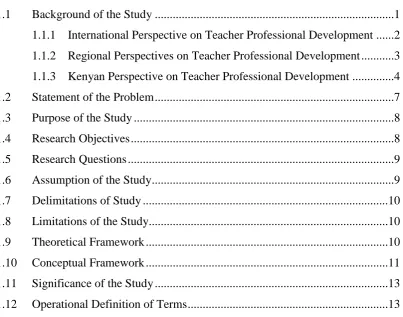
TABLE OF CONTENT

DECLARATION... ii

DEDICATION... iii

ACKNOWLEDGEMENT ... iv

TABLE OF CONTENT ...v

LIST OF TABLES ... viii

TABLE OF FIGURES ... ix

ACRONYMS AND ABBREVIATIONS ...x

ABSTRACT ... xi

CHAPTER ONE:

INTRODUCTION ...1

1.1

Background of the Study ...1

1.1.1 International Perspective on Teacher Professional Development ...2

1.1.2 Regional Perspectives on Teacher Professional Development ...3

1.1.3 Kenyan Perspective on Teacher Professional Development ...4

1.2

Statement of the Problem ...7

1.3

Purpose of the Study ...8

1.4

Research Objectives ...8

1.5

Research Questions ...9

1.6

Assumption of the Study ...9

1.7

Delimitations of Study ...10

1.8

Limitations of the Study...10

1.9

Theoretical Framework ...10

1.10 Conceptual Framework ...11

1.11 Significance of the Study ...13

1.12 Operational Definition of Terms ...13

CHAPTER TWO:

LITERATURE REVIEW ...14

2.1

Introduction ...14

2.2

Origins of CSCs ...14

2.3

Professional Teacher Development in Selected World Countries ...16

2.4

Resources and Equipment in CSCs...18

(6)

vi

2.6

Objectives of CSCs ...20

2.7

Relationship of CSCs and Other Organizations and Agencies ...23

2.8

Summary of Literature and Research Gaps ...24

CHAPTER THREE:

METHODOLOGY ...25

3.1

Introduction ...25

3.2

Research Design...25

3.3

Study Location ...25

3.4

Target Population ...26

3.5

Sampling Techniques ...26

3.6

Research Instruments ...26

3.6.1 CSC officers Questionnaires ...27

3.6.2 Teachers Questionnaire ...27

3.6.3 Interview Schedule...27

3.7

Piloting of Research Instruments ...28

3.7.1 Reliability of Research Instruments ...28

3.7.2 Validity ...28

3.8

Data Collection Strategies...28

3.9

Data Analytical Plan ...29

3.10 Ethical Considerations ...29

CHAPTER FOUR:

PRESENTATION OF FINDINGS AND DISCUSSIONS 30

4.1

Introduction ...30

4.2

Availability of resources in CSCs for providing professional support to

teachers ...31

4.3

The extent to which CSC officers visit schools to provide professional

support to teachers ...33

4.3.1 The extent to which CSC officers conduct in service course for

teachers ...34

4.3.2 Visits by Teachers to Curriculum Support Centers ...36

4.4

Importance of professional qualification and experience of CSC tutors in

service delivery ...37

(7)

vii

4.4.2 Importance of experience for CSC officers ...38

4.5

Rating of Curriculum Support in terms of dissemination of educational

information and applicability of the educational information. ...39

4.6

Challenges faced by CSC tutors in their effort to facilitate effective teacher

professional development ...40

4.7

Possible Solutions from the teachers and CSC tutors for effective

performance of CSCs ...41

4.7.1 Solutions suggested by CSC officers ...42

4.7.2 Solutions suggested by teachers...43

CHAPTER FIVE:

SUMMARY, CONCLUSION AND

RECOMMENDATIONS ...45

5.1

Introduction ...45

5.2

Summary ...45

5.3

Conclusions ...48

5.4

Policy Recommendations...48

5.5

Suggestions for Further Research ...49

REFERENCES ...50

APPENDICES ...53

Appendix I:

Questionnaires Covering Letter ...53

Appendix II:

Questionnaire for CSC Officers ...54

Appendix III: Questionnaire for Primary School Teachers ...59

Appendix IV: Interview Schedule for CSC Officer ...63

Appendix V:

Interview Schedule for SDE ...64

Appendix VI: Observations Schedule for a CSCs ...65

Appendix VII: Work Plan ...66

Appendix VIII: Budget ...67

Appendix IX: Letter of Approval from University ...68

Appendix X:

Research Authorization Letter ...69

(8)

viii

LIST OF TABLES

Table 4.1: Resources at the Teacher Advisory ... 31

Table 4.2: Cross tabulation and correlation between CSC tutor visits and

frequency of in service training for teachers ... 35

Table 4.3: Cross tabulation between rating of Curriculum Support Centers and

applicability of educational information from in-service courses ... 39

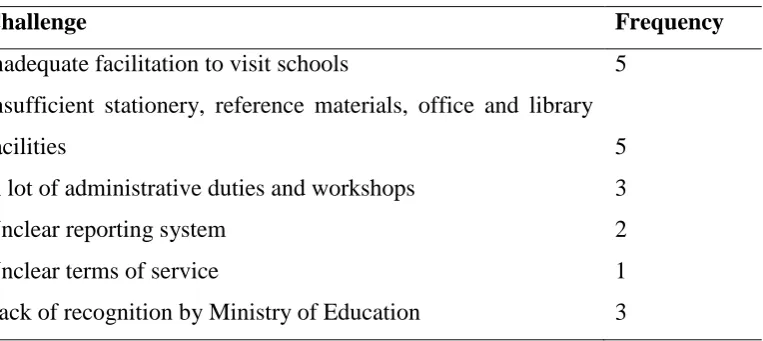
Table 4.4: Challenges faced by CSC tutors ... 40

Table 4.5: Possible solutions for improving efficiency of CSCs ... 42

(9)

ix

TABLE OF FIGURES

Figure 1.1: Conceptual Framework ... 12

Figure 2.1: Relationship of CSCs and Other Organizations and Agencies ... 24

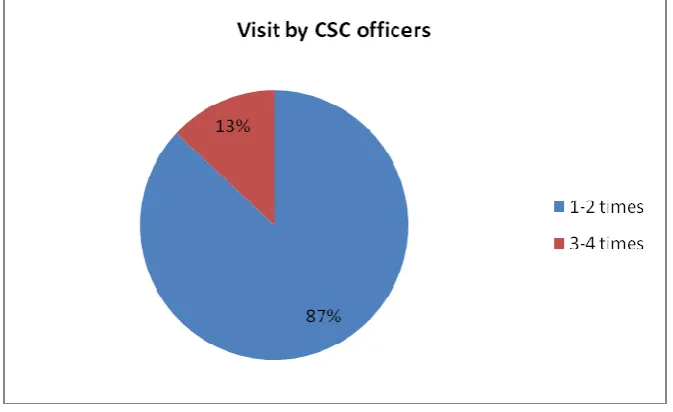
Figure 4.1: Frequency of visits to schools by CSC officers ... 33

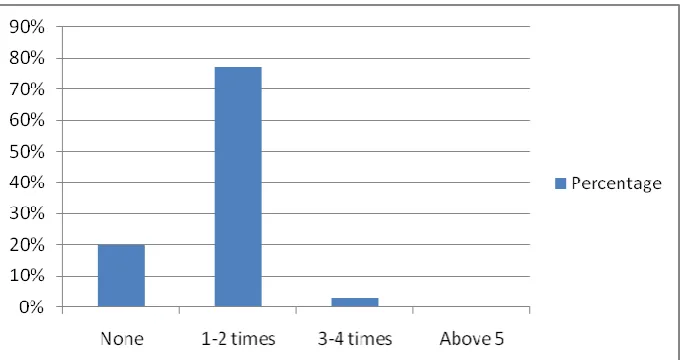
Figure 4.2: Frequency of in service courses for teachers ... 34

Figure 4.3: Percentage of teacher visits to CSCs ... 36

Figure 4.4: Importance of professional qualification ... 37

(10)

x

ACRONYMS AND ABBREVIATIONS

C.S.Cs

Curriculum Support Centres

C.S.O Curriculum Support Officer

CDE

County Director of Education

DFID Department for International Development

KCPE

Kenya Certificate of Primary Education

KICD Kenya Institute of Curriculum Development

KNEC

Kenya National Examination Council

MOEST Ministry of Education Science and Technology

NACOSTI

National Commission for Science Technology and Innovation

SDE

Sub County Director of Education

SQASO Sub County Quality Assurance and Standards Officer

TSC

Teachers Service Commission

(11)

xi

ABSTRACT

(12)

1

CHAPTER ONE

INTRODUCTION

1.1

Background of the Study

The Kenya government through the Ministry of Education Science and Technology

emphasize the importance of the system of continuing education for teachers. In

order to avoid circumstances such as those described by World Bank, teacher

education is perceived as a process that should be conducted throughout the career.

It is generally acknowledged that significant number of schools in developing

countries face difficulties in offering education because of inefficient and ineffective

use of available resources by the teachers (World Bank, 1990).

Khan (1991) indicates that centre for teacher and resources have been put in place

worldwide. These centres in spite of their different names (learning resources

centers, advisory centres, and pedagogical centers) have the unique feature of

provision of teaching-related support to teachers. Appropriate support to teachers

needs to be offered due to unlimited potential for teacher development. In addition,

the competency by the teachers is regularly under scrutiny in the class. According to

Adams (1975), recognition of the challenging task faced by the teachers and

subsequent support in their duties is the major objective of teacher advisory centers.

An enabling environment should be developed by the stakeholders in the education

sector, especially officials in the Ministry of Education, school heads, and school

inspectors in order to ensure effective and efficient fulfillment of responsibilities by

the teachers. The responsibilities of the teachers in this case comprise the

(13)

2

good information skills. In order to realize national educational objectives, pupils

should be facilitated to improve logic and creativity in their subject approaches.

1.1.1 International Perspective on Teacher Professional Development

Due to globalization, countries are bound to undertake economic, political, and

technological transformations. Education also is undergoing a rapid transformation

due to impact of globalization (Bautista and Ortega-Ruiz, 2015). Globally,

substantial educational reforms are being undertaken especially with respect to

transformation of the forms and nature of expected student learning outcomes. This

is a necessity especially when skills in the 21

st

century are put into consideration.

Burnaford, Brown, Doherty, and McLaughlin (2007) indicate that it is crucial to

develop learners who are capable of making responsible decisions, with focus on

21

st

century skills and competencies being vital to achieving this. As a result of the

reforms in the education sector, the approaches to teaching should also be

transformed in order to ensure that teachers are adequately equipped with knowledge

and skills in order to effectively cater for the needs of the 21

st

century learners.

In-service training has been found to be one of the approaches to ensure continuous

professional development among the teachers.

Desimone and Garet (2015) indicates that professional teacher development in US

has shifted from one-time workshops to a system that takes into account five

features namely, focus on content, coherence, active learning, collective

participation, and sustained duration. In general, professional teacher development is

an area that is actively being reviewed globally. Despite the varying approaches, the

main objective is to strengthen skills and competencies among the teachers. There is

(14)

3

competencies, especially procedural skills in classrooms (Bautista and Ortega-Ruiz,

2015).

1.1.2 Regional Perspectives on Teacher Professional Development

Based on various studies, it is evident that pre-service training for teachers is not

adequate in enhancing teacher professional development. Hardman, Ackers,

Abrishamian, and O’Sullivan (2011) indicate that education system in Eastern and

Southern Africa is to a large extent institution-focused, based on lectures, with little

emphasis on supervised practical teaching thereby creating a gap between theory and

practice. Hardman

et al. acknowledge the importance of in-service training in

bridging the gap between theory and practice. On the other hand, Mulkeen (2010)

notes that in-service training in a number of regions in Africa is of poor quality with

little applicability in classroom. The author also indicates that in places where there

is existence of in-service training, it is infrequent with little follow-up in classroom

and it is usually concentrated in urban areas. Such weaknesses have led to the calls

for reforms of both pre-service and in-service training for teachers to a system that

guarantees sustainability in long-term and continuous teacher professional

development.

Hardman, Abdi-Kadir, Ndambuku, and Smith (2009) indicate that the Eastern and

Southern African regions have embraced reforms in teacher professional

development. There is advocacy on the adoption of school-based in-service training

supported by distance learning materials as well as school clusters in the Eastern and

Southern African region. In a study focusing on Kenya, Uganda, and Tanzania,

Hardman et al. (2011) acknowledge the importance of in-service training for

(15)

4

1.1.3 Kenyan Perspective on Teacher Professional Development

Attempts to reform in-service teacher training can be traced back to 1970s. A

Teacher Updating Committee was formed in 1978 with the main purpose of

examination of the potential for development of primary school teacher up-dating

program. This committee was established by Ministry of Education through the

permanent secretary. The committee critically assessed the CSC program and came

up with the following recommendations;

i)

The CSC advisory, teacher updating, and research roles at the local levels must

be clearly stressed to all the CSC staff.

ii)

The increase in the number of CSCs in order to enhance service to teachers,

with the centers being established in places that are central as well as easily

accessible.

iii)

Increase in the number of staff for efficient service delivery.

iv)

Establishment of CSCs in buildings which are appropriately designed and

equipped.

According to UNESCO (1996), the characteristics of teachers are affected by five

quality dimensions namely; knowledge on curriculum subject and that related to

subject, knowledge on pedagogic and application skills, ability to individually

reflect critically, empathic personality characteristics, and management skills for

tasks in and out of classroom. All these characteristics can be enhanced through

in-service training.

Just like any other country, Kenya has continuously embarked on huge investment in

(16)

5

development of human resource which is crucial for all scopes of the Kenyan

development. After independence in 1963, it was conceivable that the system of

education inherited did not conform to the socio-economic and political needs of the

country. Due to this, the first commission in the independent era was set up in 1964,

with the main objective being the review of the entire system of education in the

country. This commission was headed by Prof Ominde and ever since national

education policy has been guided by some of the findings from this commission.

There has been remarkable progress in Kenyan primary education. This is evident

particularly in the rise in the number of pupils and teachers in the primary schools as

well as the number of primary schools in the country. There has been an increase in

enrolment from 892,000 in 1963 to approximately 8 million currently (2017).

Likewise, there has been an increase in the number of teachers since independence.

The number of teachers during the era of independence was about 23,000 as

compared to about 185,000 currently (2017).The number primary schools now stand

at over 17,000 in the country. Quantitative growth in education opportunities poses

qualitative problems as well as economic ones.

Olembo, Wanga and Karagu (1992) assert that in view of continuous renovation and

improvement of teaching knowledge and continuous change occurring within

education system, it does not seem possible to equip teacher trainees during the short

years of pre-service training with all knowledge and skills required for entire

professional career. In fact, a single course of pre-service education however long it

lasts and however excellent it may be, can no longer suffice in the face of many

(17)

6

To address the issue of quality education the Ministry of Education adopted the

concept of the CSCs in 1970s to ensure that teachers are updated on their profession

in the most cost effective and economical means without taking them away from

their jobs. Shiundu and Omulando (1992) states that the main purpose of

establishing CSCs was to help the teachers and pupils in striving towards

educational goals by providing and benefiting from materials and ideas that are of

educational significance. CSCs were therefore established in Kenya to provide

facilities for book loan, to organize in-service courses and informal curriculum

meetings, consultancy services and production services for teachers.

Furthermore, in order to tackle the challenge of lack of access of educational

materials by schools, there was incorporation of CSCs by MOE in the inspectorate

section in early 1970s. Otieno (2008) argues that it was belived that use of CSCs by

teachers would enhance their instructional quality and that their pupils would benefit

indirectly through teacher enhanced instructions or through loan of classroom

materials.

Another key role played by CSCs is in-service training of teachers. The Presidential

Working Party on Education and Manpower Training for the Next Decade and

Beyond (Republic of Kenya, 1988), specifically explained this when it reported that

CSCs role includes; availing information to teachers, conduction of demo lessons

using teachers and development of teaching aids from materials available locally.

Oluoch (1992) states that in-service training programs should be organized to help

(18)

7

what extent the Curriculum Support centres do this is what will be investigated by

the study. Moreover, as a curriculum developing and evaluation agency the CSCs

sprang up from the assumption that on completion of college, a teacher is not fully

endowed with skills needed in the teaching profession. Shiundu and Omulando

(1992) state that teacher in servicing is very necessary as this will help fill the gaps

which were not filled during times of teacher training.

The 1976 Report of the National Committee on Educational objectives and policies

(Gachathi Report) stressed the need for continuing education which is life-long to all

Kenyans. This was also emphasized by the Master Plan for Education and Training

(1970) as well as by the Totally Integrated Quality Education and Training Report

(Koech Report, 1999). This report underscored the necessity for those already

trained to be offered the opportunity of continuing with training and learning.

1.2

Statement of the Problem

Odhiambo (1980) and Ayot (1981) hold that the ideal and intended function of the

Curriculum Support Centre is to improve teachers’ quality and help teachers fit

comfortably in their profession. According to a report by the presidential working

party of 1988 CSCs role was to provide information for teachers conduct,

demonstrations lesson, develop teaching aids from local materials.Previous research

such as Otieno (2008) shows that CSCs have not adequately addressed teachers’

needs. As a consequence, teachers in Kenya have not been receiving adequate

in-service training. Bundi (2008) states that due to inadequate in-in-service training, many

teachers in the country have stagnated in their professional growth at only the

pre-service training they received for their first degree or diploma This makes it difficult

(19)

8

performance by pupils and low morale among teachers in the country. Indeed, very

few teachers attend professional development programs organized by the TACs.

This study aims at critically interrogating the issues that affect CSC tutors while

enhancing teacher professional development so as to promote their professional

growth consequently improving the performance of pupil.

1.3

Purpose of the Study

The researcher aimed at investigating issues through which CSCs undergo in

enhancing professional teacher development. The study aims at identifying the

issues affecting the program and recommended solutions of making it more robust.

1.4

Research Objectives

The specific objectives were:

i)

To determine how availability of resources affects the role of CSCs in

providing professional teacher development of primary school teachers in

Nyeri County.

ii)

To investigate the extent to which the CSCs conduct in service courses for

teachers and visit schools to provide professional teacher support.

iii)

To establish the teacher related challenges that CSC tutors face in their effort

to facilitate effective teacher professional development.

iv)

To investigate the relationship between professional qualification and

experience of CSC tutors and their service delivery.

v)

To establish possible solutions from the teachers and CSC officers for effective

(20)

9

1.5

Research Questions

i)

Do the professional qualification and experience of CSC tutors have any effect

on their role of teacher professional support among primary school teacher?

ii)

To what extent do CSCs conduct in service courses for teachers and visit

schools to provide professional teacher support?

iii)

How do availability of resources affects the role of CSCs in providing

professional teacher development of primary school teachers in Nyeri county?

iv)

What are the teacher related challenges that CSC officers face in their effort to

facilitate effective teacher professional development?

v)

What are the possible solutions from the teachers and CSC officers for

effective performance of CSCs?

1.6

Assumption of the Study

The researcher assumed that:

i)

The CSCs were functional as stipulated by the Teachers Service Commission

ii)

All respondents will be cooperative and provide reliable responses.

iii)

The researcher does not know how often CSC officers conduct in-service

courses for teachers or visit schools to provide teachers with professional

support.

iv)

All CSC tutors are familiar with their roles as provided for by K.I.C.D

(21)

10

1.7

Delimitations of Study

i)

The study was limited to teachers in public schools who are supposed to be the

direct beneficiaries of Curriculum Support.

ii)

The teachers included in the study were those in session in their respective

institutions during the time of the study.

iii)

There are several other factors affecting teachers’ professional growth but this

study only focused on the role of CSCs.

iv)

The study confined itself to Curriculum Support Centre although there are

other bodies charged with the role of teacher professional development.

1.8

Limitations of the Study

This study will be limited in a number of ways. Firstly, the study findings were

subject to the responses from the participants as the study used primary data in

addressing the objectives. Secondly, the findings cannot be generalized to the whole

country because the study focused only on Nyeri County. The issues identified could

differ with the counties. Thirdly, previous literature focusing on the study location

was lacking. This may limit the foundations on which to build the study on. In

addition, the study was only targeted the teachers and CSC officers in order to

deeply focus on the issues on the ground.

1.9

Theoretical Framework

The study based its theoretical framework on Schulman (1986) concept that for

successful delivery of content by teachers, they ought to confront simultaneously

(22)

11

That the teacher, through teachers innovative approaches facilitate learning best,

comprehensively internalize content , break and disseminate it to learners. He argues

that those teachers who dare to teach must also continuously dare to learn.

1.10 Conceptual Framework

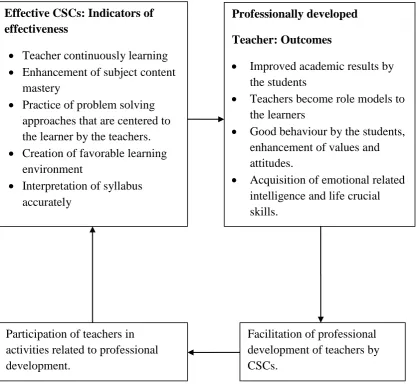
The researcher conceptualizes t1hat effective CSCs will enable professional

development activities by teachers thereby leading to measureable results. Based on

Shulman (1986), it is plausible that well-functioning CSCs will align teacher content

knowledge with pedagogical content knowledge. This in turn will be reflected by the

measurable indicators of CSCs effectiveness as described in the conceptual

framework below.

The indicators of effectiveness comprises enhancement of content mastery by

teachers, practice of teaching approaches that are modern, development of

conducive and friendly learning environment by teachers, effective planning and

management of teaching learning environment, and accurate curriculum

interpretation by the teachers. Content mastery is regarded as crucial in teaching and

learning because it imparts confidence on teachers thereby leading to selection of

relevant teaching/learning strategies. Well-functioning CSCs also will lead to

improvement in academic outcomes, teachers become role models for the learners,

portrayal of good behavior by both teachers and learners, enhancement of positive

attitudes and values, and acquisition of life skills and emotional intelligence. The

CSC gets feedback and there is continuous improvement. Diagrammatically, this can

(23)

12

Figure 1.1: Conceptual Framework

Professionally developed

Teacher: Outcomes

Improved academic results by

the students

Teachers become role models to

the learners

Good behaviour by the students,

enhancement of values and

attitudes.

Acquisition of emotional related

intelligence and life crucial

skills.

Effective CSCs: Indicators of

effectiveness

Teacher continuously learning

Enhancement of subject content

mastery

Practice of problem solving

approaches that are centered to

the learner by the teachers.

Creation of favorable learning

environment

Interpretation of syllabus

accurately

Participation of teachers in

activities related to professional

development.

(24)

13

1.11 Significance of the Study

The findings of the study will present theoretical and practical implications for the

future of teacher education in Kenya. In theoretical considerations, the study is

expected to contribute to the advancement of teacher knowledge about professional

development in Kenya. It should also highlight the relationship between teacher

education and student performance. The study has practical implication in that it

may enable the enhancement of strategies for enactment of teacher education in

Kenya. The study also forms a basis on which others can develop their studies.

1.12 Operational Definition of Terms

Curriculum-

Lessons and academic content taught in school

Professional Teacher Development-

Continuous updating of professional

knowledge and enhancement of own competence in the entire teaching period.

Pedagogy-

A discipline that focuses on the theory and the practice of teaching and

how these affect learning.

In-Service Education-

This is a learning approach for the serving teachers that is

undertaken in order to improve the professional knowledge, skills, and competence

(25)

14

CHAPTER TWO

LITERATURE REVIEW

2.1

Introduction

This chapter presents a review of related literature. It contains the following themes;

origin of CSCs, CSCs resources and equipment, functions of CSCs, objectives of

CSCs, professional teacher development in selected world countries

,

relationship

between CSCs and other organizational agencies.

2.2

Origins of CSCs

Shiundu and Omulando (1992) define CSC as a form of a resource centre developed

to benefit a definite number of local schools and teachers. Lodiaga (2001), on the

other hand states that, CSCs organizes resources for learning and teacher in-service

courses. Kahn (1990), indicates that teacher centres have been developed worldwide.

The centres in spite of their different names – Educational Centres, Learning

Resource Centres (LRCs), Advisory Centres and Teachers Centres share a unique

feature of provision of classroom related support to teachers.

The idea of teachers centres springs from complex identifiable origins in British

Educational scenes of 1960s. The successful Launch Sputnik II by USSR in 1950s

made Britain and other western countries to begin to question the relevance of

science teaching in their schools. There was therefore a need to modernize the

curriculum especially in science and mathematics hence founding of CSCs to

(26)

15

CSCs were meant to in-service teachers and develop local learning and teaching

resources. The government policy was modified, requiring education authorities in

the late 1960s to submit a comprehensive school organizational plan. These plans

required endless consultations with teachers who would work in the new system.

Teachers’ Centres were therefore inevitable as they would provide neutral settings

where discussions could go on away from administrative and school atmosphere.

The administration, teachers and all those involved in local educational matters

would meet and discuss educational matters.

Shiundu and Umulando (1992) assert that the young teachers who arrived yearly in

the schools needed professional support. Colleges were believed not to prepare

teachers adequately during pre- service training and the existing in-service education

was not satisfactory. Teachers therefore wanted facilities which they could use in the

acquisition of relevant skills.

The public was becoming concerned about attainment in reading and spellings

among pupils. There was a need to modernize the curriculum especially in science

and mathematics and to understand the reports of the on-going projects. All these

tasks would require neutral centres for local teachers and educationists to meet

regularly to discuss issues related to the teaching profession.

Odhiambo (1980) and Ayot (1981) points out the functions of CSCs as; in-service

education centre, feedback and dissemination centre, local curriculum development

centre, research in primary methods, educational counseling centre and receiving

(27)

16

government expects CSCs to serve the community and to help integrate other

government functions especially in the local areas.

Kenya development plan 1974-1979) part 1 and 2, it’s reported that the general aim

of CSC is to provide direct support in the field of major changes in the education

process. They are supposed to provide in-service training for teachers and contribute

to the curriculum research unit (C.R.U). The plan envisaged 7 centers of such TAC

in each sub county consisting of a mobile unit, a resource centre and facilities for

in-service training for teachers. Most sub counties have CSCs although quite a number

do not have because they were recently created.

However, research by Okumu (1986) and Maranga (1979) reveal that the facilities

present at the CSCs are inadequate and their conditions are below the standards

required to meet the stated objective.

2.3

Professional Teacher Development in Selected World Countries

Some CSCs officers were employed to use other TACs to serve their zone.

According to World Bank (2008), professional development of teachers is regarded

as critical worldwide. In countries such as Poland, Slovakia, Portugal, and Spain,

courses for professional development are important for consideration for promotion

because teachers earn credit from such courses. In Greece, professional development

on continuous basis is requirement for teachers that have been newly appointed. In

Italy, some schools put on hold classes in order to conduct rigorous programs for

(28)

17

The Kenya government through the Ministry of Education Science and Technology

emphasize the importance of the system of continuing education for teachers. In

order to avoid circumstances such as those described by World Bank, teacher

education is perceived as a process that should be conducted throughout the career.

It is generally acknowledged that significant number of schools in developing

countries face difficulties in offering education because of inefficient and ineffective

use of available resources by the teachers (World Bank, 1990).

Khan (1991) indicates that centers for teacher and resources have been put in place

worldwide. These centres in spite of their different names (learning resources

centers, advisory centres, pedagogical centers) have the unique feature of provision

of teaching-related support to teachers. Appropriate support to teachers needs to be

offered due to unlimited potential for teacher development. In addition, the

competency by the teachers is regularly under scrutiny in the class. According to

Adams (1975), recognition of the challenging task faced by the teachers and

subsequent support in their duties is the major objective of teacher advisory centers.

An enabling environment should be developed by the stakeholders in the education

sector, especially officials in the Ministry of Education, school heads, and school

inspectors in order to ensure effective and efficient fulfillment of responsibilities by

the teachers. The responsibilities of the teachers in this case comprise the

improvement of reading skills among pupils and boosting independent learning and

good information skills. In order to realize national educational objectives, pupils

(29)

18

Stakeholder collaboration especially between teachers and Curriculum Support

Officers is crucial for the availability of effective resource collection in a center.

This collaboration is crucial especially with regard to the provision of resources that

are in line with the needs of the pupils and the teachers. For example, cooperation

between the stakeholders is important in order ensure that teachers are supplied with

relevant teaching materials.

2.4

Resources and Equipment in CSCs

A Teacher Updating Committee was formed in 1978 with the main purpose of

examination of the potential for development of primary school teacher up-dating

program (Odini, 1998). This committee was established by Ministry of Education

through the permanent secretary. According to Odini, the committee critically

assessed the CSC program and came up with recommendations on defining roles for

the CSC staff, staffing, increasing the number of CSCs and establishing appropriate

building for housing the CSCs. In addition this committee recommended that CSCs

should be equipped with relevant curriculum materials, relevant tools for the

development of teaching/learning resources, portable generator for use in areas with

no access to electricity, audio-visual implements, home science equipment,

reprographic implements, means of transport and sufficient funds for running their

operations. There has been implementation of a number of committee

recommendations. For instance, the roles of the CSC tutors have been clearly spelt

out, and the number of CSCs and staff has since been increased.

Conversely, as a result of financial constraints, implementation of other DFID

(30)

19

professional teacher development has been done in phases. The objective of the first

phase of the support was to raise the learning and teaching standards in the main

subject areas of science, mathematics and English. This was to be realized by setting

up in-service training based on CSC (Bett, 2016). This support also entailed

distribution of boxes for books, resource materials and consumable packages to a

total of 239 CSCs in various zones and 42 CSCs in various sub-counties.

Construction of 61 CSCs was also undertaken by DFID. There has been uniformity

in the distribution of this support, with the areas that have relatively lower

socio-economic indicators benefitting more especially in terms of educational materials

supplies.

2.5

Functions of CSCs

The main reasons behind the establishment of the Curriculum Support Centres are;

Provision of convenient and suitably equipped teacher updating centers.

Preparation and production of materials for support to be used on course updates

and follow-ups.

Undertaking of research on methods of primary teaching and the use of teaching

resources that are locally available and communication of the research findings

to the teachers and national curriculum experts at KIE.

Assuming an active position in the development of the curriculum for the

primary schools. This is mainly through the maintenance of a close and adequate

working relationship with the teachers and local panels for subjects in order to

have relevant and reliable feedback in the event of assessment and research on

(31)

20

Provision of counseling services on educational matters to teachers and

community at large.

Act as centers for receiving and distribution of resource materials from

organizations such as KICD.

Closely working with teacher training colleges in order to expose students to

primary school environment and the manner in which to use CSCs after

completion of their studies.

2.6

Objectives of CSCs

Development Plan (1974) states that the aim of CSCs was provision of direct

support in the field of major changes in education process. The CSCs were to

provide training for teachers and contribute to curriculum development at KICD.

The objectives of the CSCs have been outlined by Lijembe Report (1978) as

indicated in chapter one. Odhiambo (1982) outlines the objectives as follows: -

Provide in-service courses to teachers according to their identified needs.

To advice teachers individually or in groups on matters pertaining to the

professional problems.

To conduct research where local teachers were involved.

To classify reference materials for teachers use.

To organize discussions, visits, lectures and demonstrations for teachers.

To advice teachers on the new curriculum changes and other relevant materials.

To advice educational agencies on teachers and school problems.

(32)

21

The objectives stated above were redefined by the Ministry of Education Policy

Document on CSC (1995) and stated as follows: -

Identify the training needs of the head teachers in the zone.

In conjunction with ZQASO in-service seminars, induction courses and

professional meetings to satisfy the needs of the teachers.

Collect, organize and manage resources and equipment and facilities.

Produce a variety of teaching aids, kits and handouts for different subjects.

Liaise closely with zonal and Sub County QASOs on specific problems of

teachers that require follow-up.

Visit schools, observe teaching techniques, give demonstration lessons and

advice teachers on methods and resources needed for schools.

Assist in setting up and organization of subject panels and evaluation

procedures.

Provide professional guidance and counselling to teachers and disseminate

information on examinations, curriculum textbook selection and training.

Sensitize head teachers, teachers and the community on the work of CSC.

Mathews (1975) summarizes the objectives of the CSC as making equipment and

learning resources for teachers, sharing ideas among teachers, learning mathematics

and science by laboratory method and using the mini-school to get models for

re-organizing the classroom physically and pedagogically and content wise.

Moreover, Shiundu and Umulando (1992) states that the main purpose of

establishing CSCs was to help the teachers and pupils striving towards educational

(33)

22

They further state that the tutors at the centres visit schools to help teachers and also

get ideas from the teachers concerning resources for teaching. Indeed the centres are

peripheral points for disseminating curricular innovations.

However, empirical evidence suggests that some of the objectives of the CSCs are

not being met. Muita, Mugambi, and Thinguri (2014) studied about the efficacy of

CSC tutors in enhancing the performance of KCPE performance in Nairobi north.

The research design adopted by Muita

et al. (2014) was exploratory, with primary

data being collected from a sample of school heads and teachers. The findings from

this study indicated that the improvement in pedagogical skills as a result of the

in-service courses and materials offered was only average.

Kosgey (2011) study focused on the effectiveness of CSCs in curriculum

implementation in secondary schools in Chepalungu district. The author adopted a

descriptive survey design in this study with the sample size being 7 schools.

Specifically, 48 teachers and 5 CSC tutors participated in the study. The results from

this study found that majority (70.8%) of the teachers interviewed felt that the CSC

tutors were not effective. In addition, the author found that the visit by the teachers

to the CSCs were low, with 97.9% of the teachers sampled indicating that they had

never visited the CSCs. On the other hand the author found that CSC tutors cited

lack of expertise and skills, and lack of enough resources and facilities as the major

hindrance to effective service delivery by them.

While some empirical studies have shown minimal impact of the CSCs, it has been

acknowledged that in-service training for teachers can improve the quality of

(34)

23

in-service training intervention in Kenya. Specifically, the authors focused on the

School-based Teacher Development (SbTD) program that focused on in-service

education and training for the primary school teachers. Based on the baseline data

for 1998 and the evaluation data for the SbTD program in 2005, the authors

indicates that this program had led to changes in pedagogical practices in primary

schools in Kenya. One of these changes as indicated in this study was an increase in

number of teachers using paired or group work in lessons, from 3% in 1999 to 34%

in 2005. In addition, there was a change in organization arrangements in classroom,

and increased availability of textbooks.

2.7

Relationship of CSCs and Other Organizations and Agencies

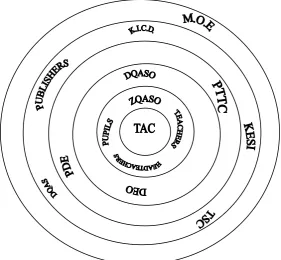
The Ministry of Education Policy document on CSCs advances that the CSCs as a

national service, are administered by the Directorate of Quality Assurance and

Standards. In the field the CSCs are manned by CSC Tutors who report to the SDE

through the SDQASO. The CSC tutors work in collaboration with the ZQASO and

head teachers of primary schools where the centres are located. KICD, an agency

responsible for curriculum research and development works with the CSCs in

collaboration with the DQASO. The figure below gives a pictorial representation of

(35)

24

Figure 2.1: Relationship of CSCs and Other Organizations and Agencies

*Source:

Adopted from Ministry of Education Policy Document on TAC (1995)

2.8

Summary of Literature and Research Gaps

From the reviewed literature it is evident that the CSCs were introduced to enhance

the quality of education in the country, with the focus being bridging the gap

between of theory and practice. In addition, baseline and program evaluation studies

have shown an improvement in education outcomes after in-service education and

training intervention. Most of the empirical literature reviewed adopted a descriptive

approach in assessing the views of the teachers and CSCs tutors and hence the

association between various factors could not be established. Furthermore, some

studies have only focused on in-service training and education without taking into

consideration the specific channels in which it is delivered to the teachers. Also, few

studies have attempted to investigate the issues affecting CSCs in Nyeri County.

With this regard, this study attempted to fill the existing research gap by adopting

descriptive and correlational analysis in order to critically investigate the issues

affecting CSCs and the association between these issues. By adopting this approach,

(36)

25

CHAPTER THREE

METHODOLOGY

3.1

Introduction

This chapter discusses the procedures that were used in the study. Specifically,

research design, population of the study, sample size and sampling methods,

instruments used in research and data analysis have been provided.

3.2

Research Design

The study adopted a descriptive and correlational research designs. A survey is a

study based on self-report and involving the collection of information that can be

quantified from a sample through conduction of interviews or administering a

questionnaire (Mugenda and Mugenda, 2003). Descriptive survey design is adopted

in preliminary and exploratory studies in order to enable researchers to collect,

summarize, present and interpret information for the purposes of clarification

(Orodho, 2002). Descriptive design was adopted because of the need to study things

the way they are in the field without manipulating the variables. On the other hand,

correlational research design was useful in investigating associations between the

variables of interest.

3.3

Study Location

Singleton (1993) indicates that the appropriate study setting should be accessed with

ease and also should be enabling in terms of development of rapport with the

respondents. Nyeri County was selected because no evidence of such as study in the

area was found. Therefore was crucial to assess the issues affecting the CSCs in this

region in order to have evidence based solutions. Also, there was need to fill the

(37)

26

divided into 4 major sub counties for both educational and administrative purposes

although there are plans to increase the sub counties for effective service delivery.

These are Kieni, Mathira, Nyeri Municipality and Tetu.

3.4

Target Population

The study’s target population comprised 4000 teachers from all the 571 public

schools in Nyeri County and 5 CSC officers in the five sub-counties of Nyeri

County.

3.5

Sampling Techniques

Simple random sampling technique was used to sample 15 primary schools out of

the 571 public schools in Nyeri County. Five teachers from each of the sampled

schools were randomly selected giving a total of 75 teachers who participated in the

study. In addition; all the tutors (5 in total) participated in the study. Also, the

Sub-County Director of Education (SDE) was interviewed. In simple random sampling,

each element has equal chance of selection thereby minimizing the bias. Generally,

simple random sampling is easy to use and the samples selected are representative of

the population being studied because the elements have equal chance of selection.

3.6

Research Instruments

Three research instruments were used to collect information in this study. The

research instruments comprised questionnaire for the teachers, questionnaire for the

CSC tutors and interview schedule for the SDE. The questionnaires included both

open and closed ended items. Close ended were used because they are easy to fill,

relatively objective and easy to tabulate (Orodho 2009). The open ended items were

(38)

27

3.6.1 CSC officers Questionnaires

The questionnaire was used to collect required data such as age, gender, professional

qualification, work experience, how often they conduct in service courses for

teachers, how availability of resources affect their work, challenges, possible

solutions and their recommendation. Questionnaire was appropriate for the CSC

tutors because they are perceived to be busy performing administrative duties of the

district, meaning they have a tight schedule and hence they could fill them at their

own convenience. In addition, the questionnaire was important in identifying the

issues affecting CSCs from the CSC officers.

3.6.2 Teachers Questionnaire

The questionnaire was used to collect required data such as age, gender, professional

qualification, work experience, their attitude towards CSCs, how often CSCs

conduct in service courses for them, challenges, possible solutions and their

recommendation. The questionnaires comprised both closed and open ended items.

The closed items ensured consistency in responses by respondents while the open

ended allowed for the freedom of response/expression.

3.6.3 Interview Schedule

Interviews were used to get information about CSC activities in the county. It

solicited information about CSC staffing condition in the county, training and

qualification of CSCs, in-service courses for CSCs and their role in professional

teacher development in the county. It was convenient due to the busy schedule of the

(39)

28

3.7

Piloting of Research Instruments

The main objective of the pilot study was to assess the validity and reliability of the

research instruments. In addition, the pilot study enabled the researcher to

familiarize with the questionnaire administration.

3.7.1 Reliability of Research Instruments

According to Mugenda and Mugenda (1999), reliability is a measure of degree of

consistency yielded by research instruments after repeated trials. Reliability is

important as it ensures the findings from a study are accurate and consistent.

Reliability was tested by use of Cronbach’s alpha. A score of more than 0.7 is the

acceptable range for concluding that the research instruments are reliable. The

research instruments were reliable because the Cronbach’s alpha was 0.8 hence

exceeding the cut-off point.

3.7.2 Validity

Validity can be described as the extent to which a research instrument measures

what it purports to measure if administered efficiently (Oladimeji, 2015). Karras

(1997) indicates that the strength of association between research findings and a

criterion measure is used to measure validity. However, as a result of lack of

standardized external criterion, construct validity is appropriate. Construct validity

involved comparison of the research findings with the findings from related studies.

3.8

Data Collection Strategies

The questionnaires and interviews were administered by the researcher. Before the

data collection exercise, a research authorization was sought from the ministry of

(40)

29

the start of the study. The sampled schools were visited and questionnaires

administered to the respondents. Strict confidentiality in responses was assured to

the respondents before administering the questionnaires. SDEs and CSCs officers

were visited at their offices from where face to face interviews were held.

3.9

Data Analytical Plan

Data analysis procedures were descriptive and correlational. Descriptive analysis

comprised use of pie charts and histograms to represent the characteristics of the

data. Following the order of listing, the first objective was actualized by use of

descriptive analysis. This involved description of the availability and condition of

various resources and how this affected the role of the CSC tutors. The second

objective was achieved by use of bar graphs and cross-tabulation. The third

objective was achieved by description of the findings in percentages. The fourth

objective was achieved by use of cross-tabulation and correlation analysis while the

fifth objective was achieved by use of percentages to describe the findings.

3.10 Ethical Considerations

The permit for data collection was granted by NACOSTI. Also, a letter of

introduction was obtained from Kenyatta University. Copies of letter of introduction

and NACOSTI permit were submitted to all the schools and CSCs before data

collection. In addition all the procedures required by the schools and CSCs were

strictly followed. An informed consent was sought from the respondents before data

collection, with strict confidentiality being assured to respondents. In addition, the

(41)

30

CHAPTER FOUR

PRESENTATION OF FINDINGS AND DISCUSSIONS

4.1

Introduction

This chapter presents the findings of the study based on objectives. The purpose of

the research was to assess the issues facing Curriculum Support Centers (CSCs) in

enhancing teacher professional development in Nyeri County. Questionnaires were

issued to 75 primary school teachers who were randomly sampled in 15 schools and

five CSC officers in five TACs.

The findings of the research were based on five objectives restated below;

i)

To determine how availability of resources affects the role of CSCs in

providing professional teacher development in primary school teachers in

Nyeri county,

ii)

To investigate the extent to which the CSCs conduct in service courses for

teachers and visit schools to provide professional teacher support.

iii)

To establish the teacher related challenges that CSC officers face in their effort

to facilitate effective teacher professional development.

iv)

To find out the relationship between professional qualification and experience

of CSC tutors and their service delivery.

v)

To establish possible solutions from the teachers and CSC tutors for effective

performance of CSCs.

Out of 75 teachers who participated in the study 67% were males while 33% were

(42)

31

4.2

Availability of resources in CSCs for providing professional support to

teachers

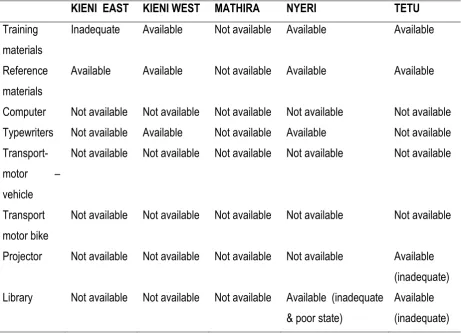
All the five CSC tutors interviewed indicated that the availability of resources was

important for the effective delivery of professional support to teachers. According to

the CSC tutors interviewed, services could be improved by making the resources

available at CSCs. In order to assess the resource availability at Teacher Advisory,

observation schedules for recording the resources available at the CSCs in the five

areas were issued to the five respondents. In addition, the information about the

condition of the available resources was captured in the observation schedules.

Table 4.1 below summarizes the resources available at the CSCs in the five areas.

Table 4.1: Resources at the Teacher Advisory

KIENI EAST KIENI WEST MATHIRA

NYERI

TETU

Training

materials

Inadequate

Available

Not available Available

Available

Reference

materials

Available

Available

Not available Available

Available

Computer

Not available Not available Not available Not available

Not available

Typewriters

Not available Available

Not available Available

Not available

Transport-motor

vehicle

Not available Not available Not available Not available

Not available

Transport

motor bike

Not available Not available Not available Not available

Not available

Projector

Not available Not available Not available Not available

Available

(inadequate)

Library

Not available Not available Not available Available (inadequate

& poor state)

Figure

TABLE OF FIGURES ...........................................................................................
Figure 1.1: Conceptual Framework
Figure 2.1: Relationship of CSCs and Other Organizations and Agencies
Table 4.1: Resources at the Teacher Advisory
+7

References

Related documents